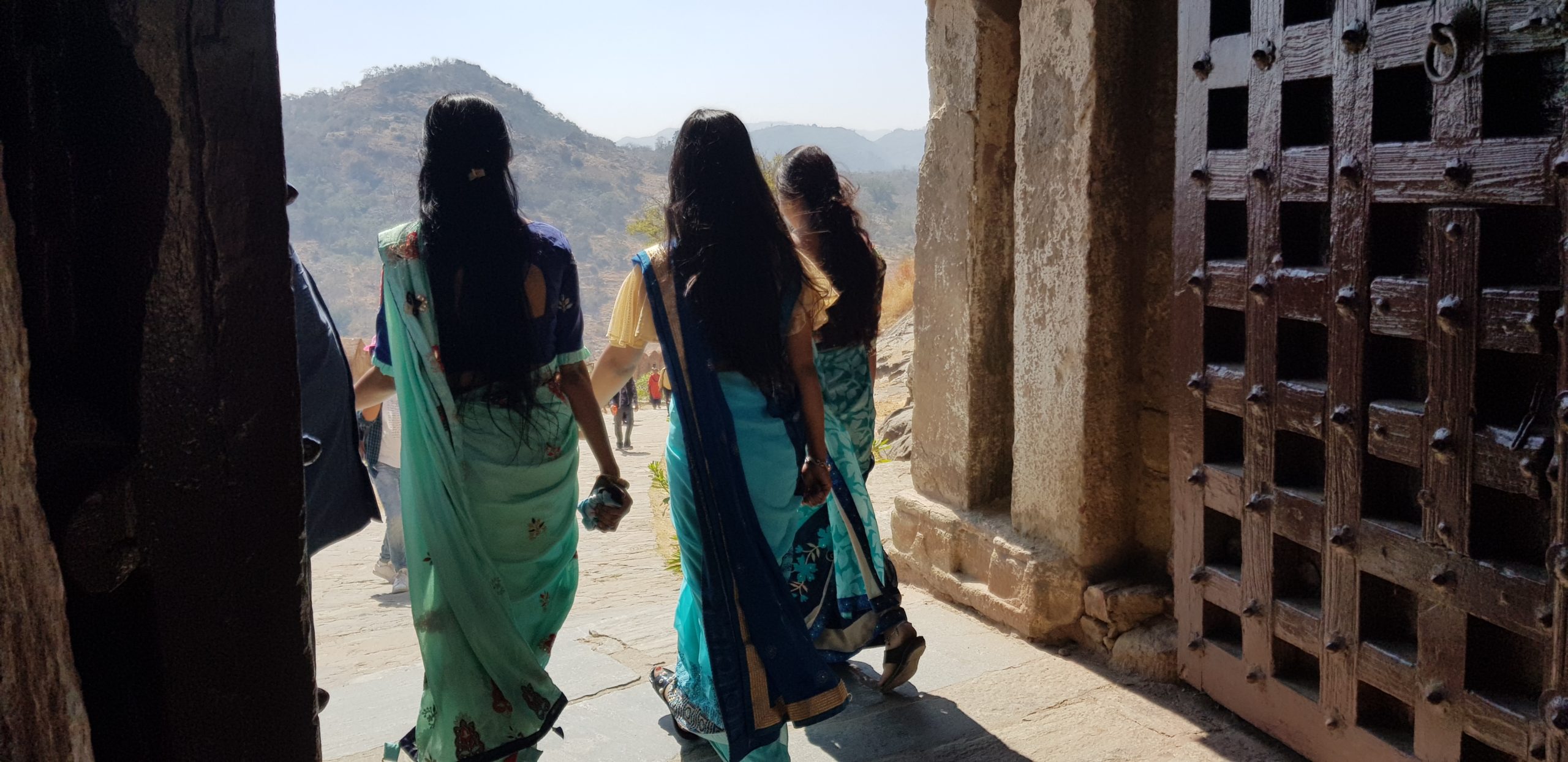
Pushkar
Four days on my own, so to speak (whilst the invalid was busy nurturing his Delhi belly), in Pushkar, and we (the Royal WE) really needed to move on. Pushkar is a small town known for only 2 things – it’s all year round hippy vibe and its Camel Fair in November every year. Missing the camel fair was not a big issue for me but being surrounded by weed smoking, long haired hippies (who were at least 50 years old) and bell jingling priests who want to dip you in the “holy lake” was far too much for my liking! Plus, as it’s the “holiest town” ever, no alcohol or meat anywhere!!!!
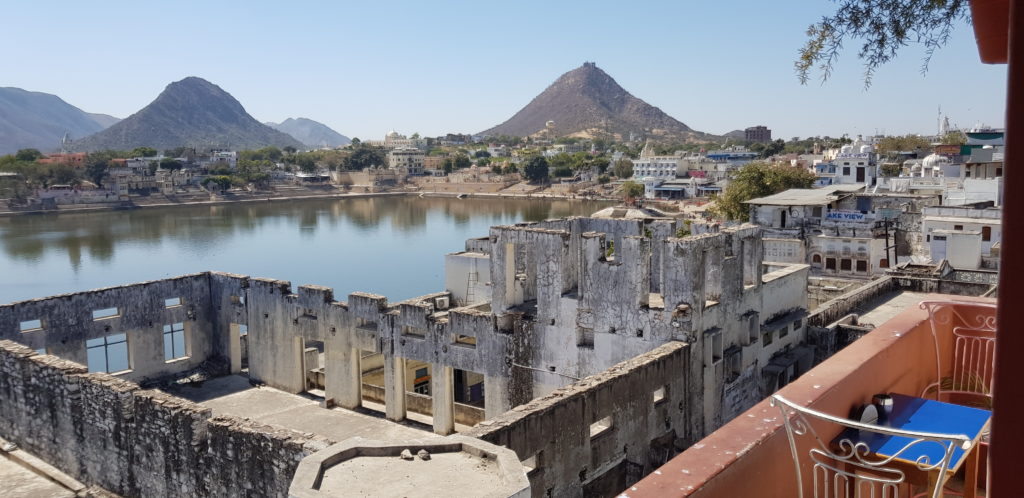
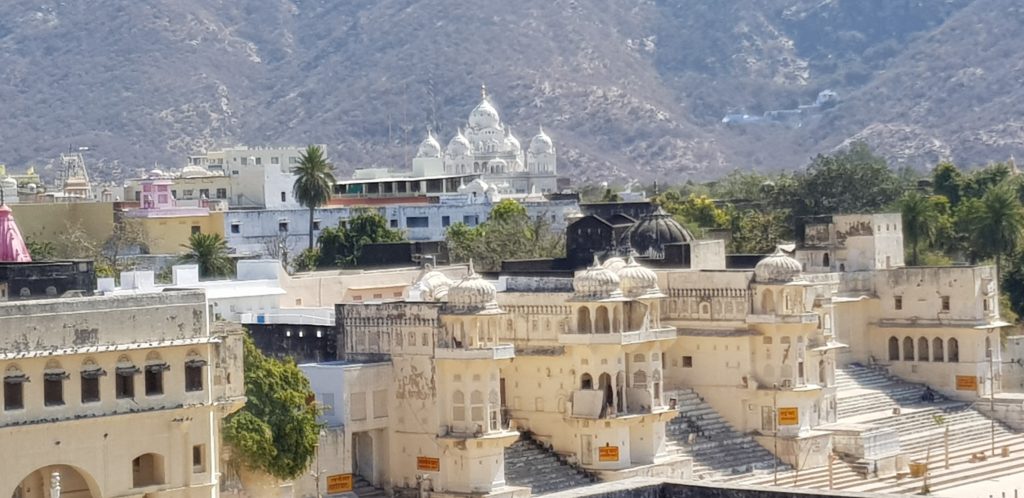
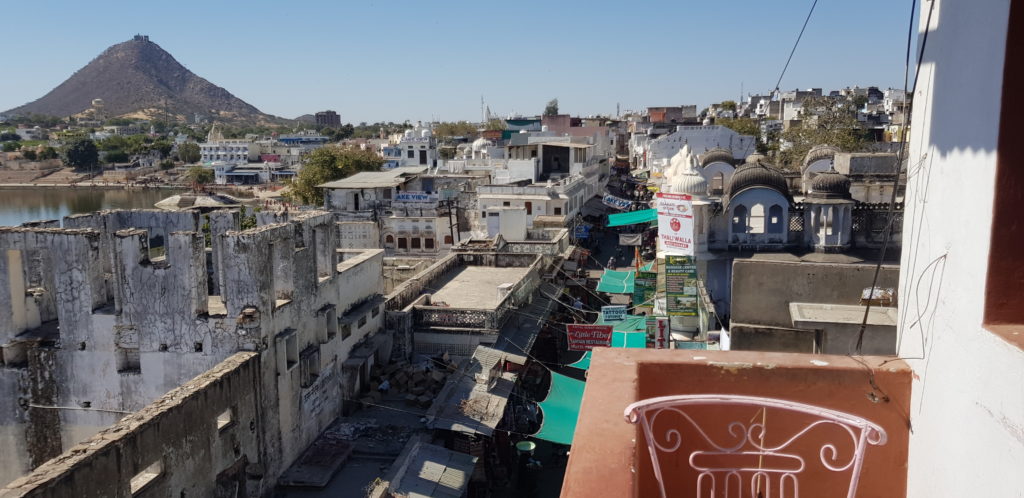
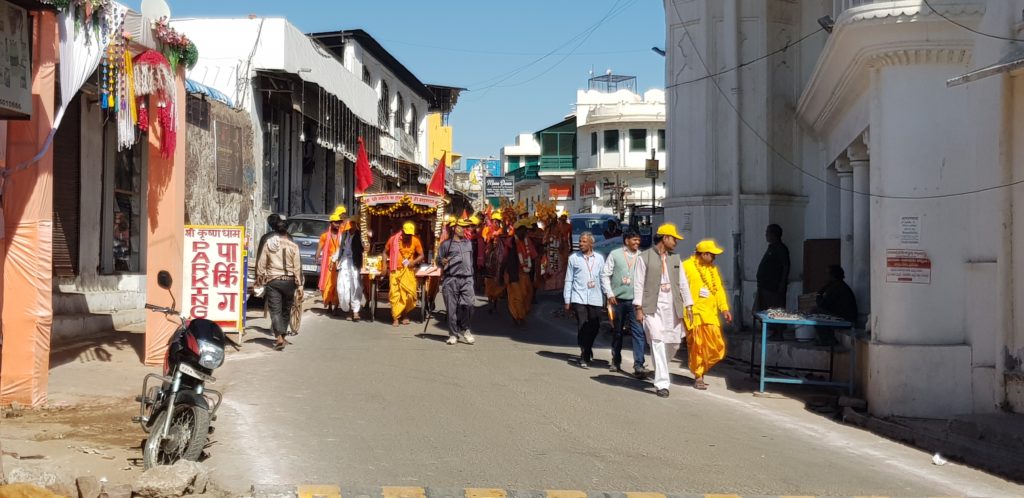
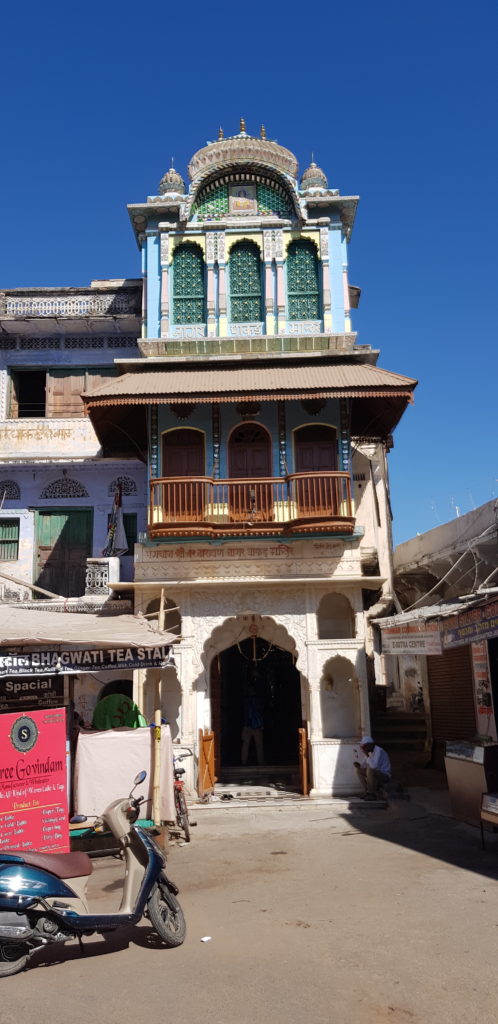
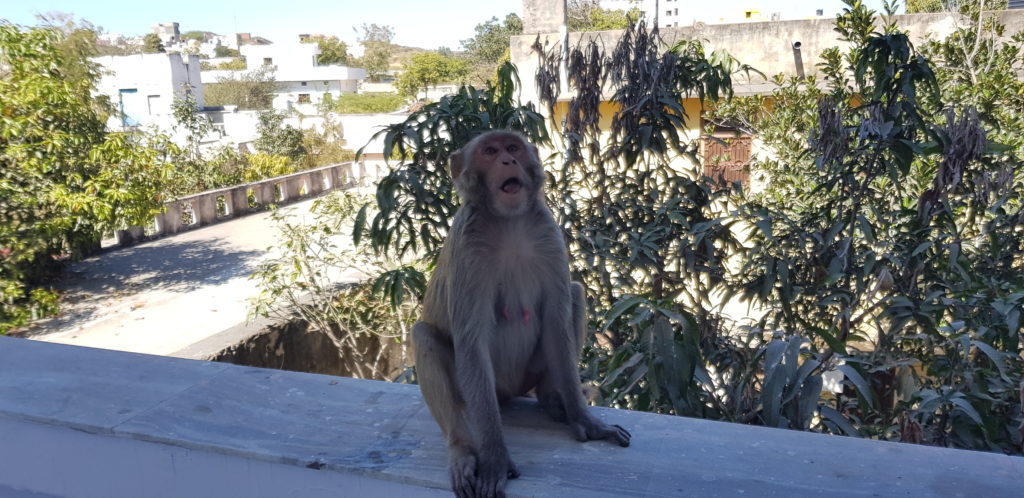
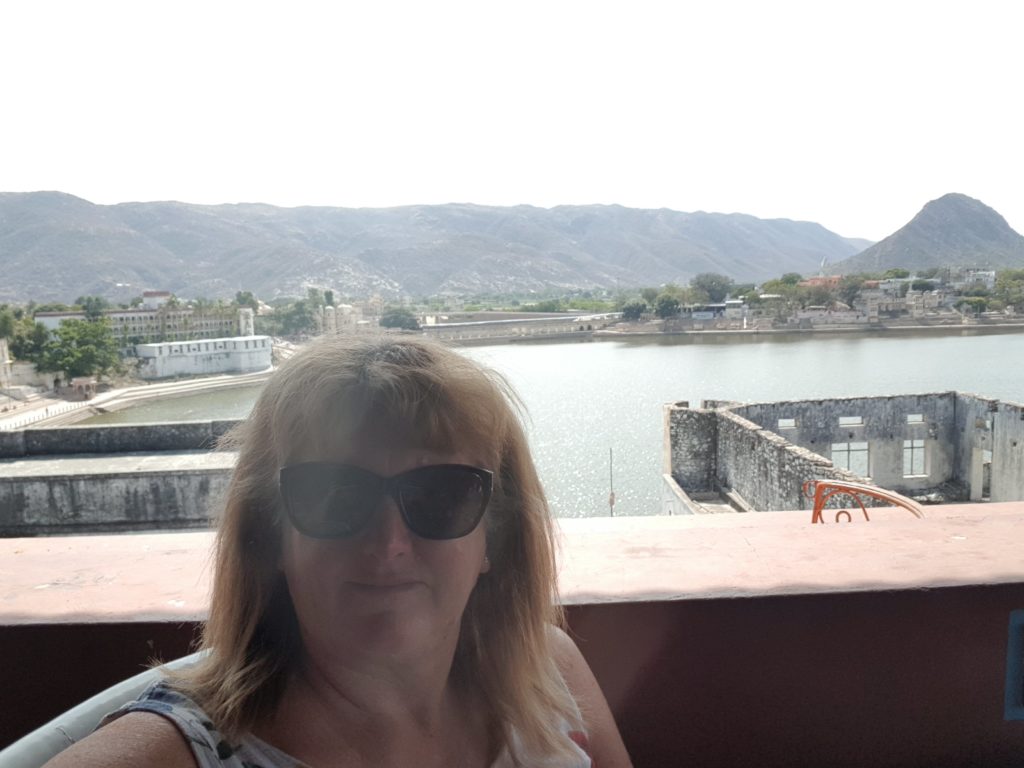
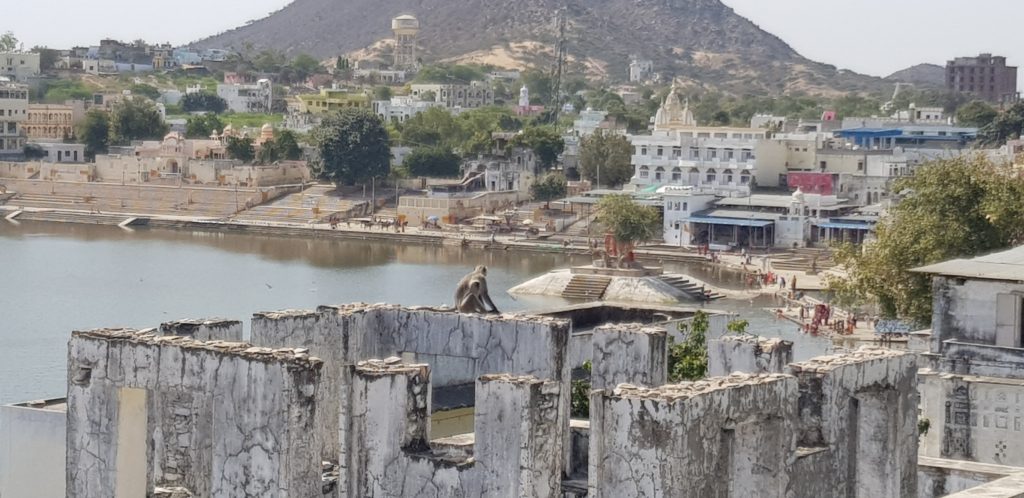
Its called a holy town because as the saying goes Brahma came here, dropped a lotus leaf and the lake was created. Any religious person in India is encouraged to visit and dip in the Lake at least once in their life, once I saw the green slime, duck poo, cow poo and dirty “priests” taking a dip, I sort of ran a mile and found the perfect coffee shop overlooking the Lake called Laura’s Cafe. I found refuge here several times, indulging in delicious fresh coffee, sugar and lemon pancakes and peace from the hustle.
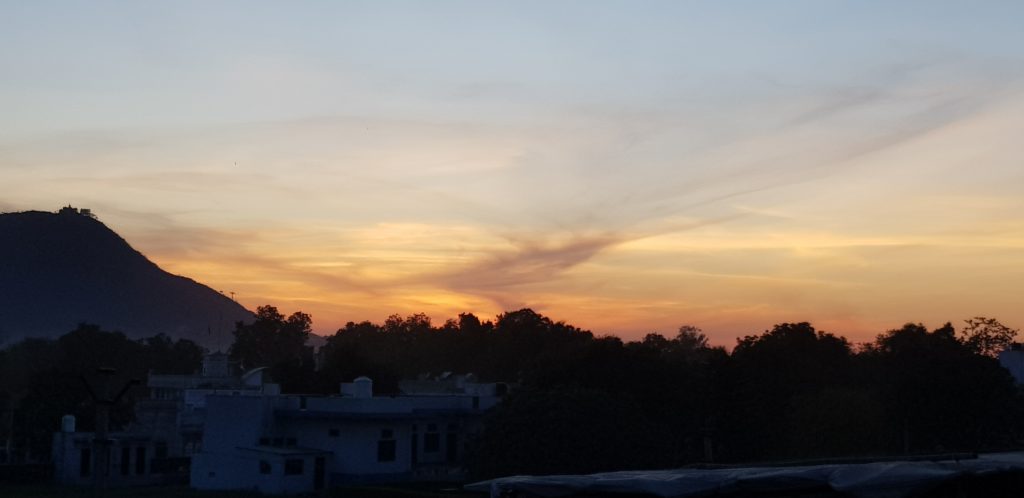
Brahma’s temple is atop a small hill nearby and is lit up every night for those brave enough to trudge up there in the dark. Very pretty, from a distance!
The town is also popular with wedding parties, so drums started about 4pm, music followed quite quickly afterwards and lights and fireworks went off randomly until midnight each night. Thankfully we had a supply of ear defenders to hand!
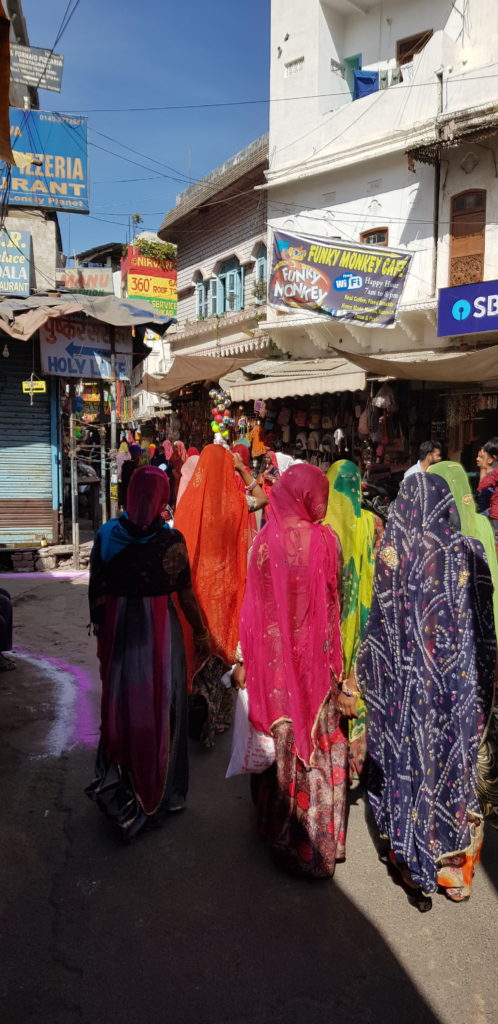
I found a lovely cafe called Funky Monkey, run by two men, one trained in the UK as a chef, so when I asked for “plain vegetable soup” for the poorly invalid, he made just that. Pasta, pizza, sandwiches and soups were amazingly tasty, I didn’t even miss the lack of protein.
Jodhpur
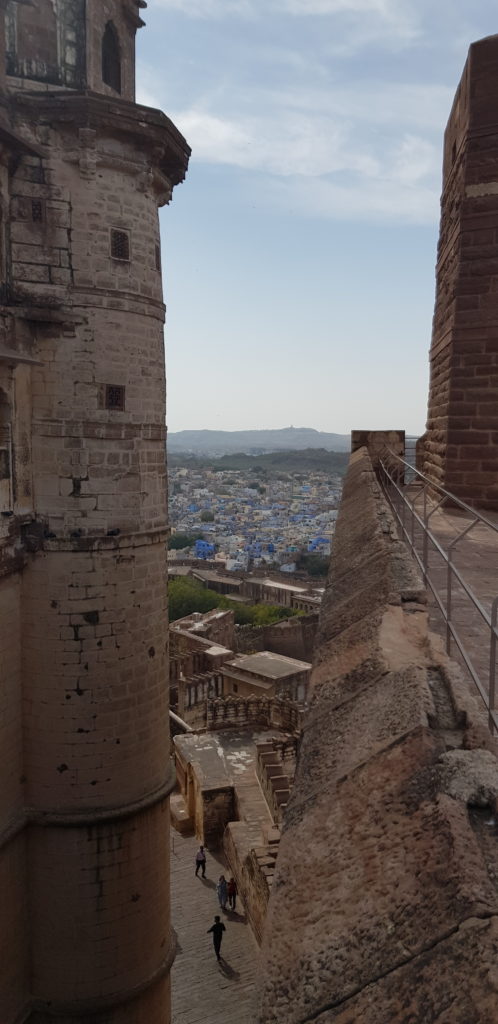
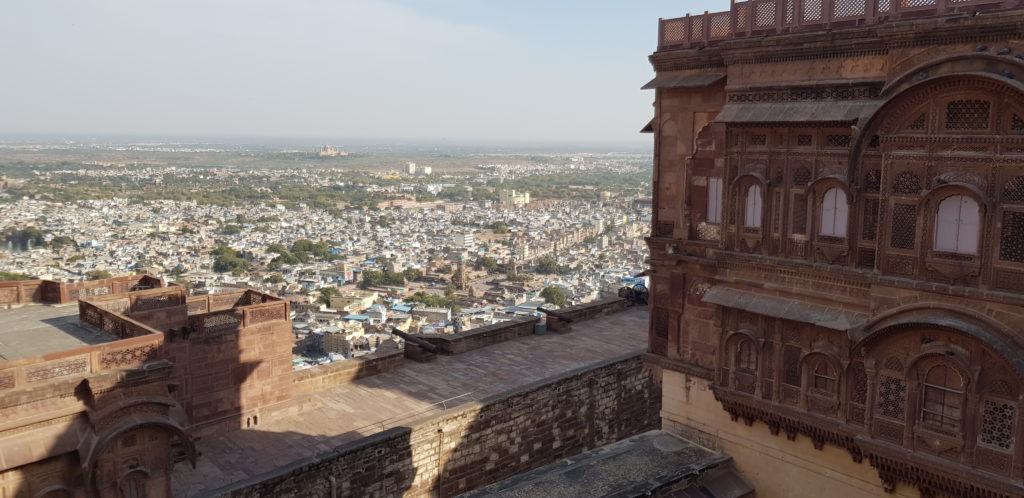
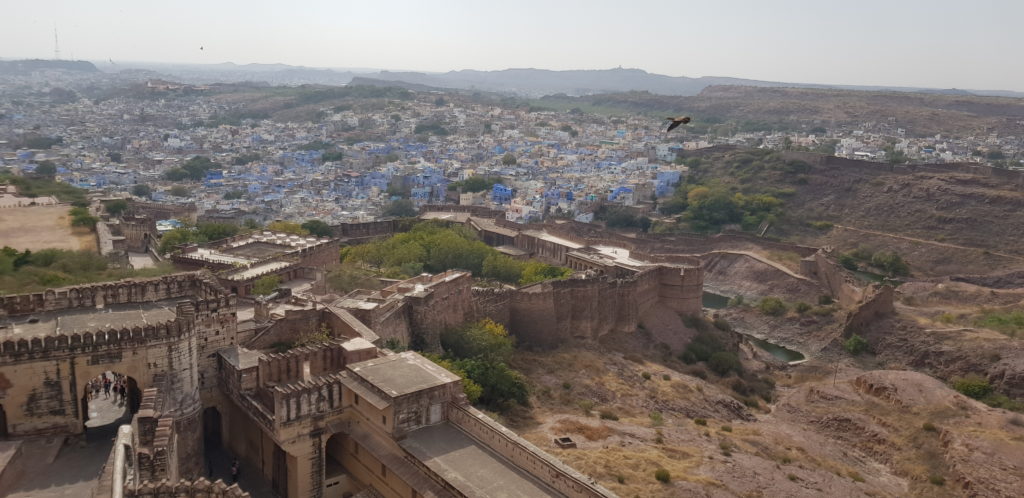
We travelled to our next stop Jodhpur, the blue city! And it is. The buildings are painted in various shades of blue for two reasons – it apparently keeps mosquitos away and in times gone by, walls were plastered with lime mixed and coloured by indigo, to help retain heat in the winter and coolness in the summer. This time we opted to stay in a Haveli where the views were fantastic, the Fort one side and the blue city the other.
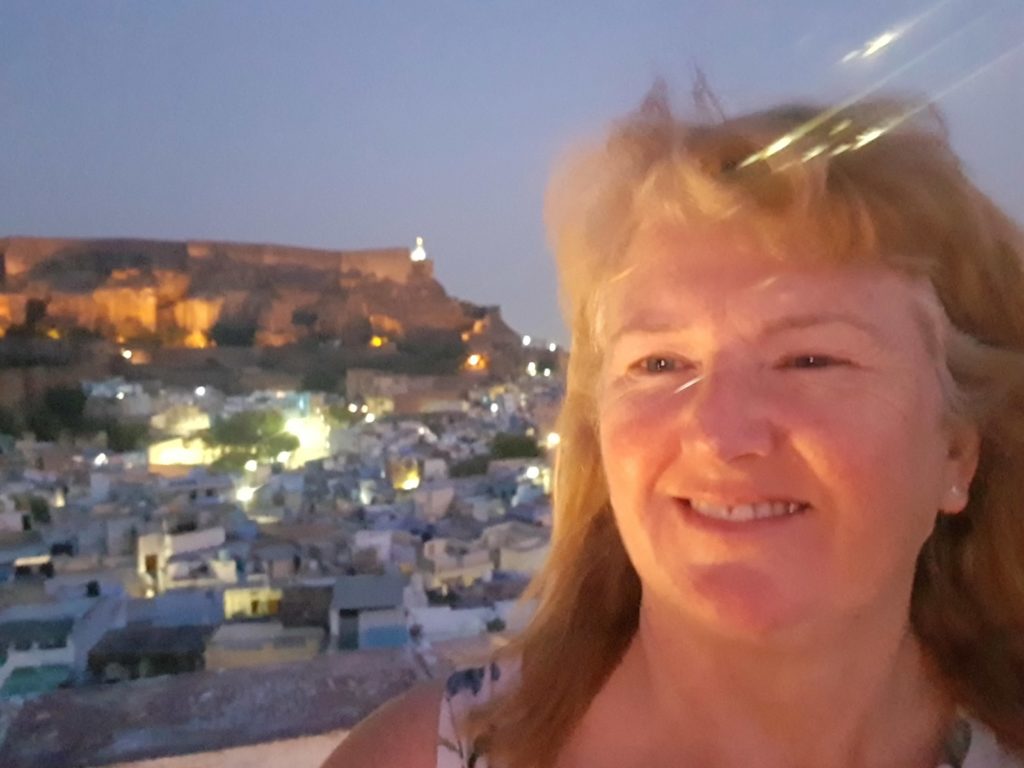
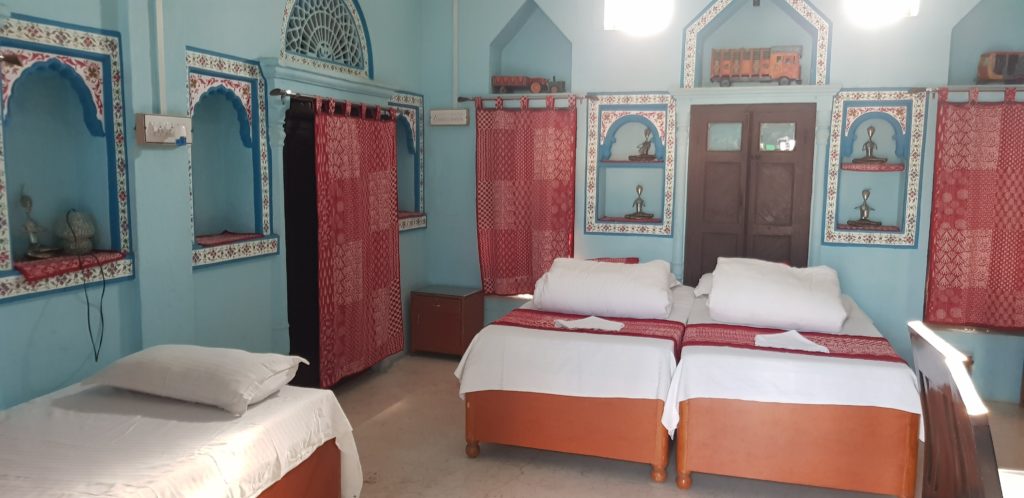
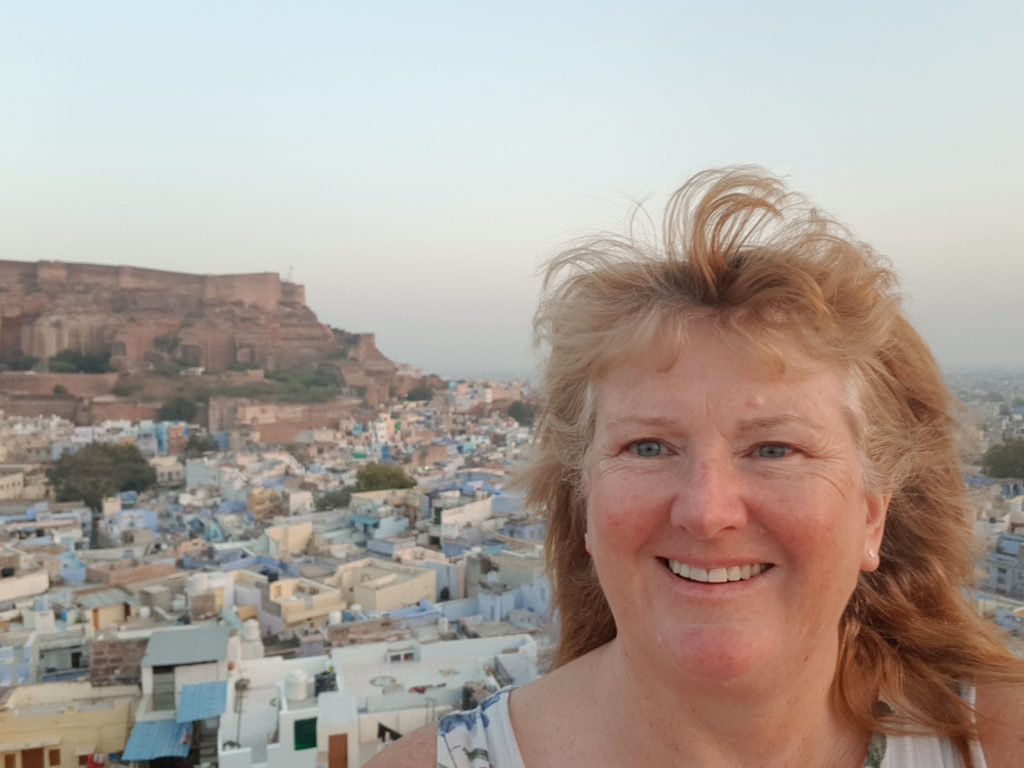
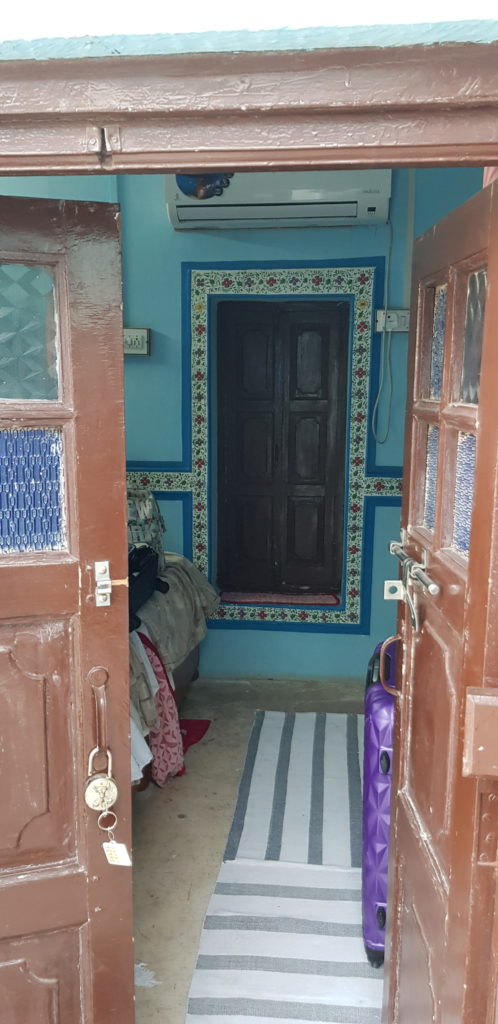
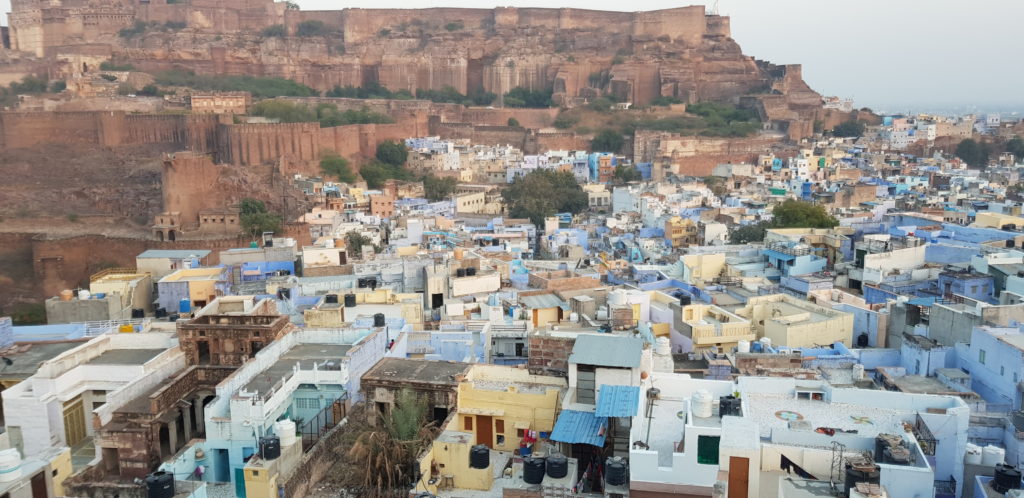
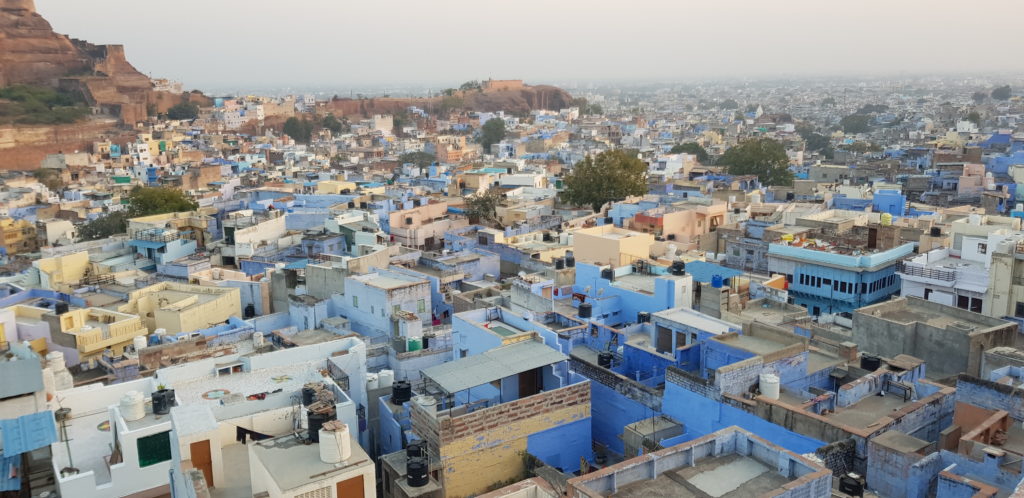
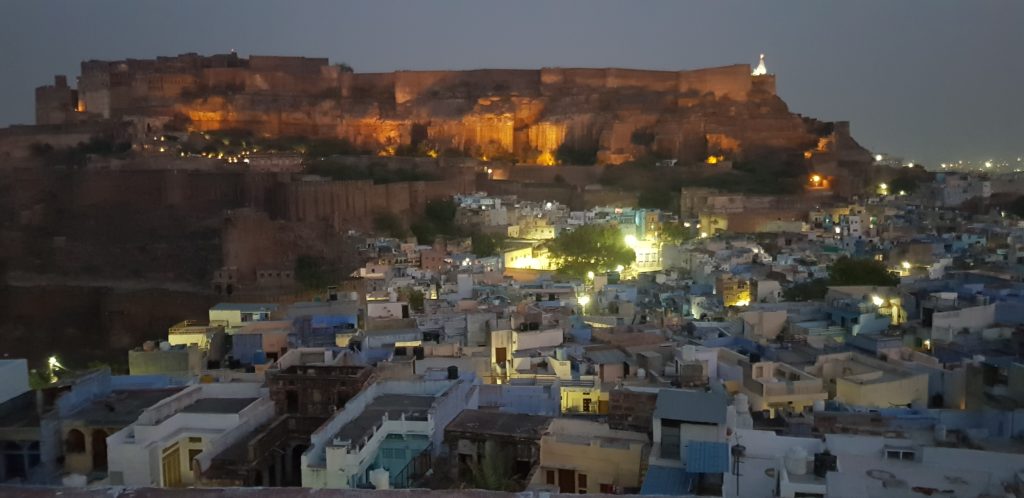

The Haveli’s owners were once doctors to the Fort’s residents, their home is inside the Fort walls, and the son KD (for short) is an Ayurveda specialist so was able to suggest a herbal tea concoction for the invalid. It helped settle David’s stomach, aided by more plain vegetable soup.
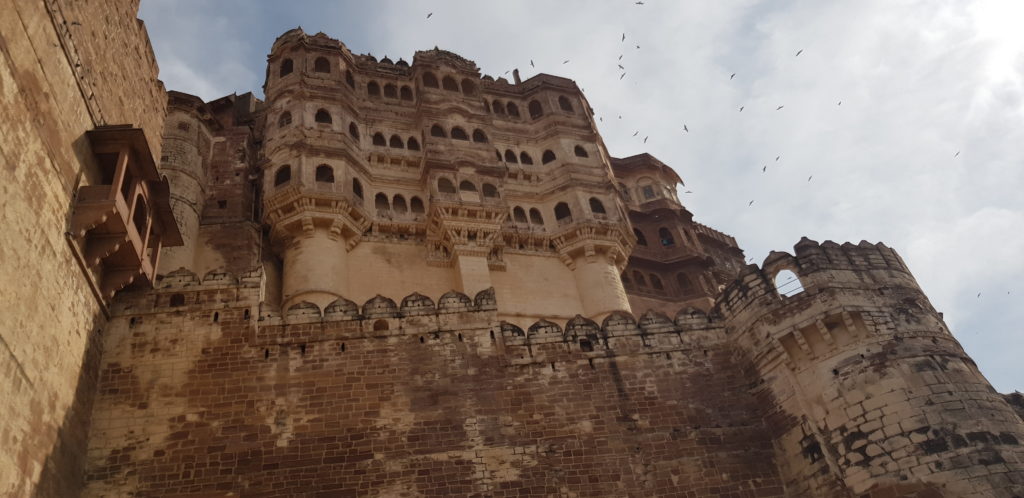
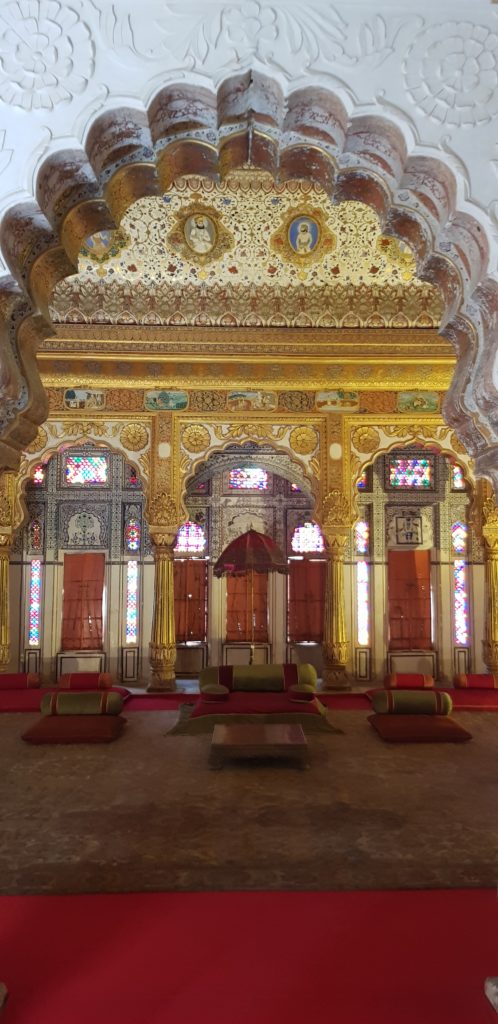
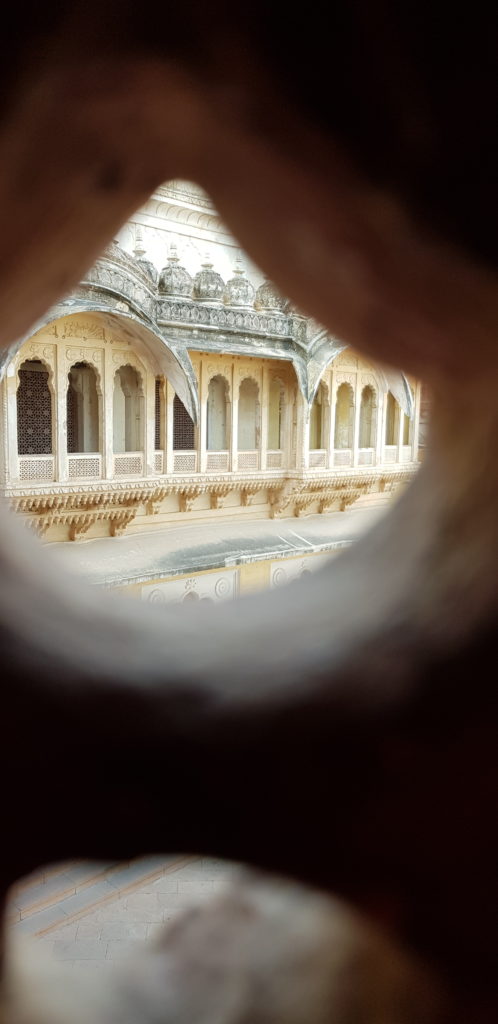
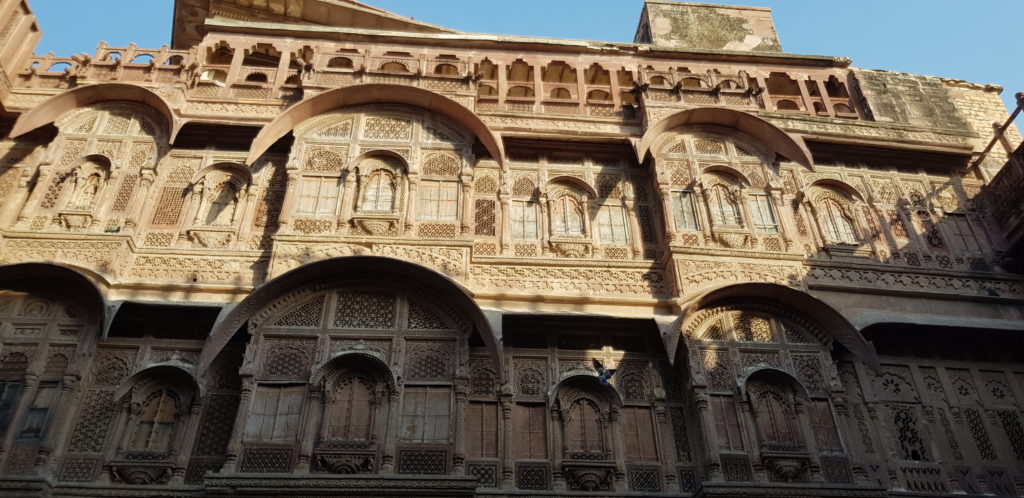
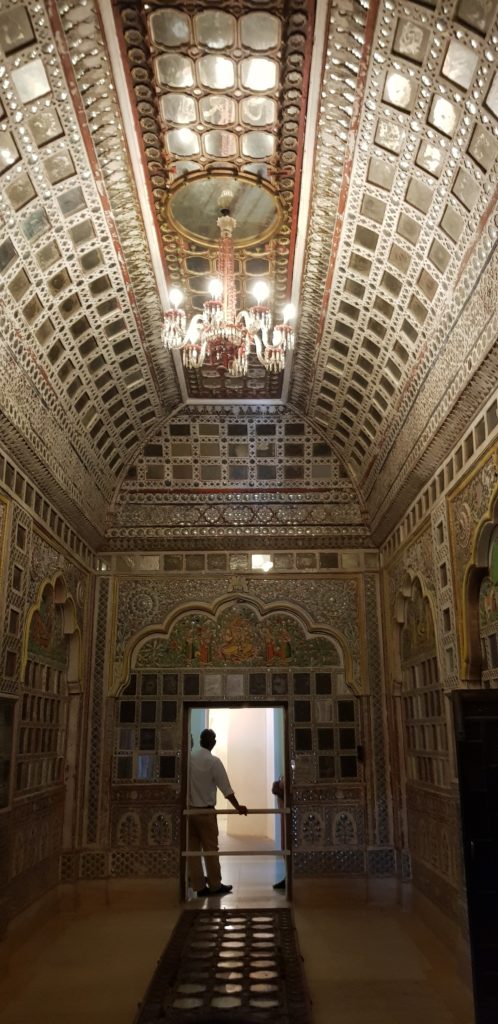
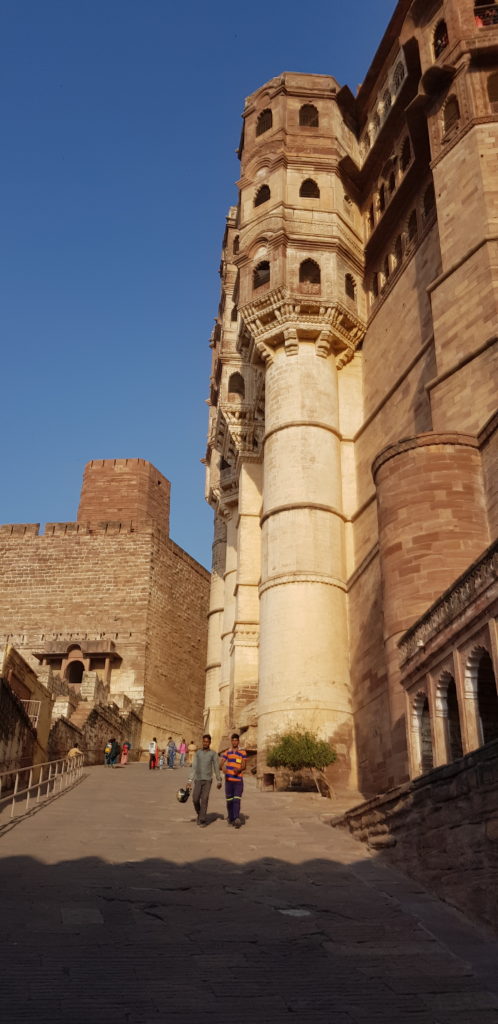
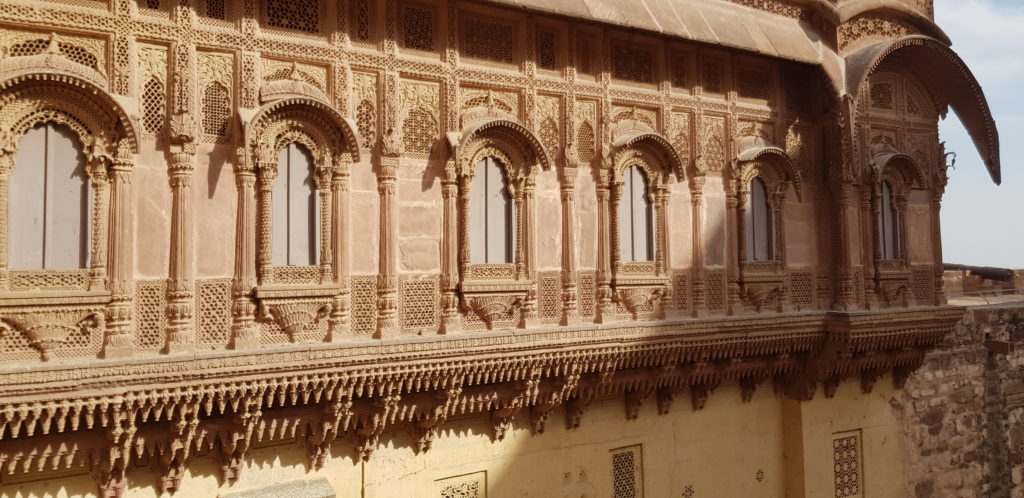
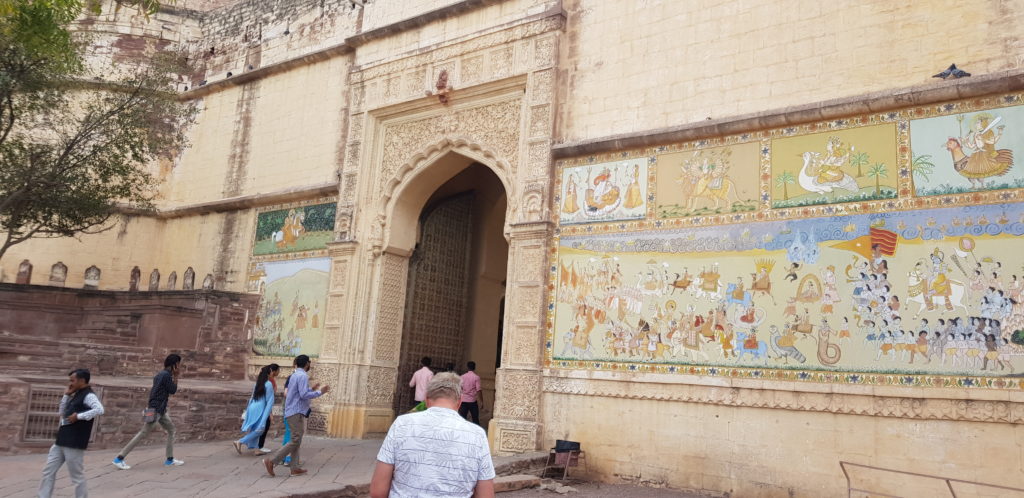
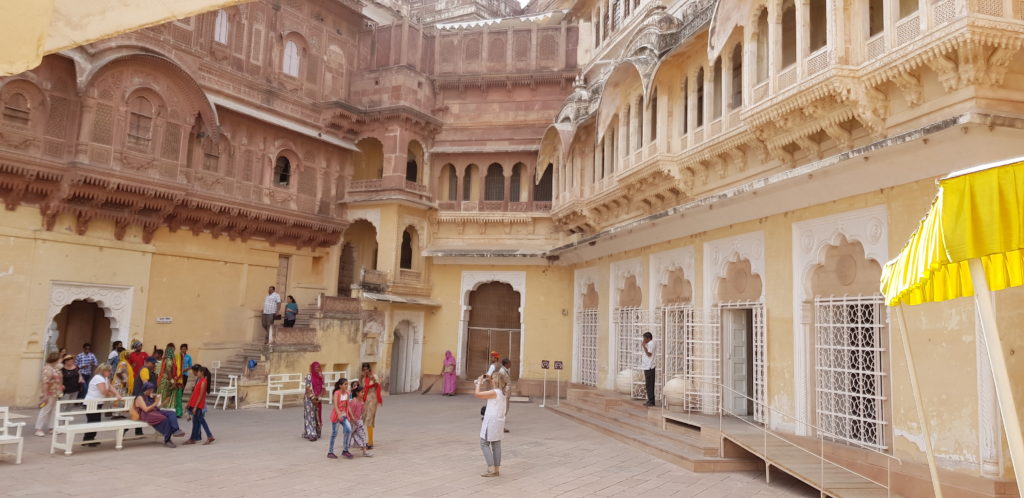
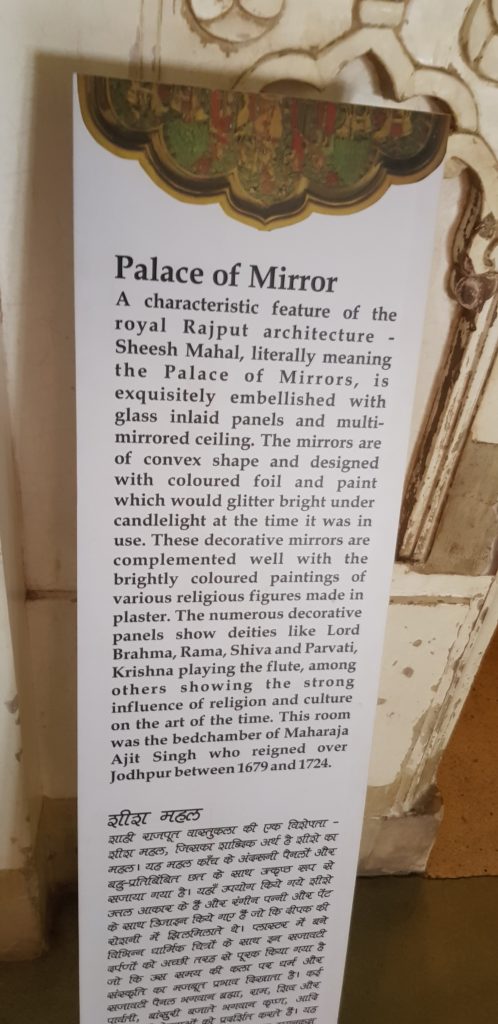
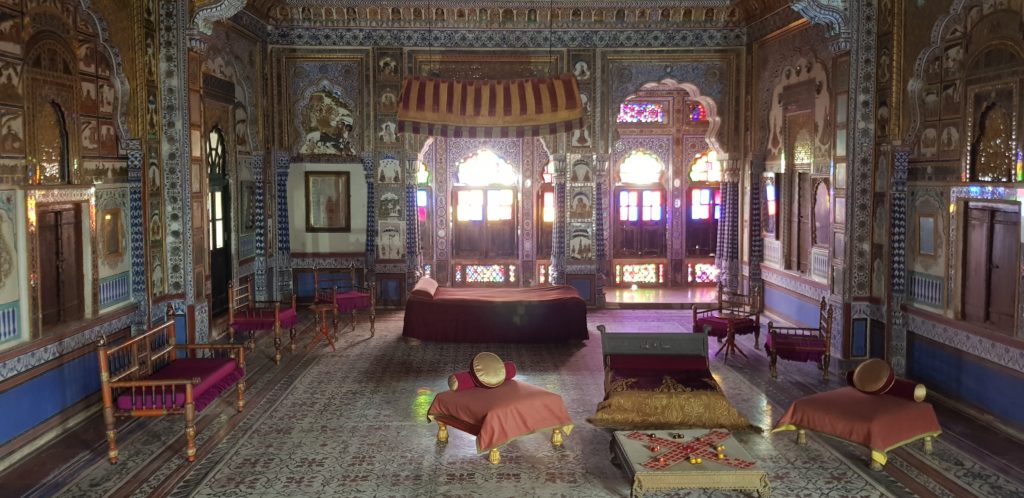
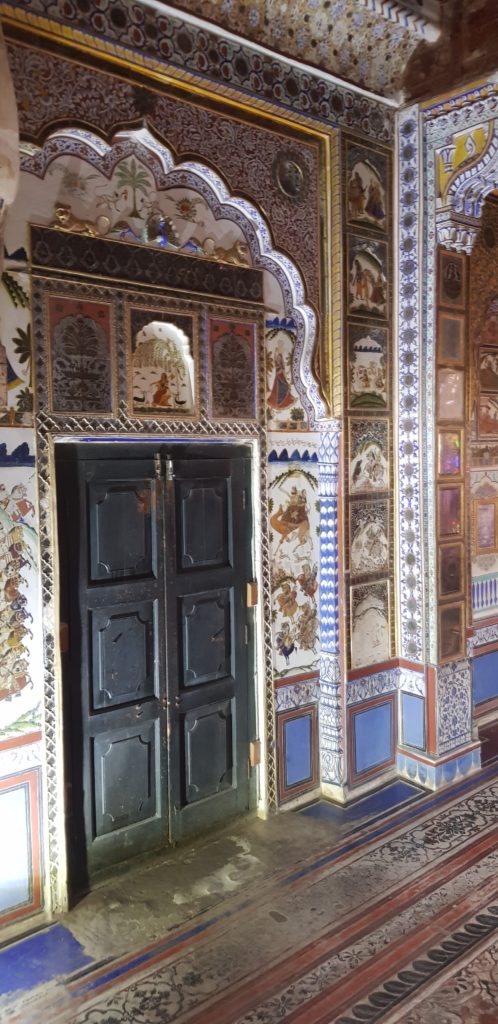
We managed to take a short trip around the 16th century Mehrangarh Fort, thankfully they have a lift to the top levels! The Fort was built 120m above the skyline, with its building materials being chiselled from the rock it stands on. The walls are 10kms long and the city sits within the walls below in a cube type layout. Its still run by the Jodhpur royal family, who provide a trust fund to manage it whilst they live outside the city in a huge palace on the horizon. Some of the rooms were stunningly decorative and full of old family clothes, jewellery, armour and artefacts. One room’s walls and ceiling was decorated with thousands of tiny mirrors and was used as a “pleasure room”…..
Ranakpur
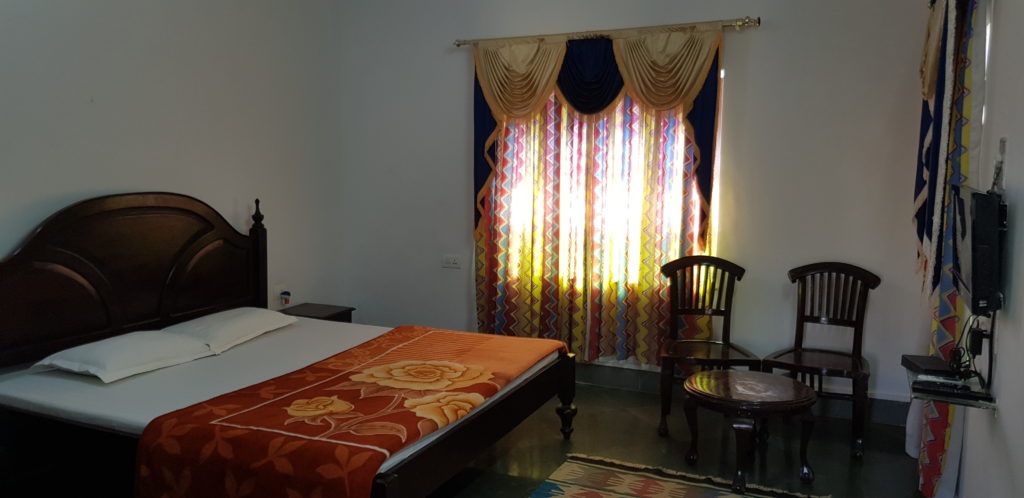
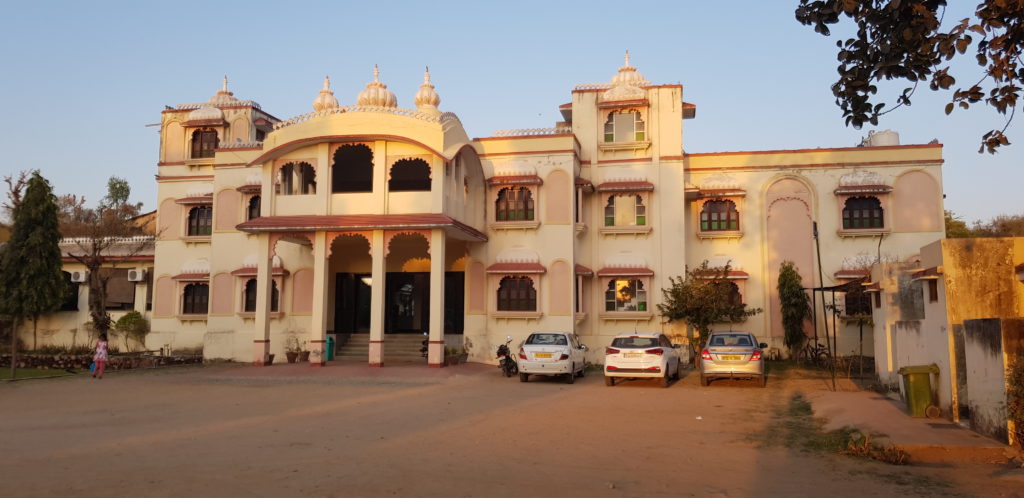
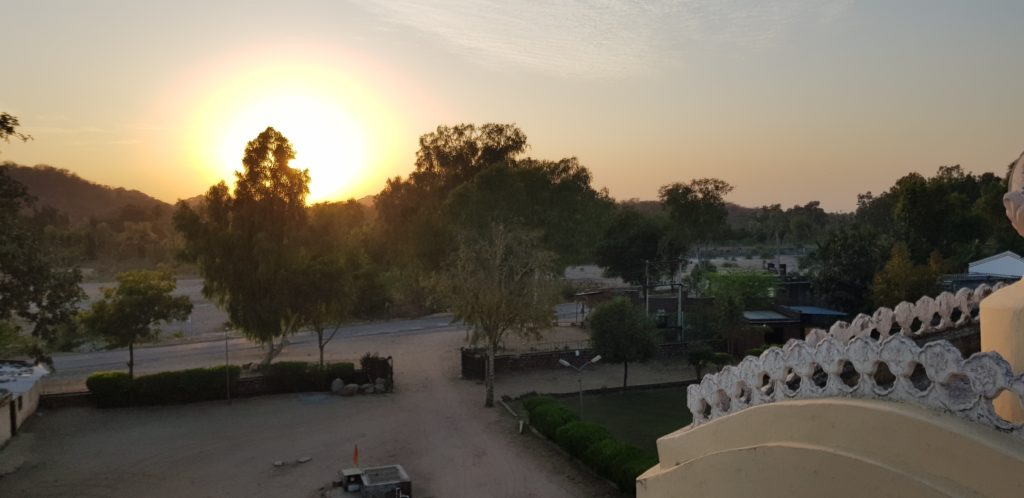
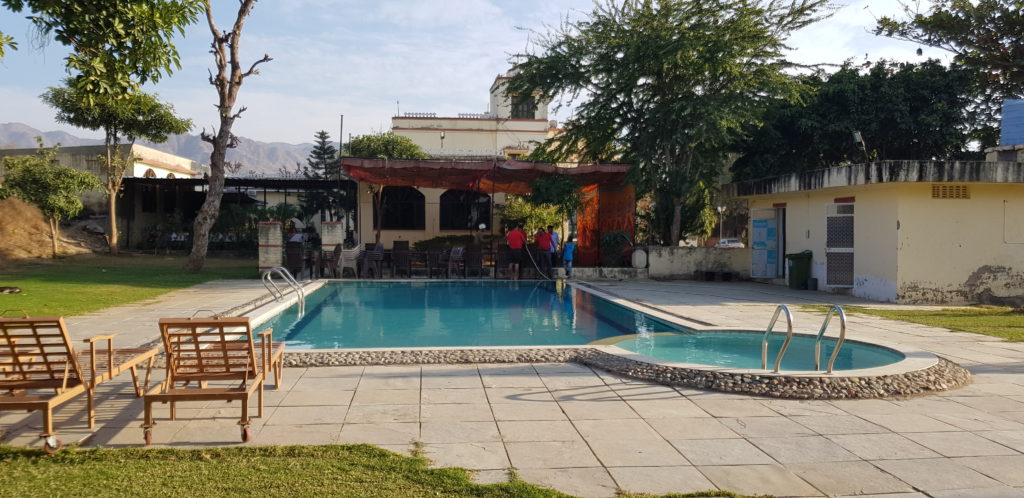
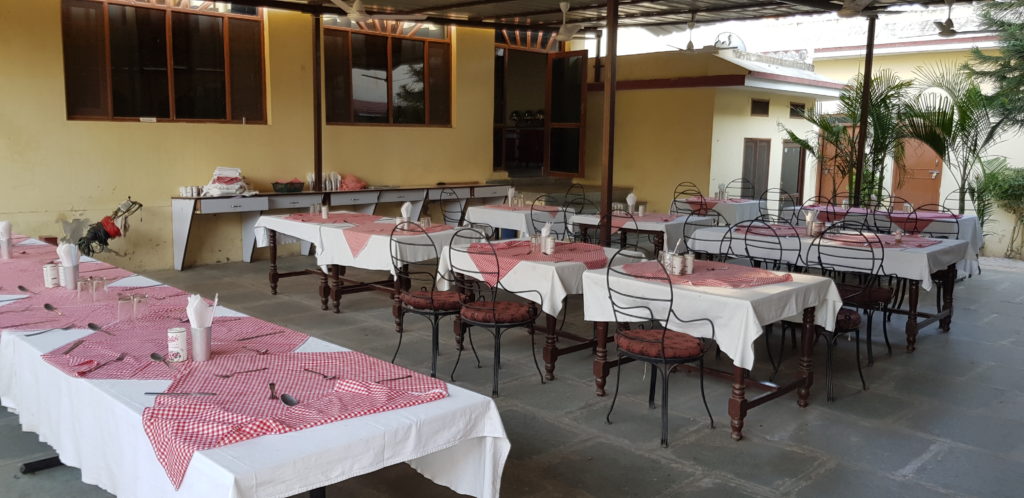
After an evening in the Haveli, we moved onto our next stop – an old hunting lodge in another national park called Ranakpur. The scenery changed from flat scrubland to green forestry areas punctuated by large rocky outcrops. The house was in its own grounds and reminded me of houses in Rhodesia and south Africa, large dusty driveways, dry green grass and flowerbeds around the house tended by old men, few old dogs lazing in the dust and a swimming pool and veranda overlooking the gardens. It had seen better days but it was just a bed for the night.
Jain Temple
We have seen lots of men who look homeless, wander the strees with no shoes and no baggage, stopping outside temples and spending the nights on the floor. I asked our driver why they lived like that? It is their choice, they are single old men who are devout Jainists, they have absolutely nothing except their beliefs. We took a drive out to a Jain temple, Jainism is not a religion but a way of living. Jain followers believe in 5 principles:
1 No violence – allow everyone and everything to live, do not cause harm to any living being, in both thought and action
2 Only speak the harmless truth
3 No stealing – do not take anything that is not properly given
4 Remain celibate or monogamous
5 Non possession – detach from materials things, people and places
Jainism is practised full time by priests, who believe the universe is eternal and they live in a state of “kevala” – perfect bliss and existence without form. In other words, they are homeless wanderers living a simplistic life spreading their word.
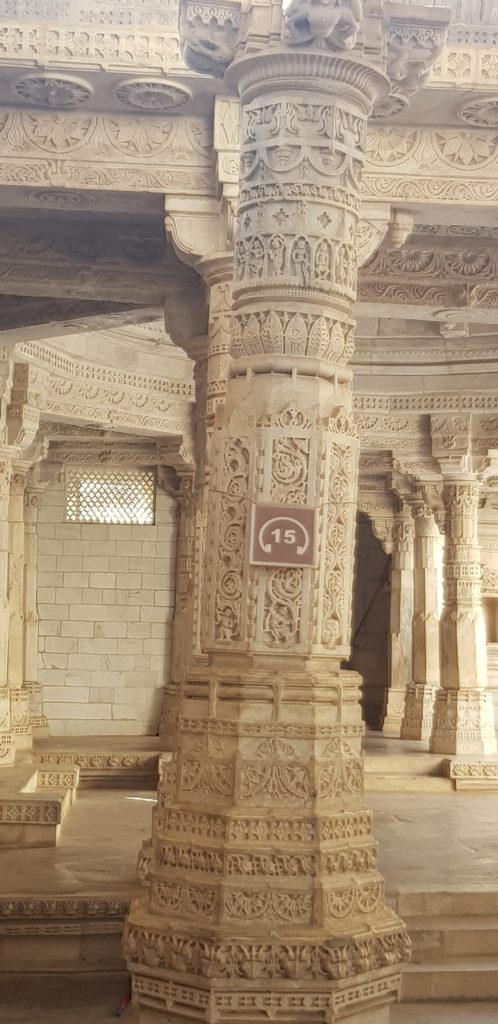
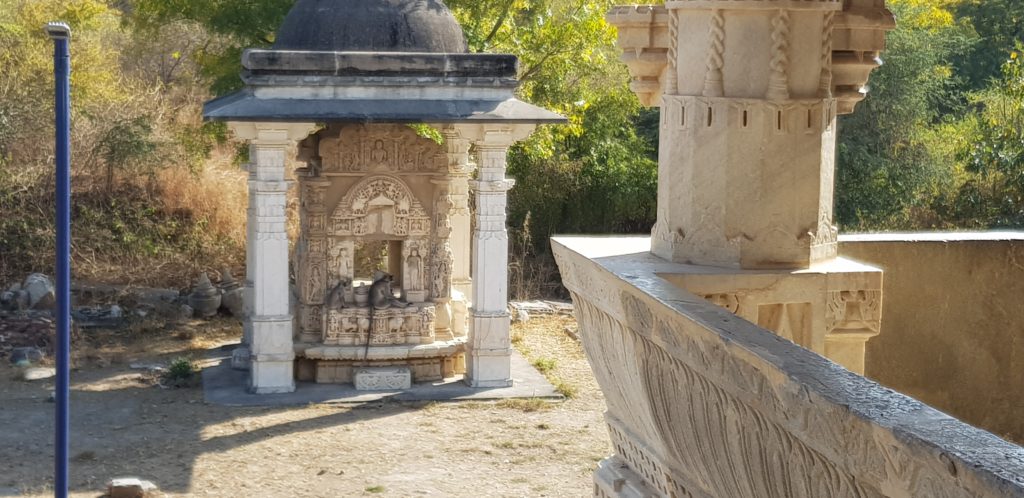
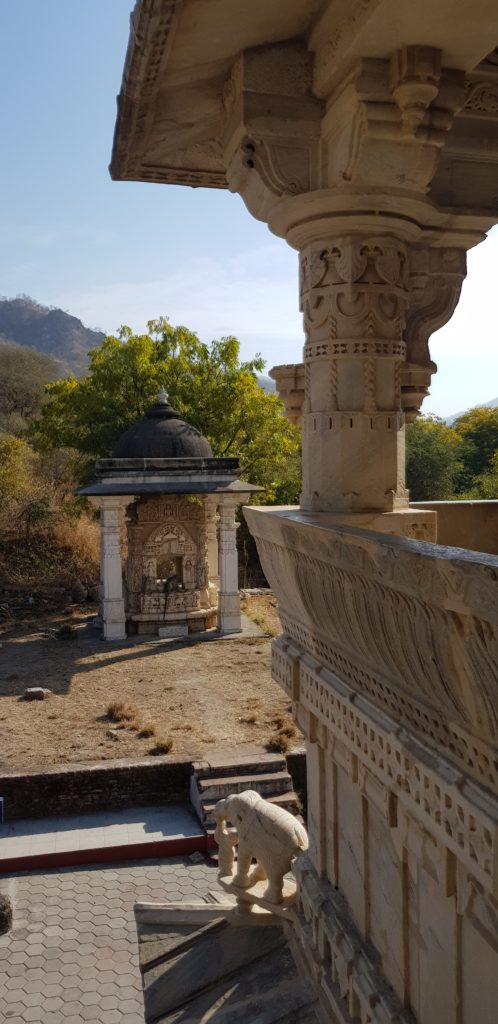
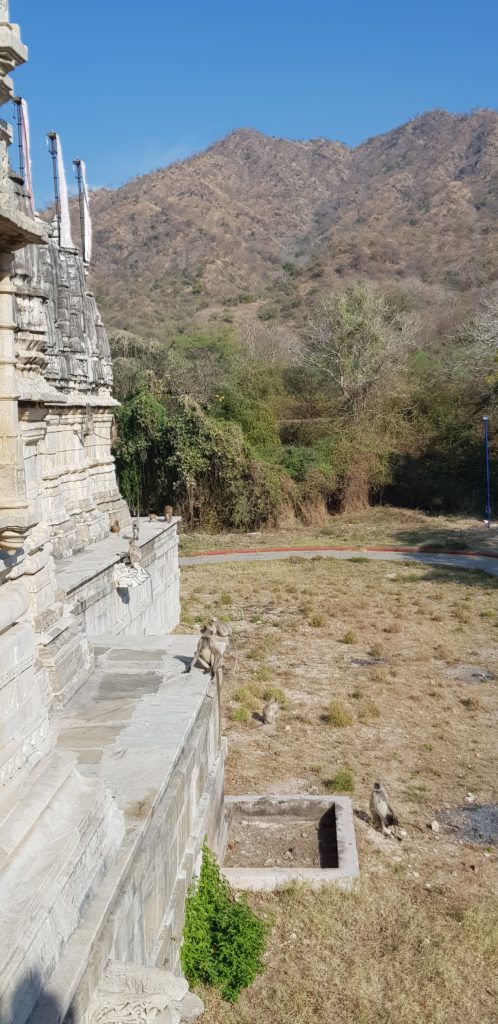
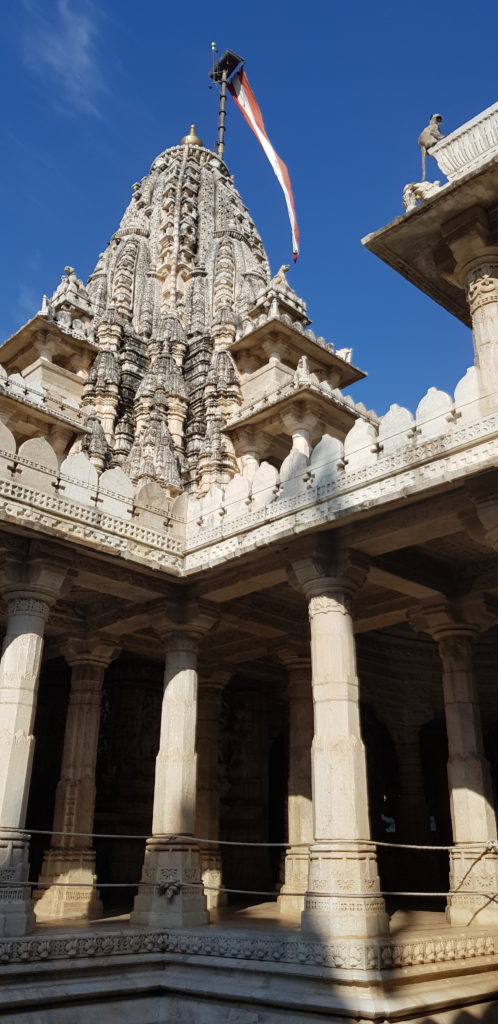
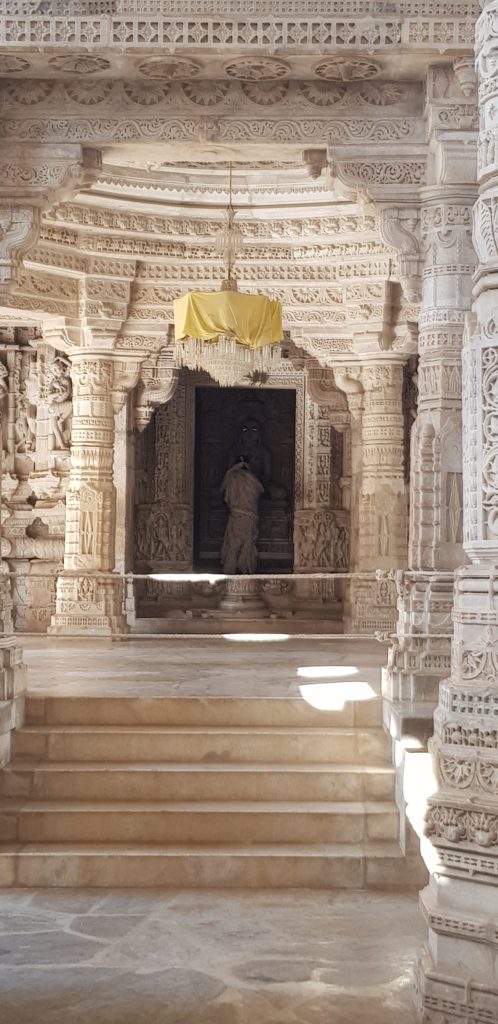
The founder of this way of thinking created this temple so every religion could worship here, the building is an incredible construction feat. It is totally symmetrical, has 1444 hand carved white marble pillars (no two are the same) and hand carved domes. Only one pillar has been deliberately carved to look like it’s leaning, to show that some things can be imperfect yet still perfect.
Kumbahlgarh Fort
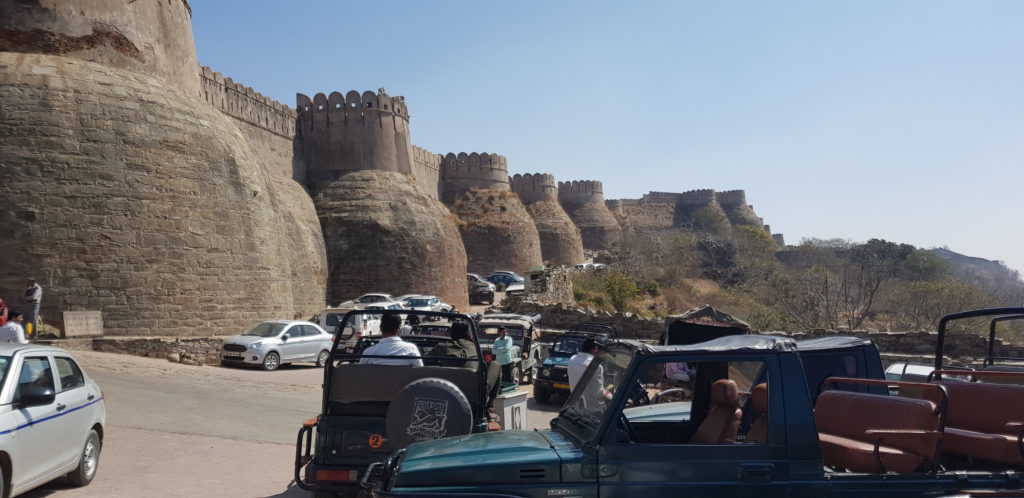
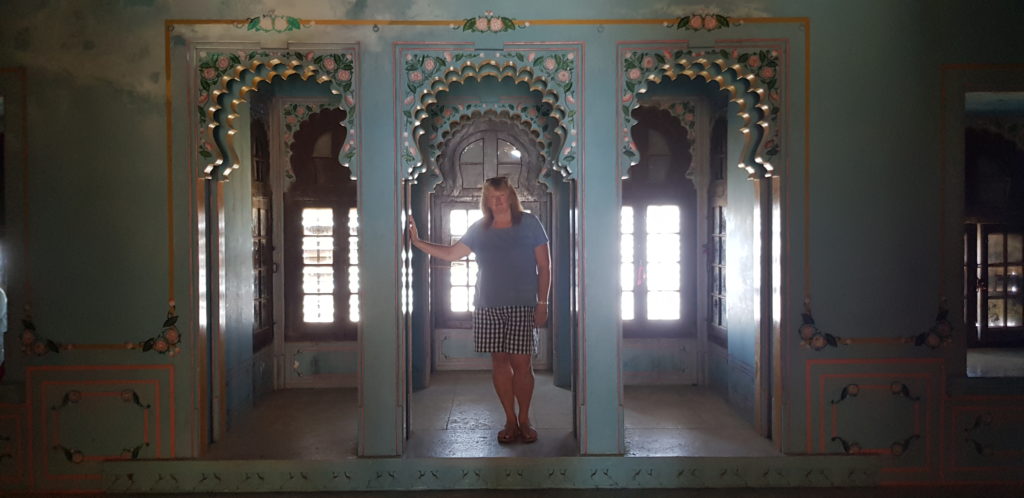
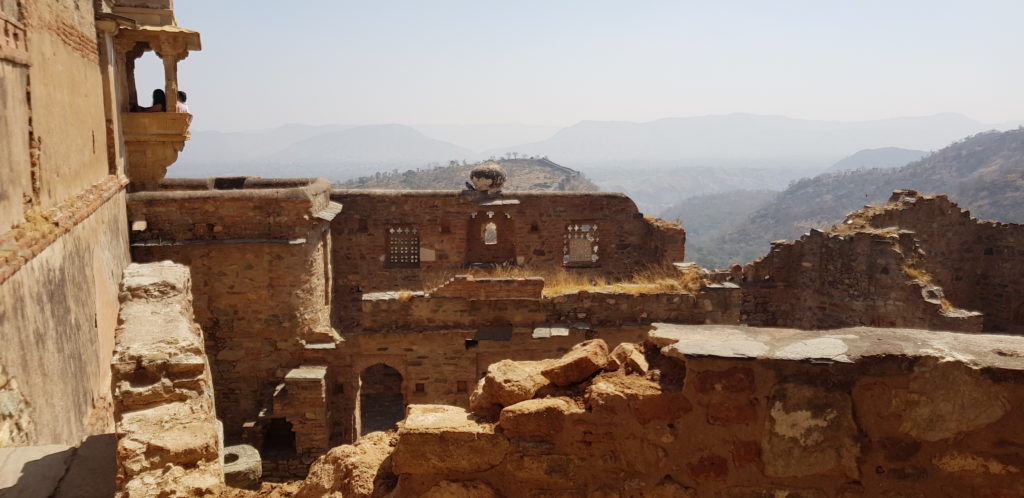
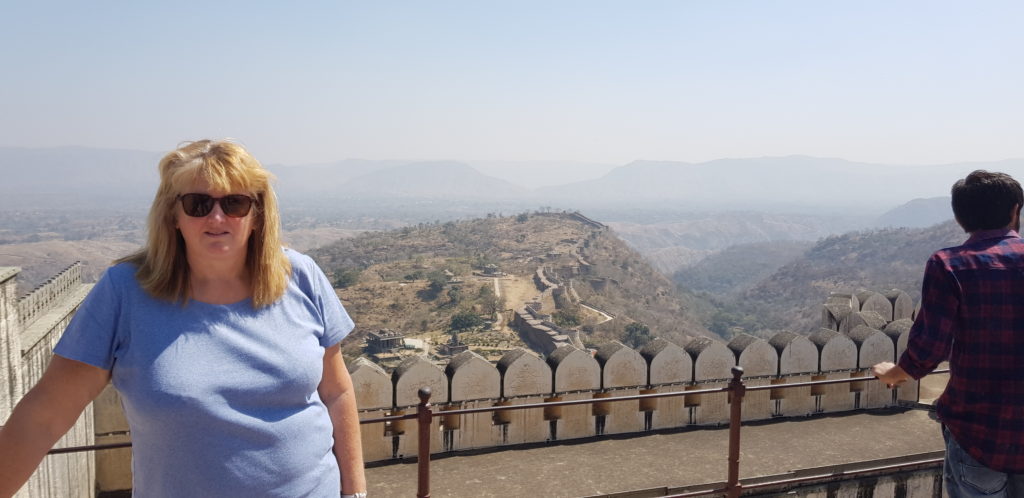
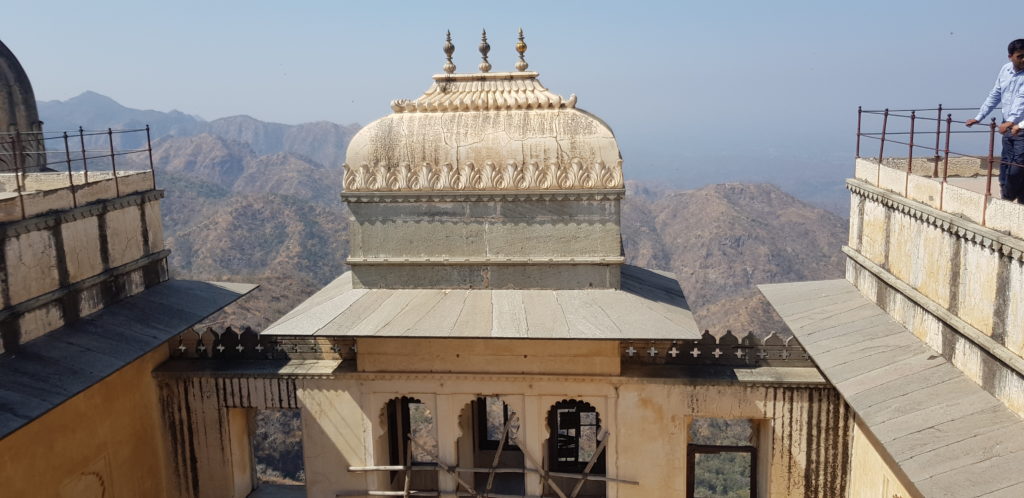
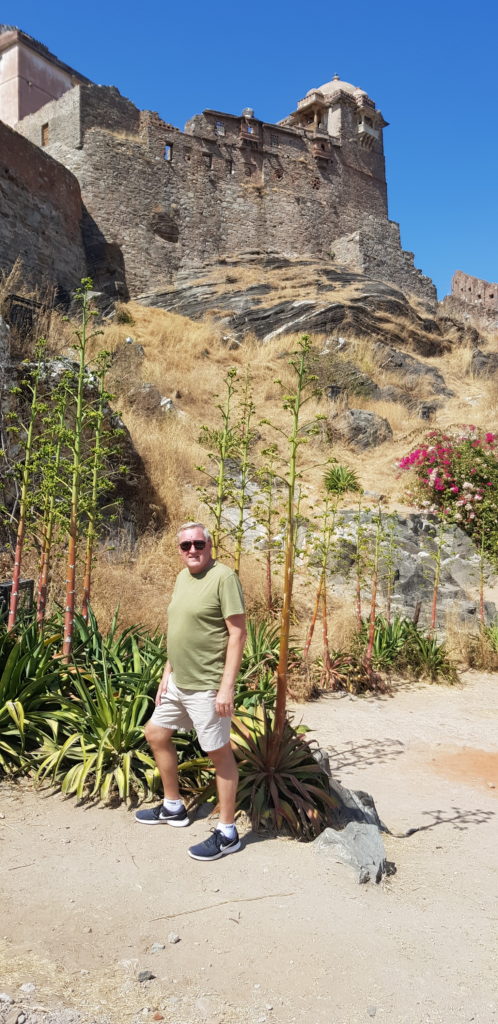
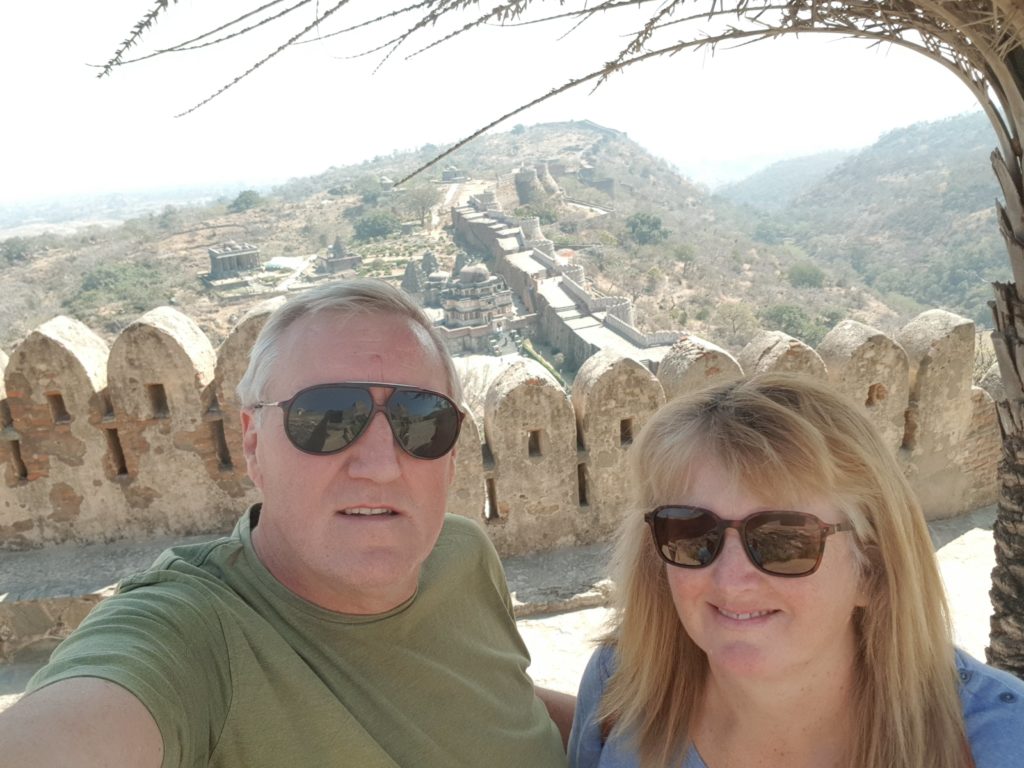
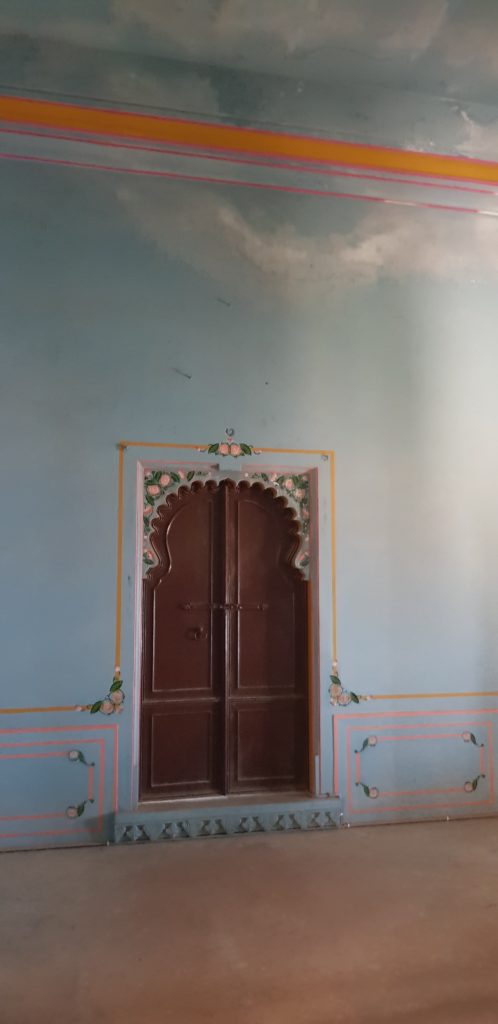
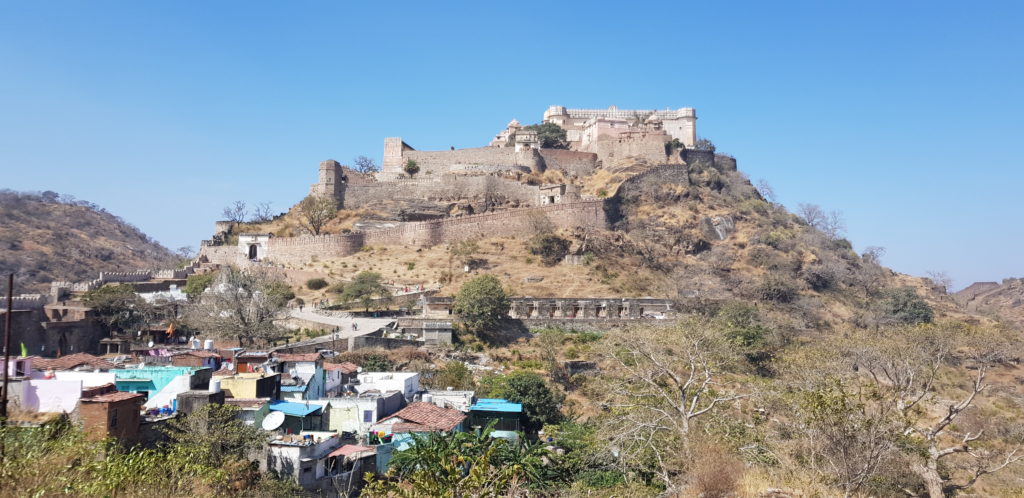
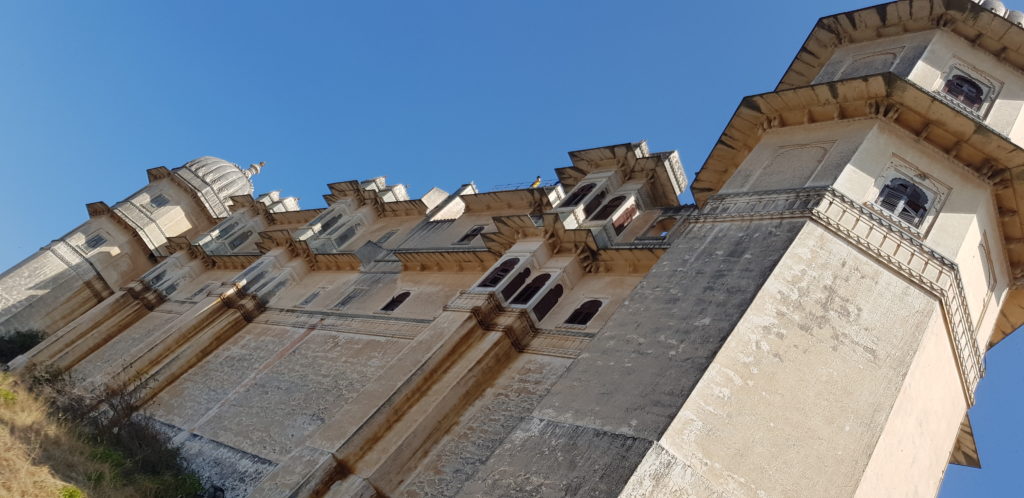
After leaving Ranakpur Park we headed into the Aravalli Hills, a steep winding road into the mountains to visit one of the biggest hilltop Forts we have seen so far. Built in the 15th century by a Maharana, the 14km long walls are thick enough to take a horse and cart, and surround hundreds of temples (some dating back to the 2nd century), a palace, water storage tanks, cannon bunkers and the main fort buildings.
The walkway up was steep, but the views across the old temples and township buildings, towards the mountains and beyond, were outstanding and unbelievable.
From here we headed down the rough potholed roads to our last city in Rajasthan state, Udaipur, the city on the lake.
INCREDIBLE INDIA …. amazing trip guys .. thanks for sharing the pictures and the history with us .. stay safe .. and enjoy the beaches ..