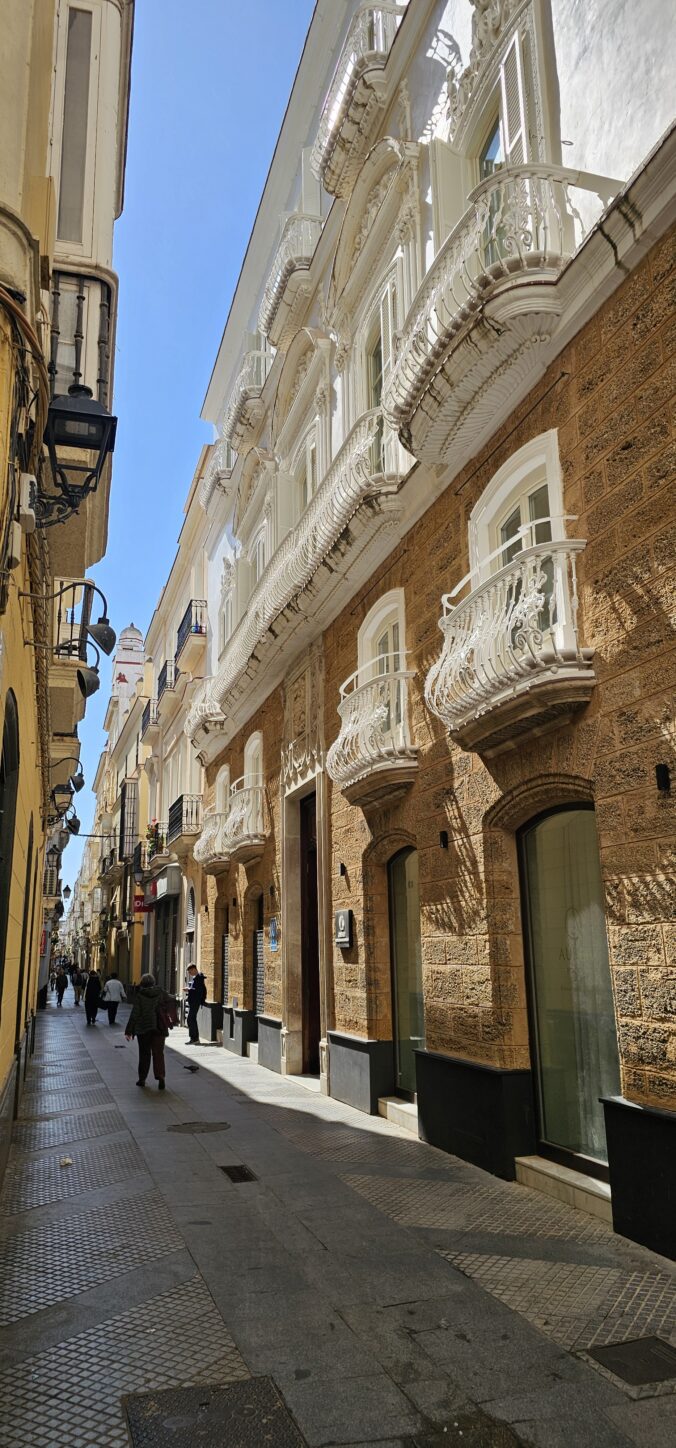
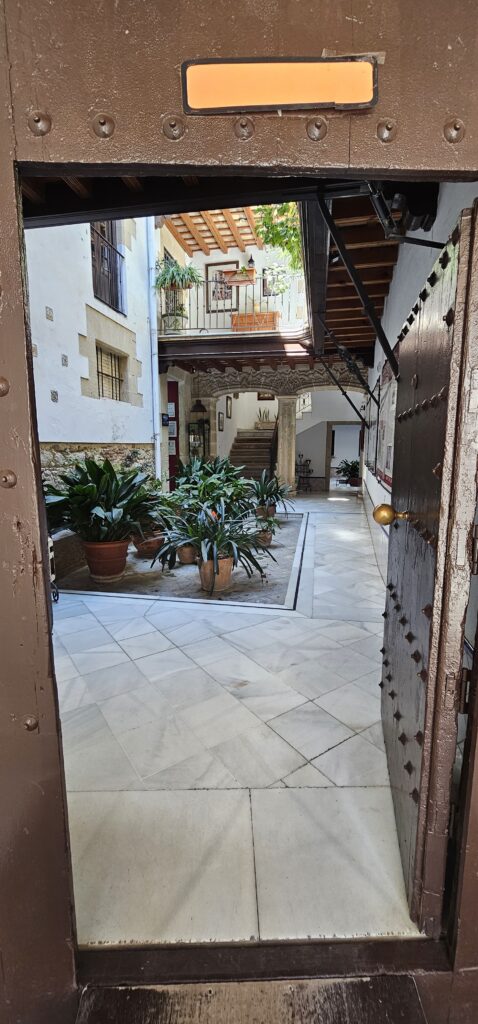
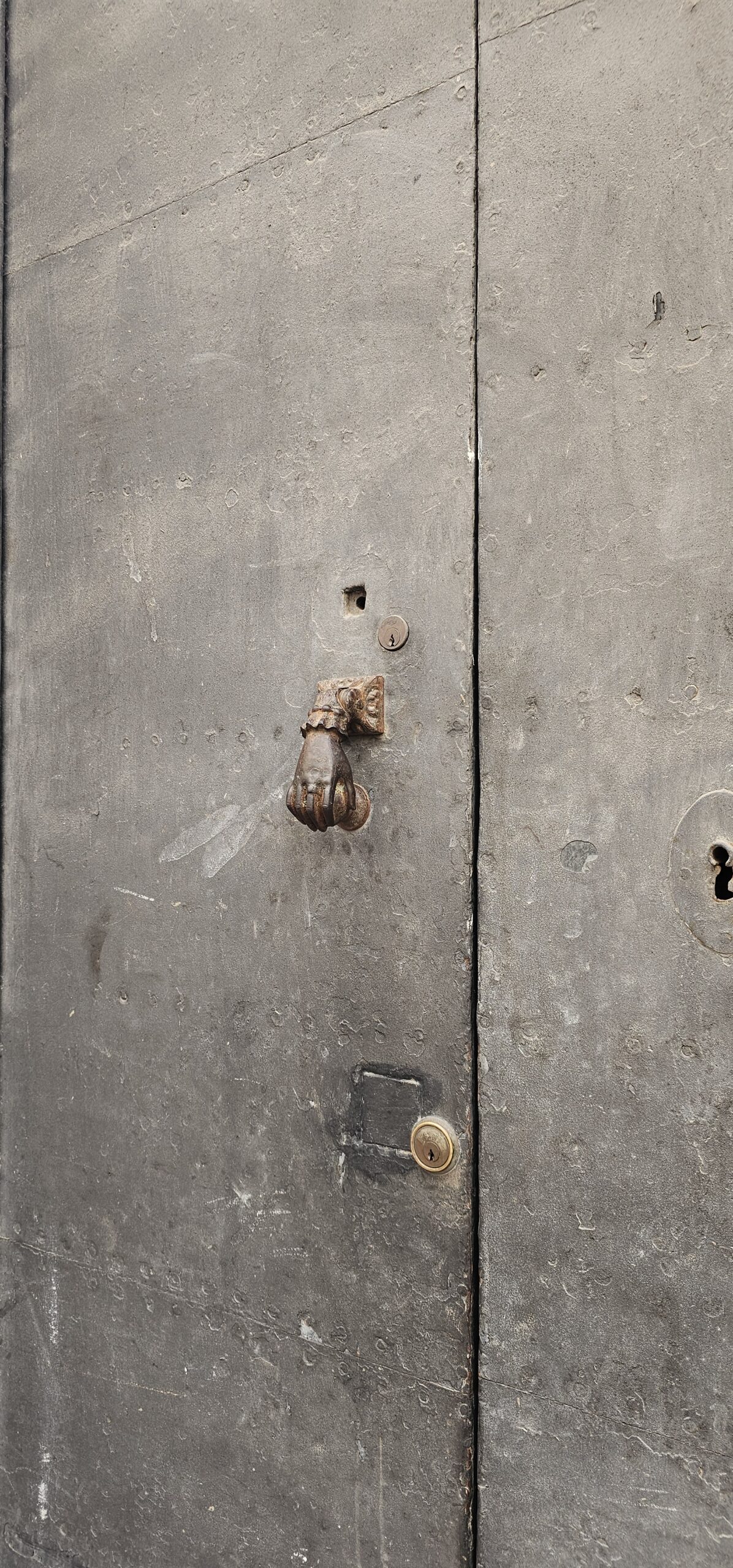
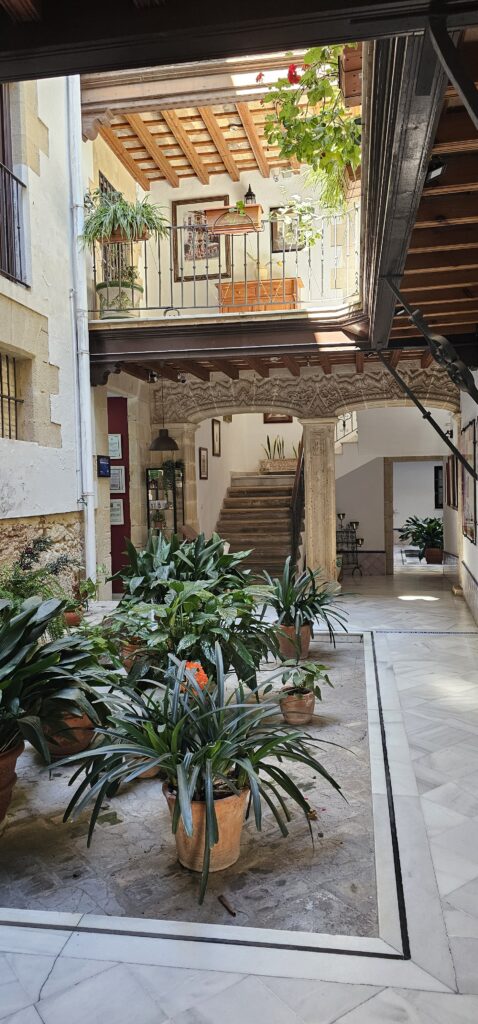
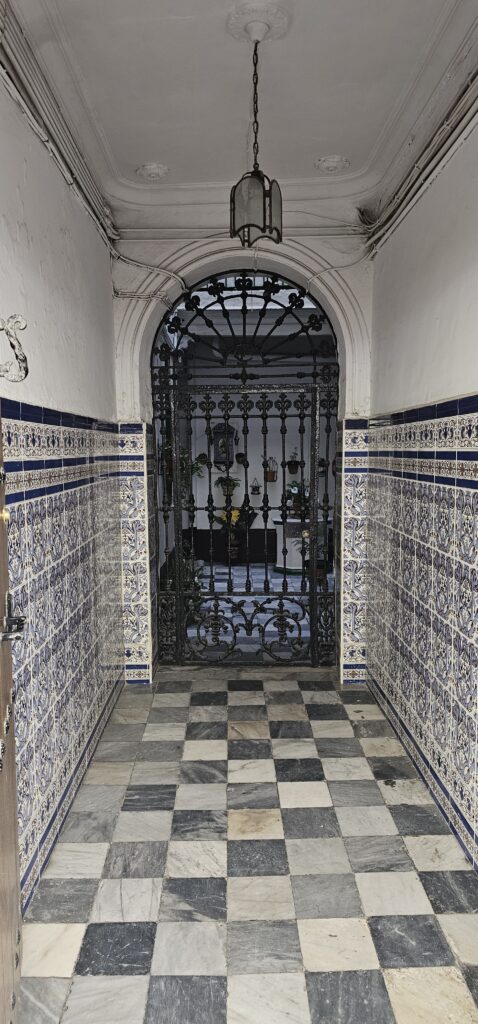
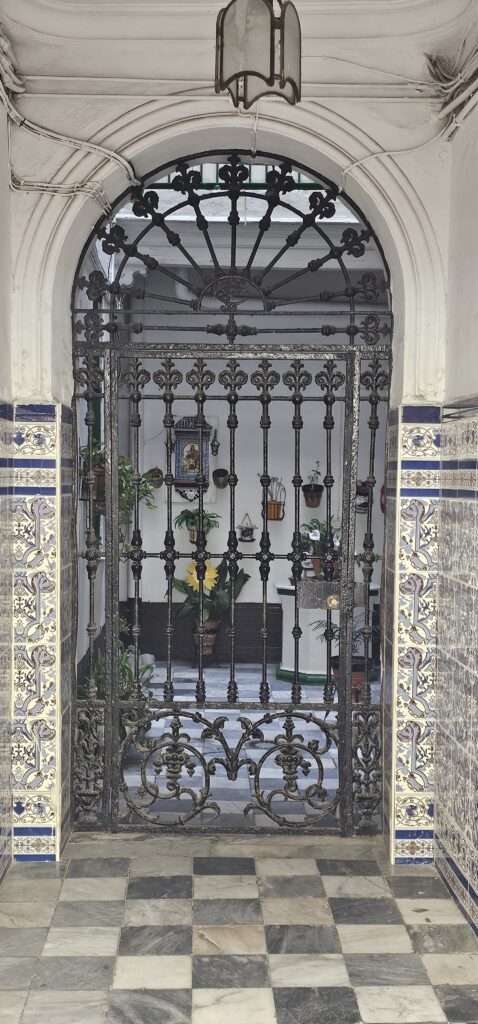
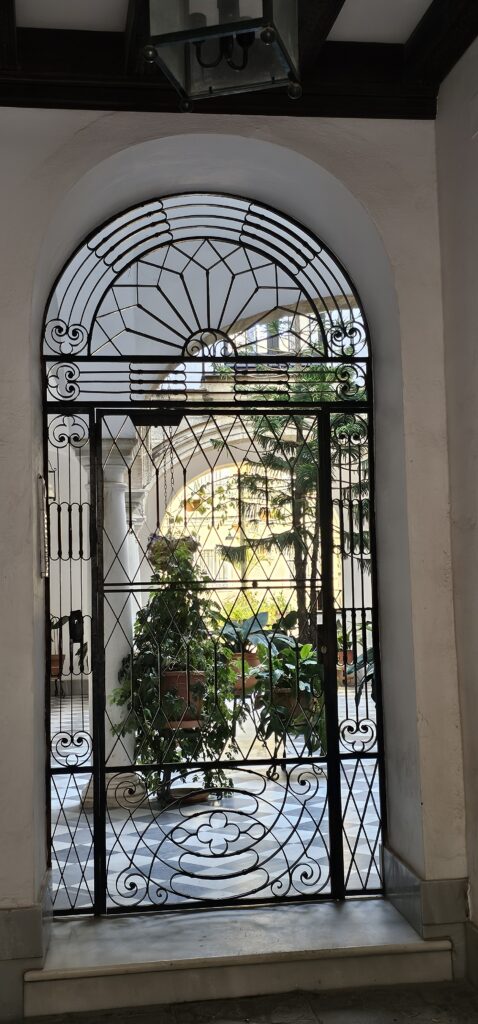
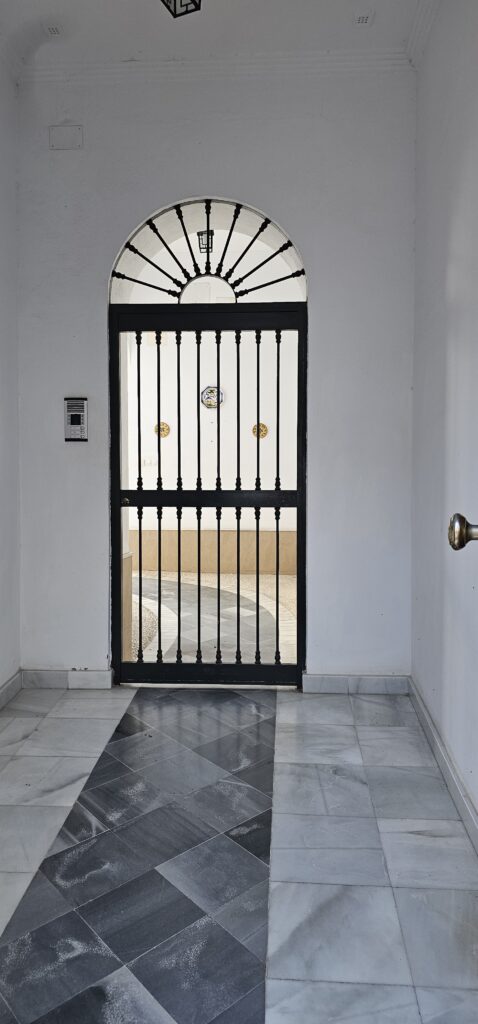
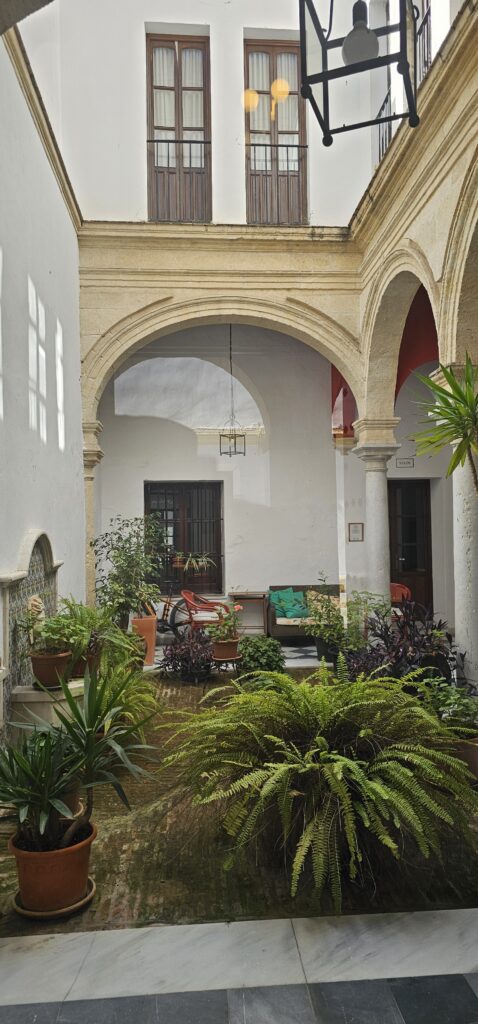
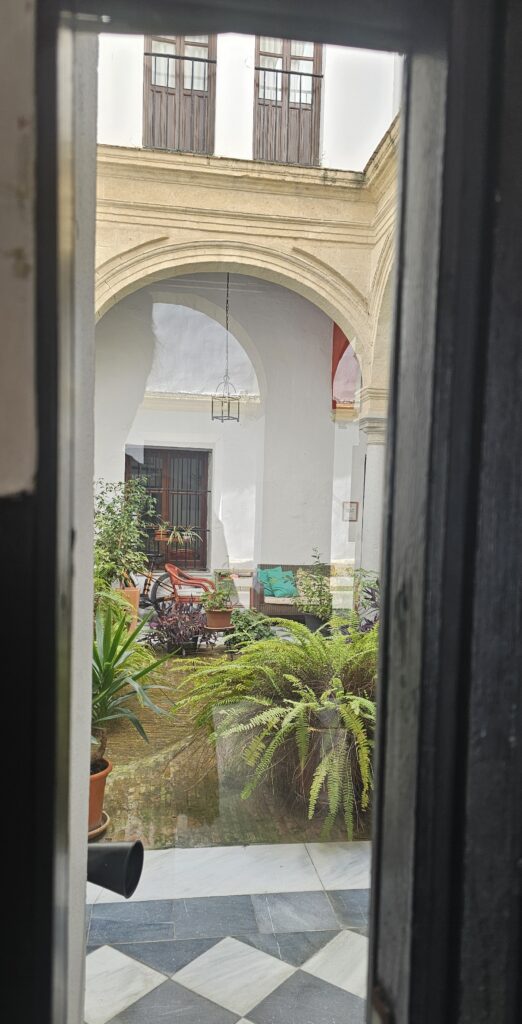
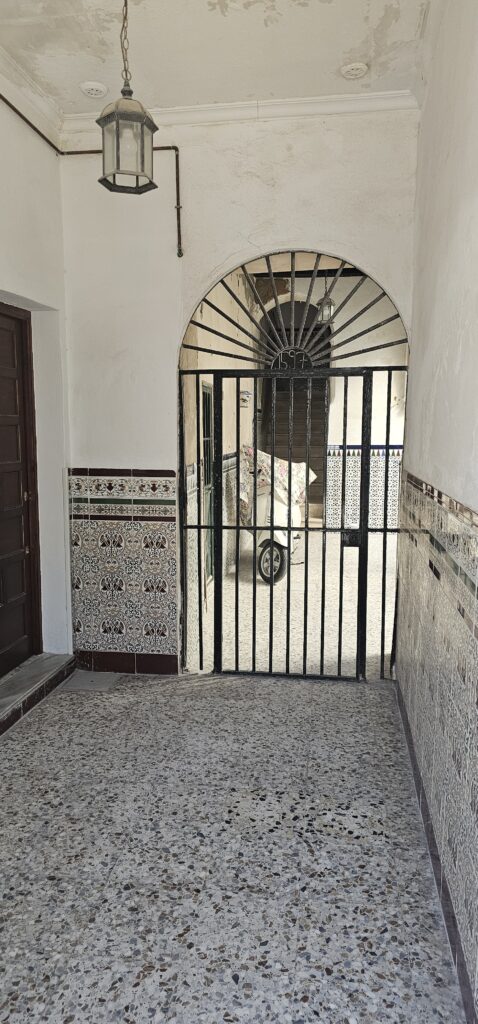
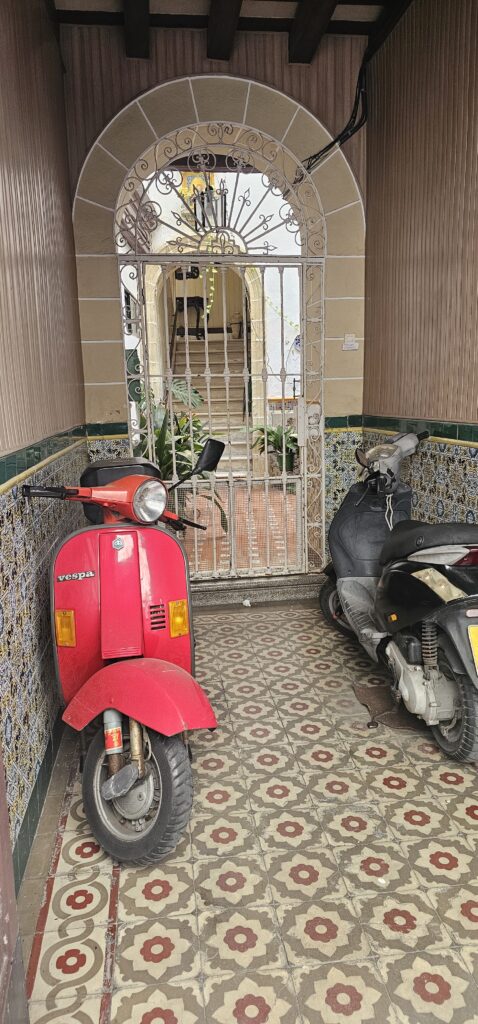
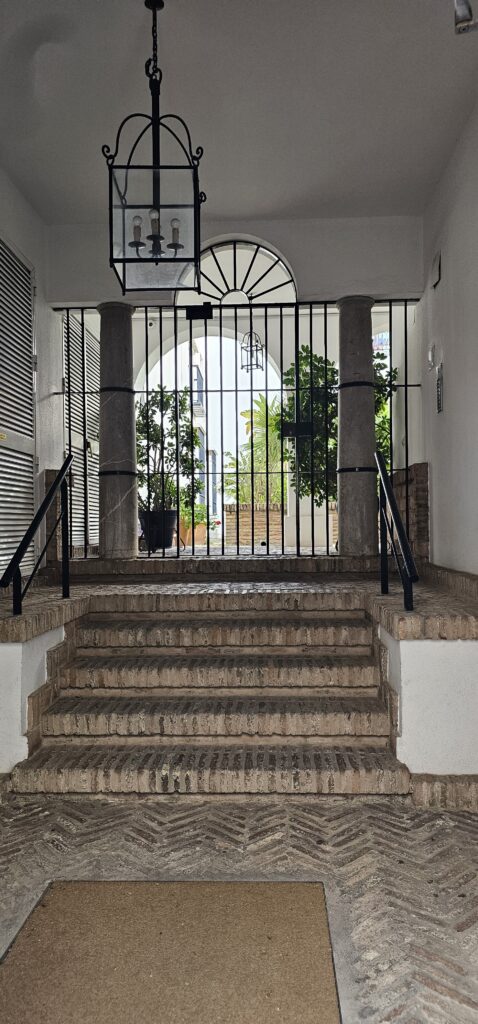
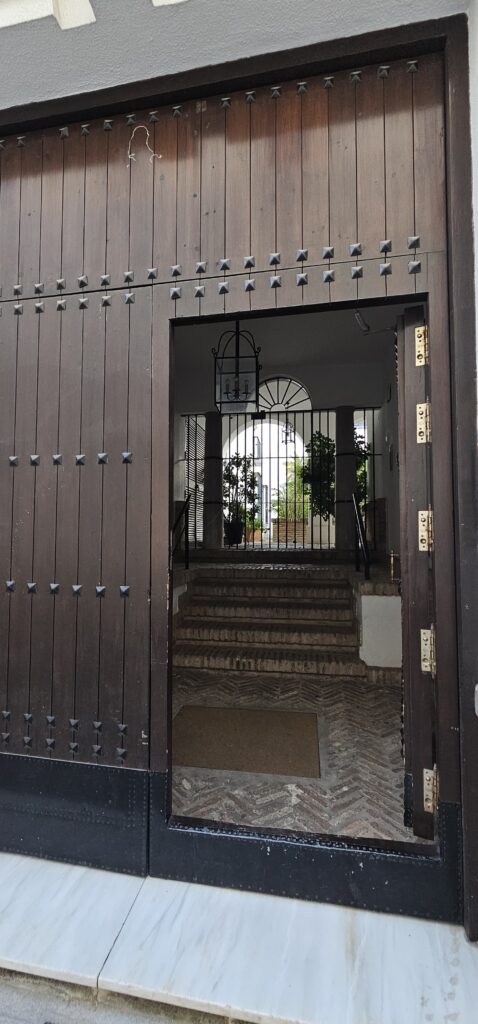
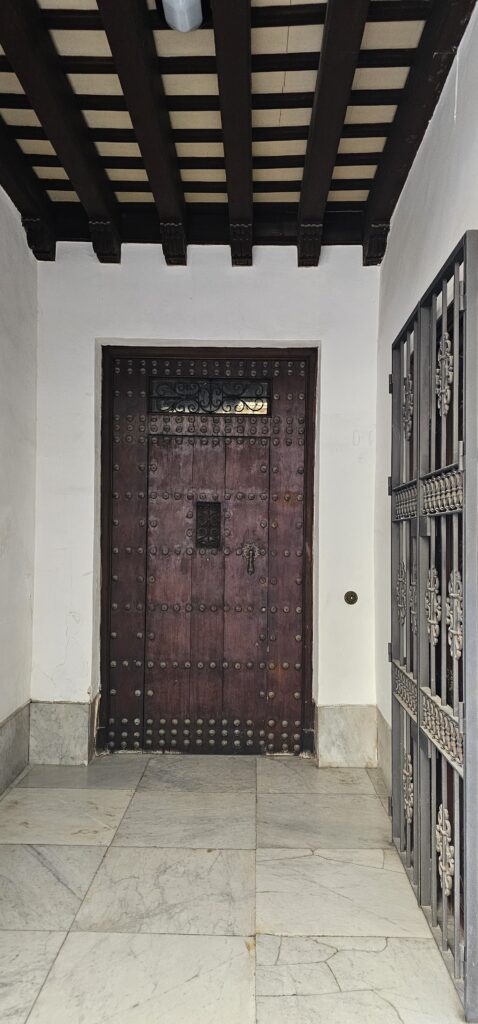
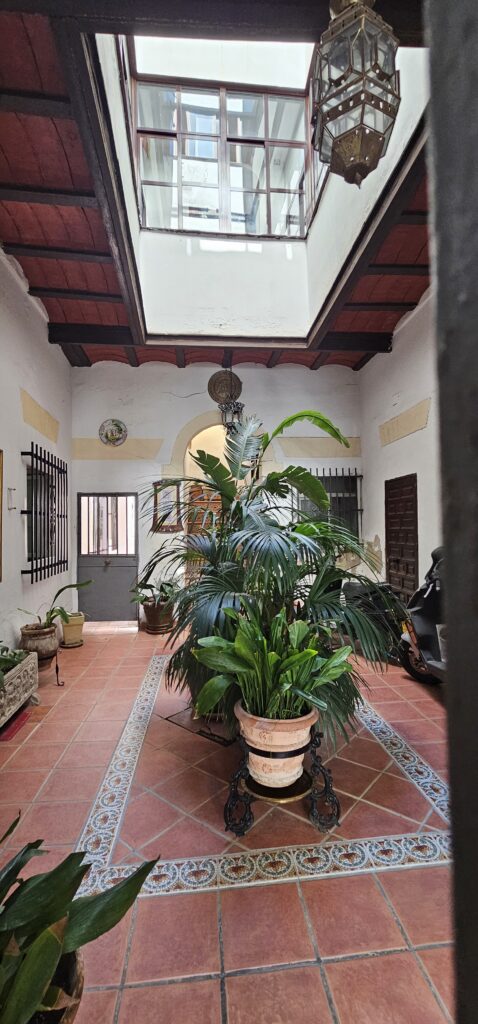
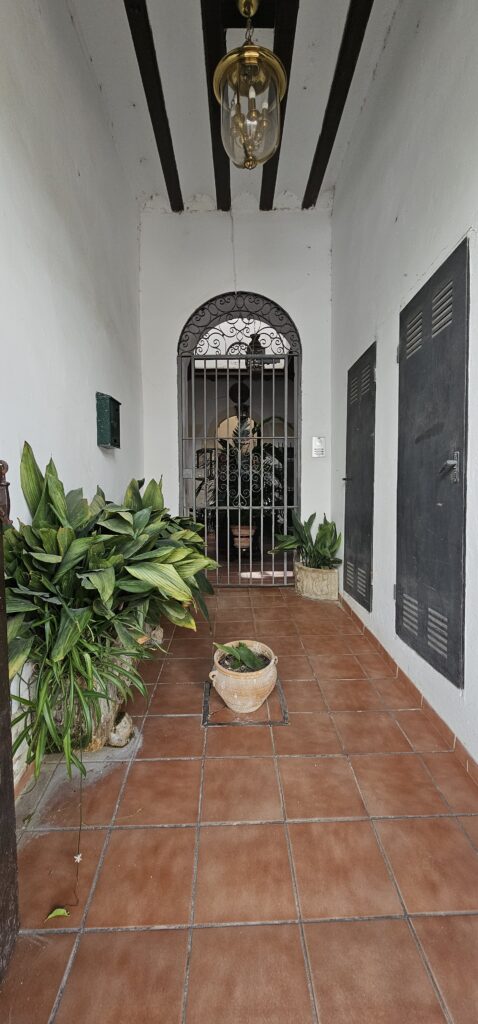
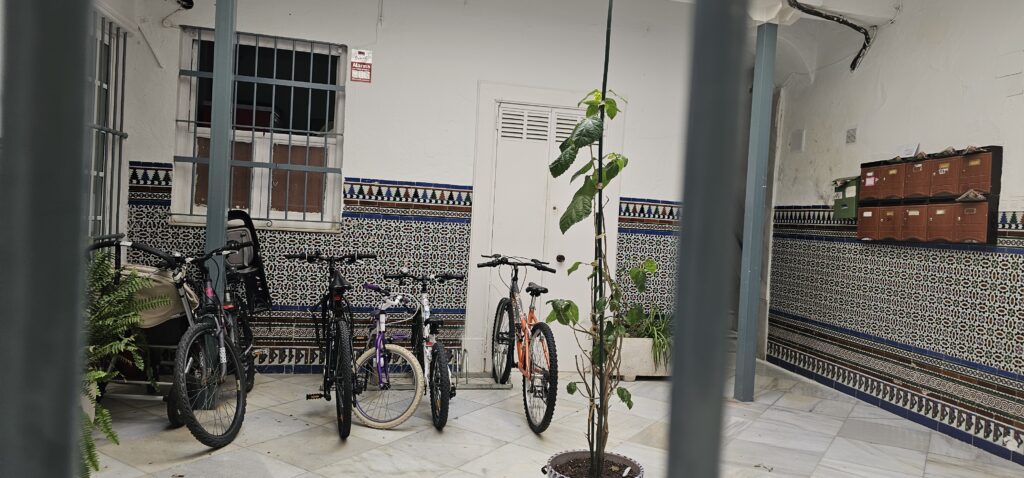
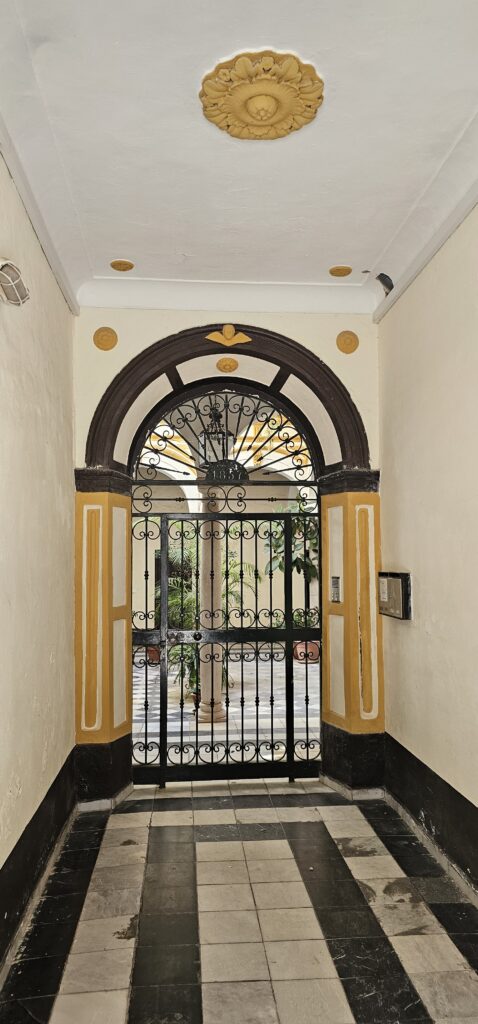
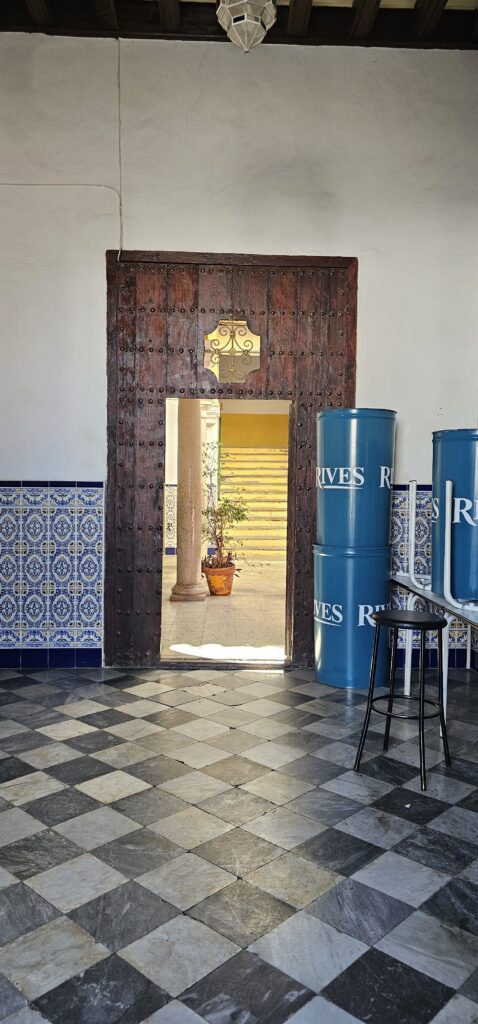
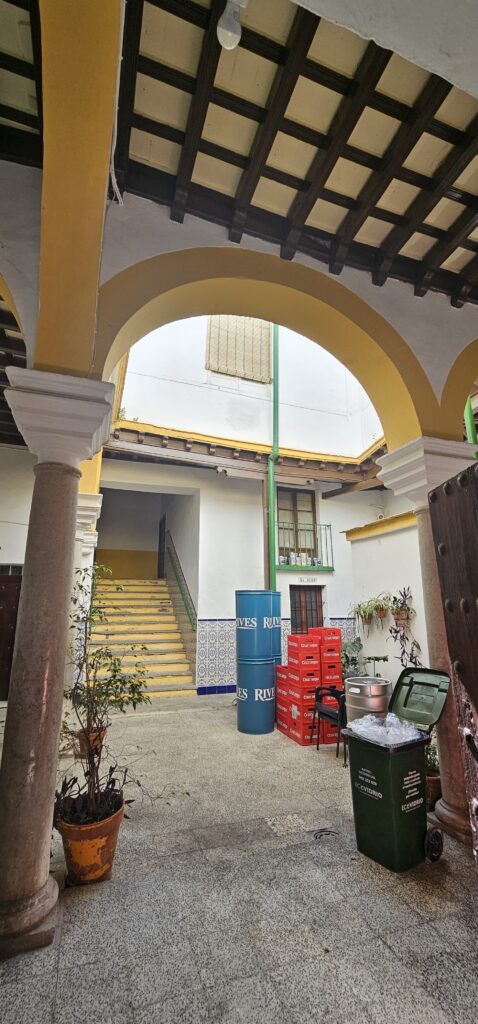
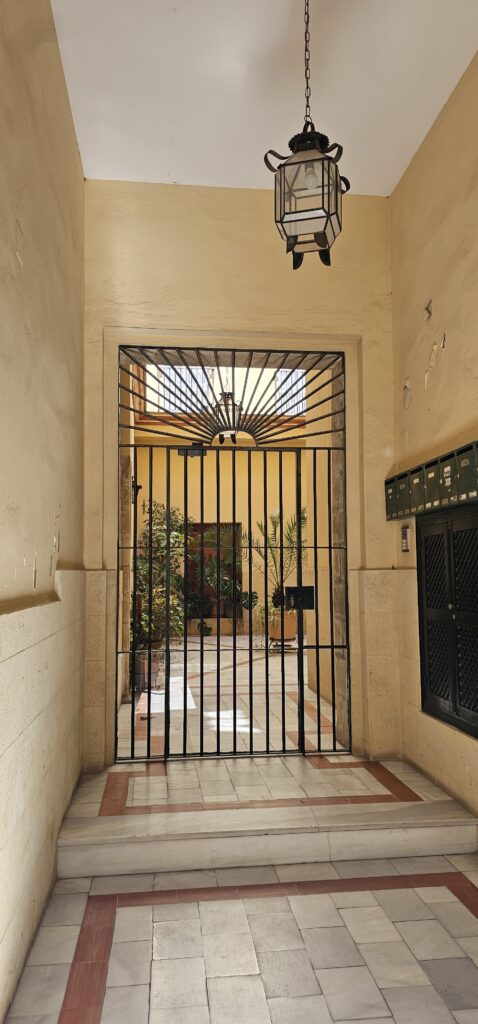
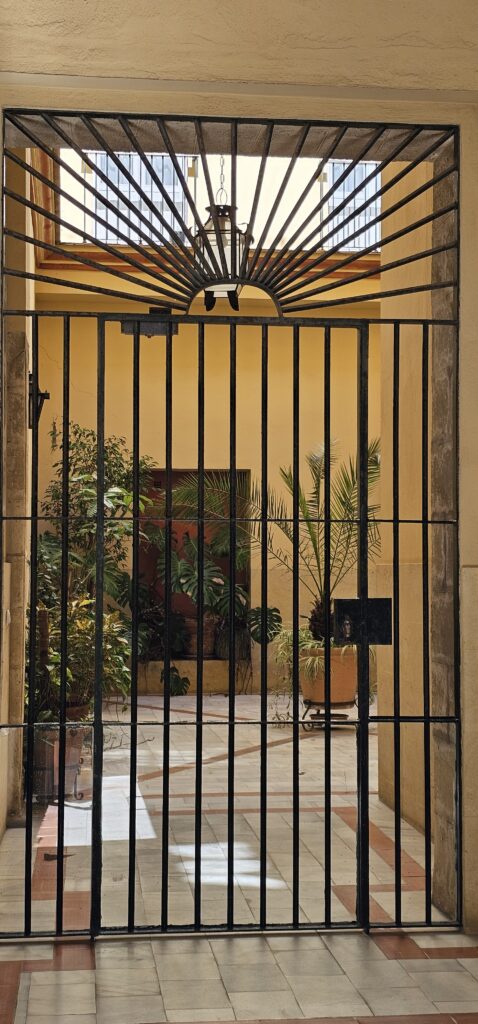
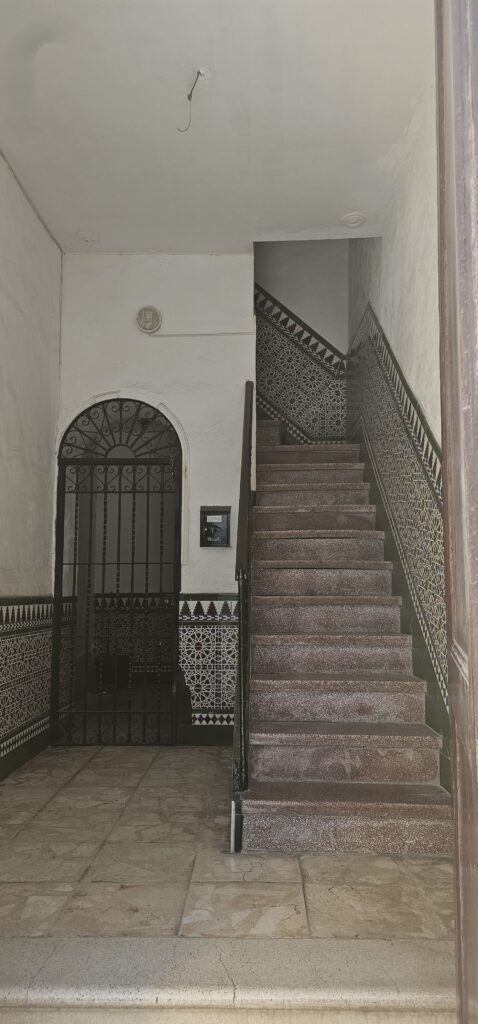
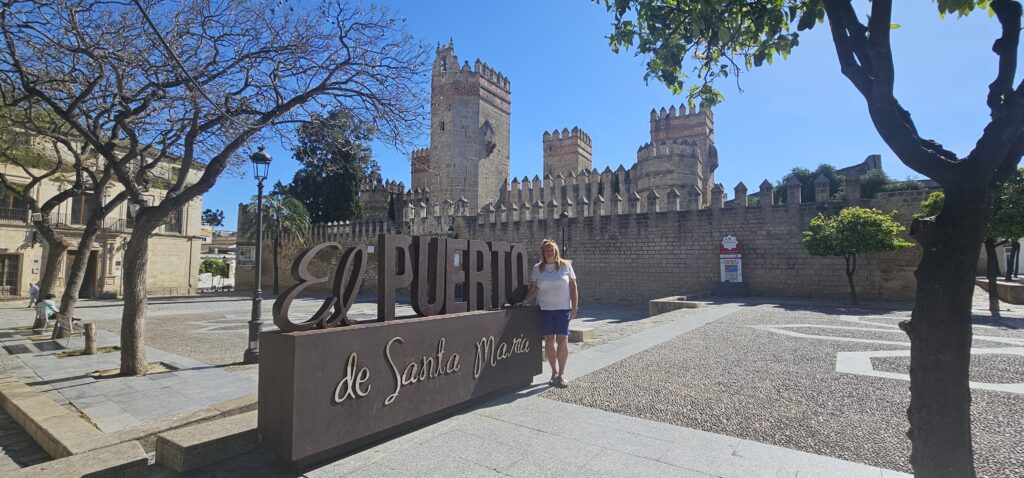
Most people know of my love of architecture and with El Puerto de Santa Maria being the Town of 100 Mansions, I did contemplate photographing all 100+ properties to show you the size and beauty of the buildings, but something else caught my eye……the porches behind the magnificent wooden front doors!
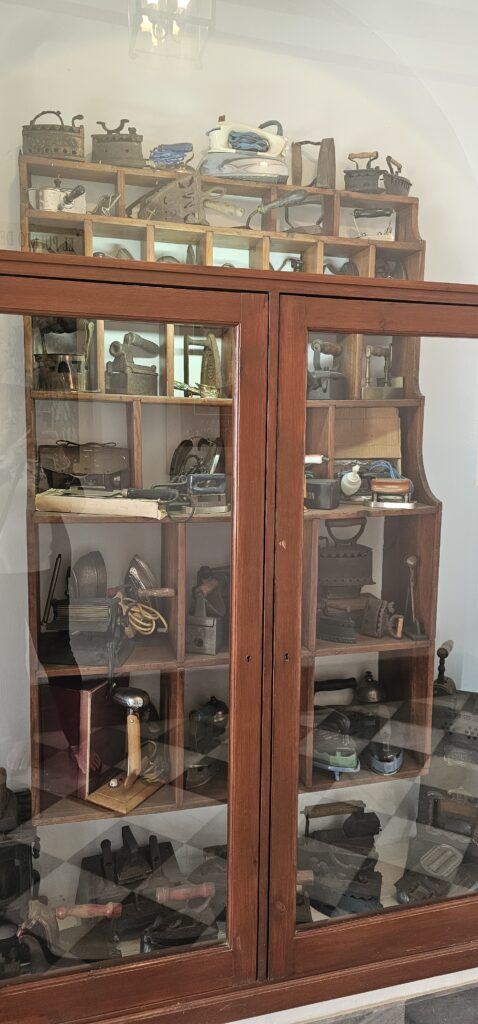
Some were simple, some elaborately tiled, some were commercial, majority were privately owned and used, some had internal stairways, some had balconies, some were full of ornate plants and water fountains but all were different, clean and interesting so here goes……
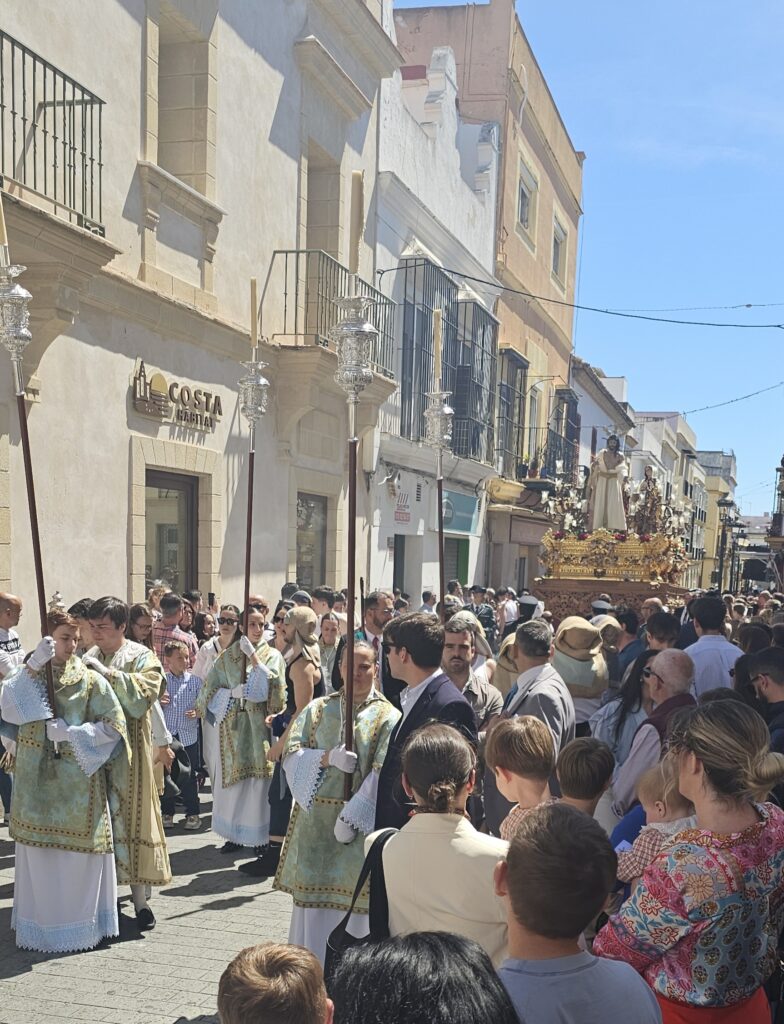
Today is Easter Sunday, a quieter day with less people in town, a smaller more intimate parade and less noise 😀
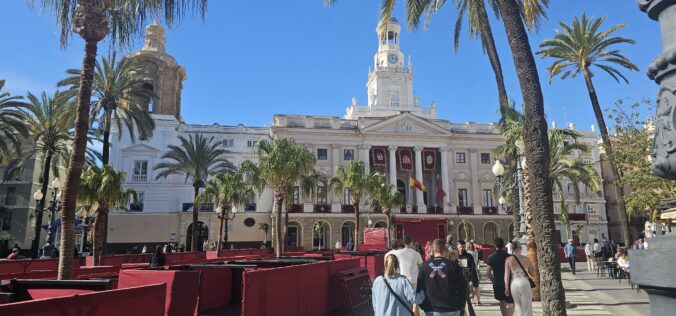
Our day started with a trip to Cadiz to watch their final parade into the Cathedral, as per a printed booklet I was given. We got the ferry over at 10am and headed straight to a very quiet isolated Cathedral square, no people and certainly no parades! The lady in the Tourist Office shrugged when I showed her the booklet and said “no parade today, finished Friday, schedules change”. So no point in hanging around, we headed back to the ferry, asked the ticket man to change our return journey to the next available ferry and he tells us we will be missing the last Semana Santa parade in town! It can only happen in Spain, the left and right hands not knowing what the other is doing!
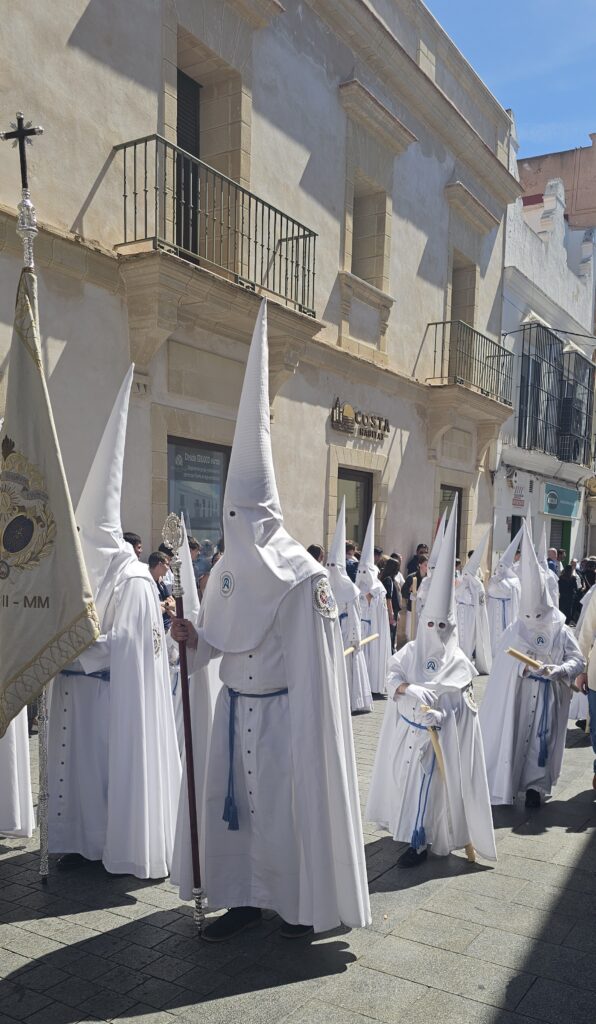
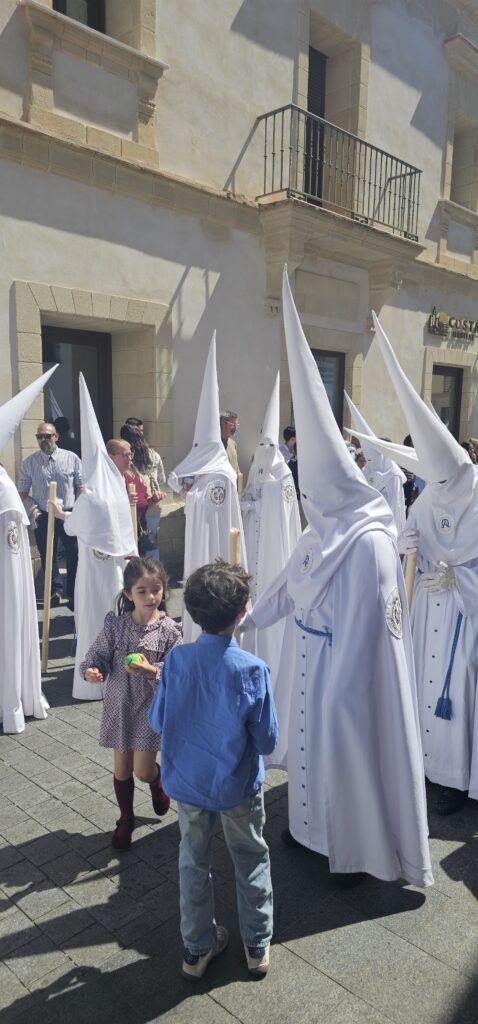
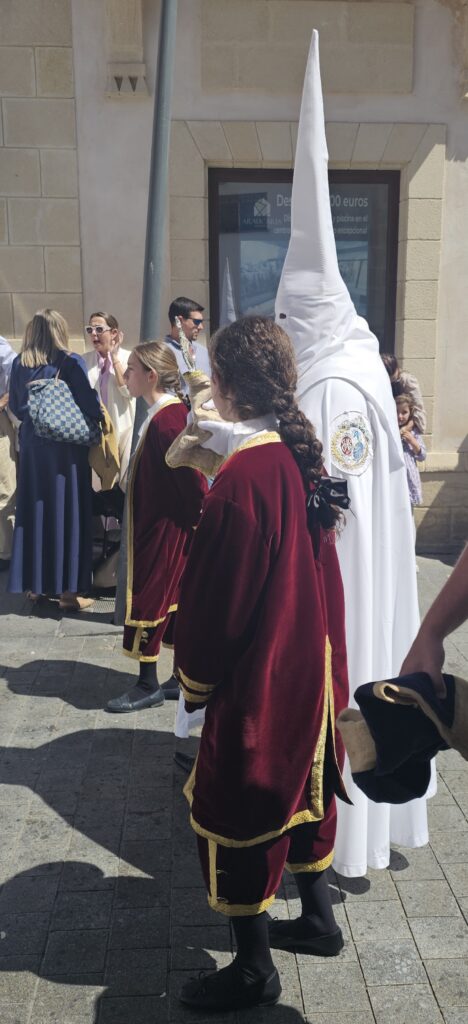
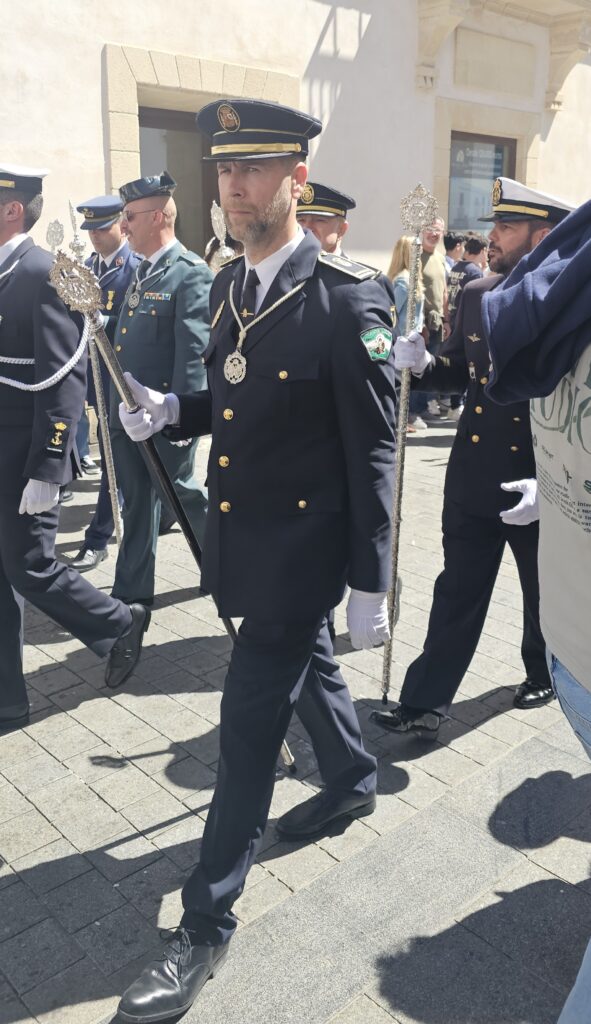
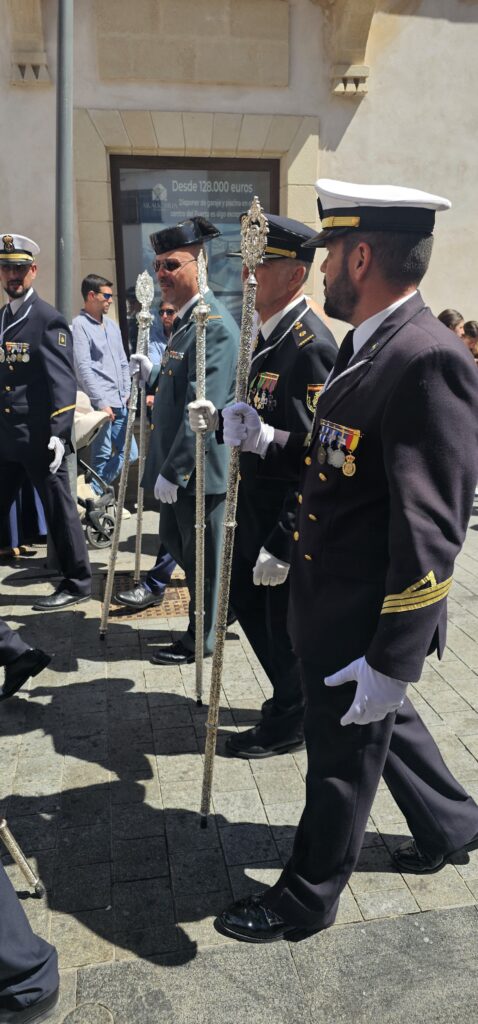
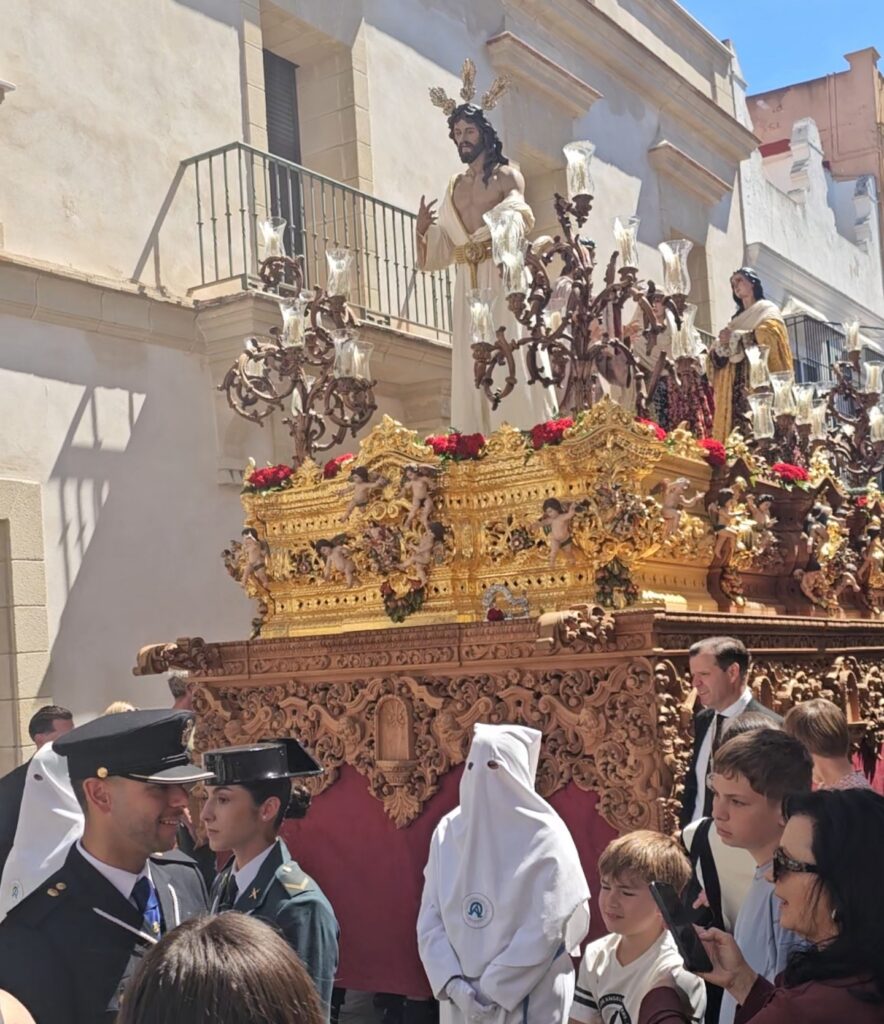
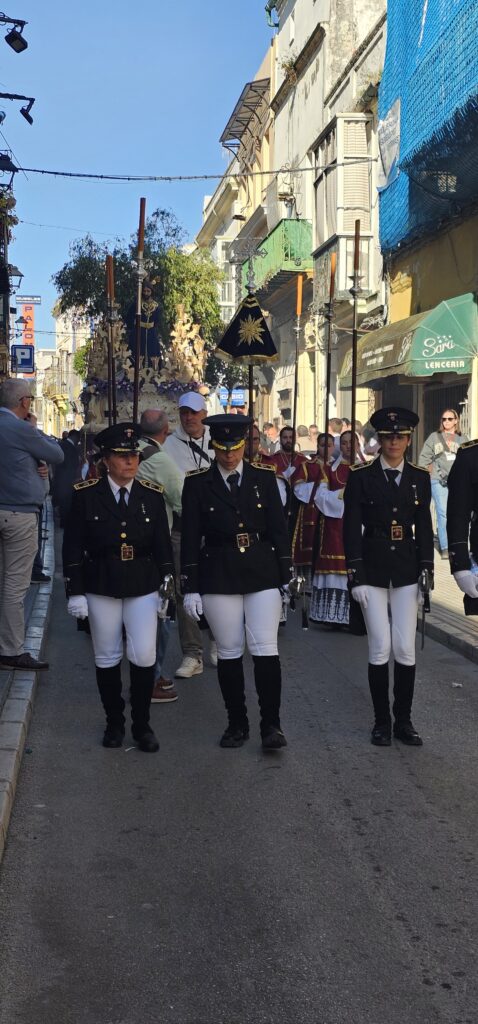
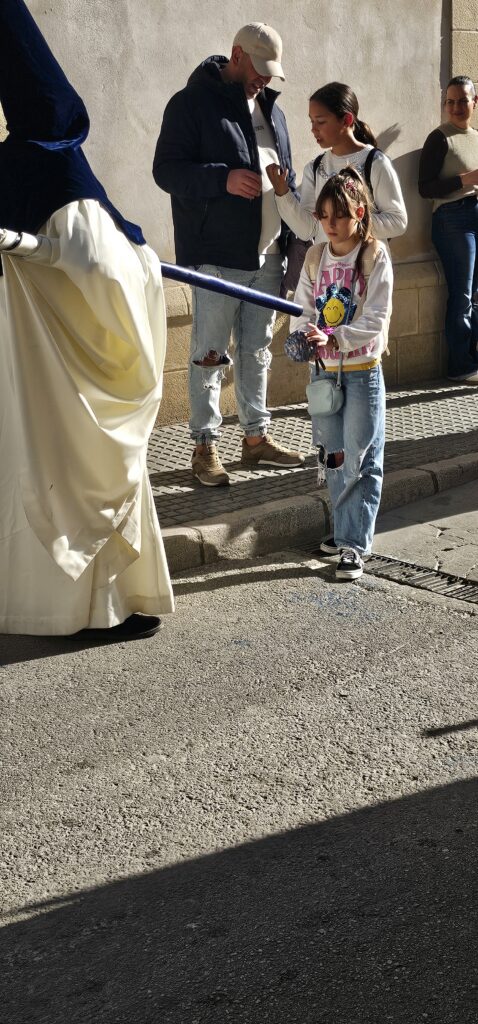
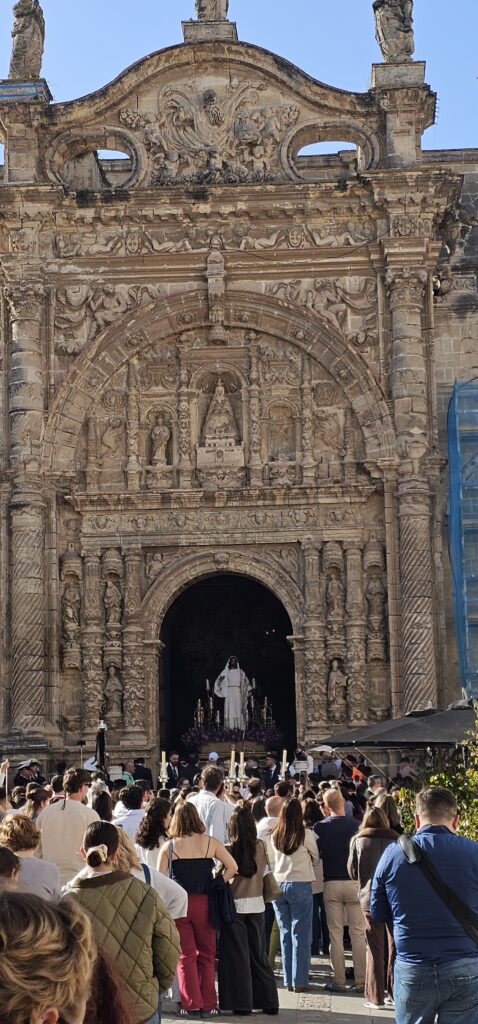
So we head back to El Puerto de Santa Maria and catch a much smaller shorter parade, it seems to be a selection of people from each brotherhood, mainly children and adults, but children are handing out sweets, adults are standing chatting and the band are playing a happy tune.
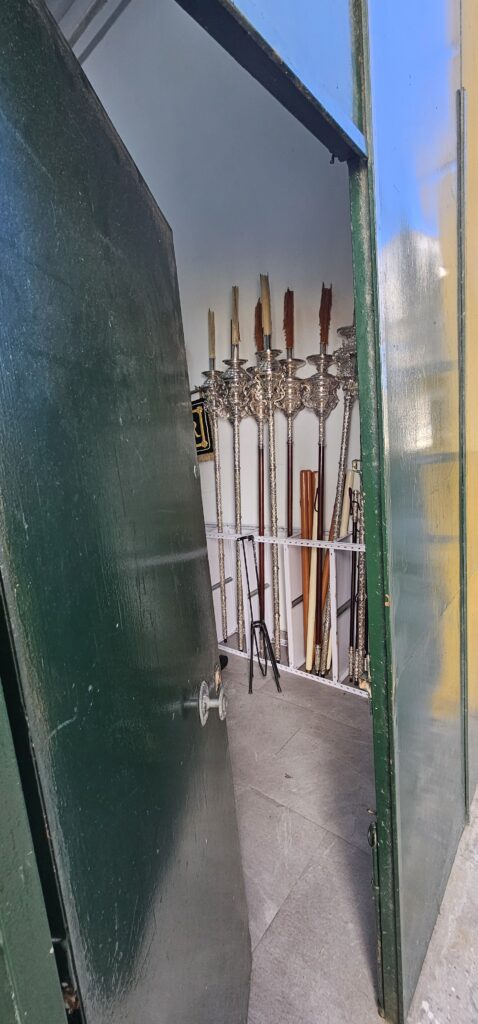
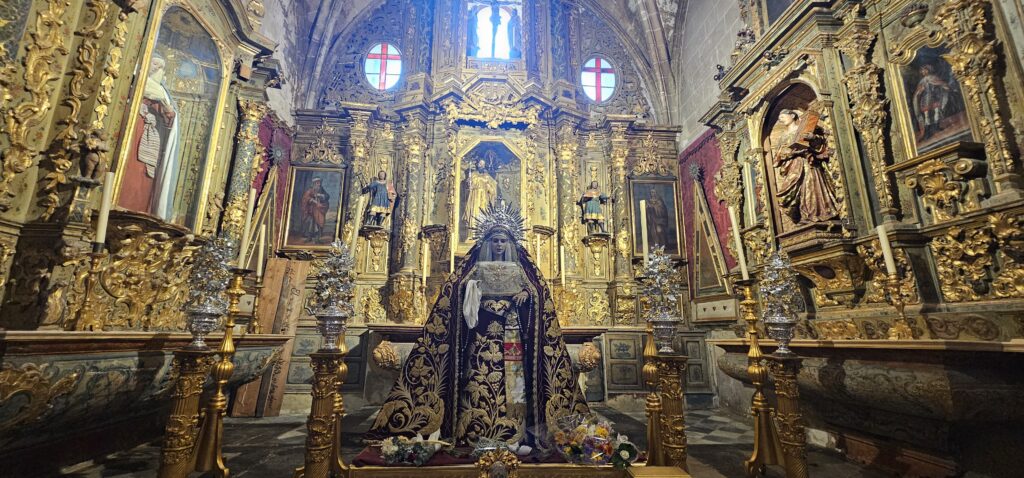
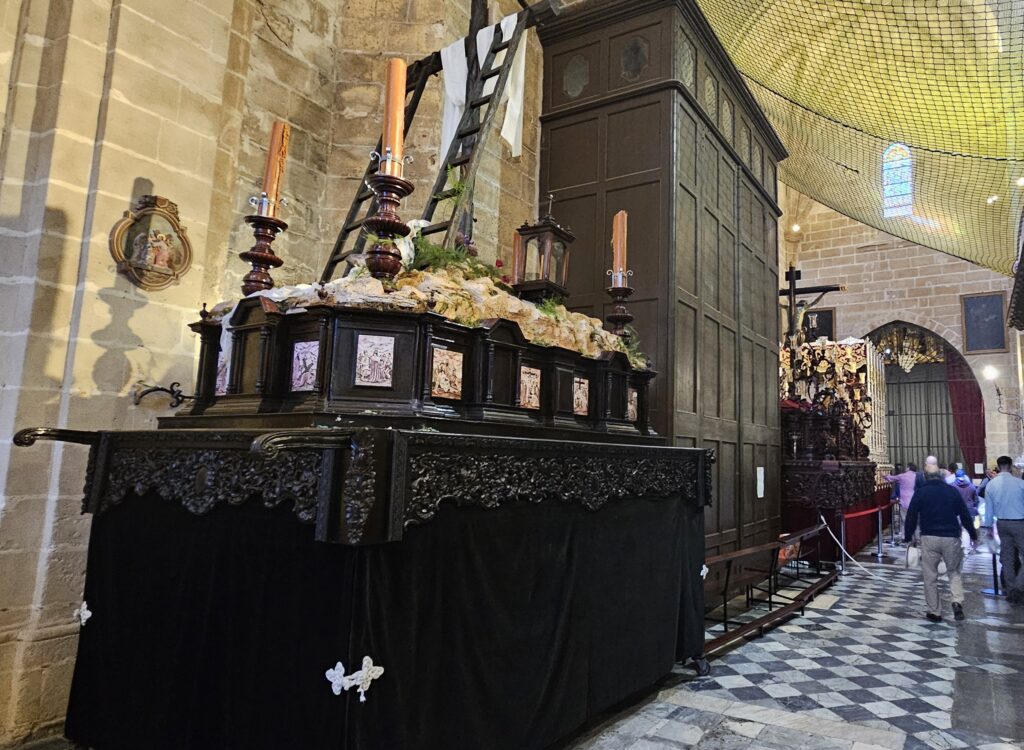
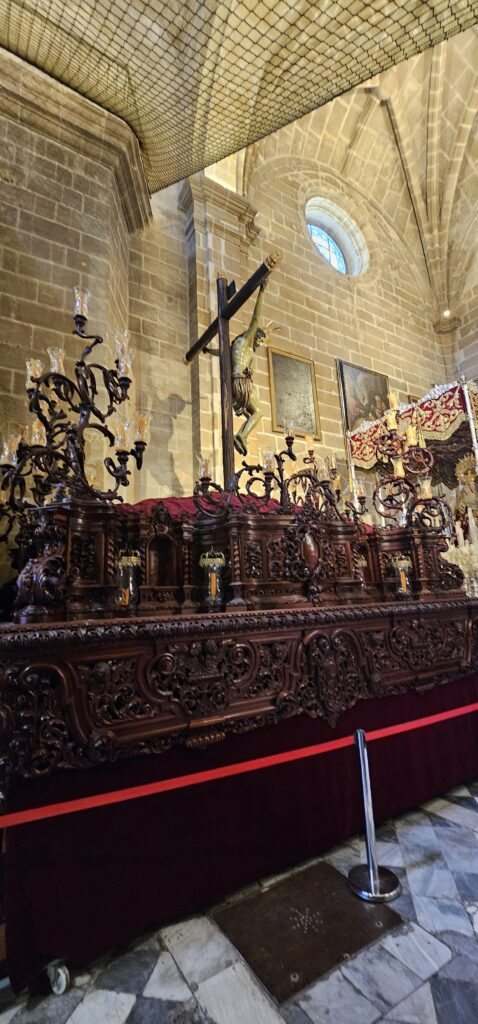
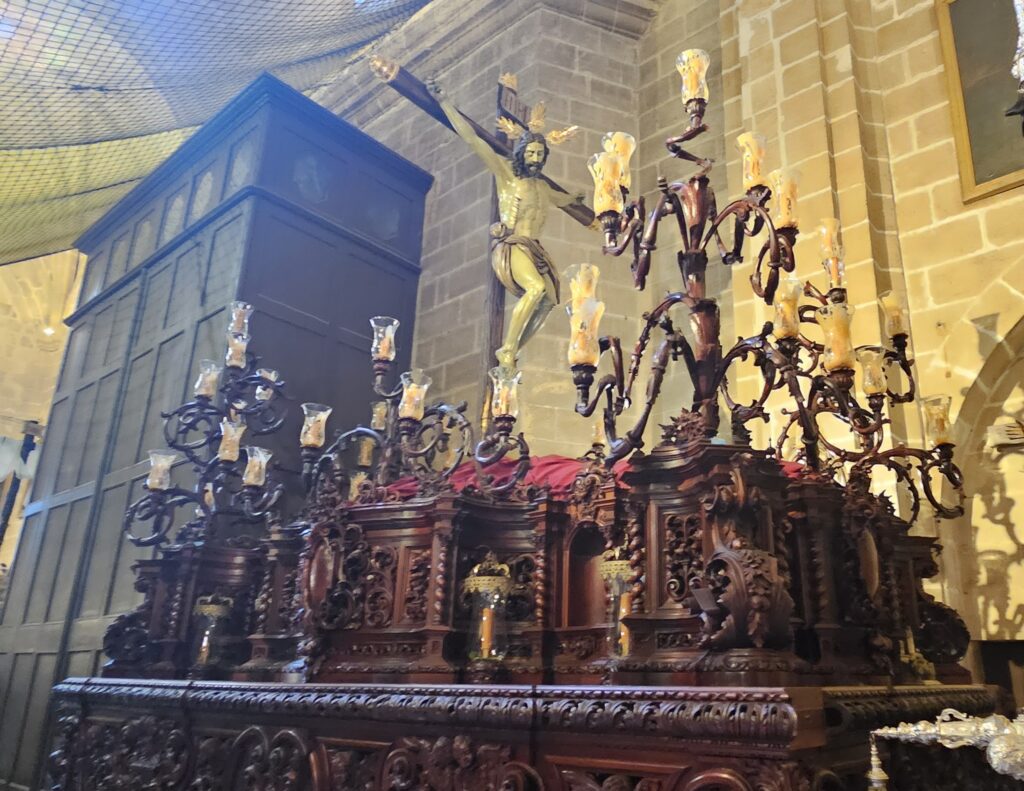
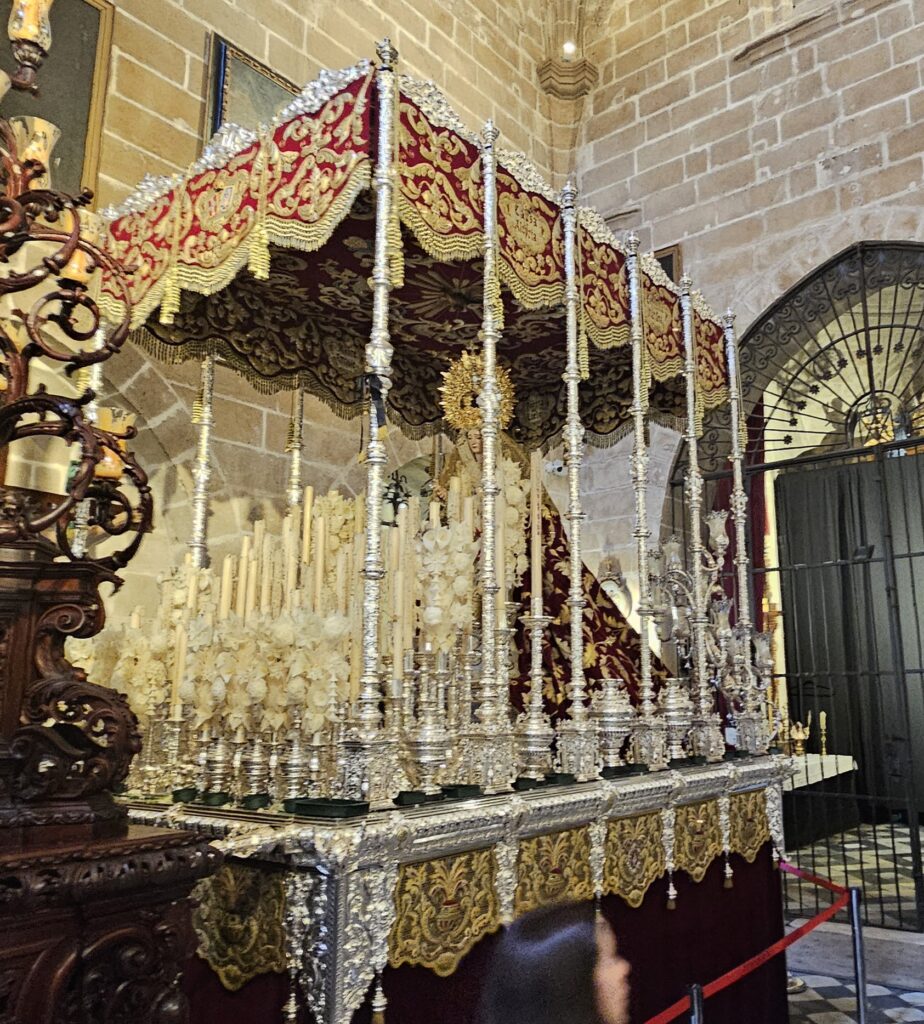
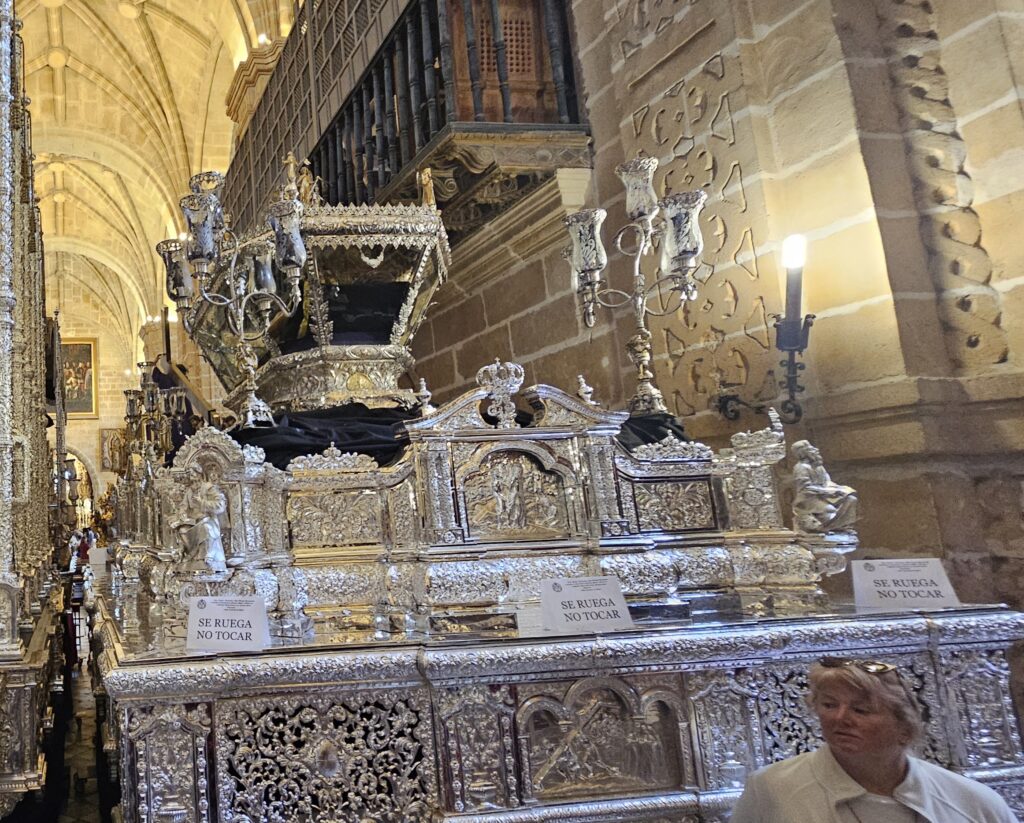
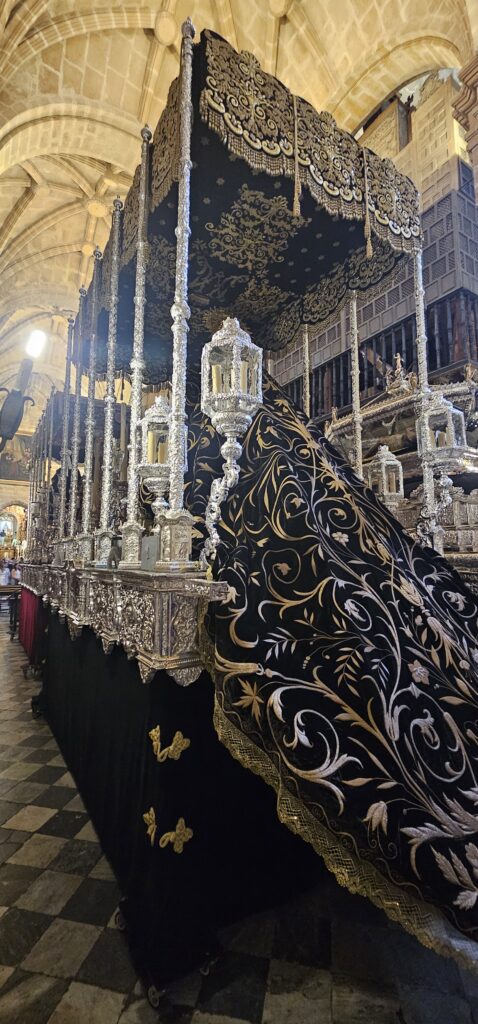
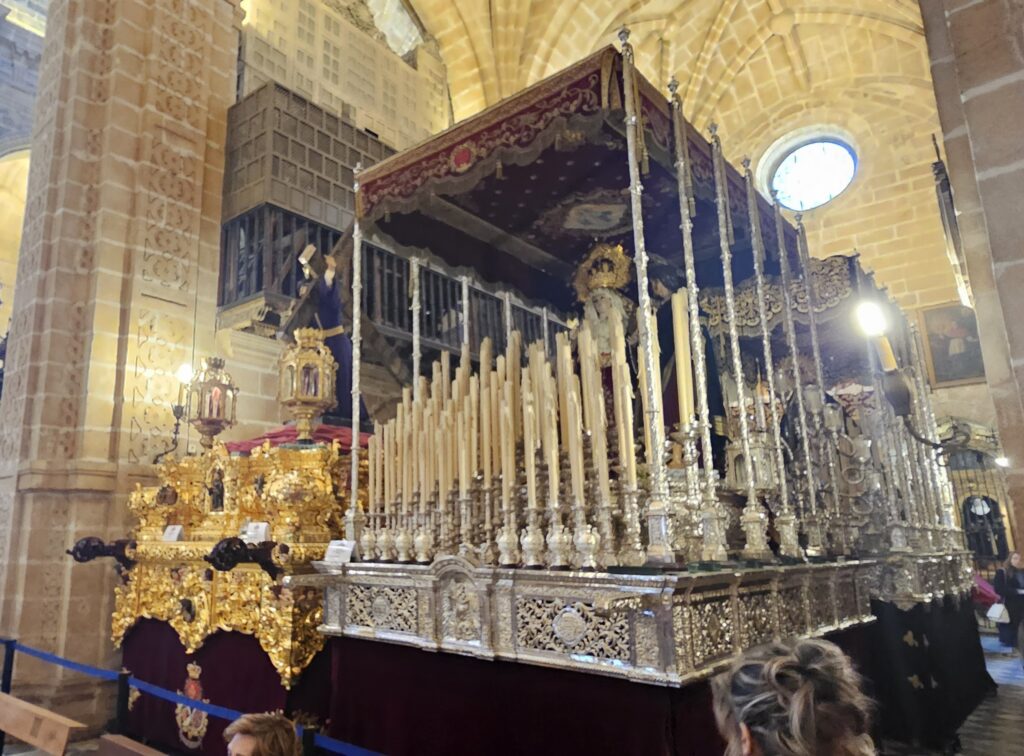
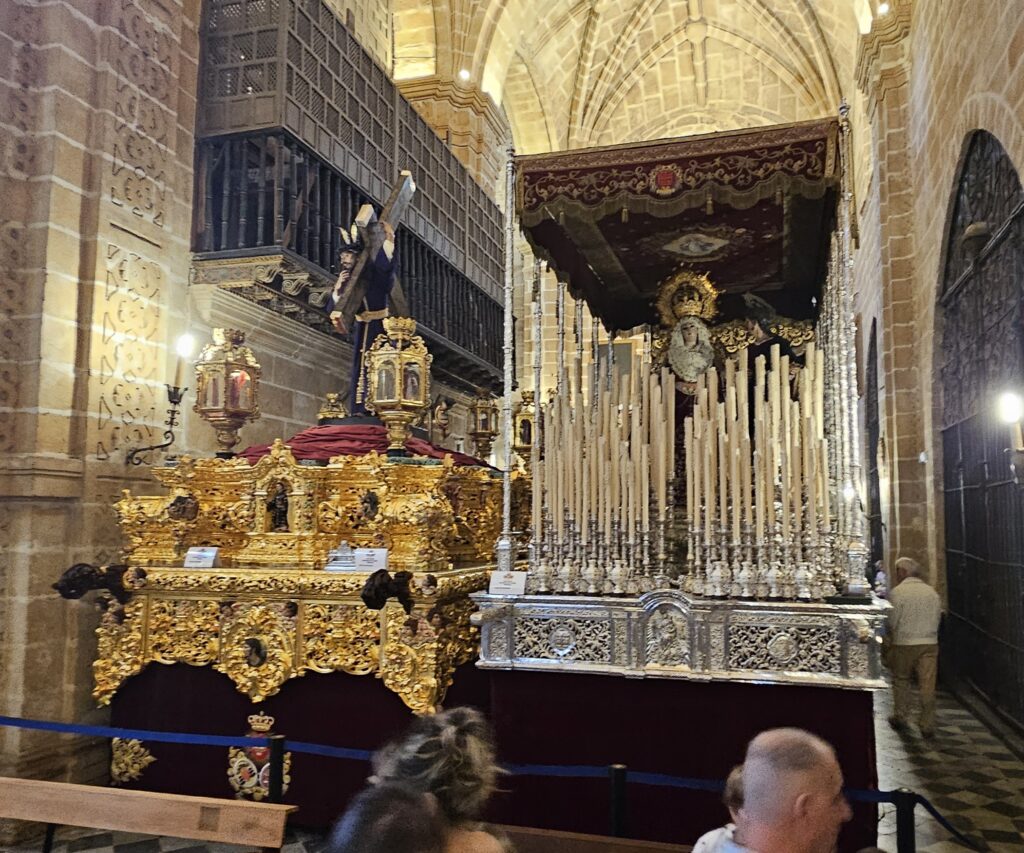
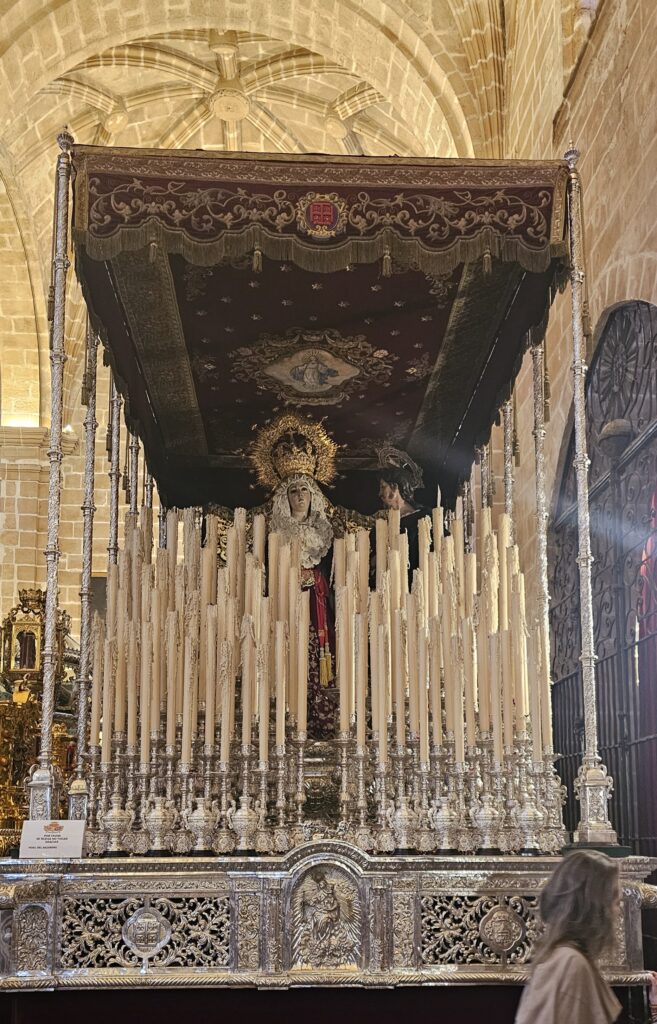
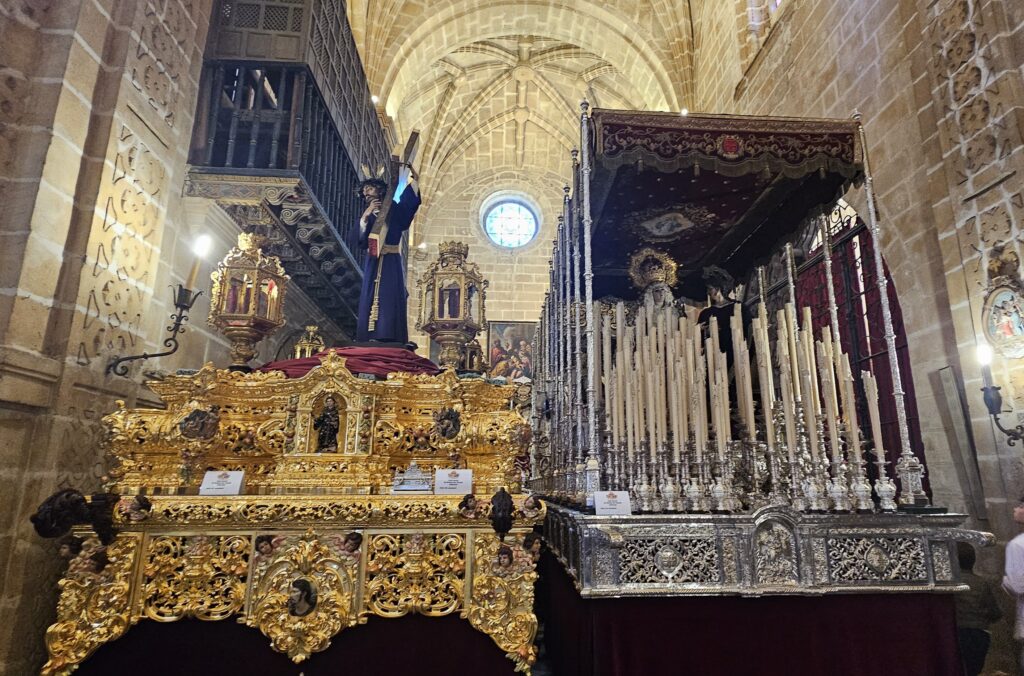
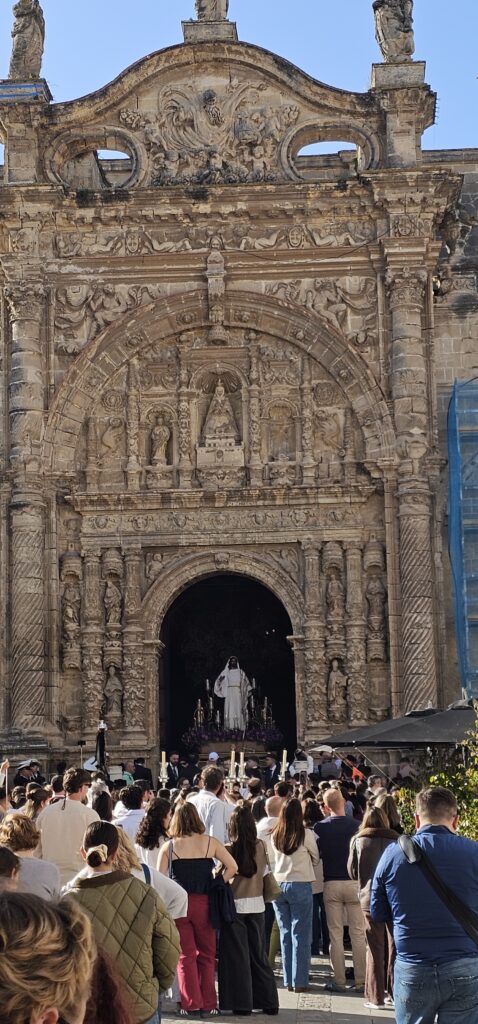
We also managed to gain access into the Basilica before a service started, and saw all the empty bases, probably being stored in the church until they are put into secure storage.
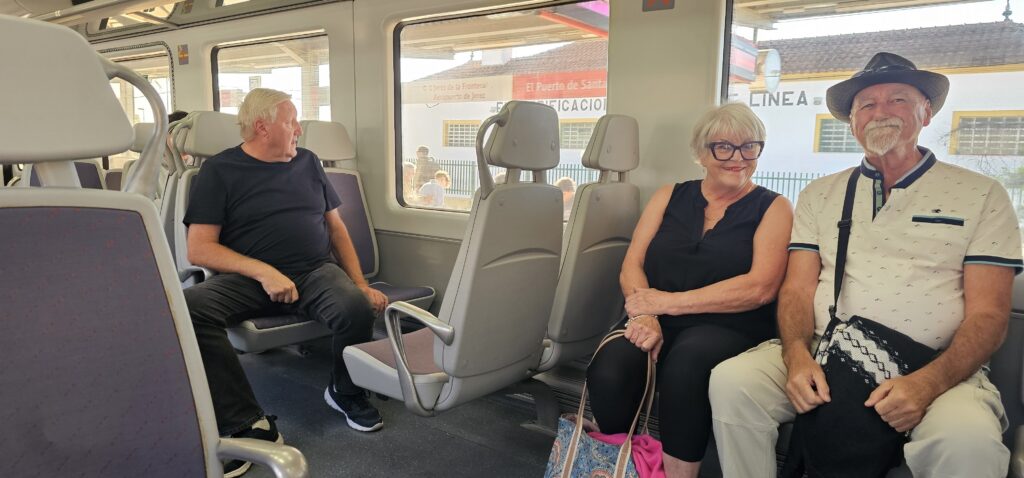
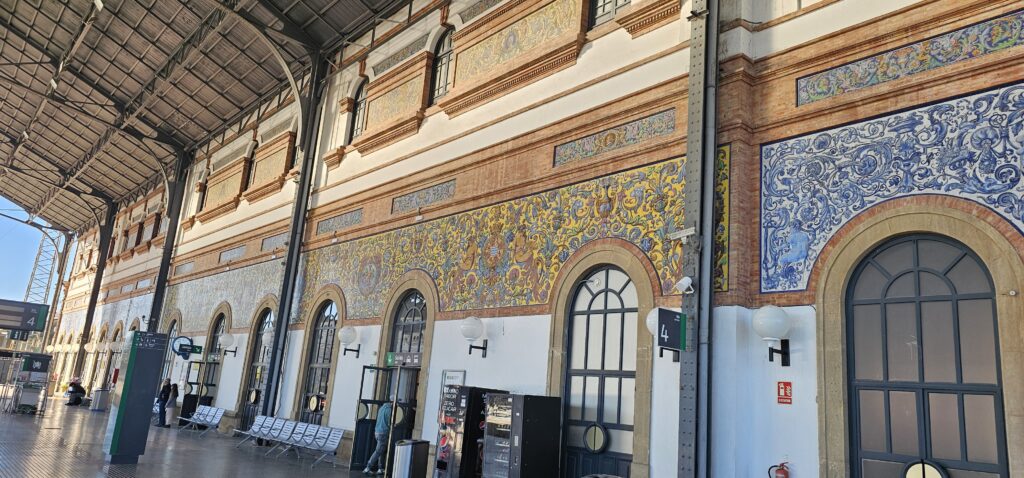
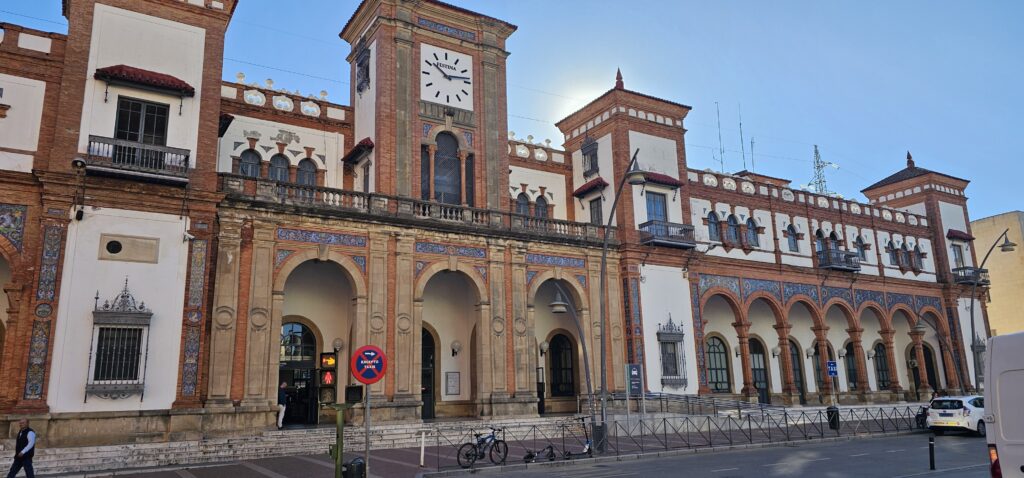
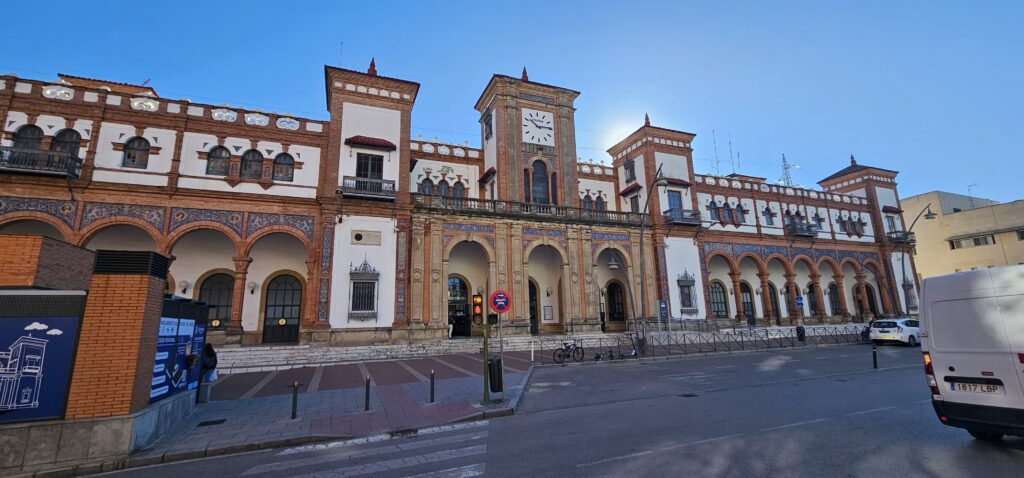
One day we decided to get a train into Jerez de la Frontera, a 10 minute ride away. On arrival, the train station was architecturally stunning, amazing red brick and coloured tile building, built in 1854 it could pass for a Lego building!
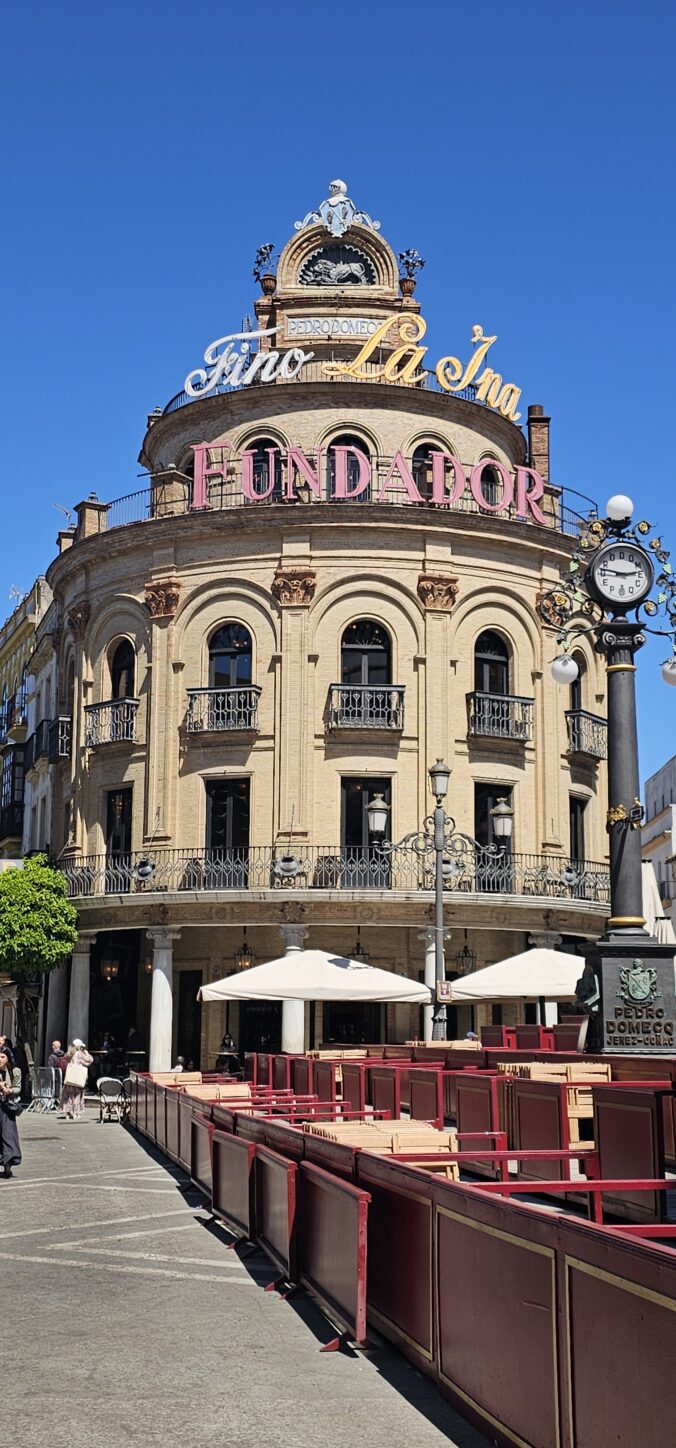
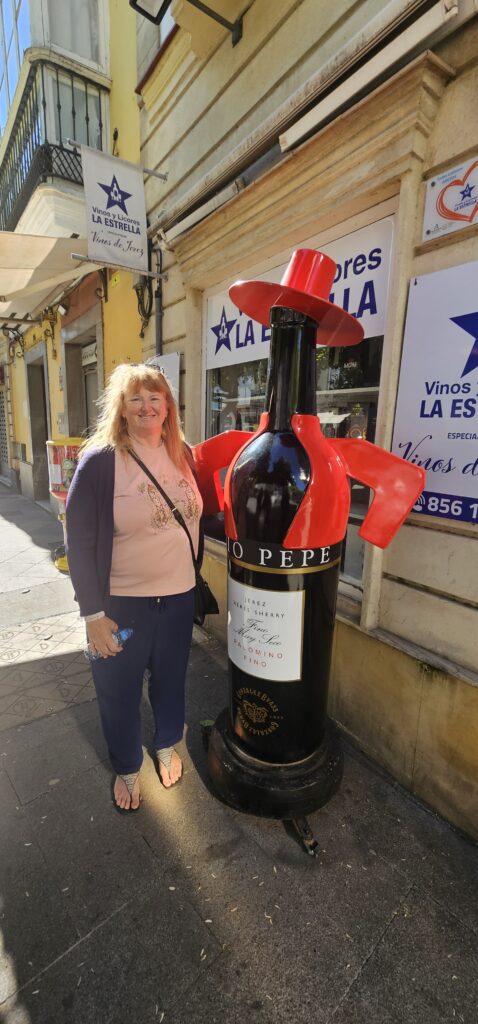
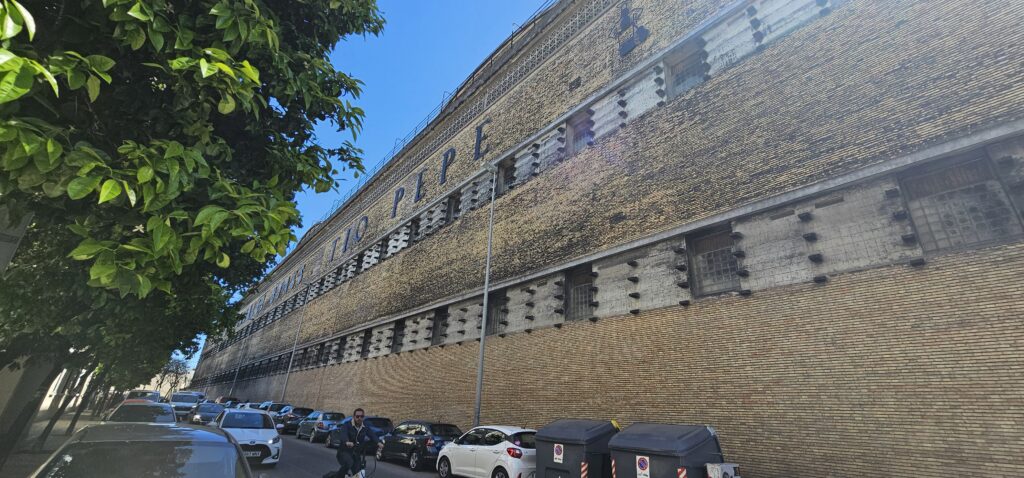
Jerez is home to several large sherry bottling factories, including Tio Pepe.
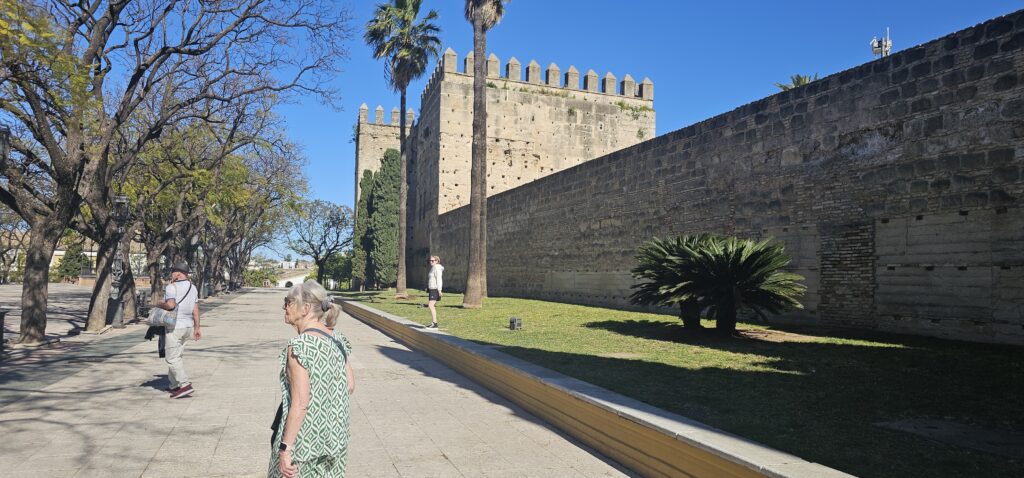
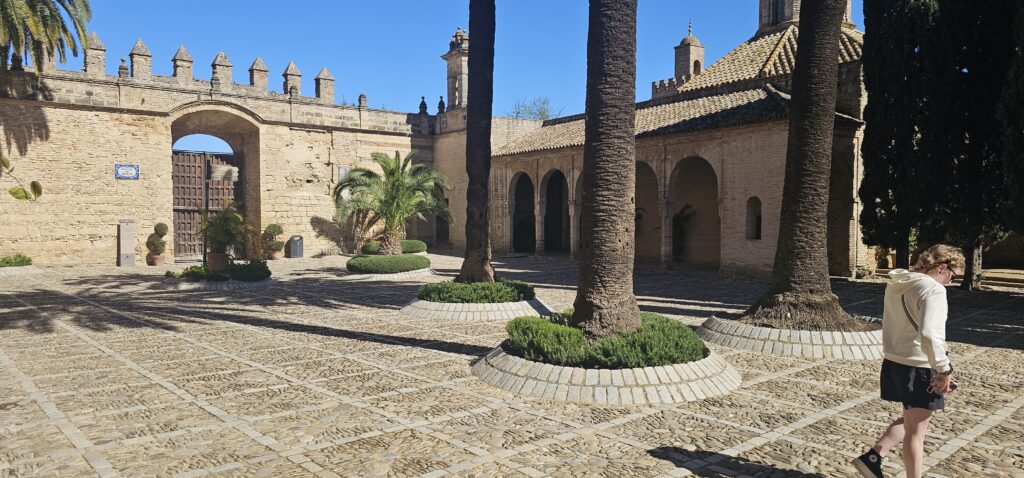
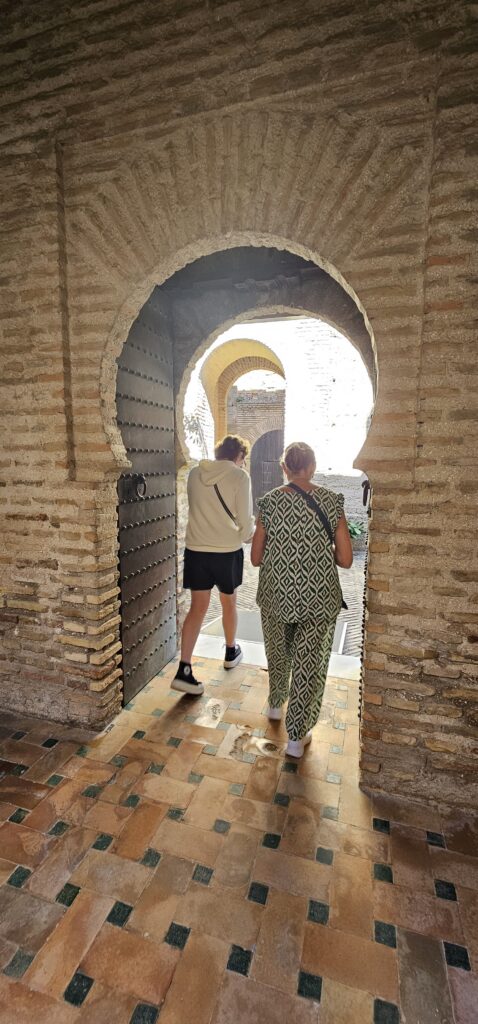
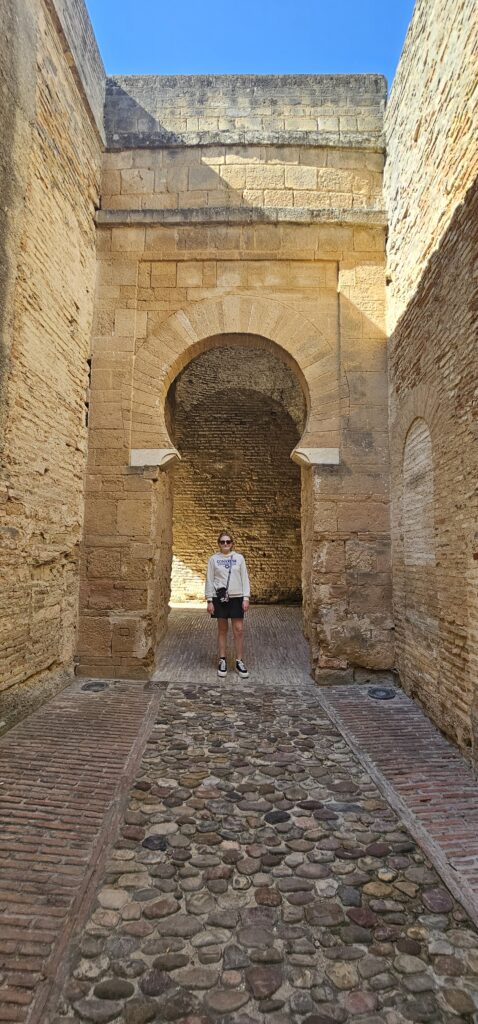
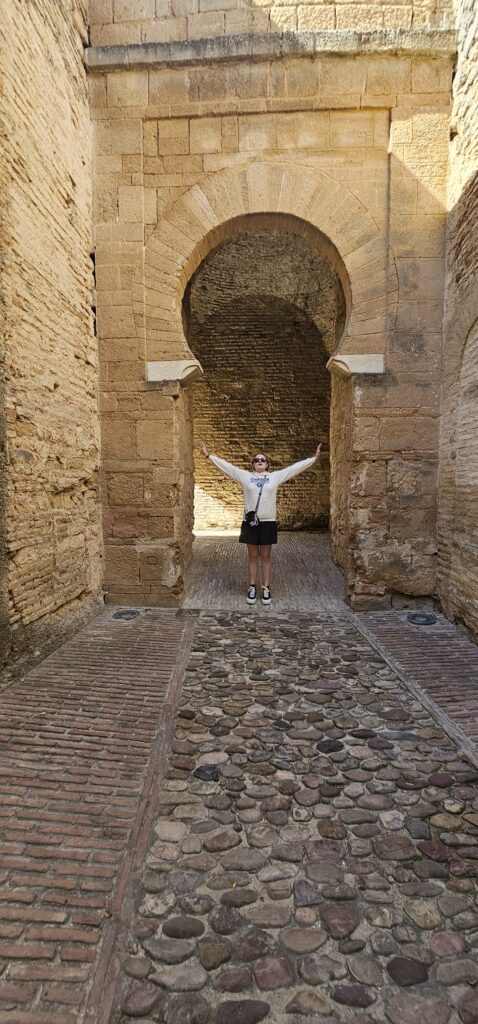
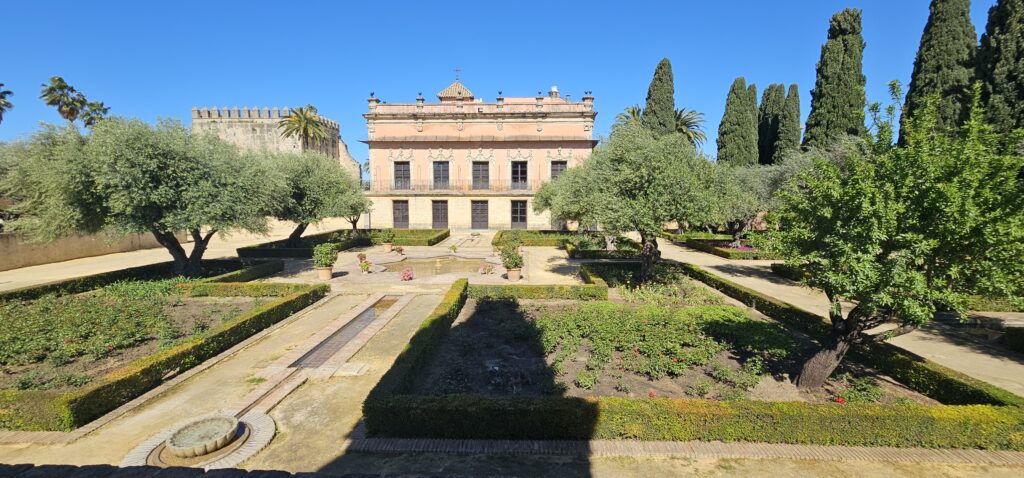
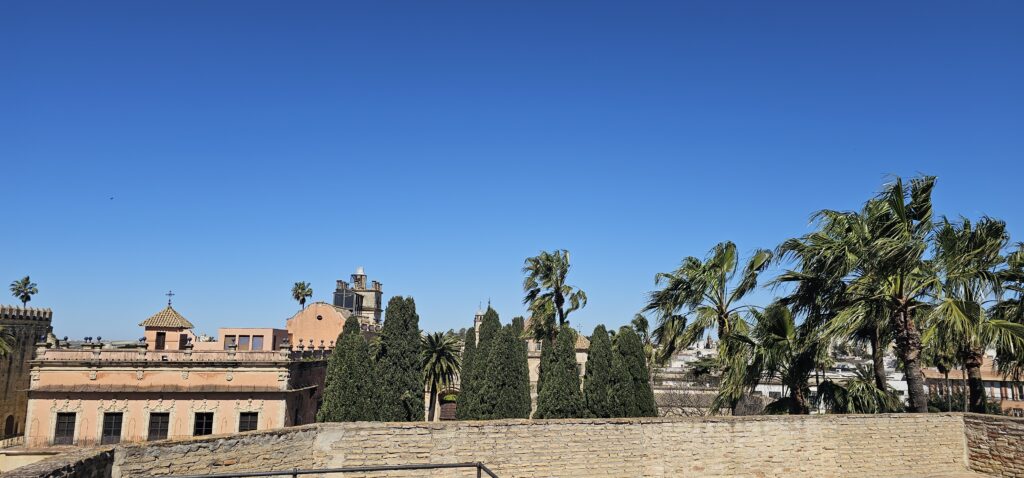
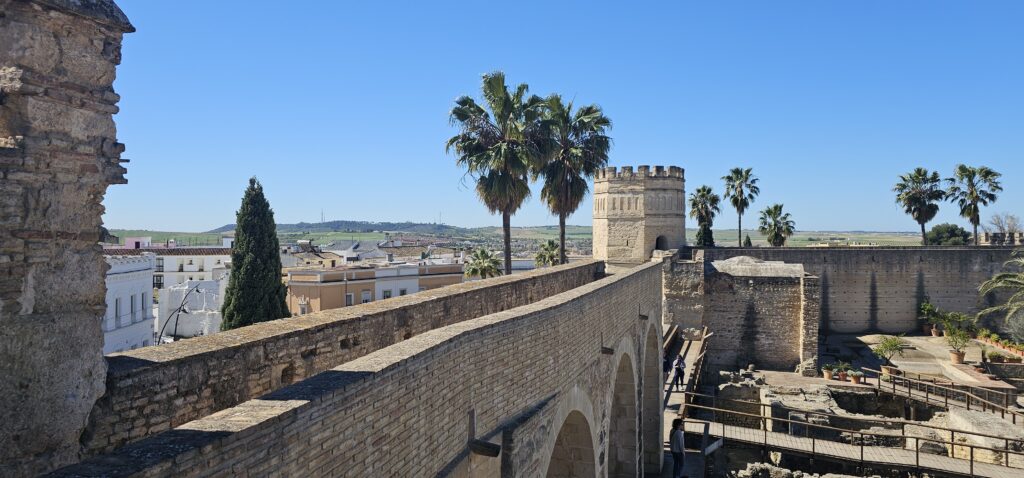
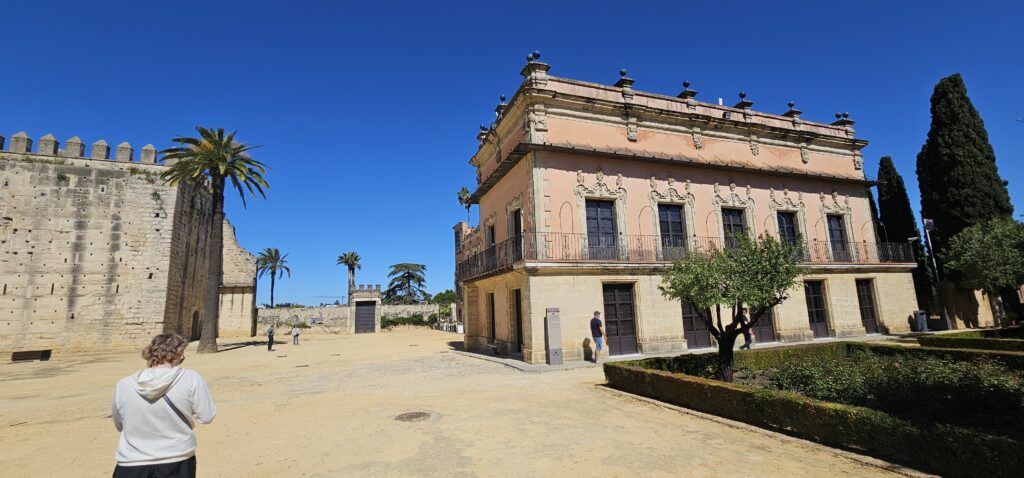
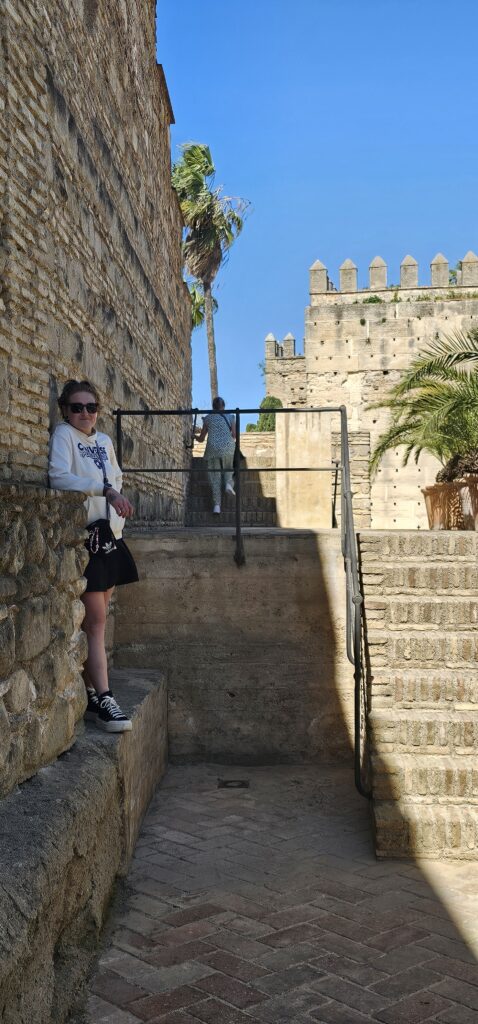
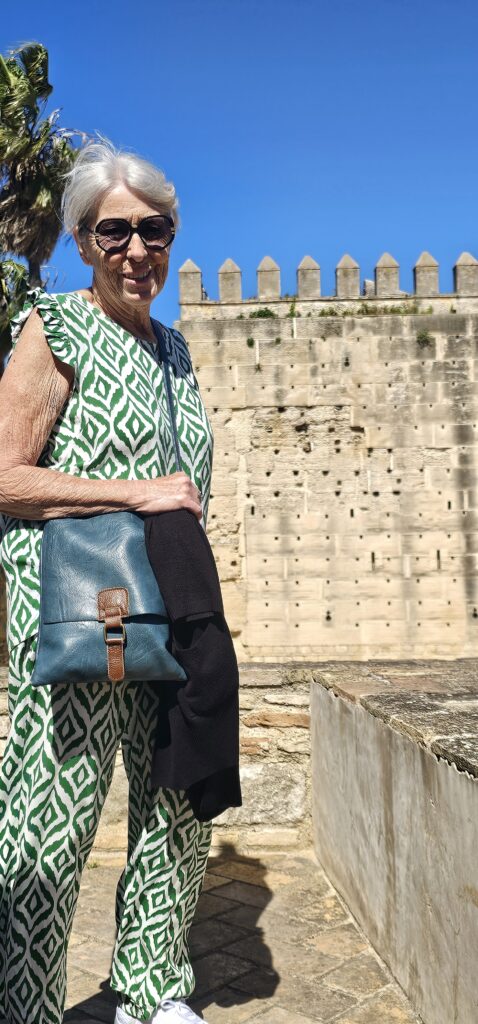
Next we walked through the town to the Alcazar, a Moorish fort, looking like a Castle with Baroque buildings added later. The fort dates back to the 12th century, originally built as a Muslim fortress palace. Lots of arched doorways, water filled cool courtyards and swaying palm trees.
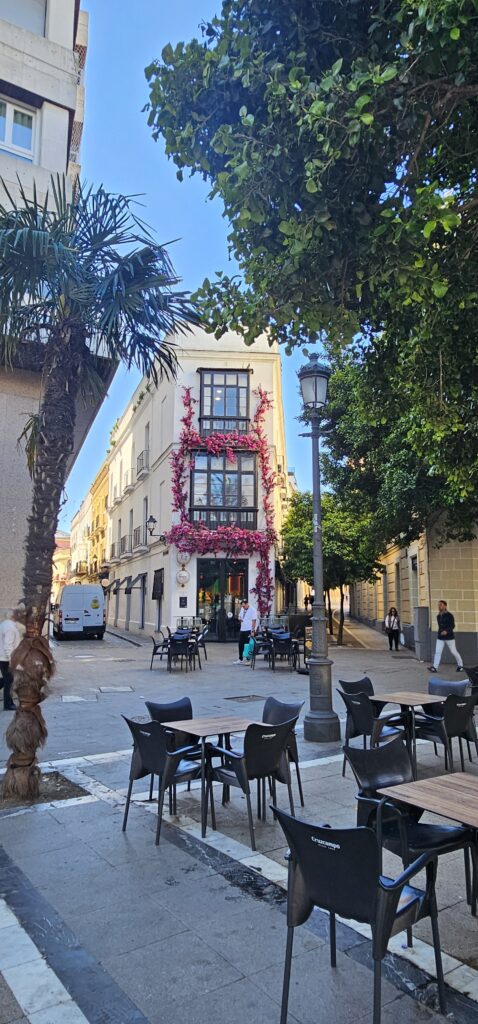
Pretty buildings!In the town’s squareApproaching the AlcazarAlcazar courtyard
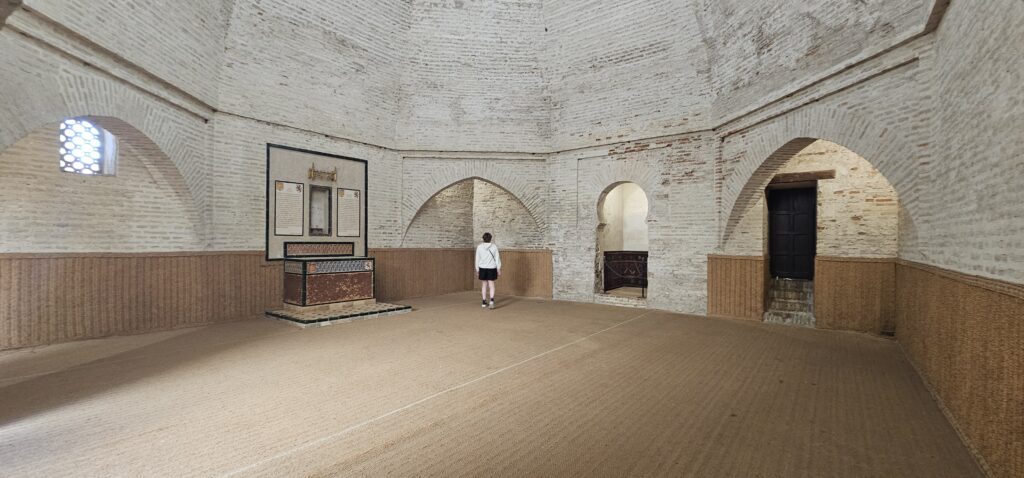
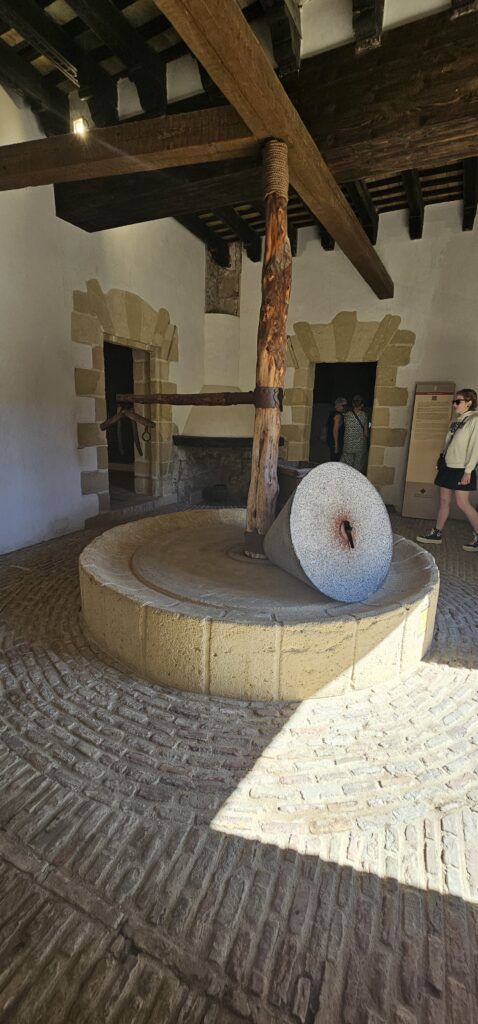
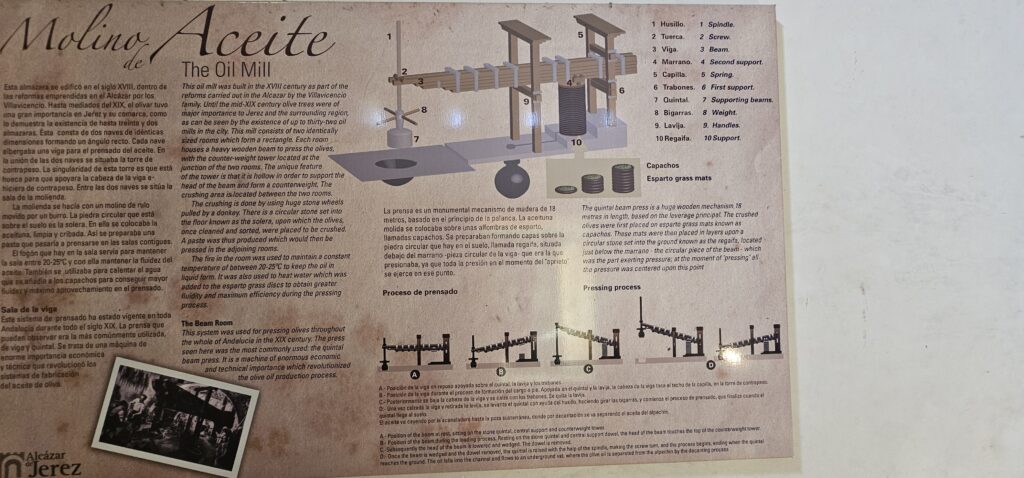
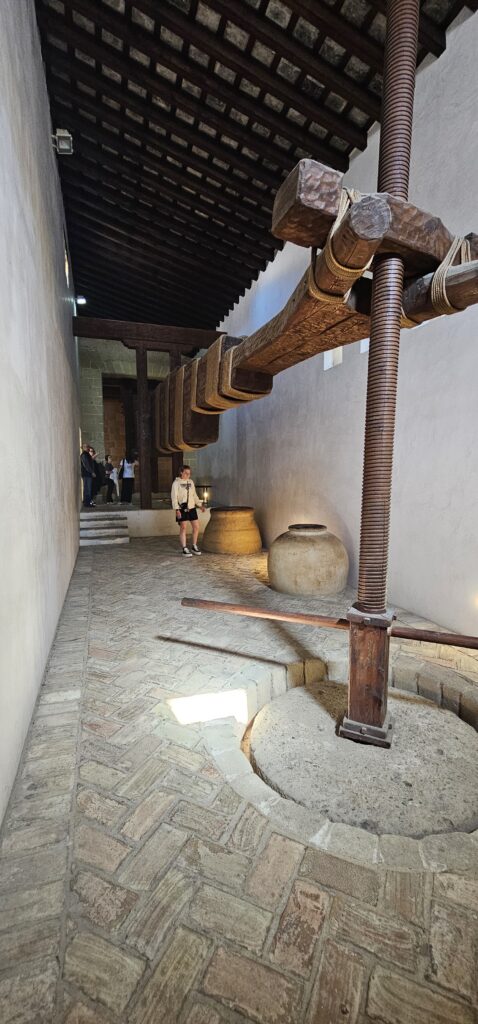
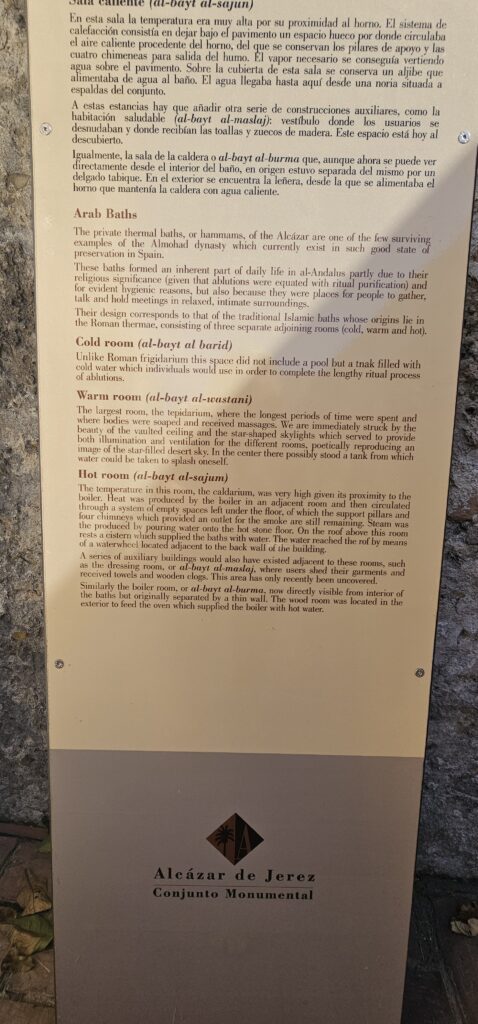
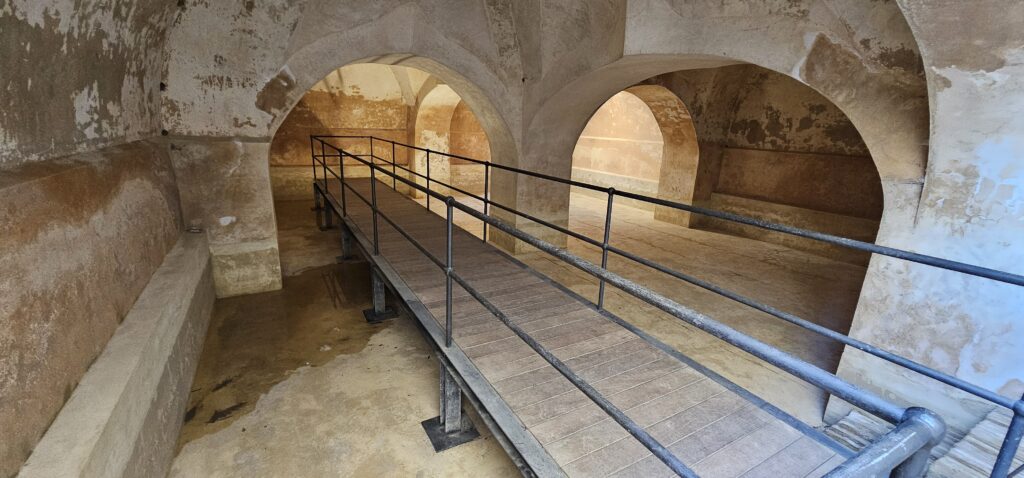
The Alcazar became a Christian garrison in 1248 until 1264 when Arabs took it back after building a tunnel underneath to gain access to the enclosures. It returned to Christian hands but fell into disrepair until the 18th century when the Baroque palace was built, repairs were made to the gates, towers, arab baths, pavilion and courtyards, the olive mill was added later. The Diez family who acquired it mid 1800s have improved the cloisters and surrounding parkland, maintained it and to this day family members stay in the house during local cultural events.
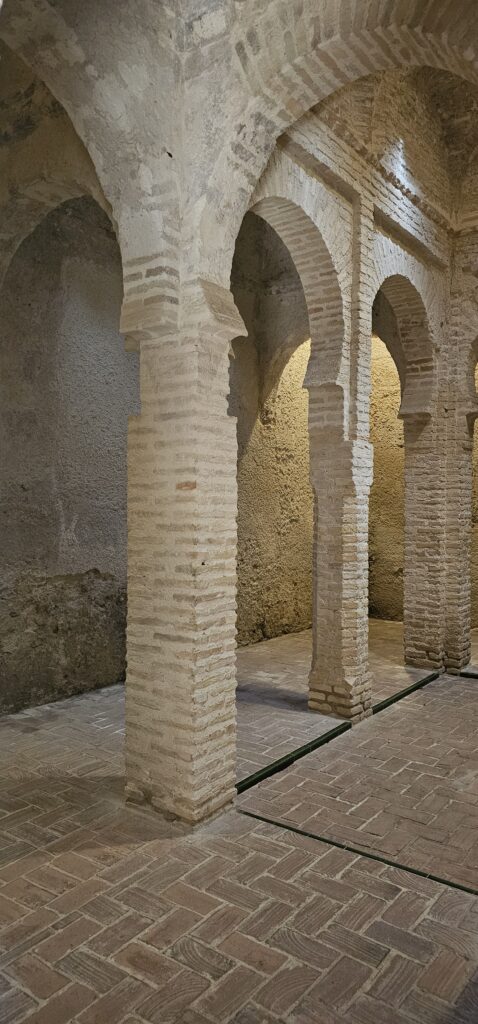
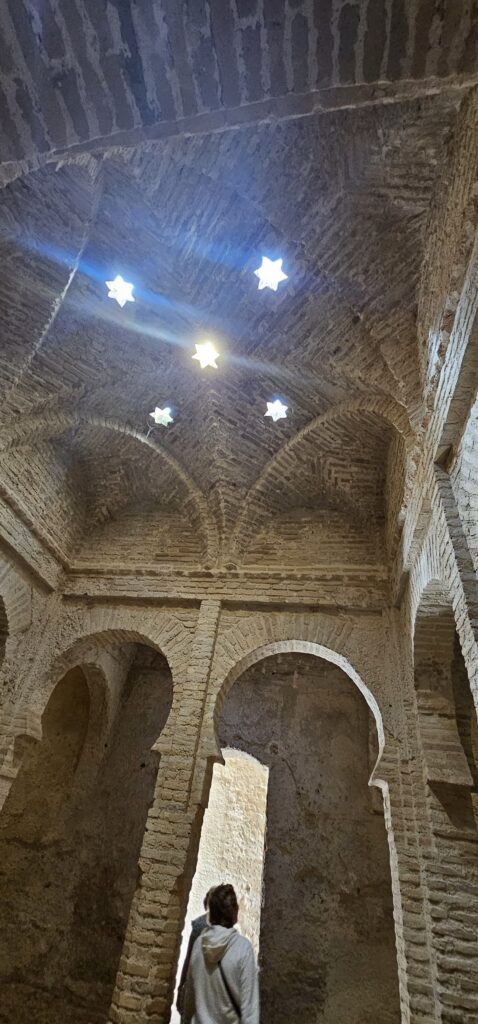
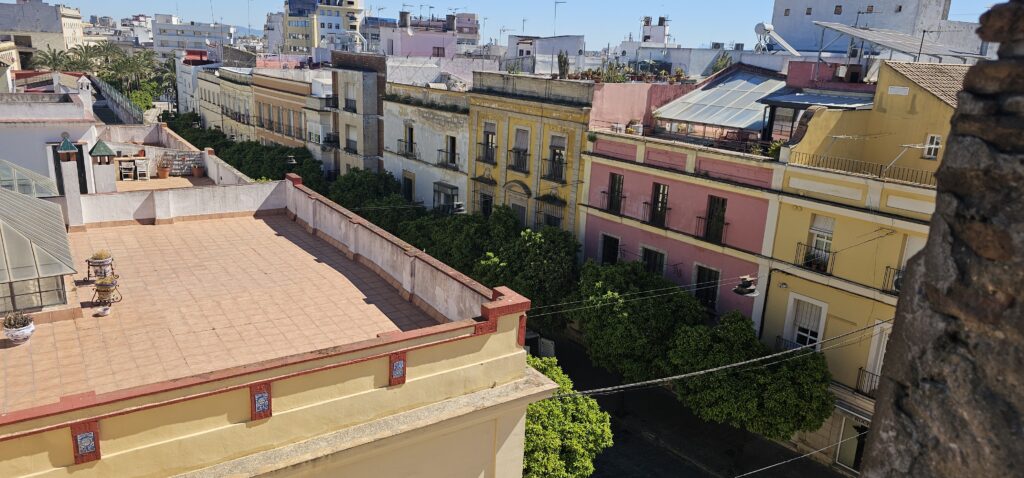
One of the old mosque roomsArabic archesThe olive millArabic archesInside the Arabic bathsThe baths were lit by this amazing ceilingThe Baroque palace and gardensView from a towerView of the city from the fort wallsInside the old water tanks
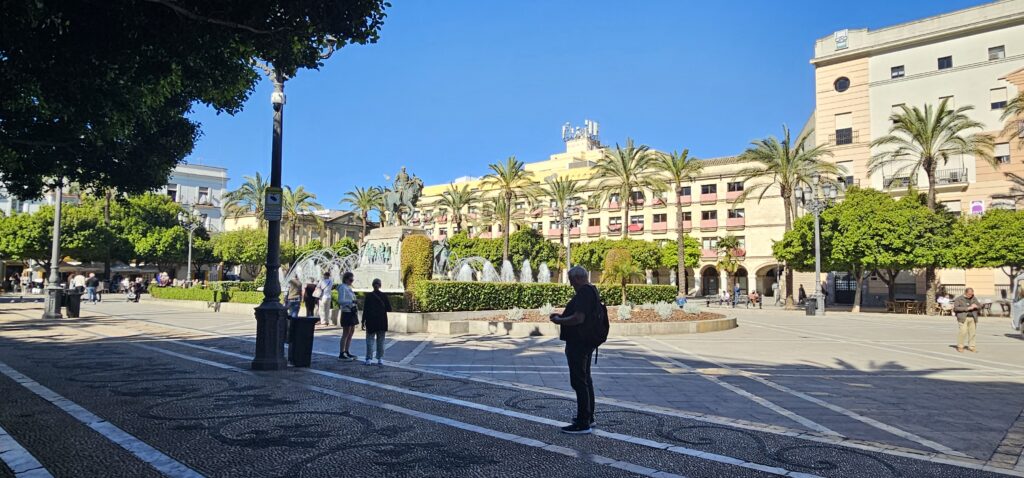
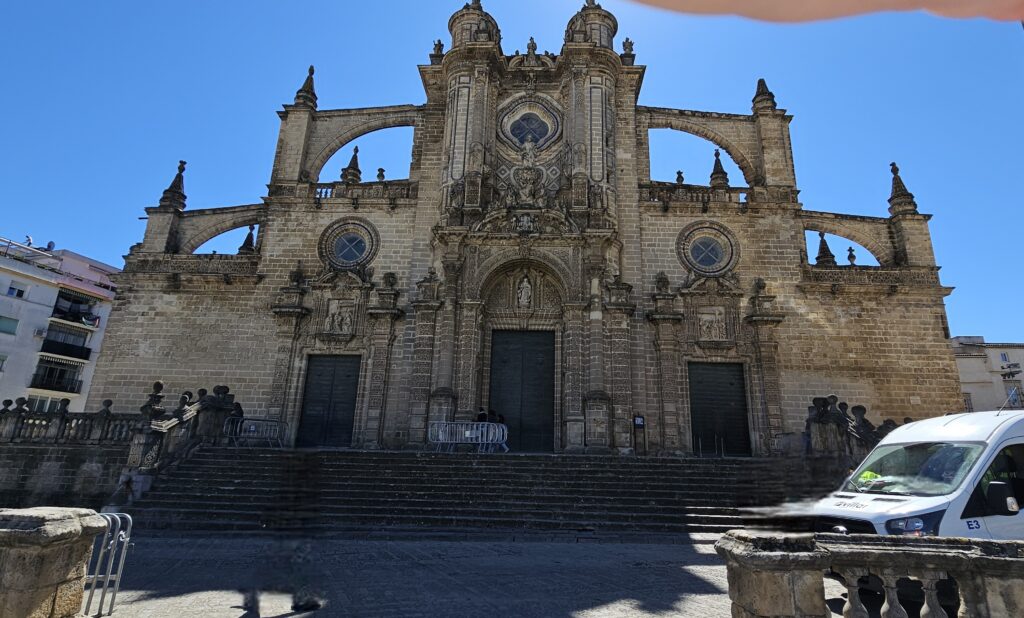
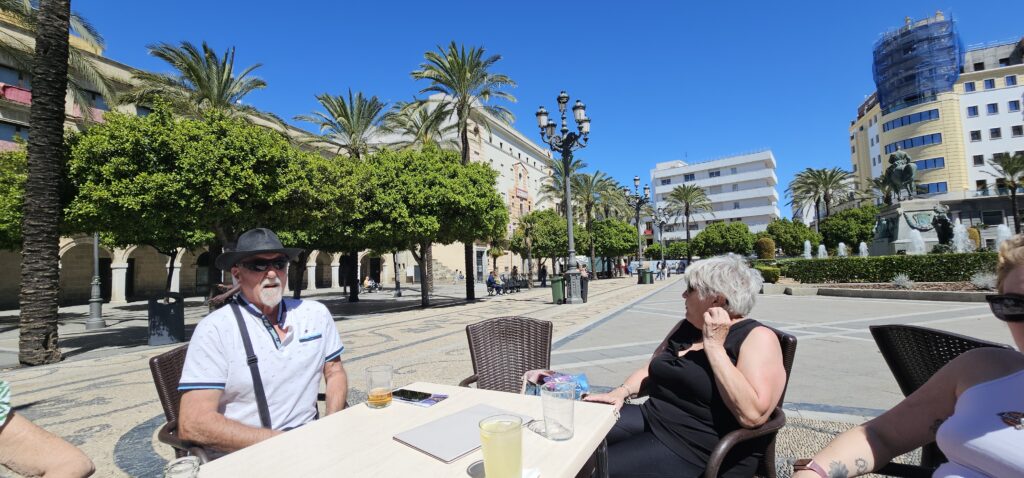
We walked a little around the town, arriving at the Cathedral just as it closed. We stopped for lunch in the sunny town square then took a train back to El Puerto de Santa Maria.
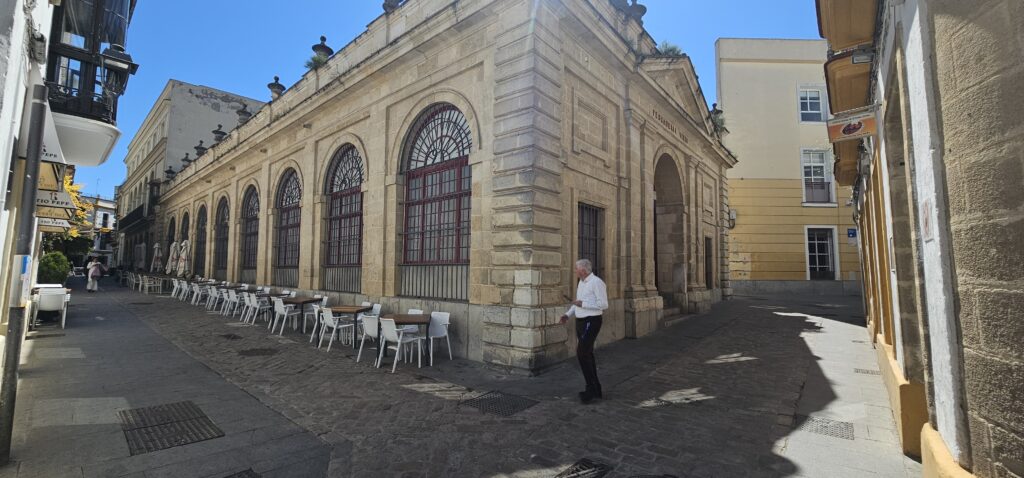
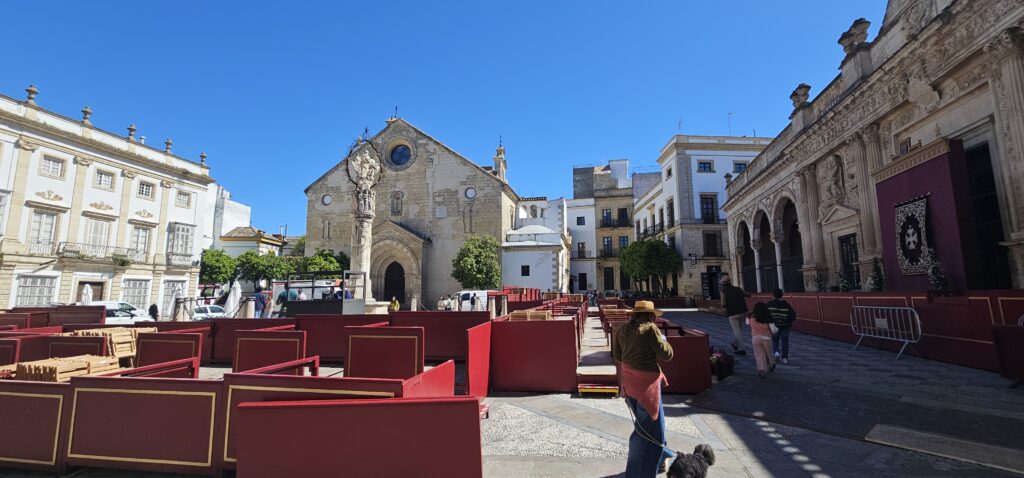
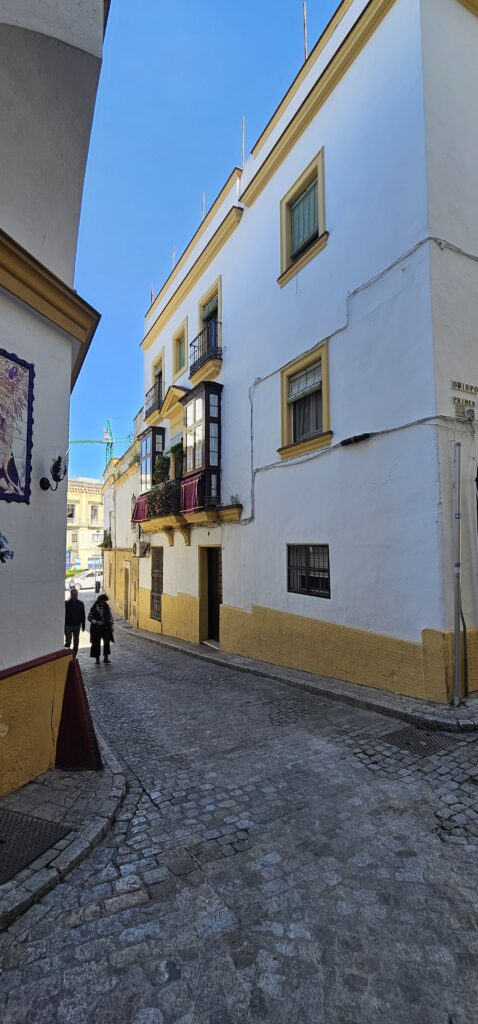
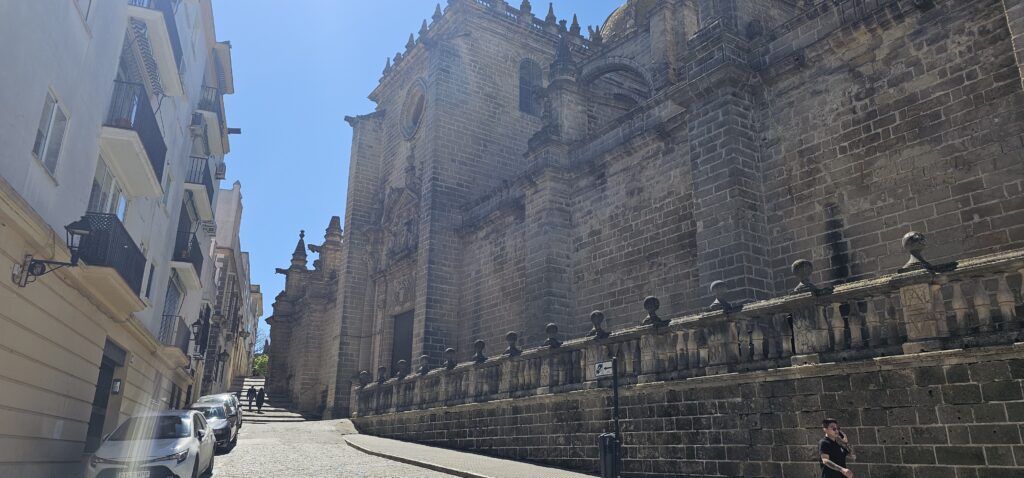
The old market The cathedral was getting ready for Holy WeekA narrow steep side street!The cathedral The side of a bodega building, it was huge!!Lunch in the square
Holy Thursday night into Good Friday morning is “A Thing” in Spain, called Madruga. I’d like to call it Mad Thursday. The Night of Jesus or Longest Night is where the parades finish at 2 or 3am and people hang around afterwards drinking and eating! And I really don’t know why.
I only know this because David took Arthur to the airport Friday morning and left the apartment at 3.30am for a 6.30am flight. David returned with stories of families with children still running about, bars and restaurants still open and lots of people about. I was then woken at 3.45am by noise, so much shouting and singing in the streets so I got up and made coffee, my airport run was at 9am. By that time, the town was deadly quiet and deserted!
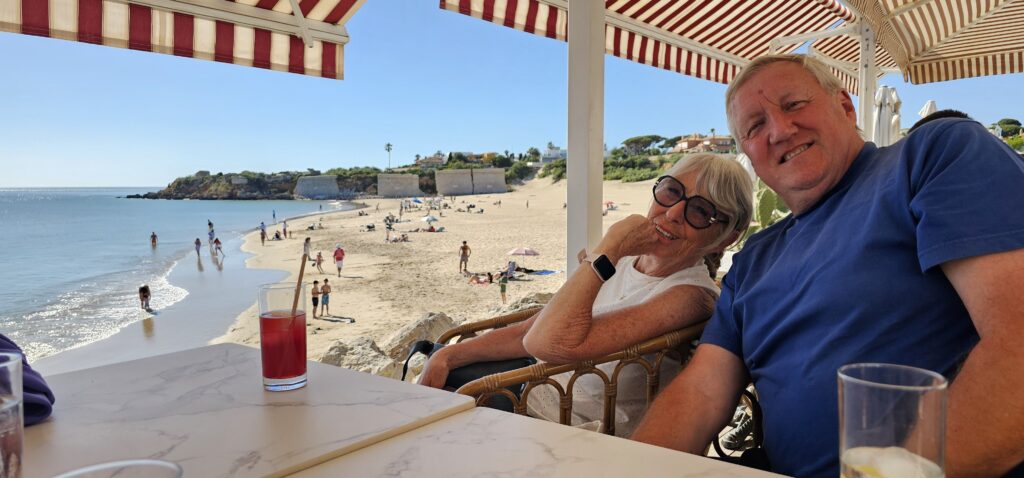
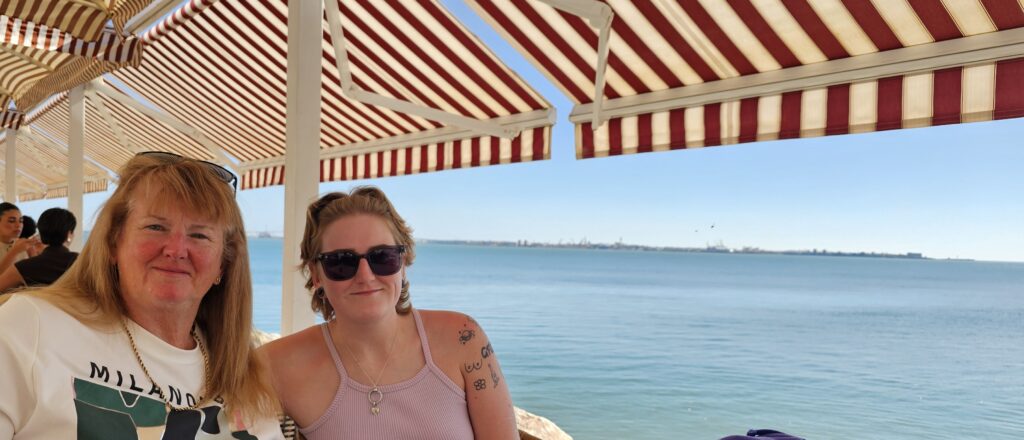
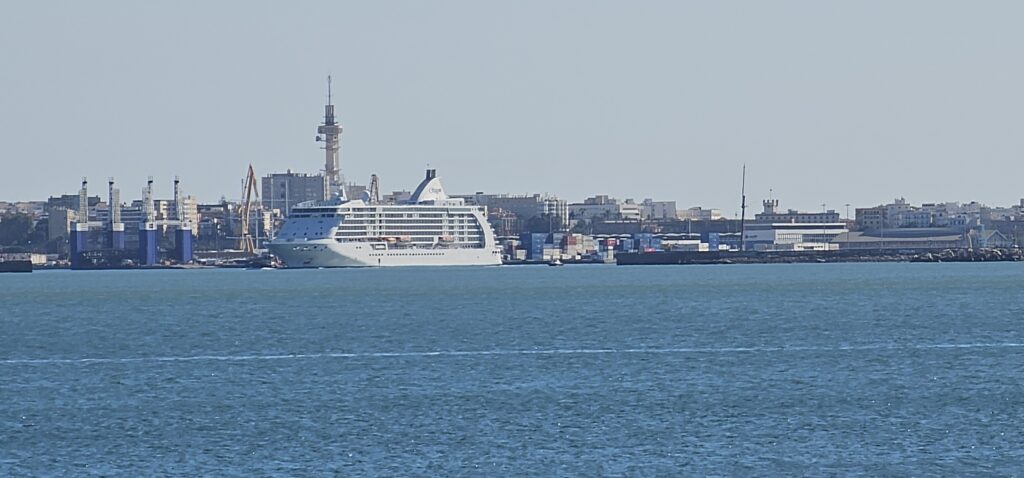
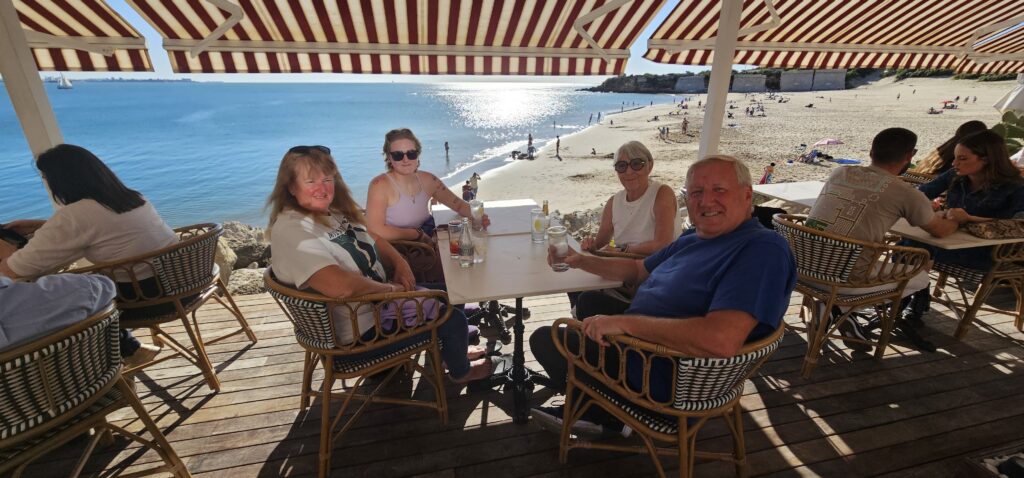
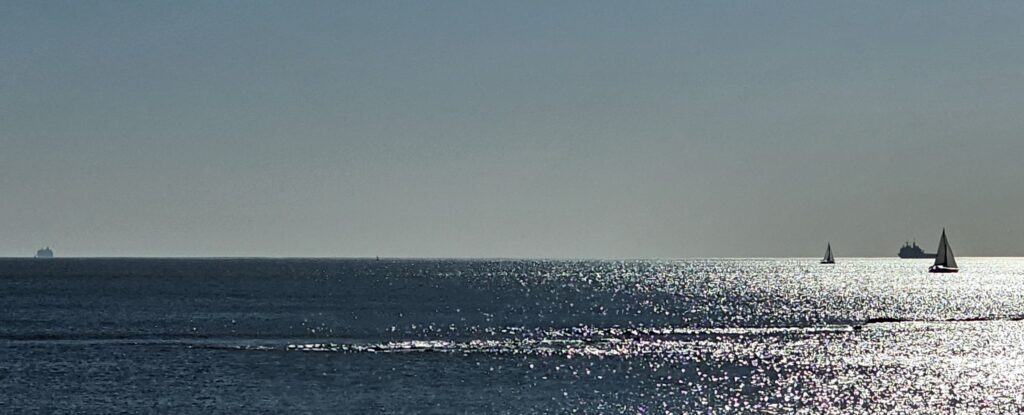
Thursday was our guests last evening so we had a few hours at the local beach to catch some dun before they head back to the cold gloomy UK. On Wednesday we took them to our favourite sunset bar, just past the Marina and with views of cruise ships leaving Cadiz and naval ships leaving Rota, as well as sailing boats slowly going by. And had a drink whilst chilling 😌
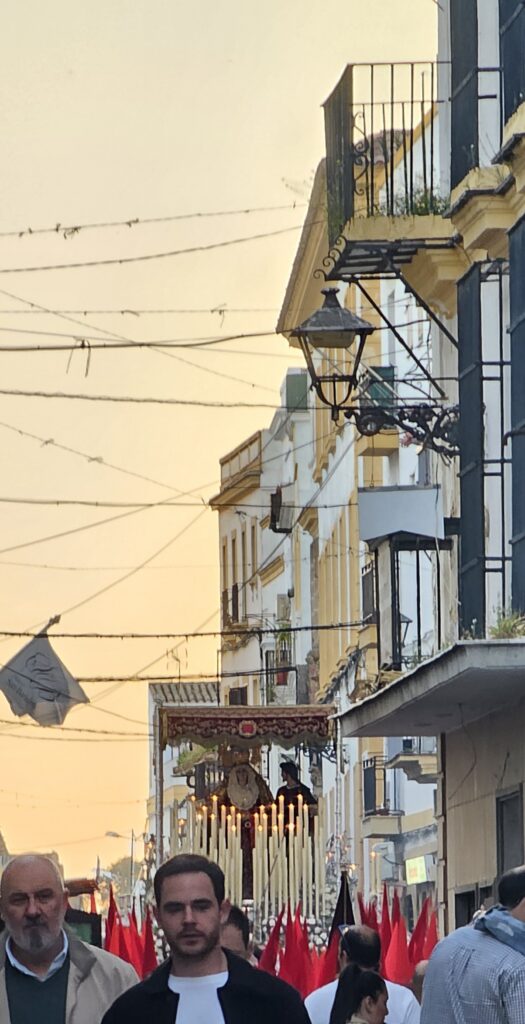
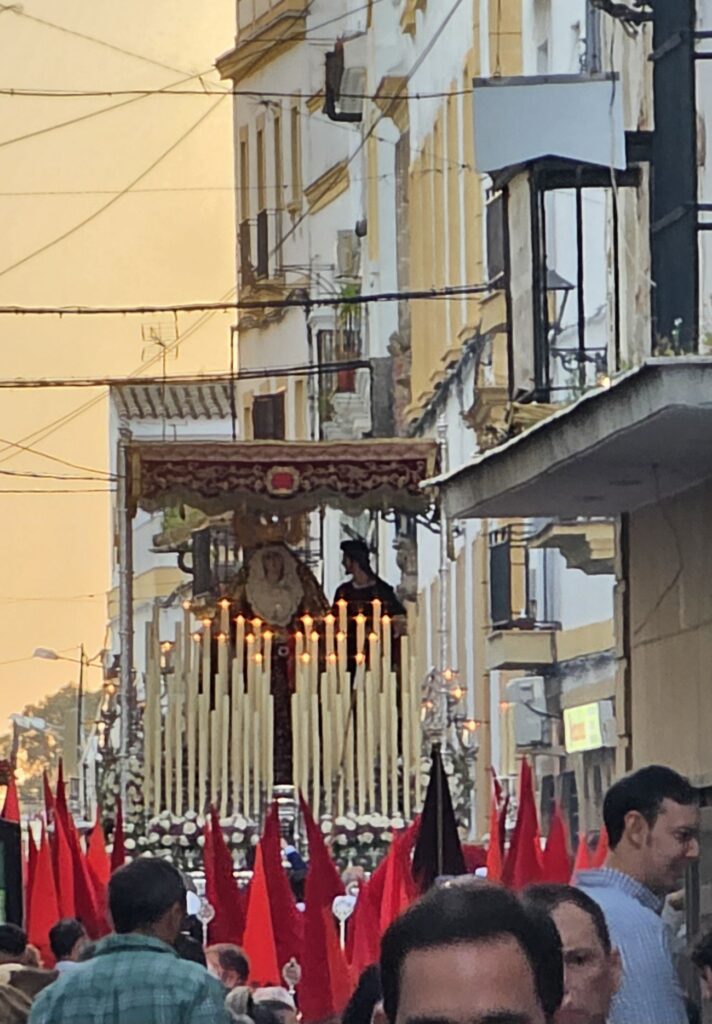
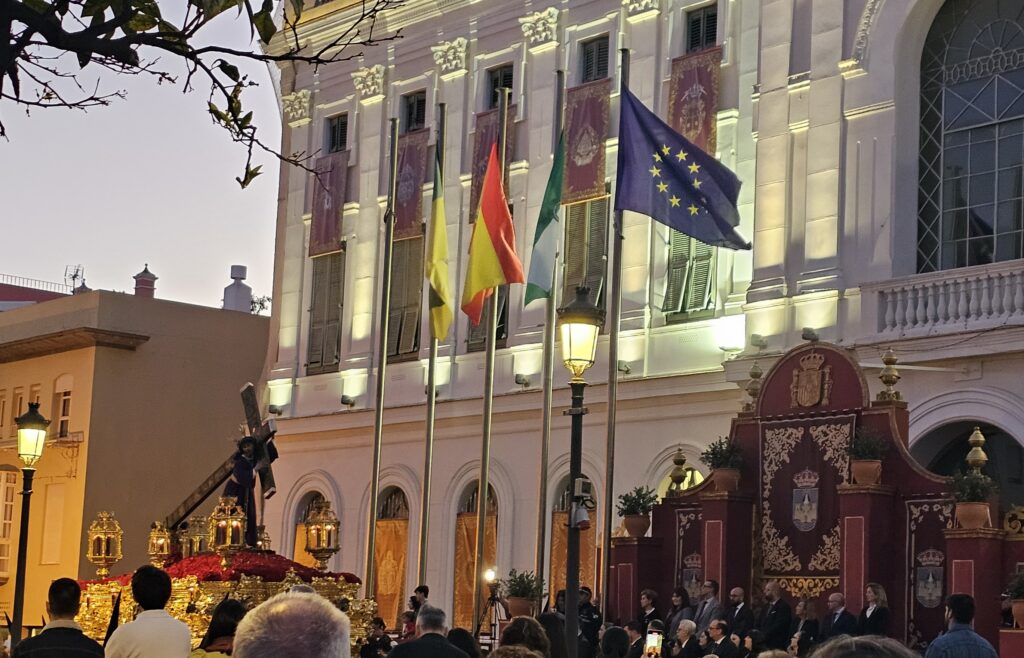
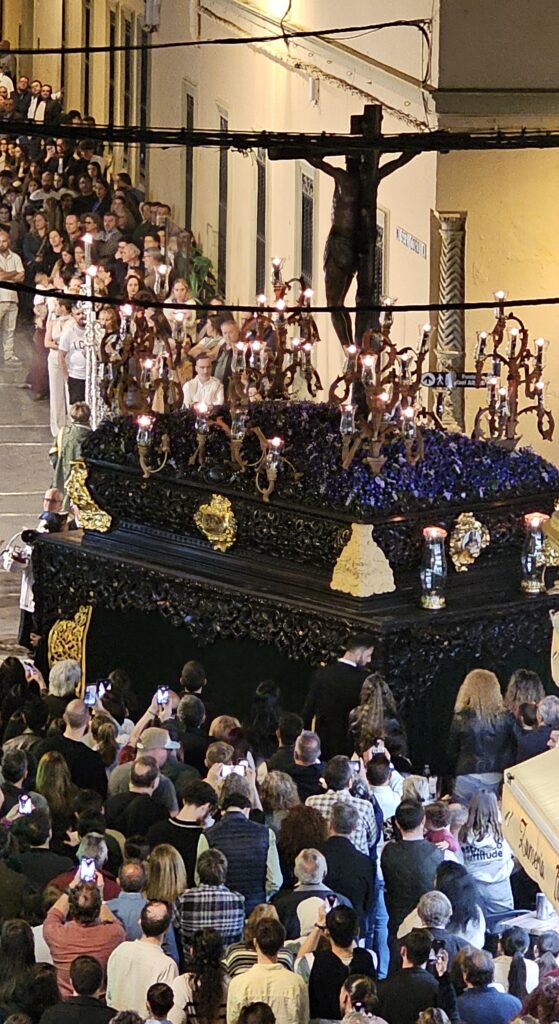
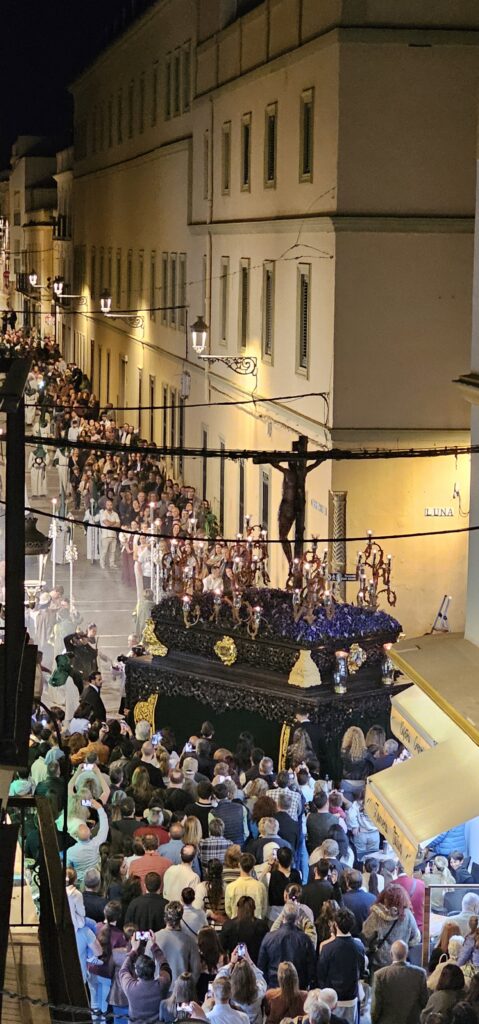
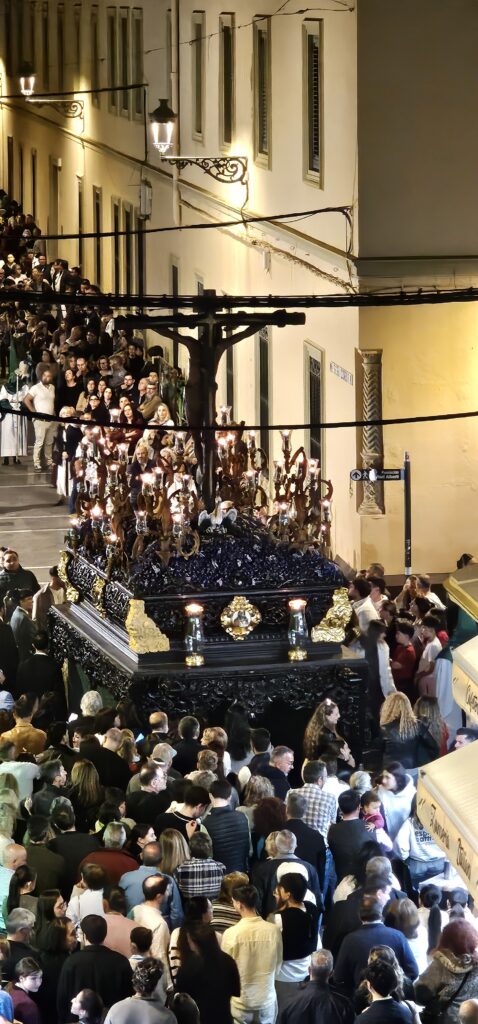
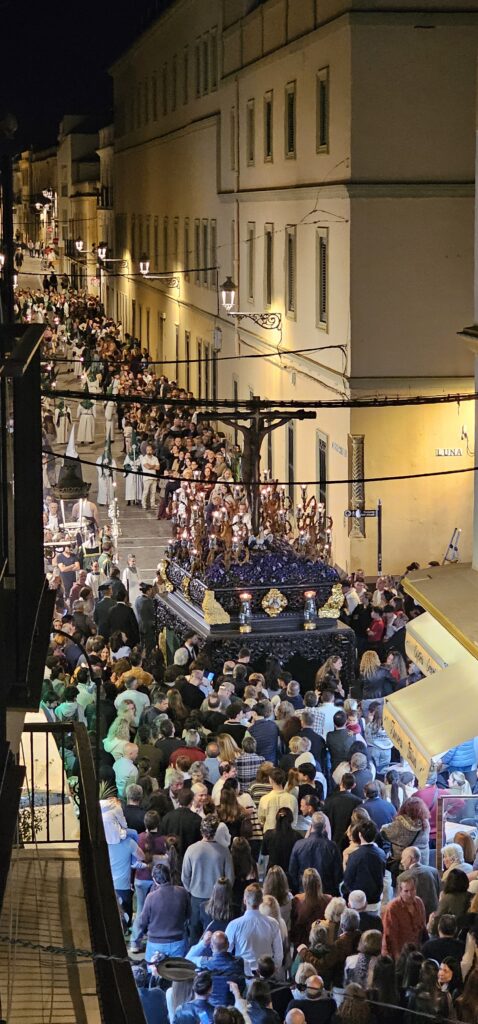
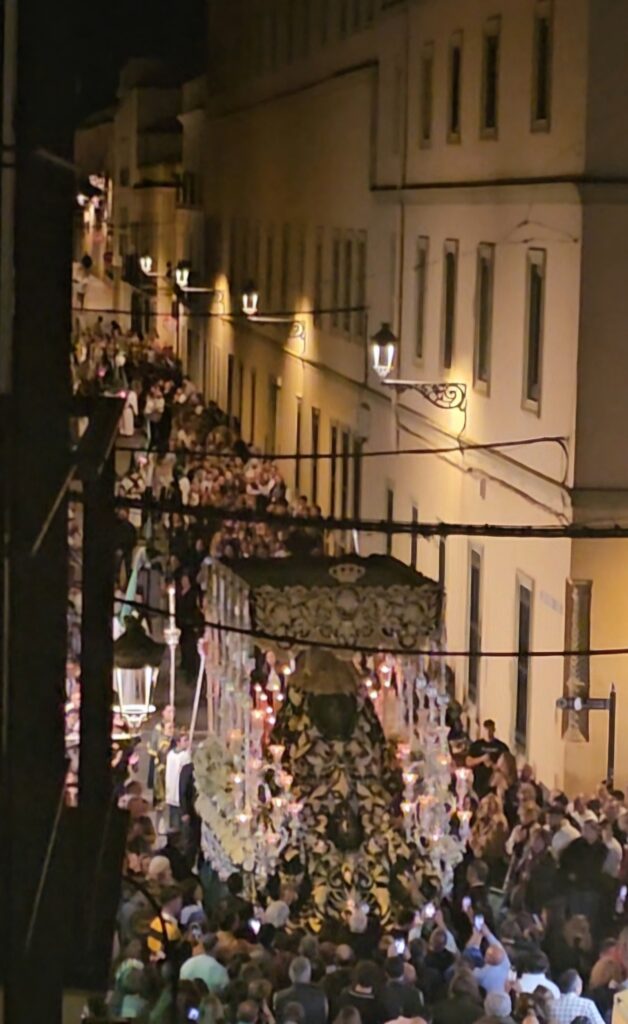
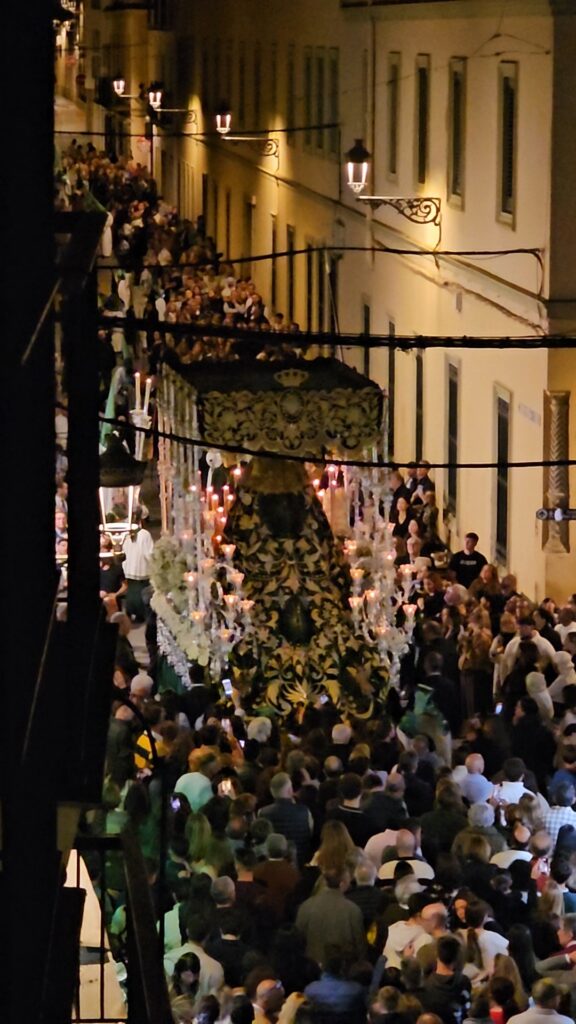
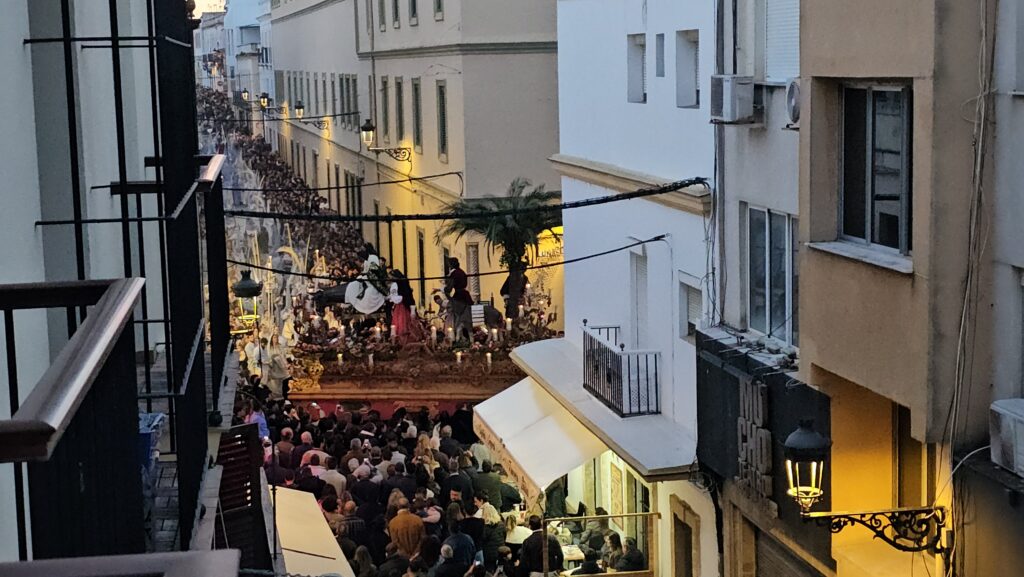
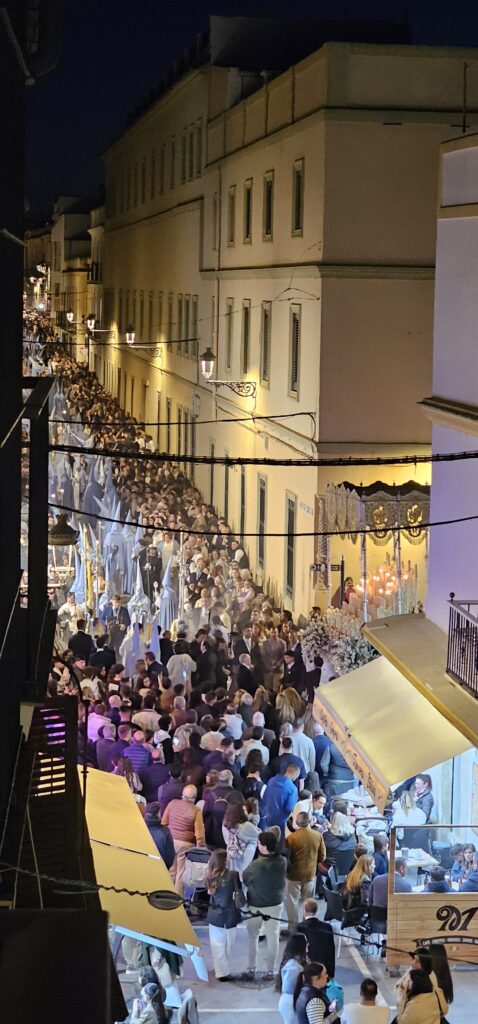
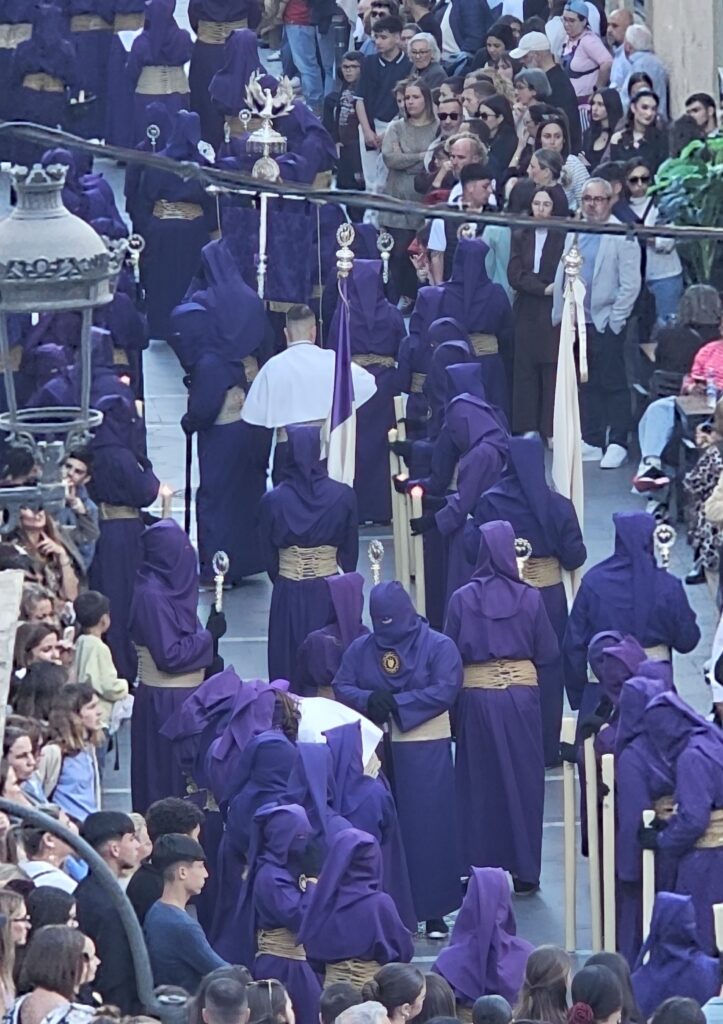
Thursday evening’s parade was morose, impressive and muted colours and so many people! In the past I’ve been able to get to the front or second row, but this time, the 4th row with obscured views was the closest I was getting. We tried to turn back, or get ahead of the front of the parade but simply couldn’t get through the hoards. We gave up, sat on a wall for half an hour until it passed then went home.
Sombre ThursdayParade going past a municipal building
Friday’s parades were equally impressive albeit quieter, one had no musical accompaniment which made a lovely change as my ears are constantly “hearing” drums now 😀
Our apartment is now quiet, until we leave next week. We are off to Cadiz on Sunday to watch the last parade in a different city, hopefully I can get close to the Cathedral.
In Spain, and most Catholic countries, Friday 27th March began the start of Santa Semana, (Holy Week) and one of the reasons we are in Cadiz. The other being Sherry!
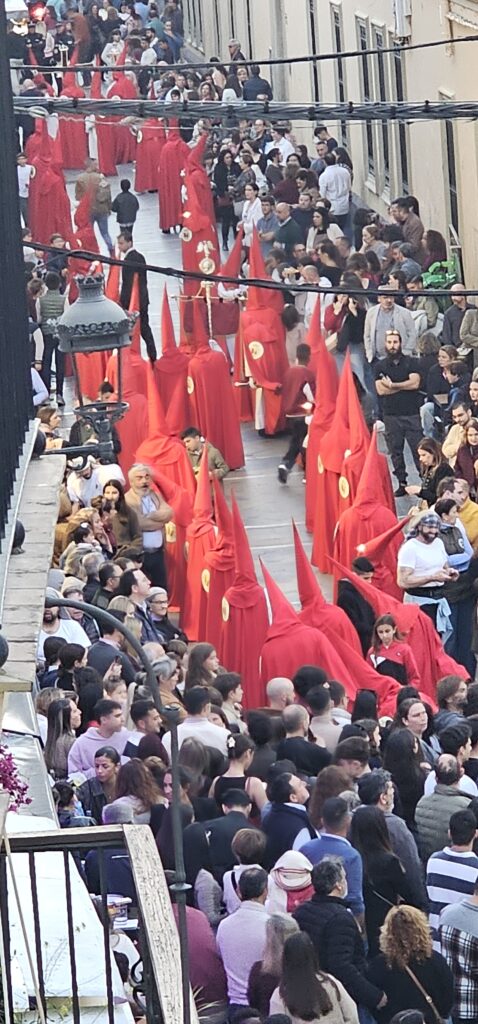
To try to tell someone about the spectacle, ambiance, atmosphere, noise, quiet, crowds, smells and views is quite difficult (but I will try) until you experience it in person. We’ve been lucky enough to witness it up close, and from a distance, in the throng of crowds and right up in the front row so I hope this explanation helps you understand what we’ve seen so far.
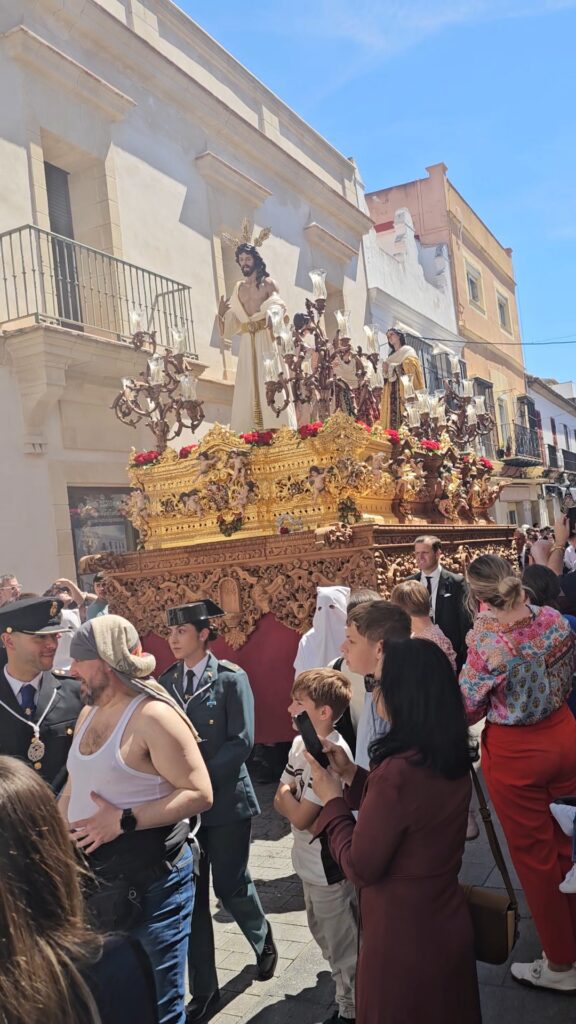
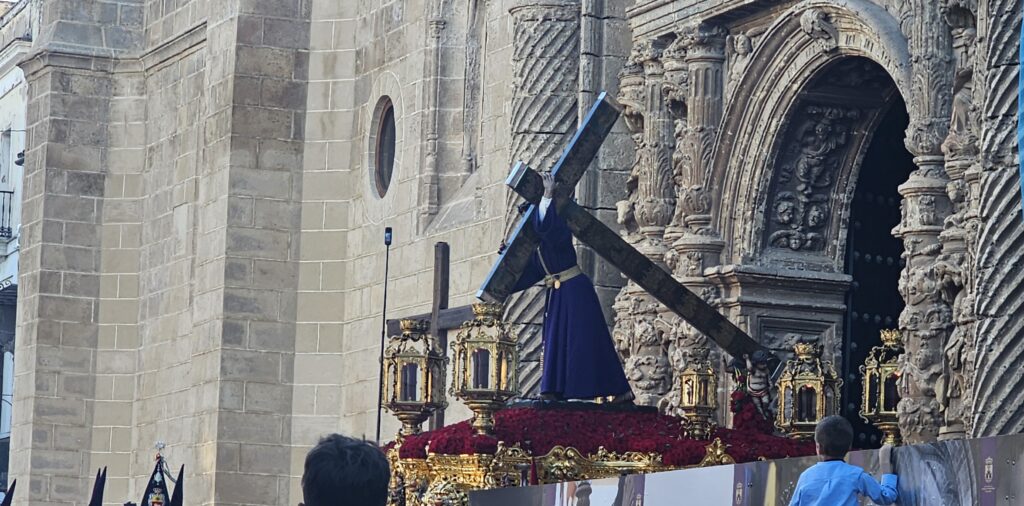
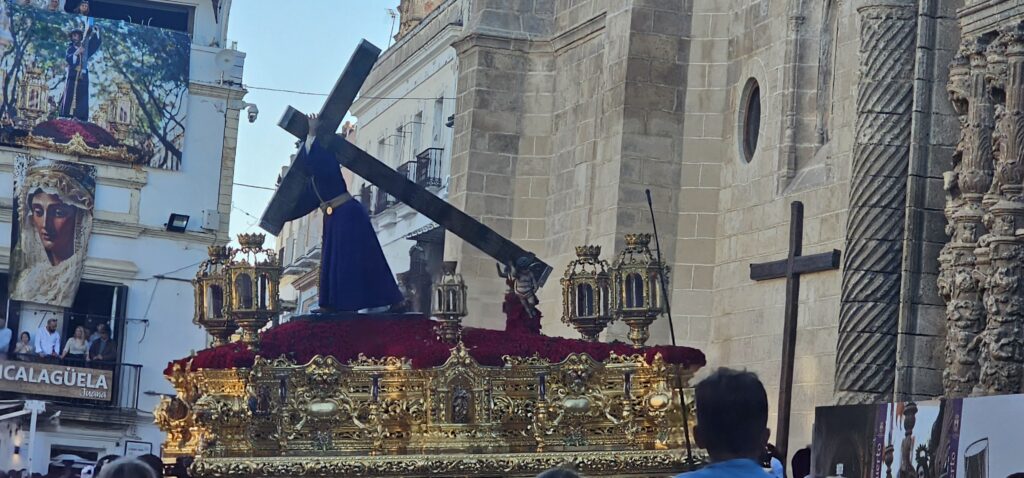
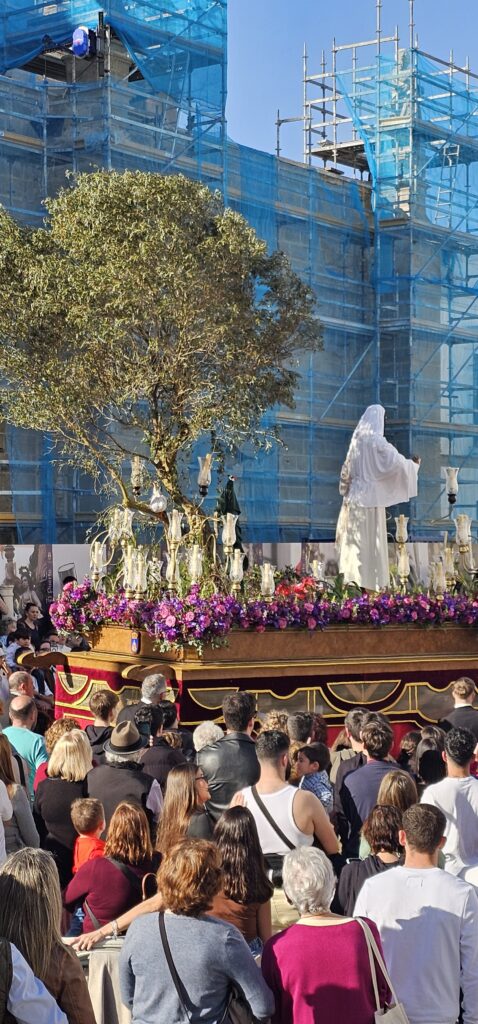
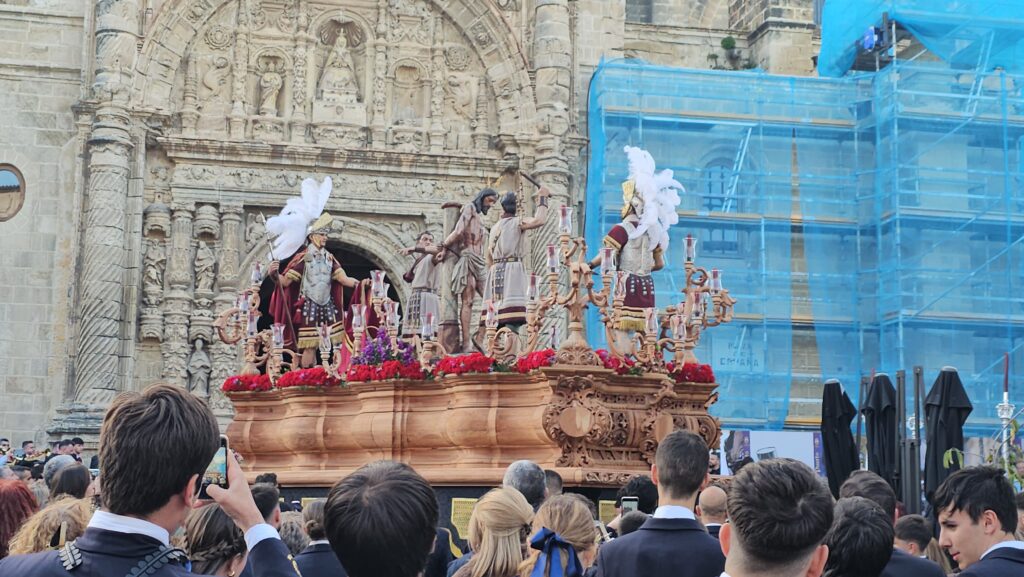
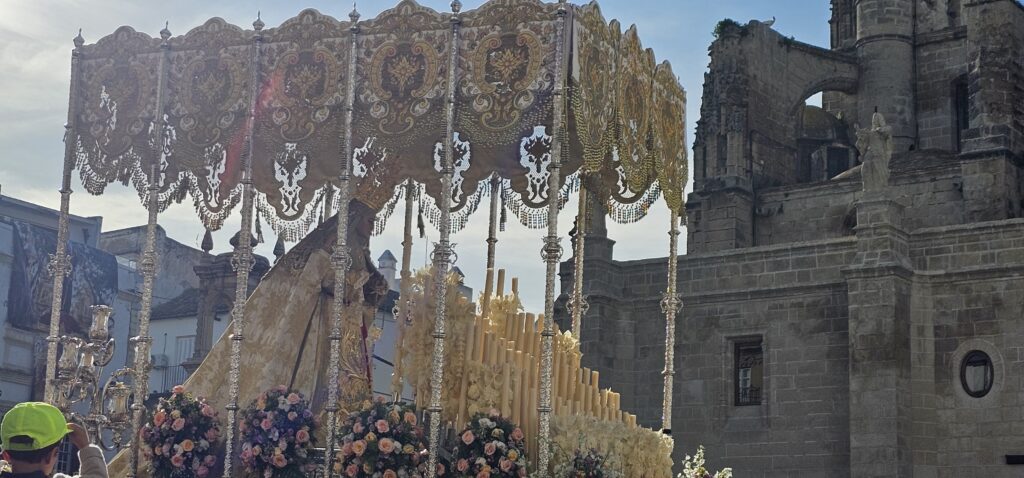
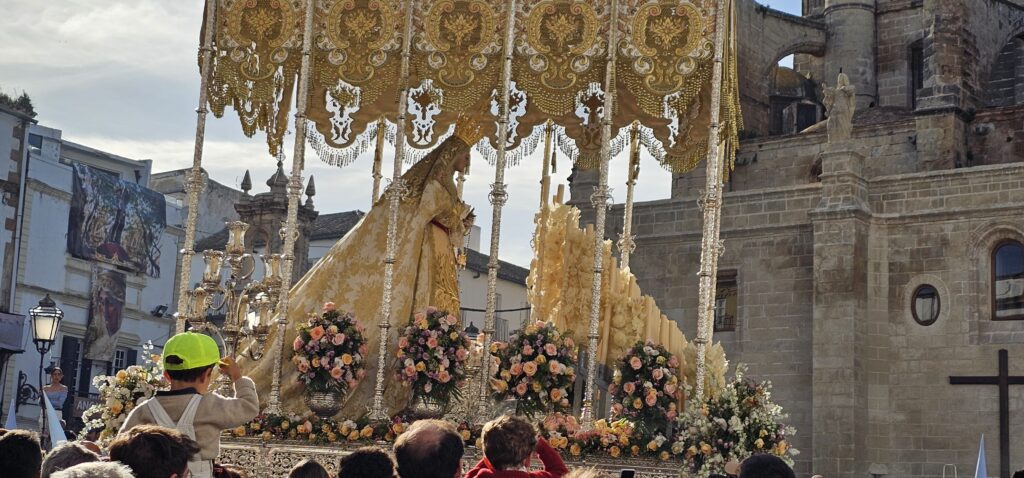
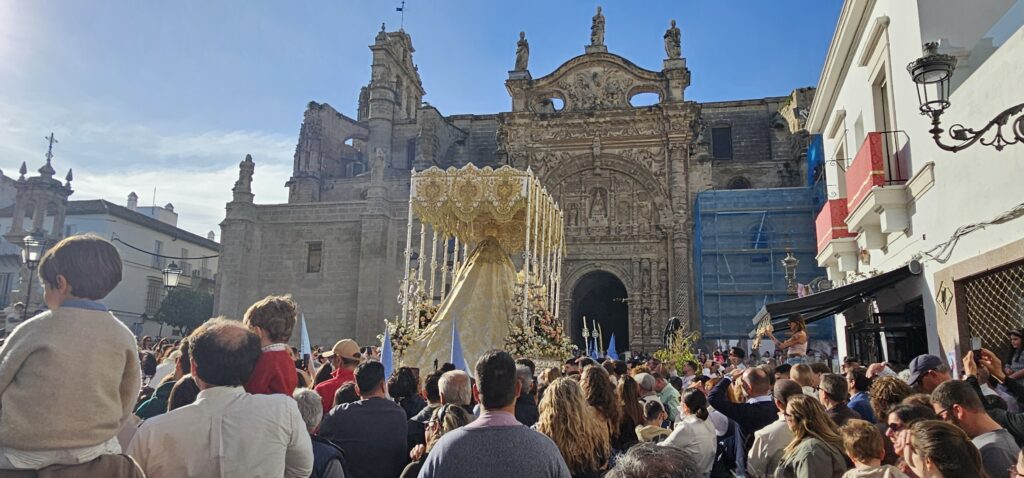
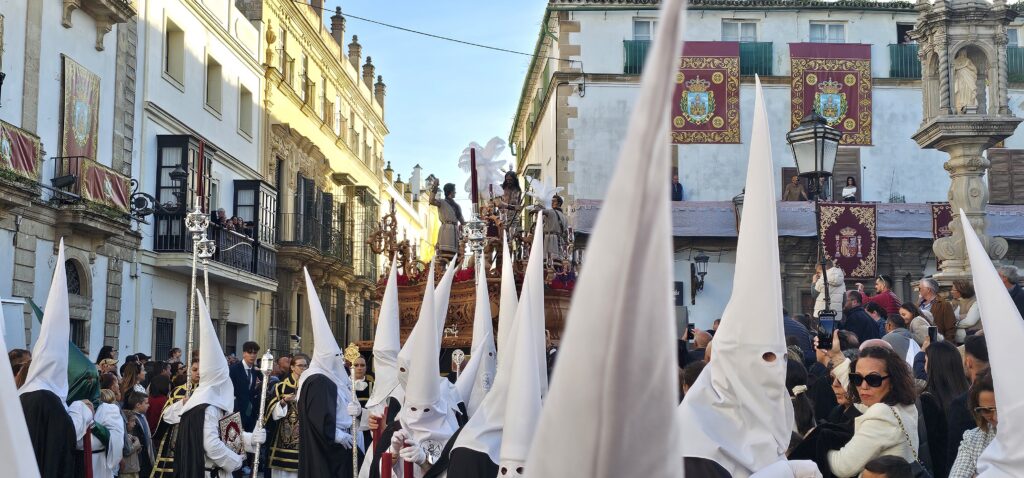
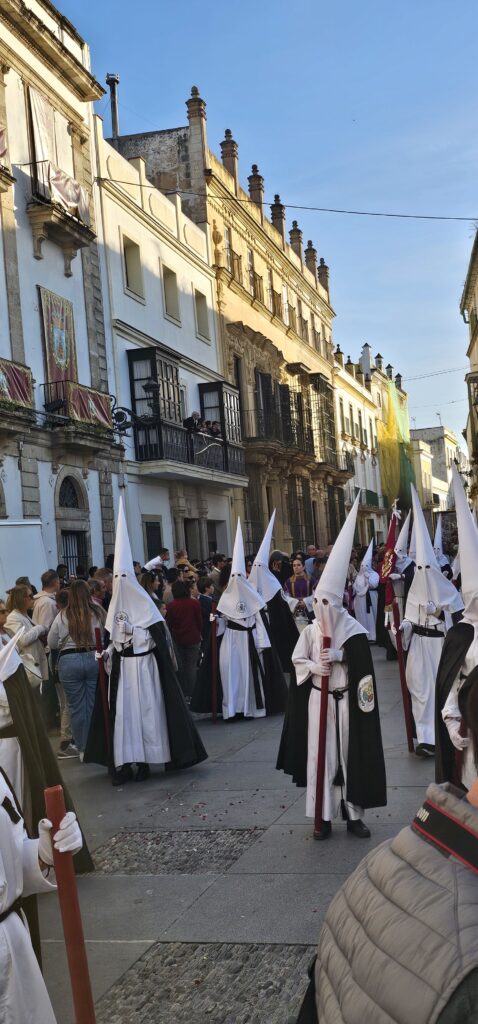
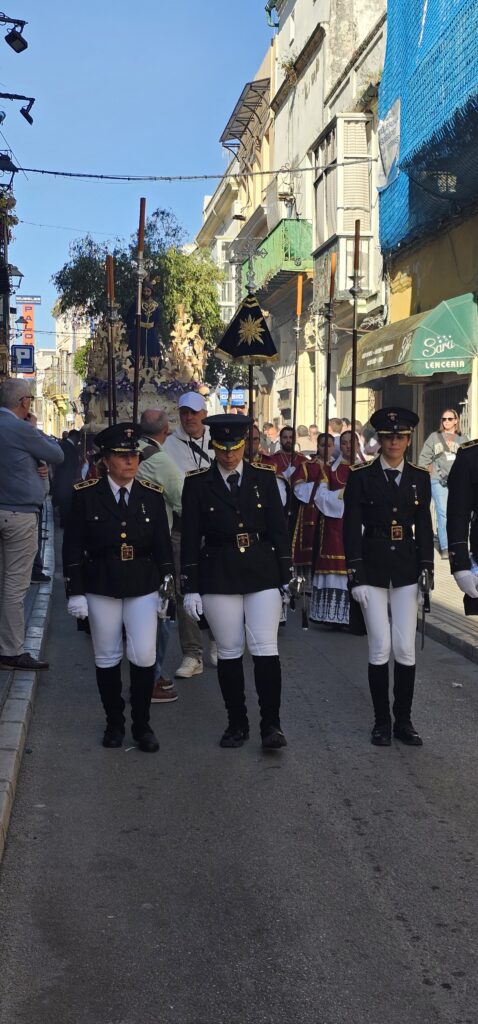
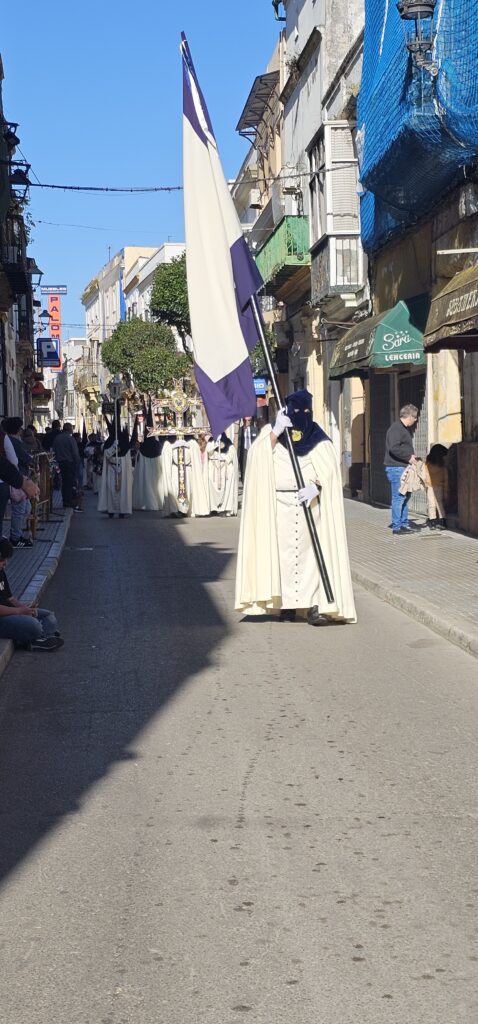
First, a little history as I understand it. Spain is a Catholic country and within El Puerto de Santa Maria there are more than a dozen churches, each church is known as a Brotherhood. During Holy week, each brotherhood is invited to process from their church through the town to the main Basilica with its men carrying its “float/throne or Tronos” with its flock following on behind. They enter the Basilica, are blessed (sins forgiven) and return to their church base. The route can take up to 12 hours, depending on the location of their church and distance to the Basilica.
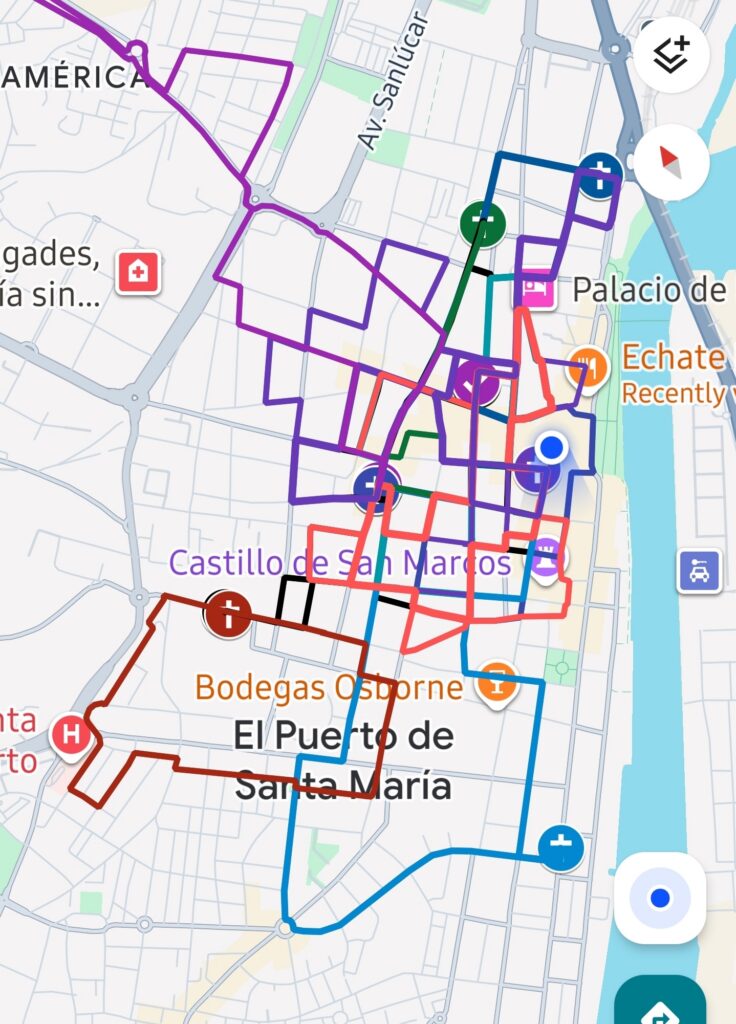
This image shows the routes around the town taken by the brotherhoods, the blue dot is our location and the Basilica (where all routes stop) is a 5 minute walk away.
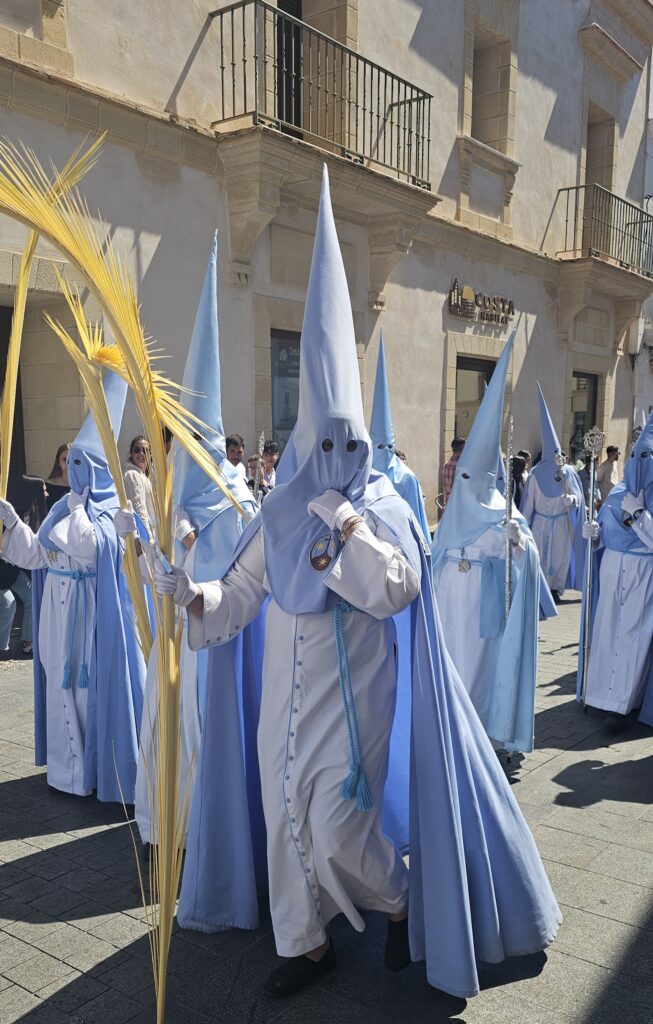
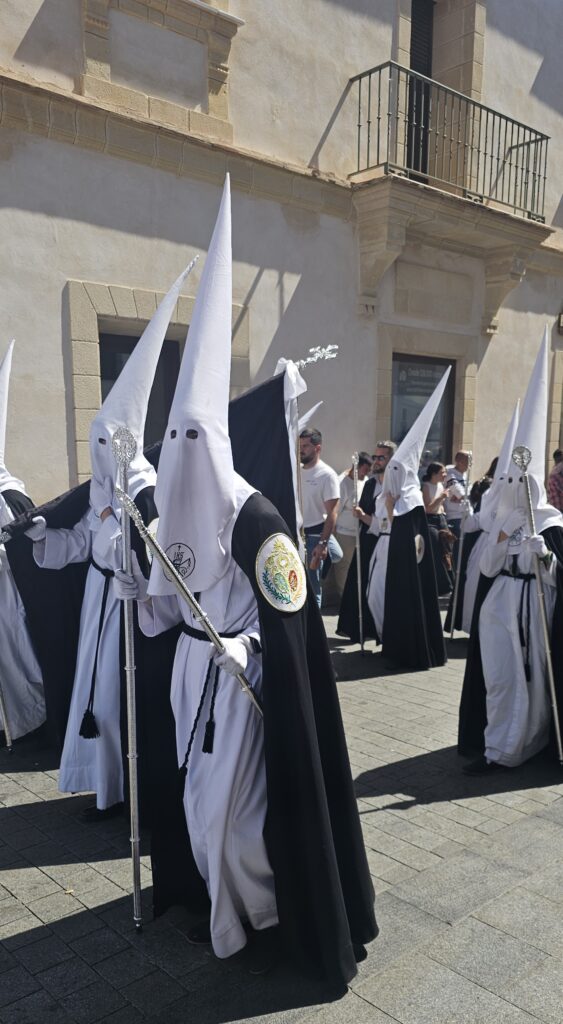
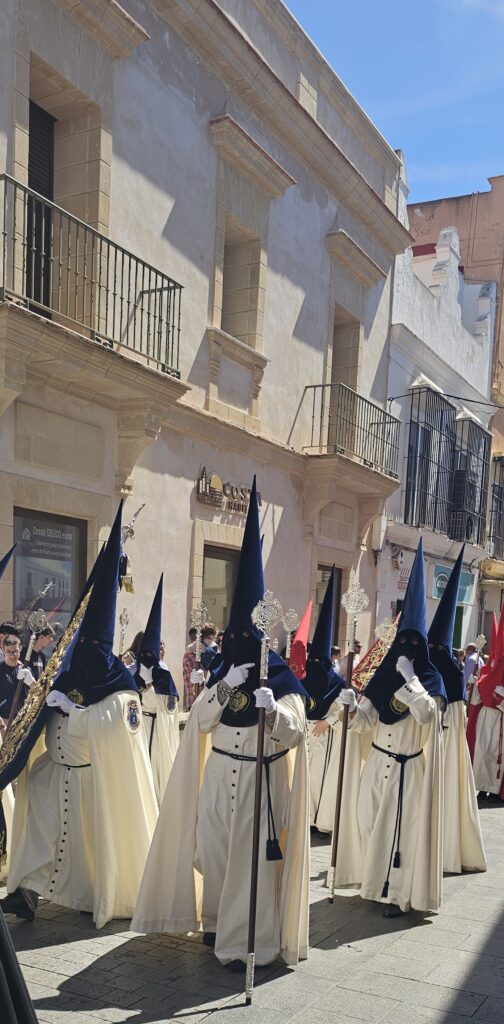
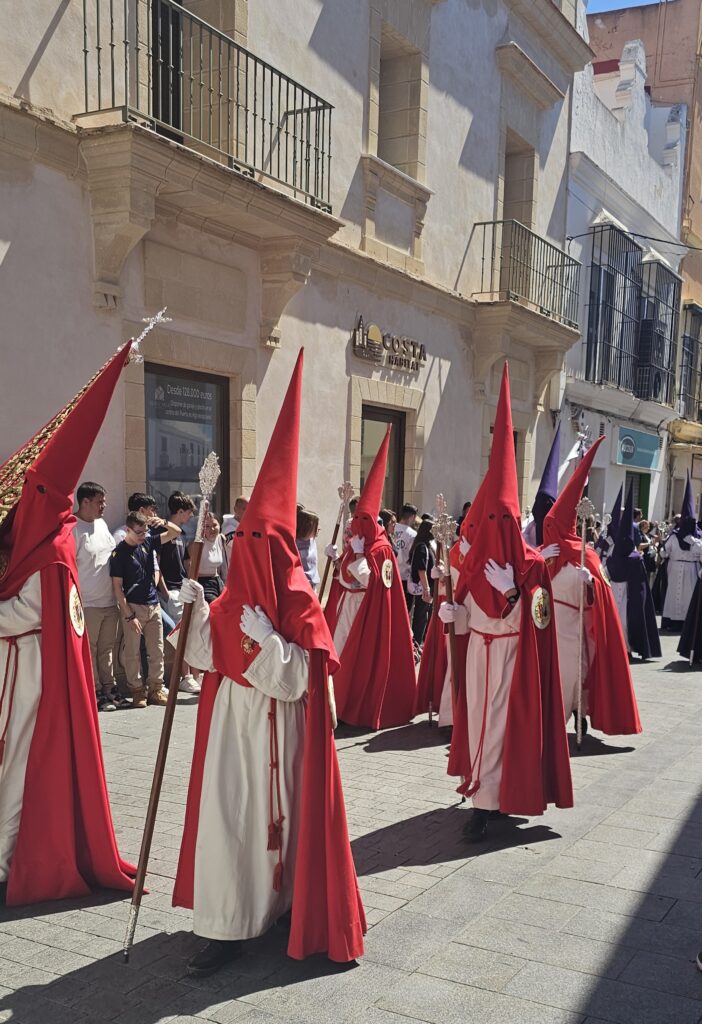
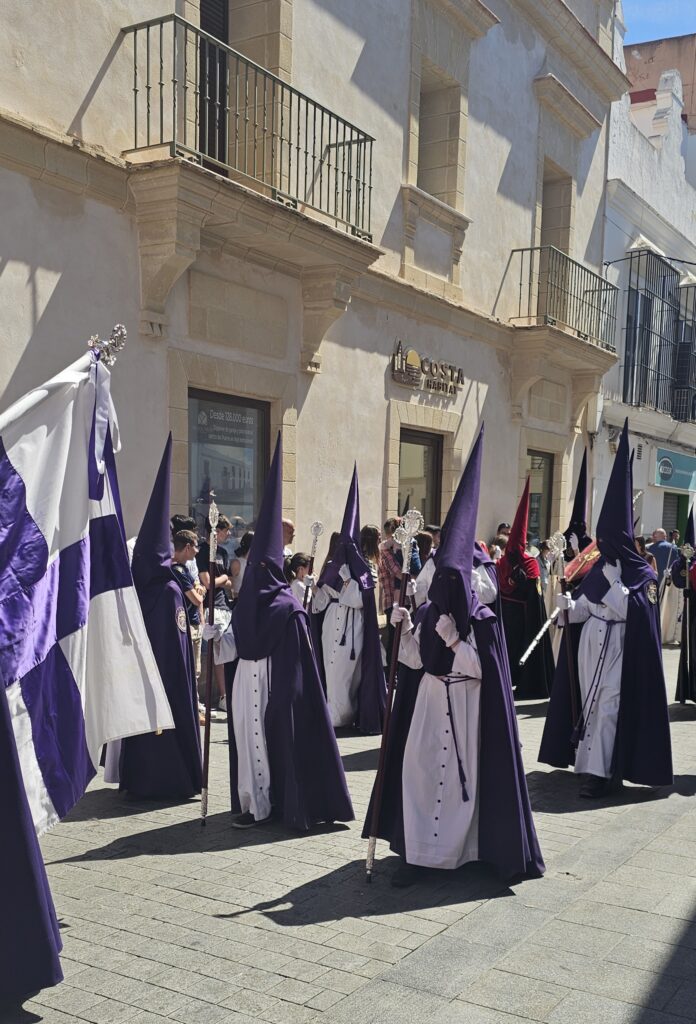
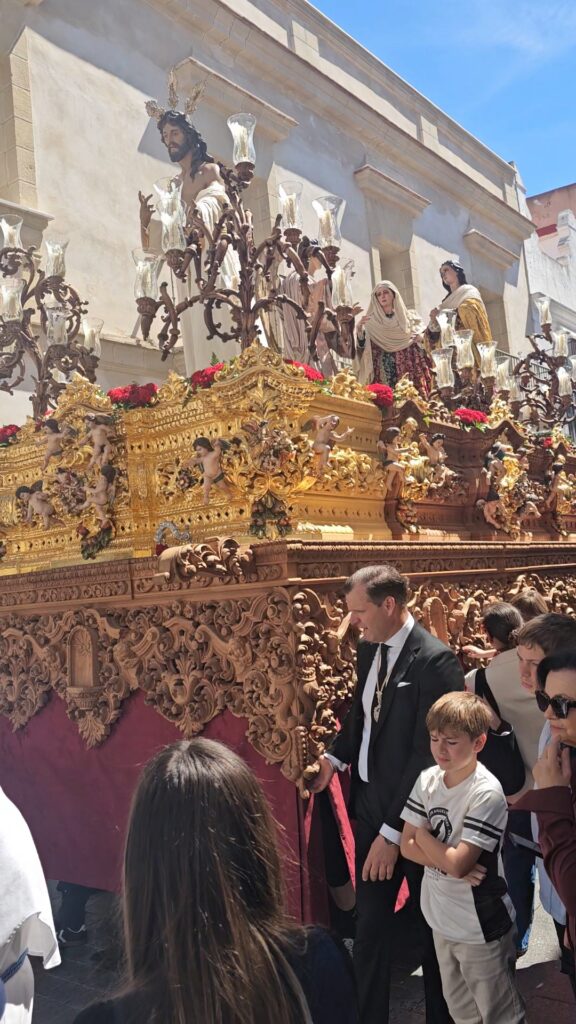
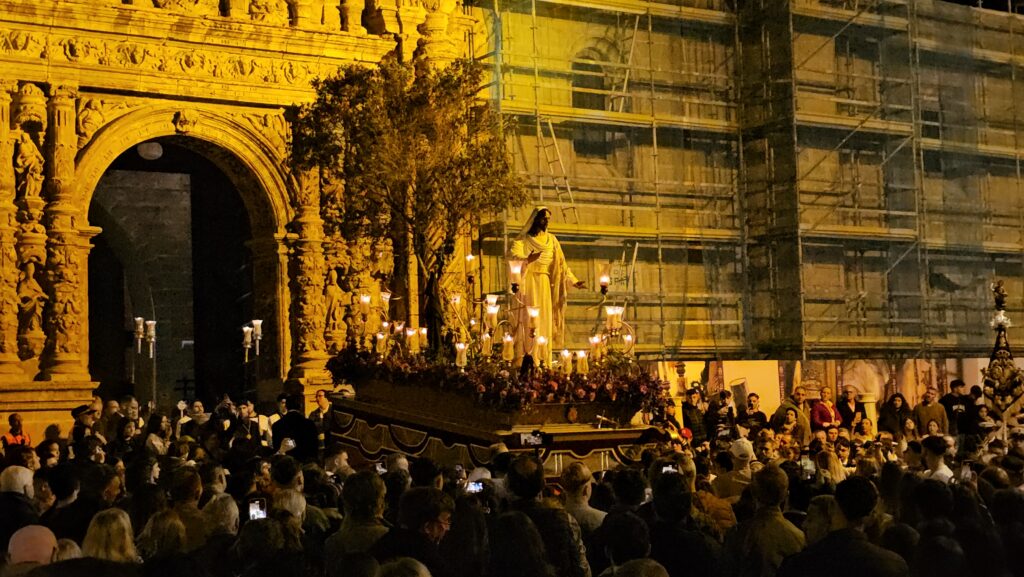
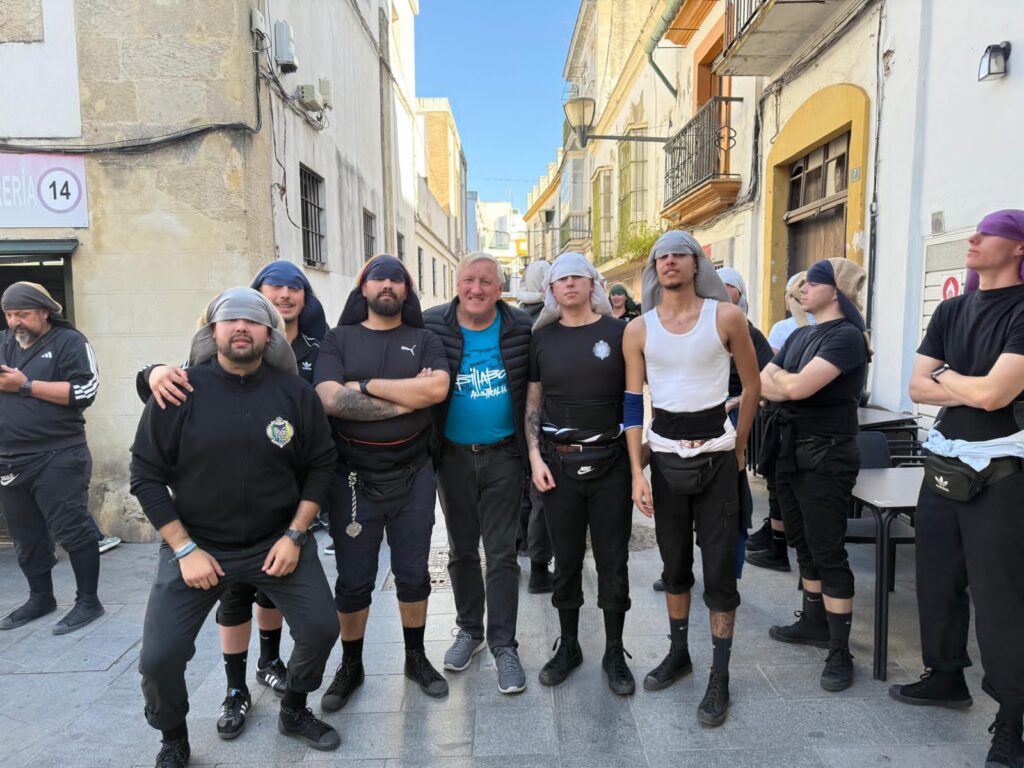
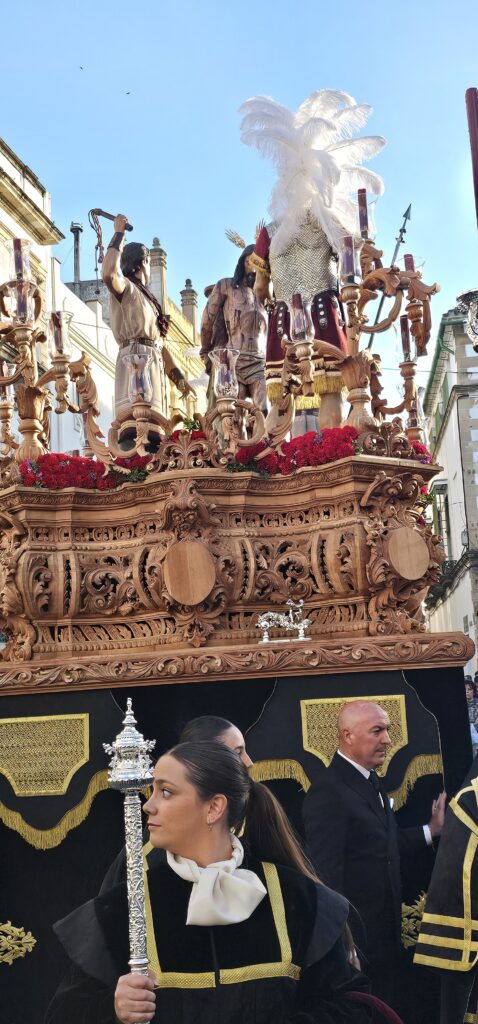
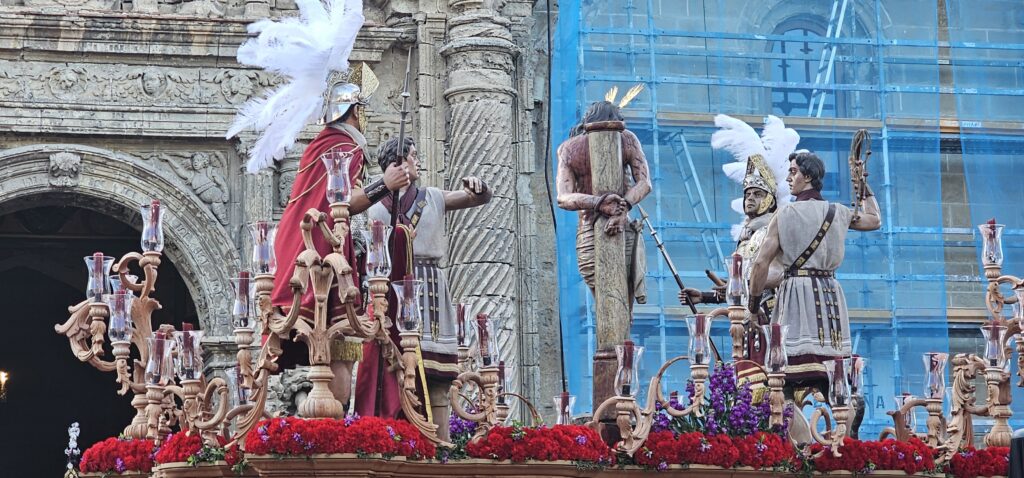
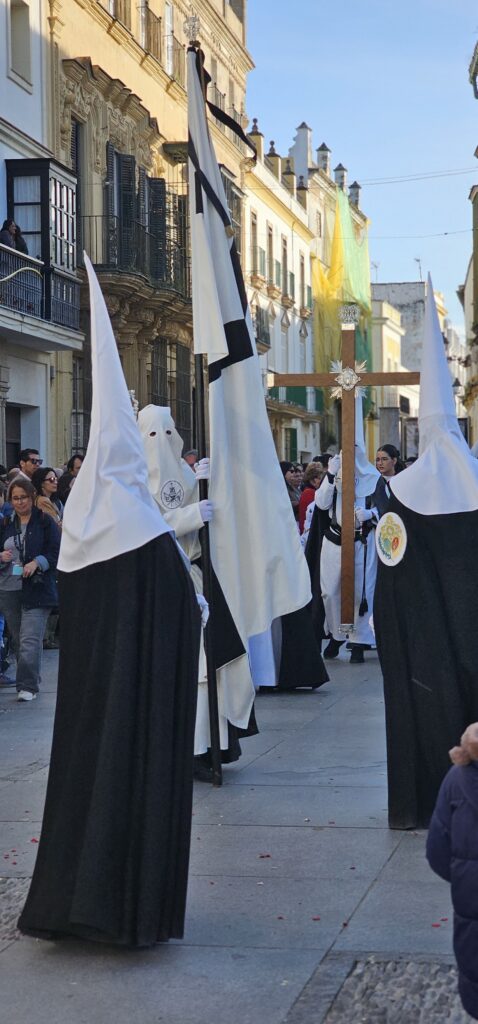
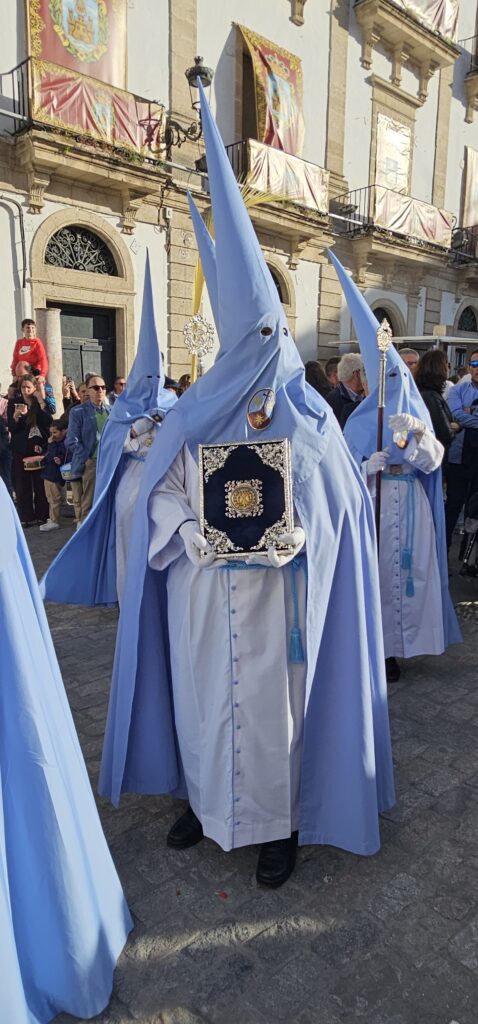
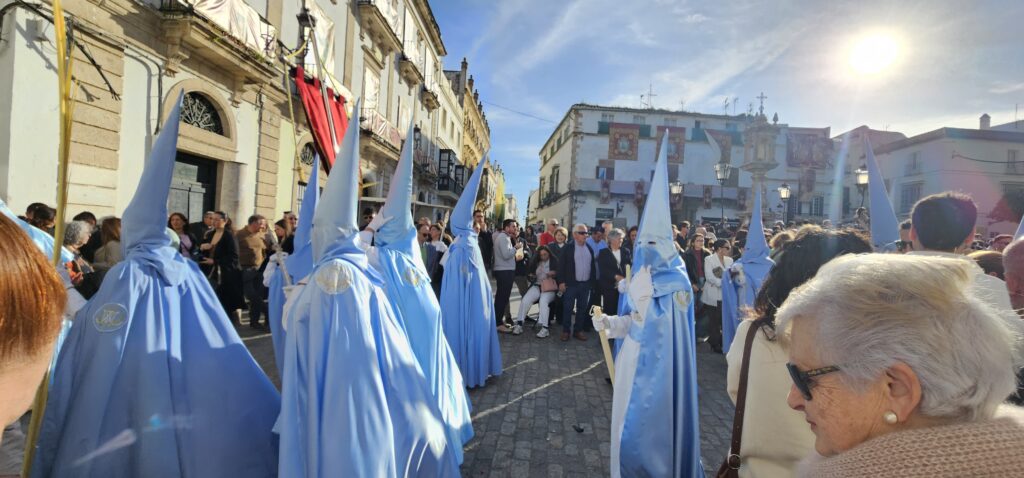
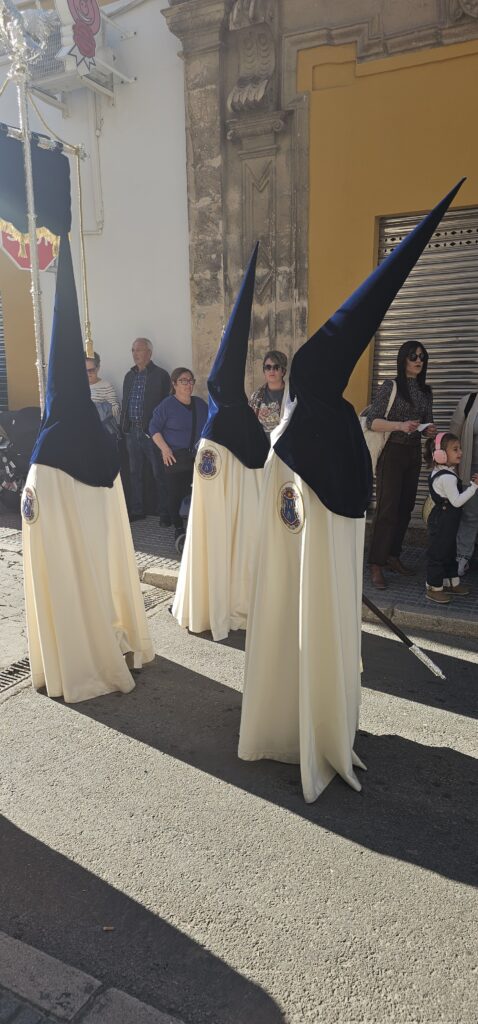
The Trono is carried by men of the church whilst the women, children and older men dress in cloaks in the Brotherhood’s colours to give them anonymity. To carry the Tronos is considered a rite of passage, something every young man must do at least once. The Trono is large (5 metres long by 2.5m wide minimum) made of wood (weighing several tonnes), and decorated with scenes or statues that are highly decorated with material, flowers, candles and lights. There are a minimum of 35 men carrying it at one time, with spare men walking alongside ready to swap over carrying duties as some become tired. I learned this by chatting to one sweaty young carrier who was preparing to take over!
The different parades relate to different holy days, Friday and Saturday were simply Holy days…..Sunday was joyous Palm Sunday when Jesus enters Jerusalem…..Monday was quieter but celebrated the union of Christ and Lazarus. Tuesday is usually a solemn quiet procession with the followers carrying the crosses. Wednesday represents the day Judas betrays Jesus and becomes serious and sombre, Maundy Thursday commemorates foot washing and Jesus’s last supper with his disciples and Good Friday’s processions are usually carried out in silence to mourn the crucifixion and death of Christ. Saturday marks the burial and Easter Sunday celebrates the day of resurrection.
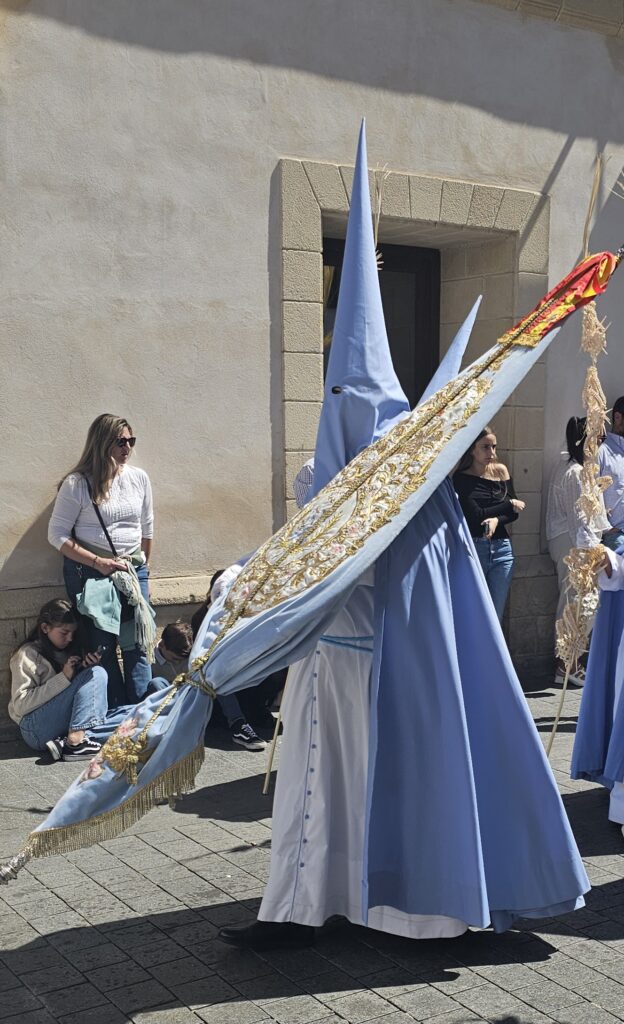
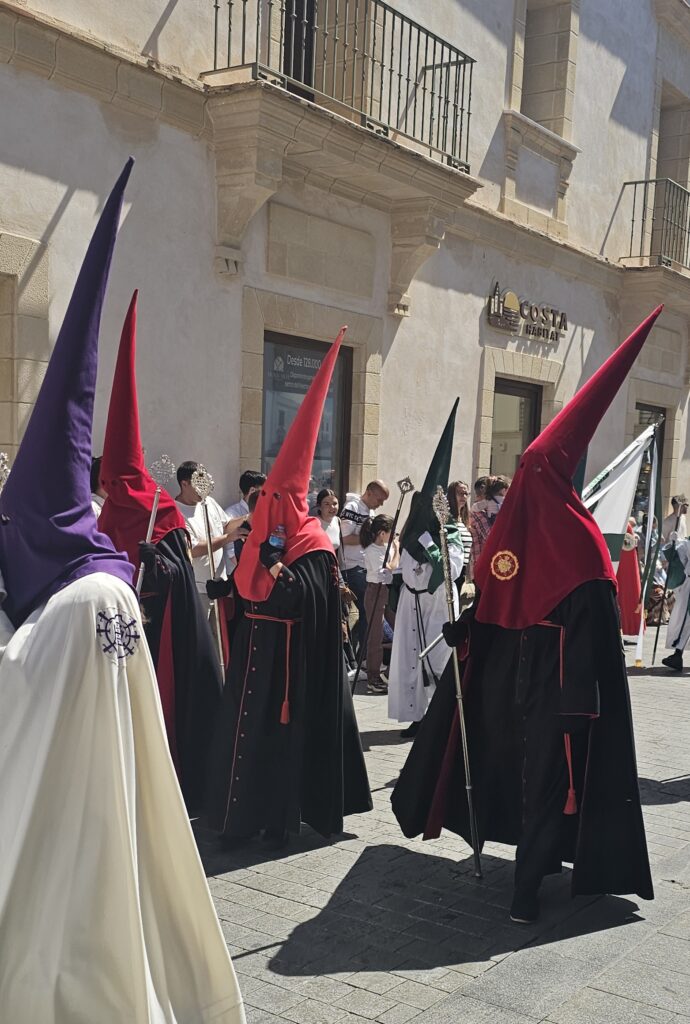
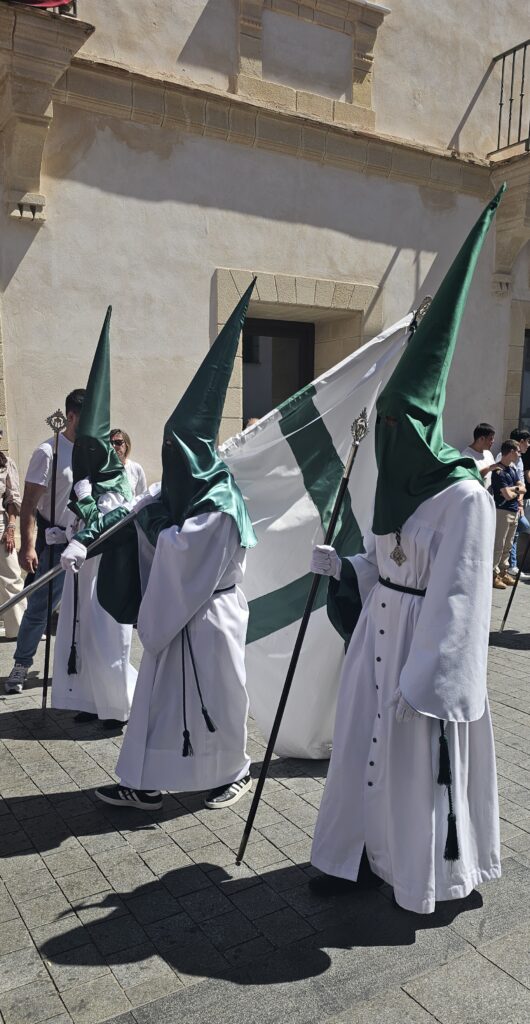
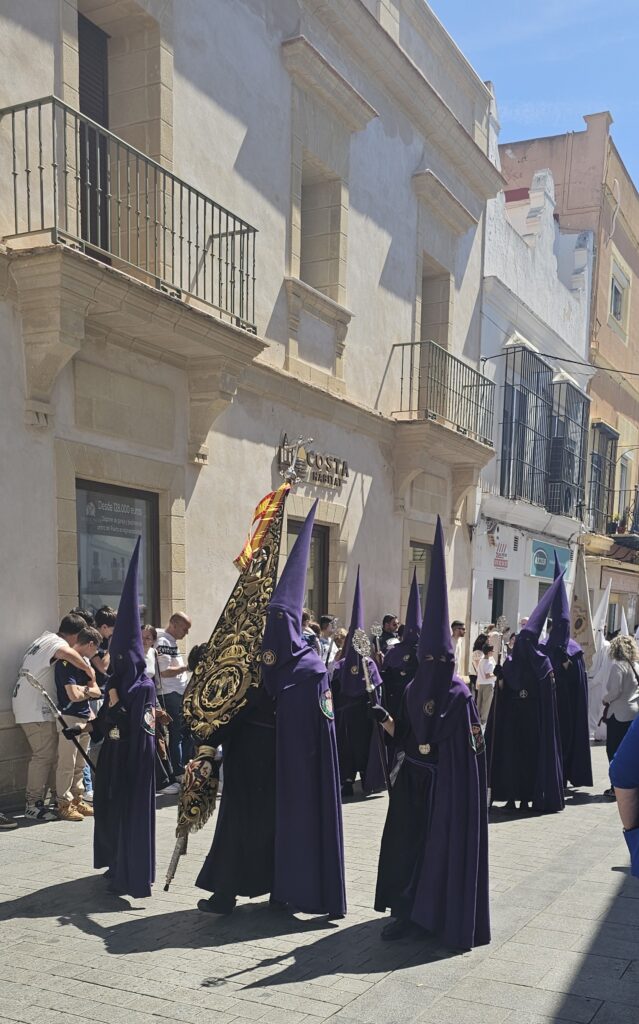
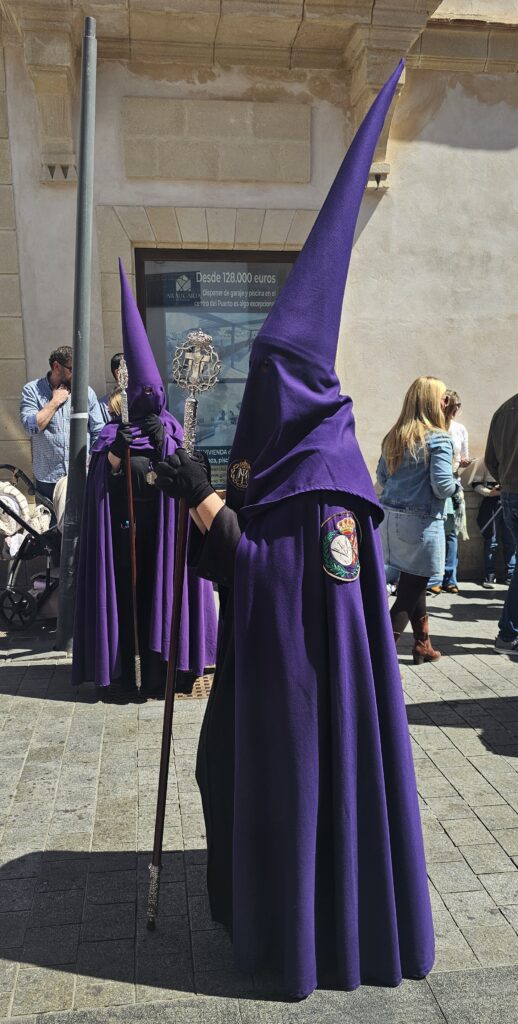
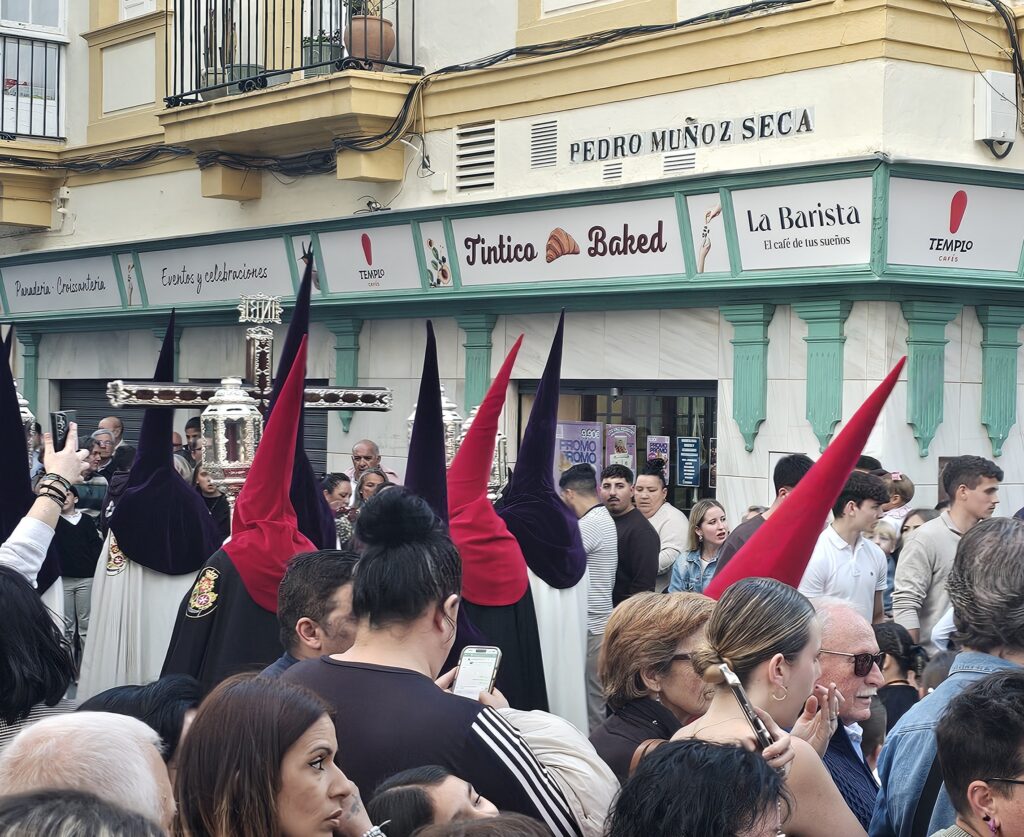
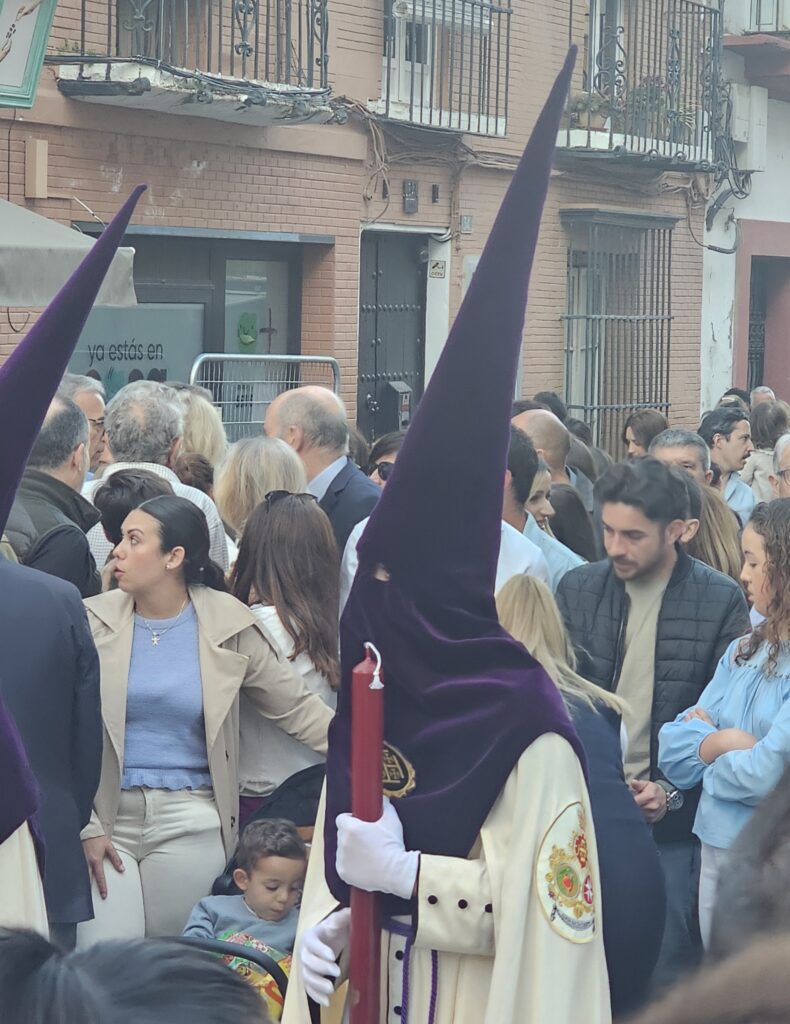
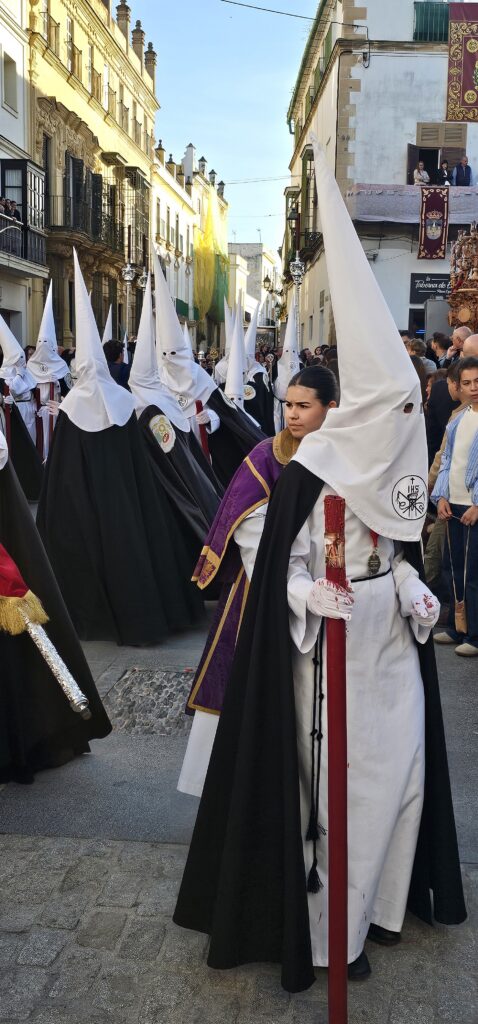
Now for the cloaks and hats….they pre-date the KKK, in the 15th century during the Spanish Inquisition, people were made to wear the hats as a sign of public shame. In the 16th century the Catholic brotherhoods adopted the hats voluntarily and turned the hats of shame into hats of penance and devotion. The hood covers the wearer’s face so they can repent anonymously making everyone equal in God’s eyes, and they point upwards to direct prayers to heaven. White cloaks symbolise purity and peace, purple for sorrow, black for mourning.
The noise is deafening, as the brass bands pass by, the beat of the drums can be felt in your chest. People talking normally right up to the moment the first hooded person passes by then they hush, as the Tronos is lifted they applaud, as a flamenco singer serenades the float, they go quiet but as the last of the band passes they spark up conversations again, and the noise level raises back up.
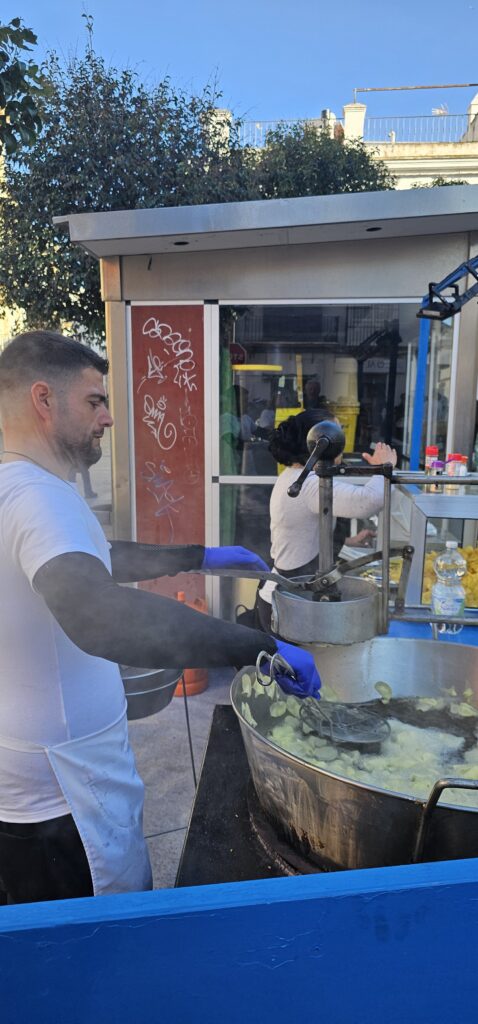
The smells are memorable too, the dank musty smell of incense mixes with melted candle wax, cigarette smoke, Sherry, freshly cooking crisps and food especially fish all wafting together, not a constant overpowering aroma but one that catches the nose occasionally and frequently.
This event is something that stirs emotions, something that the Spanish are very proud of, regardless of whether they are religious or not and something that you could never imagine seeing in the UK, the relaxed atmosphere and committment and pride could never be matched or recreated and we feel so very honoured to be able to witness it, experience it and share it.
Recent Comments