Chicago Town
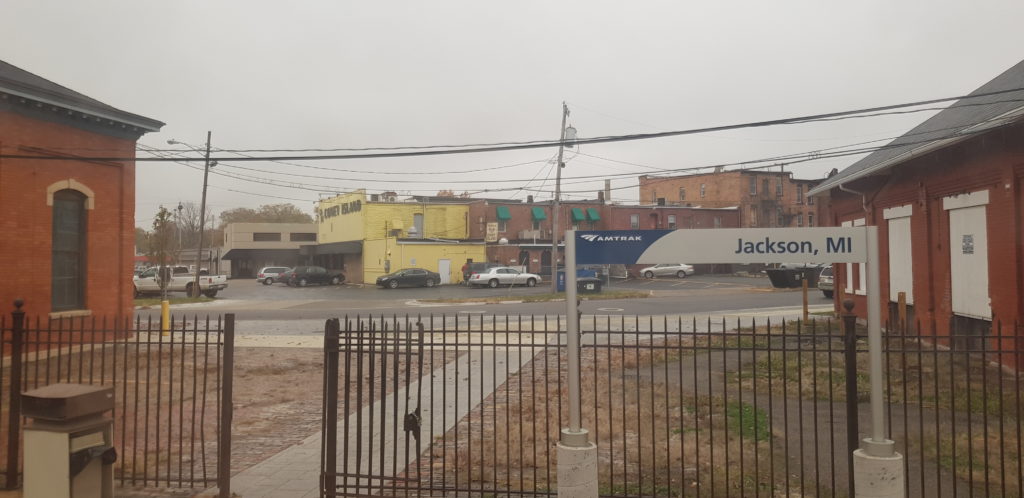
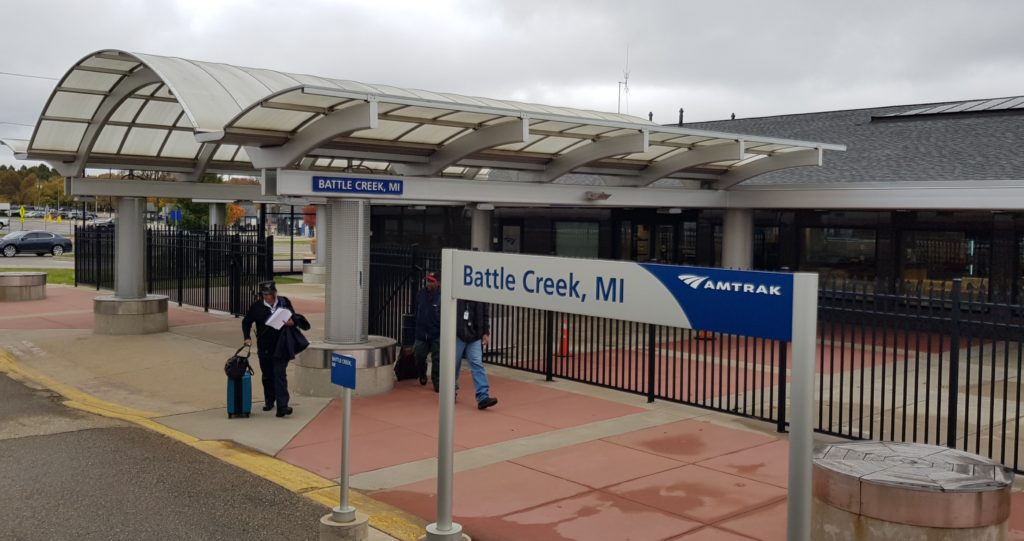
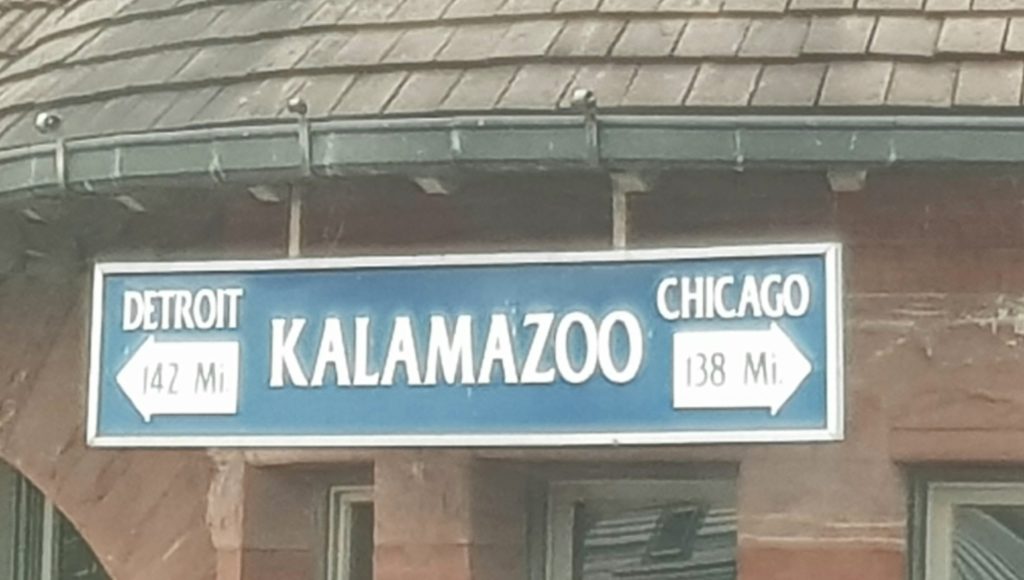
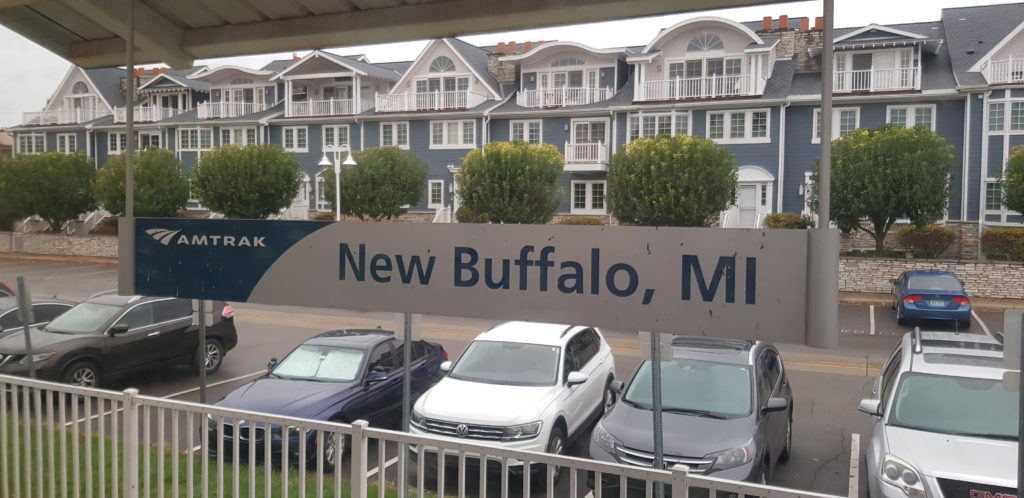
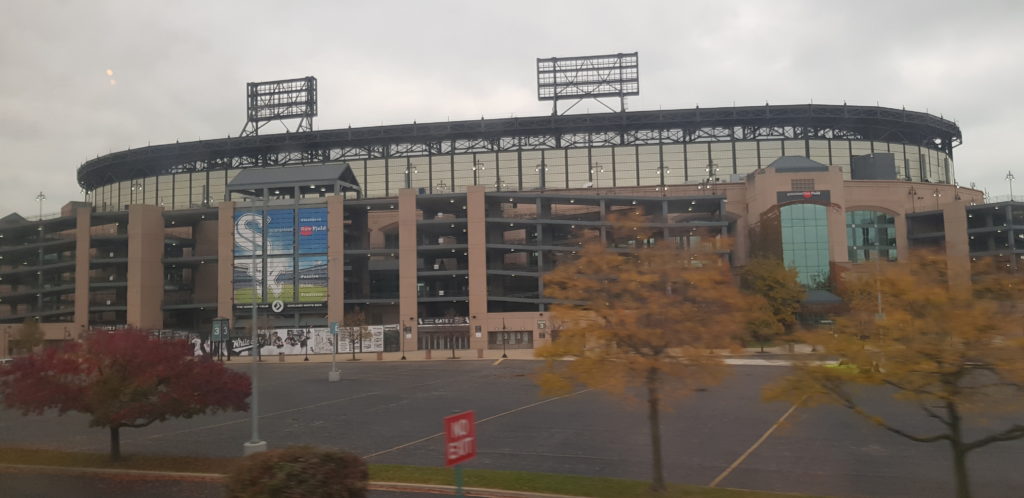
We took the Amtrak train from Detroit to Central Station in Chicago, a lovely relaxing journey of about 5 hours in a spaciously comfortable, clean and quiet train that sped through city suburbs, fields, forests and endless rolling plains, alongside rivers and ending up circling the bottom part of Lake Michigan before heading up to Chicago.
We had booked an apartment right in the centre of Chicago, modern and comfortable, right beside a huge shopping centre and residential skyscraper called Water Tower Place, which was home to a Ritz Hotel, 2 schools, 8 levels of shops, a theatre, restaurants and the first vertical “mall” in the world.
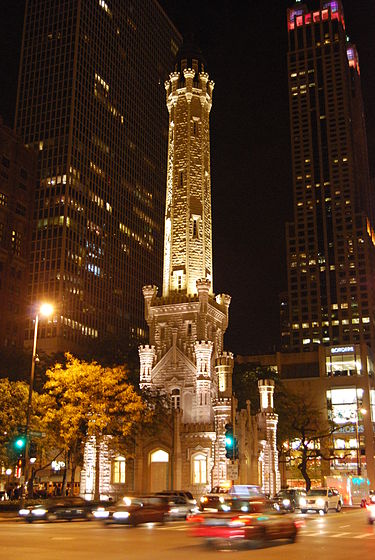
Being our first night in the City, I went up onto the roof terrace of our apartment block and admired the view, an enjoyable voyeuristic look into night time activities in other apartment blocks! I didn’t stay there long, it was very cold, by this time about minus 2c!
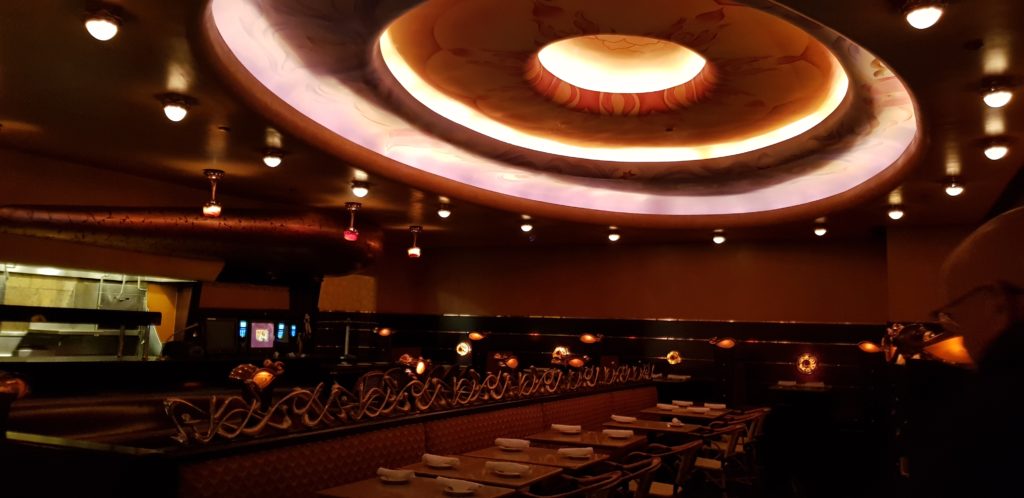
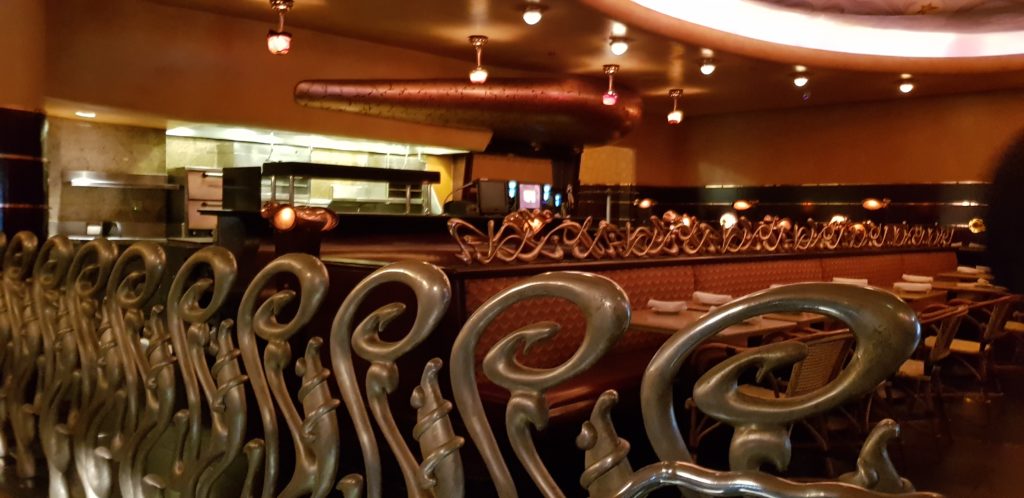
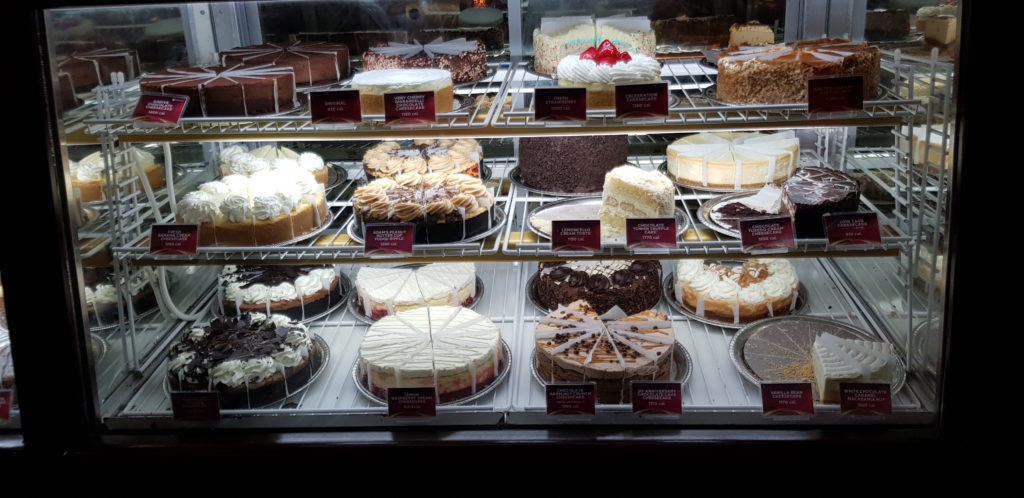
That evening we headed into the City and immediately came across an iconic restaurant called The Pancake House, a bizzarely built subterranean structure, made famous by the Big Bang Theory, we just had to stop and go in. We had almost got used to large American plates of food, until we ordered 4 shared starters off the menu – they were sooo big we could only manage a shared dessert afterwards, no mains!!
As we only really had 48 hours here, Chicago was explored again on a tourist trambus, a bus made to look like an old tram with the driver giving running commentary. The Old Navy Pier is a pier jutting out into the Lake, full of restaurants and entertainment facilities, I’m sure it would be heaving in the summer but very empty in the cold winter.
It had started to snow just after we arrived, it was soooo cold!! We saw the Trump building, one of many, right on the edge of the financial part of the city. We rode down Wacker Drive and Clinton Street, and around the Magnificent Mile, where you have to make an appointment to gain entry into the exclusive boutique shops and luxury fashion outlets. We drove past the first McDonalds and RainForest Cafe, both started in Chicago.
We were also amazed at the number of large parks in the city, Millenium, Wicker, Grant, Hyde and Lincoln Park which has its own zoo.
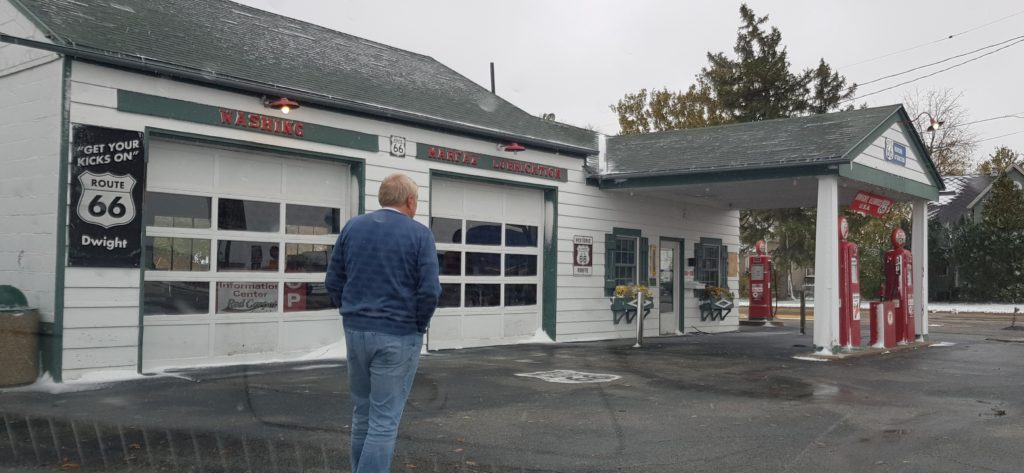
We collected our hire car the next morning, a vehicle the Americans call a “caravan” – 6 seater people carrier to you and me and trudged through the sludgy snow to the start of Route 66 for the obligatory photo – ready for the next part of the journey.
Our Amtrak Journey
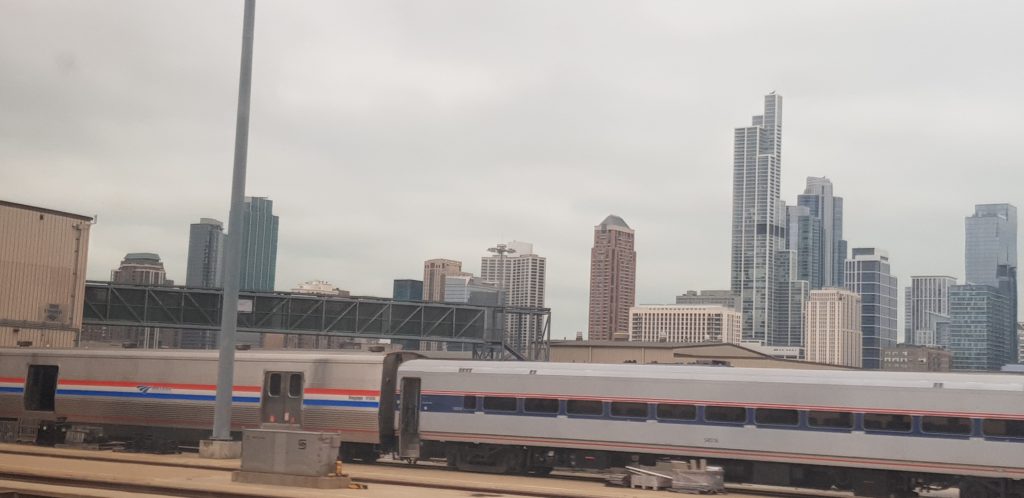
The Chicago Skyline as we pulled in 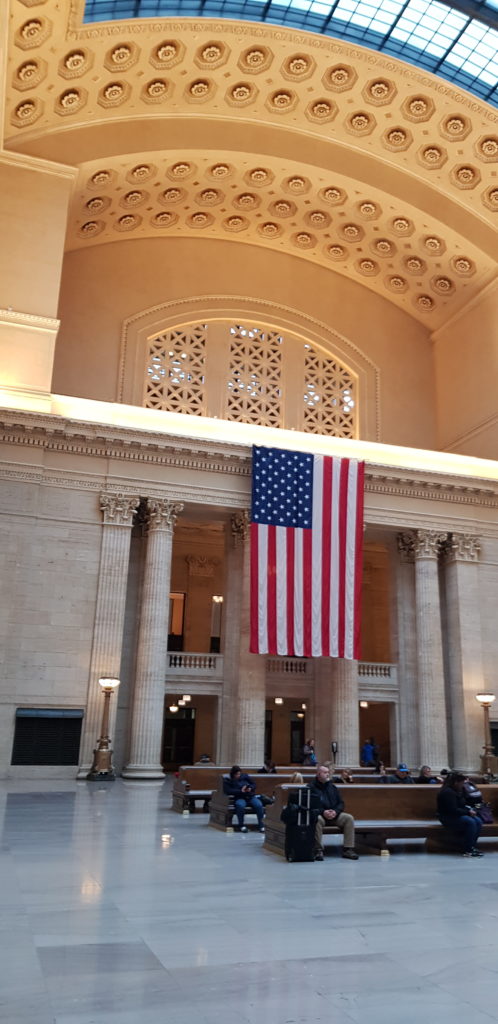
Grand Central Station, Chicago 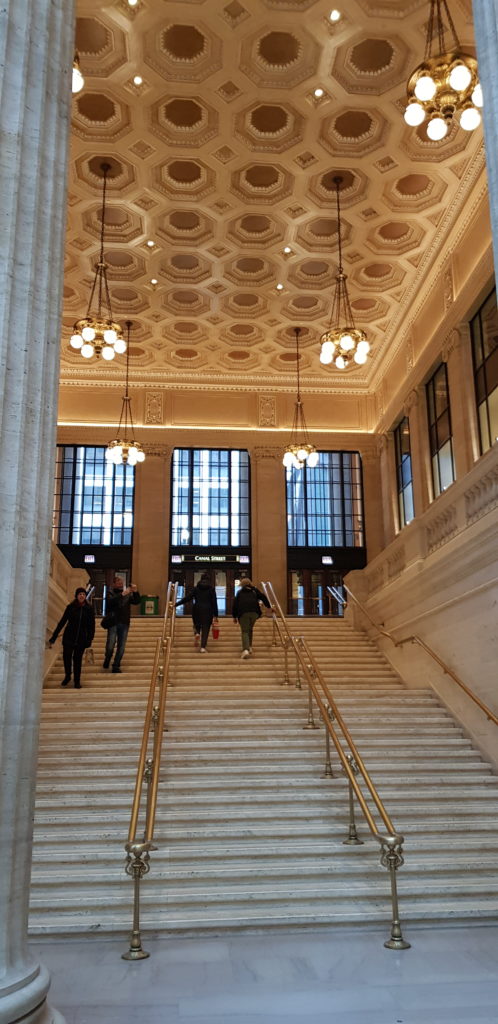
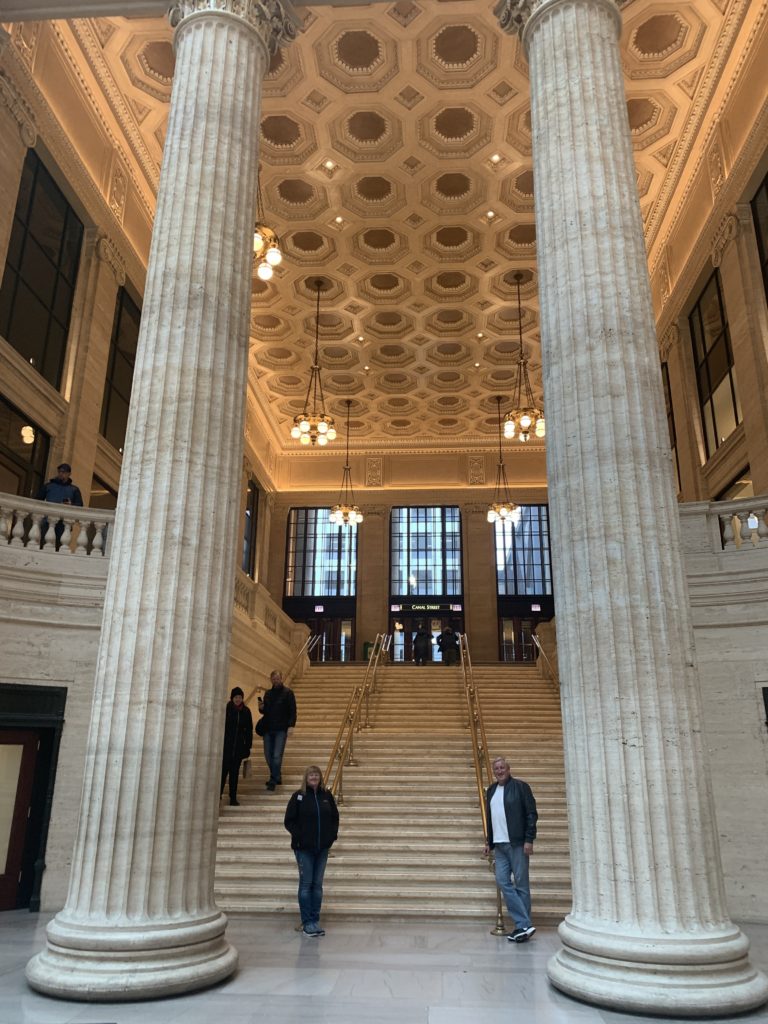
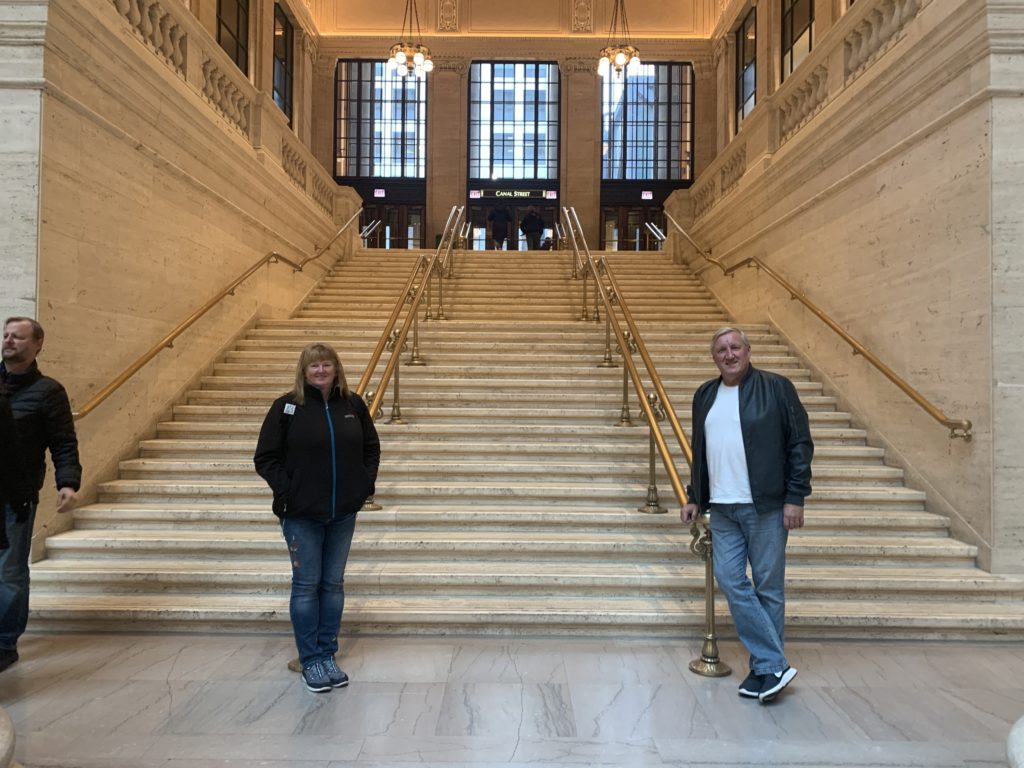
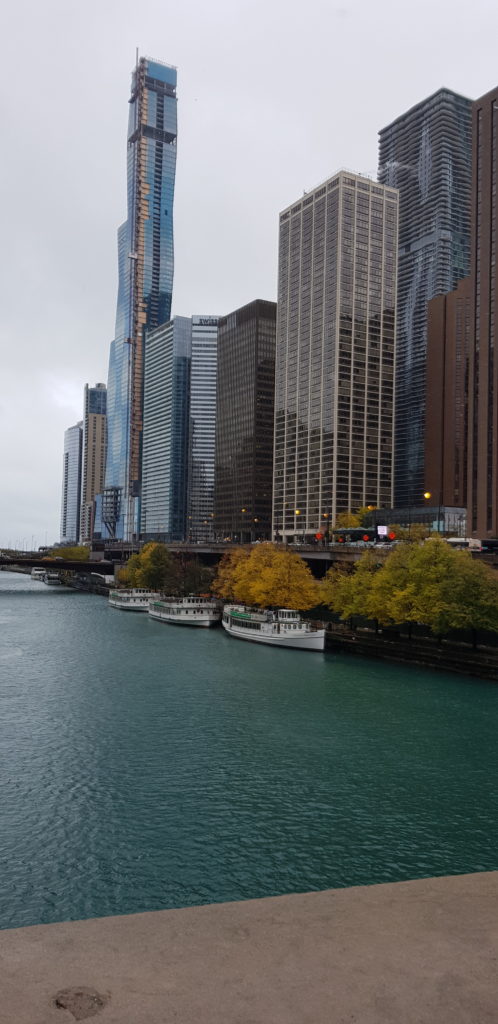
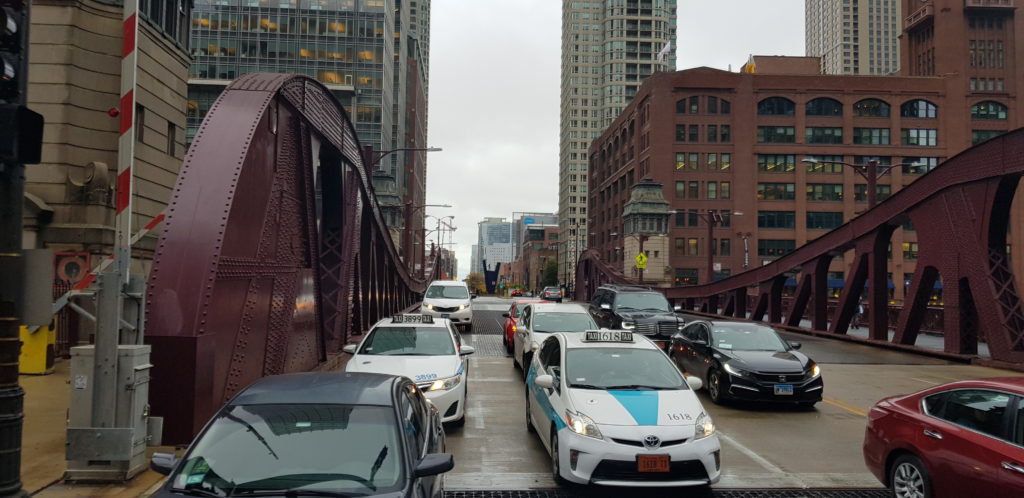
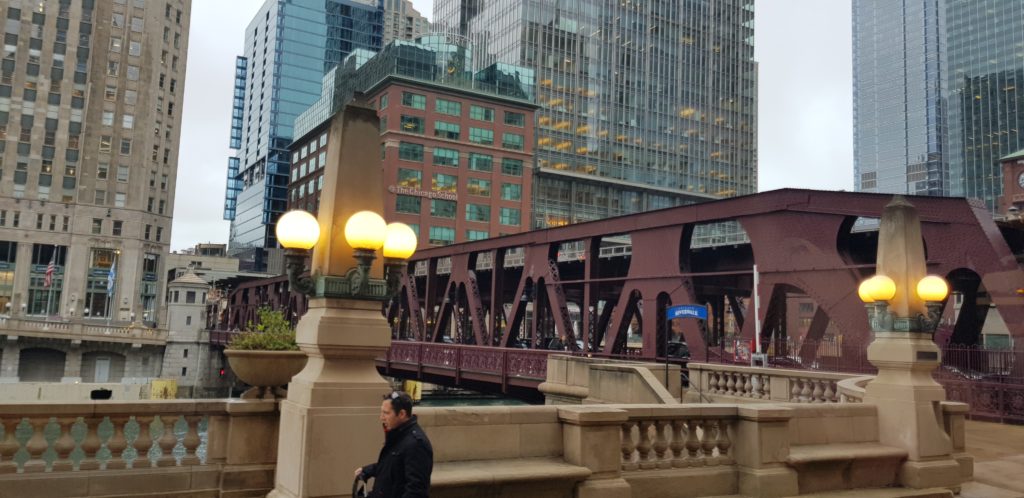
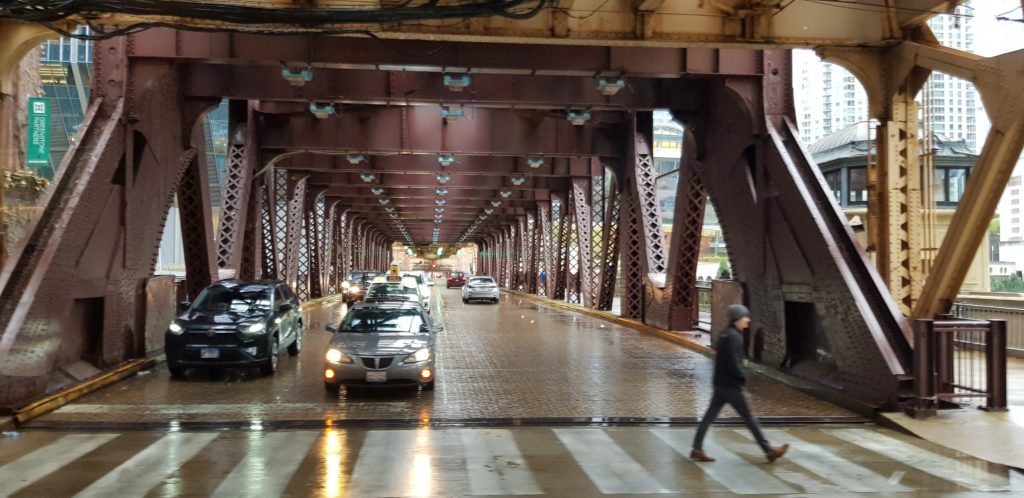
The Pancake House & other Chicago views
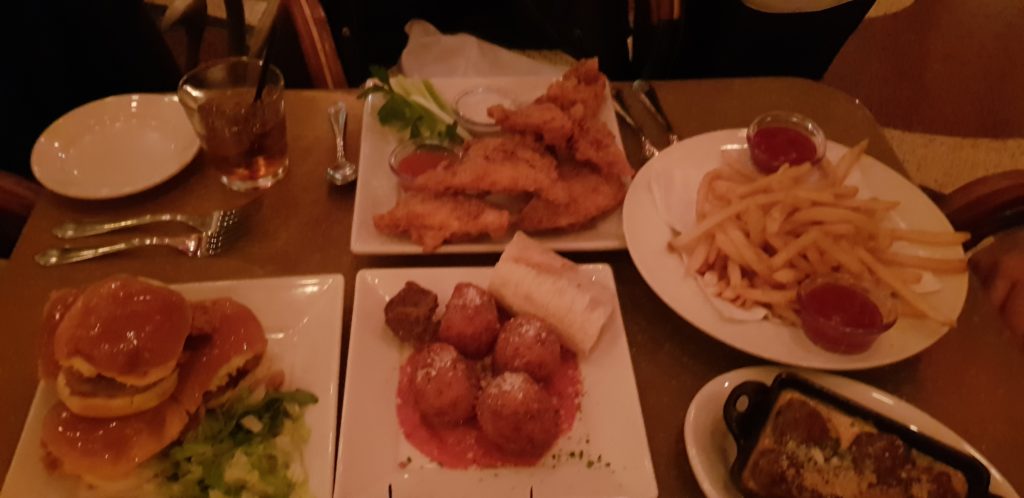
Our starters/mains 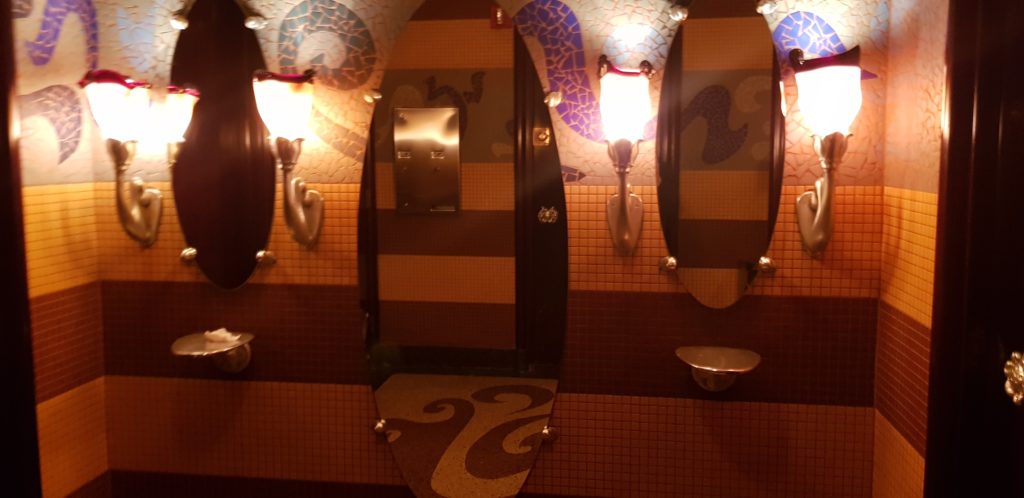
The funky bathrooms! 
In our apartment block. 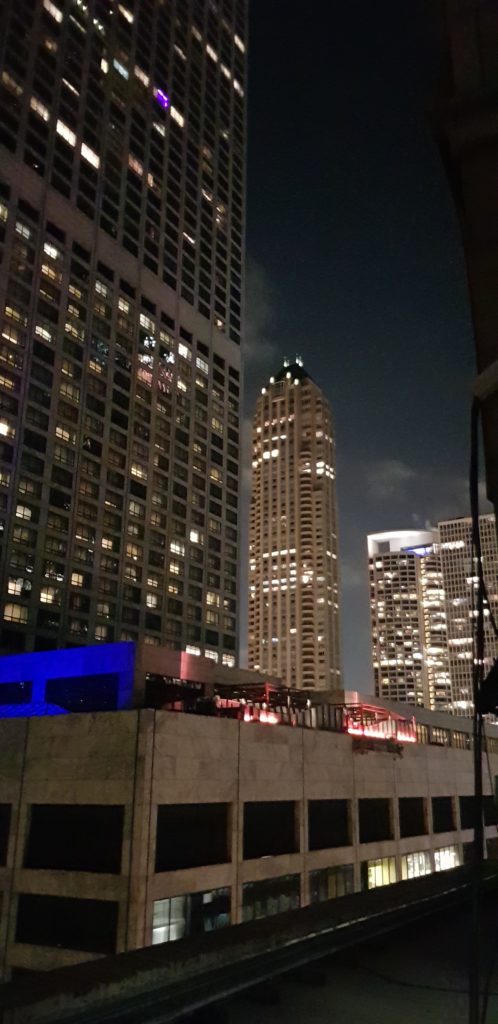
Our neighbours. 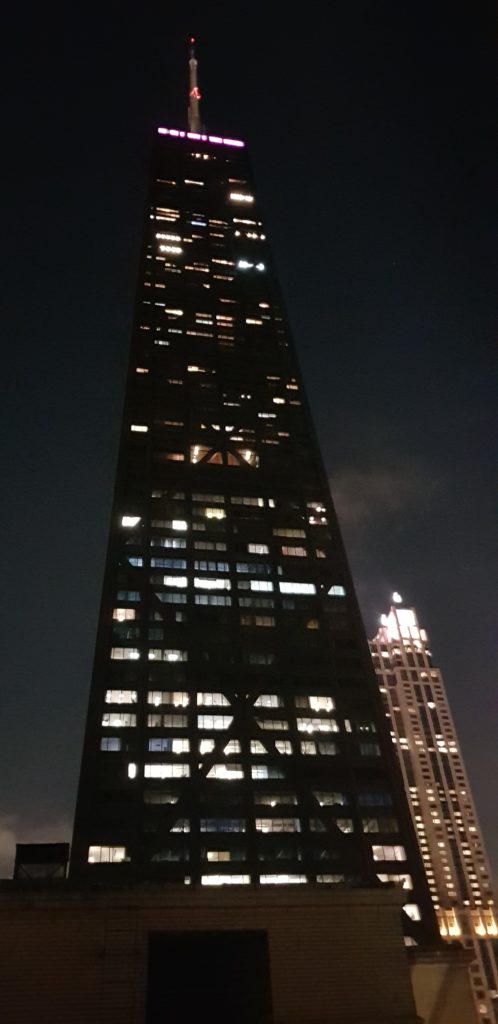
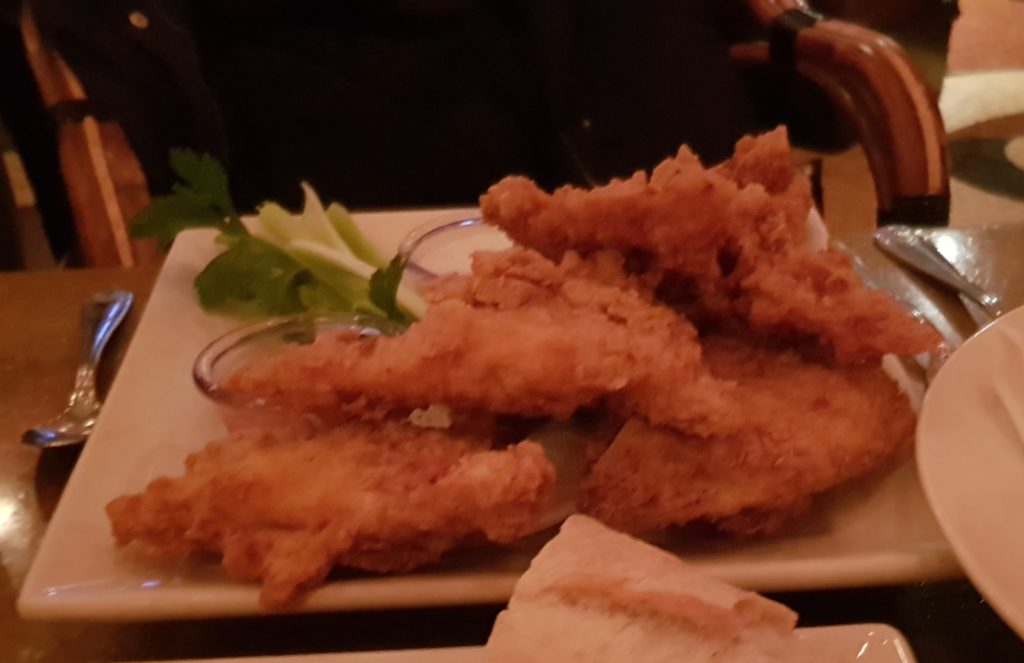
Breaded chicken whoppers! 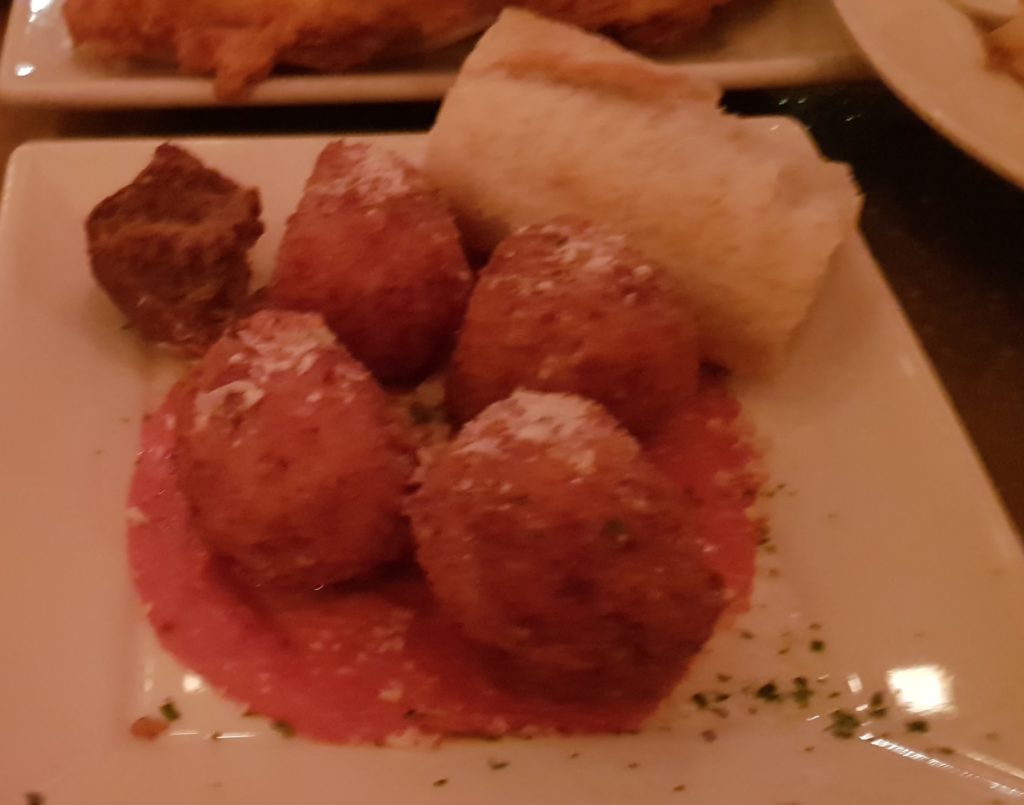
Massive meatballs! 
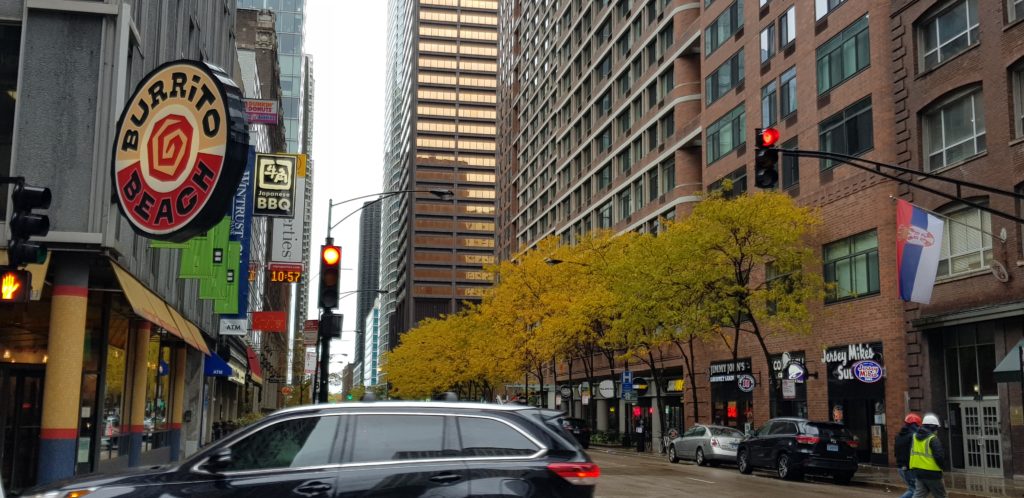
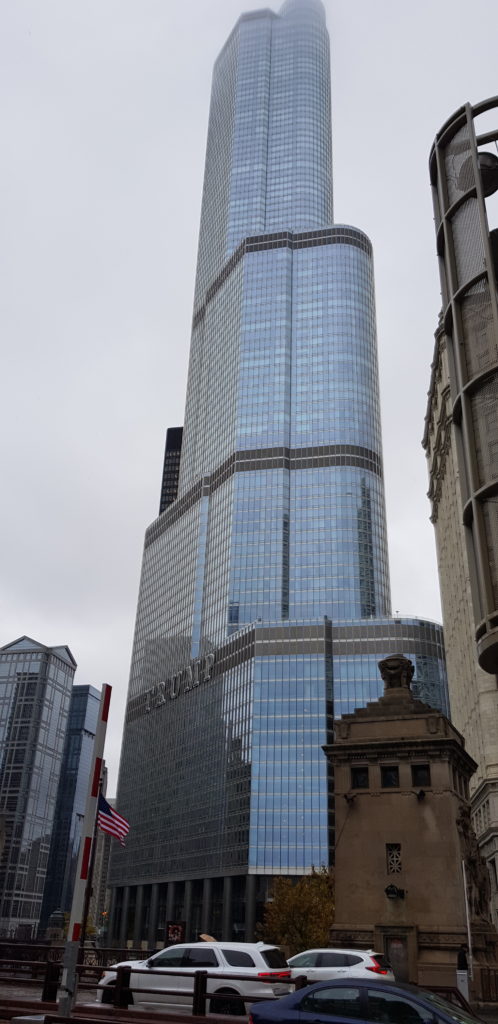
Trumnp Tower, Chicago 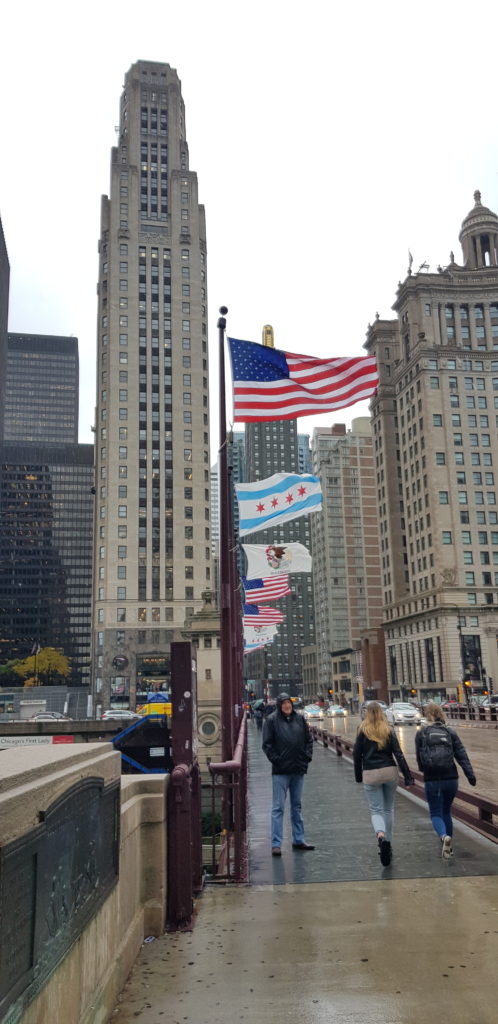
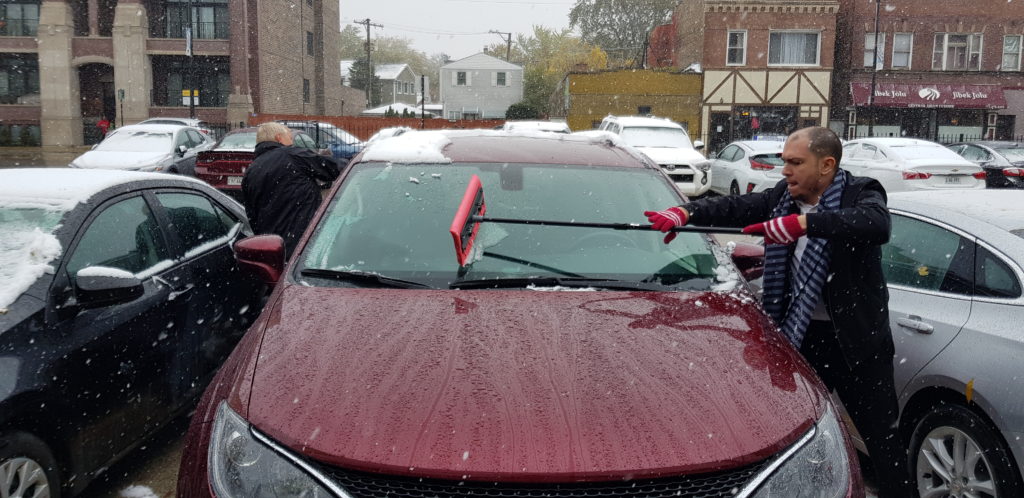
Prepping our hire car! 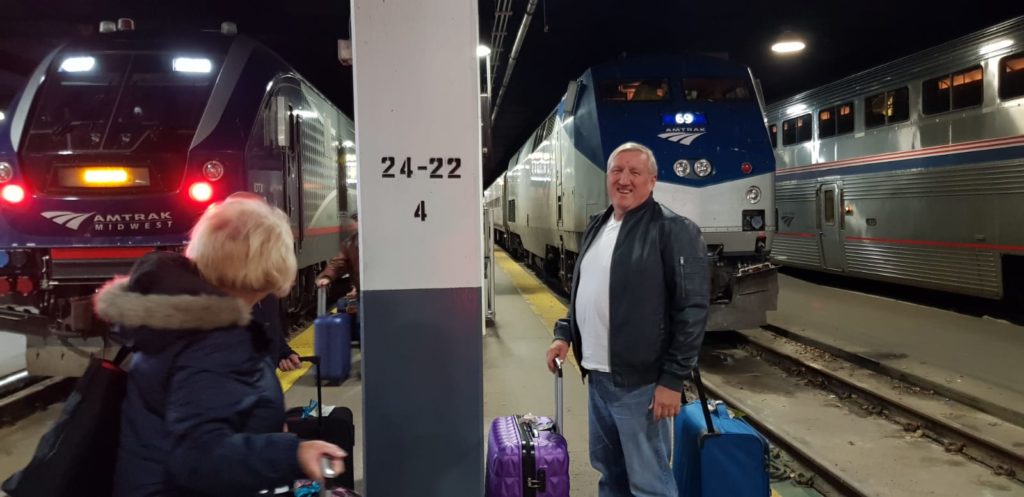
Waiting for a train! 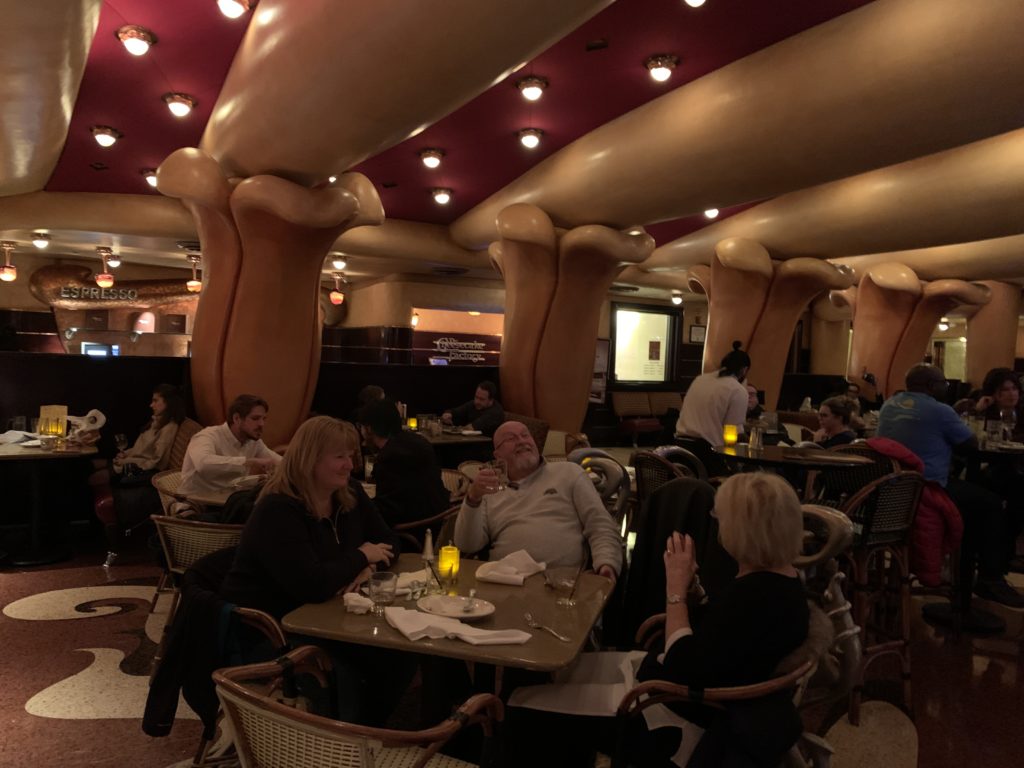
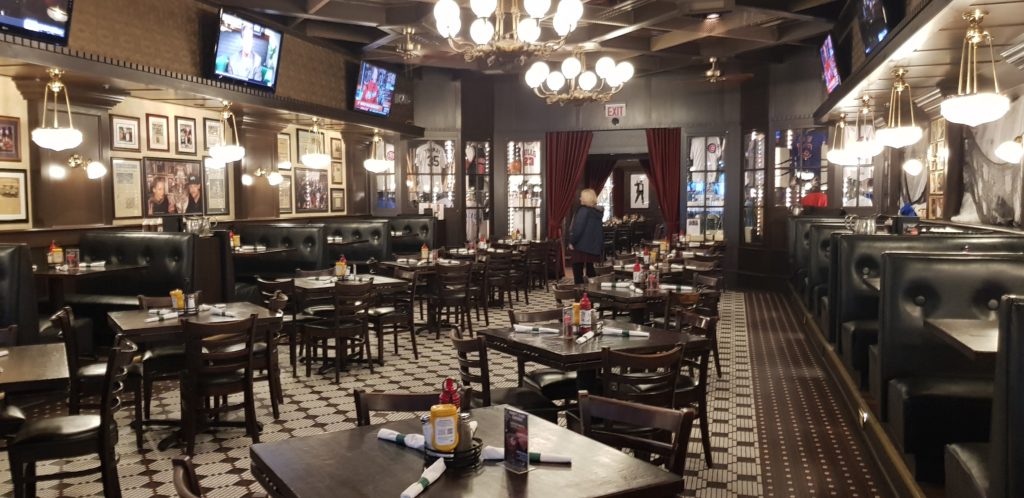
Dinner in the Pancake House. 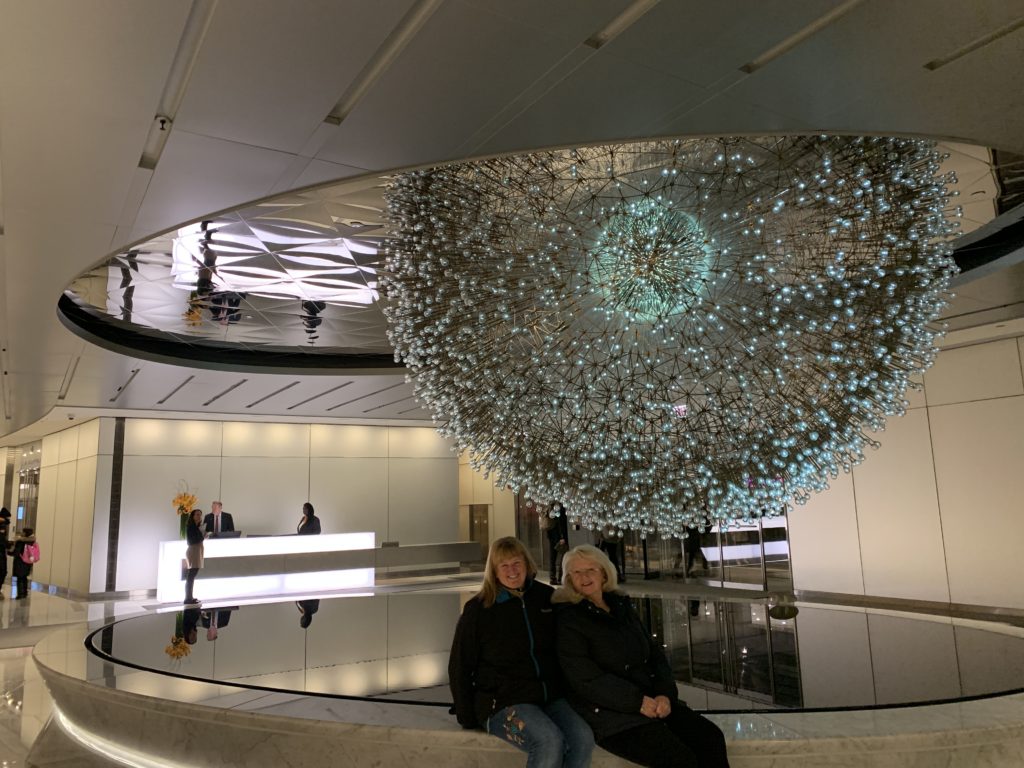
Inside the Water Tower Reception area. 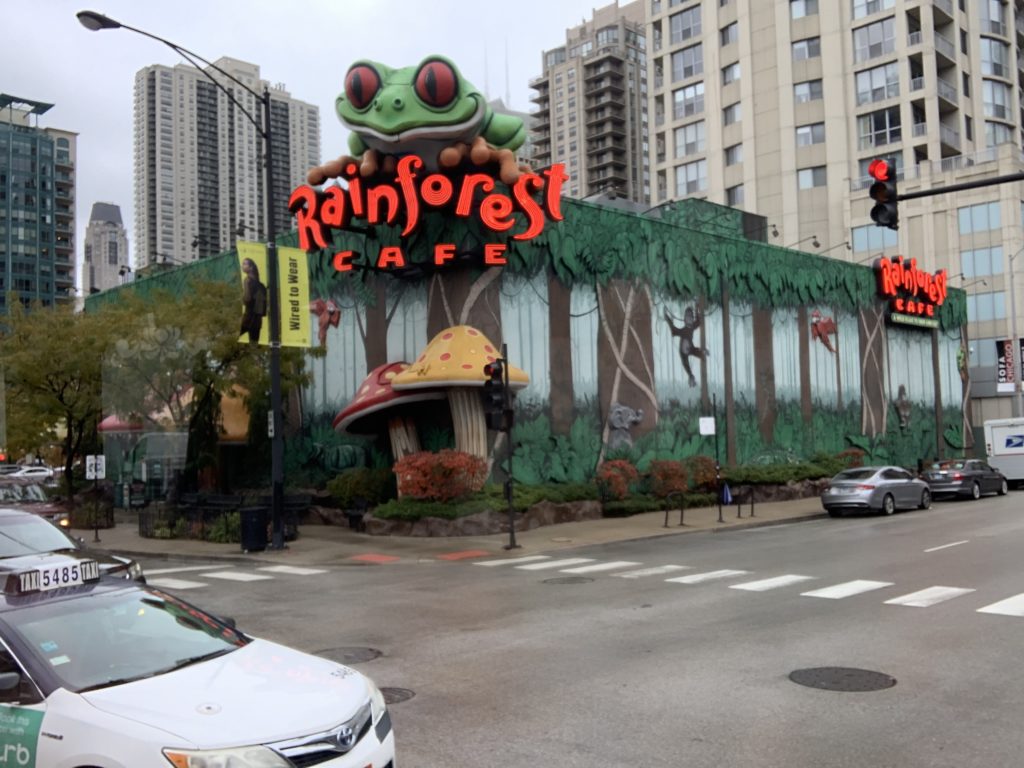
The first Rainforest Cafe, in Chicago.
Route 66 – Chicago to Springfield
Route 66 was the old original road from Chicago in the east to Santa Monica on the Pacific coast in the west, build by a series of Federal Highways Acts completed in 1926 and was the largest public works project ever undertaken in the USA. It helped distribute the population from areas affected most by the Great Depression to new areas in the west. During 1945 to 1965 many businesses sprung up along the road to support the travelers – restaurants, motels, hotels, service stations, novelty shops as well as small towns to support the workers.
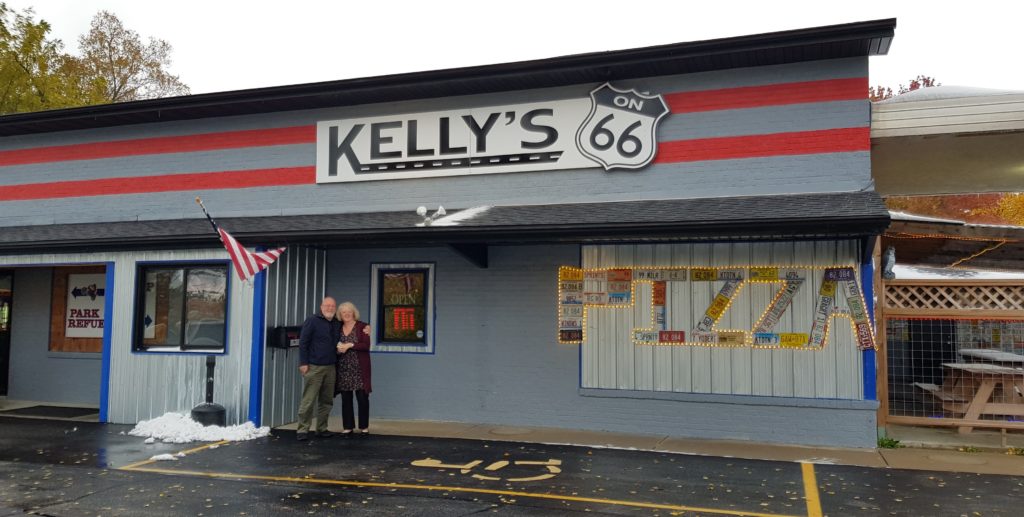
Its total length is 2488 miles but we only travelled 220 miles of it. The Mother Road as it’s called is one continuous road but signs send you off, through towns along the route, to stop at iconic restaurants, hot dog stalls, donut shops, novelty sellers and “diners” galore! 220 miles should theoretically take you 3.5 hours but we took all day, stopping off at an Armish village store to buy apple and toffee flavoured popcorn and homemade peanut butter (with marshmallows!!), another stop to look at hundreds of classic American cars in a dealers (we had hoped to hire one but insurance charges kill that option) and several stops at silly road side signs.
One evening we had booked into “Route 66 Hotel and Conference Centre” expecting a modern hotel maybe with a spa or pool, tastefully decorated, with a museum dedicated to Route 66. The first sign of this not meeting our expectations was the old car and motorbike in front of the reception doors. Decaying, broken windows, paint peeling….that was just the car. The rooms were off a V shaped corridor, internal rooms with glass windows, covered in curtains, looking into the corridor. The corridors were flowing with vintage posters, photos, newspaper cutting, cigarette and vending machines from the 60’s.
So, we entered the room, pulled back the curtains and found…….brown nylon carpet, brown blankets and bedcovers (no sign of a plush cotton covered duvet here), dark brown hotel furniture and a white dial up glow in the dark phone!!! It hadn’t been touched since the 70’s although I’m sure it was clean, it was just too dark to see!!!!!!!!
Sadly, the restaurant on site was a hang out for youngsters playing fruit machines so we ate out that night, at a popular chain called “Steak and Shake”, turned out to be a limited burger menu but a huge milkshake menu, shame none of tried one! We needed alcohol to help us sleep in the brown rooms 🙂
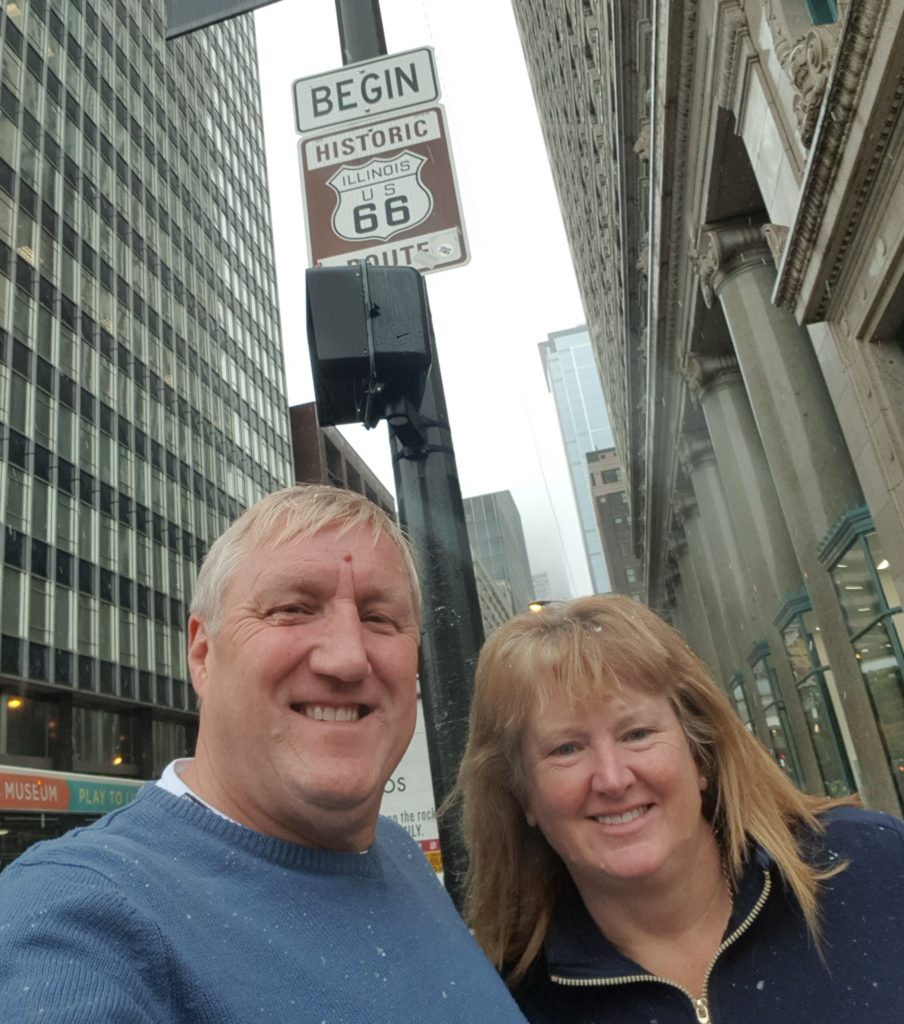
start of Route 66 in Chicago 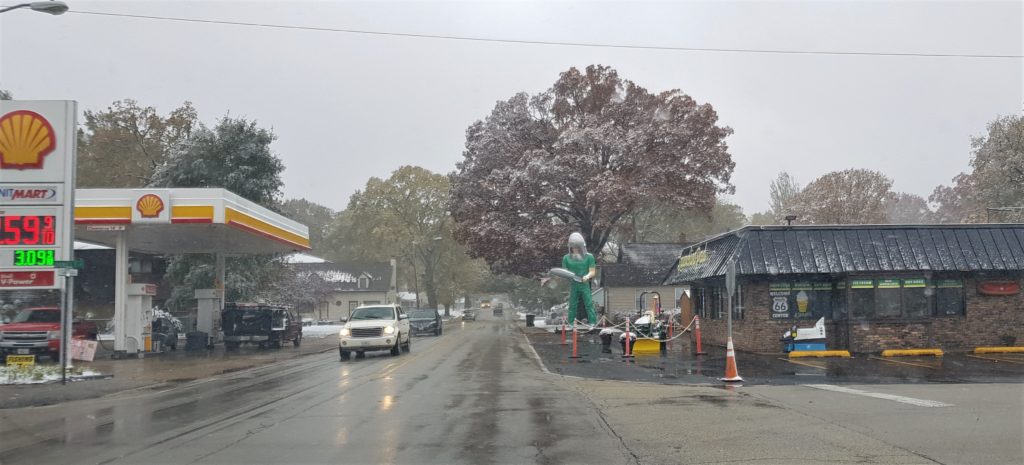
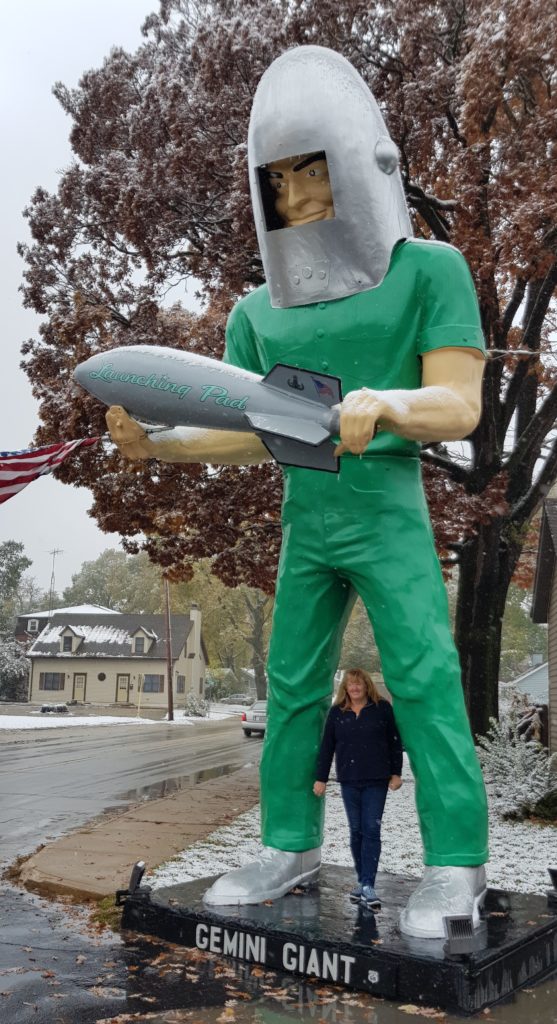
One of the first iconic statues we saw. 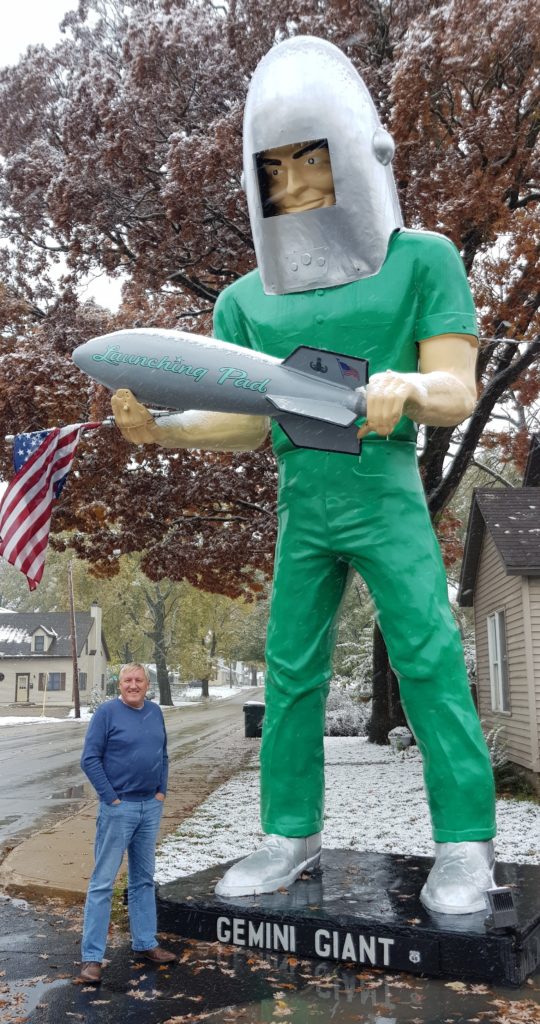
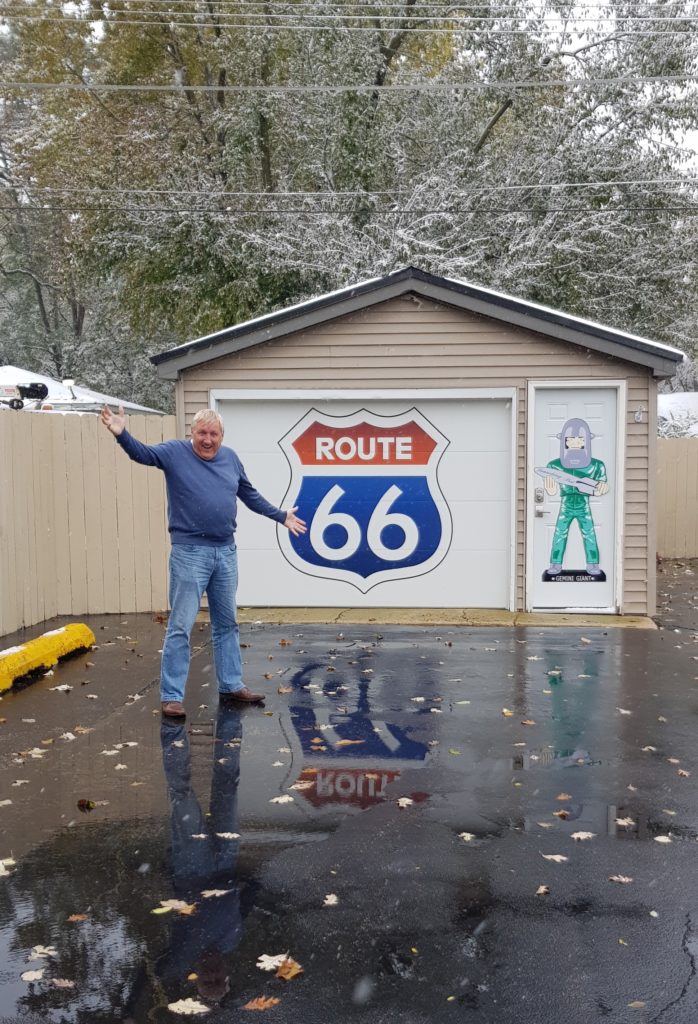
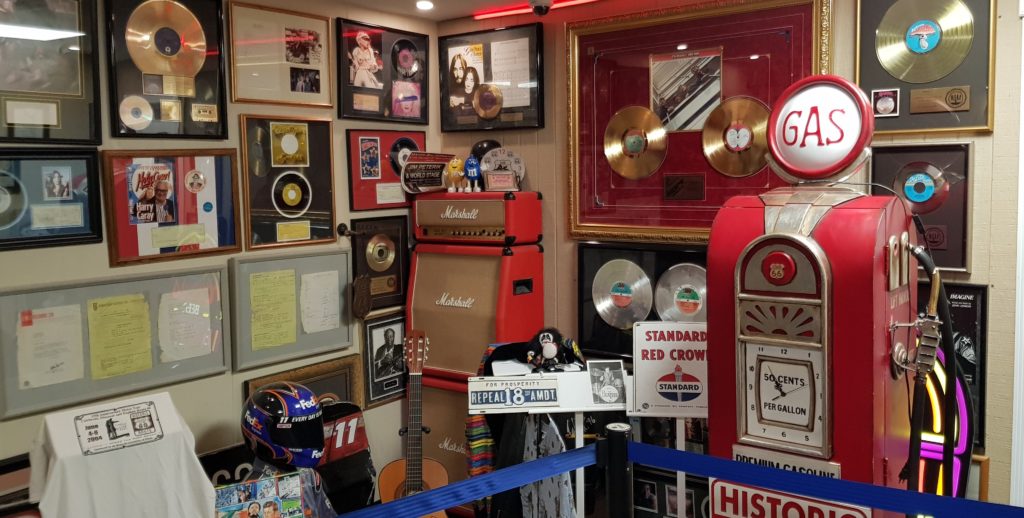
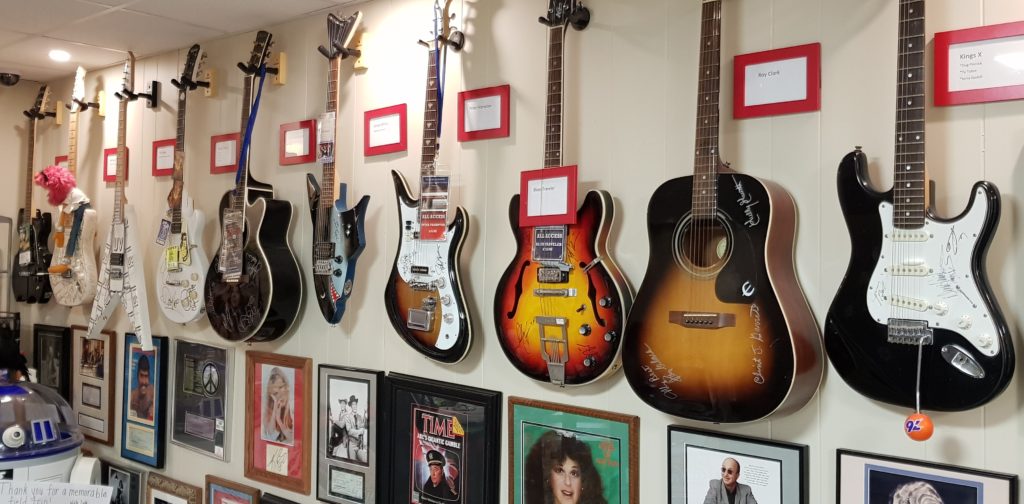
A display of memorabilia in a diner. 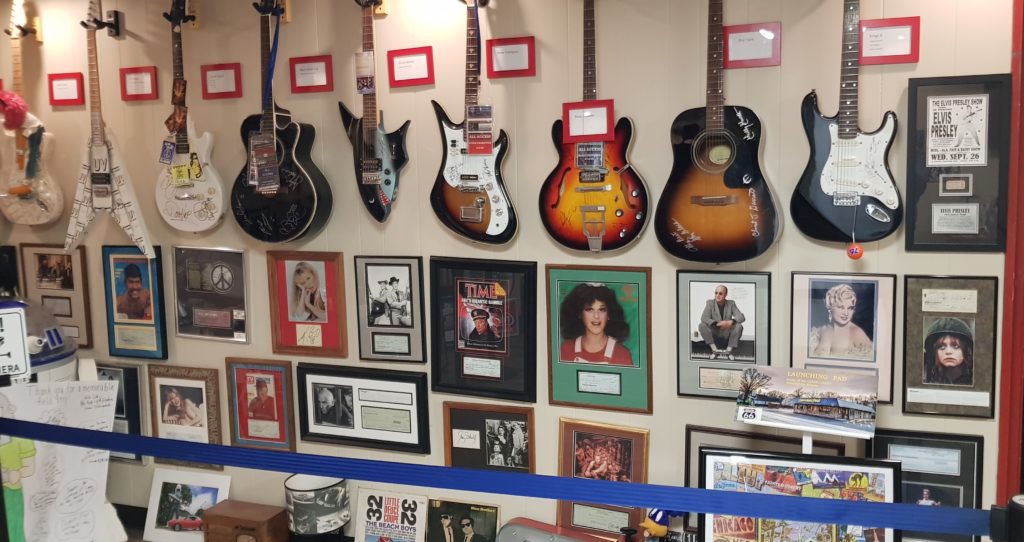
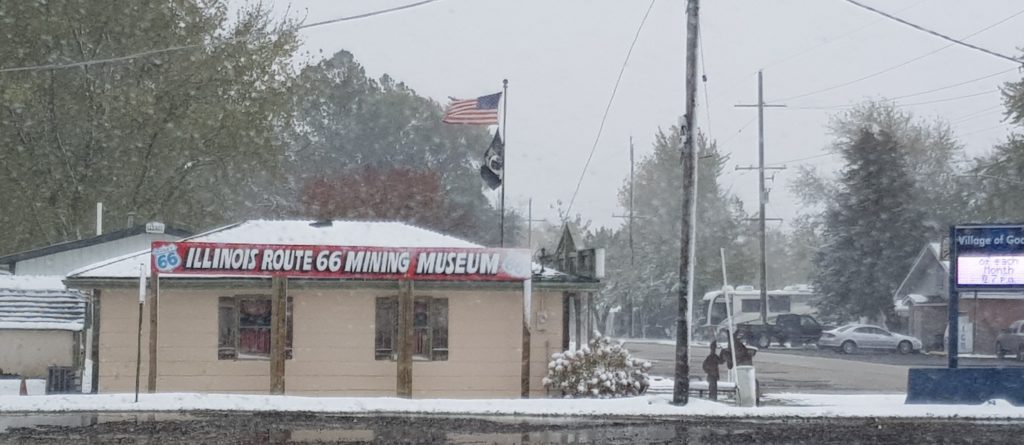
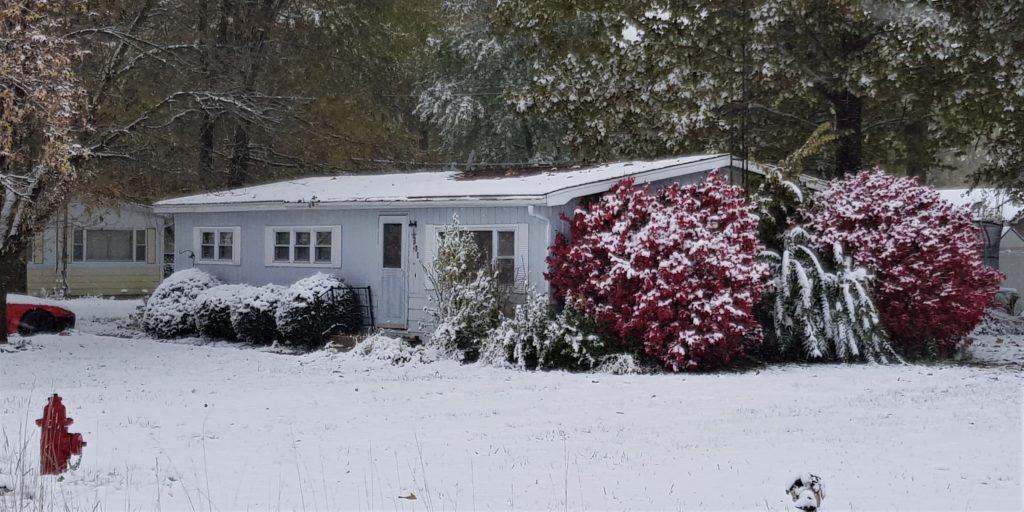
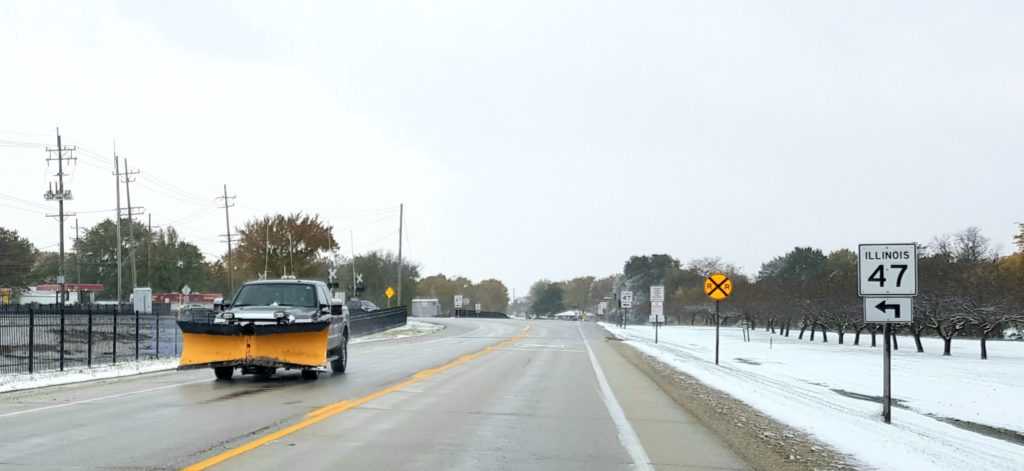
Yes, it was snowing whilst we were there! 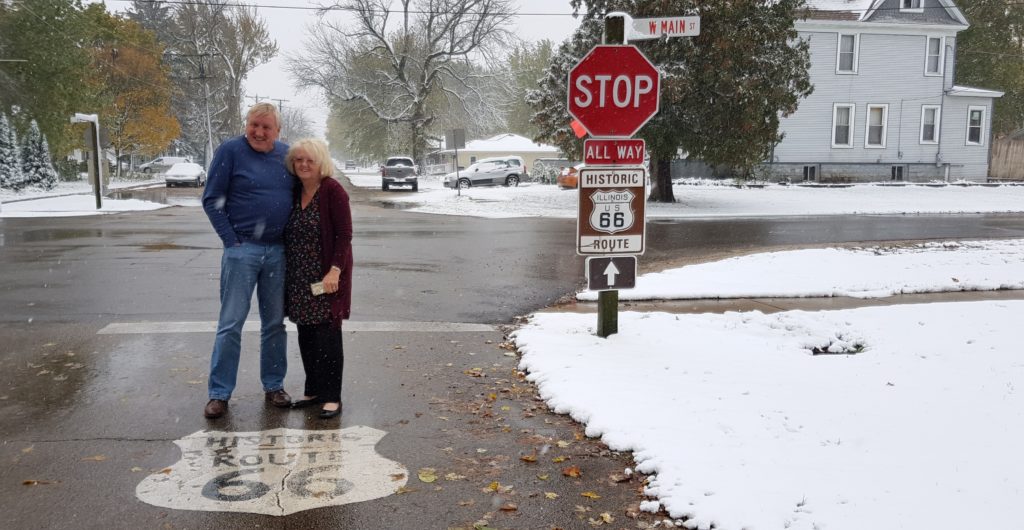
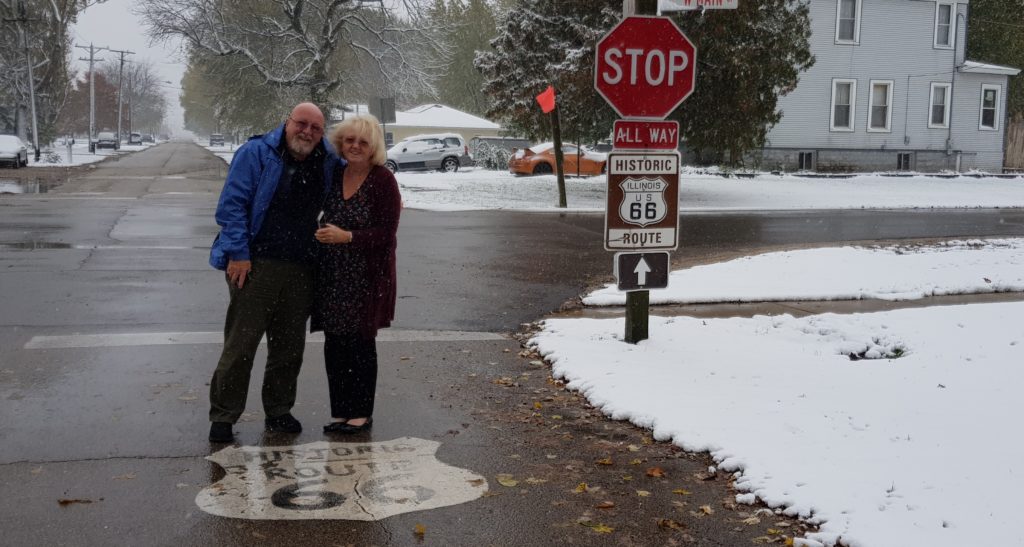
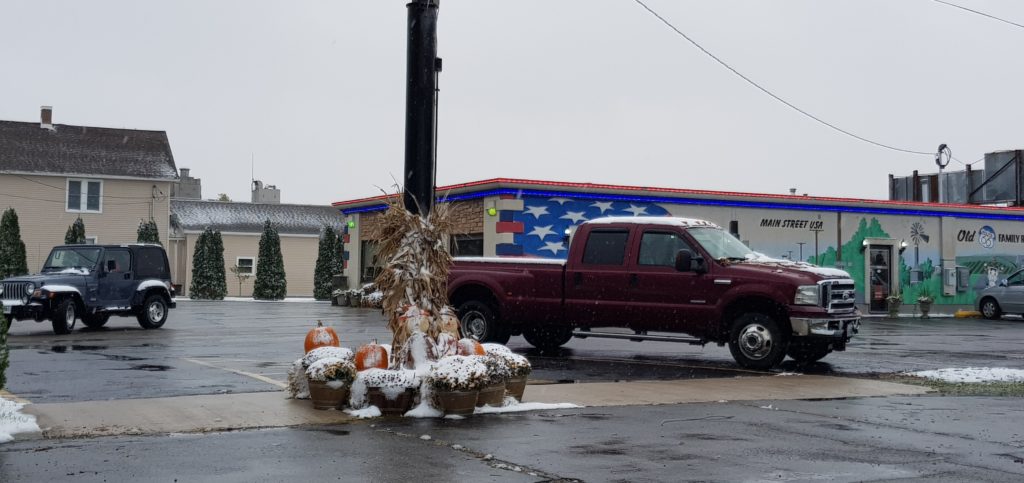
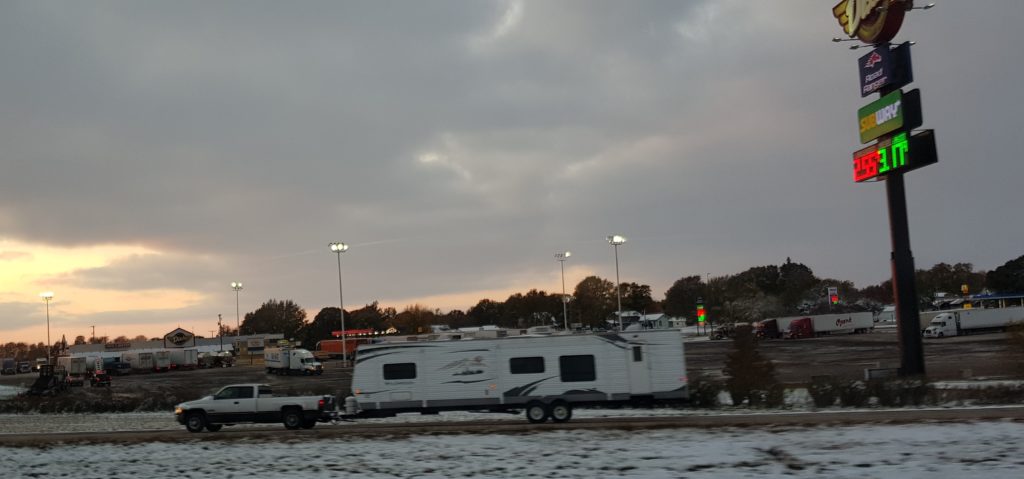
This truck was a common sight. 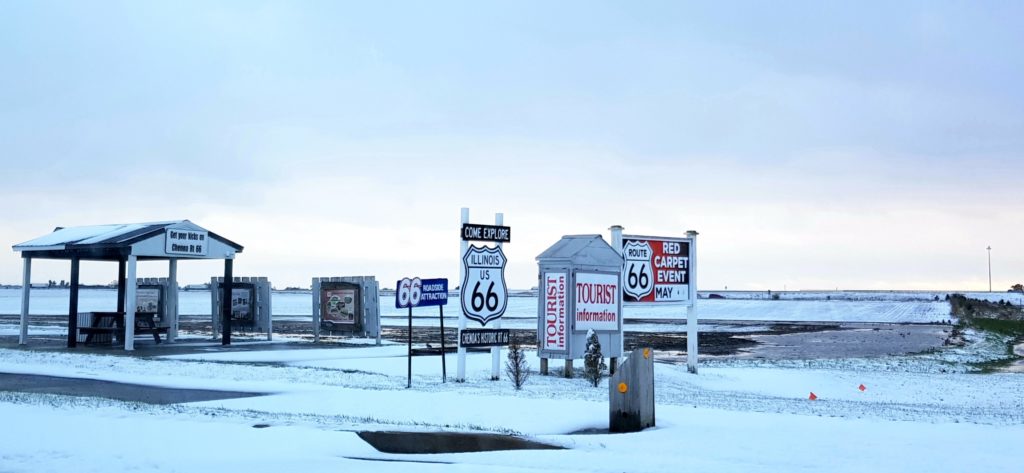
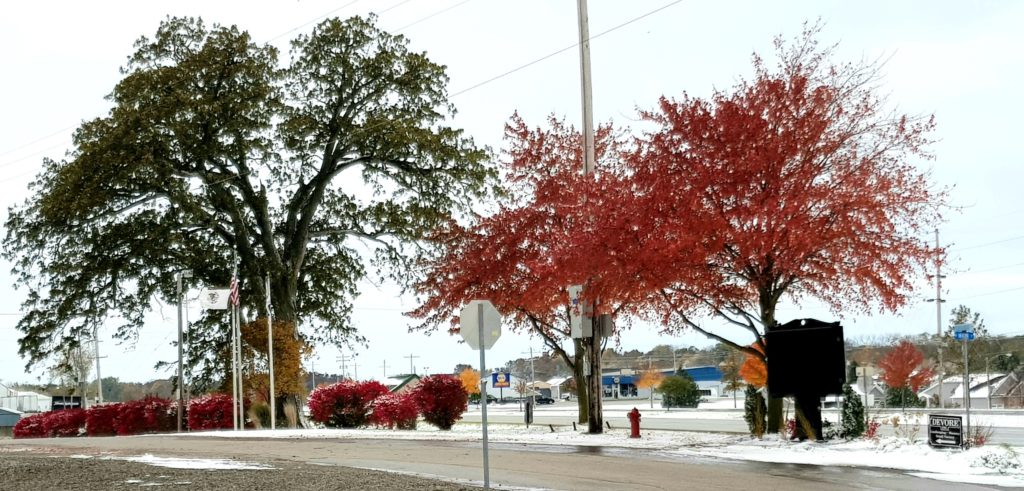
Beautiful autumn colours. 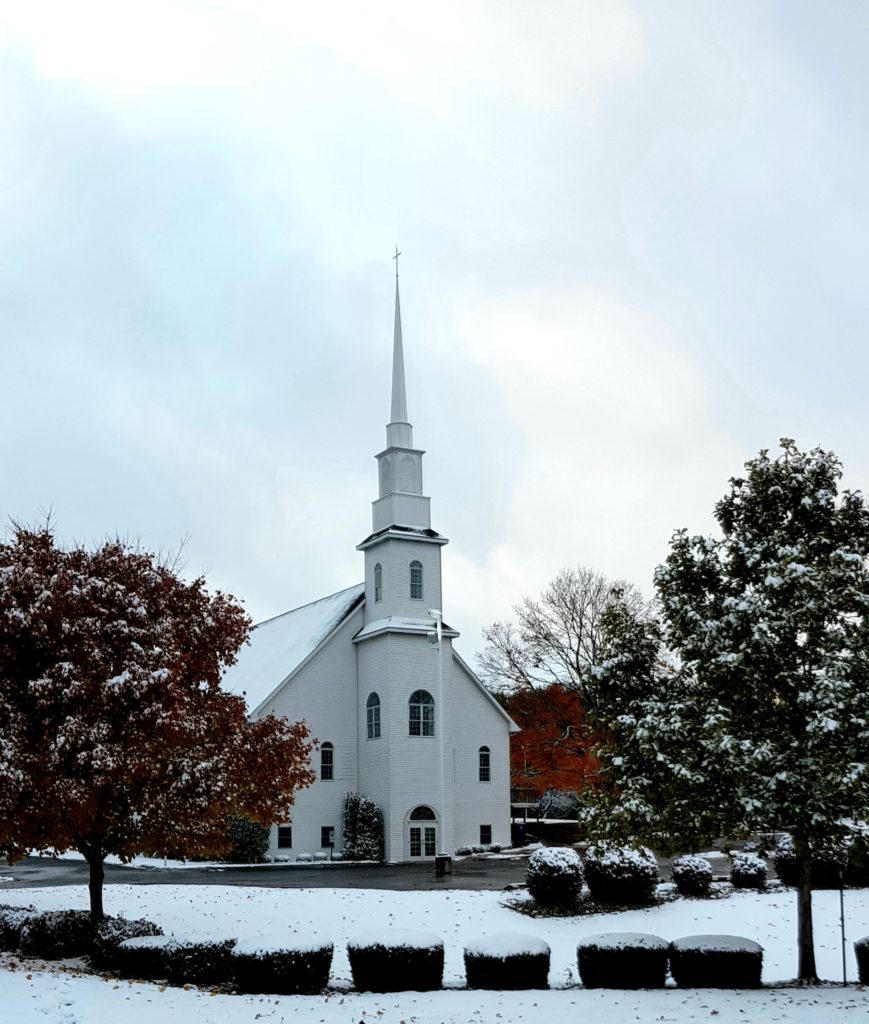
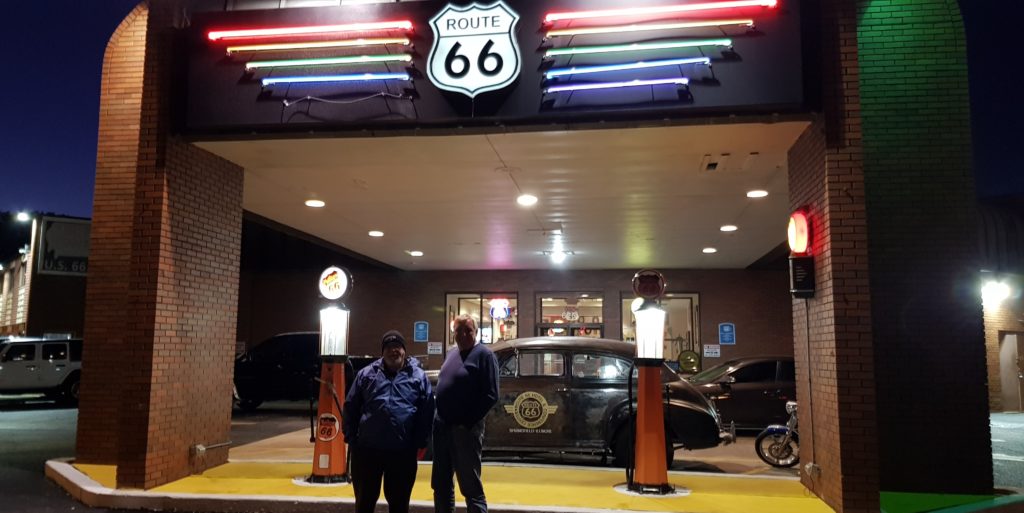
The Infamous Route 66 Hotel & Conference Centre! 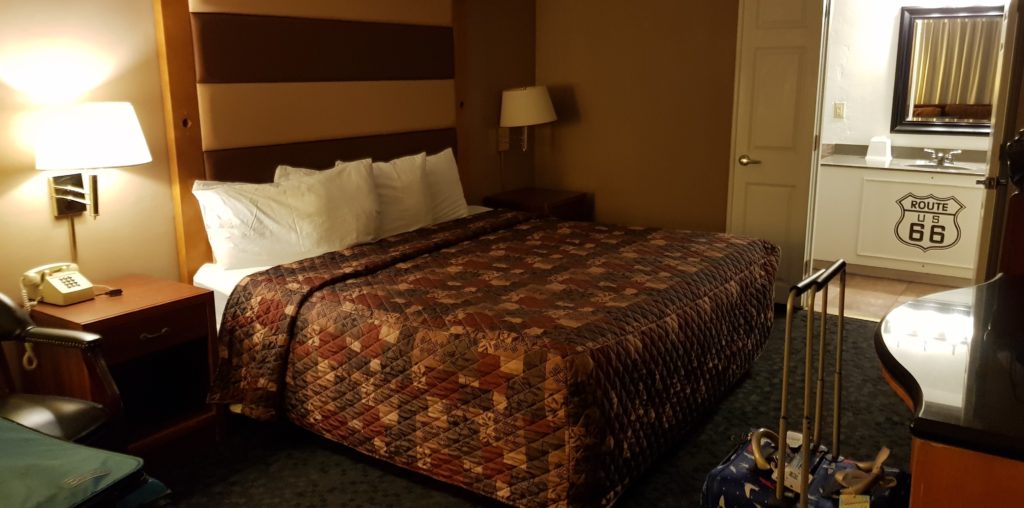
Lovely brown interior. 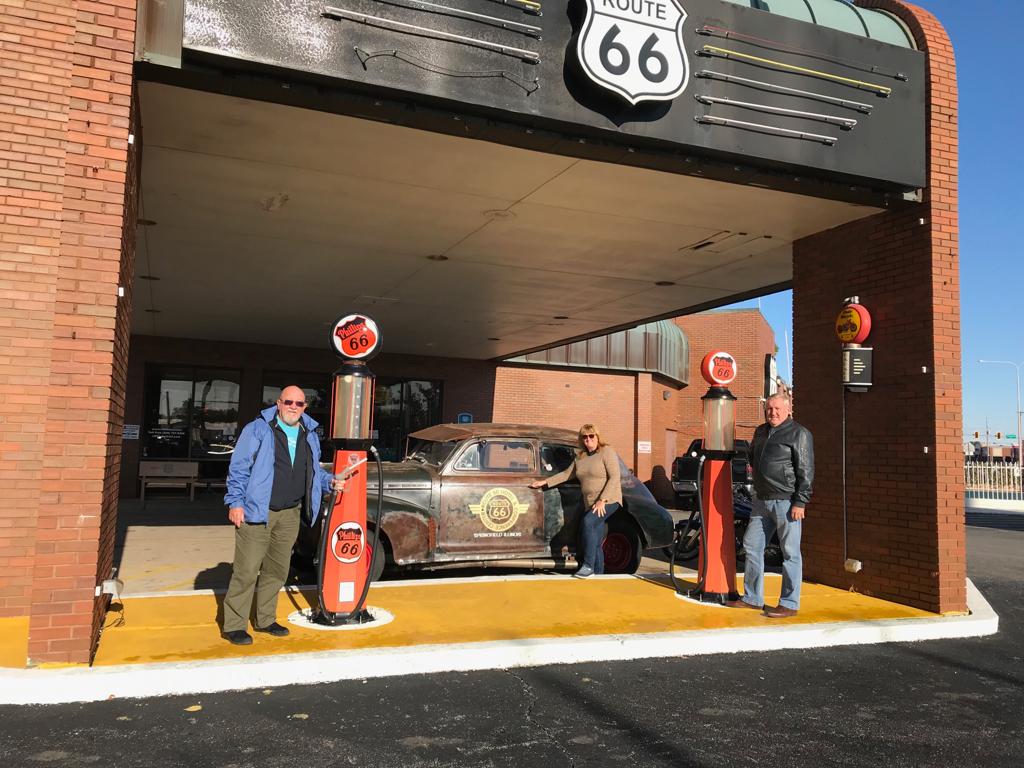
The exterior of the hotel! 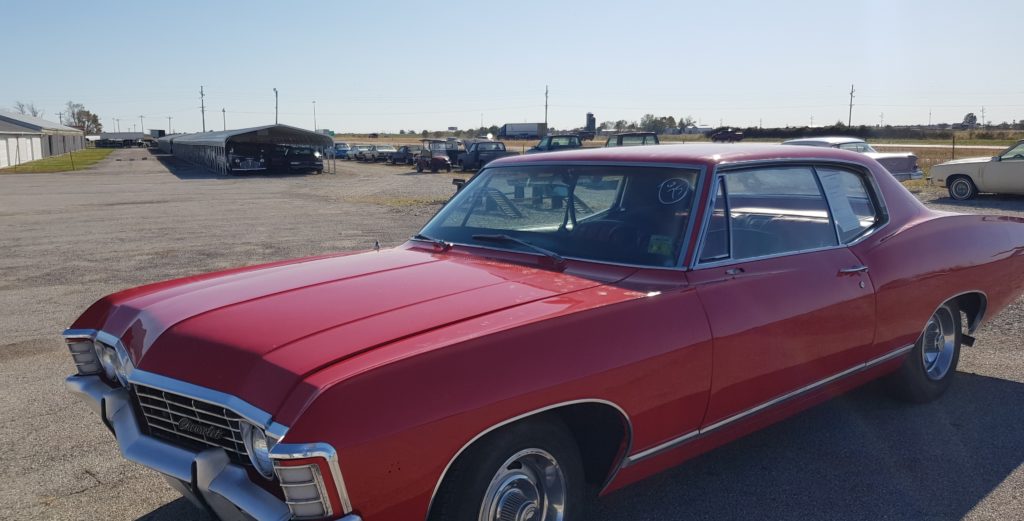
Some of the cars for sale at a dealer on the route. 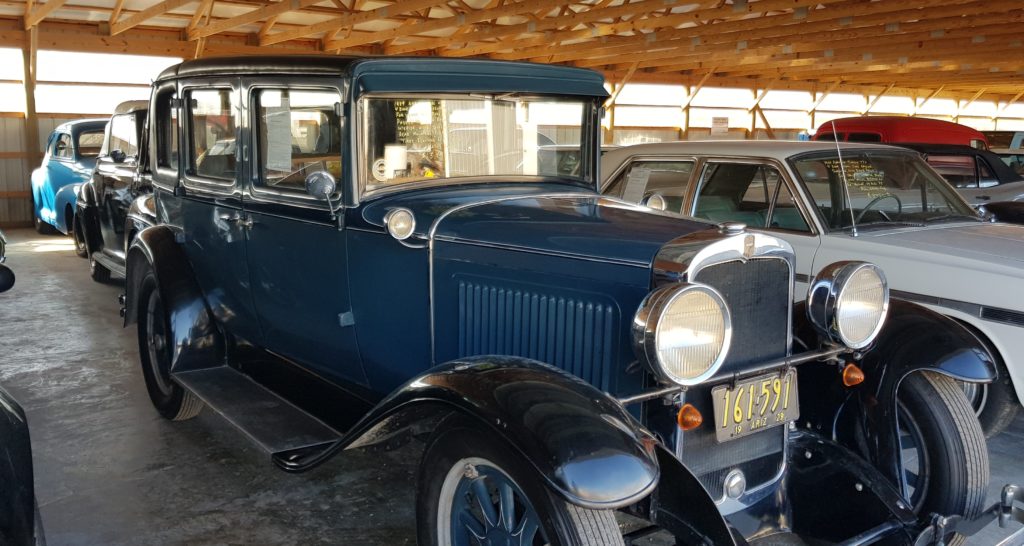
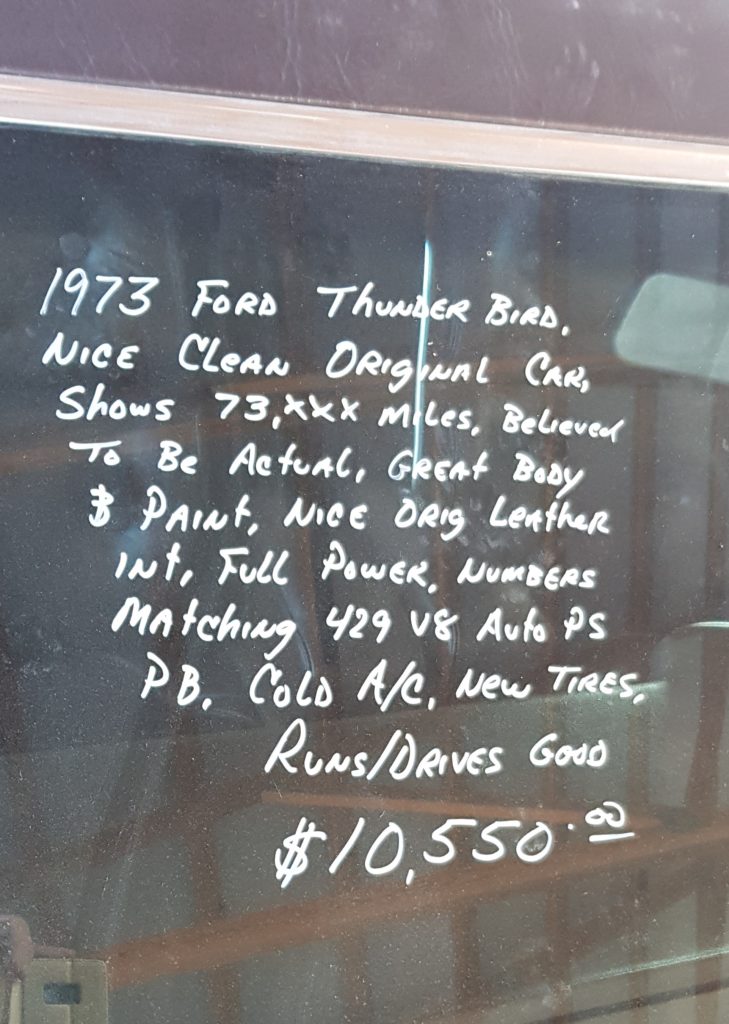
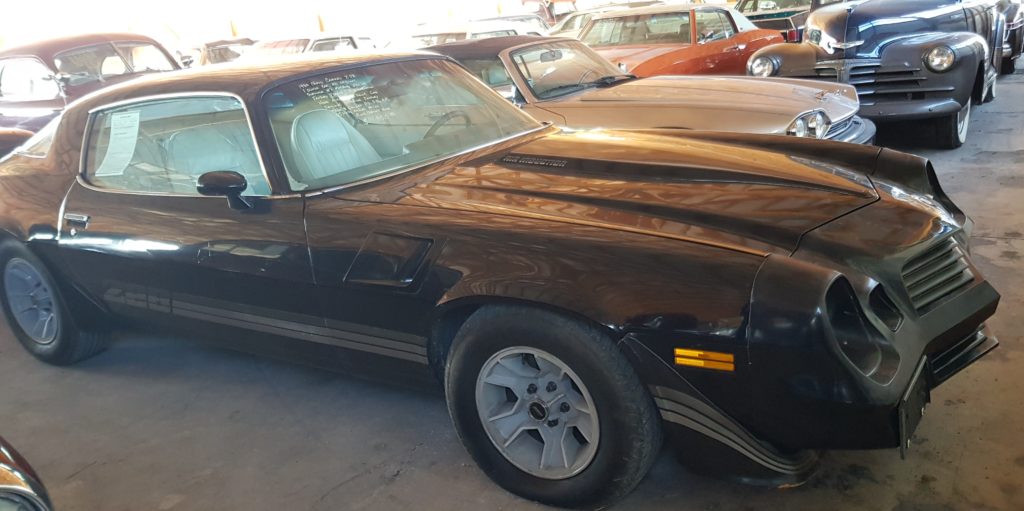
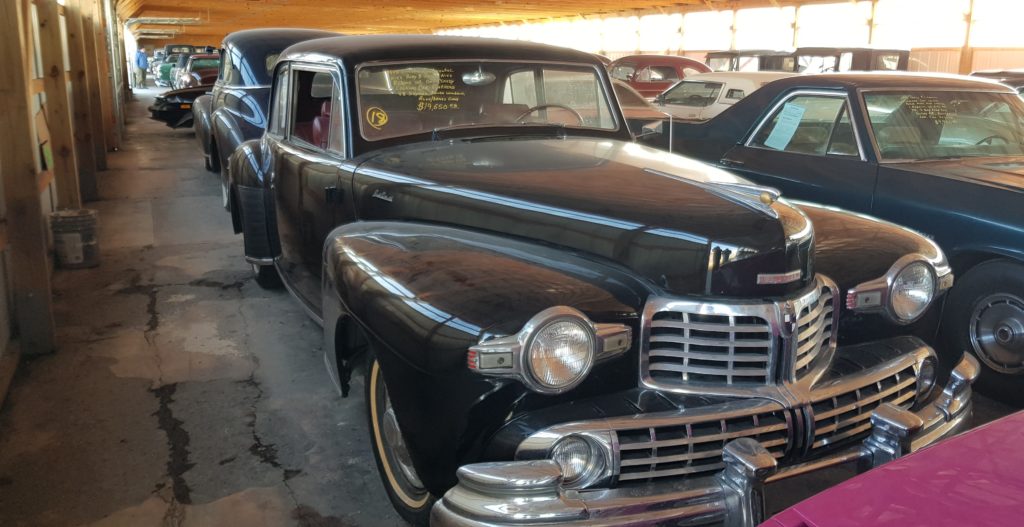
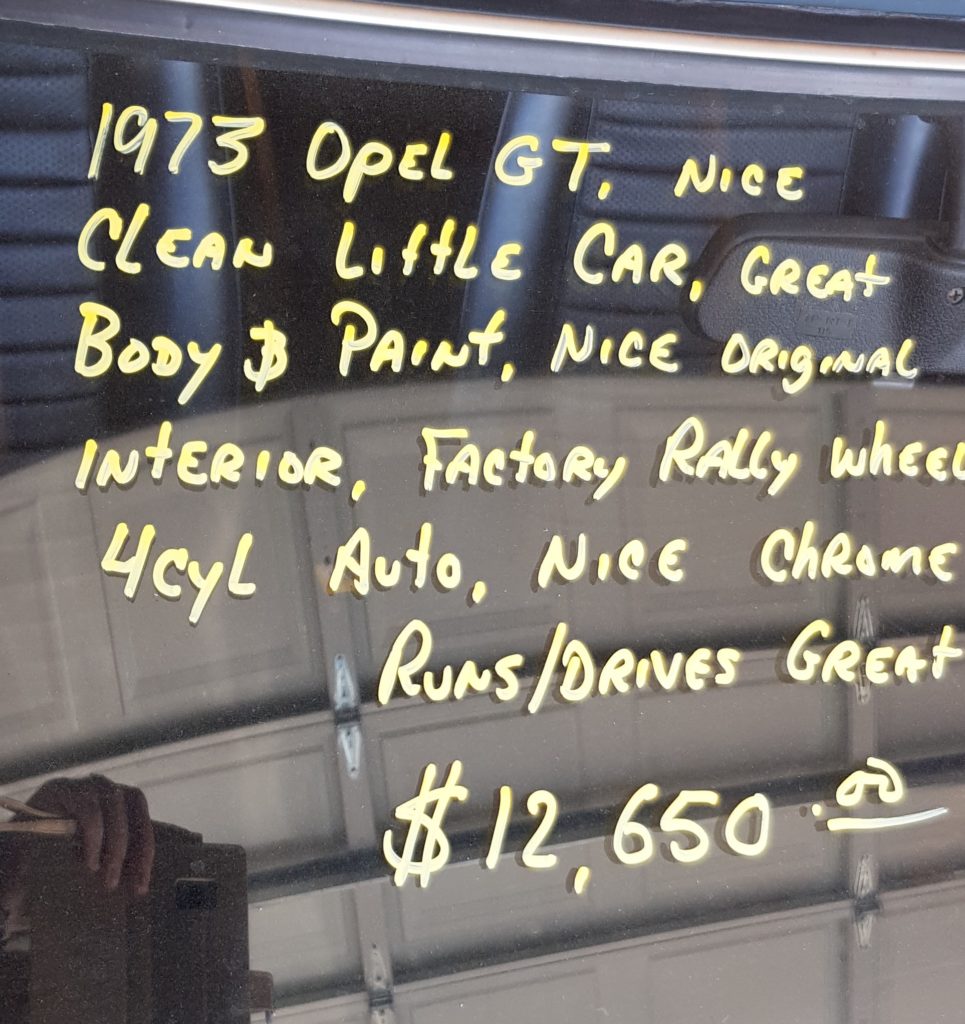
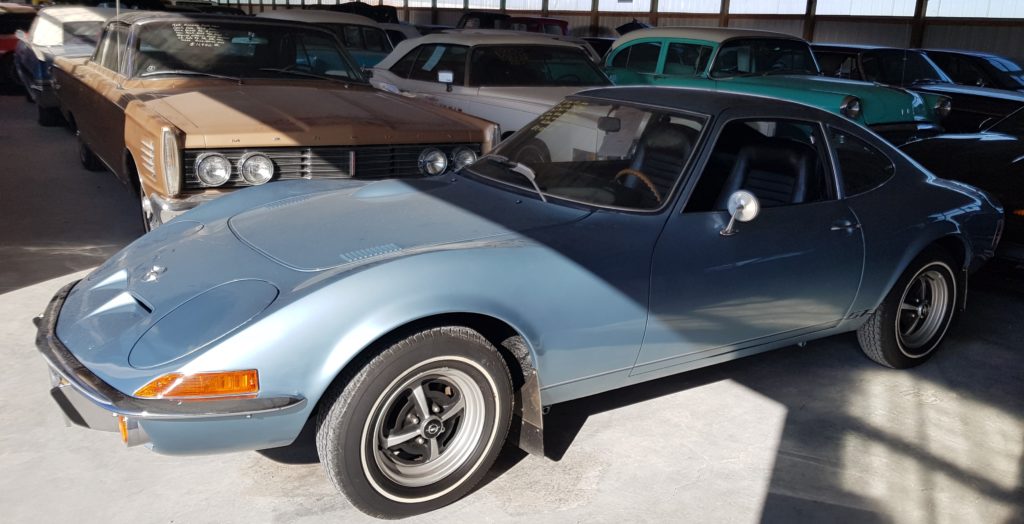
This was in a worse condition that David’s GT, look aove how much they wanted for it!! 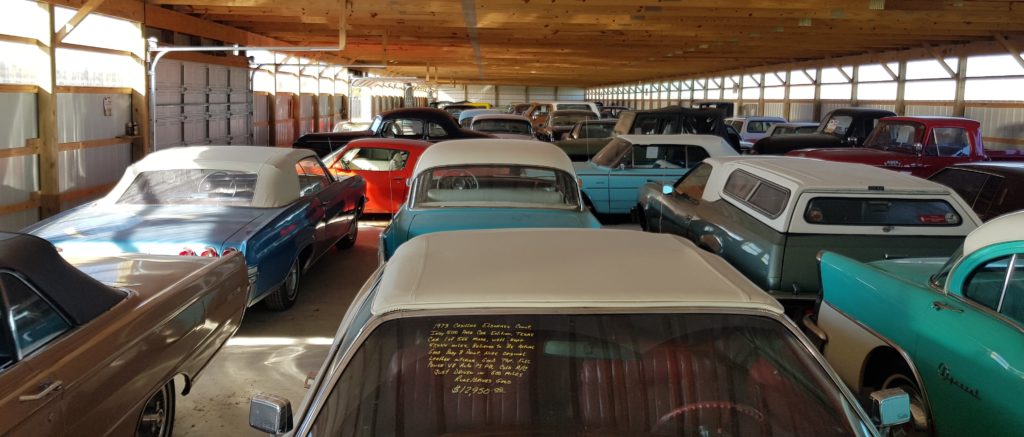
Santa Claus – A true story of Christmas!
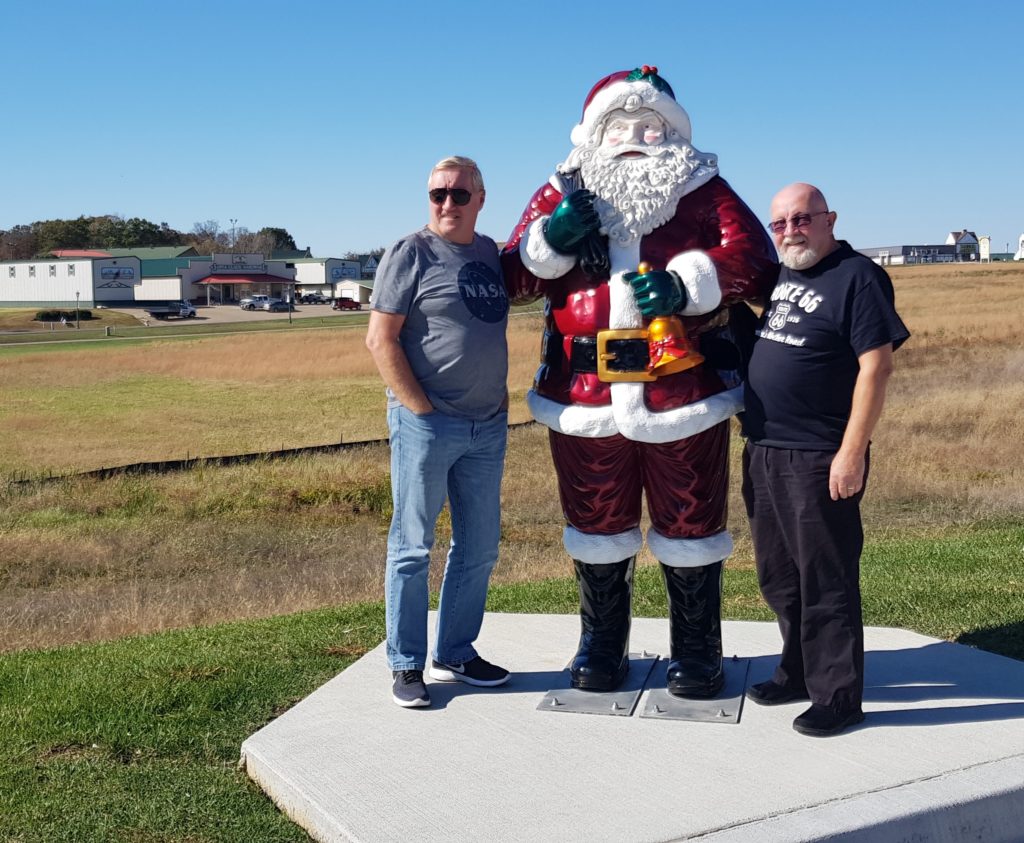
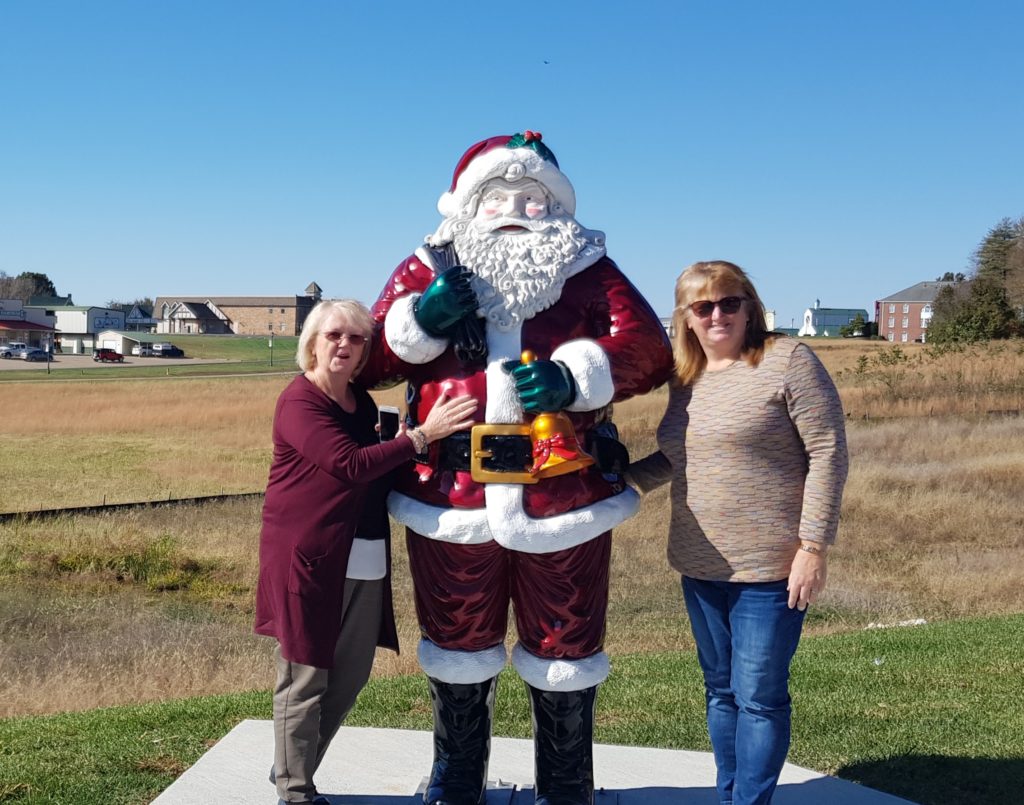
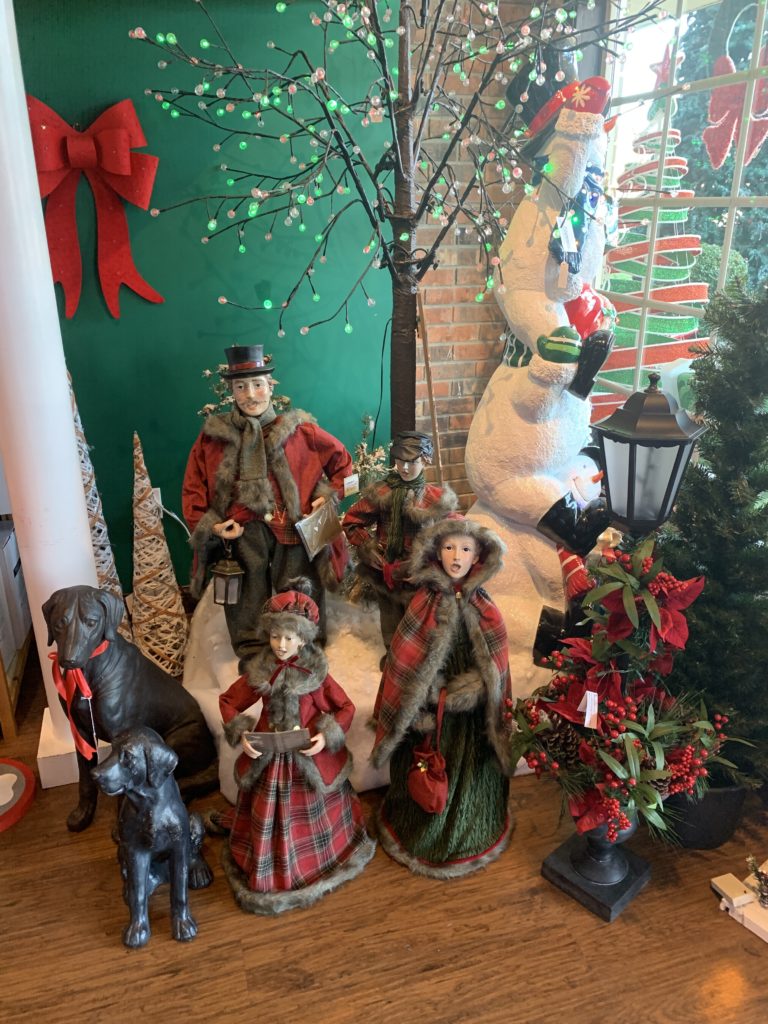
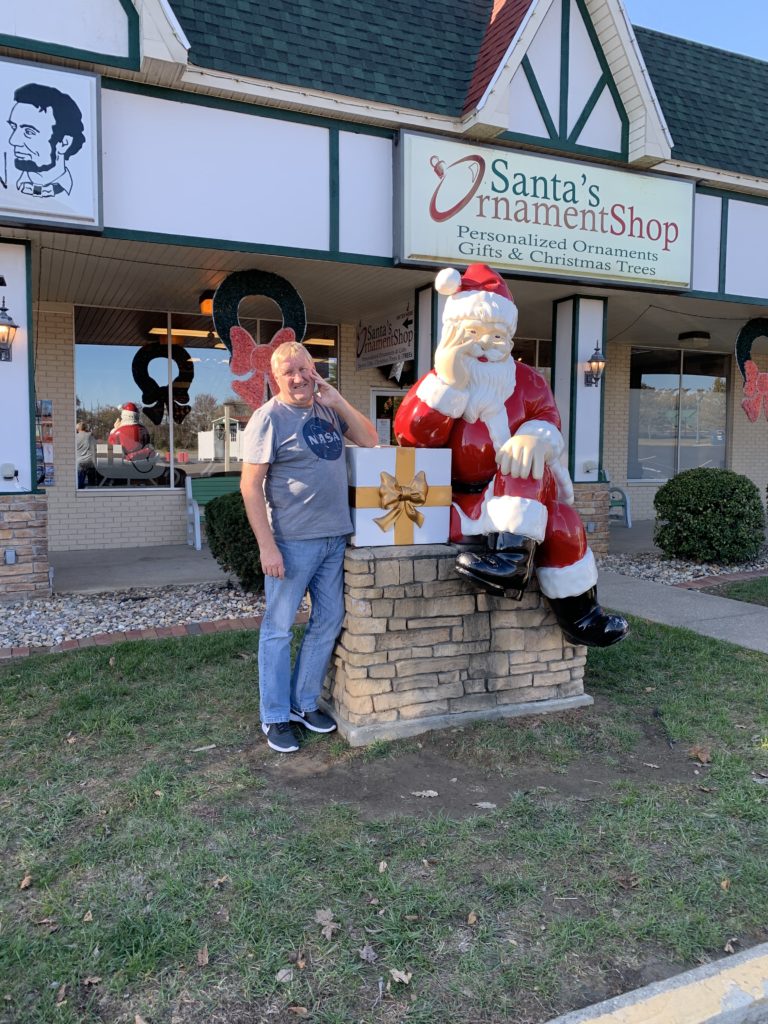
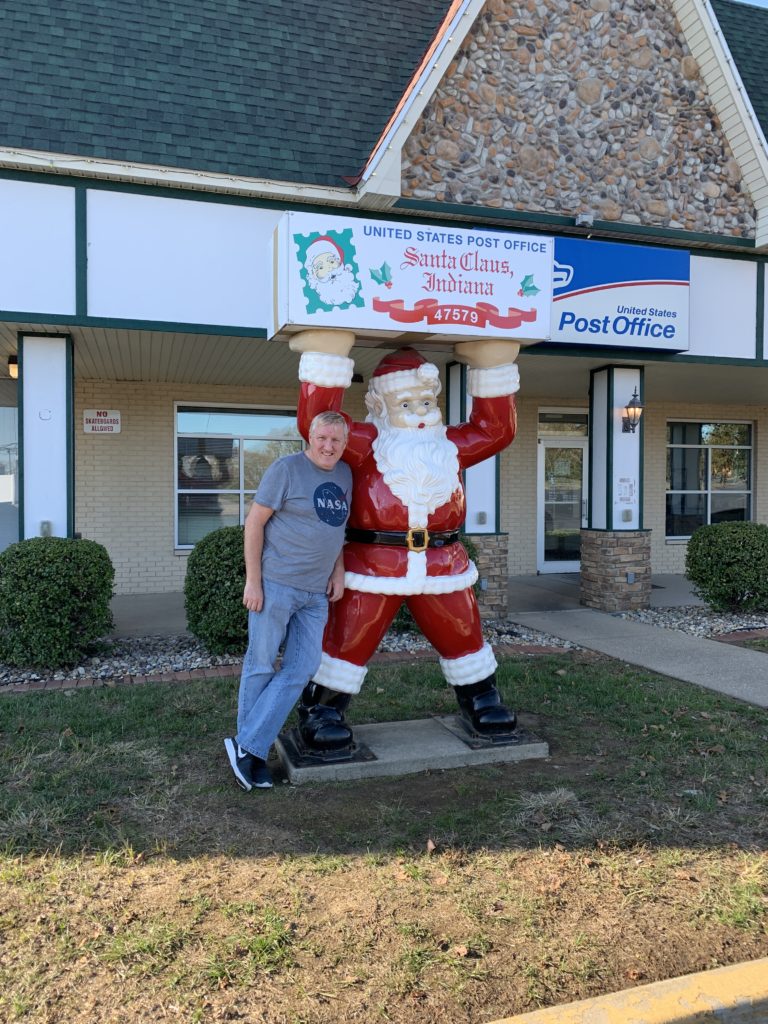
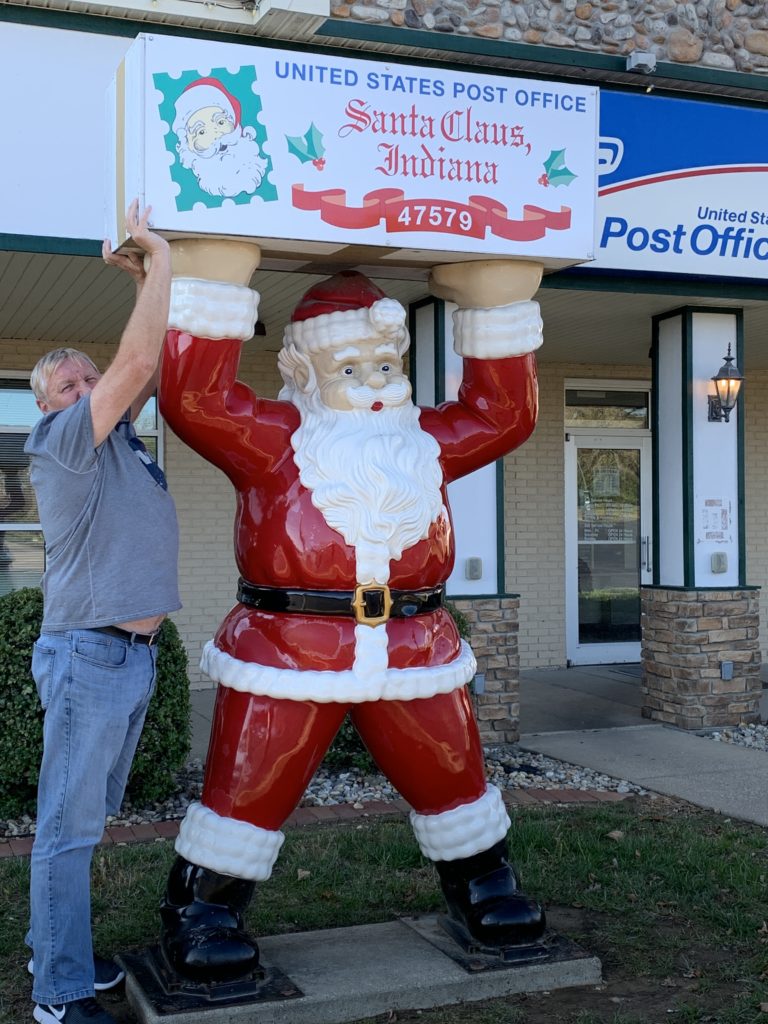
We stopped for lunch at Santa Claus, a perpetual Christmas town, just before Bardstown! It has a large store that sells Christmas paraphernalia all year, except when it’s closed January to March for re-stocking!! Lunch was a pleasant buffet of pizza and salad, relatively cheap at $7 per head, before we bought a few items in the Christmas shop. The town was oddly dotted with larger than life sized images of Santa….made us all smile.
The high street is called Christmas Boulevard. The main development – where most of the town’s 2,500 people live – is called Christmas Lake Village. In the gated community, which began in the 1960s, the main streets are named after the three wise men – Melchior, Balthazar, and Kaspar.
Others roads are named after Rudolph’s reindeer – take a left down Prancer Drive and you hit Vixen Lane – while one street is simply called Chestnut by the Fire. In Santa Claus, Indiana, it’s Christmas 365 days a year.
In the 19th Century, the town was called Santa Fee, but, when residents applied for a post office, they were asked to pick another name – it sounded too similar to Santa Fe, 200 miles north.
On Christmas Eve, the residents of Santa Fee got together to try to pick a new name. They sat round a potbelly stove when, suddenly, the doors blew open. A little girl, after seeing the doors open, heard bells. “It’s Santa Claus!” she gasped, and that was that.
Around 1914, they started receiving children’s letters to Santa Claus – and the town, led by postmaster James Martin, started replying. The post office now receives 20,000 letters every year, from all over America and the world. Most are addressed to the PO Box, but some envelopes simply say: Santa Claus, North Pole.
The person in charge of replying is the Chief Elf, Pat Koch. She is 86, has degrees in nursing and theology (the latter earned aged 70), and brims with human spirit, not just Christmas spirit. Mrs Koch (pronounced Cook) leads a team of around 200 volunteers. They read the letters, take a printed reply, fill in the child’s name, and add a personal message, sending them off just before Christmas!
Recent Comments