The city of Cordoba is inland, an hours drive east of Seville and as we found out, well worth the drive there. Its such a pretty city, very old, full of charm and history, not particularly full of tourists so very calm and unflustered. As we approached the city we had driven through lush green hills and agricultural plains before dropping down to this compact city, over a river bridge and into the most lovely city we have been to in a long time.
History here dates back to over 4000 years ago, Roman evidence and ruins are still being uncovered and preserved. The main city comprises a compact Jewish quarter, heaving with narrow white alleyways, small businesses and traditional houses; north of the city is a more modern area full of green plazas, squares and parks and the edge of the city houses small tasteful apartment blocks that blend so well with the surroundings.
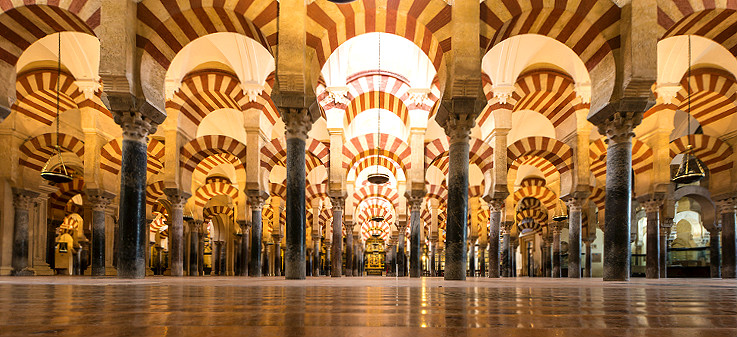
We literally had 36 hours to explore the city and so we did our best; we got lost in the Jewish Quarter several times; visited the Royal Palace and its beautiful gardens; explored the 12 patios of Viana Palace (a house that was inhabited by various families up to recent years); wondered at the remaining pillars of the Roman palace; wandered across the Roman river bridge and walked the edge of the city walls. However what really took our breath away was the Mezquita, originally a Mosque that was extended several times before being taken over by the Christians who added a superb Cathedral right in the middle of it. The architecture was stunning, the difference in builders over the years obvious and the eventual result is absolutely breahtaking.
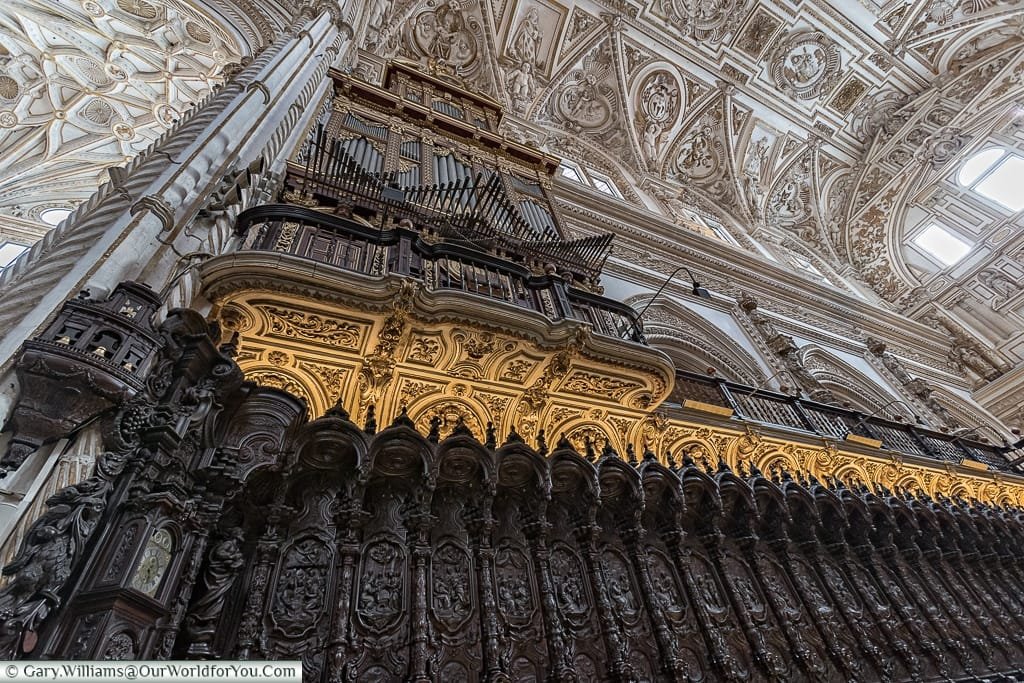
We took a night tour of the Mezquita, which gave the building an eerie atmosphere but brilliantly showed off the sheer size of the building and showed what can be done with imagination and money. Originally built in the 8th century to accommodate people for prayer, it was extended three more times to finally accommodate 24,000 square meters containing 856 columns made of marble, granite, jasper and other materials. Then in 1236 Cordoba was recaptured by King Ferdinand III who rejoined Christendom and the mosque became used as church. Within the Mezquita’s centre, a Renaissance cathedral was built by Bishop Alonso Manrique in 1523. The new cathedrals construction lasted until the beginning of the 17th century resulting in a remarkable and dazzling symbol of fine Moorish architecture.
City Walls & Jewish Quarter


 Roman Remains
 The Alcazar (Palace) of the Christian Kings


 Mosaics found on the Chapel walls


 View of the River and Roman Bridge
 Mezquita Walls & At Night


 View of the River and Roman Bridge


Inside the Mezquita




Patios Open to the Public

 The Viana Palace


 ‘,
‘,
Leave a Reply