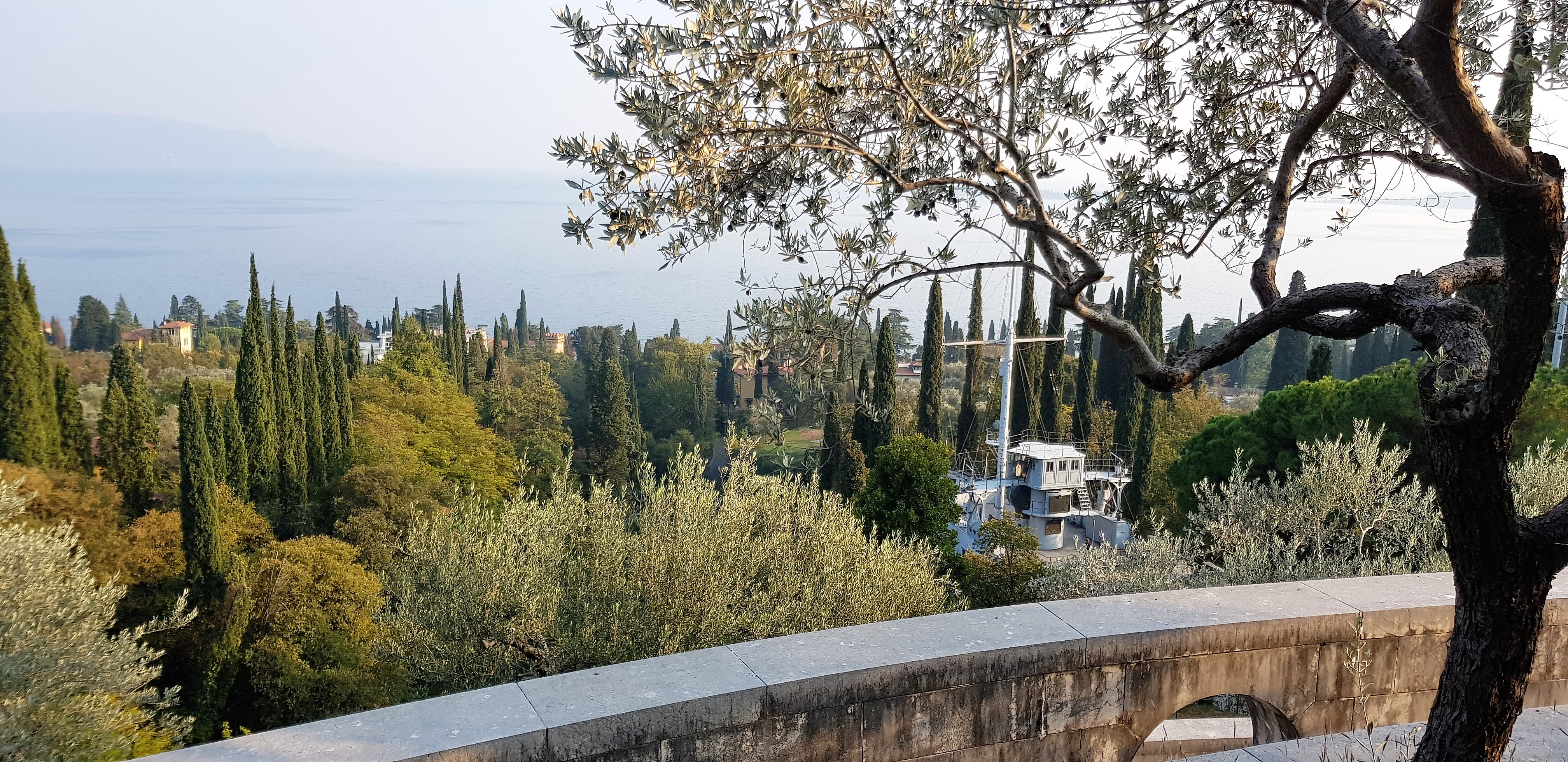
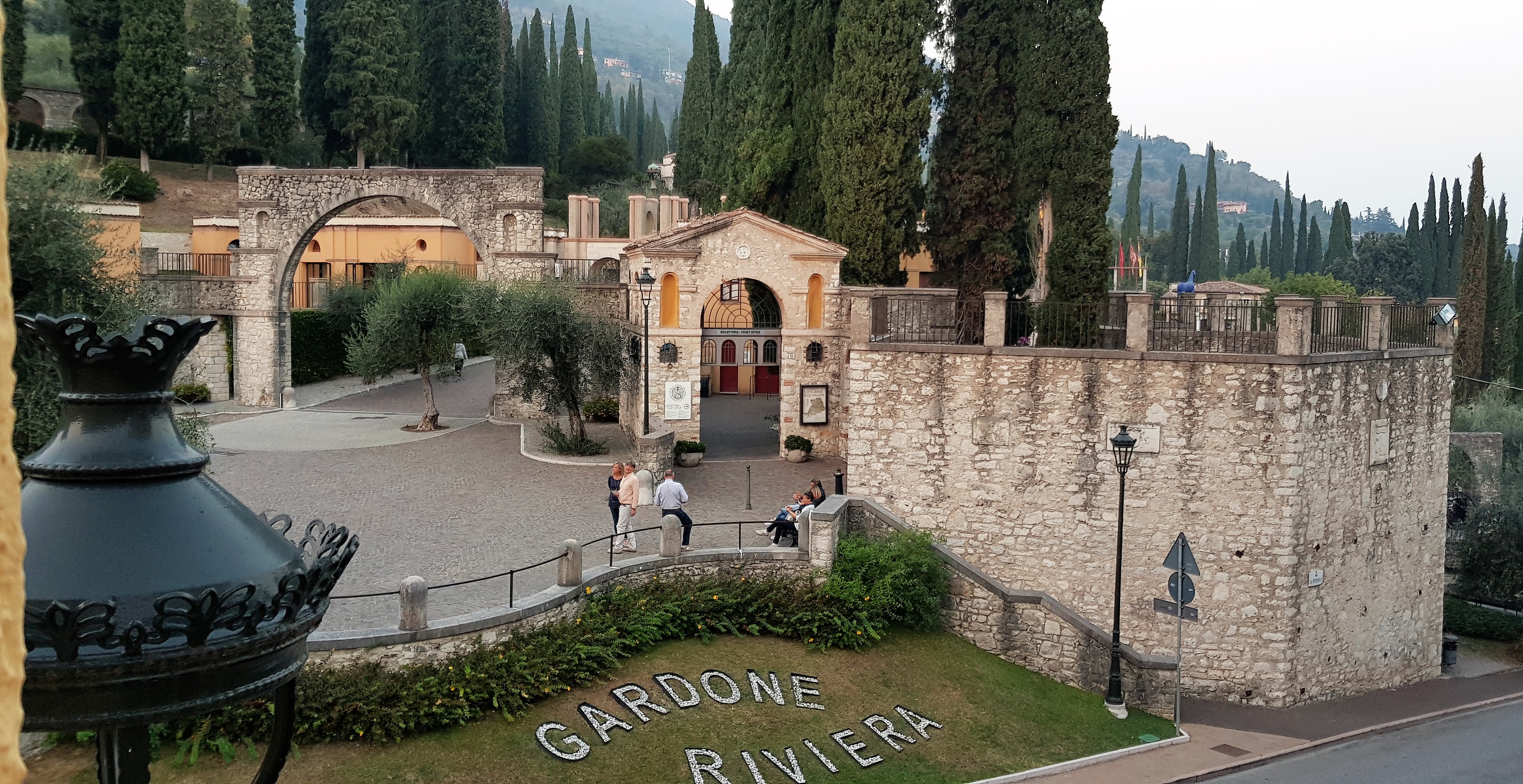
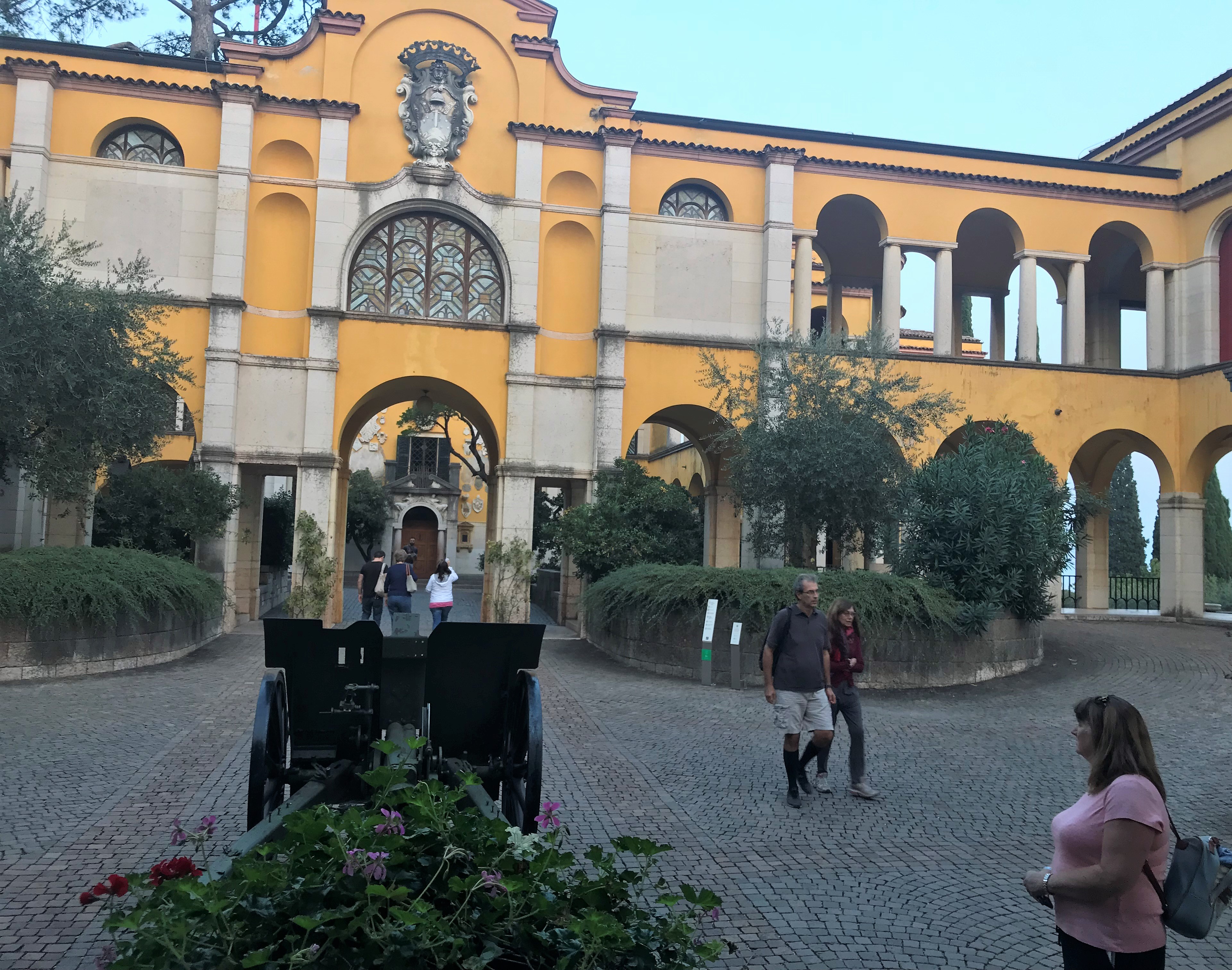
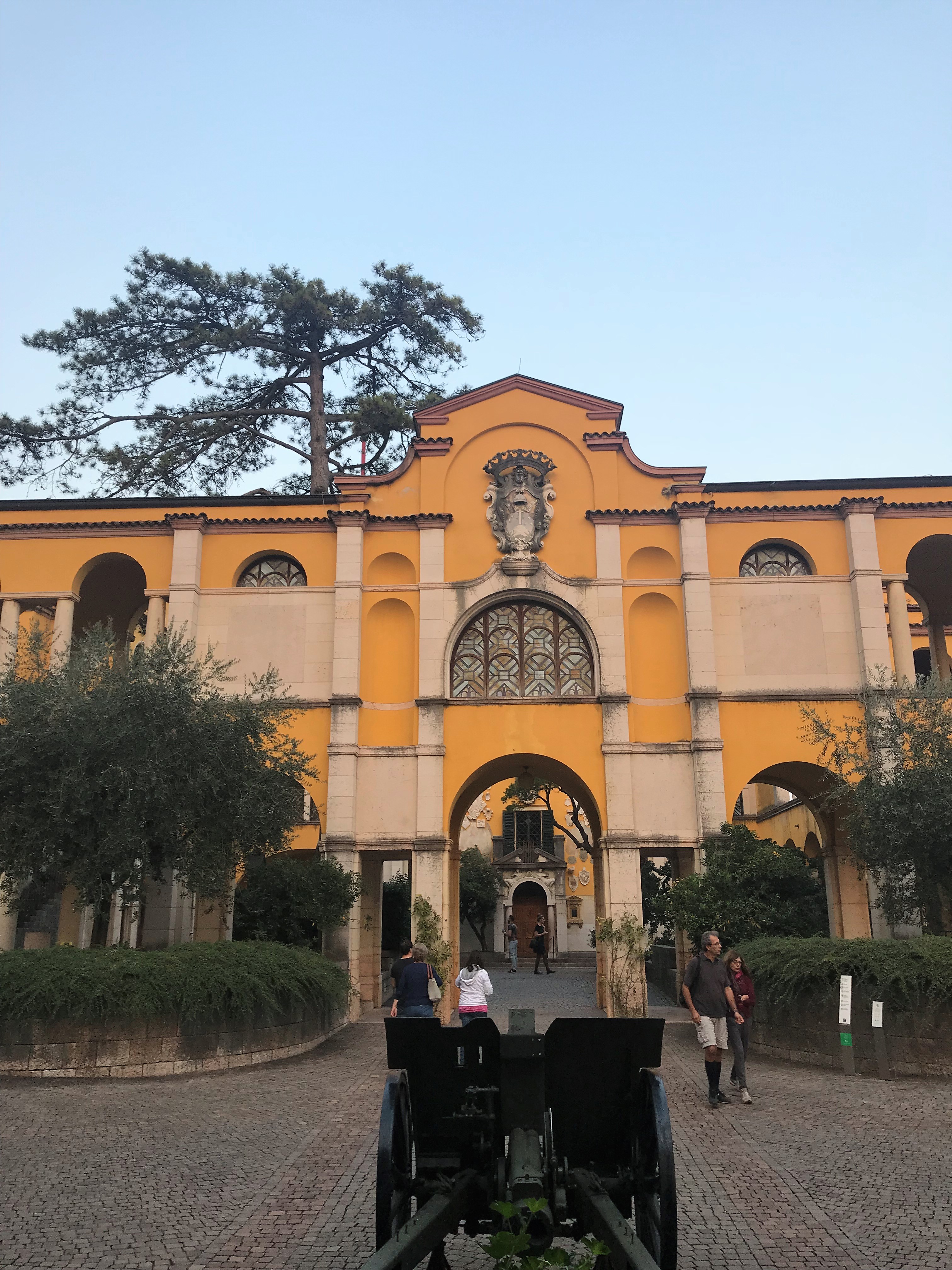
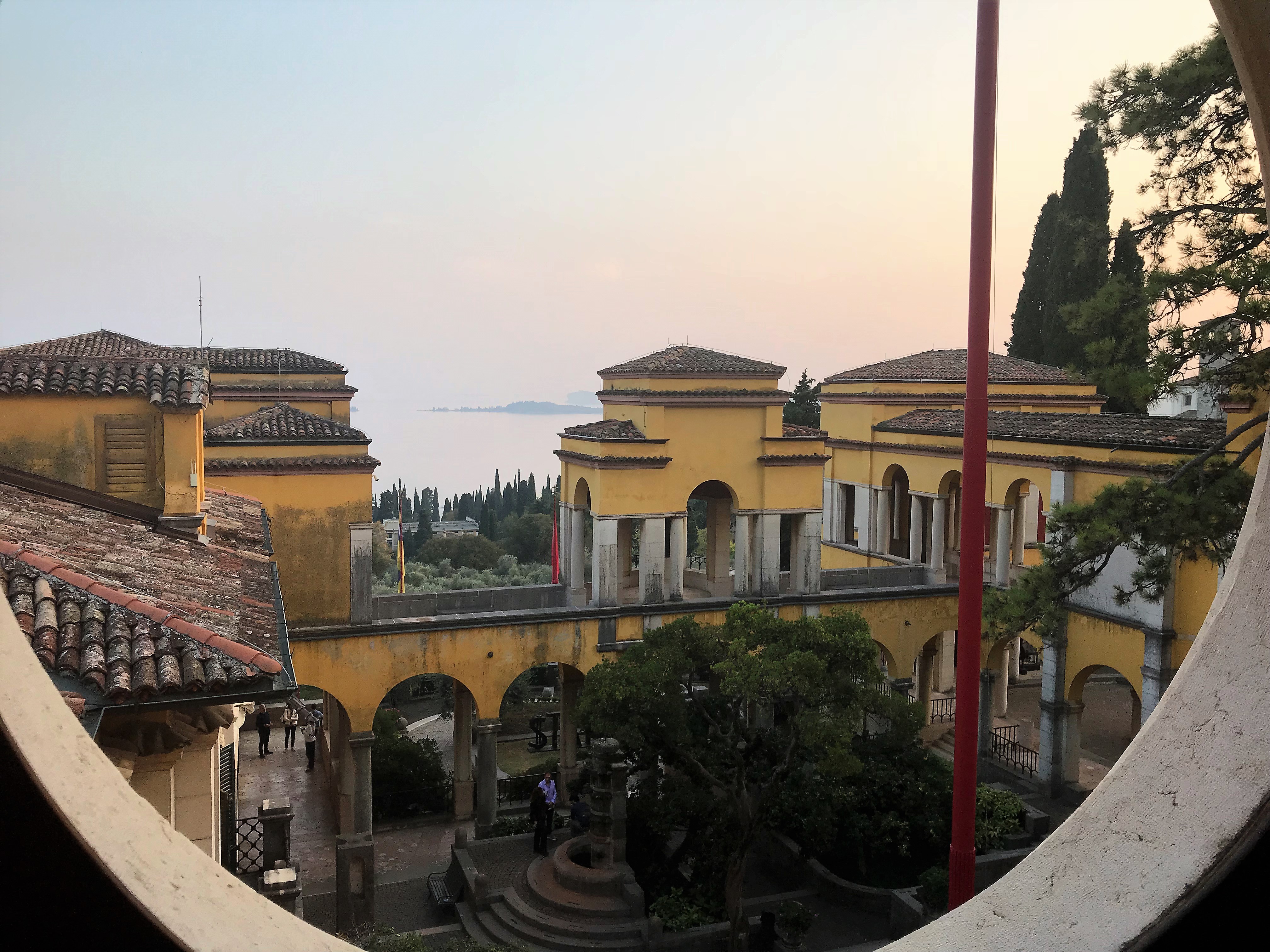
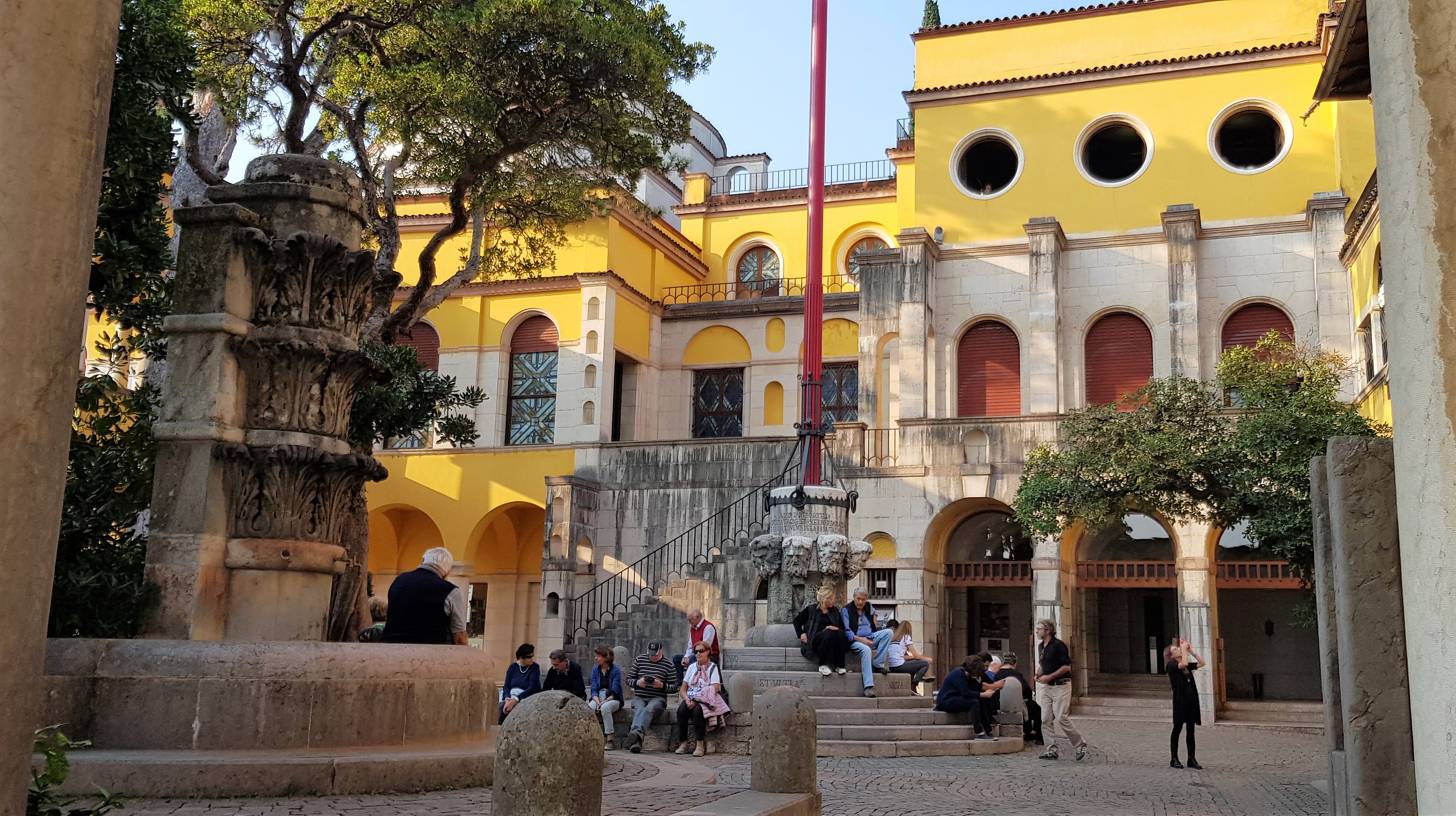
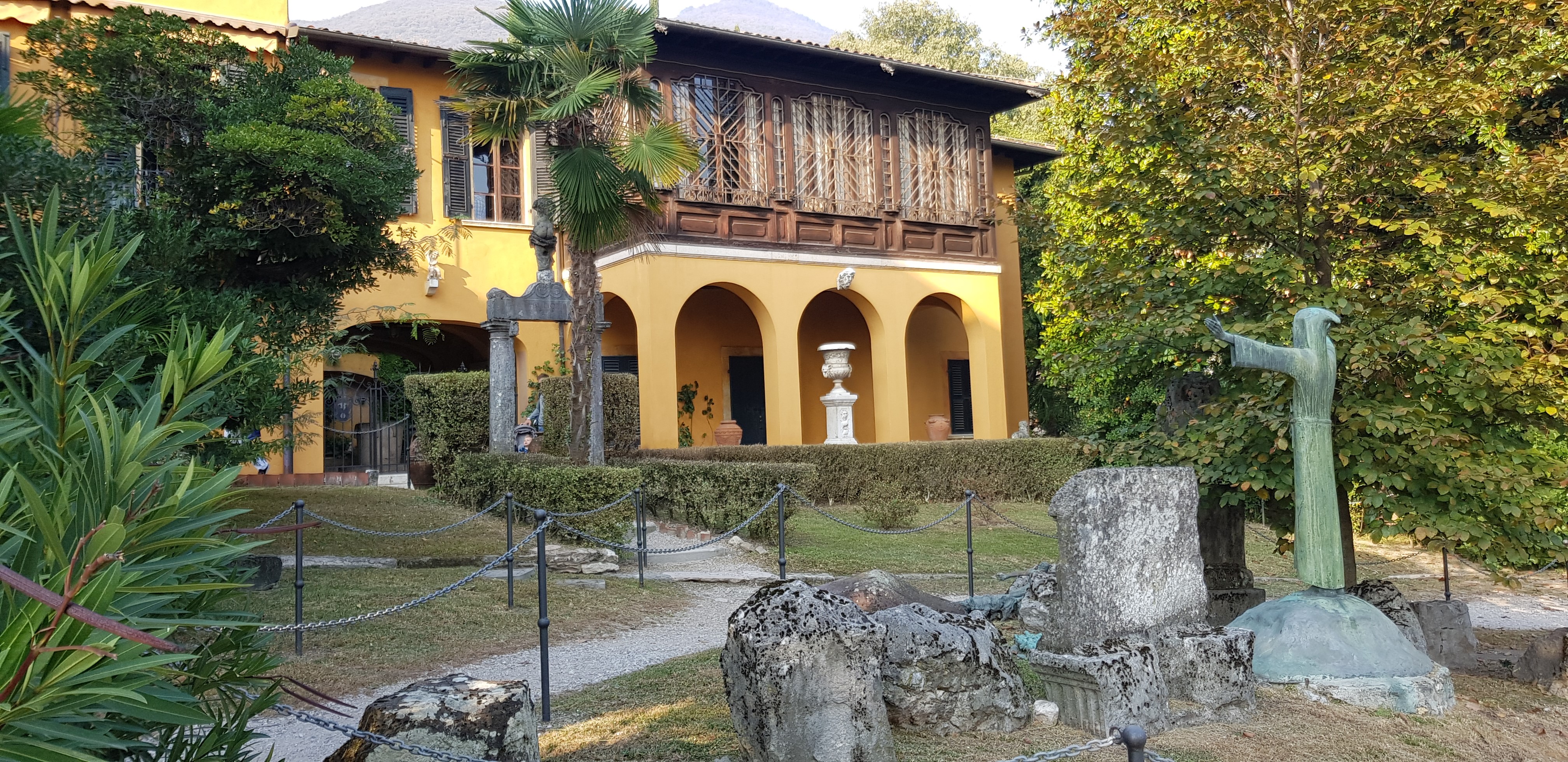
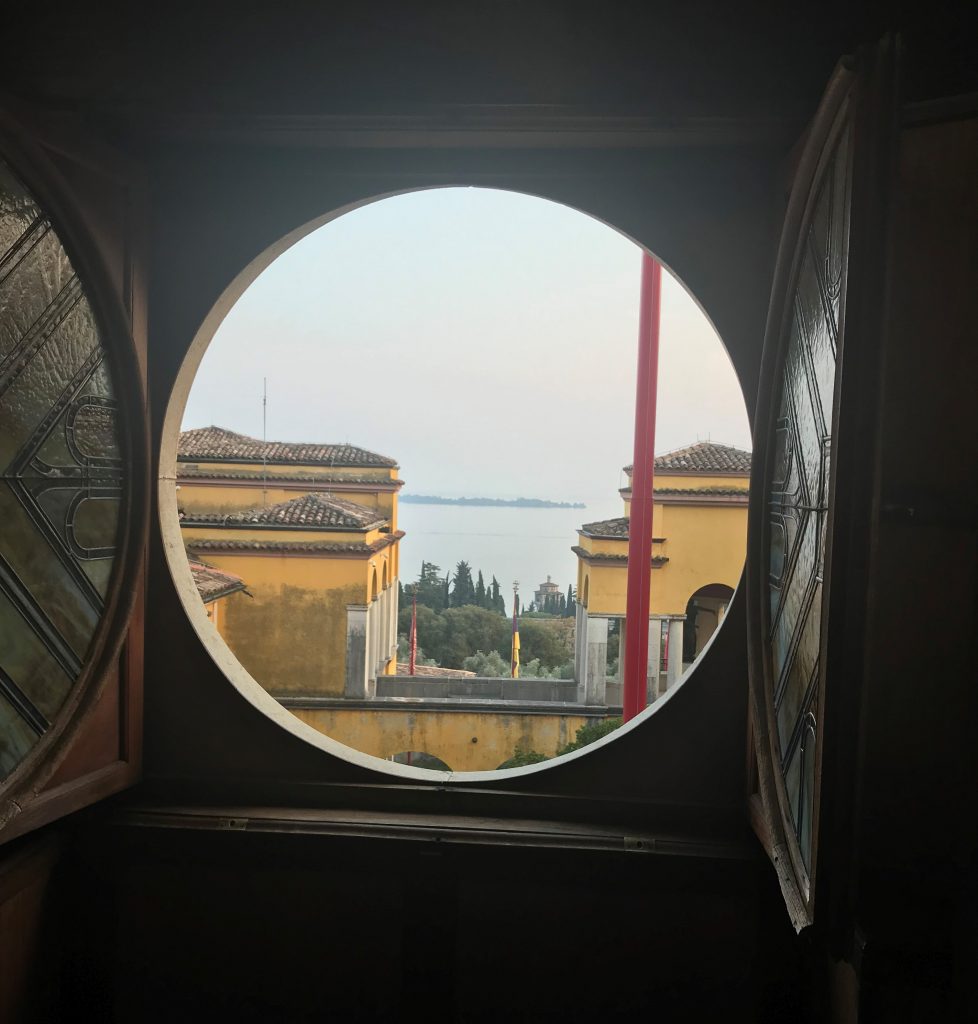
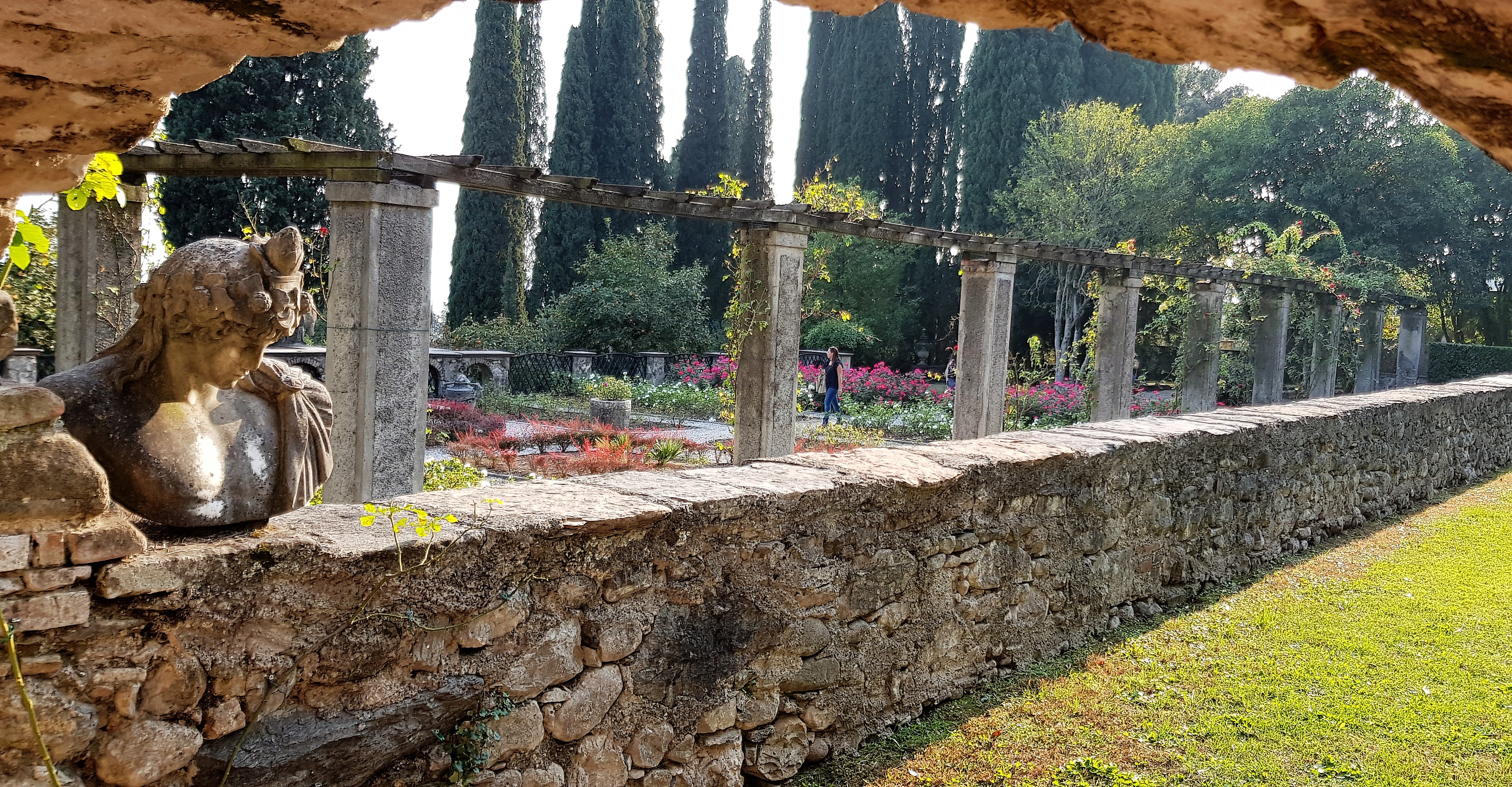
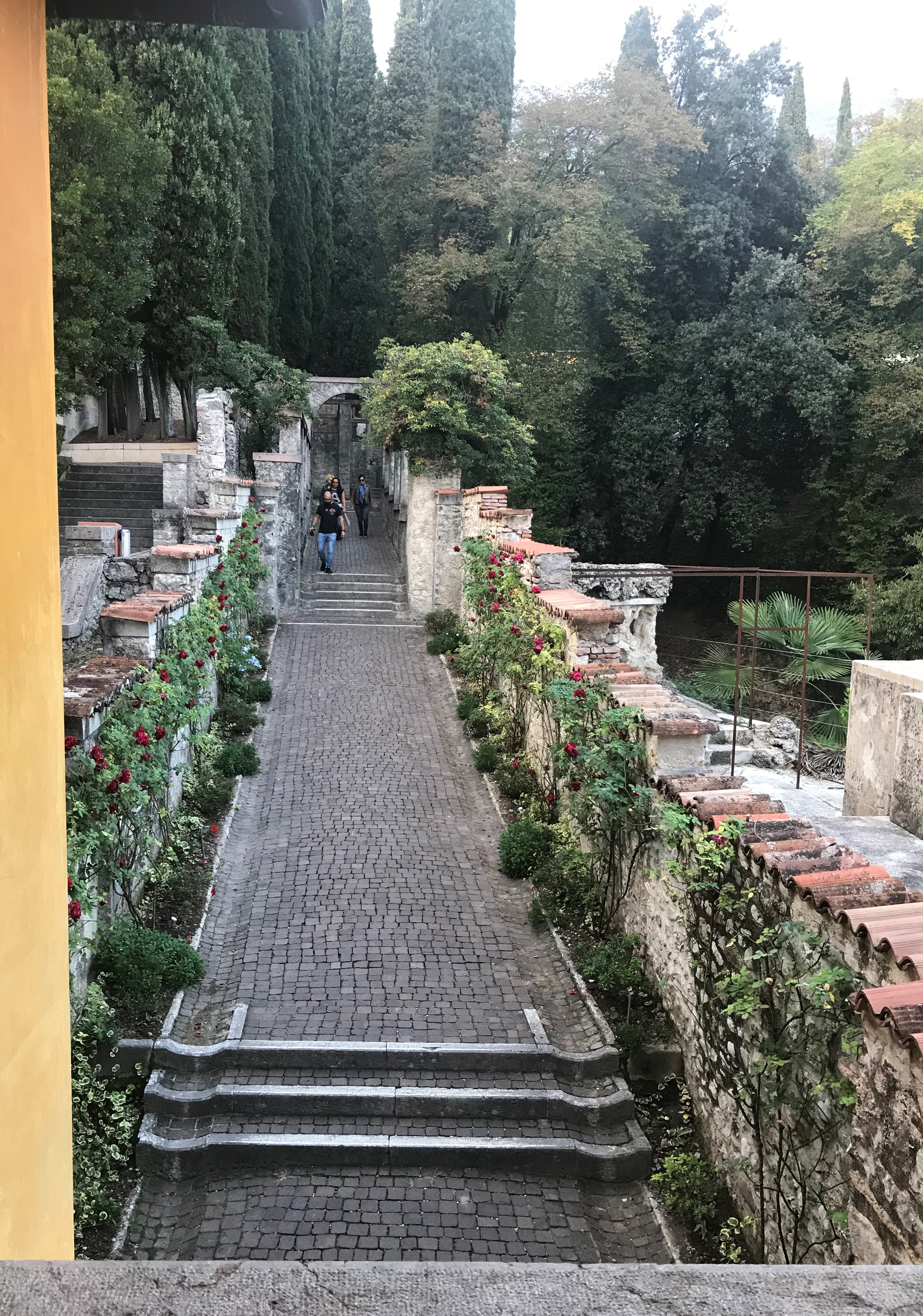
If ever you go to Lake Garda, you must visit Vittoriale degli Italiani (English translation: The shrine of Italian victories). It is a whimsical hillside estate in the town of Gardone Riviera overlooking the Garda lake where the Italian writer and poet Gabriele d’Annunzio lived after he lost his title of power in 1922 until his death in 1938. The estate consists of the main house called the Prioria (priory), an amphitheatre, the protected cruiser Puglia set into a hillside, a boathouse containing the MAS vessel used by D’Annunzio in 1918 and a circular mausoleum, as well as numerous statues and works of art throughout the layered gardens.
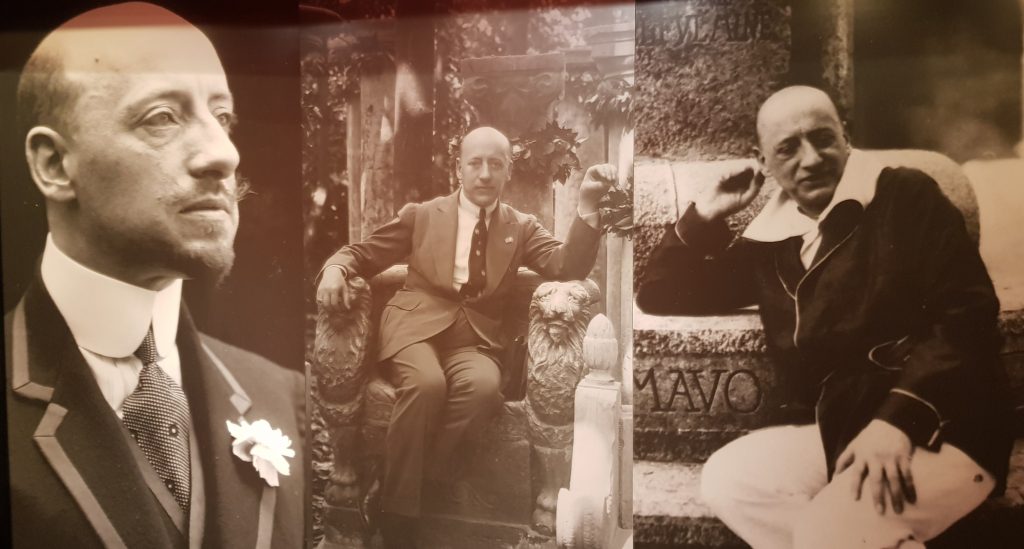
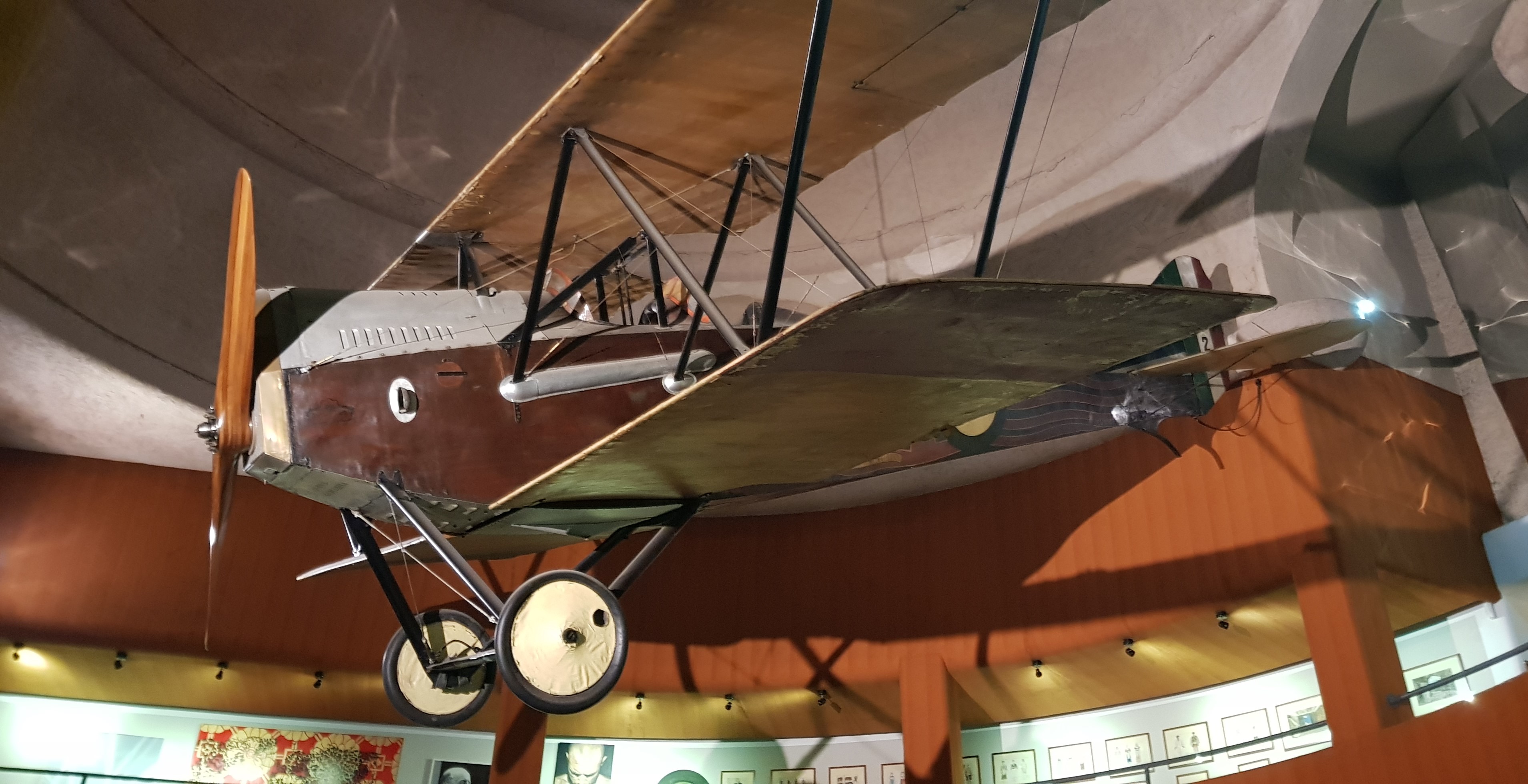
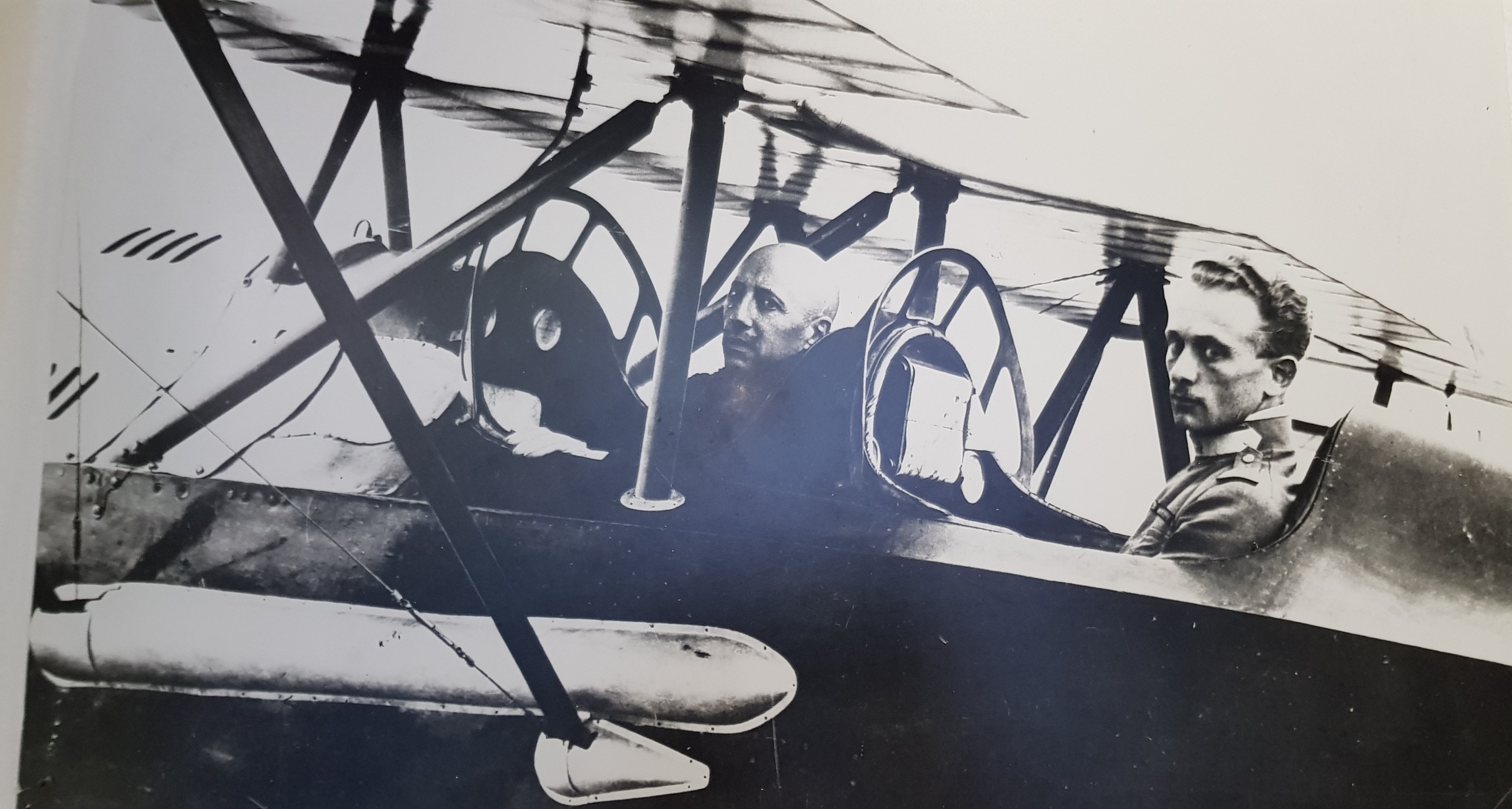
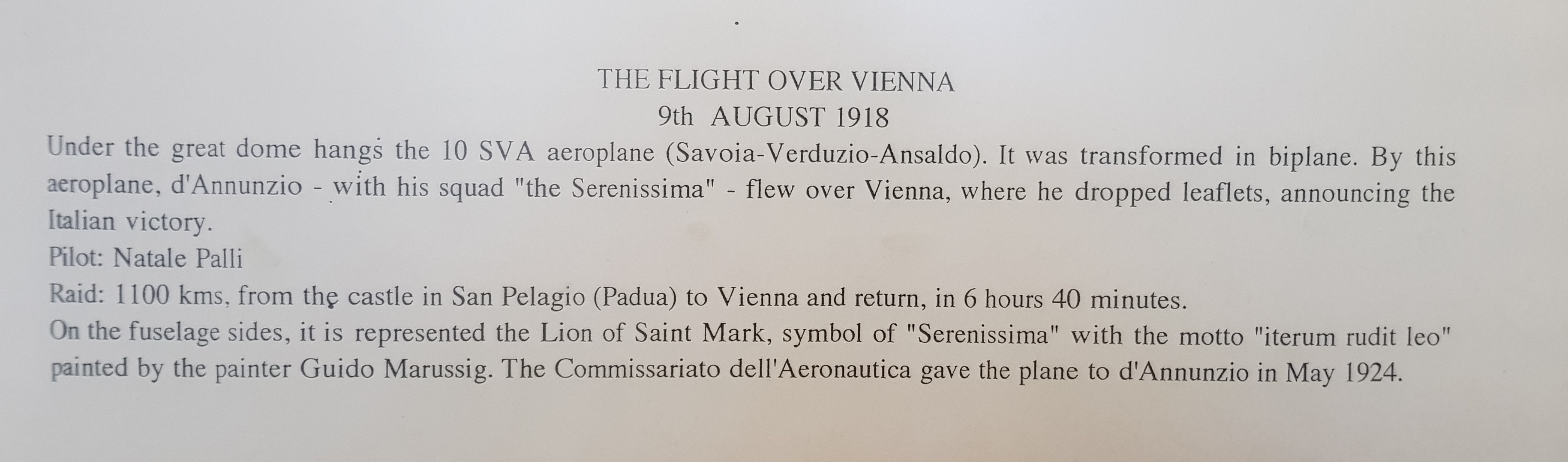
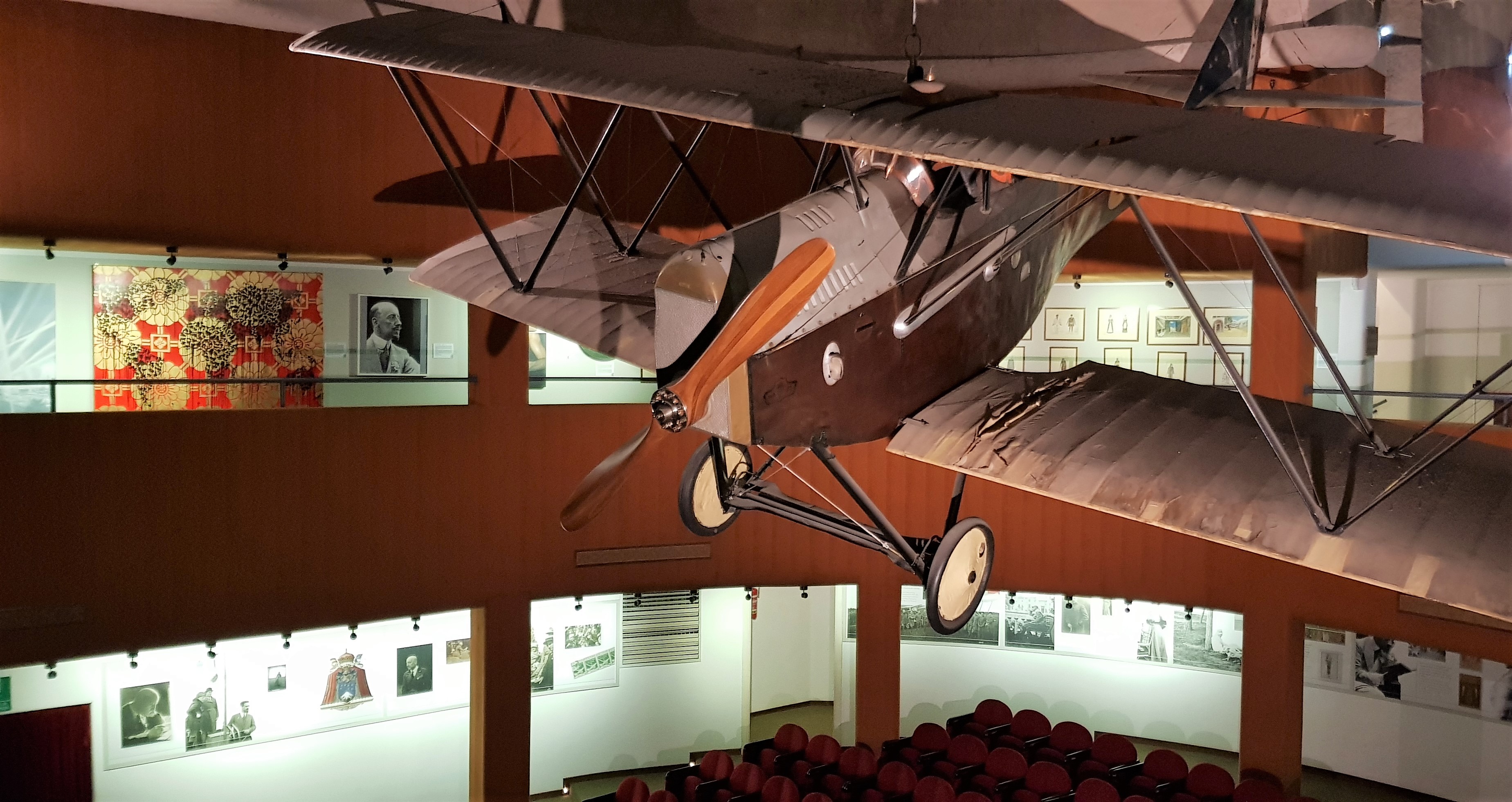
We were not supposed to take photos inside the house, which was full of historic memorabilia, art deco furniture and a bizzarre collection of artefacts from all around the world, so without my camera, I cannot recall the full story – the write up below in italics is courtesy of the internet! It is worth a visit just to wander the landscaped layered gardens, to admire the beautiful house and the collection of odd items that this man had. He is known as a hero in the area, for supposedly getting Austria to surrender during the war, after he personally dropped leaflets over a town from a small plane. The plane now hangs in an auditorium in the grounds, but it’s clear from other things that he was a nutcase!!
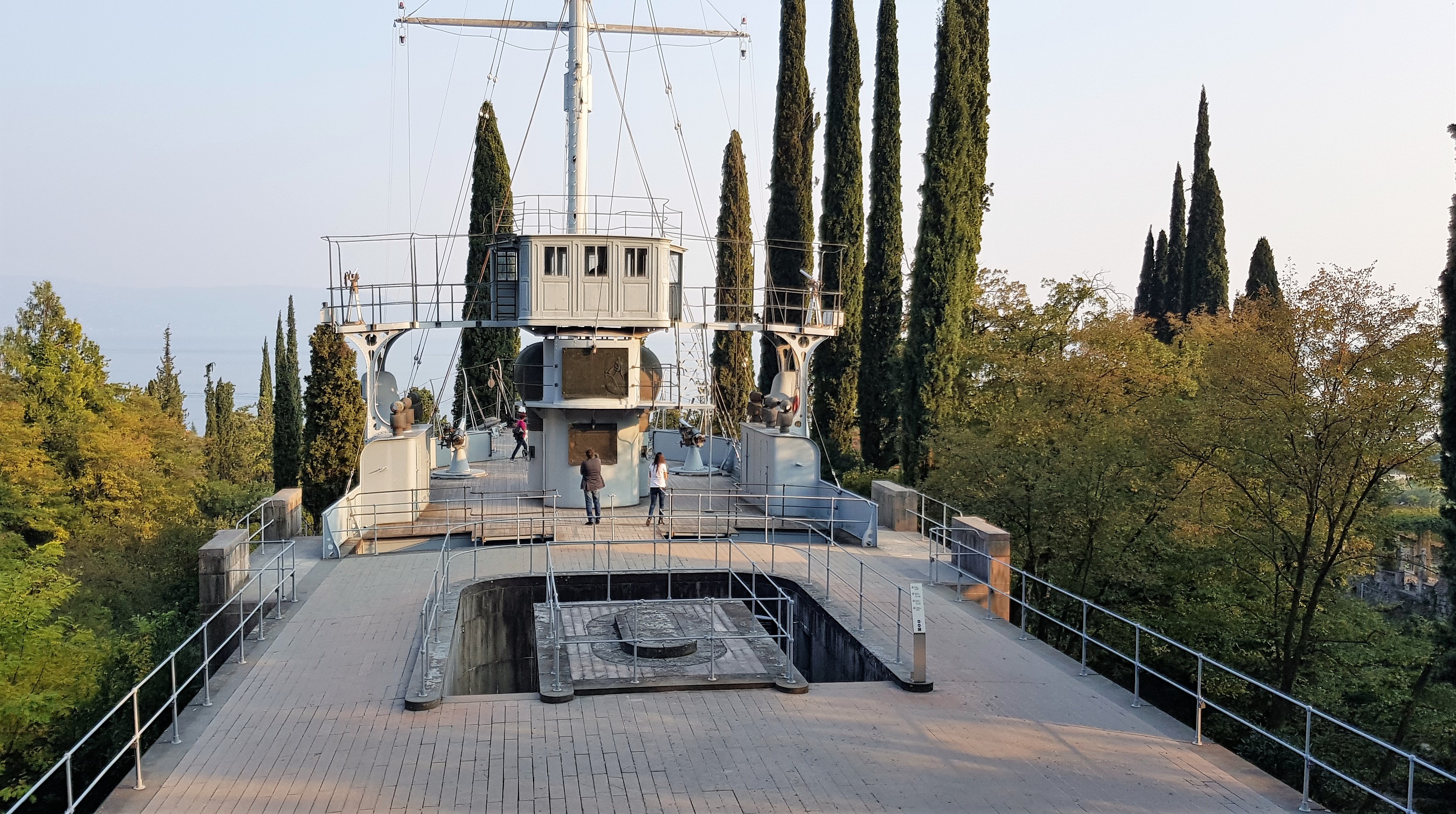
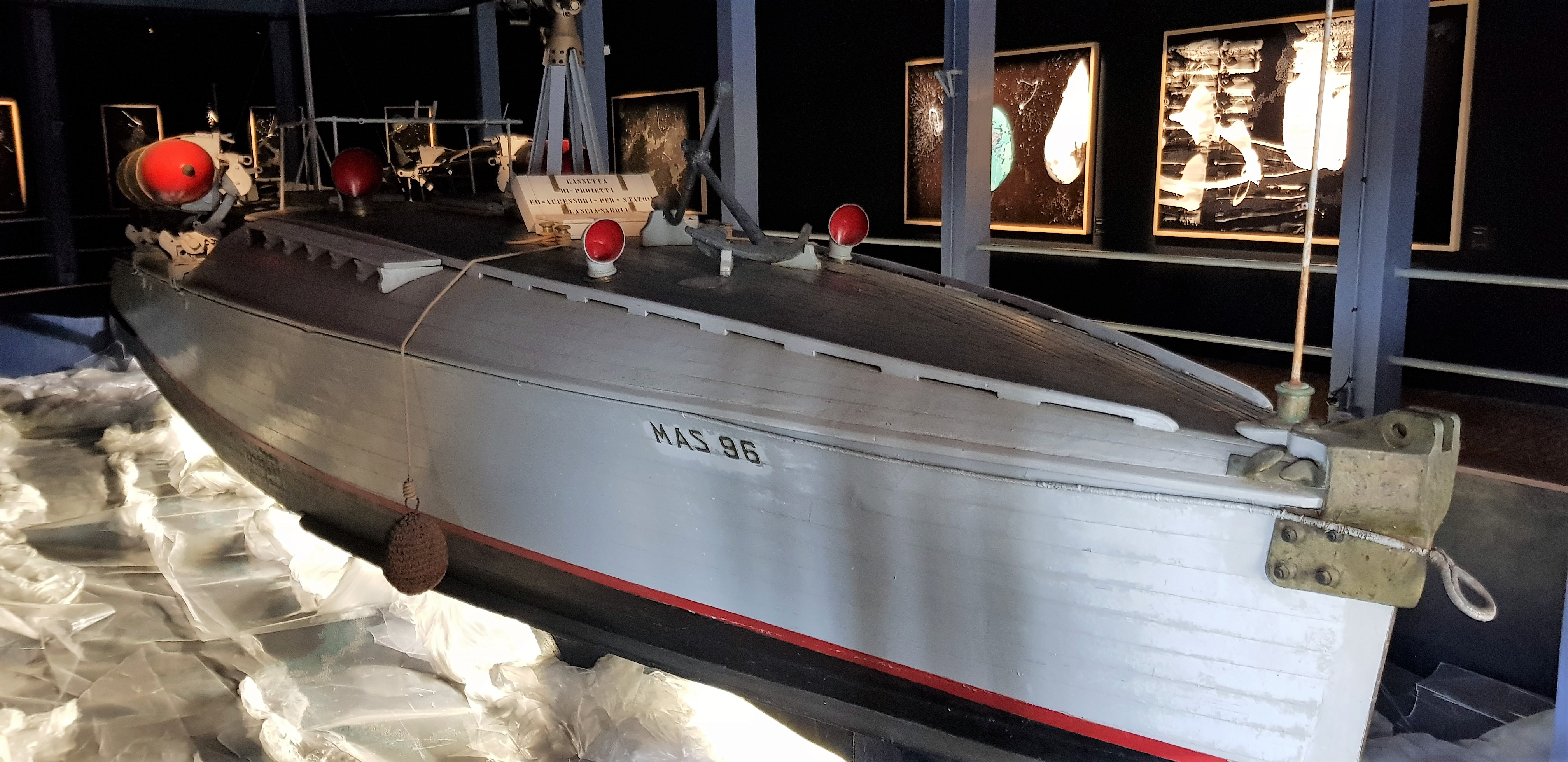
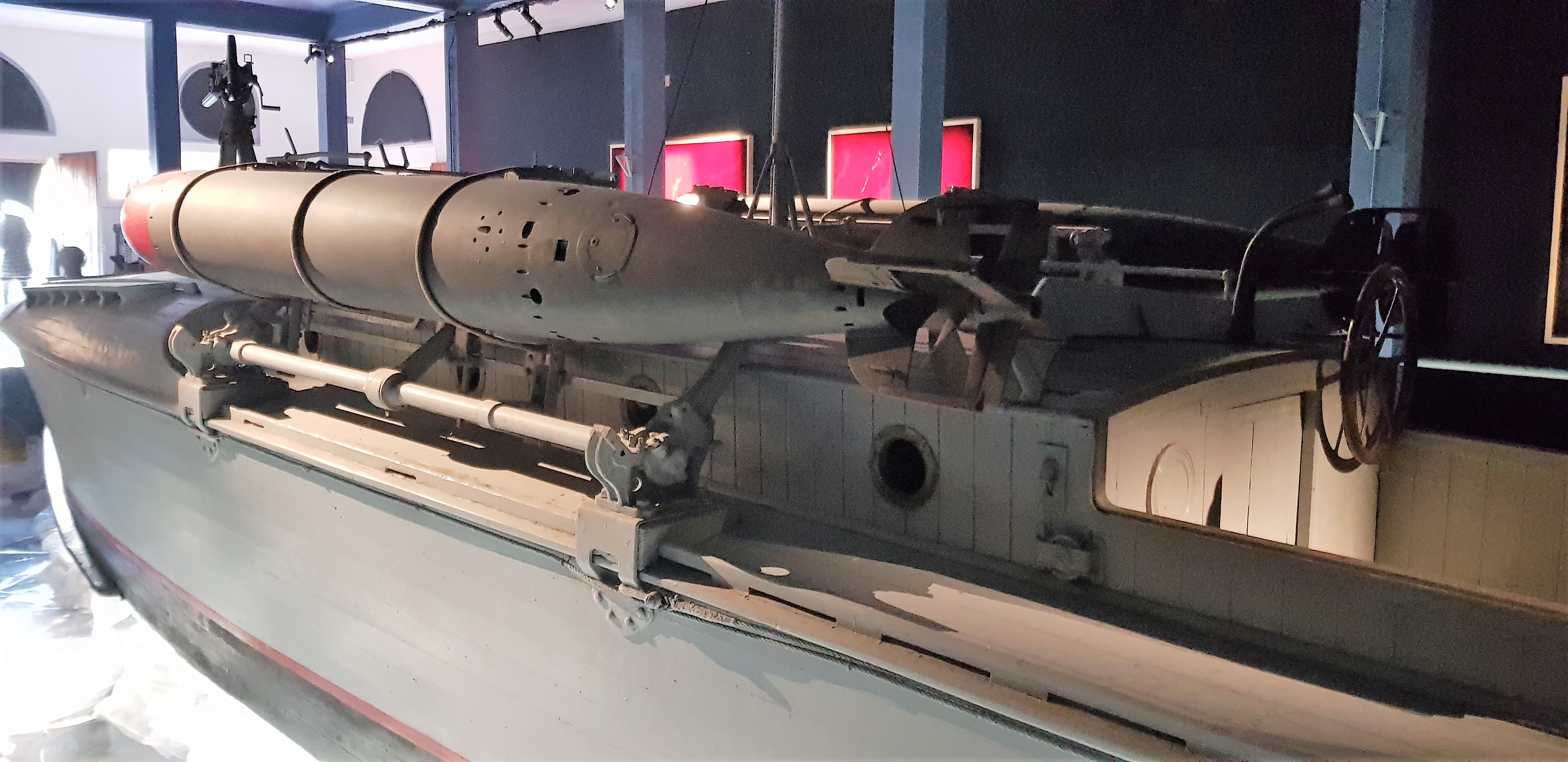
The house, Villa Cargnacco, had originally belonged to a German art historian, it was confiscated by the Italian state including the contents – artworks, a collection of books, and a piano which had belonged to Liszt. d’Annunzio rented it in February 1921 and within a year reconstruction started under the guidance of an Italian architect. Due to d’Annunzio’s popularity and his disagreement with the fascist government on several issues, such as the alliance with Nazi Germany, the fascists did what they could to please d’Annunzio in order to keep him away from political life in Rome. Part of their strategy was to make huge funds available to expand the property, to construct and/or modify buildings, and to create the impressive art and literature collection. In 1924 the airplane that d’Annunzio used for his pamphleteering run over Vienna during World War I was brought to the estate, followed in 1925 by the MAS naval vessel used by him to taunt the Austrians in 1918 in the Beffa di Buccari. In the same year the protected cruiser Puglia was hauled up the hill and placed in the woods behind the house, and the property was expanded by acquisition of surrounding lands and buildings.
In 1926 the government donated an amount of 10 million lire, which allowed a considerable enlargement of the Villa, with a new wing named the Schifamondo. In 1931 construction was started on the Parlaggio, the name for the amphitheatre. The mausoleum was designed after d’Annunzio’s death but not actually built until 1955, and d’Annunzio’s remains were finally brought there in 1963.
The Prioria
- To the visitor:
- Are you bringing Narcissus’ Mirror?
- This is leaded glass, my mask maker.
- Adjust your mask to your face,
- But mind that you are glass against steel.
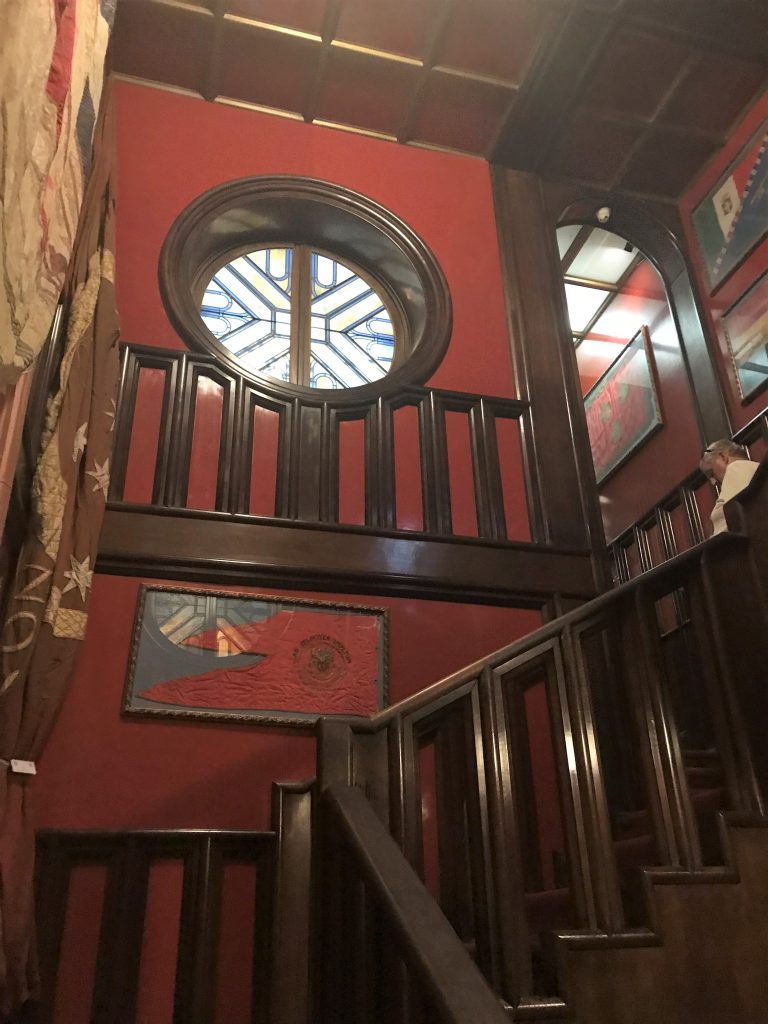
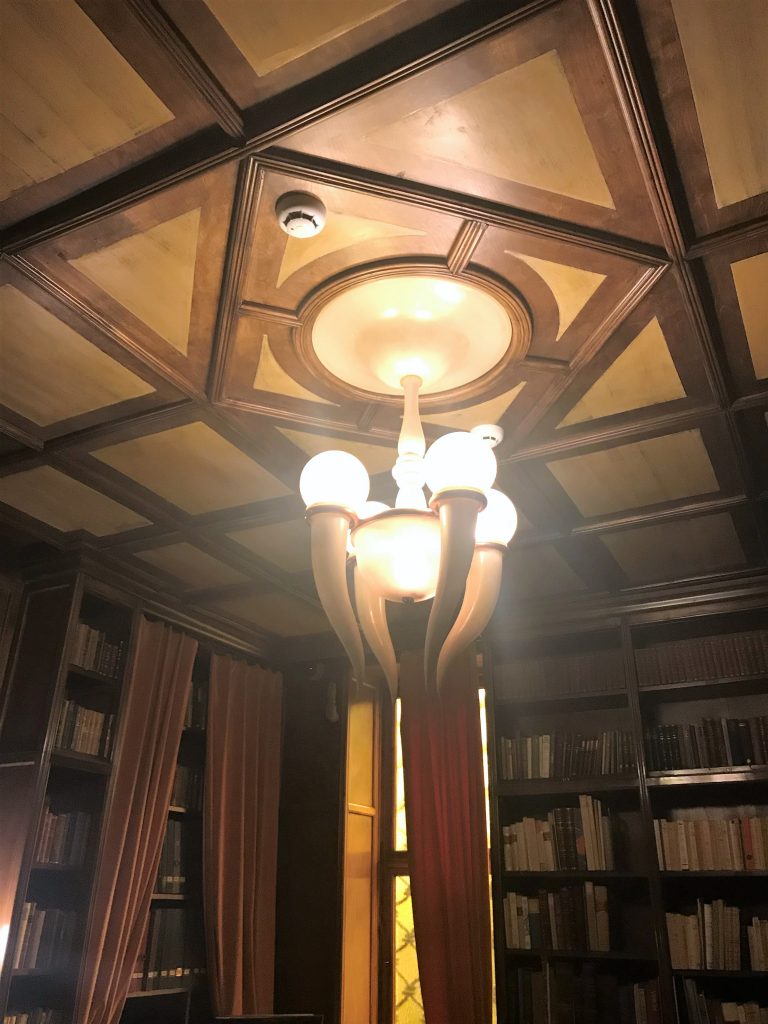 The Leper’s room is where D’Annunzio’s was laid out after his death, d’Annunzio felt that he was being spurned by the government due to their continued efforts to keep him in Gardone, rather than possibly in the limelight in Rome. There are no guest bedrooms in the house, D’Annunzio did not like to have guests staying!
The Relic room holds a large collection of religious statues and images of different beliefs, purposely placed together to make a statement about the universal character of spirituality. The inscription on the inner wall reads:
- As there are five fingers on a hand, there are only five mortal sins.
D’Annunzio wished to make clear hereby that he didn’t believe that lust and greed should be considered sinful.
A most unlikely relic is the distorted steering wheel of racing speedboat Miss England II, donated after the coppa dell oltranza (unlimited cup) powerboating trophy, organized under d’Annunzio patronage, was held in 1931. Miss England II had crashed in a world speed record attempt, killing her pilot, Sir Henry Seagrave in 1930 (though winning the record nevertheless) and was rebuilt to race and win at Lake Garda the following year with Kaye Don at the helm. D’annunzio who was a syncretist (believer in all religions) deemed the distorted steering wheel “a relic of the religion of courage”.
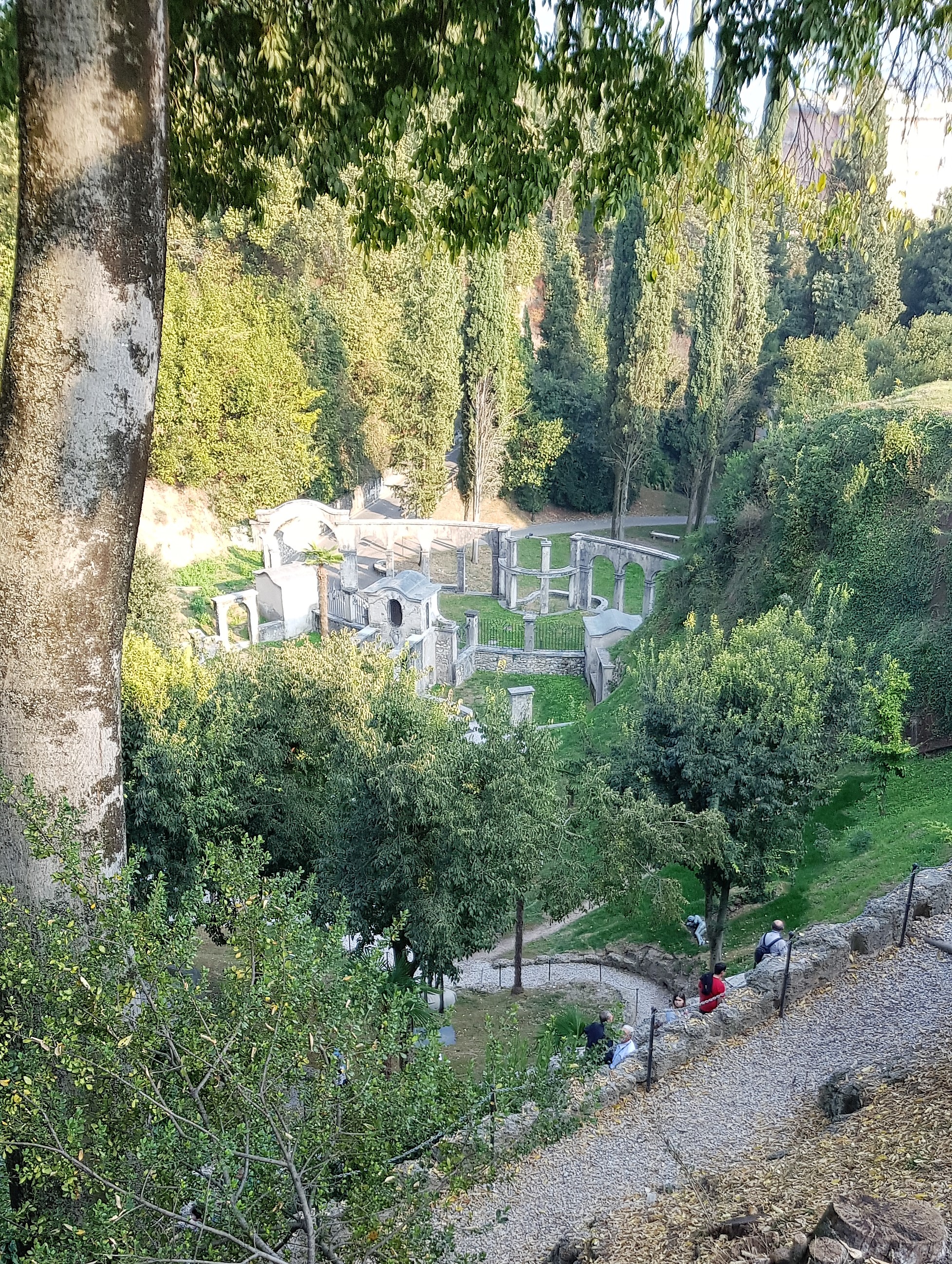
The Amphitheatre

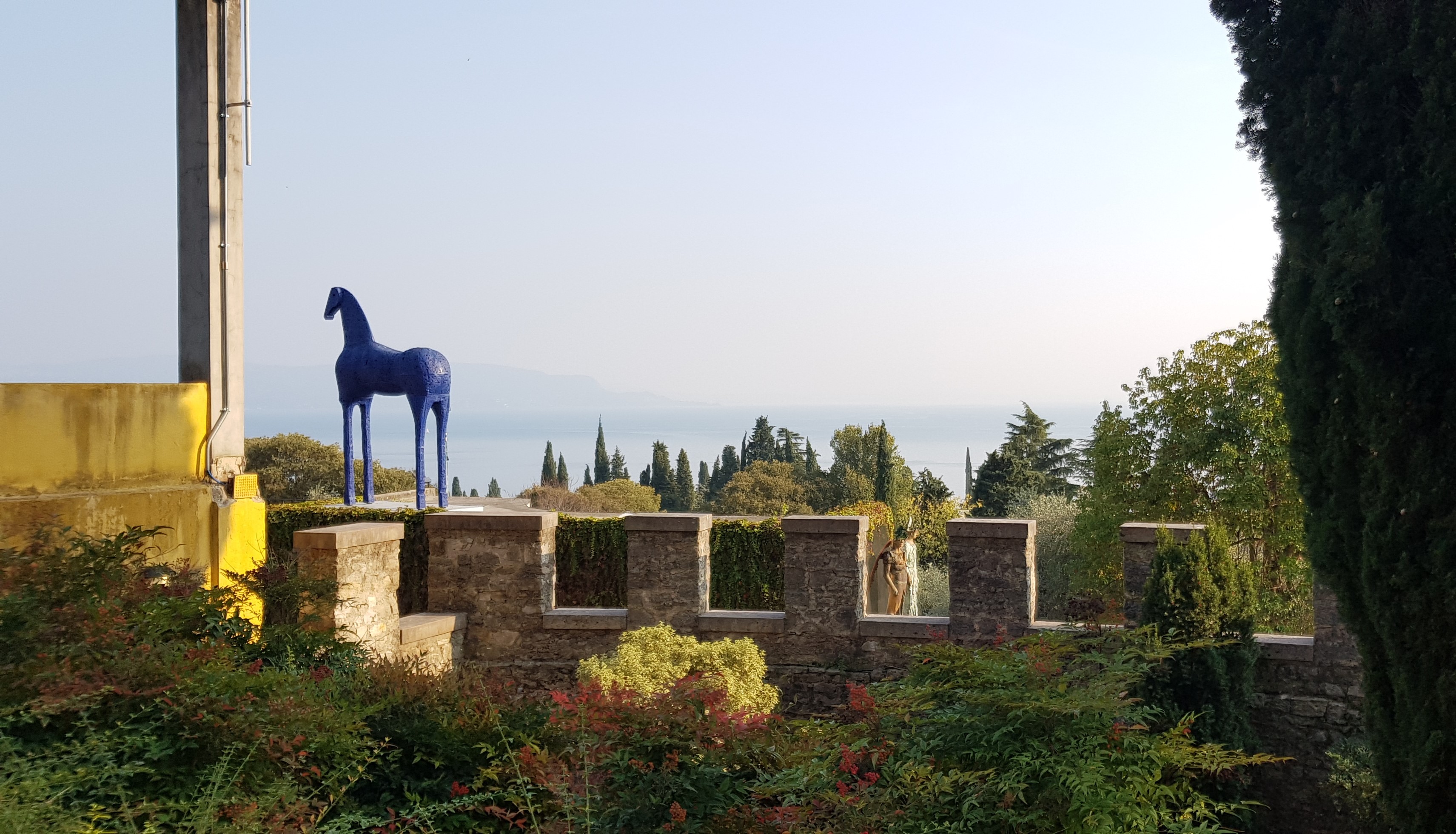 The amphitheatre is the first major structure one comes across after entering the estate and was clearly based upon classic models, the architect Maroni even visiting Pompeii for inspiration. Its location, like the other buildings of the Vittoriale undeniably offers a majestic view of the Garda lake, it is still used for performances today.
The Mausoleum
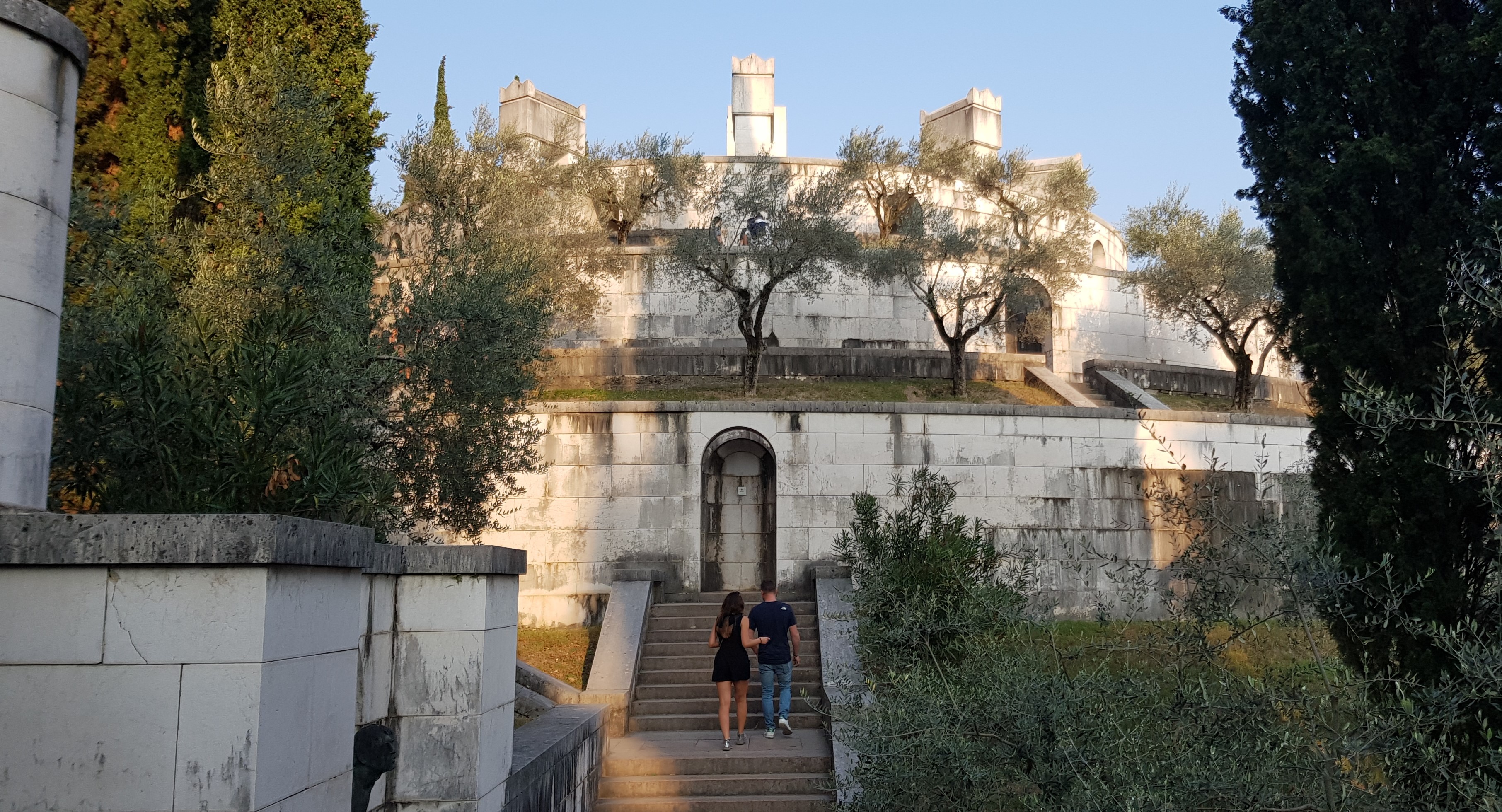
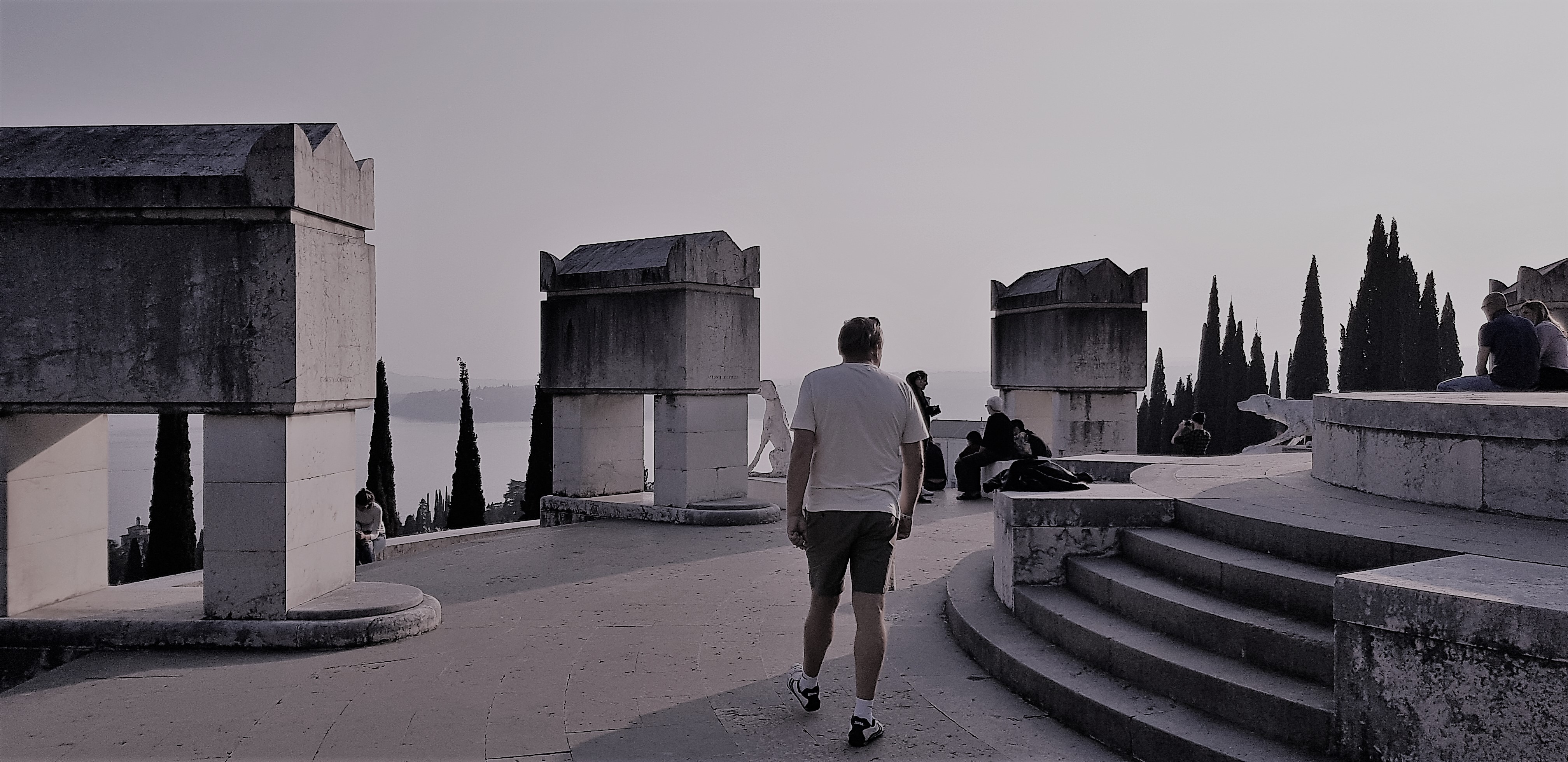
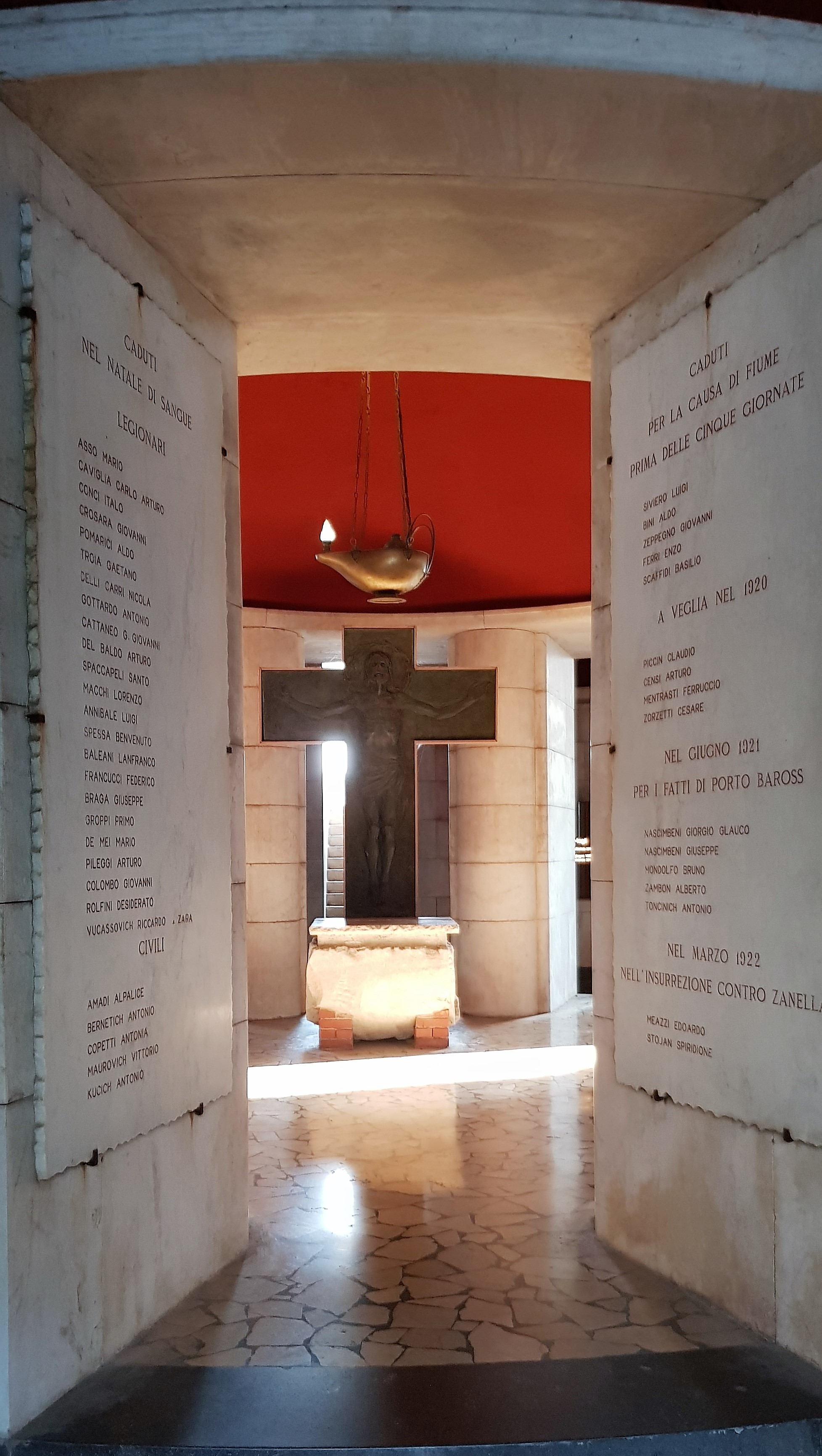
The circular structure is situated on the highest point on the estate. It contains the remains of men who served D’Annunzio and died during the Fiume incident, and d’Annunzio himself in the highest casket.
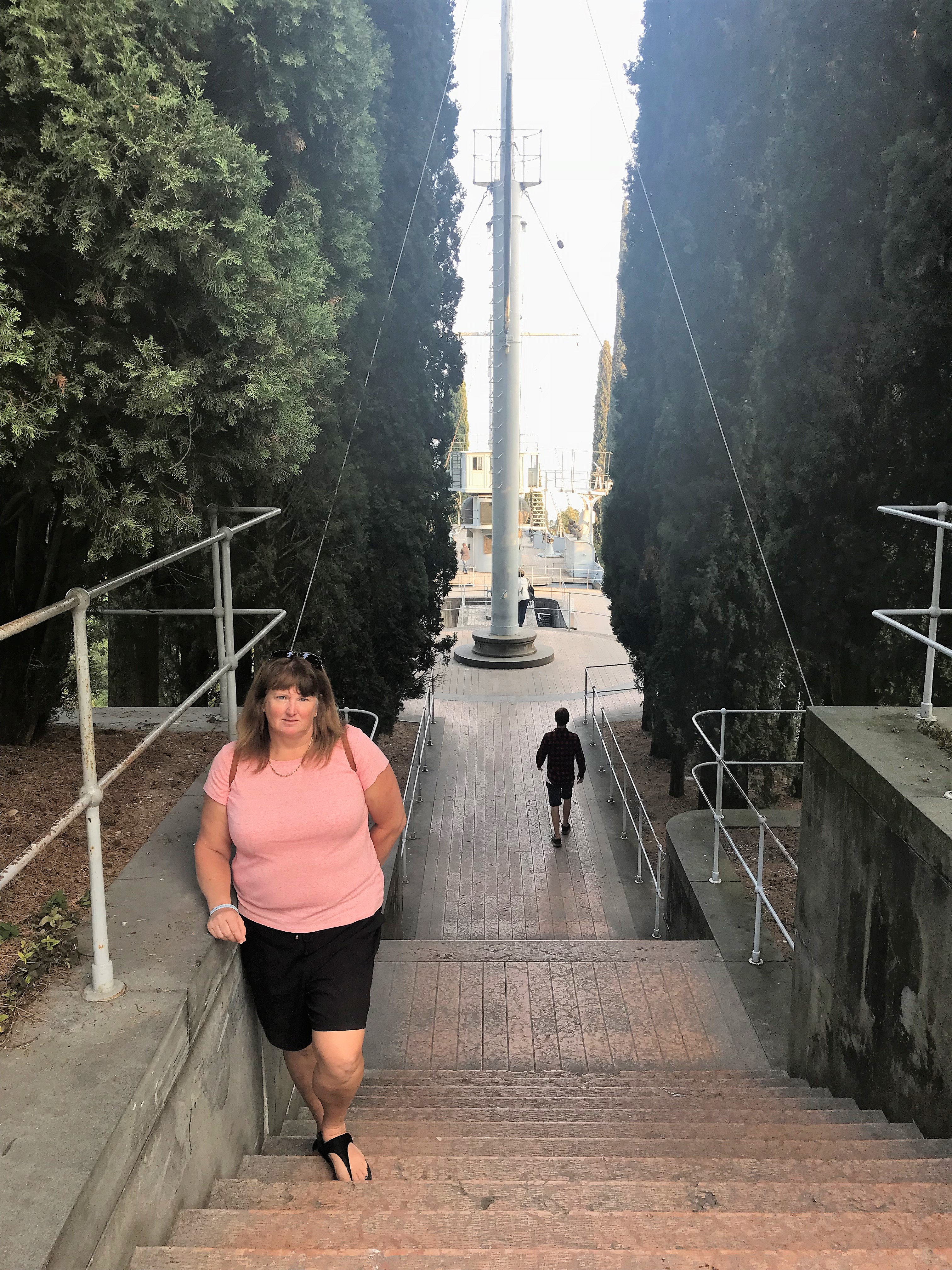
 The Protected cruiser Puglia
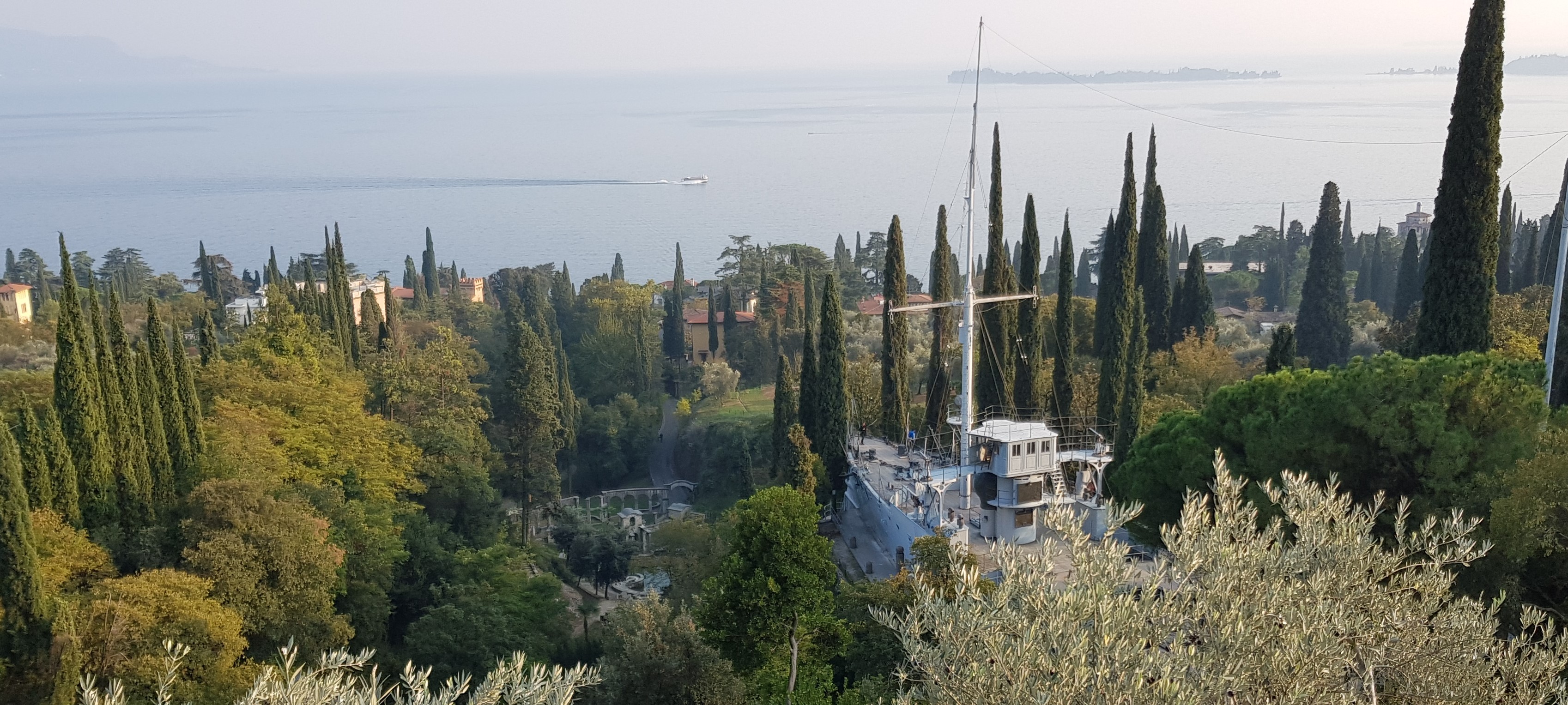
Jutting out of one of the hilltops the cruiser Puglia makes a surreal sight. It was placed there, with its bow pointing in the direction of the Adriatic, “ready to conquer the Dalmatian shores”.
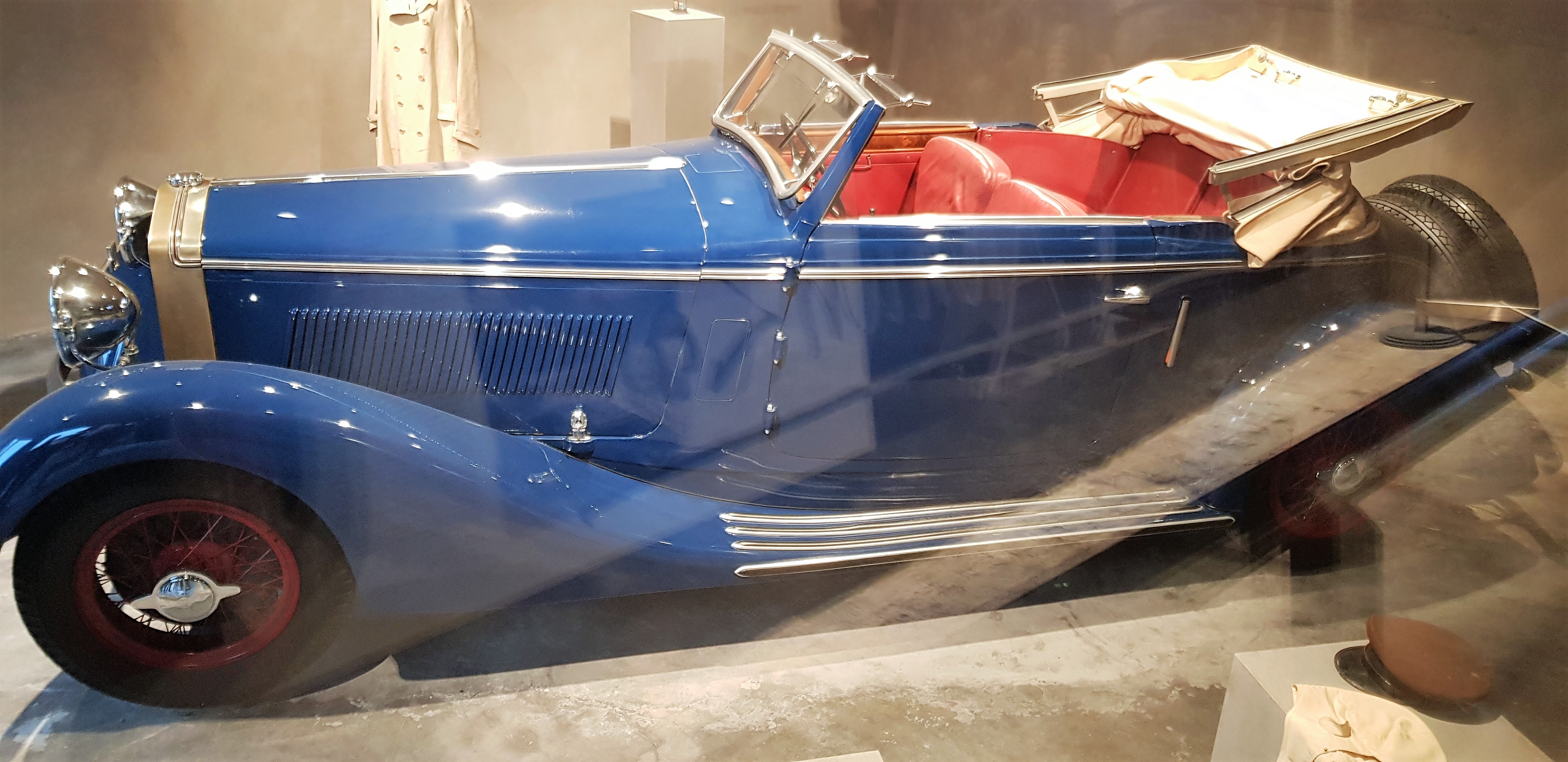
 The MAS 96
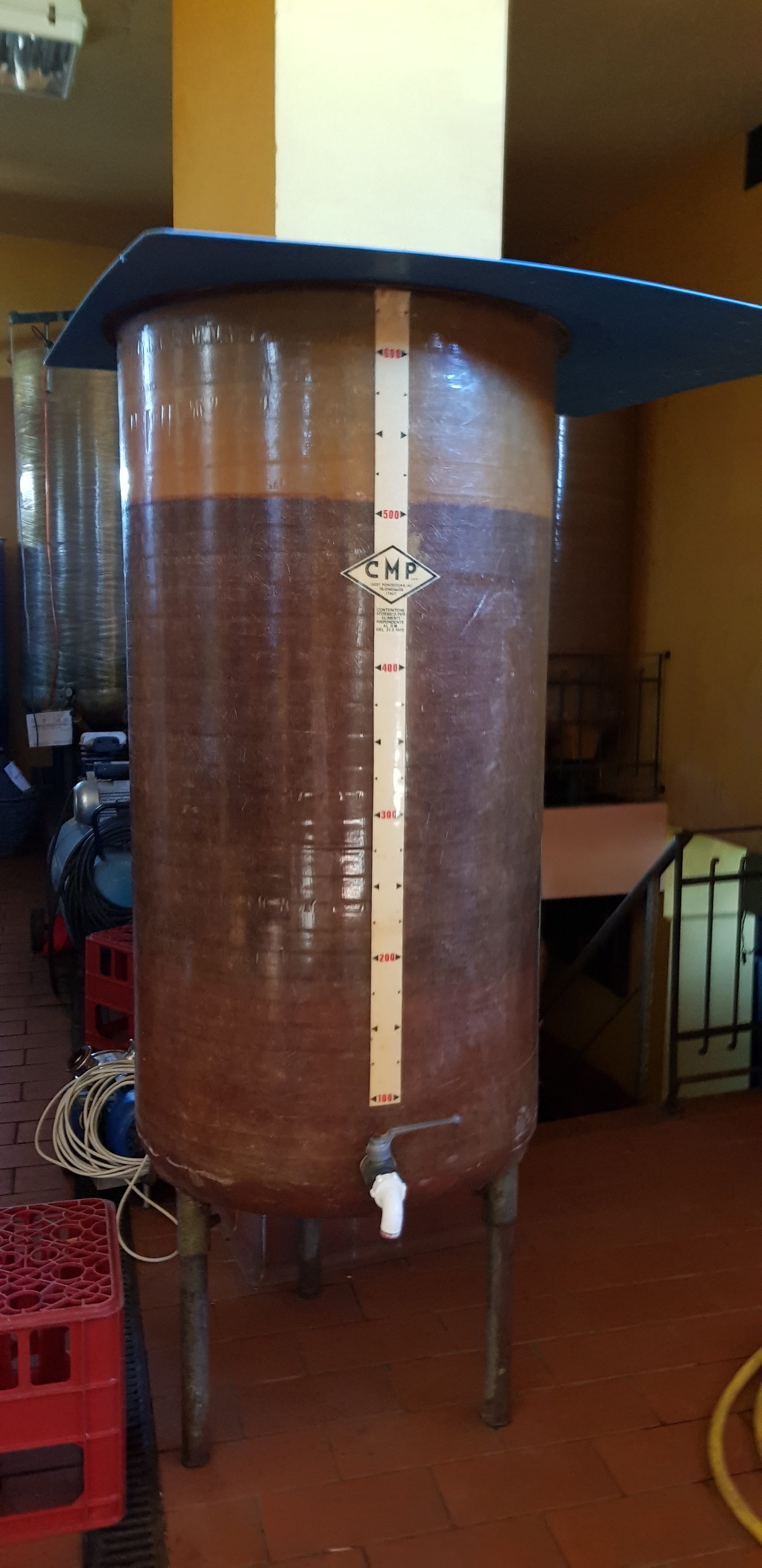
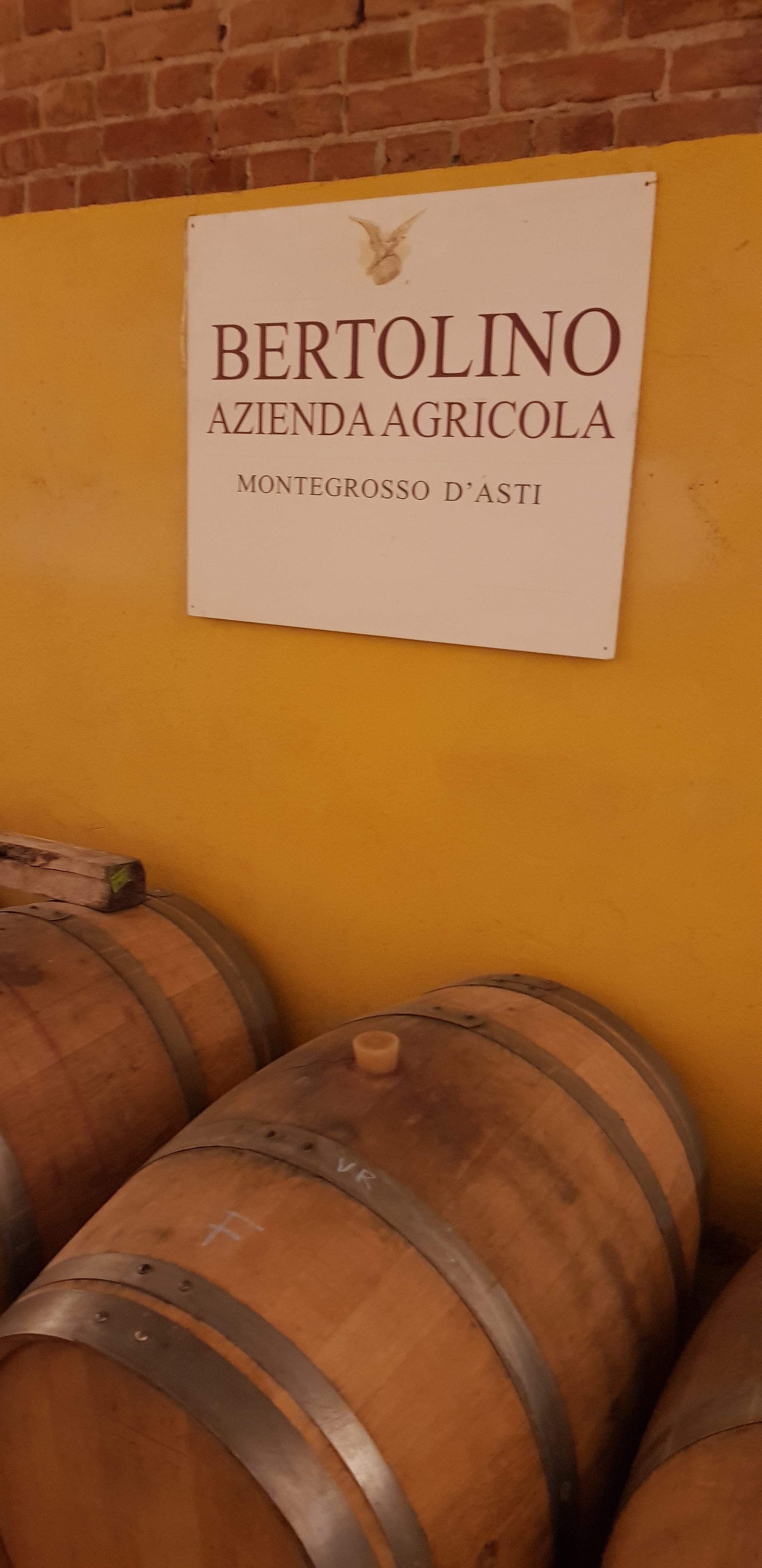
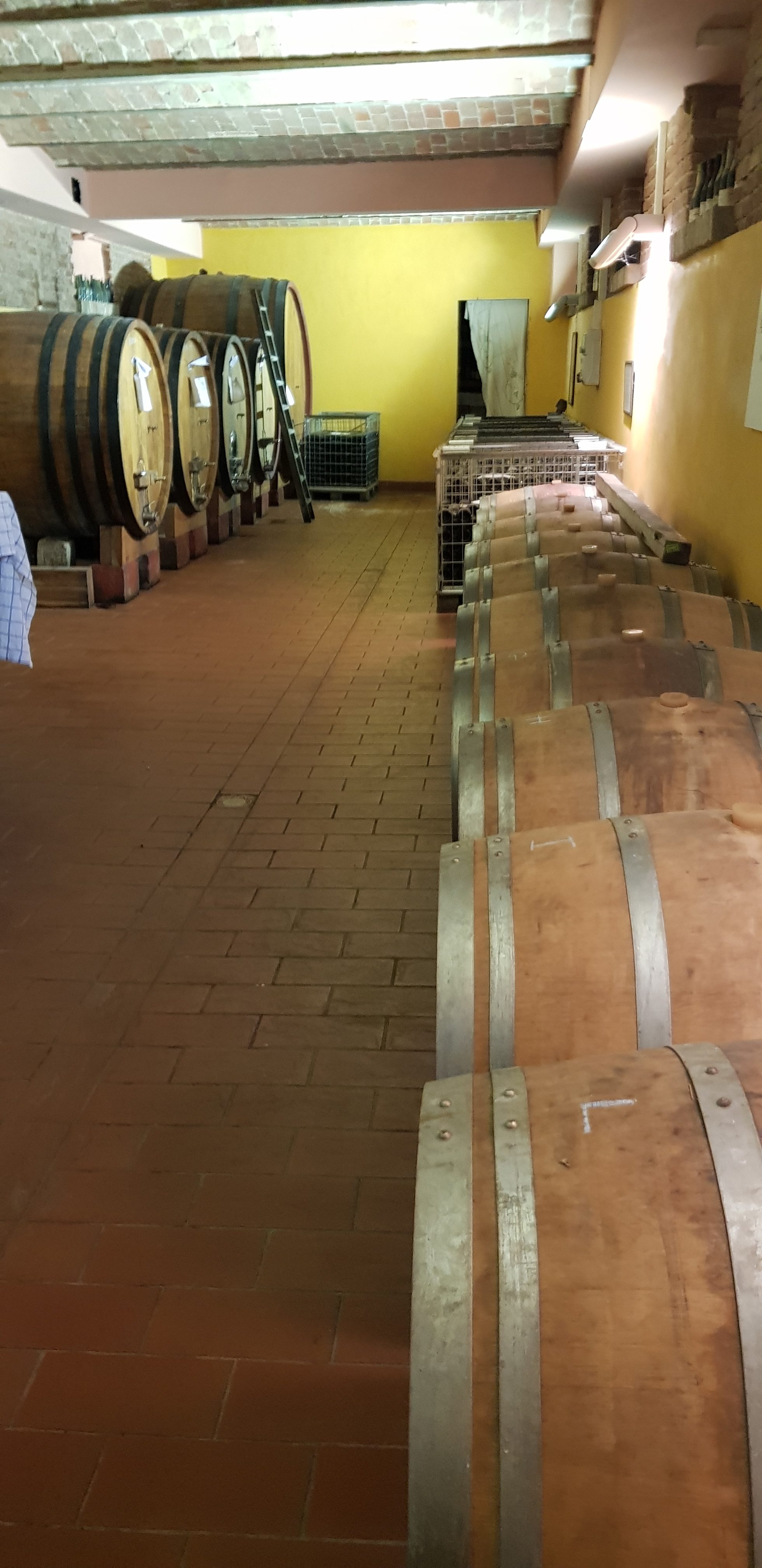
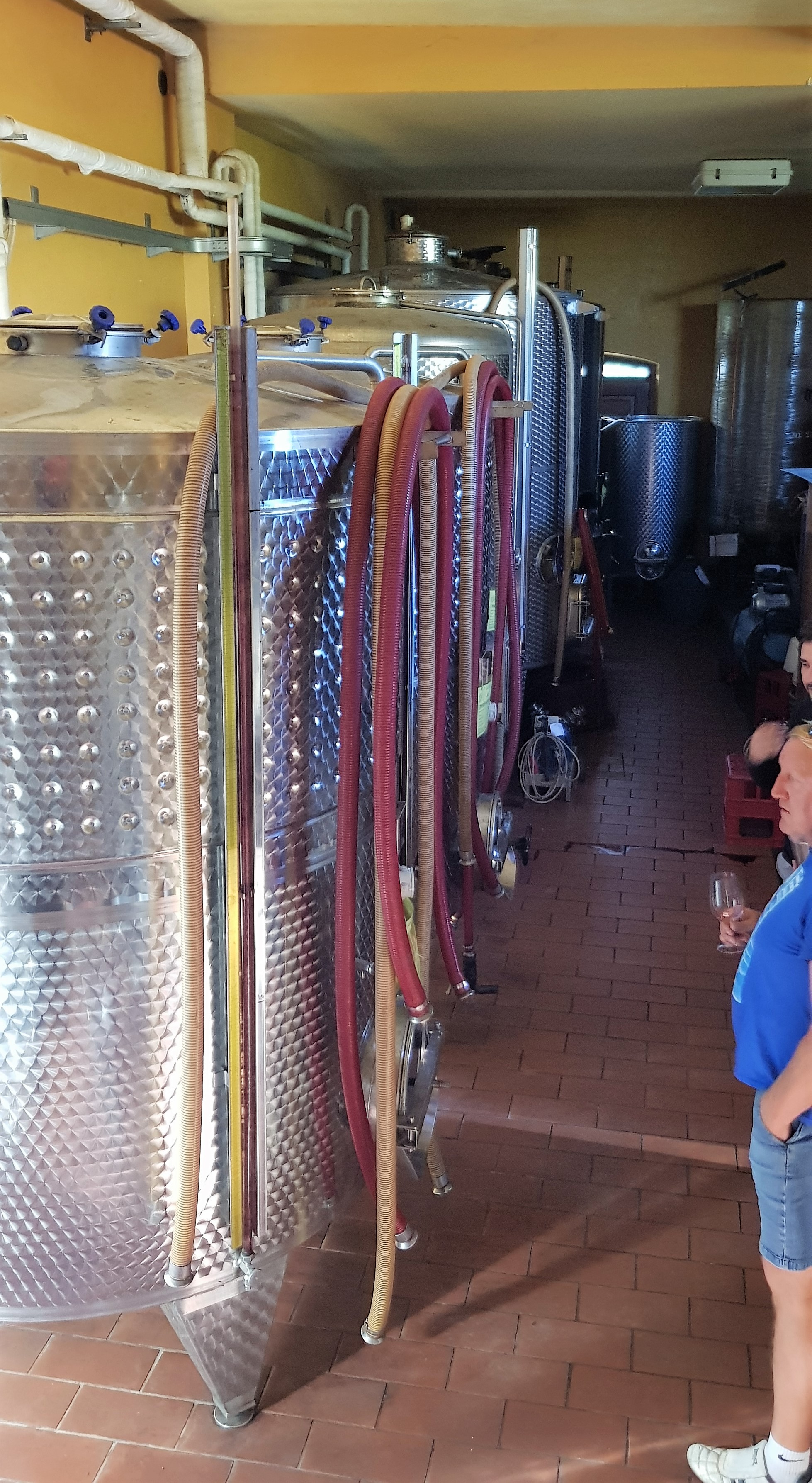
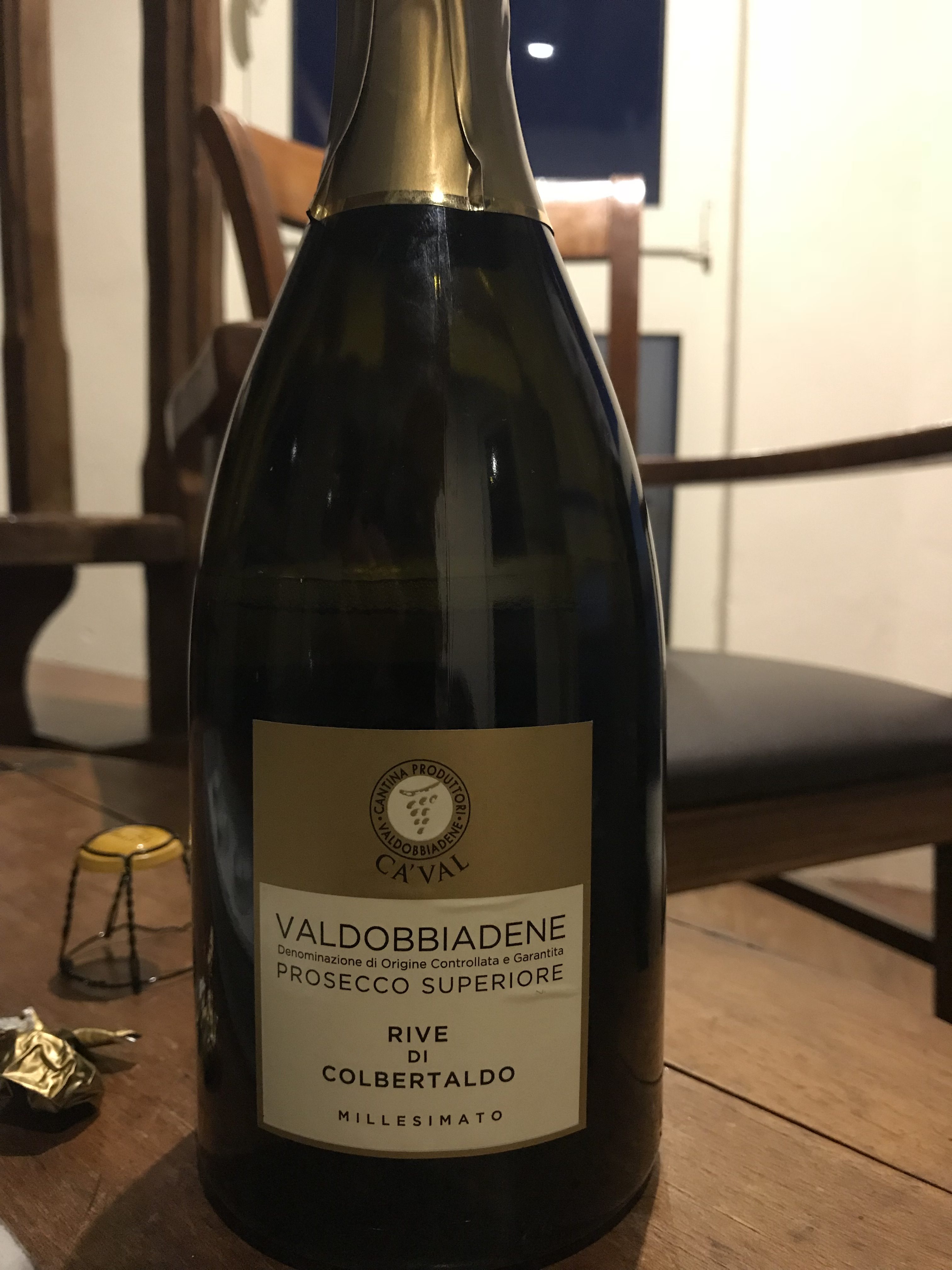
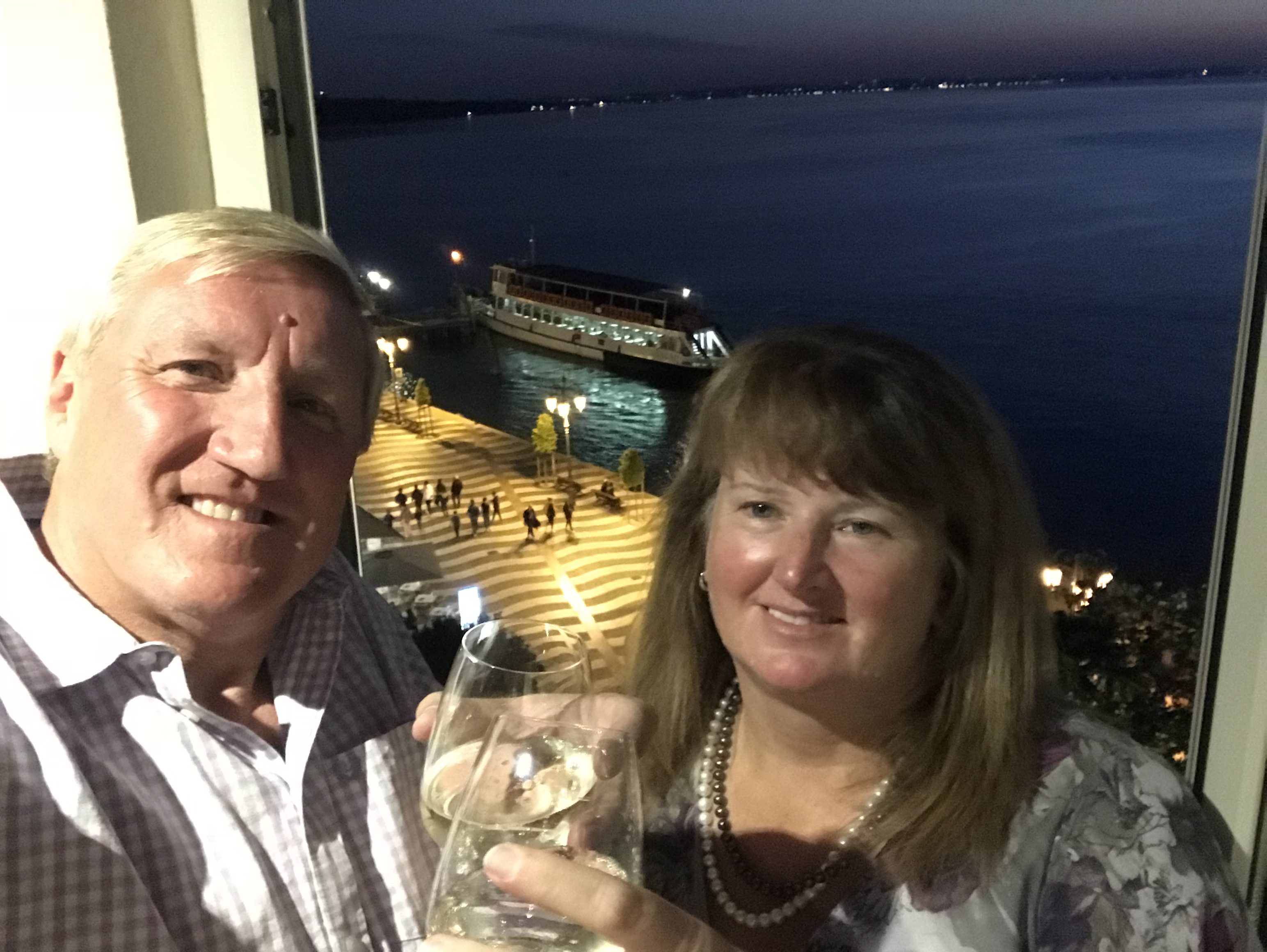
 So cheers to Italy and Italian wines……..well, we could not stop here without visiting a small local vineyard now, could we???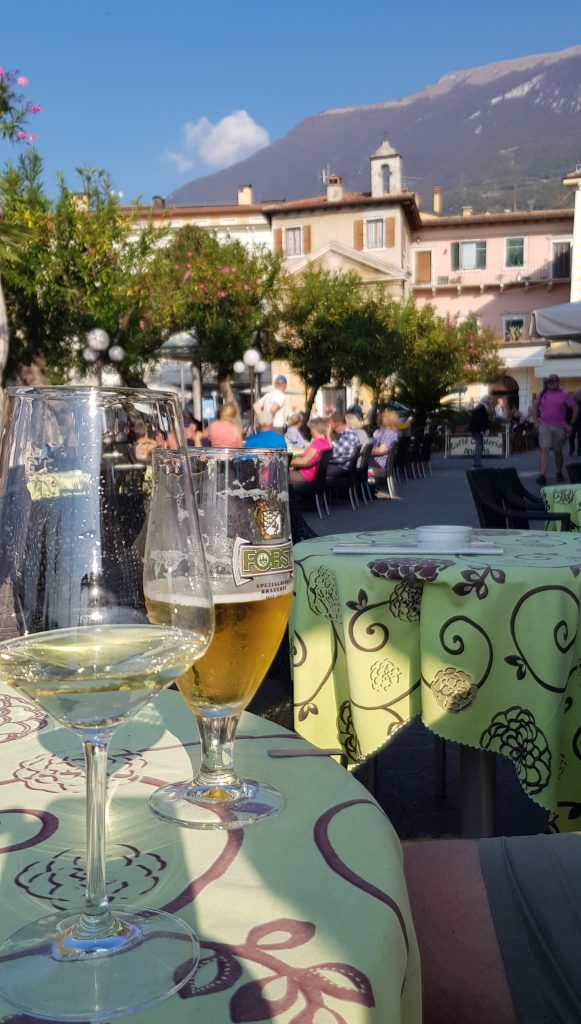
 And finally, after a short stop in France overnight, we ploughed on through to Spain, to Sitges just below Barcelona, to cheap beer, wine and food, to sun and warmth and to friends waiting for us with a glass of wine!!!


Recent Comments