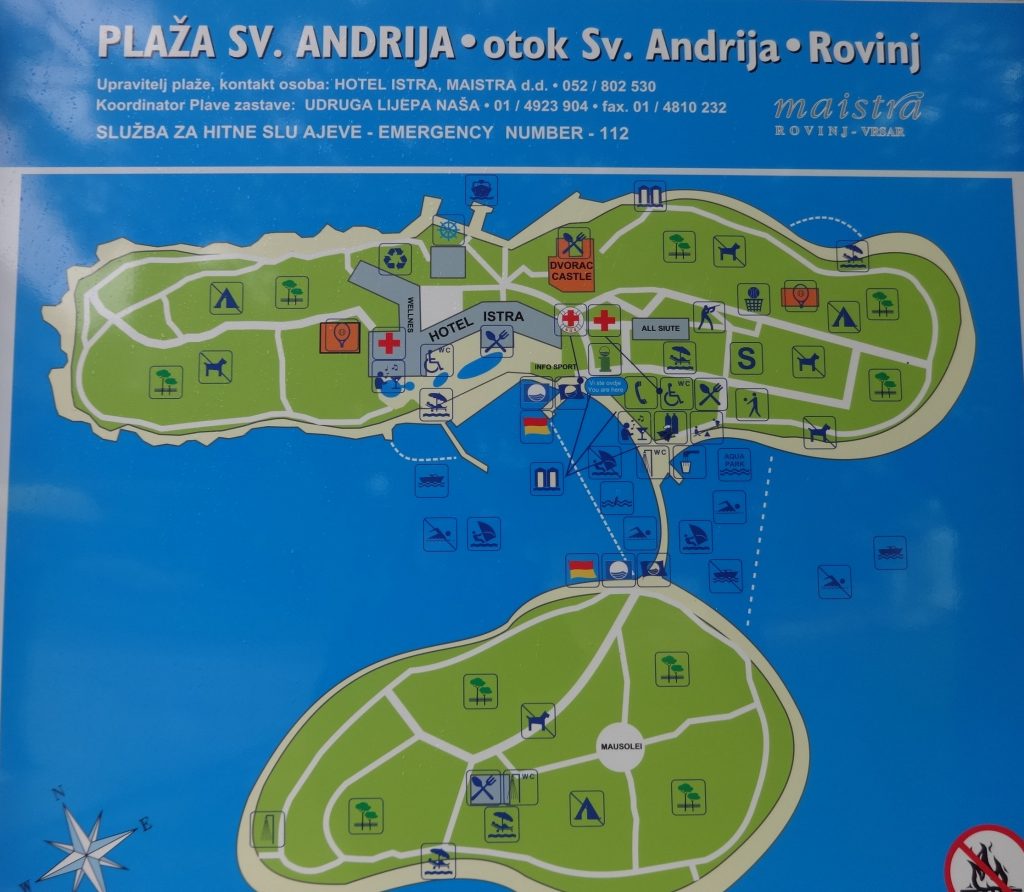
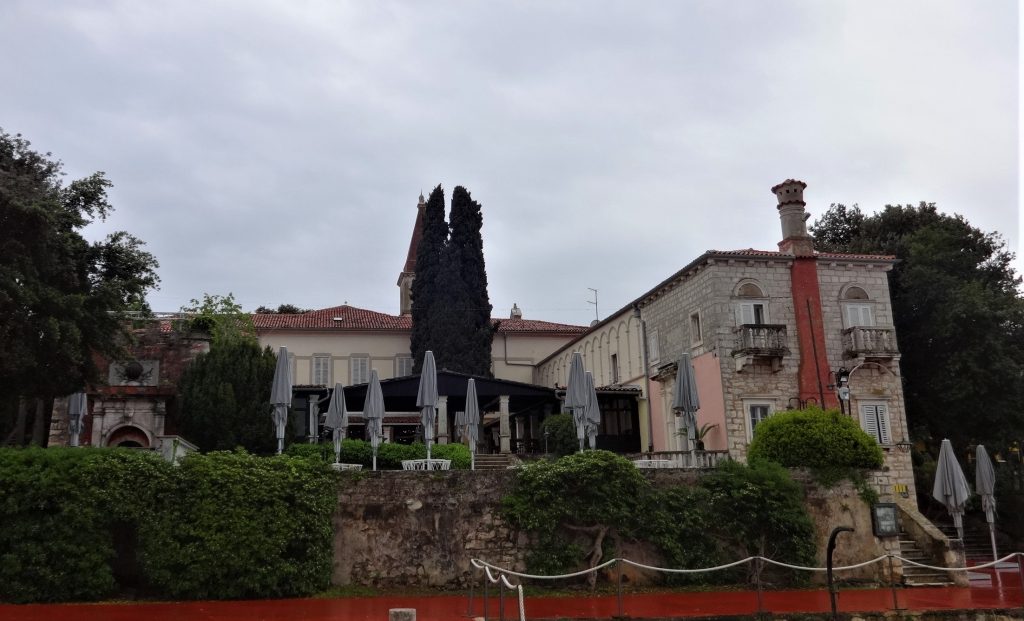
One cold but dry day we took the local (free) ferry to one of the islands’ called Red Island. It is made up of two small islands San Andreiji (Saint Andrew’s) and St. Maskin, linked by a concreted rock walkway.
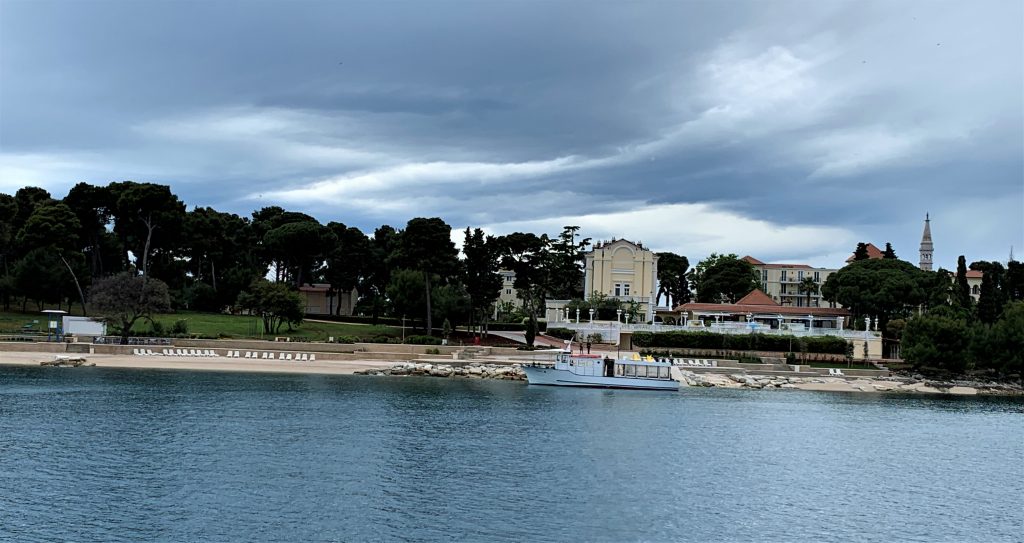
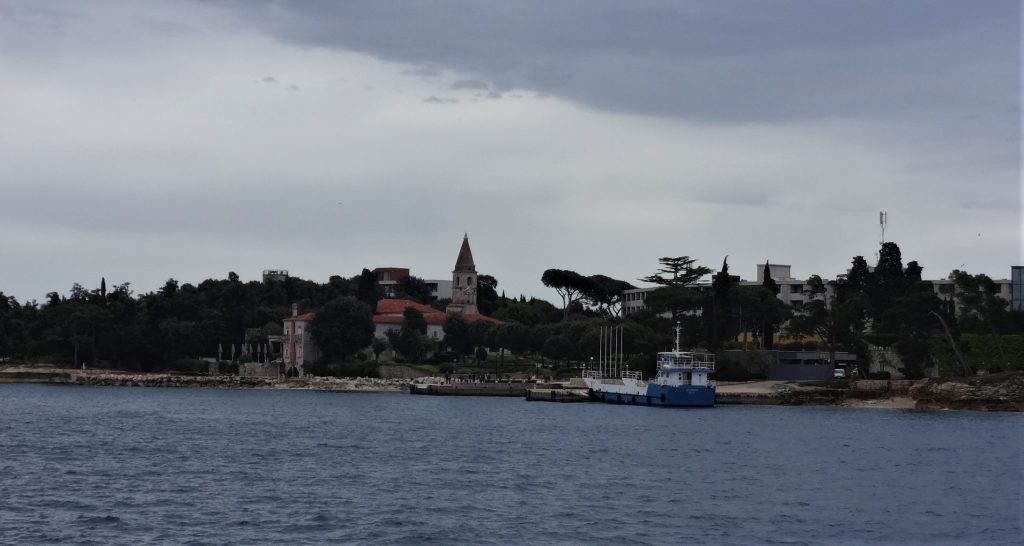
Approaching the island from the ferry.
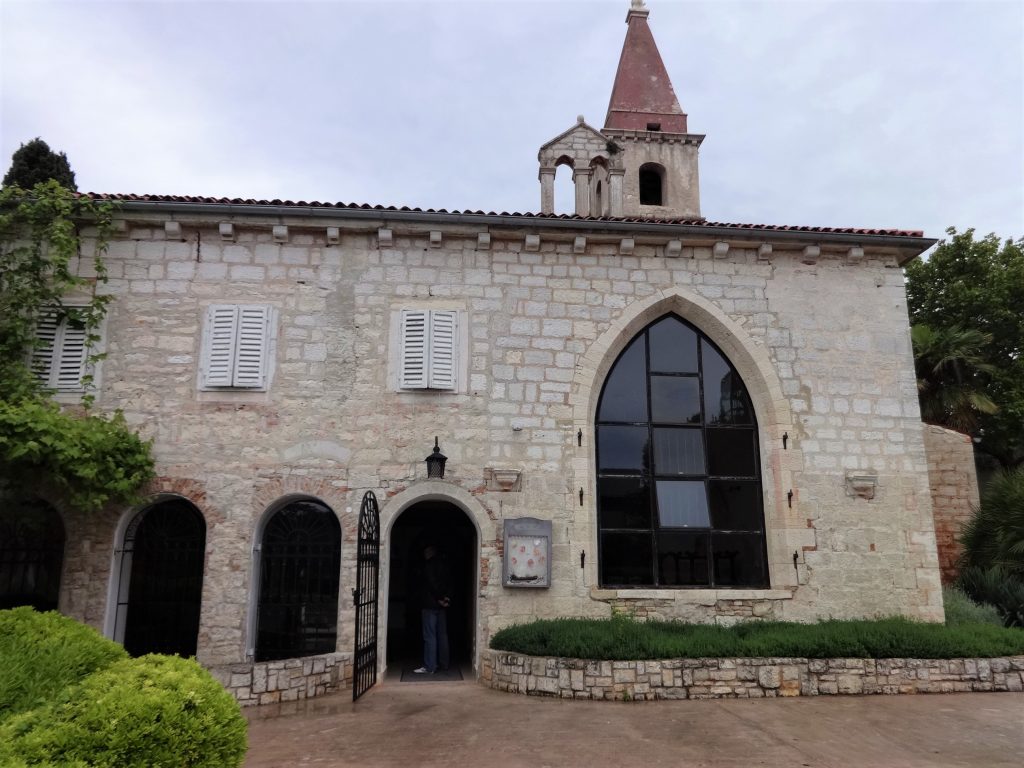
In the 6th century, Benedictines built a monastery on the island, leaving in the 13th century and in the 15th century it was taken over by Franciscans who renovated the church and the monastery.
Now a restaurant…
Part of the restaurant
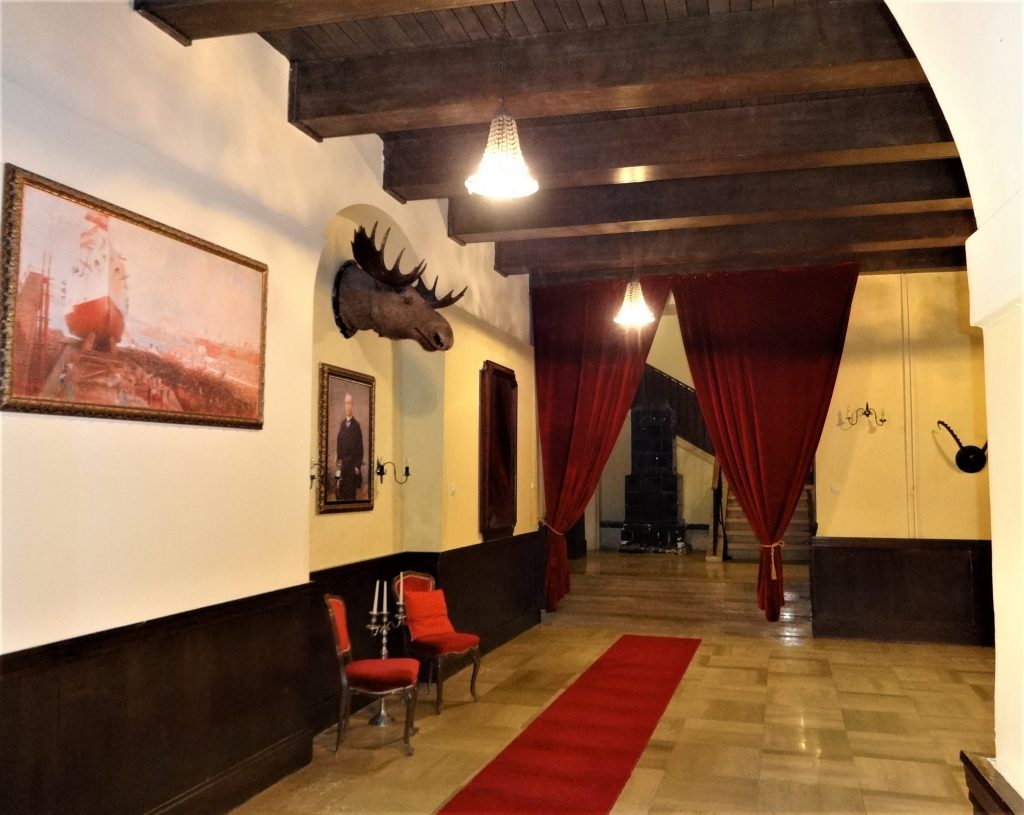
The gallery hall
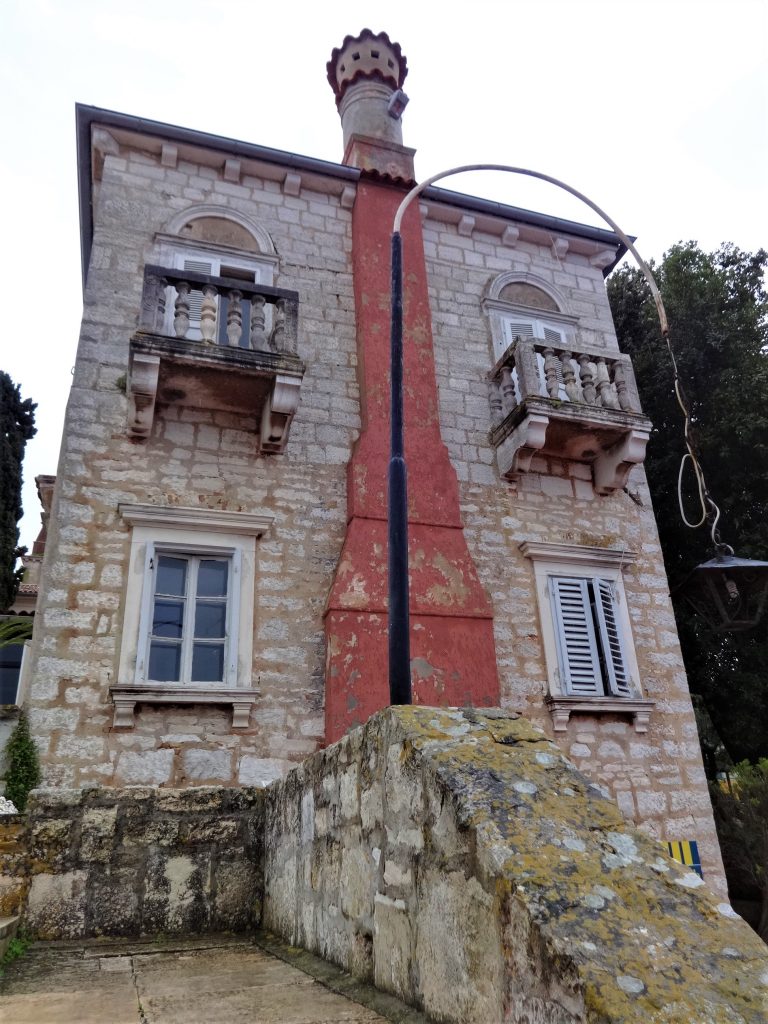
External balconies overlooking the bay.
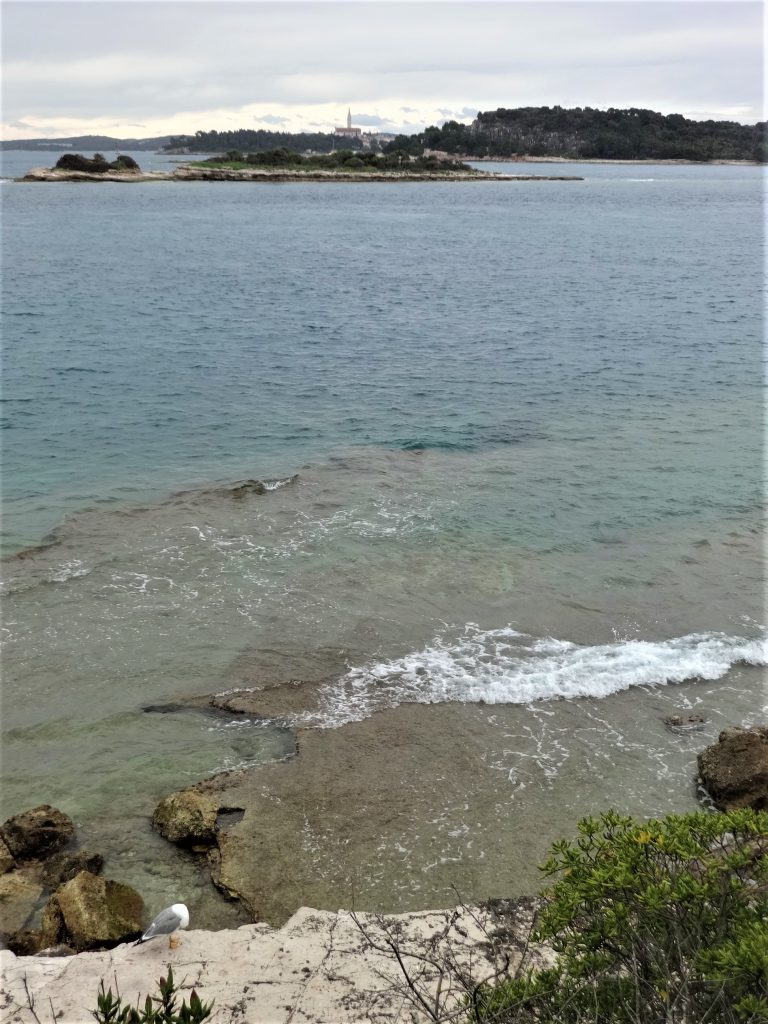
Looking towards Rovinj. Nesting seagull bottom left.
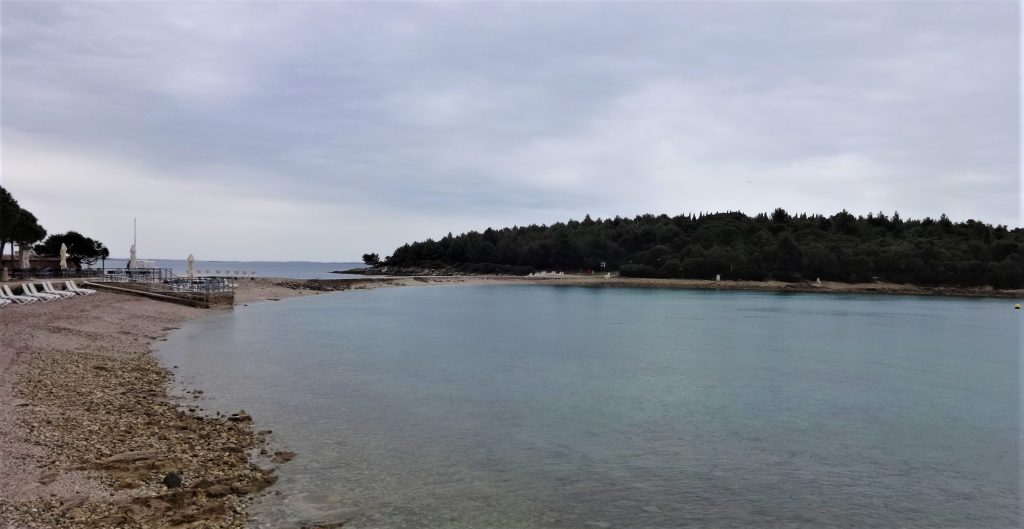
The hotel’s bay and walkway to the smaller island.
In 1809, the island was conquered by France, and in 1892 a cement and lime factory was built on the island using the church tower as a chimney. It is now home to a large 4 start hotel and spa, the church buildings form part of a restaurant and banquet area, and the tower has exterior stairs up to a viewing platform, giving 360* views of the islands.
It is so small, we took under an hour to walk around it’s shoreline, admiring nesting seagulls, the bays, bathing areas and the church buildings.
We left Trieste and headed over the border from Italy, drove 20kms through Slovenia, and into Croatia. At the border of Slovenia and Croatia, we were actually stopped and asked to show our passports!
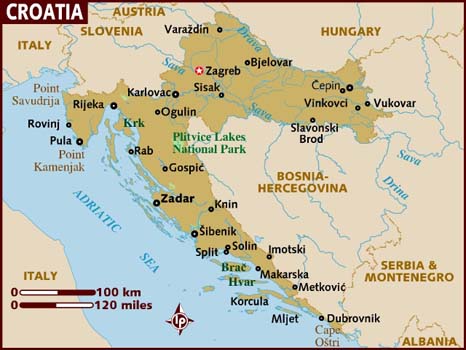
Our stops will be Rovinj, Zadar, Split, Dubrovnik, Zagreb.
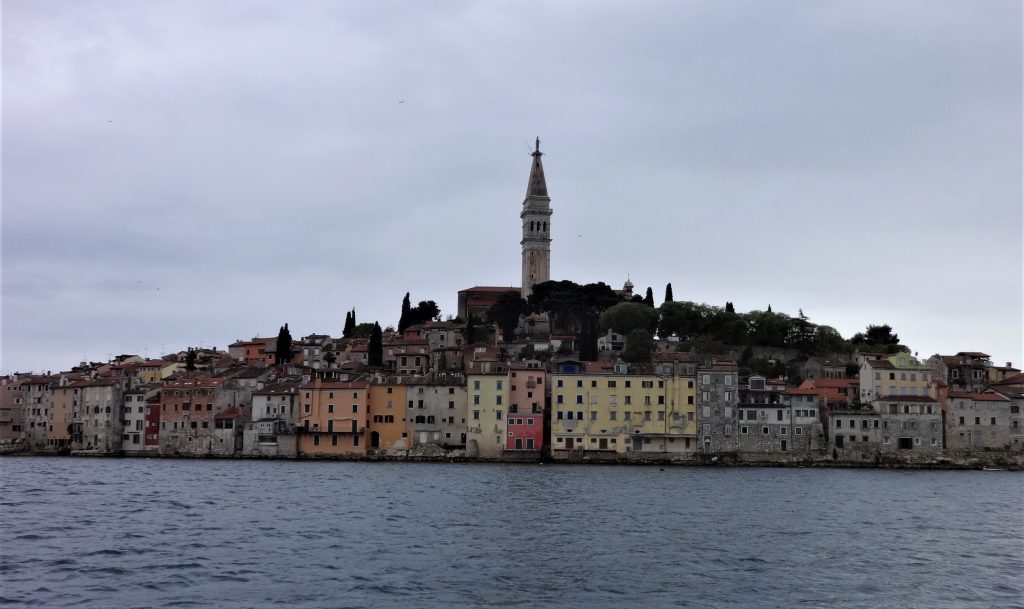
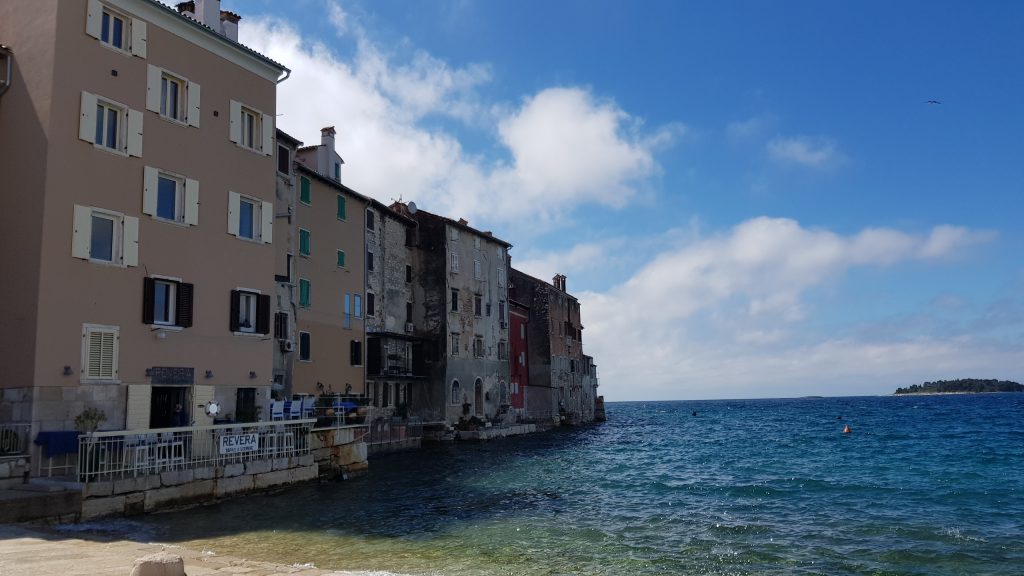
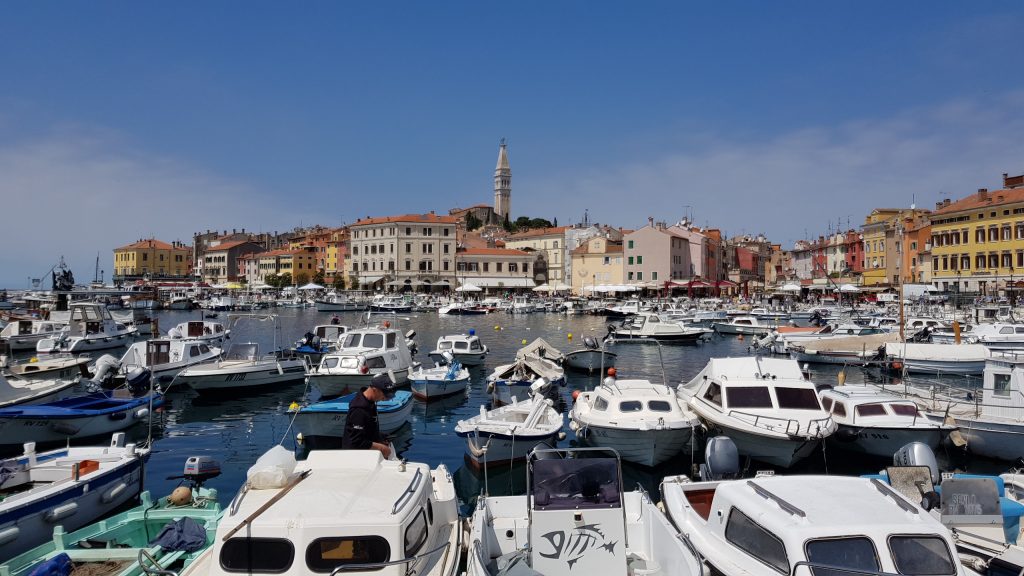
The local town is called Rovinj (pronounced Rovine) and was once an island, fortified in the middle ages, and as the narrow channel separating it from the mainland filled with soil and sand, so it became a peninsular with the “old town” and the harbour and newer town behind it. It was, and still is, a major fishing port, then a major ferry port, connecting people to Venice and other parts of Italy and Croatia.
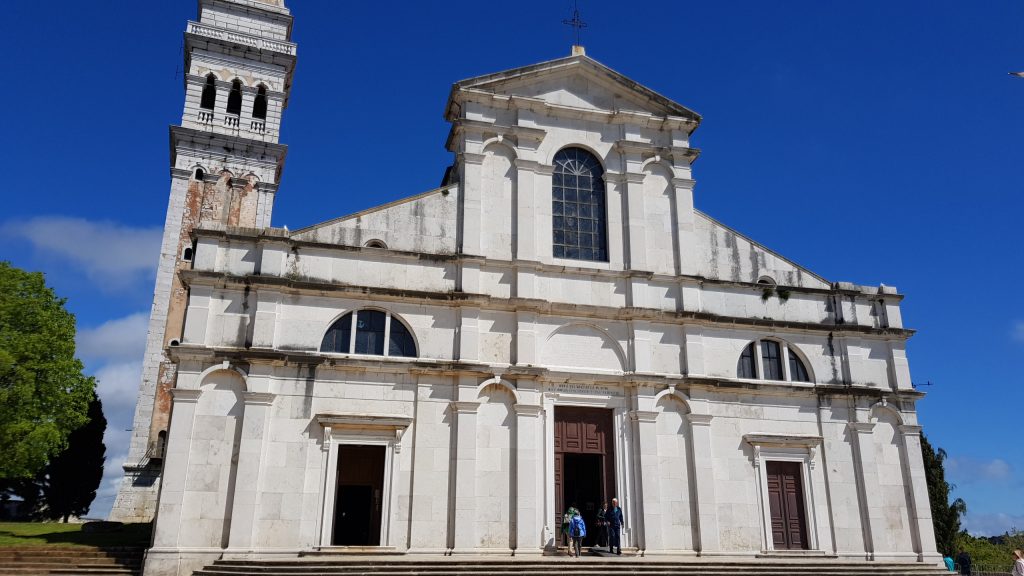
St Euphemia Cathedral
The town has been “owned” by lots of people, whose influence is still clearly visible, it started as part of the Byzantine Empire in 6th century, then part of the Frankish Empire, it became part of the Republic of Venice up to 1797, then Napoleonic then Austrian. According to the last Austrian census in 1911, 97.8% of the population were Italian speaking. It was then Italian from 1918 to 1947, then Yugoslavia, until 1991 when Croatia declared independence and it became the 3rd largest town in Istria, the region in the north of the country.
The old town is dominated by the Cathedral of St Euphemia,
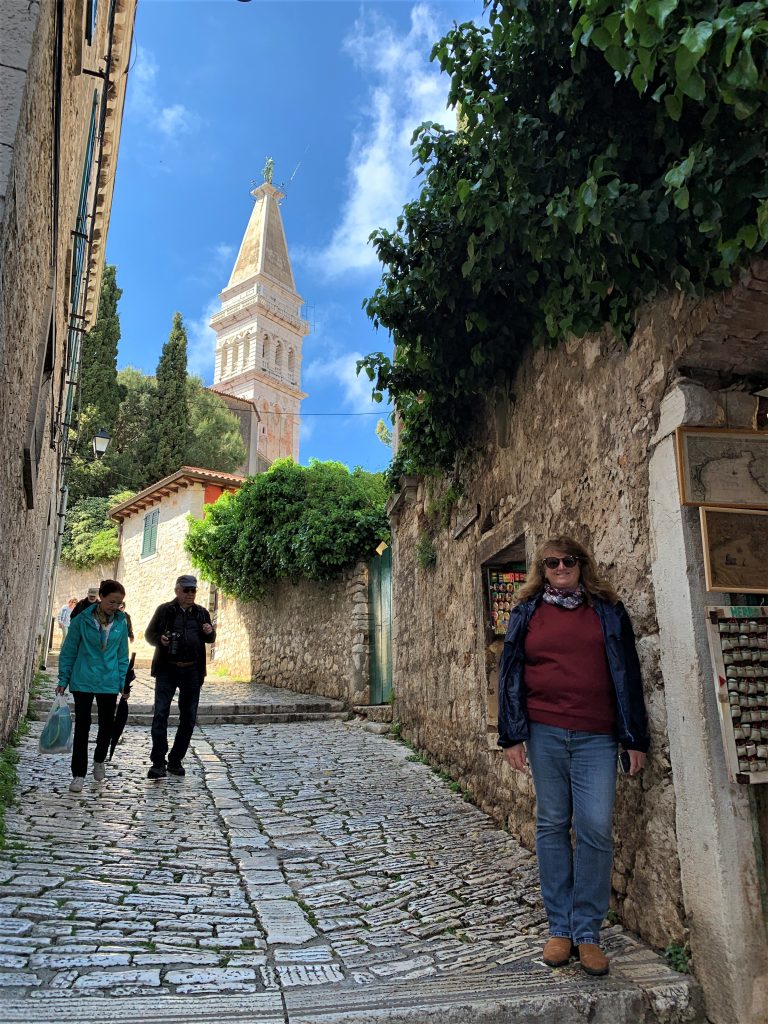
accessed via cobbled narrow streets that wind to the top of the hill; the
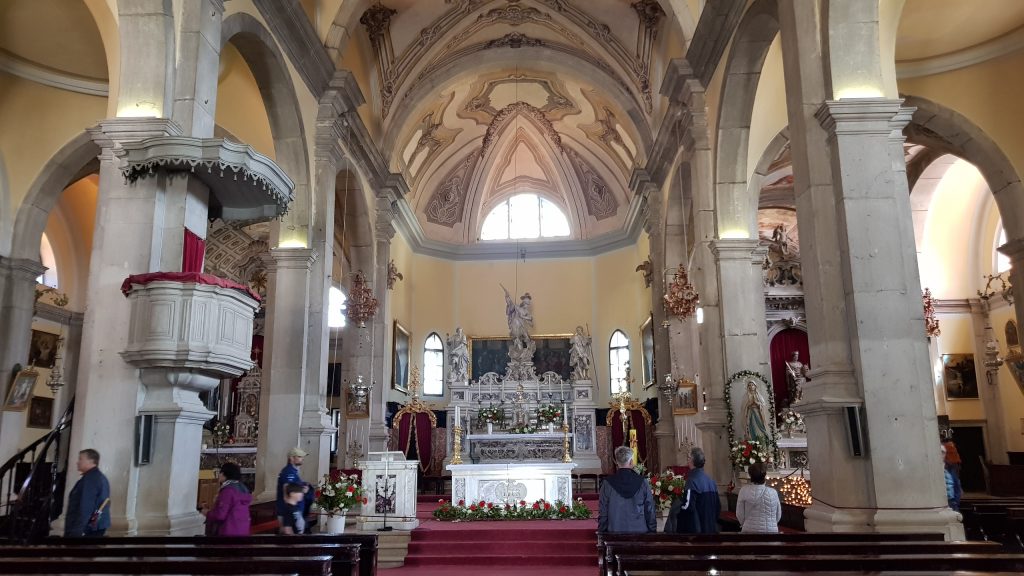
cathedral houses a sarcophagus holding the remains of Saint Euphemia, who died
in 312AD, and who’s coffin floated out to sea before being washed ashore here
in Rovinj in 800AD.
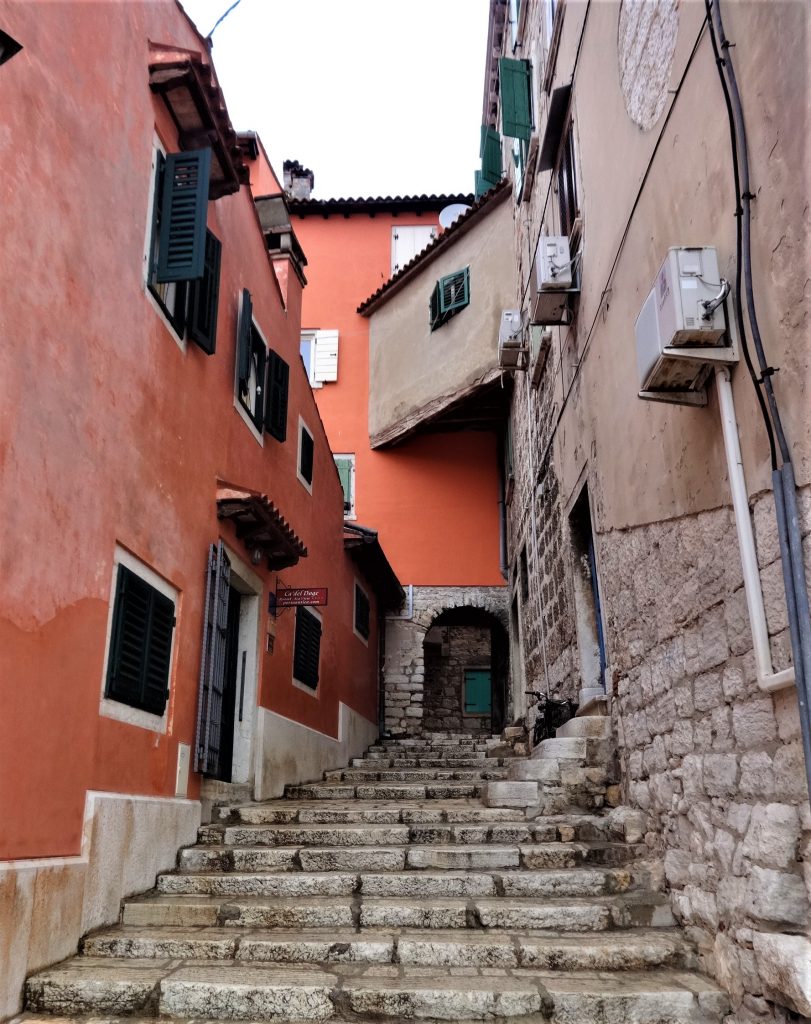
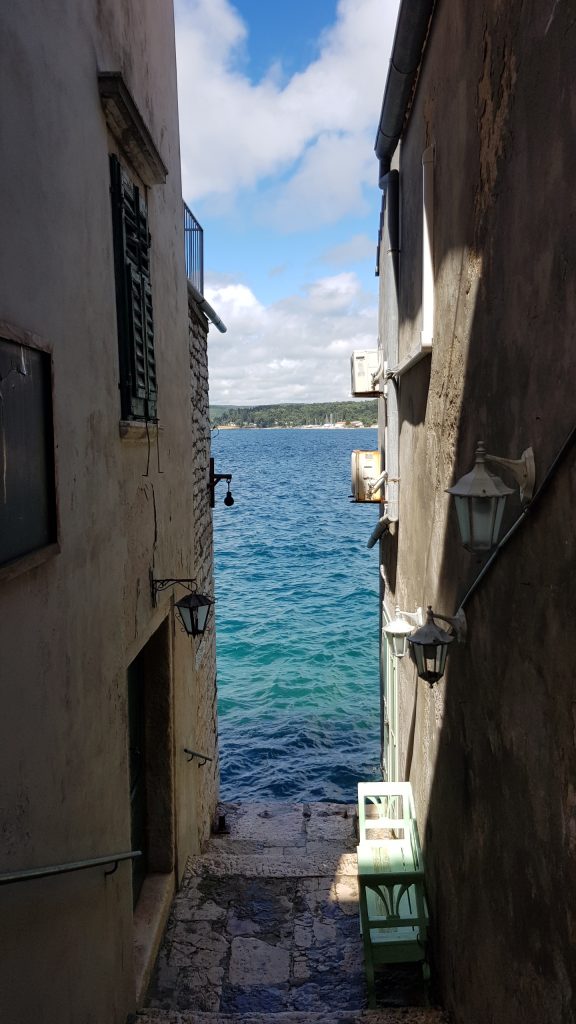
An olde passage
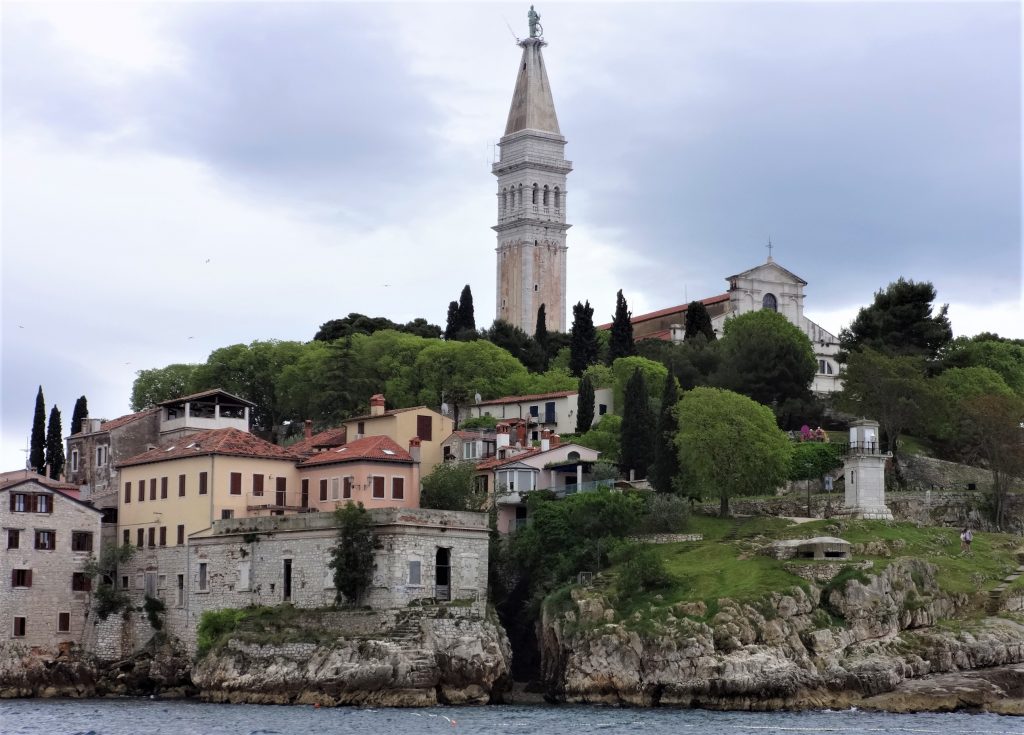
Cathedral from the ferry
The harbour is popular as a place to sit and admire the
comings and goings of locals, boats and people staying on the neighbouring
island’s hotels. There are 2 islands
within 15 minutes boat ride that have just hotels on them, access to the
island, hotel and it’s beaches is open to everyone.
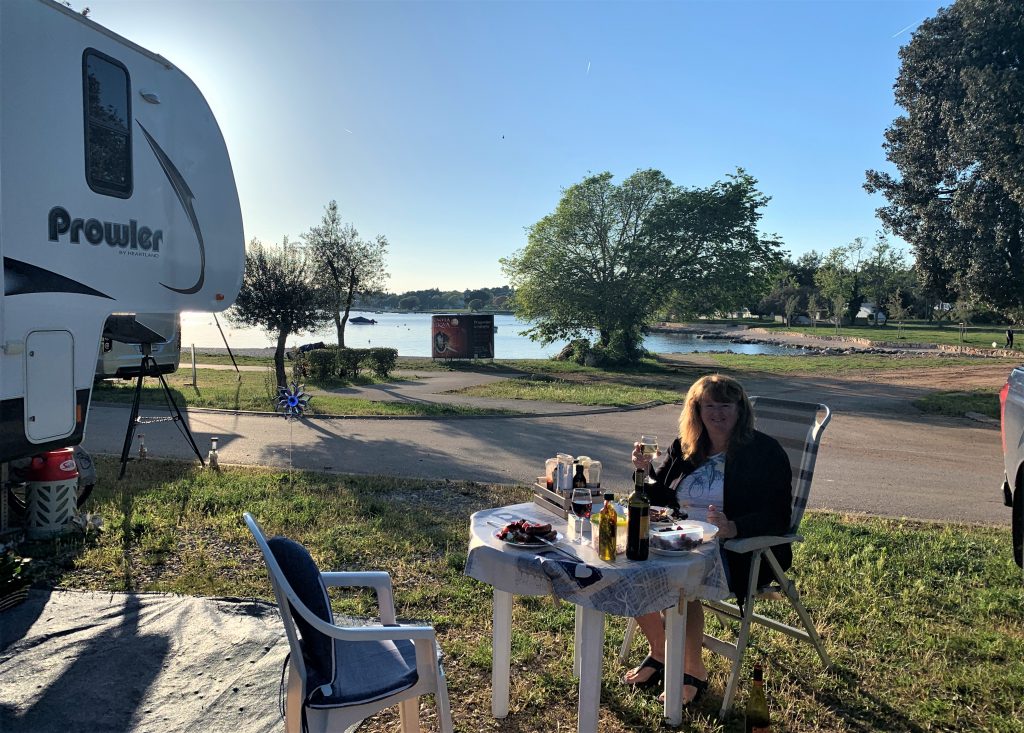
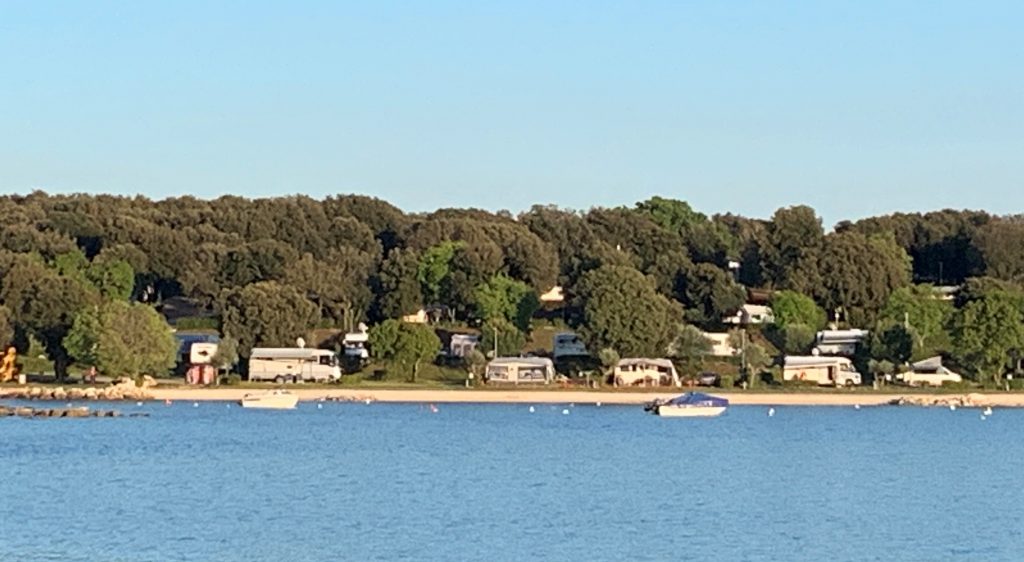
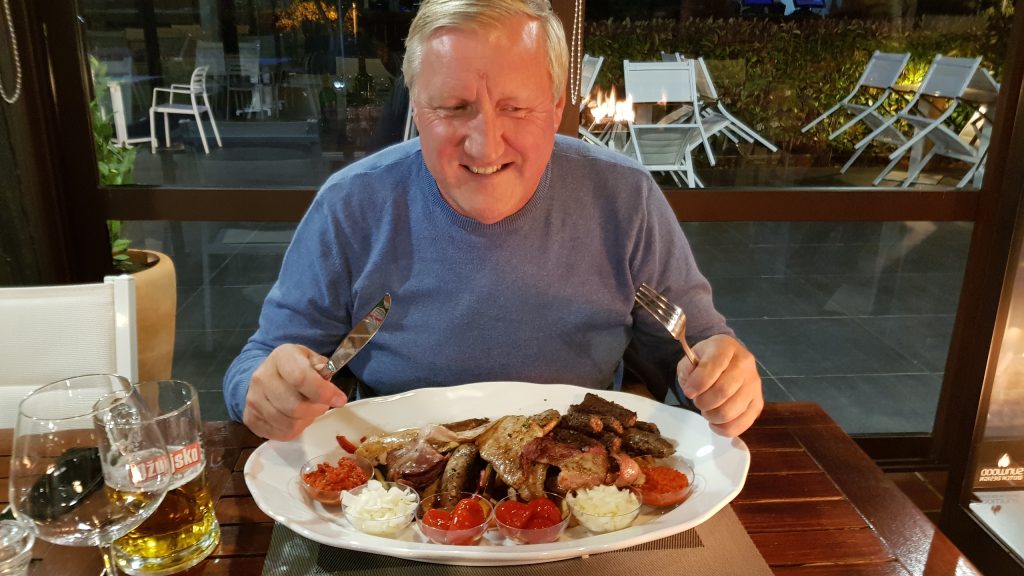
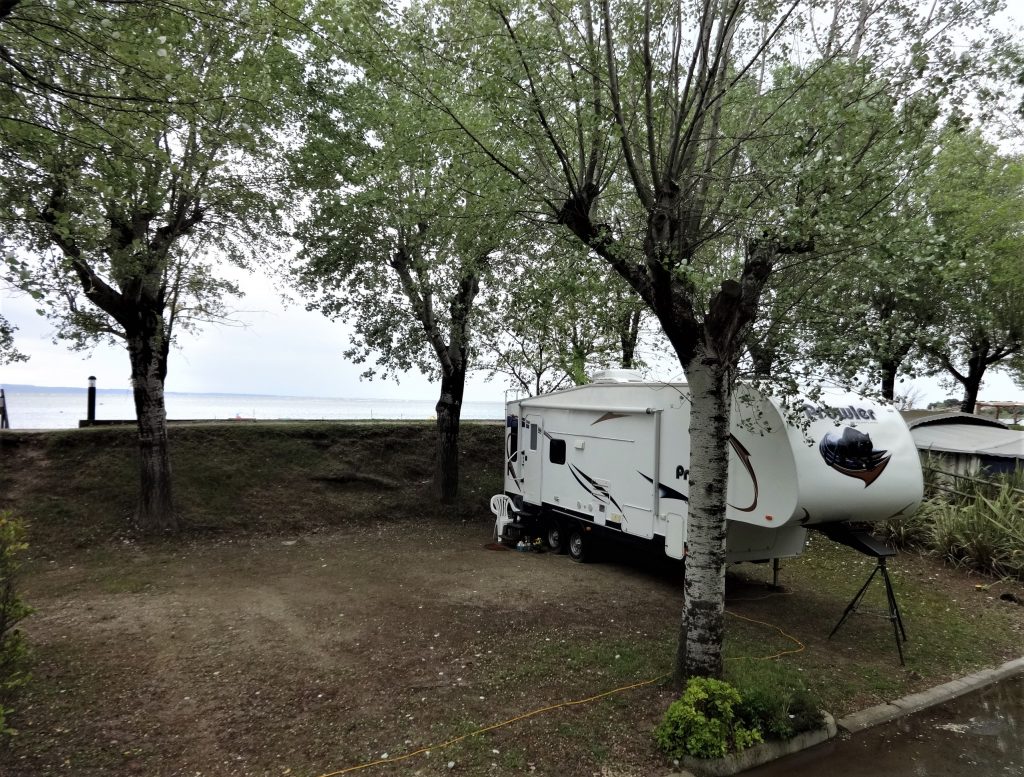
Our camp site is on the edge of the coast, our pitch is just set back off the front row, all the front pitches were taken when we arrived! The site is large, certain bits are being modernised and is to a good standard, several pools, kids play areas, shops, supermarkets, sports hire, and several restaurants and bars. In the restaurants on site and in the town, popular dishes are “meat or fish platters for 2” – although I challenged David to eat one by himself, he did admit it was far too much and even though we shared it, and enjoyed it, it was too much for us!!
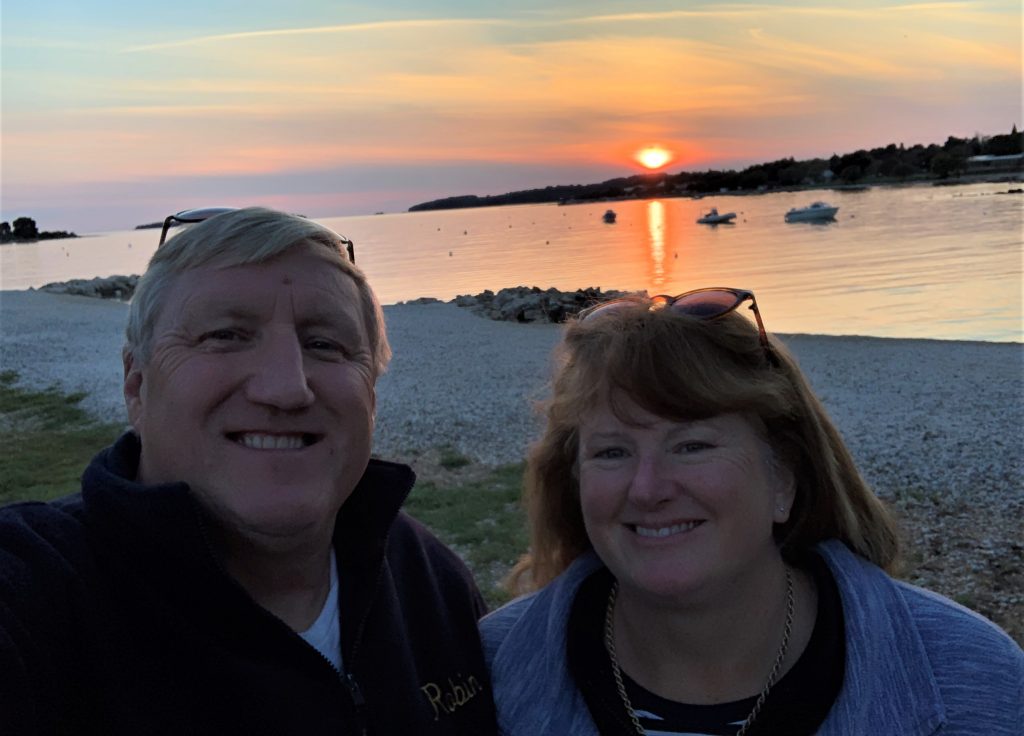
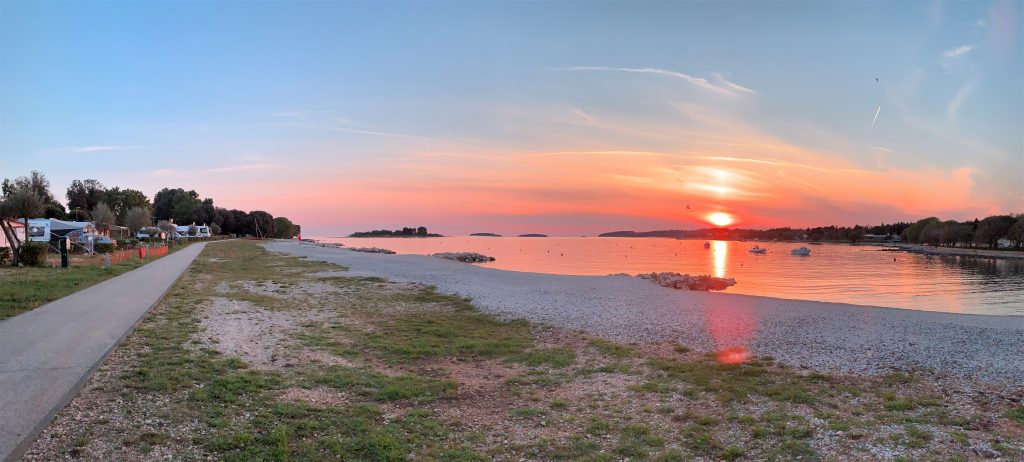
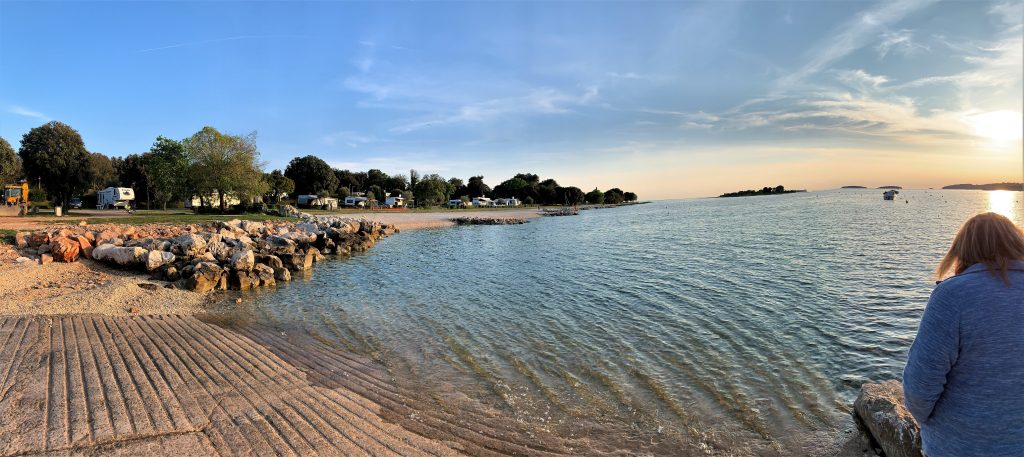
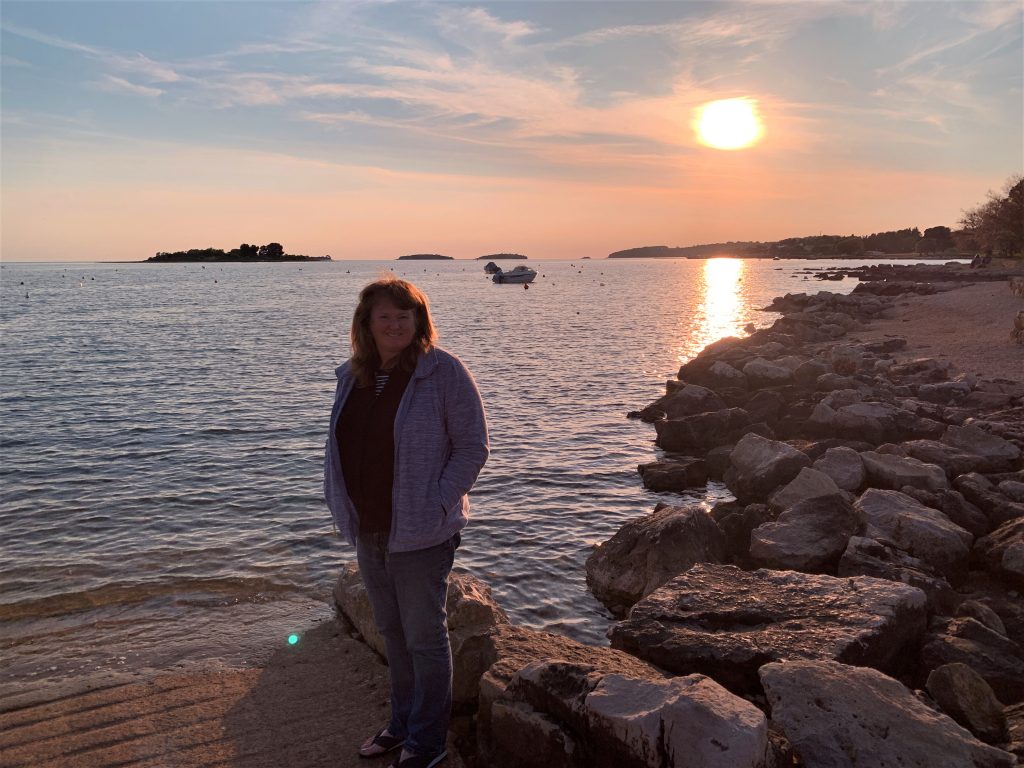
The location is amazing, we have a walkway into Rovinj, 5kms away, along the coastline, through pine forests and night time brings amazing sunsets on the sea.
Can you spot Samson on the left??
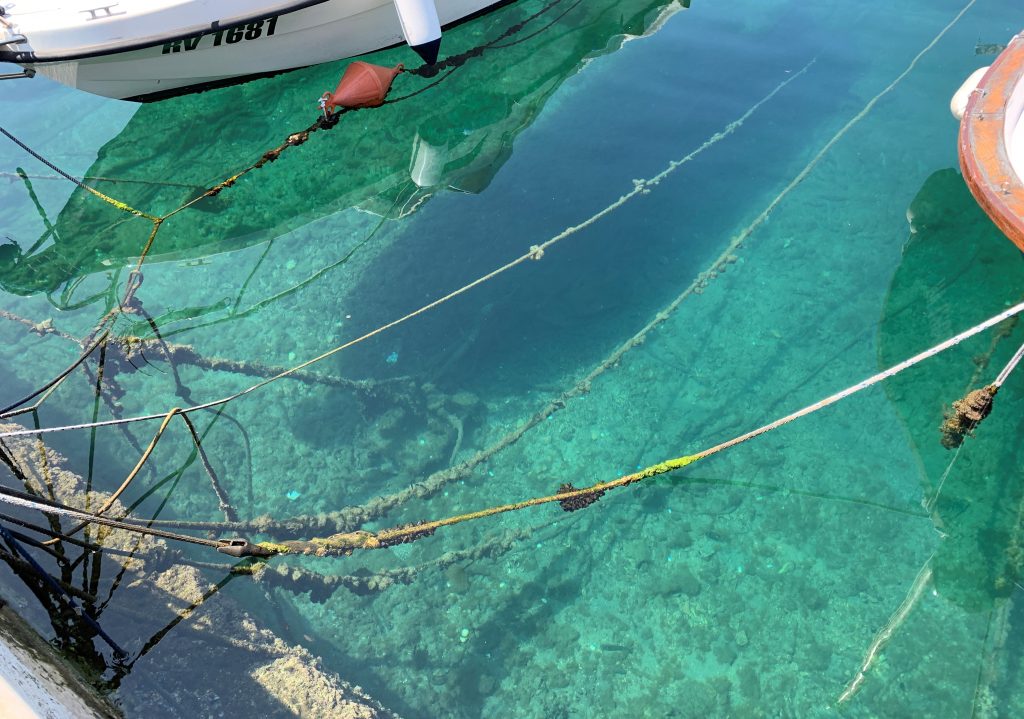
See how clean the water is…
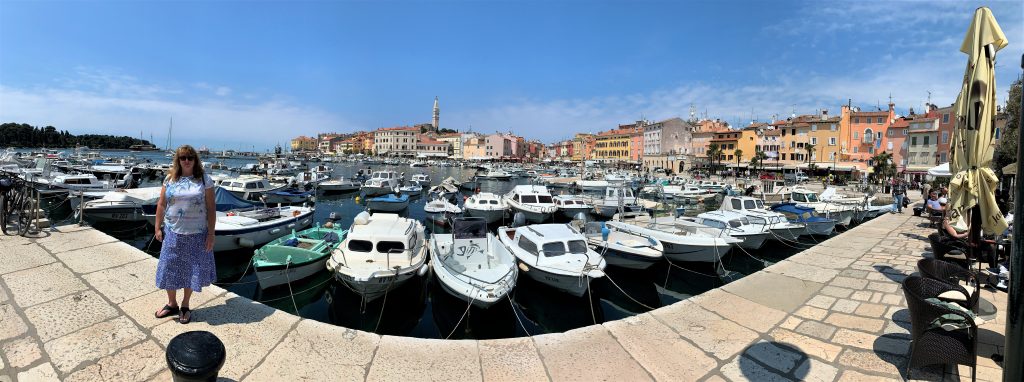
Rovinj harbour
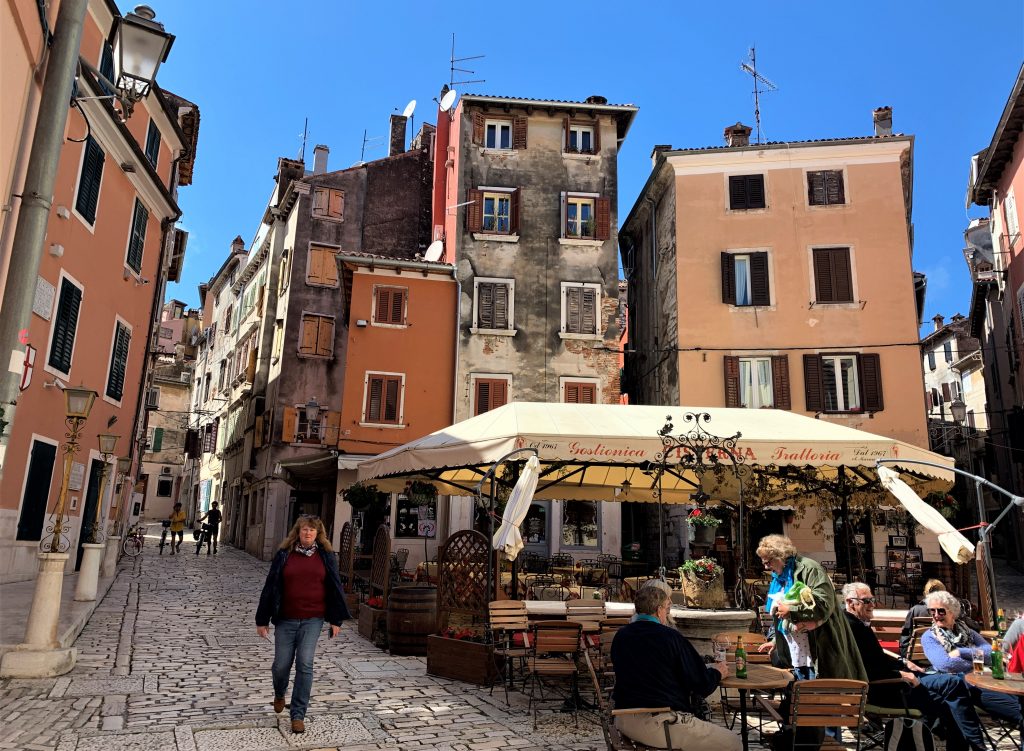
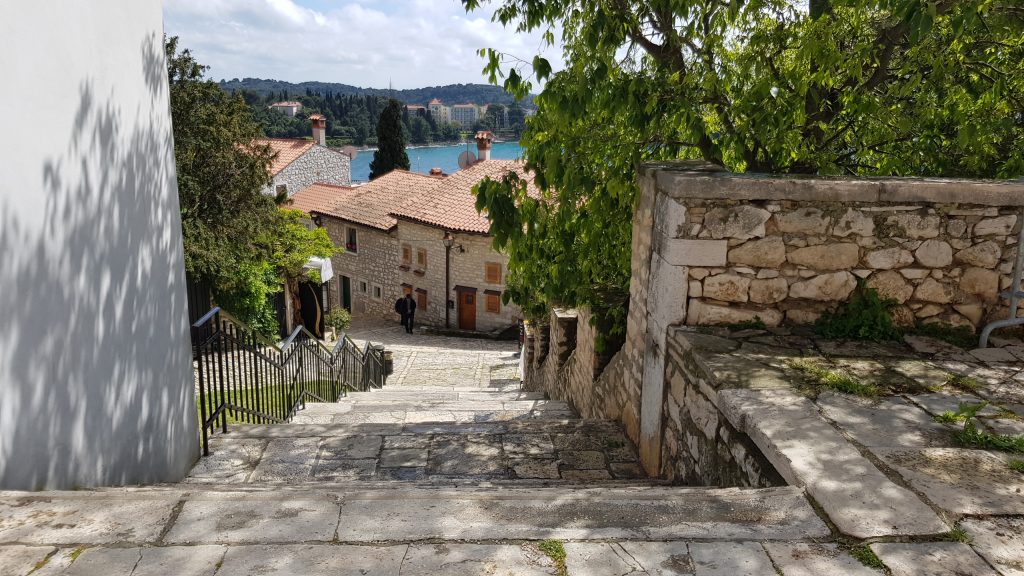
One of the streets leading to the cathedral
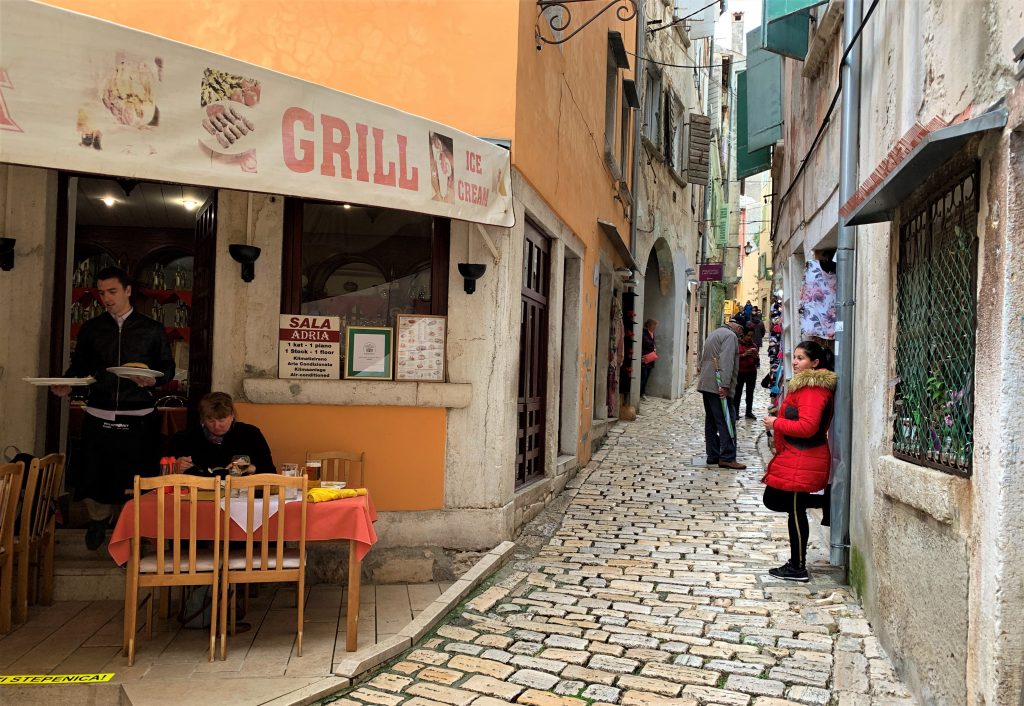
Lunch in a local grill.Platter for piglets!!Rovinj in the sun.
One place I wanted to visit on our travels through northern Italy was Trieste, in the 40’s and 50’s my Grandfather was a regular visitor to Italy and Trieste, so I wanted to visit to see what had caught his attention plus it is the last city in Italy before the short 20km journey through Slovenia into Croatia.
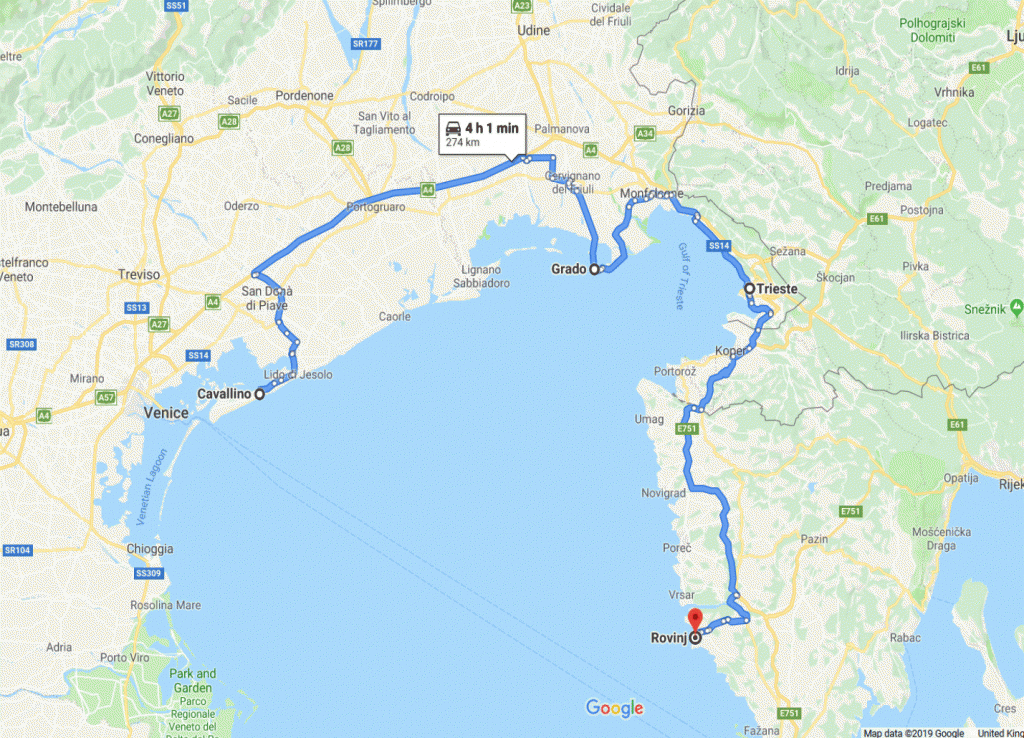
Approaching Trieste.Our journey from Cavallino, to Grado, Trieste, then Rovinj in Croatia.
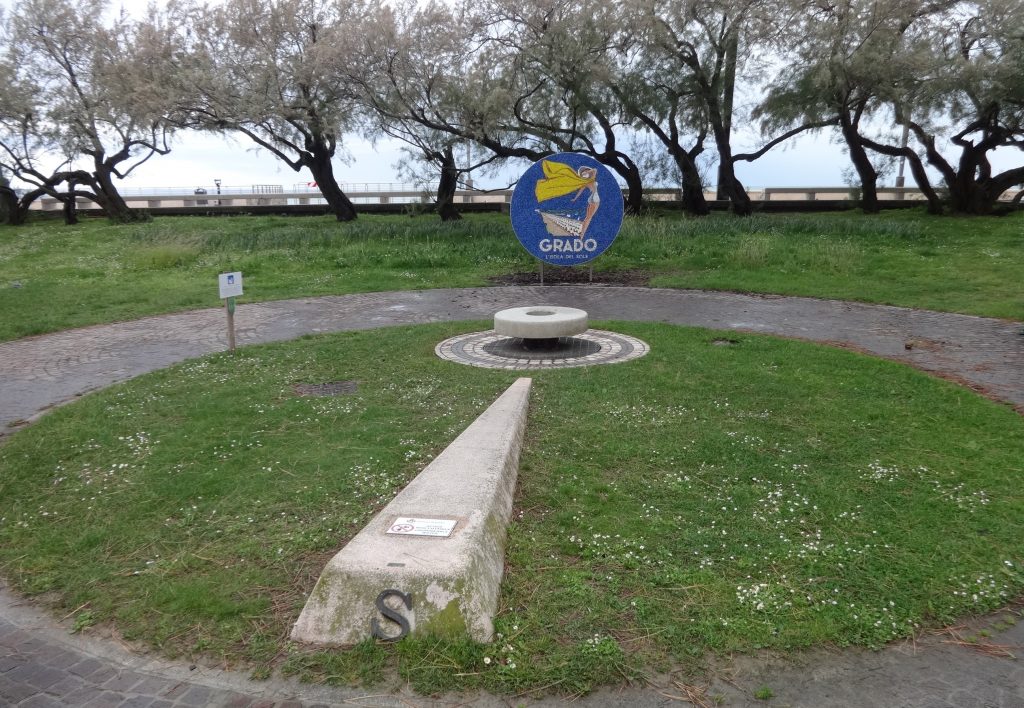
Grado
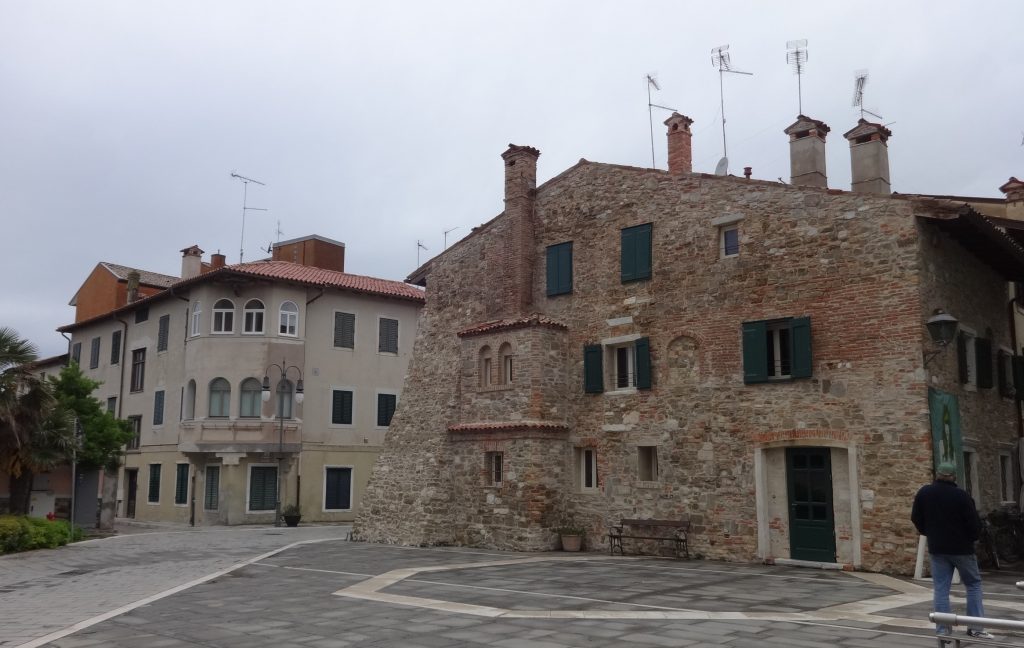
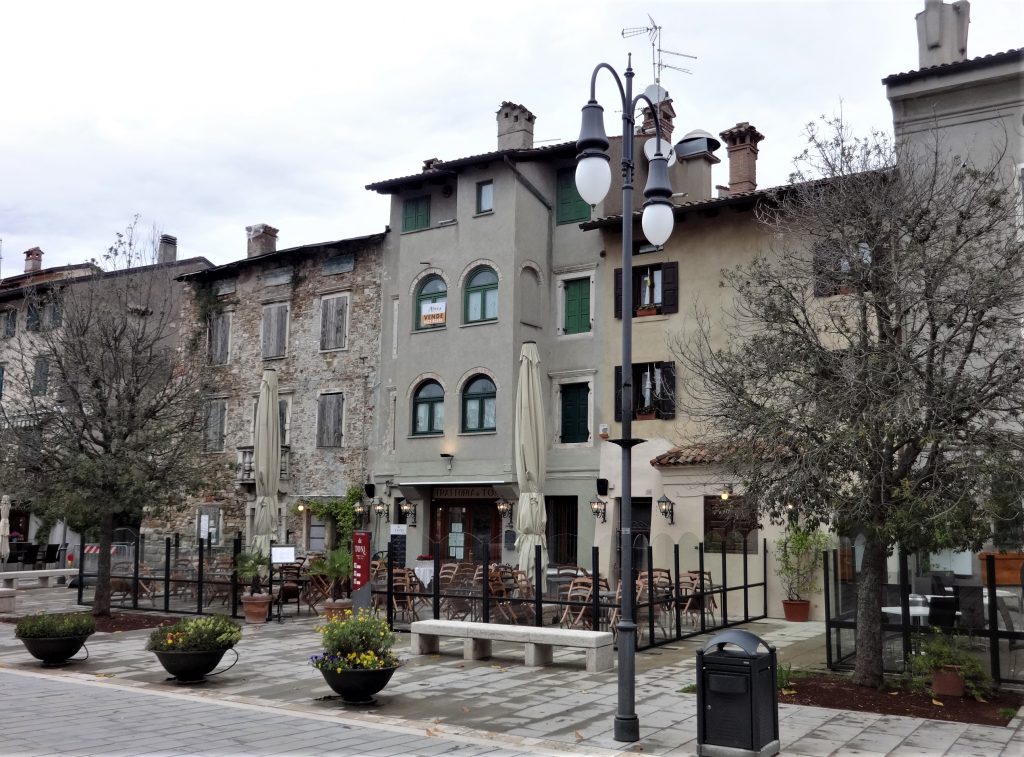
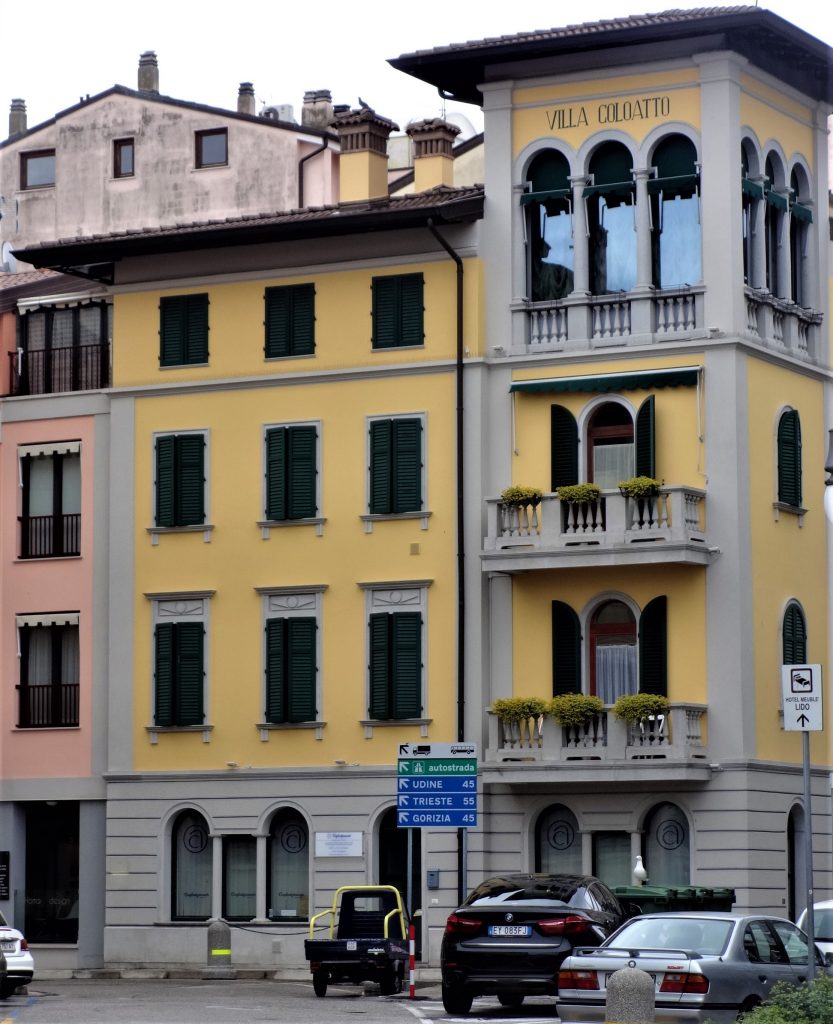
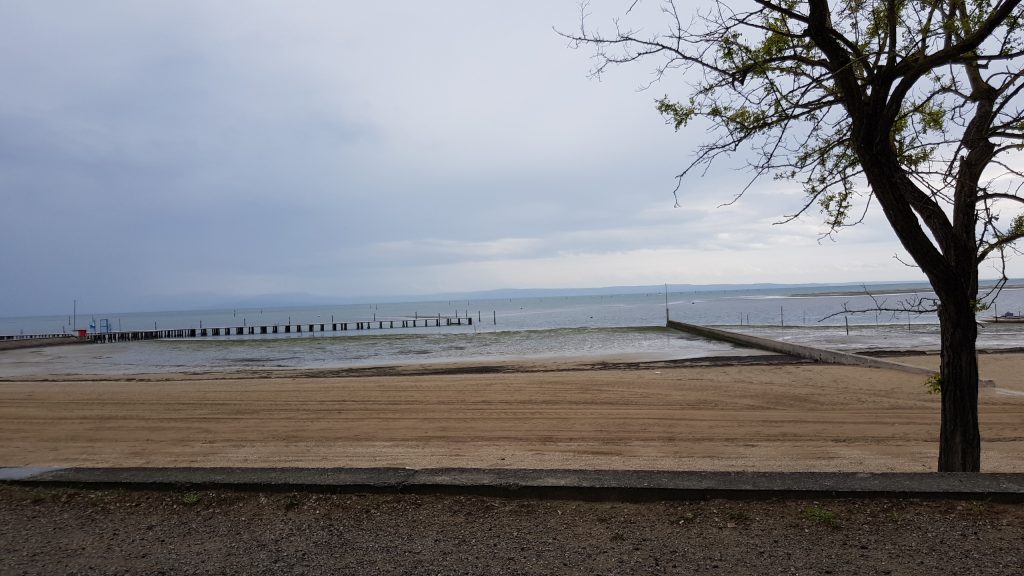
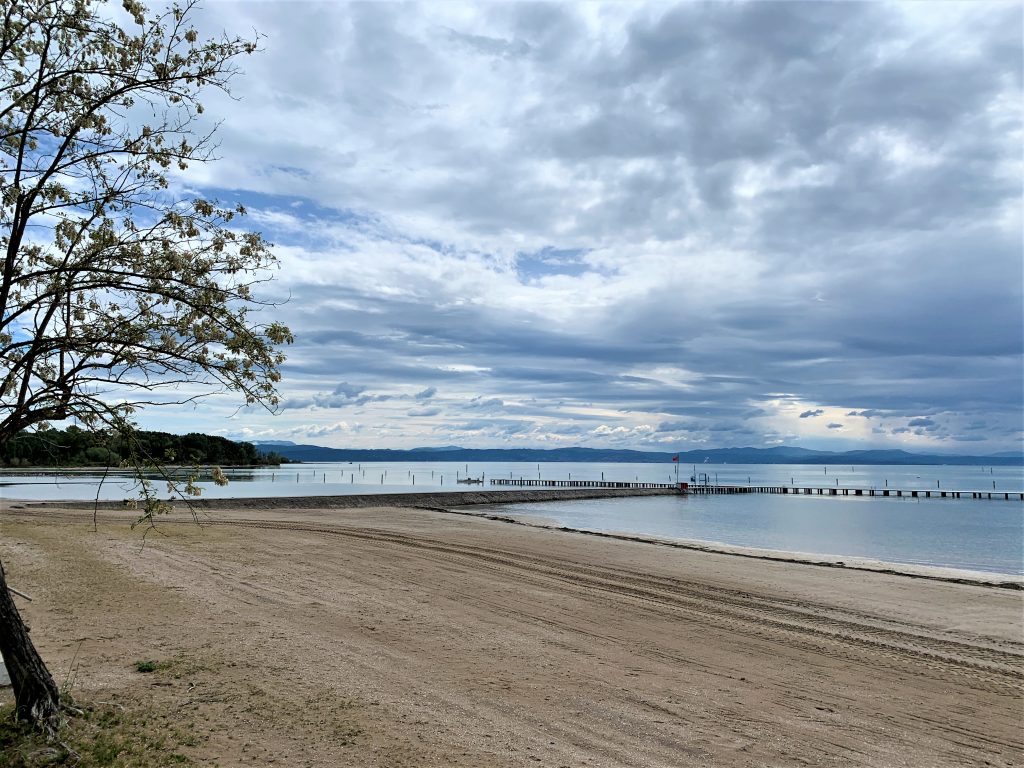
We were parked nearby in Grado (another peninsular) for a few days and waited until the rain abated before spending a day in the city. Grado is a fishing village, but has now become a tourist town, modern seaside hotels blend well with old stone buildings and classical Italian buildings. Our pitch was huge, right on the sea front, which would have been lovely in the sun and summer!
Our pitch at Grado.
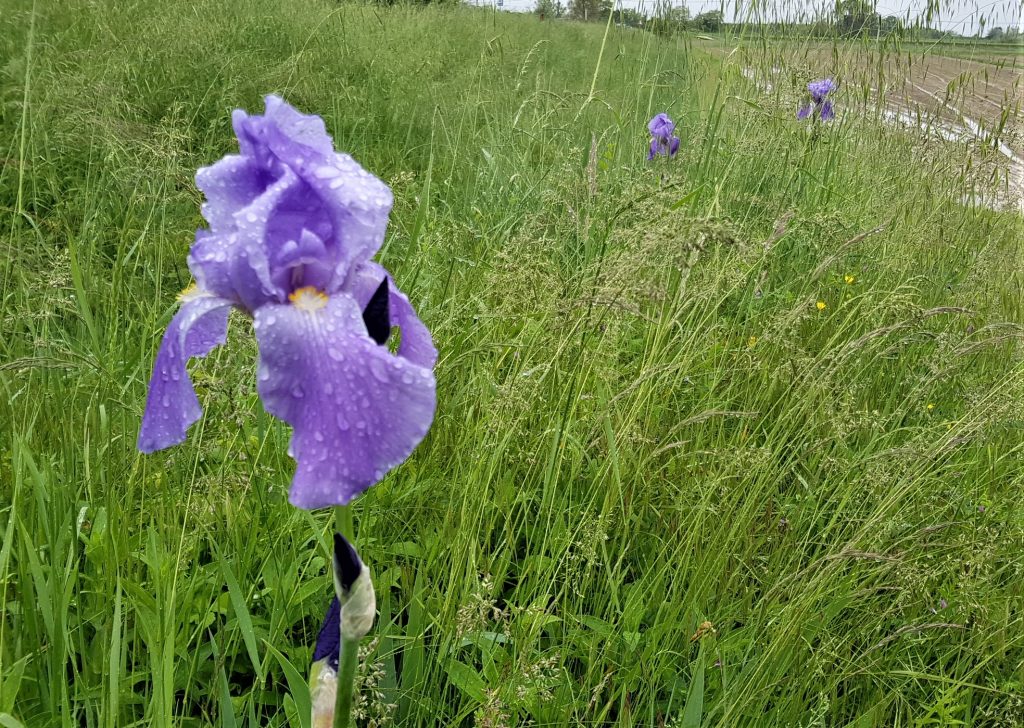
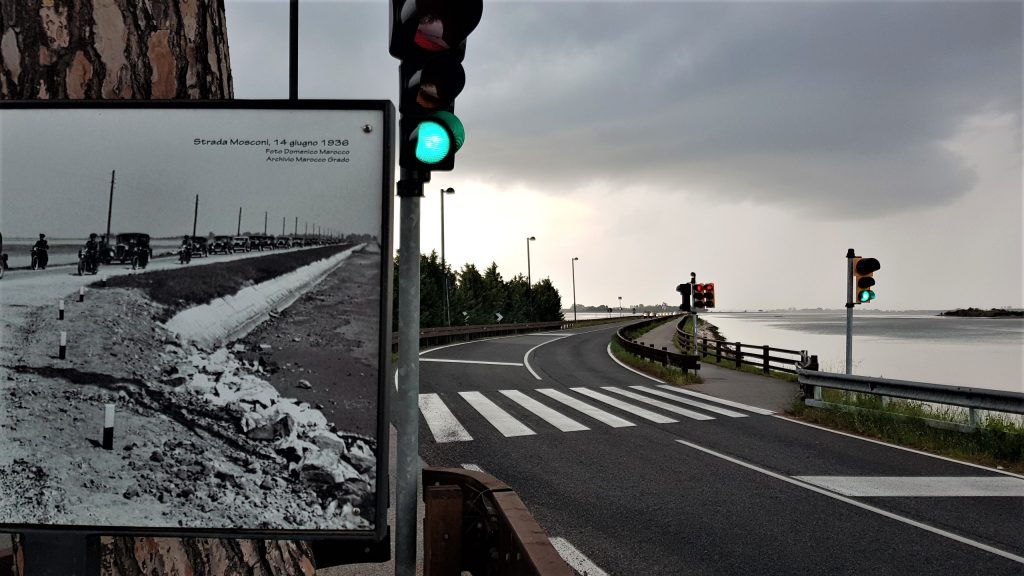
View of the beach behind us.Wild flowers in a field nearby.The SR352 road leaves Grado and is a 11km road over the Lagoon.
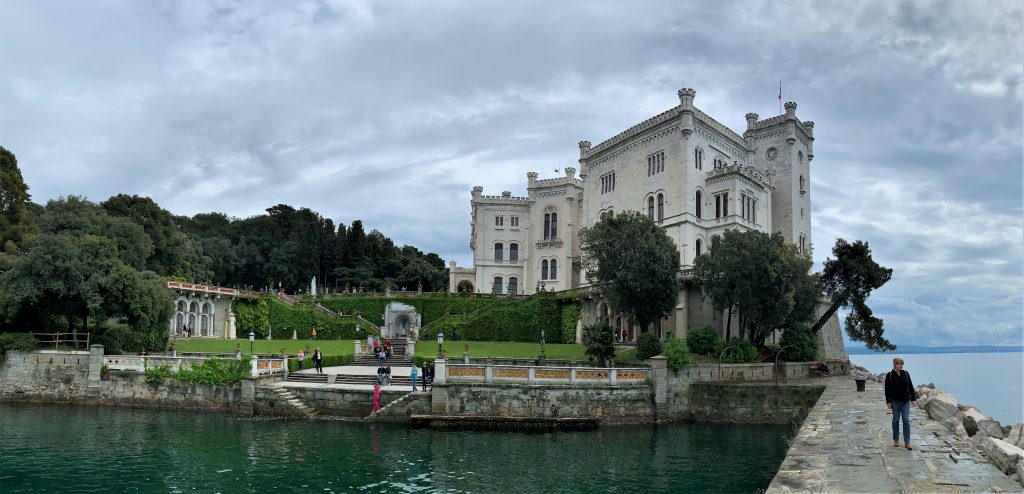
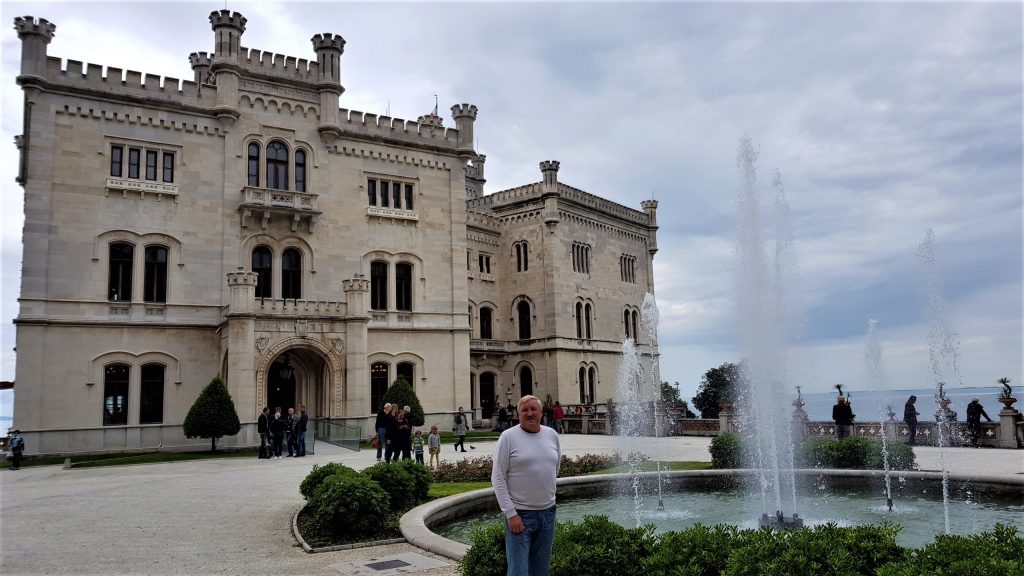
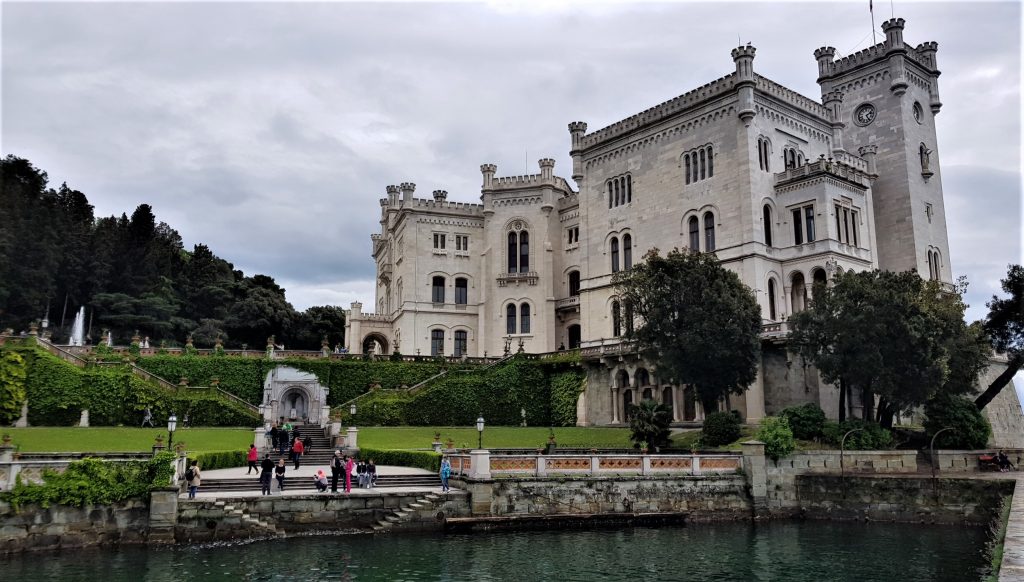
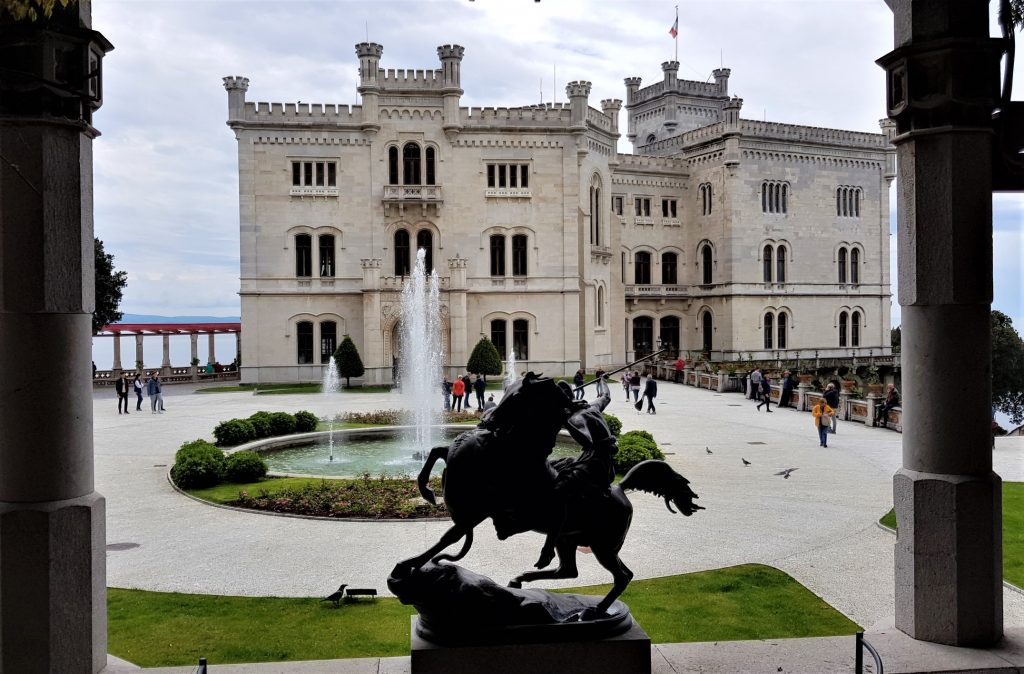
Miramar Castle
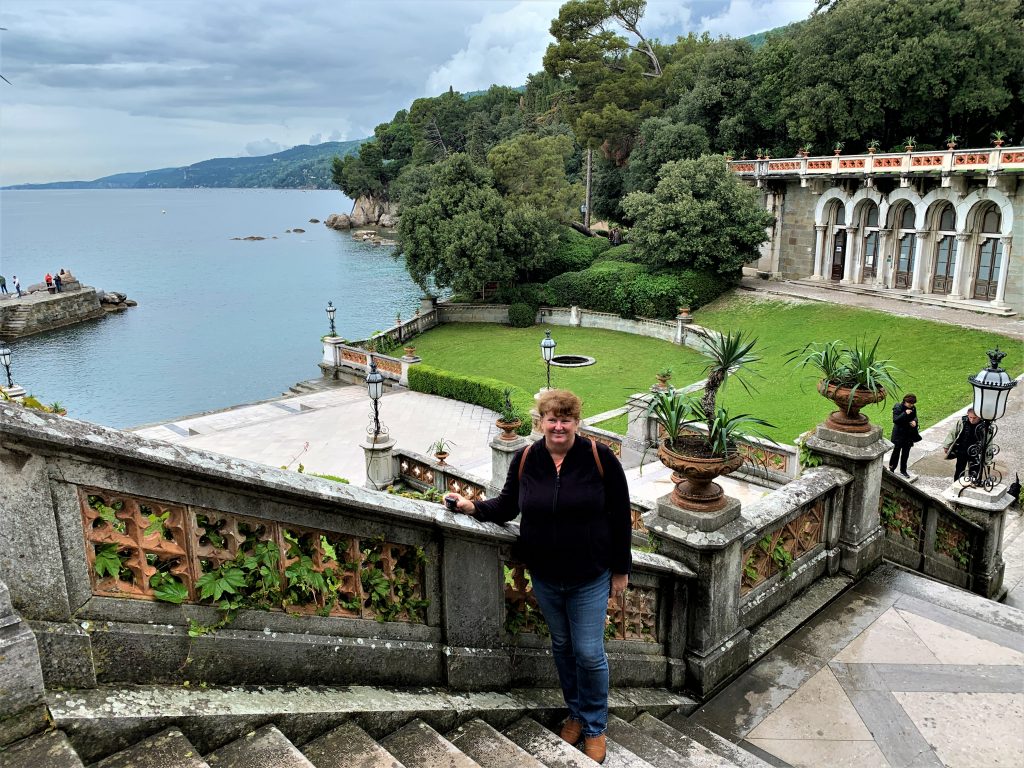
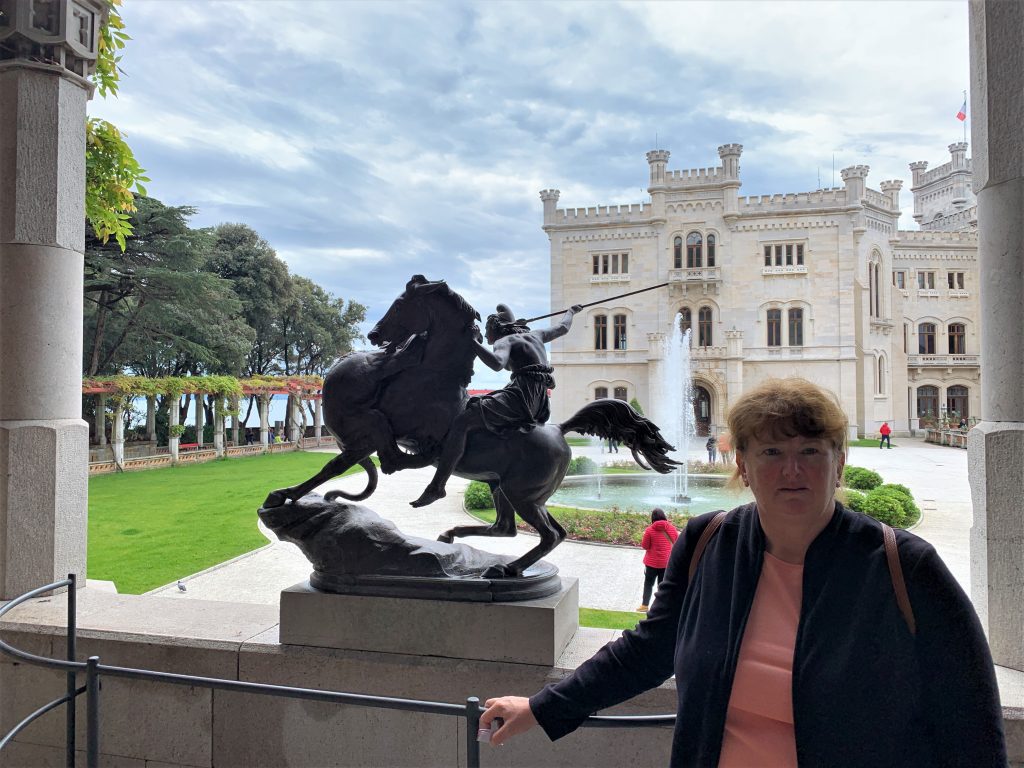
On our way to Trieste, we stopped on the coast road and explored the gardens of Miramar castle, built in the 1850s for the Austrian Archduke Ferdinand Maximilian and his wife, Charlotte of Belgium. The beautiful landscaped gardens swept right down to the blue Adriatic sea. There were many acres of landscaping but we pushed onto the city itself, as the dark rain clouds were threatening again!
According to tradition, when the archduke was caught in a sudden storm in the Gulf, he took shelter in a little harbour of Grignano and he chose that bare rocky spur of limestone origin as the setting for his home.
Trieste
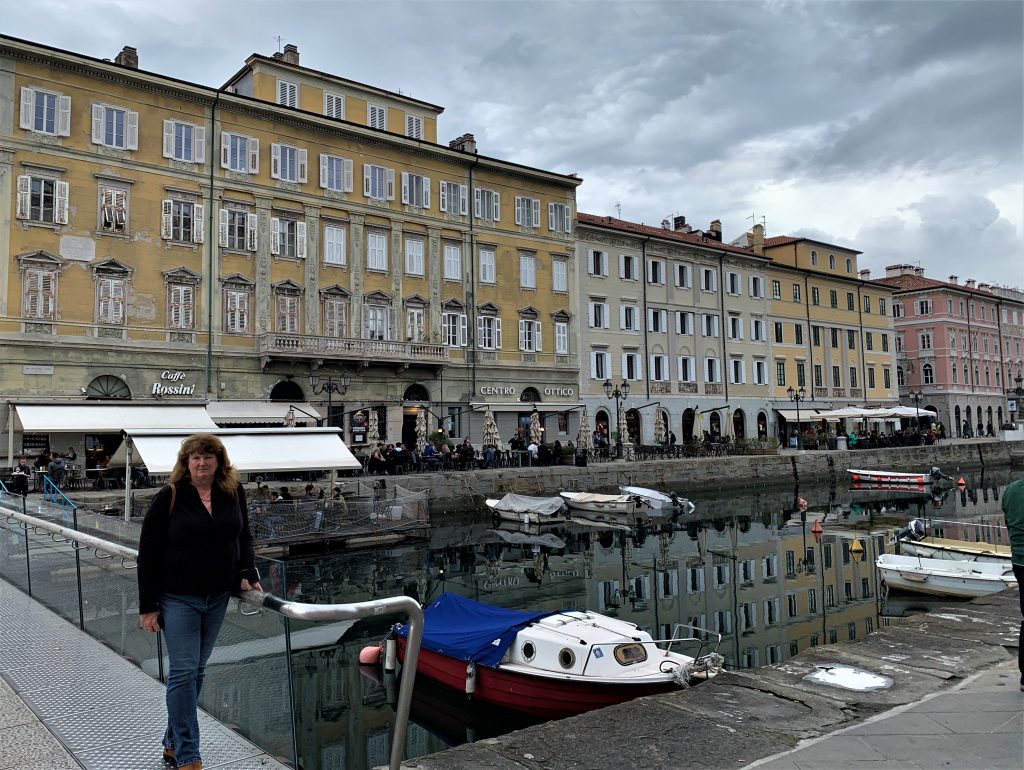
Trieste is a lovely city, old yet modern, clean and spacious, with a castle and church on the top of a hill, and a huge port, railway terminal and bus station. It even has it’s own Grand Canal! As a prosperous seaport in the Mediterranean region, known for it’s coffee trade, Trieste became the fourth largest city of the Austro-Hungarian Empire after Vienna, Budapest and Prague. It has been owned by the Venetians, French, Austrians, Italians, Hungarians, Slovenes and Yugoslavians, before becoming a “free city”. Trieste was one of the oldest parts of the Habsburg Monarchy, belonging to it from 1382 until 1918.
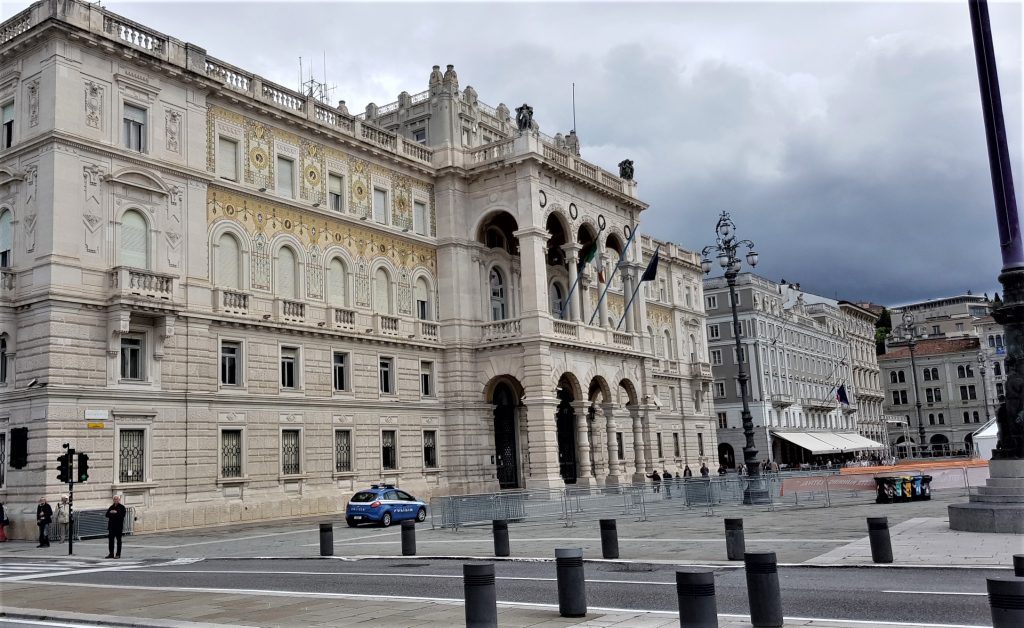
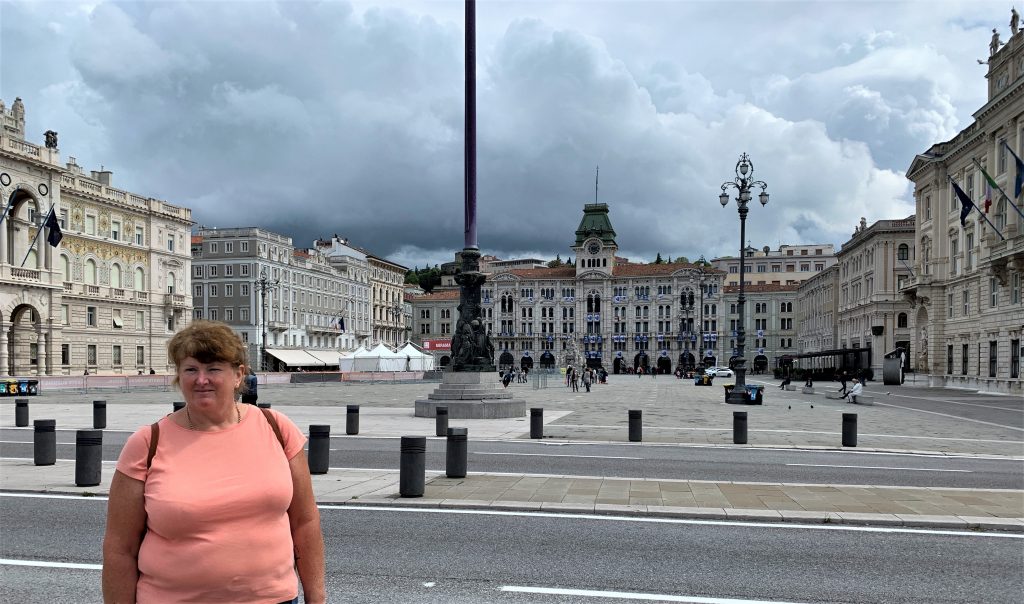
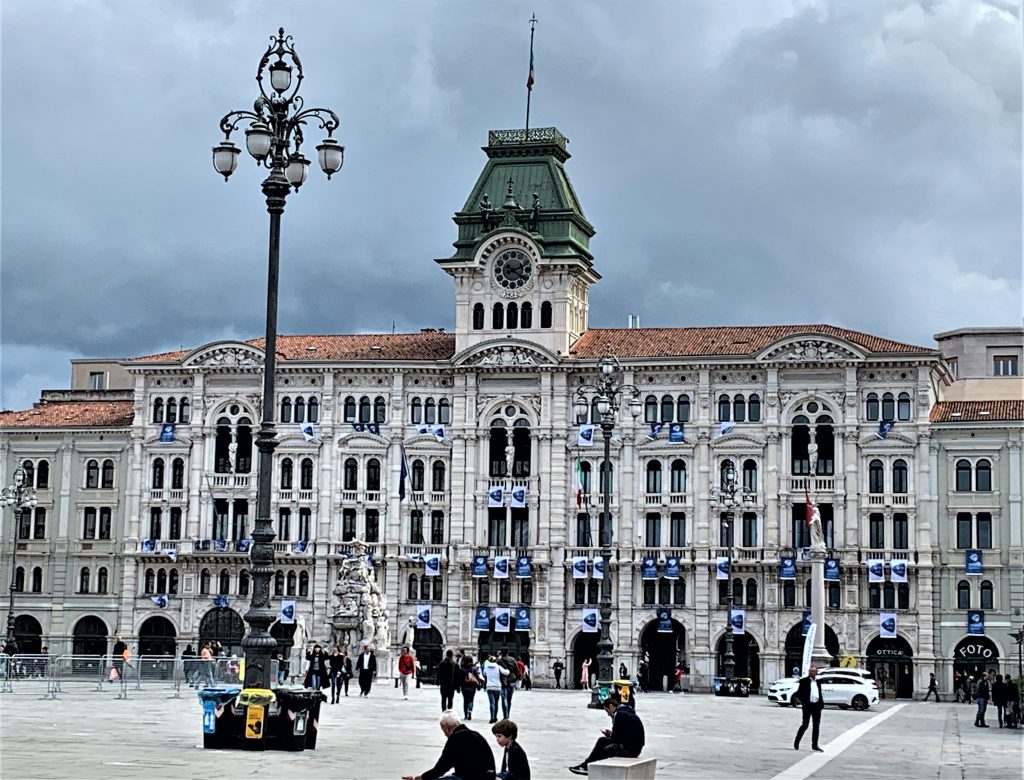
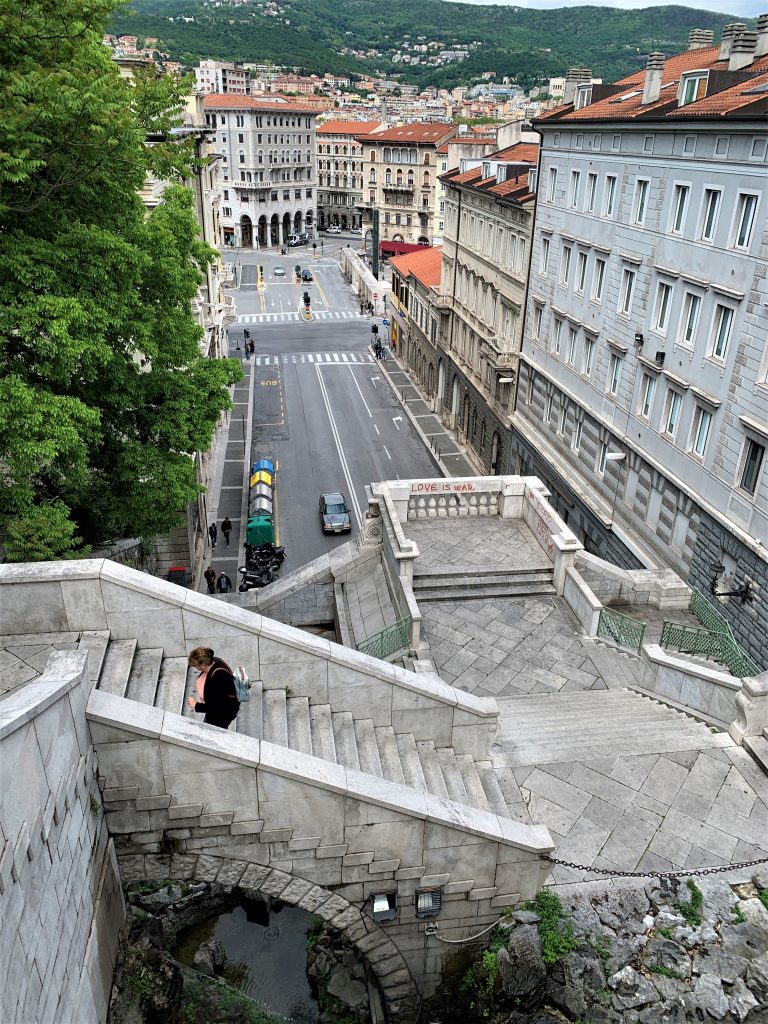
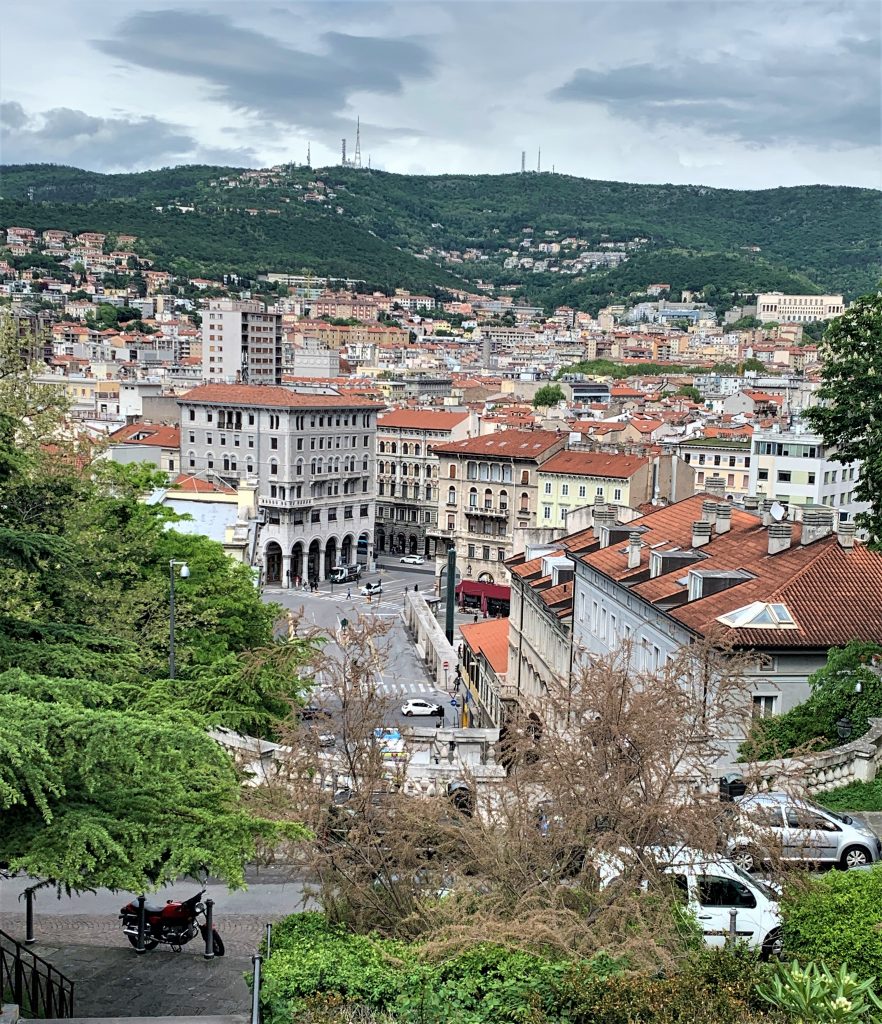
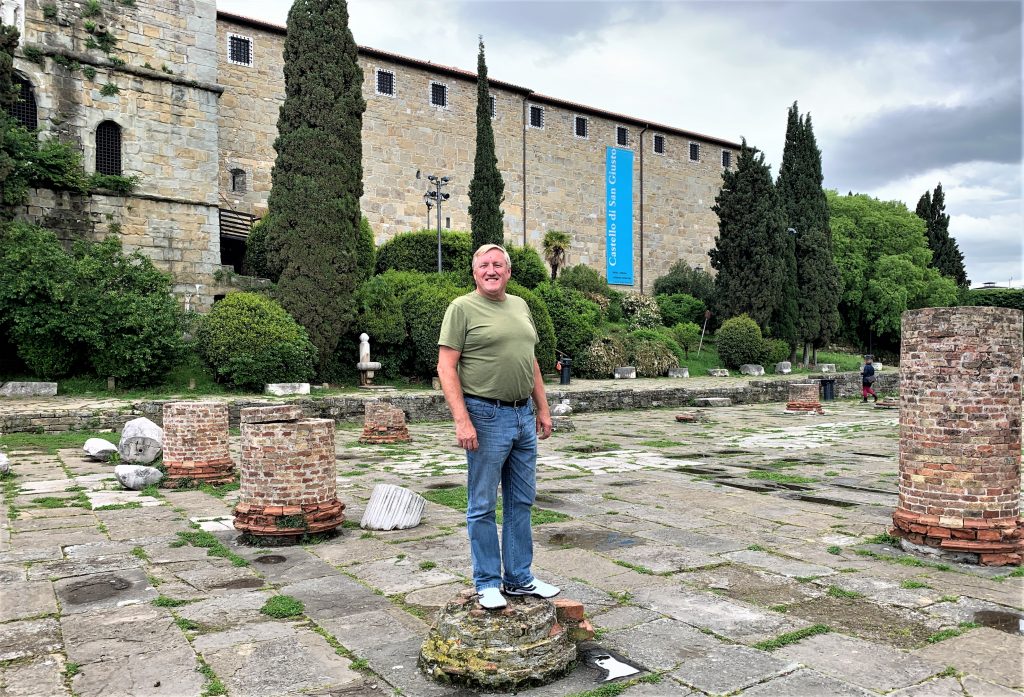
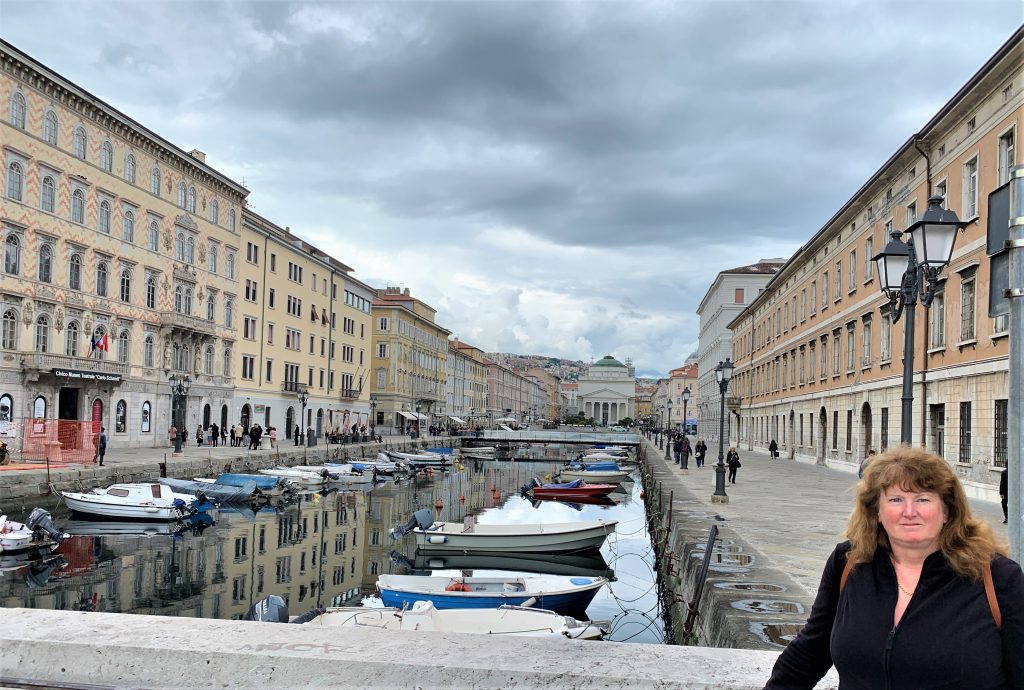
The Piazza Unità d’Italia, is close to the sea and has many important buildings, examples of neo-classical arhitecture; the Grand Canal was originally the main river canal for the salt pans. A Roman theatre is located below the hill of St. Giusto, the theatre was lost under newer buildings and re-discovered in the early 19th century. St Giusto is the location of the first fortified settlement from the 1300s, with a castle and cathedral perched on the top of the hill with amazing views over the city.
Piazza Unita D’Italia
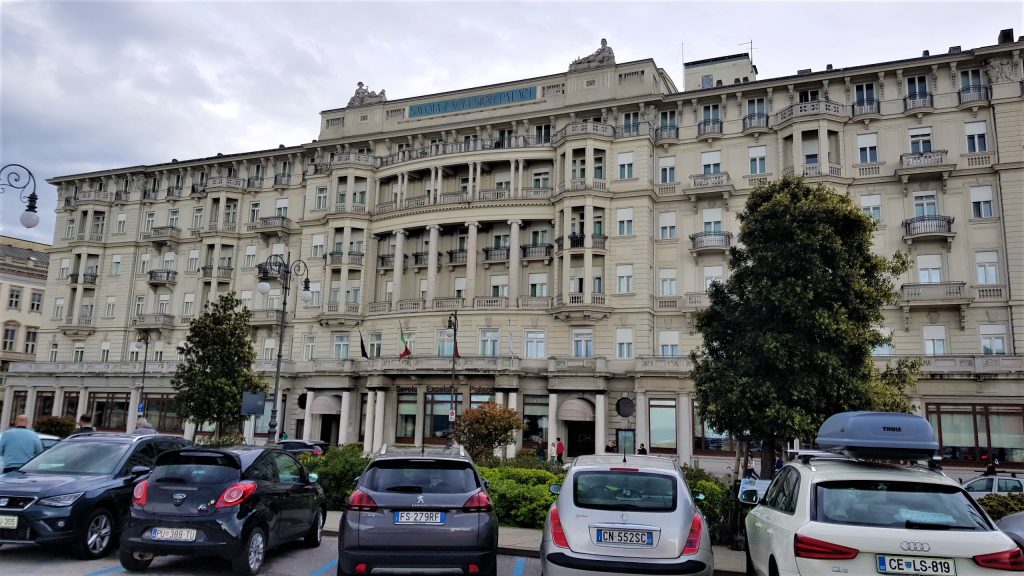
The Savoy Hotel on the sea front.
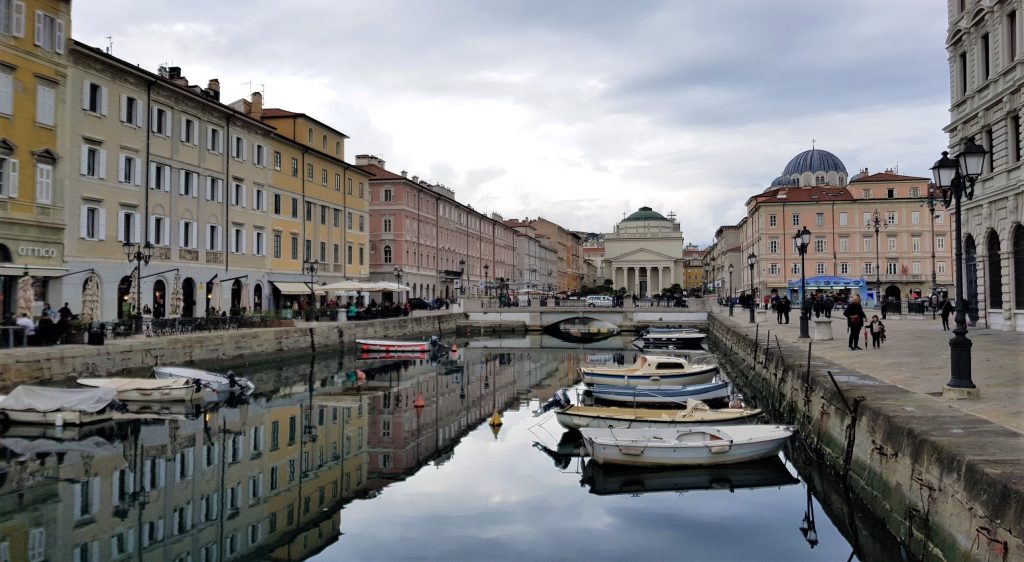
The Grand Canal.
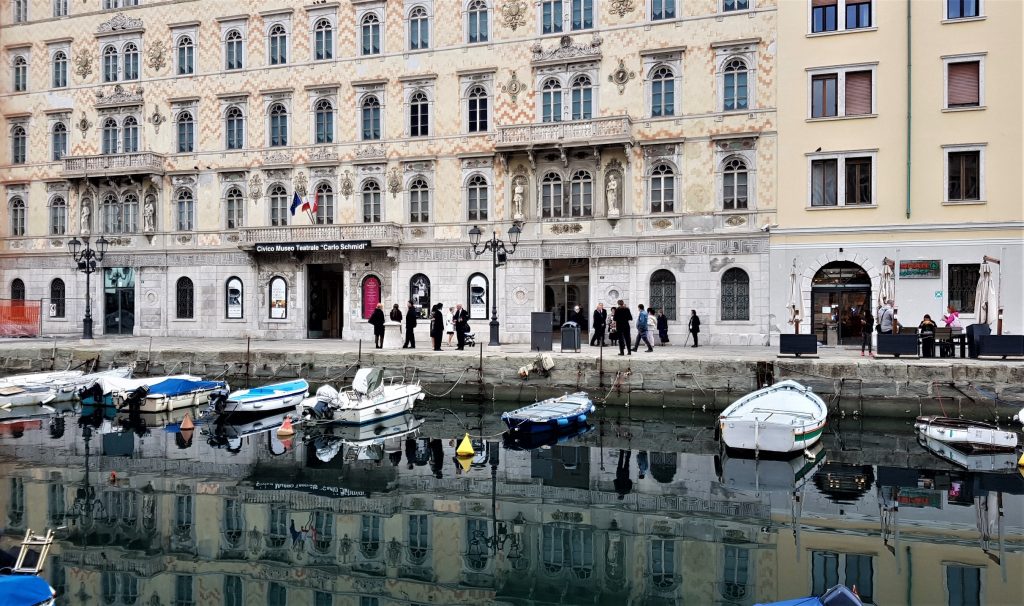
Theatre on the Grand Canal.
Hiking up St Giusto Hill!
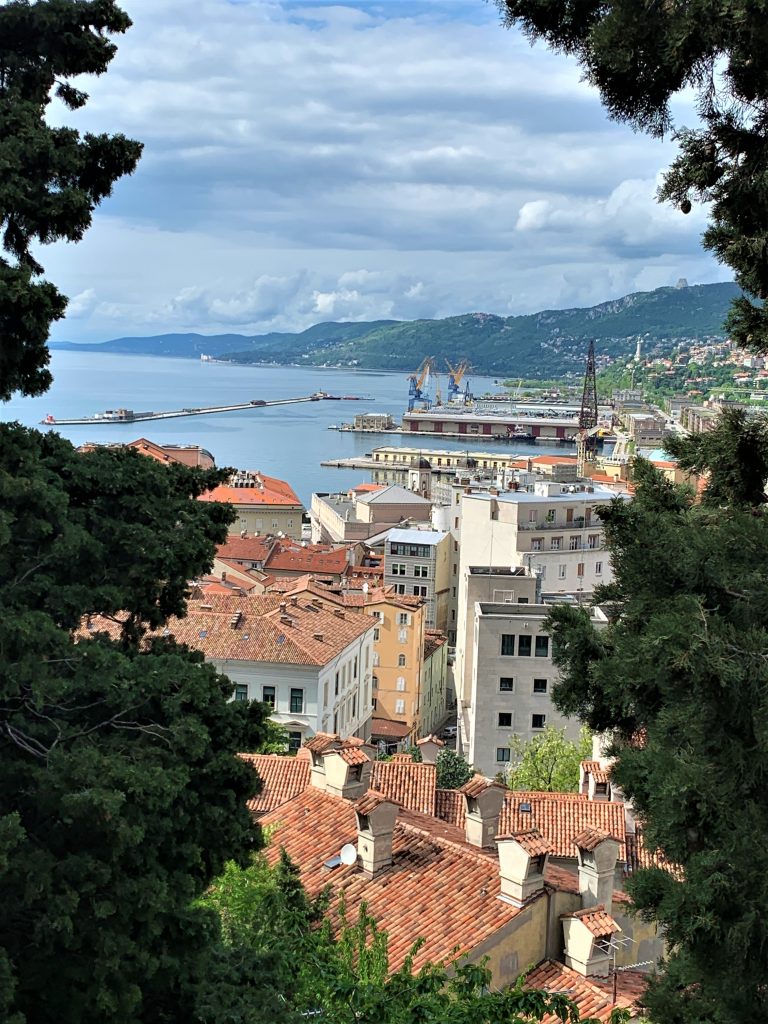
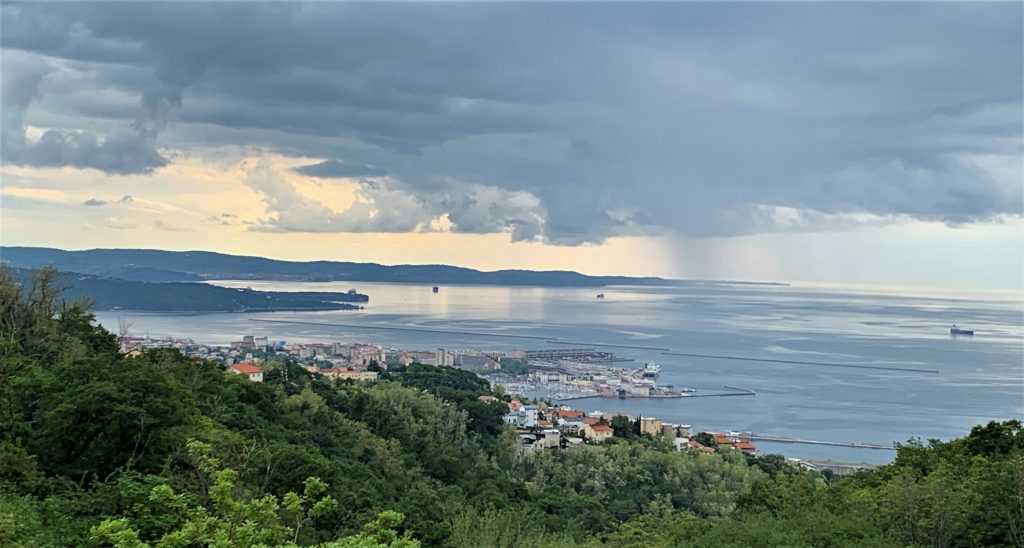
View of the City from St Giusto Castle.
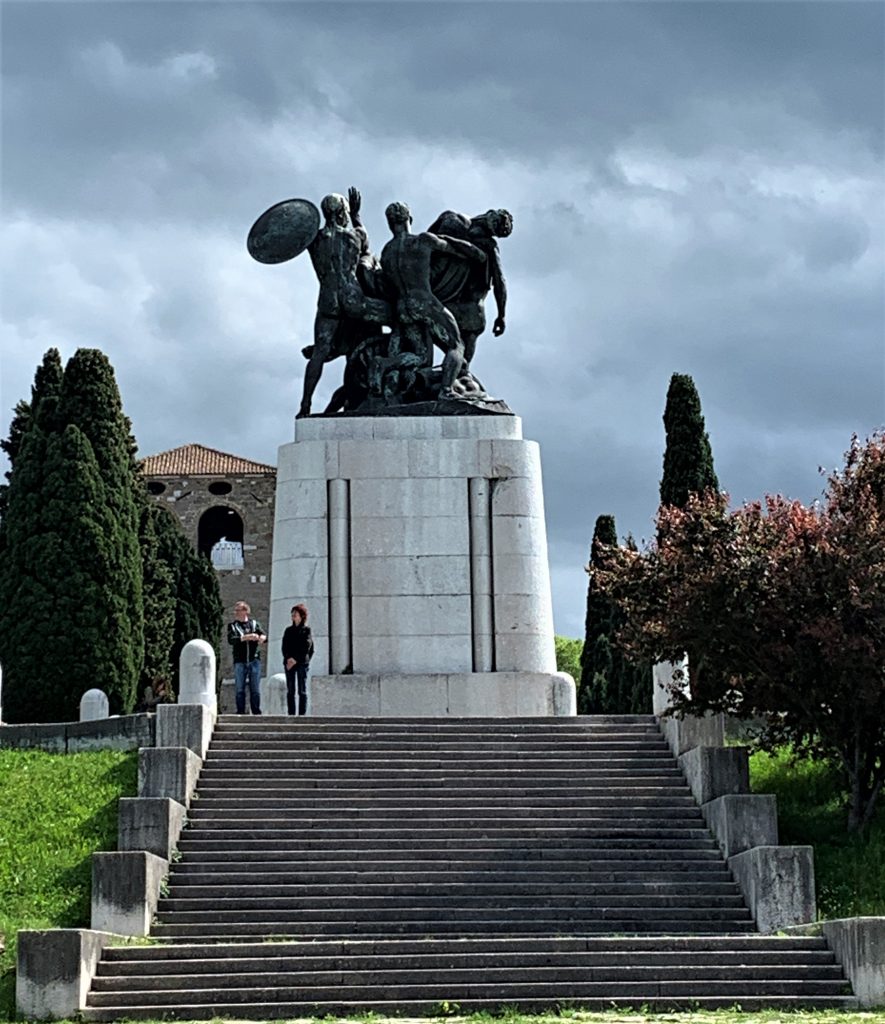
Monument at the top of St Giusto Hill.
View of the port.
Yes, I put him on a pedestal……an old pile of bricks outside the Fort:)
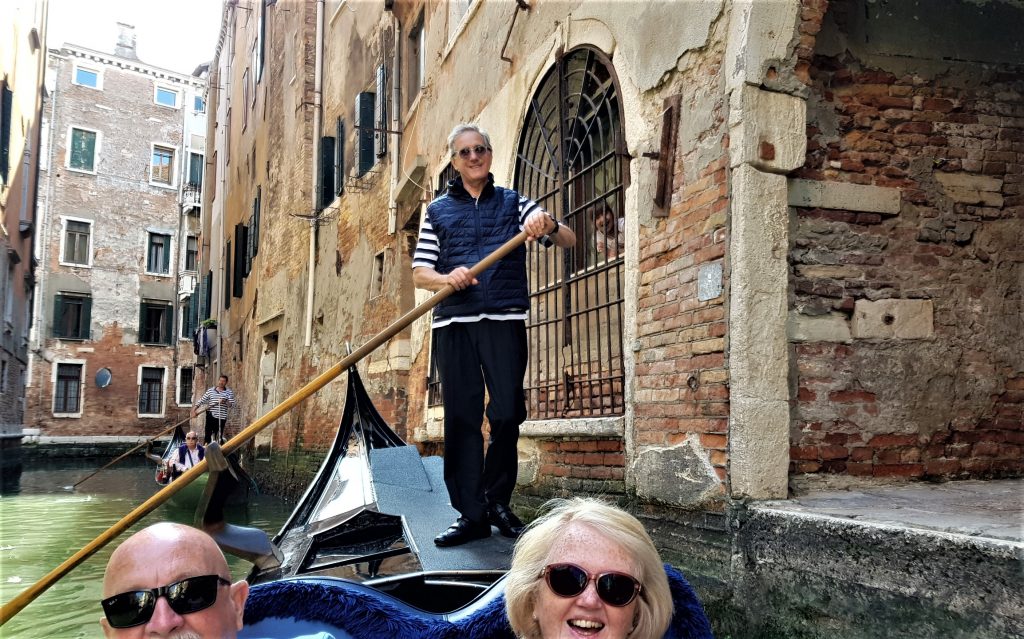
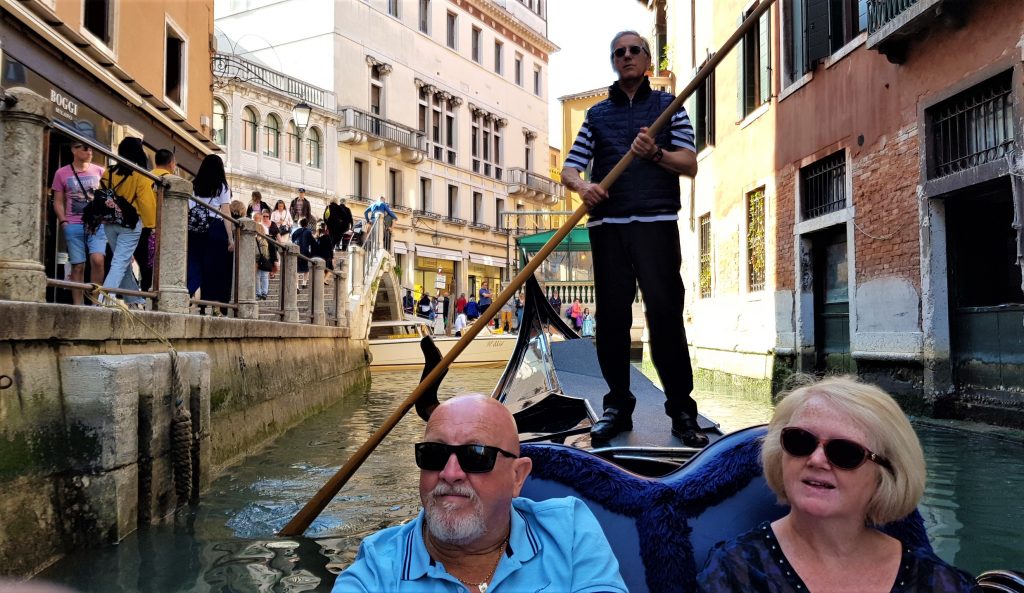
Well, I have to say, Venice caught my attention, and personally I loved it. Different, unusual, beautiful, quirky, well looked after and maintained, scenic, colourful, busy, aimed at tourists yet full of Italians, and most importantly, it is romantic. Sights, sounds, smell and colours are outstanding.
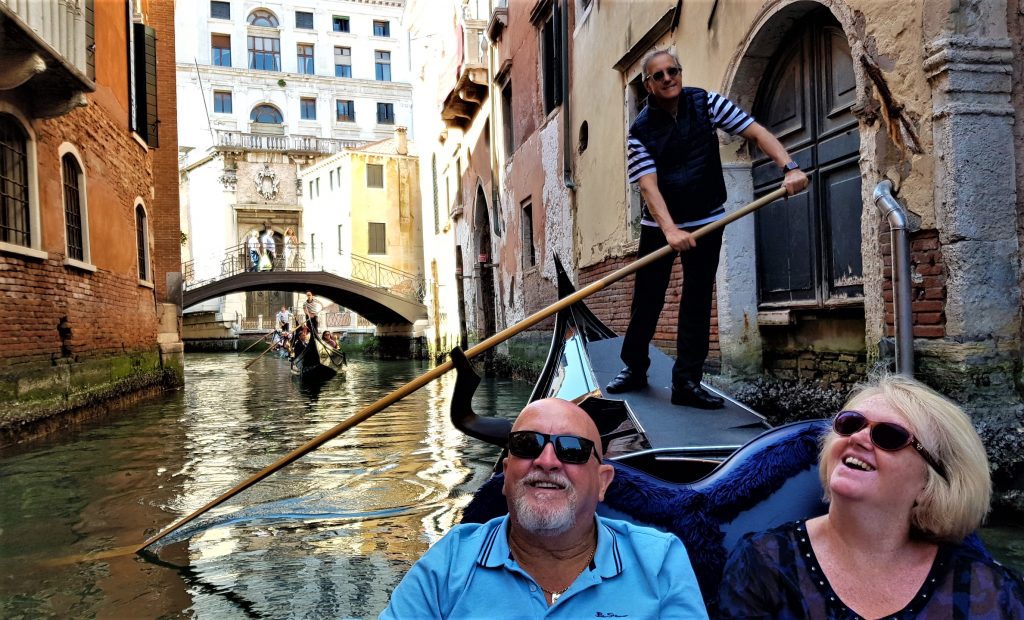
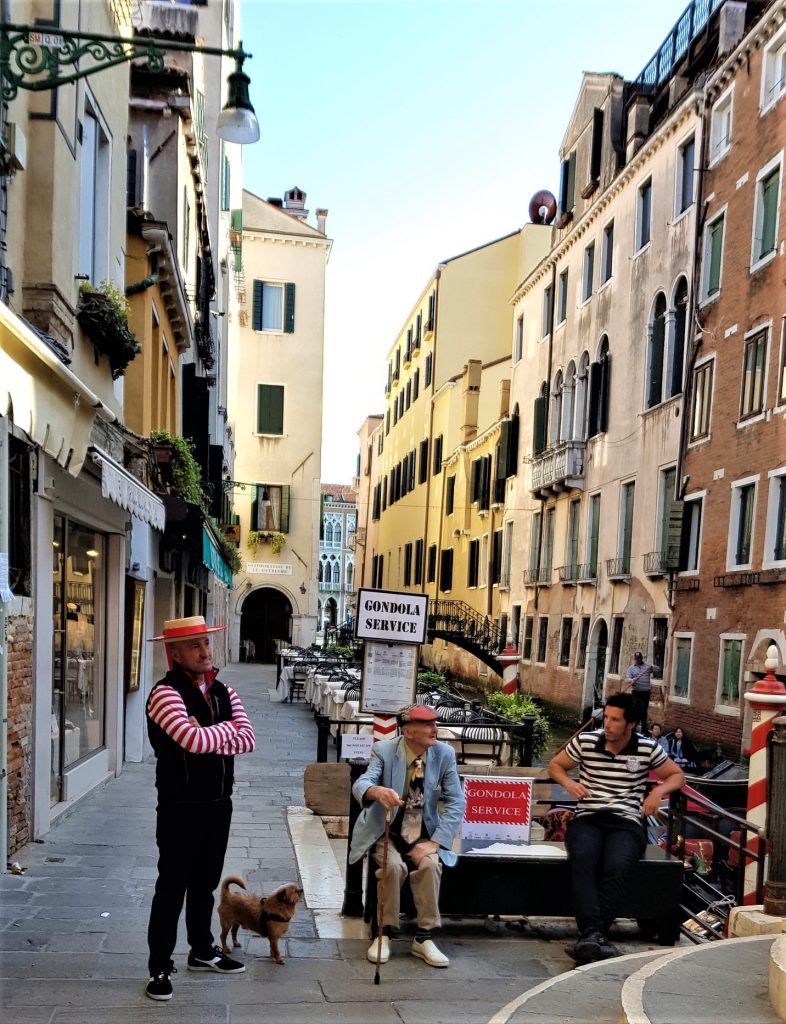
When the sun is out, the colours of buildings almost sparkle, the canals glow green and blue, the gondoliers’ chatter echoes around the alleyways and despite the amount of tourists buzzing around, the place is quiet, sometimes eerie, sometimes acceptably noisy with chatter or music coming from apartments overhanging the streets or canals; the smells are of garlic, pizza, grilled meat, wine and beer, fresh sea water, not stinky smells as there may have been years ago. The place is sparklingly clean, an army of cleaners empty dustbins and sweep streets every half an hour in peak season!
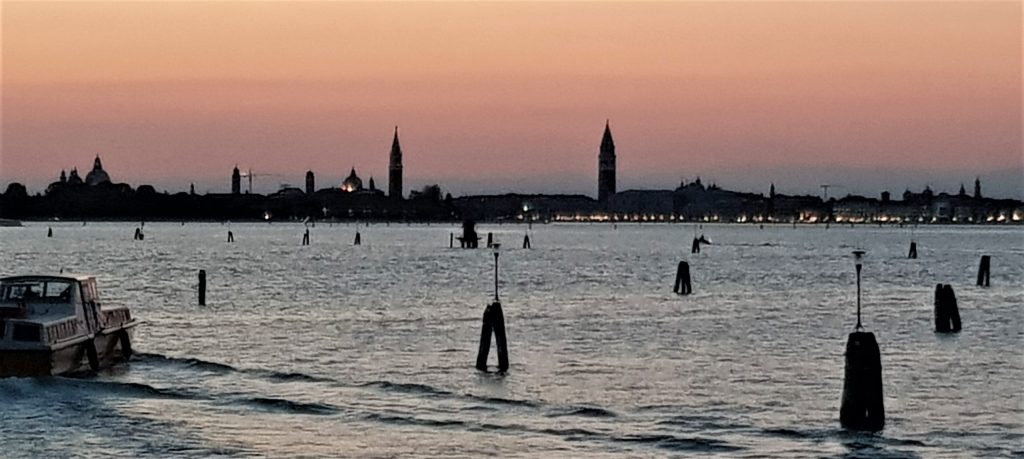
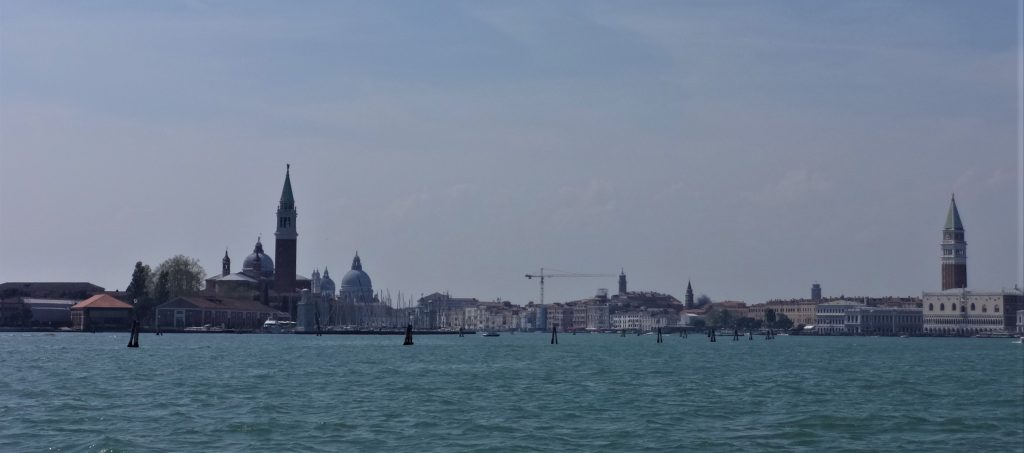
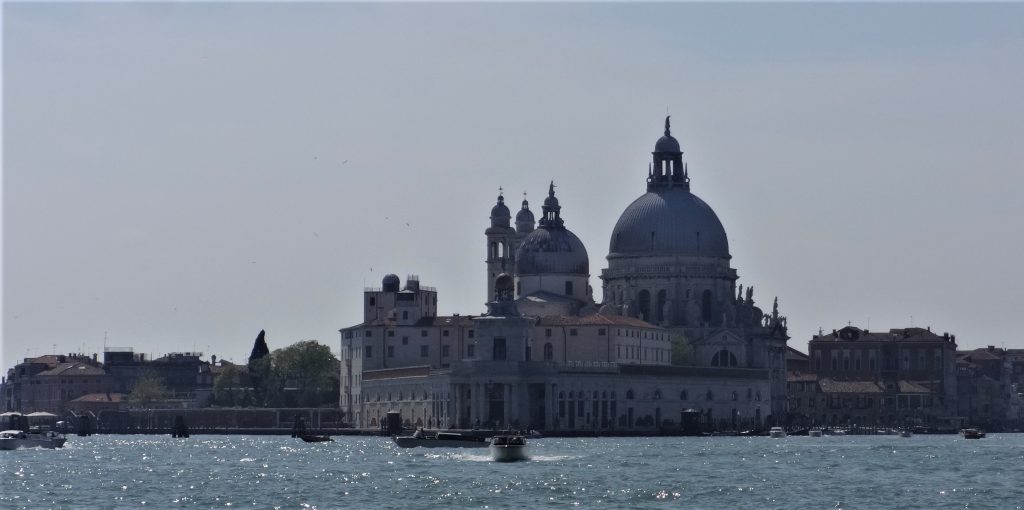
The buildings are ornate, aged, colourful, interesting and different, not two buildings are the same. The Lagoon is always an aqua green colour and the views coming from the Cavallino peninsular to Venice was always stunning, one of my favourite images is of the skyline of Venice with its two towers.
The Cavallino peninsular is quite unusual, about 35 miles long, with 30 camping “villages” and about 20 hotels on the left, all edging out onto the Adriatic sea; on the right are lush agricultural fields inbetween small shopping centres, caravan storage area and huge car parks, where tourists gather for a coach journey to the port at the bottom of the island (Porto Sabbioni) to cross over to Venice.
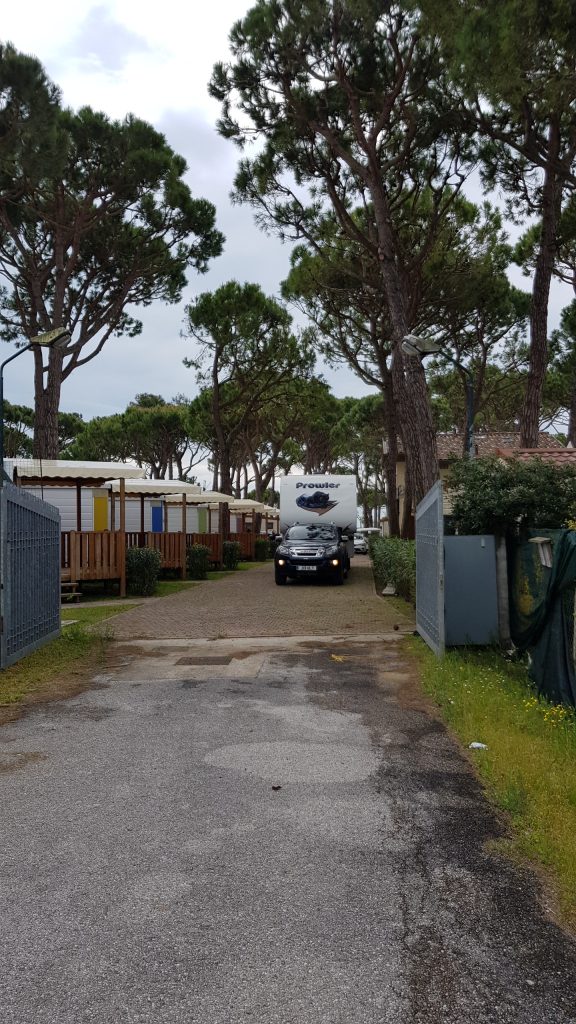
Our camp site was accommodating and comfortable, the restaurant served fabulously tasty meals and the barman met with David’s approval, introducing him to Japanese whiskey! They opened a side gate for us to exit rather than zig zagging around parked cars and tree trunks!
We moved onto Trieste after 4 weeks in the area, leaving with happy memories and feel we would happily return again.
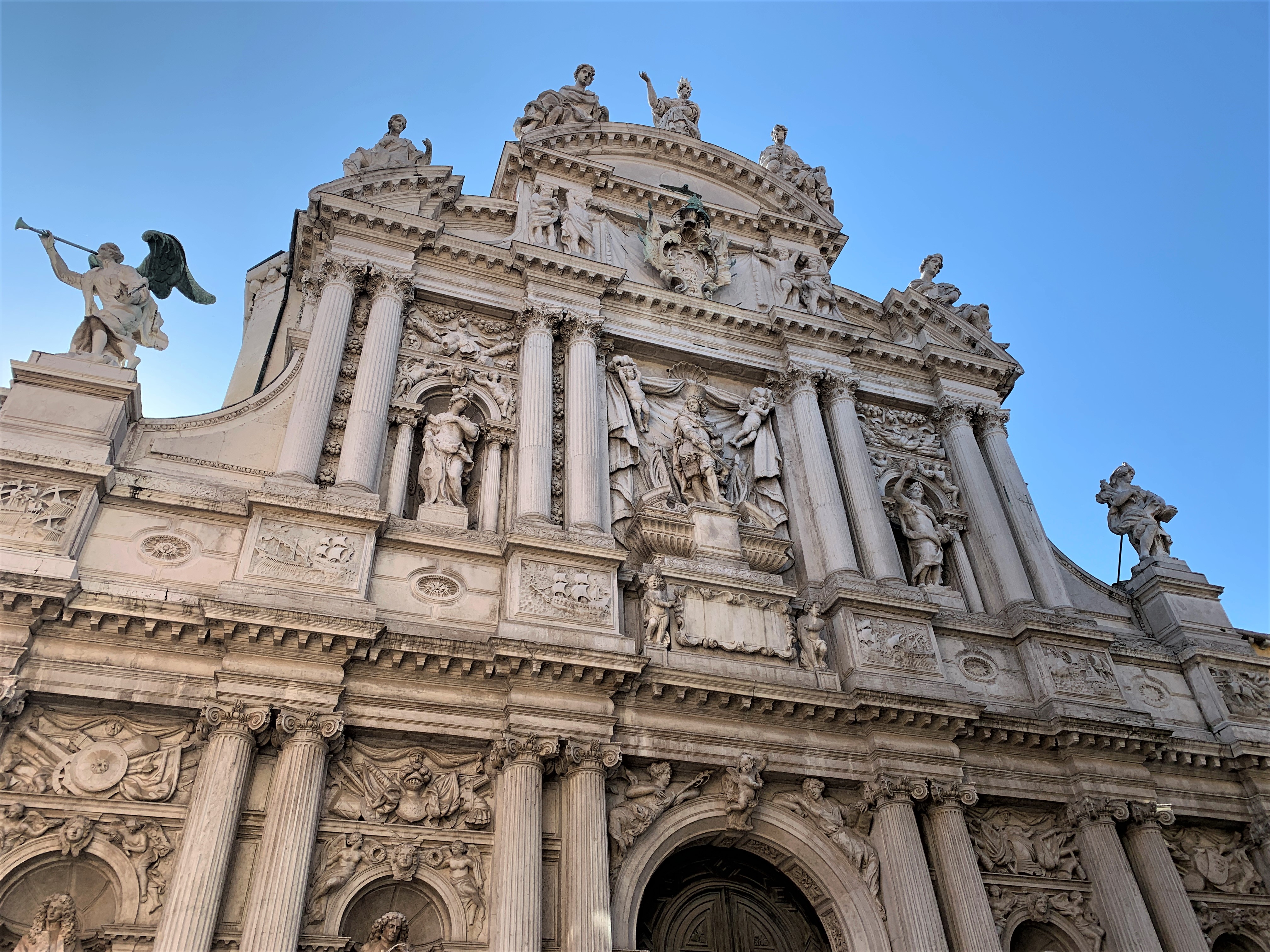
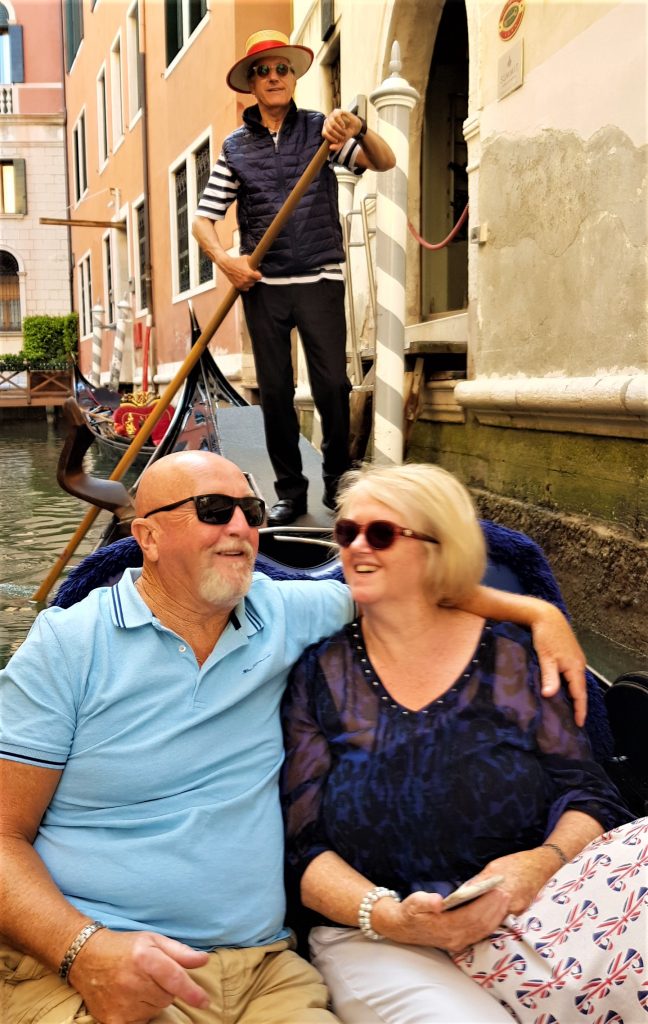
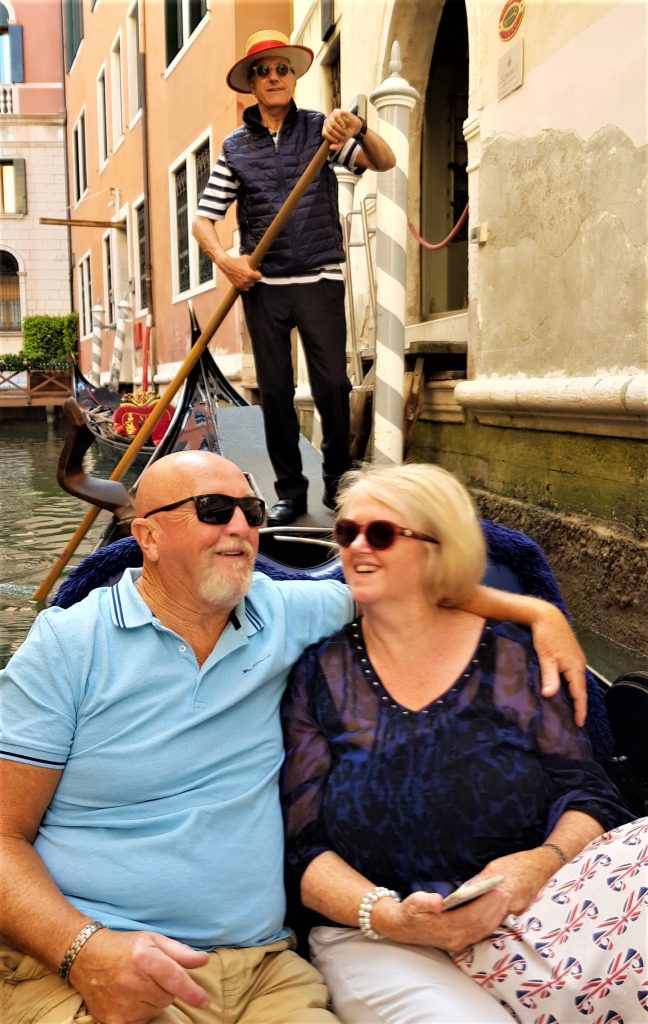
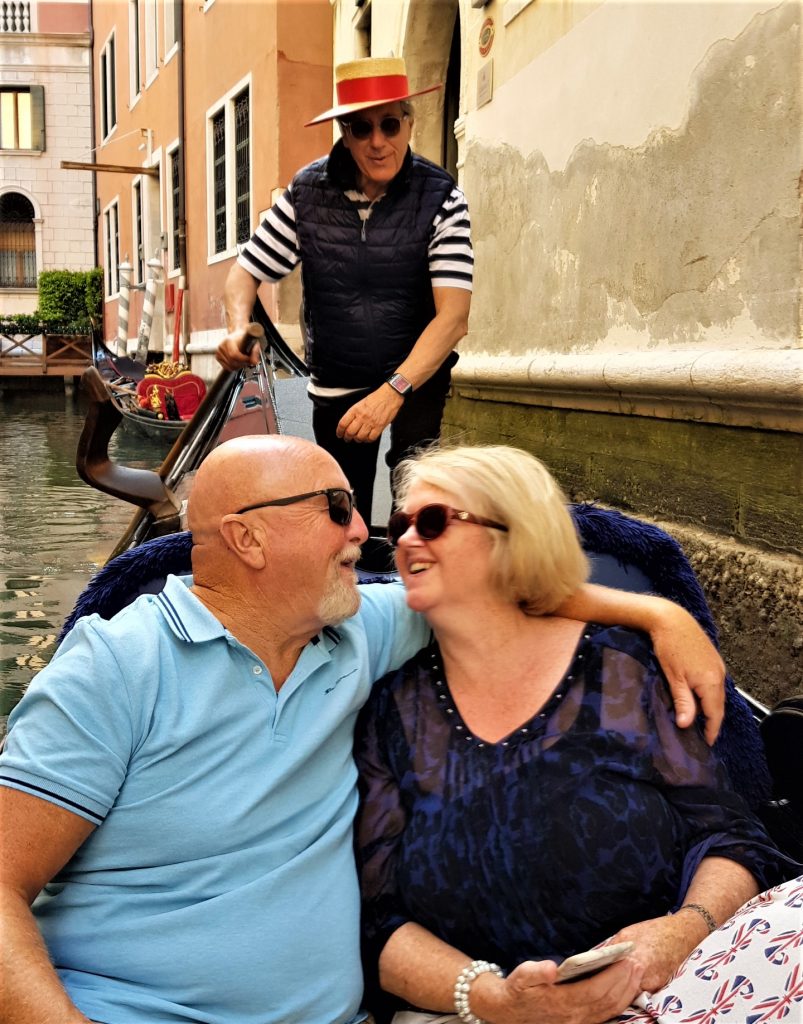
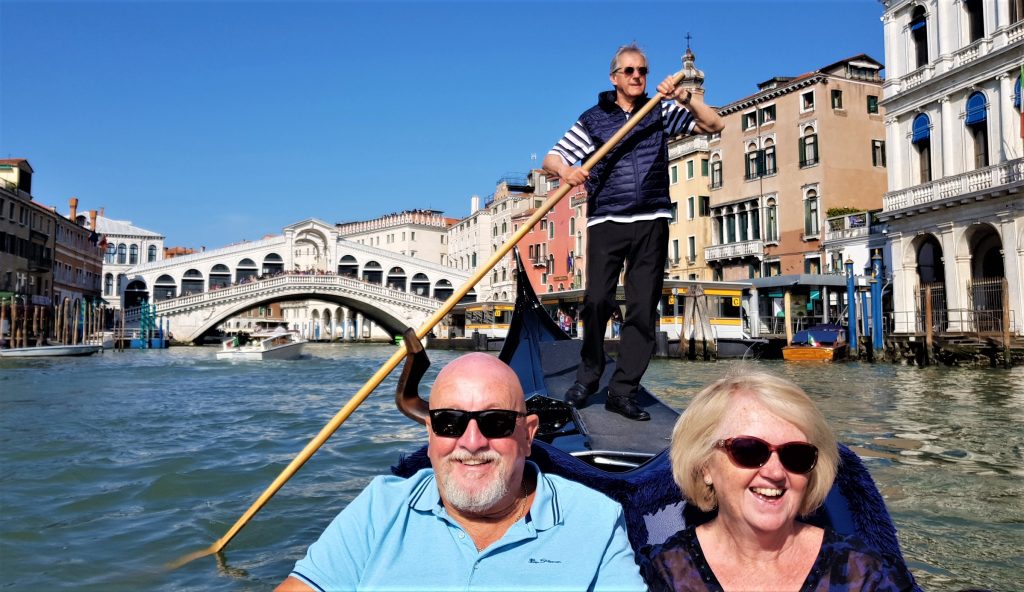
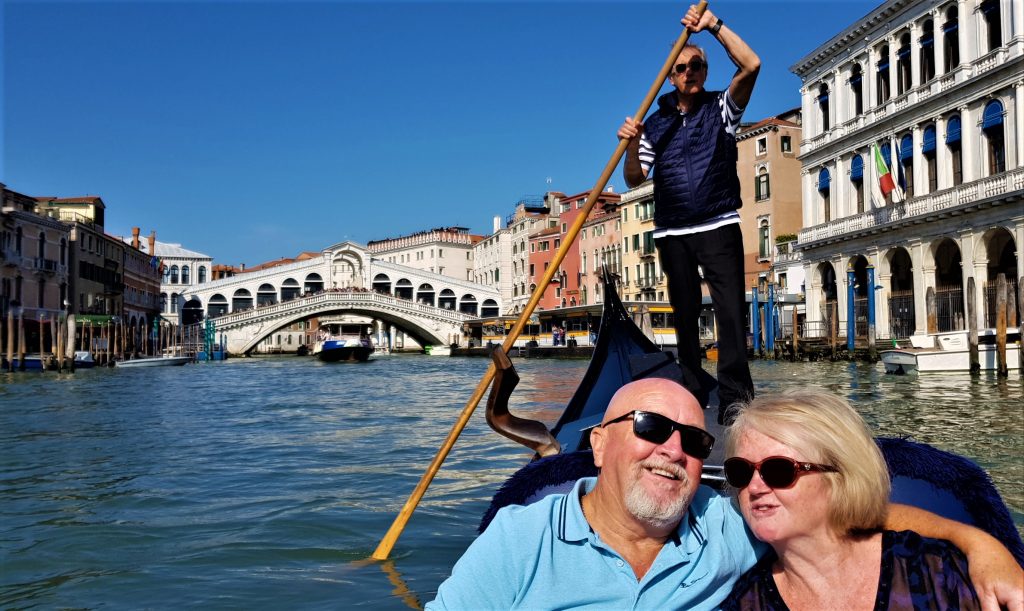
Love is in the Air in Venice
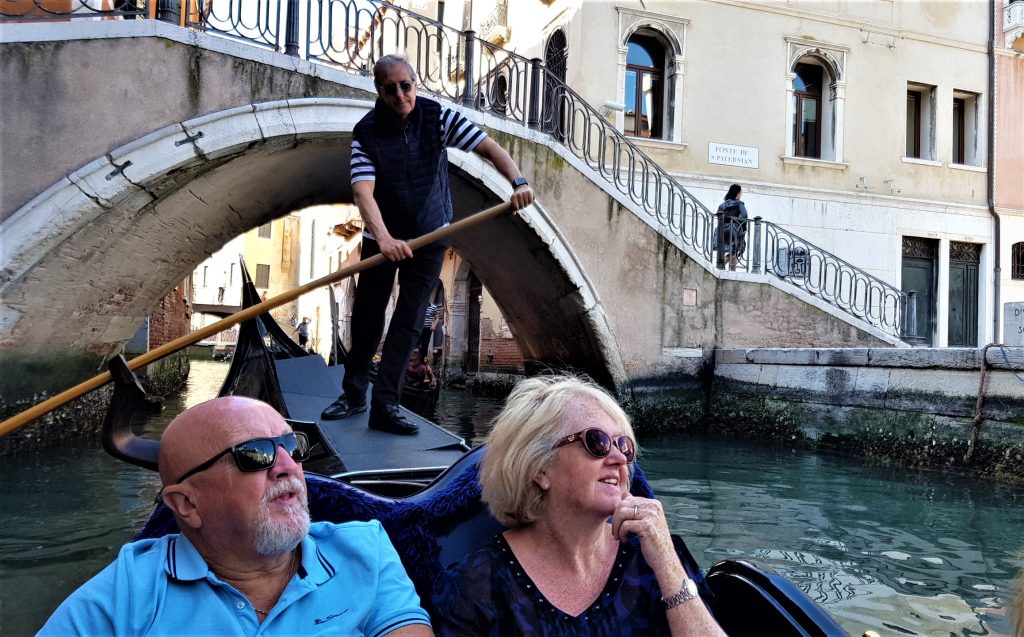
Typical Venetian Scenes…..
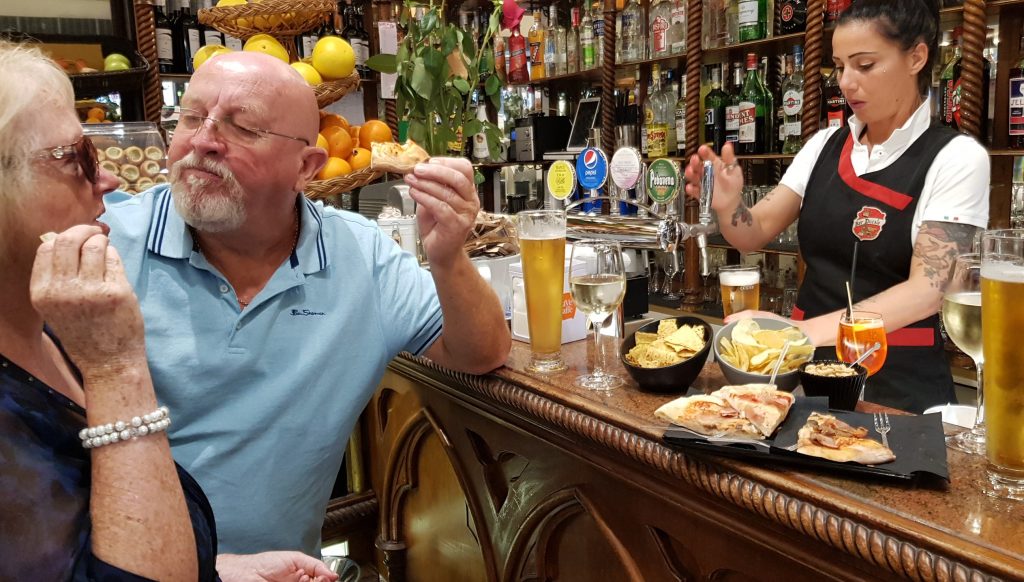
Enjoying nibbles and drinks, typical for us!
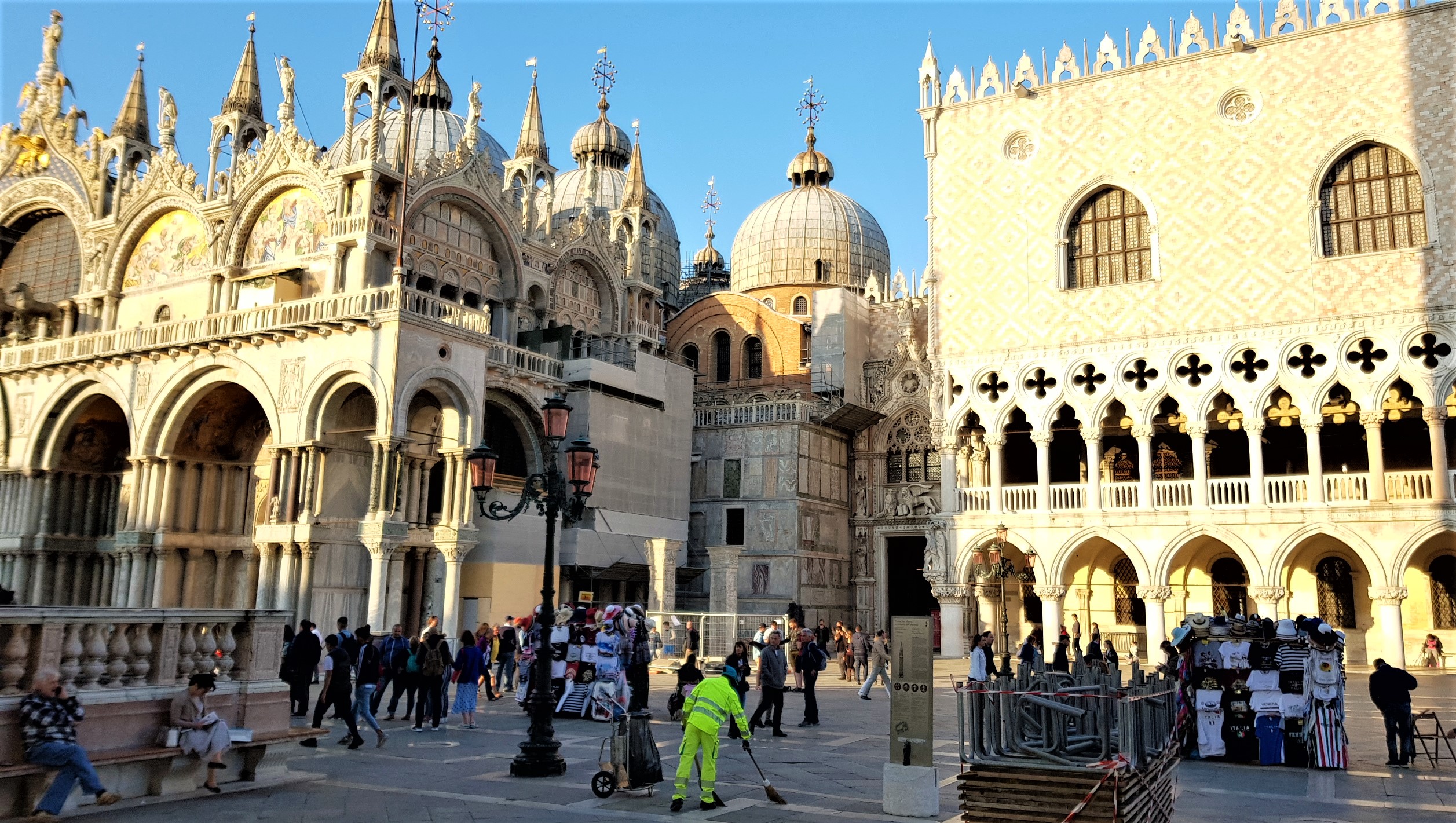
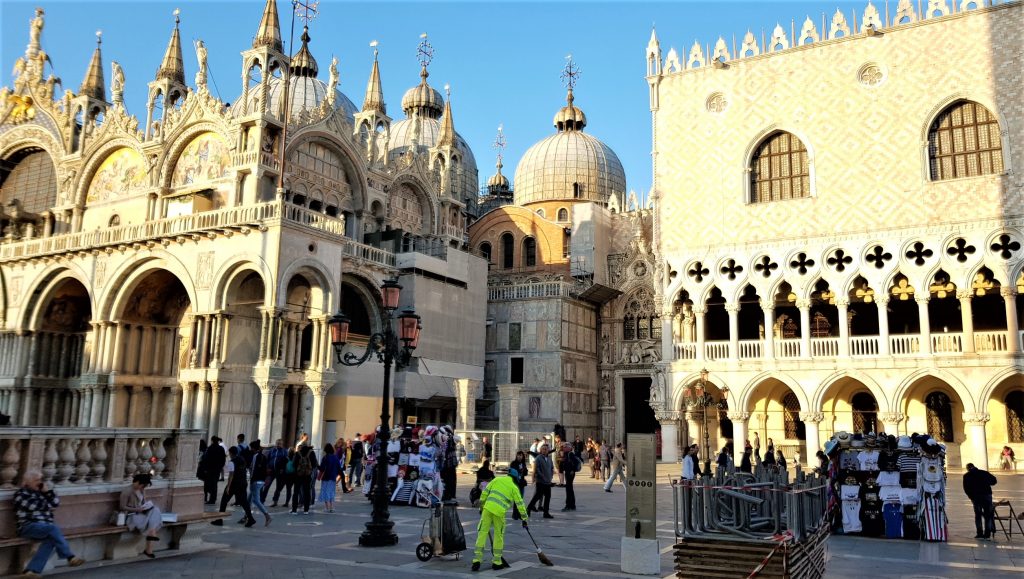
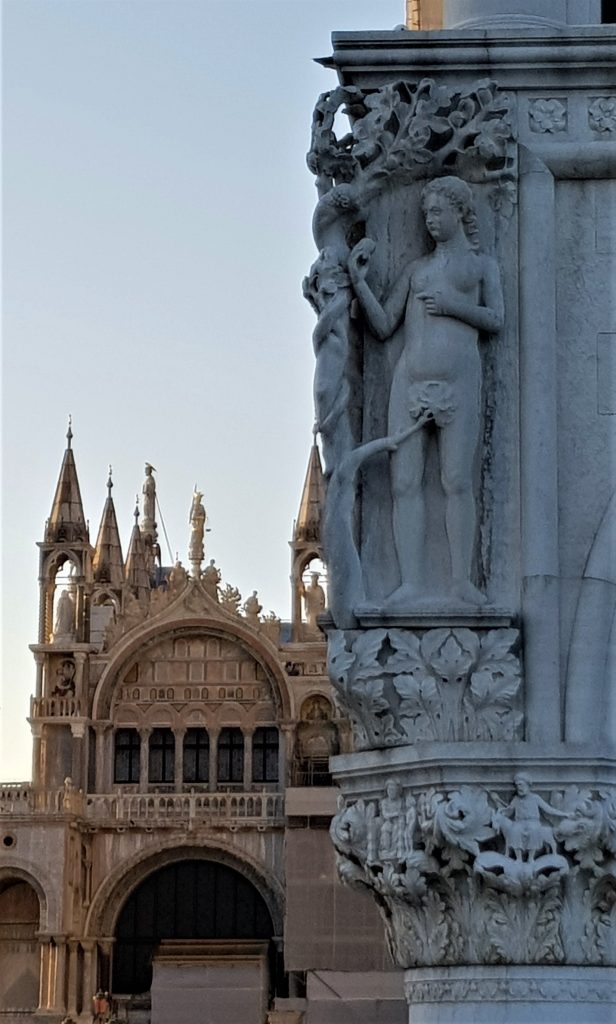
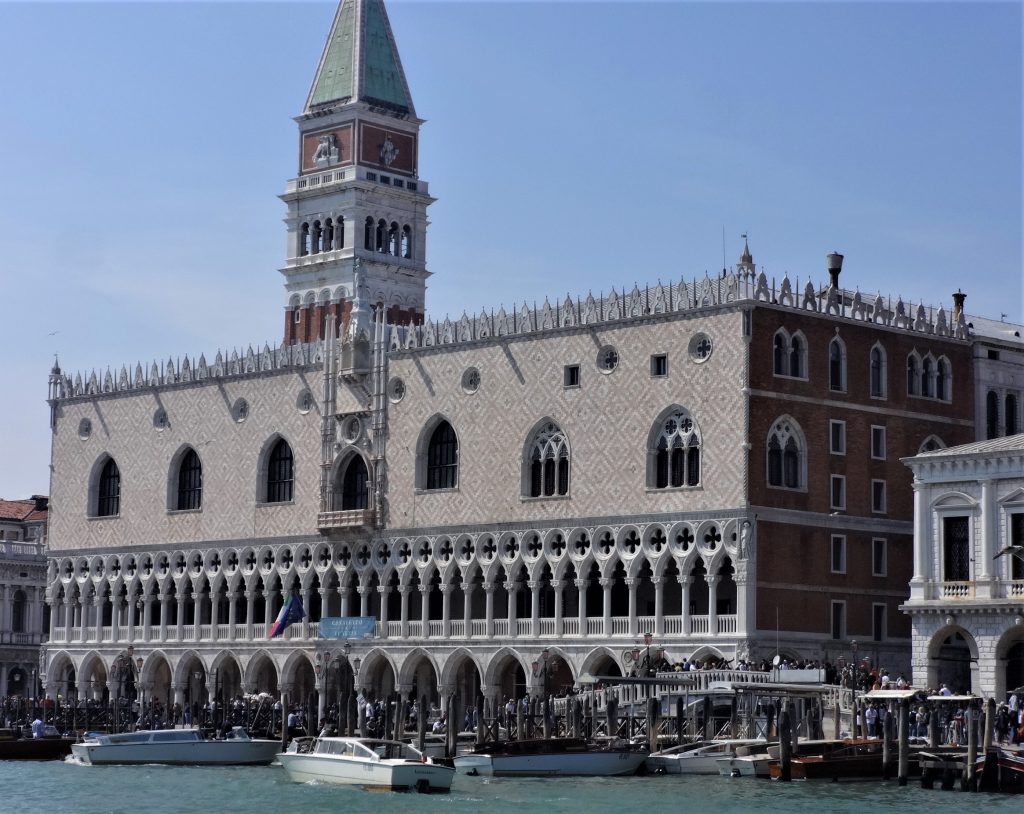
My favourite, the Doge’s Palace.
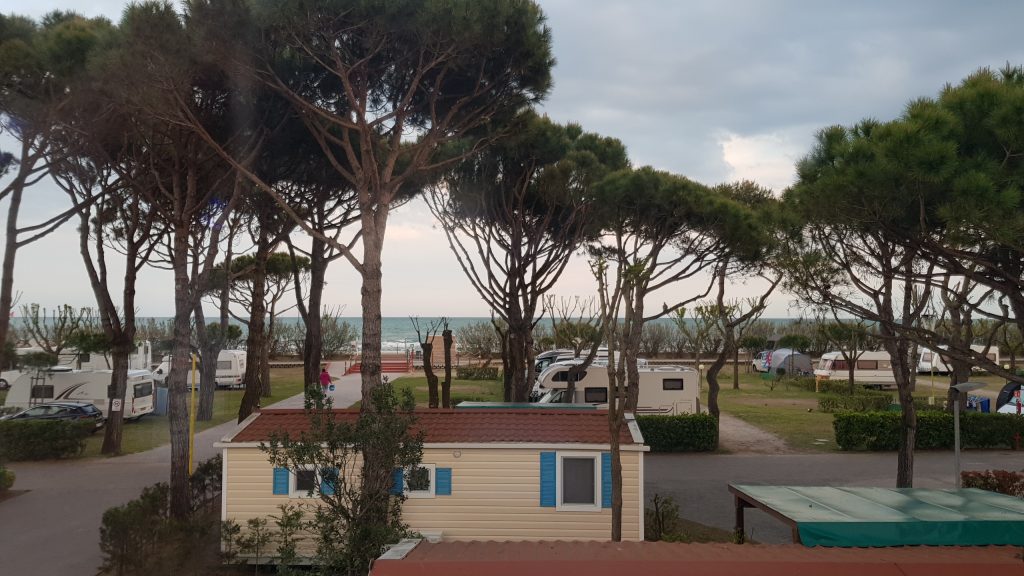
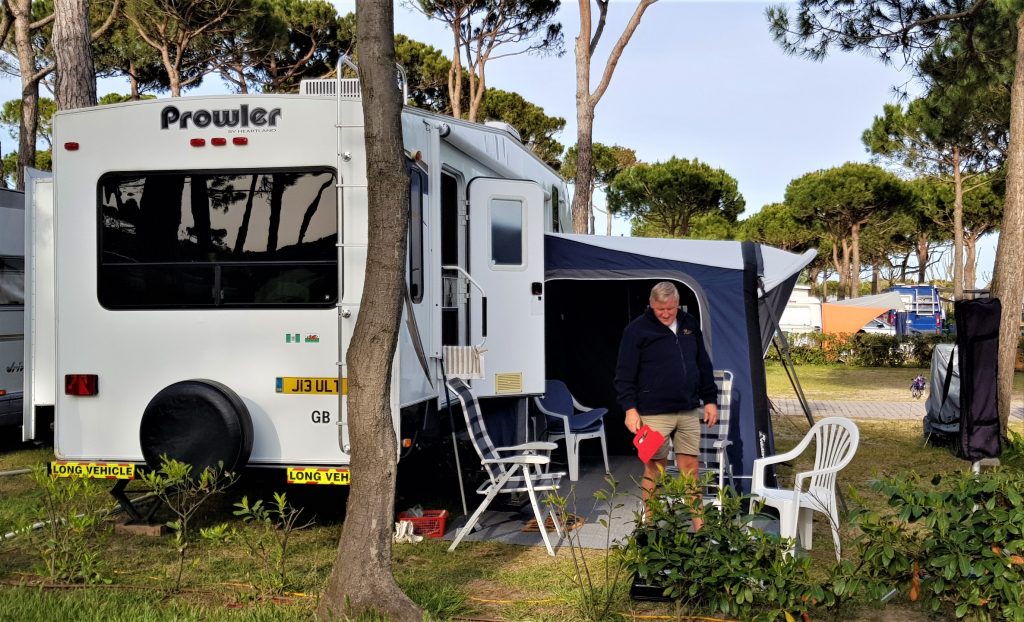
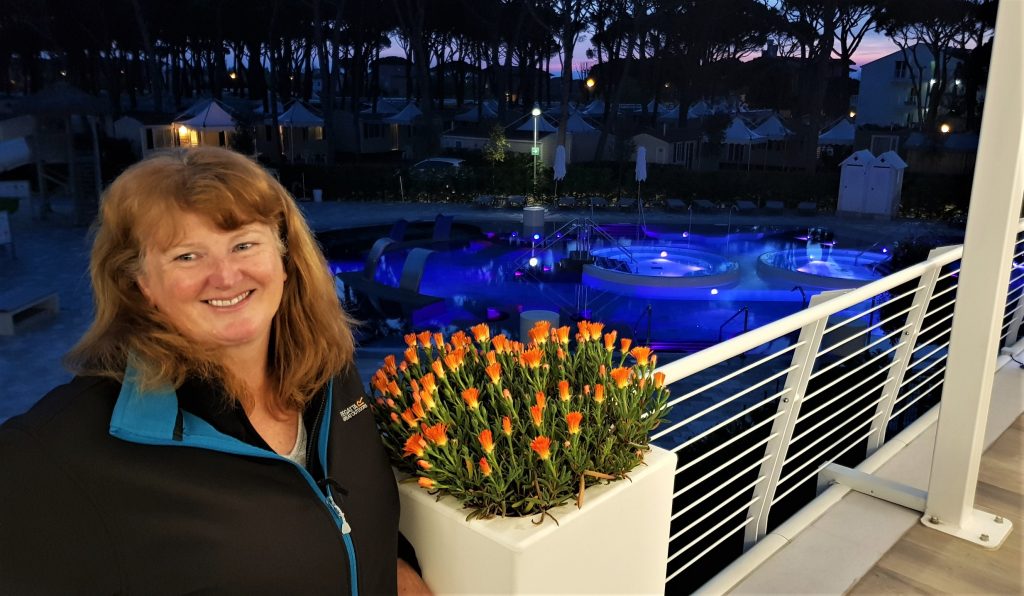
Cavallino campsite
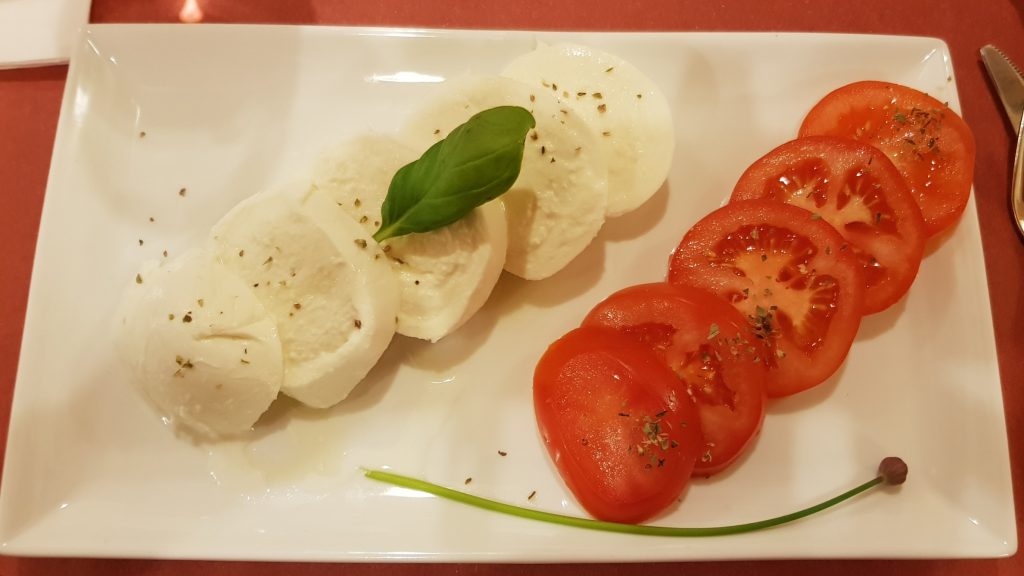
One of the birds that kept us amused, a friendly Jay. Dinner, exquisite. Our daily view of the Adriatic.BBQ Chef.
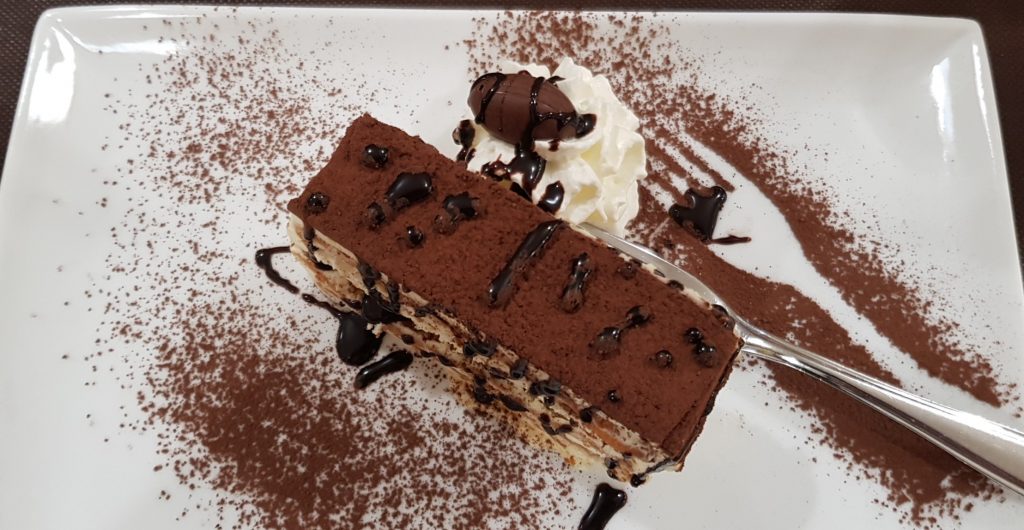
My favourite dessert, Tiramisu.
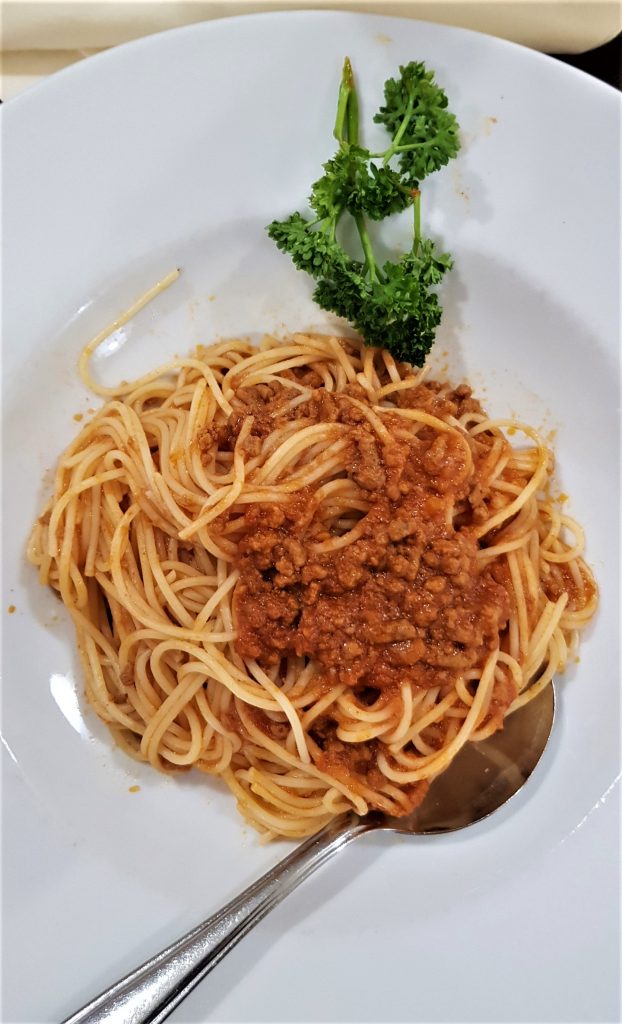
Traditional Spag bol!!
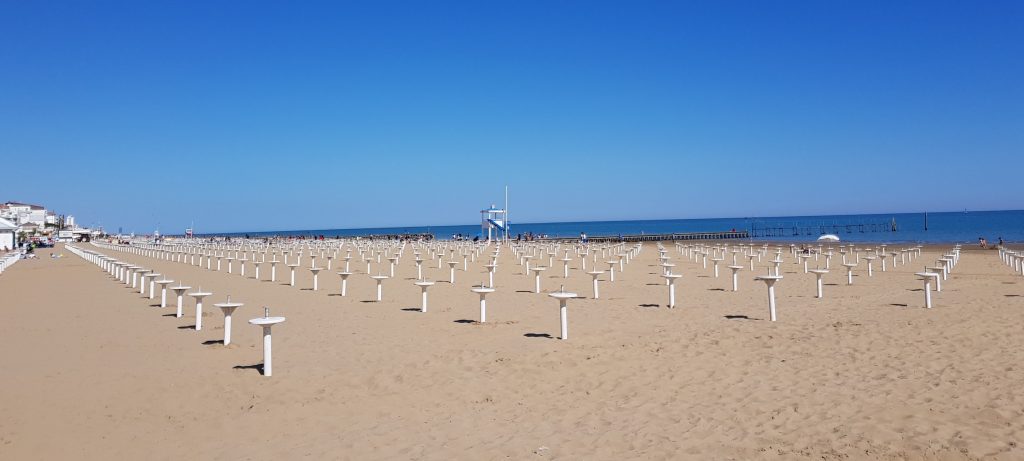
Cavallino beach getting ready for the summer rush….
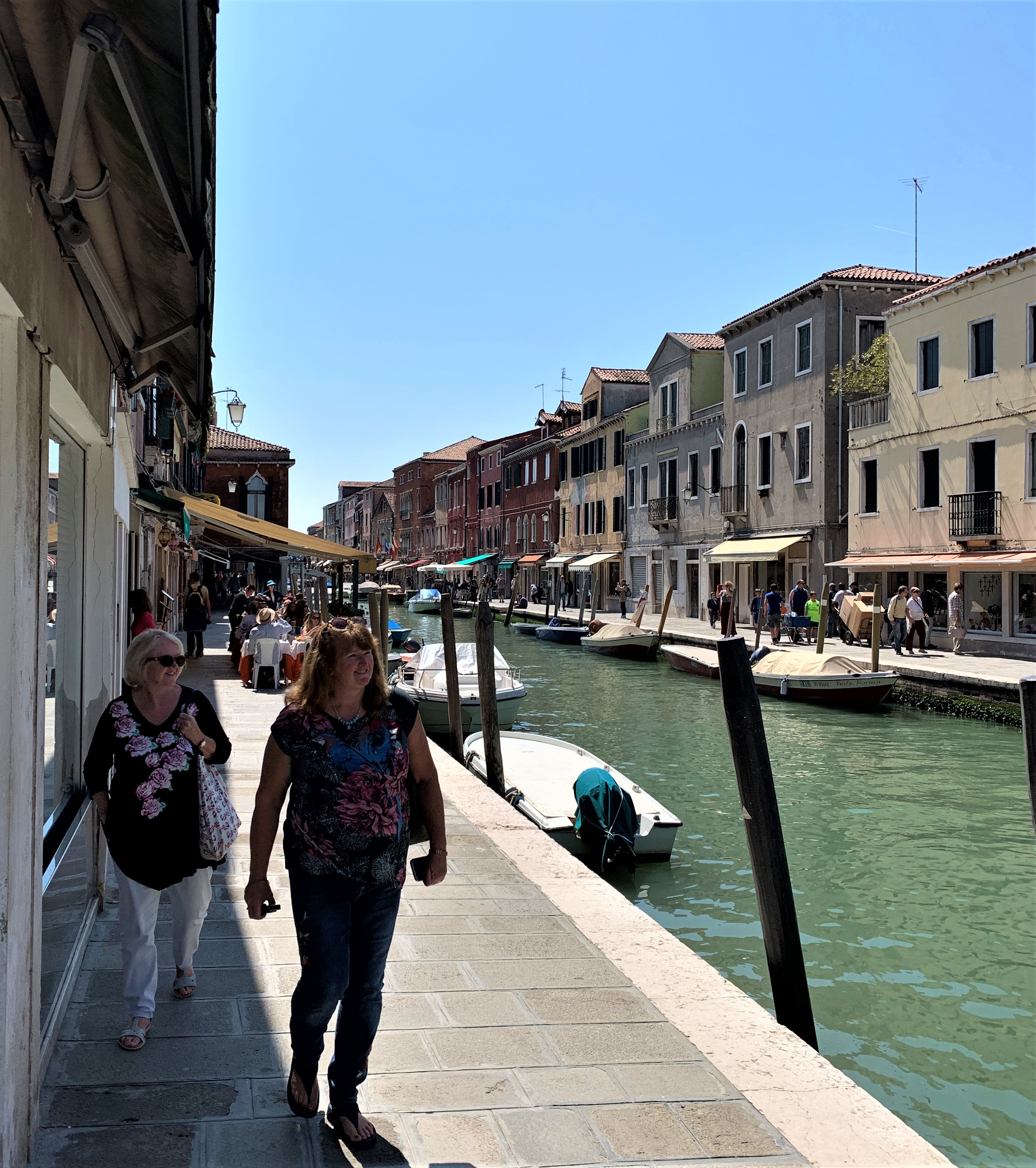
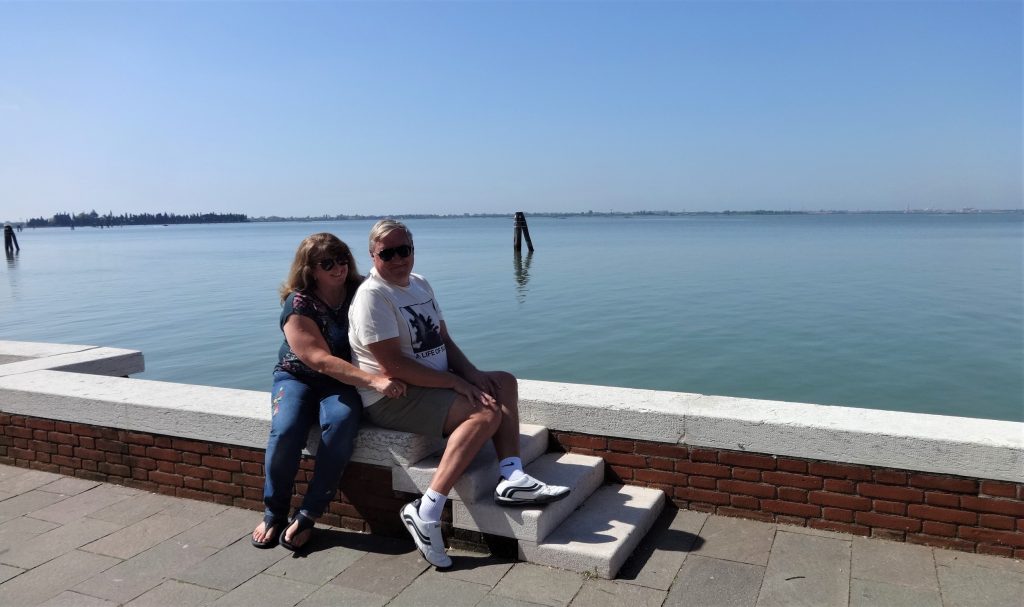
We spent yet another day in this beautiful city with our friends Mike and Brenda, as well as visiting two of the Lagoon’s islands of Murano, and Burano with our 24 hour travel cards.
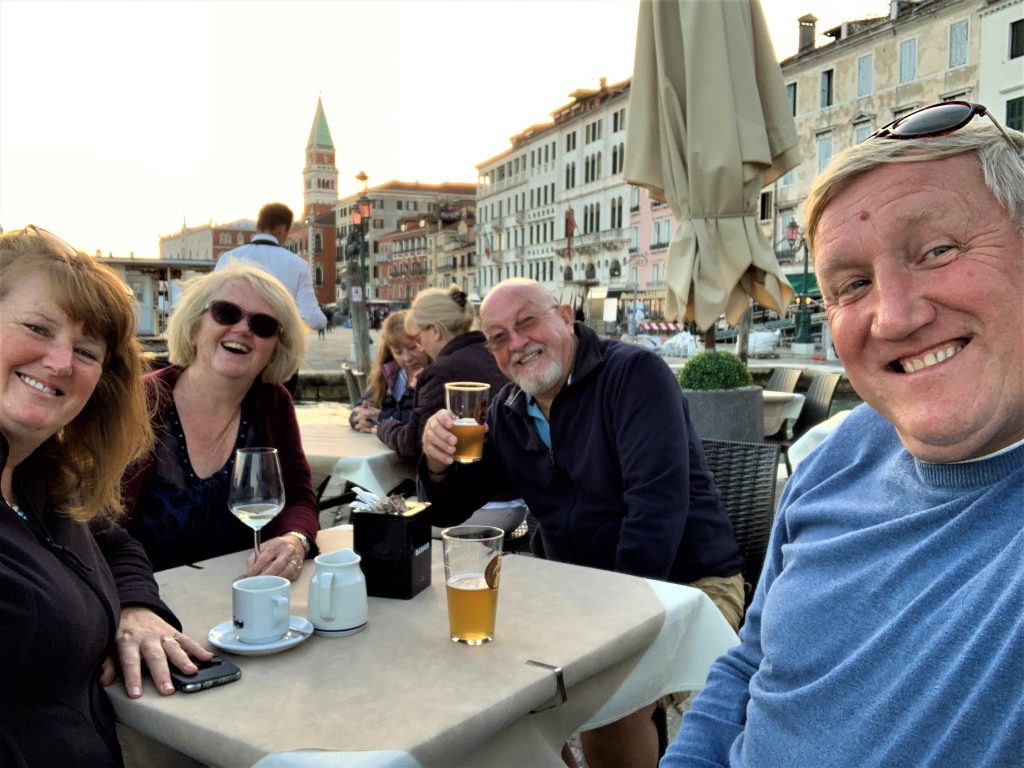
Drinks on Venice front.
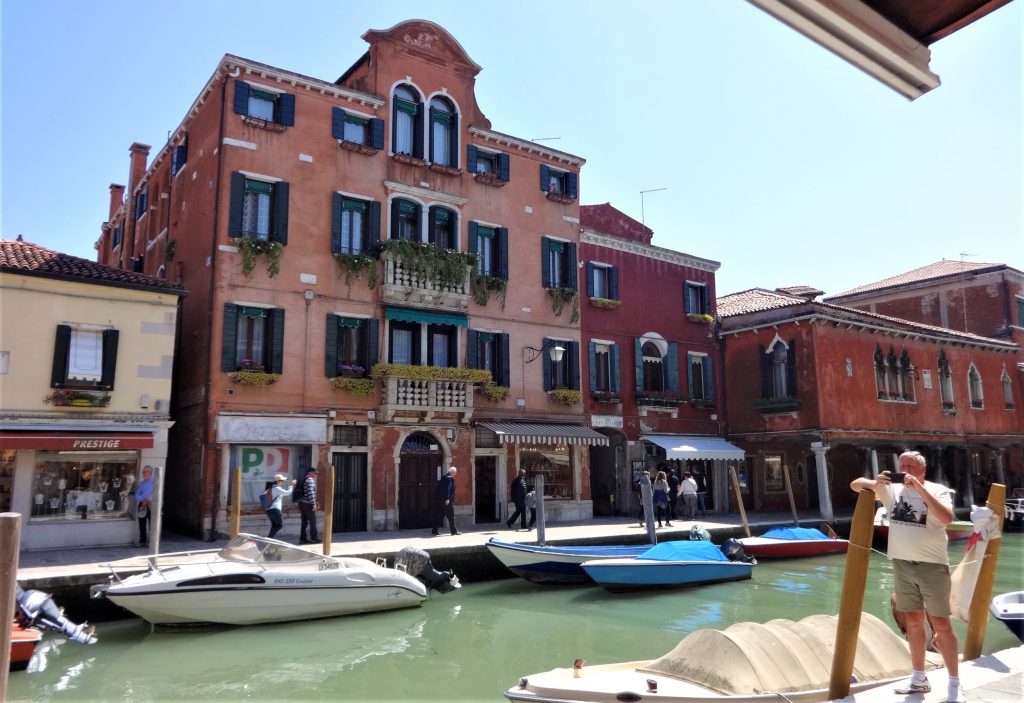
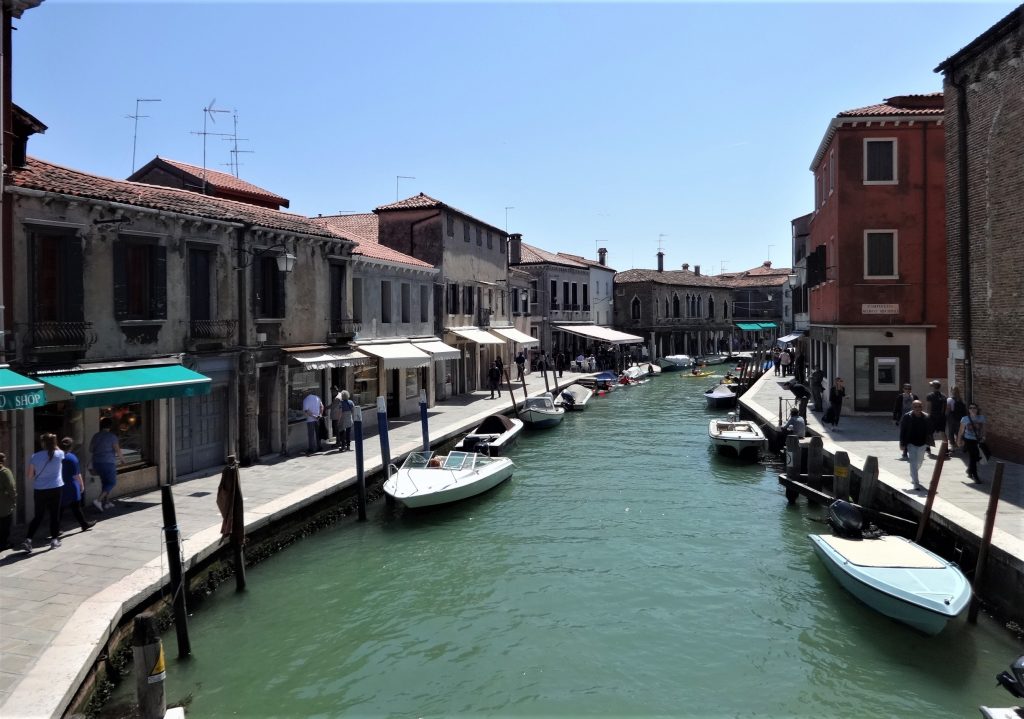
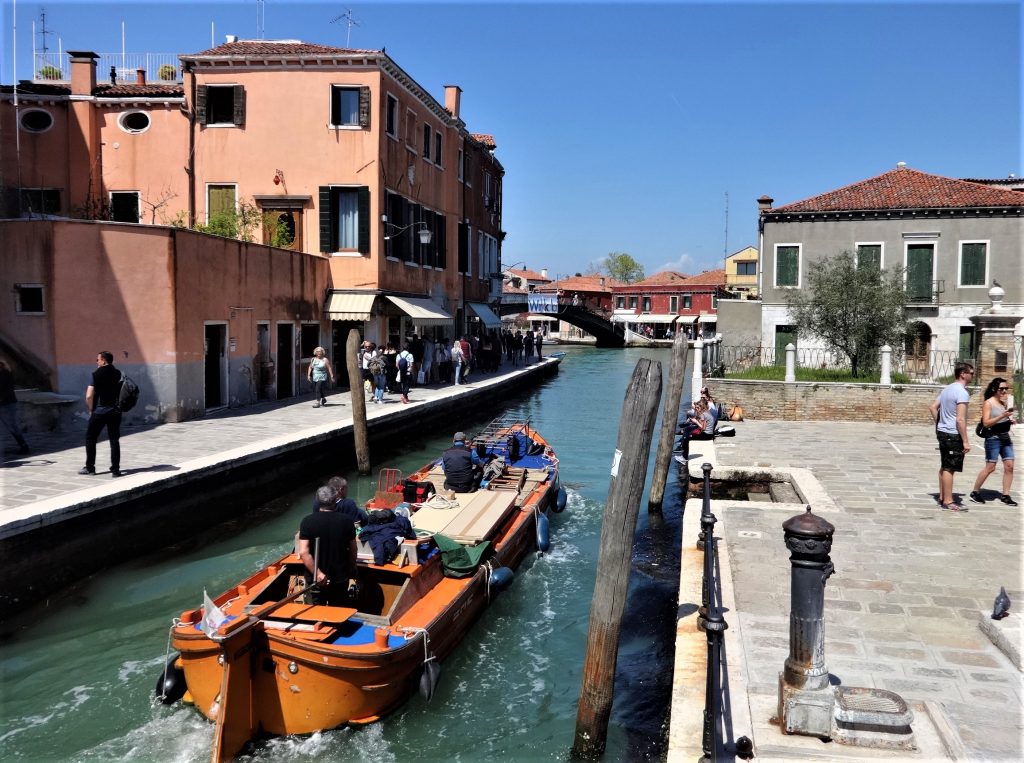
Murano
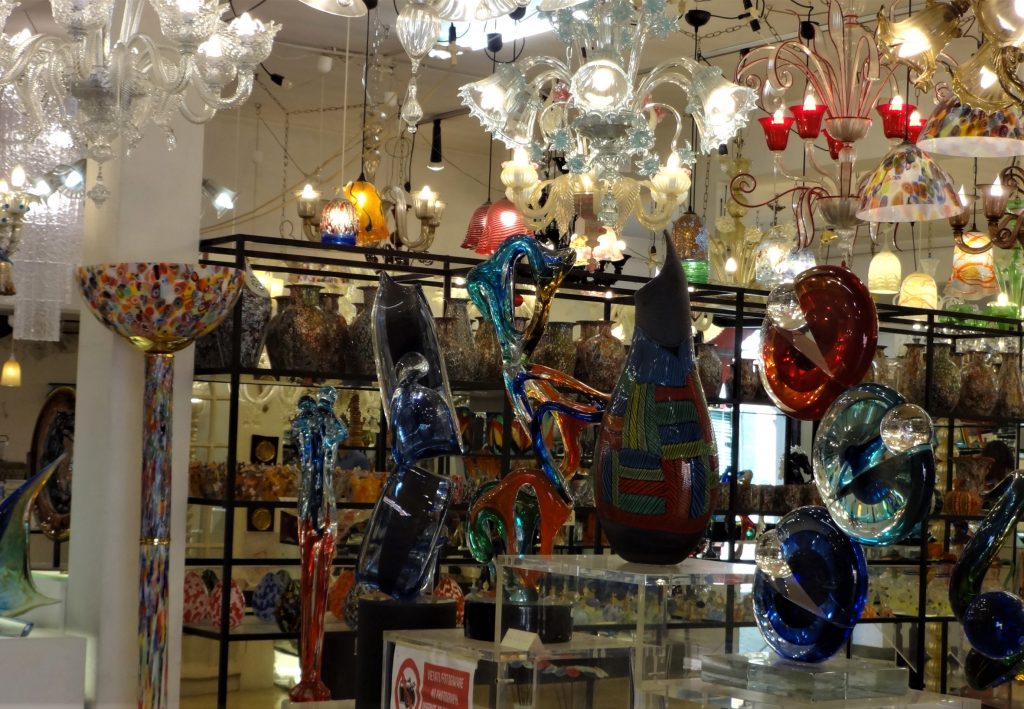
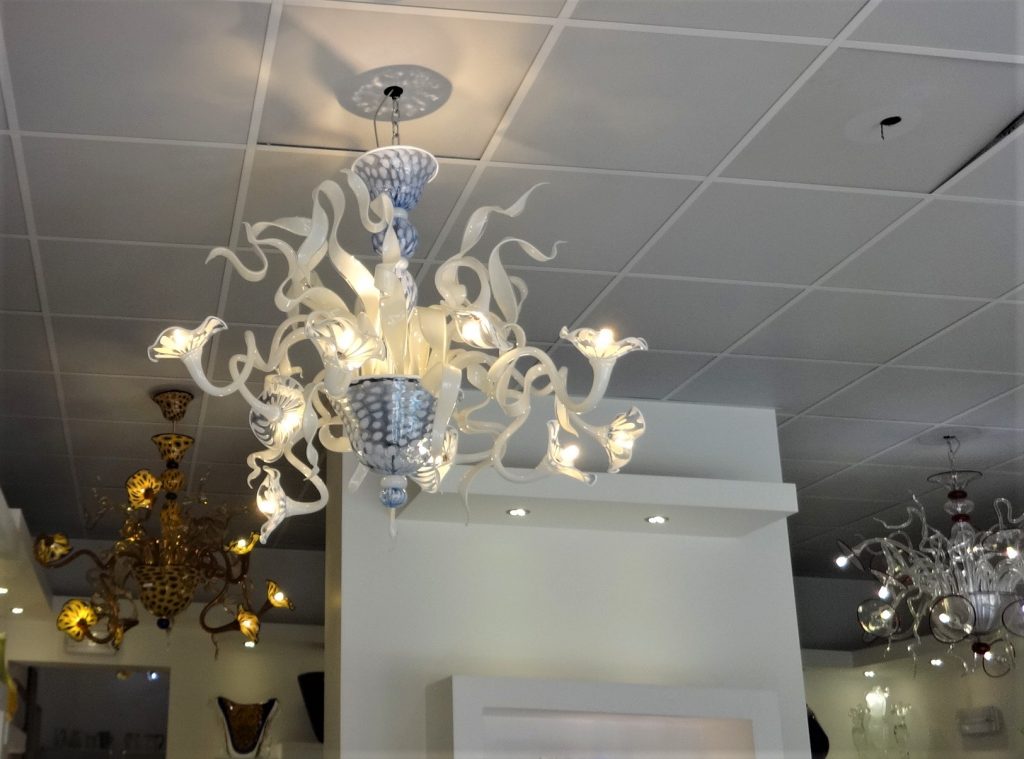
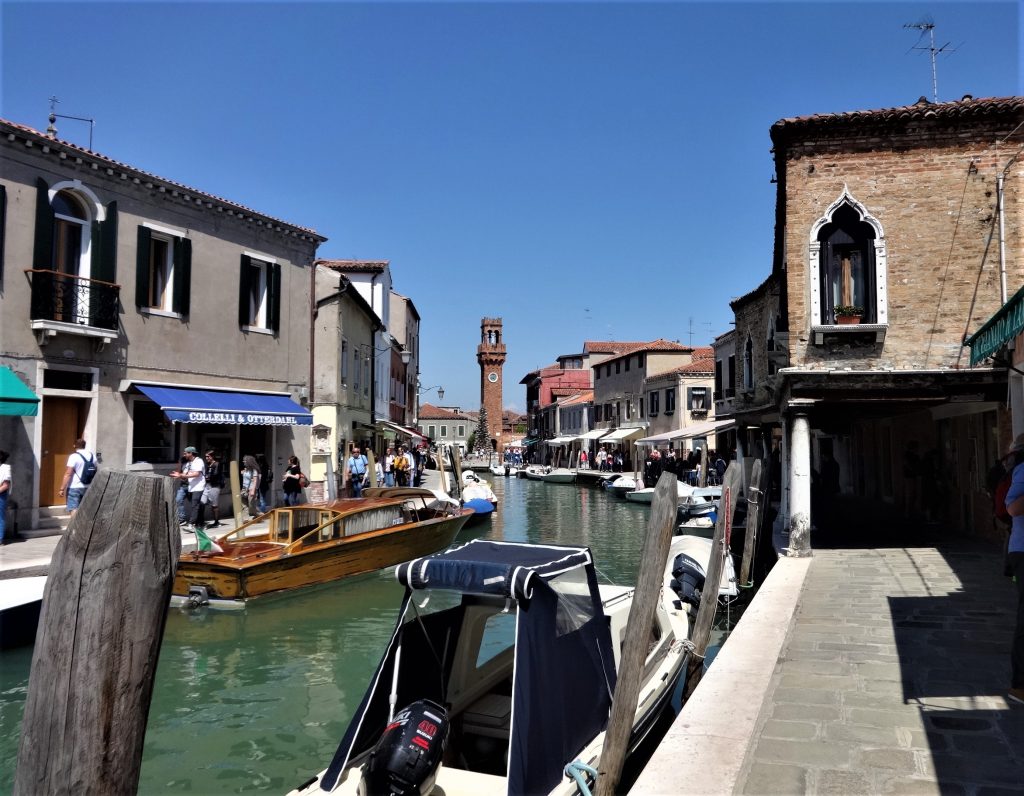
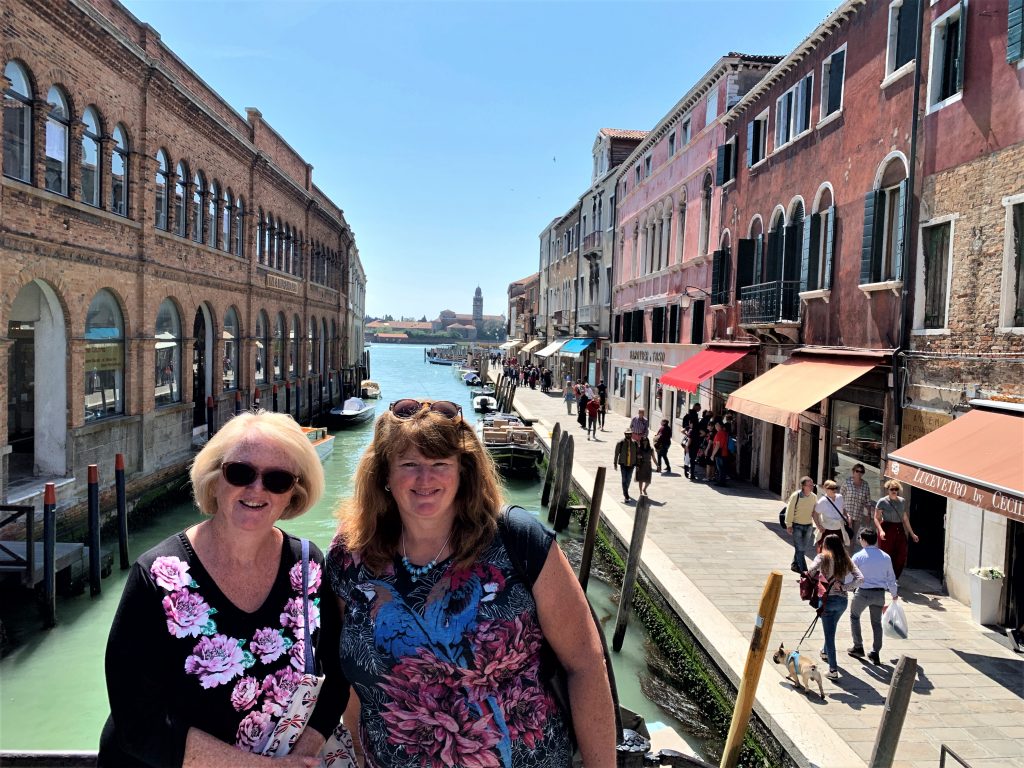
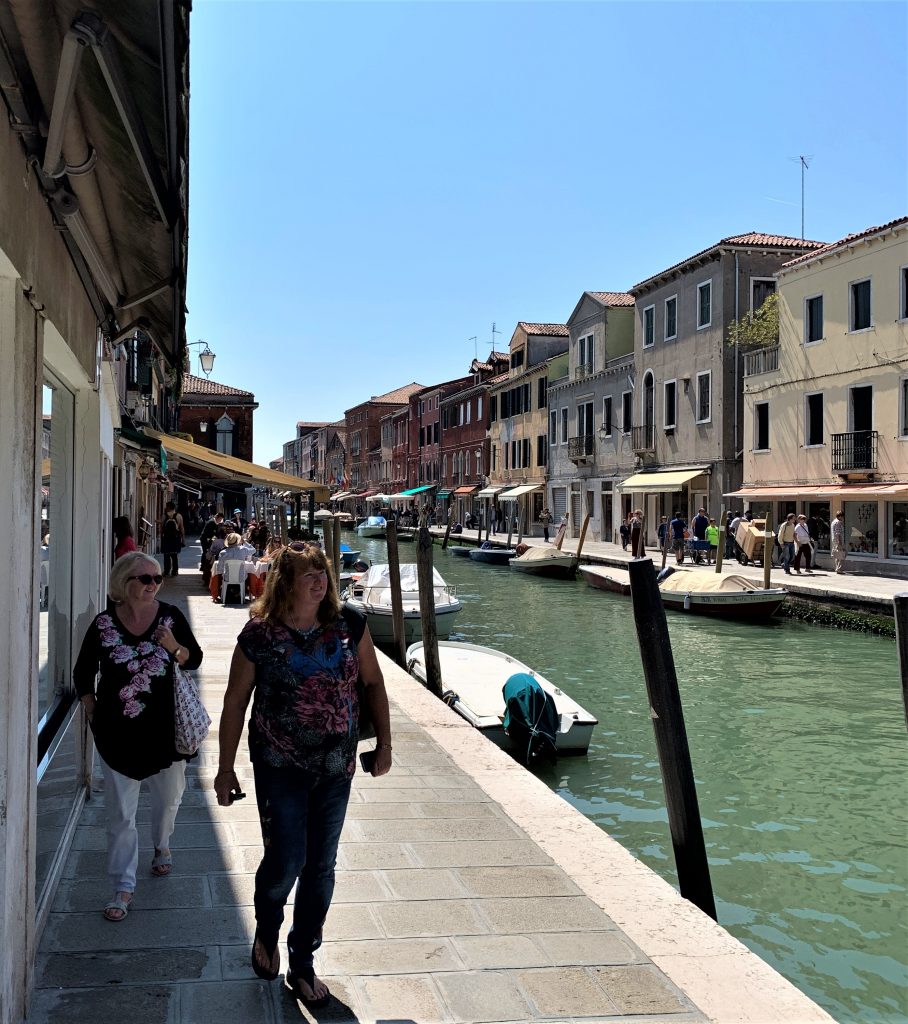
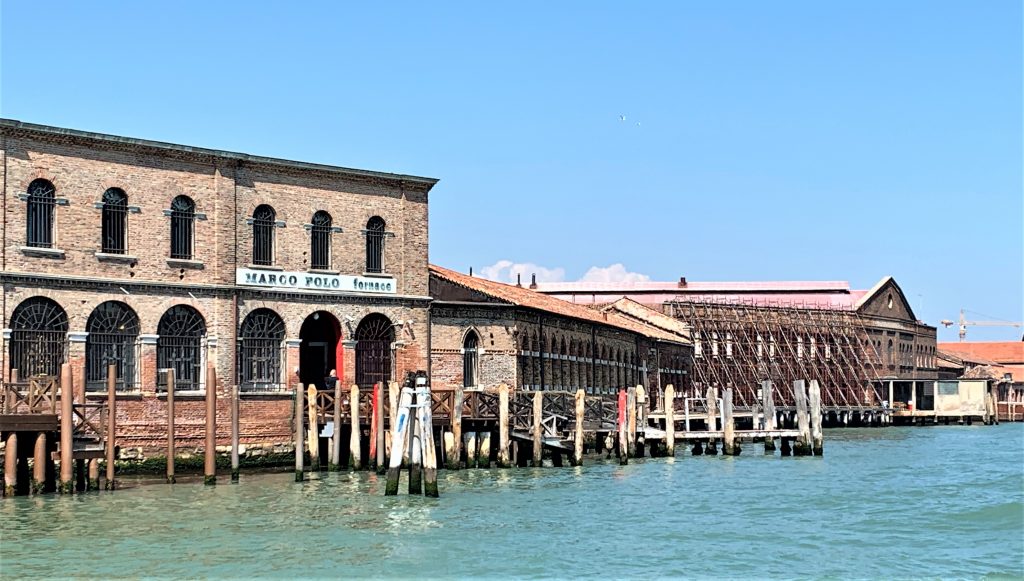
Murano is famous for its glass factories which produce such fabulous creations as chandeliers, glass vases and bowls, and drinking glass and decanter sets, all hand blown. The colours and designs were outstanding, some traditional, some modern. The small island was heaving with tourists and we had a disappointing lunch of dry tasteless pizza, a first in the whole time we have been here in Italy.
A selection of chandeliers and glassworks.
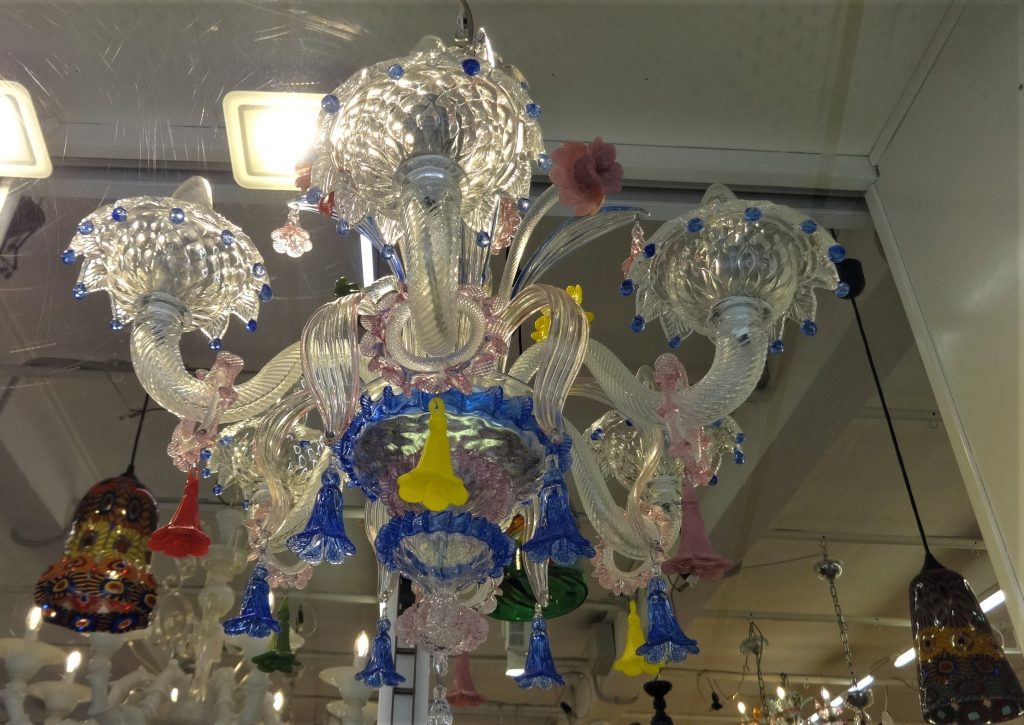
My favourite chandelier, and colour!
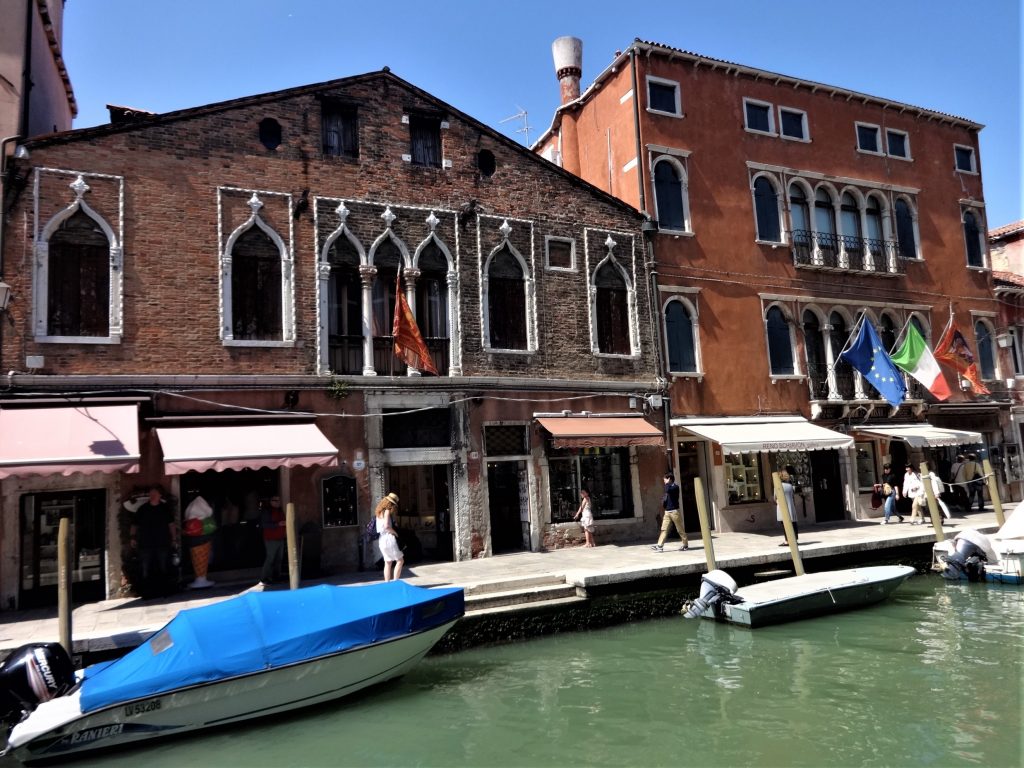
Some beautiful buildings.
Modern chandeliers.
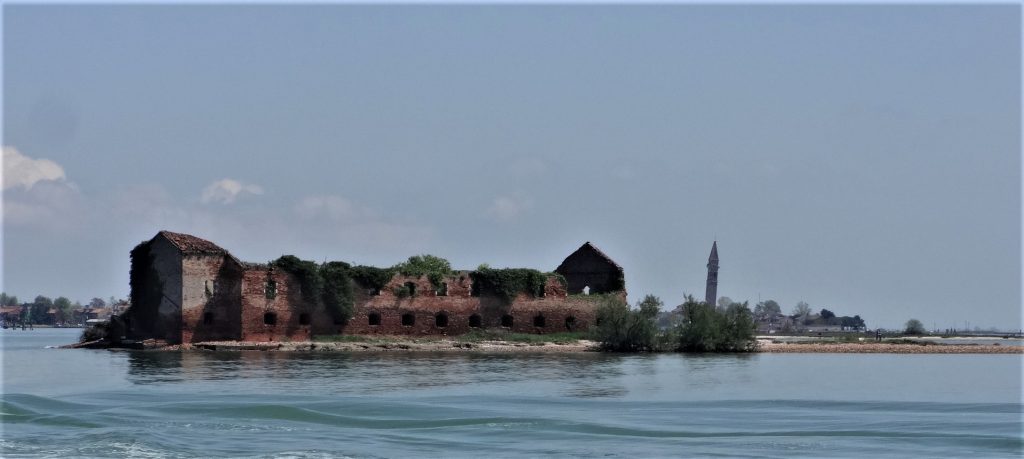
An island ruin with Burano in the back ground.
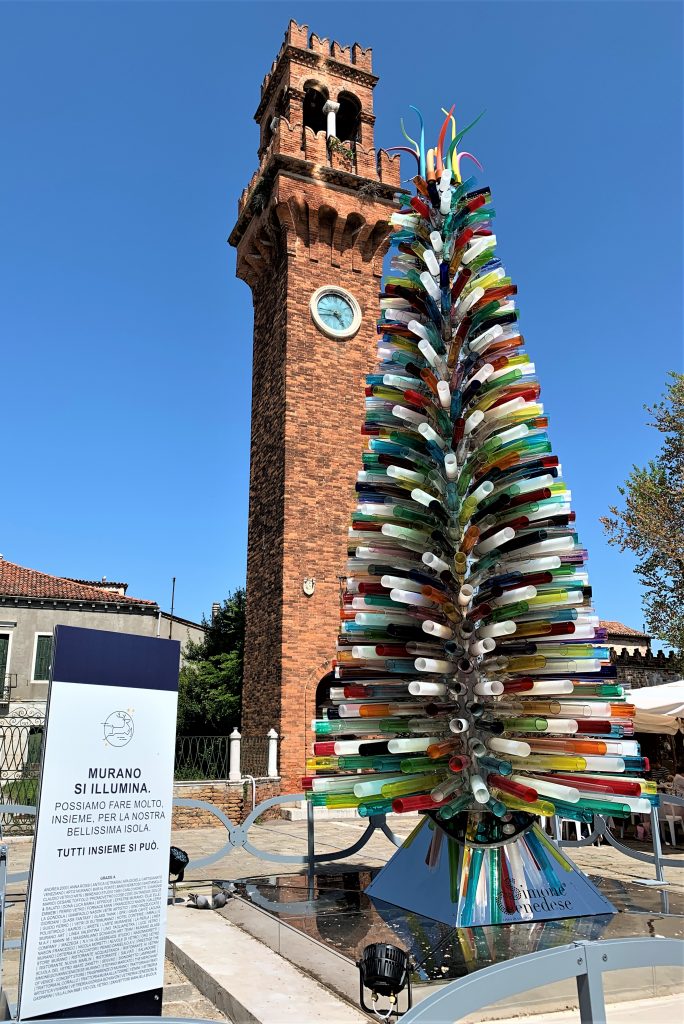
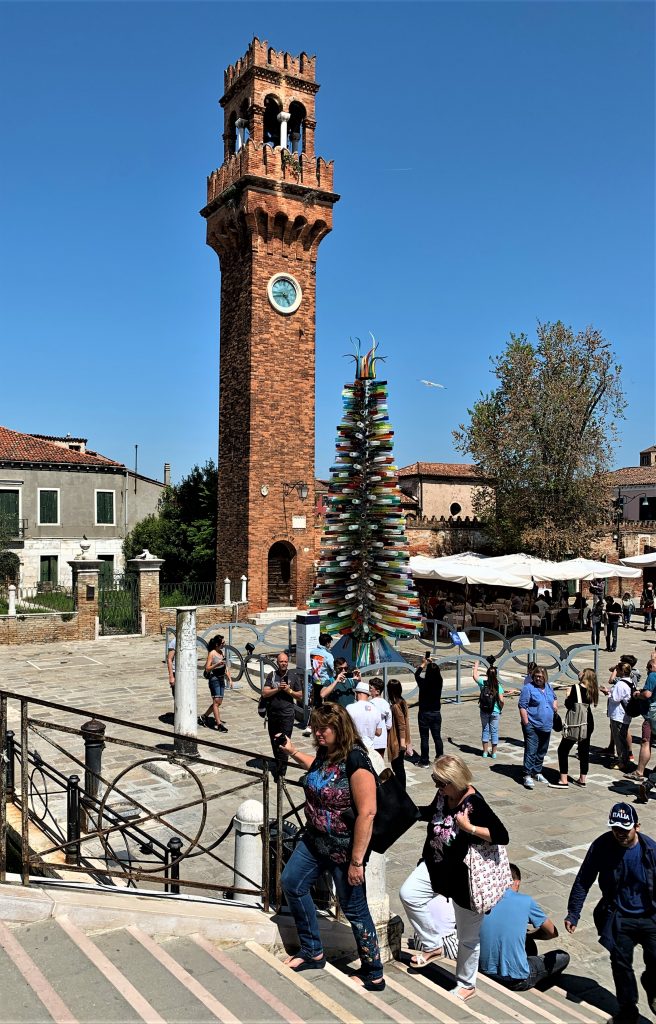
Murano glass tower.
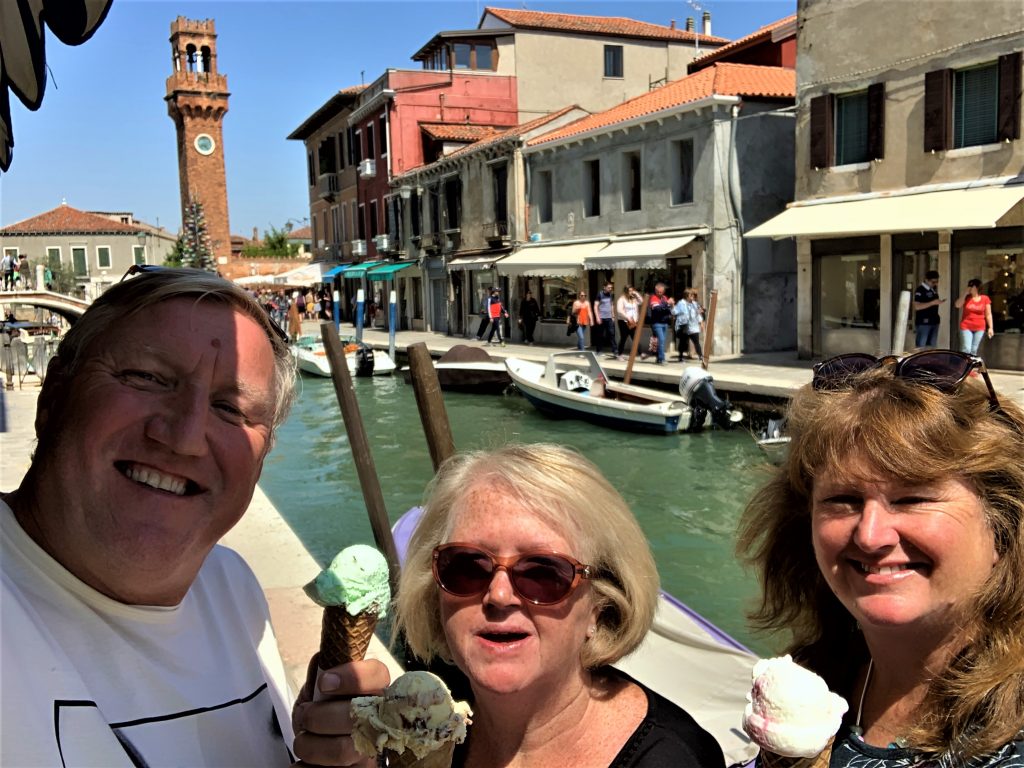
Italian Ice creams were a must!!!
Burano
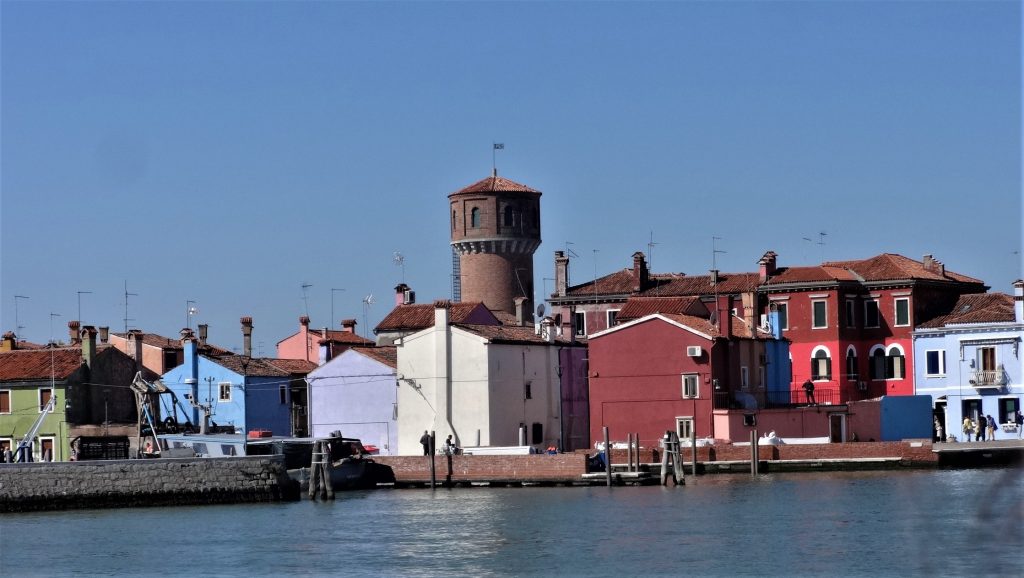
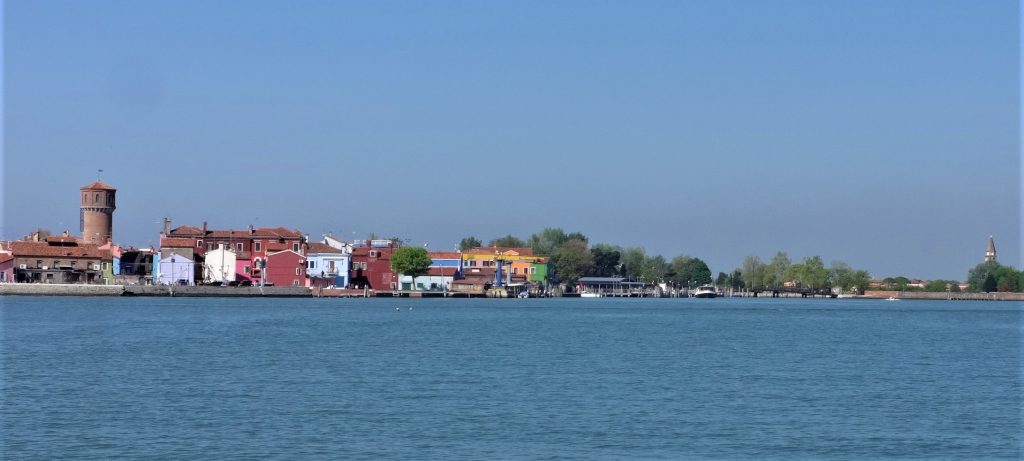
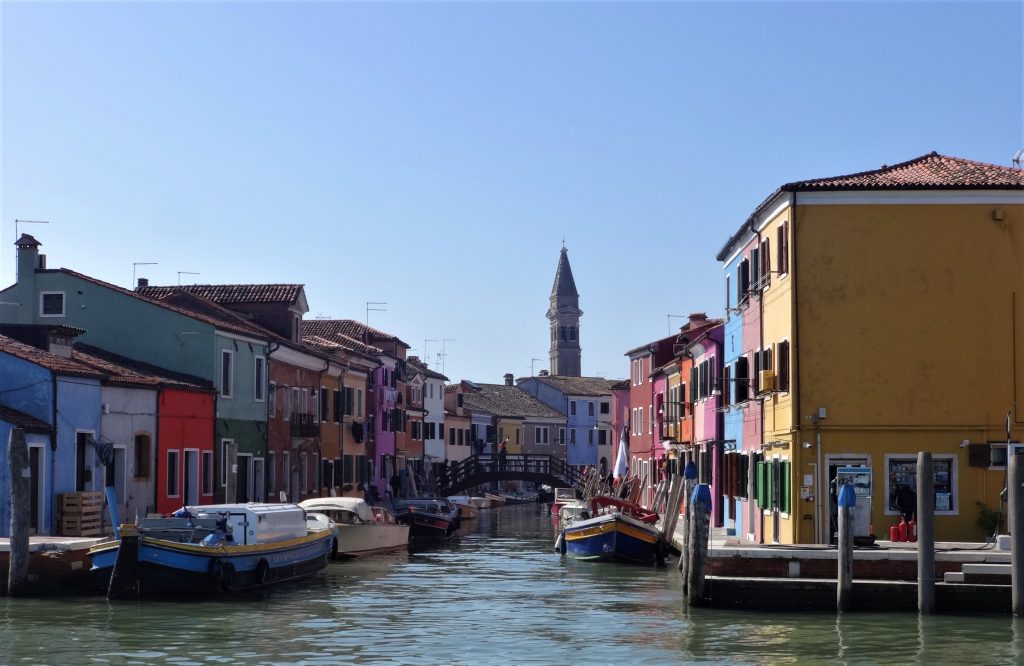
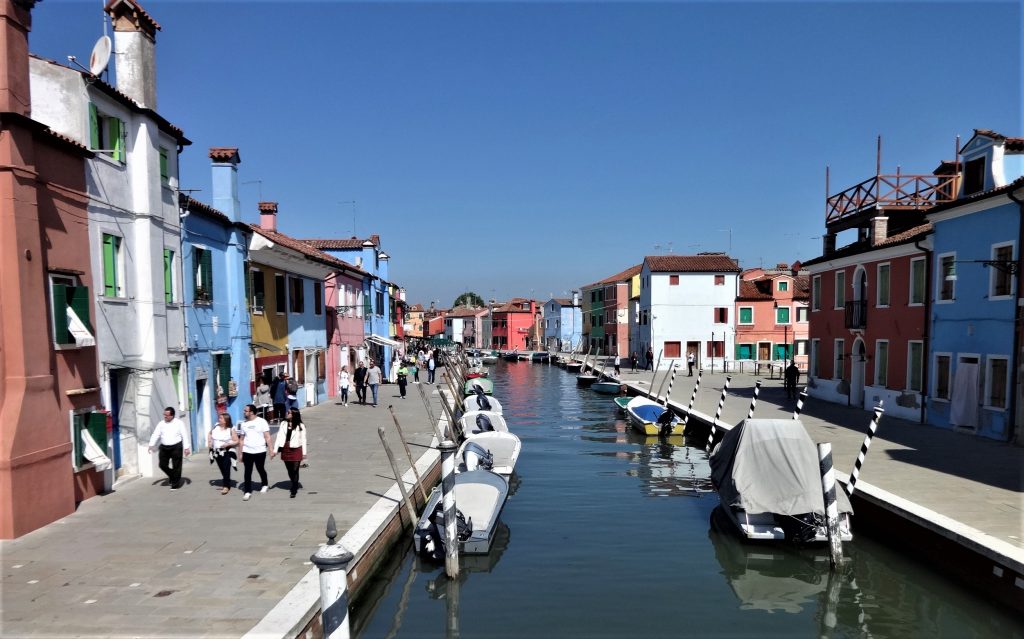
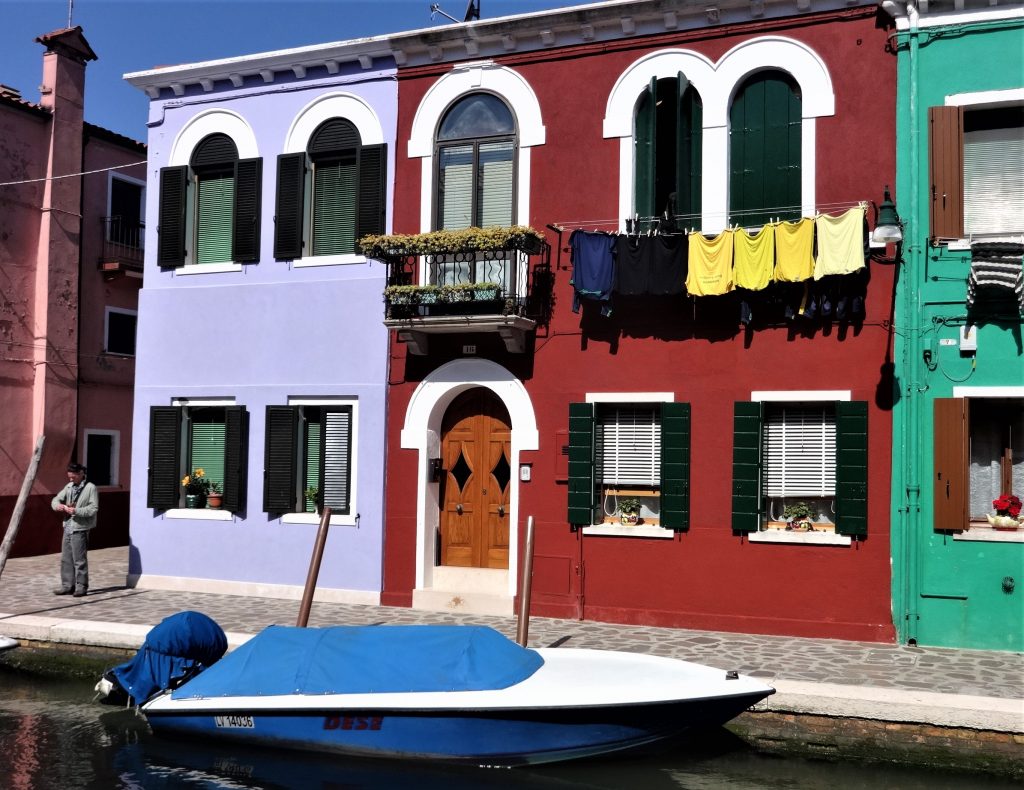
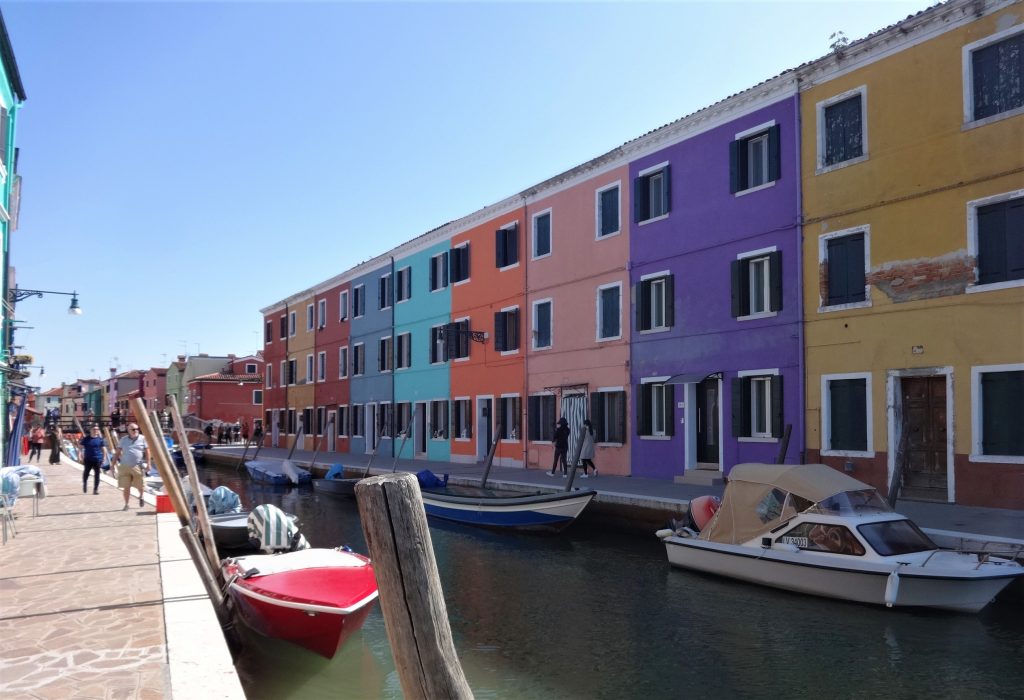
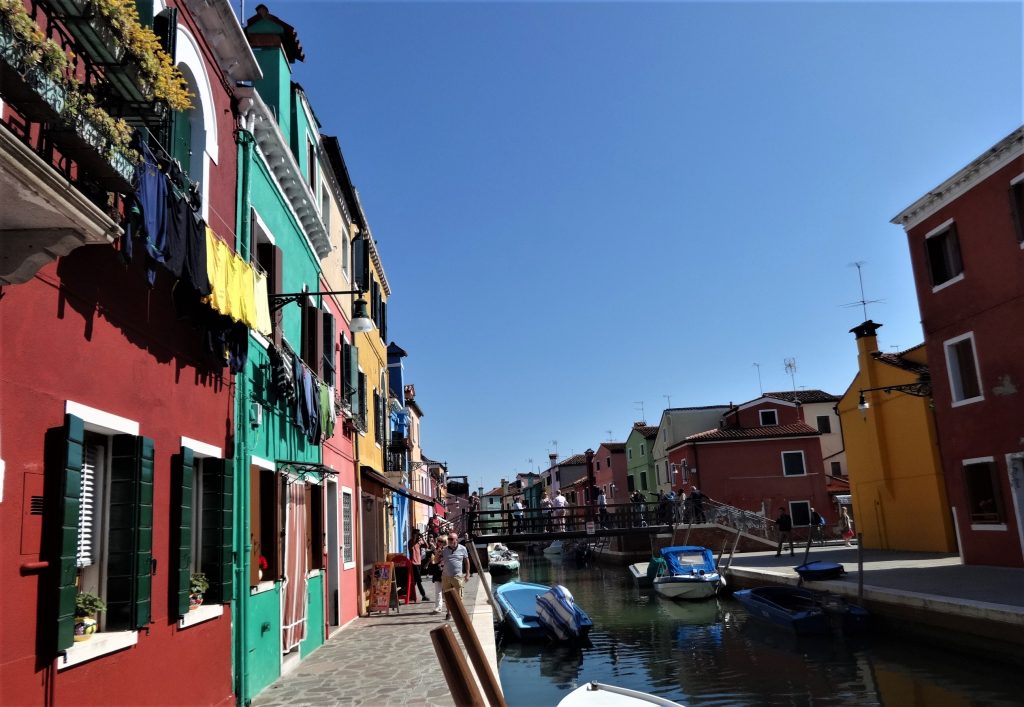
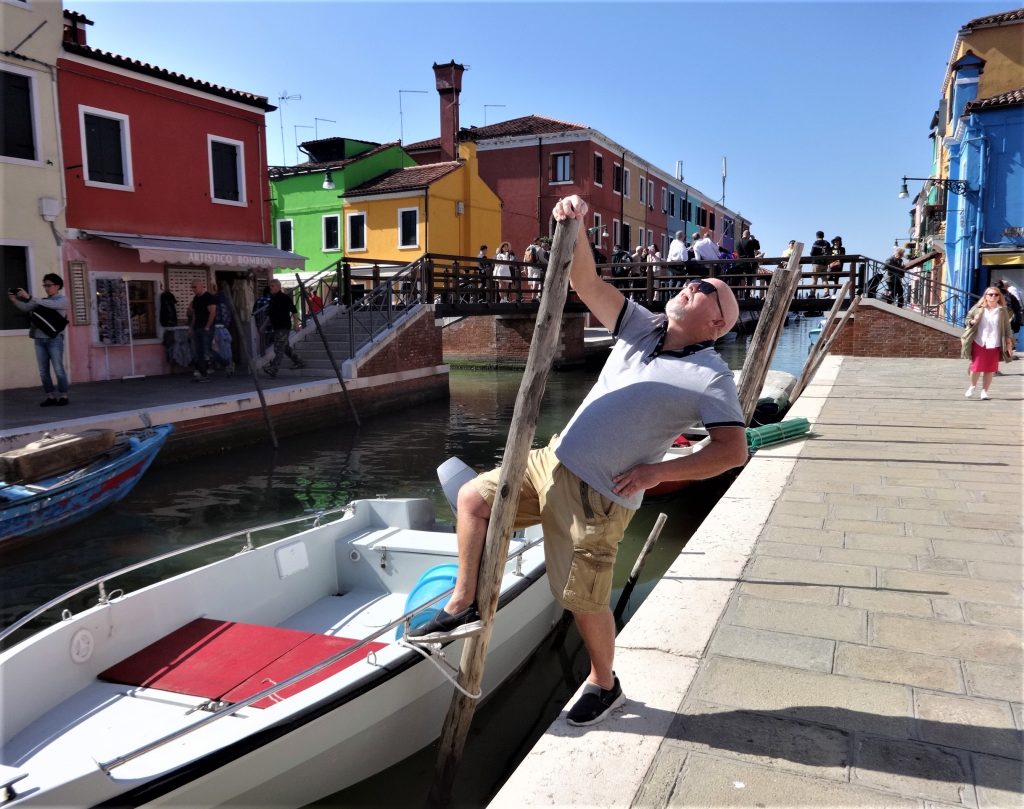
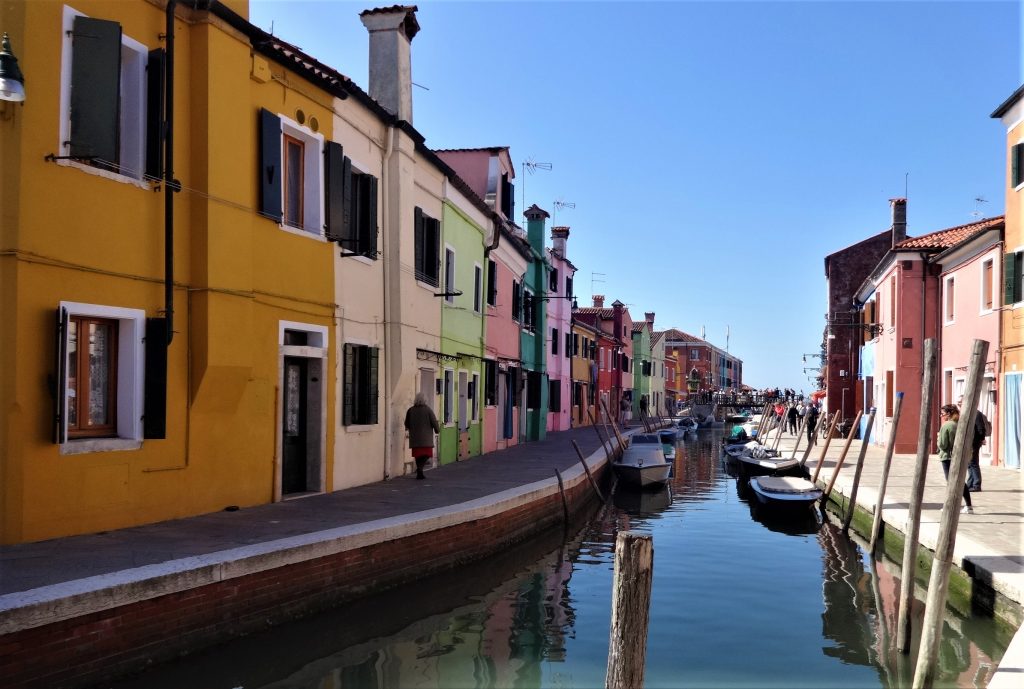
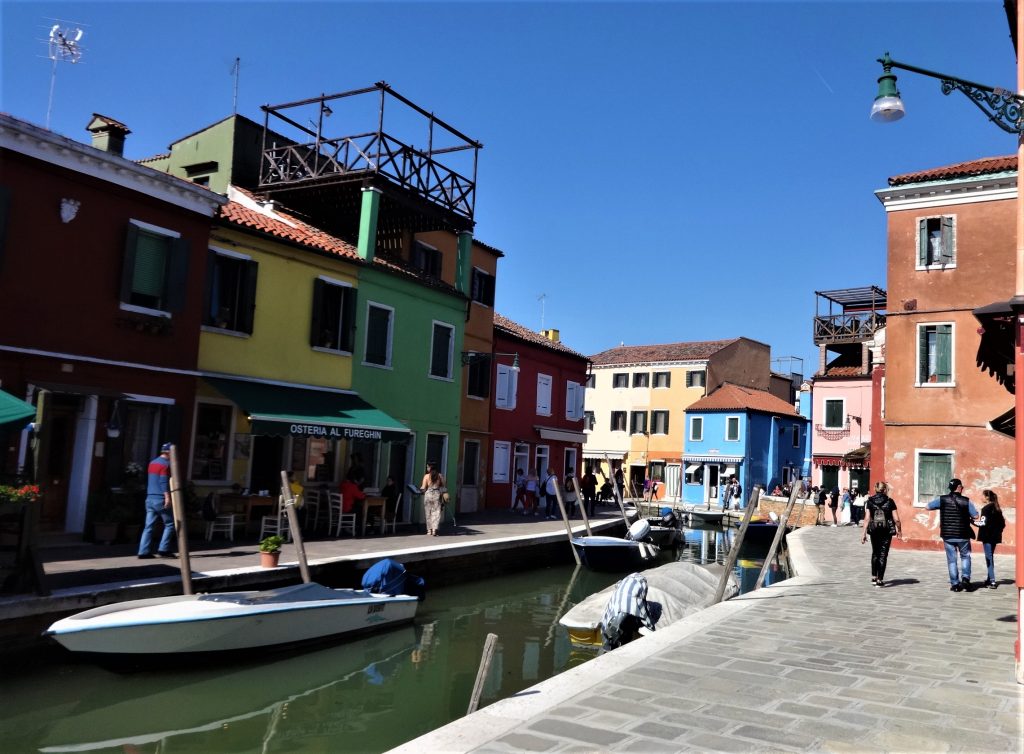
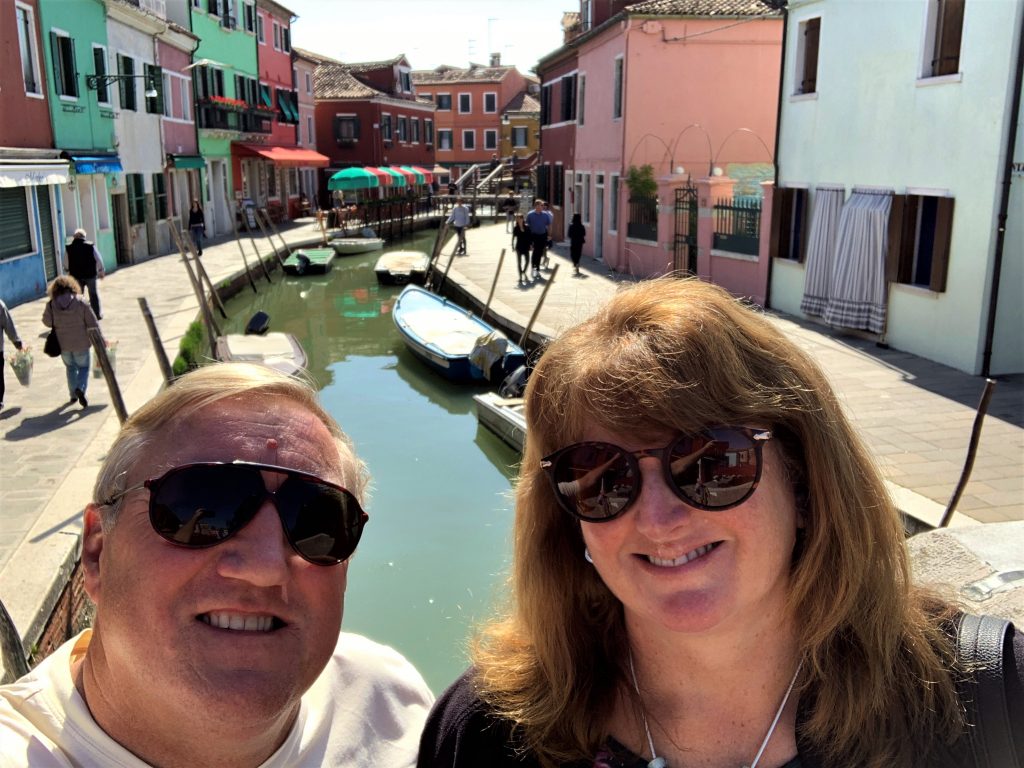
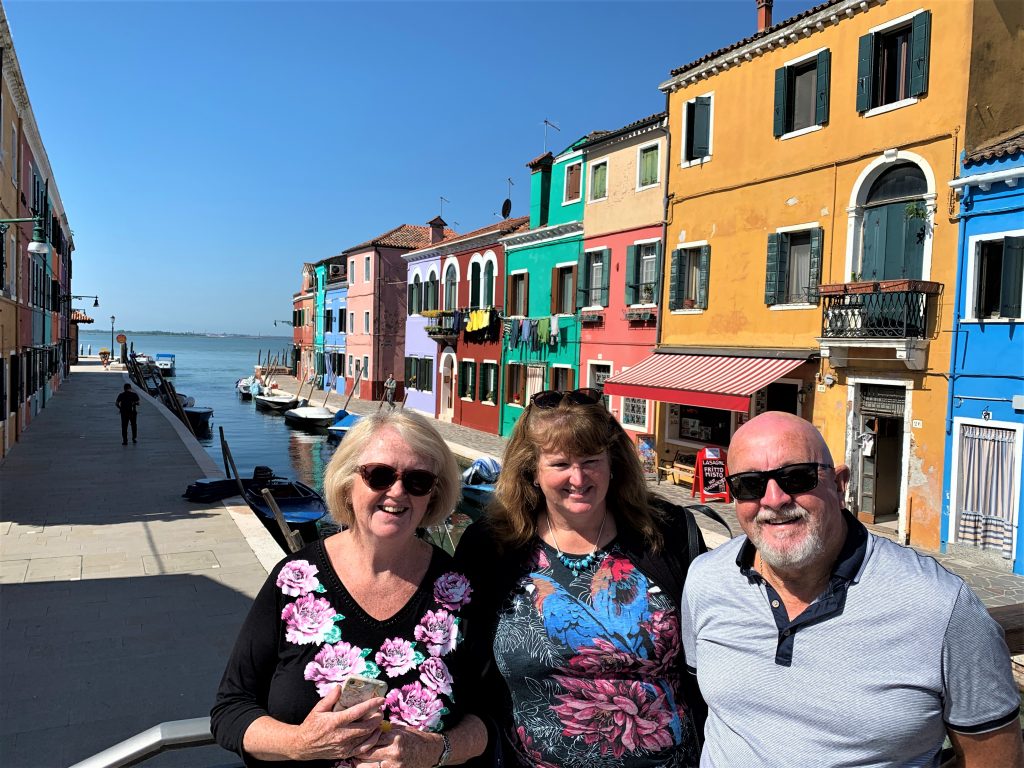
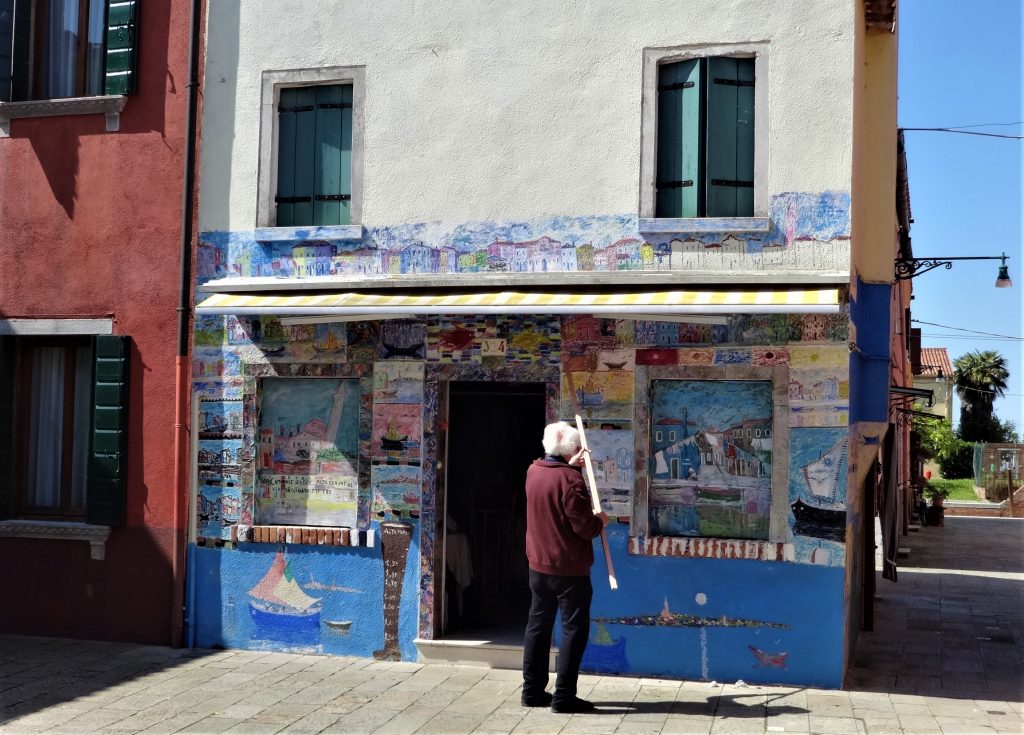
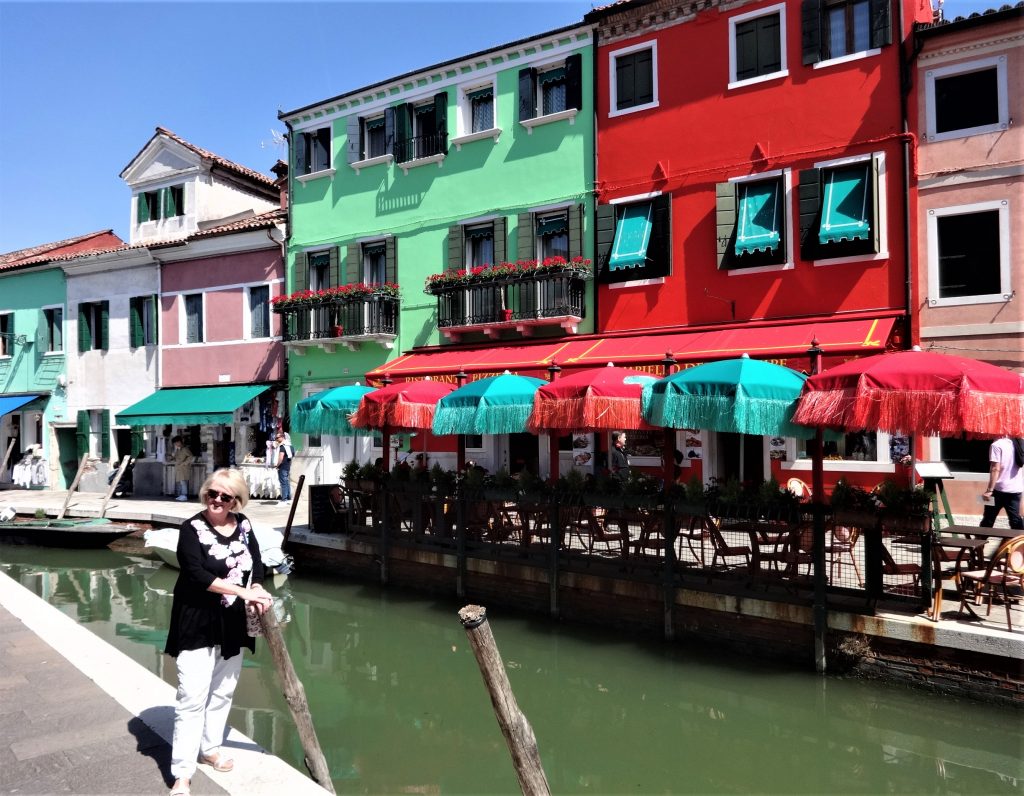
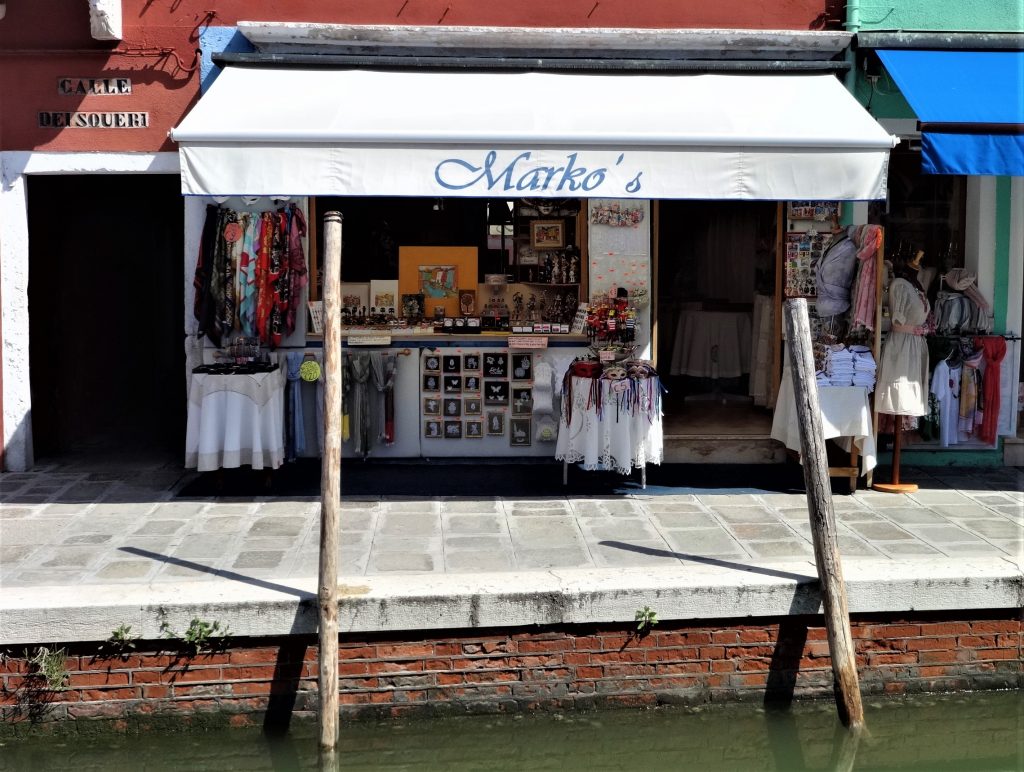
Burano can only be described as a rainbow of colours!!! It is a small fishing village, where each house is painted in a bright colour different to it’s neighbour and is the home of hand made lace products. The canal that flows through the middle of the island showcases the bars and restaurants that make the most of the green colour of the water and the different colours of the houses edging it. It’s also where you will find traditional British Pole dancers!!!
Approaching Burano.
Didn’t expect to find pole dancers here but we did!!!
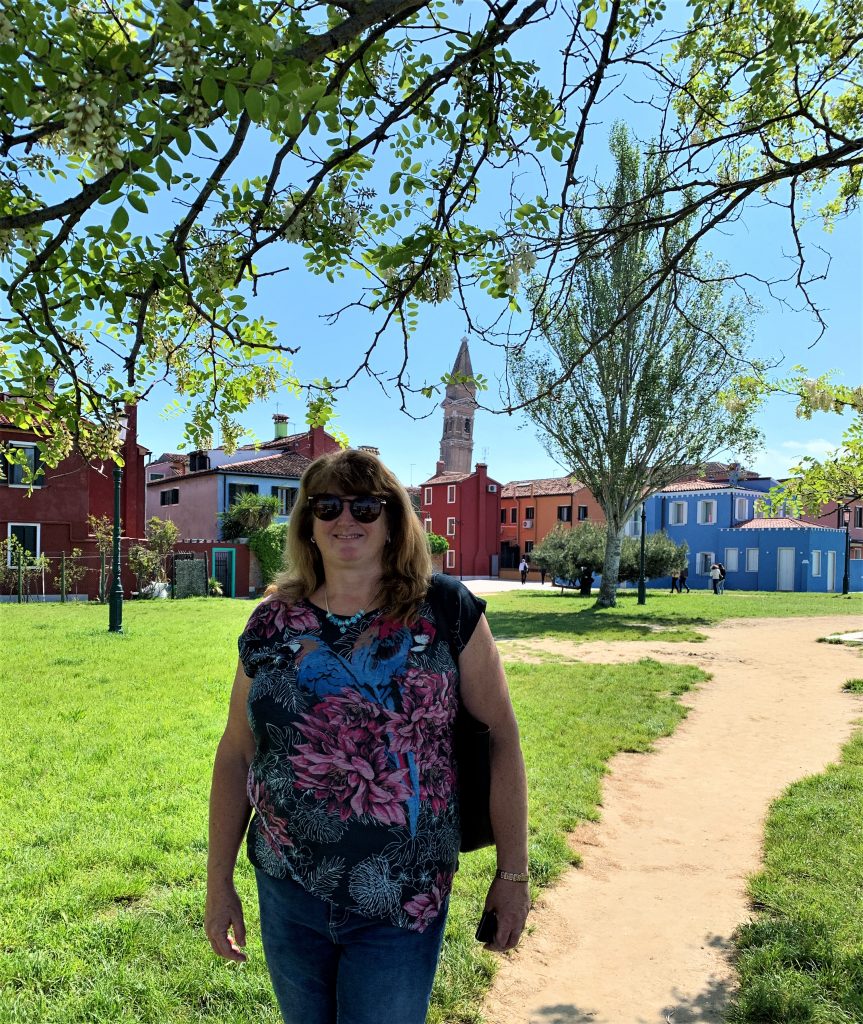
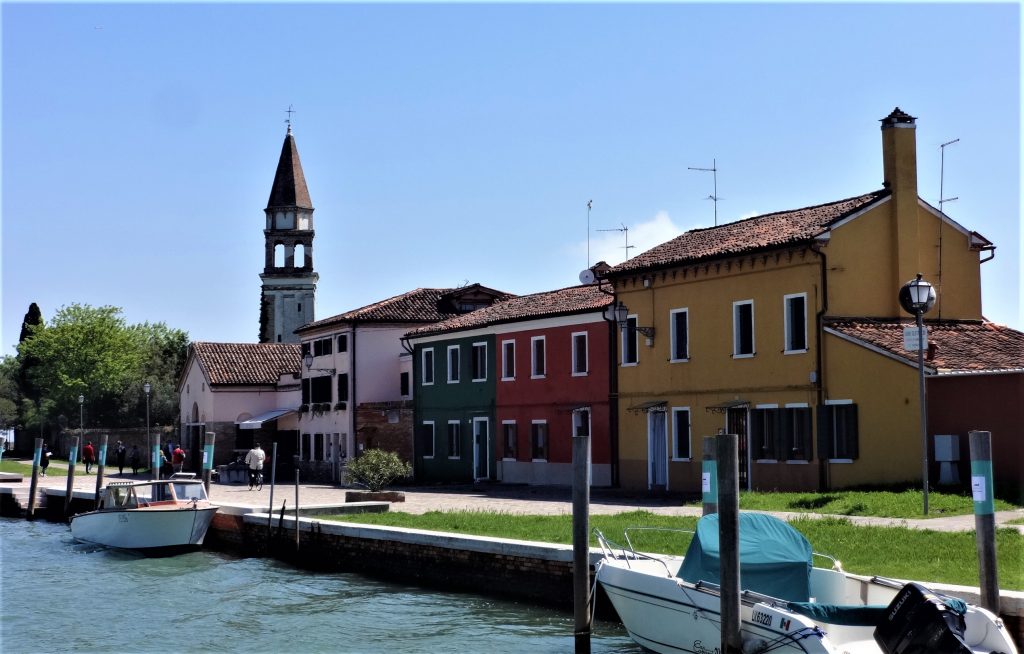
Burano’s leaning Tower.
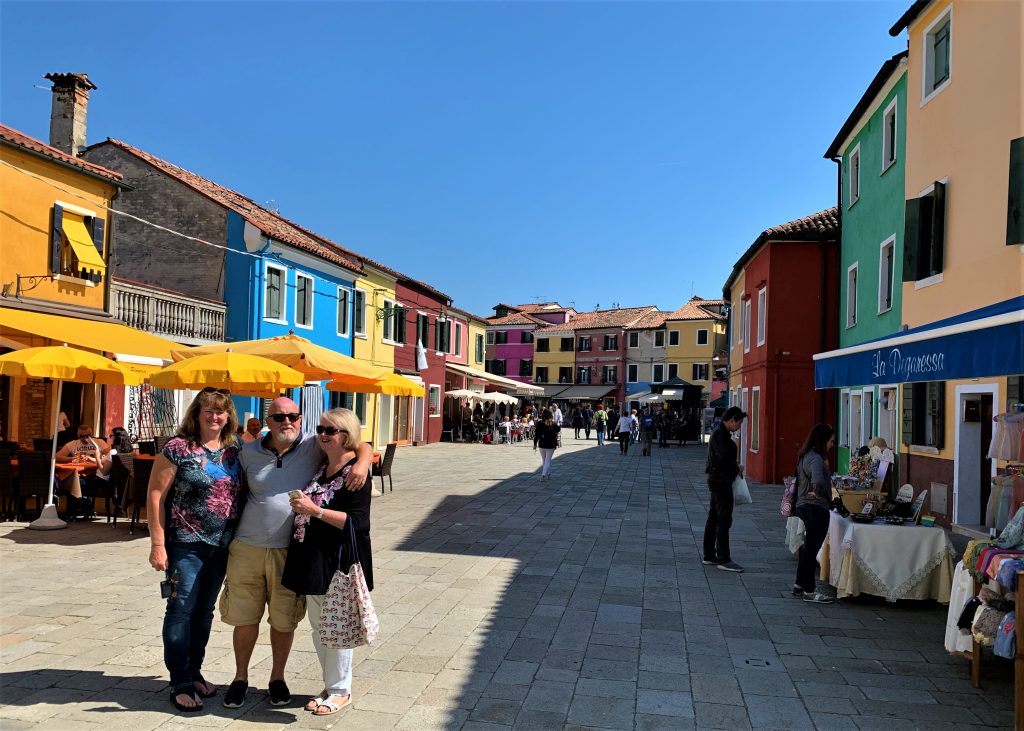
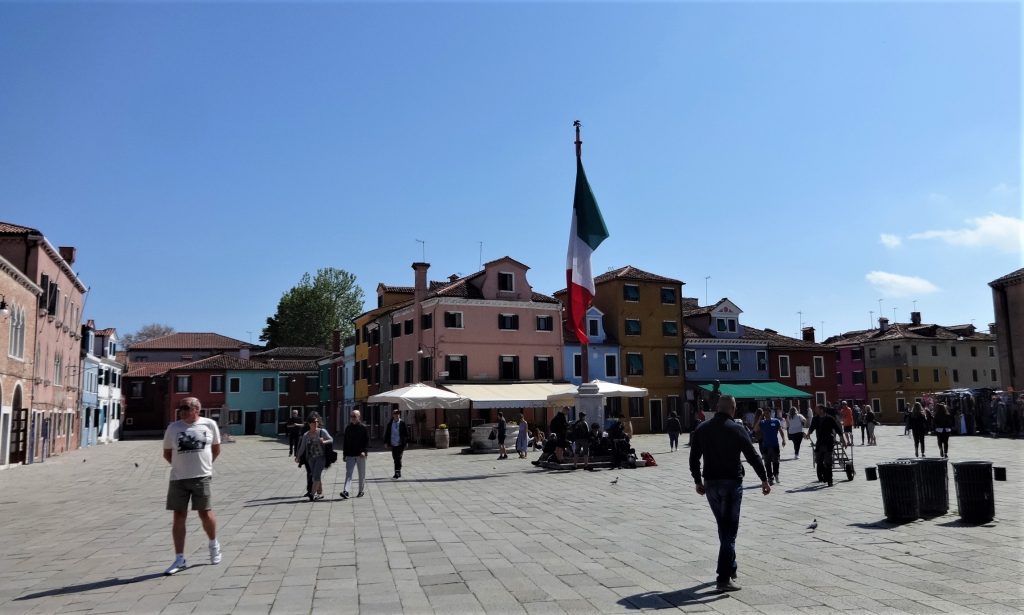
Burano square.
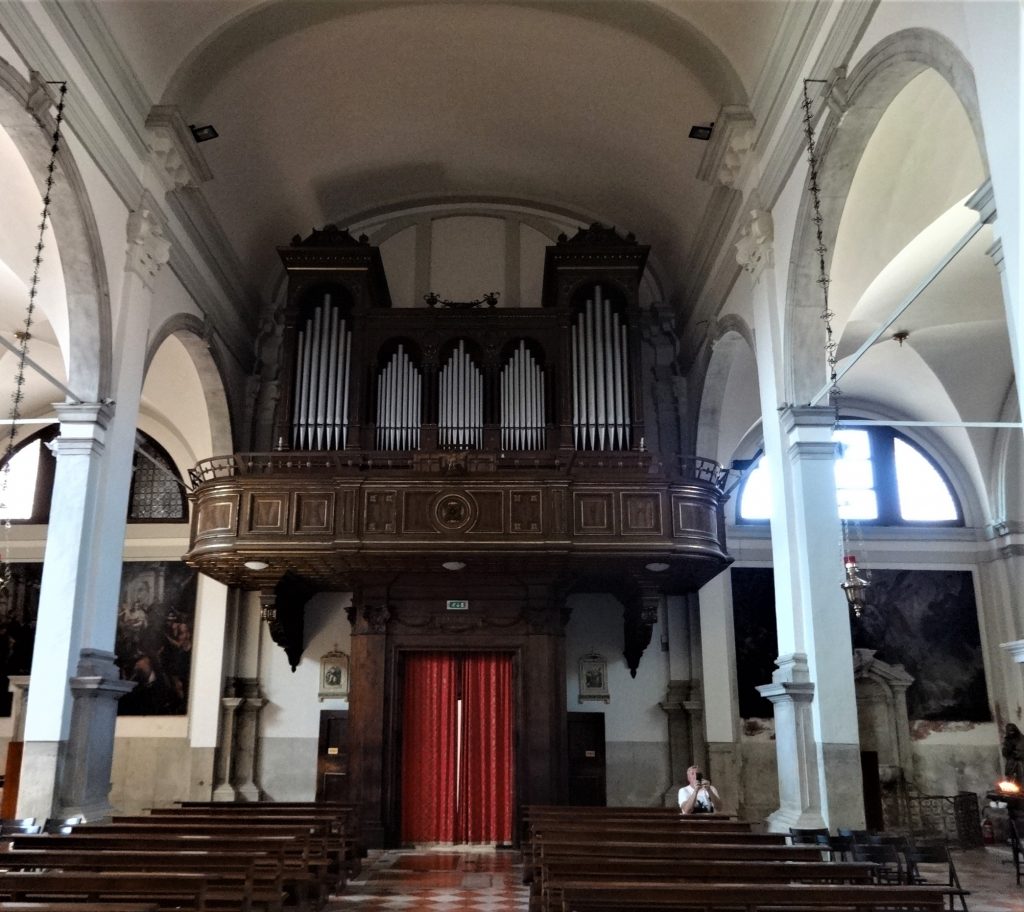
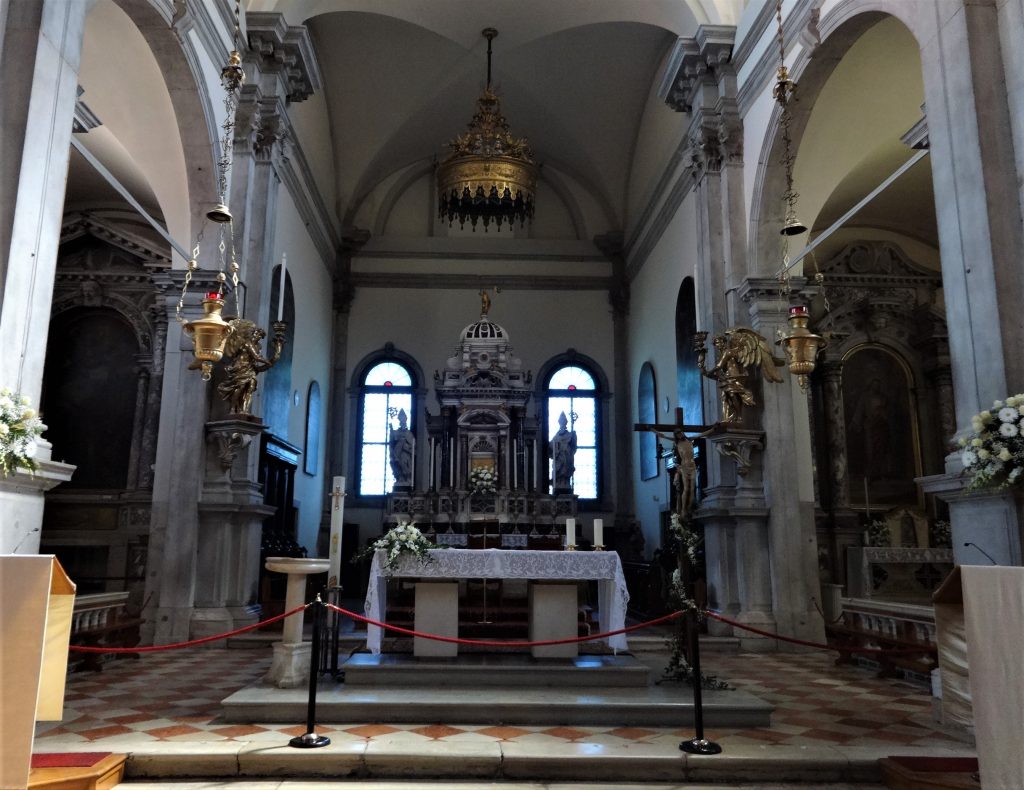
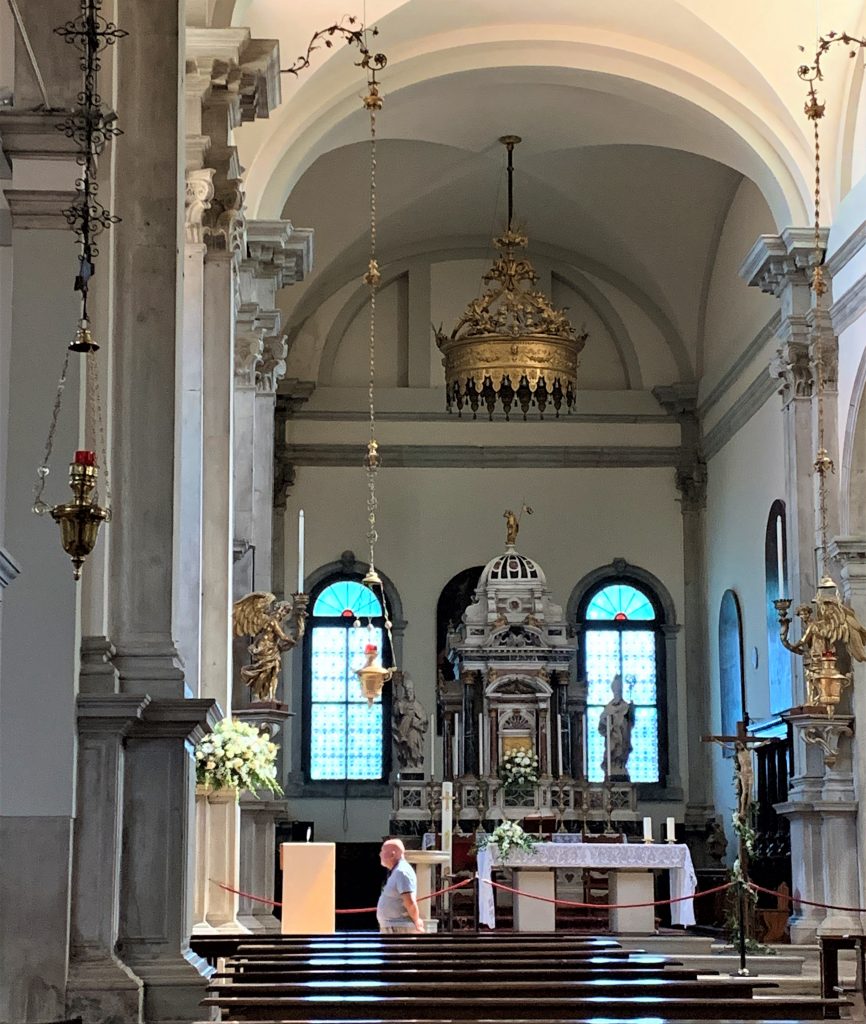
The village square and church
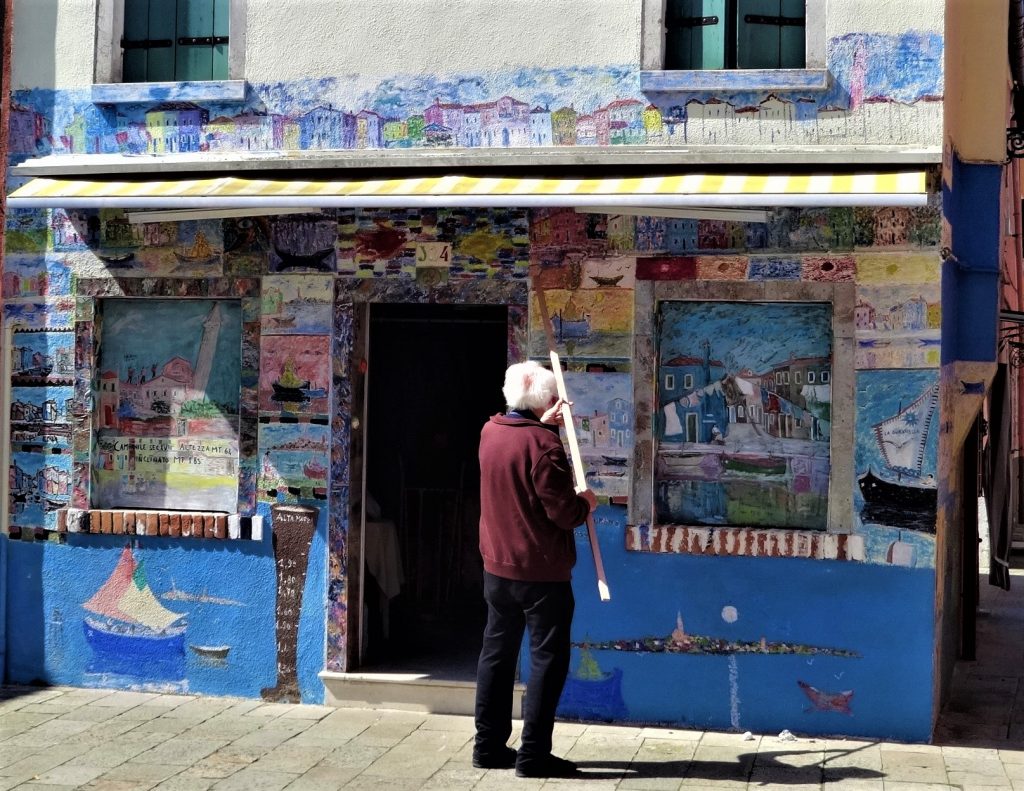
This man was painting the outside of his house, adding to the scene…
Recent Comments