We have been to Jerez de la Frontera (pronounced Hereth) several times now, it’s such a lovely quiet city and there is so much to see and do.
Primarily, it’s the capital of the Andulician horse culture; secondly it’s the home of several large sherry producers and their bodegas and thirdly, it’s the home of Spanish flamenco. The stories within the flamenco tales originated from the neighbourhoods of Santiago and San Miguel on the outskirts of Jerez and are told within the penas (small private clubs) or in tourist organised venues. Jerez is home to a large Gipsy community, who settled in the 18th century and who handed down the wealth of songs and styles to generations after them. The Gypsies only recently gained respect for their contribution to the Flamenco although they had always been considered the best interpreters of this art form.
The striking white Andulucian horses are based at the Andalucian School of Equestrian Art where horses and riders are trained in equestrian skills; the school also houses a Horse Carriage Museum and weekly shows are held on a Thursday where handsome white horses and liveried riders show off their skills and tricks to classical music. I will post photos of these separately.
Cathedral
The City has a Cathedral built into a hill with an Alcazar (fort) behind it, and is a small bustling town of churches, plazas, markets and small retail shops as well as Tapas bars and restaurants. The Cathedral was constructed over 80 years and finally blessed as a Catholic church in 1778. It was thought it may eventually become a cathedral so it was built with beauty and grandeur, local authorities requested this upgraded status several times but it was not until 1980 that their wish was fulfilled when Pope John Paul II granted a Bill in May 1984 creating a new Church Chapter formed by 12 canons and it officially became a Cathedral.
A tower which stands to one side detached from the cathedral belongs to a former church on the site which was demolished in 1695. It has two sections: the lower one, in Mudejar-Gothic style, dates back to the 15th century, and the upper one built by Juan de Pina in the 17th century but it is currently being renovated and not open to the public. Both structures dominate the city’s skyline and can be seen from far away.
The large building is in the Baroque style, built purely of stone from Sierra de San Cristobel nearby, and the interior is Baroque and neoclassical style, tall pillars of stone support carved domes, the main dome being 40 metres high. The construction of the church was, at the time, extremely expensive and it was mostly financed by the Spanish Kings Charles II, Louis I and Charles III who contributed with part of the taxes they used to collect from the wine brewed in this area. Pope Innocent XIII and Benedict XIII also helped with the so-called grace of the “misas alcanzadas”(obtained masses).


Aerial view of the Cathedral and the Tower.


 Town Views

San Miguel Church. 15th Century Gothic build.

This is the El Gallo Azul building, the Blue Cockerel. It is one of the most attractive buildings in the City and a good landmark; it was built by the Domecq company and given to the city to coincide with the 1929 Expo in Seville. It was originally a restaurant and earned many food awards and destinctions. Sadly it is now closed.

The Alzahar stands behind the Cathedral, on top of a hill. Built in the 11th Century by the Moors, its intact walls are 4000m long, the Octagonal Tower overlooks the keep. Inside is the only remaining mosque in the city. The minaret, still extant, was turned into a bell tower. The praying hall, features a mihrab, confirm the direction of Mecca, and the Baths inlude an area for undressing, leading to the cold and tepid rooms, the latter being the largest in the complex. The final room is the hot room, whose heating system is still partially visible.

The quadrangle within the Alcazahar, originally a leisure pavilion.

Entrance to the market.


Sherry/Xeres in Jerez – First Visit Fundador
Sherry can only be made in the Magic Sherry triangle, Jerez de le Frontera, Sanluicar de Barrameda and Puerto de Santa Maria (where we are based) , anything made to resemble sherry outside this area is not the real McCoy!!! It was originally called Xeres, named by the Muslims who occupied the area from around AD711 after the Romans, the Moors introduced distillation to create wine and brandy. It now has protected Designation of Origin status.

We have learned this by attending not just one but two tours of Bodegas!! The sand and clay soils are perfect for growing white grapes which are used to make wine and distilled pure alcohol is added to create different strengths and tastes. The first bodega we visited was Fundador, home of Harveys Bristol Cream Sherry and Terrys Brandy. We learned that the storage areas are blackened by the alcohol evaporating upwards and they use a three tier system – liquid is removed from the bottom barrels, about a third is bottled. The bottom barrel is filled from the middle barrel and the middle barrel is filled from the top one, the top one beoing topped up with the latest batch that year. This means you can never tell the true age of a sherry!!

This Bodega’s storage (belonging to Fundador) claimed to be one of the largest in the world, it stores 46,000 barrels each containing 600 litres.

The interior of the storage bodega, maintained at 18C constantly.

These barrels show the different types being created, fino (dry) at the top, Amontillado in the middle and Cream at the bottom (sweet).


 They also have a small museum, showcasing their original old stills that make the pure alcohol, as well as carriages that used to deliver the sherry.

One of their original old stills.

As you can see, they won an award for the World’s Best Wine……to buy a bottle was 260. Could not justify buying one only to then drink it!!!

 Several celebrities have visited the bodega, and get to sign a barrel in their honour.


Tio Pepe/ Gonzalez Byass Visit
We then went to a bigger Bodega and learned how in 1835 Manuel Gonzalez left a banking job, aged just 23, and bought a small business making Sherry and wines. He was later joined by his English agent, Robert Blake Byass and the Tio Pepe brand was dedicated to Manuel’s Uncle in later years. This was a bigger bodega, with more ranges as they produce sherry, wines (red and white), brandies and other spirits (off site) in conjunction with other manufacturers.

This is the personal store of barrels laid down by Manuel Gonzales, in the 1800s.

Visited by more celebrities, who are able to leave their names….

 These are two archived store rooms, kept as they were found, with old equipment and bottles.

The Tio Pepe Weather vane is said to be one of the largest in the world and has been recognised by the Guinness book of records.

In Tio Pepe, they operate a 4 tier system, 4 stacked and yet never rotated, just emptied at the bottom and filled at the top.
And finally…..they have a fabulous eatery where you can book a private dining table or just sample tapas at a tasting bar.

We opted for the 4 different types, as opposed to just 2, and had refills!!!
And finally, the tales of Flamenco Dancing & Andalucian Horses will be posted separately!
‘,


 We all tried out 6 different sherries, followed by a glass of brandy, before tottering off to the local bar for something to eat!!! We returned back to the trailer for a 2 hour nap – I think that’s officially known as a “siesta”!!!
 We all tried out 6 different sherries, followed by a glass of brandy, before tottering off to the local bar for something to eat!!! We returned back to the trailer for a 2 hour nap – I think that’s officially known as a “siesta”!!!


 These are two archived store rooms, kept as they were found, with old equipment and bottles.


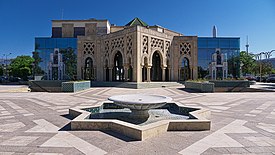 LEFT IS THE MOROCCAN PAVILION AND RIGHT IS THE JAPANESE PAVILION


 Hotel Alfonso XIII


Recent Comments