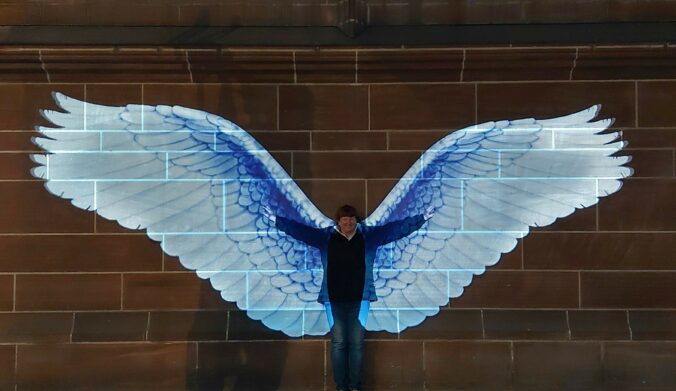
You probably know of our love of anything old and our desire to learn all about the history of a city or town, well, how could we stay in Liverpool (to help Caity set up home) and not visit the two cathedrals?? Impossible!
However, we were disappointed to find that both Cathedrals were modern!
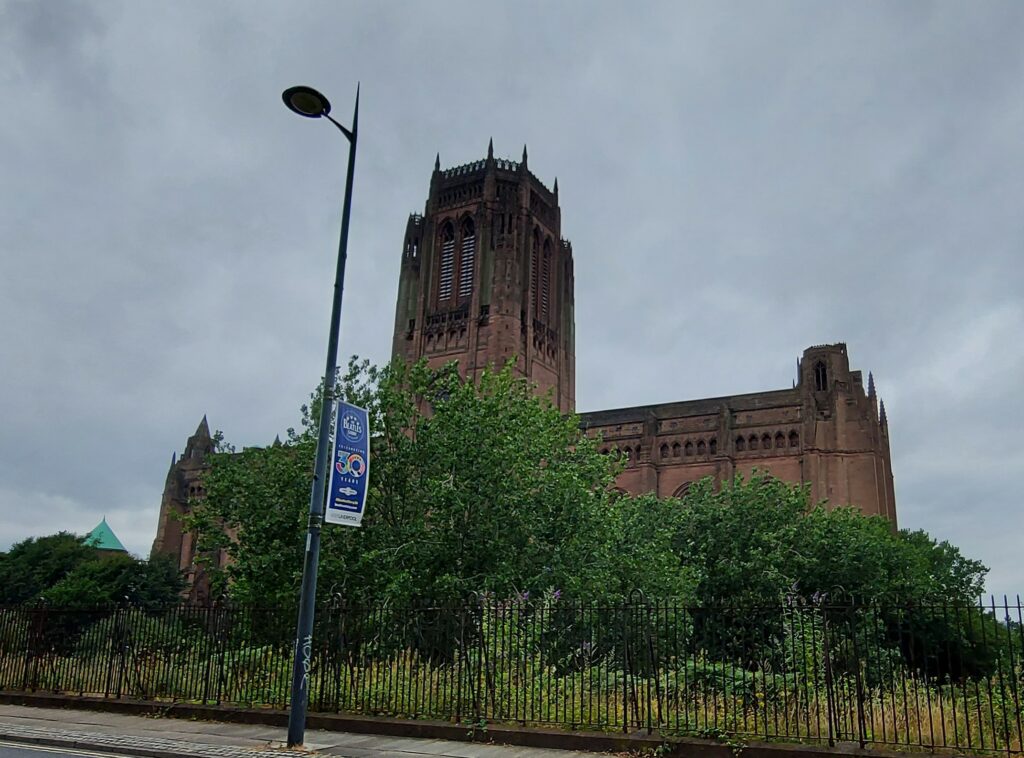
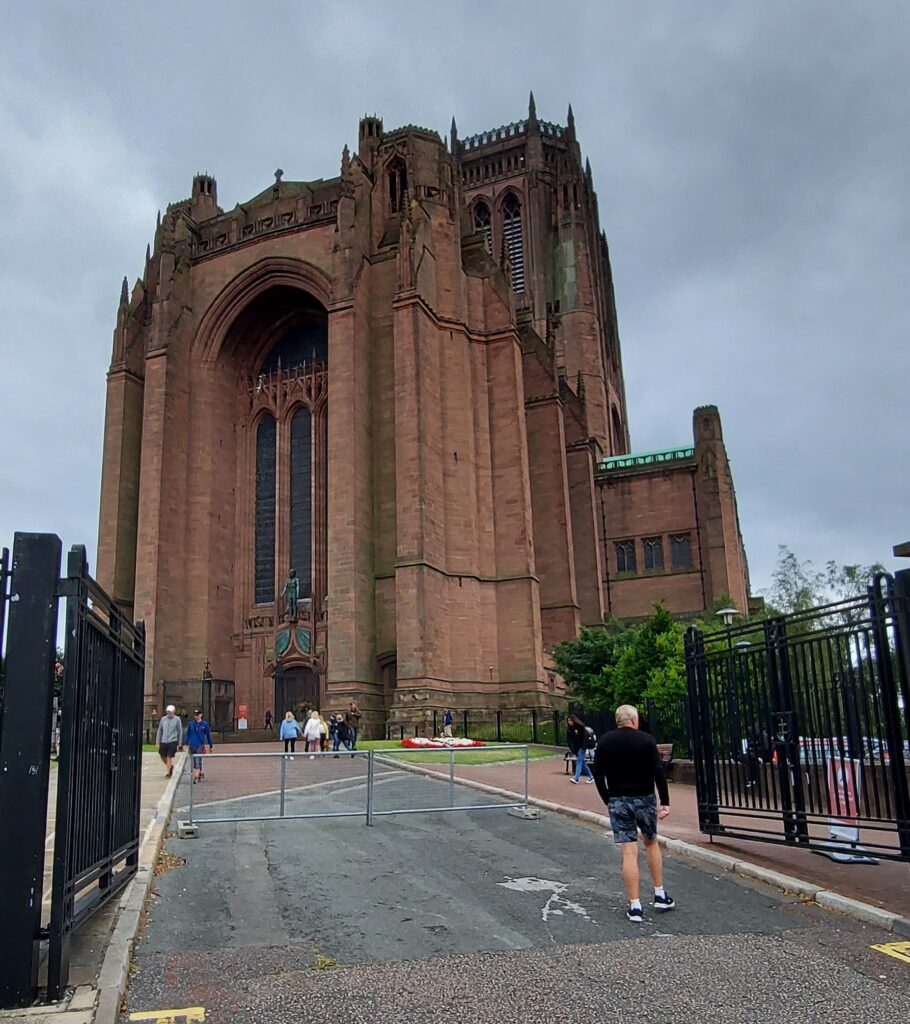
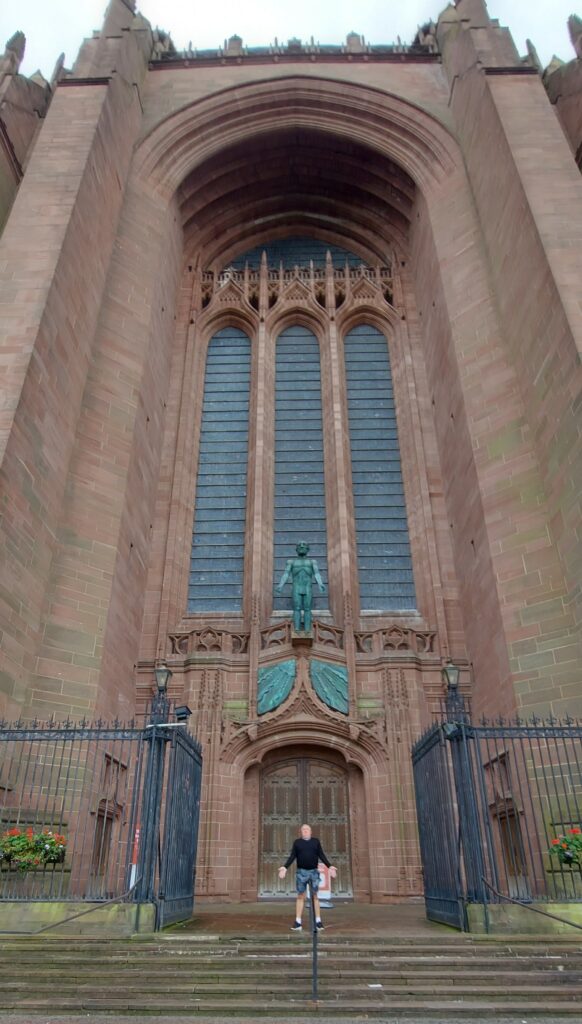
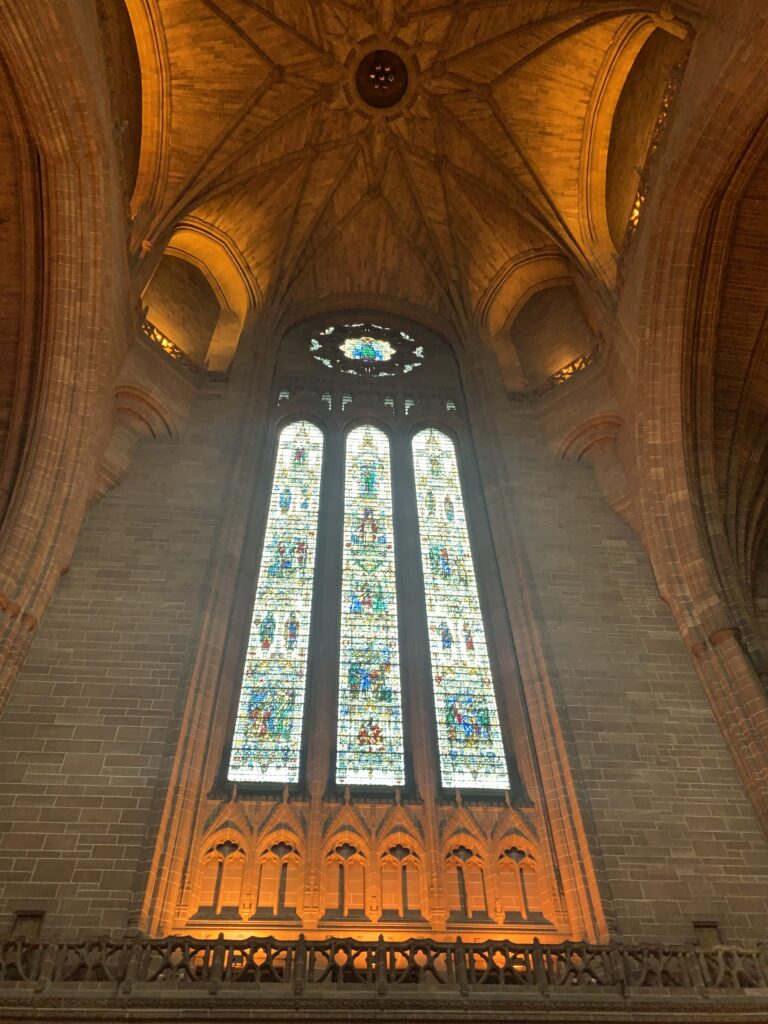
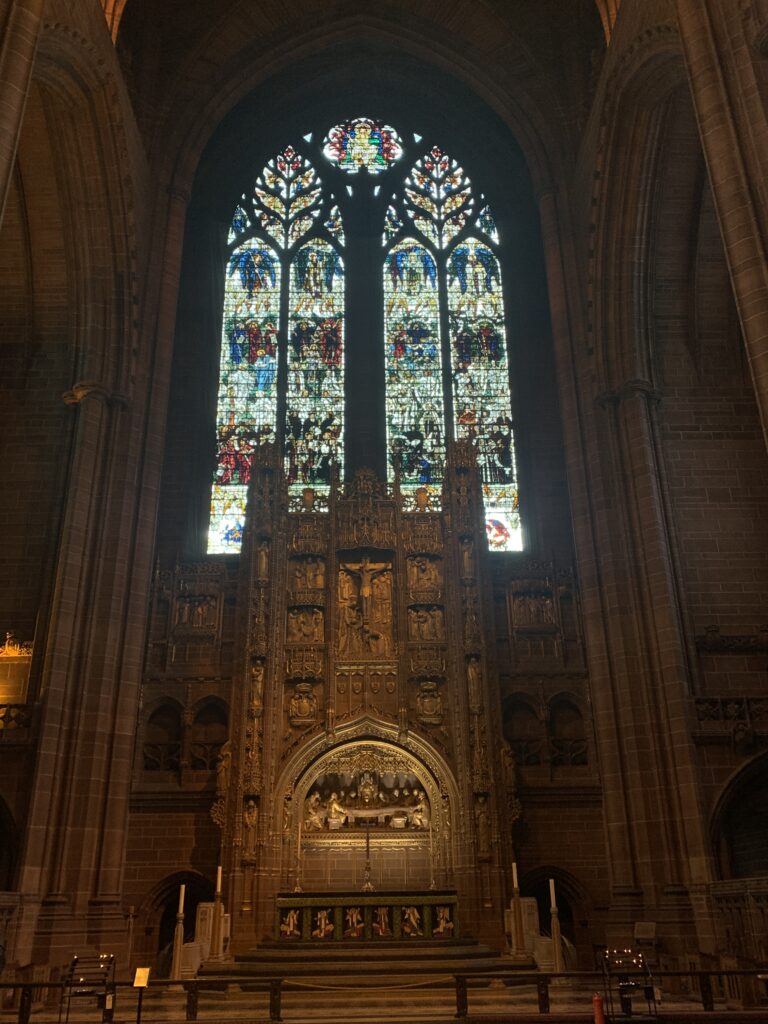
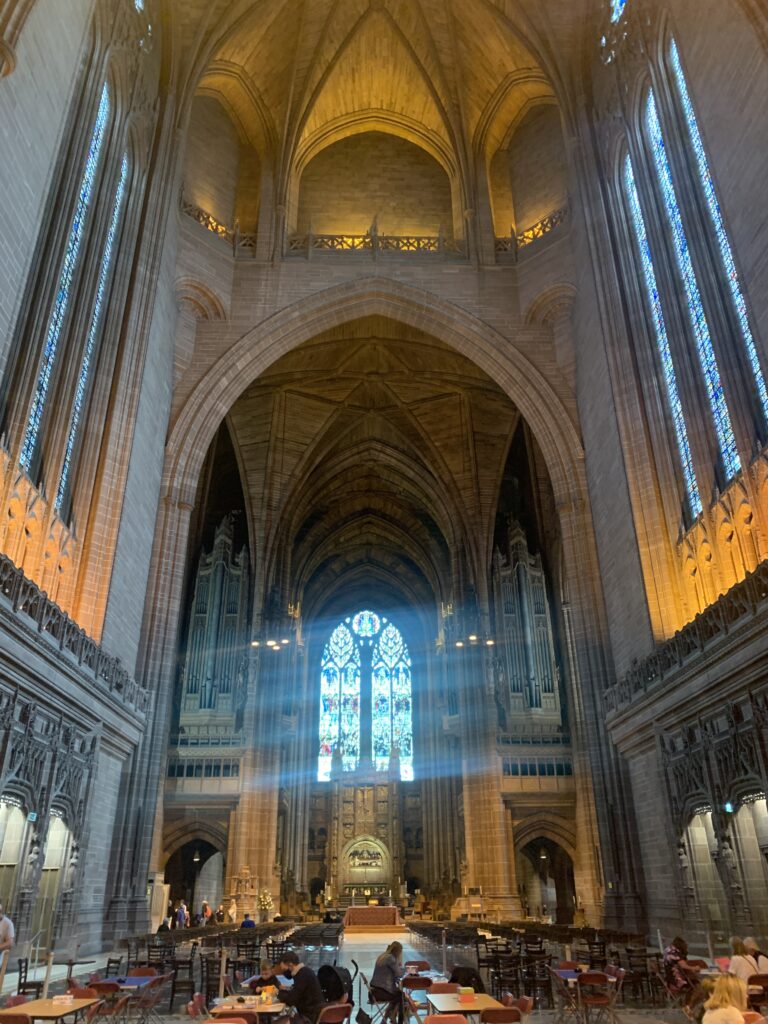
Our first visit to the Anglican Cathedral confirmed that it was primarily built between 1904 and 1924, delays caused mainly by the world War 1, but during bitterly cold weather on 20th February 1942, Sir Giles Scott (aged 22 in 1903 when his design was chosen) placed the final stone on the final ‘finial’ at the top of the tower, three hundred and thirty one feet one and half inches (101 metres) above the Cathedral floor. Some interesting facts:
- Length: 188.7 m (619 ft)
- Area: 9,687.4 sq. m (104,275 sq. ft)
- Choir Vault: 35.3 m (116 ft)
- Nave Vault: 36.5 m (120 ft)
- Height of Tower: 100.8 m (331 ft)
- Under Tower Vault: 53.3 m (175 ft)
- Tower Arches: 32.6 m (107 ft)
- Bells: (height above ground) 67.0 m (219 ft)
- Bells: (weight) 31.5 tonnes (31 tons).
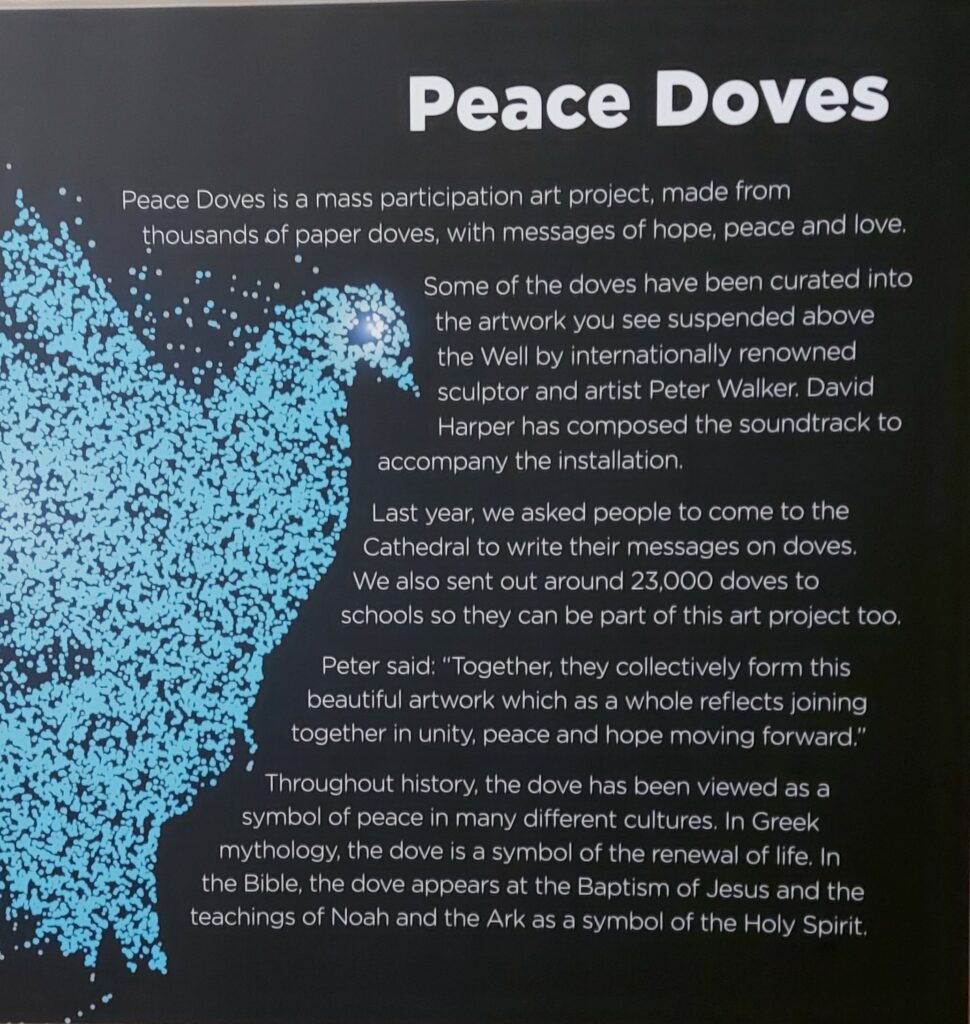
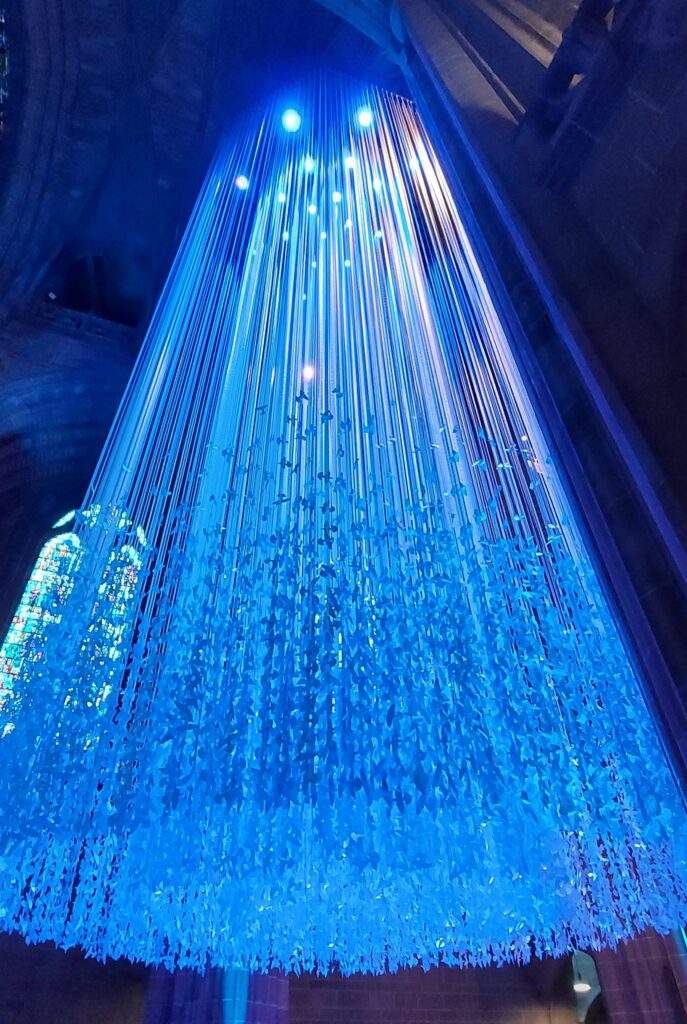
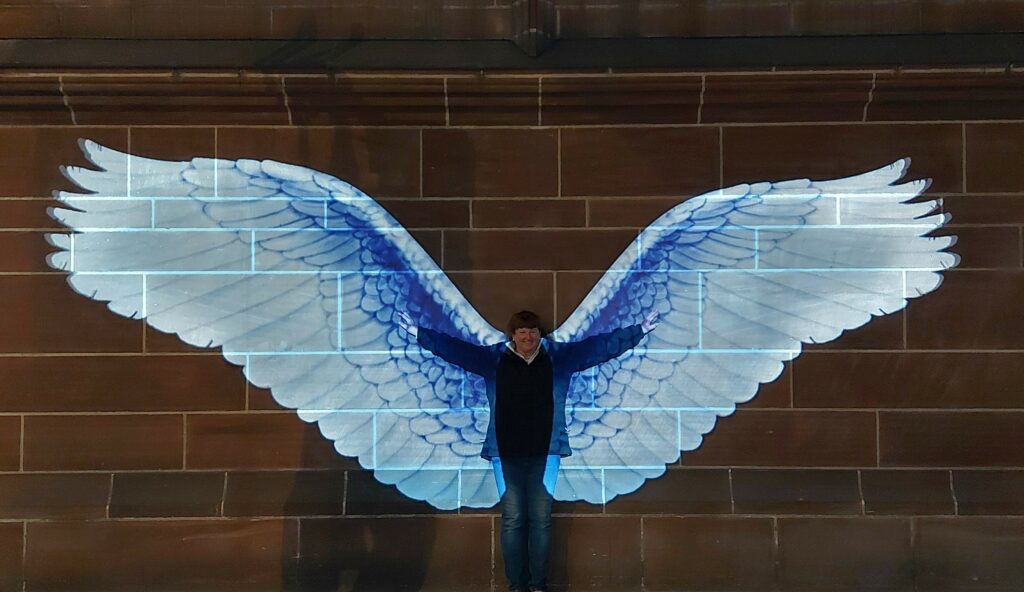
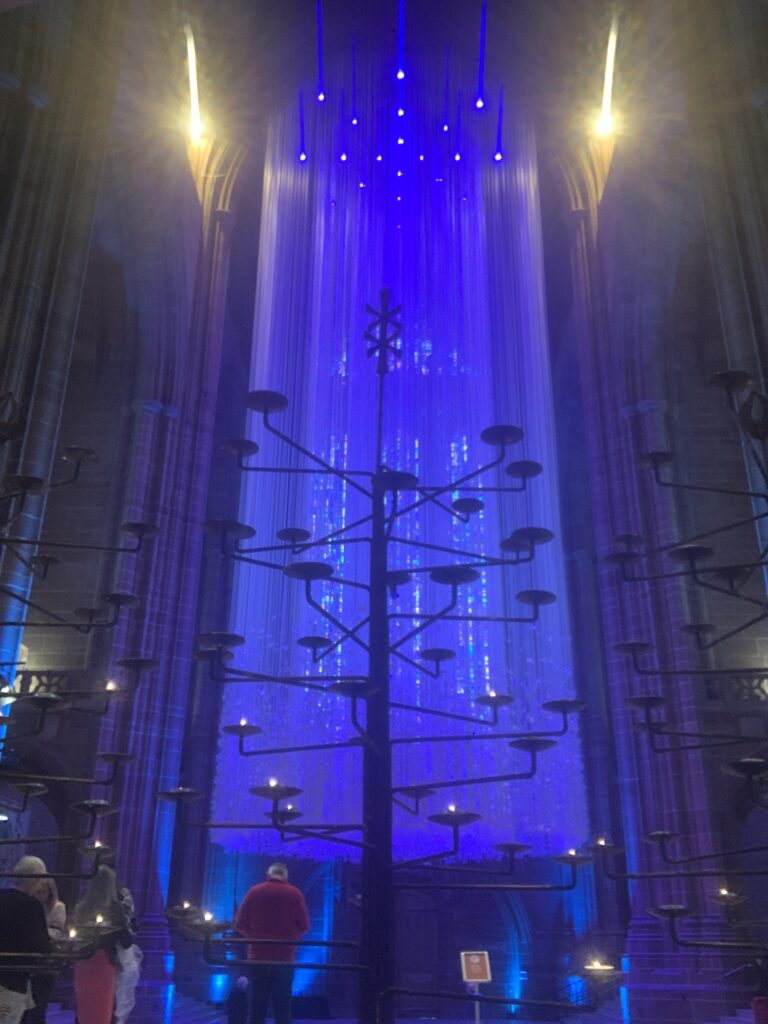
Inside the church are several modern art displays, currently the Doves of Peace.
Installation of the organ began in 1923. When the organ was completed in 1926 it was the largest musical instrument ever conceived, and, since the installation of the additional Central division in 2007, it continues to be the largest pipe organ in the UK.
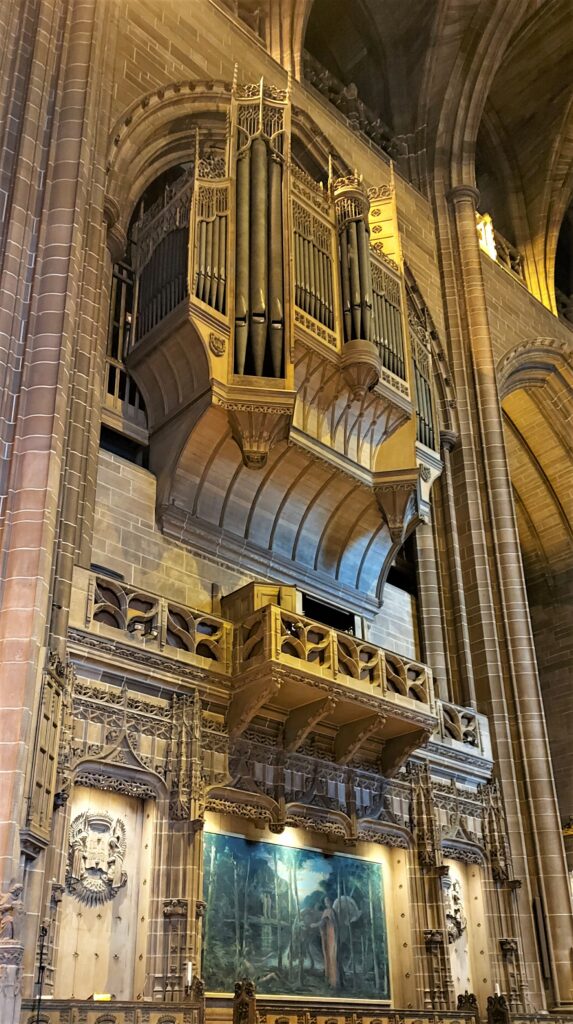
One of 4 Organs

Tracey Emin, the artist writes: “The Church has always been a place, for me, for contemplation. I wanted to make something for Liverpool Cathedral about love and the sharing of love. Love is a feeling which we internalise; a feeling very hard to explain. I thought it would be nice for people to sit in the Cathedral and have a moment to contemplate the feelings of love, it’s something we just don’t have enough time to think about and I hope this work creates this space in time.” Liverpool Echo, September 2008
Then we took a ten minute walk to the other side of the hill, to the Catholic Church. Again, this is modern, work started on it in 1962 and it was completed 5 years later.
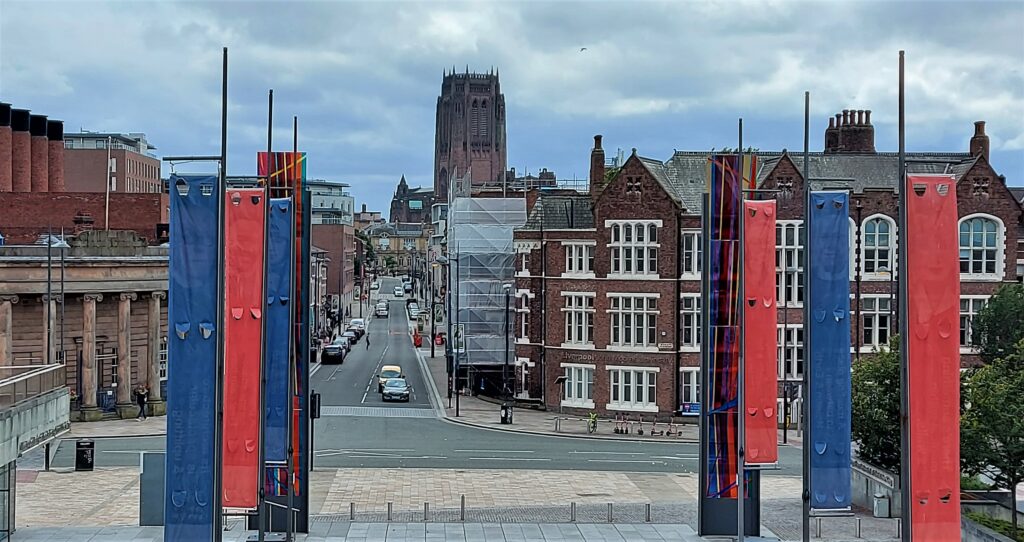
Hope Street connects the two churches, the street is named after William Hope, a merchant whose house stood on the site now occupied by the Philharmonic Hall, rounded building on the left.

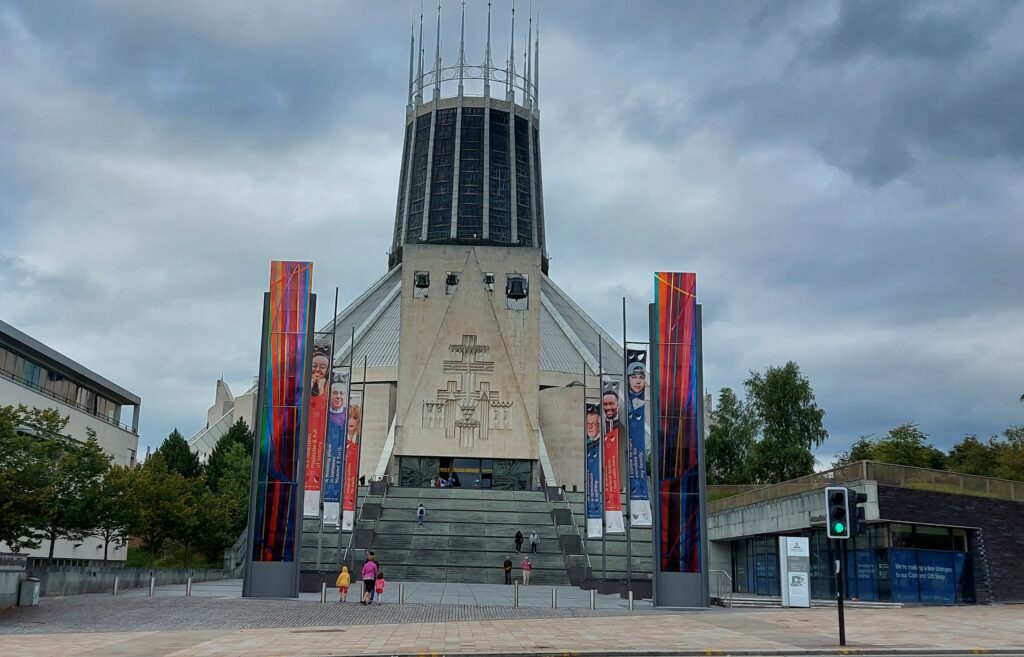
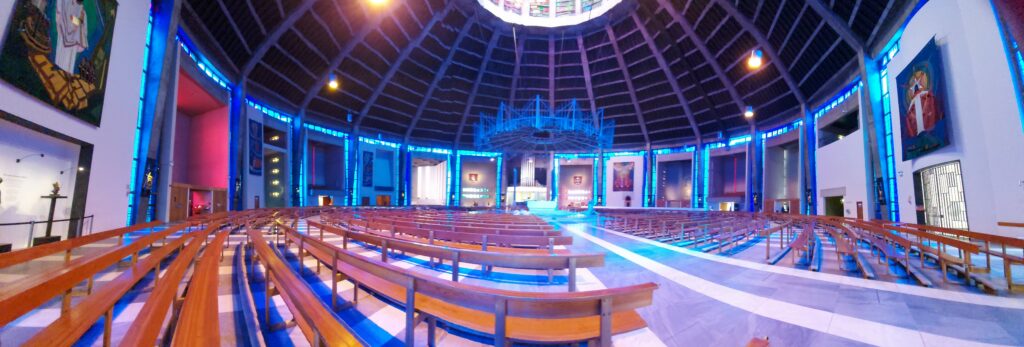
A very circular modern church. 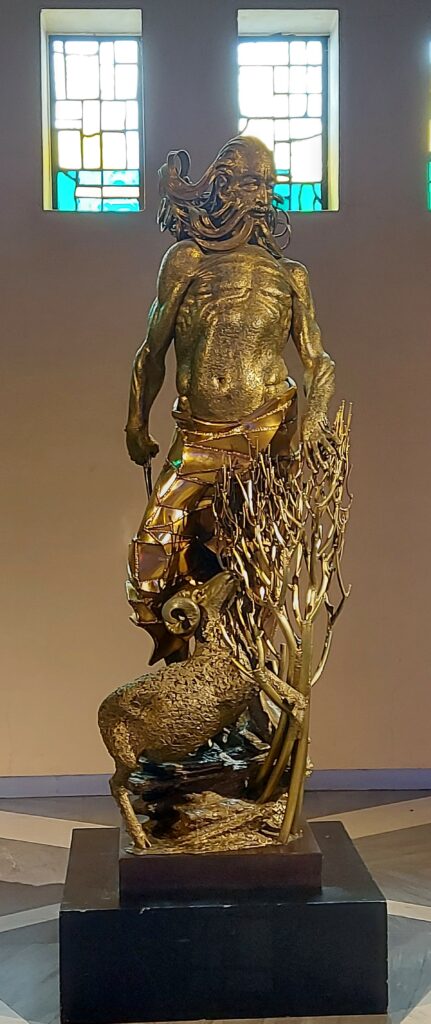
Very modern art!
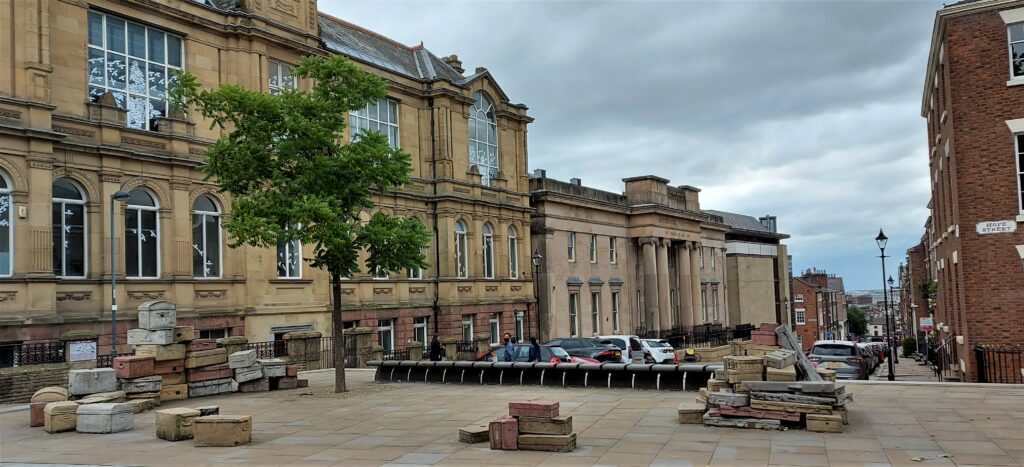
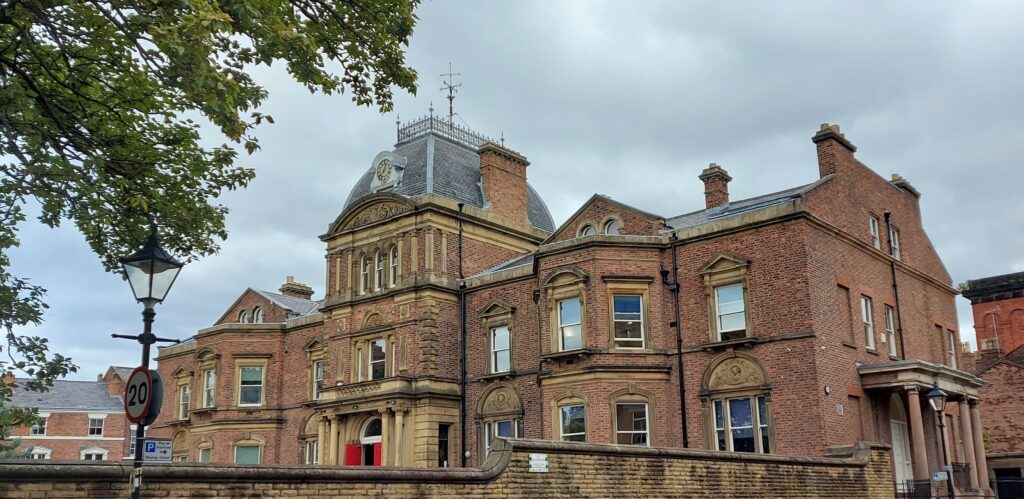
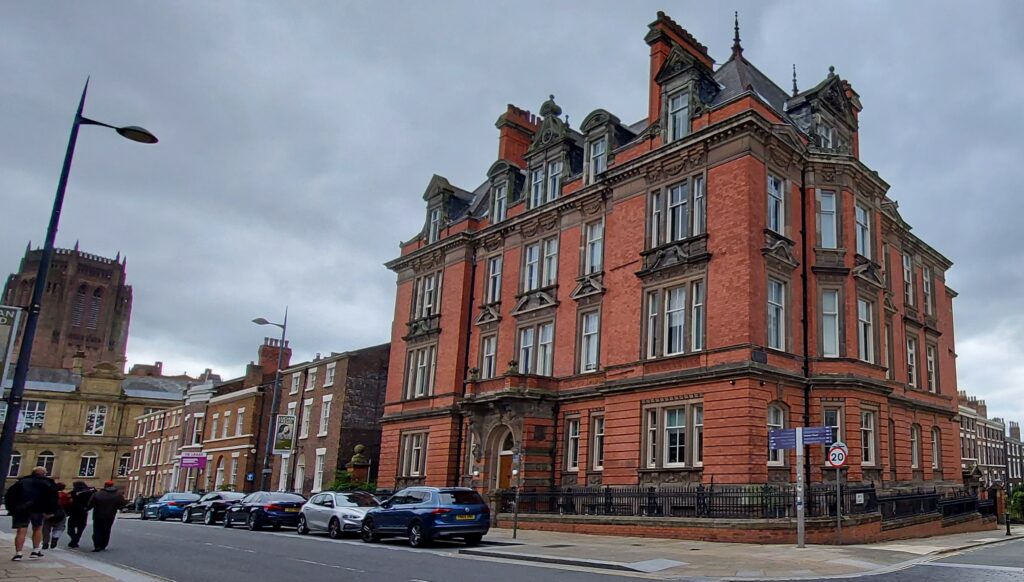
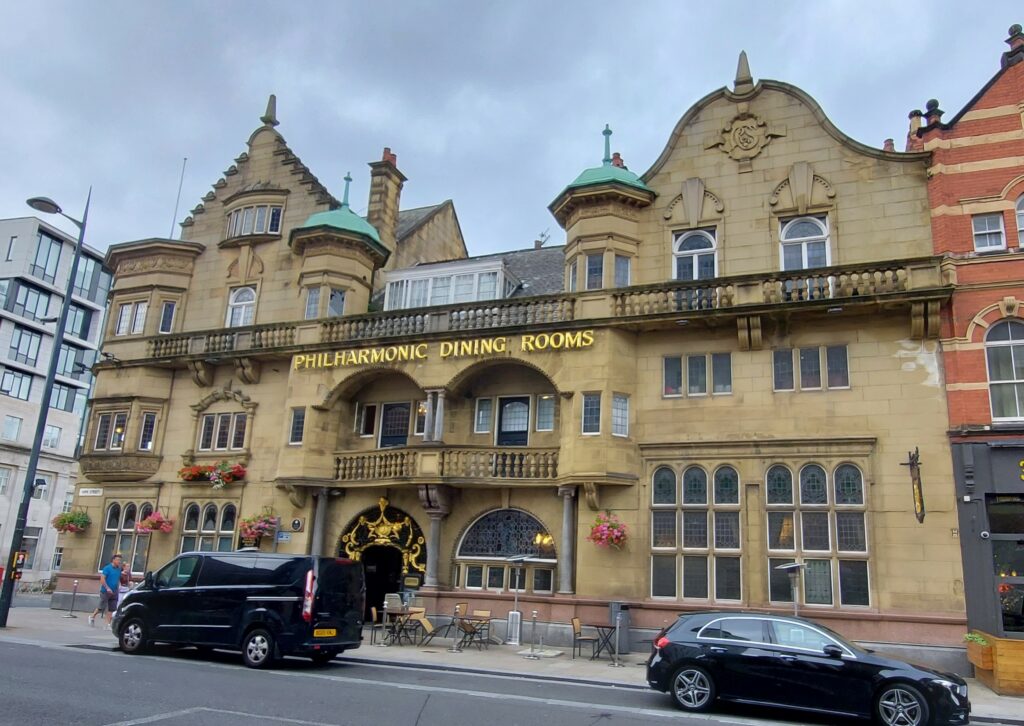
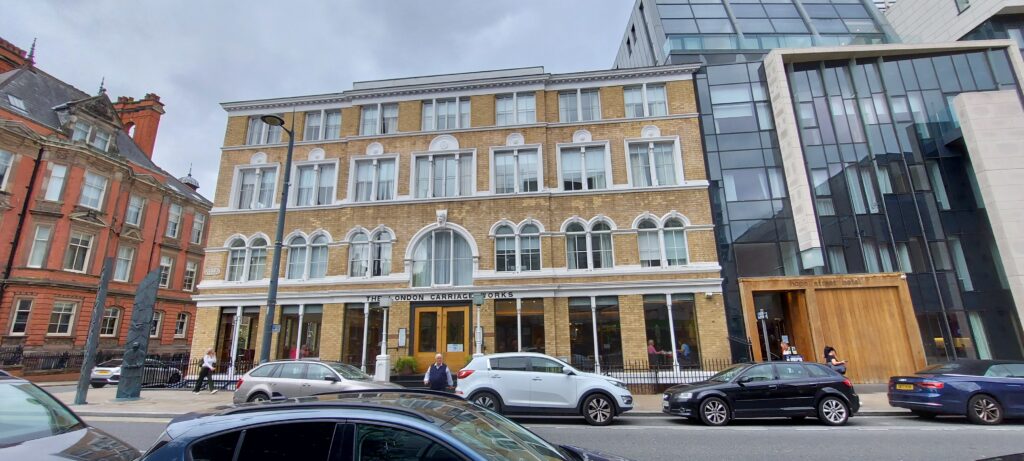
Some beautiful architecture around the local streets, include this street art called ‘A Case History‘ created by artist John King, is a collection of static suitcases which pay tribute to those who have both passed through the city and stayed to make it their home.”

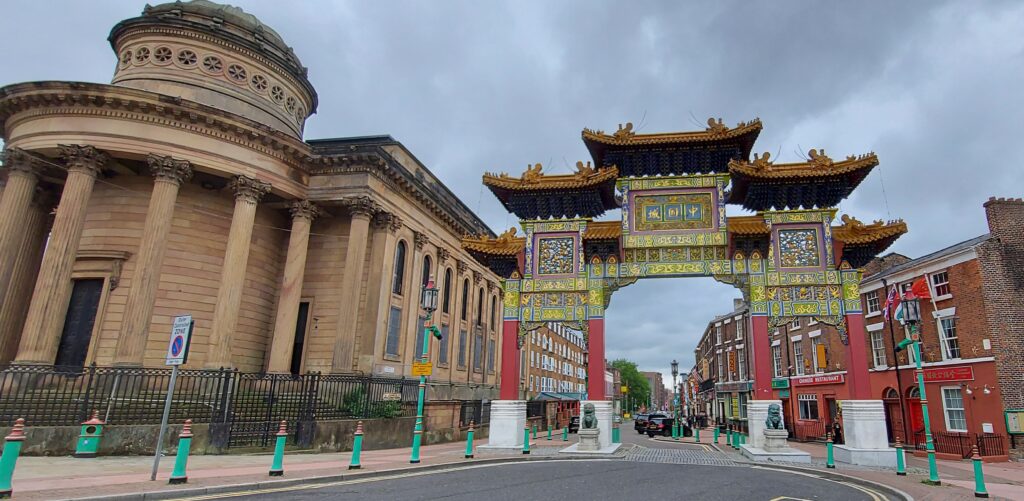
And finally, Chinatown! Compared to London’s Chinatown this was very disappointing, we were expecting bars, shops, restaurants, half a mile long, chatter, smells and noise. Nothing! A few closed restaurants, and a Freemason’s lodge, and that was it…..
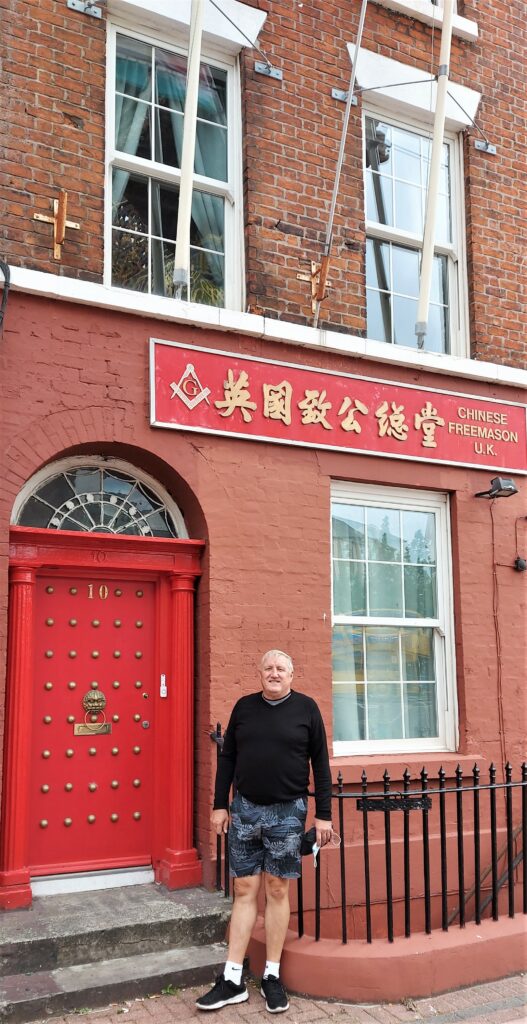
David’s thinking of joining!
Recent Comments