Our first day in the town was spent as a Tourist, visiting the Castle, Palacio, bullring, mercado and the Basilica.
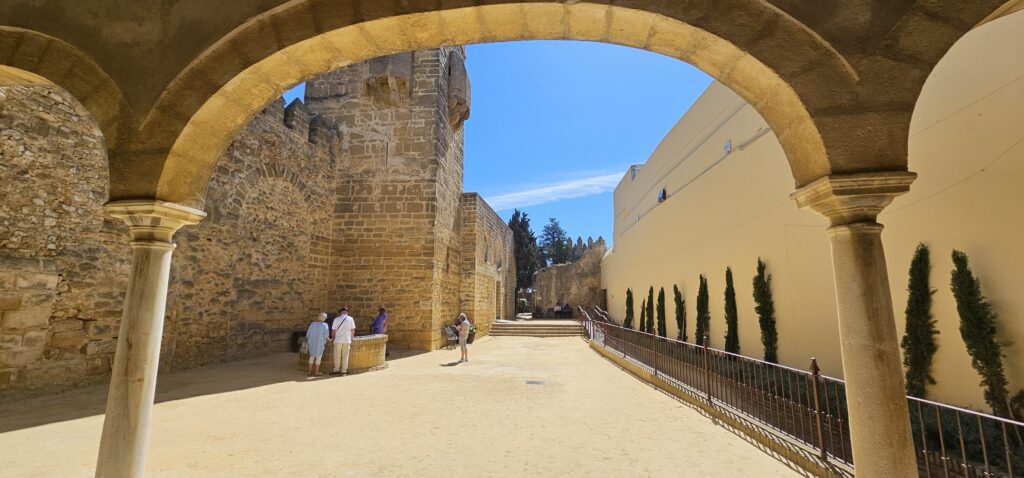
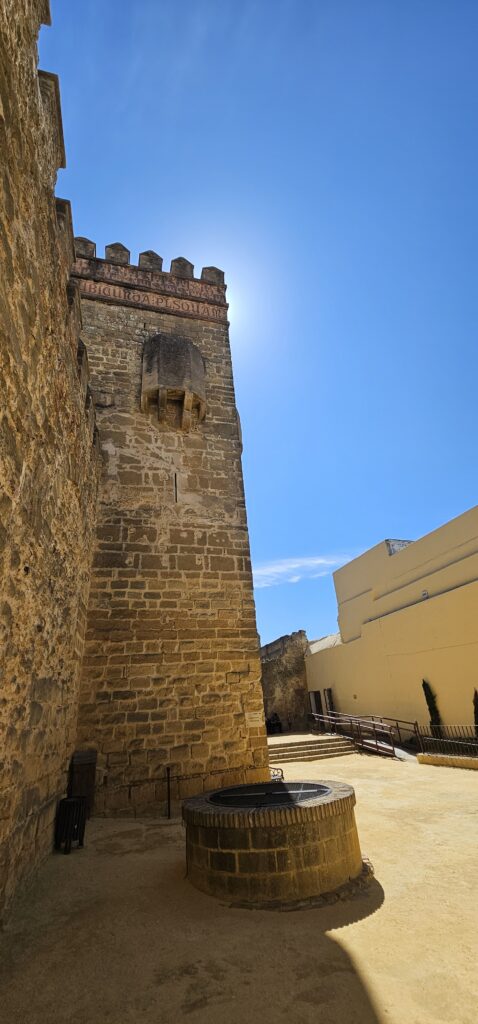
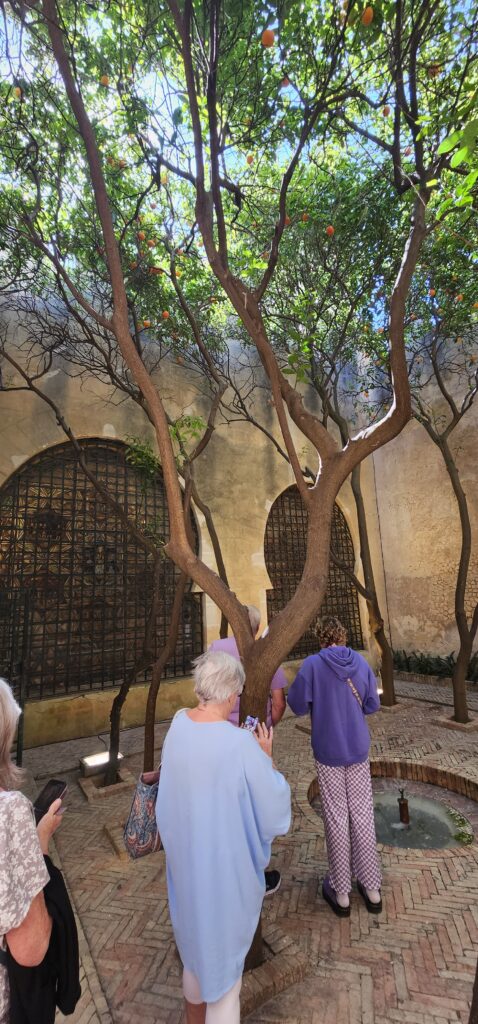
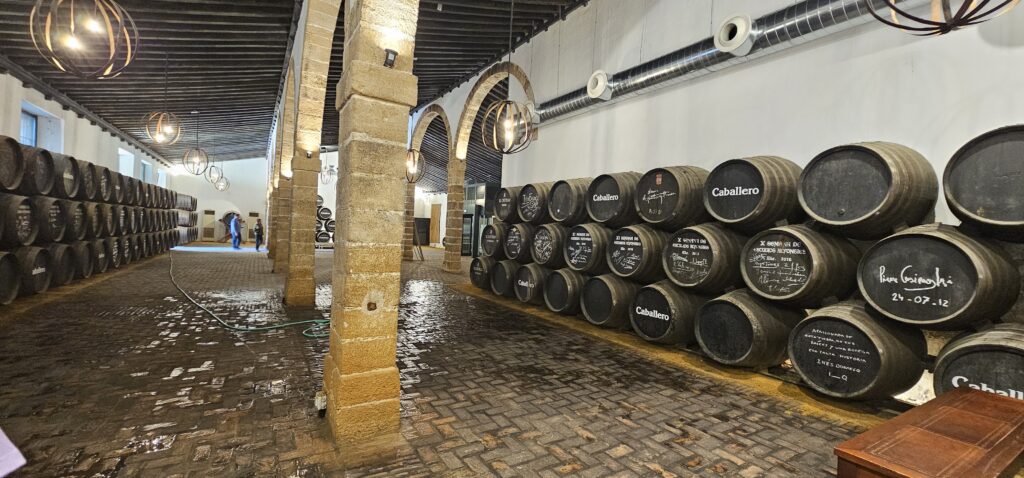
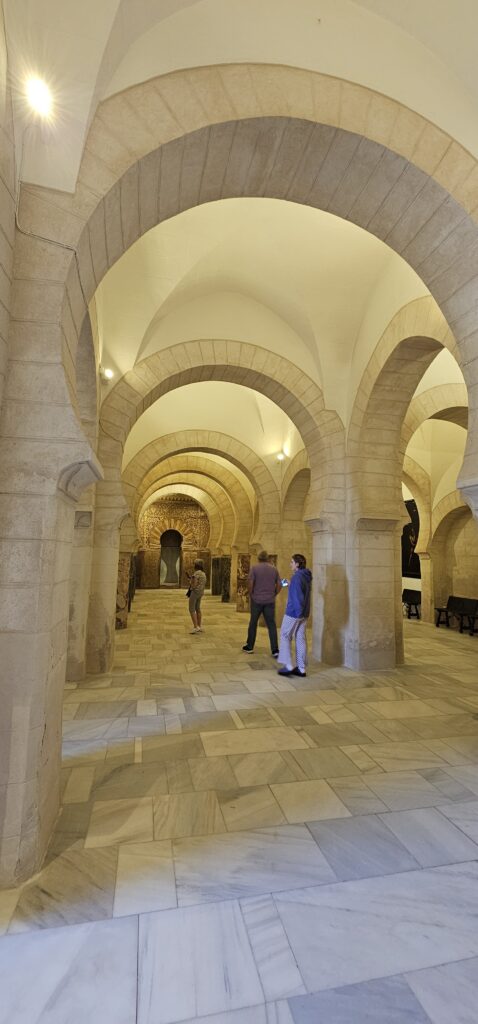
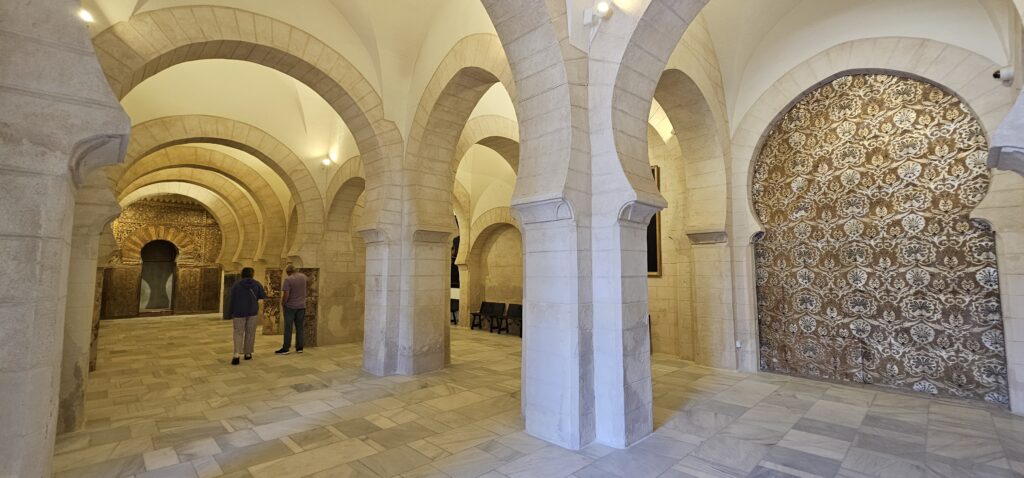
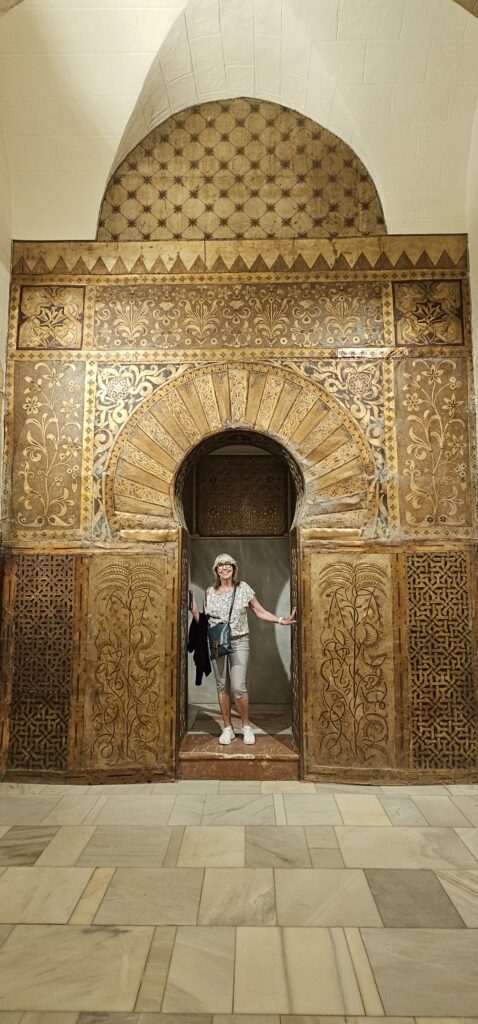
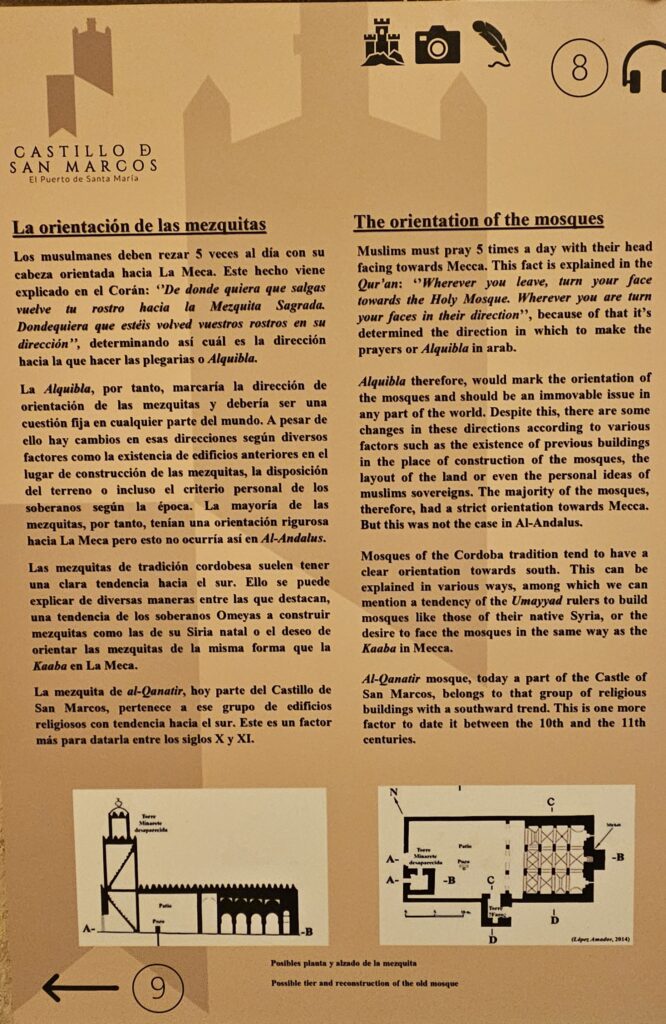
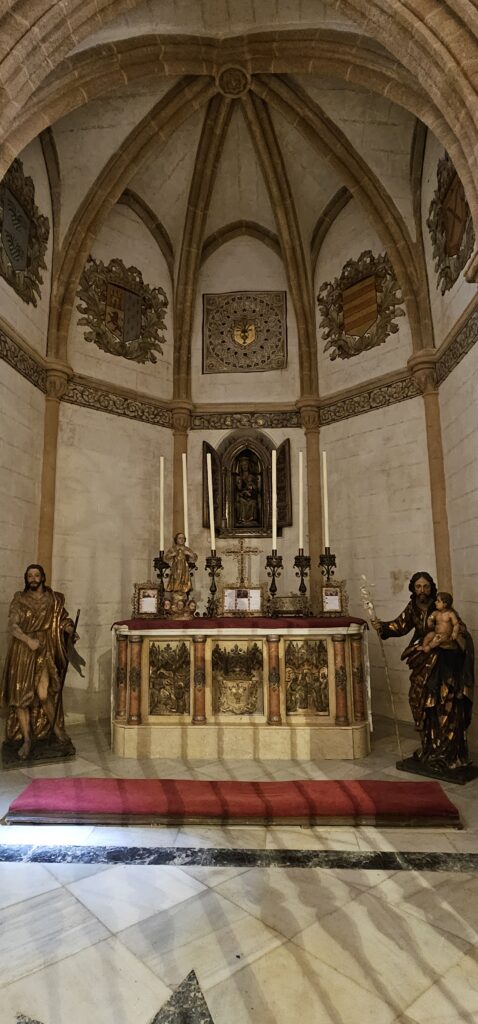
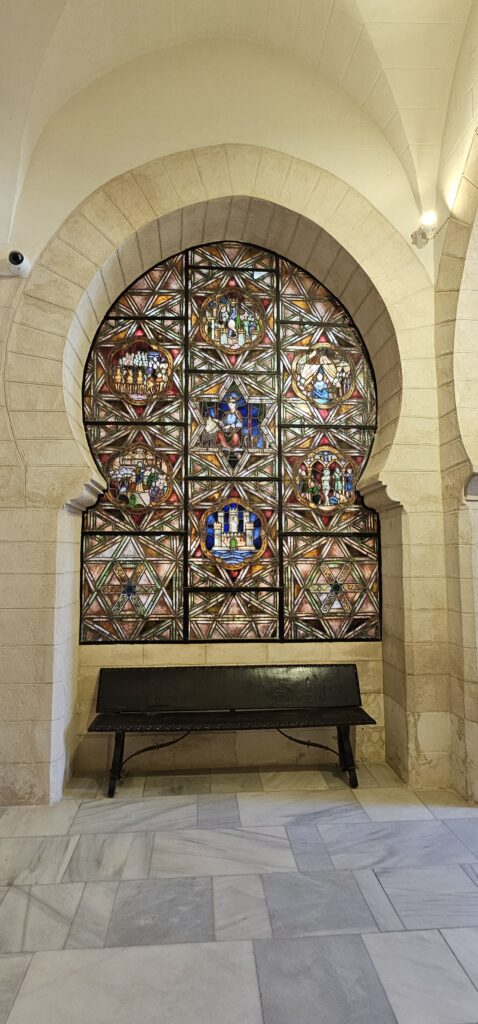
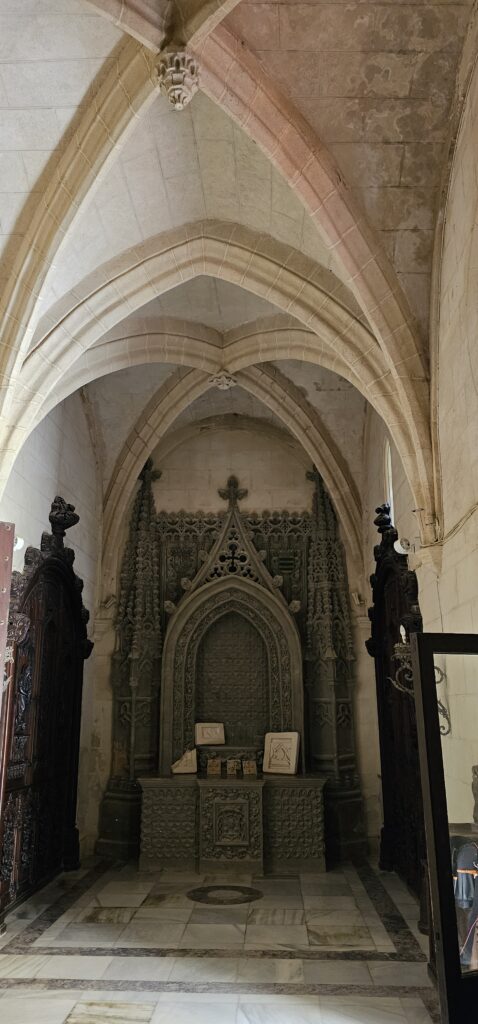
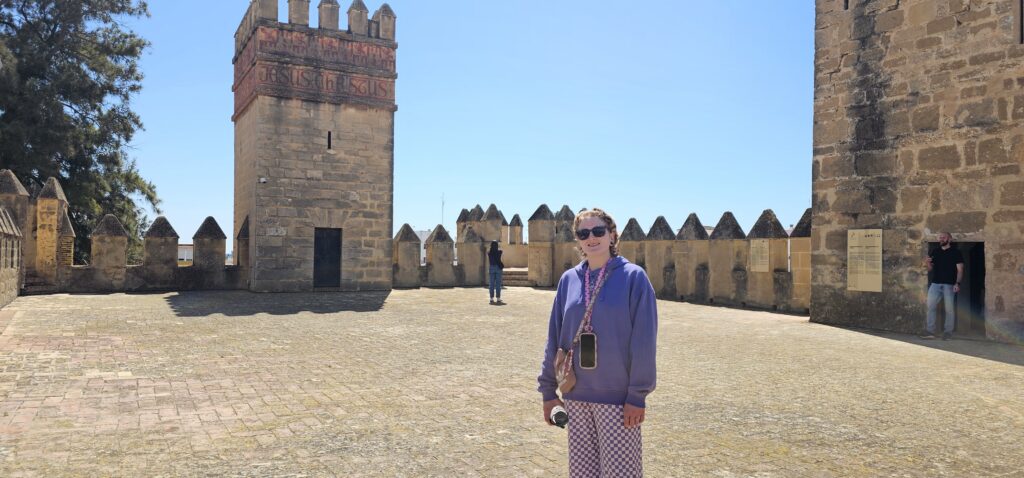
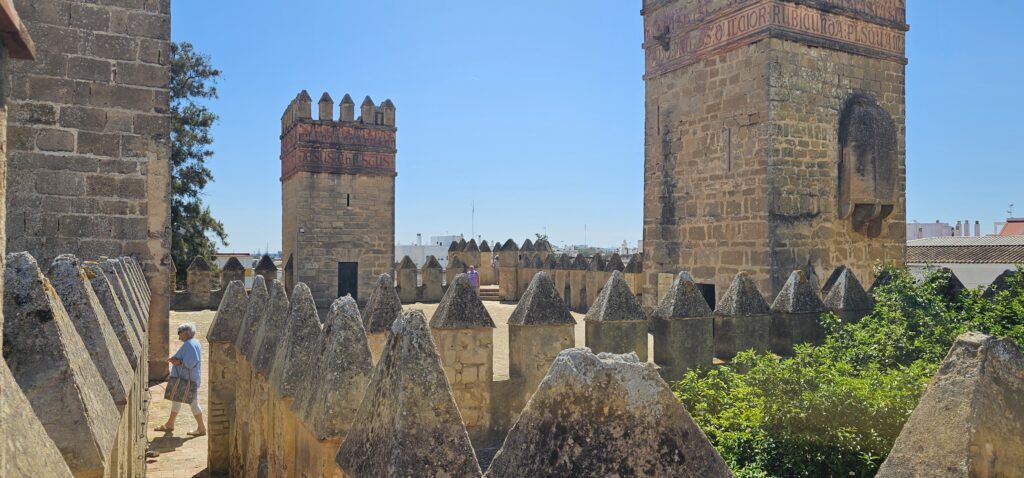
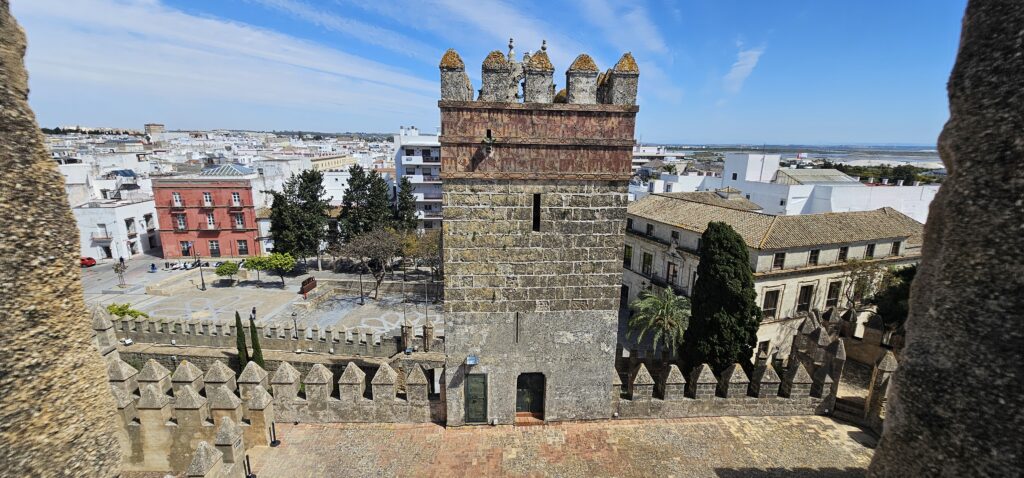
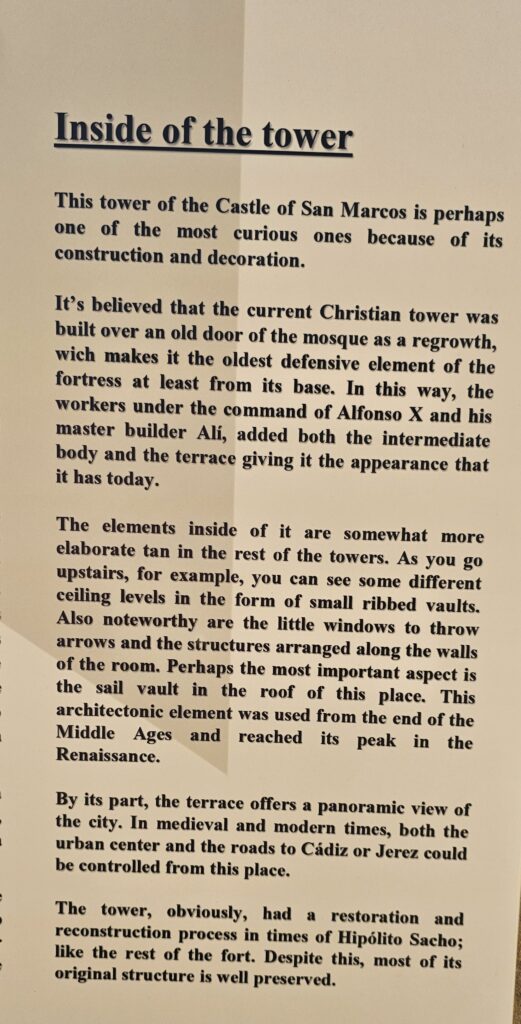
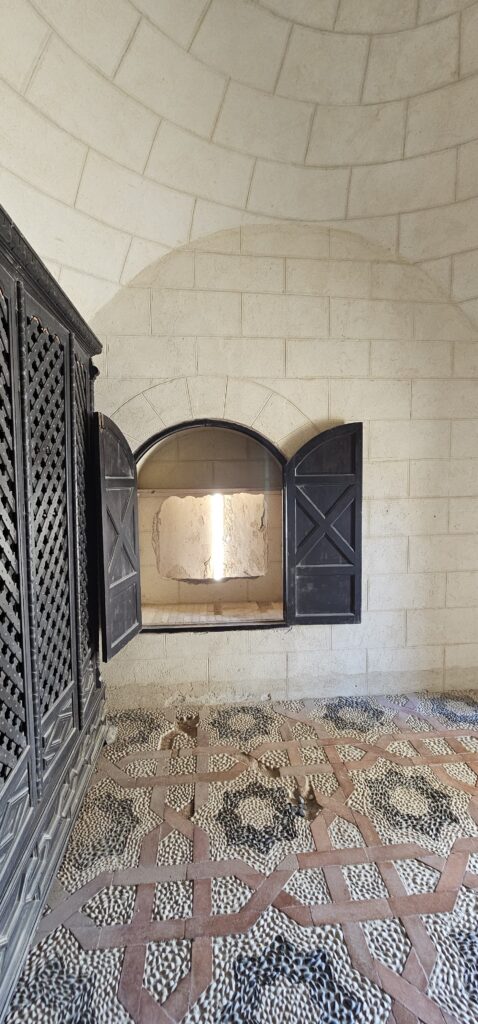
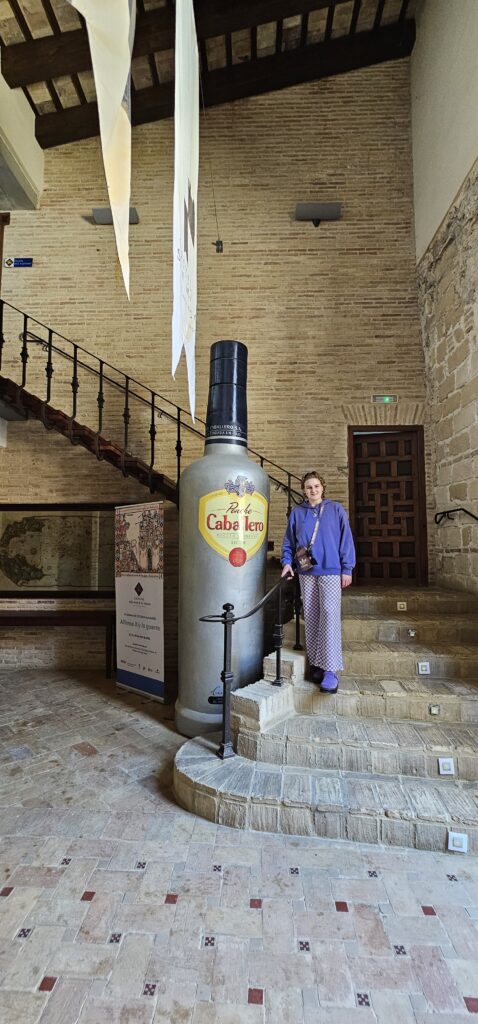
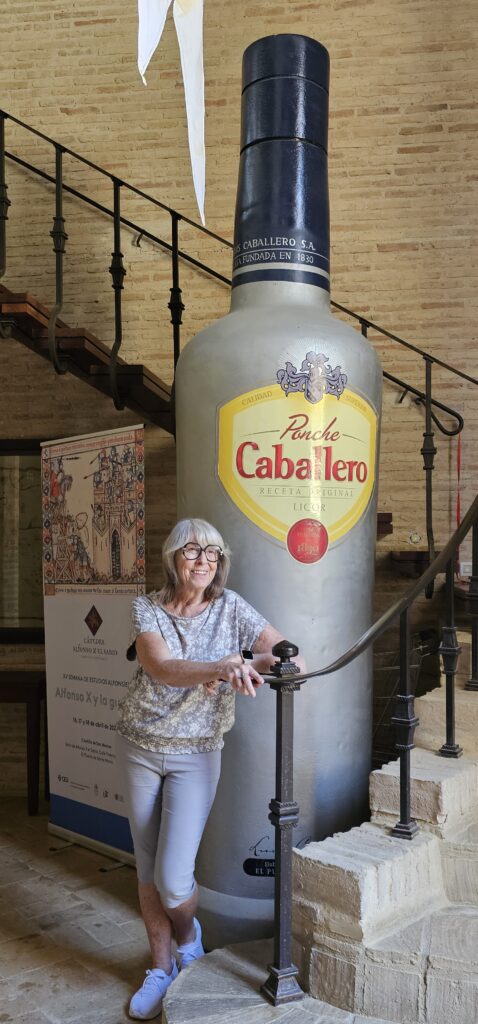
First stop was at the San Marcos Castle. It looks like a castle, and is called a castle but once inside you realise its much more – a 13th century fort built on a mosque, a christian church added on and a bodega, influenced by the Romans, Phoenicians, Andalucians and Christian King’s and Dukes. Finally the Caballero Group (wine merchants) took the building over in the last century and modernised it so that it’s now an Asset of Cultural Importance.
So in summary, its a castle, a mosque, a church, a Bodega and a beautiful building!
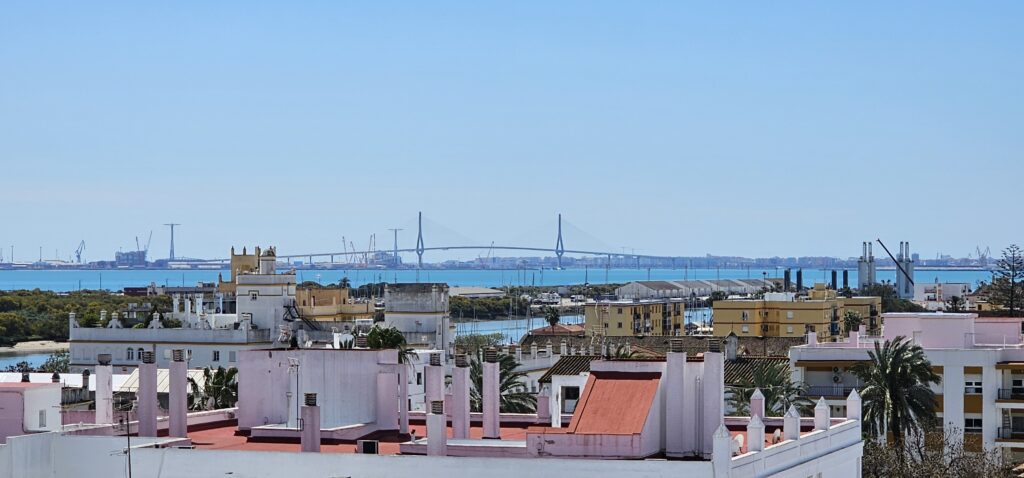
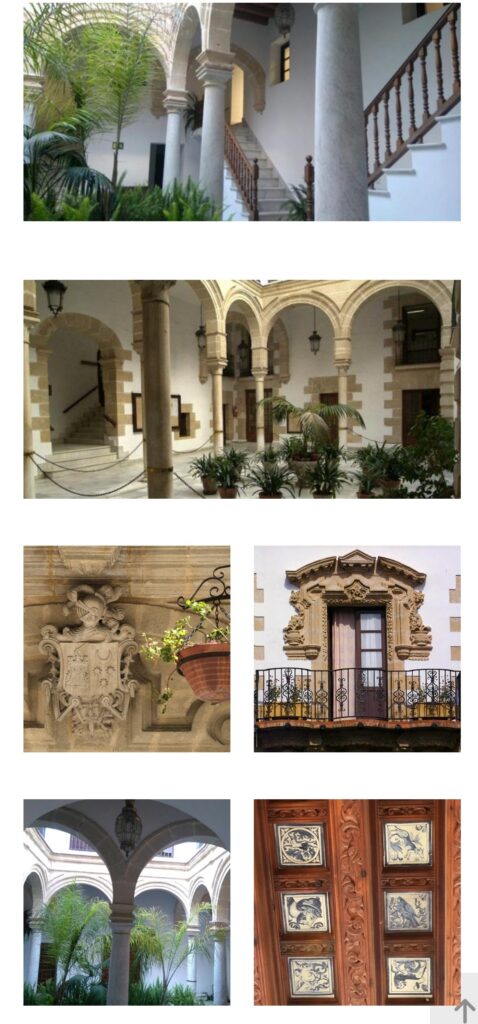
Next we wandered around the Aranibar Palacio and learned the history of El Puerto de Santa Maria, an important port and commercial city located at the mouth of a river coming from the sherry triangle, passing Cadiz and onto America. With this trade came money, and traders who had money to build large Palacial houses, creating a town known as “The city of a hundred palaces”.
The houses were built around a central courtyard, on three floors with a mezzanine, and opposite to British or colonial houses, the servants lived on the top floor and storage was on the ground floor with living accommodation on the first and second floors. Many palaces included a tower, a chapel and wine cellars. The Aranibar Palace is one such house made of limestone, decorated in Spanish marble and walnut and mahogany from America.
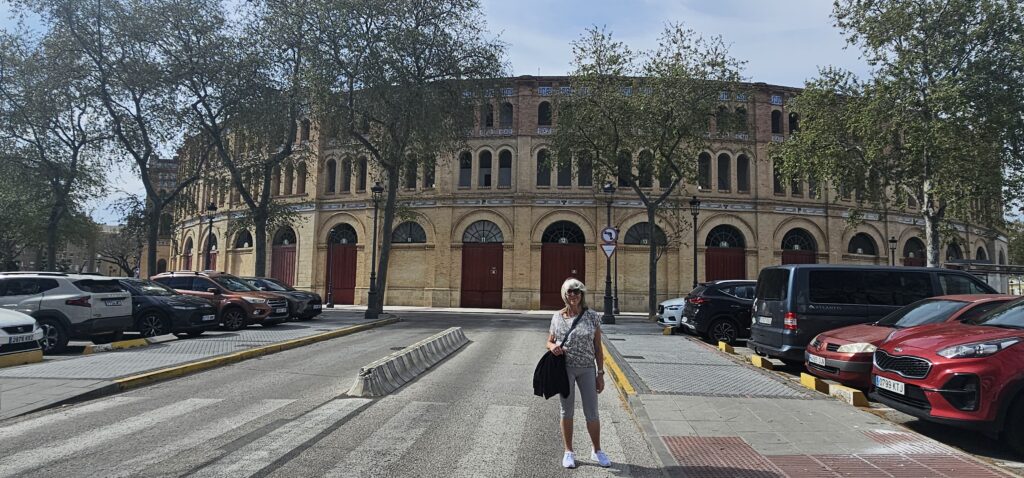
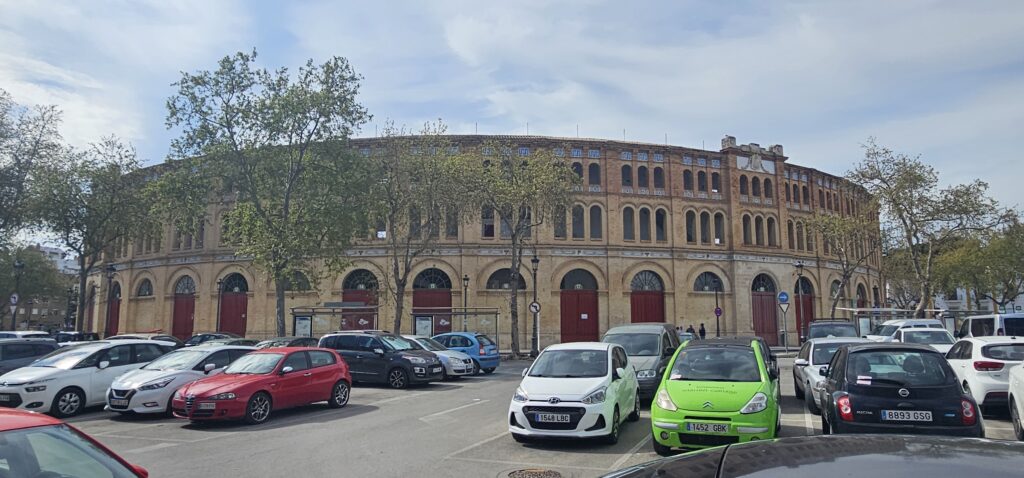
Then we walked around to look at the exterior of the bullring, a pretty modern looking building that was built between 1877 and 1880, a 60 sided polygon with a diameter of 99 meters, owned by the local council and still operating today.
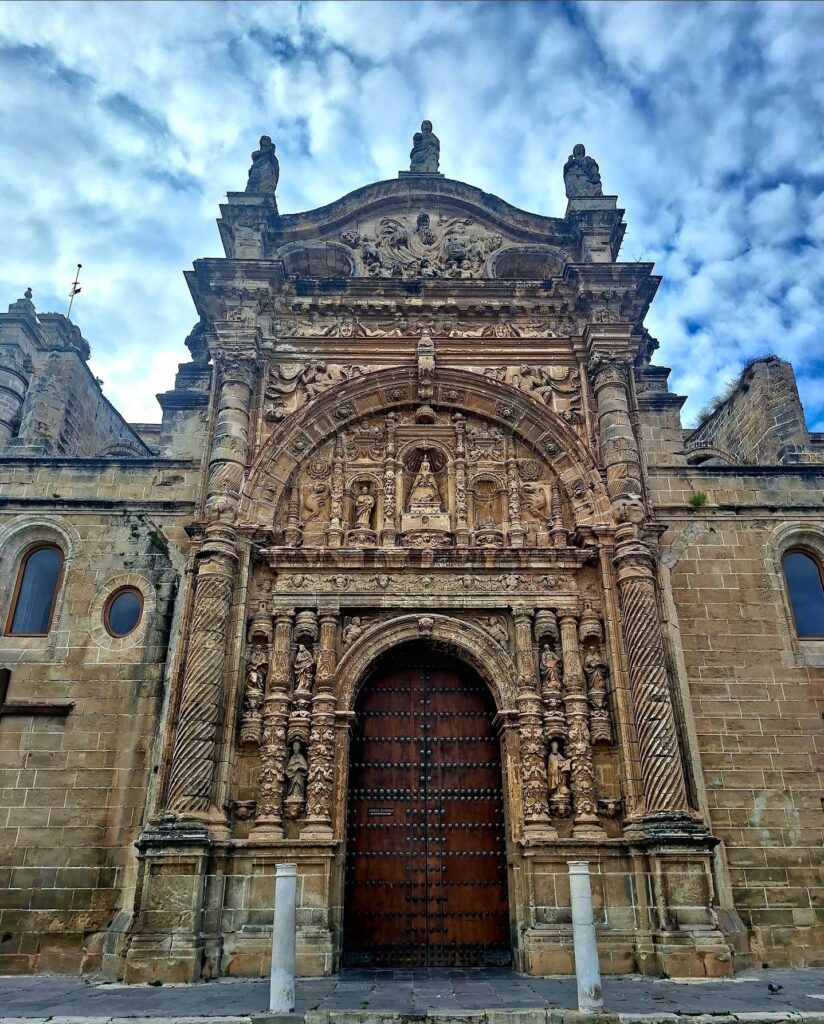
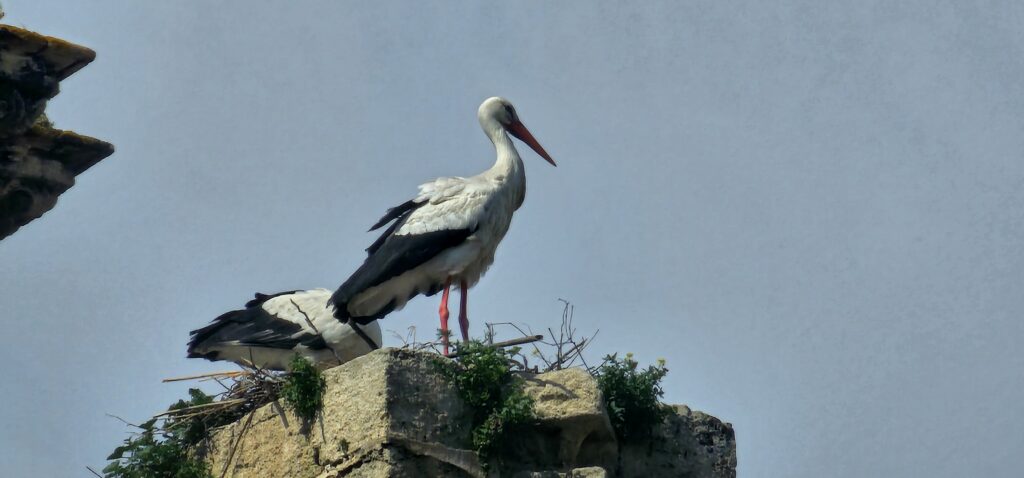
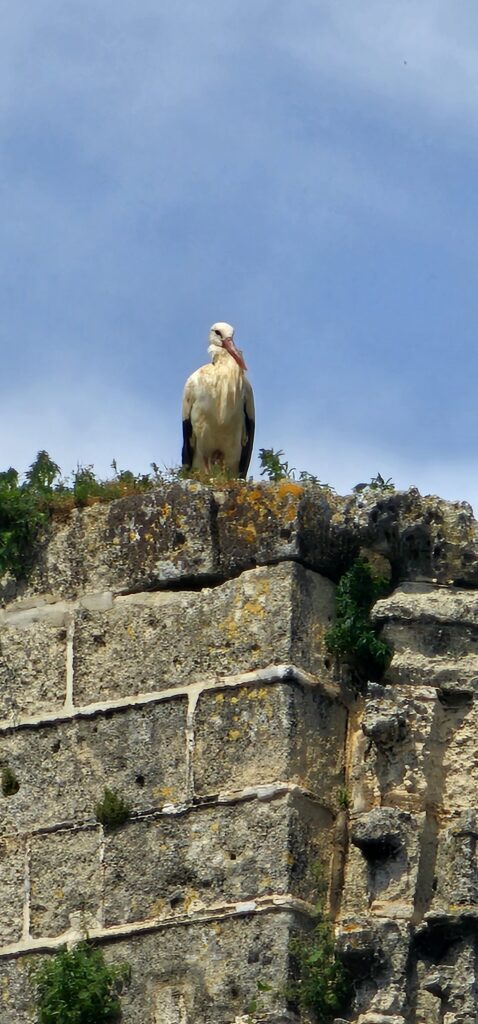
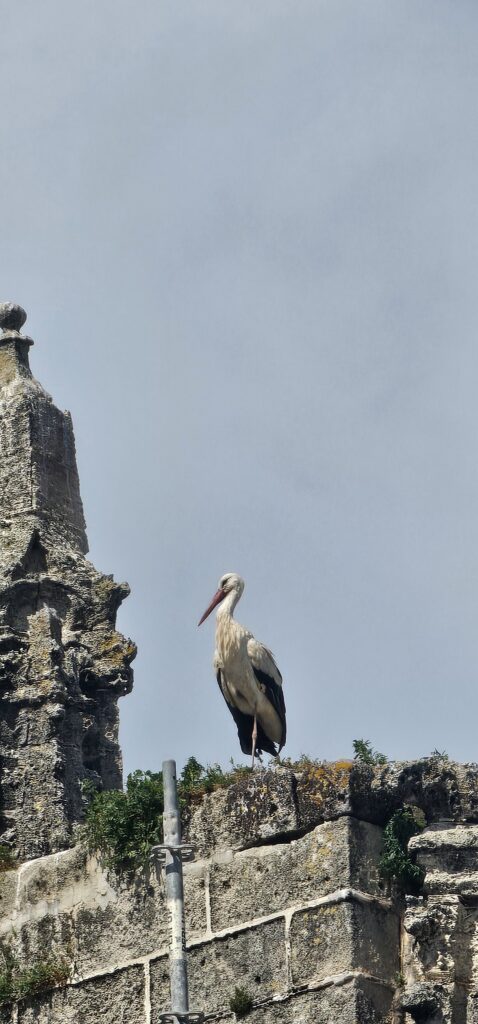
Then we mooched around the local market before looking at the Basilica and Plaza Espana, indulging in tapas and sherry and watching the antics of the storks nesting on the Basilica parapet.
Following a short travel hiatus, we are on the move again, just us two and Benny the car. Bessy will be enjoying a sunny holiday in storage in Torrevieja until the summer.
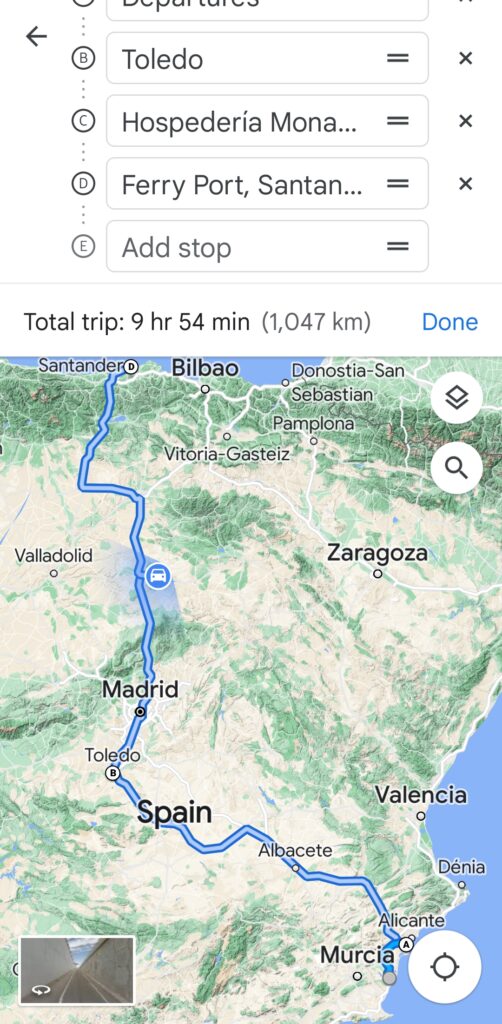
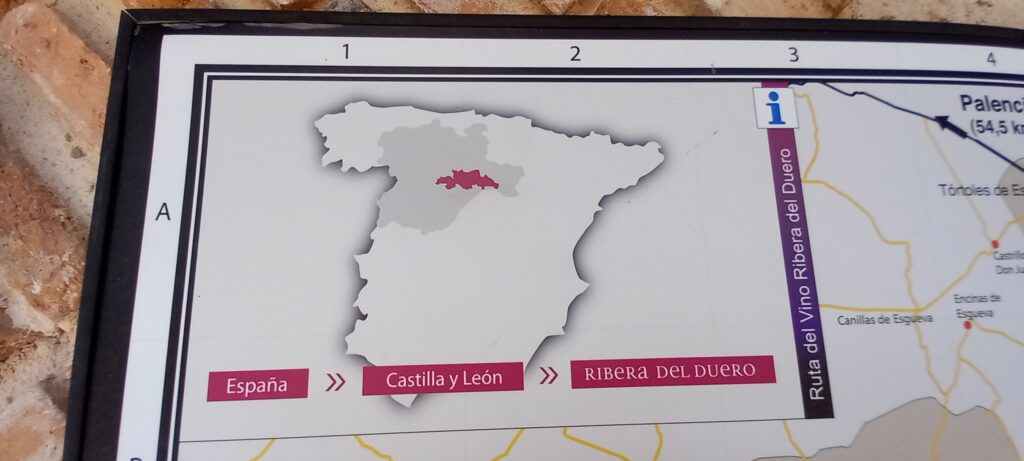
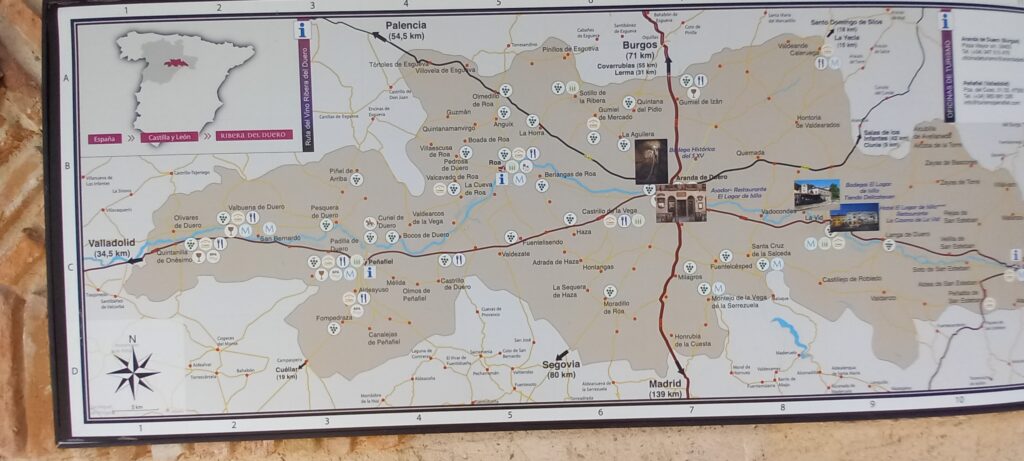
David and I have left Torrevieja for a few months to relight our travelling wanderlust, starting with a return to the UK for essential services, Doctor, MOT, dentist etc. Our route up to the ferry has taken us from the Alicante area, north through the La Mancha wine region to Toledo, north through Madrid to the Duero wine area then up to Santander. This post is a diary of our journey. Our next post should be from Dubai or Vietnam, fingers crossed 🤞.
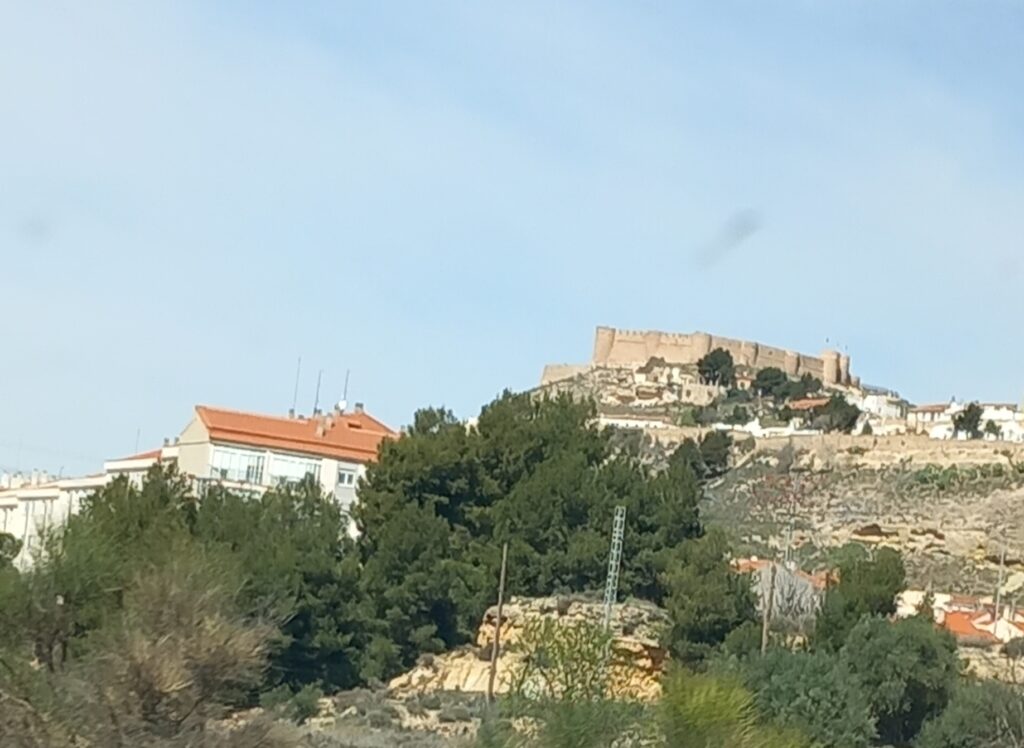
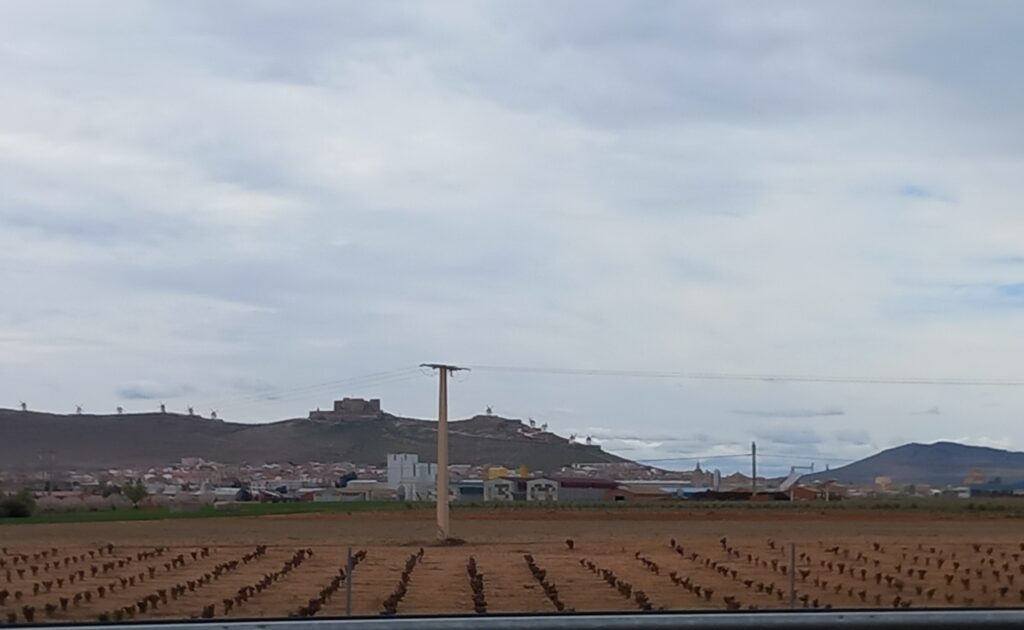
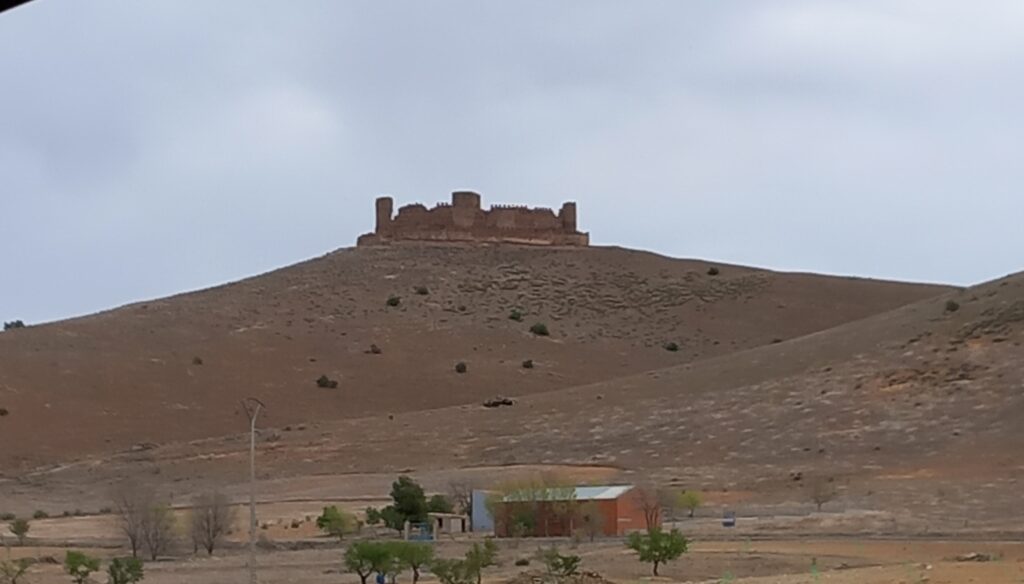
Driving up from Alicante towards Albacete, we were surprised by the number of roadside castles and forts, all stunningly perched on hilltops, surrounded by rows of heavily trimmed grape vines, pink blossoming almond trees and white blossom cherry trees. Some castles were surrounded by windmills perched on the crest of the hills.
Our route north
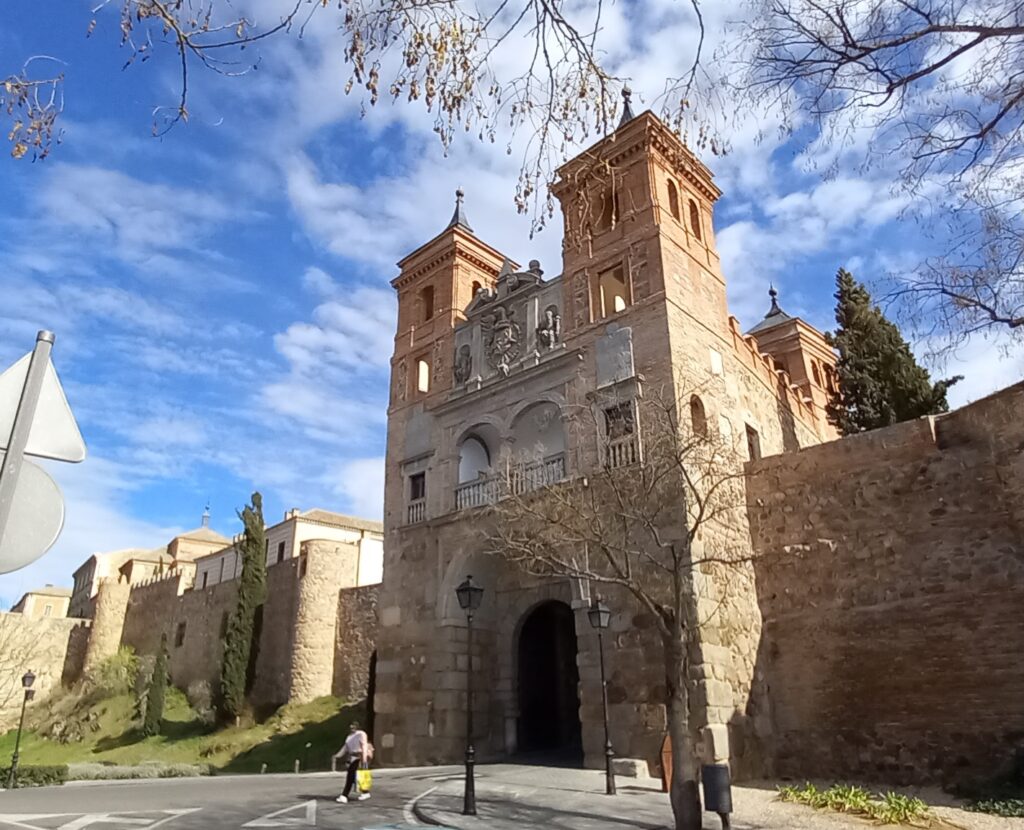
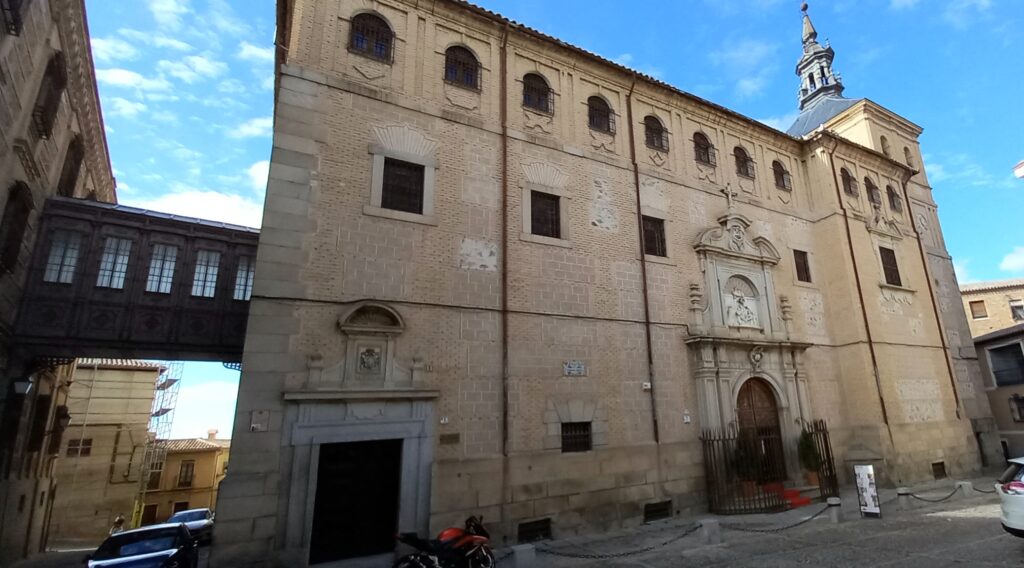
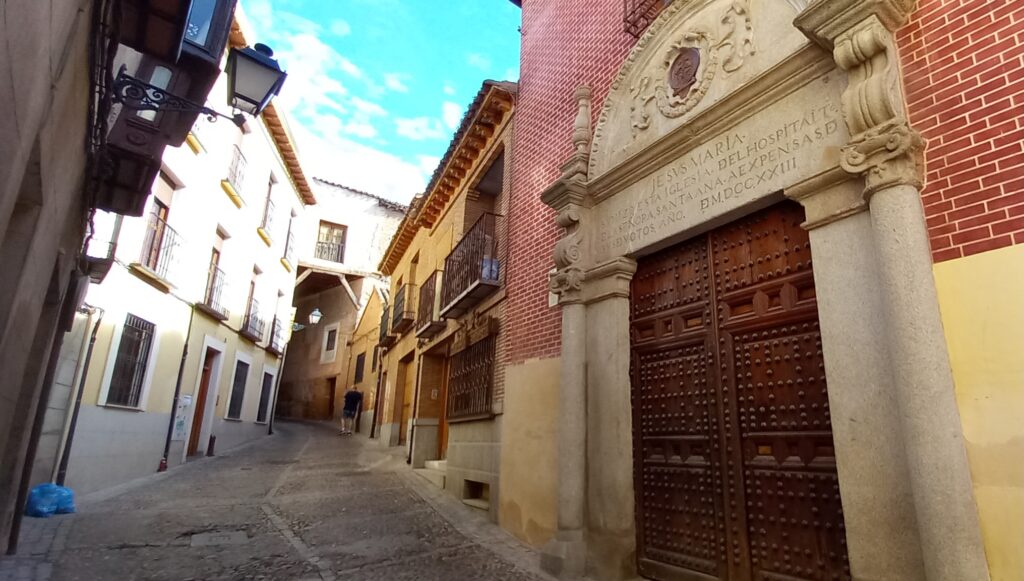
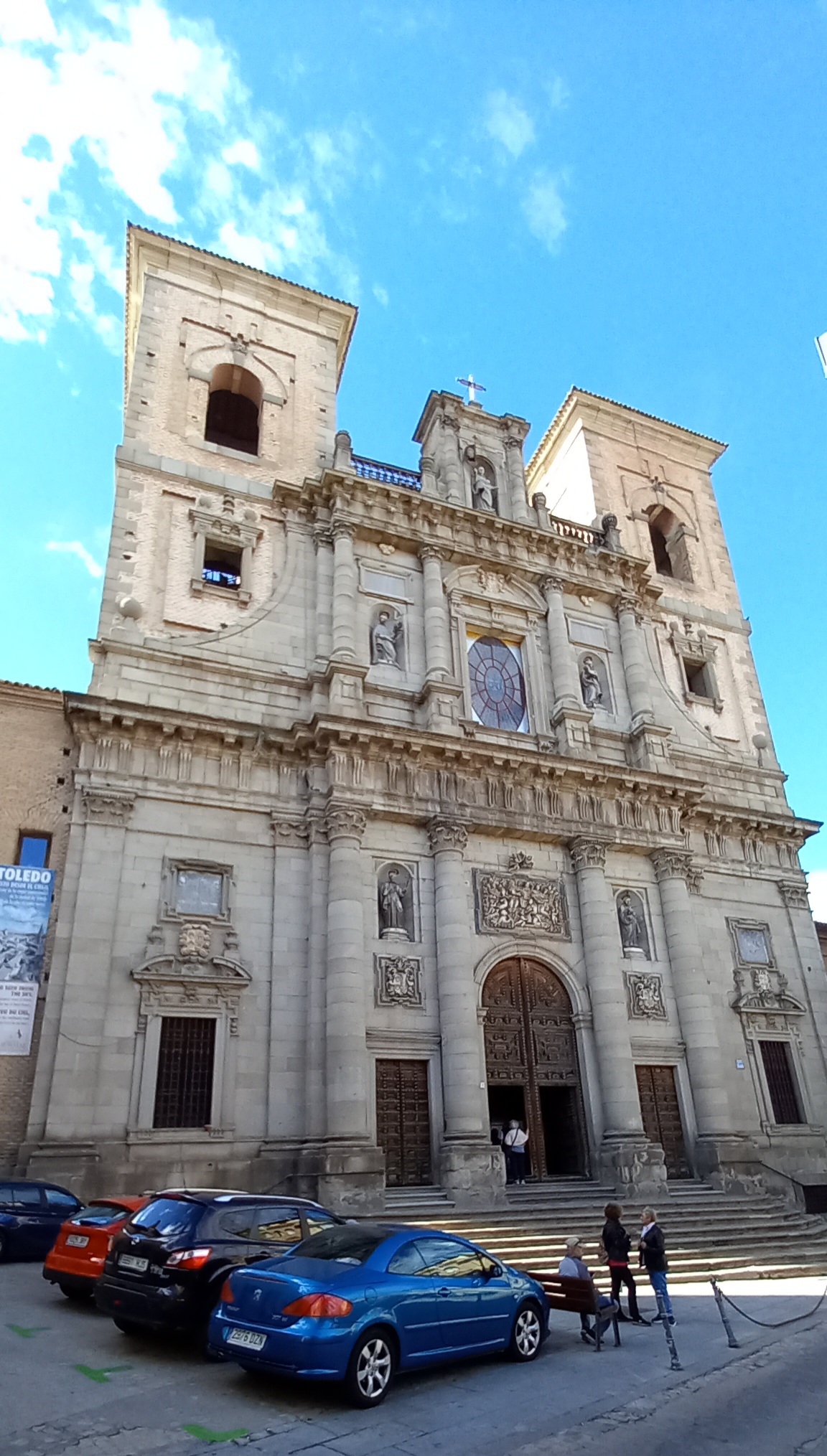
TOLEDO – World Heritage Site
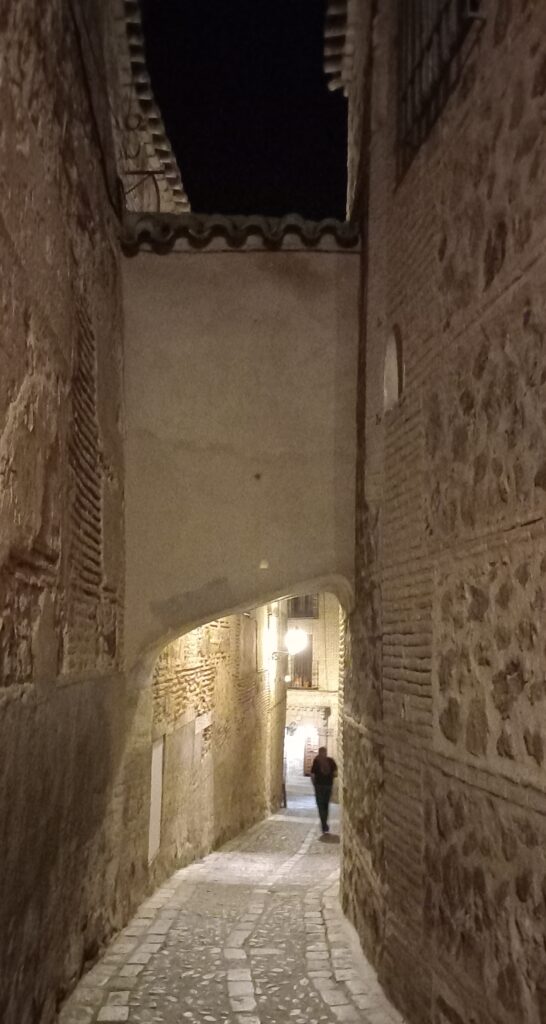
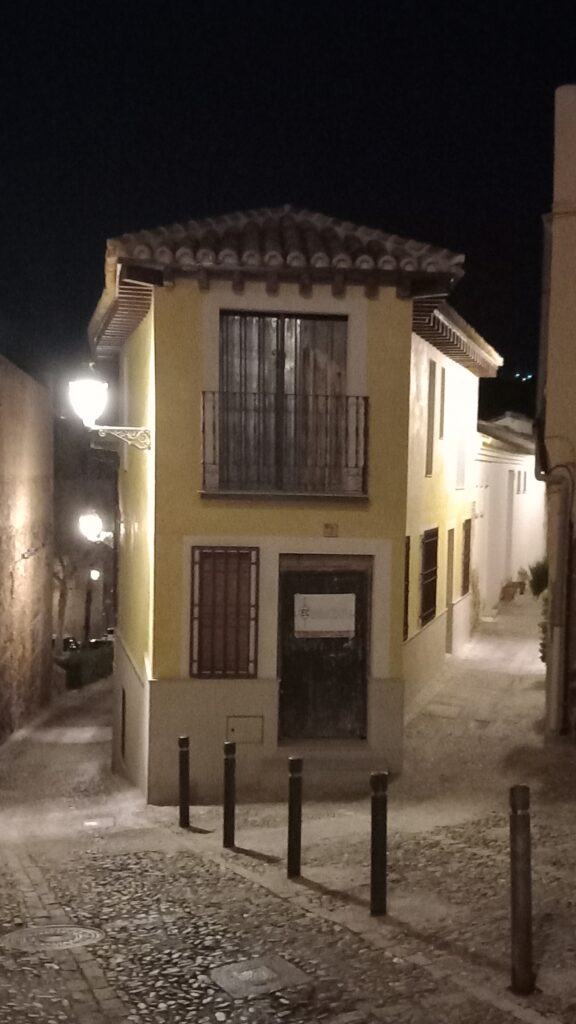
Fact: there are over 20 churches, chapels and synagogs, one Cathedral and one Mosque as well as several convents in Toledo, thanks to its Christian, Islamic and Judaism roots and more recently Catholic influence, that’s almost one on every street corner. This partly walled medieval city is heaving with tiny cobbled streets, steep hills and ancient buildings, dating back to Roman times (128BC) and the old areas still exist within this modern looking clean city. The Jewish Quarter is full of dusty workshops with monacled men in waistcoats tapping away at silver jewellery and tea sets, as well as the famous Toledo steel knives. Toledo is also famous for its silk and the hand made roof tiles found throughout the City, AND, its very narrow streets!
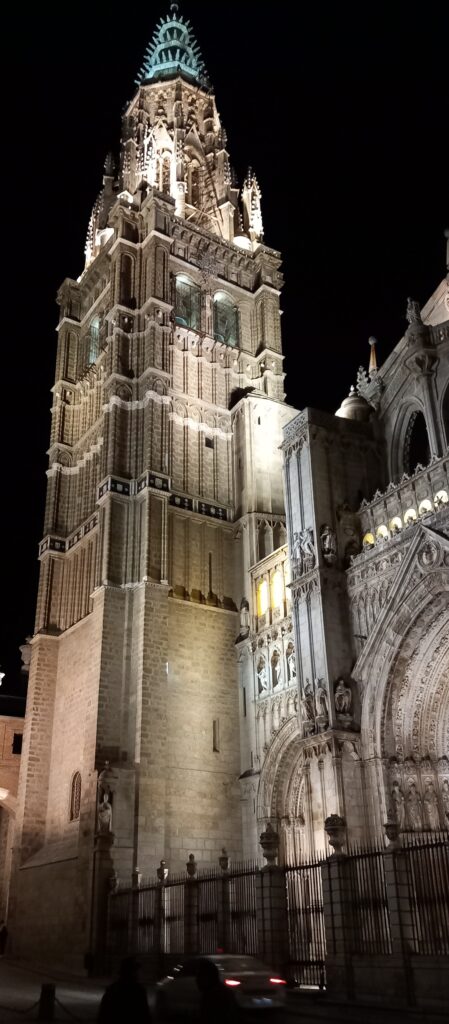
The centre is dominated by a huge Gothic cathedral, a large college and so many architecturally stunning buildings all accessed through streets so narrow that locals have permanent scrapes on the rear wheel arches of their cars. Taxis whizz around the streets, buzzing through strolling tourists without any problems, at night the traffic can only be described as manic until 9pm, when locals are jam packed in restaurants and the streets become the opposite – deadly quiet. The only constant noise is the rushing of the Tagus river.
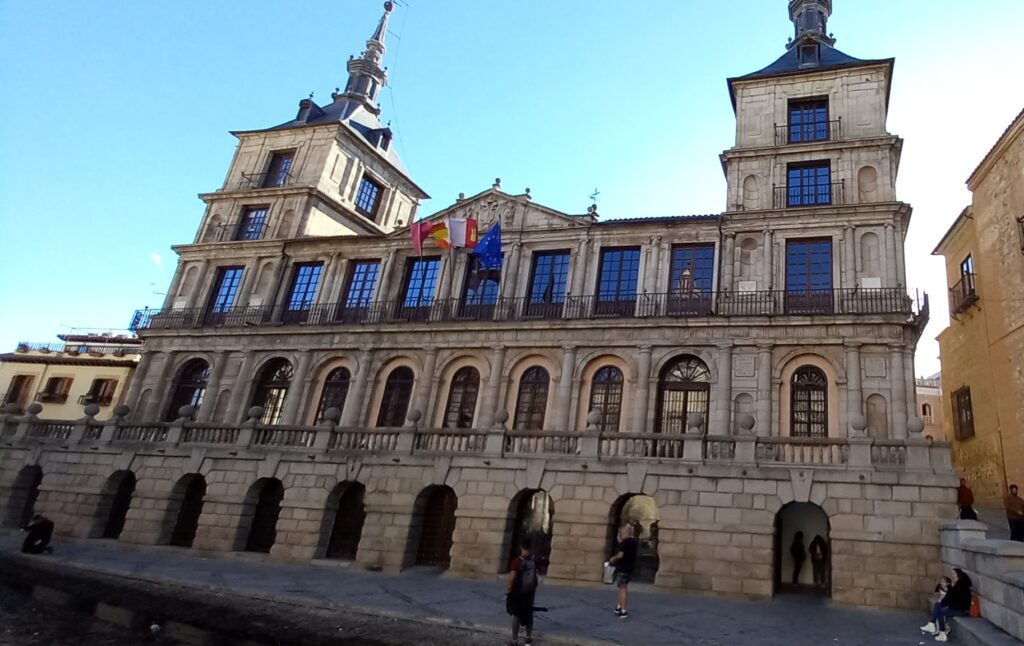
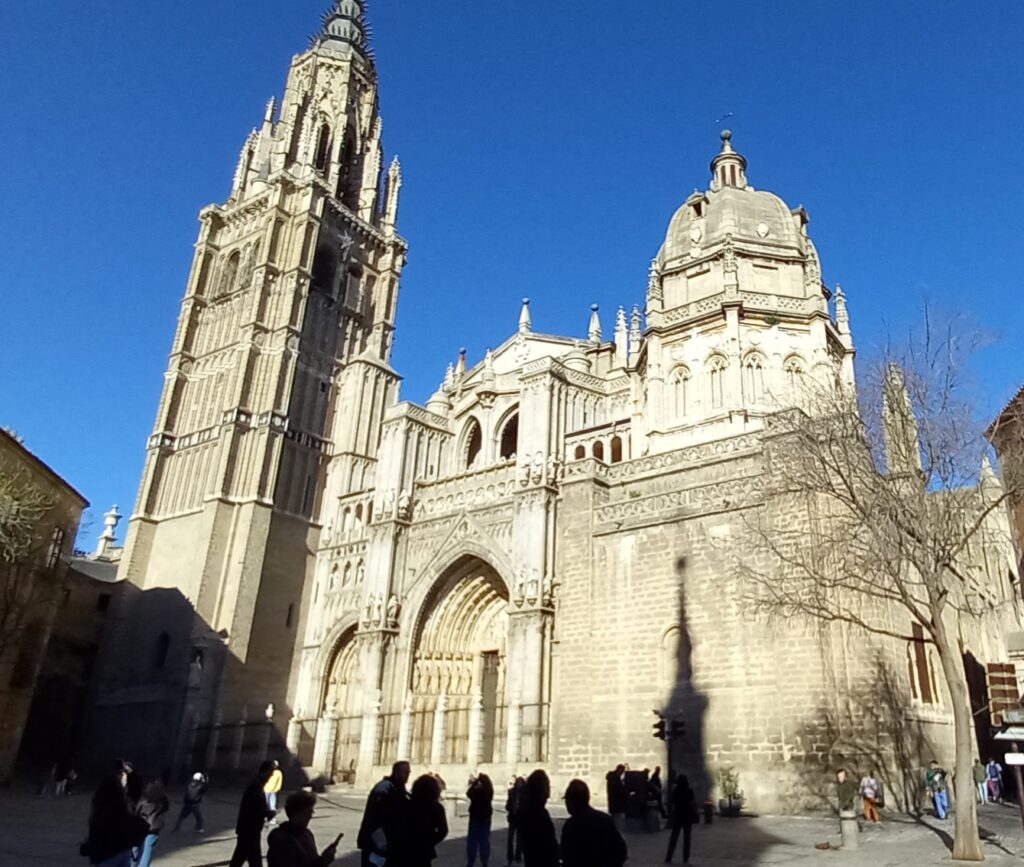
Entering the Jewish QuarterOne of the city wall’s GatesNaval college buildingThe town hallToledo Cathedral
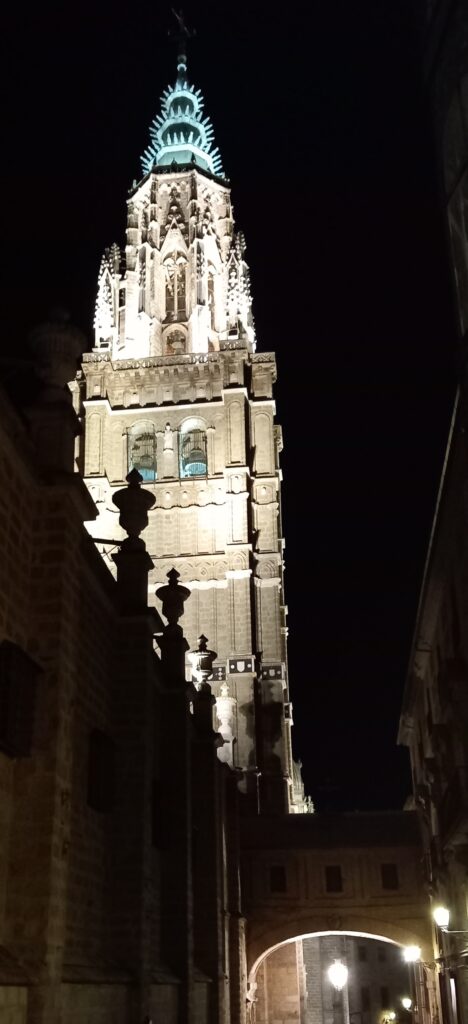
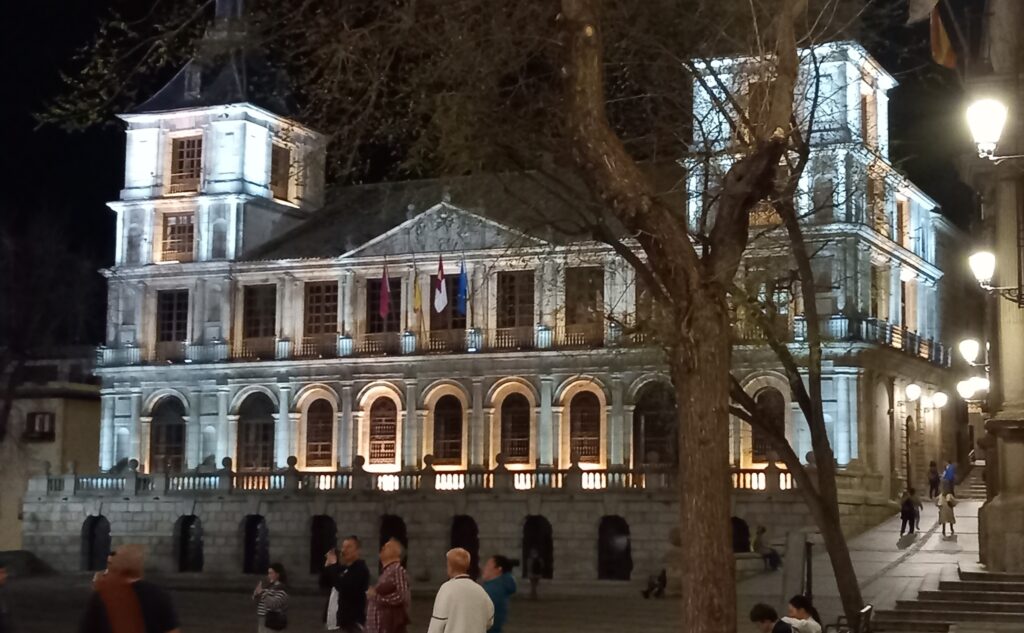
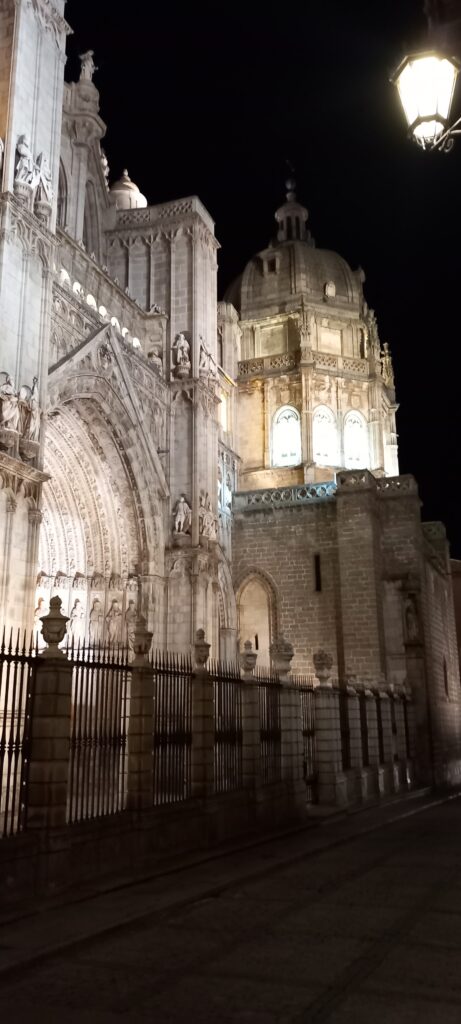
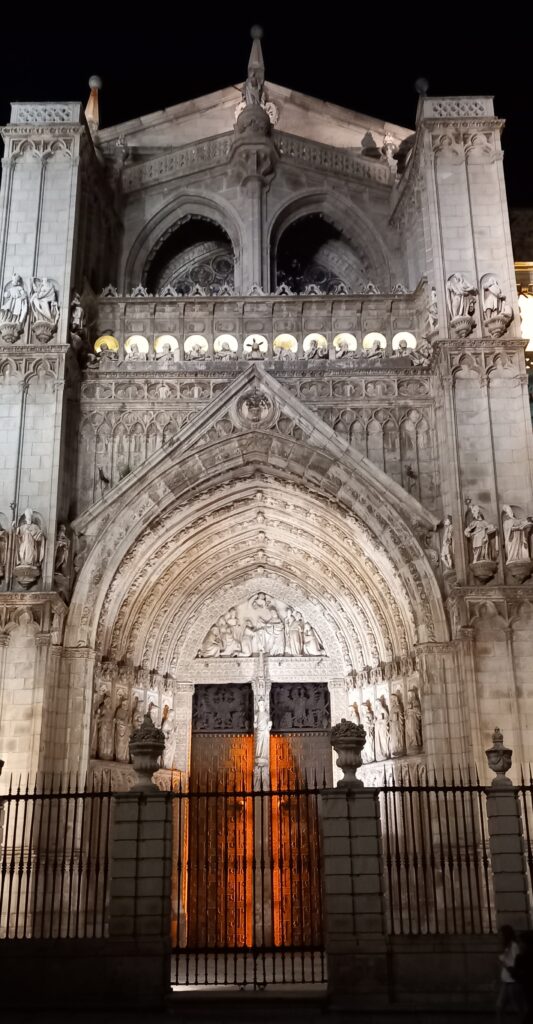
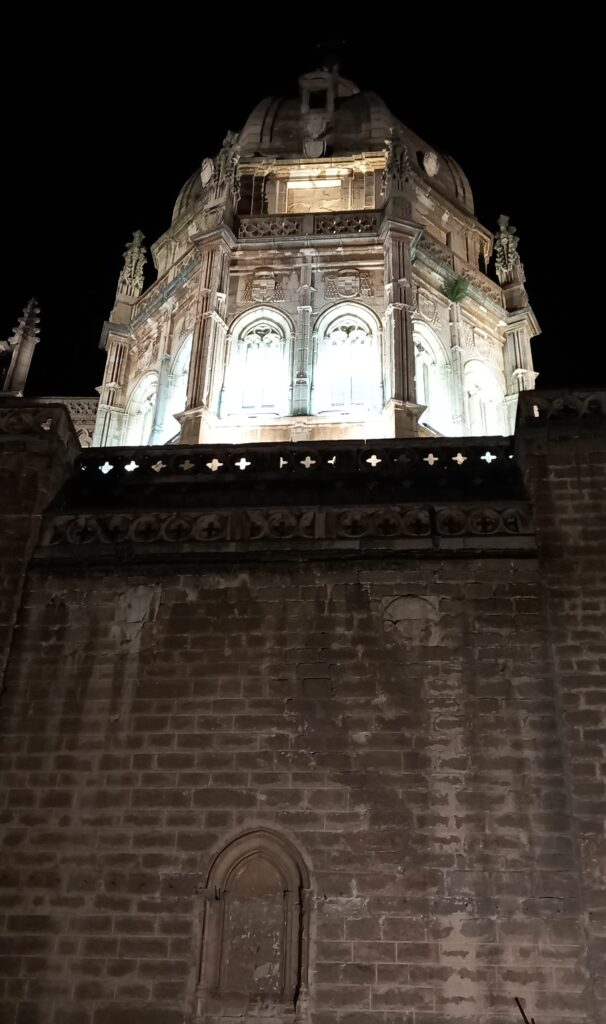
At night the buildings took on an ethereal look, cool and calming yet bright and invitingly stunning.
Cathedral Tower at night
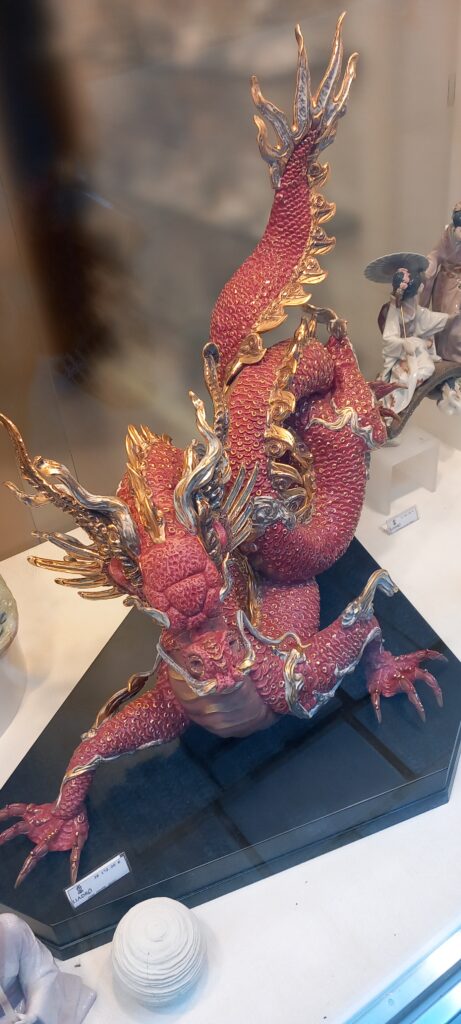
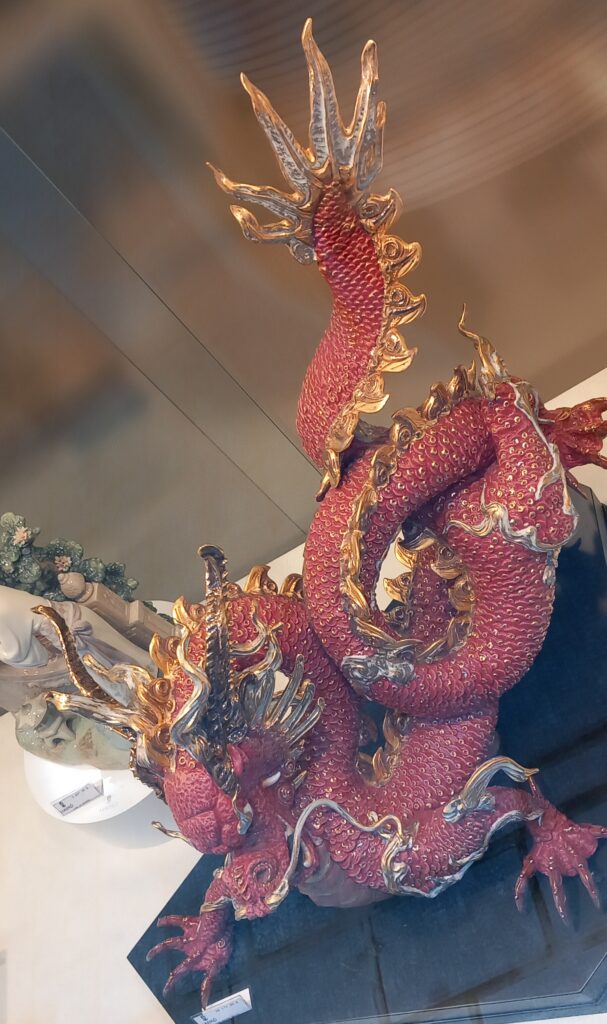
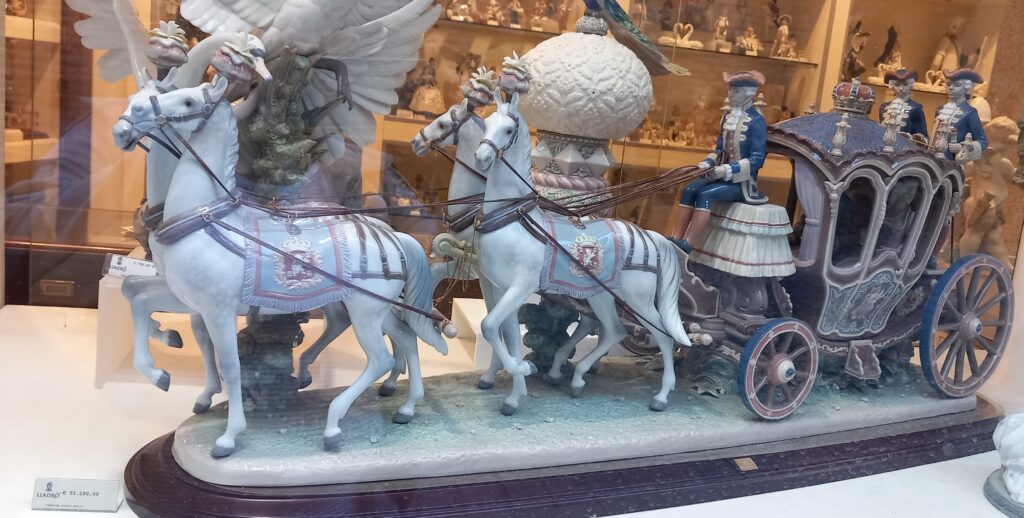
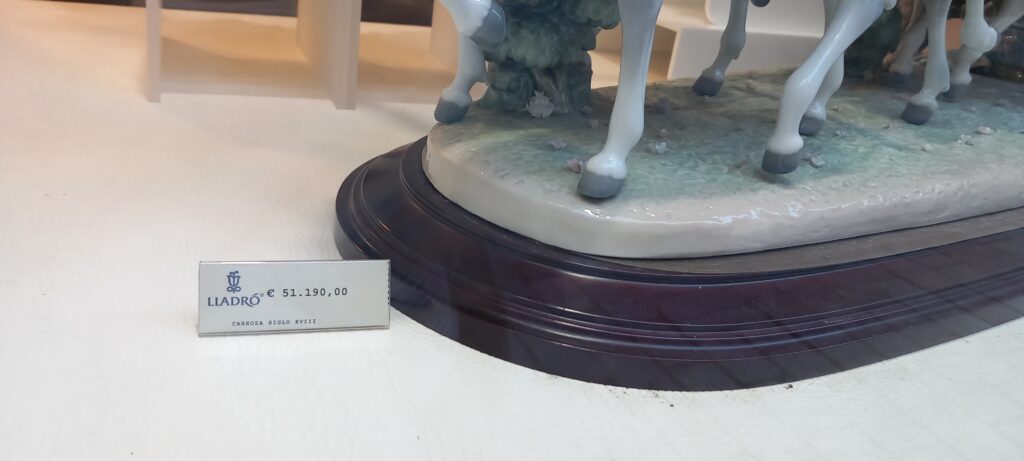
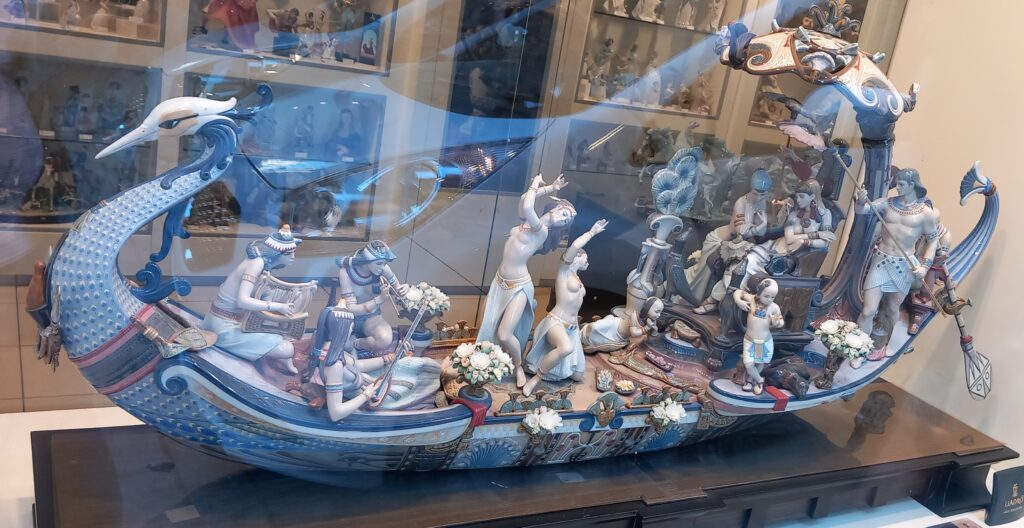
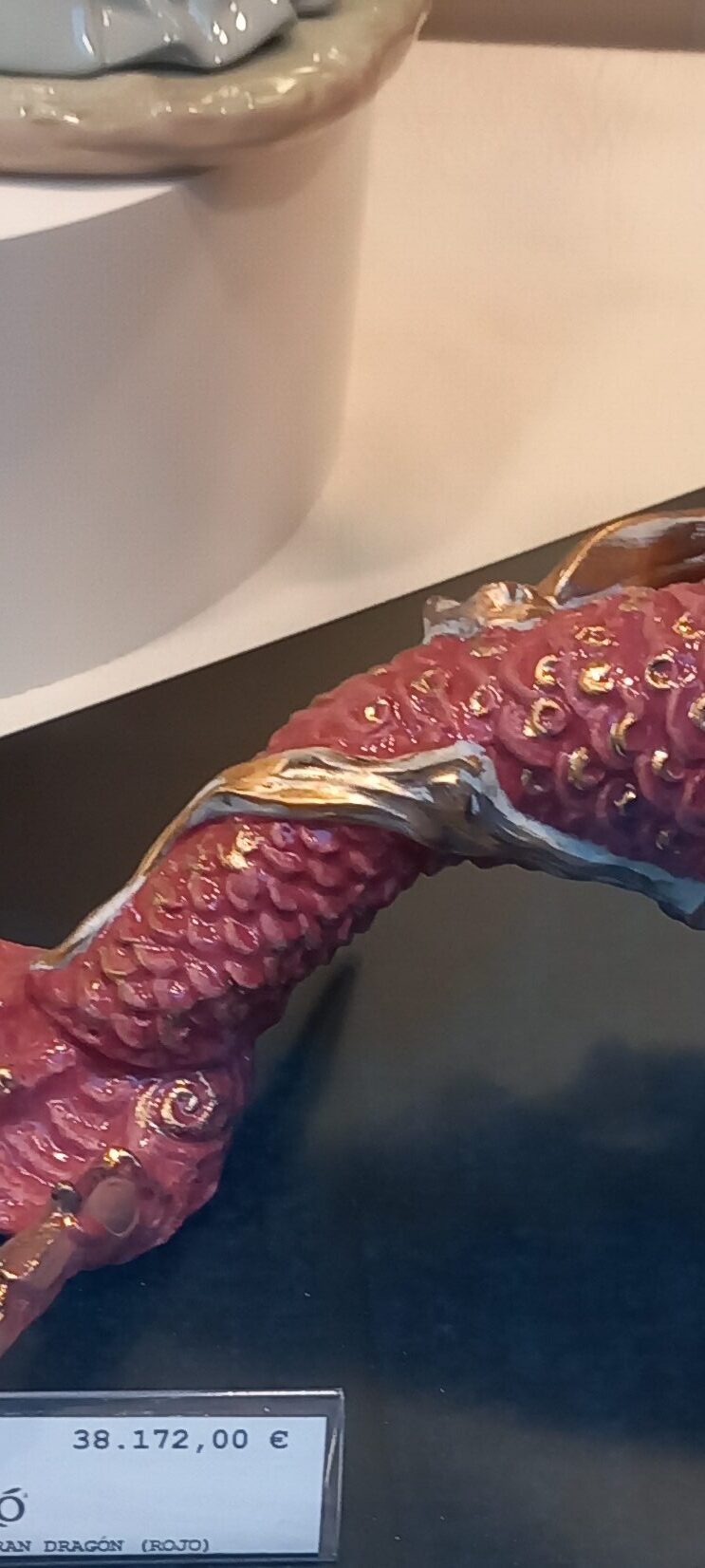
Here’s one for the ladies, a snapshot of several exquisite Llaudro ornaments!
Price tags, a tad over €25,000!!!
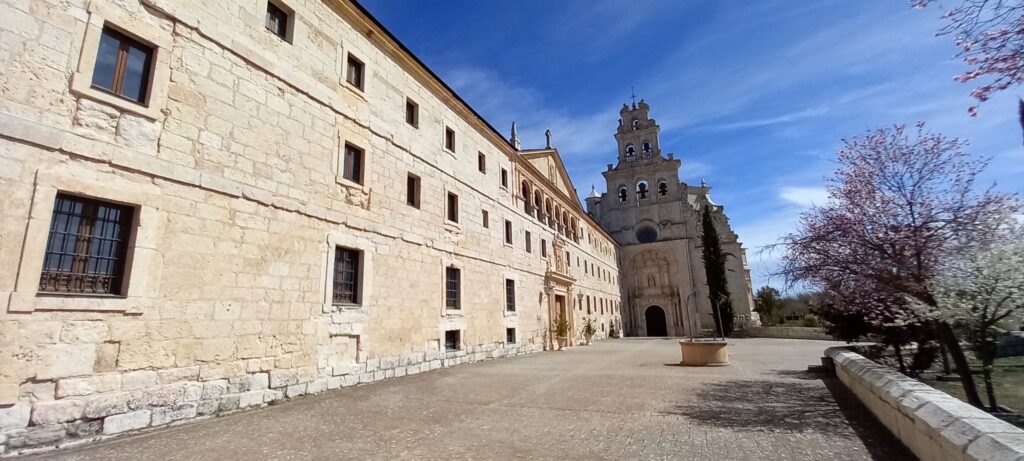
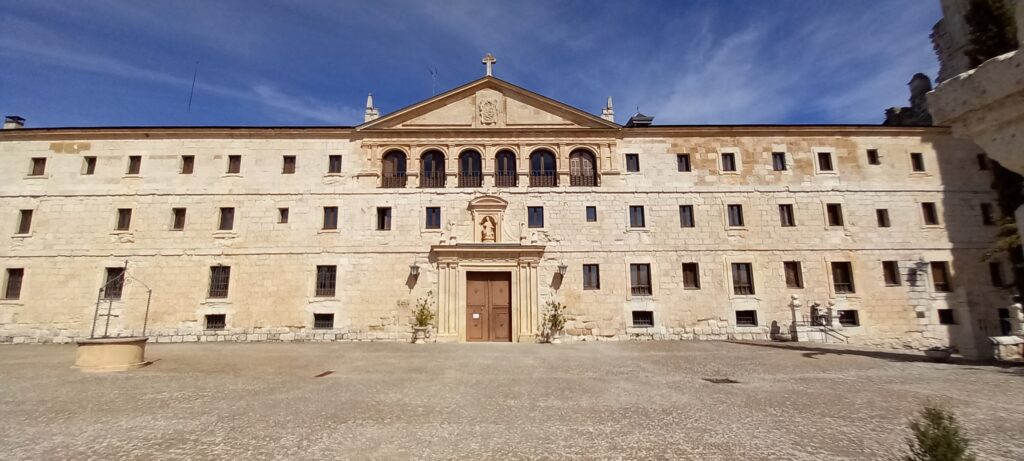
SANTA MARIA DE LA VID MONASTERY
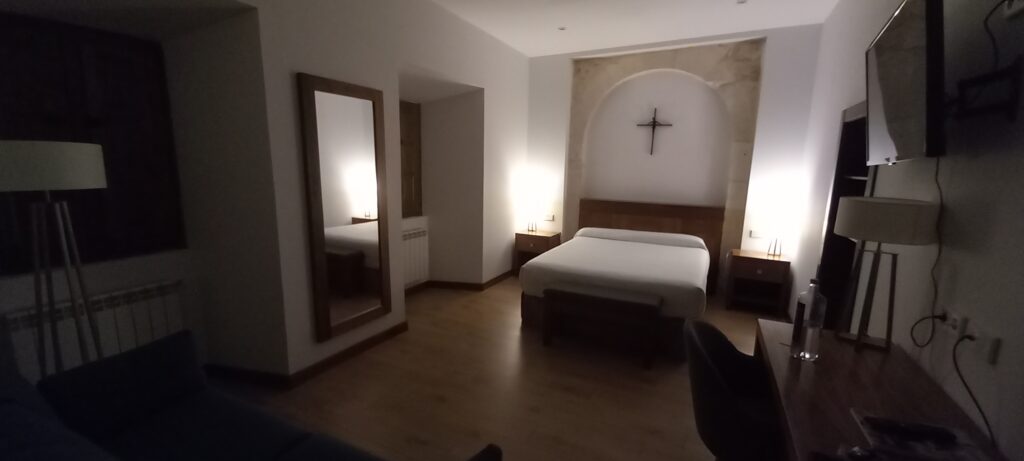
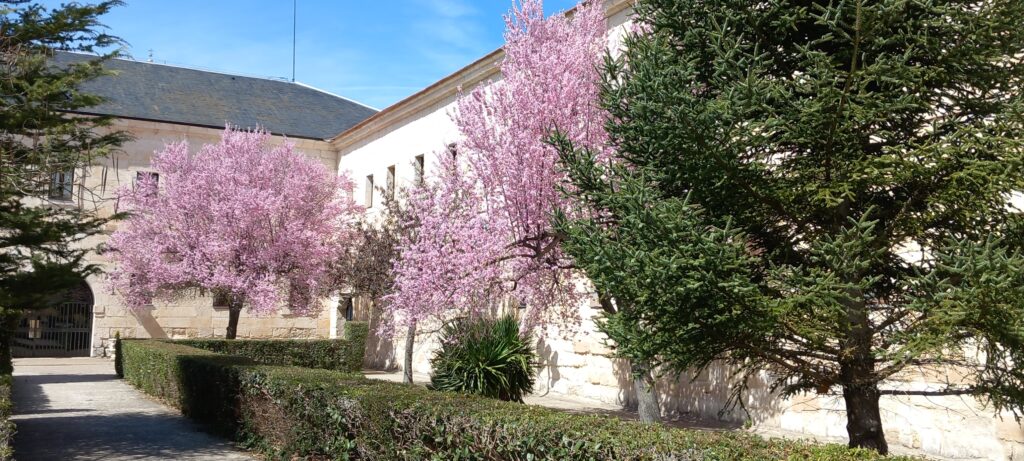
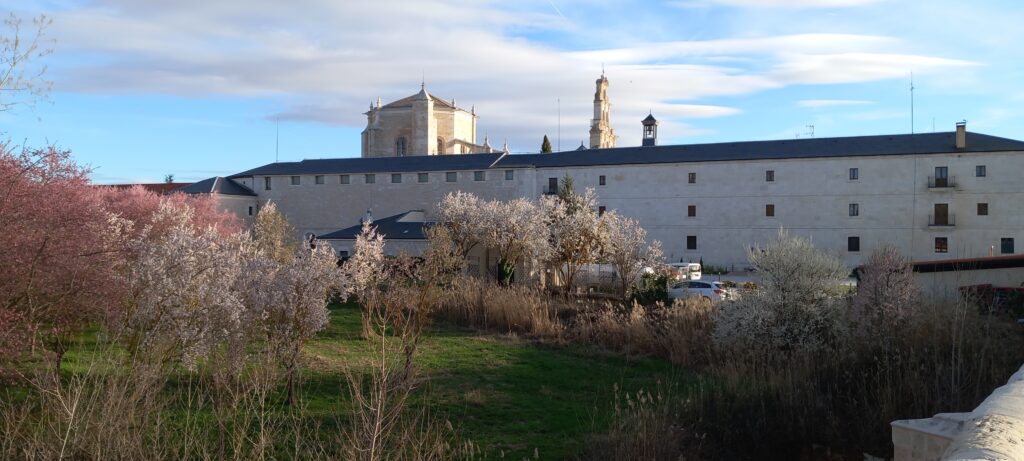
It was recommended to us that we stop halfway between Madrid and Burgos on our way to the Ferry Port, and what a lovely stop it was. After a long day walking the streets of Toledo, we experienced relaxation and quiet at this ex Monastery Hotel, in a little village way off the beaten track.
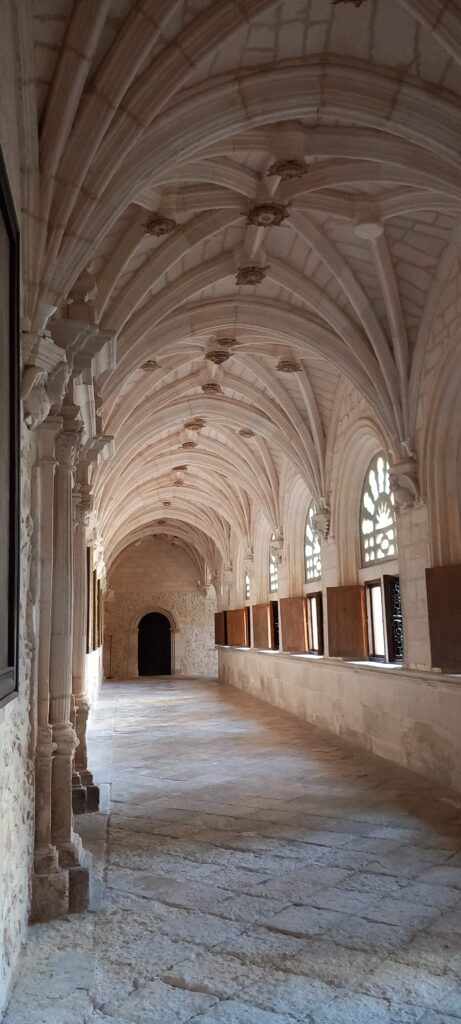
In the Duero valley, right on the Duero River, the monastery was originally founded in 1152 and was run by a Dominican Order until the mid 1800s when it closed for a few decades. Opening again by the Order of St Augustine it was run until 1991, closing with plans to change its use to a hostelry and conference centre, retaining the working church and various museums which are open to the public.
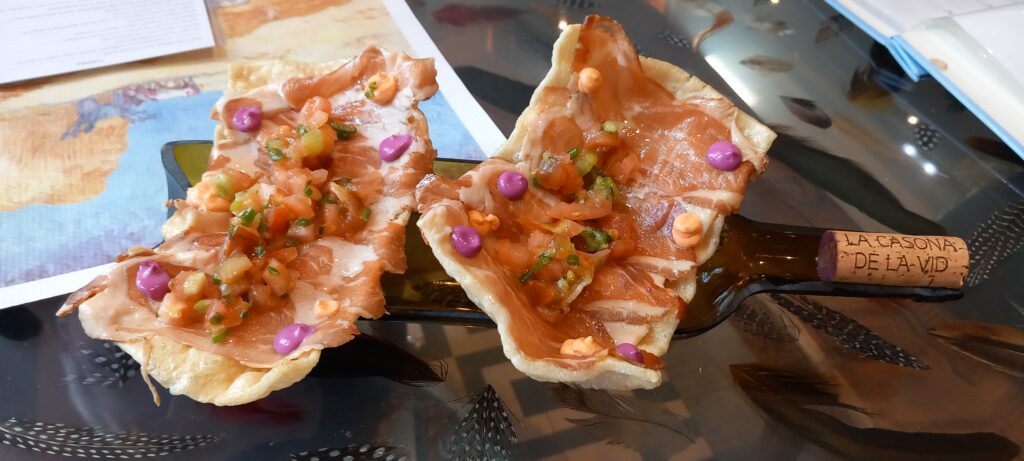
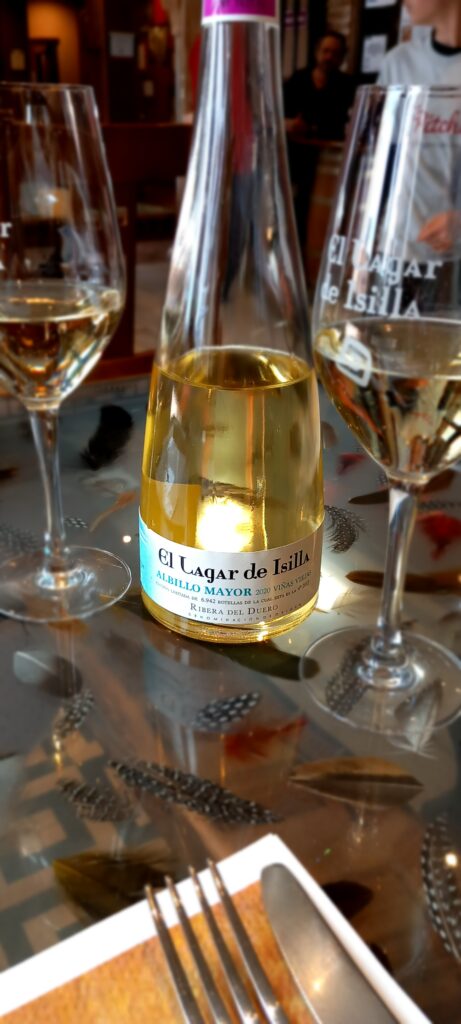
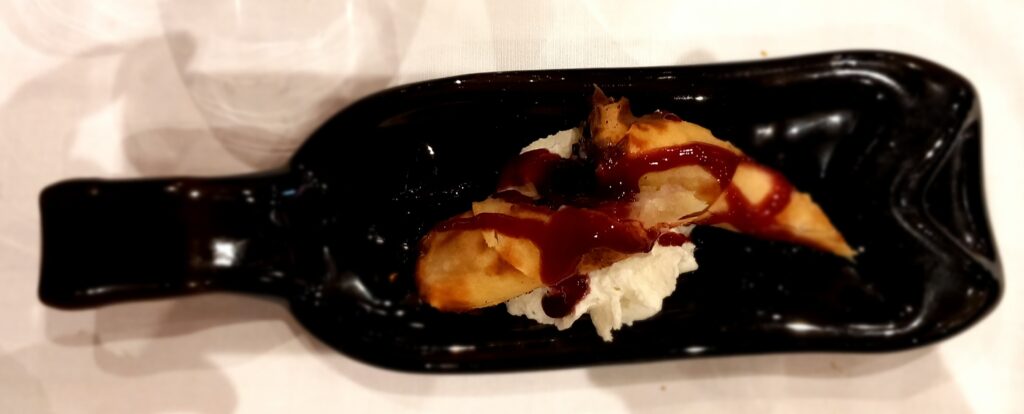
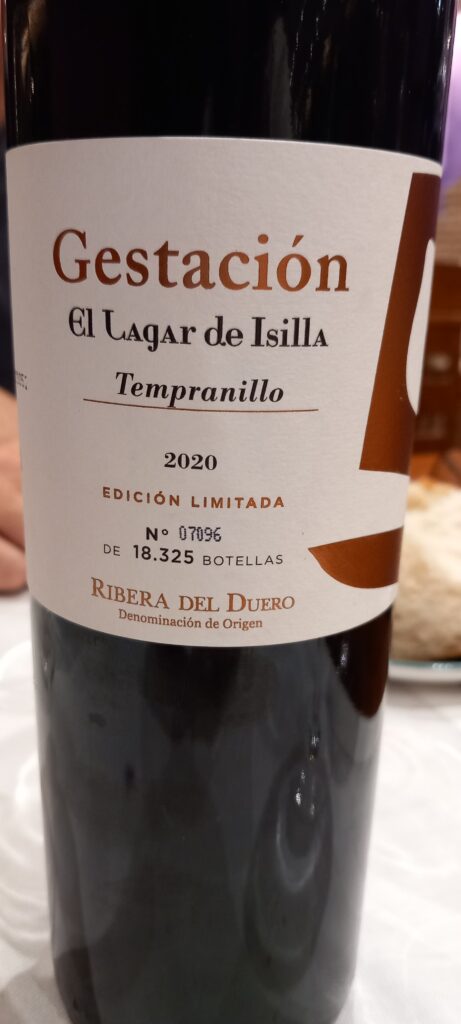
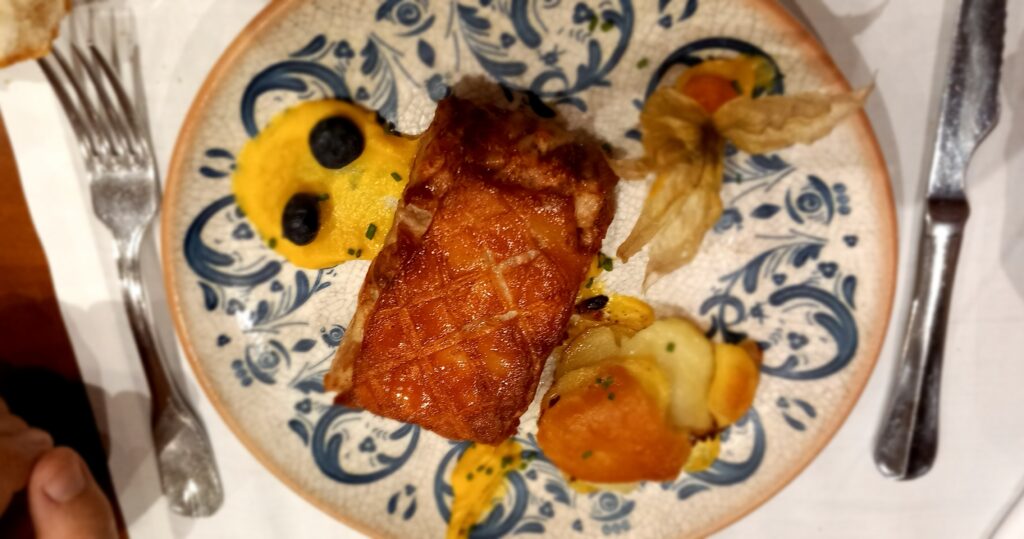
To top it off, next door was a Bodega and restaurant offering the most amazing wine and food! We stopped there during the area’s Tapas Route, this was their contribution, a crispbake with the lightest ever jamon topped with a fresh salsa and violet mayonnaise……simply heaven!
In the late afternoon, the Monastery was open for a tour, despite it being fully in Spanish, I thoroughly enjoyed the peace, tranquility and splendour of the building.
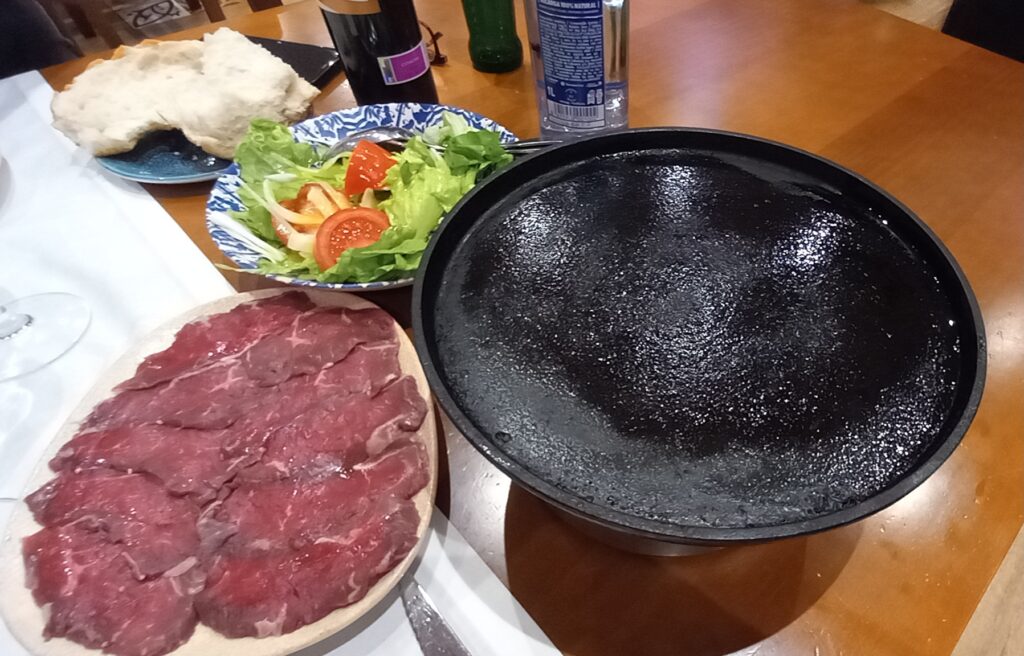
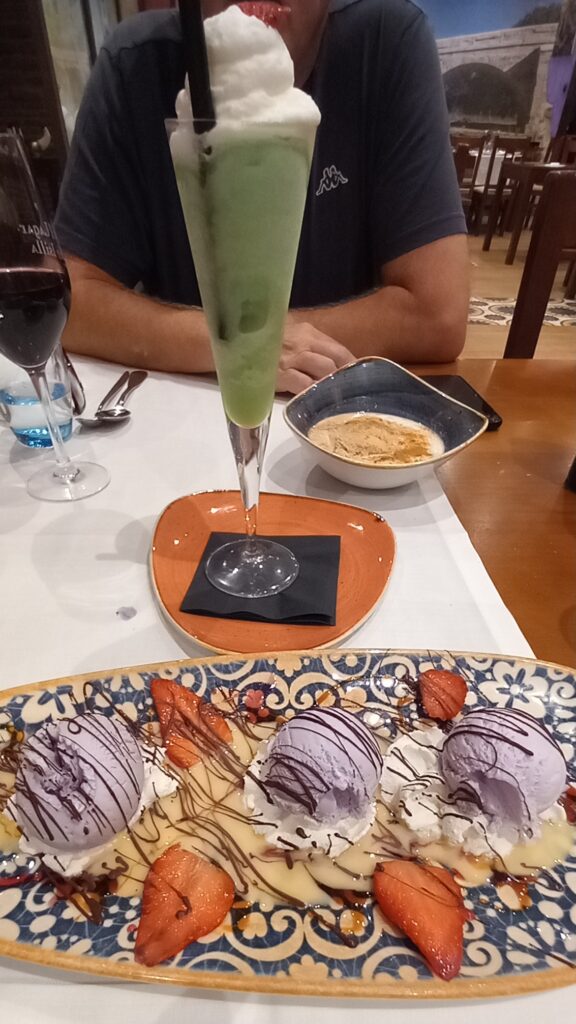
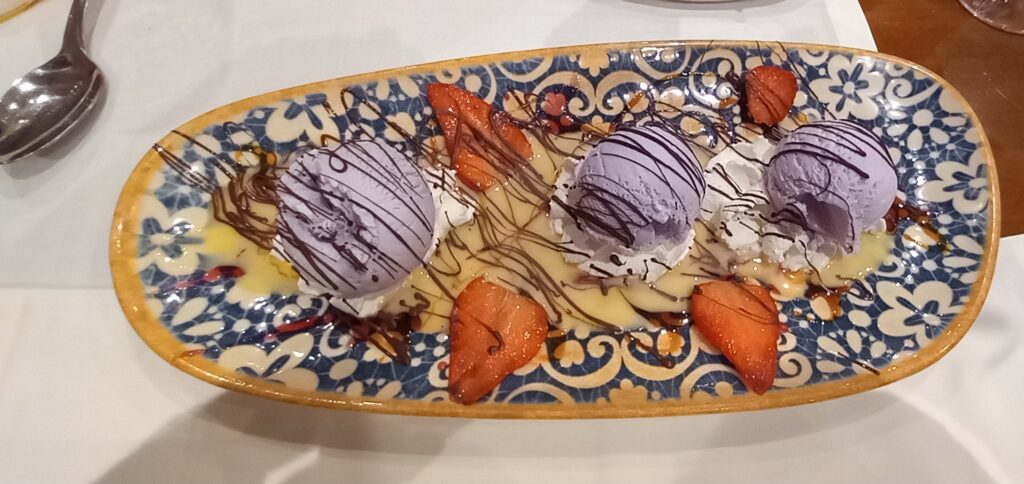
Dinner that night was outstanding, cheese pancake to start, cook your own steak…. but Dessert was the highlight. I couldn’t decide between Green Apple sorbet with a coconut foam or Violet ice cream so we ordered both!!
It transpires that Lyon was a Roman town called Lugdunum, capital of the area called Gaul.
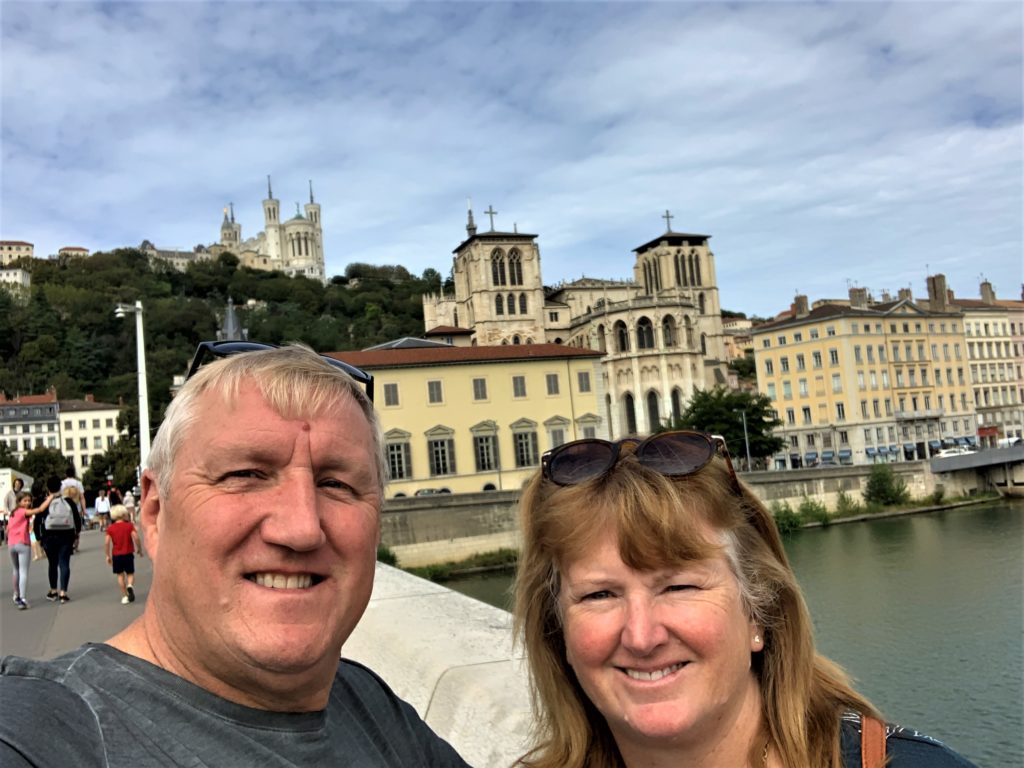
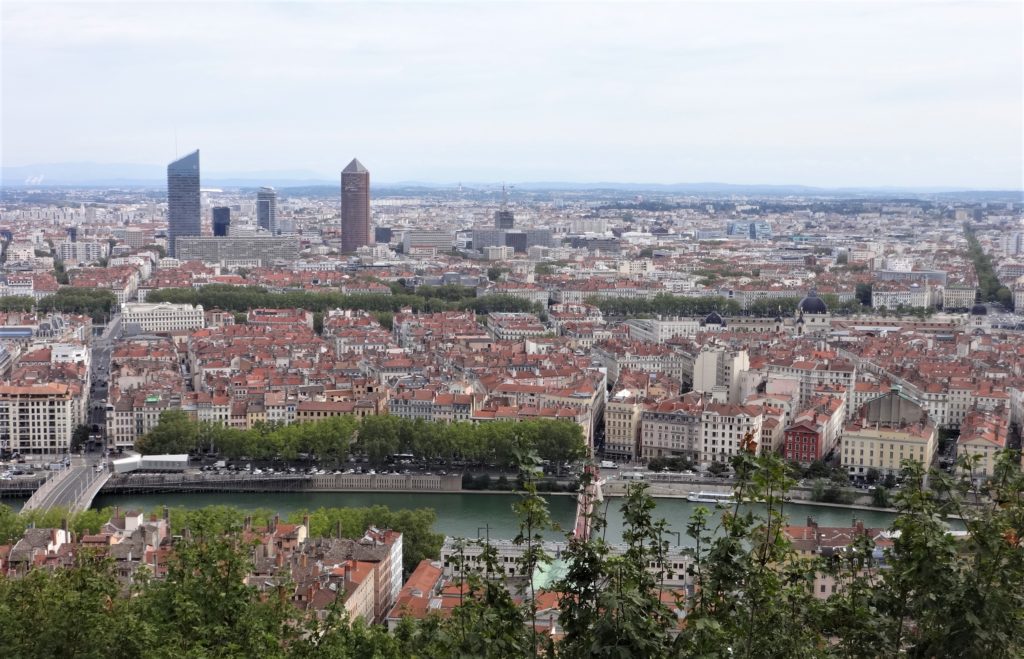
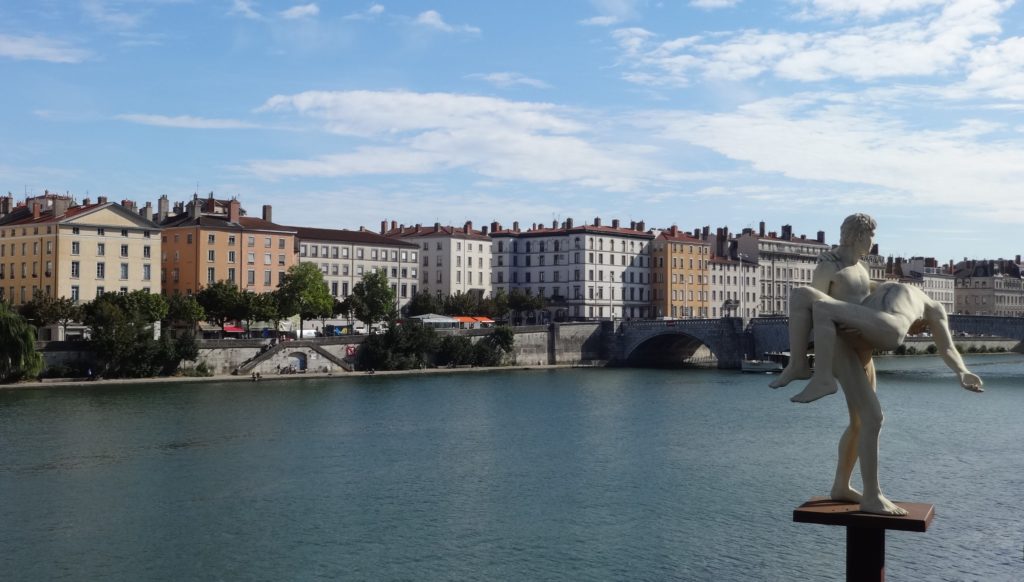
It is also the second largest city on France, after Paris, and we can now agree with that having only explored one area of it. It’s a sprawling city, split up by the River Soane and the Rhone, creating a huge island in the middle, but with very old historic parts of Fouviere which overlooks the whole city. It has 9 different “areas” – called arondissements, as in Paris.
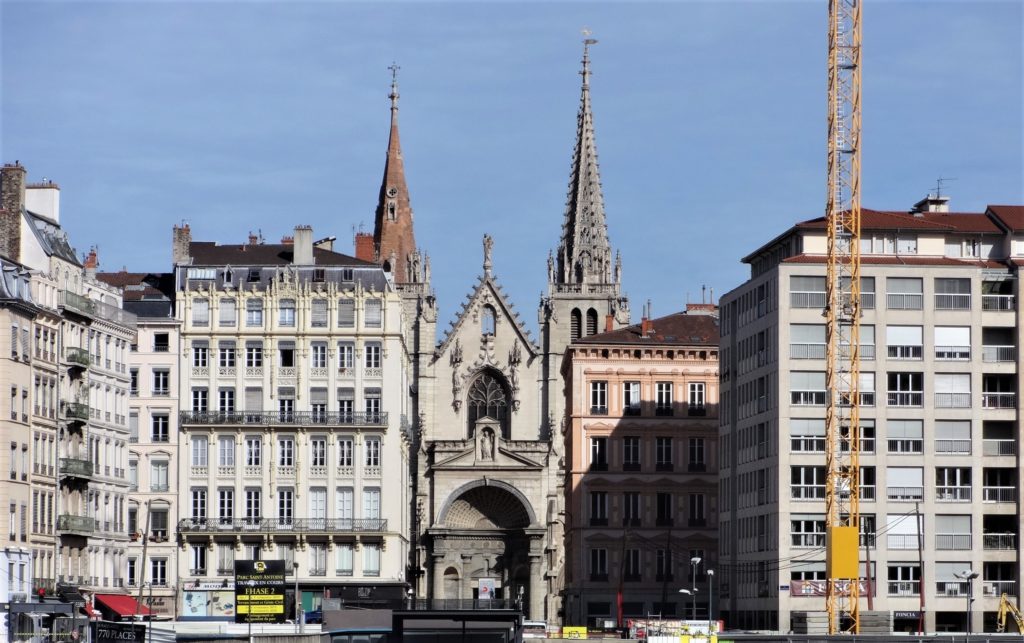
Its also probably one of few cities that we have visited that have a Cathedral, and a Basilica, as well as about a dozen churches!
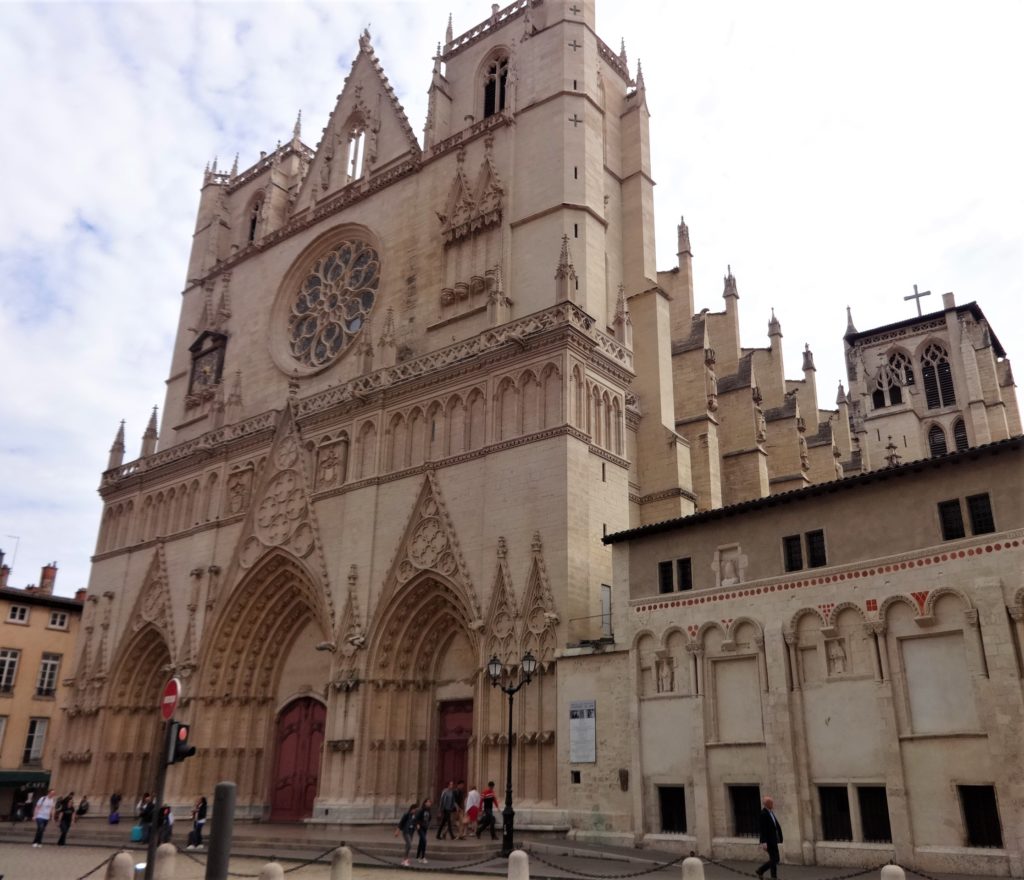
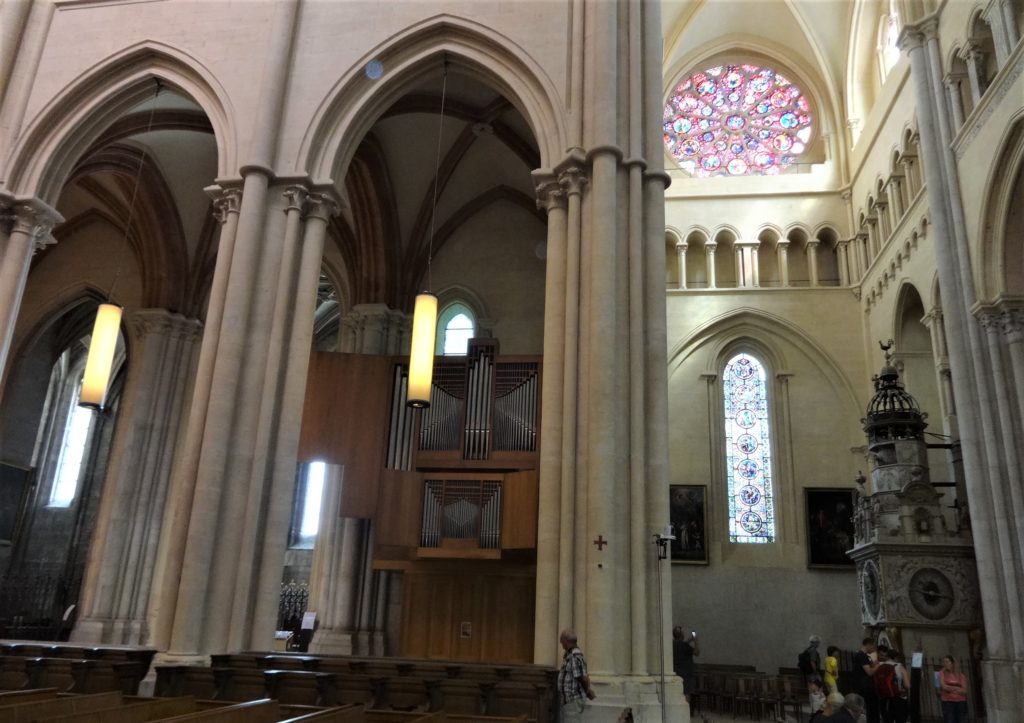
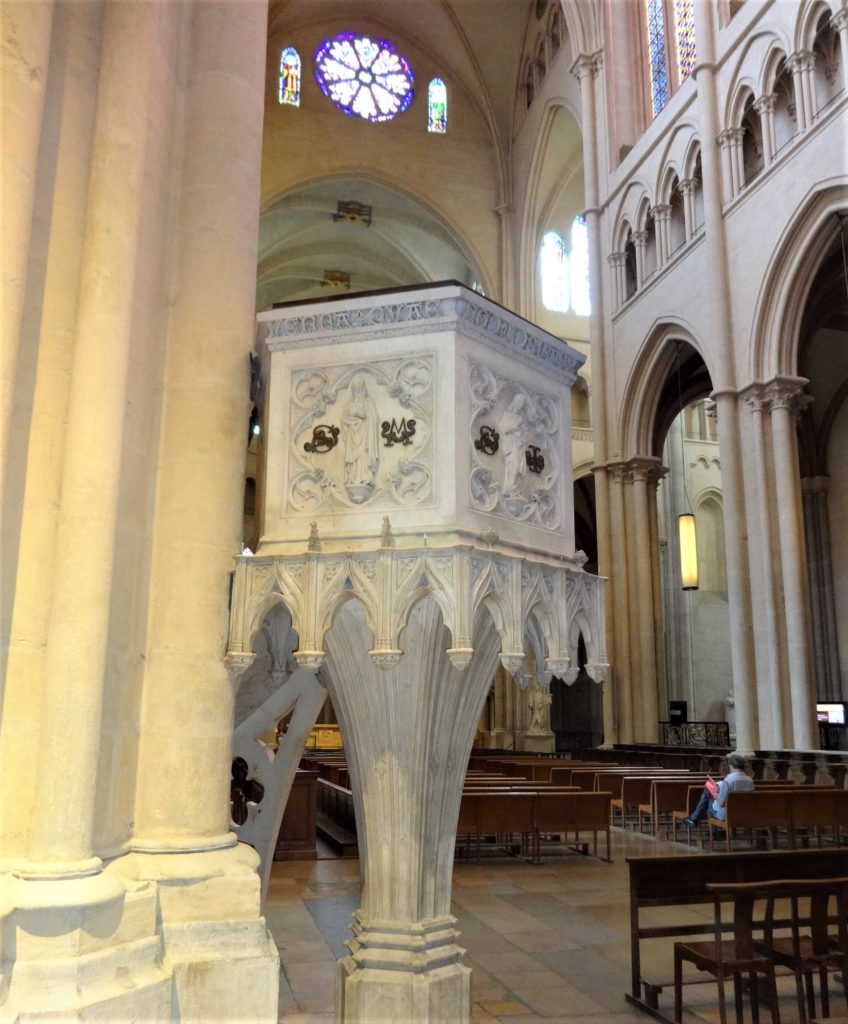
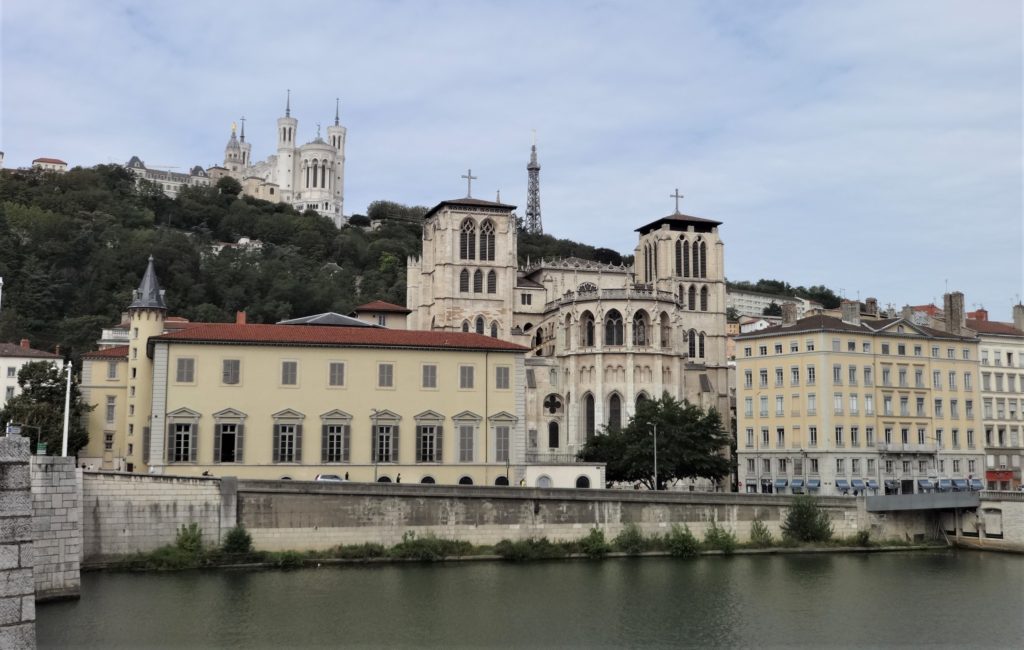
We firstly visited the Saint Jean Cathedral on the banks of the River Soane, a huge stone building in a square, which was first built in 1180 on the remains of a 7th century church and completed in 1476. It is a familiar sight in France, a Gothic exterior, all internal stone columns, stone roof and stone towers and quite plain internally with very little decoration.
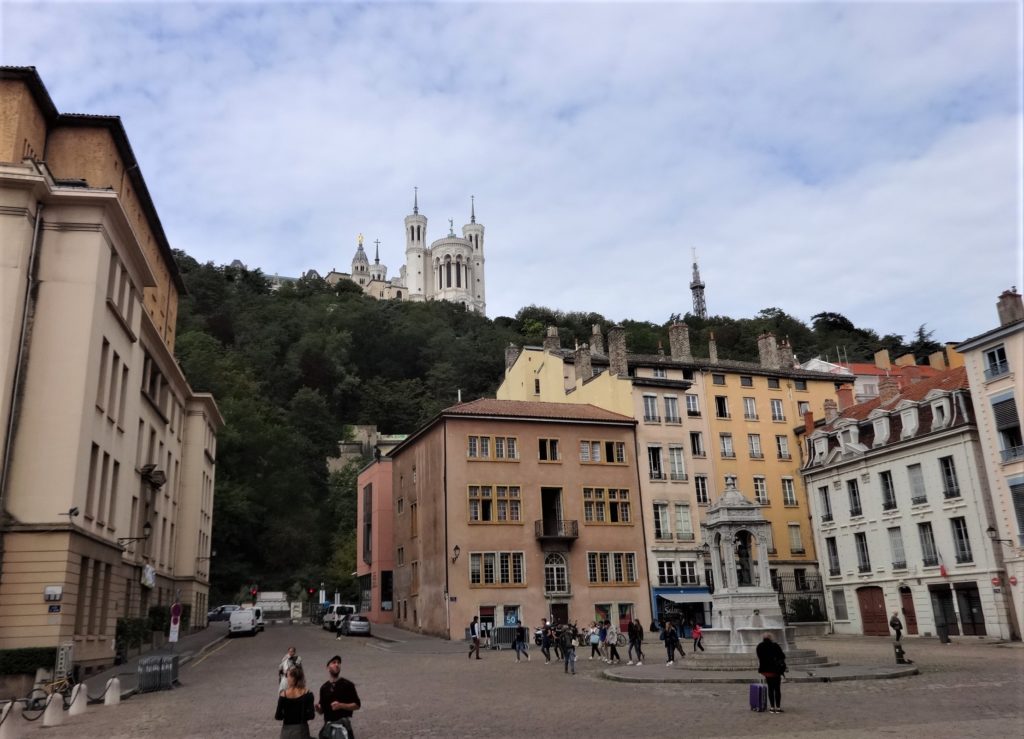
Sant Jean Square looking up to the Basilica
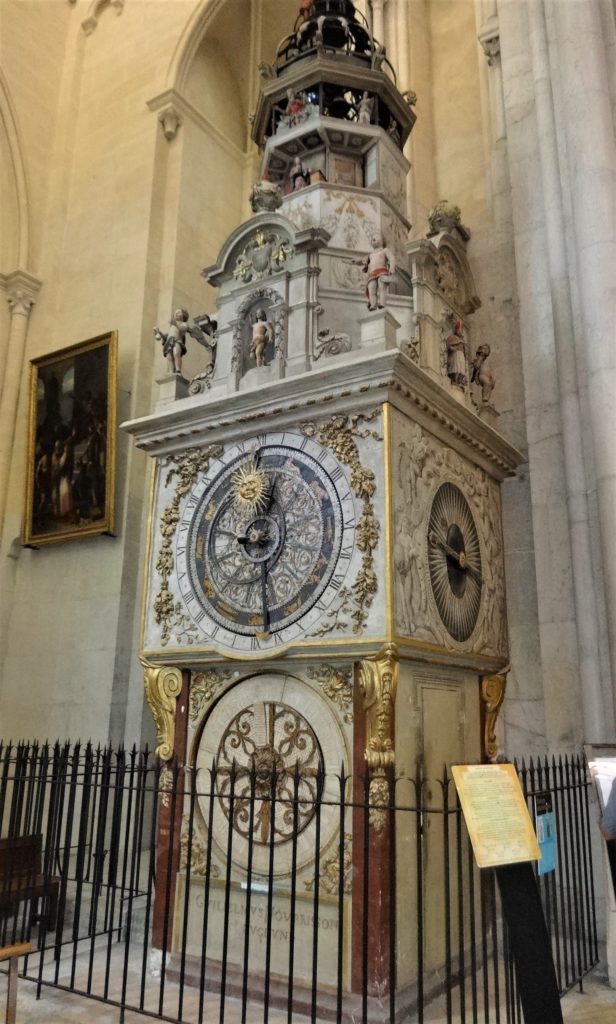
The Ancient clock.
The cathedral homes the Lyon Astronomical Clock from the 14th century and an organ installed in 1841 with 15 stops but it was rebuilt in 1875 and given 30 stops, three keyboards of 54 notes and pedals for 27.
Along the River is also a Saint George Church and Saint Paul church!
Sant Jean Cathedral, Basilica at the top of the hill, Palais of Justice to the right of the Church.
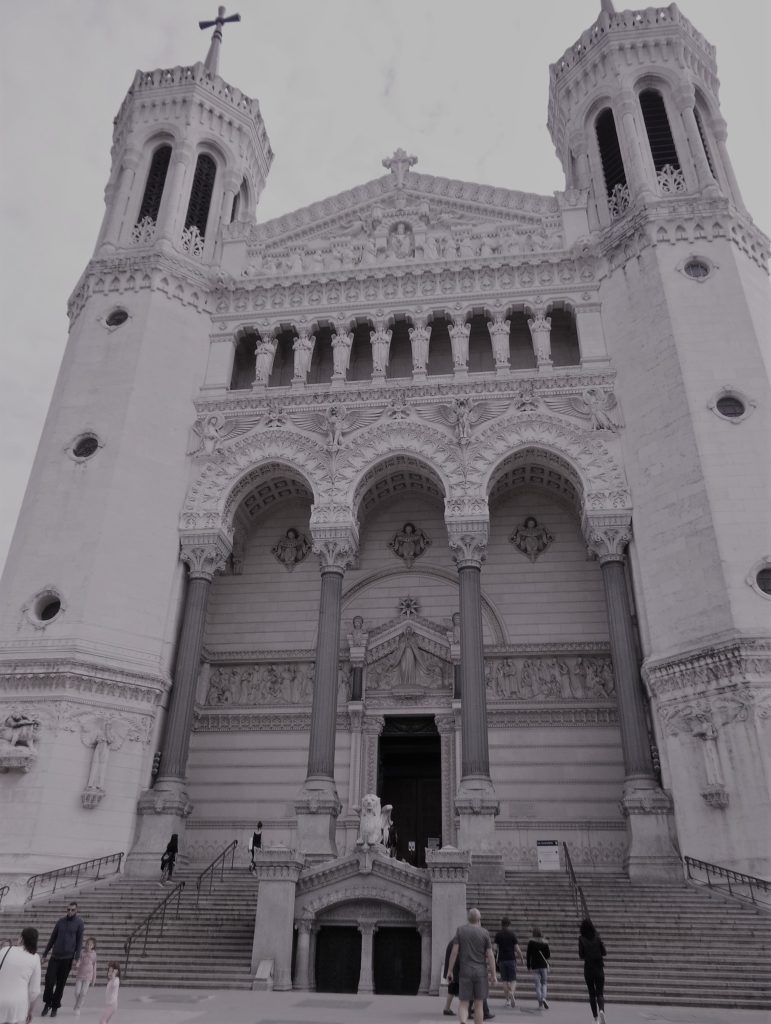
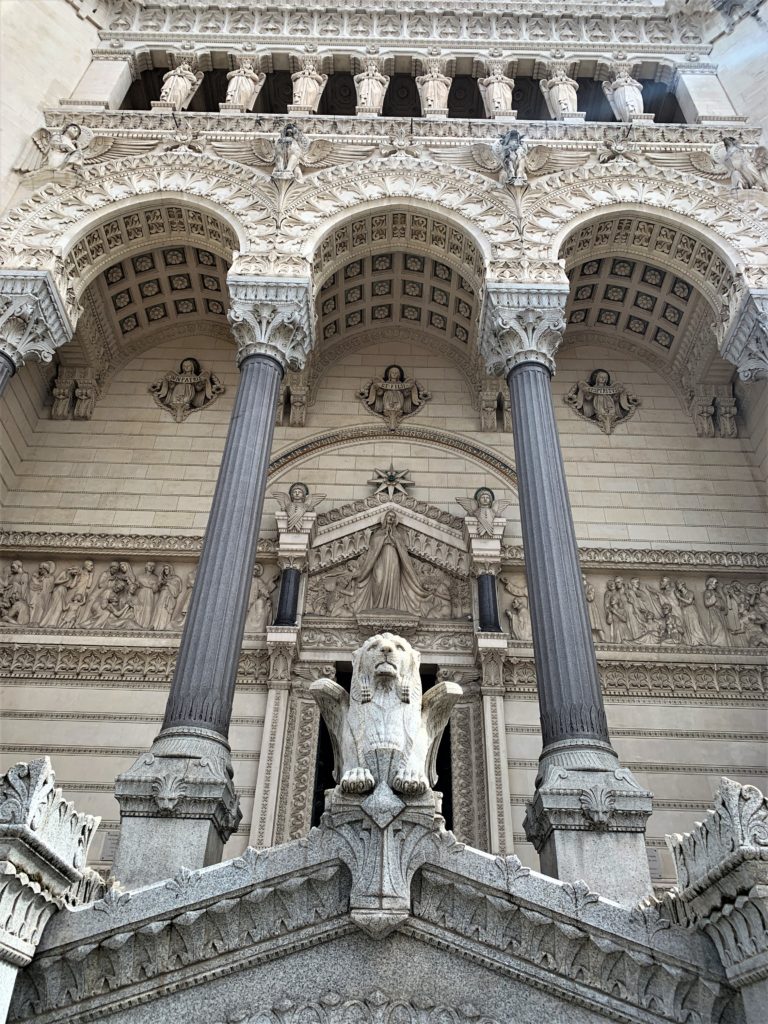
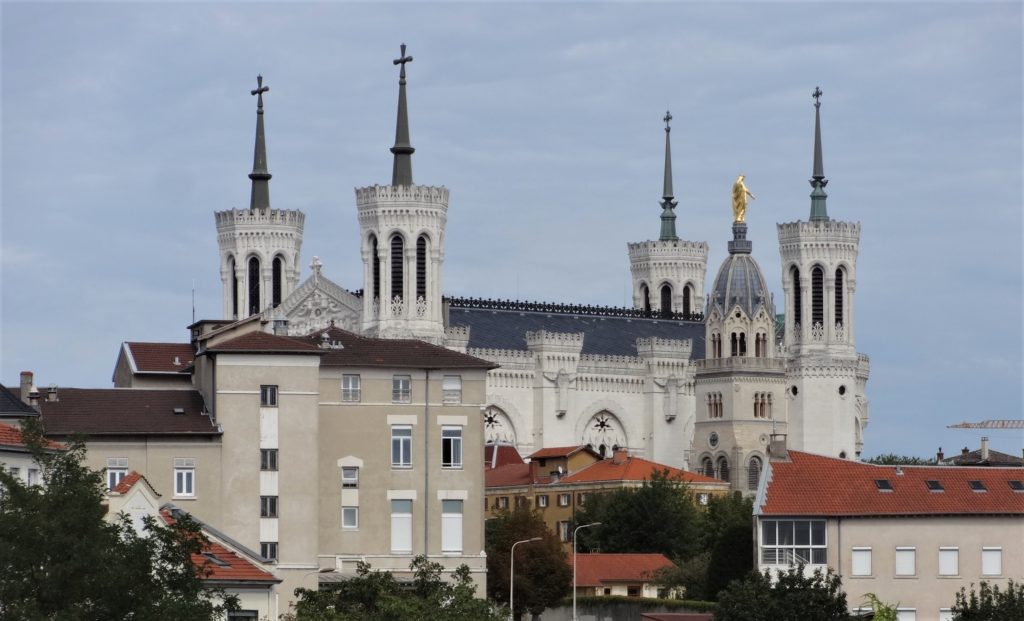
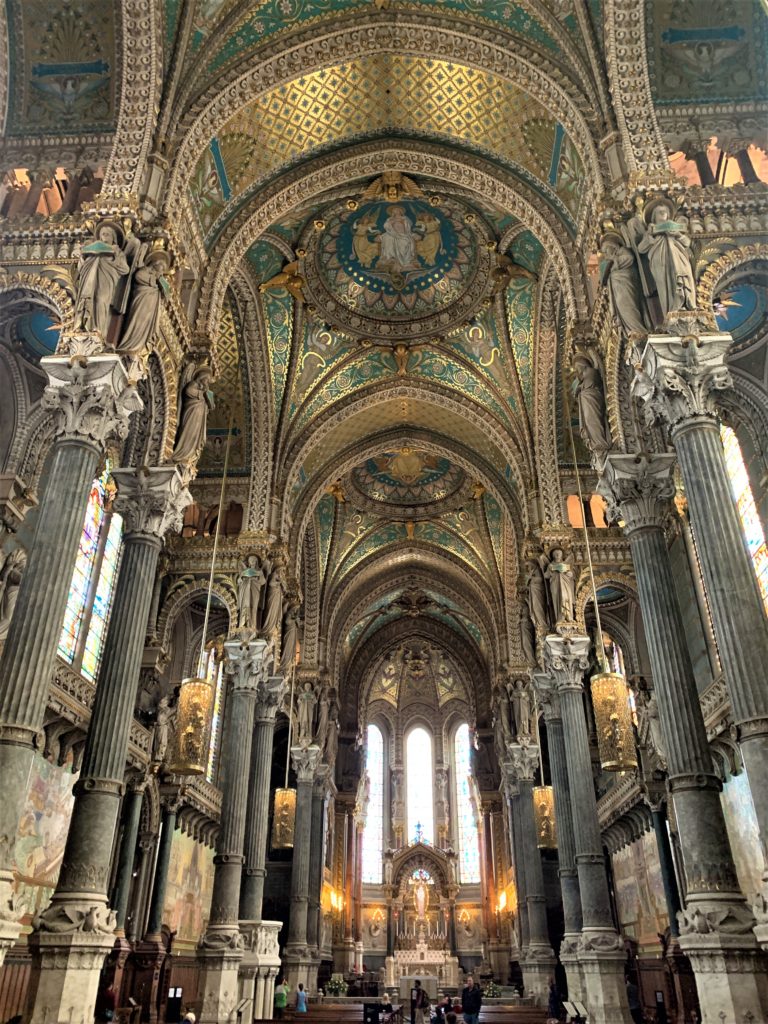
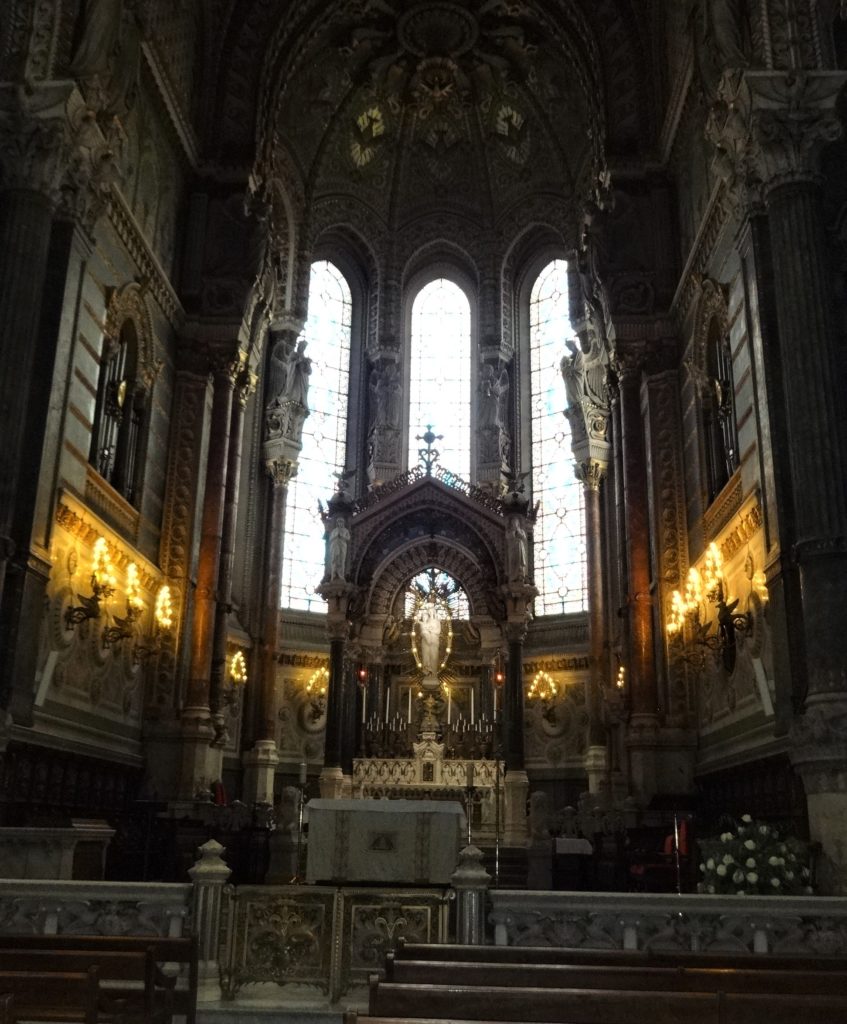
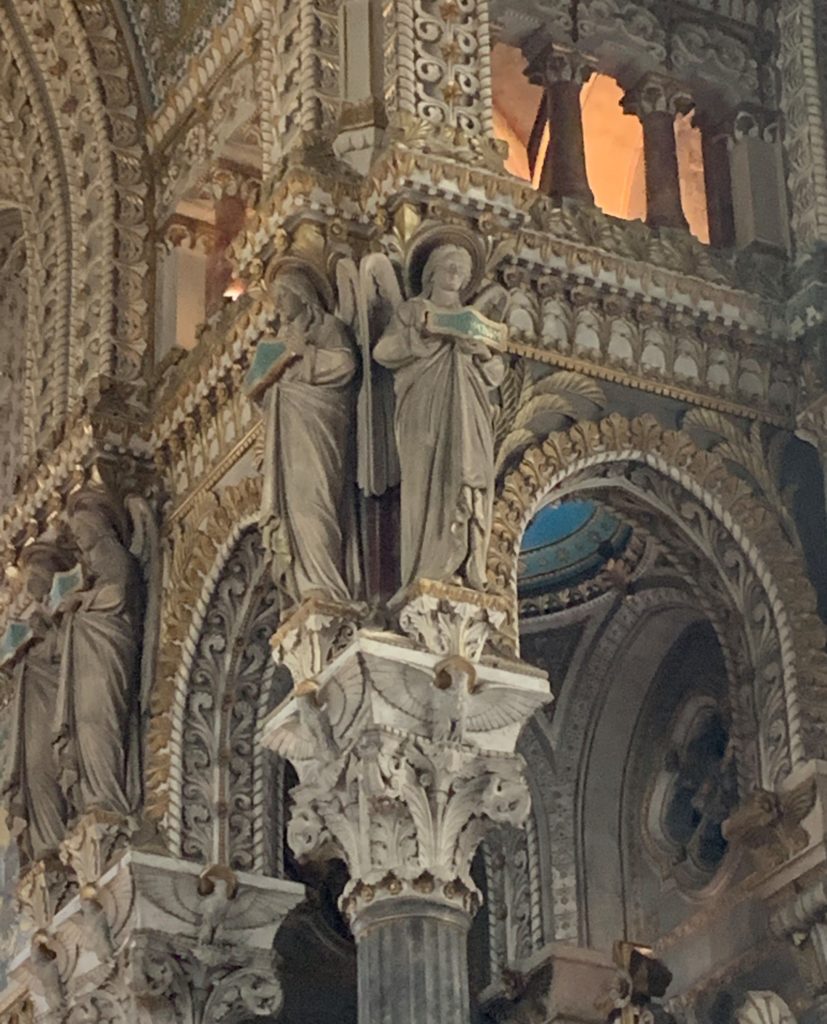
We then took a funicular to the top of Mount Just to visit the Basilica, which was a different building altogether. Originally built by the Romans in 1192, rebuilt during the 16th century and extended during 1872 and 1896, and maintained to this day by a monetary pledge from the Aldermen of the City as well as public donations. In 1852 the gilded statue of the Virgin Mary was erected on a bell tower, it was dedicated to Mary in 1896 and in 1897, recognised as a Basilica Minor by Pope Pie IX after recognising the Church’s importance in Lyon.
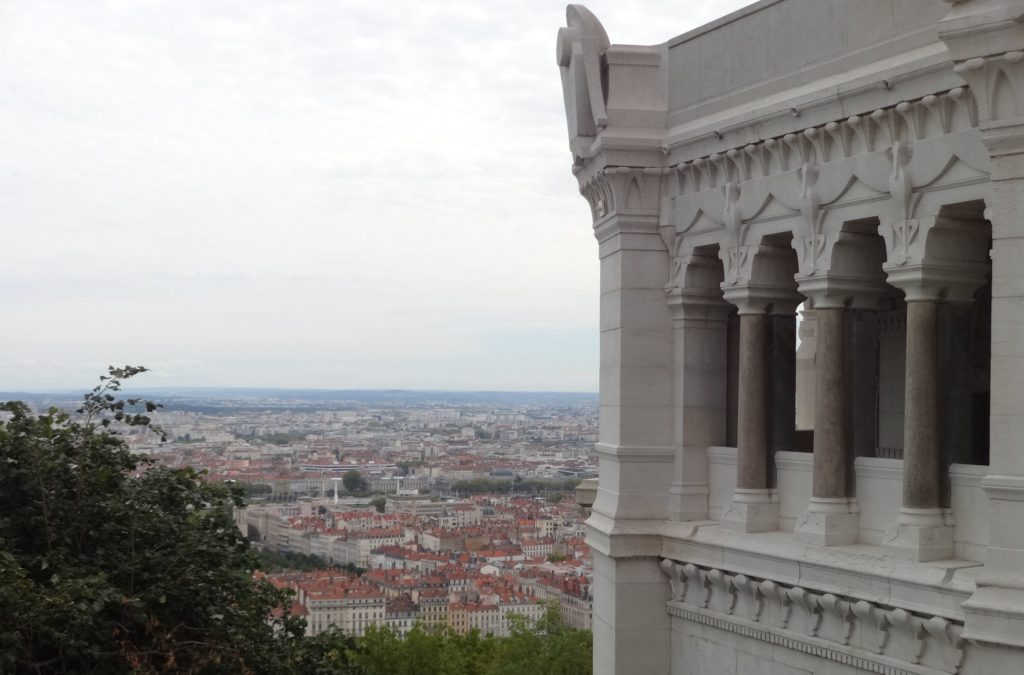
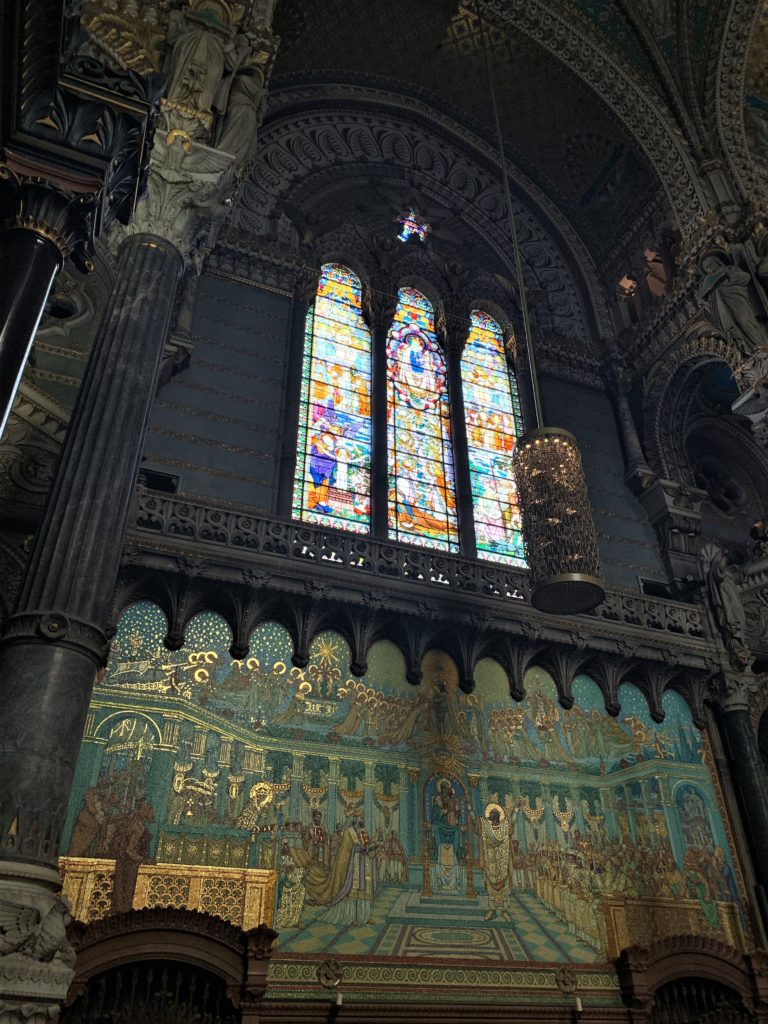
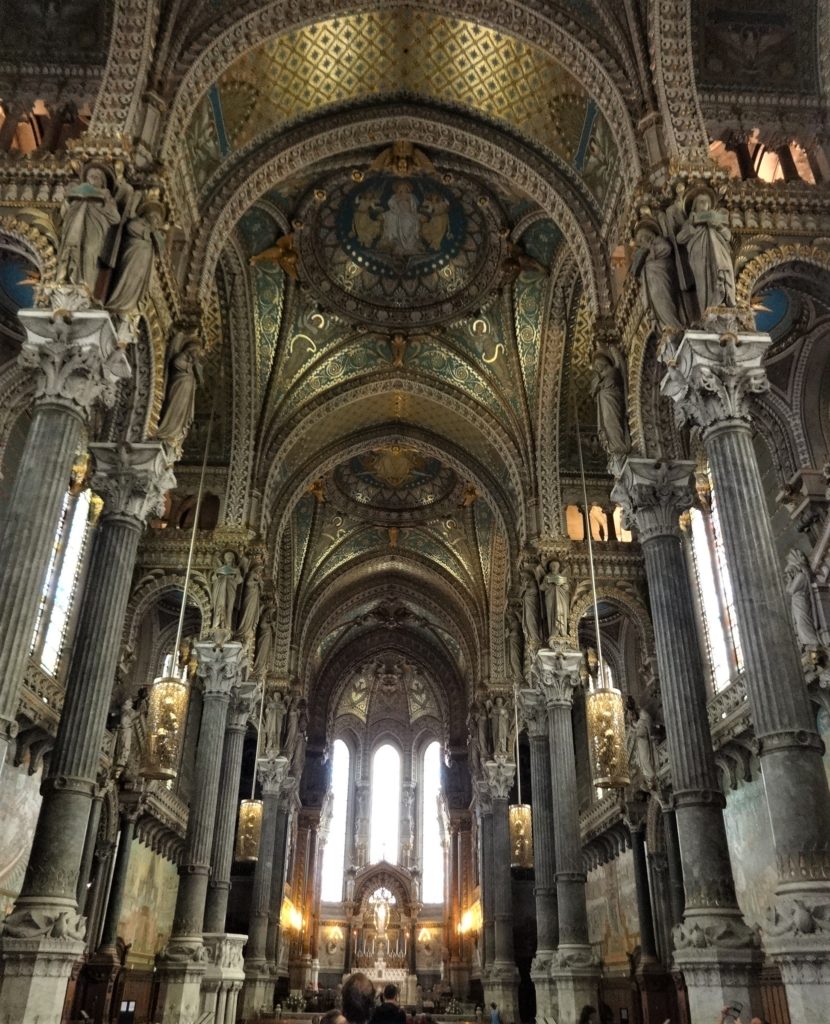
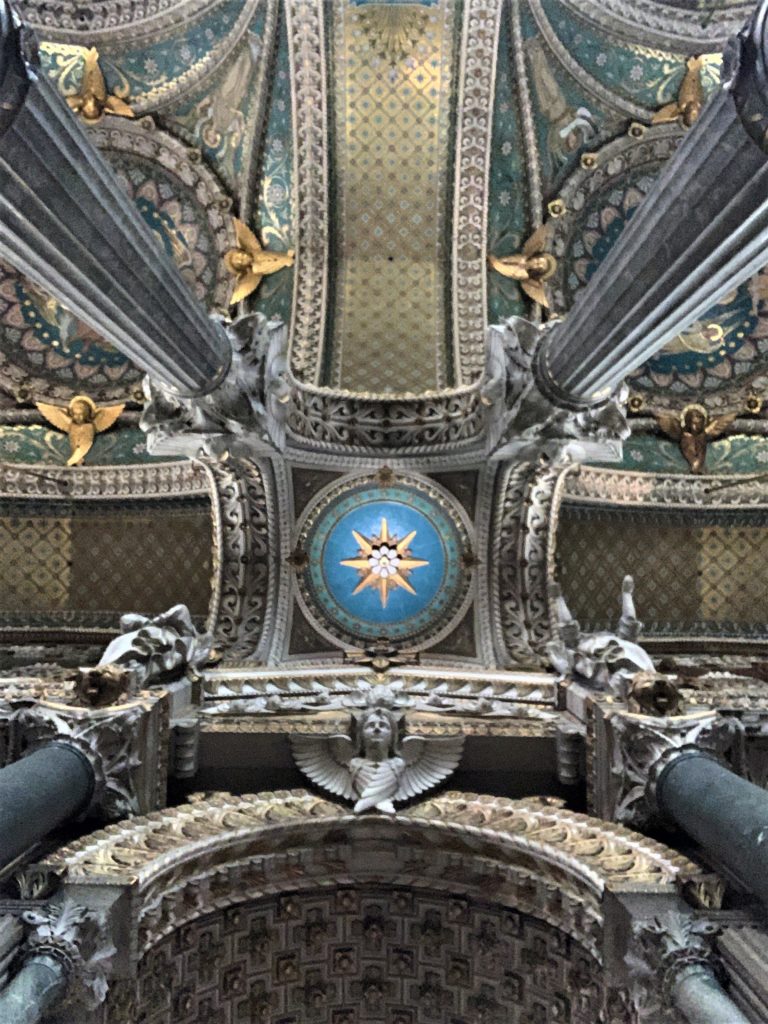
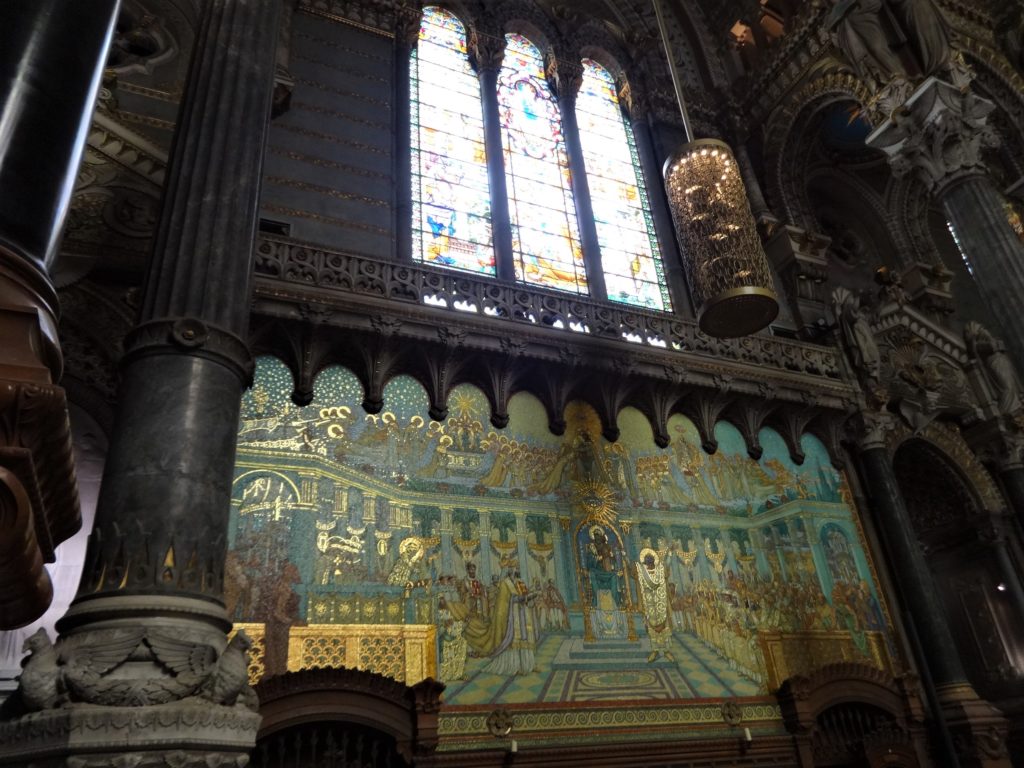
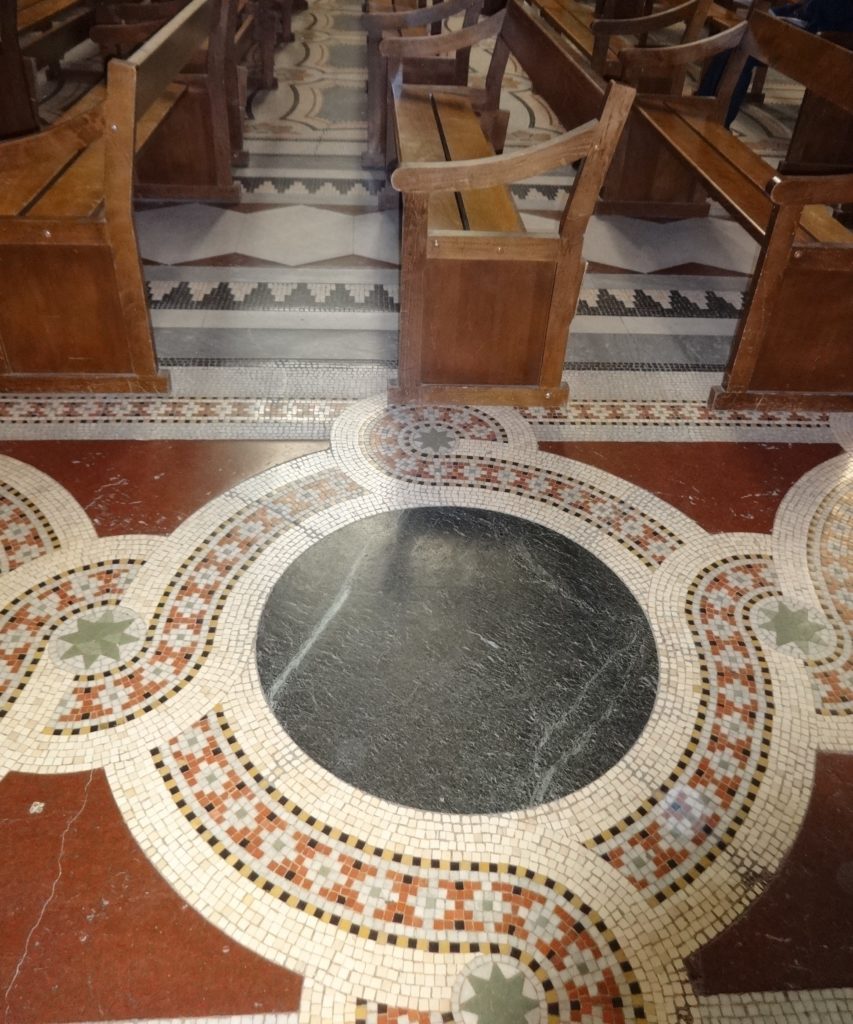
Huge columns of marble, mosaic floors, stained glass windows and massive wall paintings touched with gold and mosaics. It certainly was an impressive building, and can be seen from most aspects of the city below, it dominates the sky line.
Ornate ceiling
Ceiling in detail
One of the wall paintings
Floor mosaics
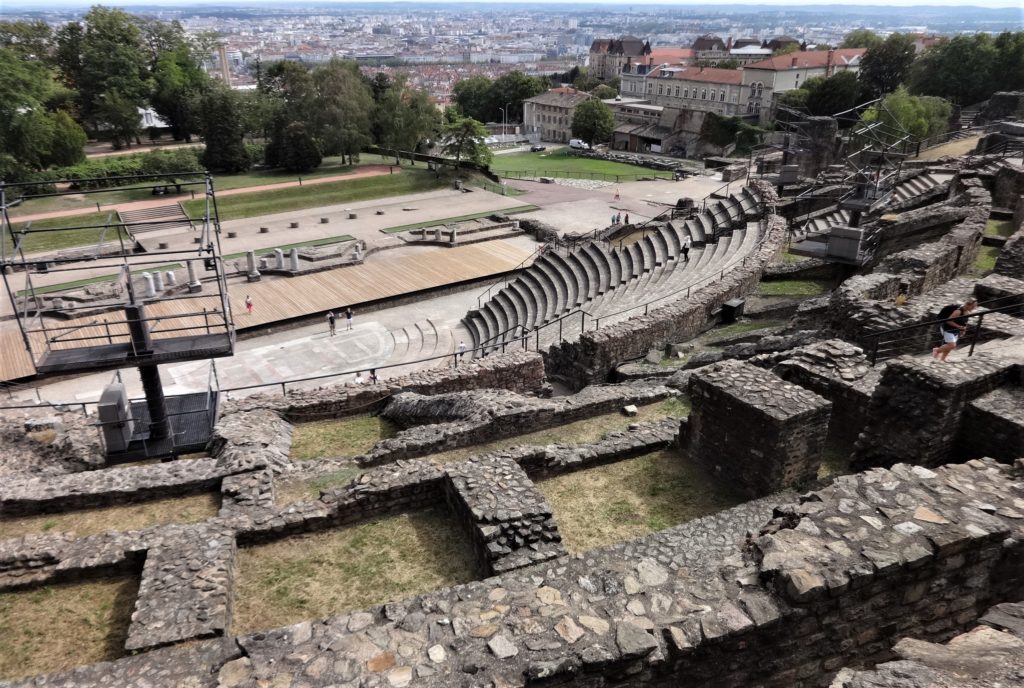
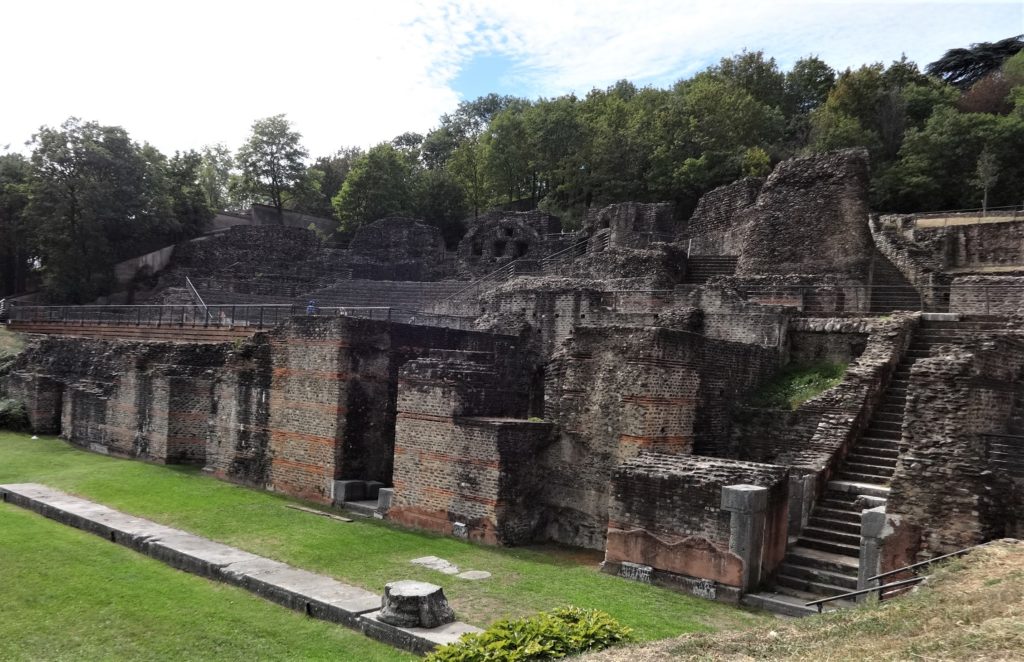
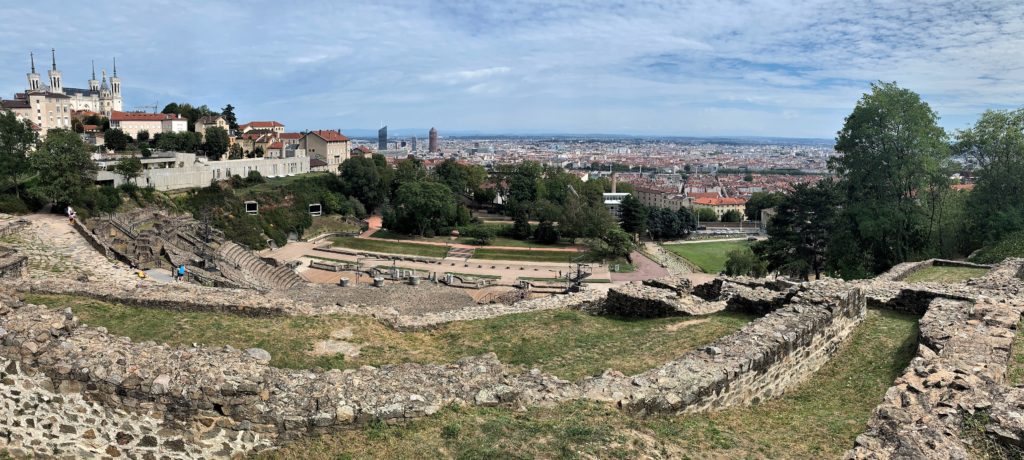
We also walked down the hill of Fouviere, to the Roman ruins of the original Forum, the name comes from “forum vetus/old town”, a large preserved area of buildings, two arenas, and several old thermal baths and the water storage tanks. One of the Arenas has been sympathetically restored and is used for concerts and plays. The ruins themselves are not some of the best we have seen, but are certainly the biggest we have seen so far.
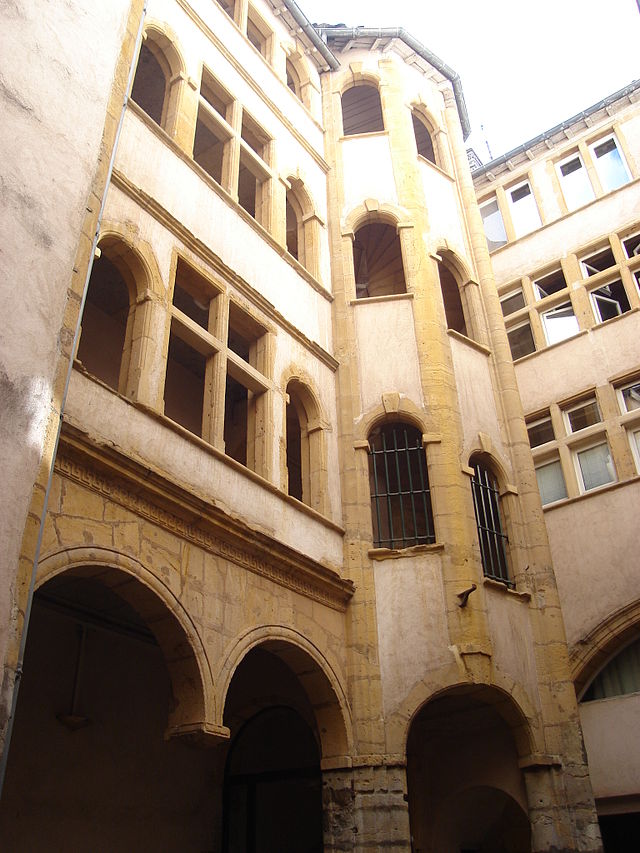
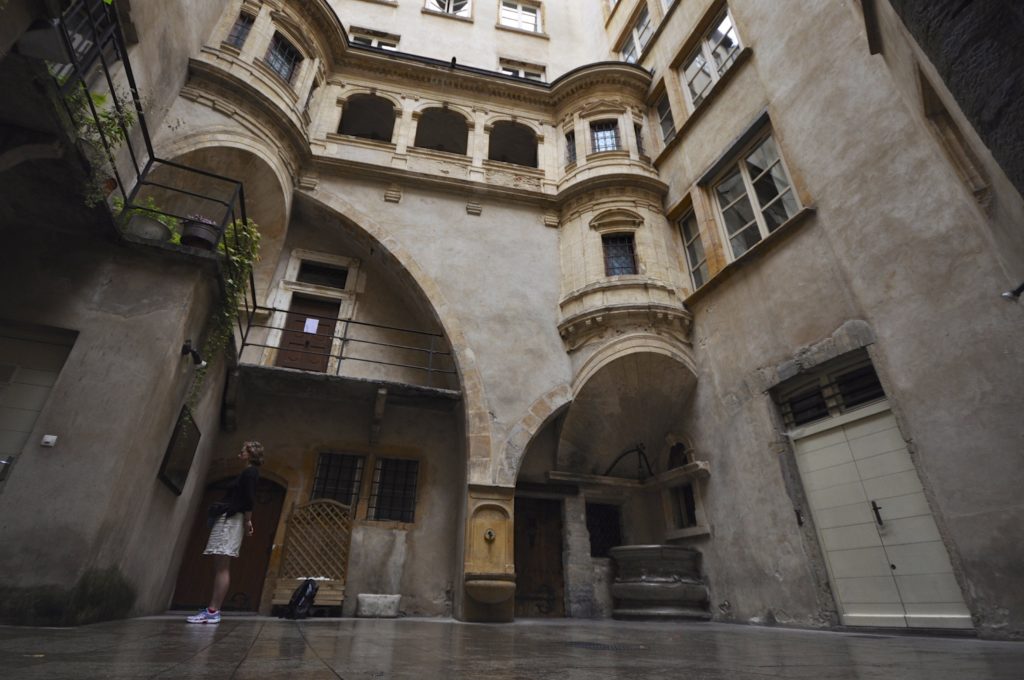
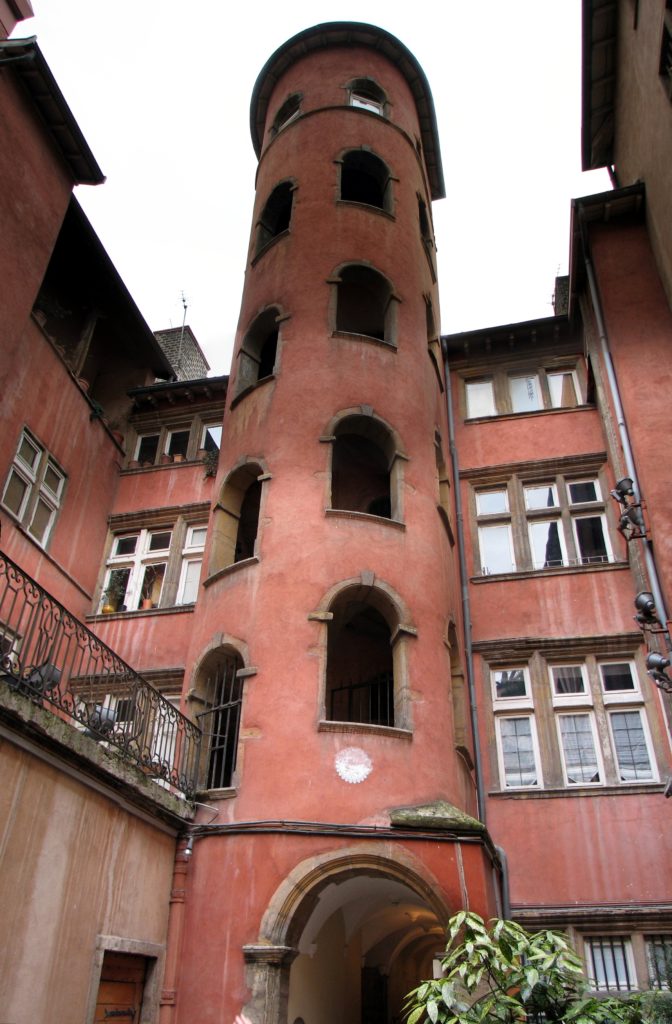
Down in the old town, the medieval narrow streets are cobbled and wind around the foot of the hill. Because buildings were tall and narrow (built between the 1500s and 1800s), an architect was requested to construct a way to connect two buildings to make access easier and “Traboules” were created. They are often stone spiral staircases leading to covered or open walkways and corridors, all at a high level. The houses are maybe 4 to 6 storeys high, so the traboules were sometimes covered in.
The other side of the city is modern, sprawling and a grey concrete jungle, neat, clean and organised.
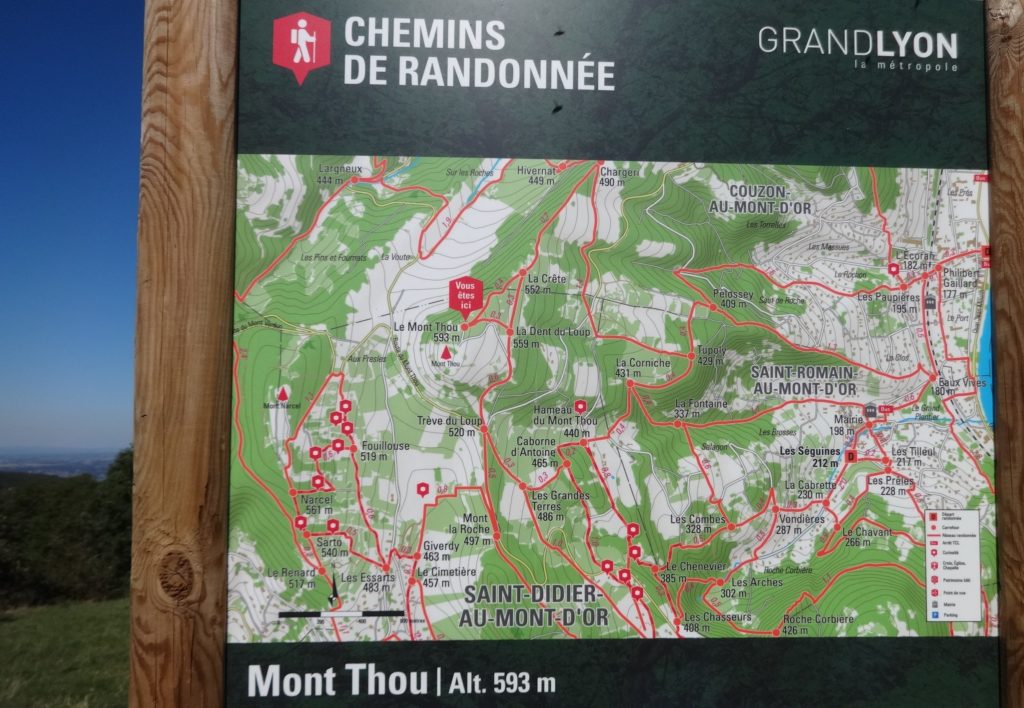
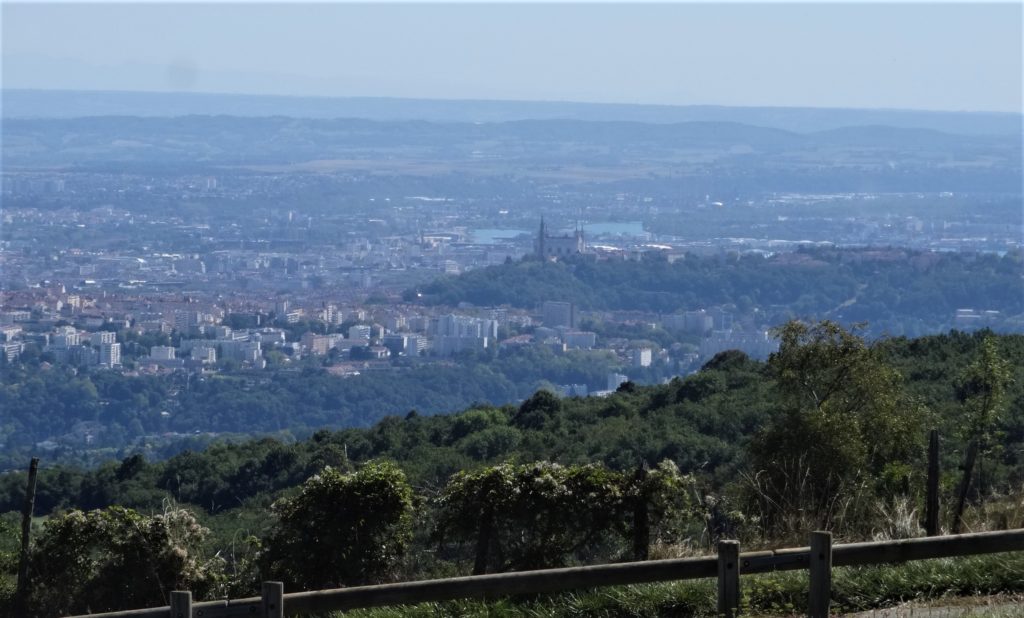
We took a drive to the top of Mount Thau, which at 593M above sea level overlooks the City with amazing views!
Avignon
An overnight stay in a campsite on a private island on the Rhone on the banks of Avignon, what could sound more romantic???
The reality was sadly diferent, a large untidy open site, Reception closed between noon and 4.00pm, pitches the furthest point from the entrance, overhanging trees, no water or drainage on the pitches and thousands of mosquitos and stink bugs! We used the late afternoon and evening to head into Avignon for the rest of the day and made the most of our time there.
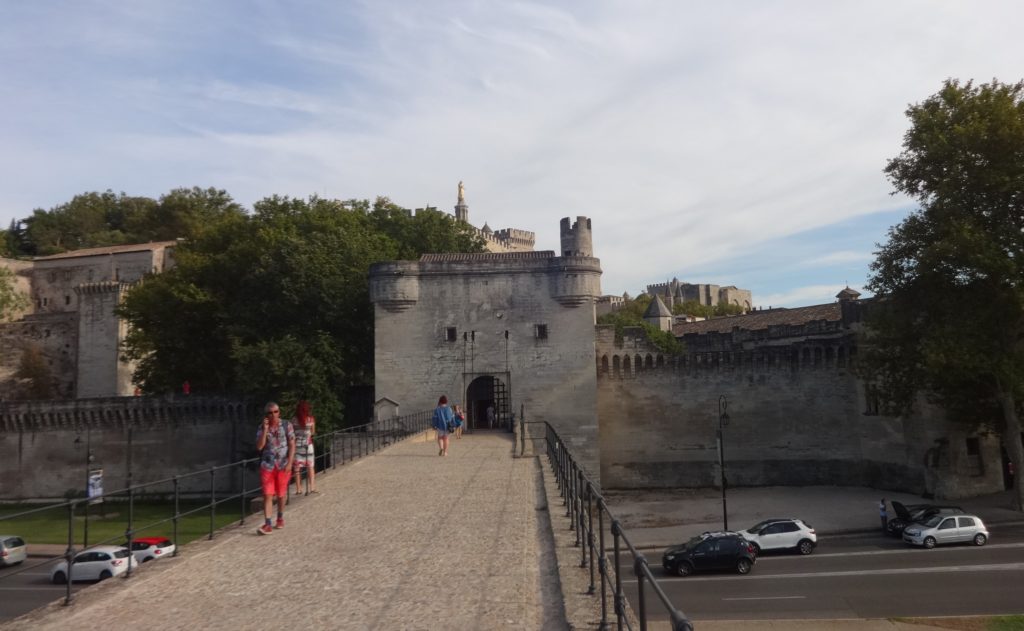
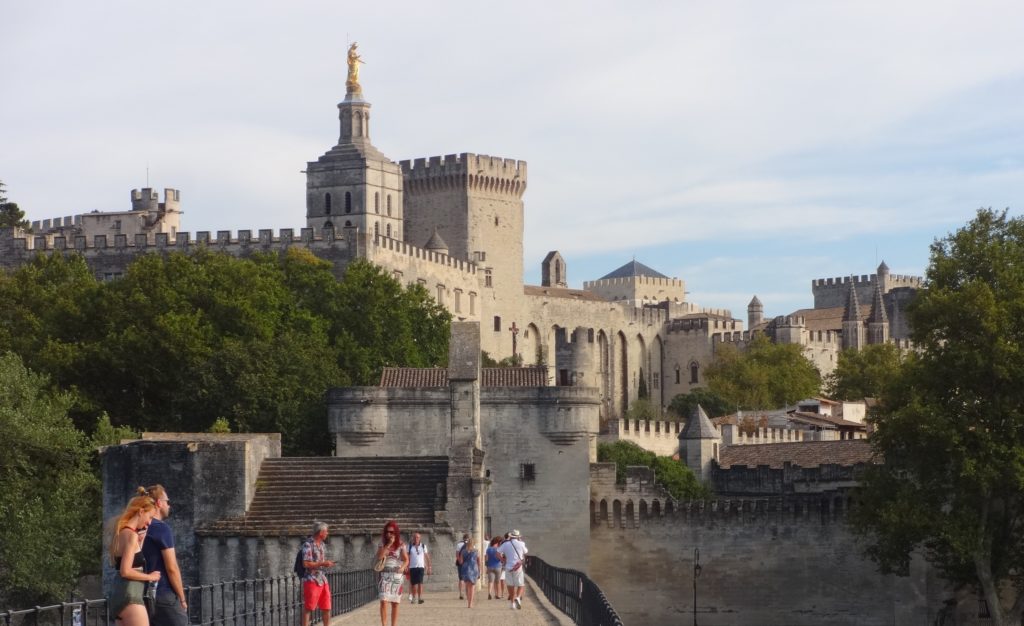
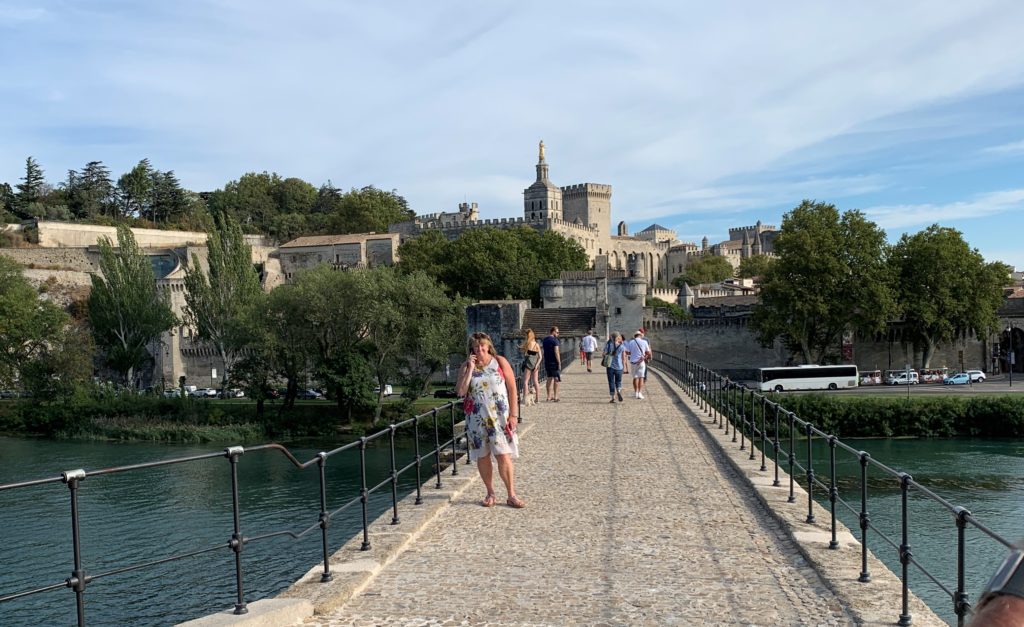
We couldn’t go into Avignon and NOT visit the famous bridge! Access is through part of the gatehouse and the history is told through a handset, allowing you to walk to the end of the bridge.
View on the bridge looking at the City.
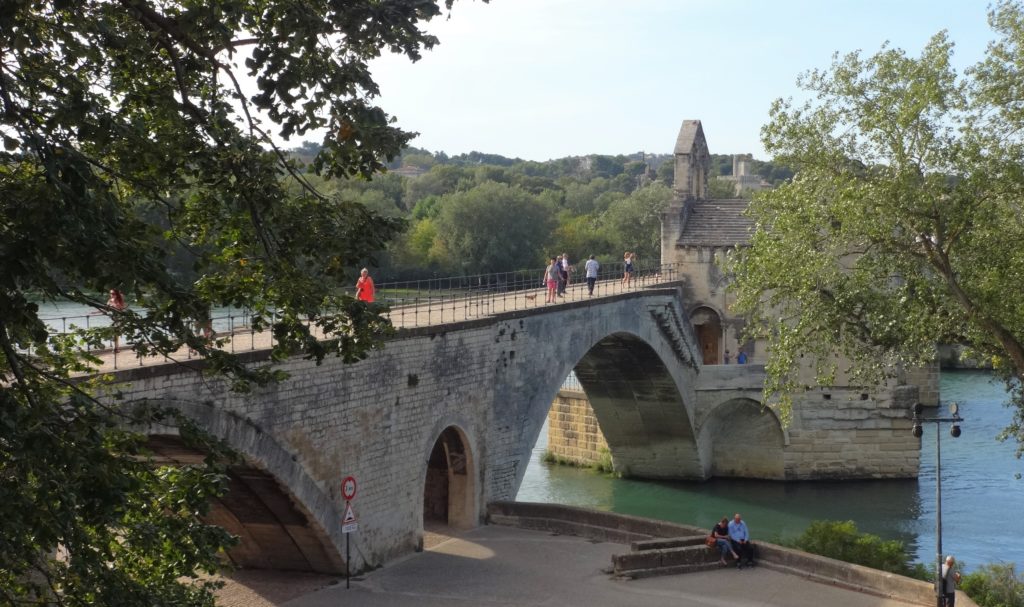
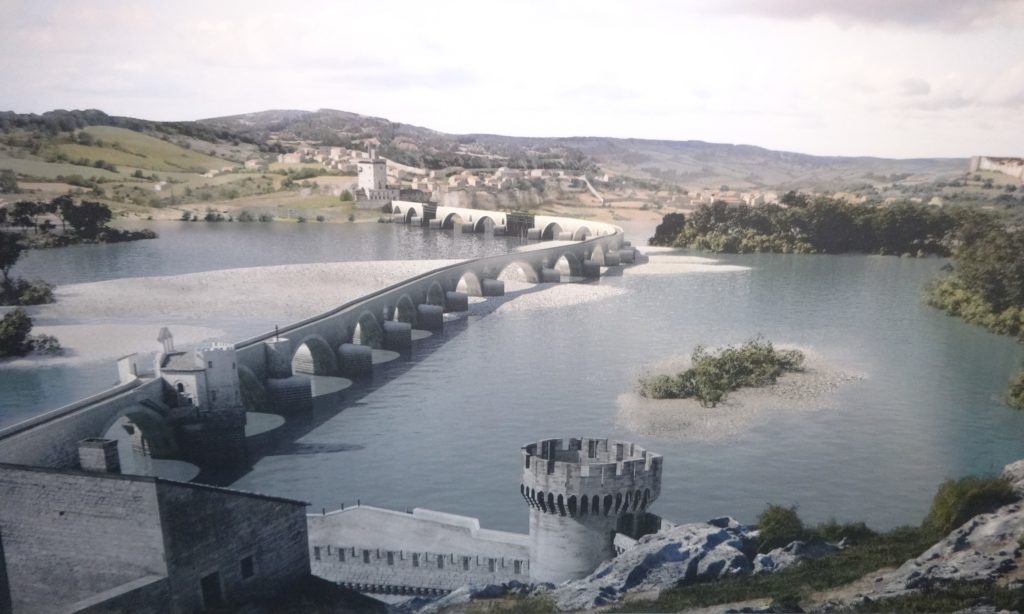
Its only 4 arches long now but when it was built between 1177 and 1185 it was 22 arches long and wooden, but wars, time and the River Rhone have washed them away and all that remains now are the small parts jutting into the River. It was rebuilt in the 12th century, in stone with a chapel on one of the piers, but fighting the river was a major issue, hence it’s shortness.
Looking back at the City
An image of how the original bridge looked in 1100s
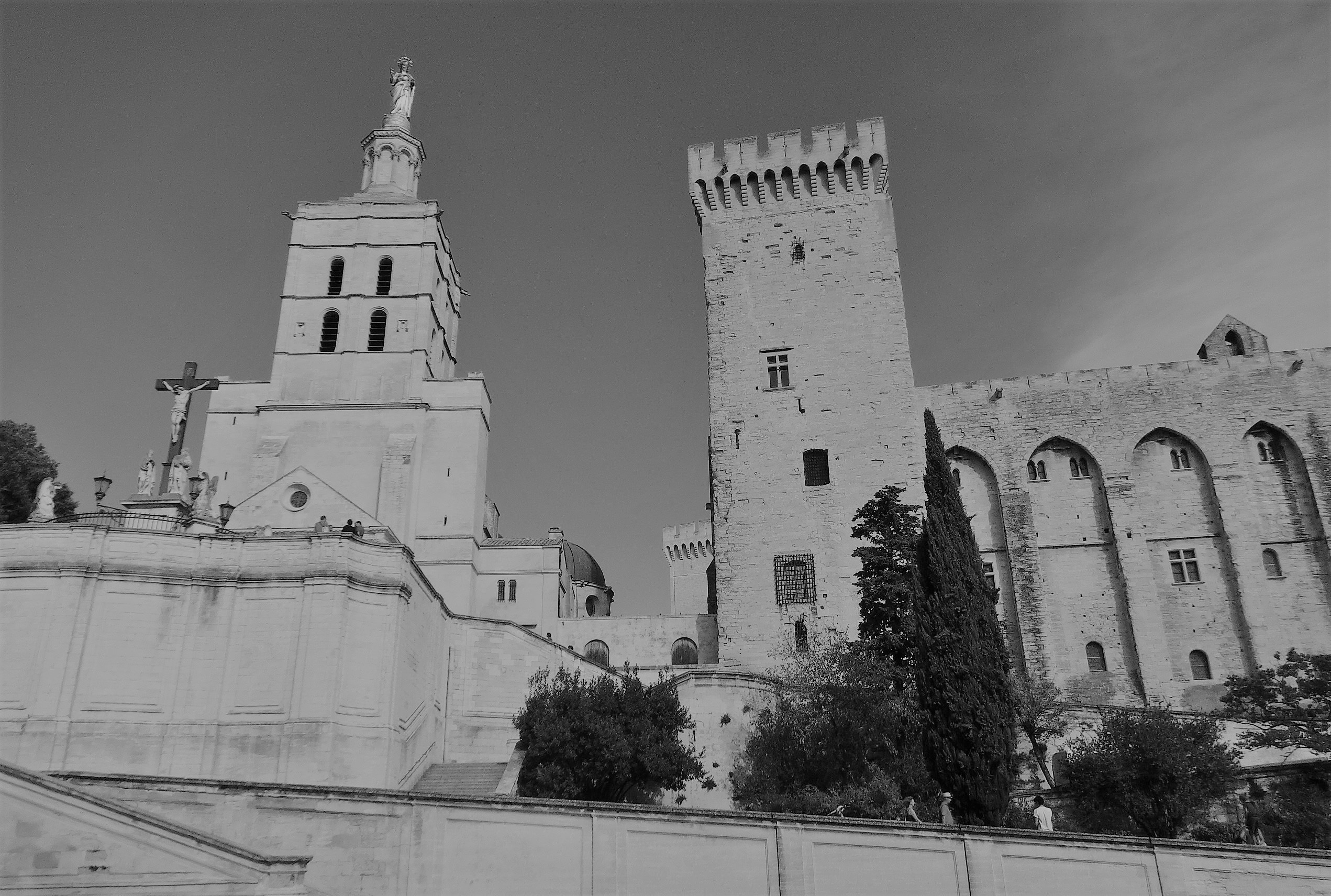
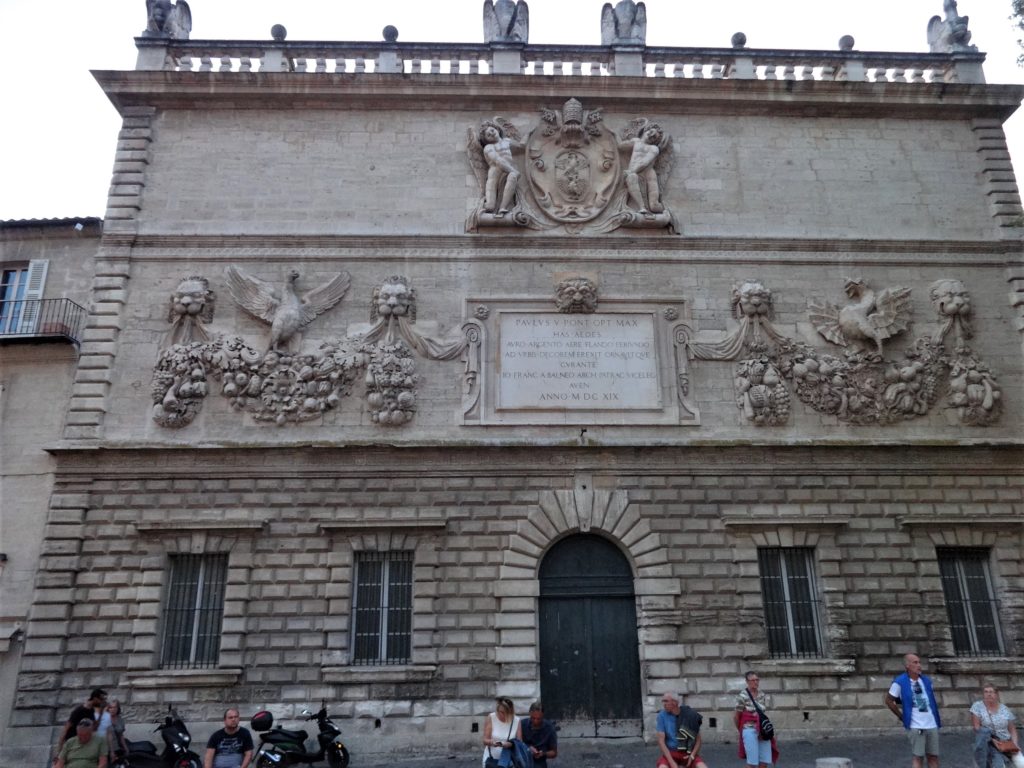
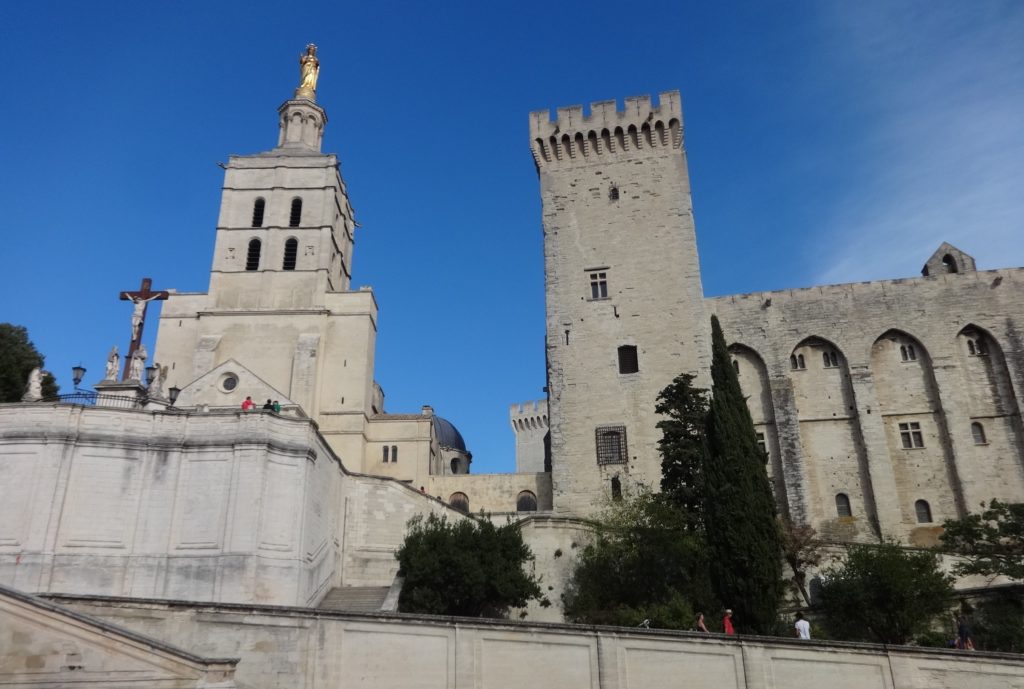
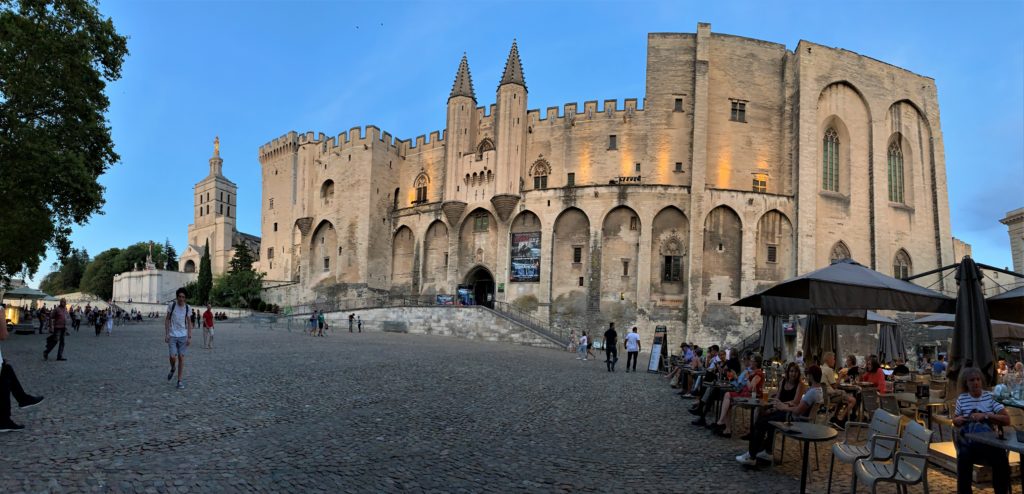
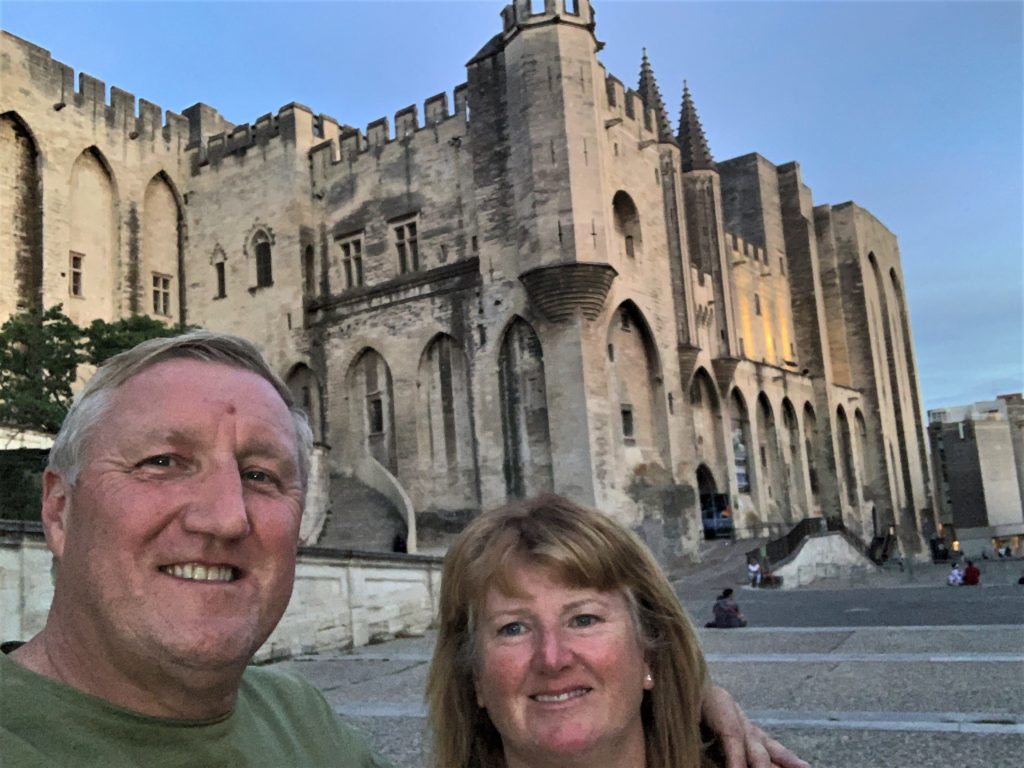
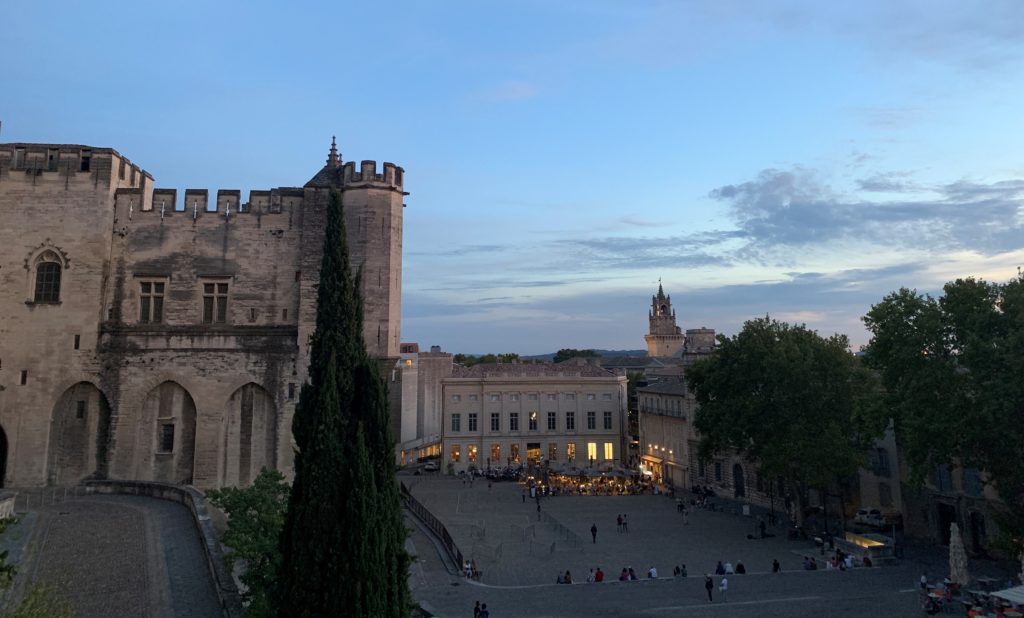
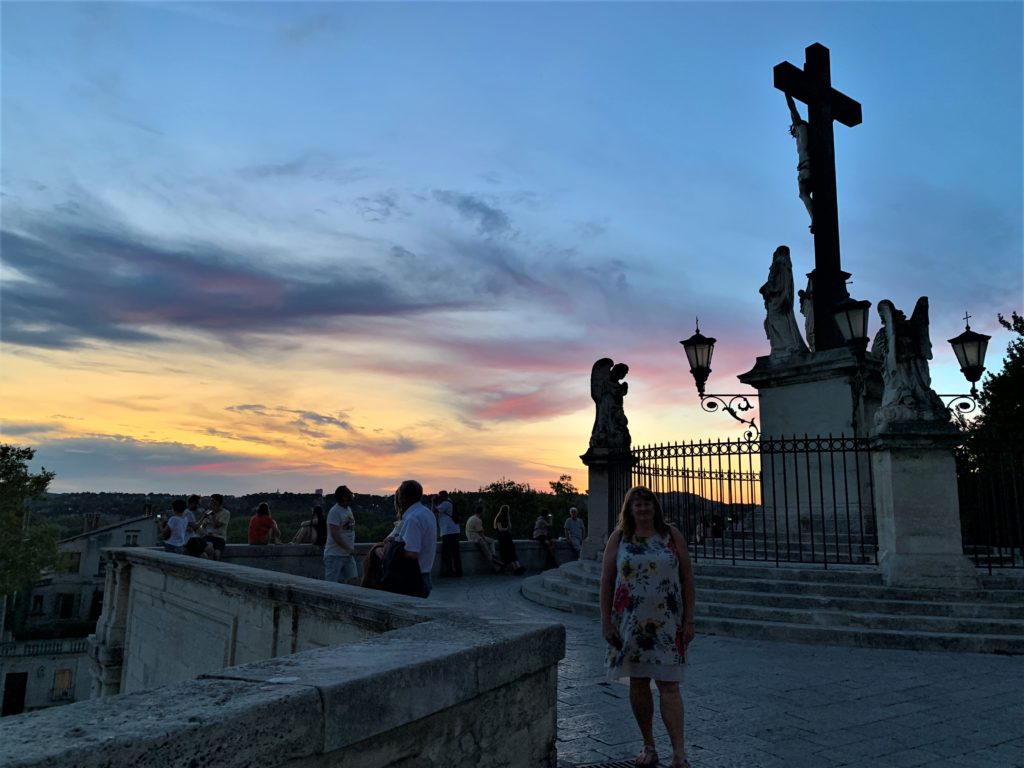
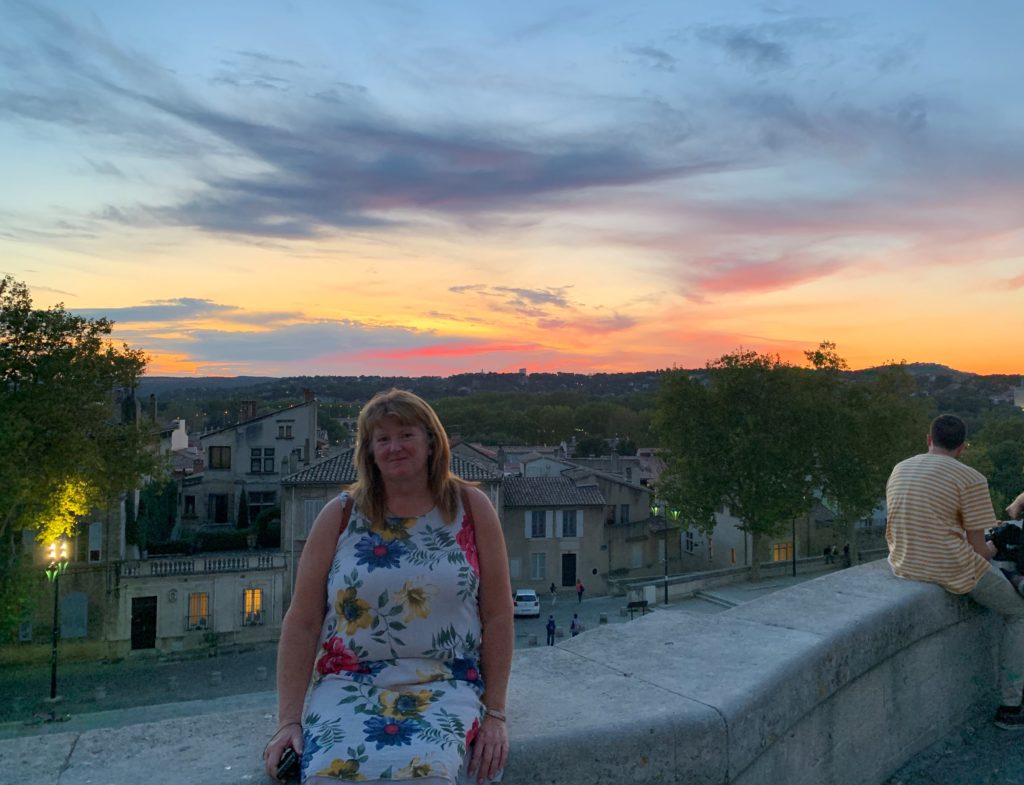
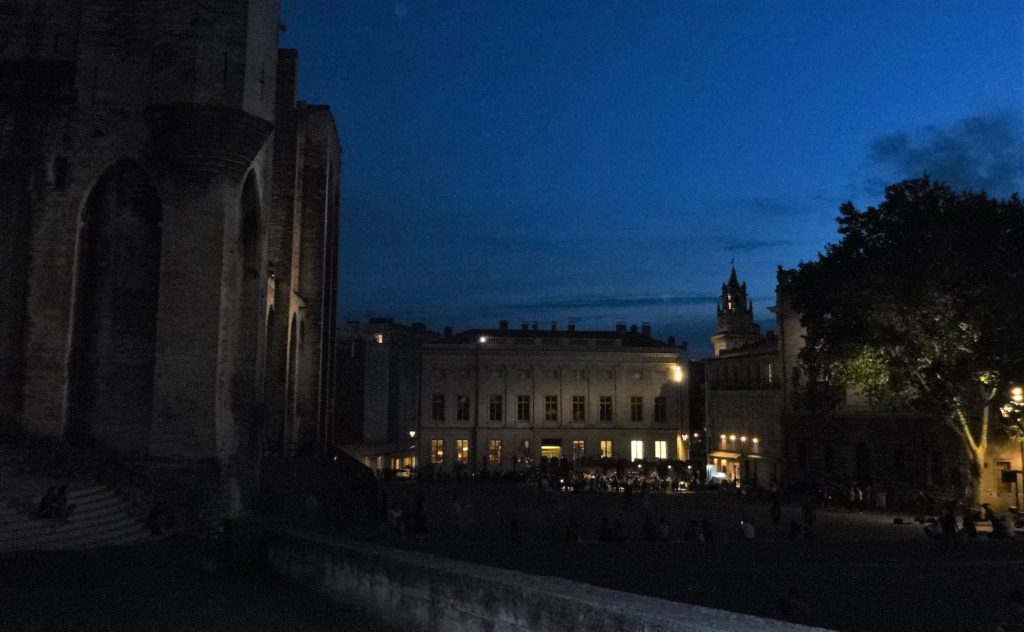
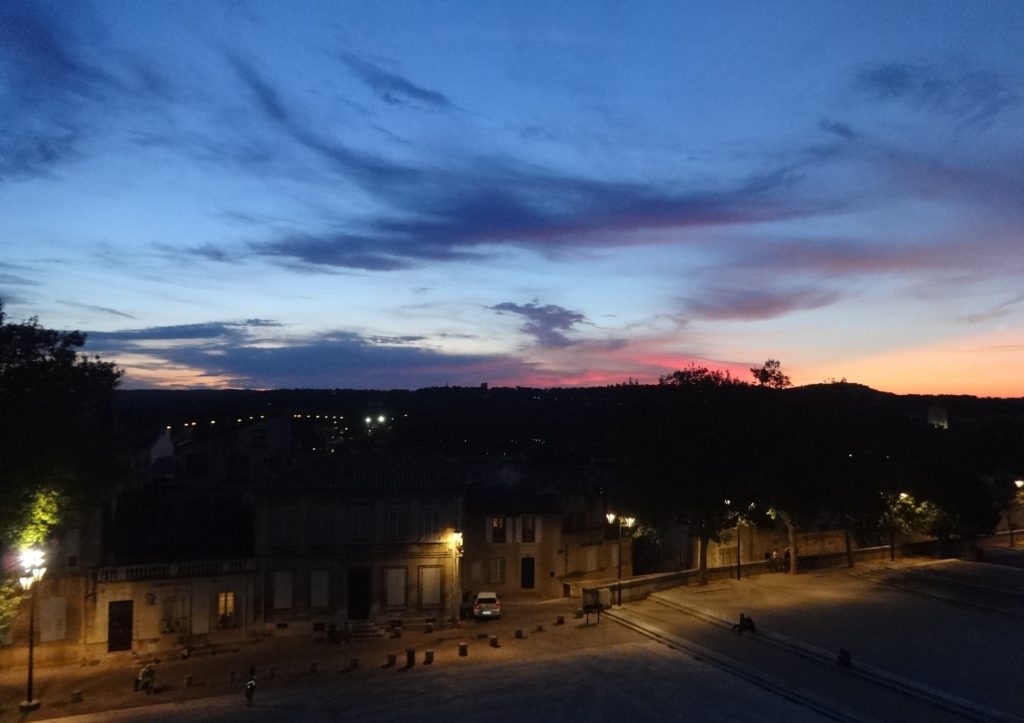
The walled City has several large impressive buildings surrounding a public square which came alive at night, the Palais des Papes was a beautiful stone building, with the Basilica Notre Dame des Doms next to it, the views as the sun was setting were amazingly colourful.
The Cathedral and Palais
The Palais
Square at night
Sunset from the Cathedral
Narbonne
Finally we reached Narbonne on the South coast, a town and camp site we have visited several times, beside the Etangs (marsh lakes) and in prime wine country! We stopped here a few nights to catch our breath and catch up on regular chores.
Leaving Narbonne.
David dipped into the pool on site, not for long, as it was freezing!
We finally left France for the pretty town of Roses, just over the border in Spain.
We left
Dover early on a Tuesday morning at the beginning of September on a ferry to
Calais and made our first stop a few hours south near Saint Quentin, just north
of Paris. Samson was, and still is, in
full working order and it is lovely to get back on the road!
Seraucourt Le Grand
The site
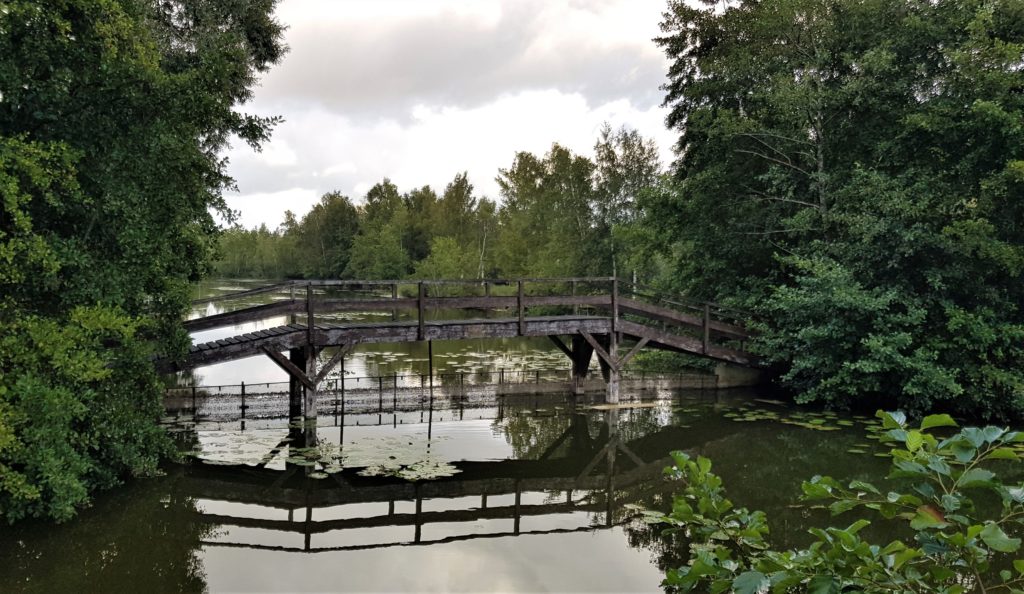
itself was surrounded by and on the edge of several tranquil and pretty lakes
full of carp, lilies and dragon flies –
the site was full of British couples in their dotage, their pitches full
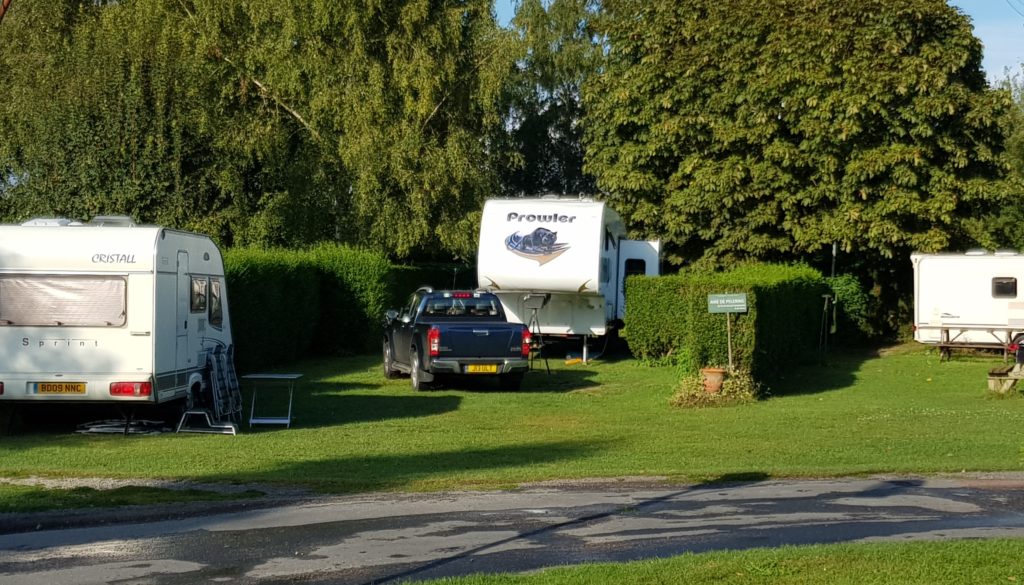
of deck chairs, sun loungers, pot plants and gnomes! We had a grassy double pitch with easy access
and we used the few days here to settle back into our gypsy style life again.
We caught up on booking ahead for our next few stops and some shopping, as well
as enjoying the peace and quiet that comes with the return of school term – no
noisy children!
Lakes around the site.
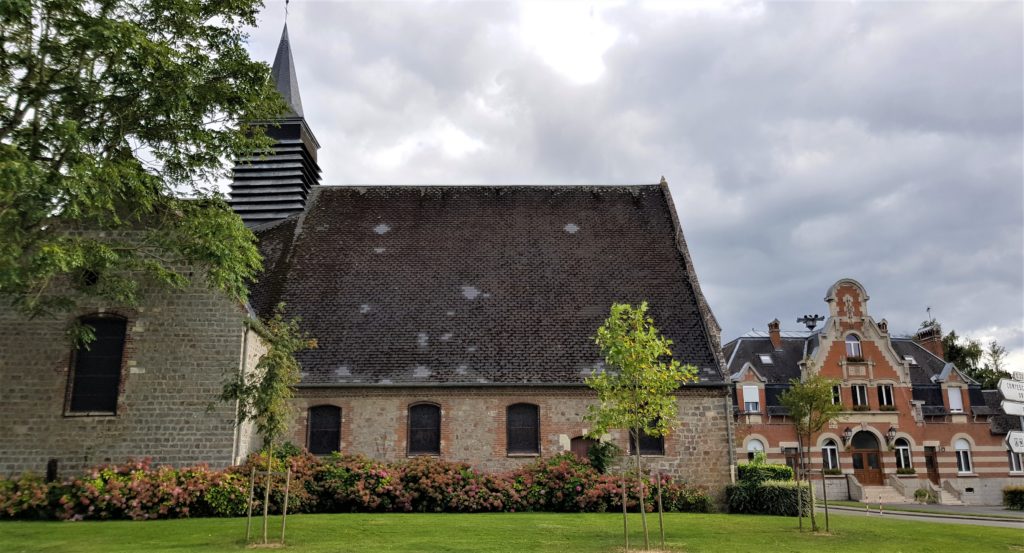
Local church and Town Hall
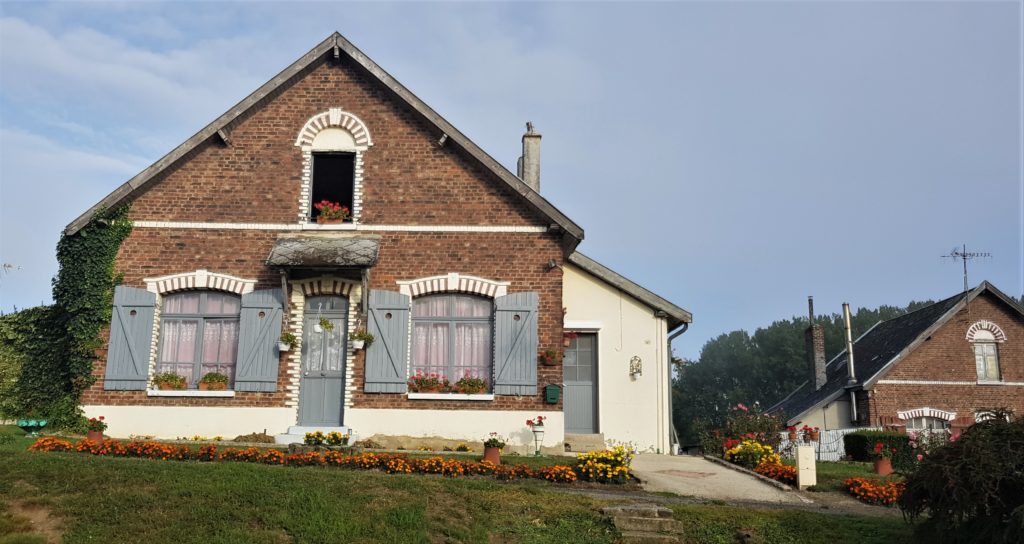
Typical local house
We
discovered that the actual village we were in, called Seraucourt Le Grand, had
a cemetery full of First World War soldiers that had died in the surrounding
areas and whose graves had been relocated here as a gesture of
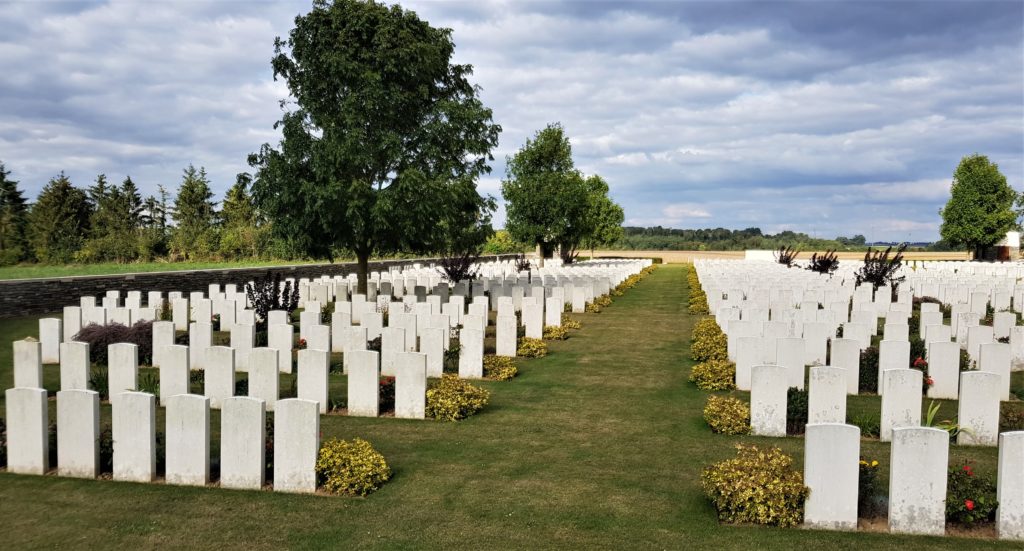
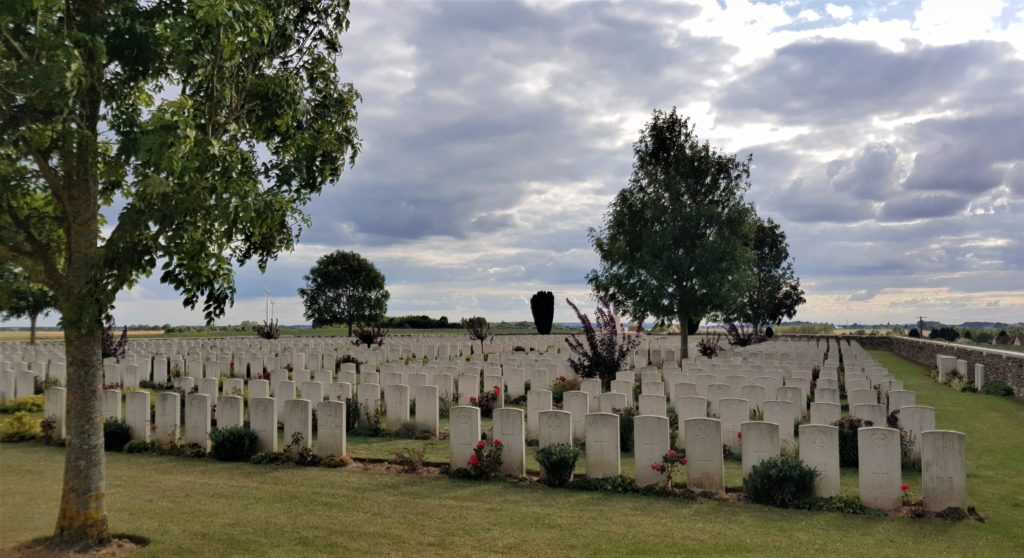
remembrance. It was a beautiful setting
on the top of a quiet, flat hill, surrounded by fields of corn and hay, with
beautifully well maintained flowers and shrubs dotted amongst the 1830
headstones. The majority of the graves
were of riflemen, cavalry or airmen, the average age at death was early 20’s
and lots were from the north of England, they were in regiments from
Lancashire, Yorkshire and Scotland.
WW1 cemetery
Troyes
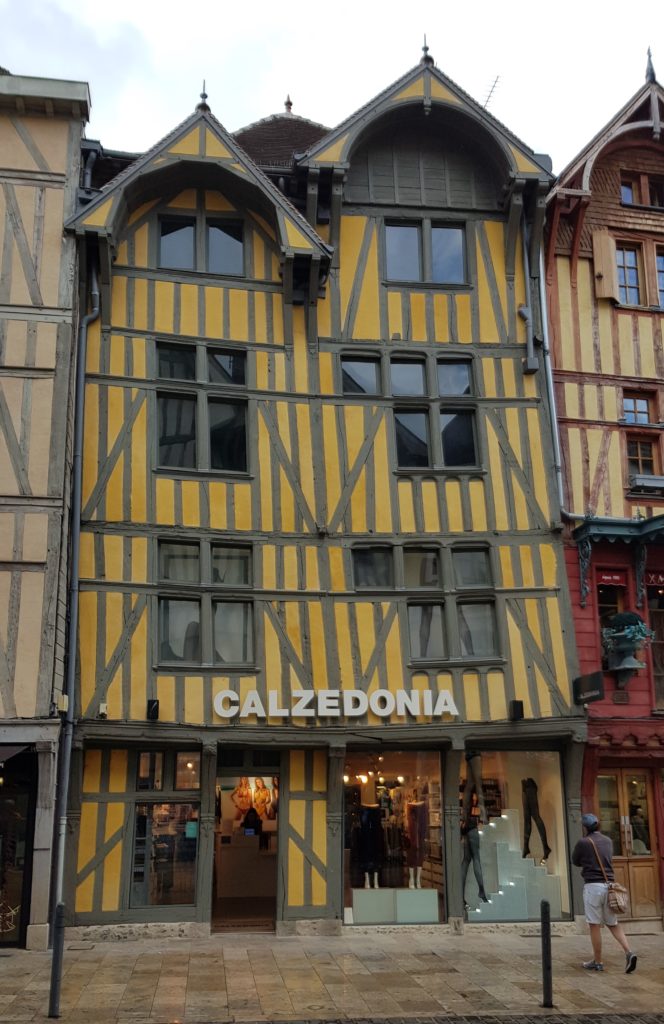
We headed further south to Troyes, a beautiful medieval town that we have stopped at last year, and an odd thing happened – David adamantly denied ever having been there before!! Last year when we returned to the UK to MOT the truck, we stopped here overnight (on a Saturday night as Sunday morning was an issue finding a café open for breakfast!) in a small guest house at one end of the town, this time we booked into a campsite at the opposite end of town. And, another odd thing…..it rained! Only for the day!!
When we
walked from the municipal campsite into the old part of the city, we came
across the Cathedral first, which was closed when we visited last year. I clearly remembered the square, but he
didn’t. I remembered a fascinating old
wine shop on the corner of the square, which was closed last year, he
didn’t. I showed him the cathedral
gardens where we watched a young girl wearing no shoes playing in the fountains
with a big Alsatian dog, he didn’t. It
wasn’t until I took him to the restaurant that we had dinner in, and then into
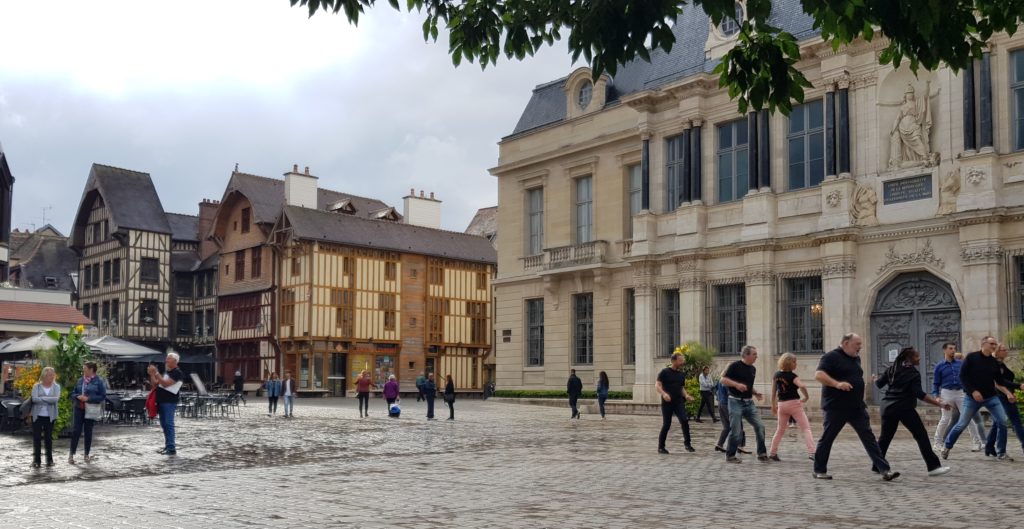
the main square with the Town Hall, that he remembered! I was beginning to doubt myself at one
point!!
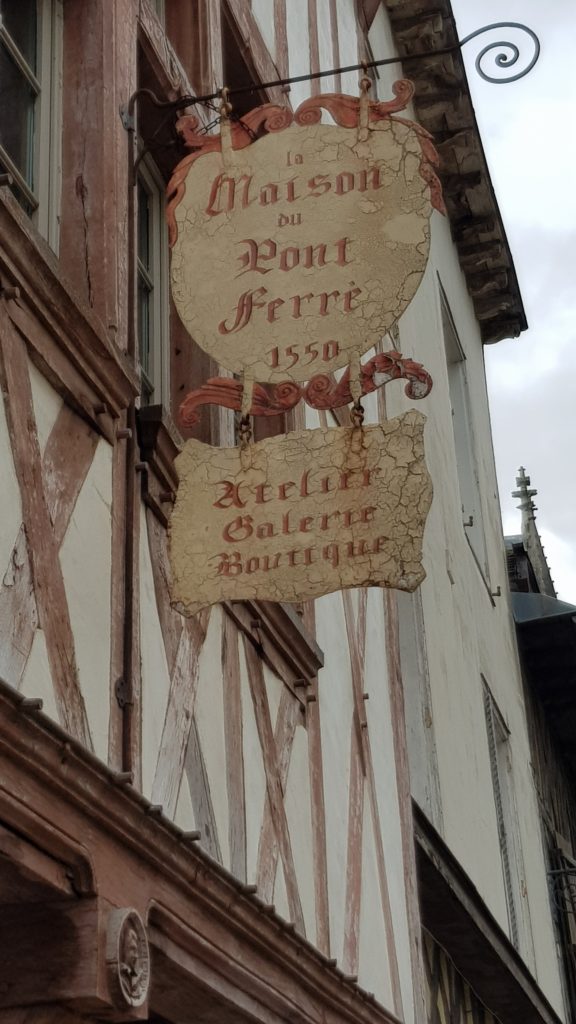
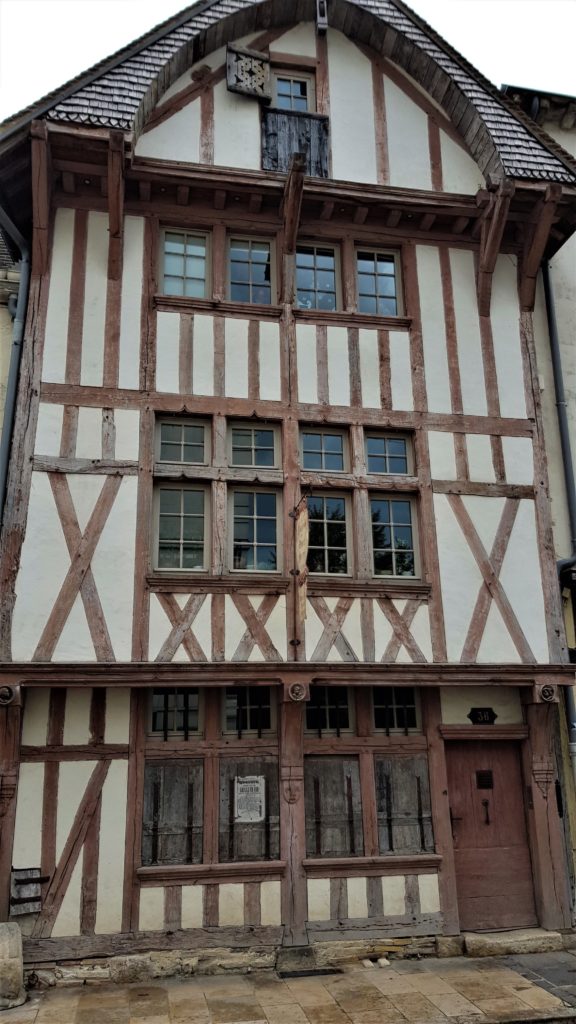
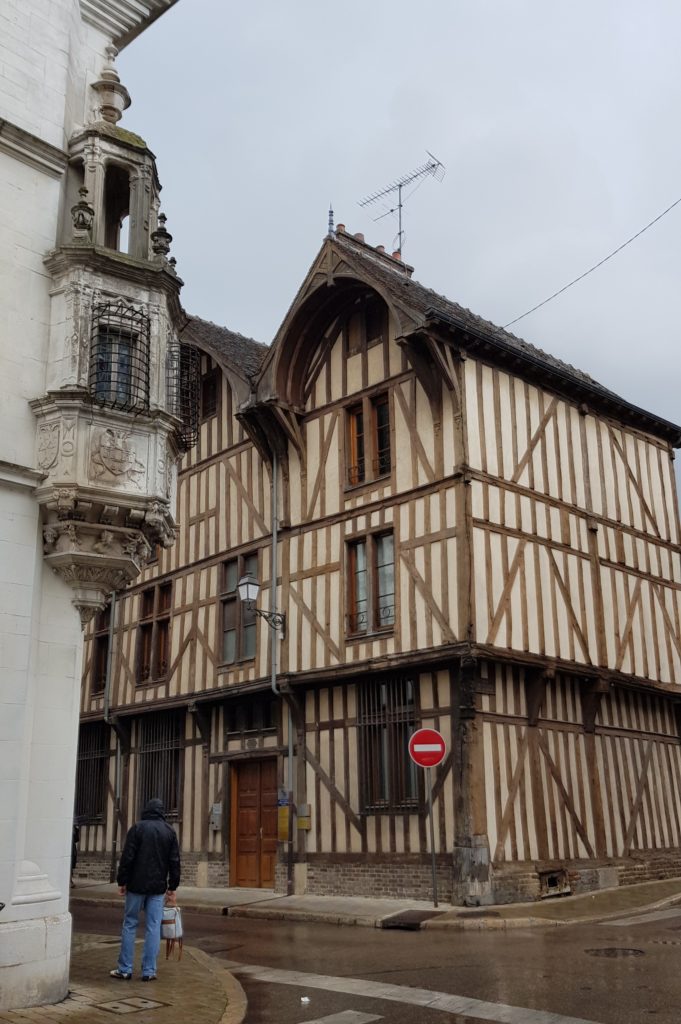
An old Toll House from the 1500s
Front of the Toll House
An impromptu dance session in the Town Square.
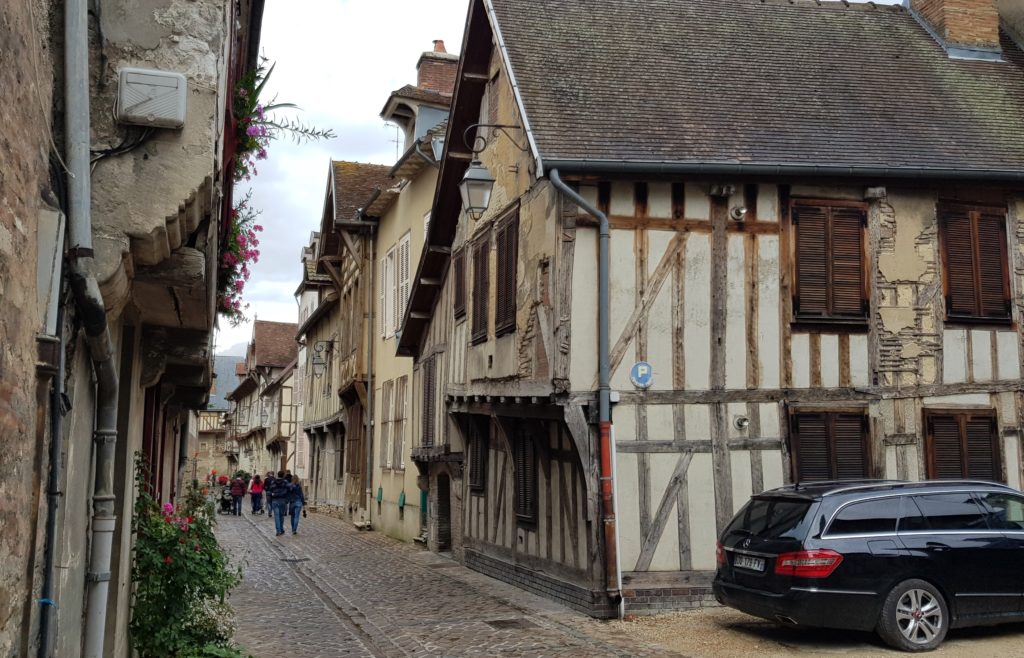
We walked
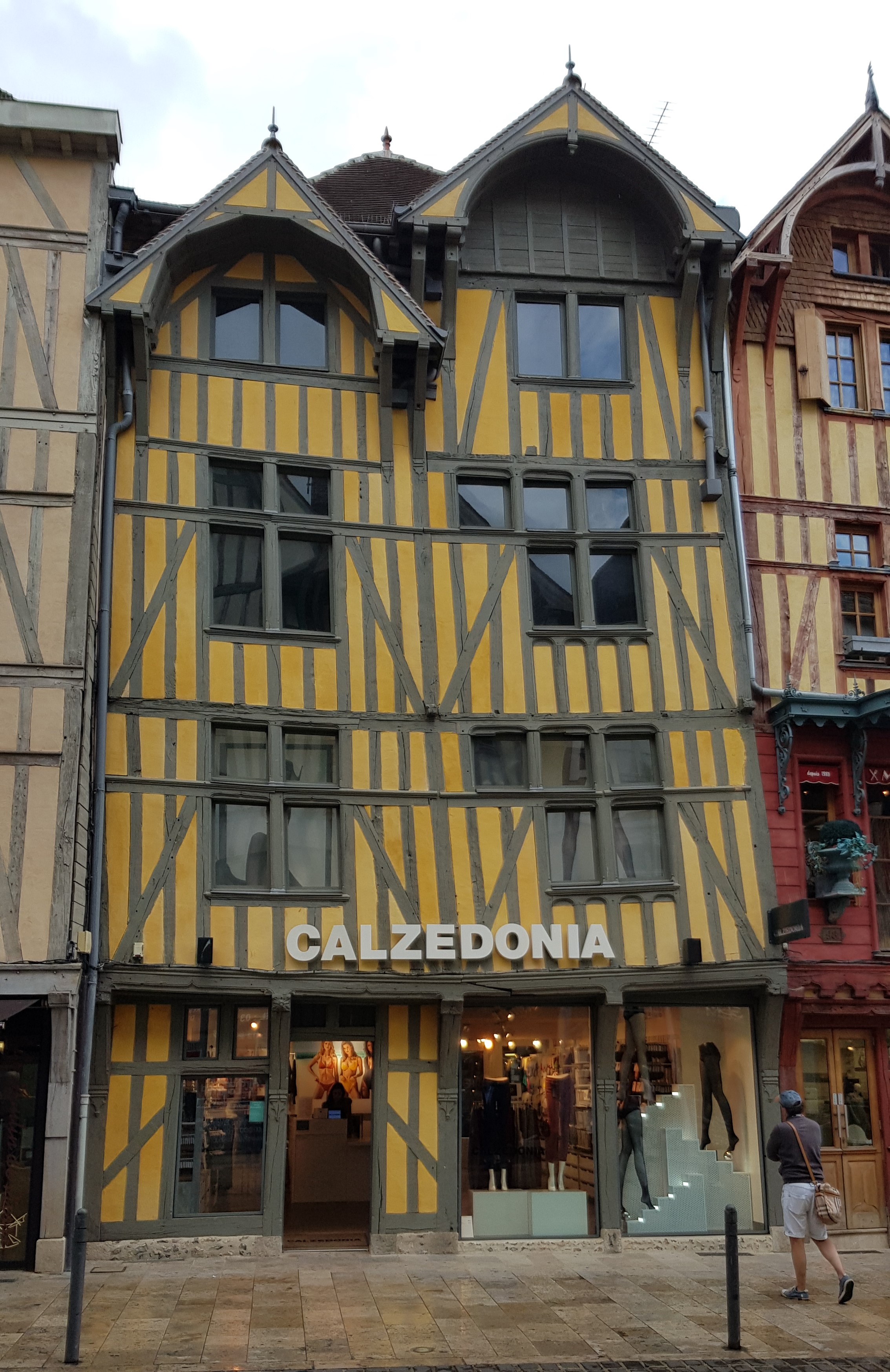
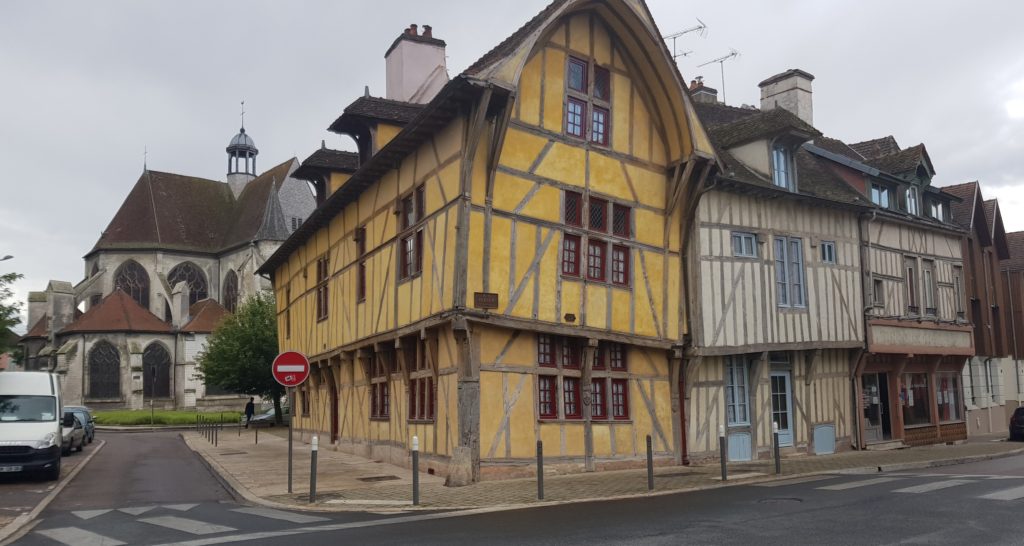
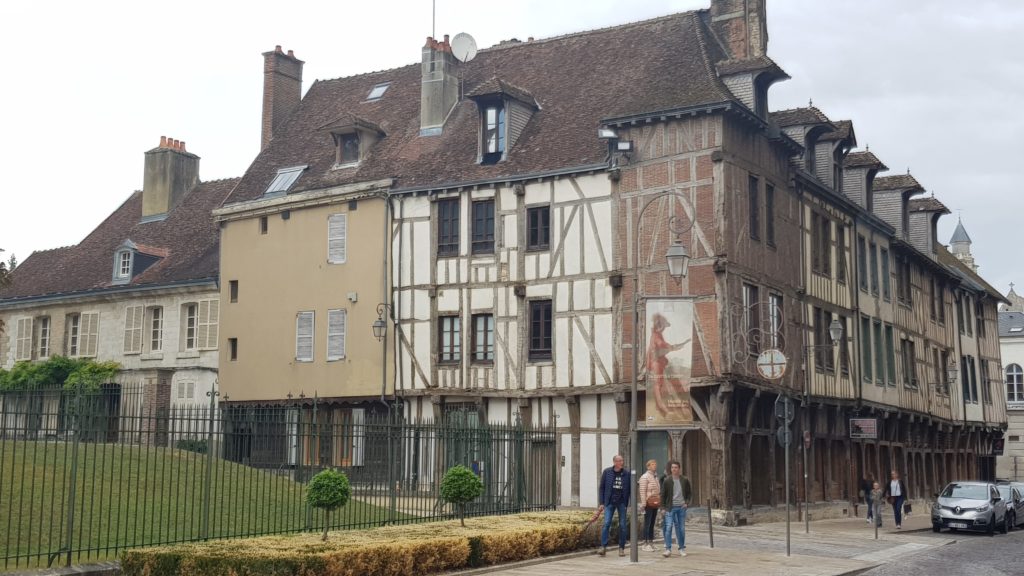
around the town, discovering more tiny passageways between the tall wooden houses,
admiring the partly wooden properties that are leaning away or bowing over, fascinated
at how they have survived time, weather and woodworm!
We visited the Saint Pierre Cathedral and went into Saint Madeleine church, and marveled at the ornate wooden organs in both. Saint Madeleine is unique with its gothic internal bridge,
Auxonne & Dole (near Dijon)
We arrived
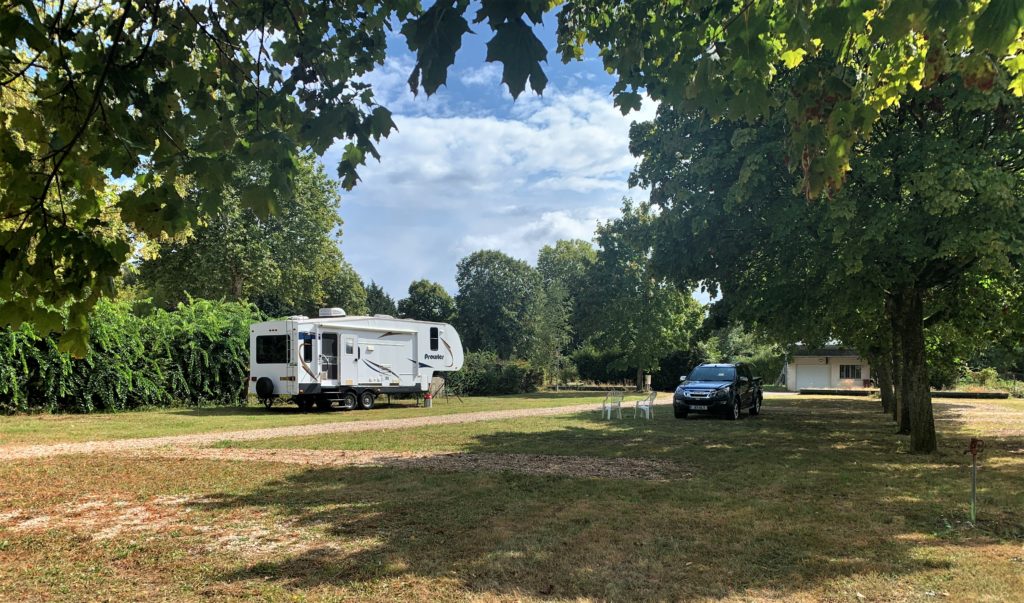
at our next site late on Sunday morning, a riverside park that is under new
ownership and certainly needing a bit of TLC.
However, we had a huge area all to ourselves (apart from 2 tents, we were
the only ones here!) with full water and drainage and despite the fact that
none of the new owners spoke English, we found a good sunny area and settled in
for 2 nights.
In the
afternoon we took a drive 15kms away to Dole, to escape the noise of a
triathlon that was being held in the town, the cyclists and their supporters took
over the one way streets and police blocked off routes into the town so we
headed out away from the hustle.
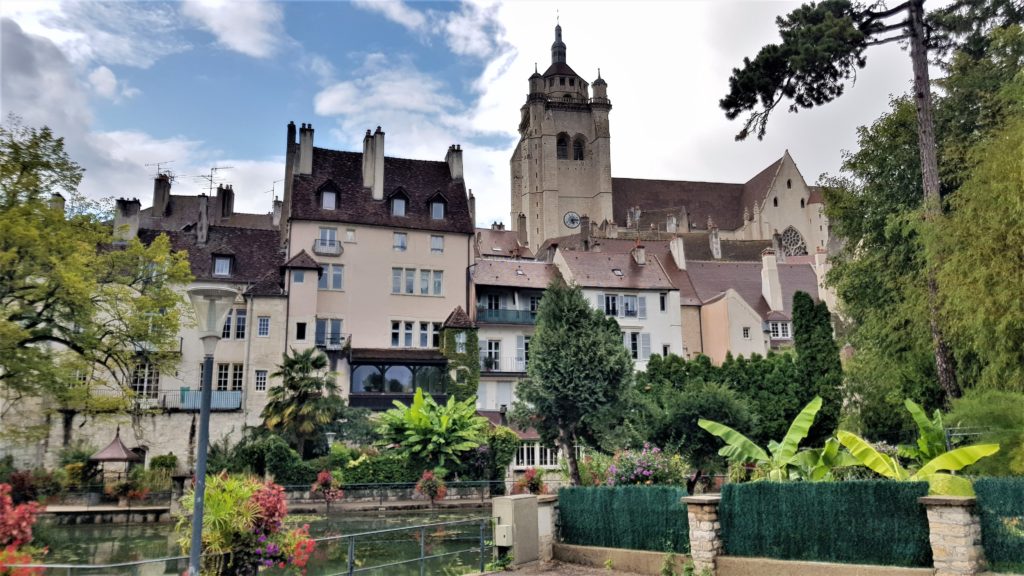
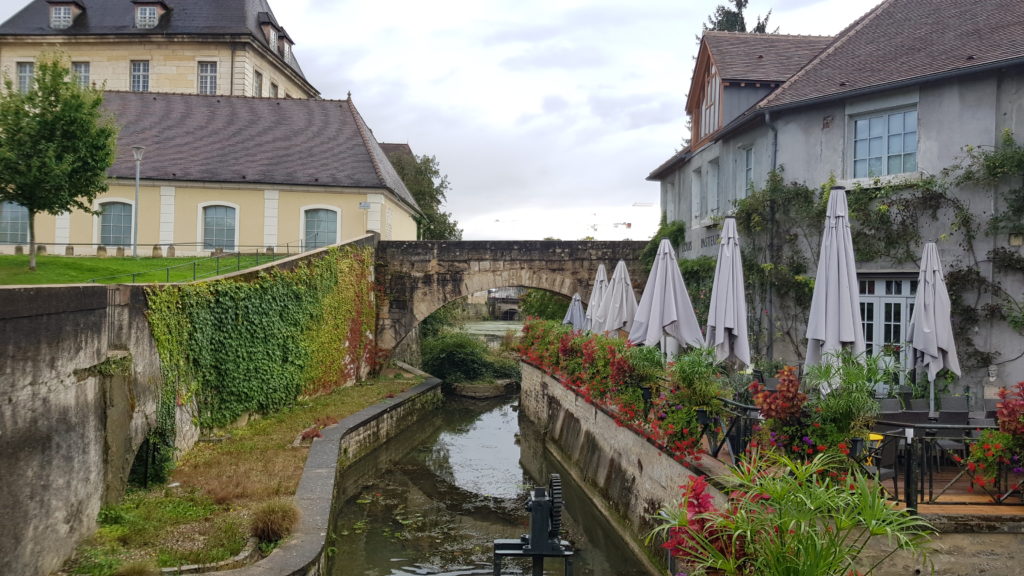
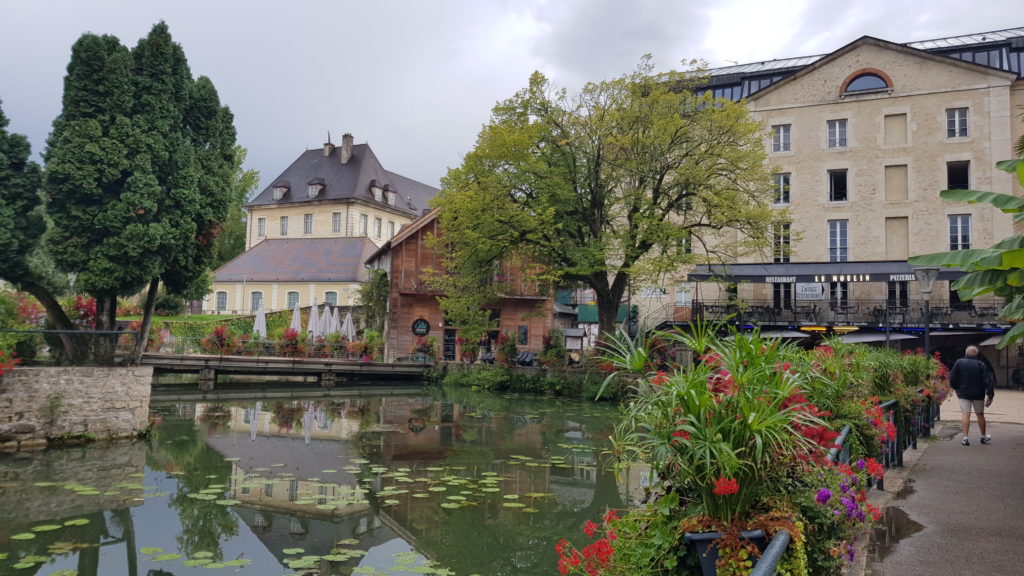
Dole was a lovely town on a limestone ridge beside
the River Doubs, home to Holy Emperors and several Counts of Burgundy. A mix of one way circular roads led up to the
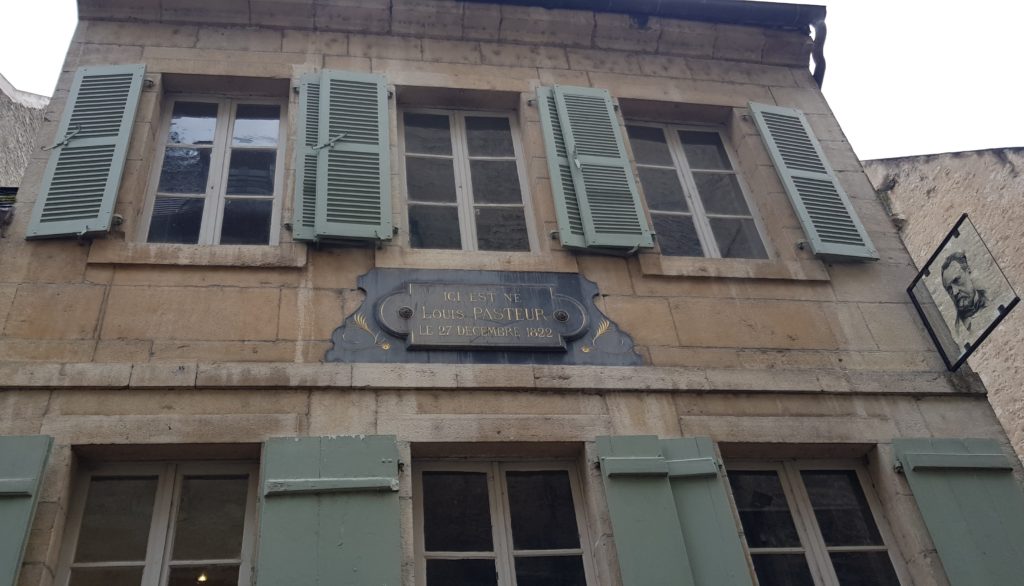
Basilica and the market hall and the nearby attraction of Louis Pasteur house
of birth, born in 1822. His father run a
tannery beside the Canal du Rhone an Rhin which also dissects the town and his
home as well as the tannery now form a museum on the street named after
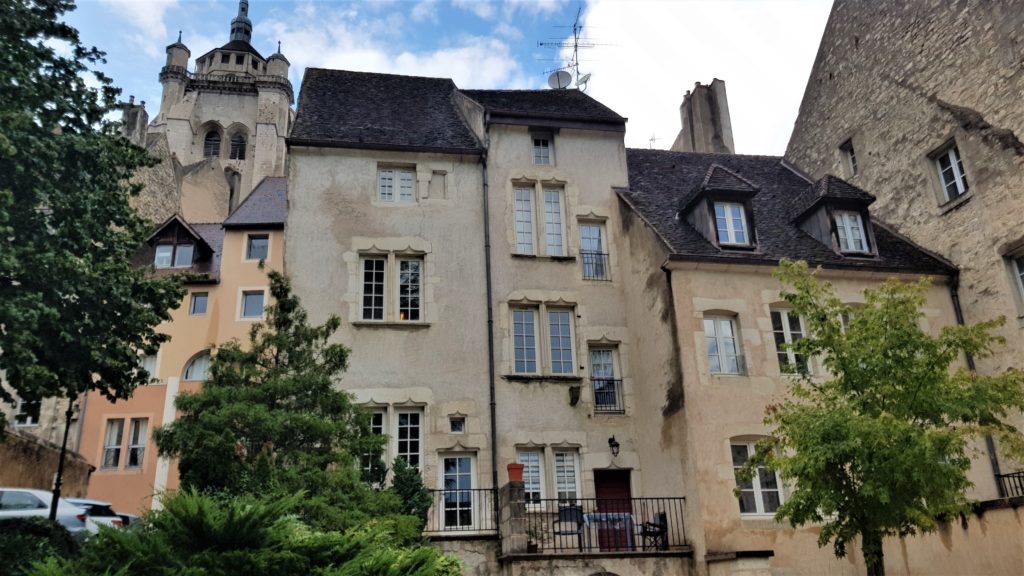
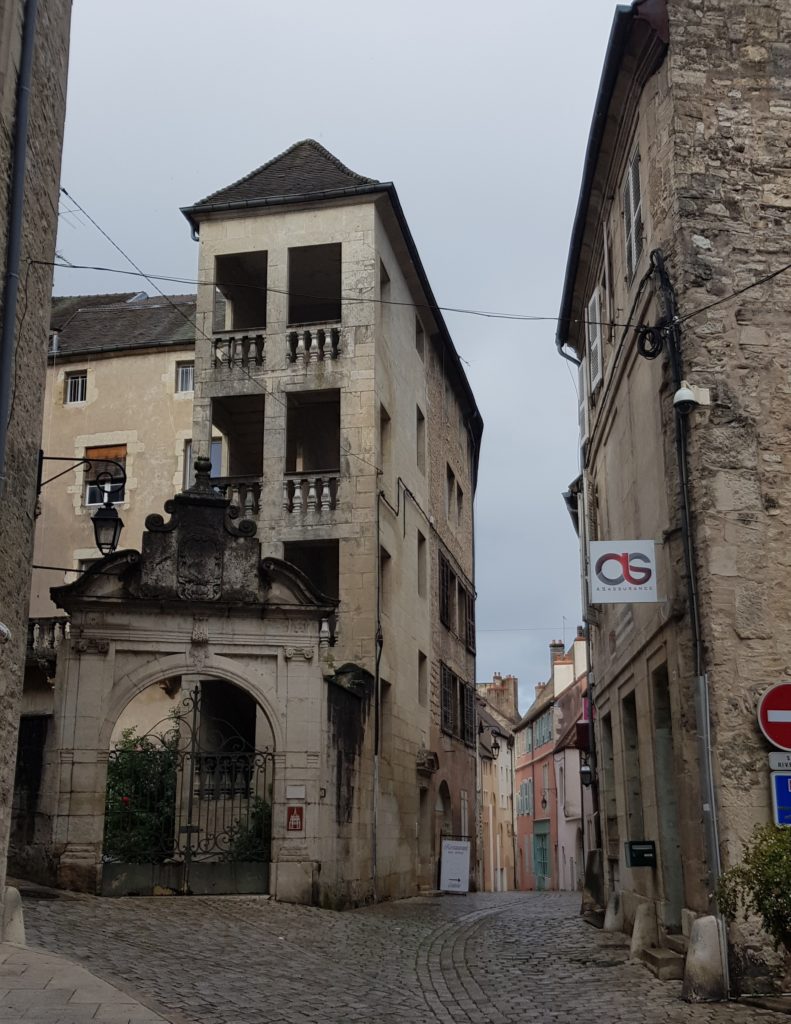
him. The town is full of tall stone
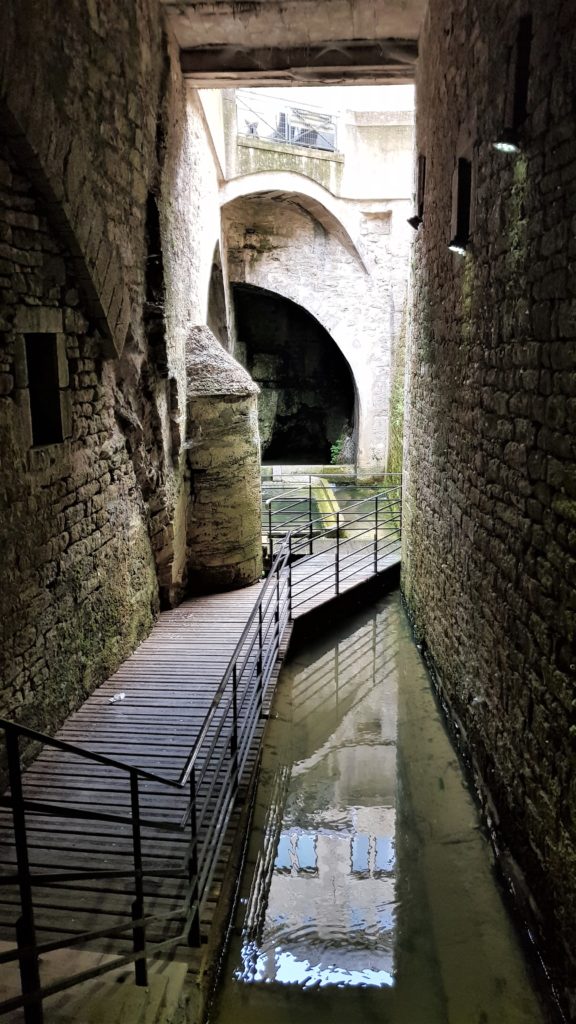
properties dating back to the 16th century, either heading up to the
cathedral or down to the canal and river mixed in with tight jumbled stairways,
passages, underground fountains and narrow roads.
Birthplace of Louis Pasteur
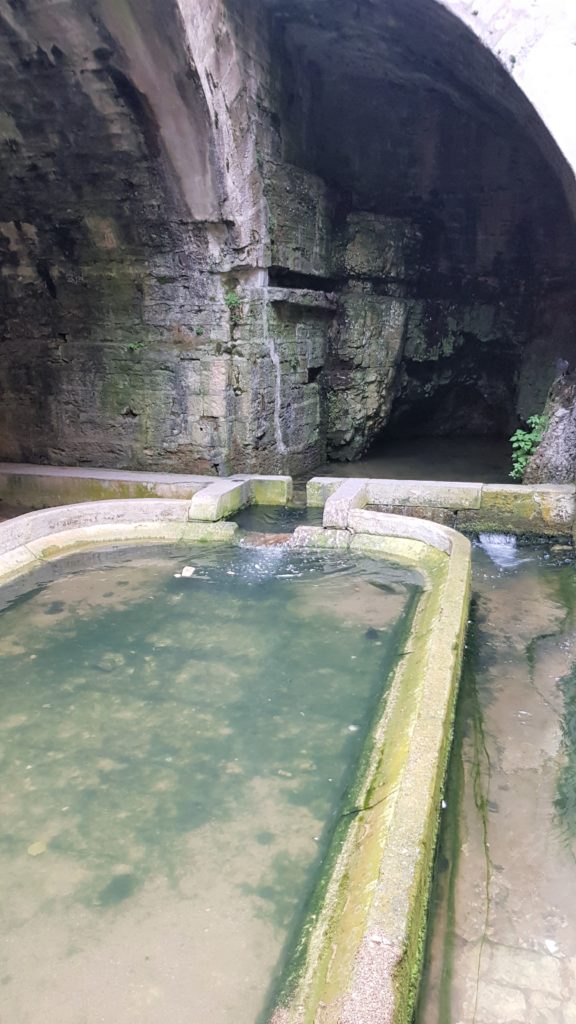
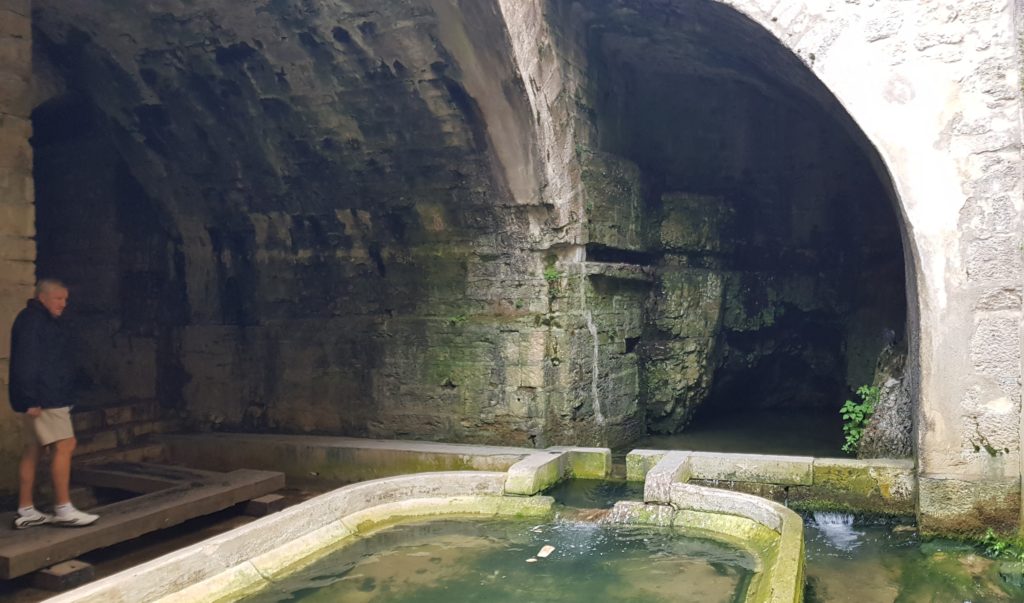
We also
found a natural spring originating from under the rocky cathedral supports,
harvested in a trough dating back to 1274 or possibly earlier, it is called the
Fontaine aux Lepreux and it was found off Rue Pasteur. The water used to be
drunk by locals who thought it had healing qualities, whilst the lepers were
refused entry into the city, a leprosy hospital was founded beside its source
some miles away. In the 1600s it was used by local washer women to do their
laundry, until they were fined for polluting the water.
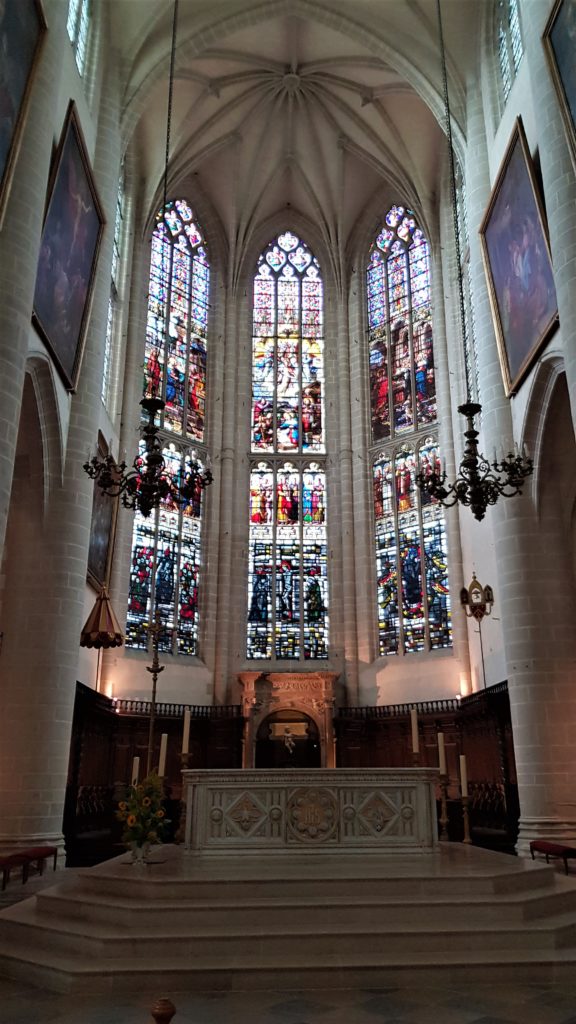
We admired
the Notre Dame Collegiate, built in the 1500s and a blend of Gothic and
Renaissance style, and at the time no expense was spared on the rich
interior. It was built as a Church and
became a Basilica in 1951 and has the highest church Tower in the region, 73m
high, the Bell Ringer used to live in the top of the Tower. Several areas were restored in 2009 including
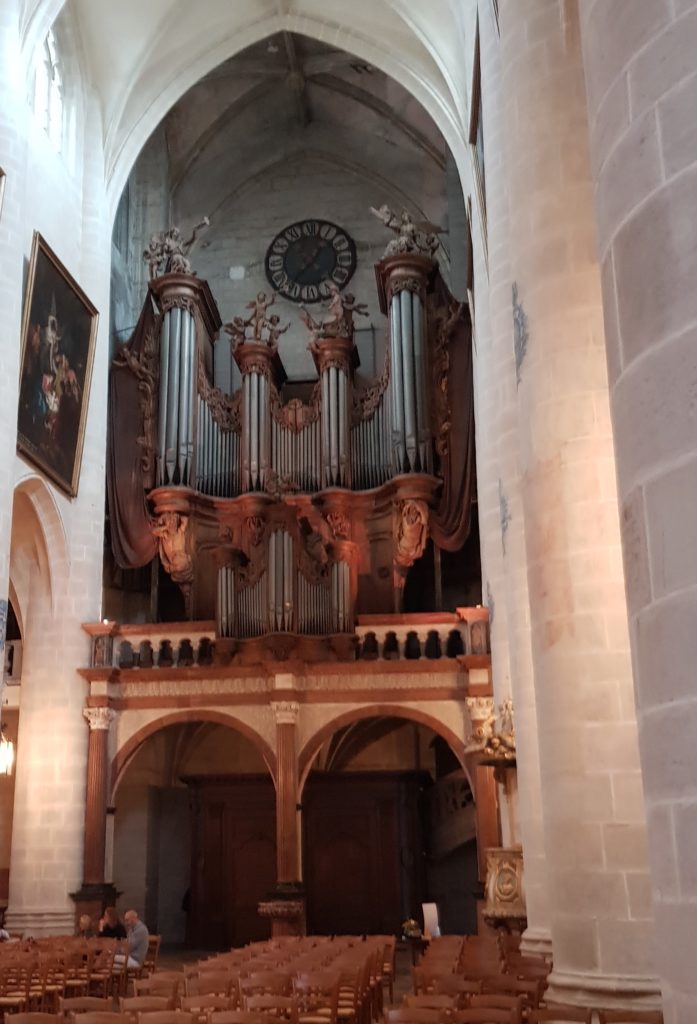
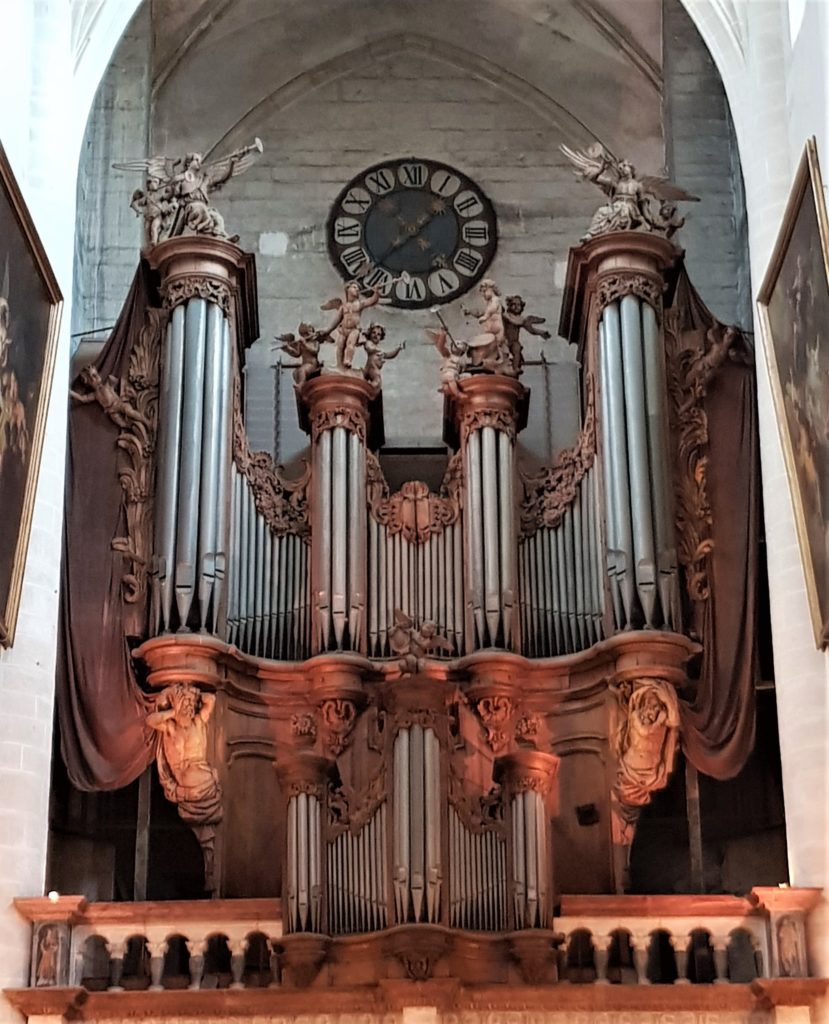
plasterwork, paintings and the stained glass windows. We admired its organ, which was built in
1754, with 3500 pipes!!
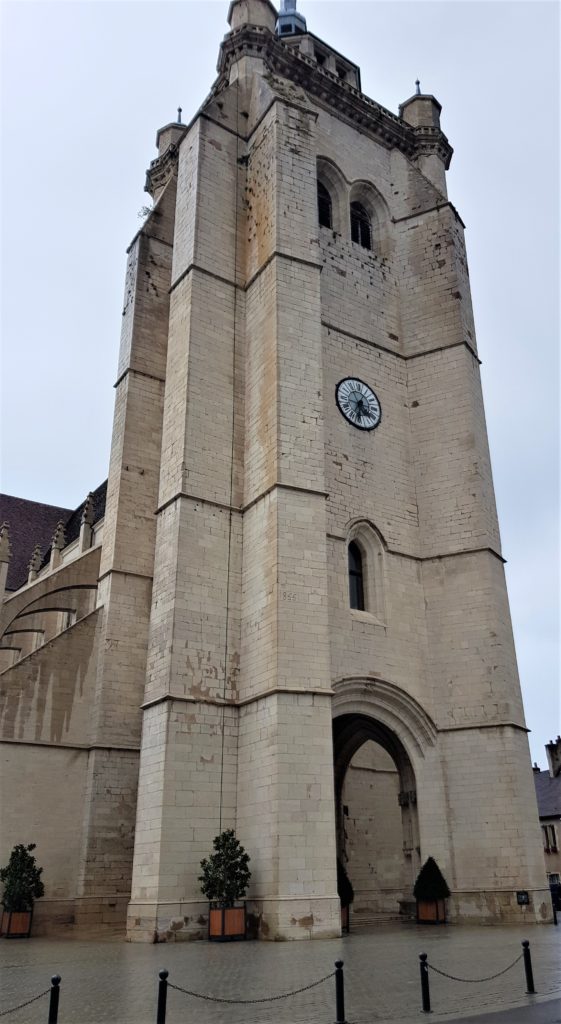
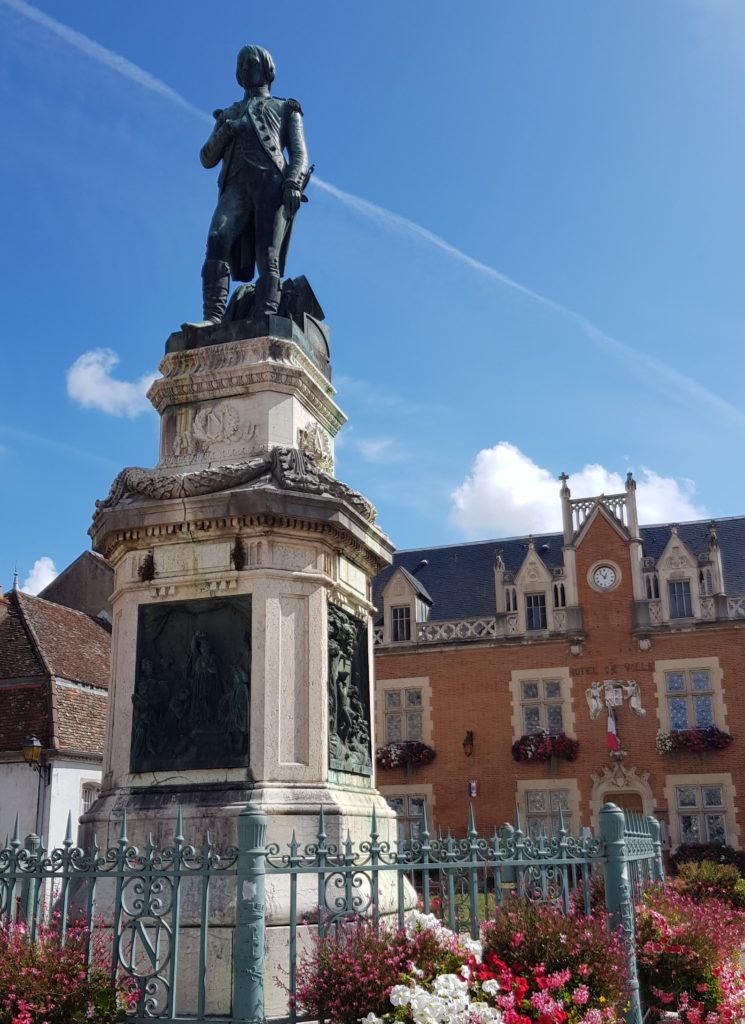
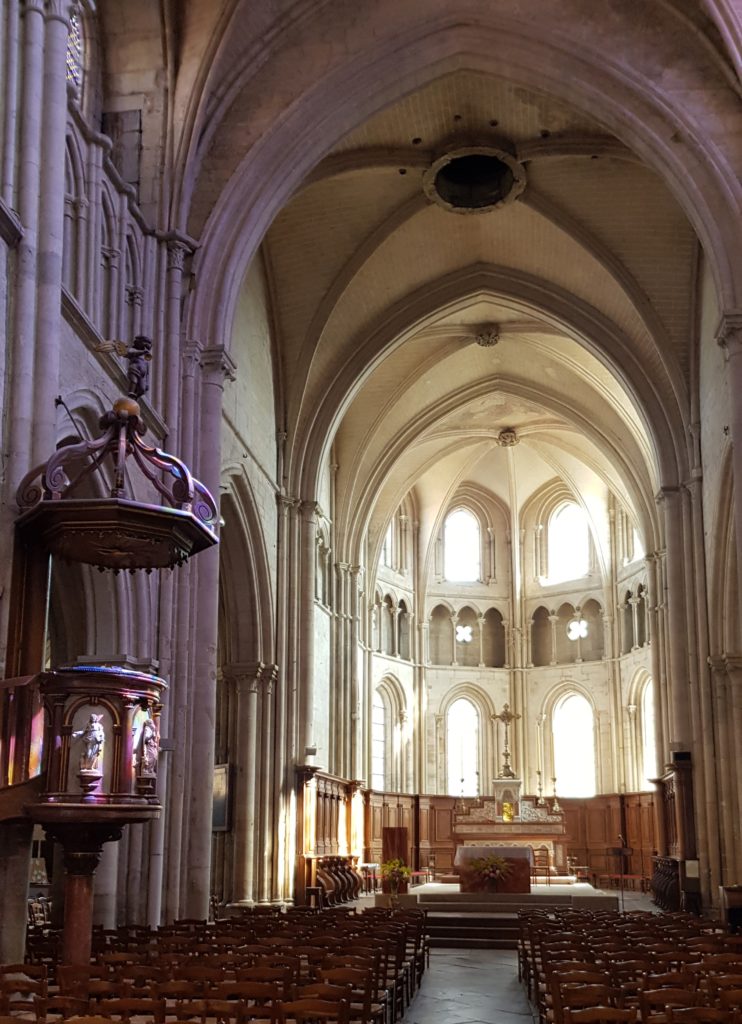
Auxonne is a town on the River Saone where Napoleon Bonaparte was a student at the artillery school, he then returned again to stay whilst he was a 2nd Lieutenant in the Regiment de la Fere from 1788 to 1791. A statue of Bonaparte stands in the main square outside the Notre Dame Church.
Once again,
the church is a Gothic stone building but with a twisted spire, something very
unusual in this part of the world! The
original church was built at the end of the 12th century, extended
in the 13th and 14th centuries and an ornate porch was
added in 1516 – 1520. The spire was added in 1843 and is 33m high but the
weathervane is at a height of 70m!
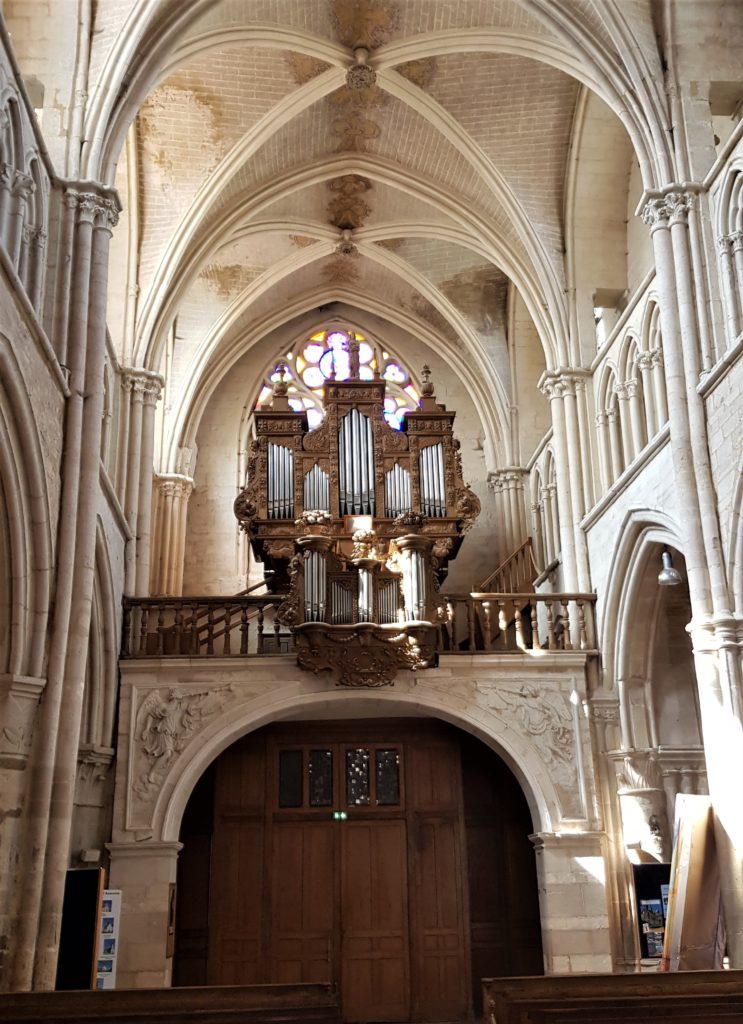
The wooden
organ was built in 1629, and its decorative external casing (flowerpots,
cherubs and decorated panels) was added in 1789. It was completely renovated at
the end of the 20th century but not touched since then.
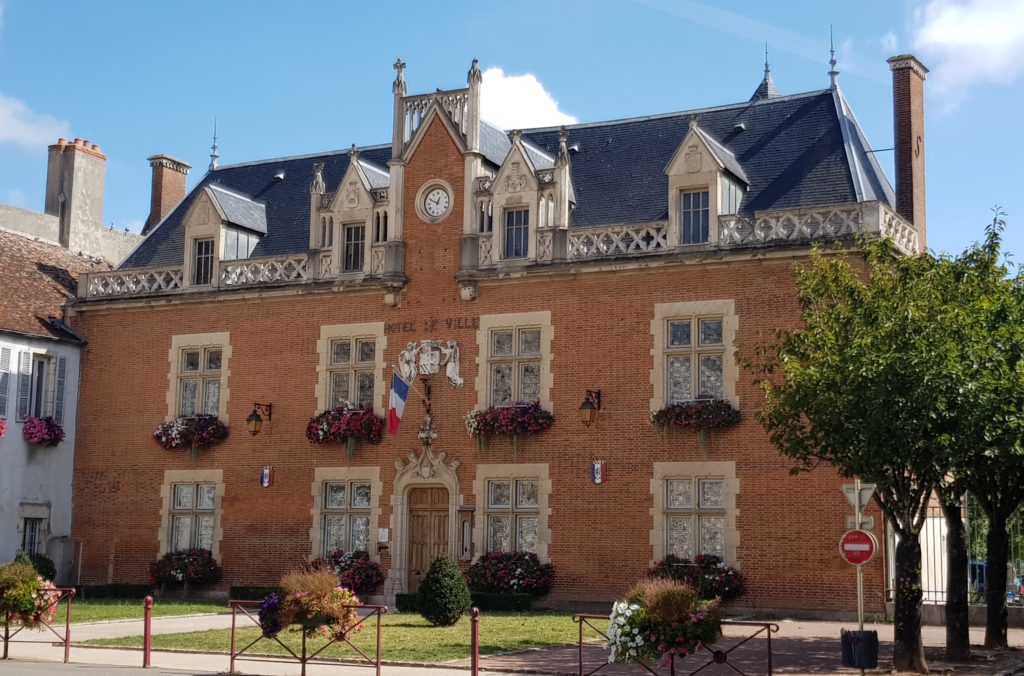
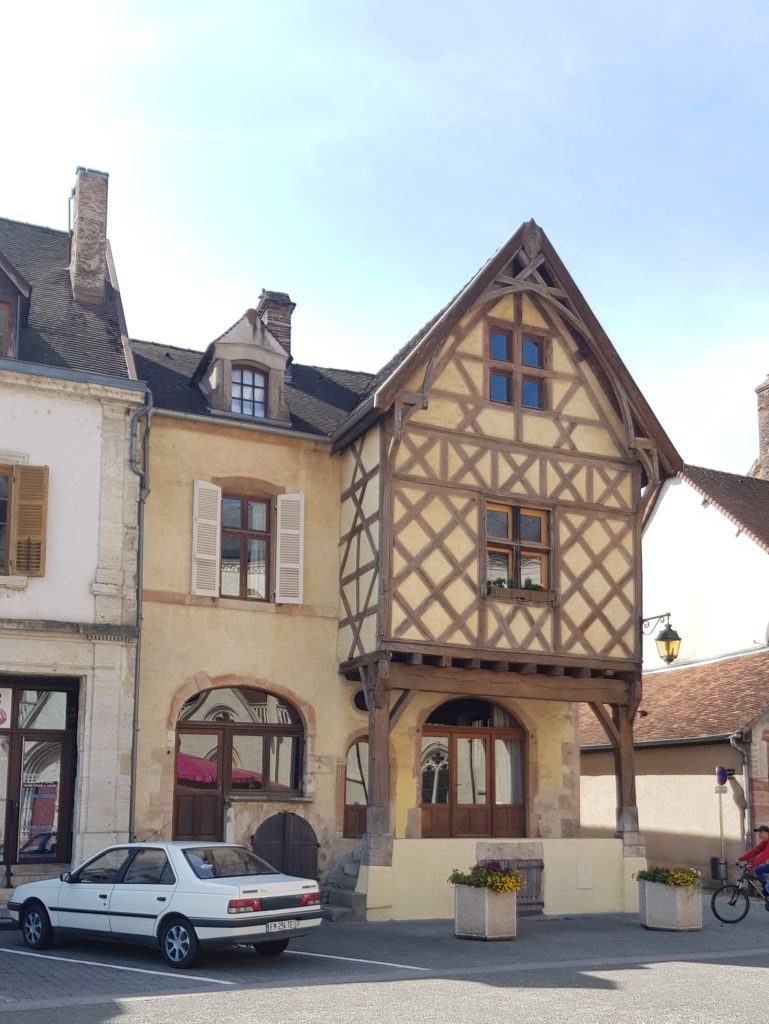
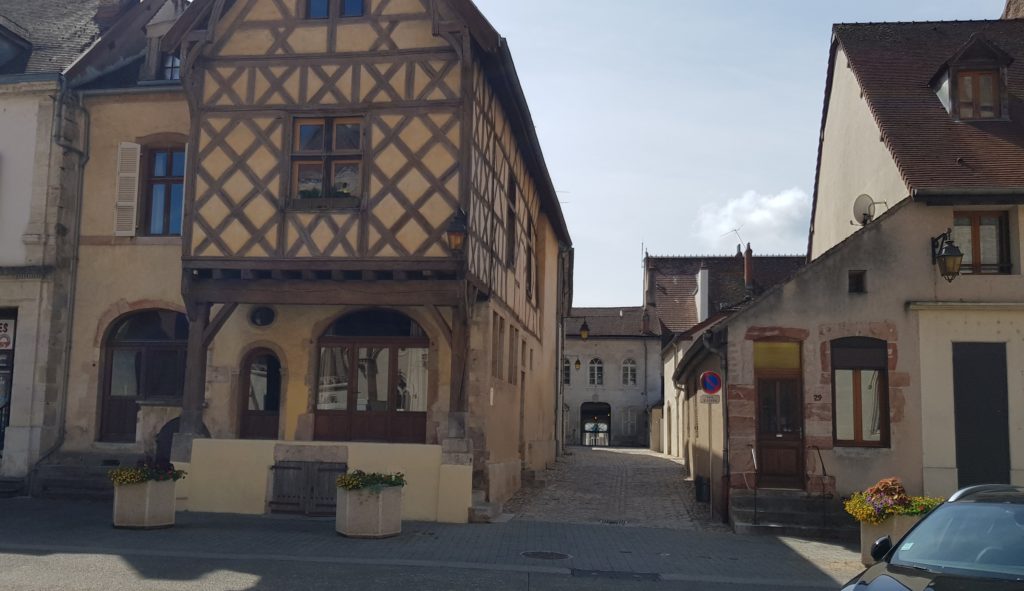
Several other wooden buildings around the square and town date back to the 1500s when this type of architecture was common. The Town Hall (above) was originally home to the Dukes of Burgundy dating back to the 15th century, and a Mansion built as the Bailiwick Court in the 15th C which became the Bankruptcy Court in the 18th C is now the Hotel de Ville, full of wooden staircases and twisted balustrades overlooking a stone courtyard.
The Public
Library contains a “reading room” dating back to 1850 as well as a collection
of books that were confiscated during the French Revolution.

Recent Comments