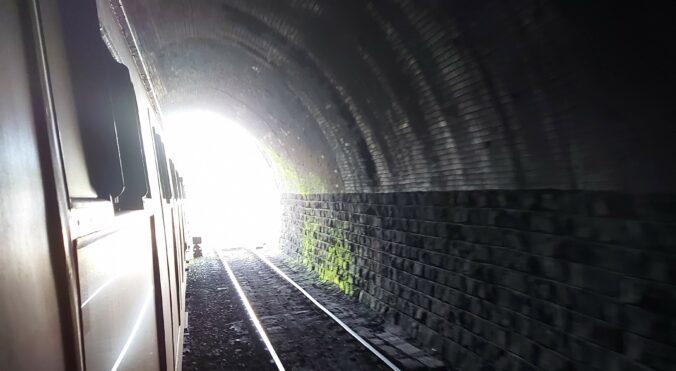
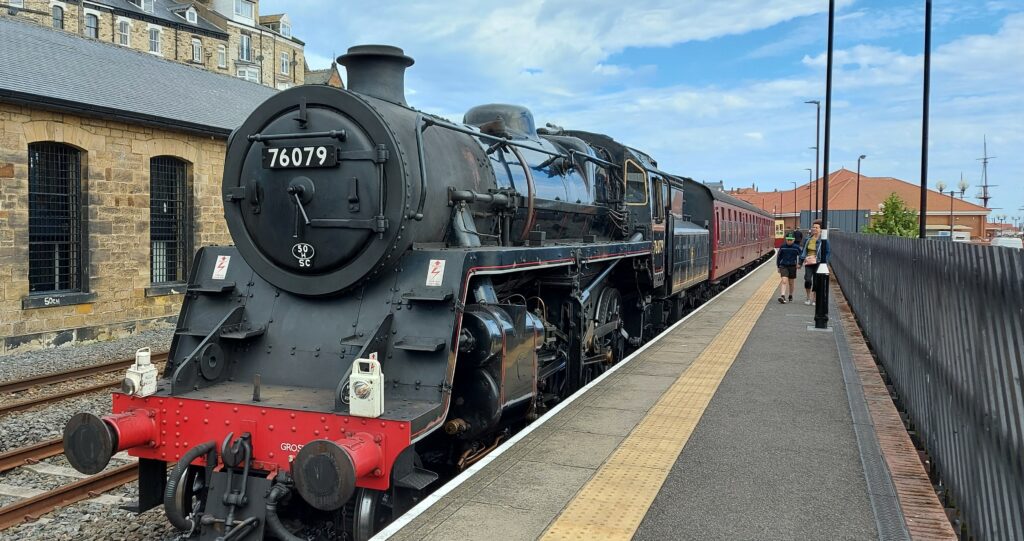
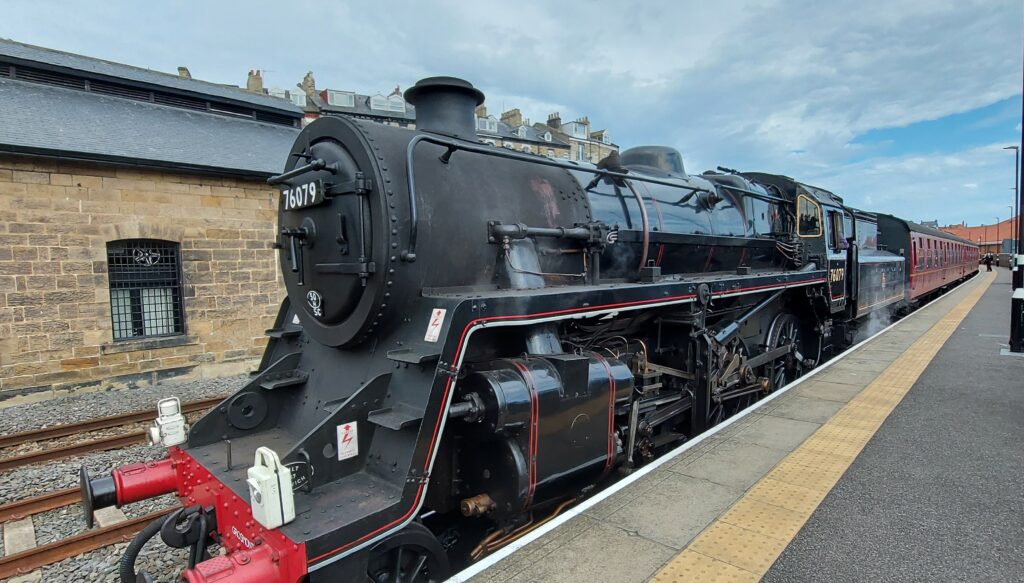
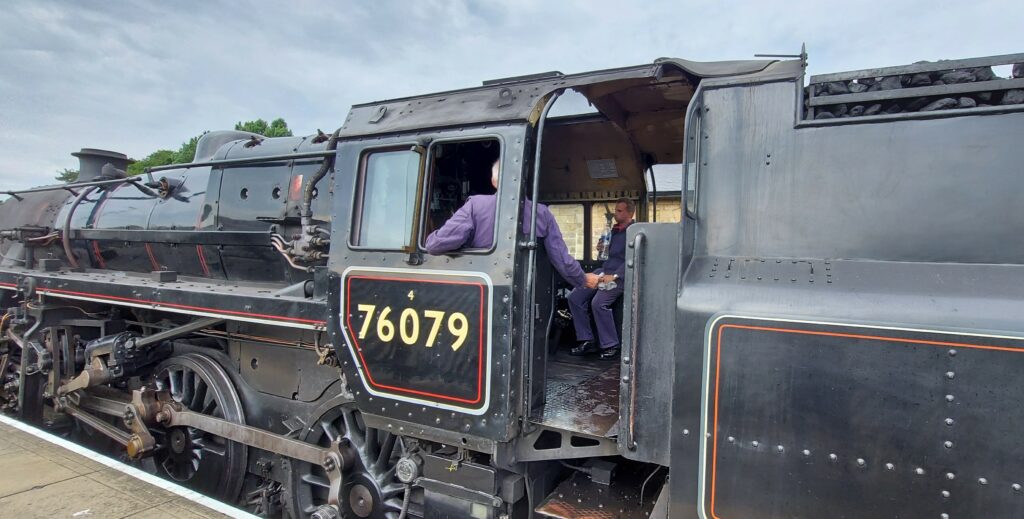
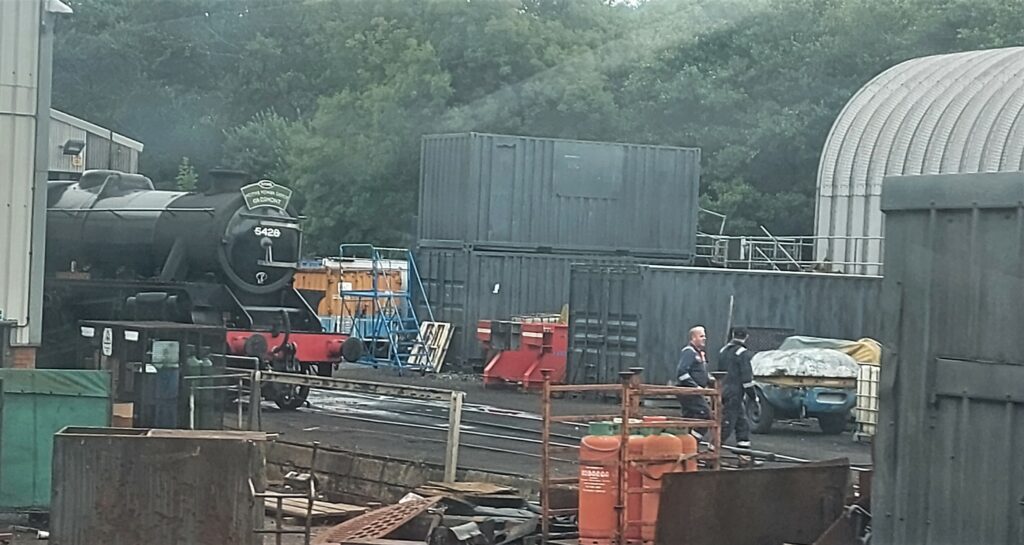
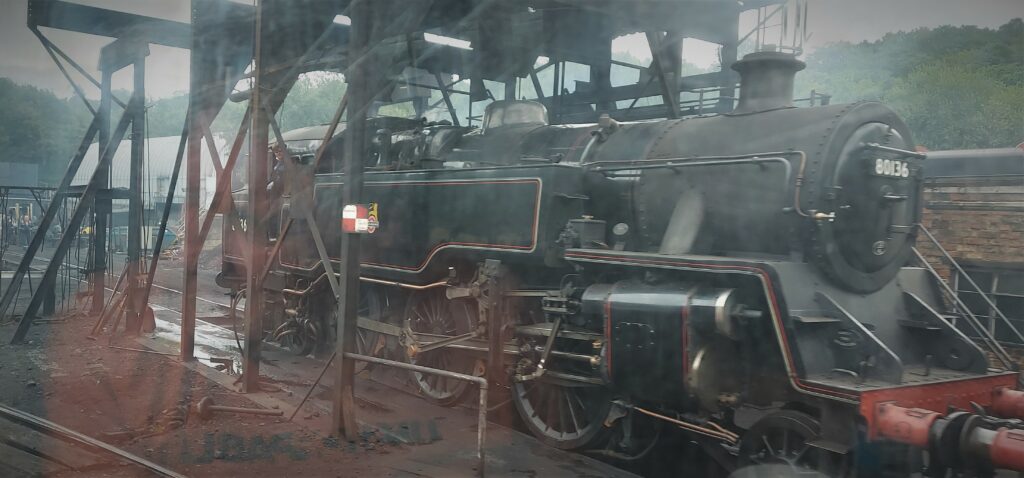
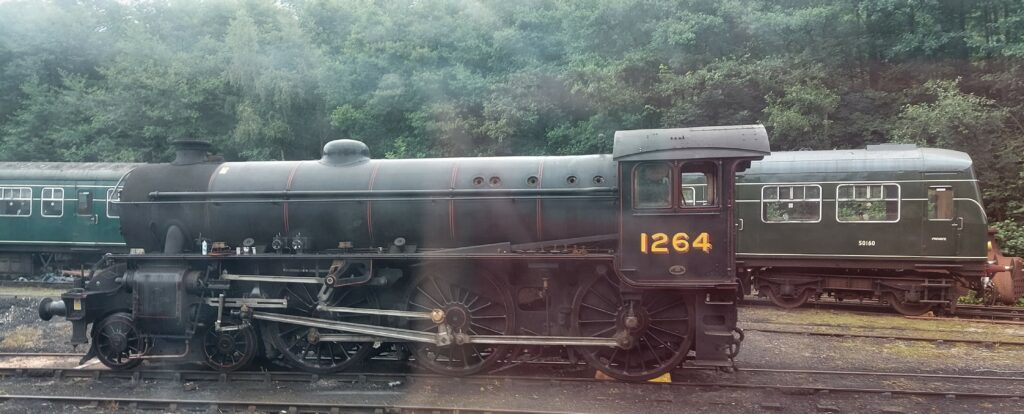
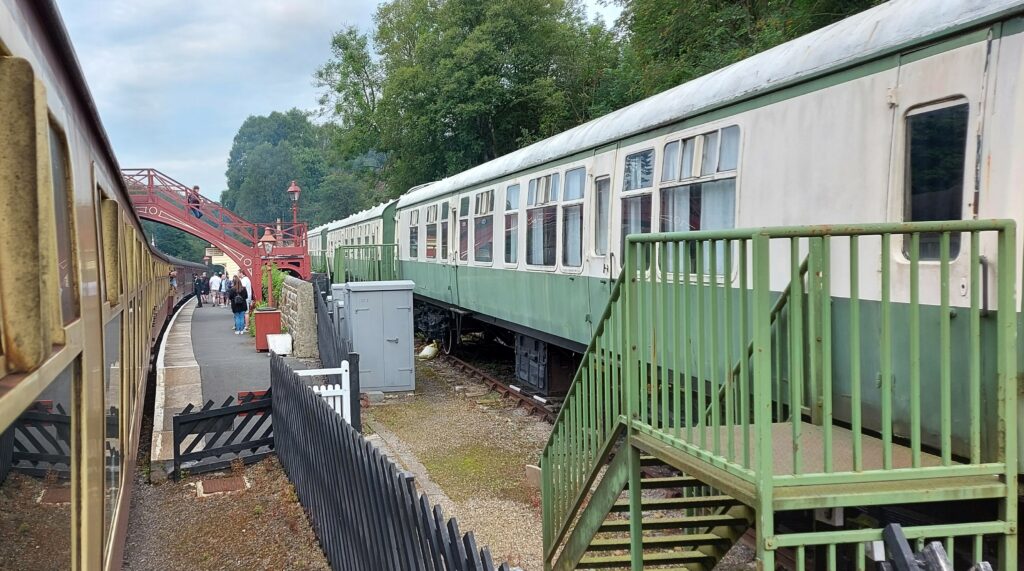
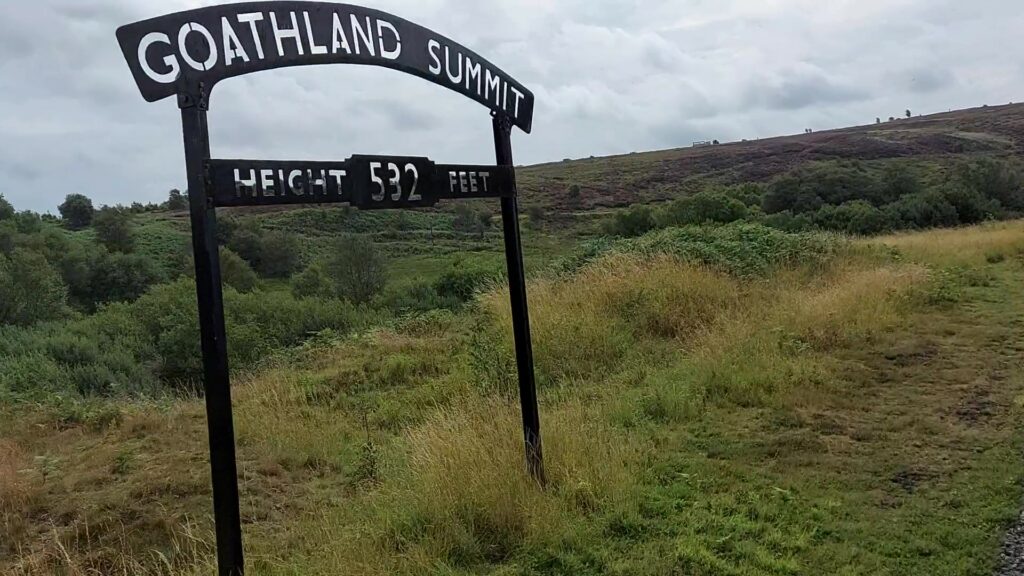
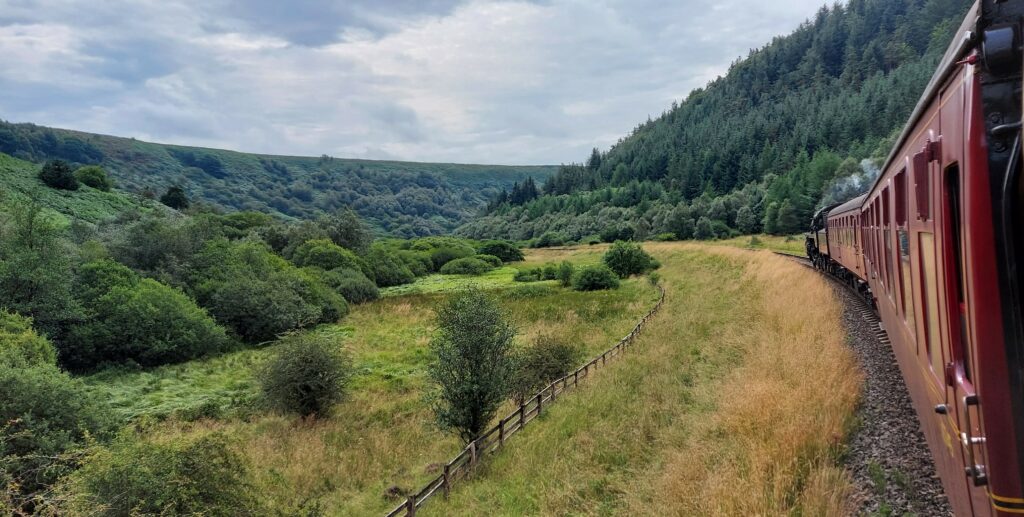
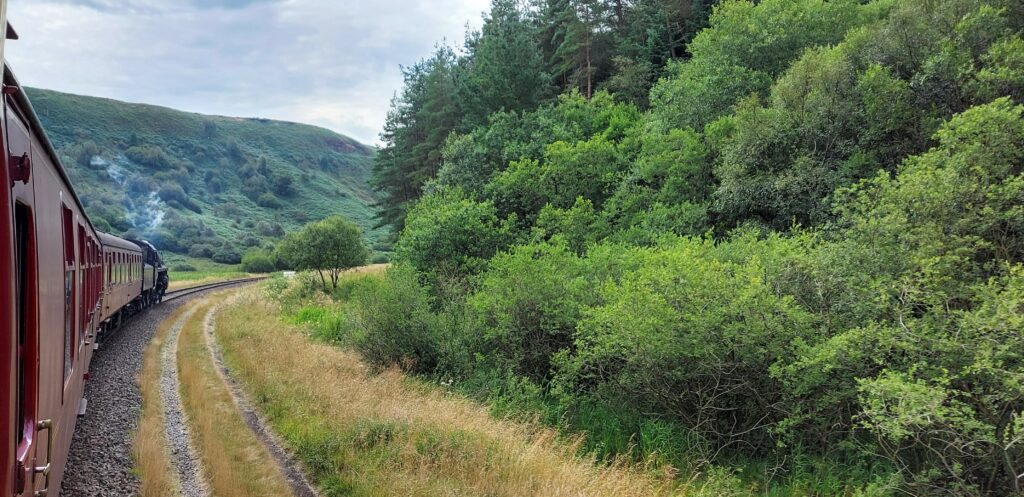
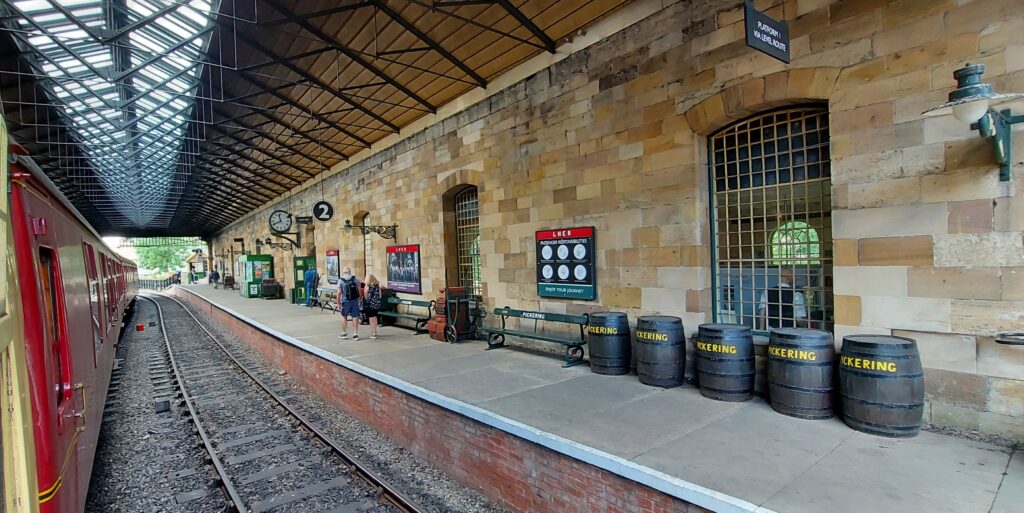
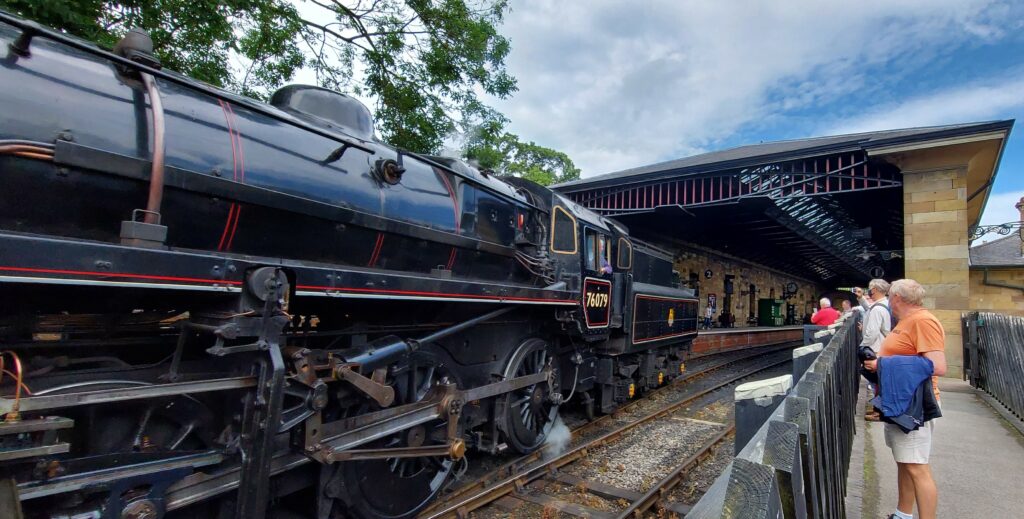
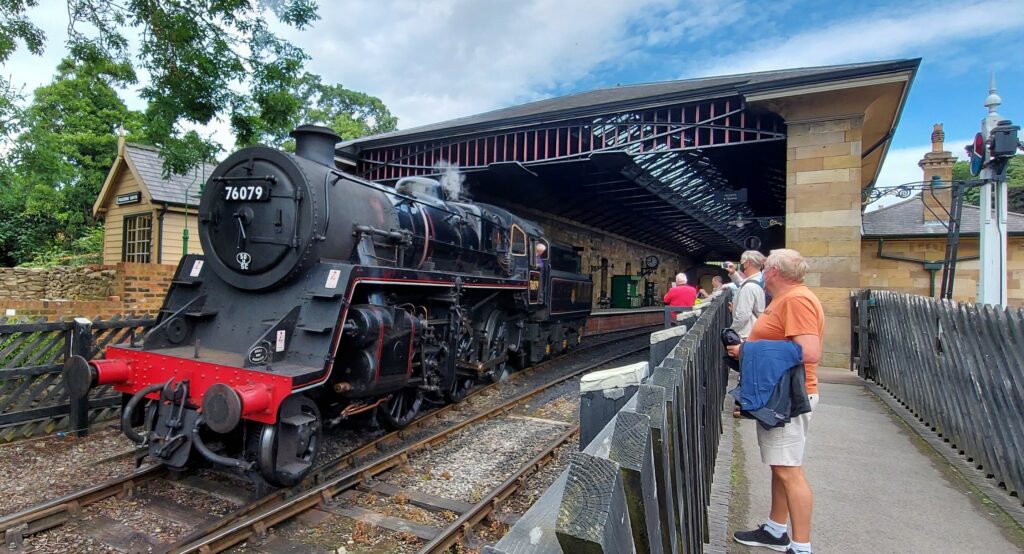
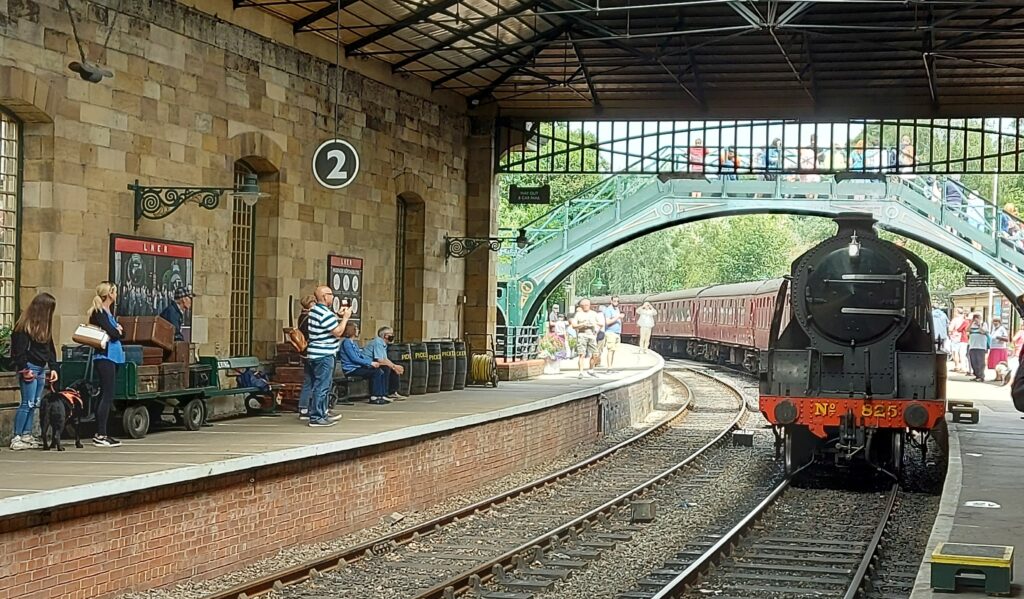
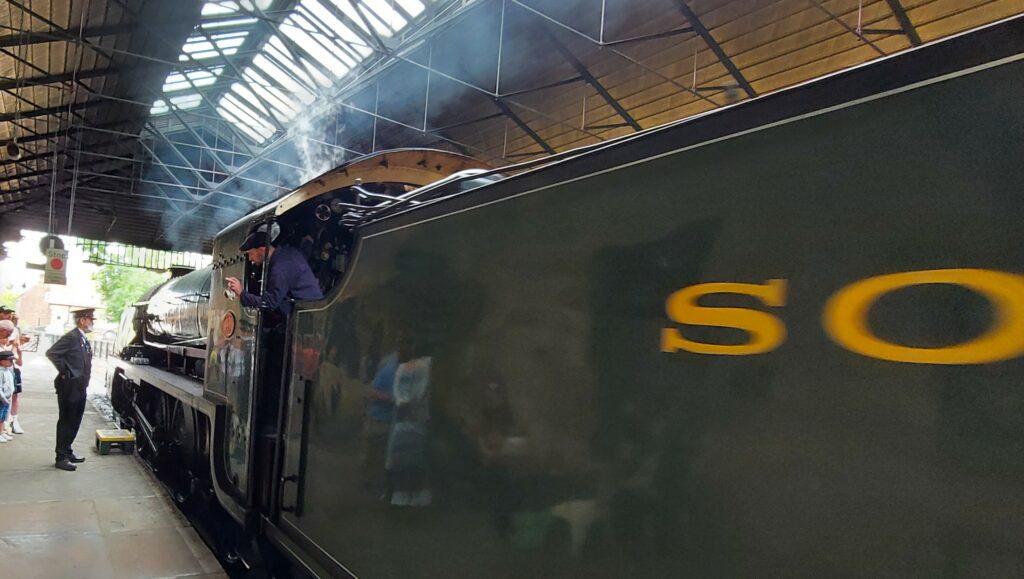
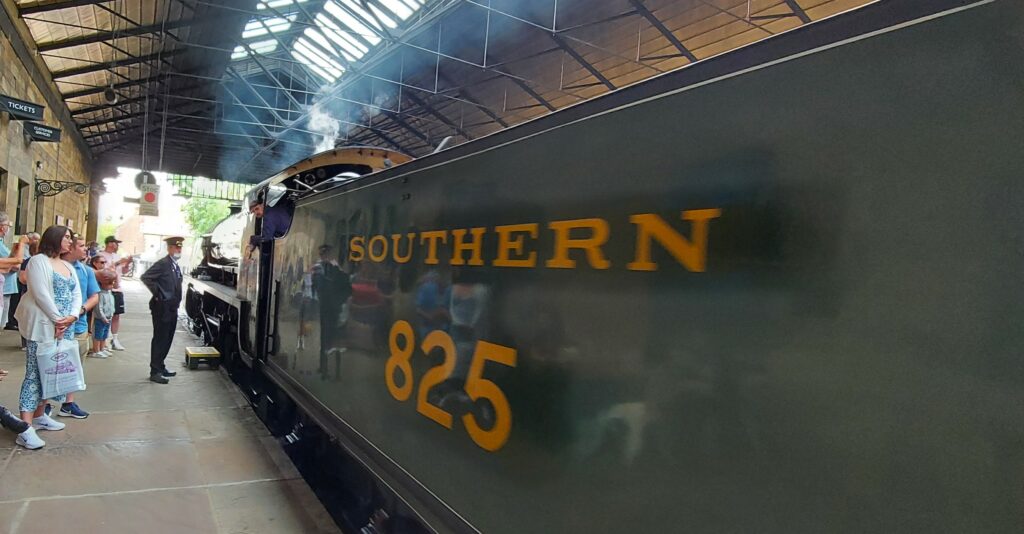
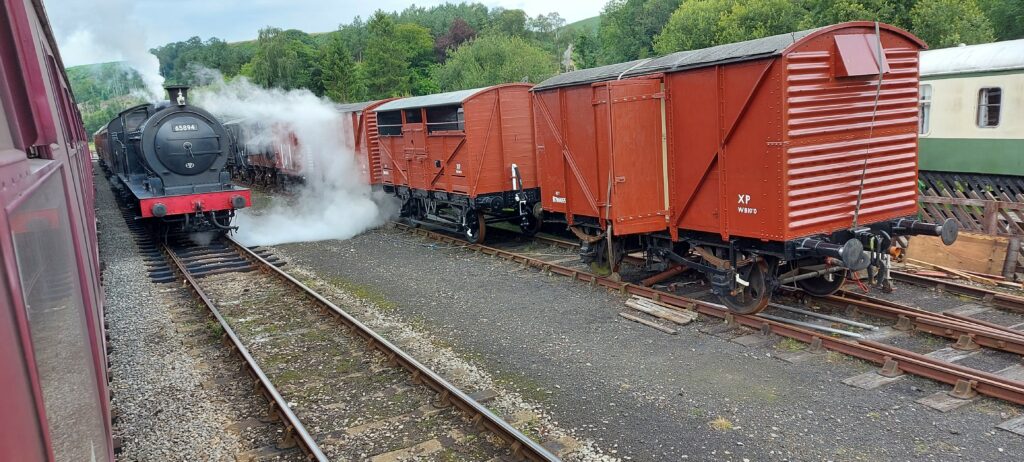
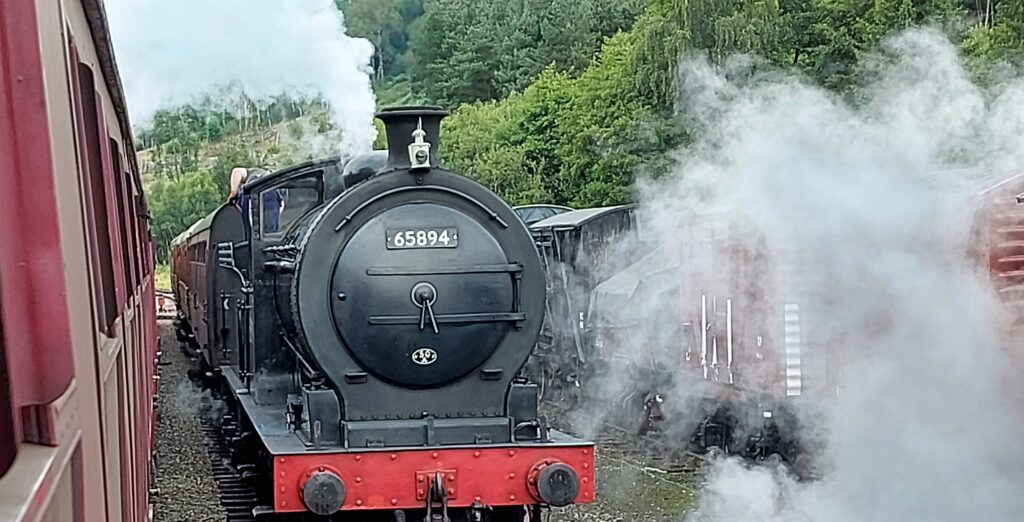
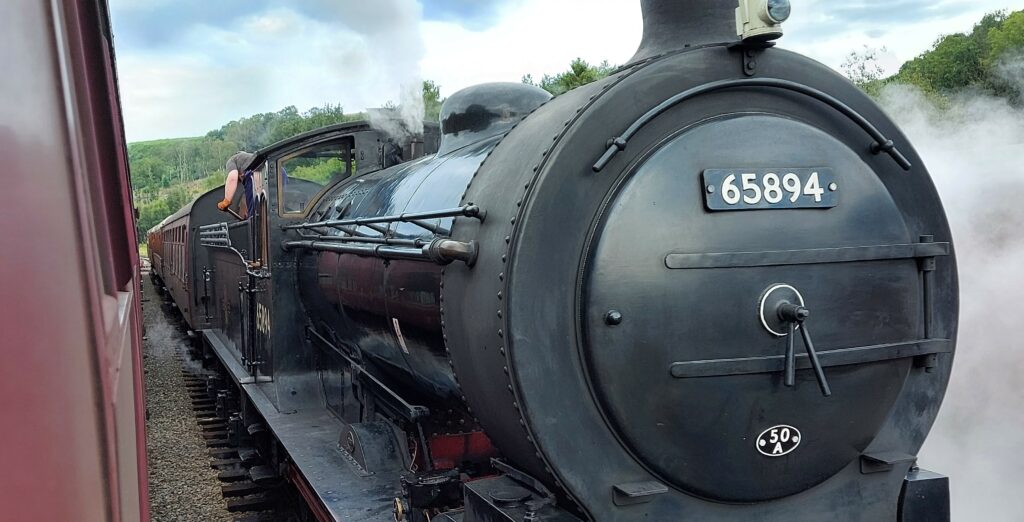
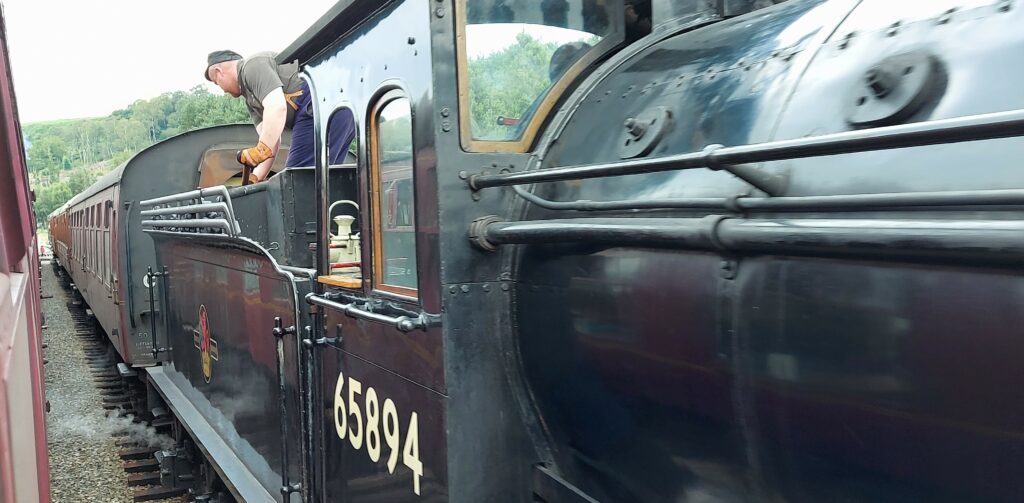
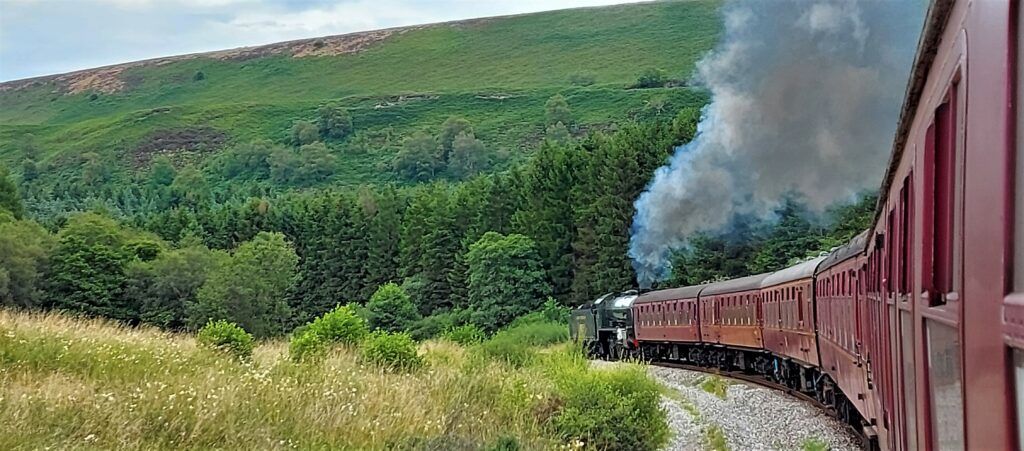
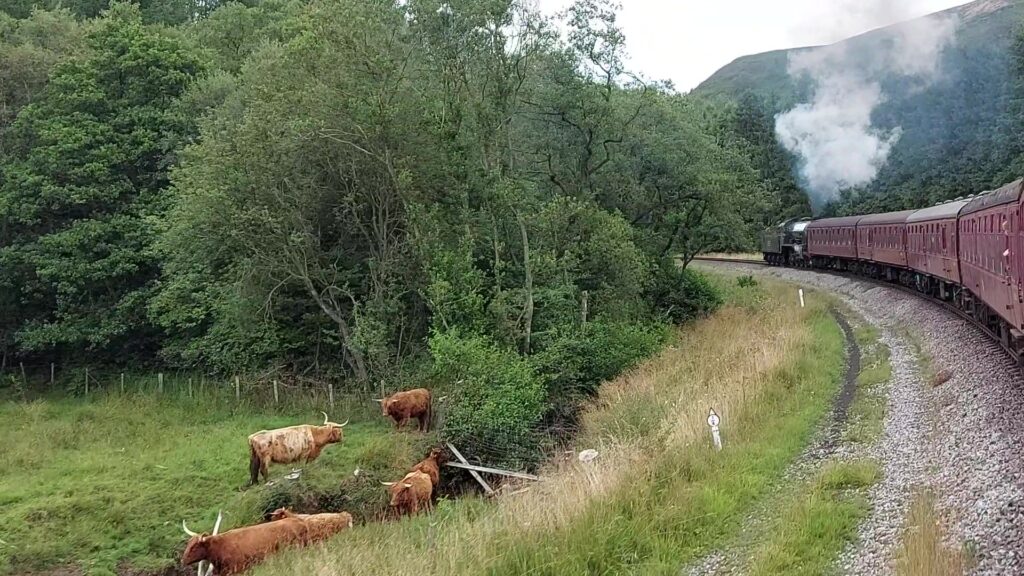
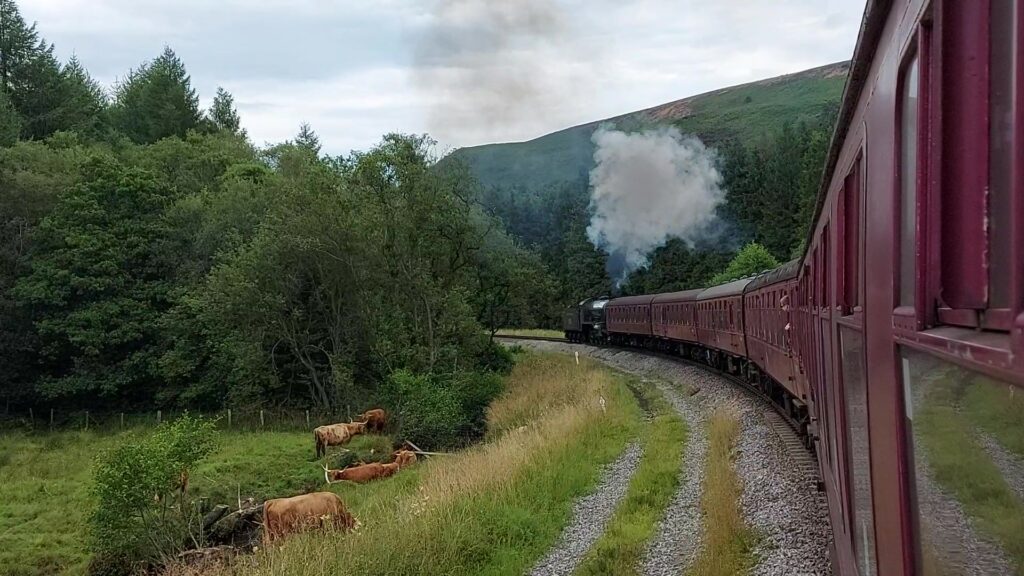
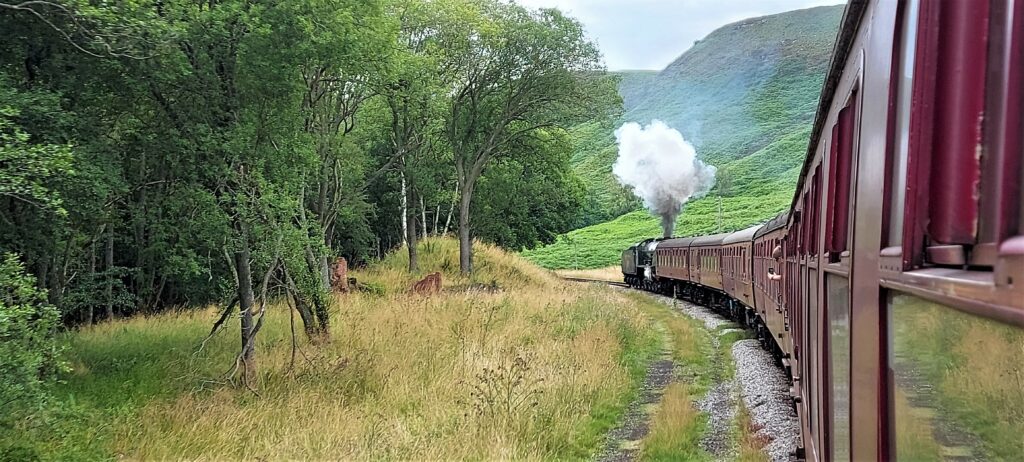
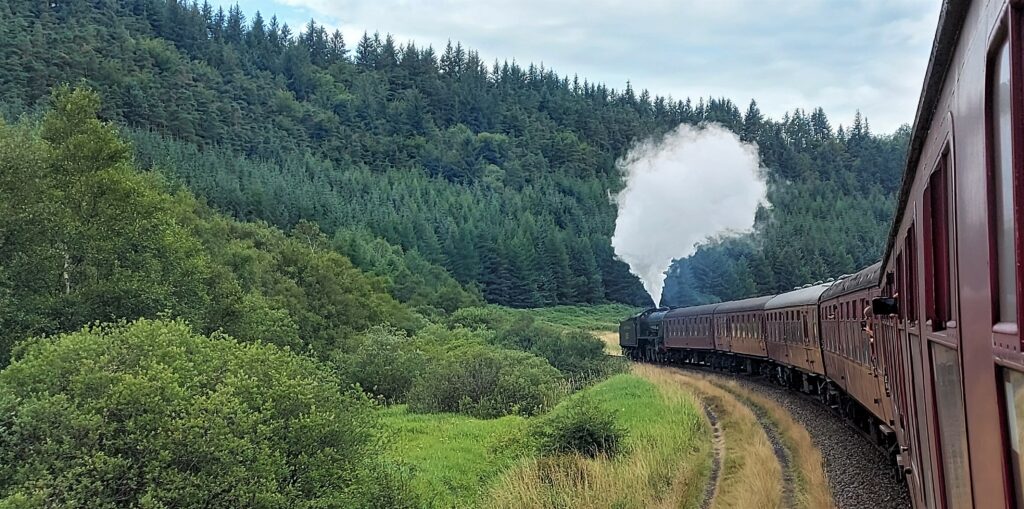
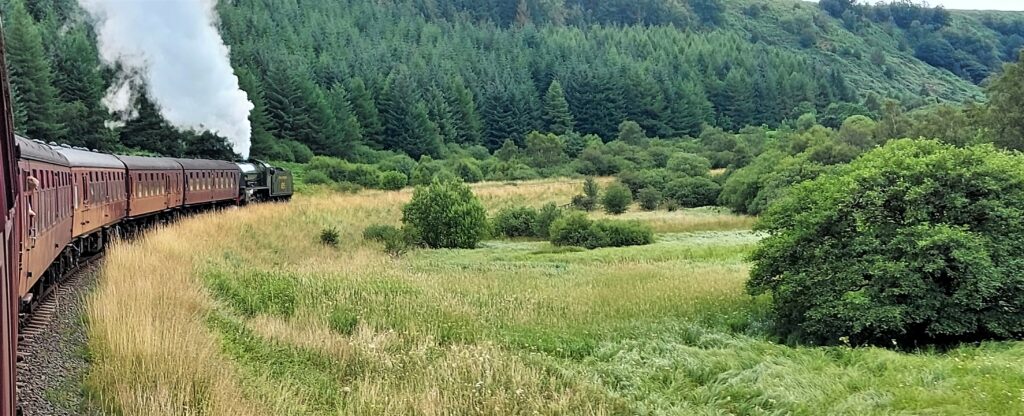
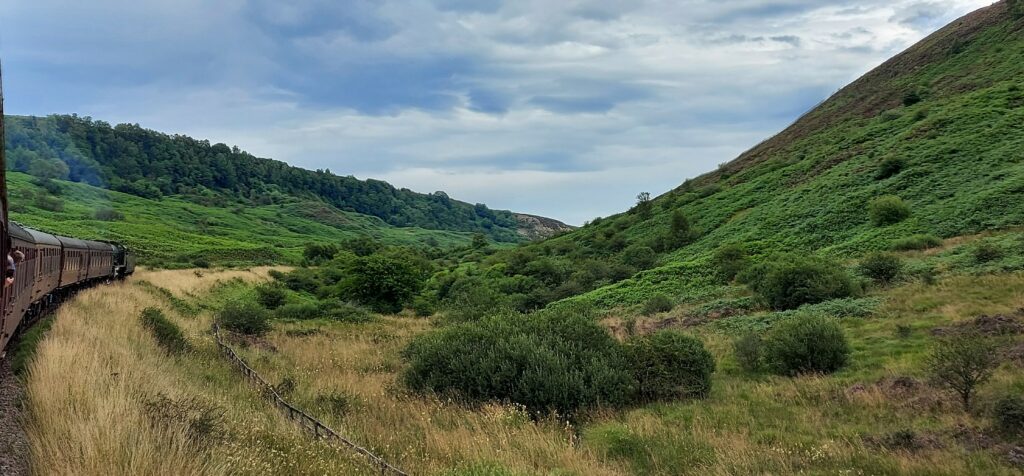
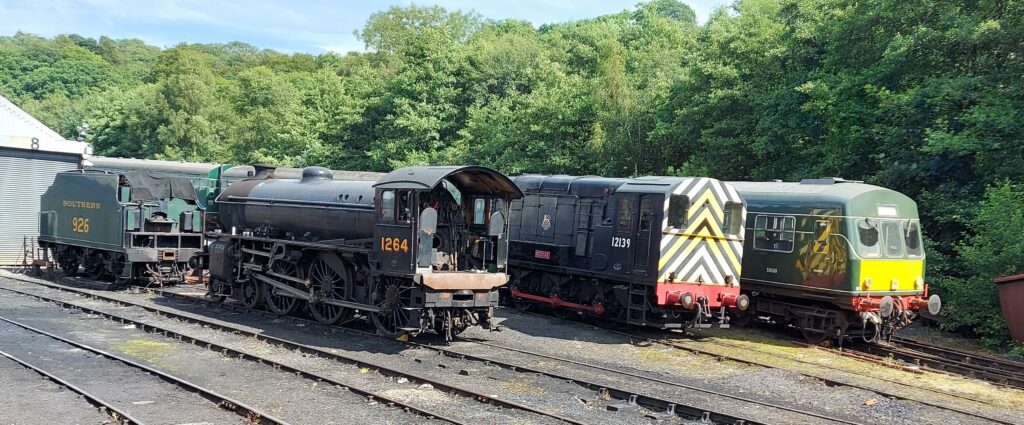
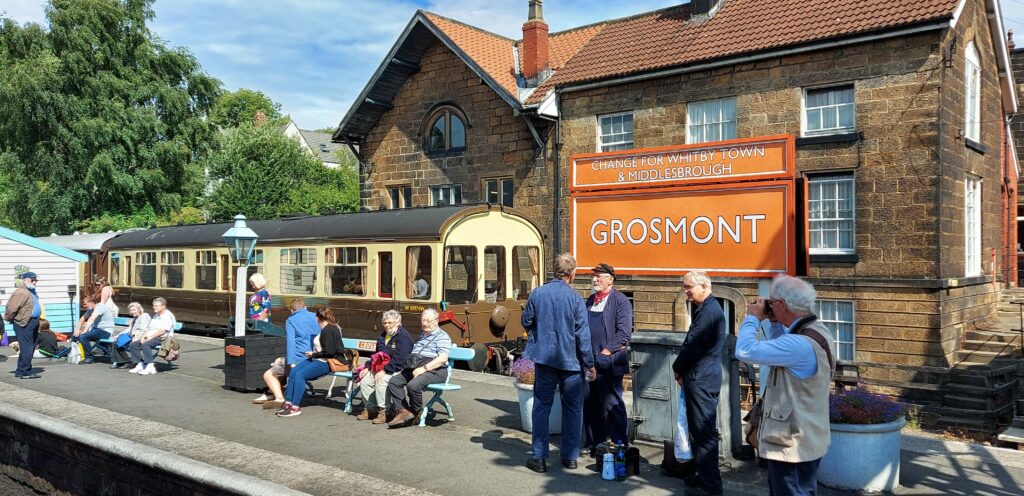
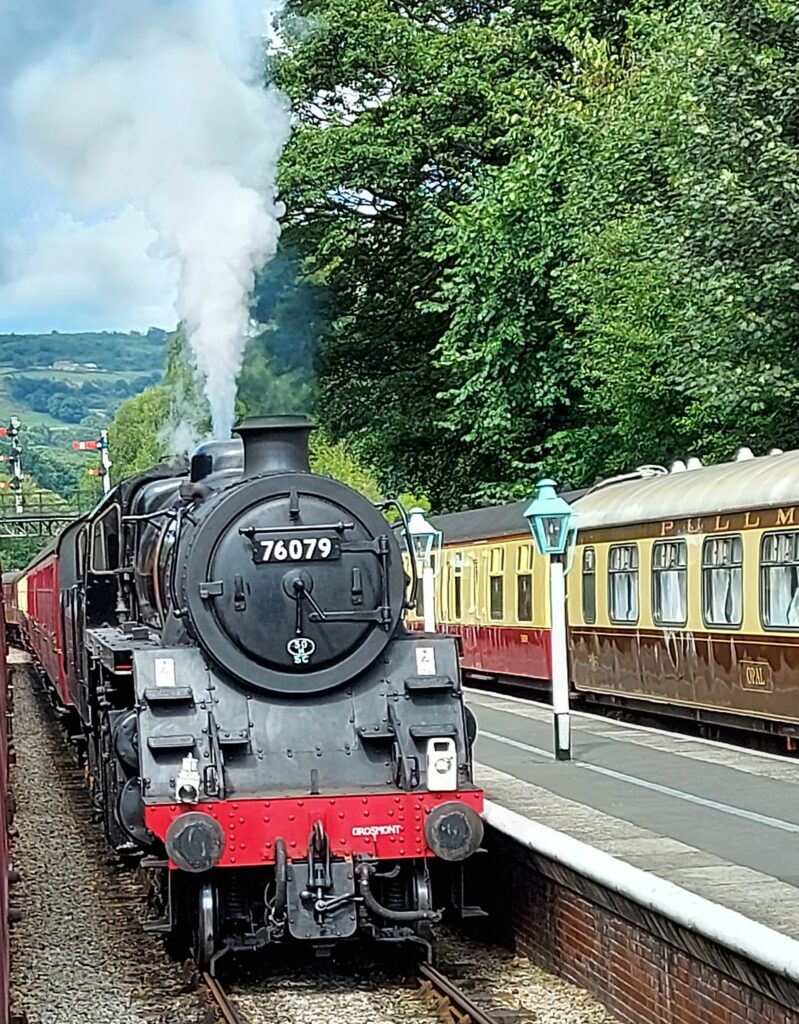
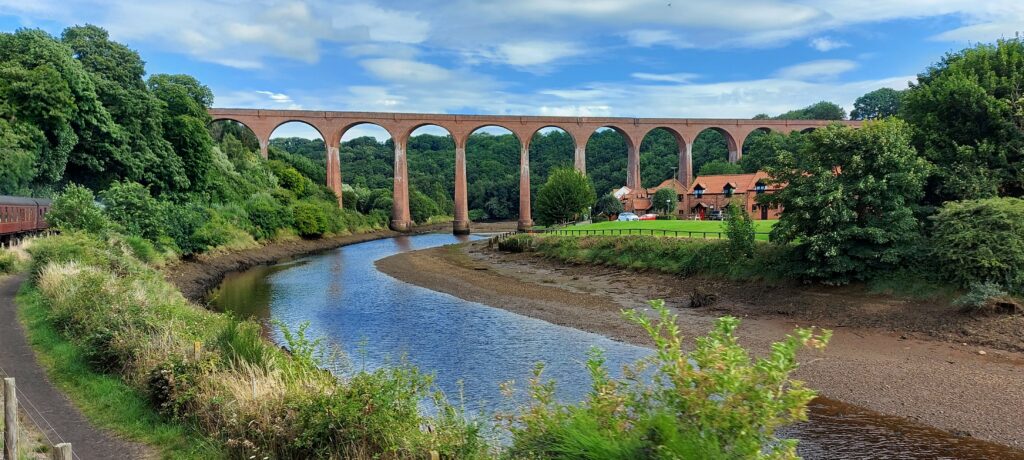
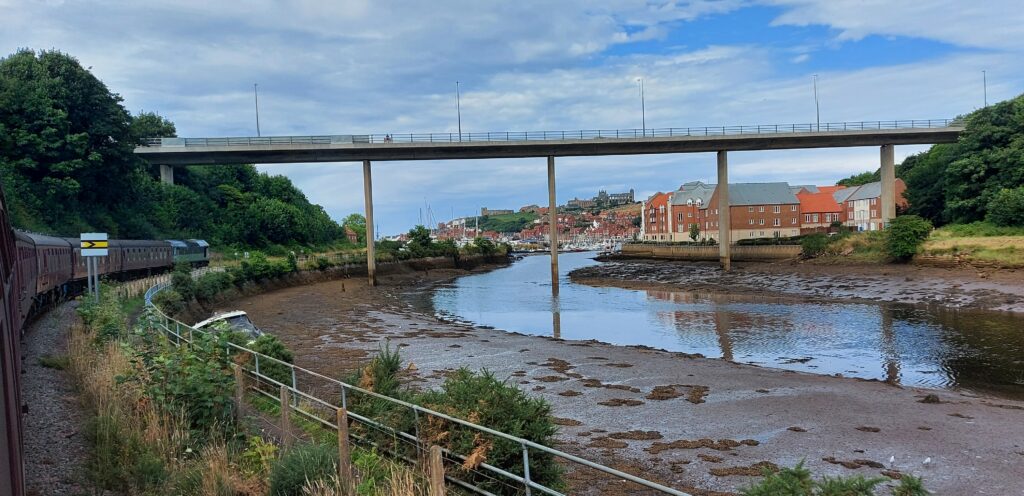
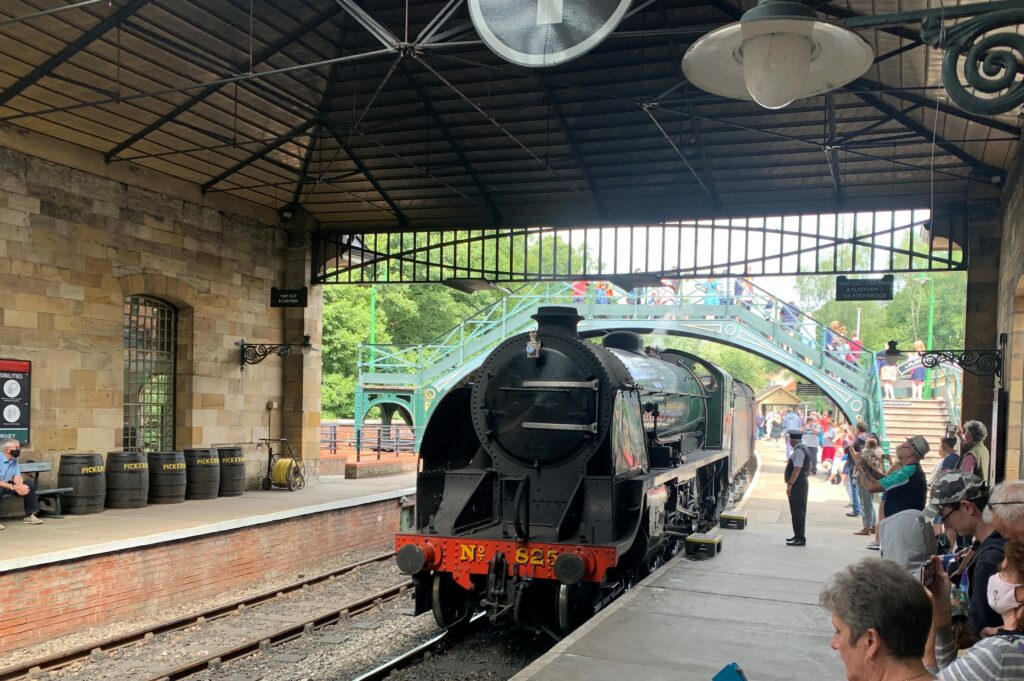
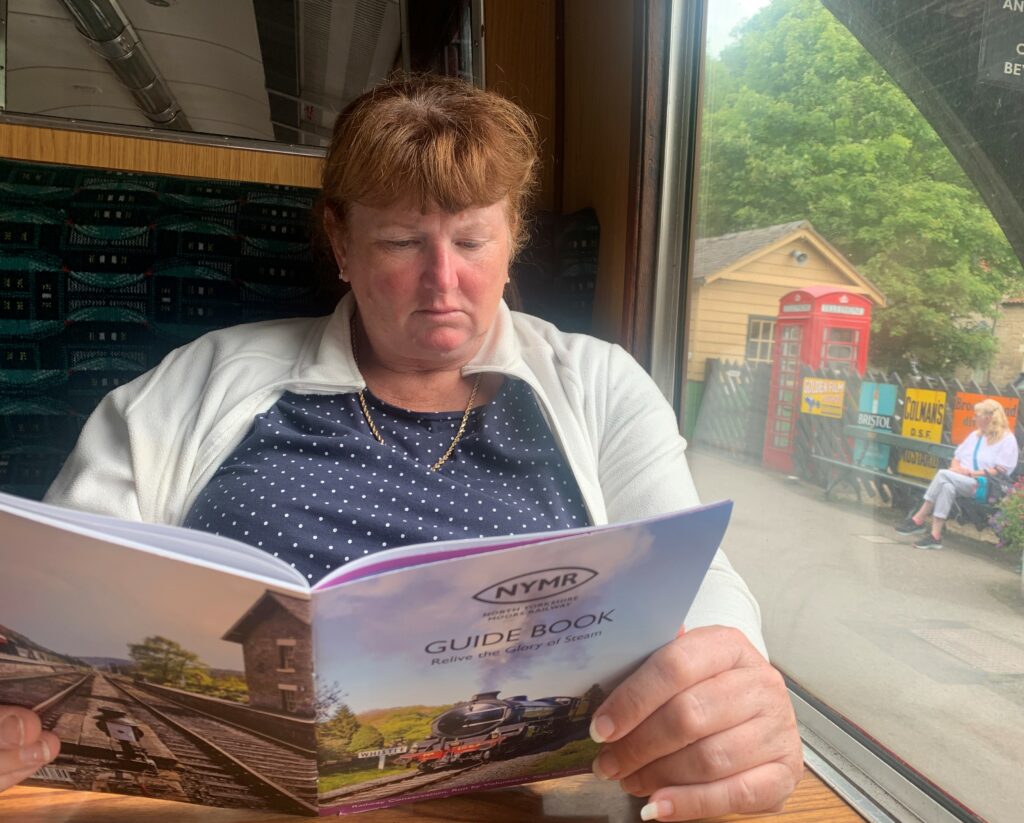
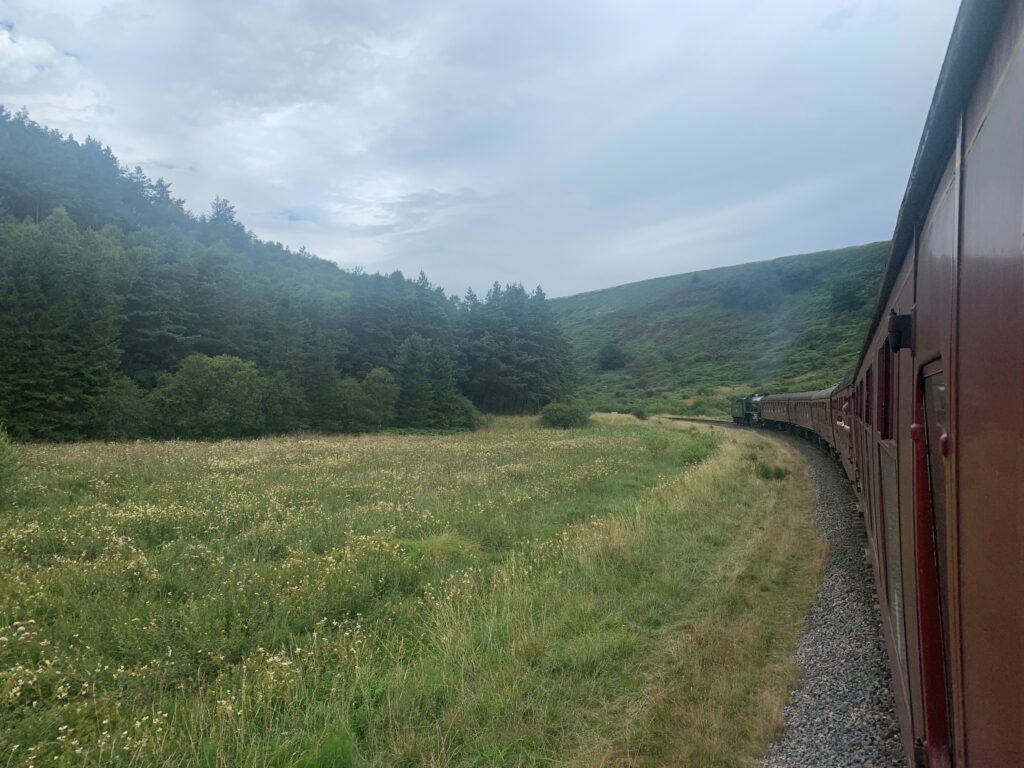
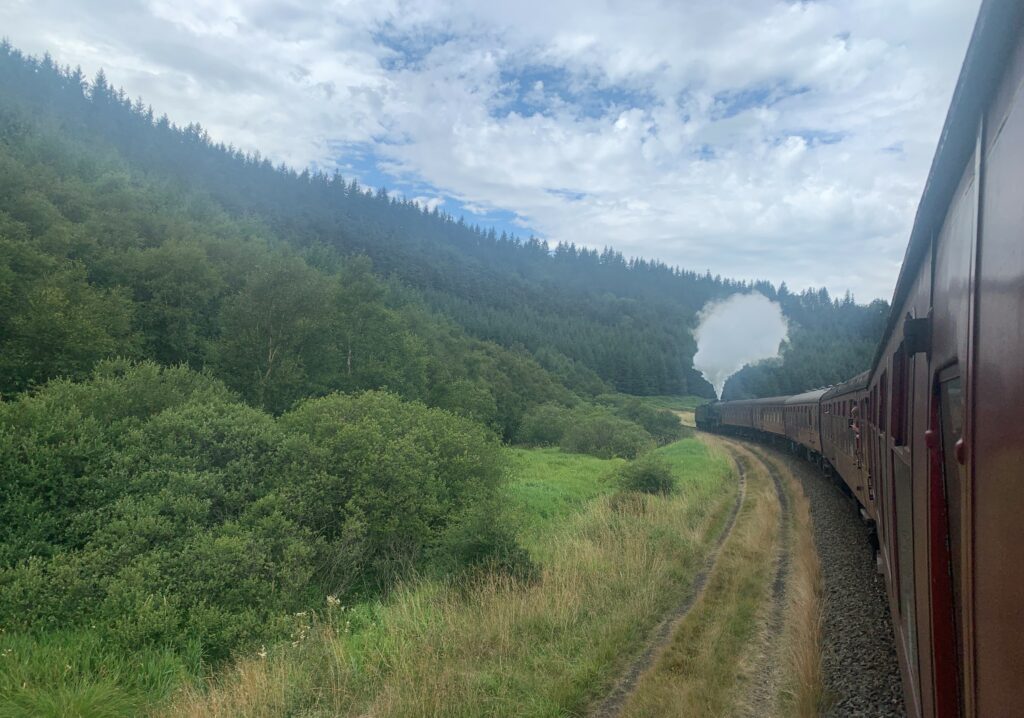
At the recommendation of our nephew Jack, (a HUGE steam fan) we took a day trip on the North Yorkshire Moors Railway, starting out at Whitby, stopping at Pickering and returning under a different engine to Whitby.
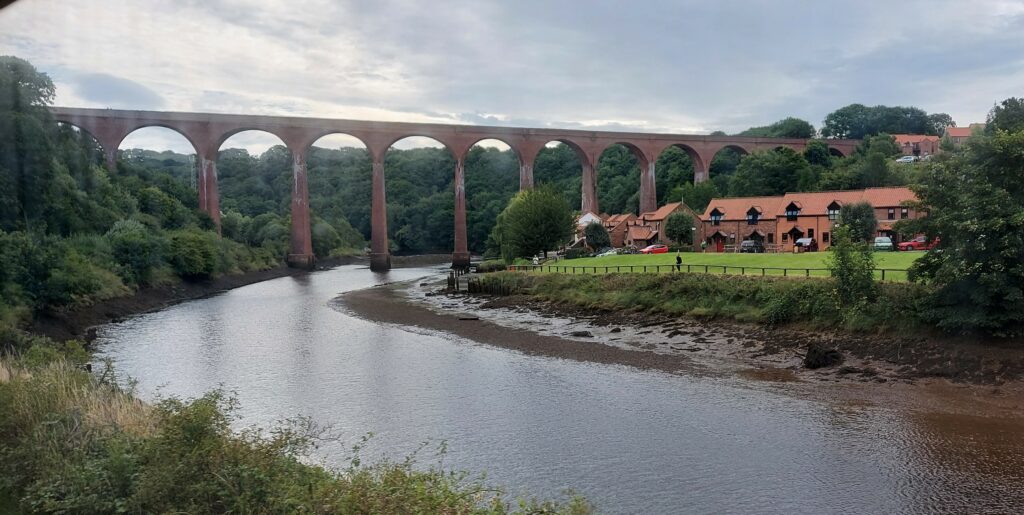
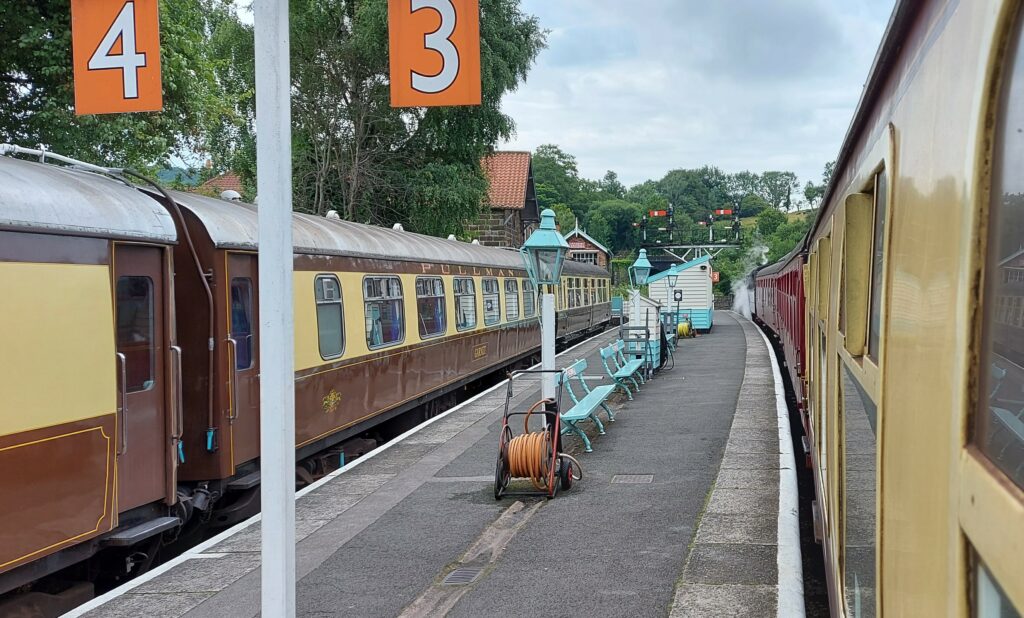
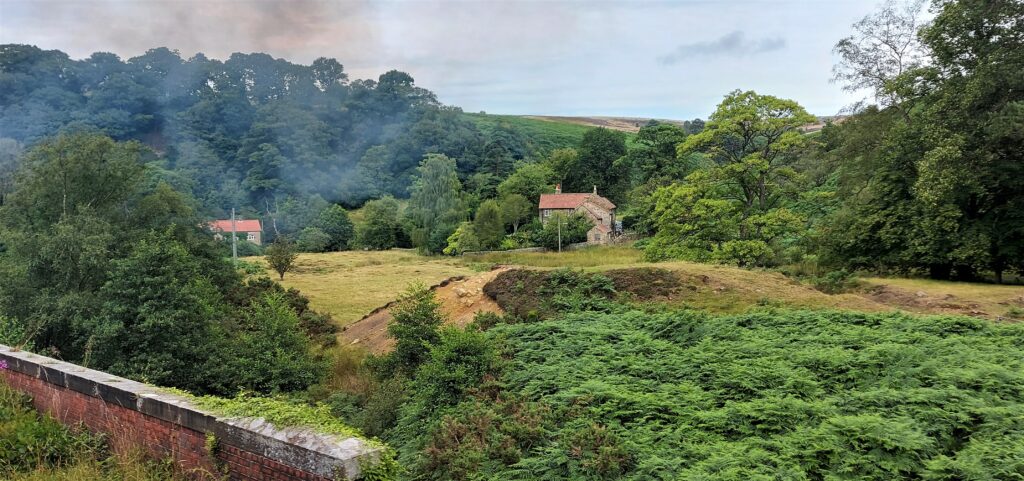
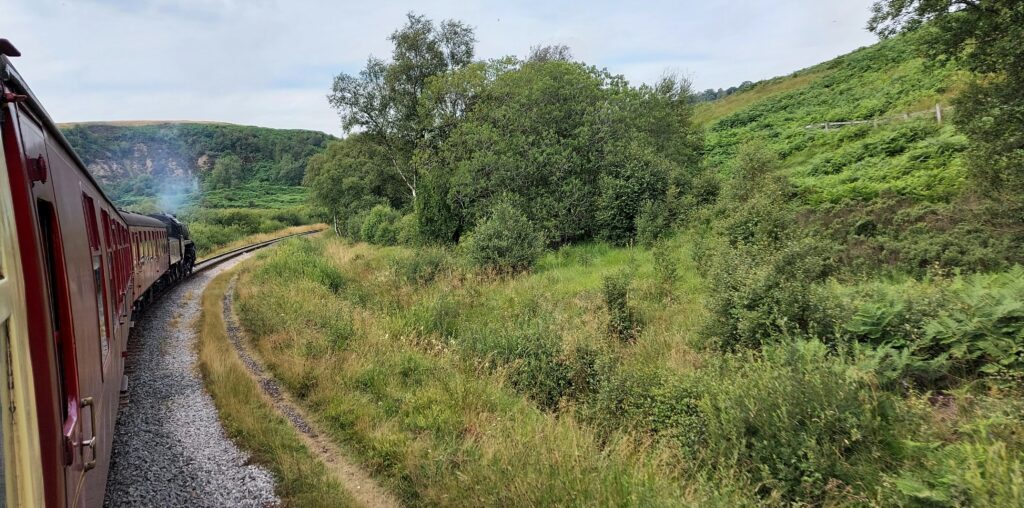
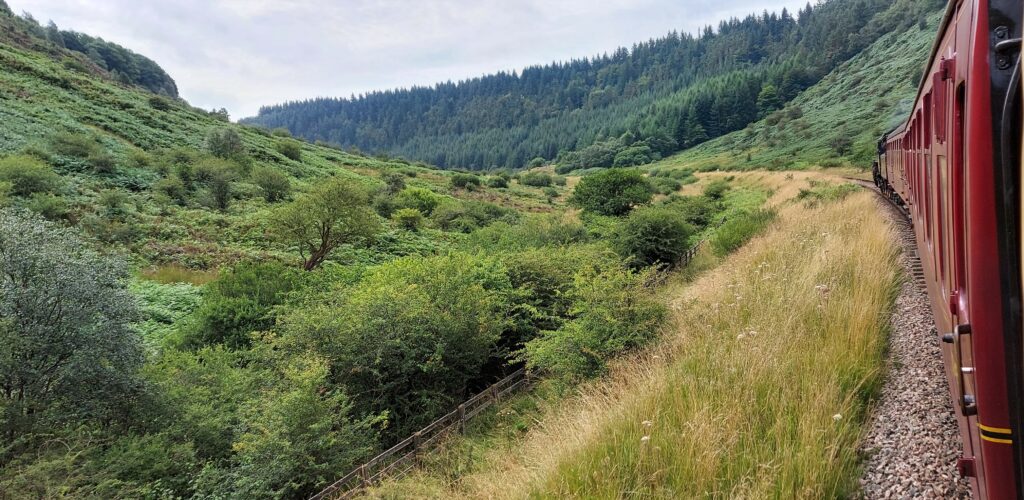
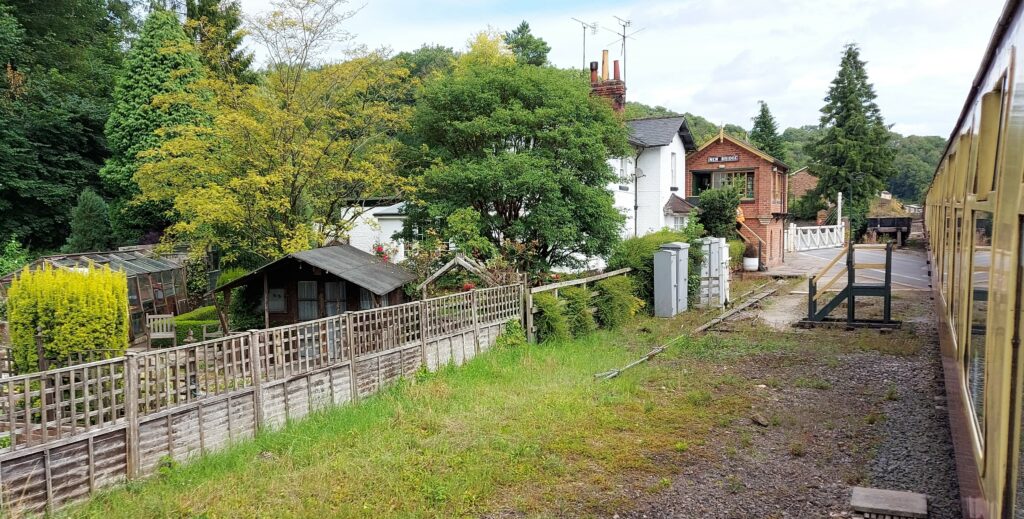
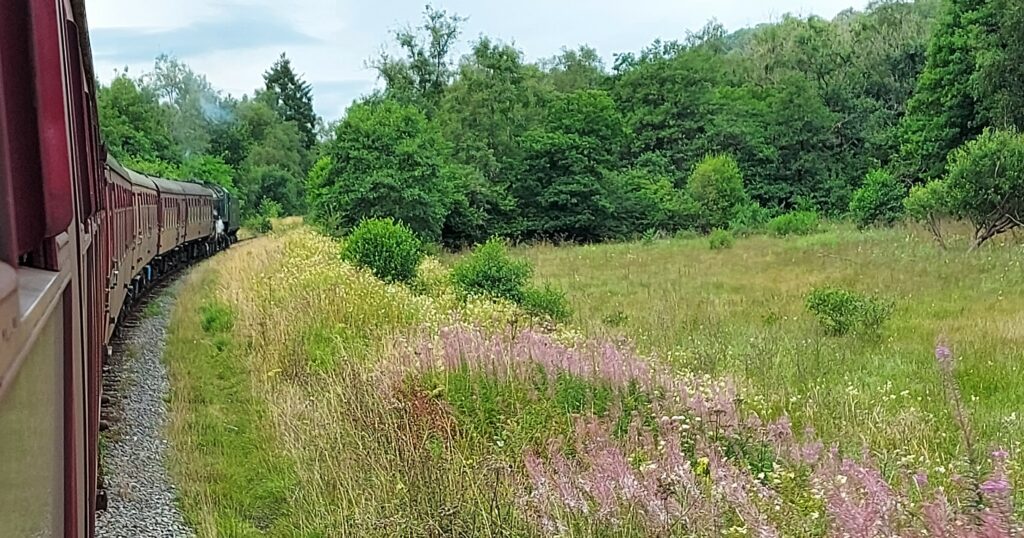
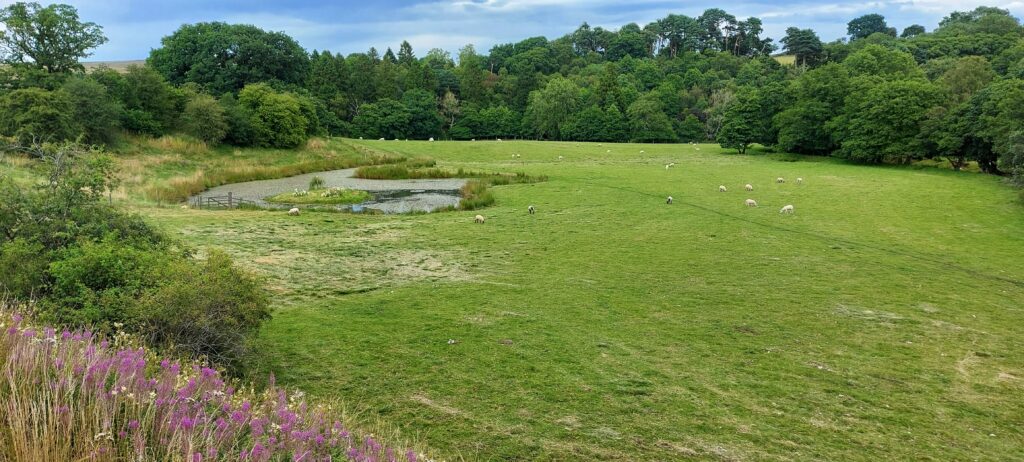
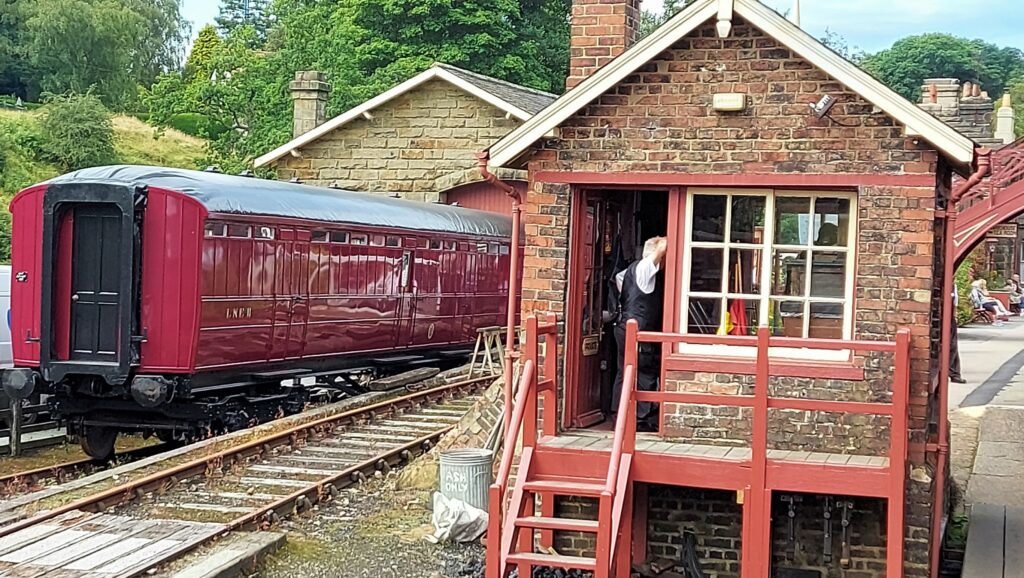
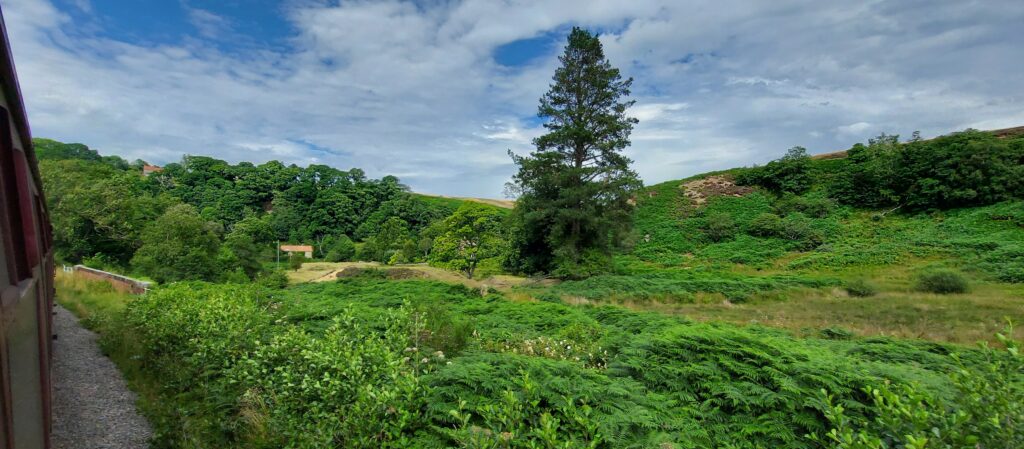
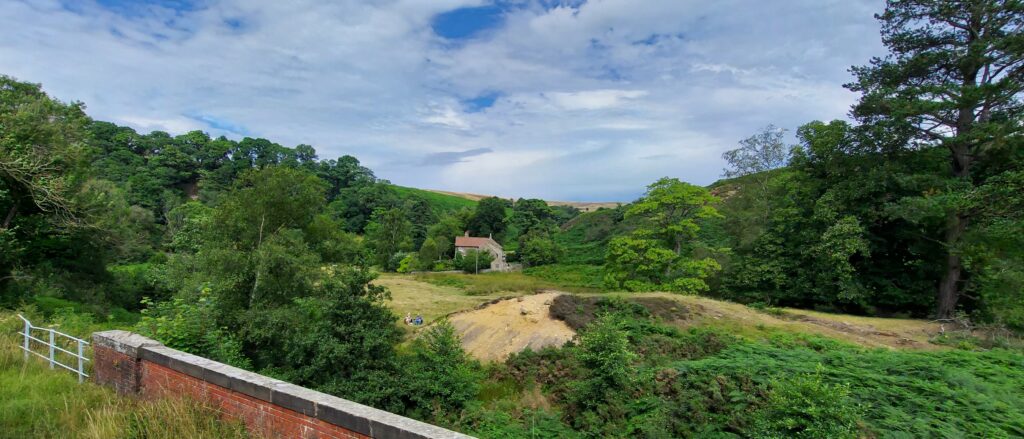
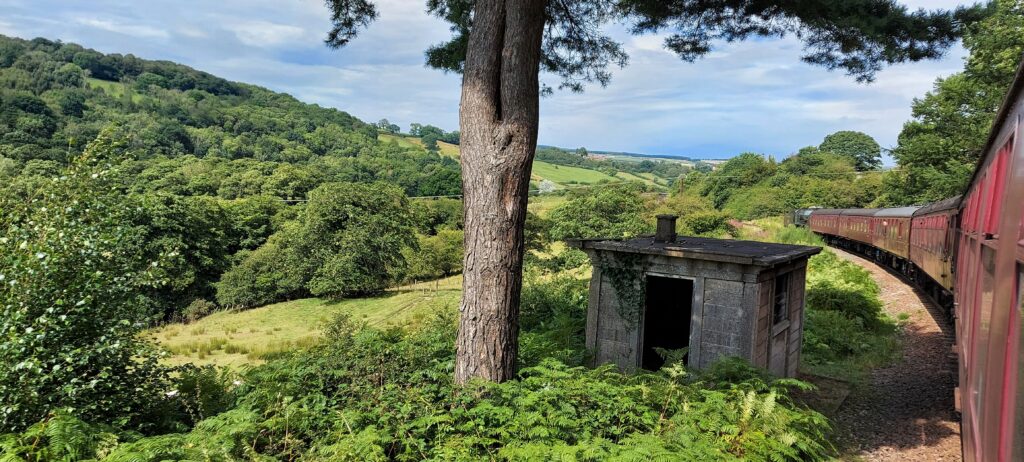
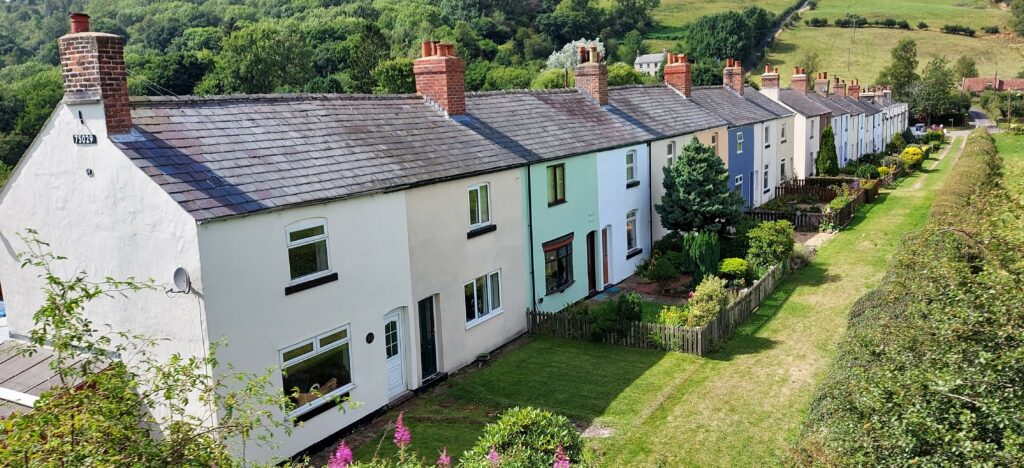
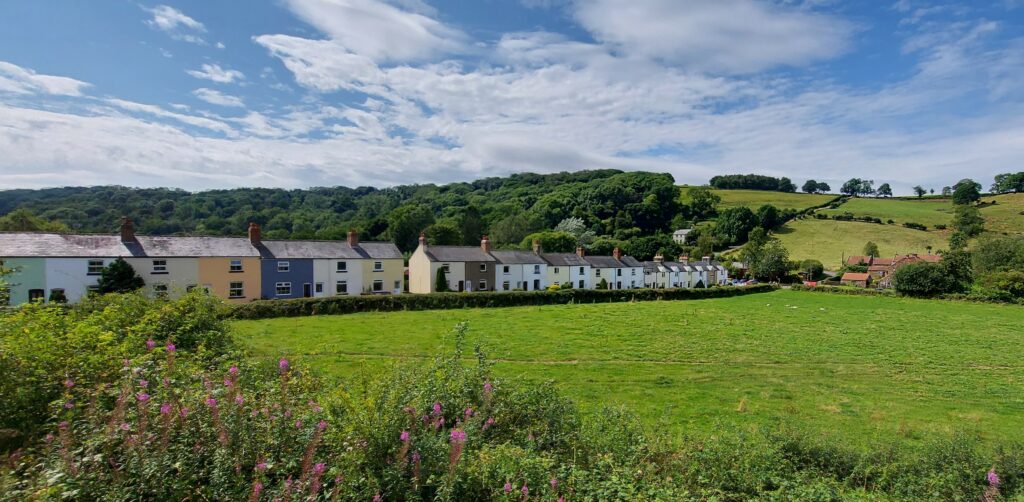
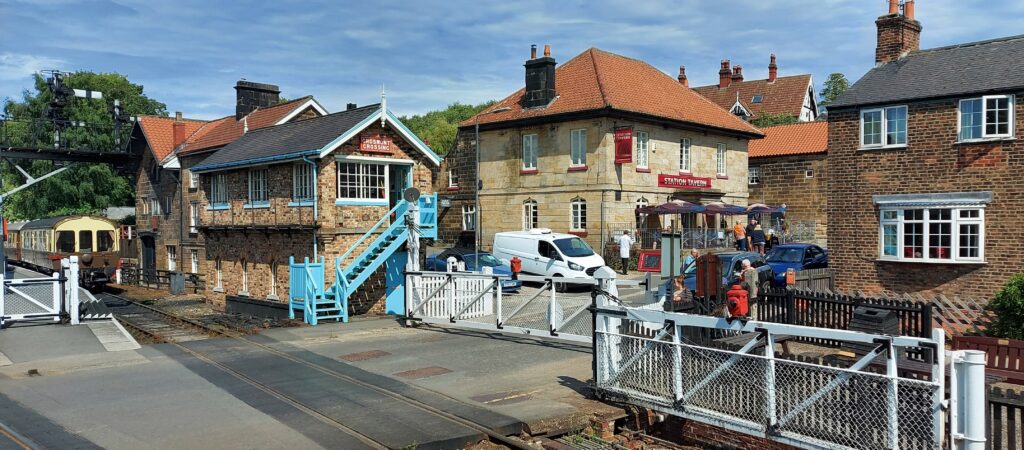
The scenery was spectacular, moors and forests, scarps and mountains, rivers and brooks, farmers fields with sheep and cows, antiquated station stops and railway worker’s cottages.
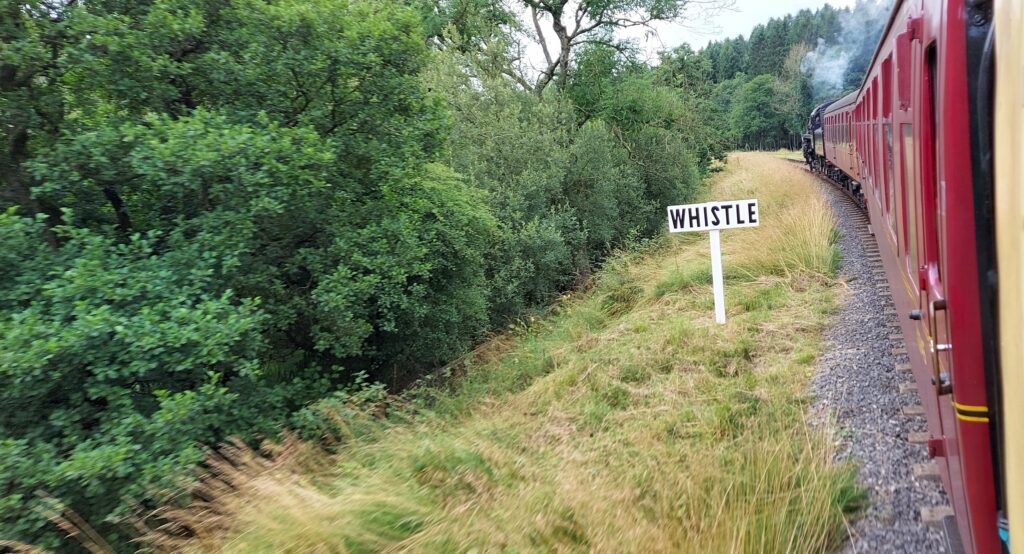
There is nothing better than the lulling sensation of a train, the soothing sound of the engine working faster to pull the carriages uphill then speeding up to go downhill and the toots of the whistle. I got off the train 5 hours later with a huge grin on my blackened face and a head full of sooty grit, a very happy person!!
I hope you enjoy these images, I can say no more. Lots of pictures I’m afraid 🙂
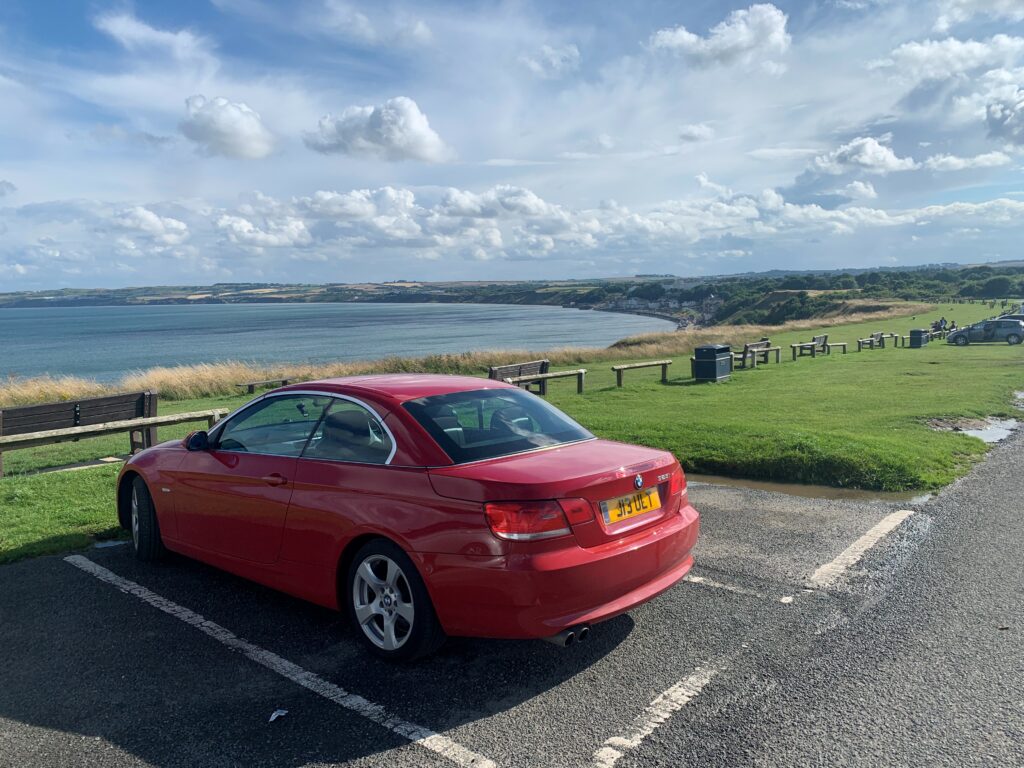
Bessy decided she wanted a trip to the East Coast, to see if the wind off the North sea was any warmer than off the Irish Sea. After a week, there is no clear winner, both are as freezing as the other! Benny was happier, several days were sunny so he was able to put the roof down and cruise the country lanes, some days it was just too windy!!
Filey
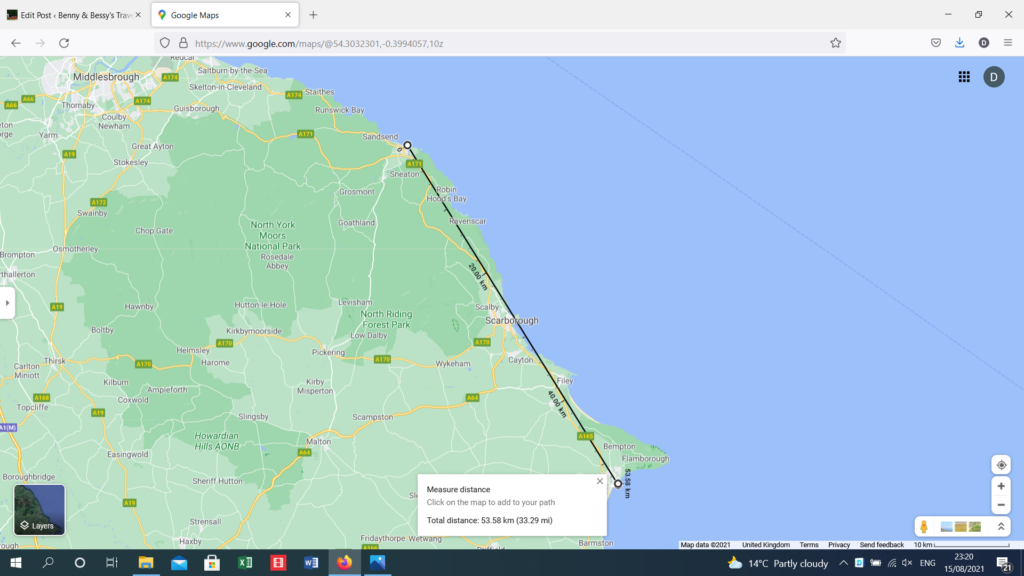
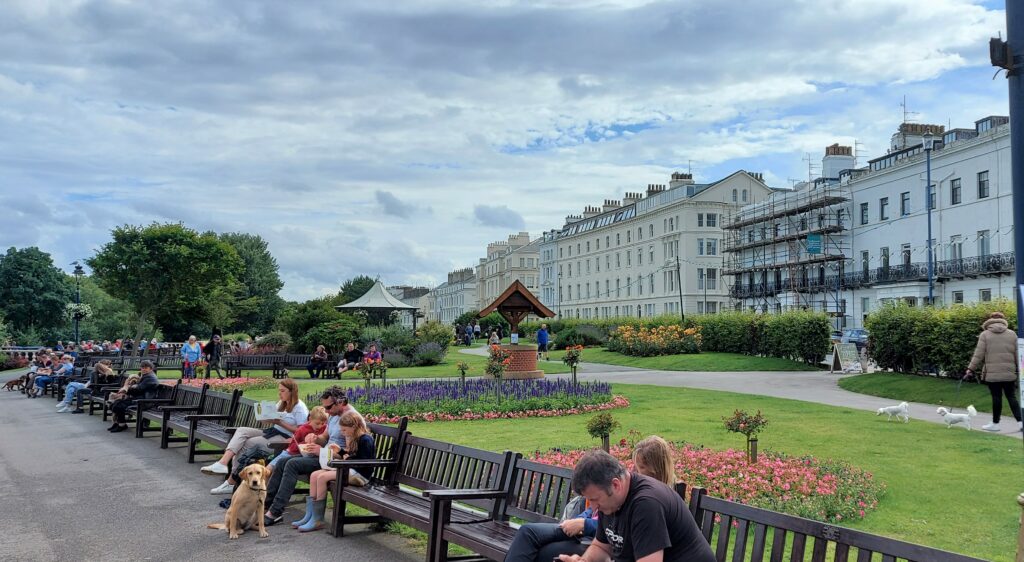
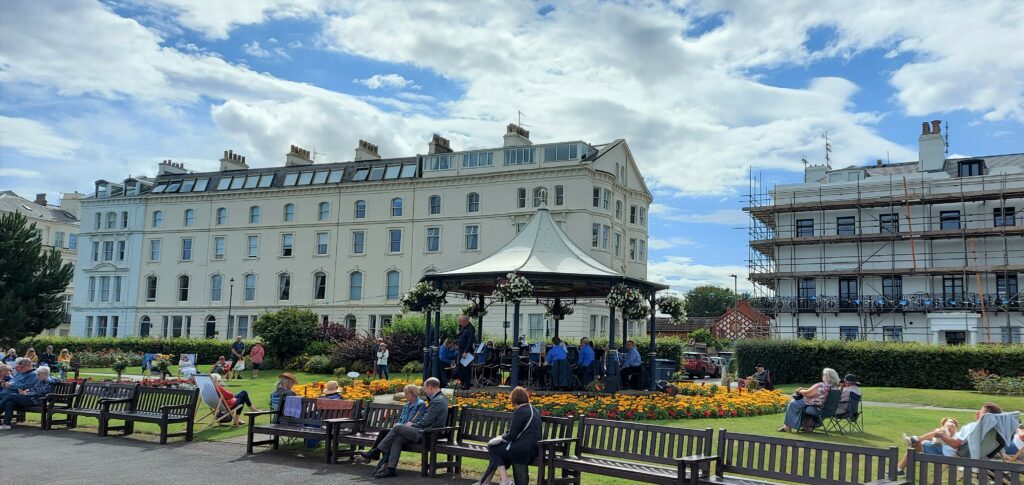
Our first day trip out was south to Filey, a quaint small seaside town, with traditional accommodation on a hillside village, with very little of the hustle and bustle of bigger coastal towns. We visited on a Sunday afternoon when the brass band was performing on the bandstand to a green full of people in deckchairs and on benches. Several coffee shops were open so we had to indulge in tea and cake!
Traditional gardens
Fantastic Sunday brass band
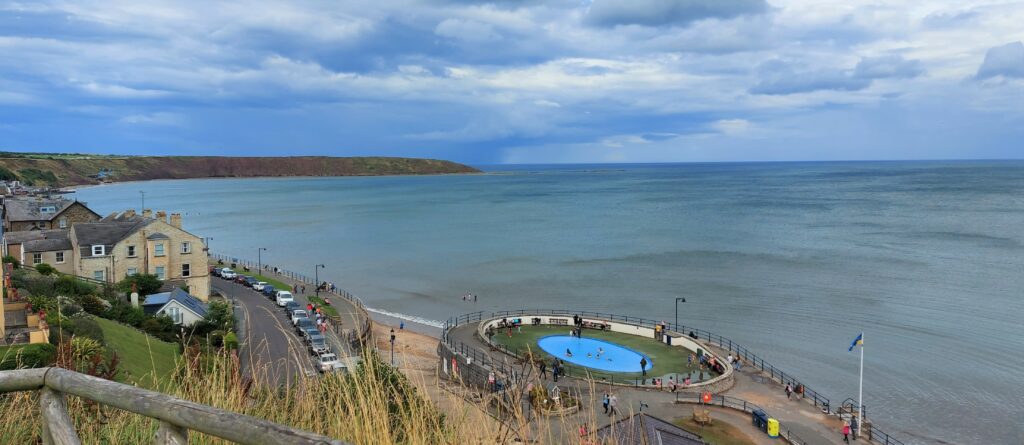
Overlooking the paddling pool and beach
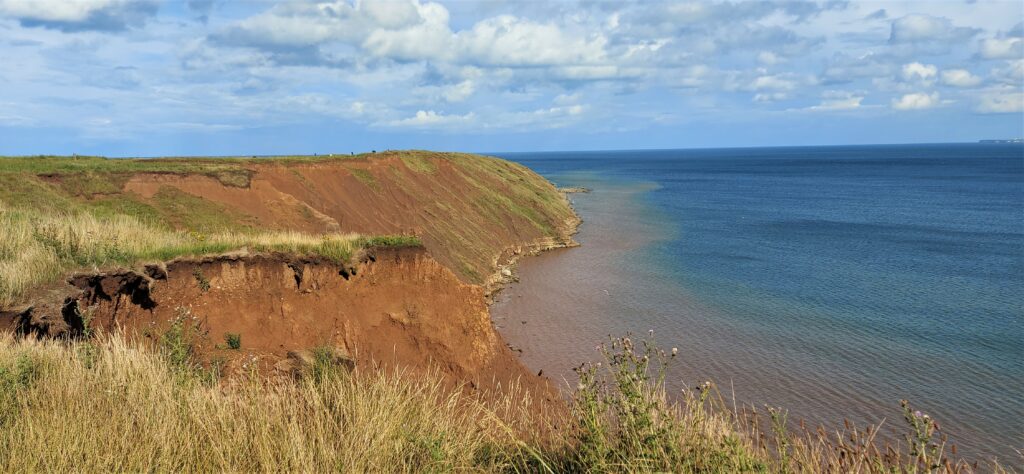
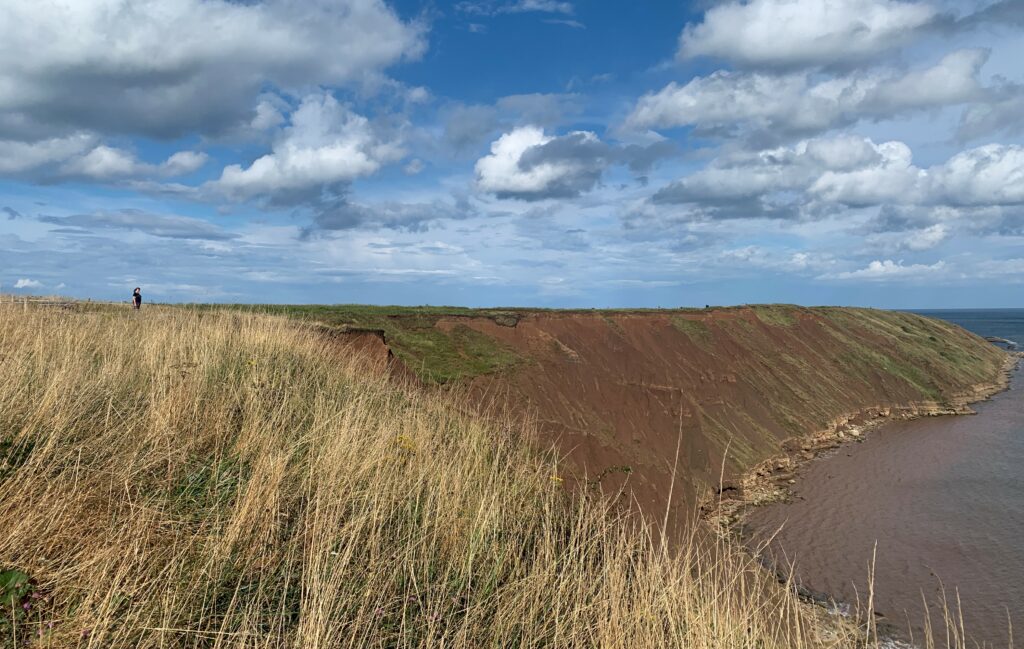
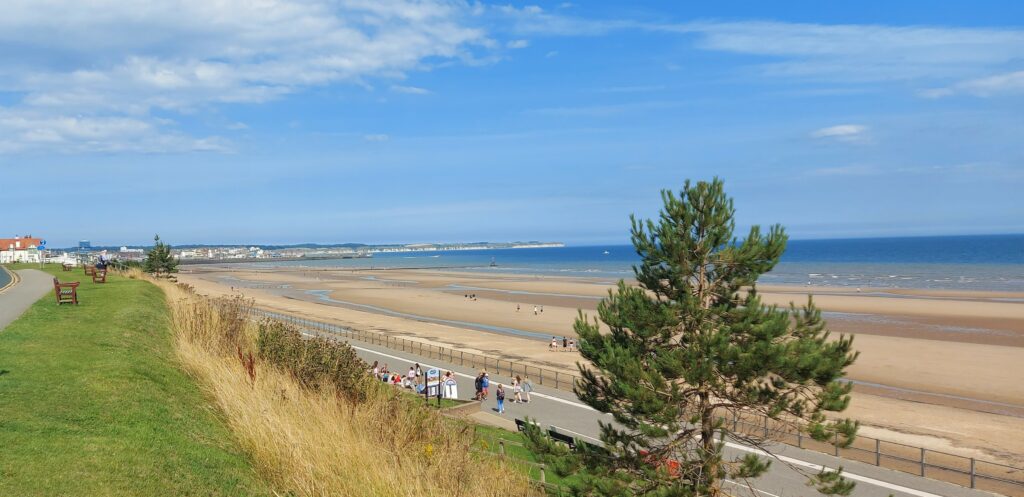
Beautiful coast line
Bridlington
Further down the coast from Filey was this small town, nicknamed the “Lobster Capital of Europe”.
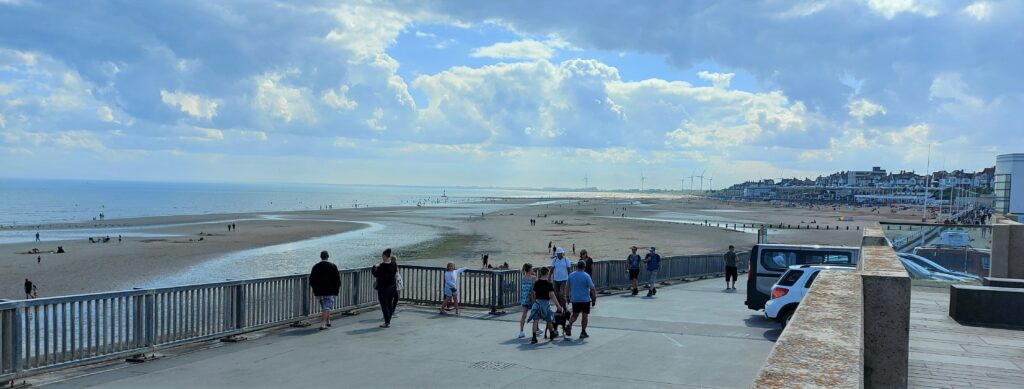
This place is a working fishing village but more famously known for its stunning beaches, child heaven!! We briefly stopped here, just to admire the coastline.
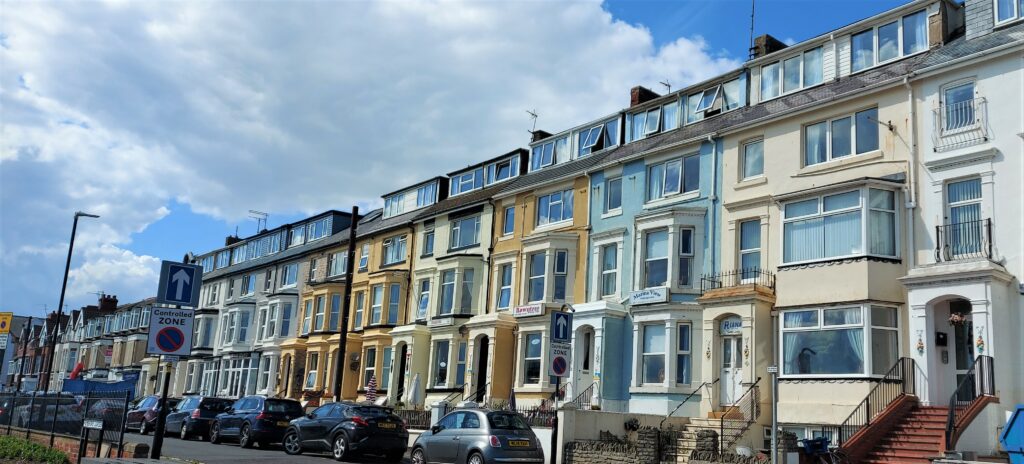
Traditional Guest House Alley!
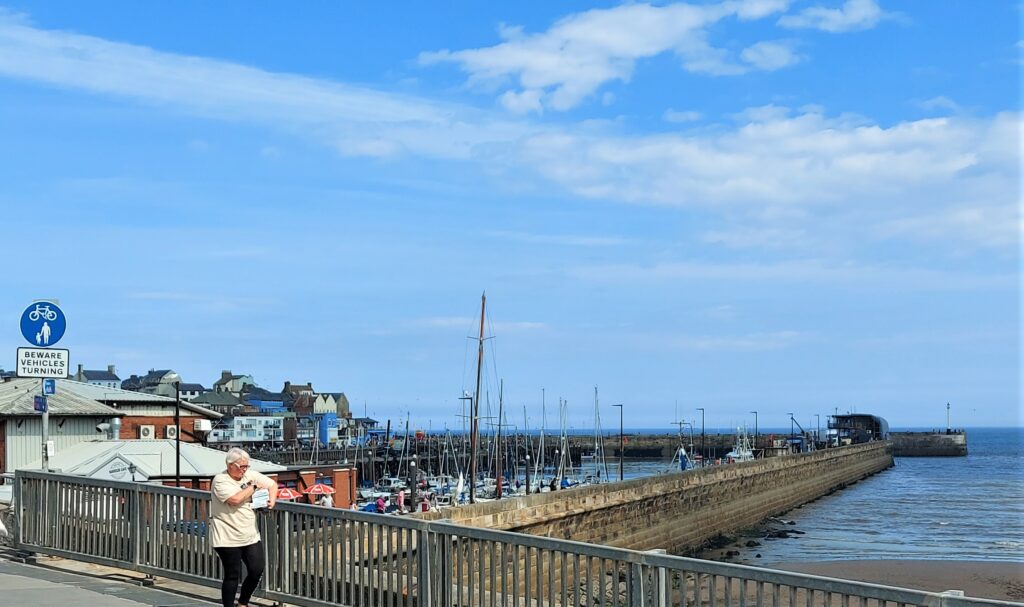
The old port
Flamborough Head – Seal Spotting!!
No trip to this side of the coast is complete without a stop at Flamborough Head, well worth the small parking fee to blow away any cobwebs, spot the basking seals and admire the fabulous coastal scenery.
Flamborough Head is a high point of land that juts out into the sea, 8 miles long on the Yorkshire coast, it is a chalk headland with sheer white cliffs. The cliff top has two standing lighthouse towers, the oldest dating from 1669-74, making it the oldest lighthouse in England. It was made from chalk but it was NEVER lit! Flamborough Head Lighthouse (no 2) is a working structure and was finished in 1806. You can still see it working today.
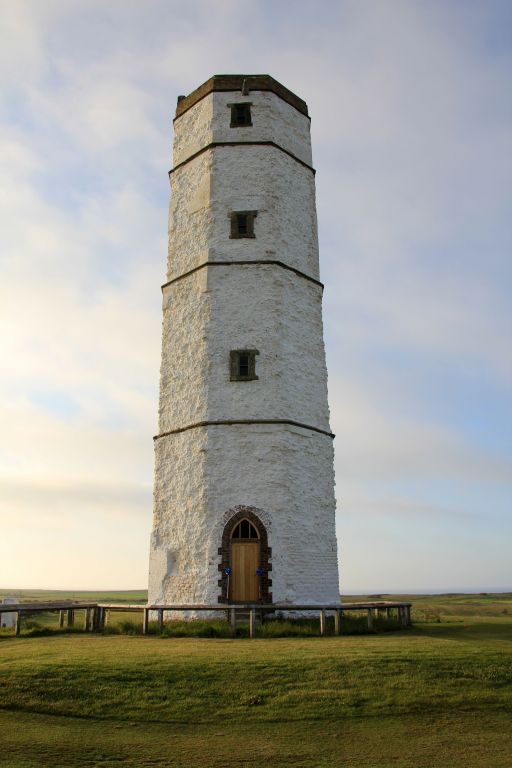
The original chalk lighthouse
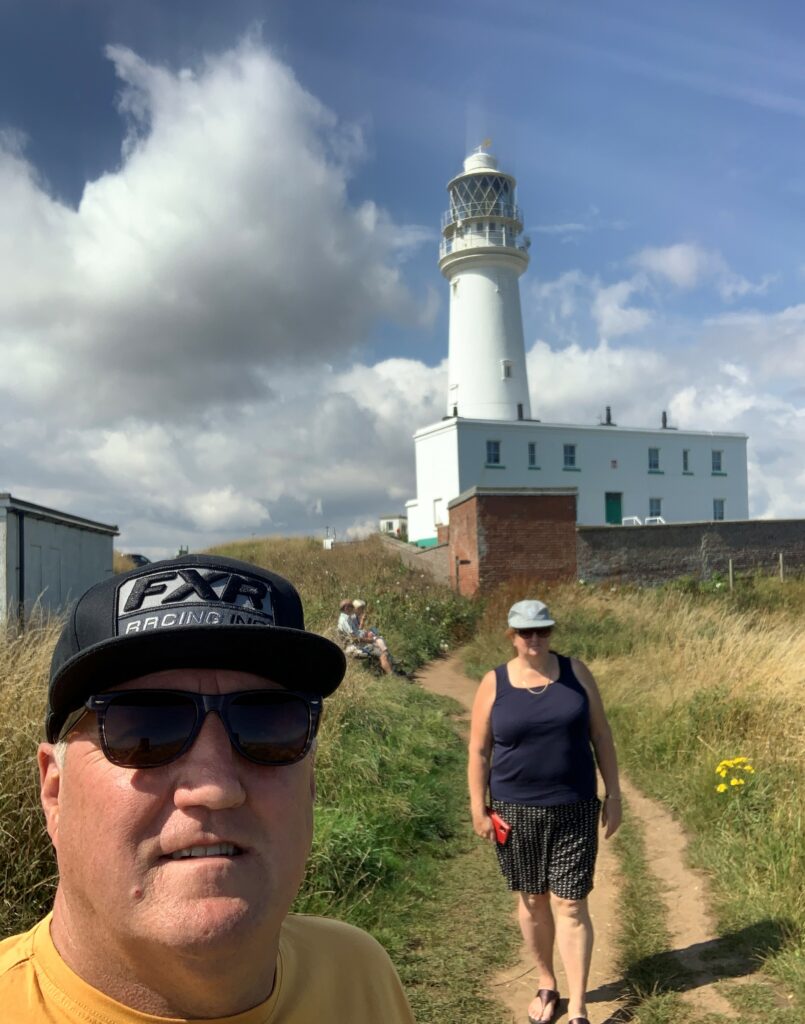
The current working lighthouse
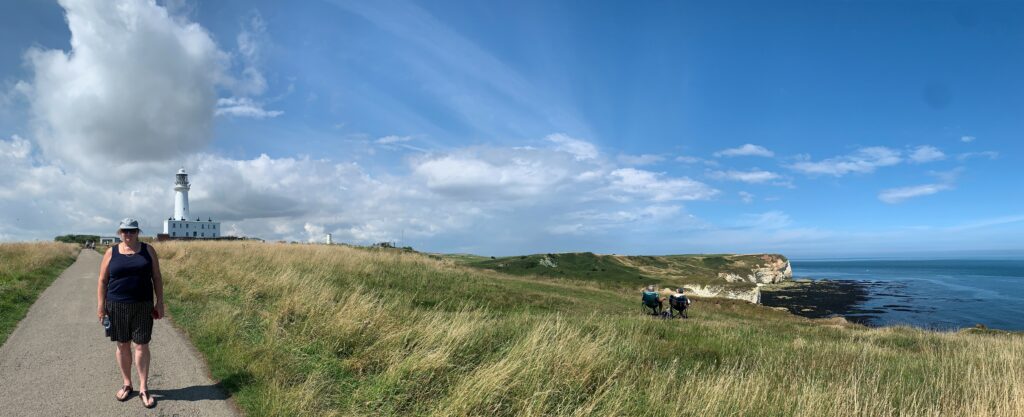
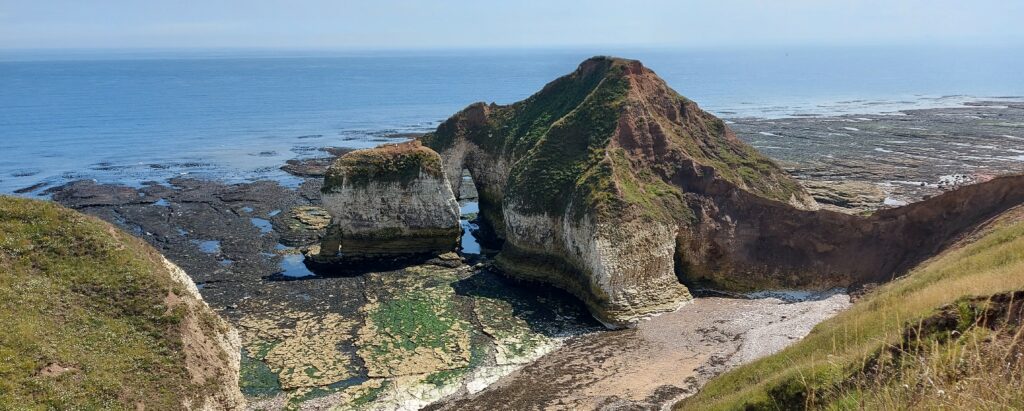
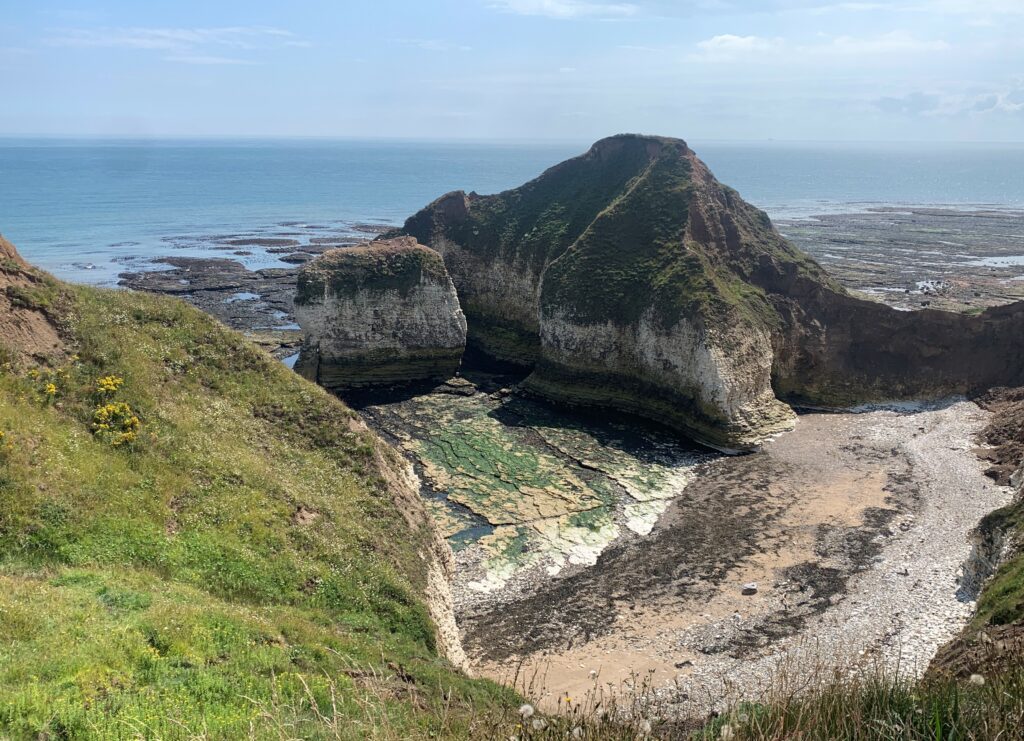
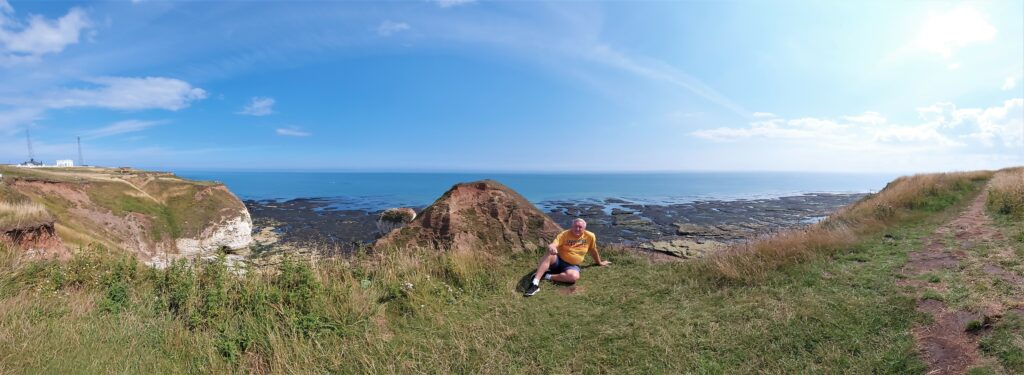
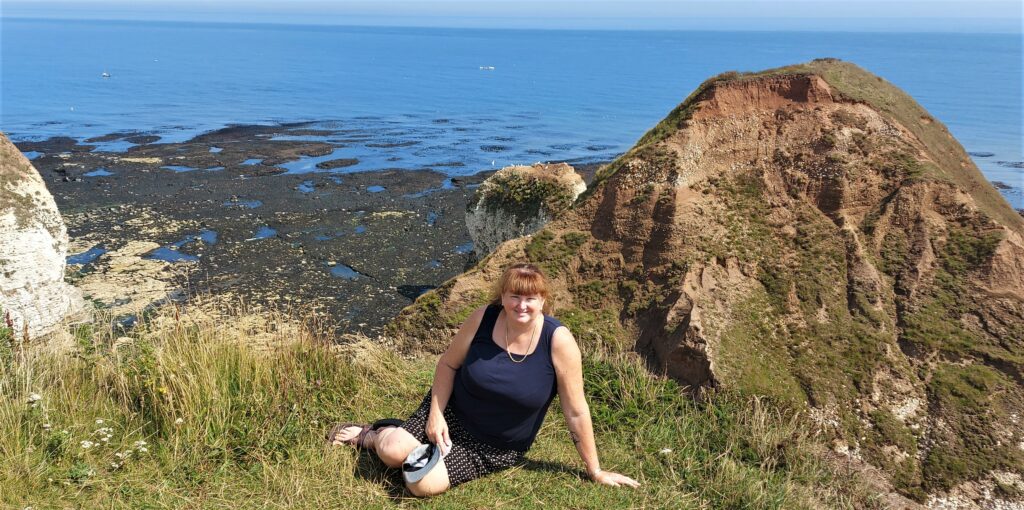
The scenery here was amazing, this formation is called “the drinking dragon” – when the tide is in and at the right angle it looks like a dragon drinking from the sea. Its “tail” has steep paths down to the beach but no-one was heading down there as there were seals nearby!
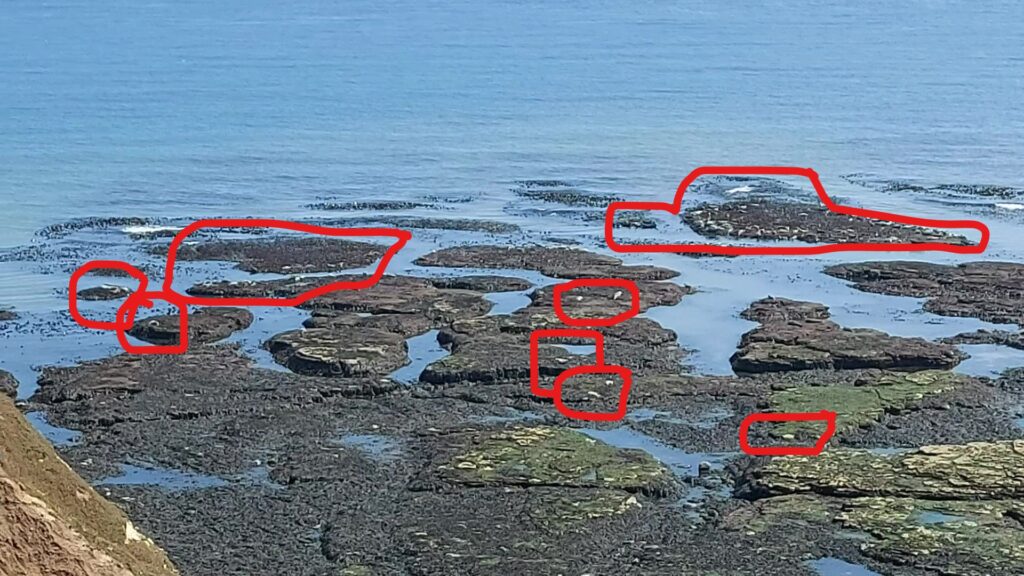
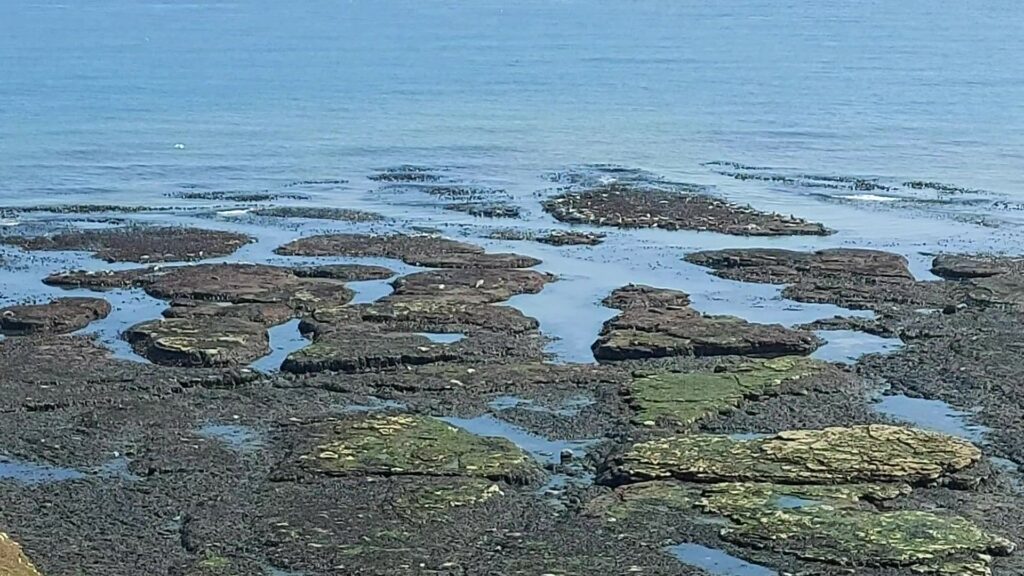
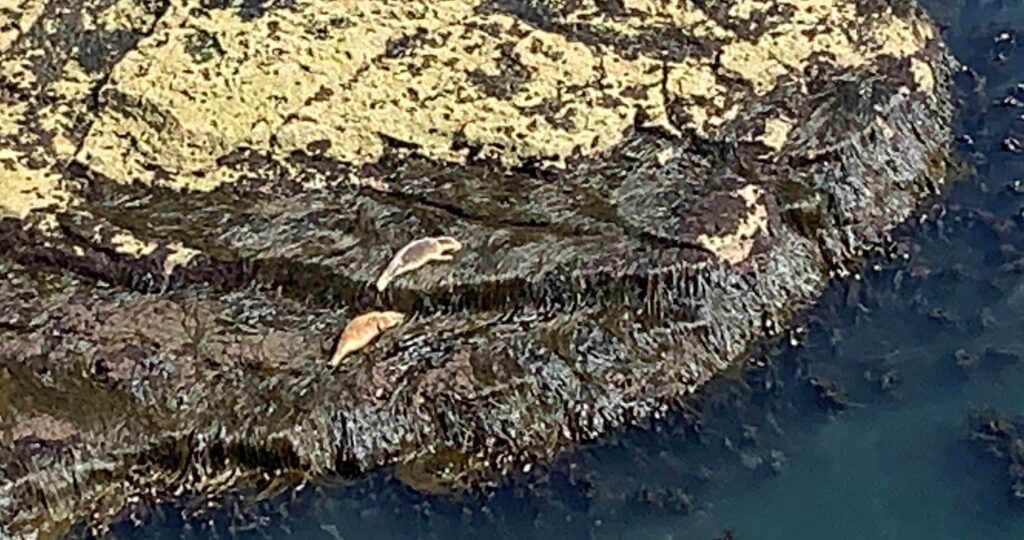
Just beyond the dragon’s spine, we were lucky enough to spot a large “family” of basking seals, some grey babies, mainly adults. A ‘knowledgeable’ man passing by suggested there was a pod of over 100, they come up onto the rocks to digest their food. The odd barking sounds were different to anything we have ever heard before.
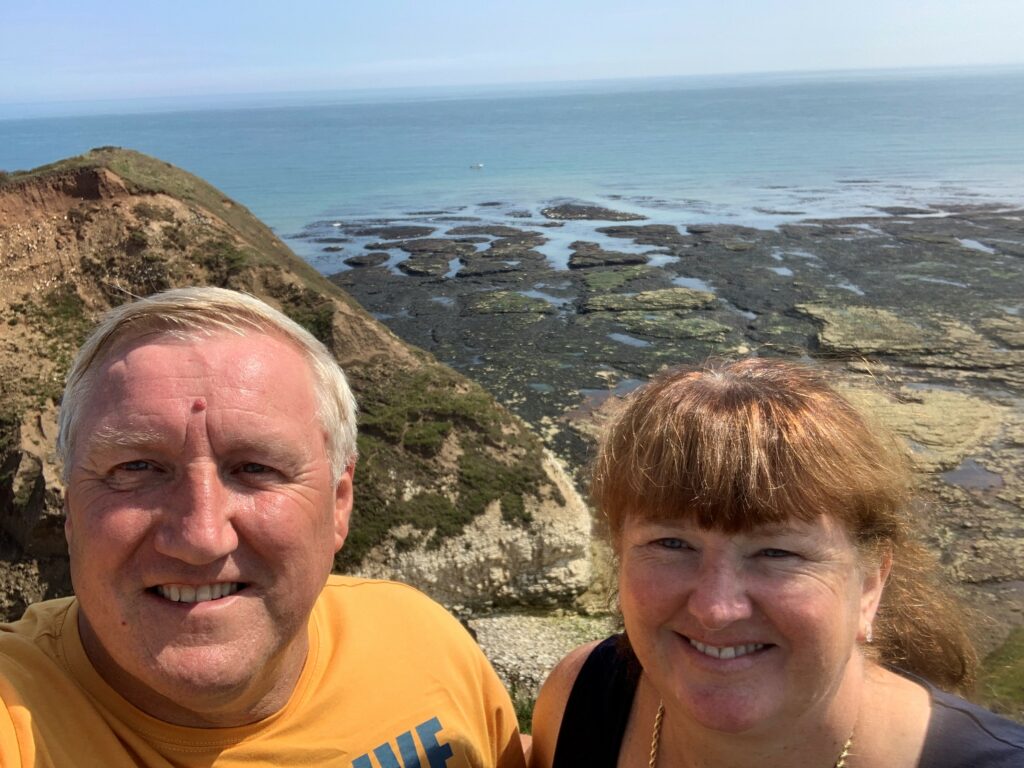
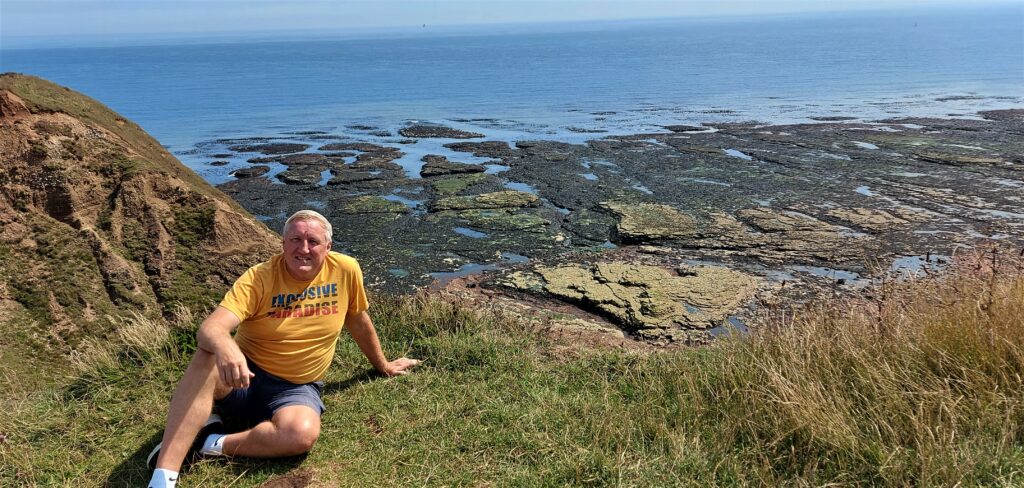
David perched right on the edge…..
My turn!
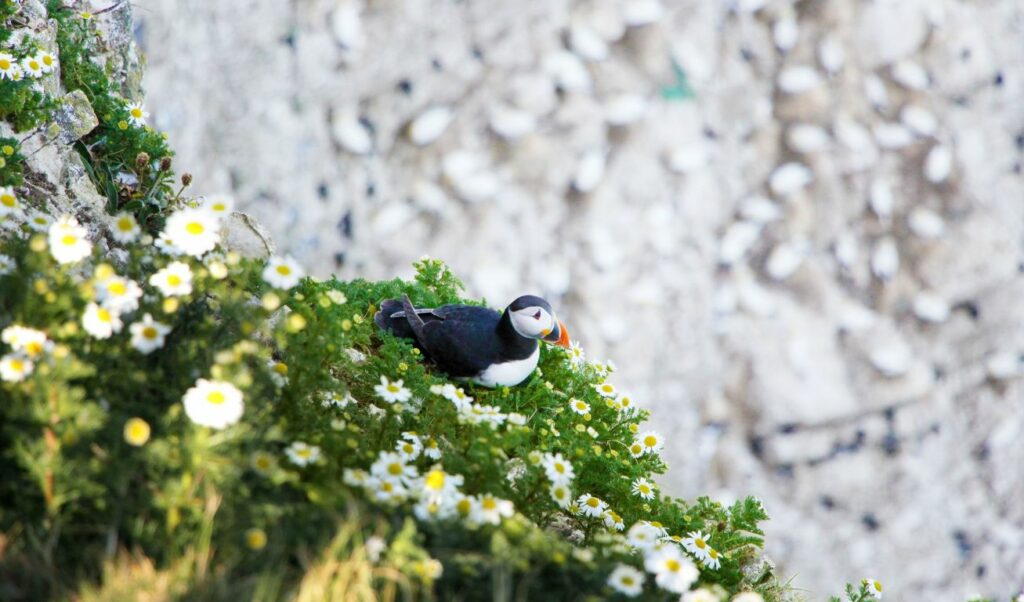
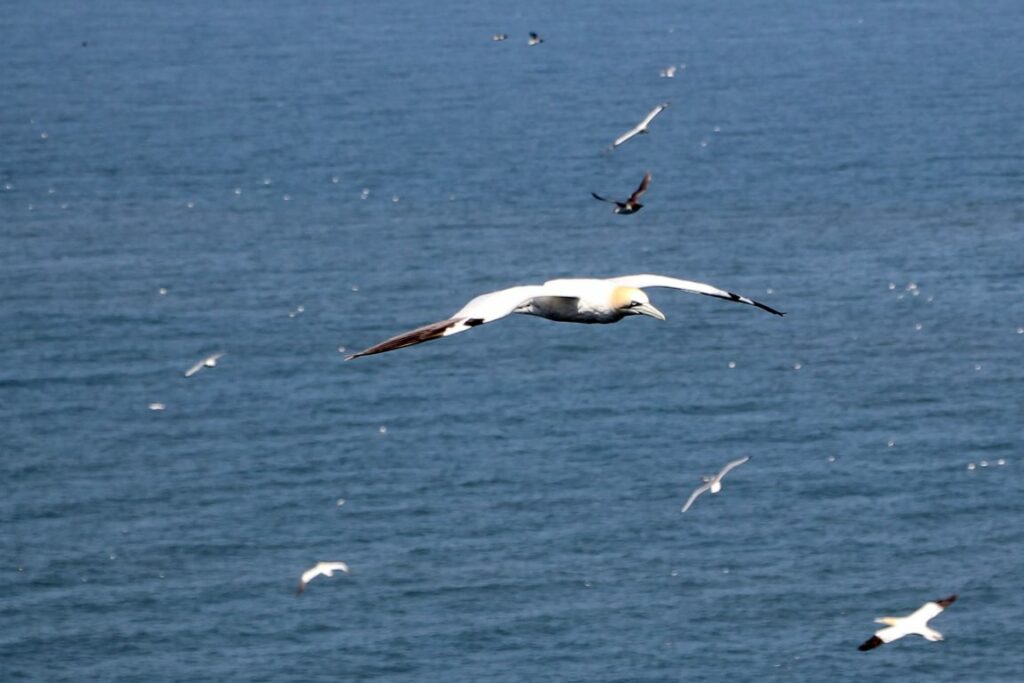
We were lucky enough to see several birds wheeling around, puffins nest here until the end of September and sea terns were diving into the shallow waters to scoop up small fish.
Heading North to Scarborough
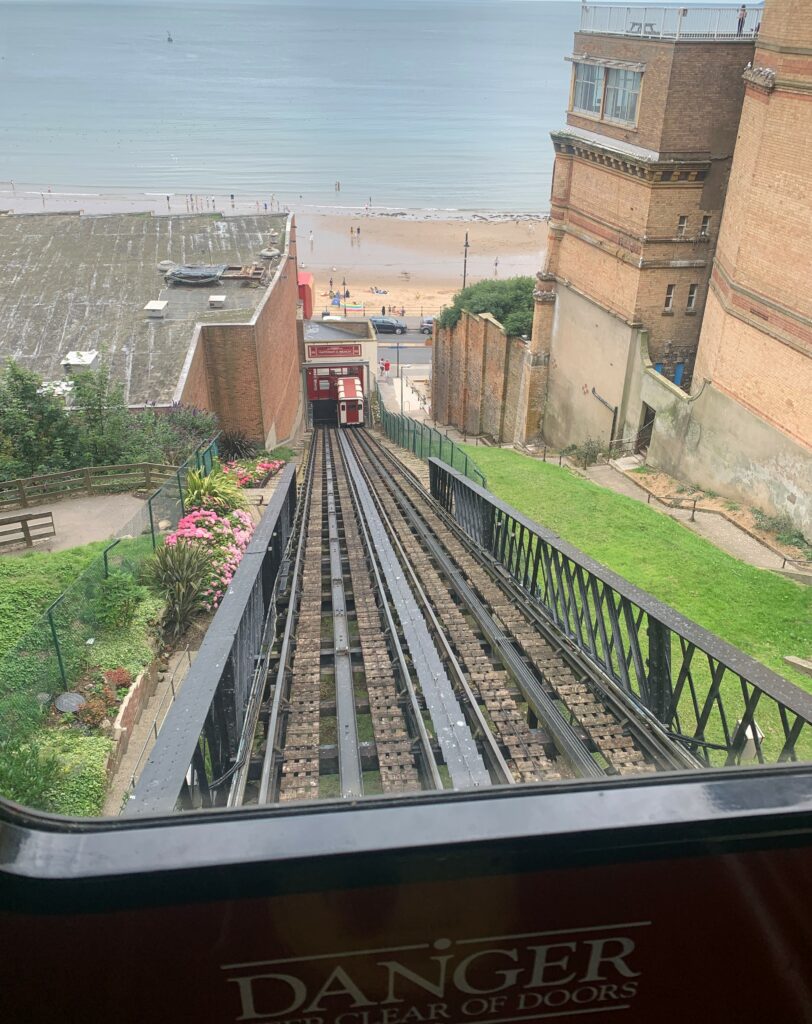
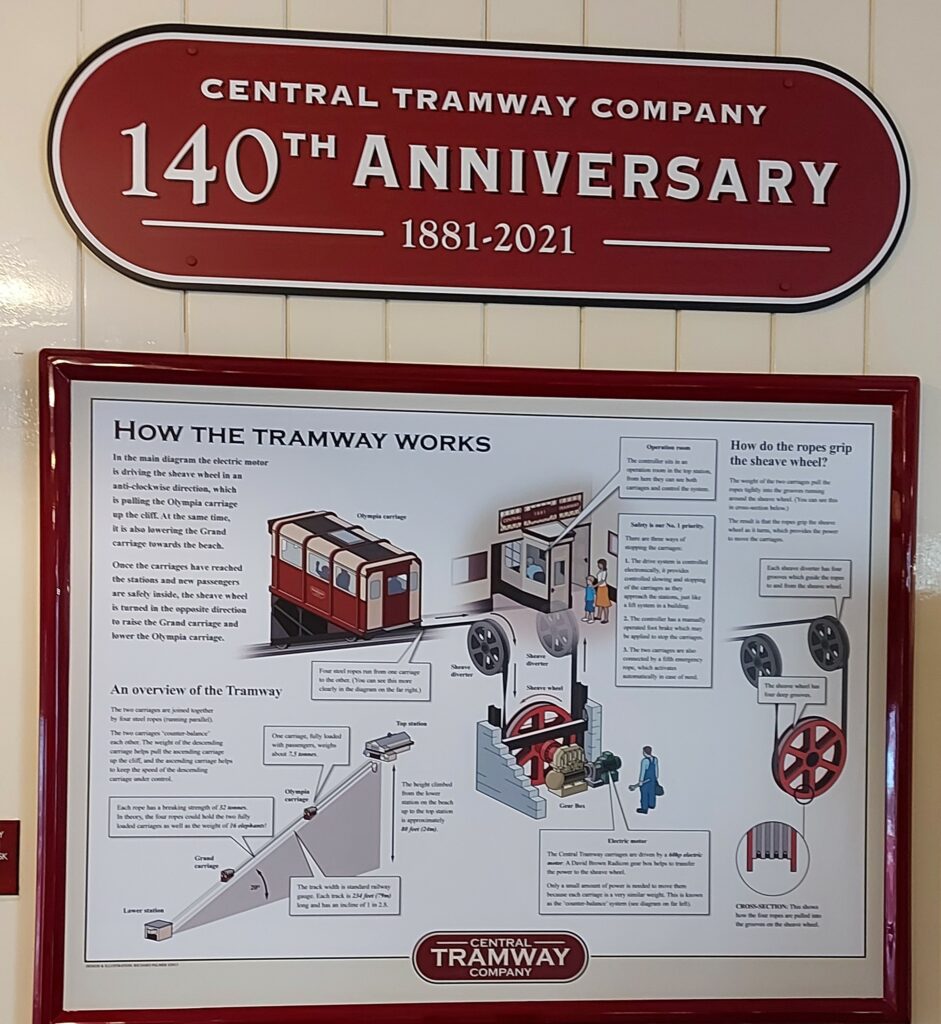
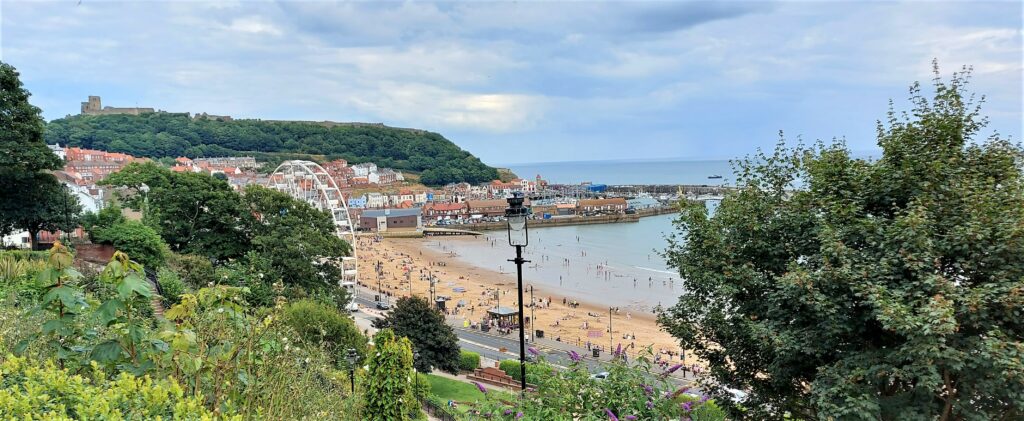
Scarborough is a typical seaside town, an old fishing village that still has a lively daily fish market but also has lots of arcades, takeaway food shops and sweet shops! We walked down to the harbour and got a lift up to the town on the tram railway, all for the sum of £2.20!
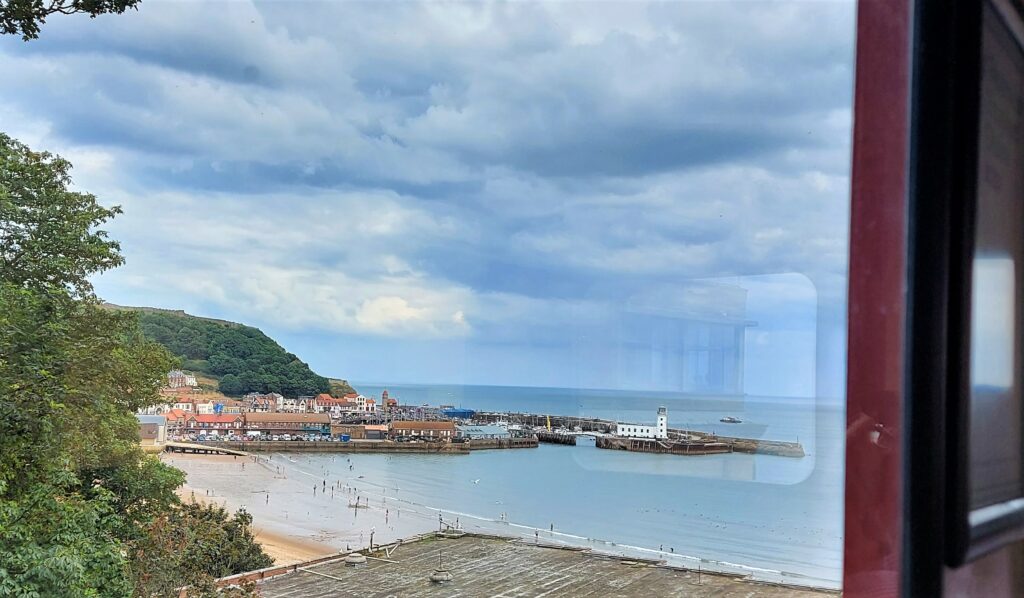
View from the tram
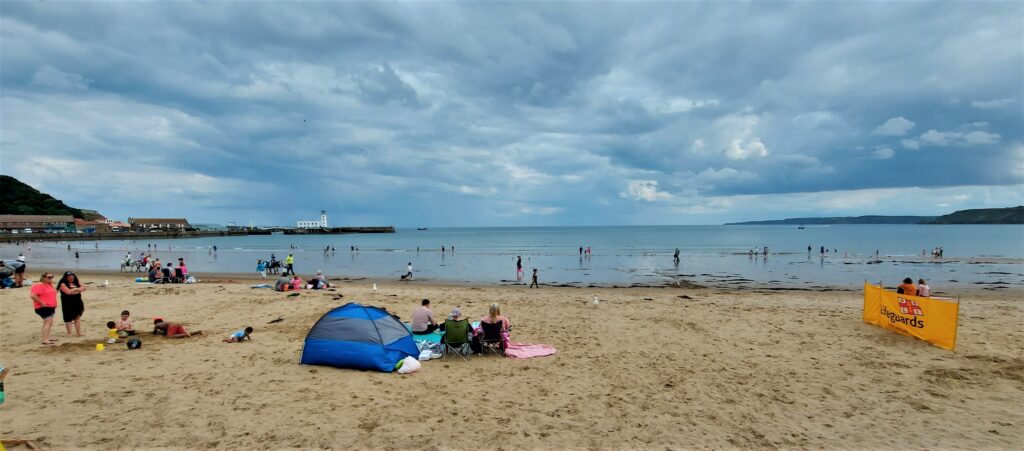
Scarborough beach up close
David having fun!
We went to the theatre one evening, sadly most of the decent restaurants closed on a Monday and/or Tuesday night so we had to make do with Wetherspoons!
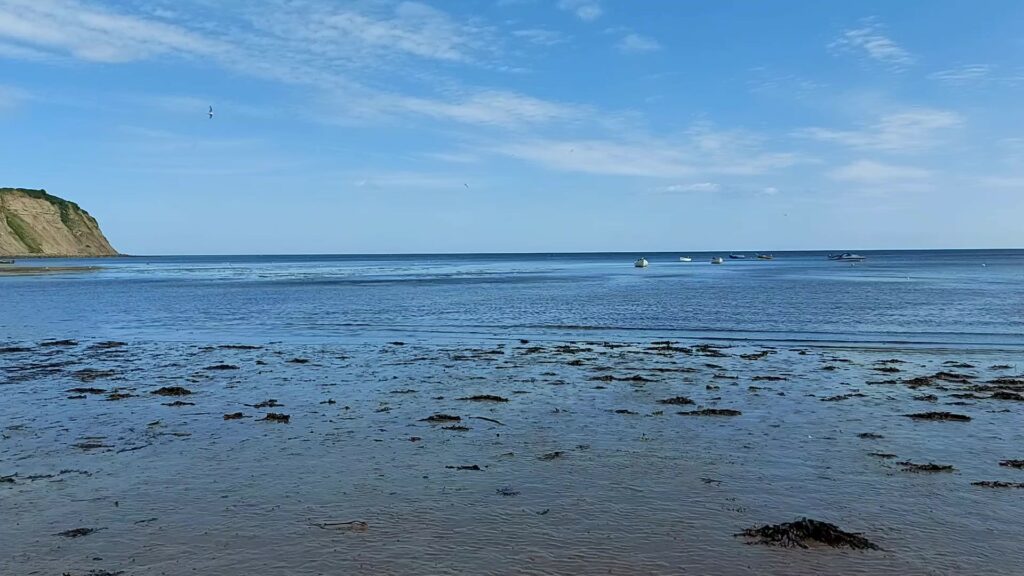
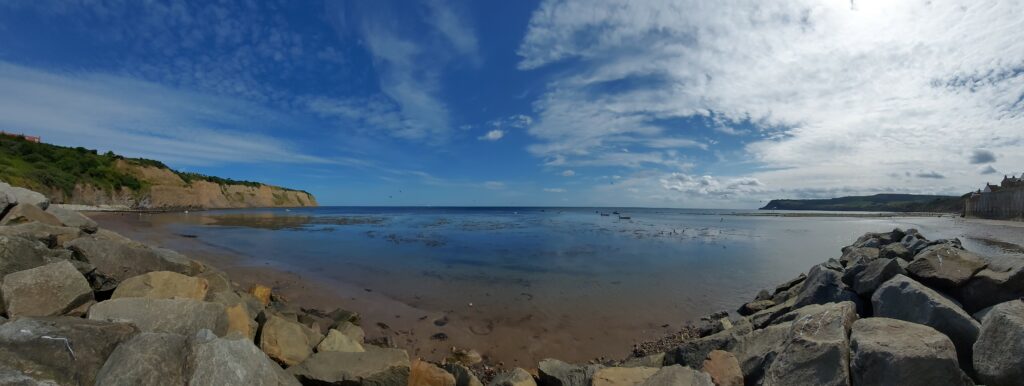
Robin Hood’s Bay
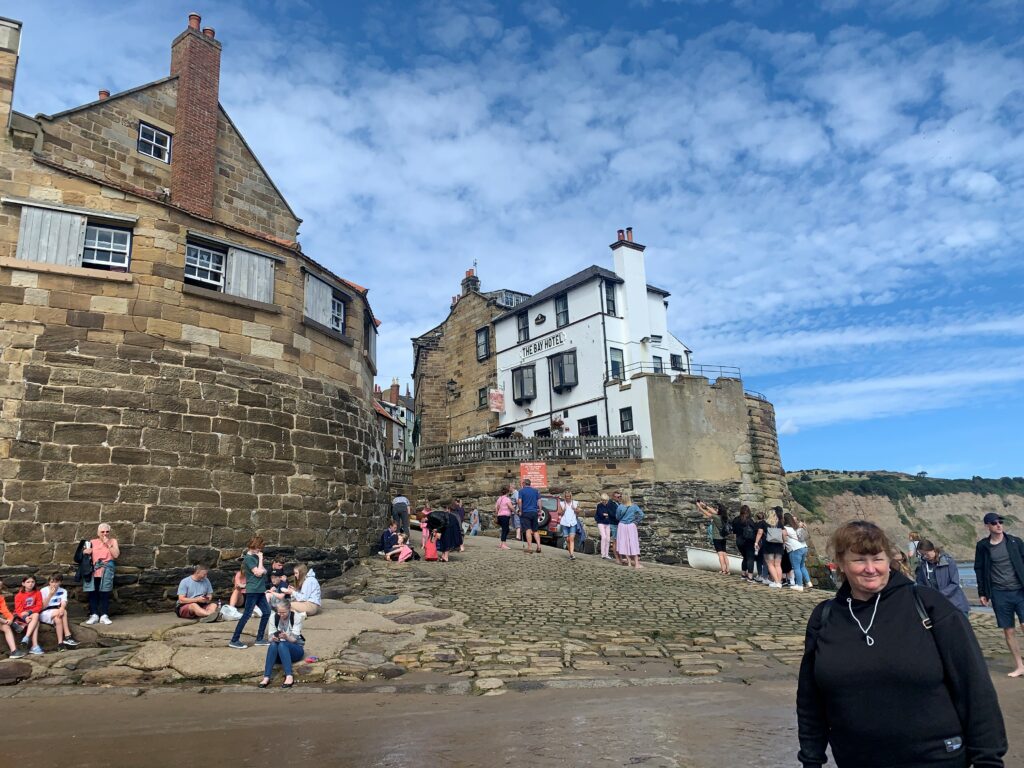
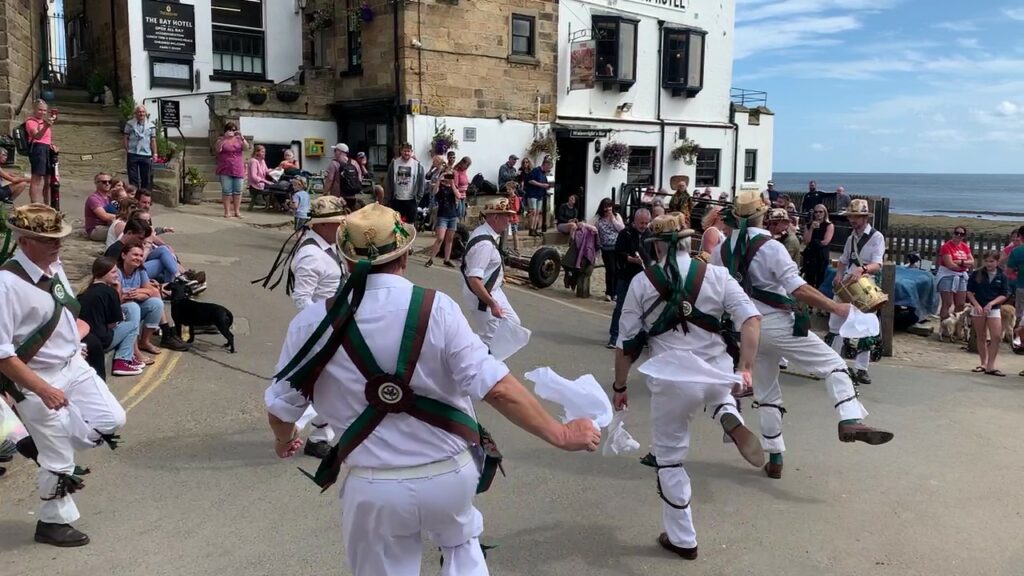
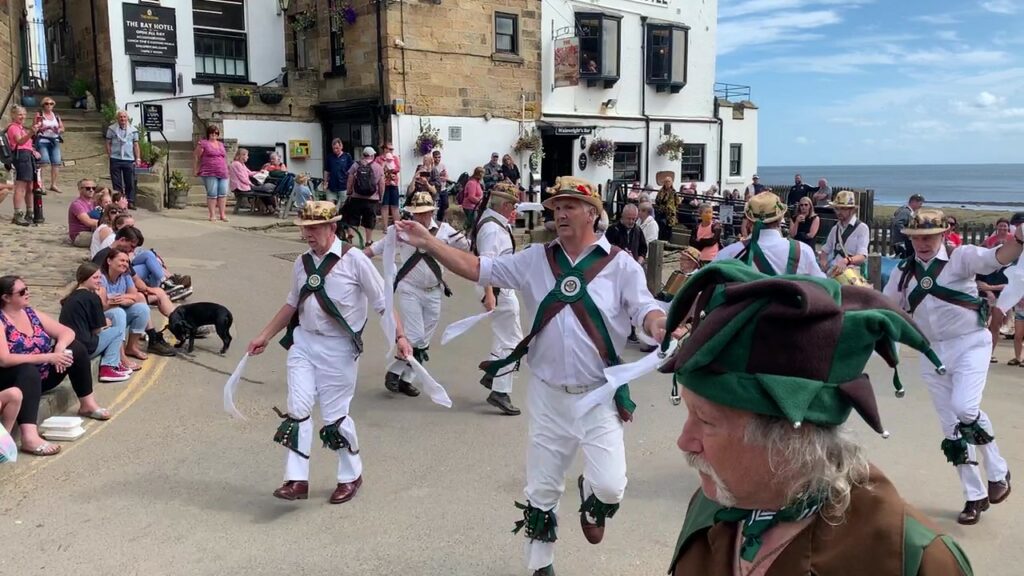
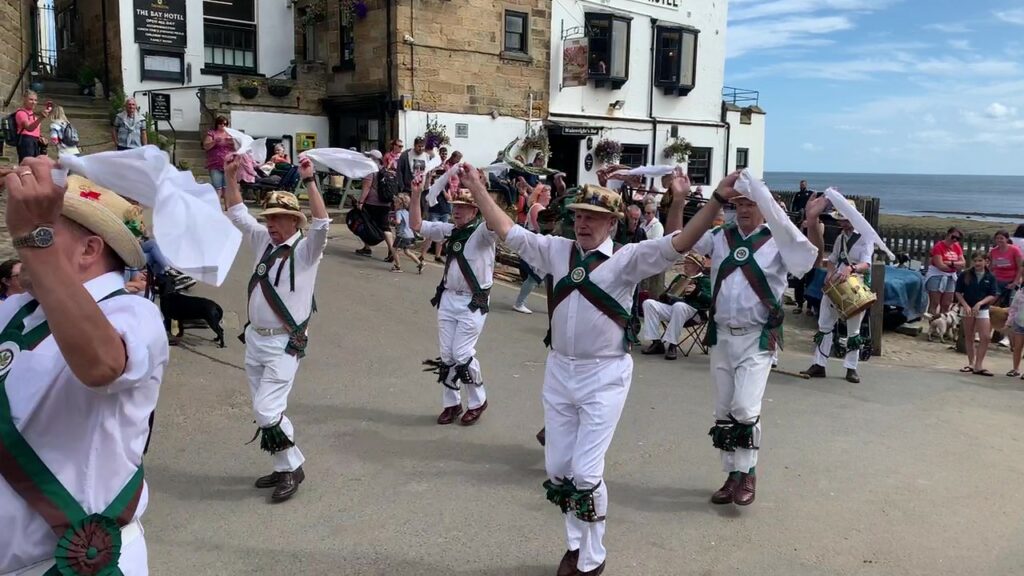
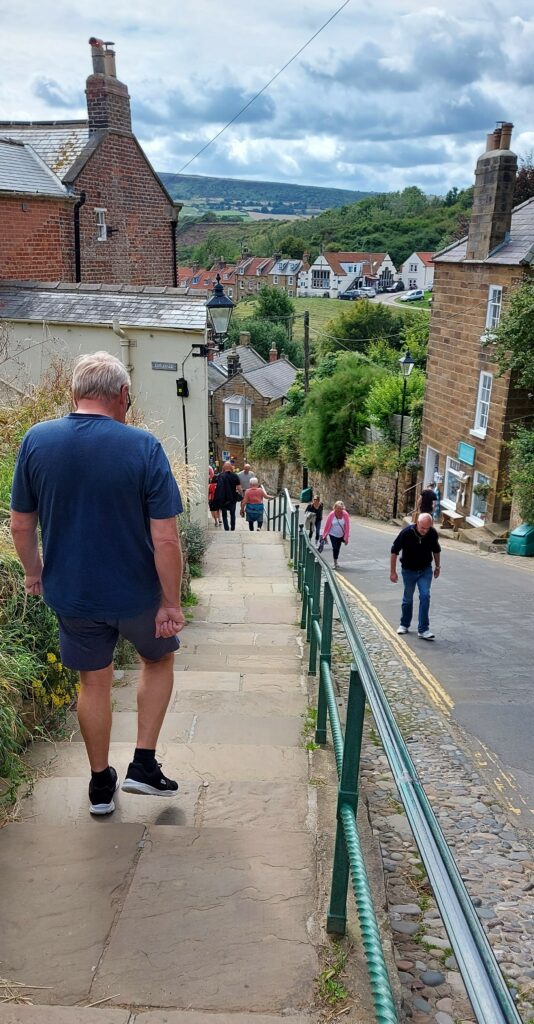
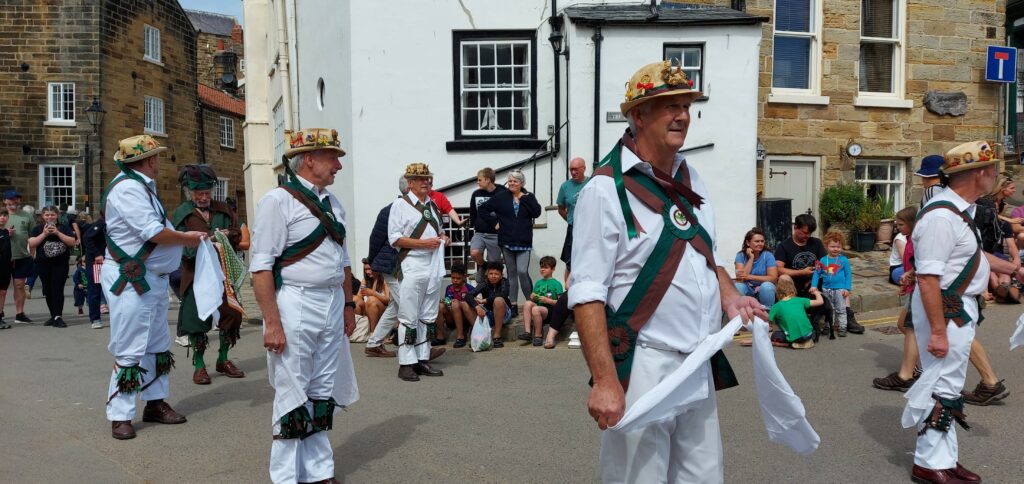
Visited here one chilly Sunday, didn’t realise how steep a road could be! Just as we were about to head into a cafe for lunch, a Morris dance group arrived and performed their first dance for 18 months, you could tell – some of the men were a bit stiff and had forgotten the moves!
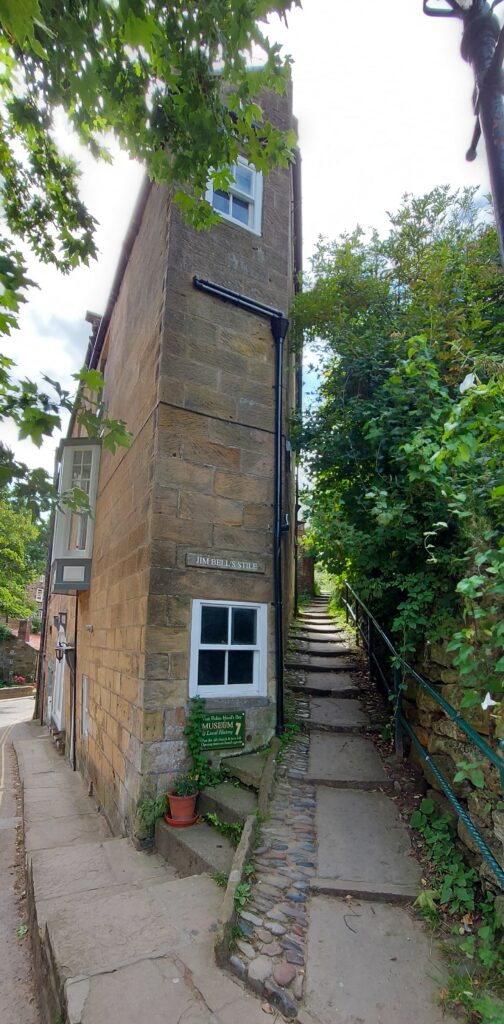
Robin Hood’s Bay is spectacular, amazingly small narrow streets that run up and down a very steep hill, ideal for olde worlde smugglers in years gone by…..would I like to live there? No thanks, far too much pressure on the calf muscles!!
The old slipway used to house smuggler’s tunnels
Going down…..
Going Up!
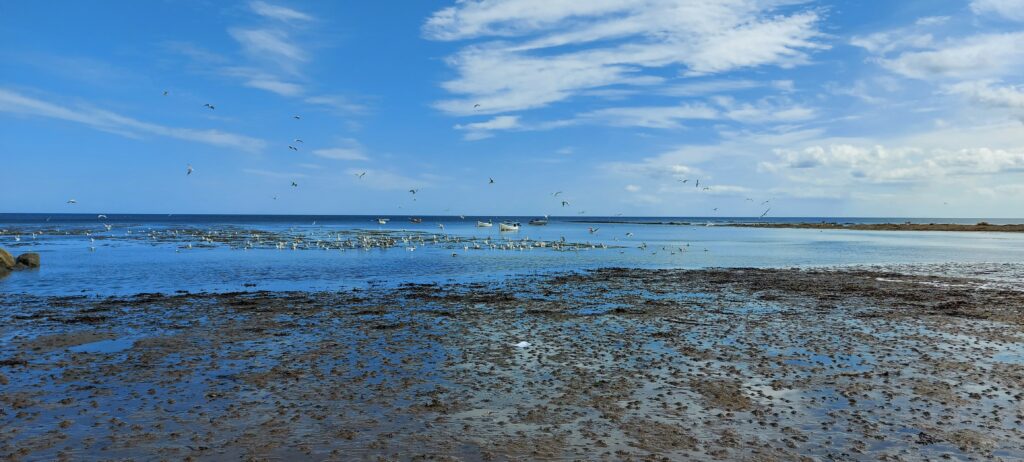
Terns diving for fish
Happy dancers
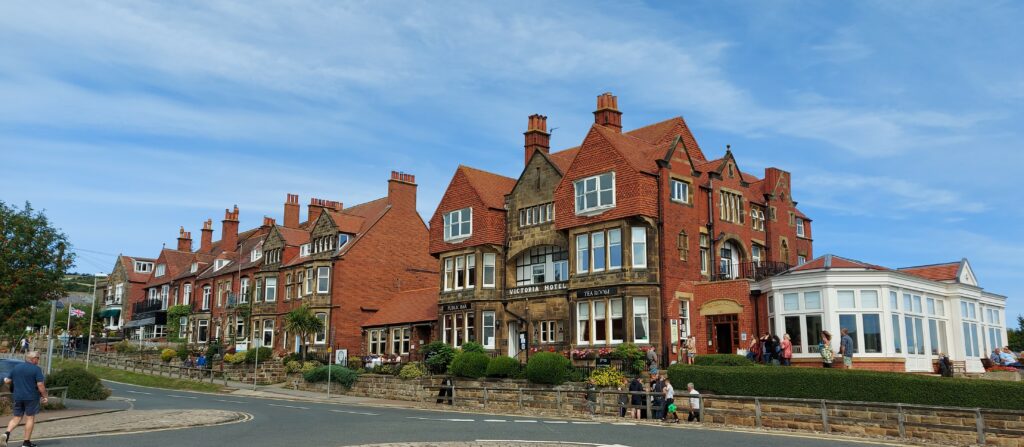
Victorian architecture in the top part of the village
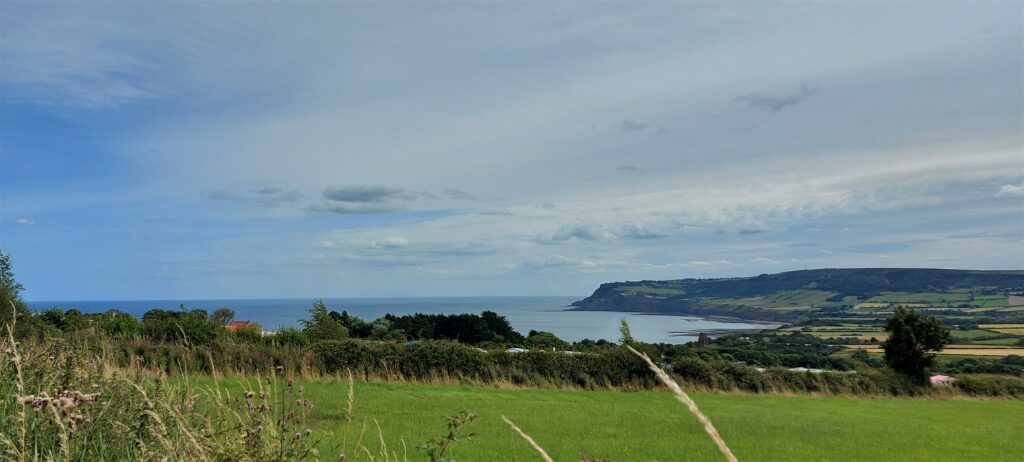
Robin Hood’s Bay
And finally, Whitby!
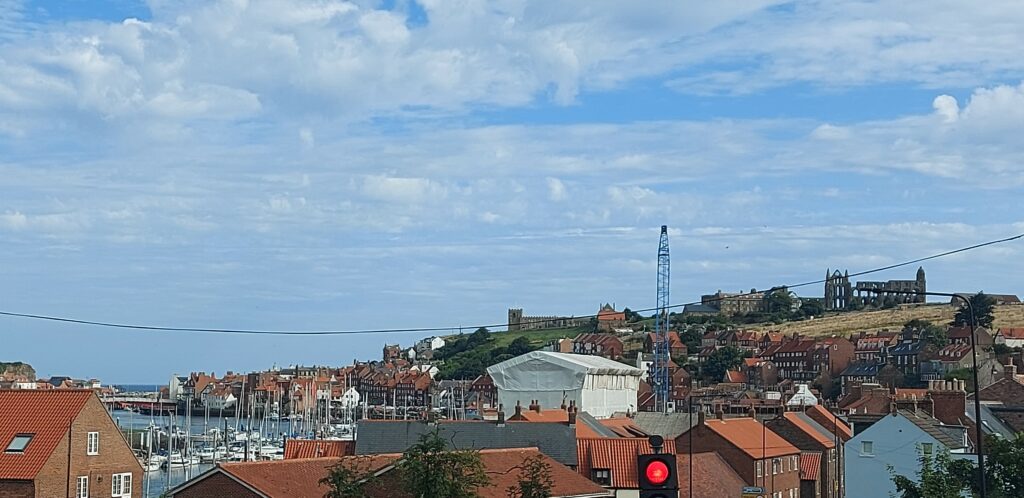
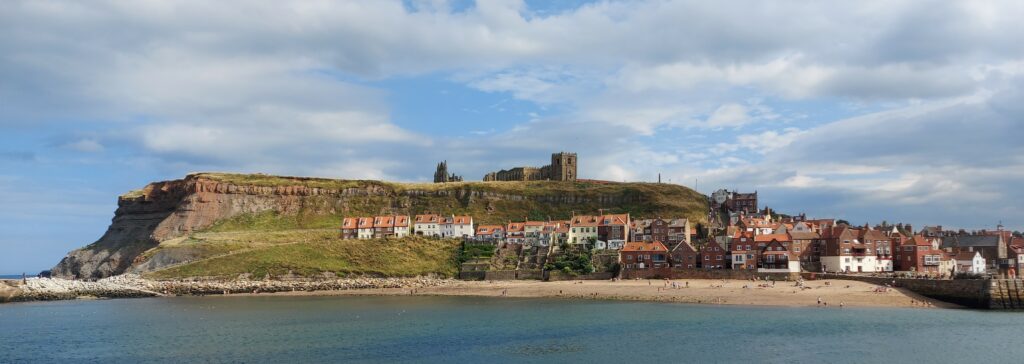
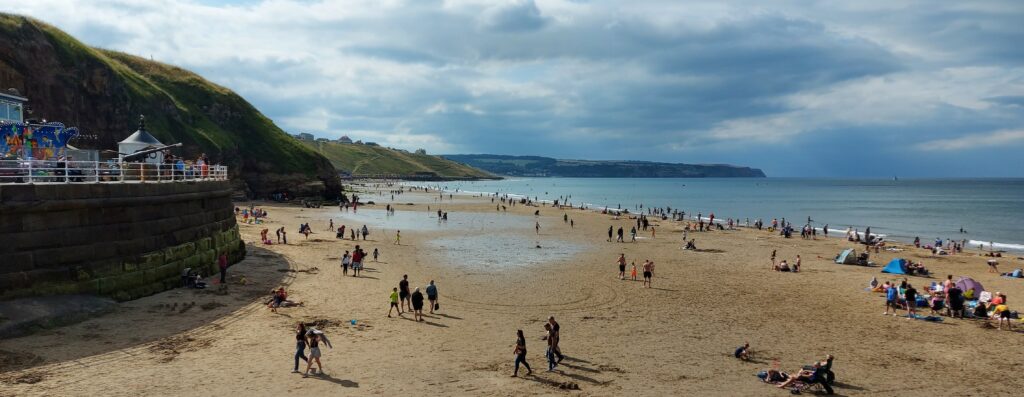
We visited Whitby twice, once to get on a steam train, the second time to do the tourist visit. We were a little disappointed with the beach, grey and full of debris, perhaps the grey weather didn’t help. The narrow streets were heaving with scantily clad people, despite it being chilly that day.
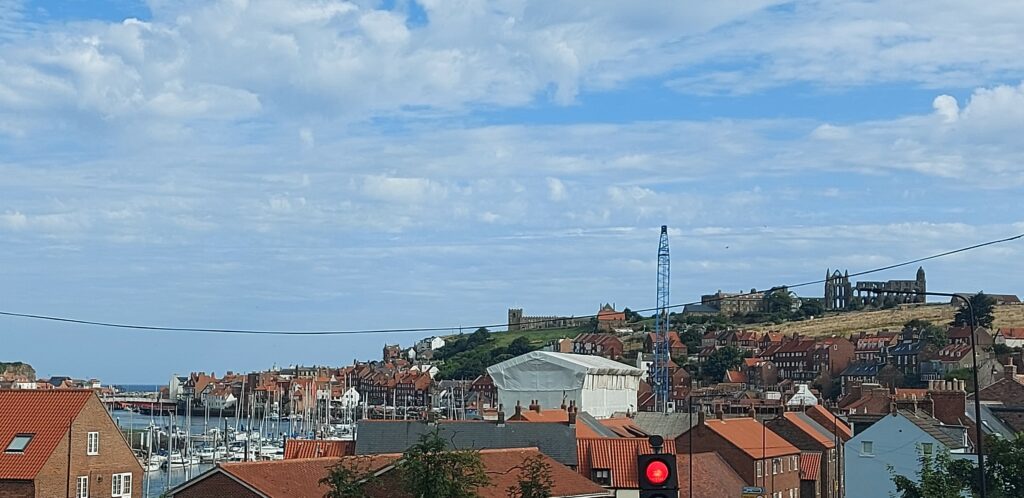
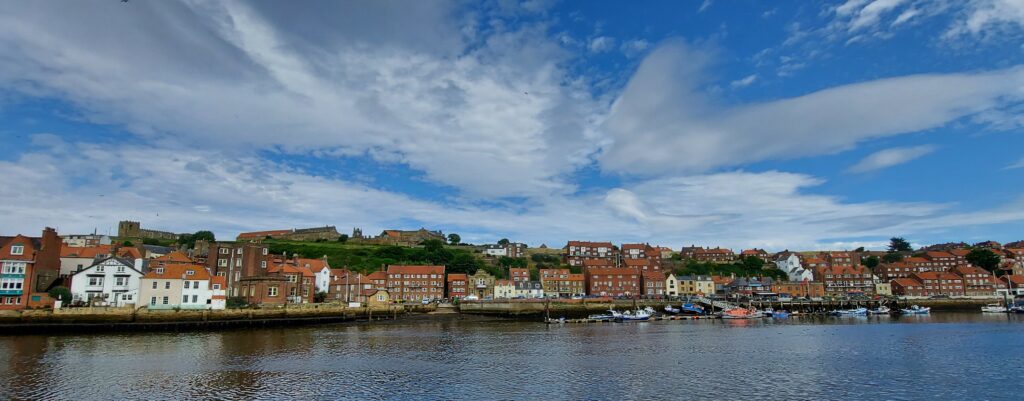
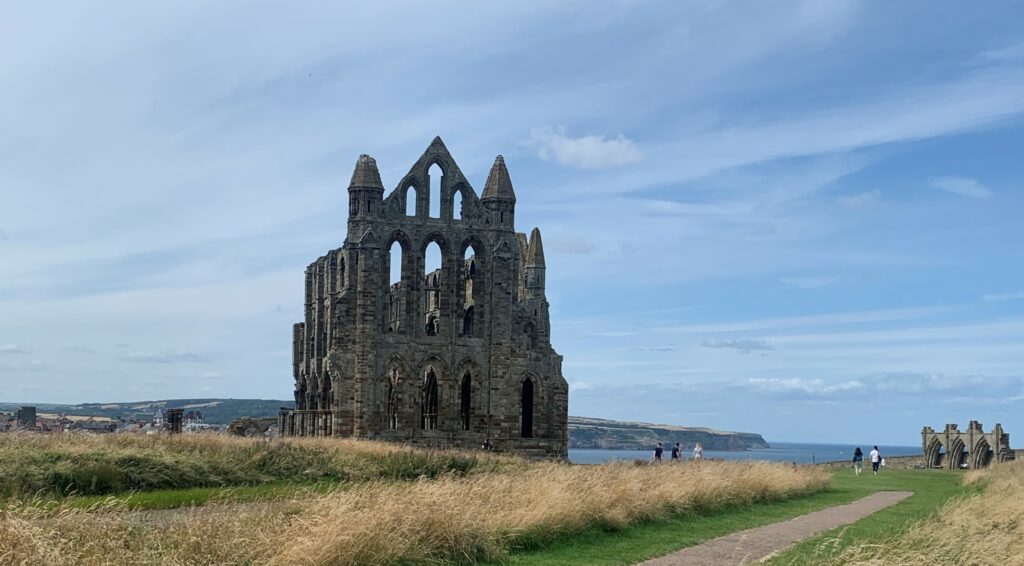
Whitby is another town split by the estuary entrance, one side is the main town, railway station and tourist centre, the other is the Abbey and Whitby House remains with a smaller village below, 199 steps up to the Abbey!
You probably know of our love of anything old and our desire to learn all about the history of a city or town, well, how could we stay in Liverpool (to help Caity set up home) and not visit the two cathedrals?? Impossible!
However, we were disappointed to find that both Cathedrals were modern!
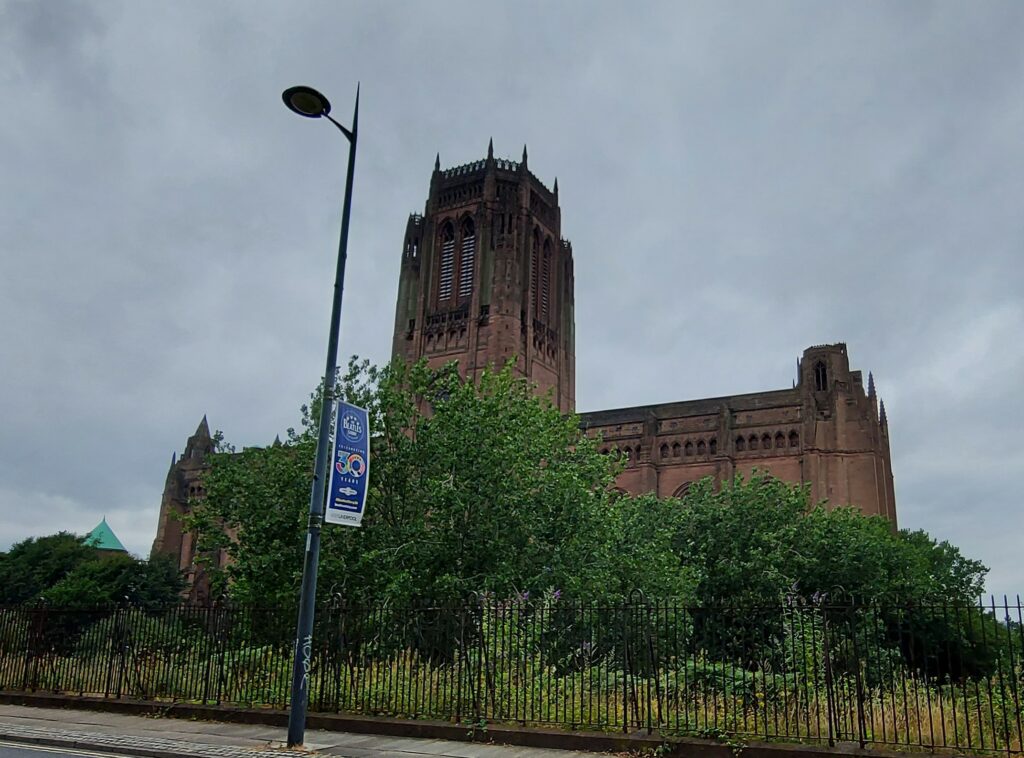
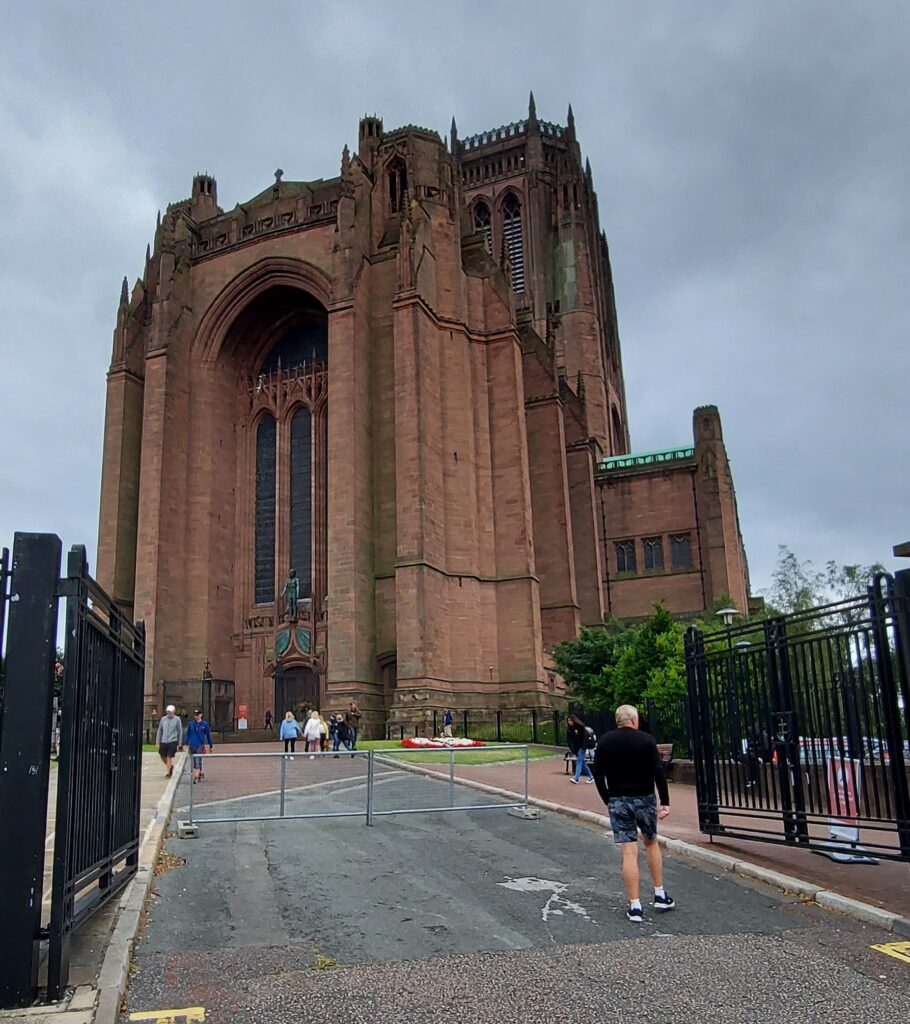
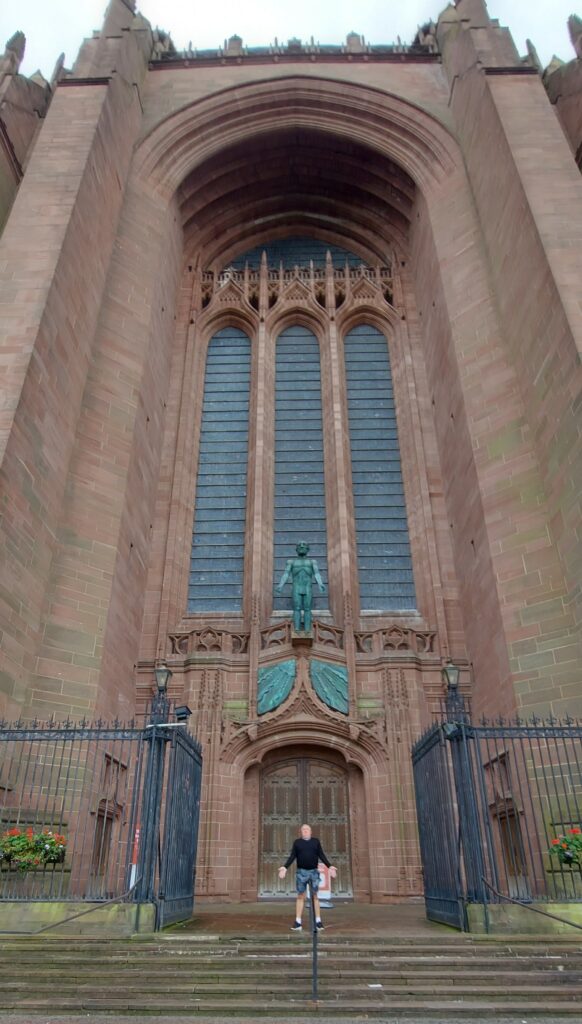
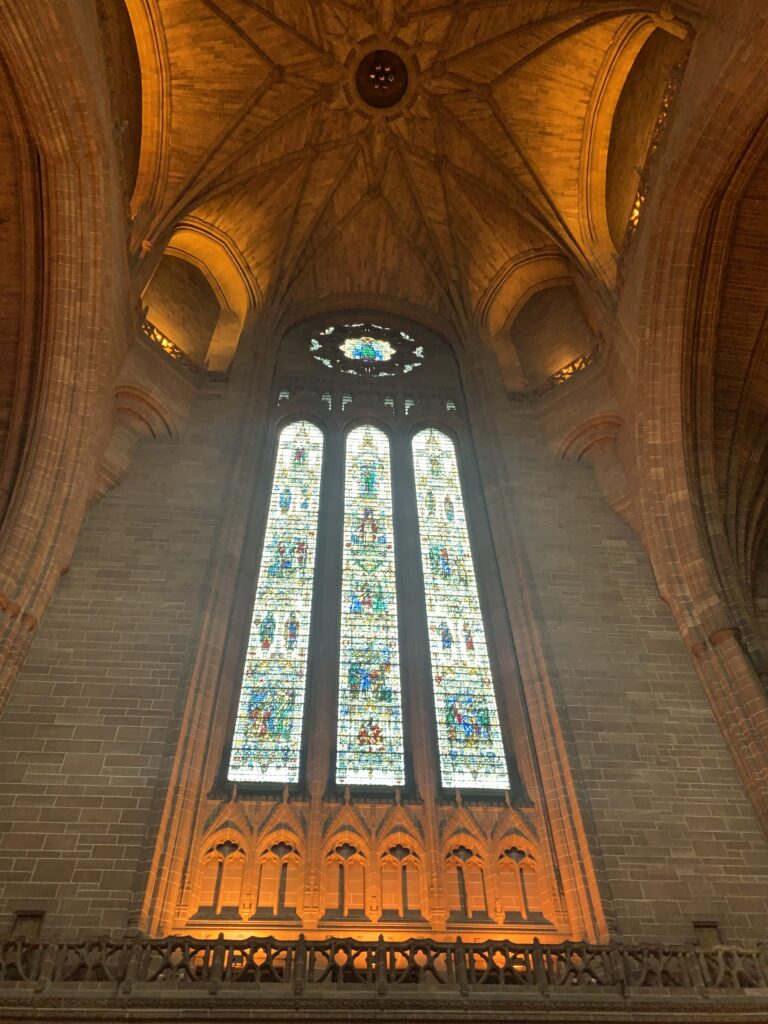
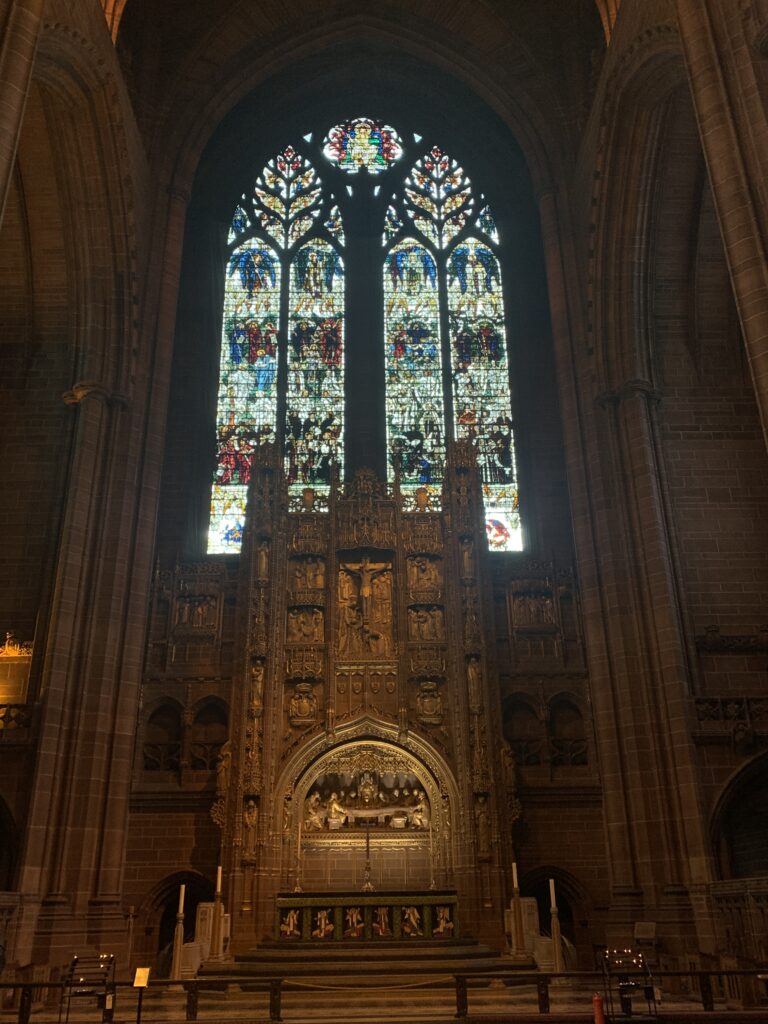
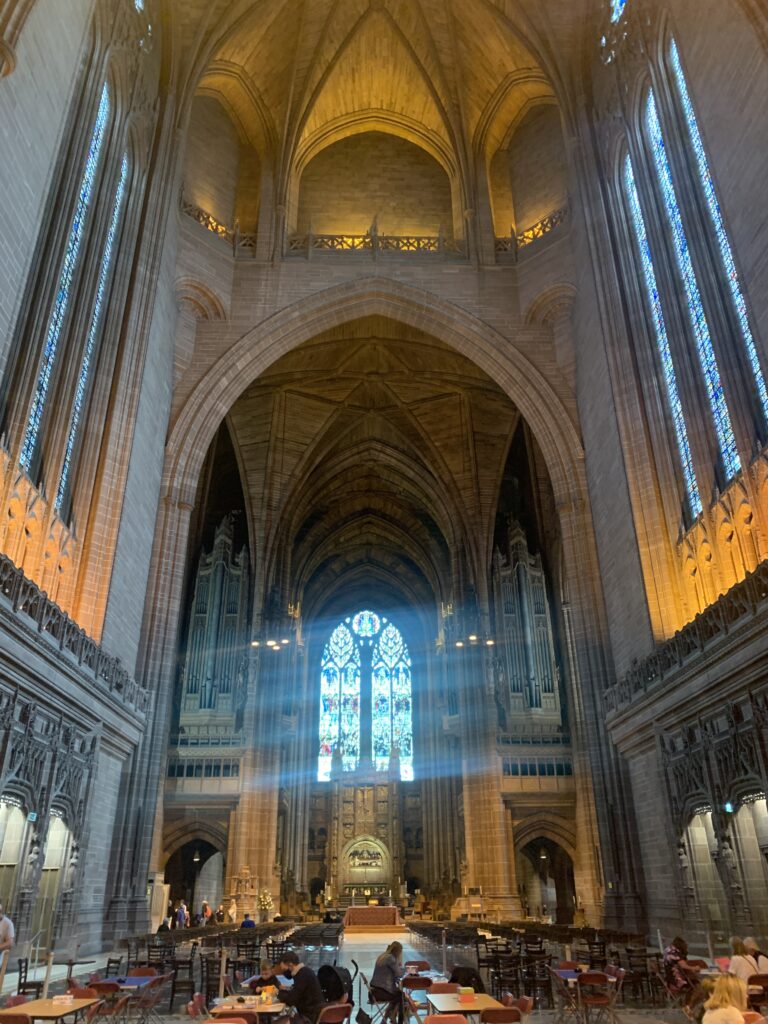
Our first visit to the Anglican Cathedral confirmed that it was primarily built between 1904 and 1924, delays caused mainly by the world War 1, but during bitterly cold weather on 20th February 1942, Sir Giles Scott (aged 22 in 1903 when his design was chosen) placed the final stone on the final ‘finial’ at the top of the tower, three hundred and thirty one feet one and half inches (101 metres) above the Cathedral floor. Some interesting facts:
Length: 188.7 m (619 ft)
Area: 9,687.4 sq. m (104,275 sq. ft)
Choir Vault: 35.3 m (116 ft)
Nave Vault: 36.5 m (120 ft)
Height of Tower: 100.8 m (331 ft)
Under Tower Vault: 53.3 m (175 ft)
Tower Arches: 32.6 m (107 ft)
Bells: (height above ground) 67.0 m (219 ft)
Bells: (weight) 31.5 tonnes (31 tons).
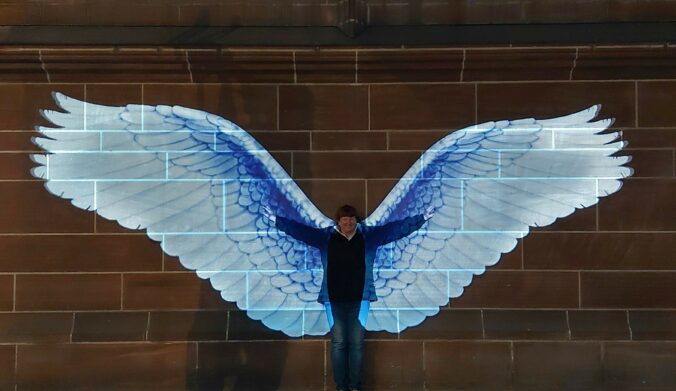
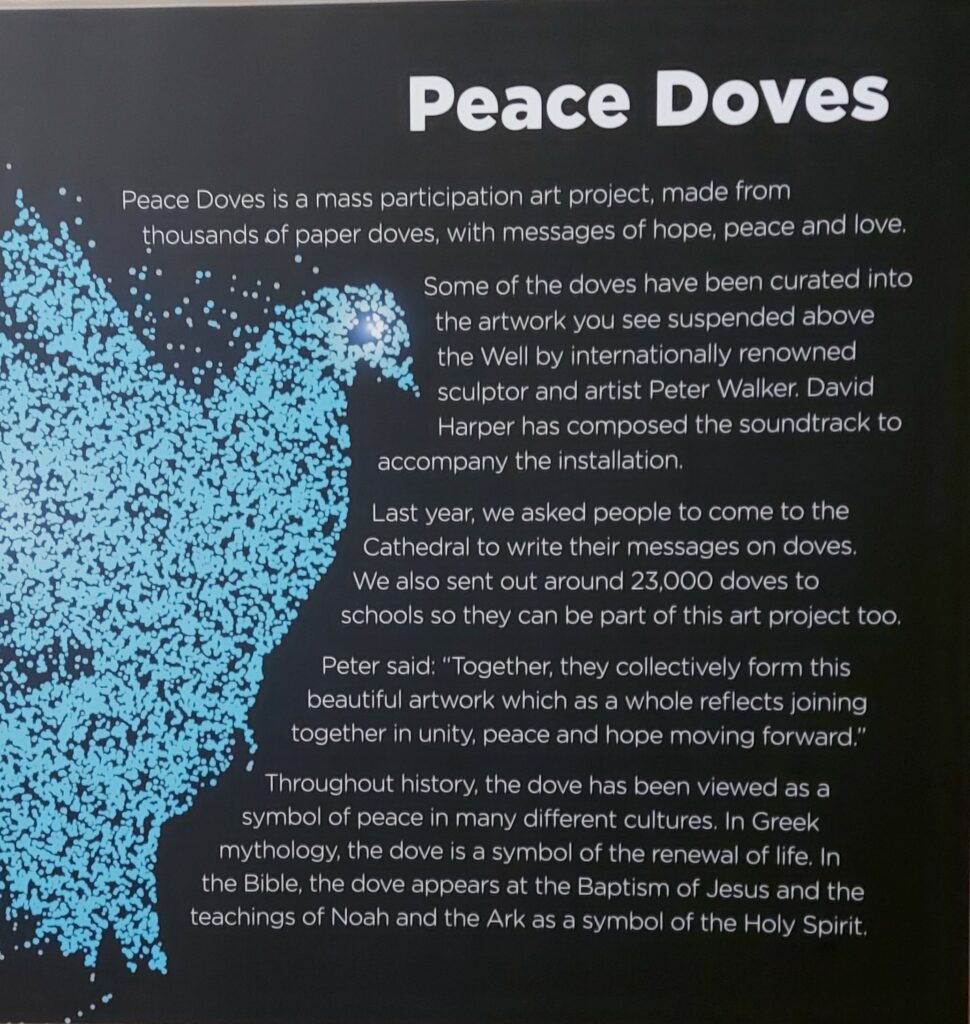
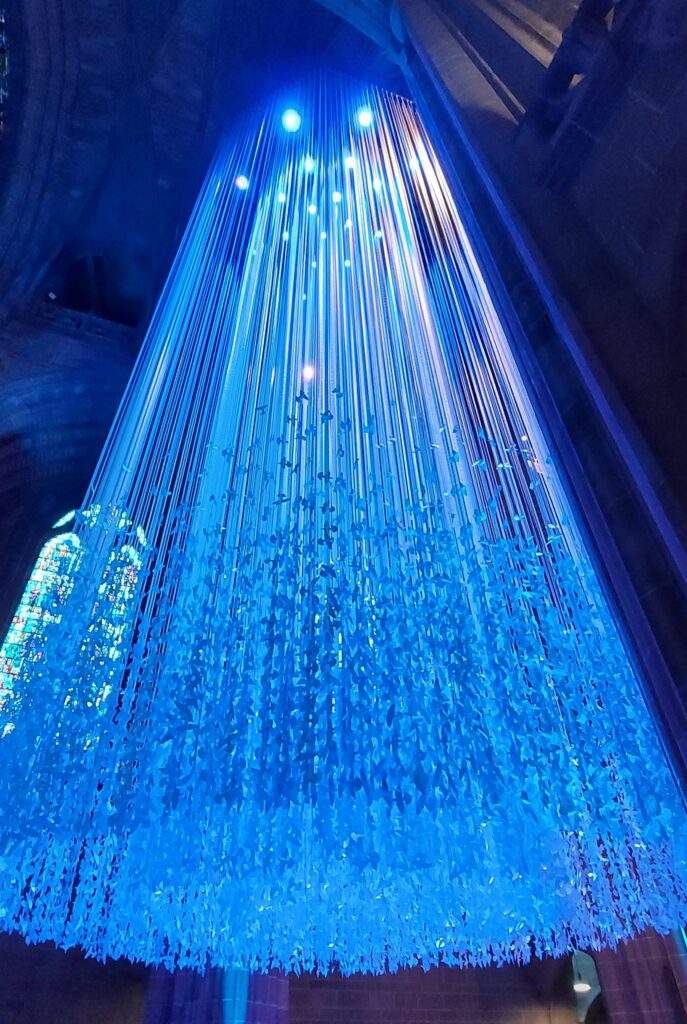
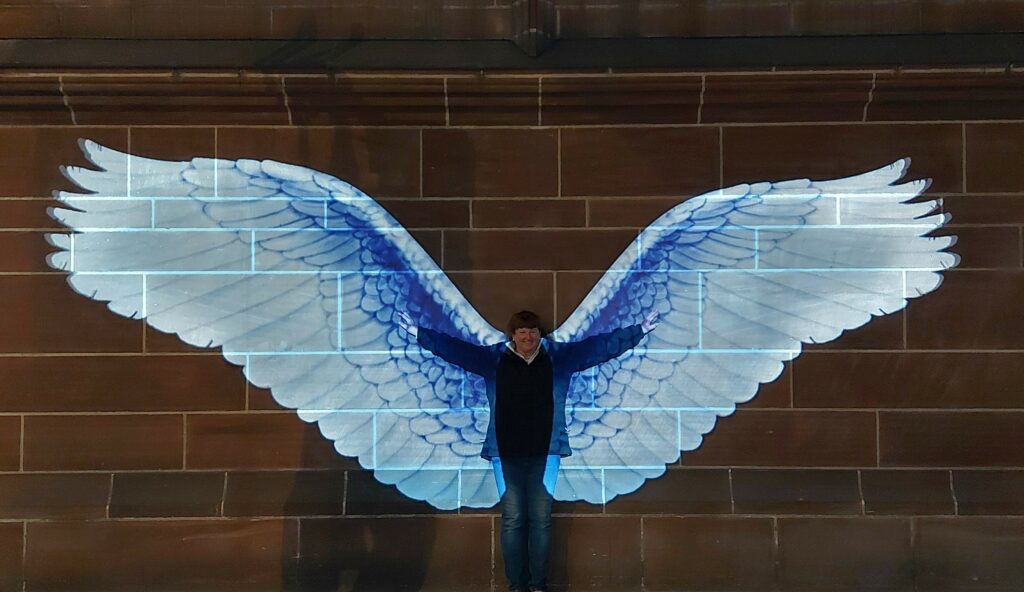
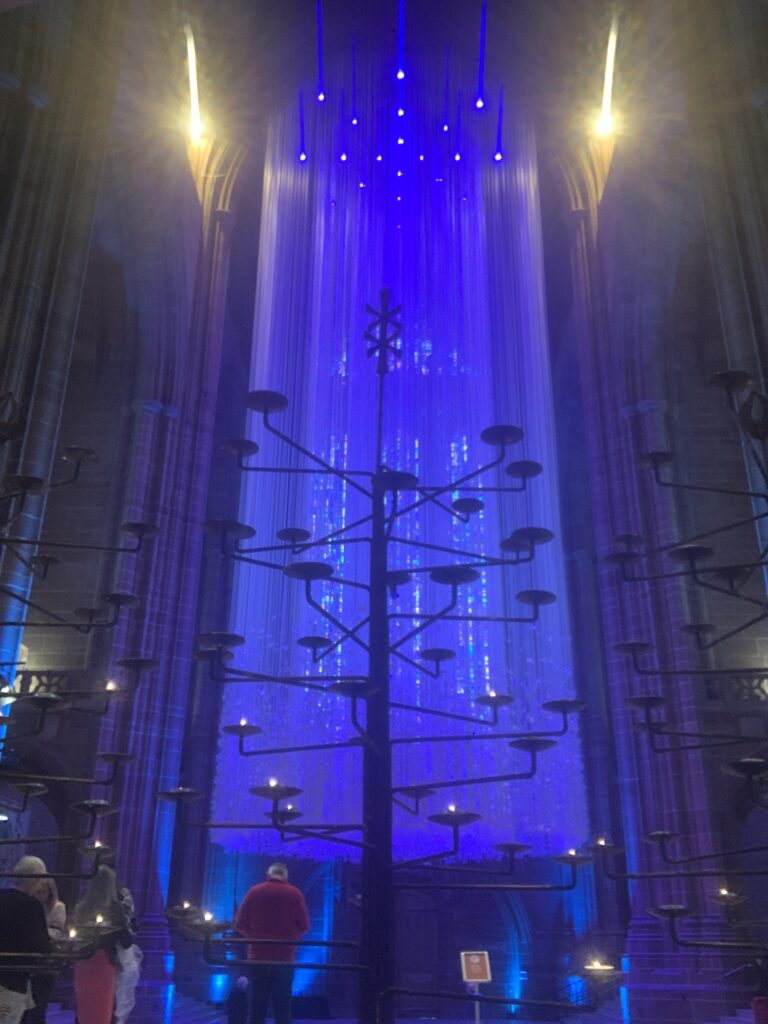
Inside the church are several modern art displays, currently the Doves of Peace.
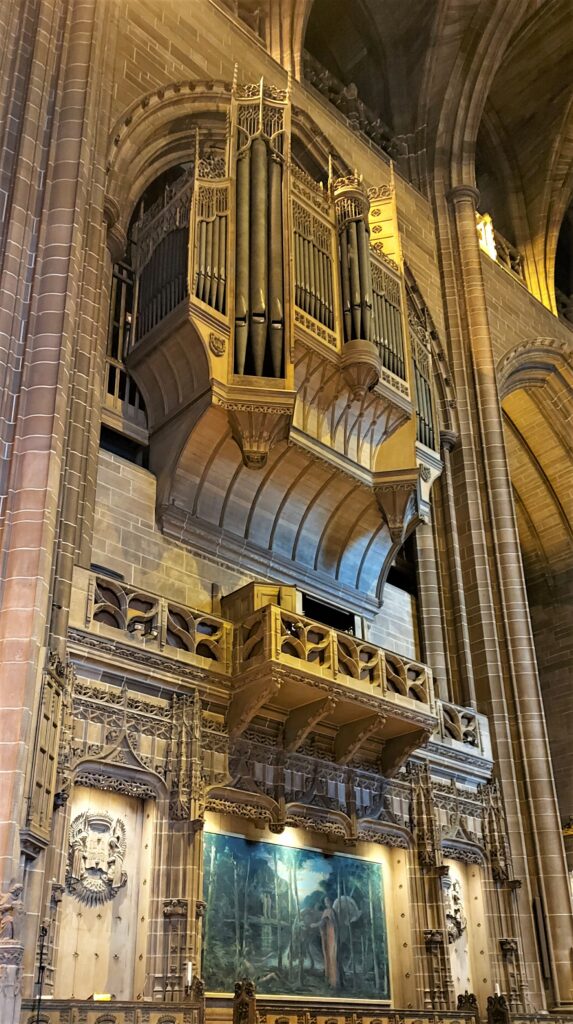
Installation of the organ began in 1923. When the organ was completed in 1926 it was the largest musical instrument ever conceived, and, since the installation of the additional Central division in 2007, it continues to be the largest pipe organ in the UK.
One of 4 Organs
Tracey Emin, the artist writes: “The Church has always been a place, for me, for contemplation. I wanted to make something for Liverpool Cathedral about love and the sharing of love. Love is a feeling which we internalise; a feeling very hard to explain. I thought it would be nice for people to sit in the Cathedral and have a moment to contemplate the feelings of love, it’s something we just don’t have enough time to think about and I hope this work creates this space in time.” Liverpool Echo, September 2008
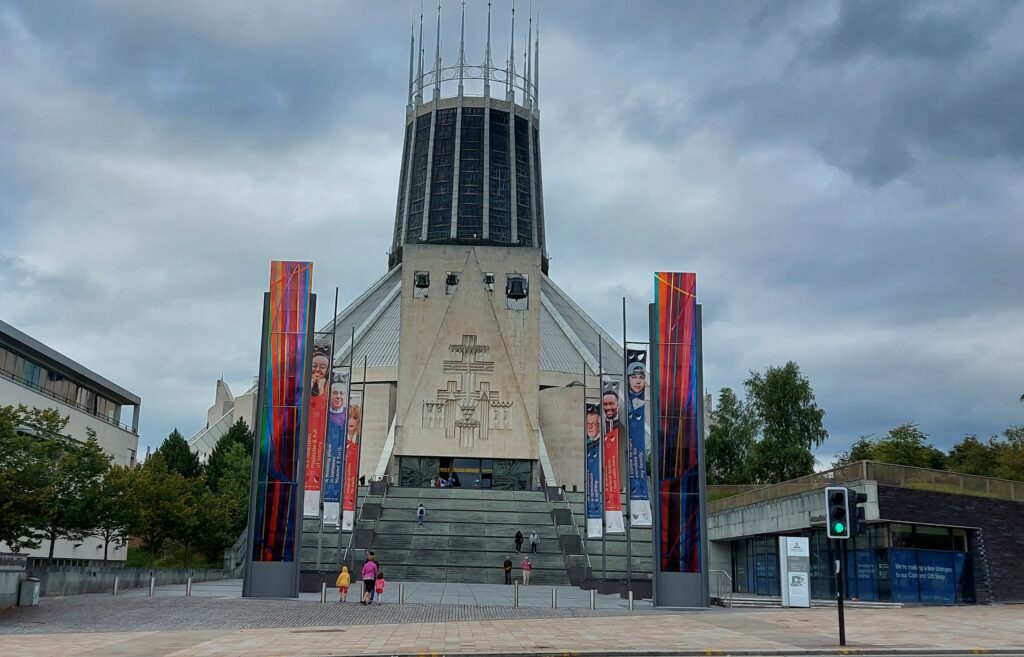
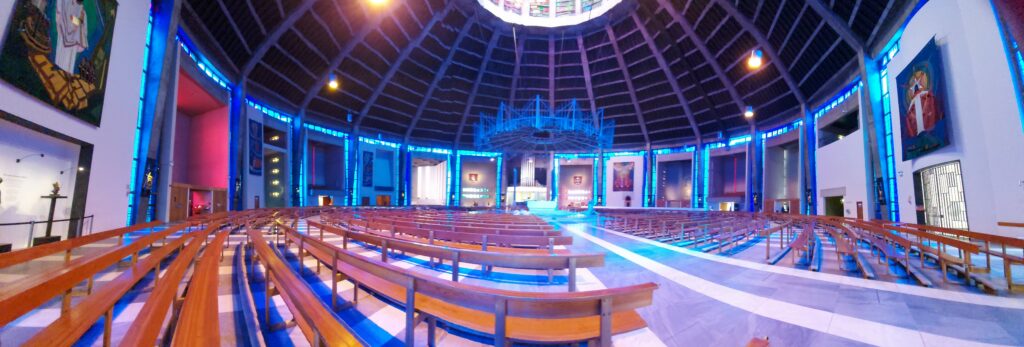
Then we took a ten minute walk to the other side of the hill, to the Catholic Church. Again, this is modern, work started on it in 1962 and it was completed 5 years later.
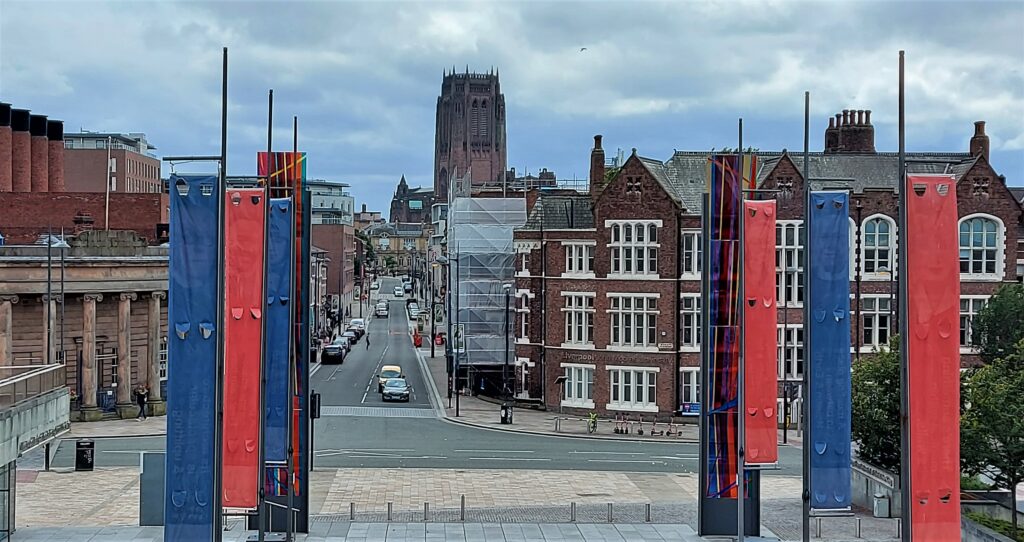
View of the Anglican church from the steps of the Catholic church!
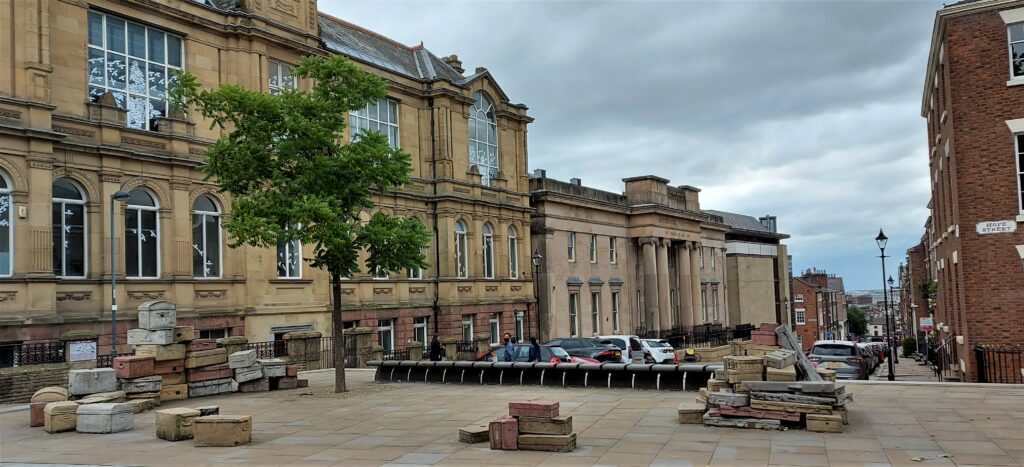
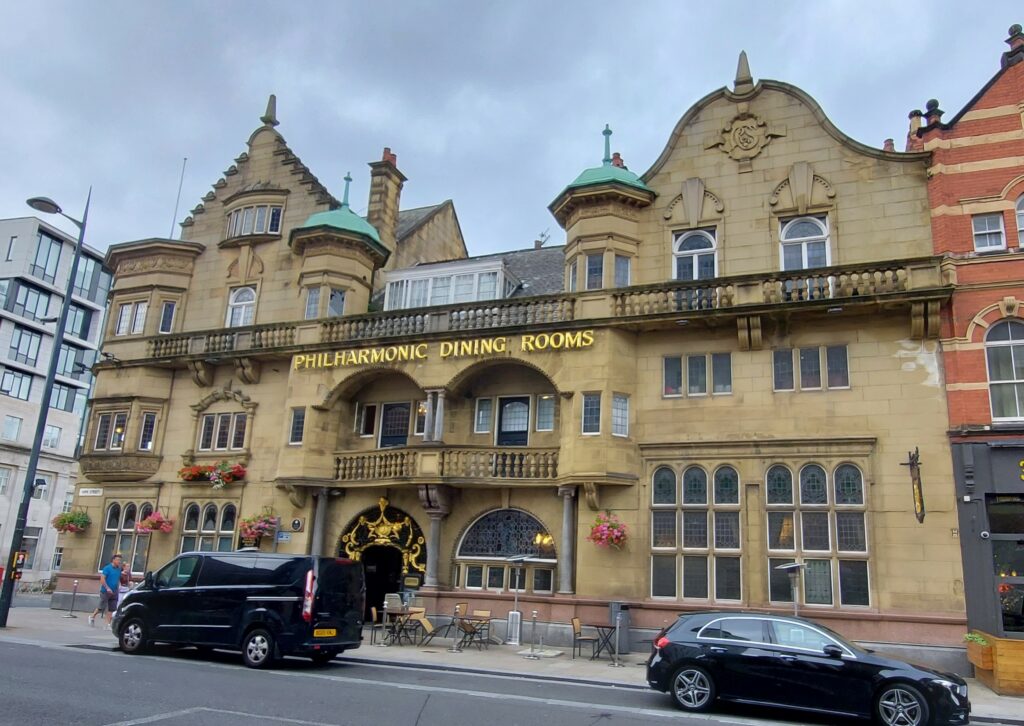
Hope Street connects the two churches, the street is named after William Hope, a merchant whose house stood on the site now occupied by the Philharmonic Hall, rounded building on the left.
A very circular modern church.
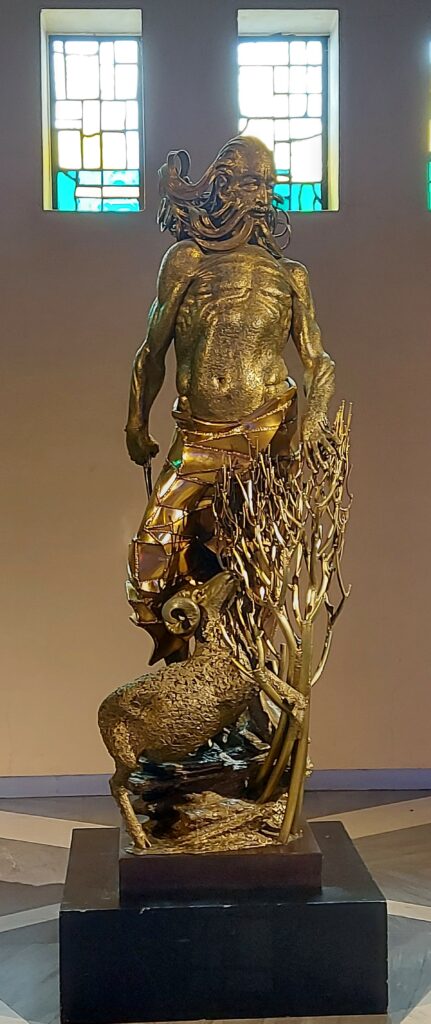
Very modern art!
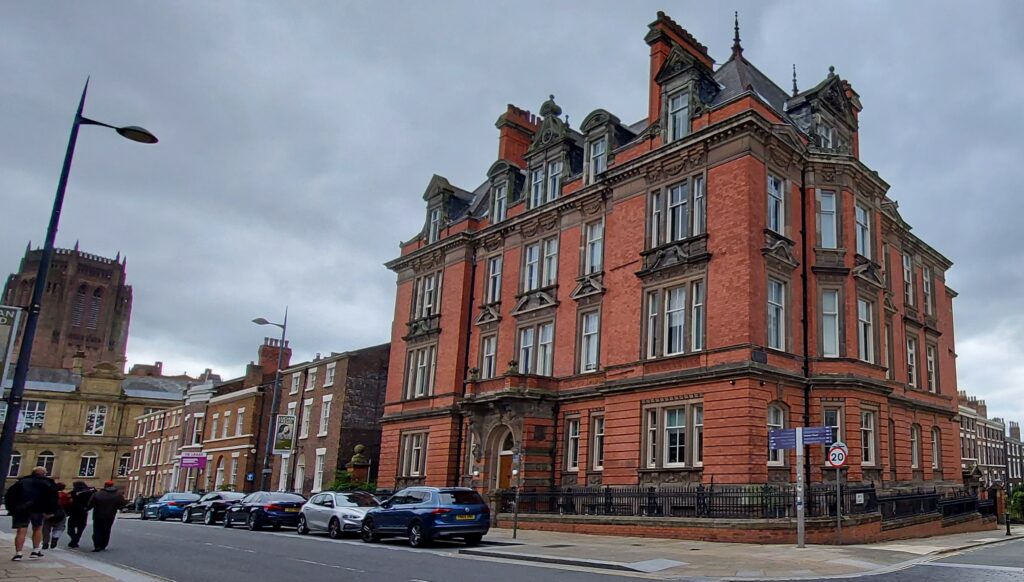
Some beautiful architecture around the local streets, include this street art called ‘A Case History‘ created by artist John King, is a collection of static suitcases which pay tribute to those who have both passed through the city and stayed to make it their home.”
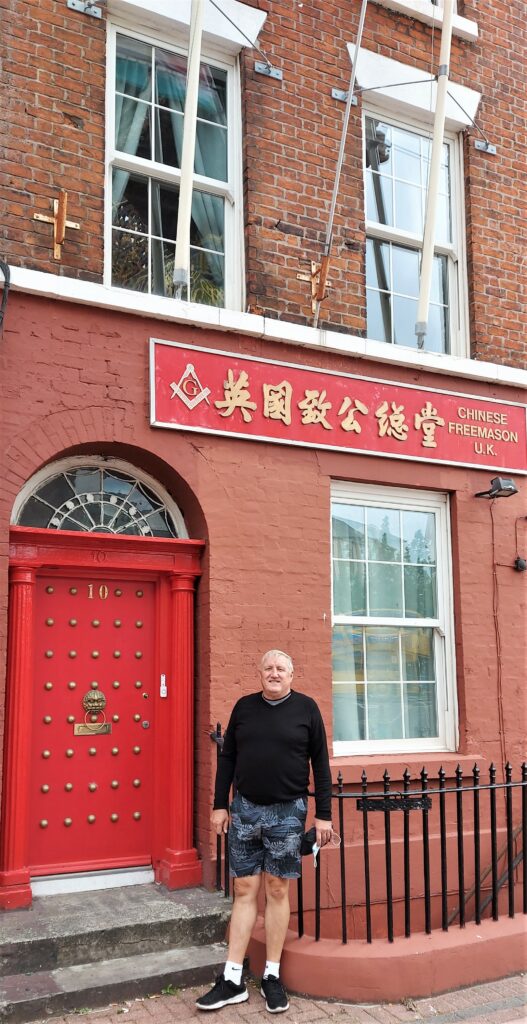
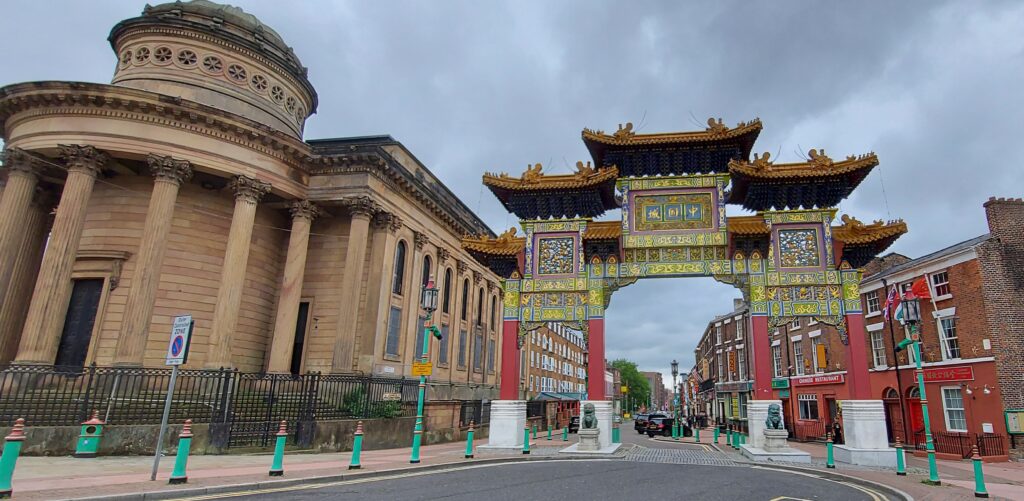
And finally, Chinatown! Compared to London’s Chinatown this was very disappointing, we were expecting bars, shops, restaurants, half a mile long, chatter, smells and noise. Nothing! A few closed restaurants, and a Freemason’s lodge, and that was it…..
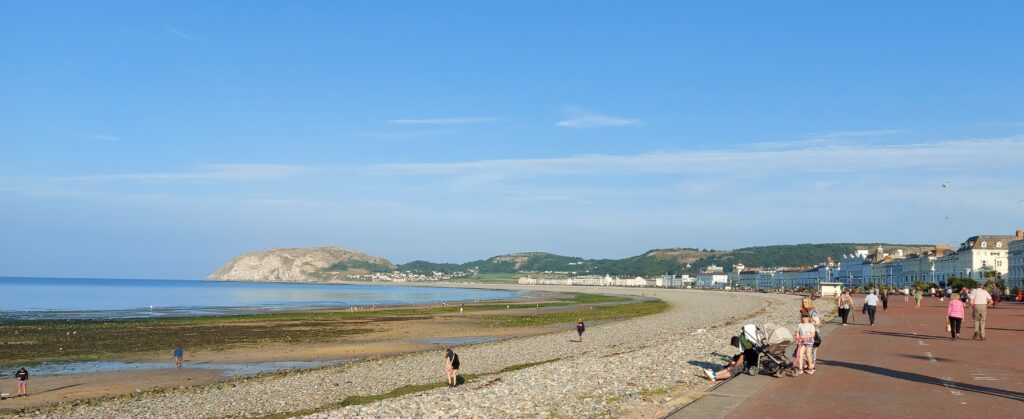
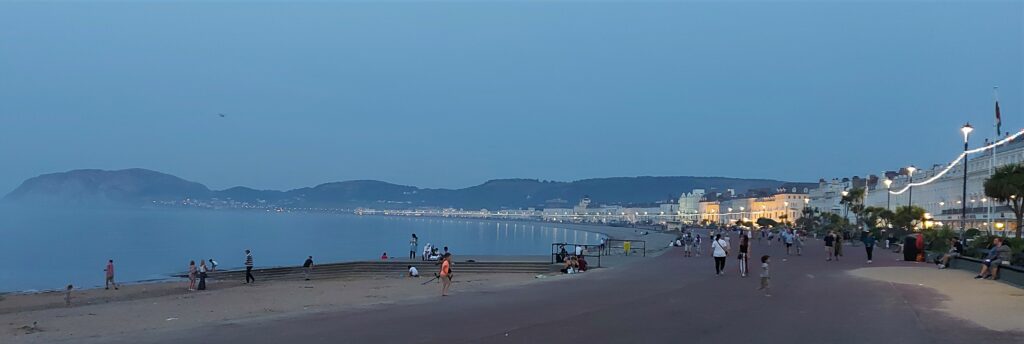
Llandudno was our nearest seaside resort to the camsite, we spent several days and evenings walking along its promenade during the summer heatwave!
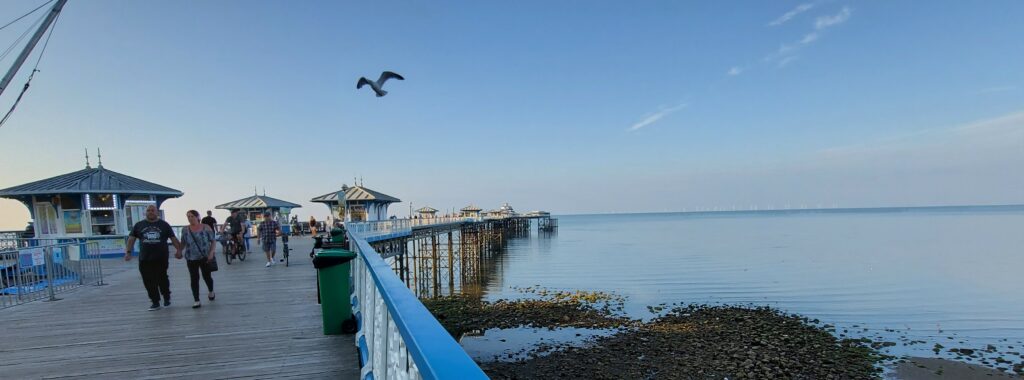
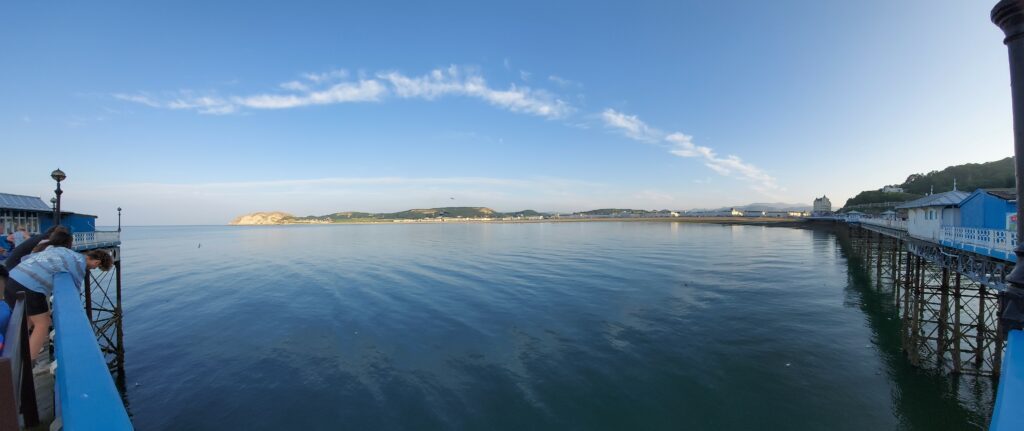
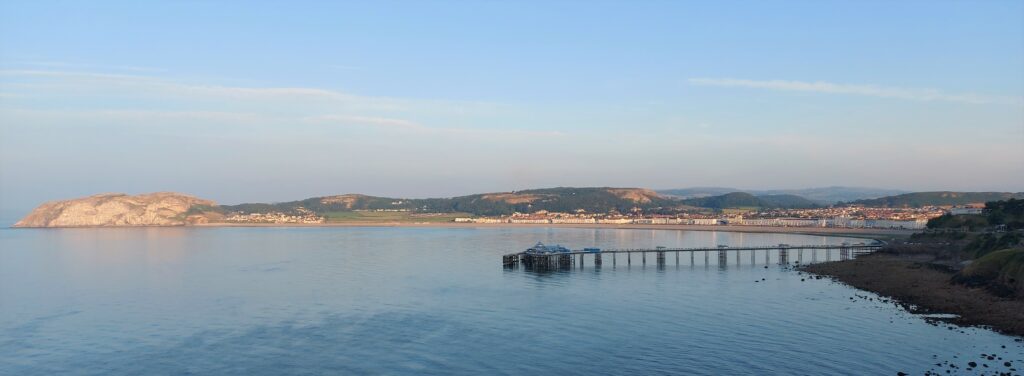
Llandudno is a really fascinating place, a huge sweeping bay, a ready made “resort” full of attractions for all the family, a huge paddling pool, a pier with amazing views and architecture.
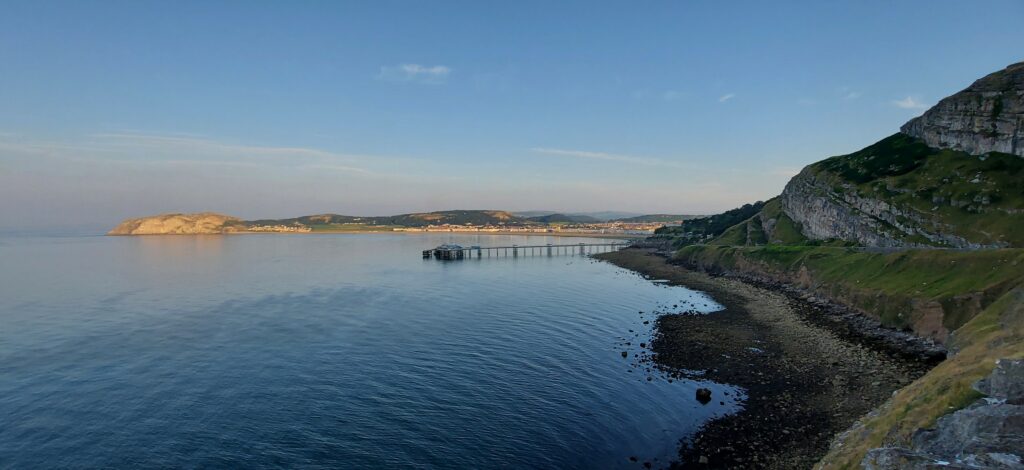
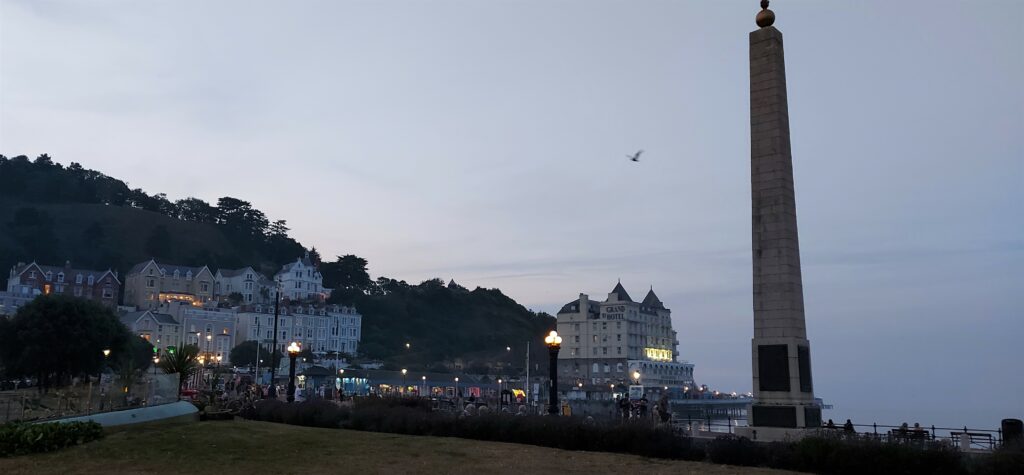
The Llandudno Pier pips the post as being the longest of its kind in Wales at 2,295 feet or 700 meters long. It was started in 1876 and was completed two years later and used to be home to the World’s oldest Punch and Judy show, not sure if it’s still there.
Views from the Pier
Great Orme
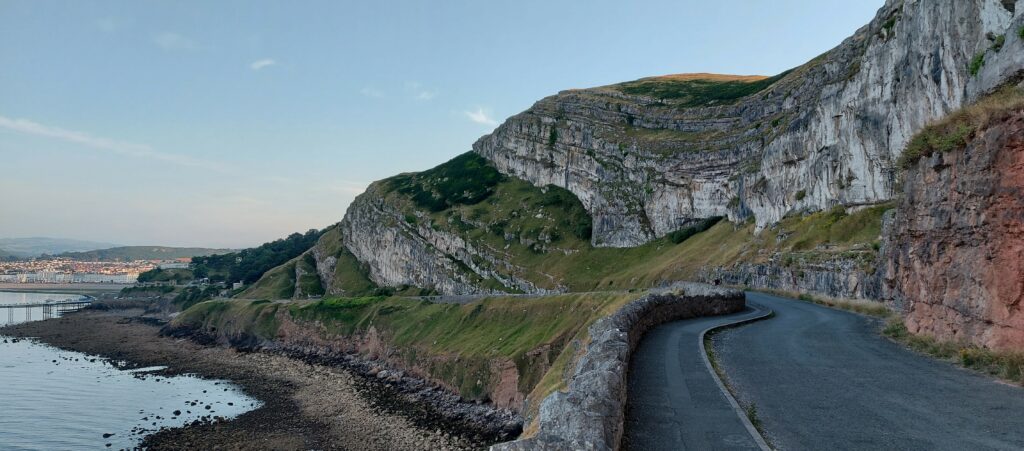
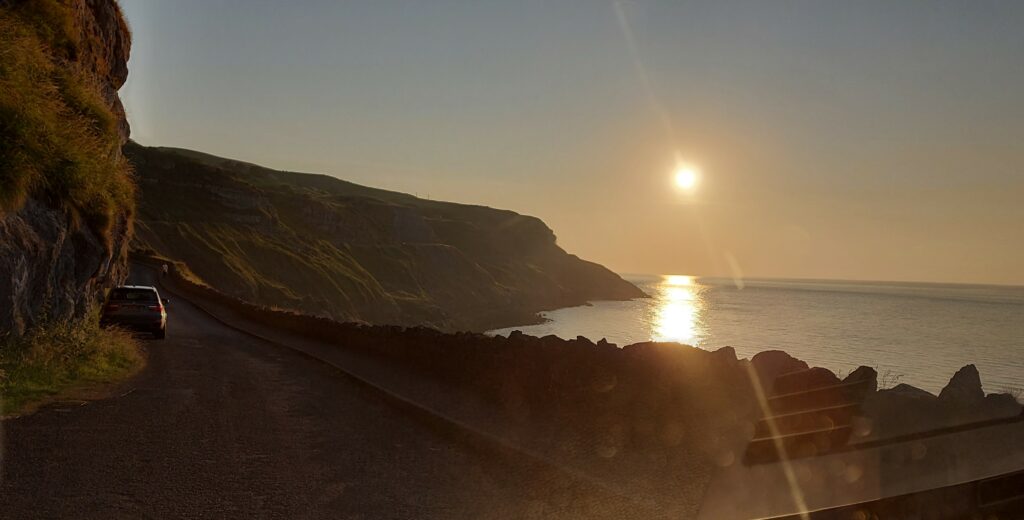
Behind the pier is a headland called Great Orme, which used to house a copper mine, now home to a tourist attraction and a cable car to the top of the headland. We took a night time drive around the coastal road. The mountain is also home to Kashmir goats, descended from goats originally given to Lord Mostyn (who owns the land) by Queen Victoria
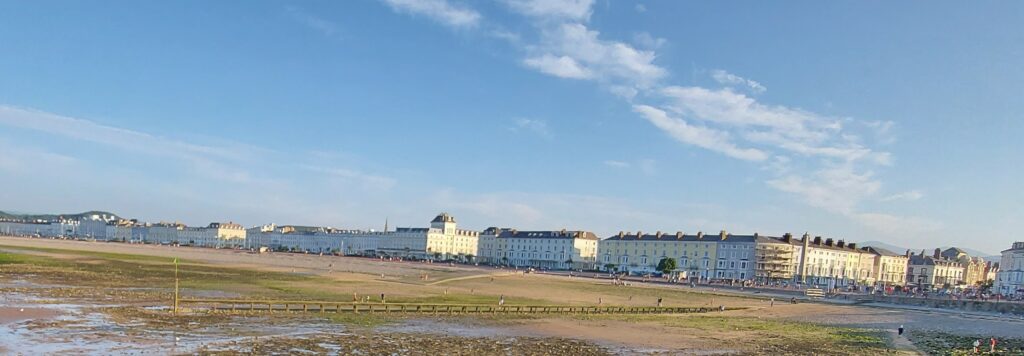
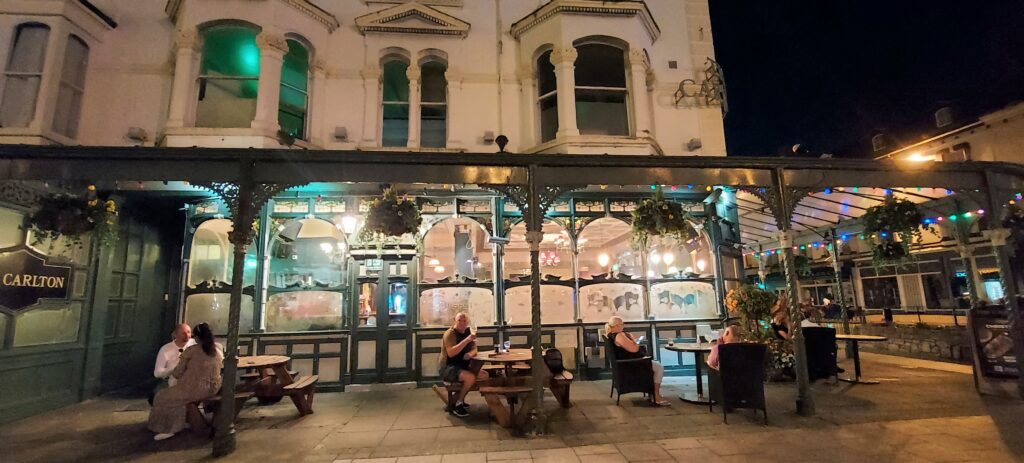
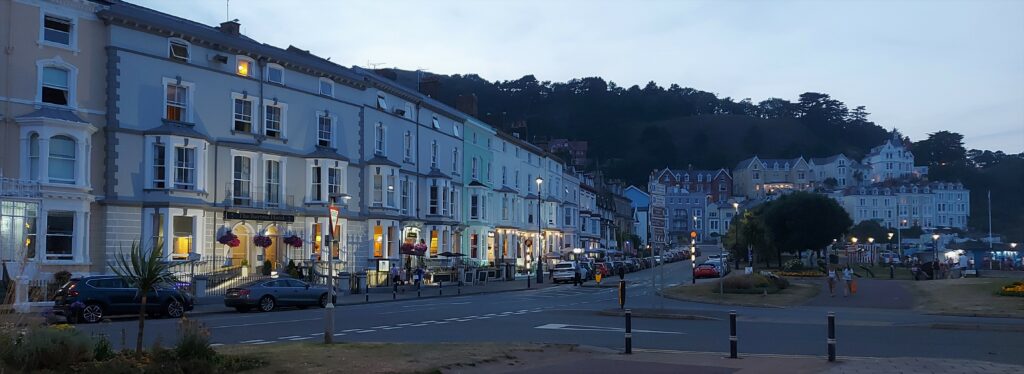
Llandudno Architecture
Llandudno is known as the largest seaside resort in Wales, local land owner Lord Mostyn set out to create a “holiday resort” between 1950 and 1912, building 3 or 4 storey terraces within a block design. The building heights are not allowed to exceed to street widths, creating wide tree lined avenues, bordered by Victorian style covered walkways. The retail side caters well for the numerous hotels, guest houses, apartments and B&Bs lined along the front.
Post Lockdown Hugs at Porthmadog & Portmeirion
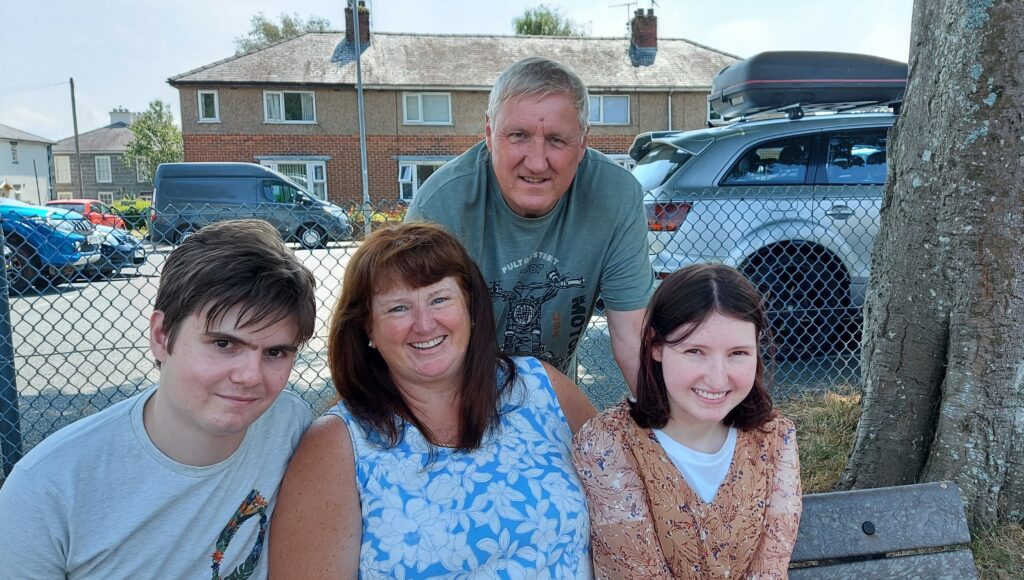
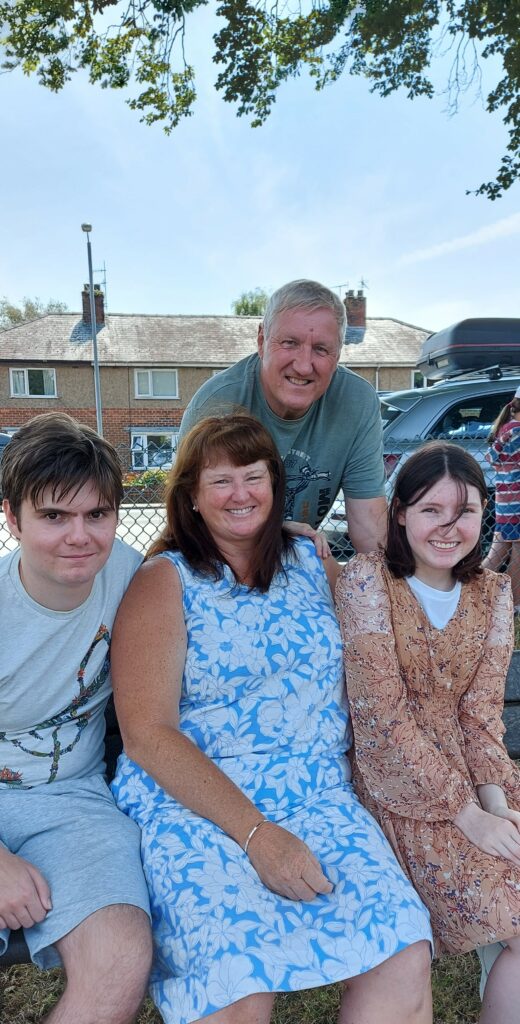
We had an hour’s drive out to surprise our niece’s children for a good hug post-lockdown and it was soooo lovely! Unbeknown to the children, we had pre-arranged to meet in a cafe on the High Street, the children didn’t know we were nearby or visiting so David went off to park the car and I hung around in the cafe. Our niece Carol and teenage daughter Libby arrived first, Libby was speechless and almost in tears, not sure if that was with pleasure or embarassment!
David had parked the car on the High Street, and dad Paul and son Jack walked right past Benny the BMW and didn’t notice David walking behind them!! Jack came into the cafe, and both him and I said at the same time “What are you doing here??” Lots of hugs and kisses later, we had a few hours with them all before they headed off south and we headed to Portmeirion for the afternoon, all loved up!
I love cuddles with these kids!!!!!
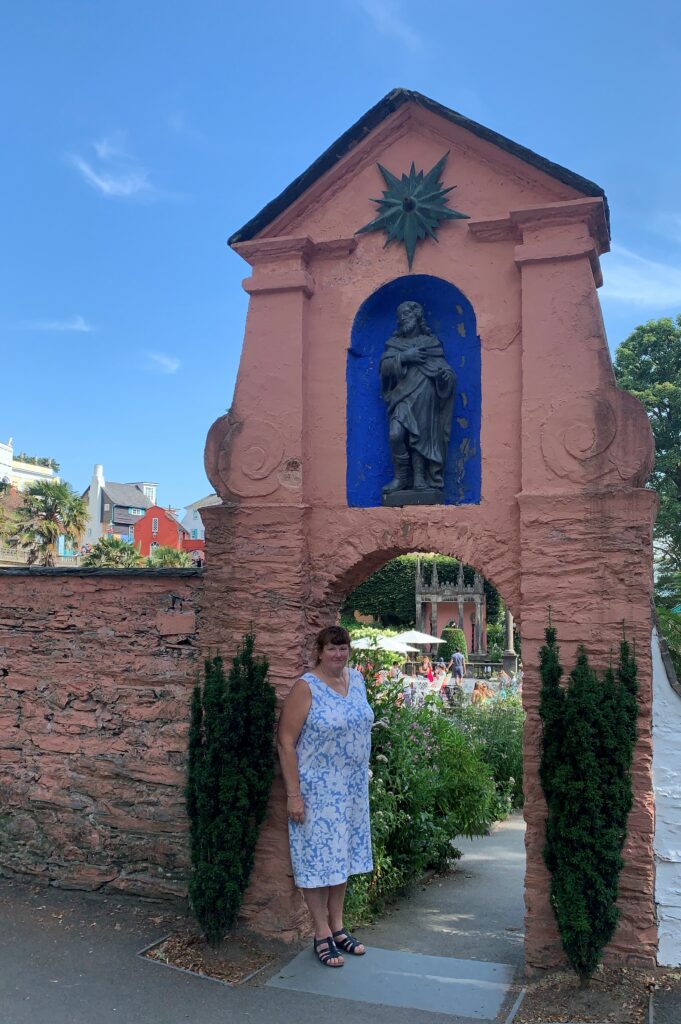
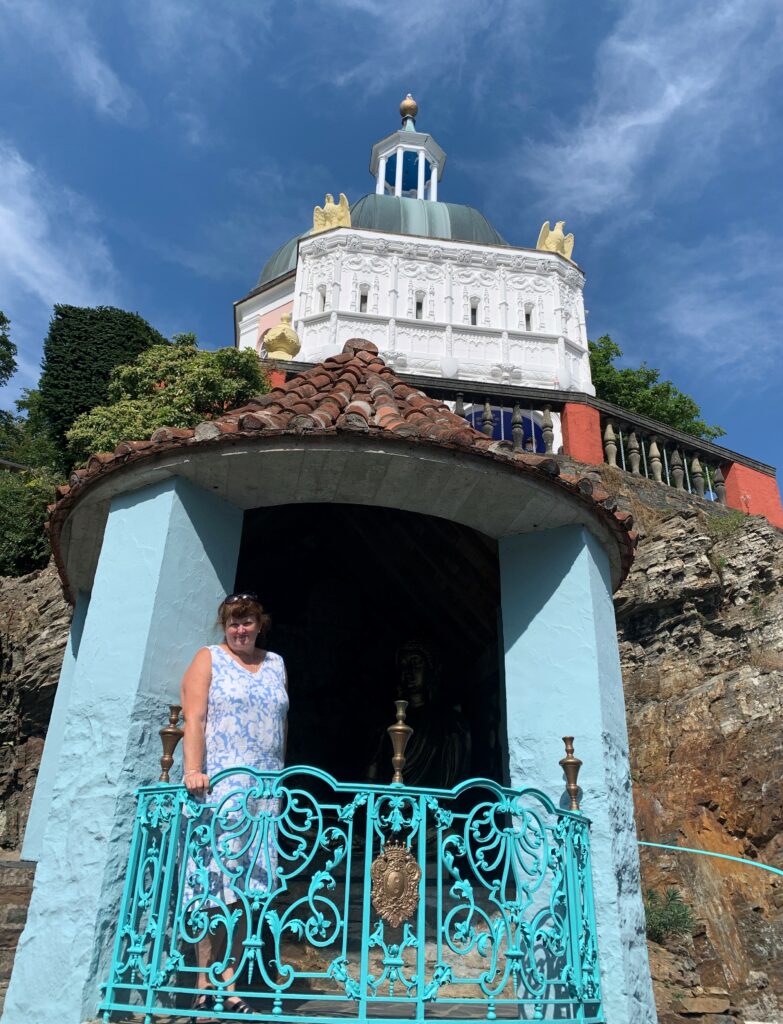
Portmeirion
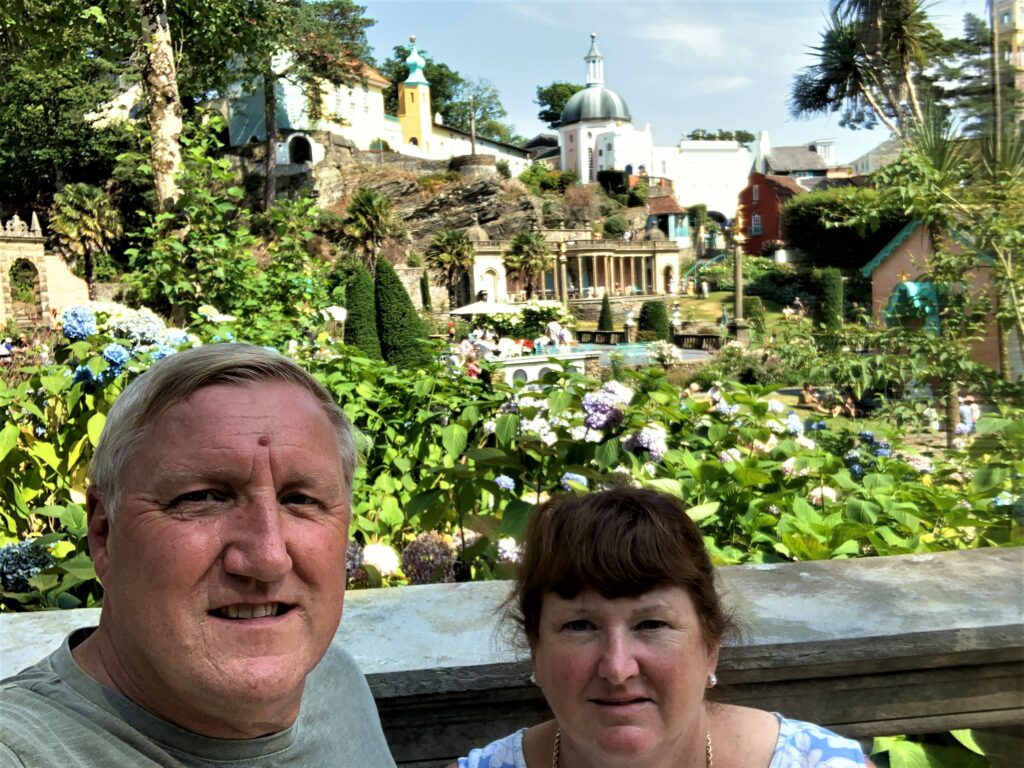
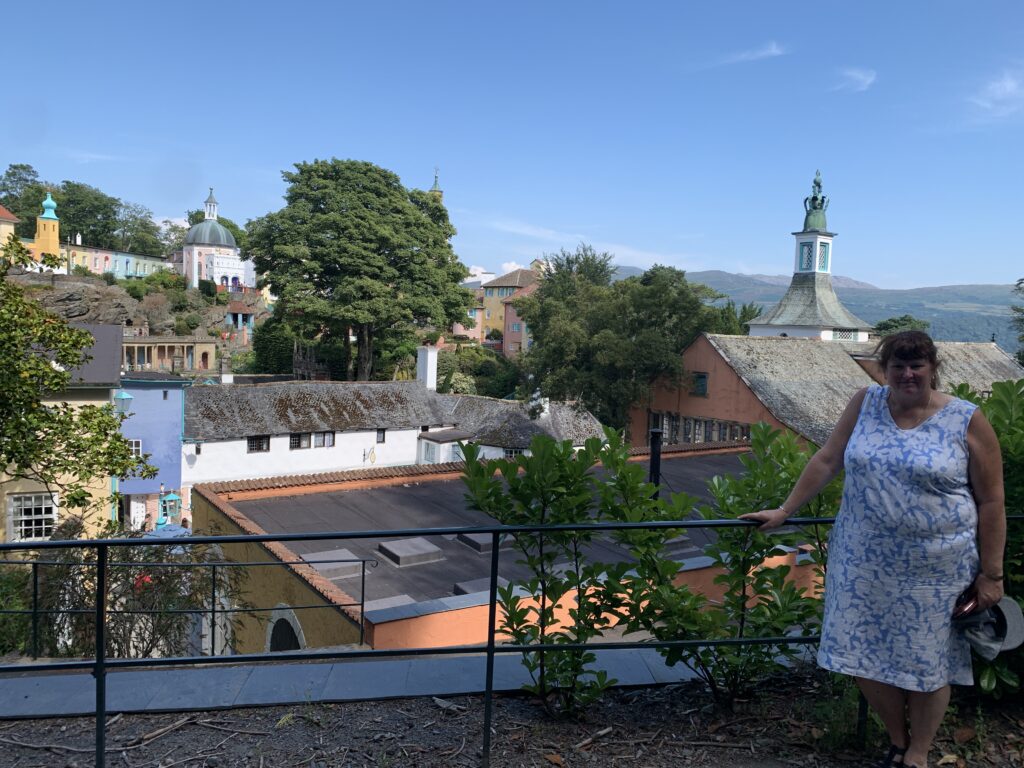
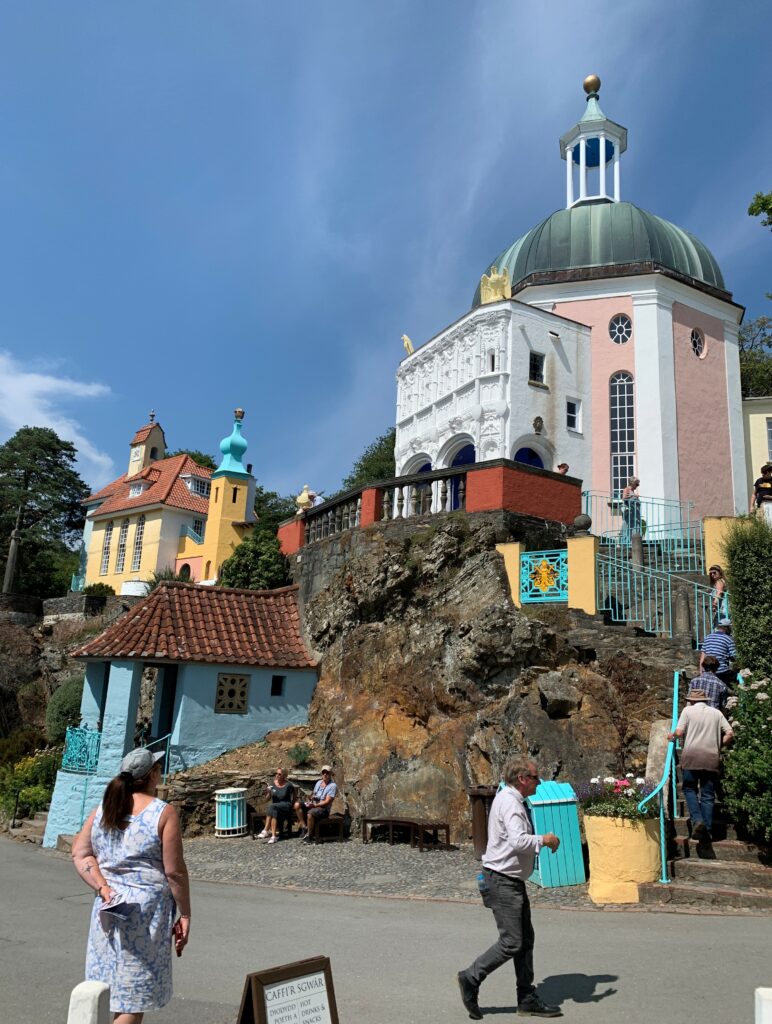
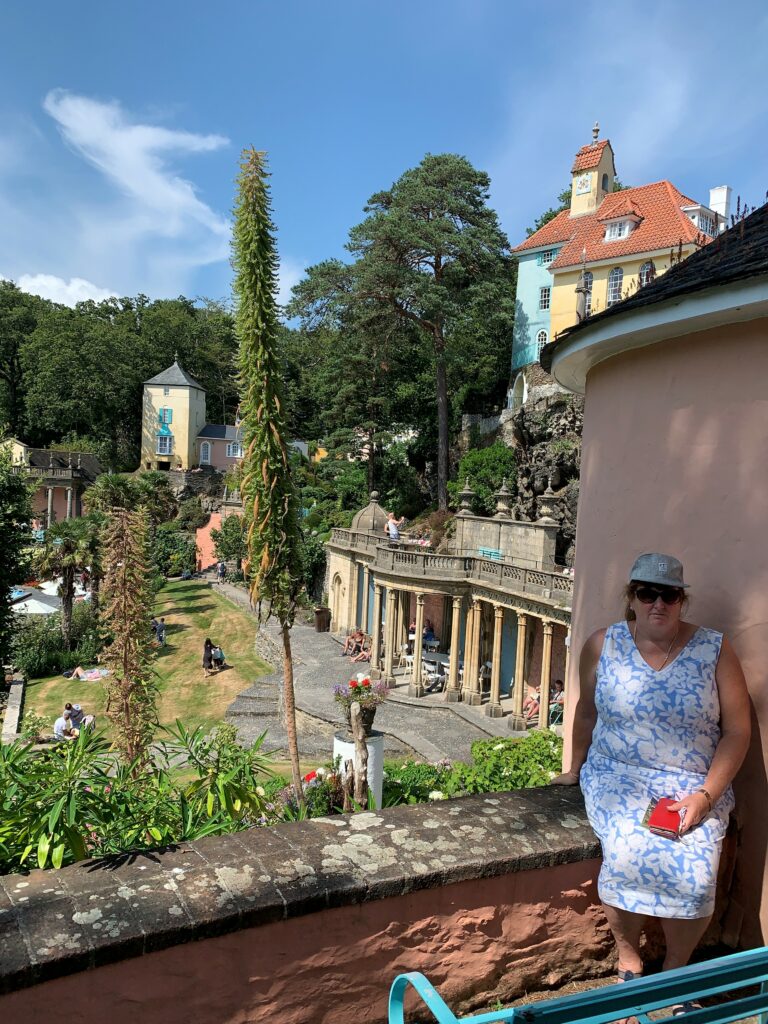
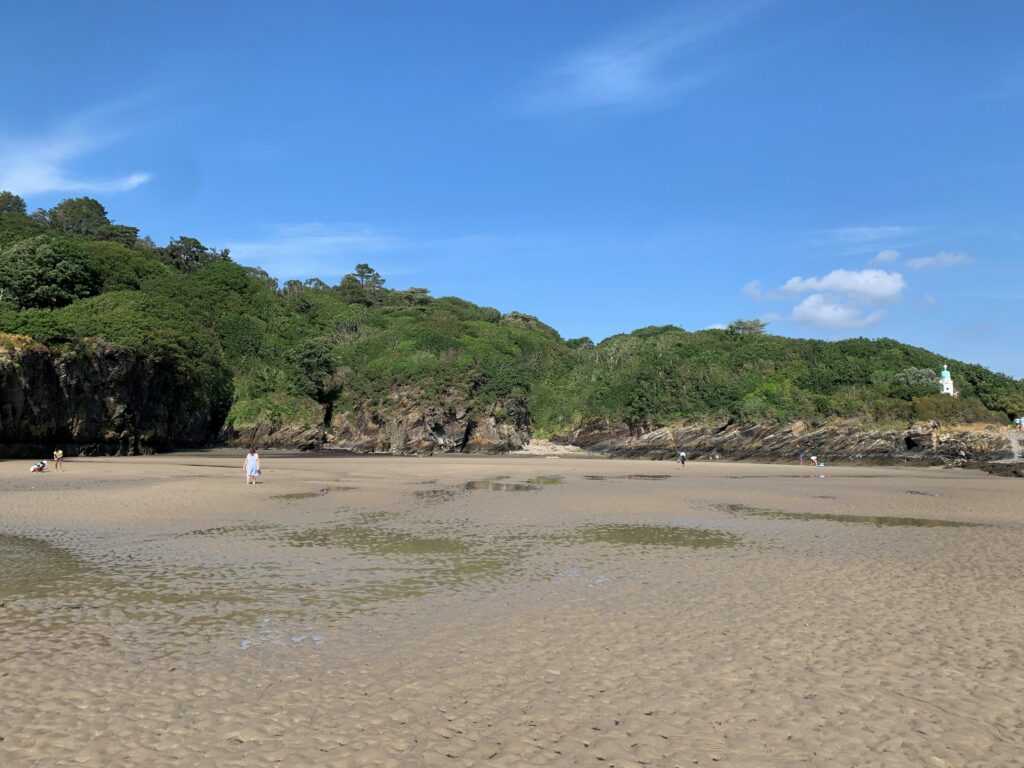
I recall taking my mother in law to this village years ago, just her, me and Caity aged about 6 or 7, so about 15 years ago!! I thought it was a quirky magical place then, we were there in October and walked around the grounds. It was the dream of one man who had an idea of how a village could be created for the past, current and future, taking advantage of the protected climate in a bay on the tidal Dwyryd estuary. It was designed and built by Sir Clough Williams-Ellis between 1925 and 1975 in the style of an Italian village.
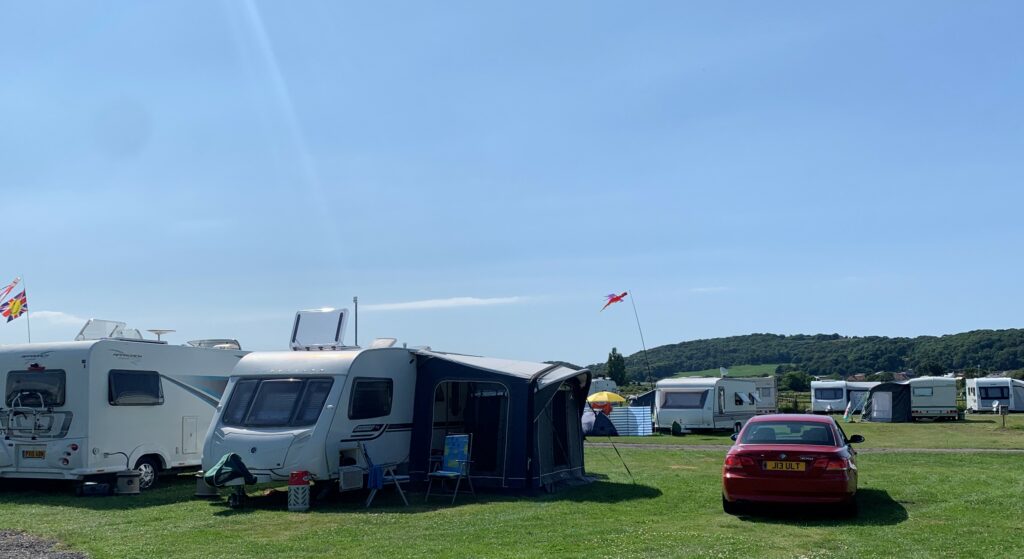
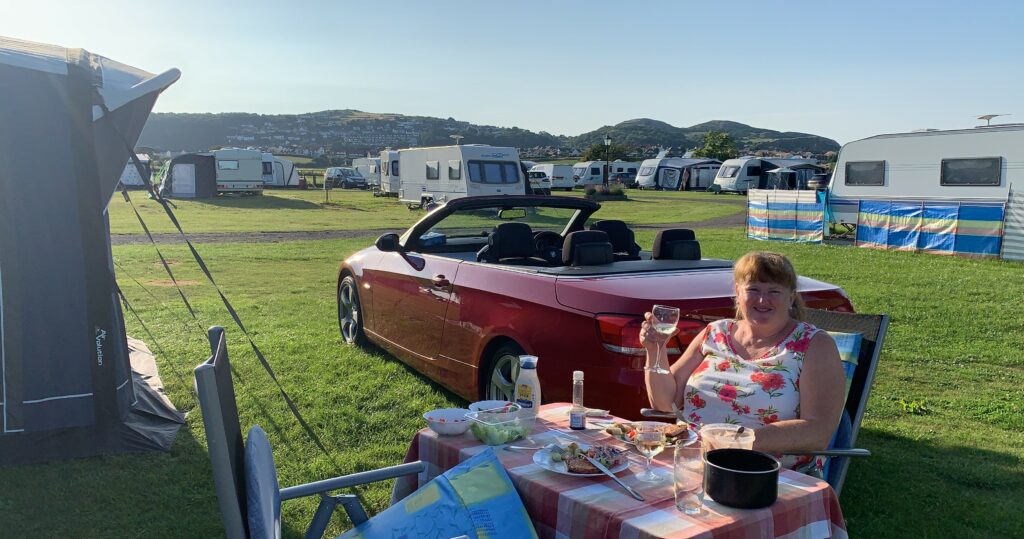
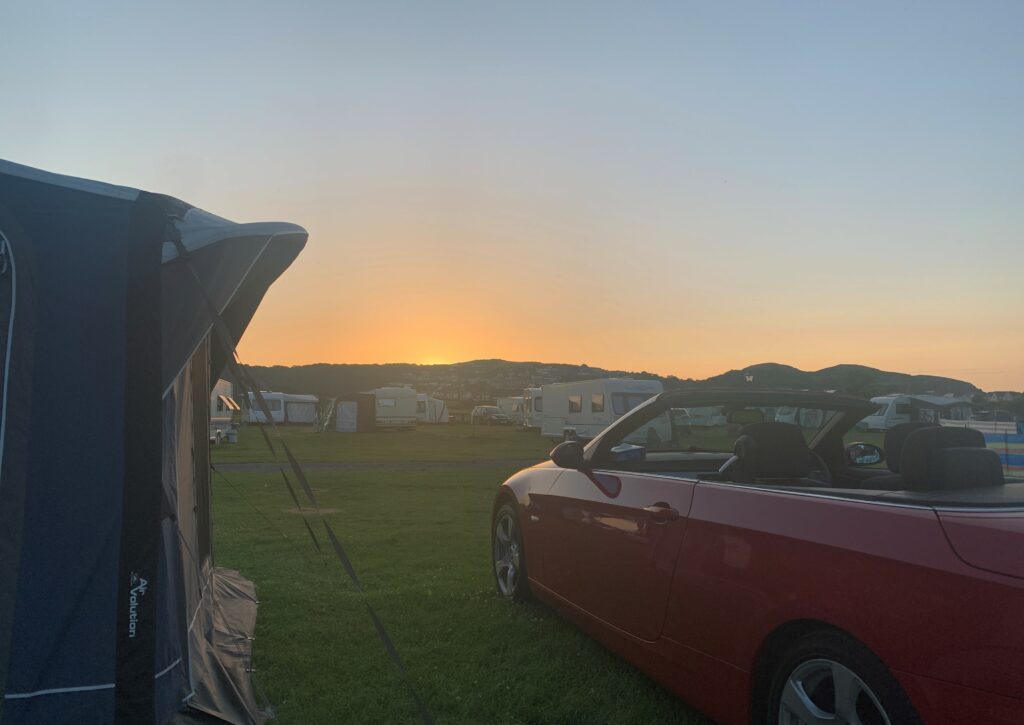
We decided to give Bessy and Benny some Welsh air and try to learn bit of Welsh language so we booked them into a campsite in Rhos on Sea, just outside Llandudno.
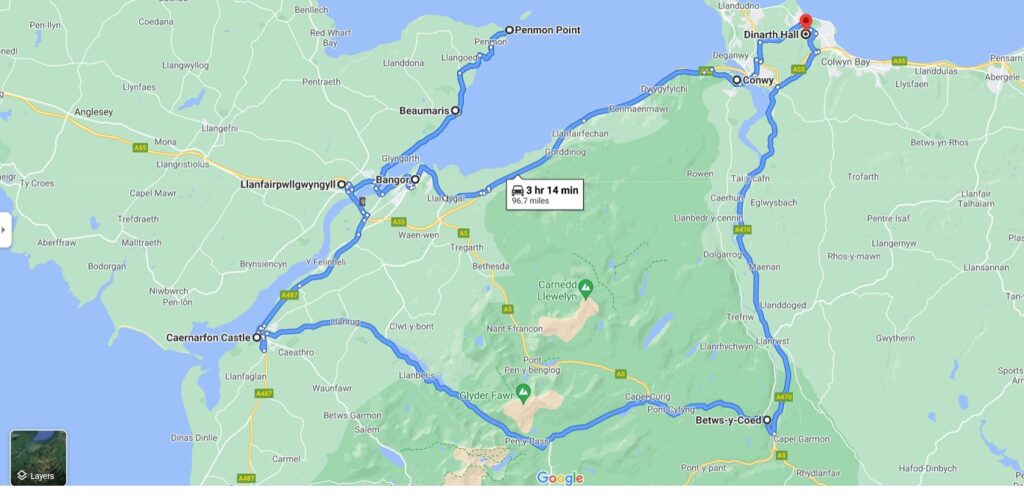
I say a campsite, but it was just a field on a working farm, but a great base to start touring. We had a day out with Benny and visited a few castles and Snowdonia National Park, 100 miles round trip with the top down was amazing on a lovely sunny day.
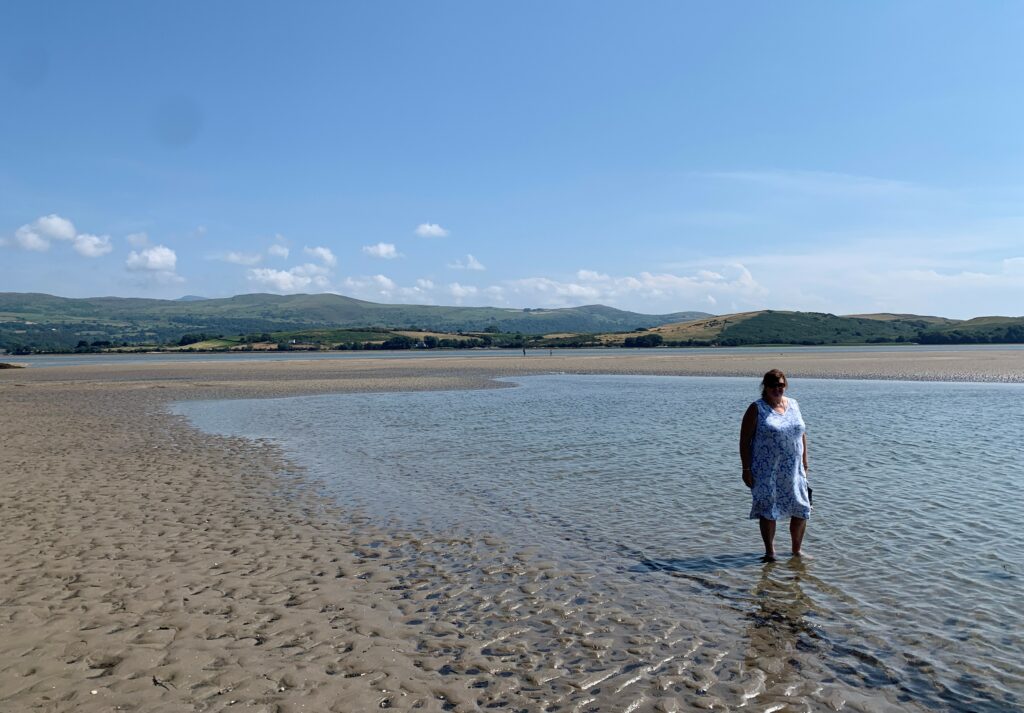
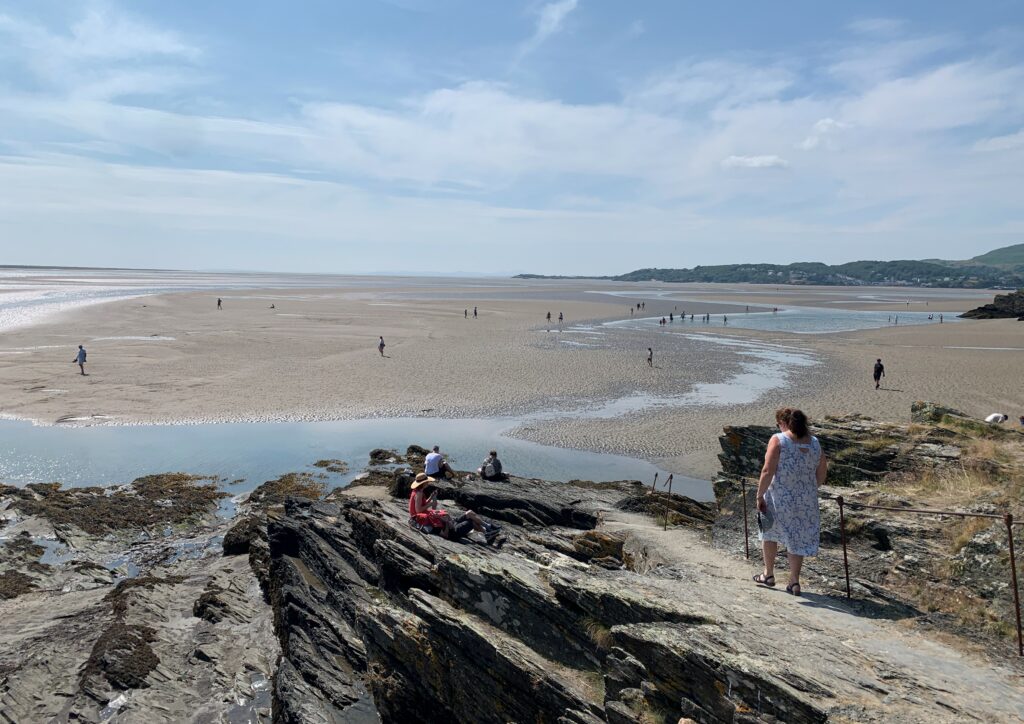
Another day out was a little further afield to Porthmadog for a surprise meeting with family and then to Portmeirion for an afternoon wandering the Italianate gardens, a paddle in the seawater pools then another beautiful drive back through the Welsh Mountains.
We’ve also spent some time in Llandudno itself, a pretty coastal resort with a long long pier!
Our Castle Day – Conwy
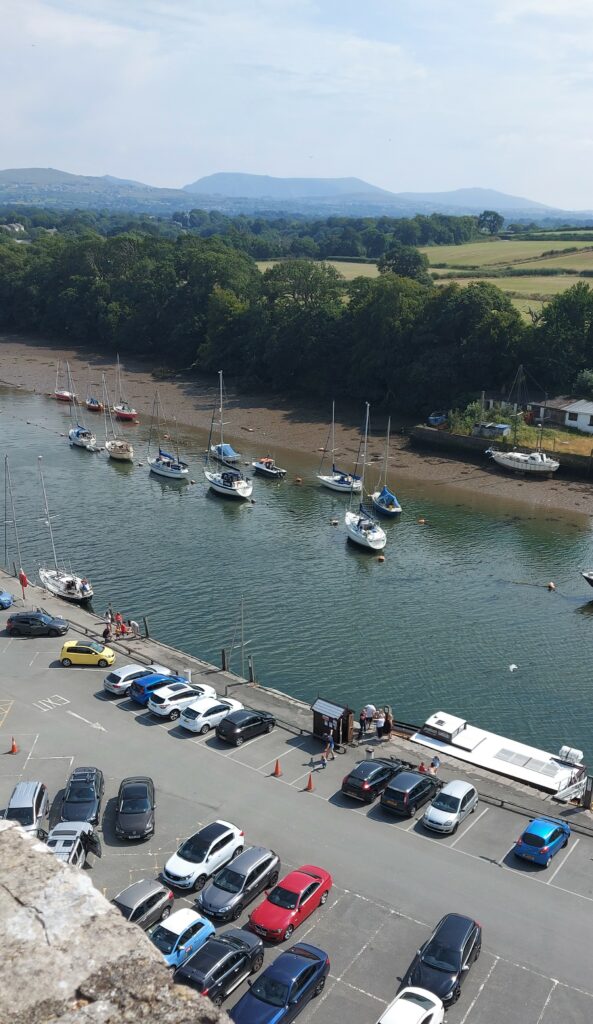
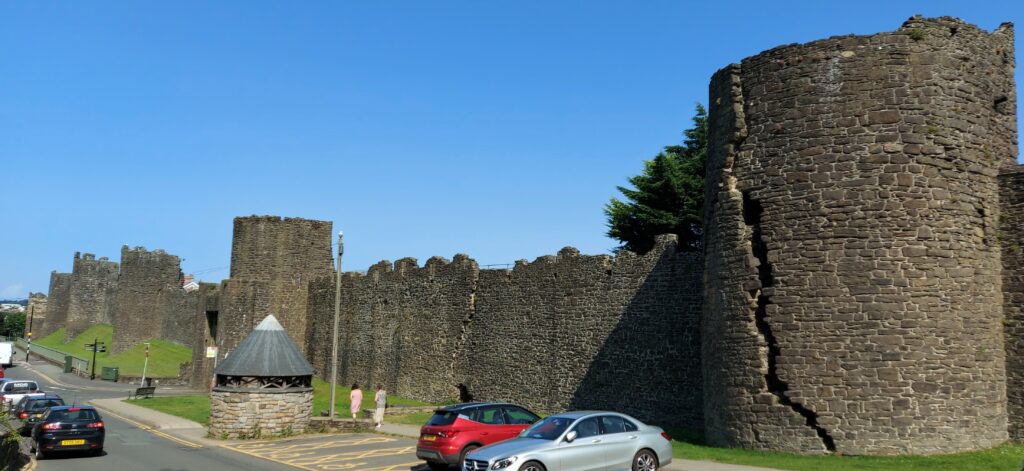
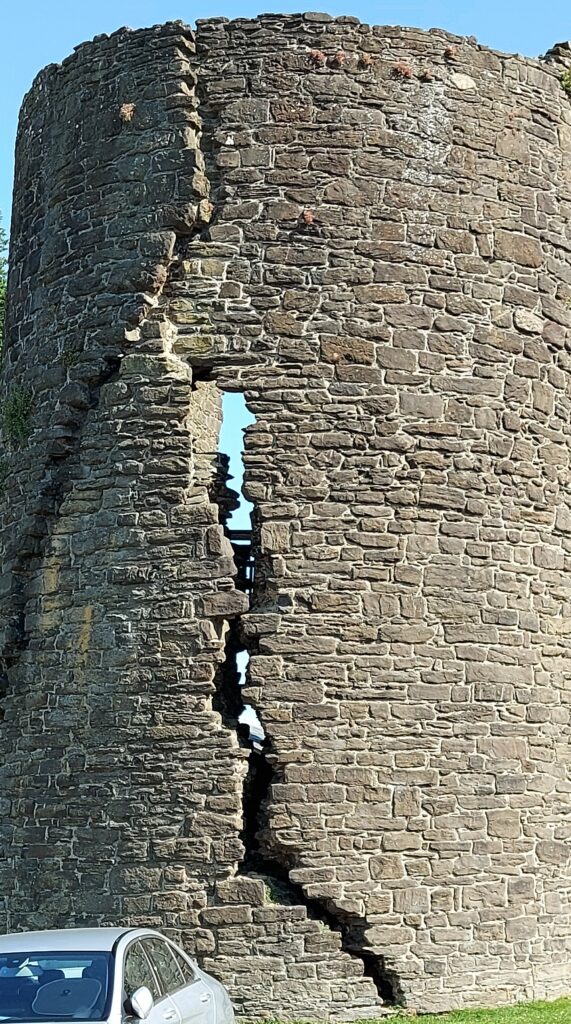
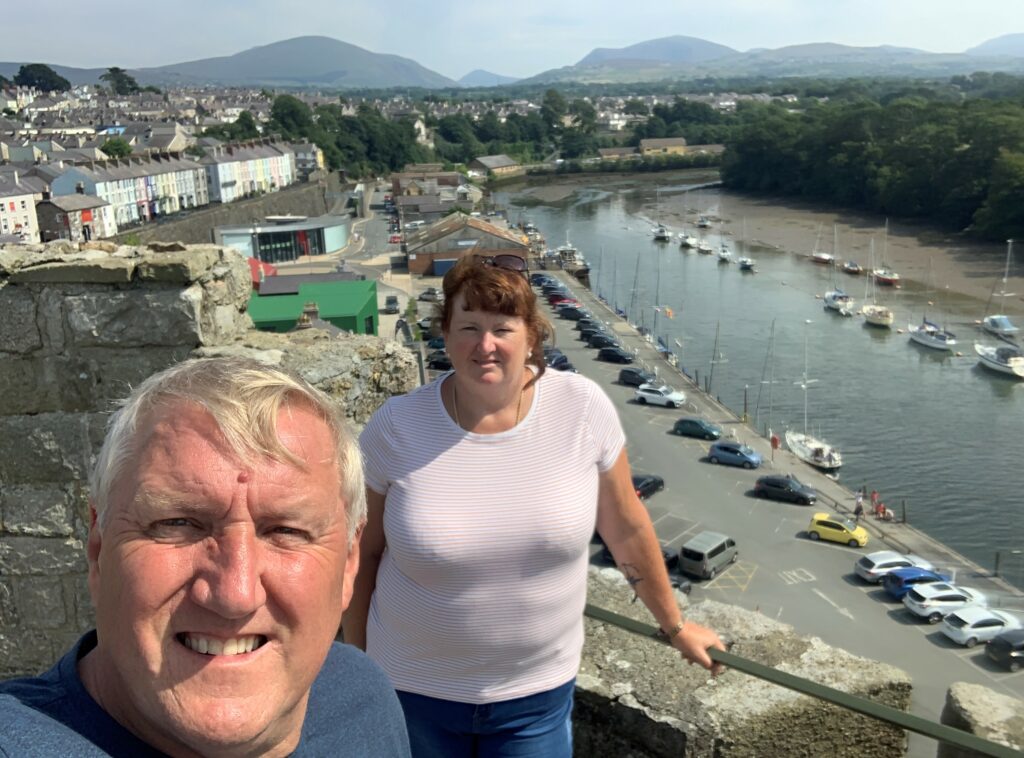
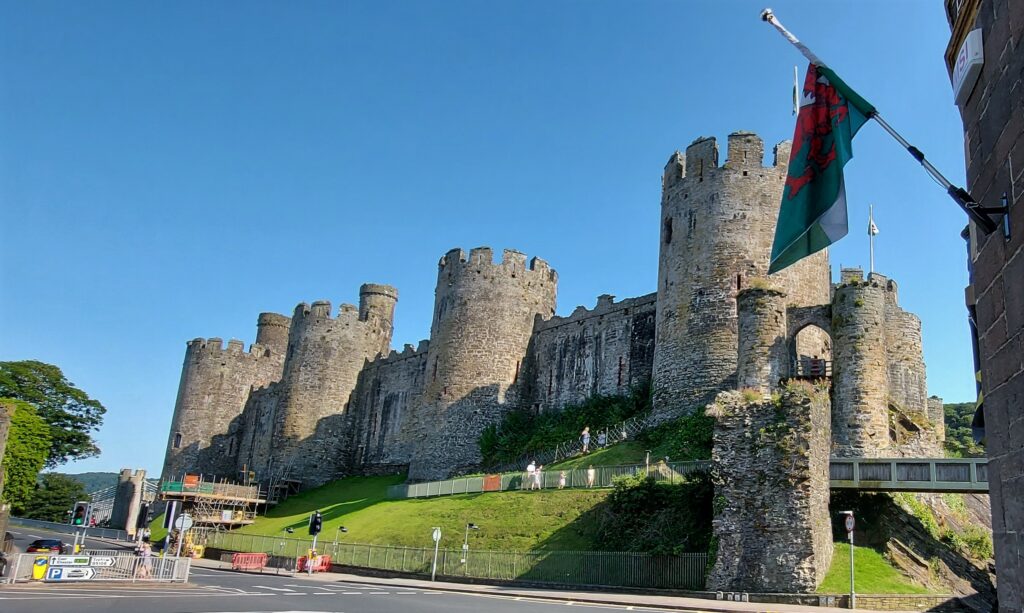
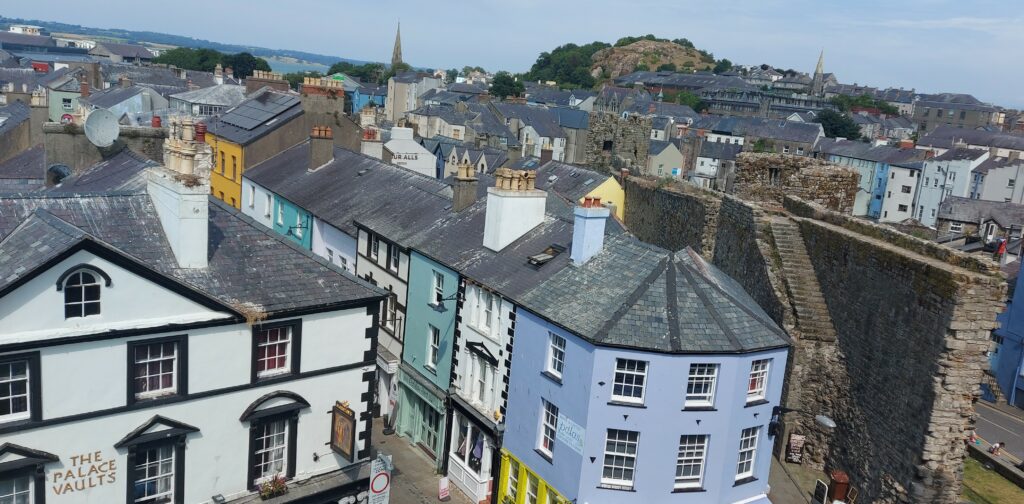
First stop was Conwy Castle, a complete walled city within the Castle walls. We walked around the inner streets, and had a quick look at the walls (which needed some attention in places!!) but it was far too hot to do the complete walk around the walls.
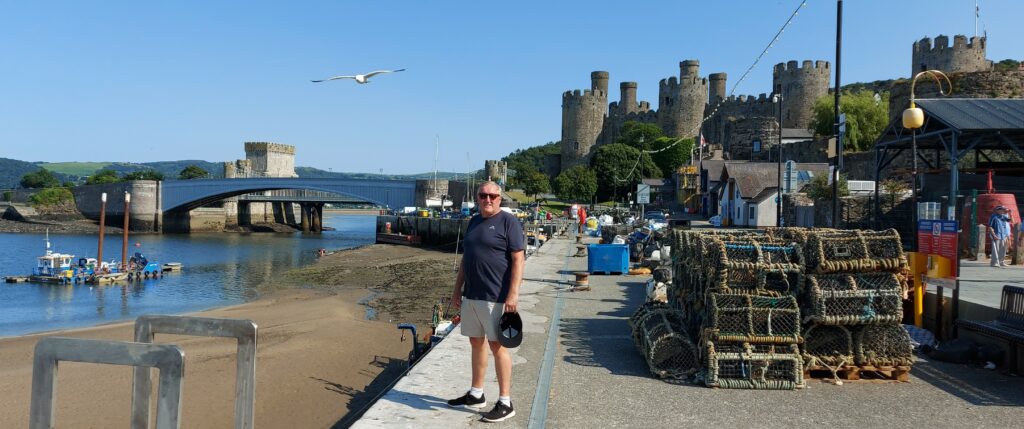
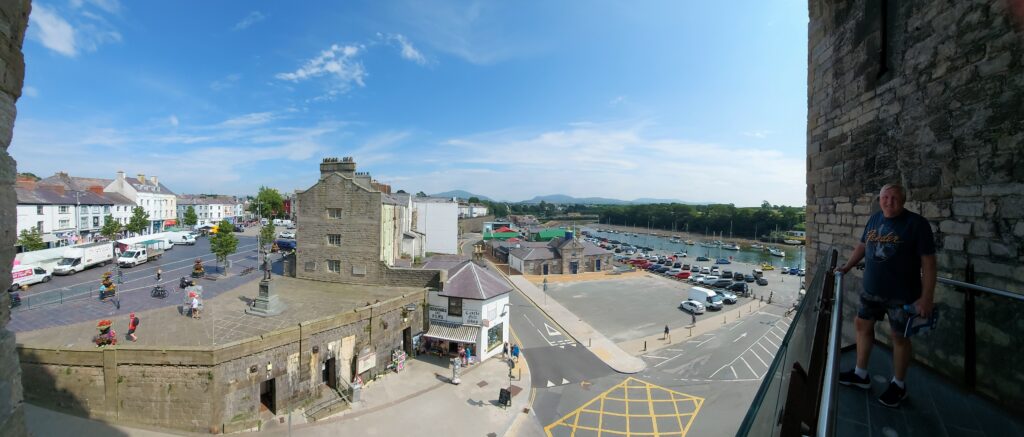
Its considered a fortress, built by King Edward I and his architect Master James of St George who built both castle and walls in a barely believable four years between 1283 and 1287. In the distance rise the craggy mountains of Snowdonia and spread out below are the small harbour and narrow streets of Conwy – still protected by an unbroken 1,400-yard (1.3km) ring of town walls. It has World Heritage status, along with 3 other castle in Wales.
Spot Benny in the car park?
Fortress walls
Some serious structural issues!
Snowdonia in the background
Part of the main castle
Walking alongside the prom
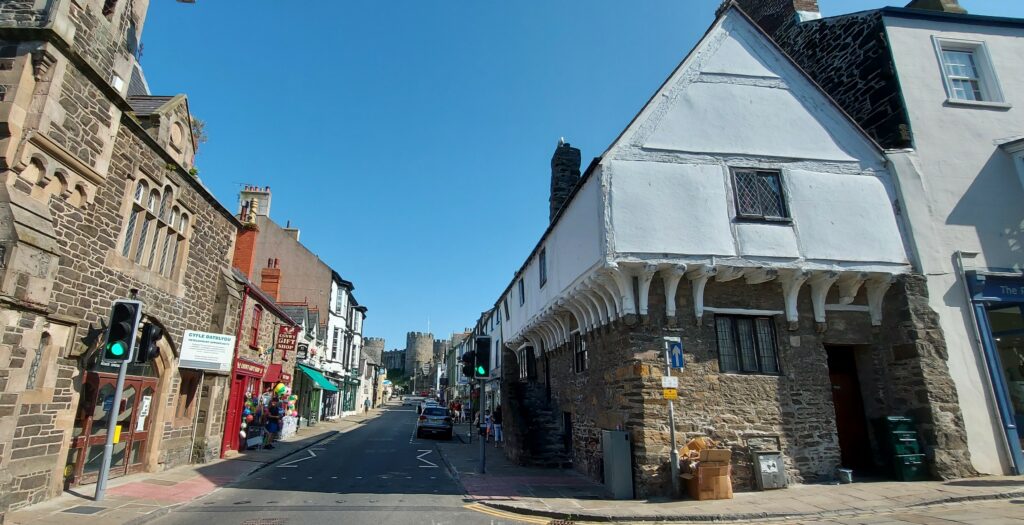
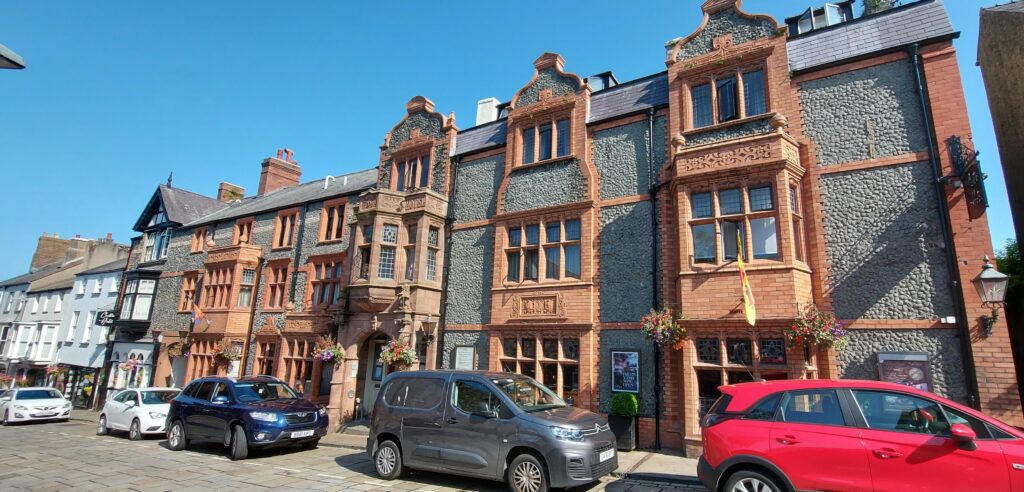
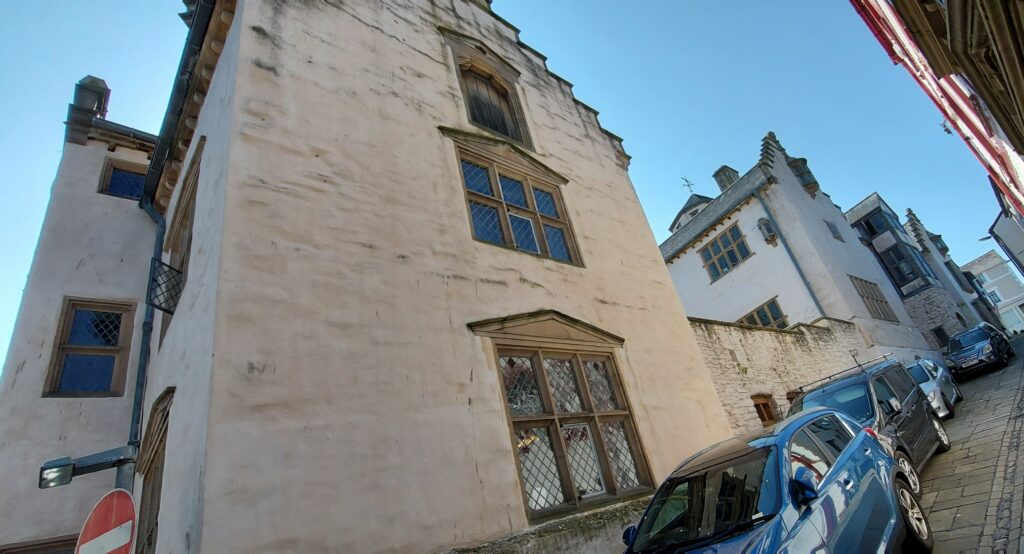
Old buildings within the town
Beautiful architecture
Amazing old houses
Next Stop Bangor
This small cathedral city is known for so many things:
being the oldest city in Wales
it has the longest (retail) High Street in Wales at 1.265 km (0.79 mile)
in 2021 has the world’s first non-binary (elected) Mayor – and at 23 years old, was the youngest Welsh Mayor ever elected.
has the second longest pier in Wales, 460 metres.
In 1967, the Beatles were in Bangor meeting the Maharishi Mahesh Yogi when they learned of the death of their manager Brian Epstein.
Singer Duffy was born here in 1984.
The town is mentioned in the Fiddler’s Dram 1979 hit single “Day Trip to Bangor”.
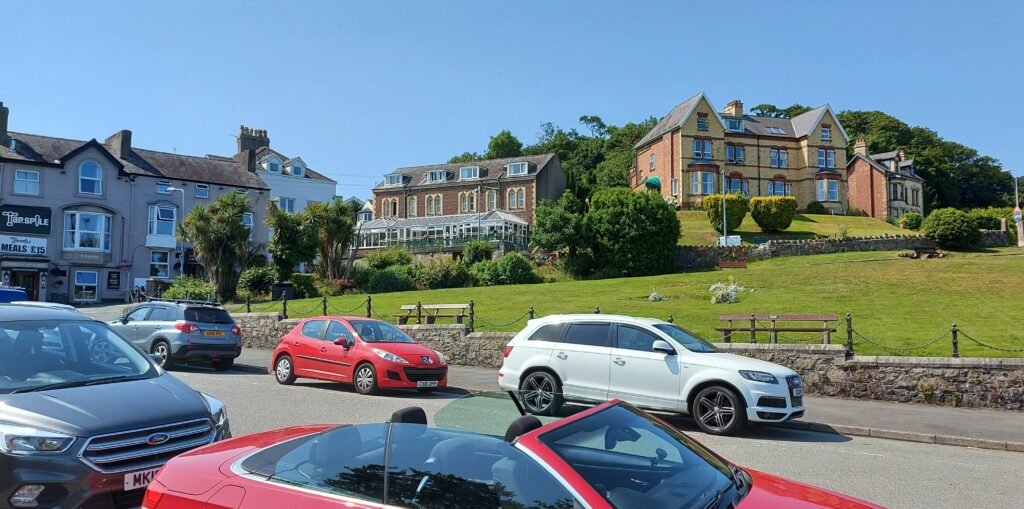
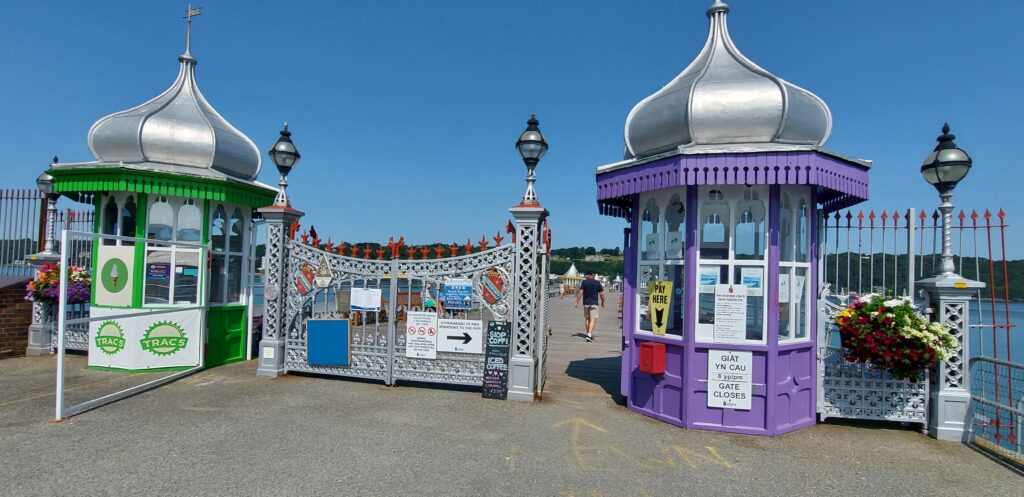
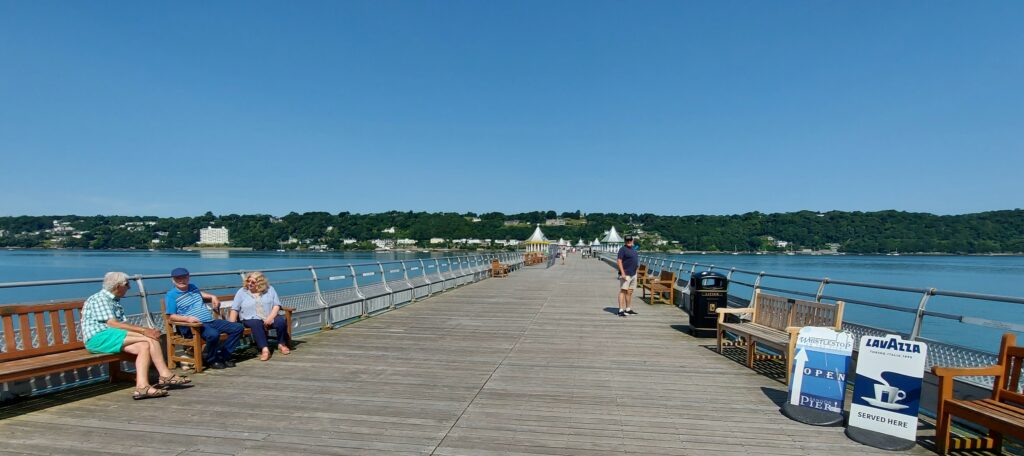
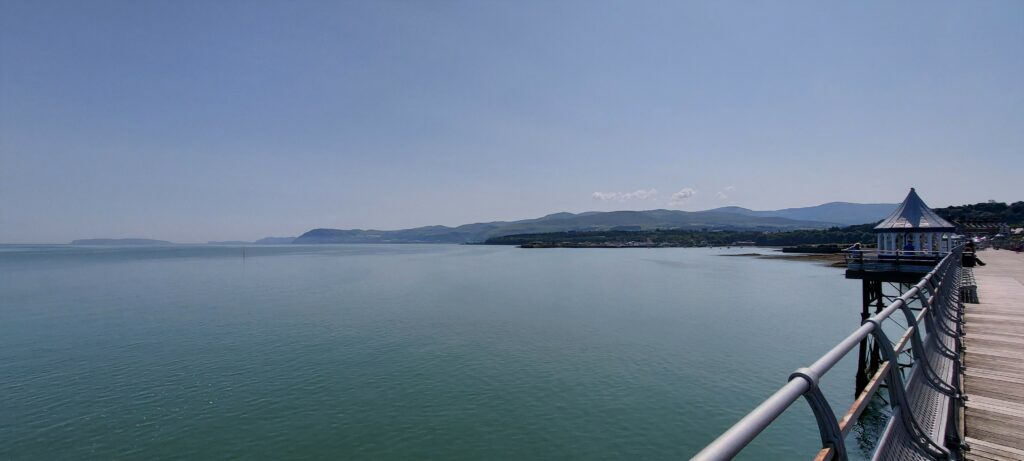
We headed down to the pier which looks across the Menai Strait towards Anglesey and admired the scenery. The pier was opened in 1893 and after several closures, mainly due to expensive repair costs, it was sold to the County Council in 1974, who gave it a Grade II Listed building status and secured its future. The British Listed Buildings inspector considered it to be “the best in Britain of the older type of pier without a large pavilion at the landward end”. Restoration work took place over several years, and the pier was re-opened to the public on 7 May 1988, however it’s now in need of more work……
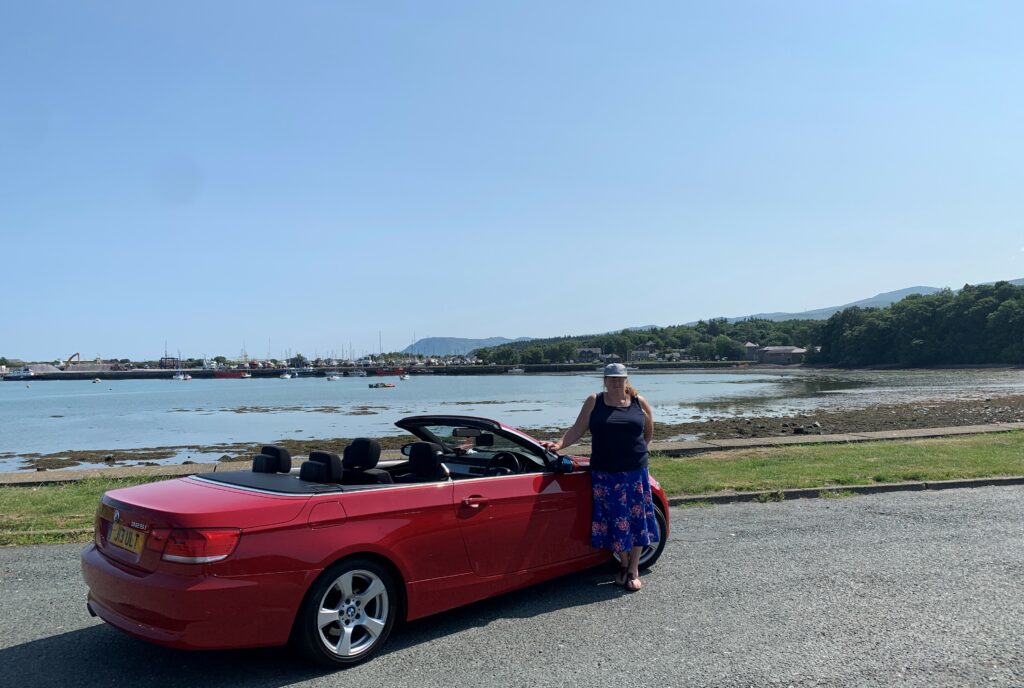
Benny enjoying the views
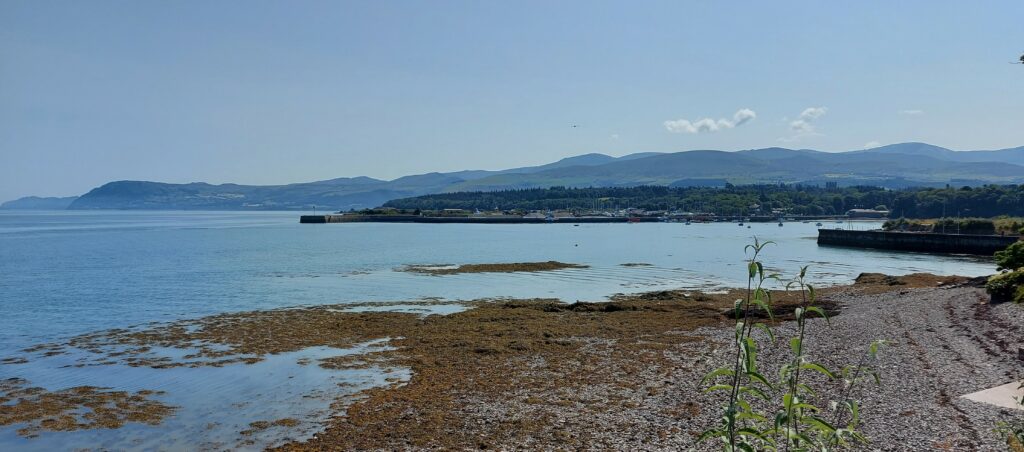
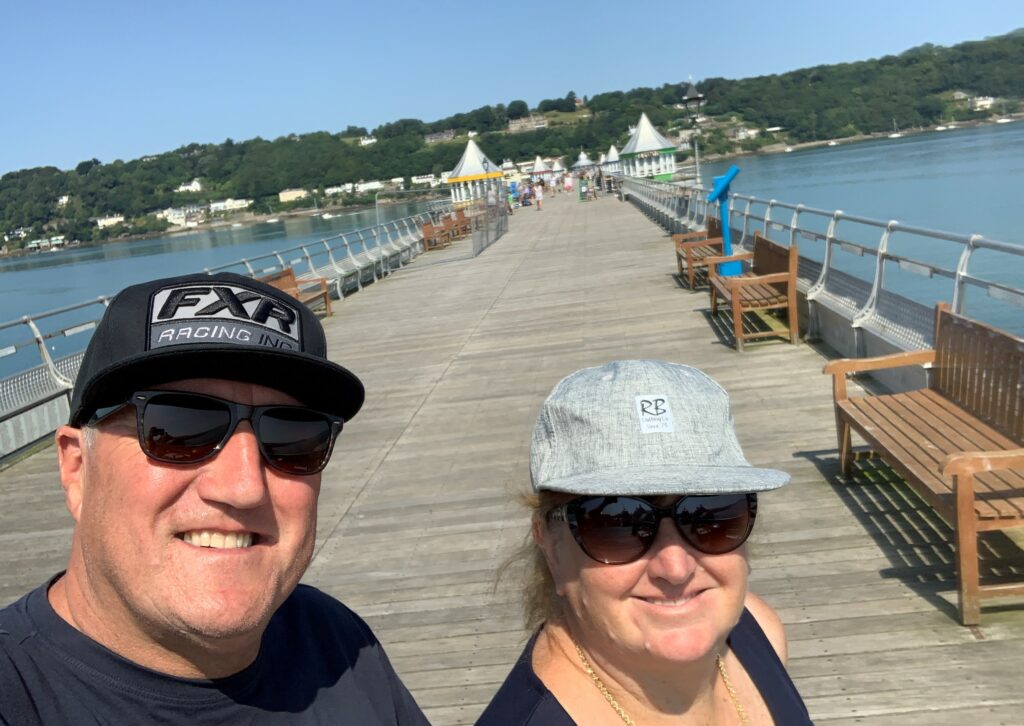
Views of the Menai Strait
Benny parked by the Garth Pier
Entrance to the Pier
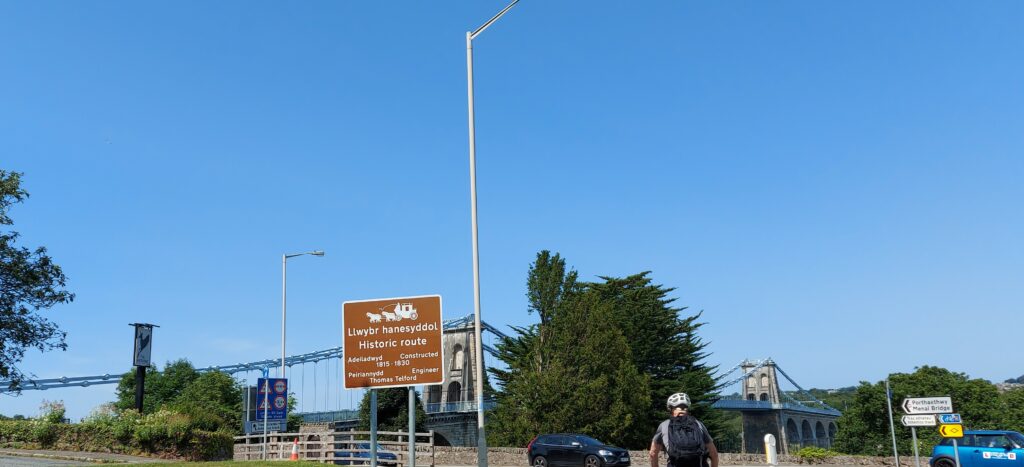
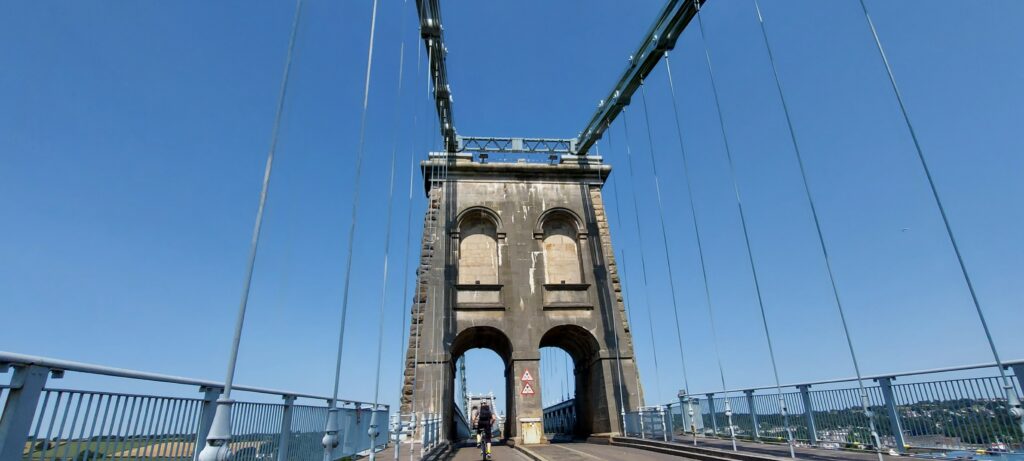
We crossed the Menai Bridge into Anglesey
Anglesey – Beaumaris and Penmon Point
We landed in Anglesey and turned right, towards the Eastern point of the Island.
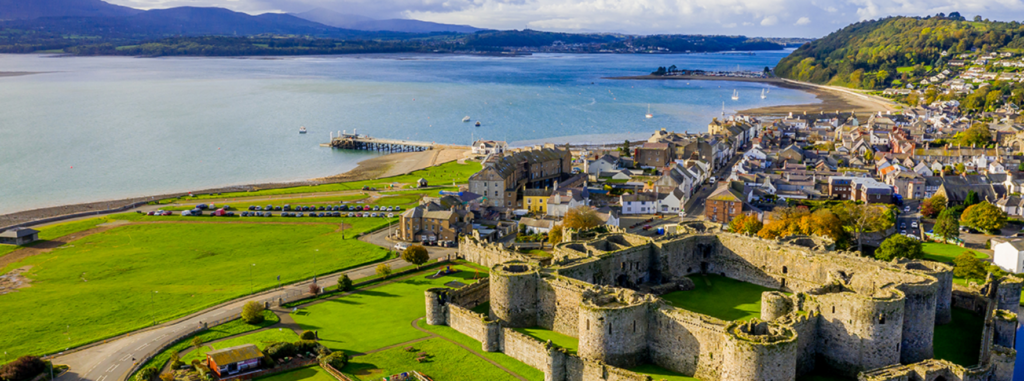
Beaumaris is a small seaside town full of cafes, restaurants and take aways, all catering for the visitors to the castle.
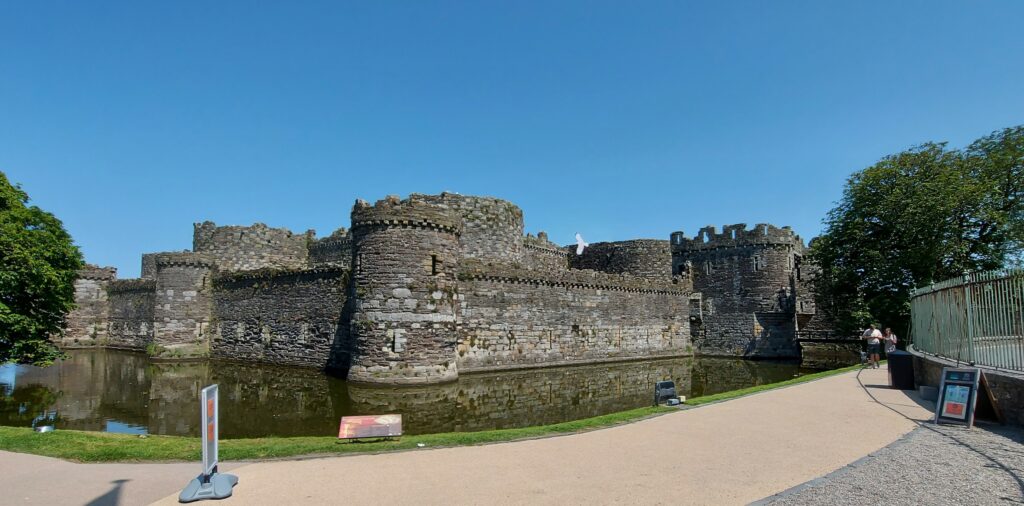
Beaumaris Castle is famous as the “greatest castle never built” . It was the last of the royal strongholds created by Edward I in Wales – and perhaps his masterpiece.
Here Edward and his architect James of St George took full advantage of a blank canvas: the ‘beau mareys’ or ‘beautiful marsh’ beside the Menai Strait. By now they’d already constructed the great castles of Conwy, Caernarfon and Harlech. This was to be their crowning glory, the castle to end all castles.
The result was a fortress of immense size and near-perfect symmetry. No fewer than four concentric rings of formidable defences included a water-filled moat with its very own dock. The outer walls alone bristled with 300 arrow loops.
But lack of money and trouble brewing in Scotland meant building work had petered out by the 1320s. The south gatehouse and the six great towers in the inner ward never reached their intended height. The Llanfaes gate was barely started before being abandoned.
So the distinctive squat shape of Beaumaris tells of a dream that never quite came true. Still it takes its rightful place on the global stage as part of the Castles and Town Walls of Edward I World Heritage Site.
Because this castle is special – both for the scale of its ambition and beauty of its proportions. Gloriously incomplete Beaumaris is perhaps the supreme achievement of the greatest military architect of the age.
Our view of the “Greatest Castle Never Built”
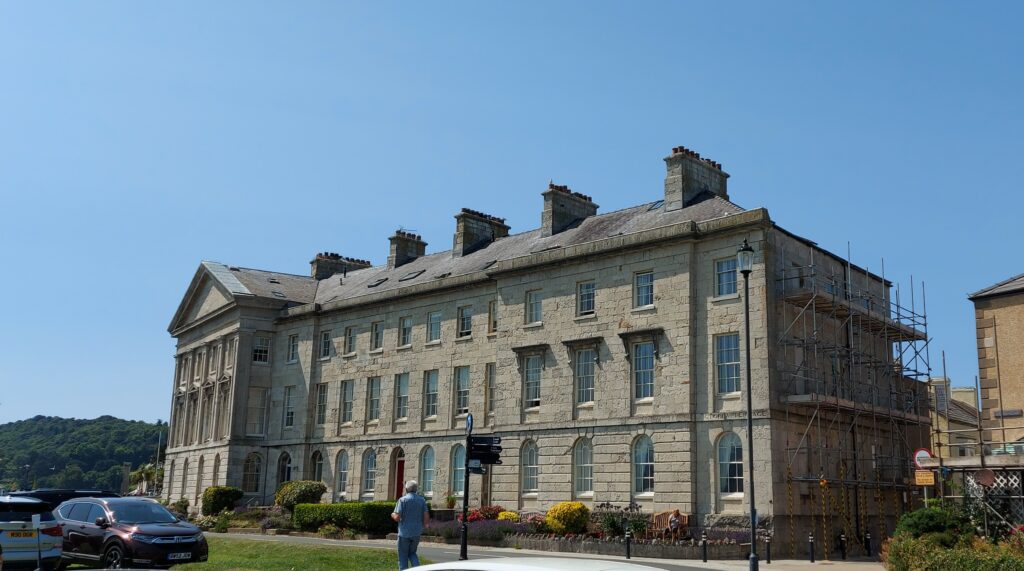
One building that caught my eye, Victoria Terrace.
A huge imposing building, looking out onto the Estuary was built by Joseph Hansom and Edward Welch, architects of York, and completed in 1833, for the Corporation of Beaumaris. The terrace was the centrepiece of a plan to regenerate the declining port of Beaumaris by creating a fashionable resort. Now it is a Grade 1 Listed Georgian property with several large residential “town houses” and holiday accommodation.
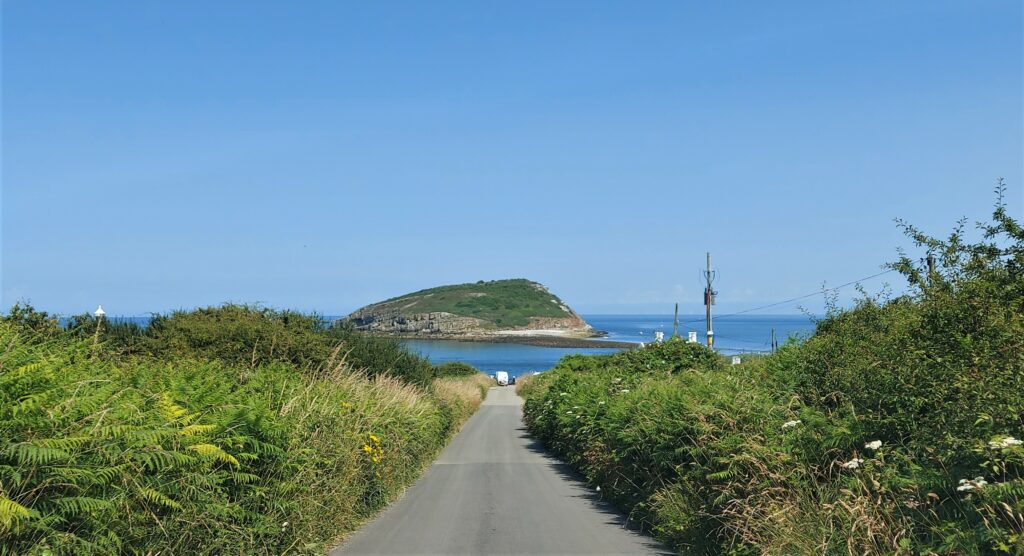
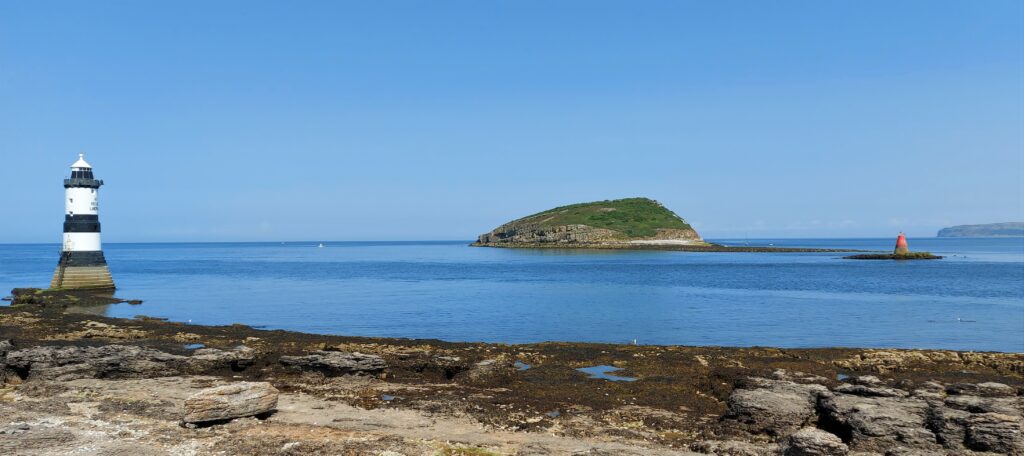
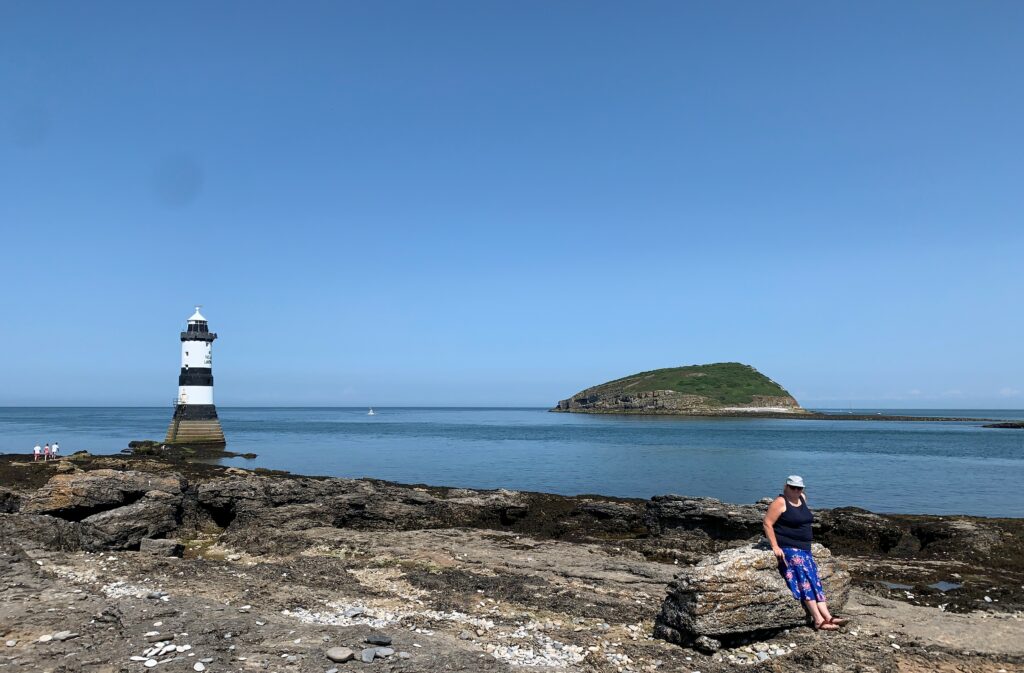
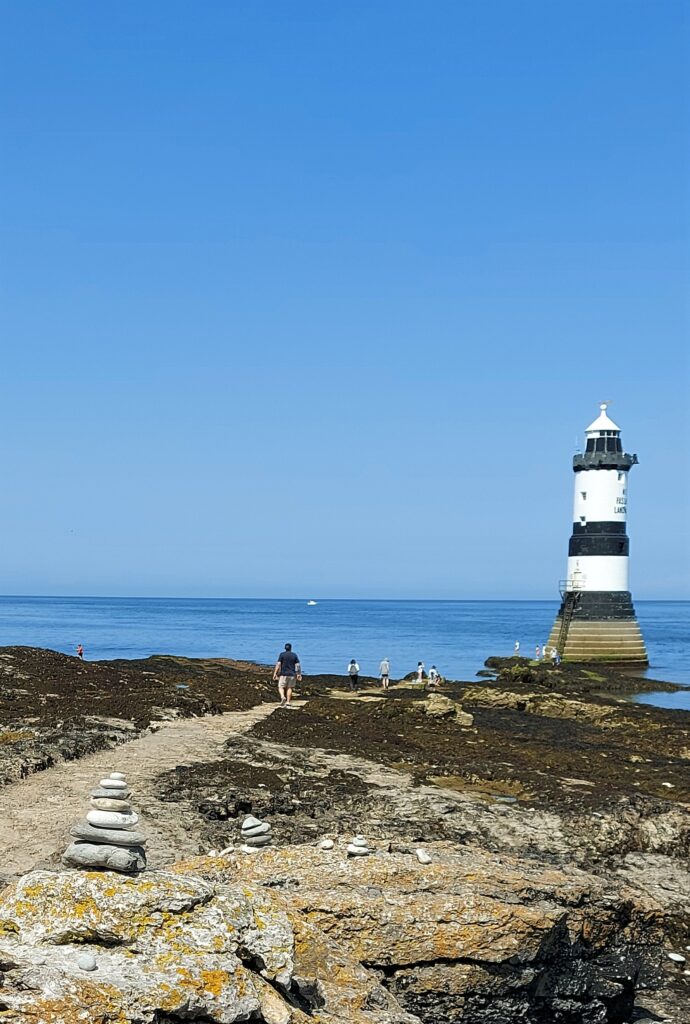
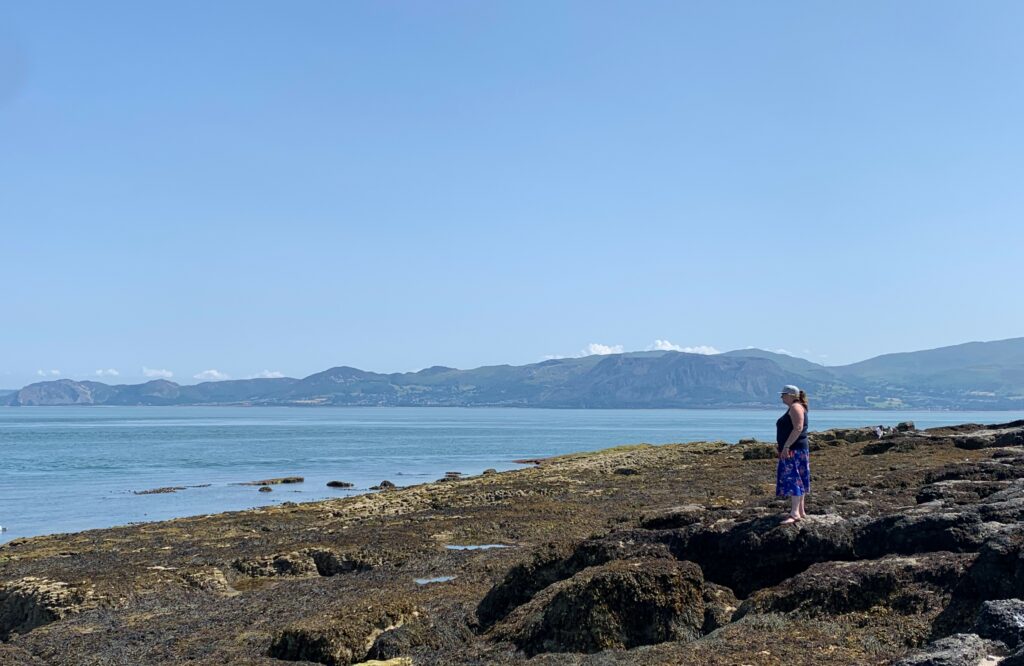
Traditional fish and chip lunch over, we headed out to Penmon Point, the most Easterly point of Anglesey. Locally known as Black Point, it is home to one of Anglesey’s 5 lighthouses and Puffin Island, in the 6th century the island was home to a monastery, now it is just a bird and animal sanctuary.
Road leading to the beach
Puffin Island
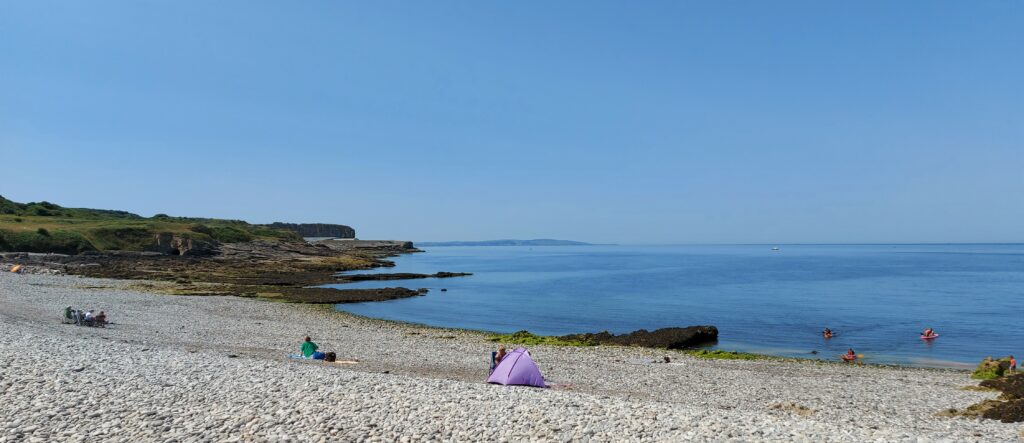
The pebble beach
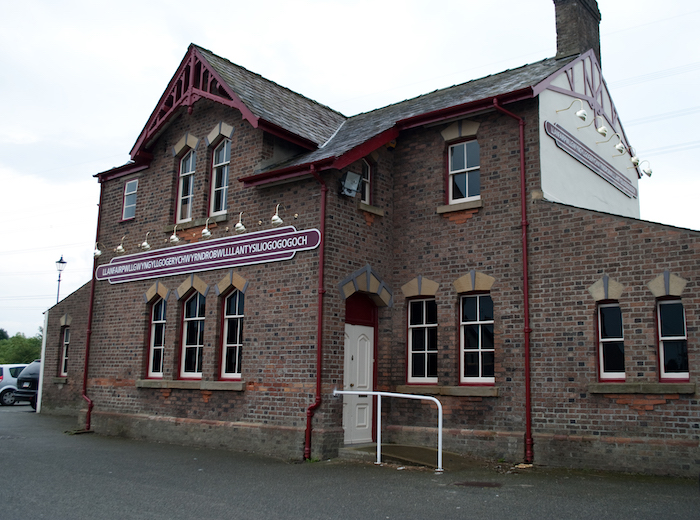
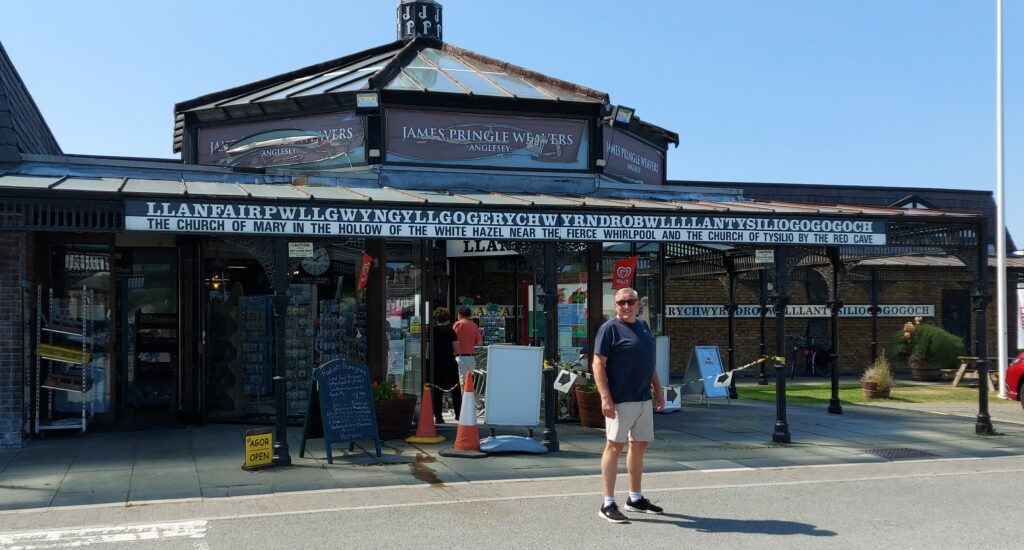
Llanfairpwll…….. OK I give up!
We doubled back through Beaumaris and went to the town with the longest name in the world – 58 charachters!!
The full name is Llanfairpwllgwyngyllgogerychwyrndrobwllllantysiliogogogoch, which was created so its railway station would have the longest sign in the country—in the mid 1800s. It means “St. Mary’s Church in the hollow of white hazel near a rapid whirlpool and the Church of St. Tysilio near the red cave.”
Been there!
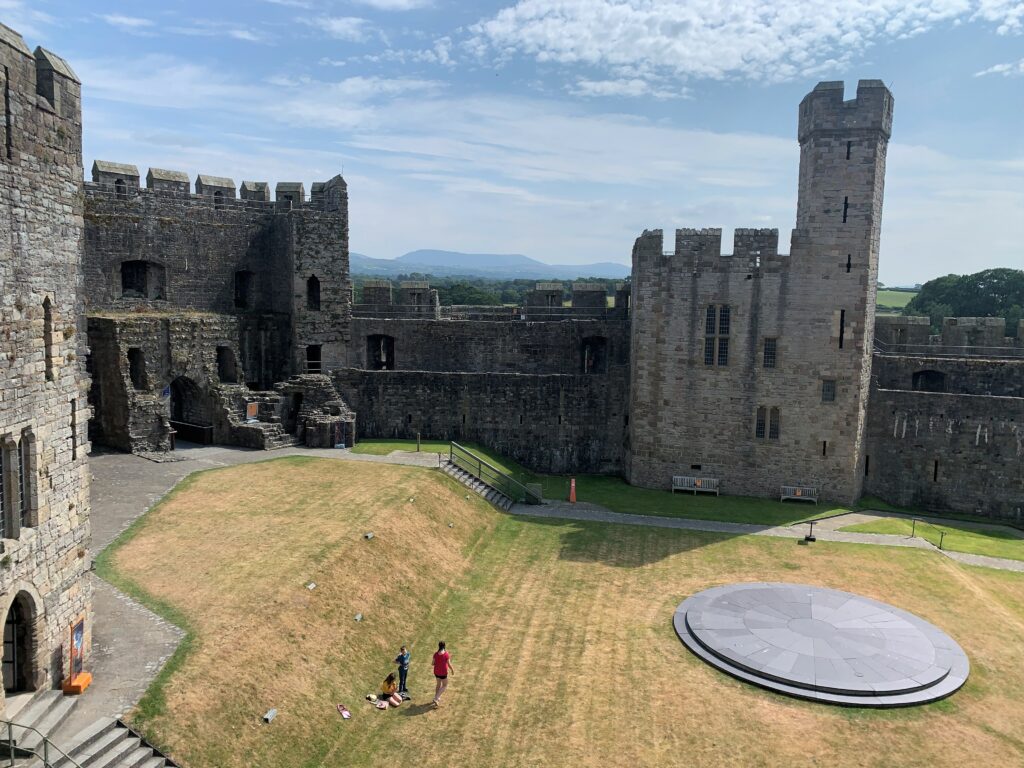
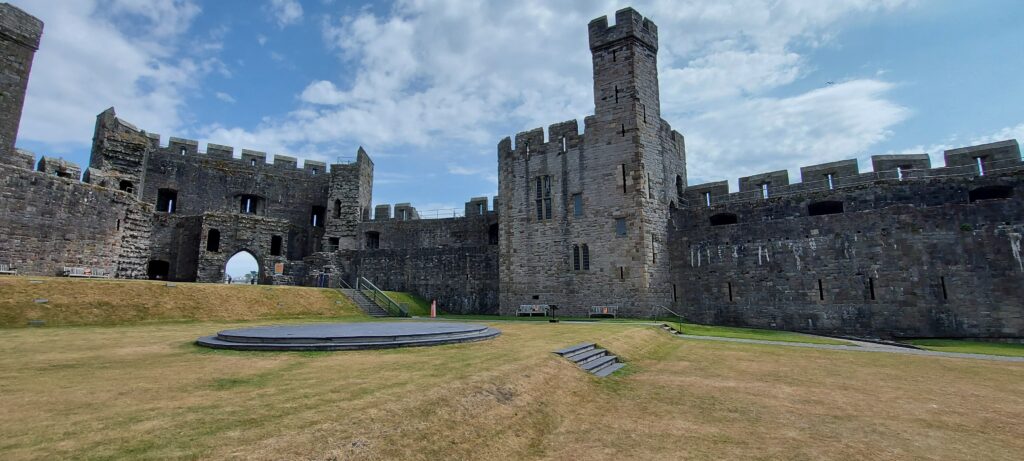
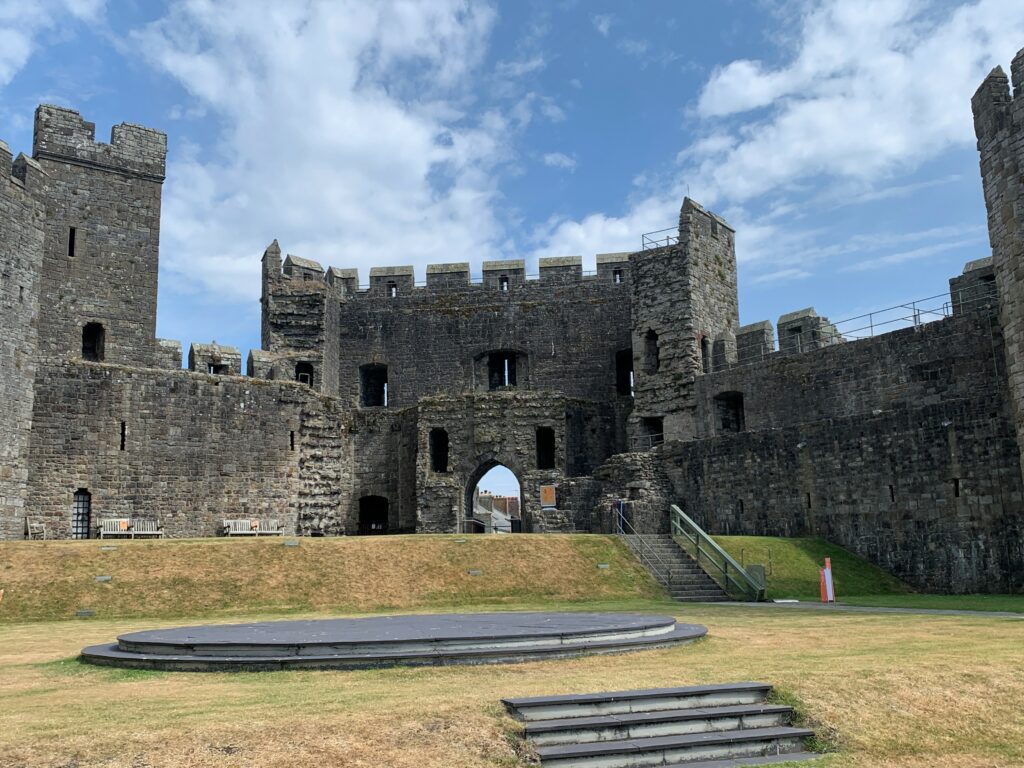
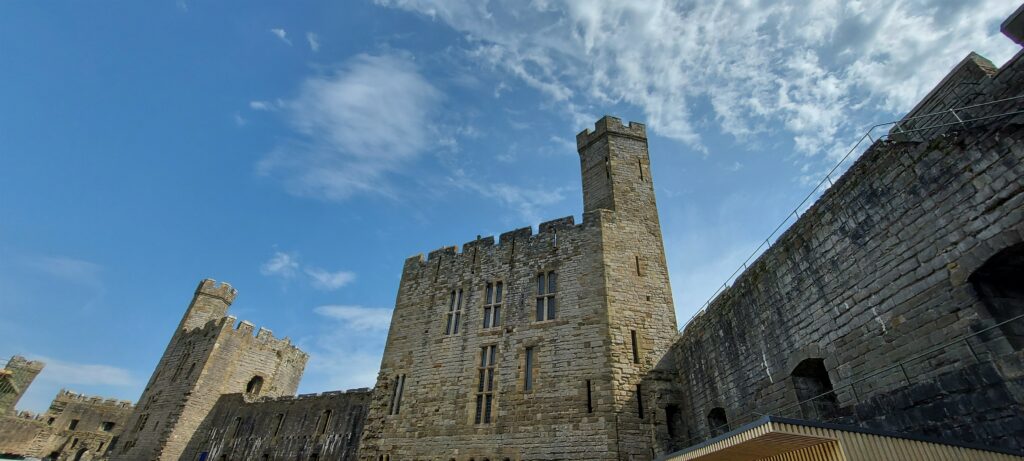
Caernarfon Castle
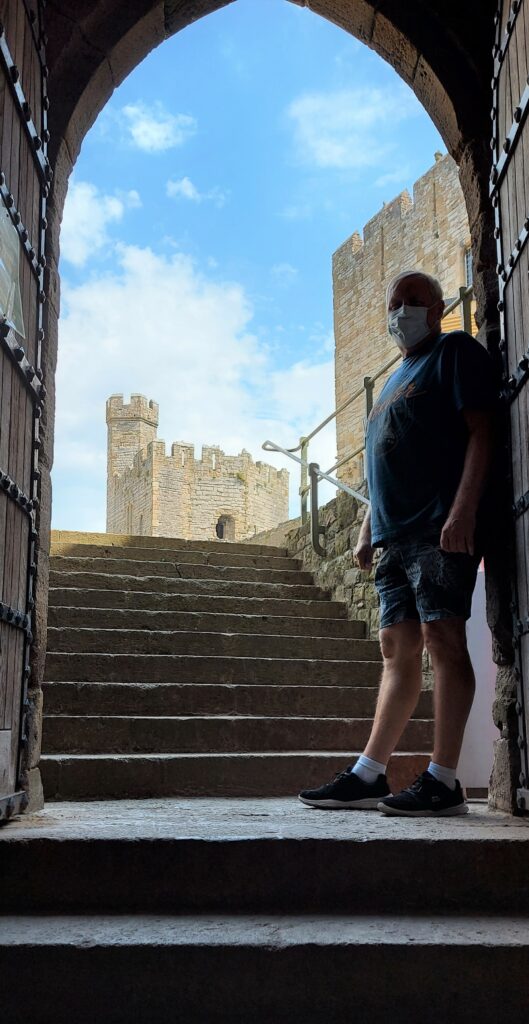
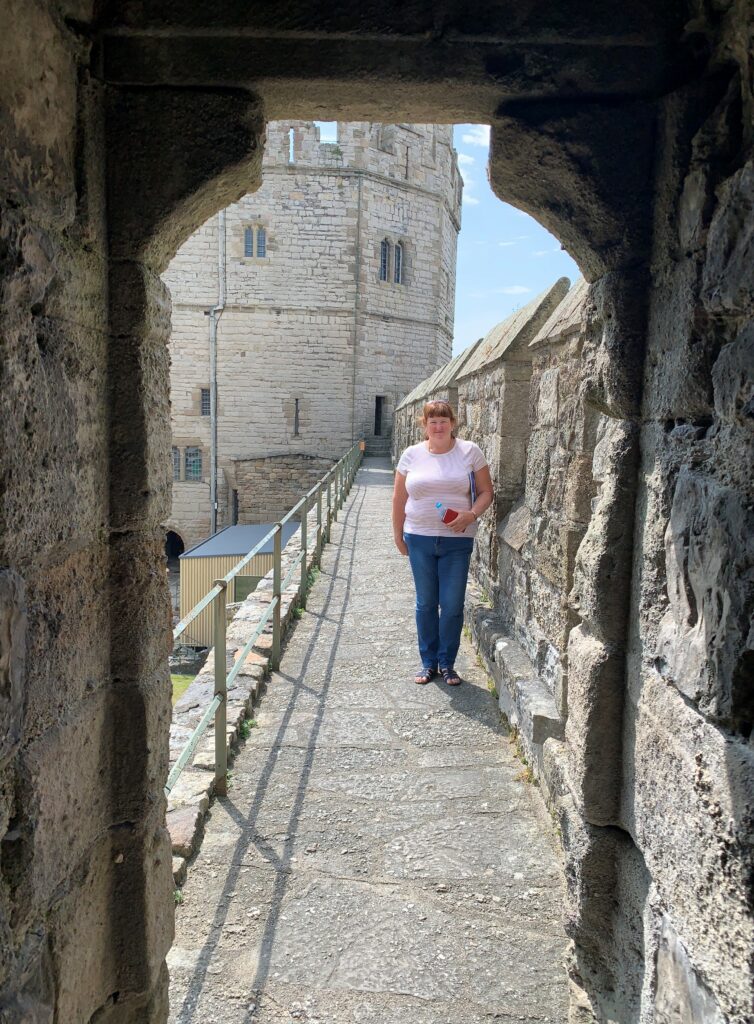
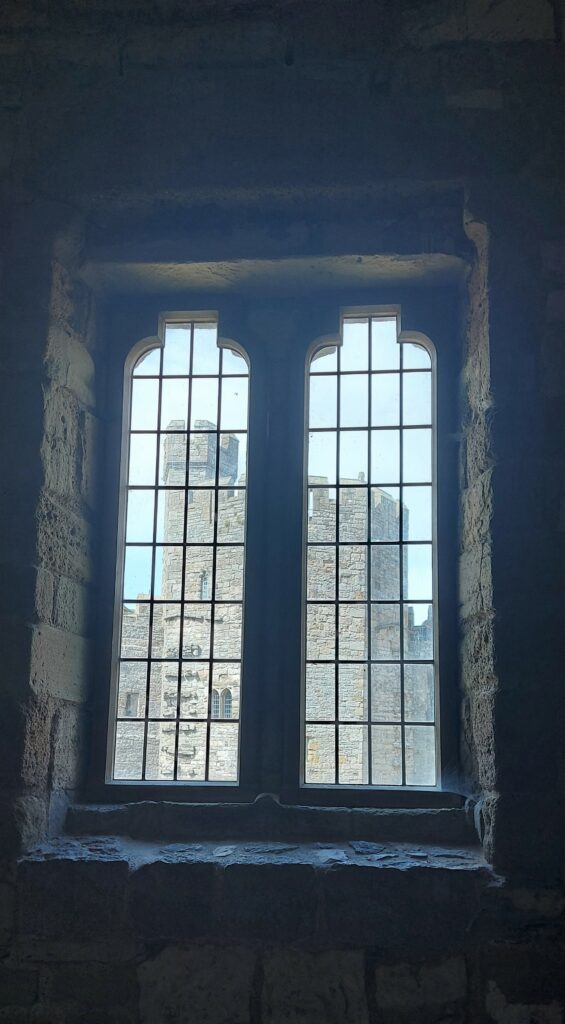
We returned to the mainland and turned right, heading to Caernarfon Castle. Being the place where Prince Charles was inaugurated in 1969, we thought we would book the tour of the castle, expecting it to be full of historic artifacts. We were disappointed, it’s an outline of the building, with only a museum for the Welsh Fusiliers.
The small market town was also disappointing, very run down with lots of charity shops. However, it’s one ticked off the list, Caernarvon Castle.
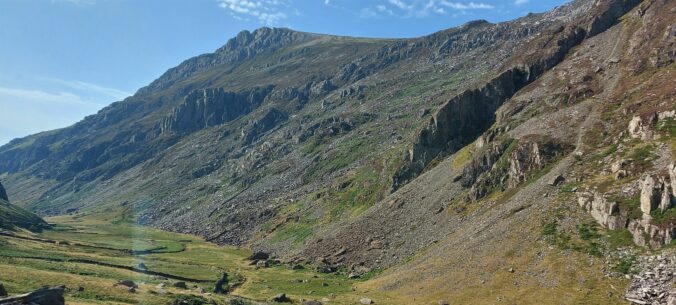
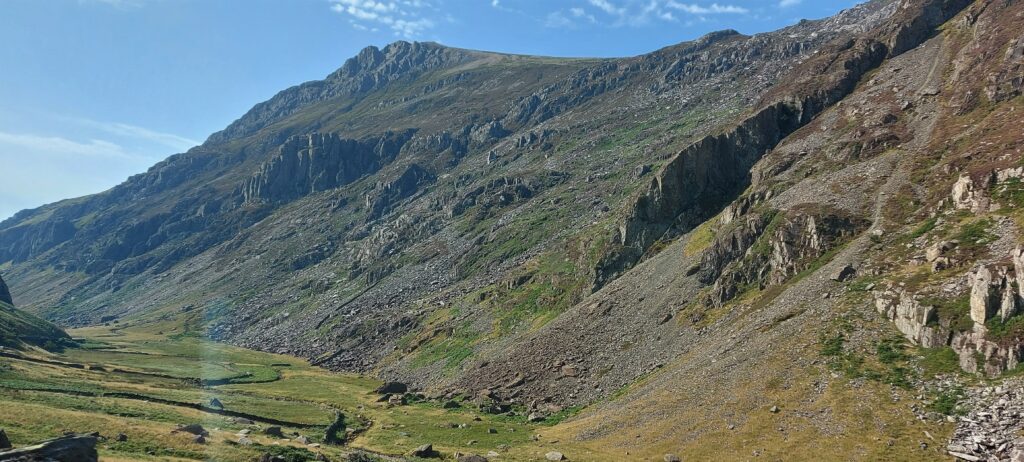
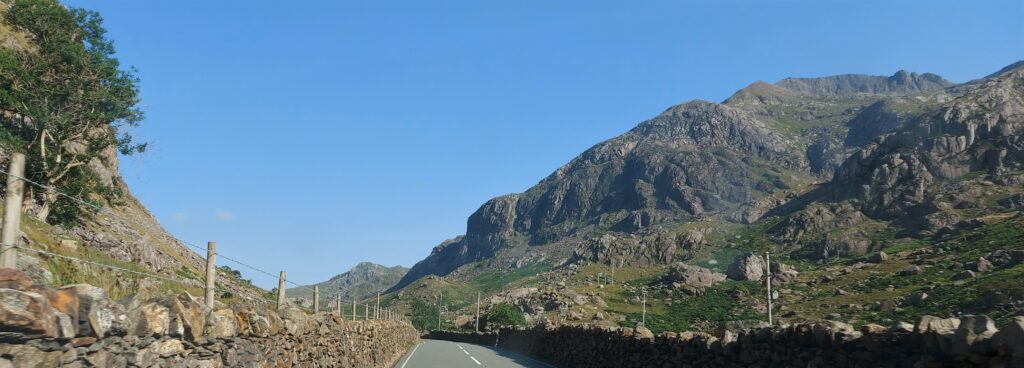
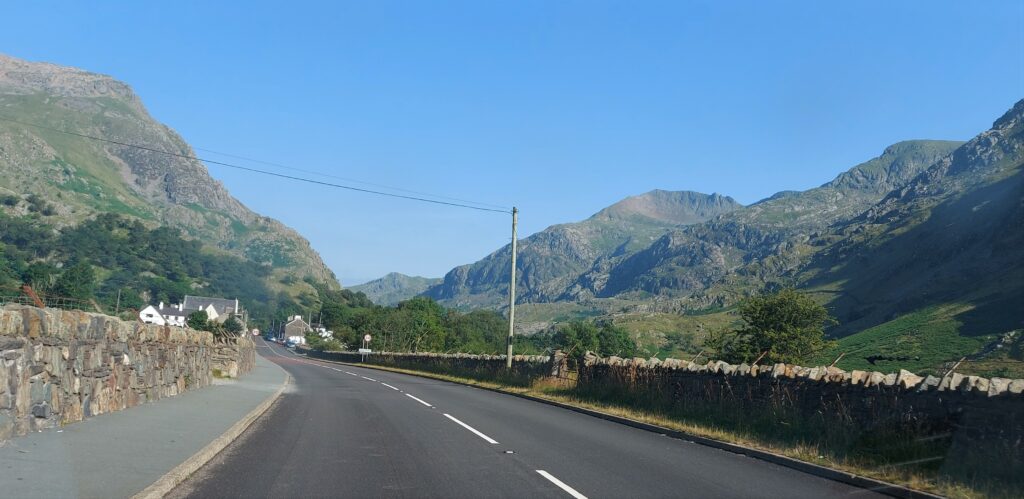
We then took a slow drive thrugh the Snowdonia National Park and realised why we loved living in Wales, it’s green, lush, sparkling, colourful, beautiful!
A typical gorge
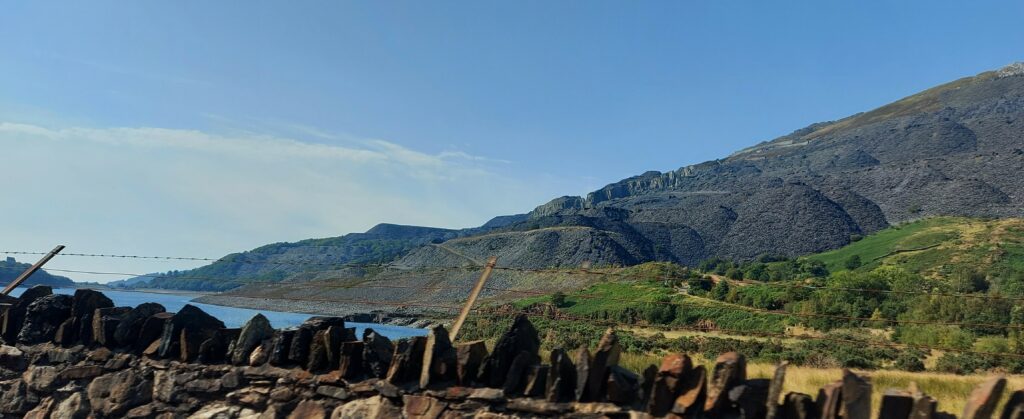
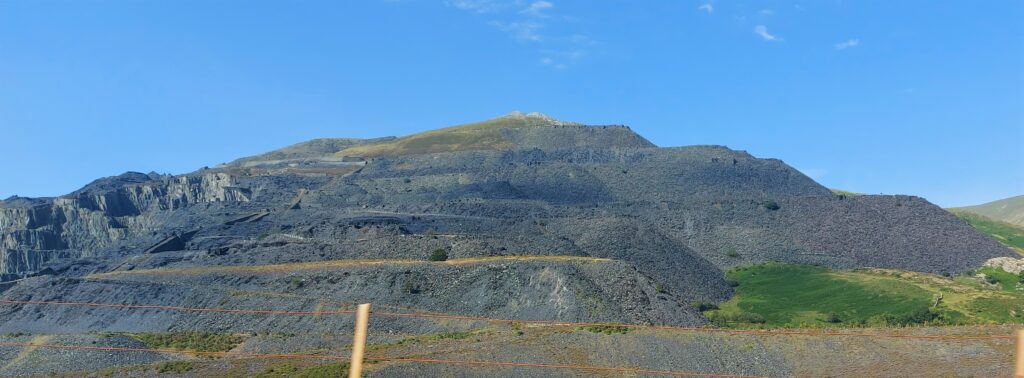
Slag heaps from mining remains
Slag heaps
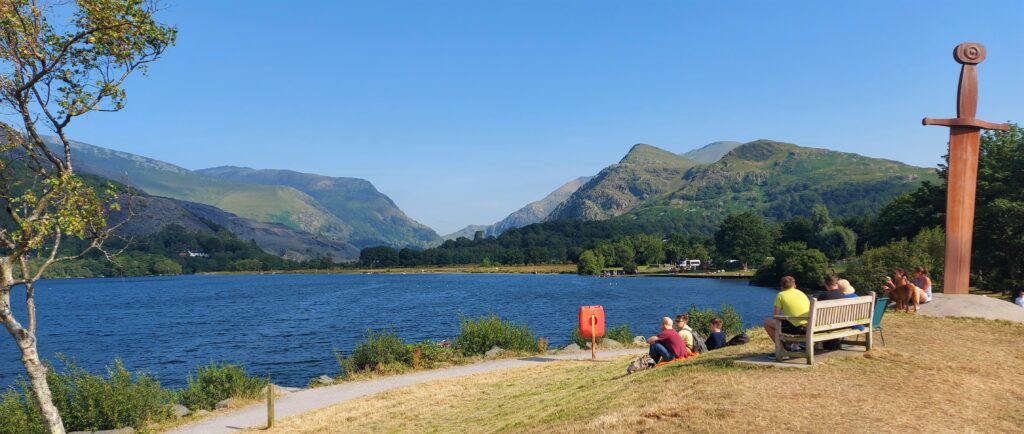
Lake Padam in the mountains
After a long day out, we returned back at Bessy tired but in awe of the Welsh beauty!






Recent Comments