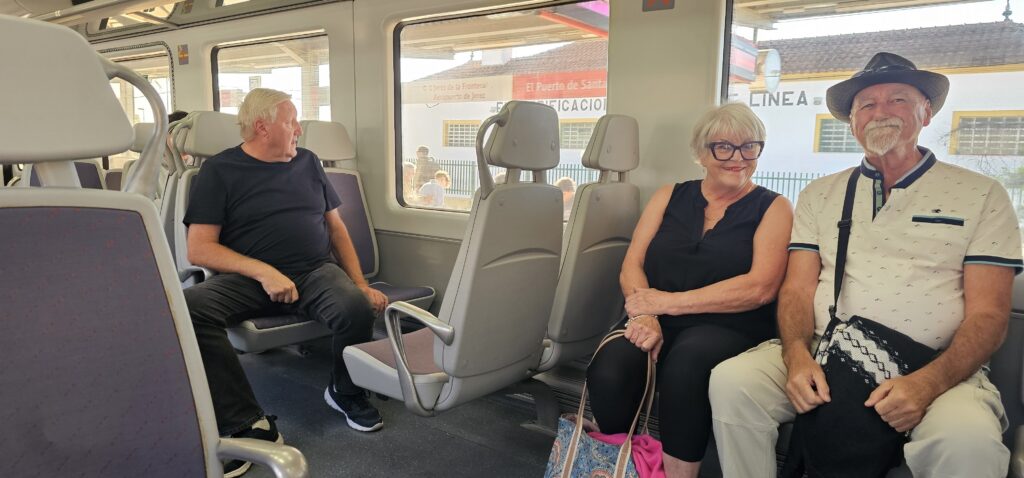
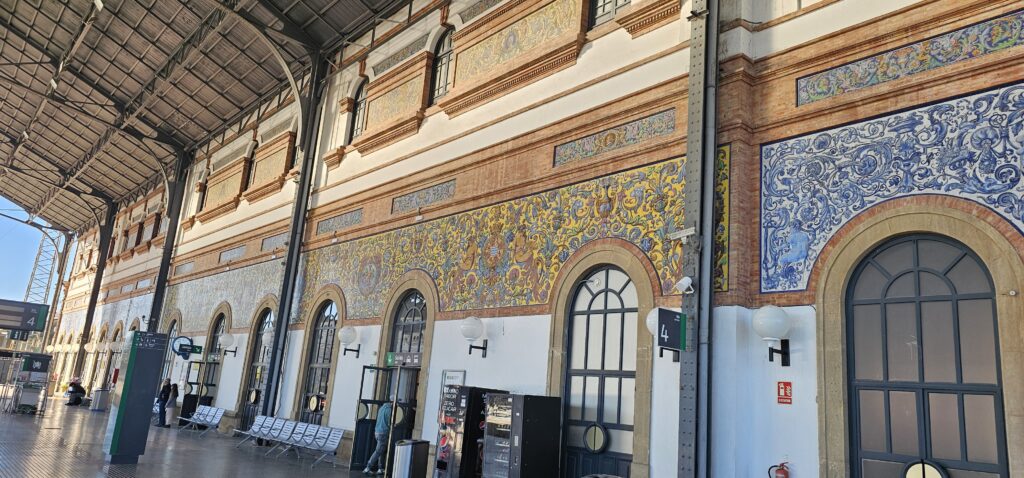
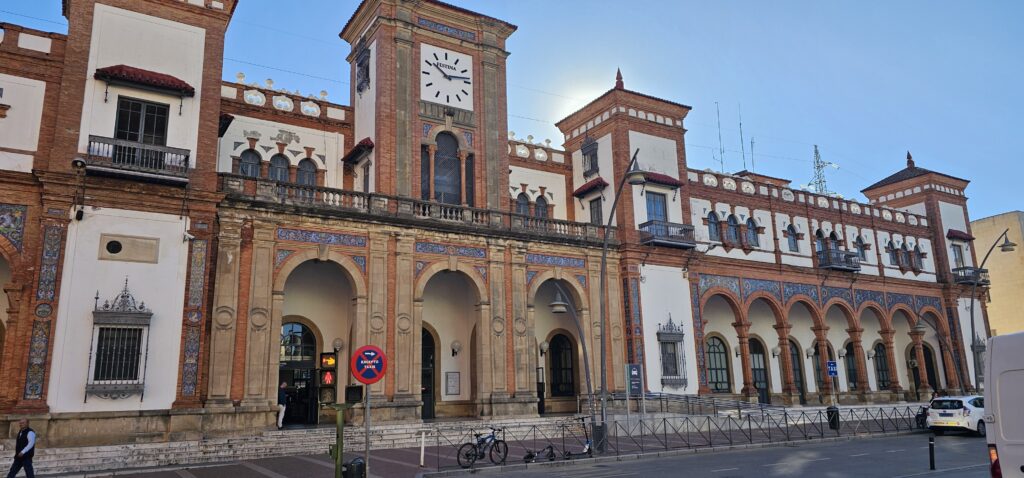
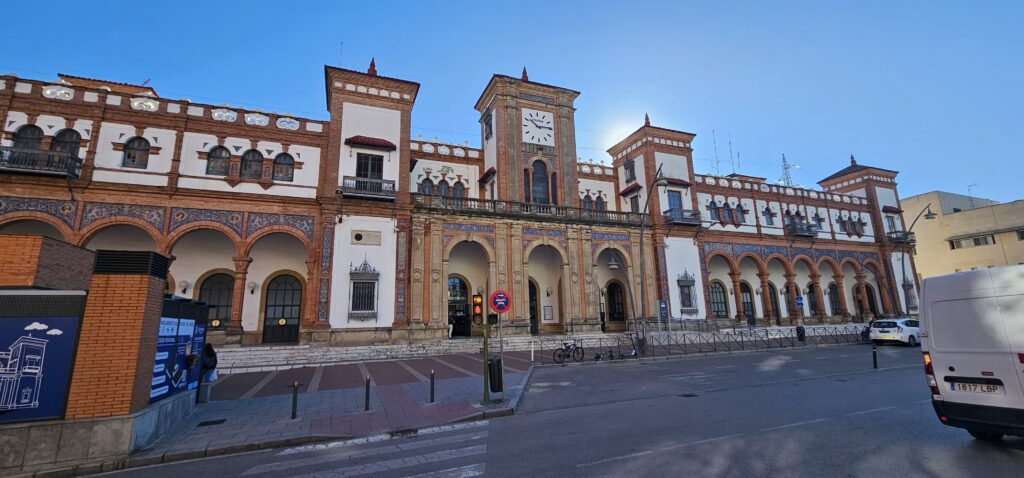
One day we decided to get a train into Jerez de la Frontera, a 10 minute ride away. On arrival, the train station was architecturally stunning, amazing red brick and coloured tile building, built in 1854 it could pass for a Lego building!
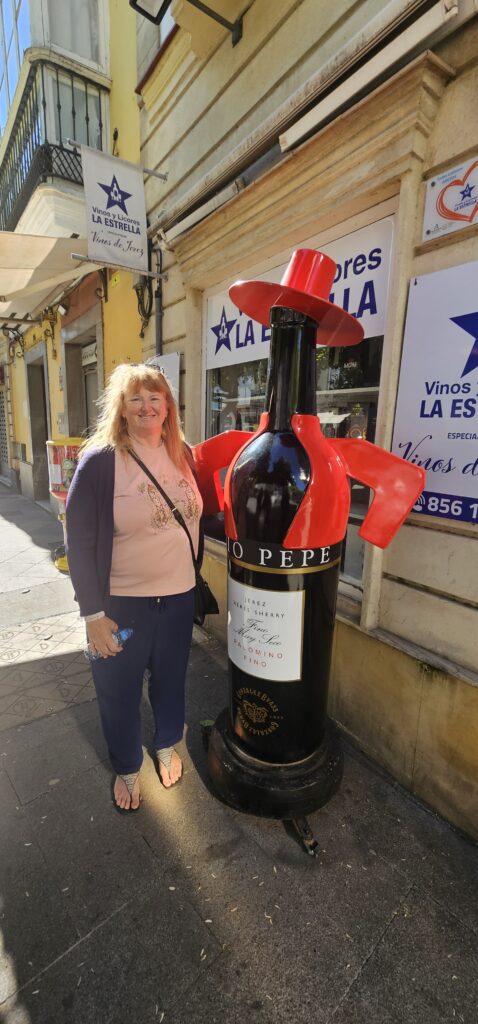
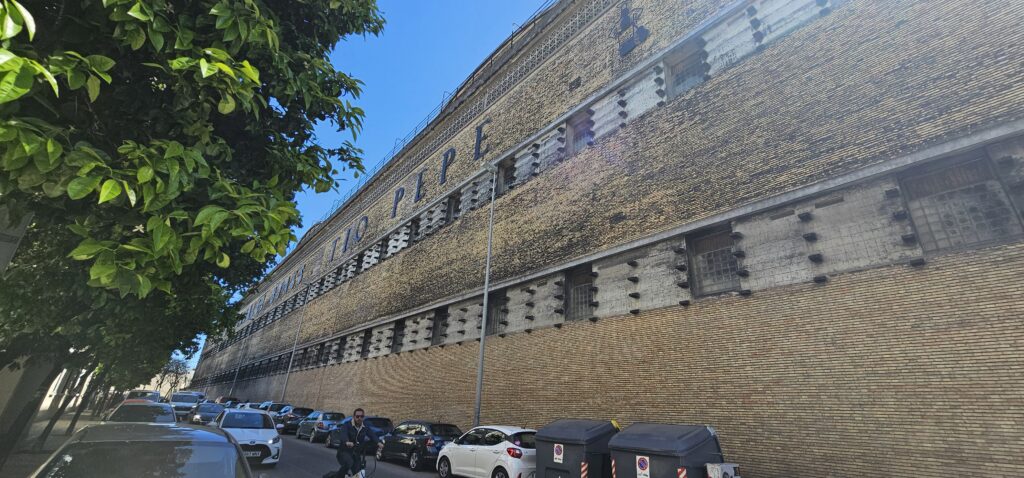
Jerez is home to several large sherry bottling factories, including Tio Pepe.
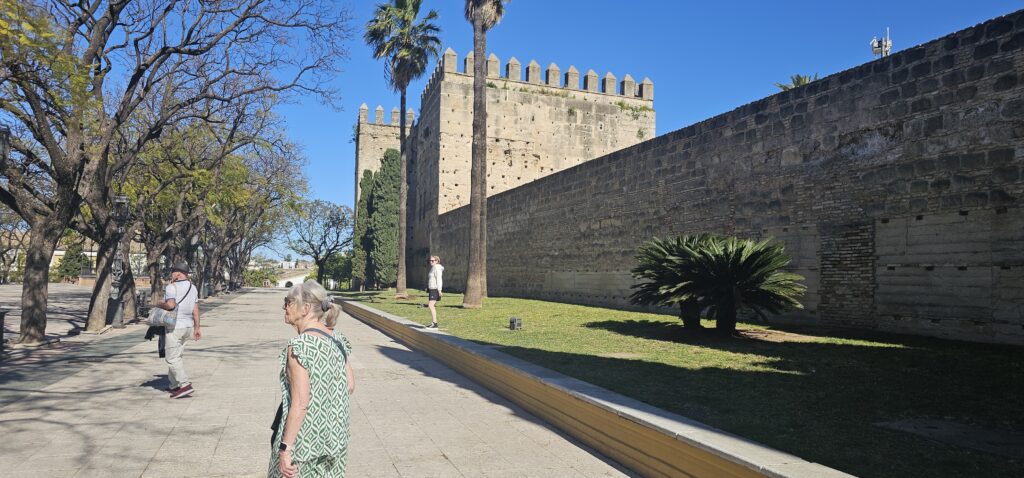
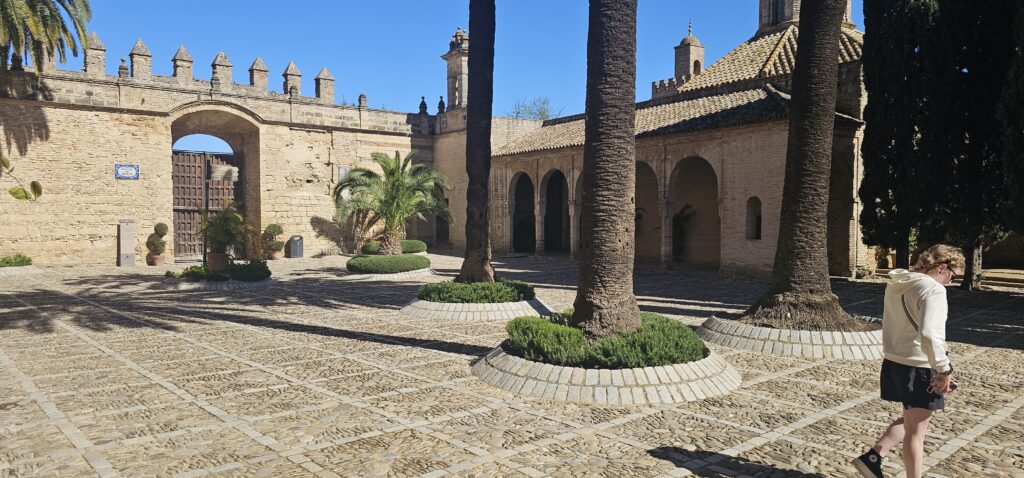
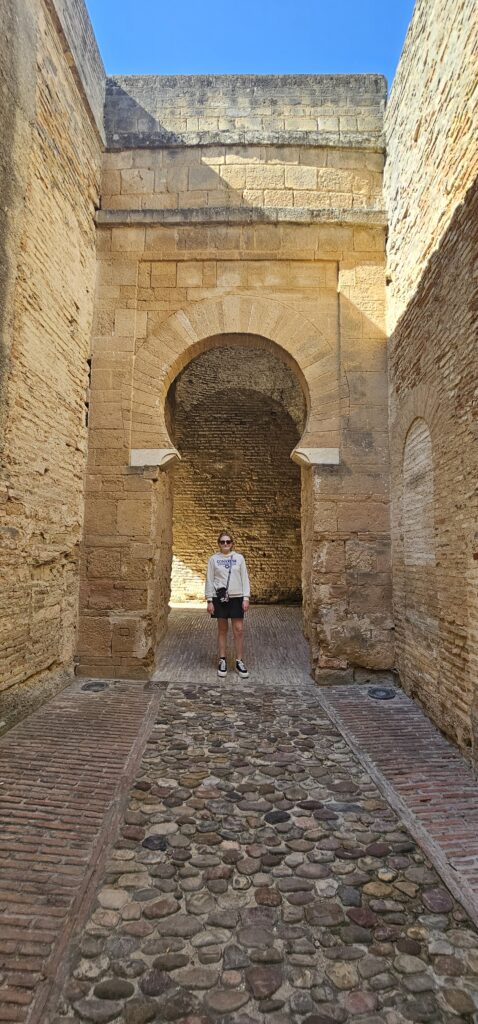
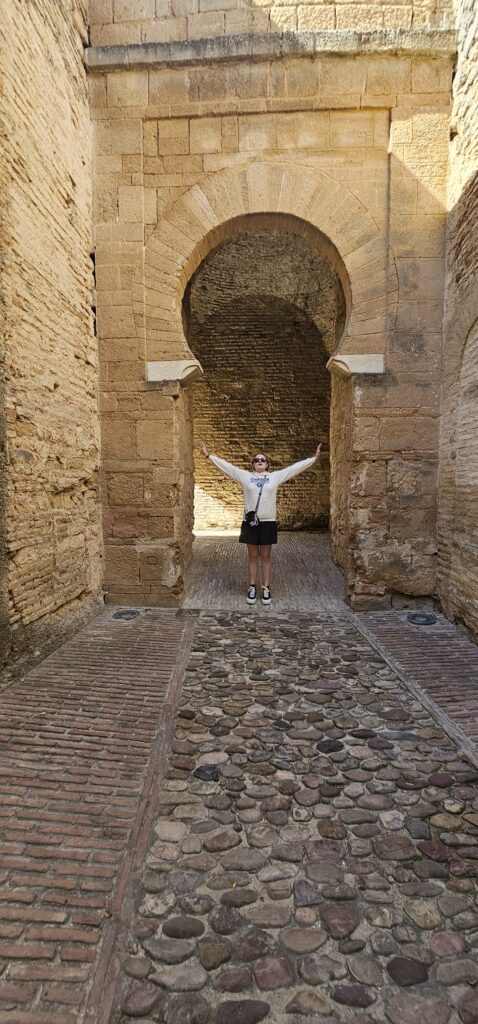
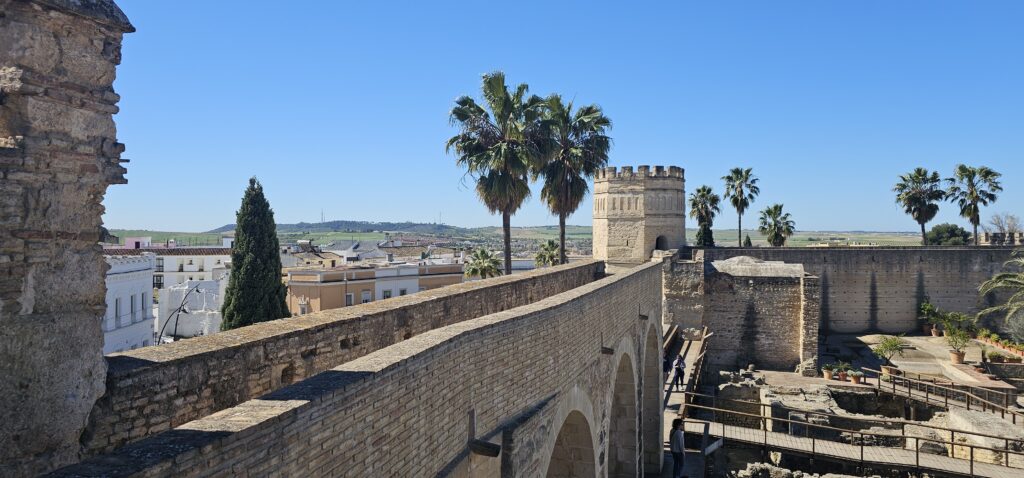
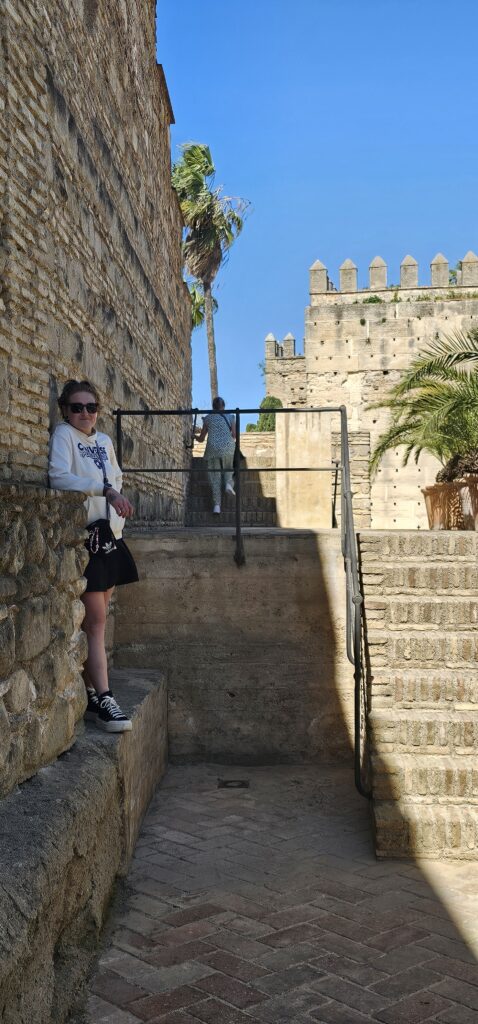
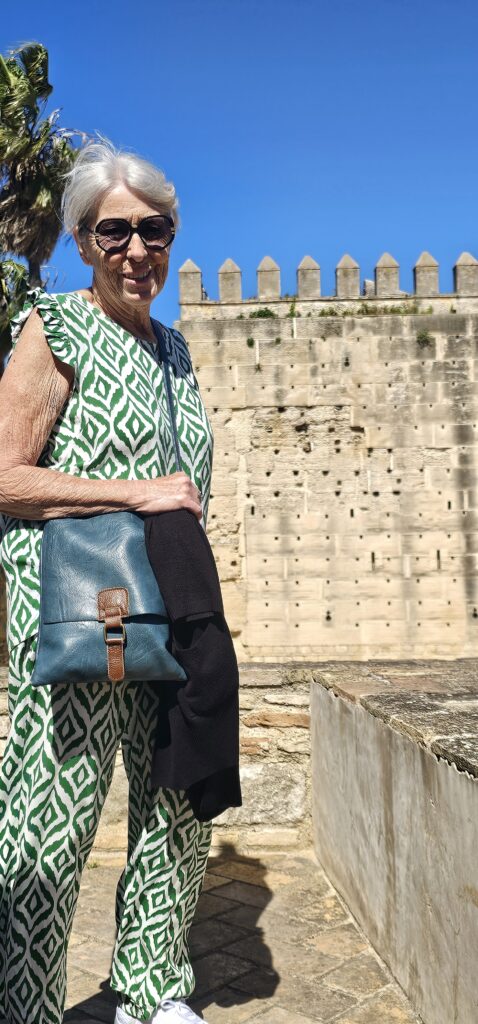
Next we walked through the town to the Alcazar, a Moorish fort, looking like a Castle with Baroque buildings added later. The fort dates back to the 12th century, originally built as a Muslim fortress palace. Lots of arched doorways, water filled cool courtyards and swaying palm trees.
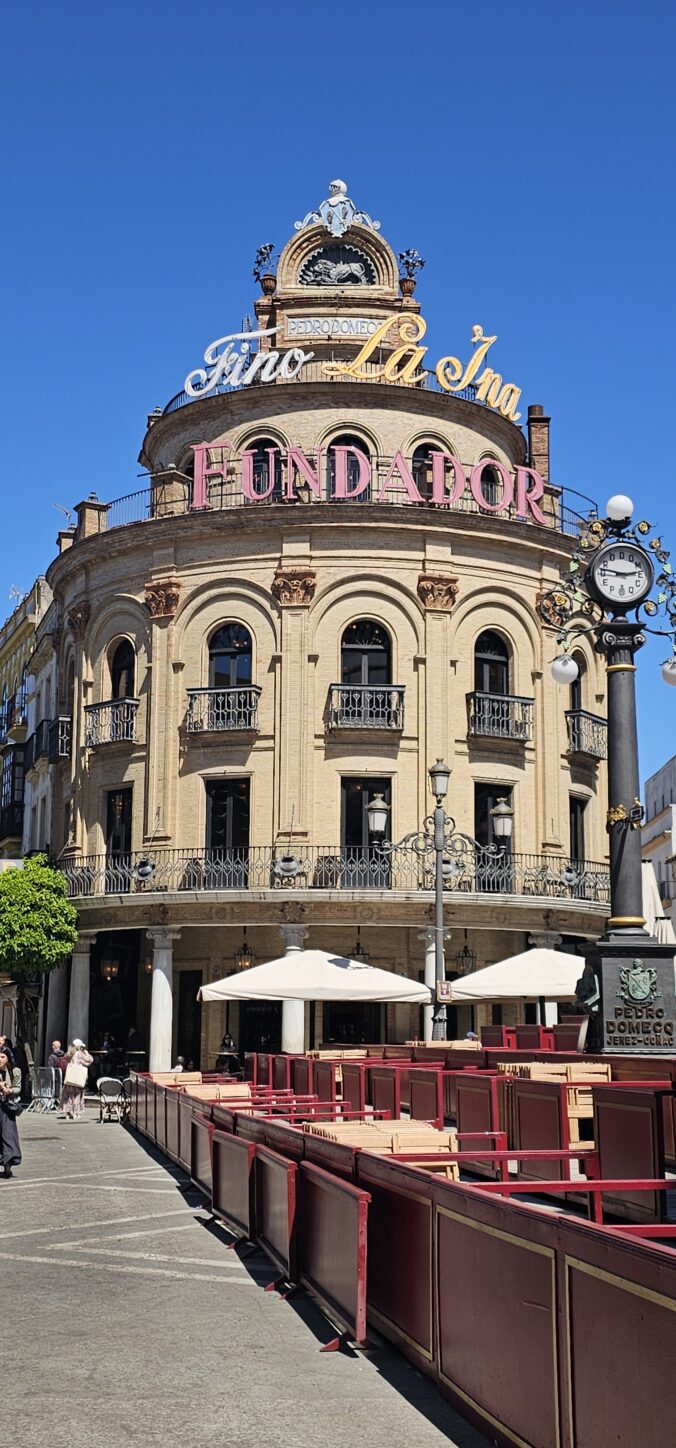
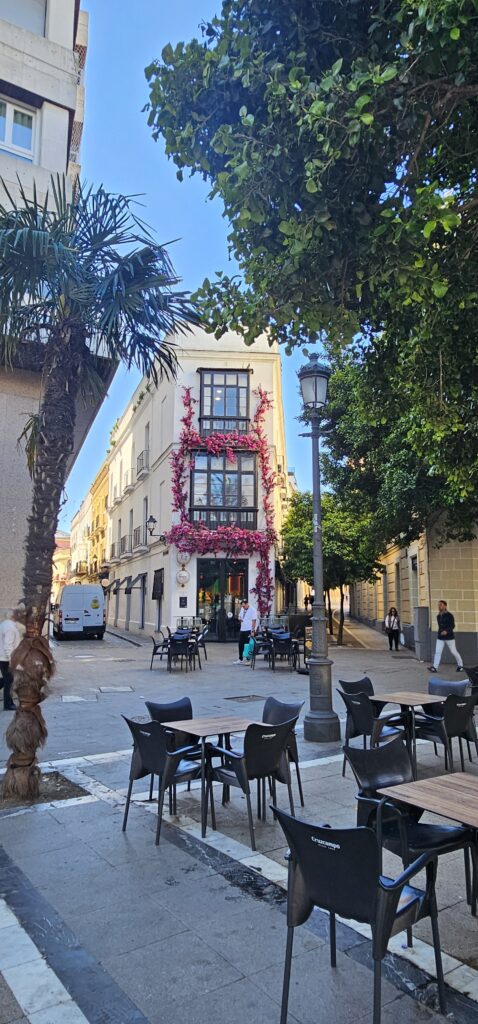
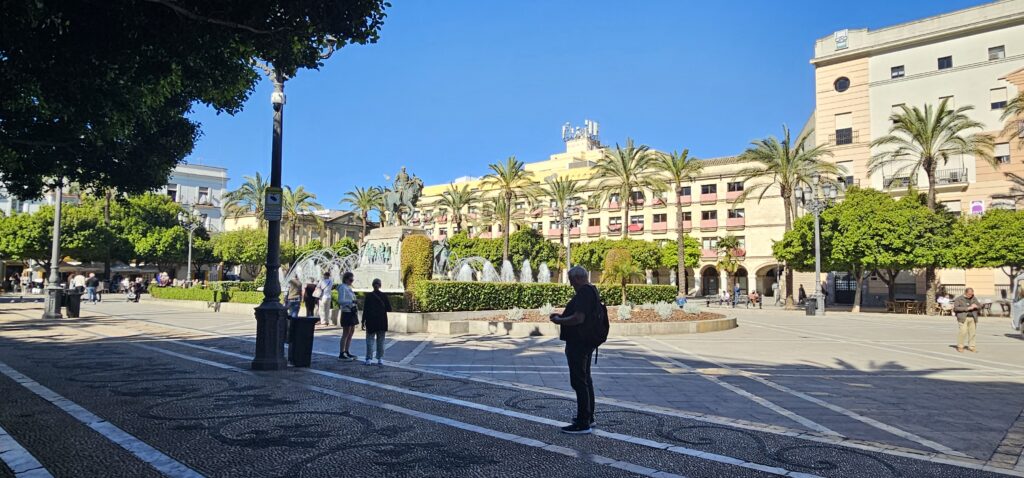
Pretty buildings!In the town’s squareApproaching the AlcazarAlcazar courtyard
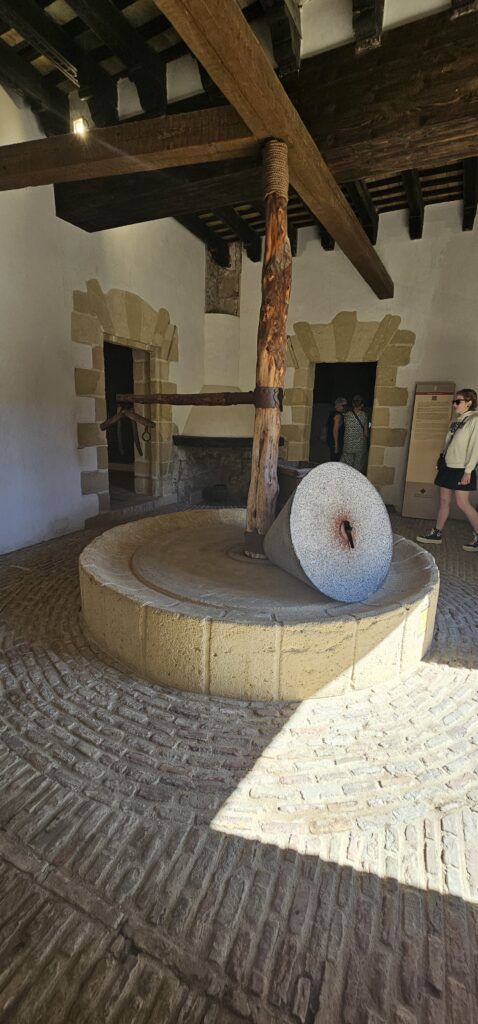
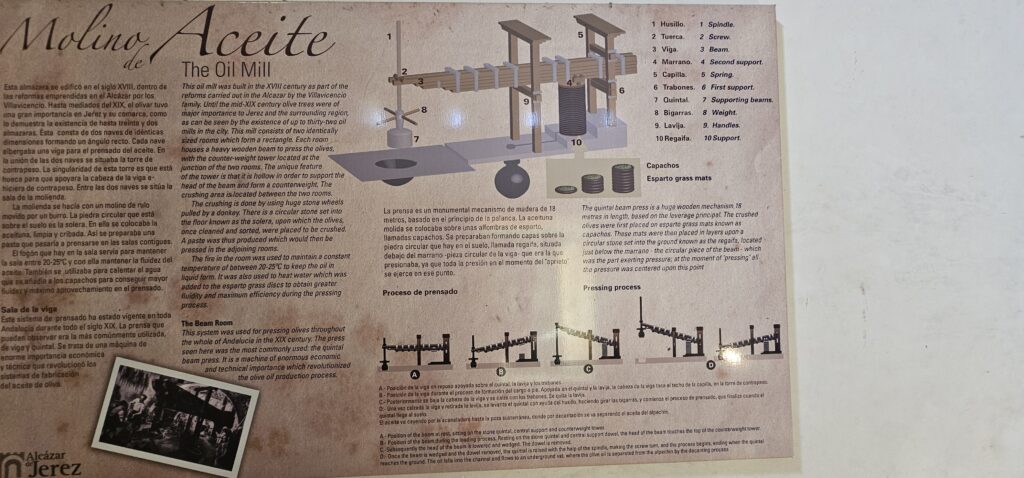
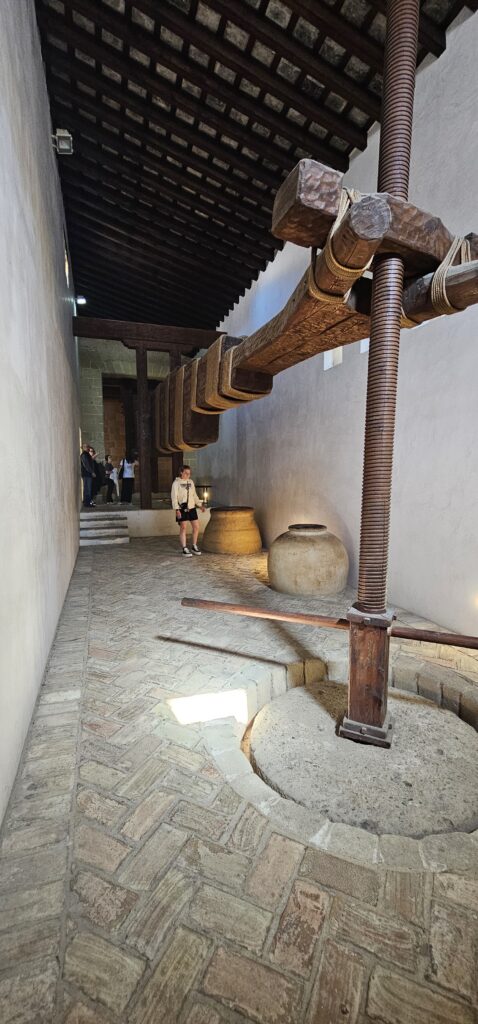
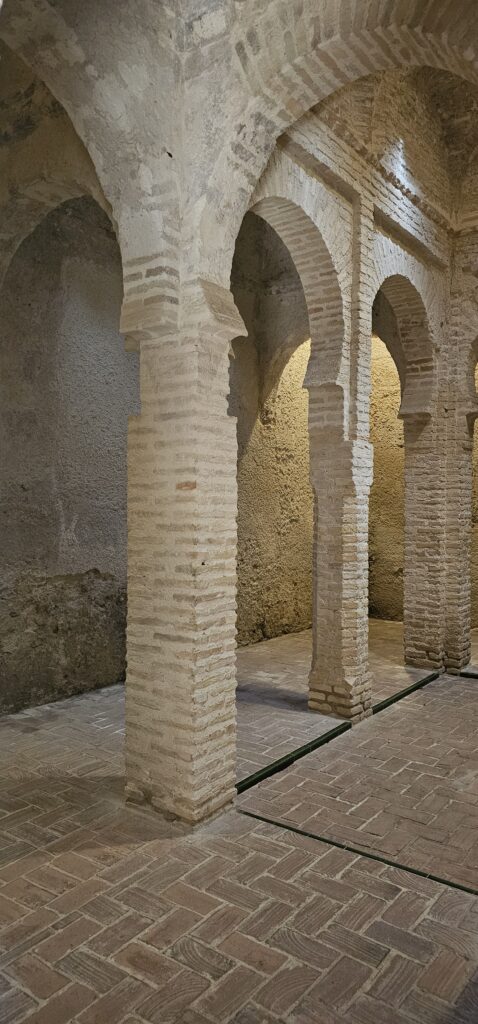
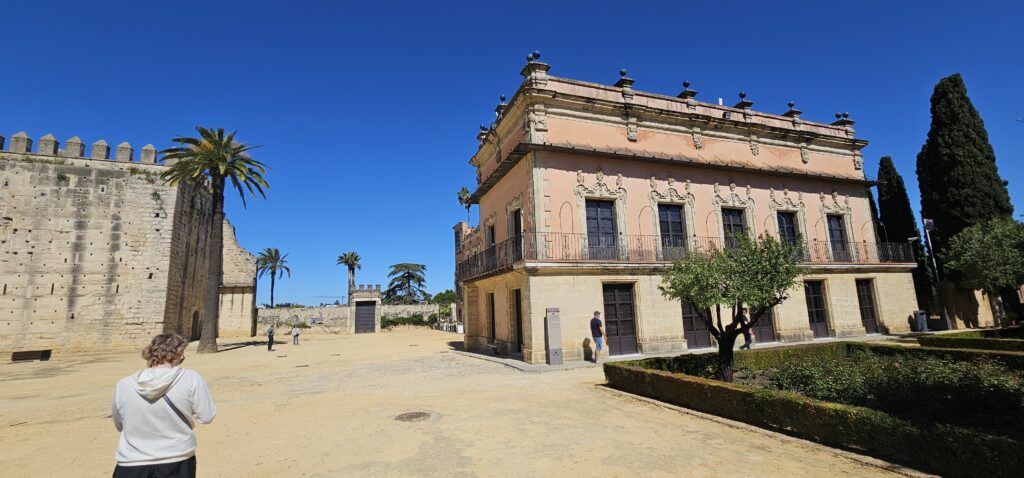
The Alcazar became a Christian garrison in 1248 until 1264 when Arabs took it back after building a tunnel underneath to gain access to the enclosures. It returned to Christian hands but fell into disrepair until the 18th century when the Baroque palace was built, repairs were made to the gates, towers, arab baths, pavilion and courtyards, the olive mill was added later. The Diez family who acquired it mid 1800s have improved the cloisters and surrounding parkland, maintained it and to this day family members stay in the house during local cultural events.
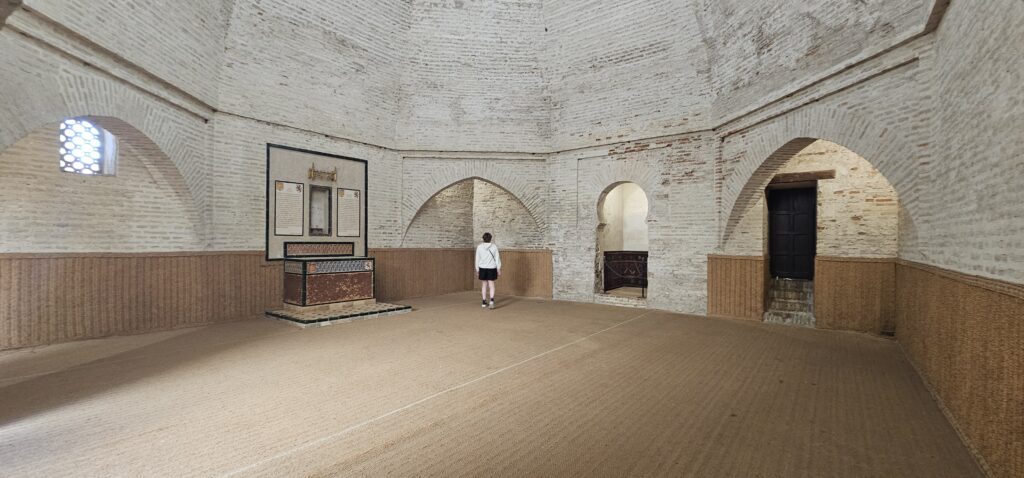
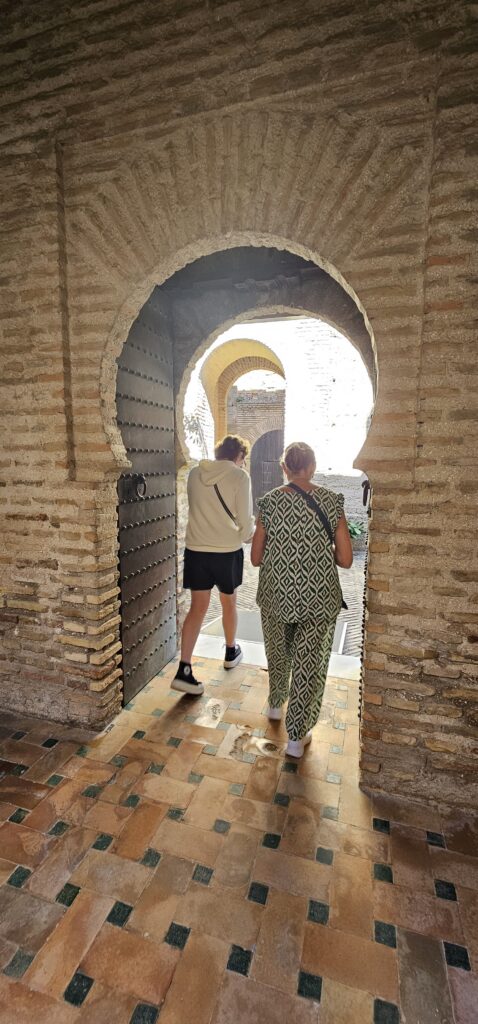
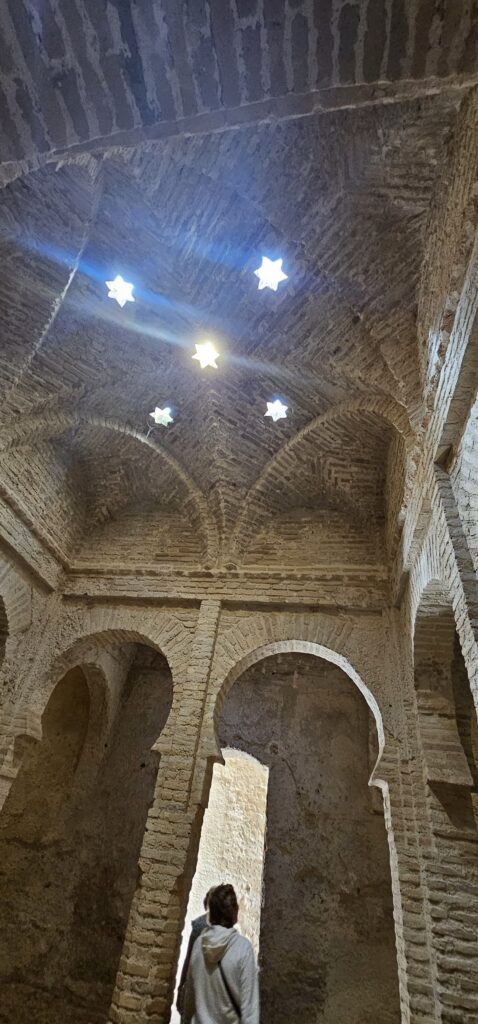
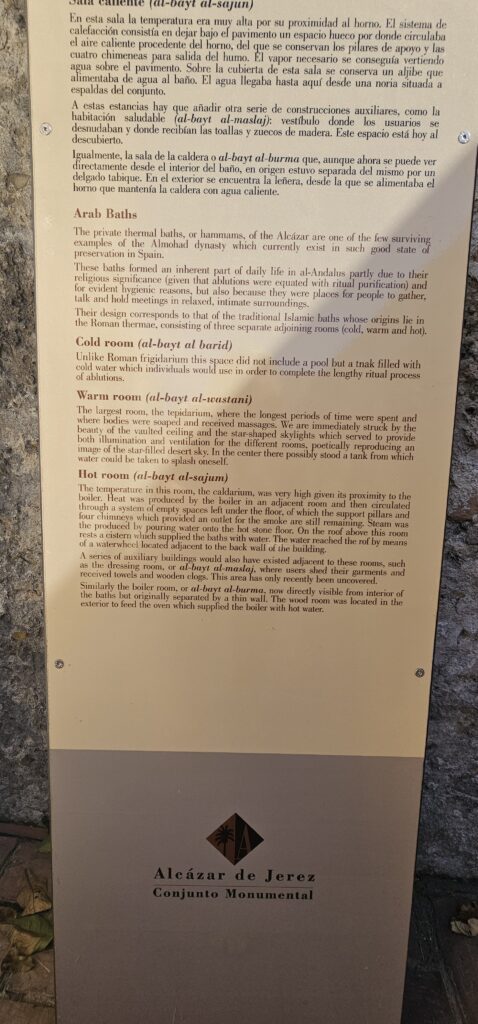
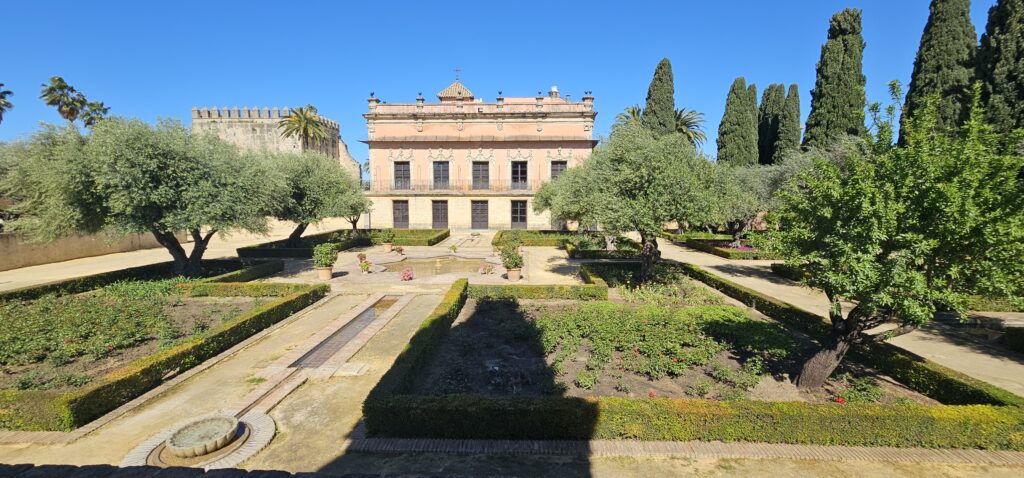
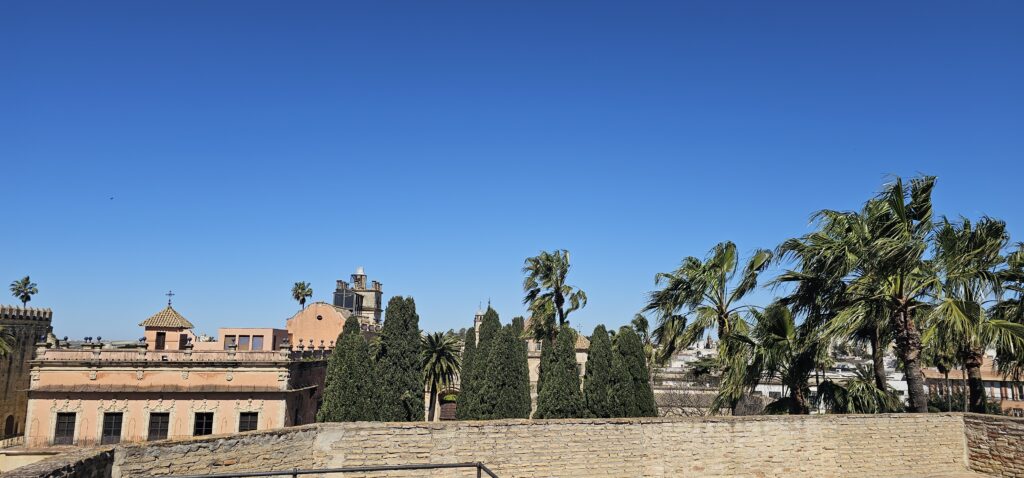
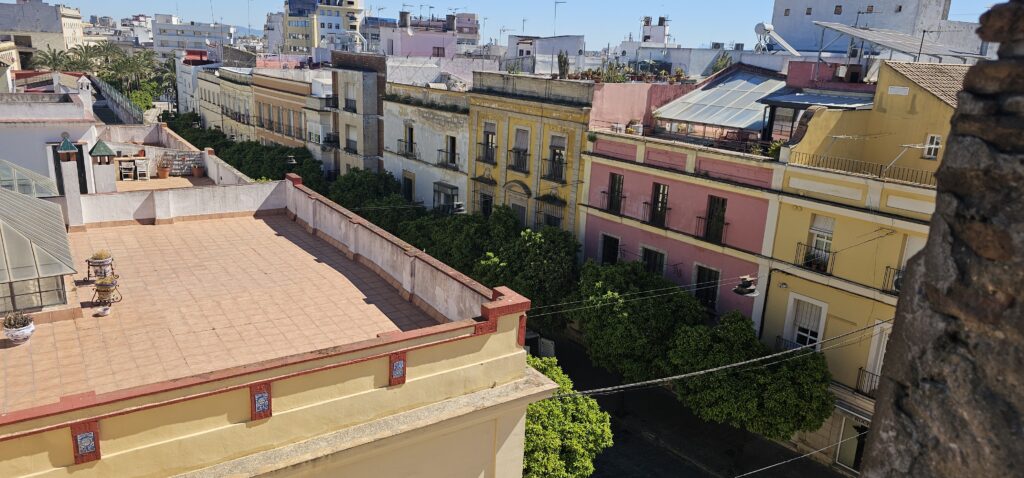
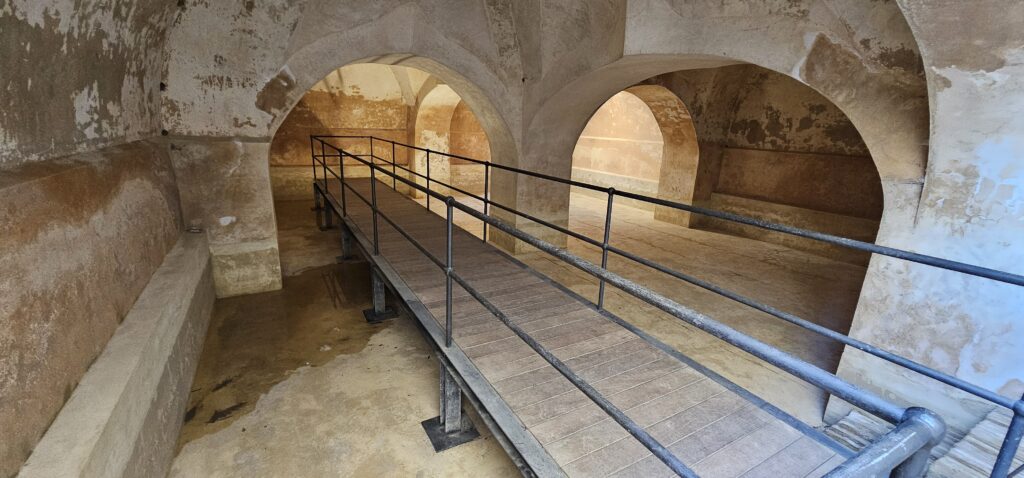
One of the old mosque roomsArabic archesThe olive millArabic archesInside the Arabic bathsThe baths were lit by this amazing ceilingThe Baroque palace and gardensView from a towerView of the city from the fort wallsInside the old water tanks
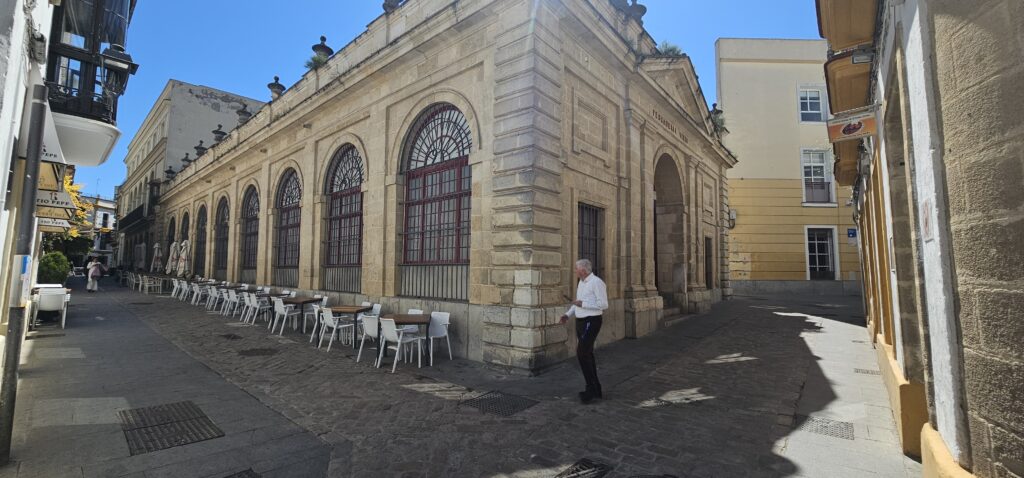
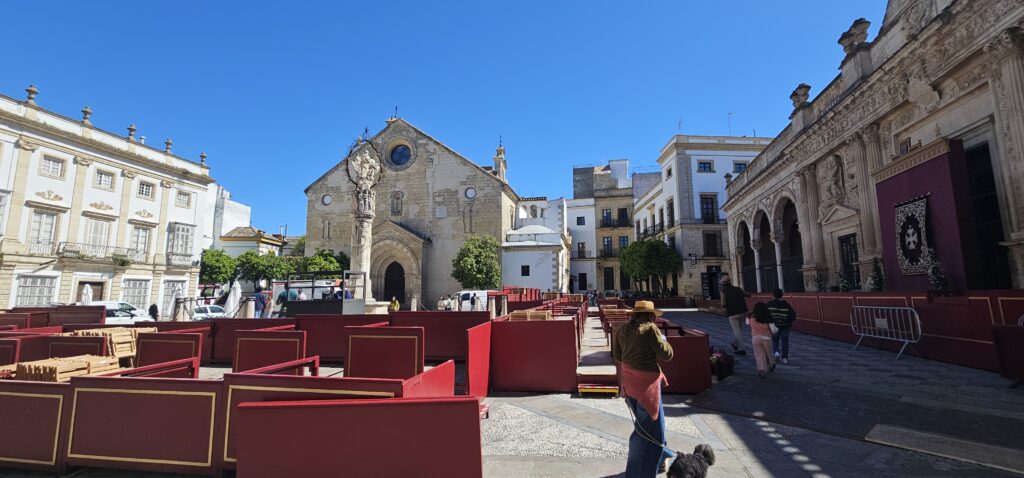
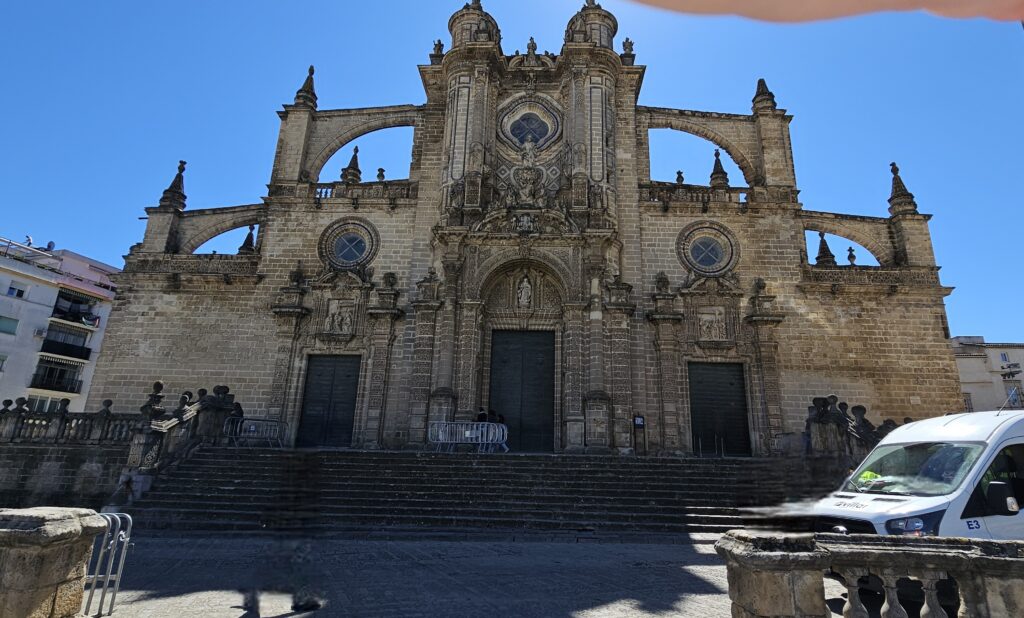
We walked a little around the town, arriving at the Cathedral just as it closed. We stopped for lunch in the sunny town square then took a train back to El Puerto de Santa Maria.
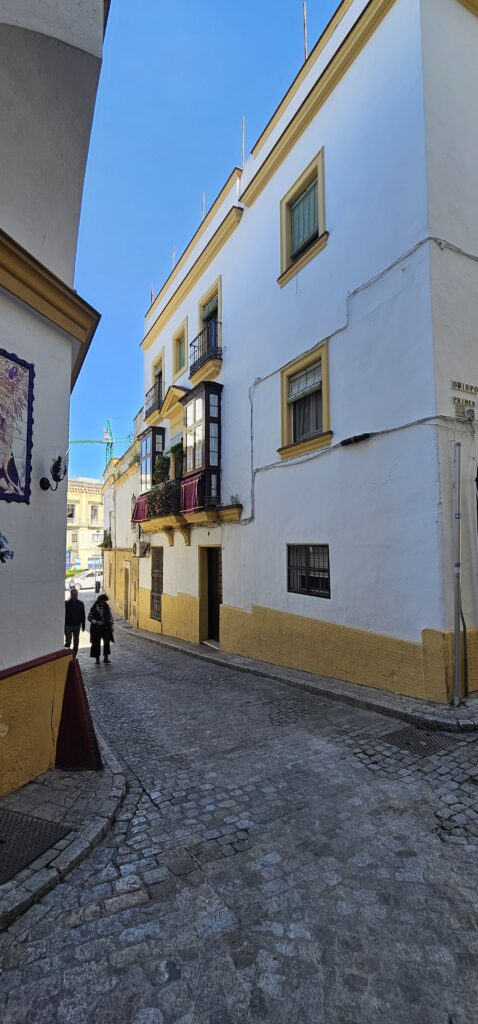
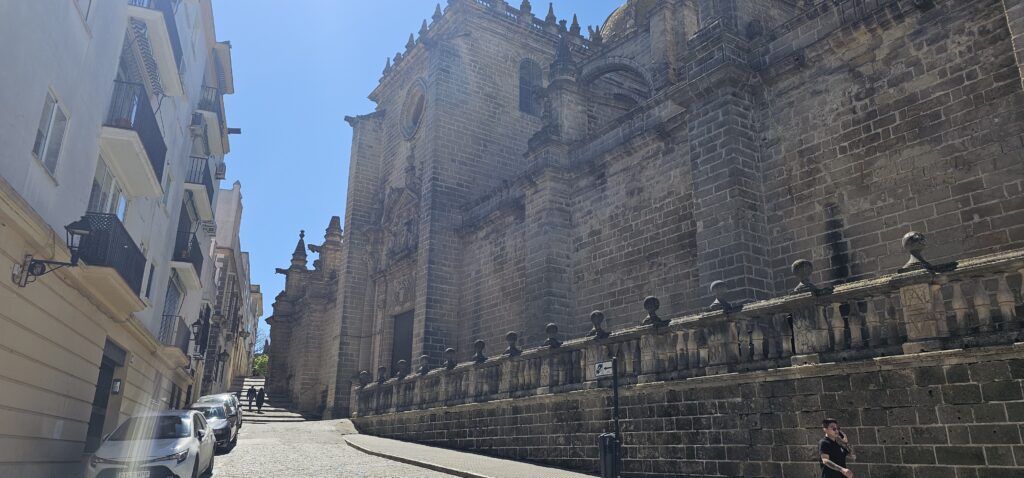
The old market The cathedral was getting ready for Holy WeekA narrow steep side street!The cathedral The side of a bodega building, it was huge!!Lunch in the square
In the (much younger) past, David would spend his birthday with my brother, exploring a city and its beers. Eventually this extended to a long weekend, with more exotic locations and different friends. This year he has opted for a long month in the sherry area of Cadiz and El Puerto de Santa Maria, a place we both love and know from our Samson and Suzi travelling days.
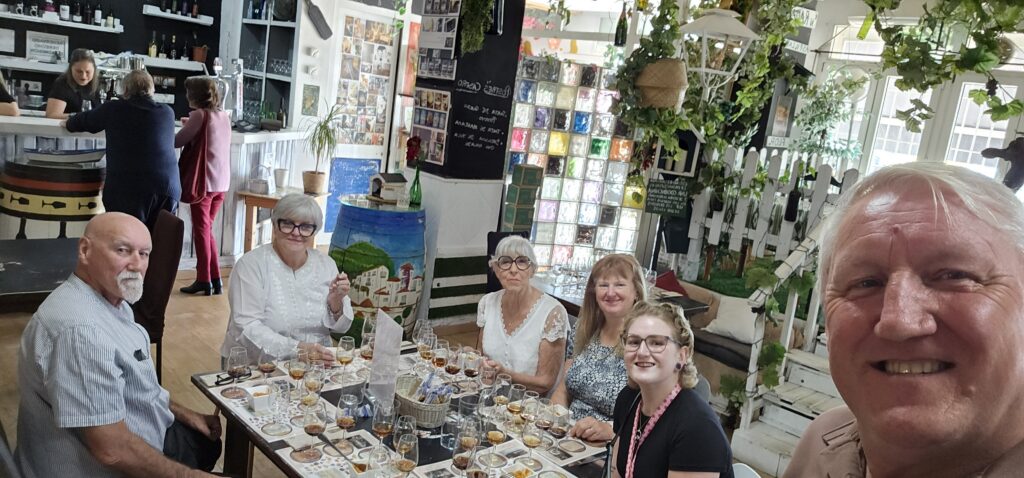
We arrived two weeks ago and have just been joined by some family and friends. We’ve rented an apartment right in the town centre, a 5 minute walk from the highly ornate Basilica which is the central point for all of the town’s Easter Penitence parades. We have a second floor view over a pedestrianised area that leads directly to the Plaza Espana, in front of the Basilica. It was imperative that we introduce them to sherry, a drink usually synonymous with people of an older age but drunk in Spain in this area by every generation so we booked into a tour of the Guiterrez Colosia Bodega, right on the banks of the Guadalete river.
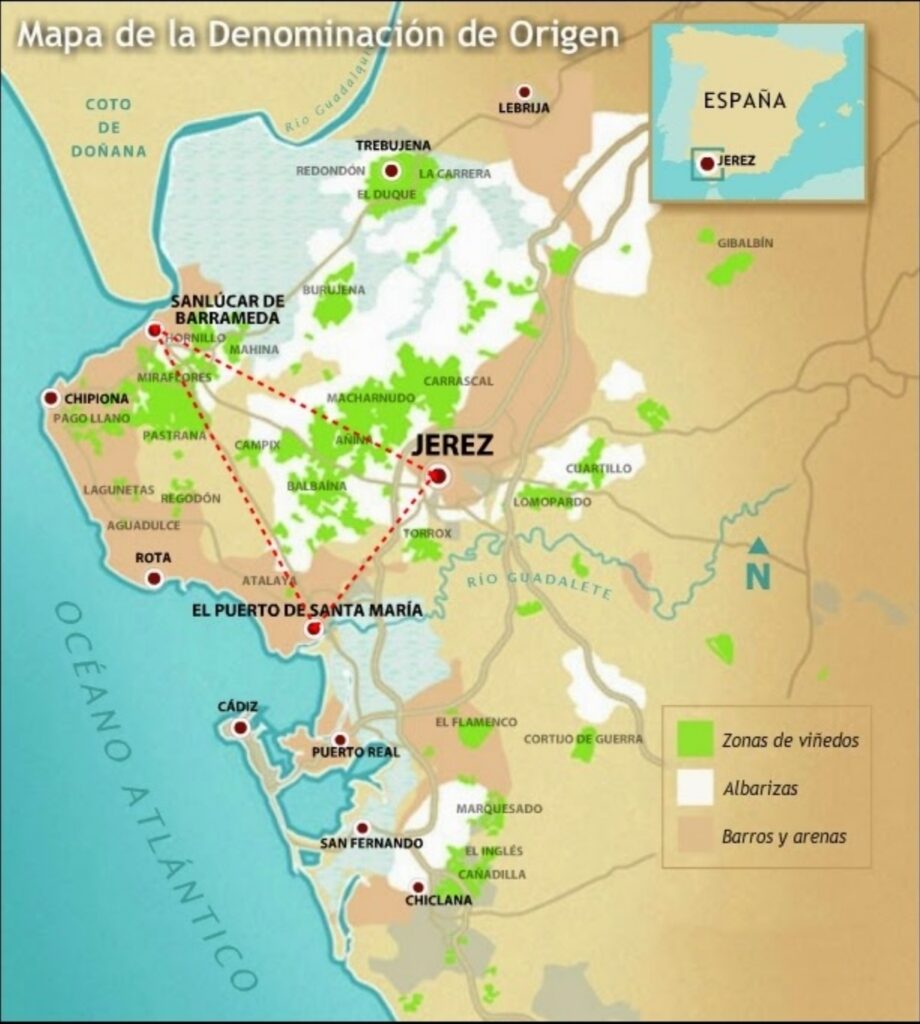
The Sherry Triangle
Historical info first- the sherry vineyards are located in a specific area around Cadiz, created by chalky soil and seawater sediment, dating back to 1100BC when the Phoenicians planted vines, the Romans who established the first quality controls insisted that wines from this area be marked with AAAA but it wasn’t until 1264AD that the Arabs named this area “Sherish” that the word sherry was formed. In the 17th century investors from Holland, Scotland and England boosted production, hence the export and import of the product, assisted by ships built in the port that travelled to other Mediterranean areas and the UK.
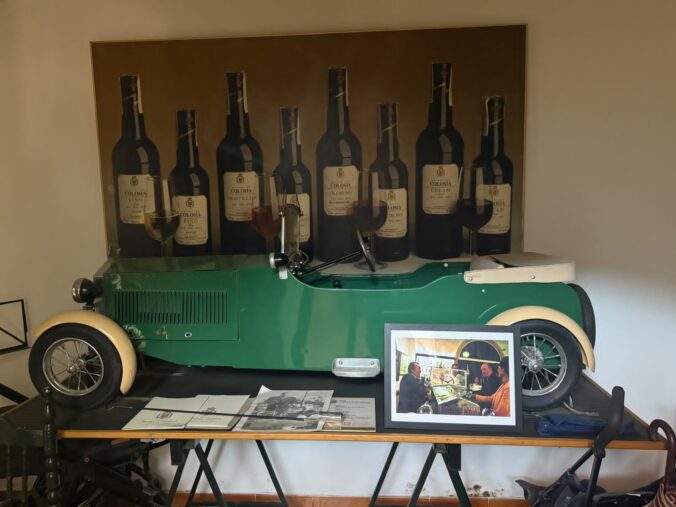
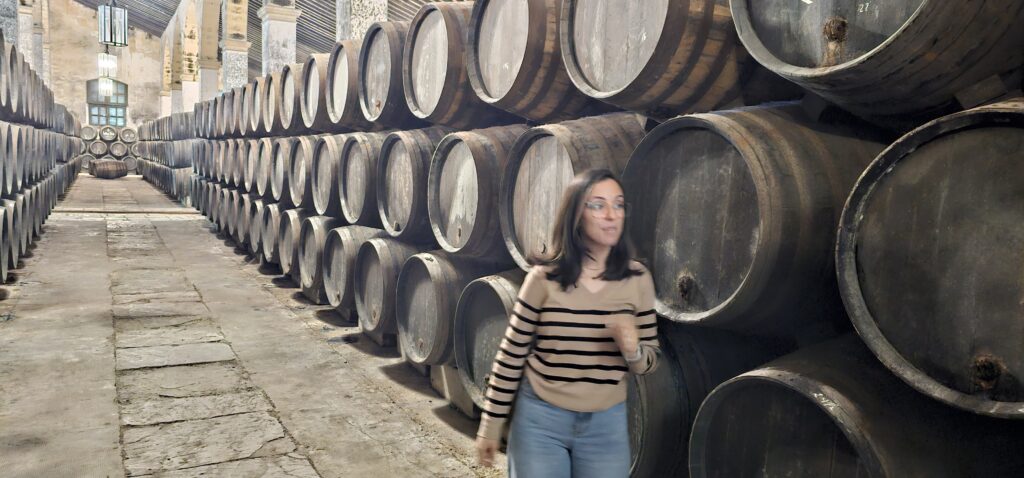
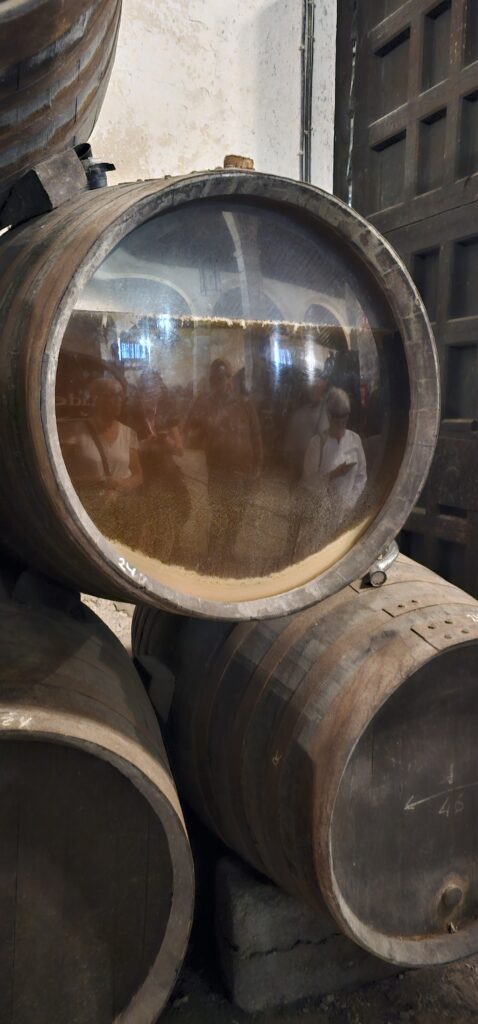
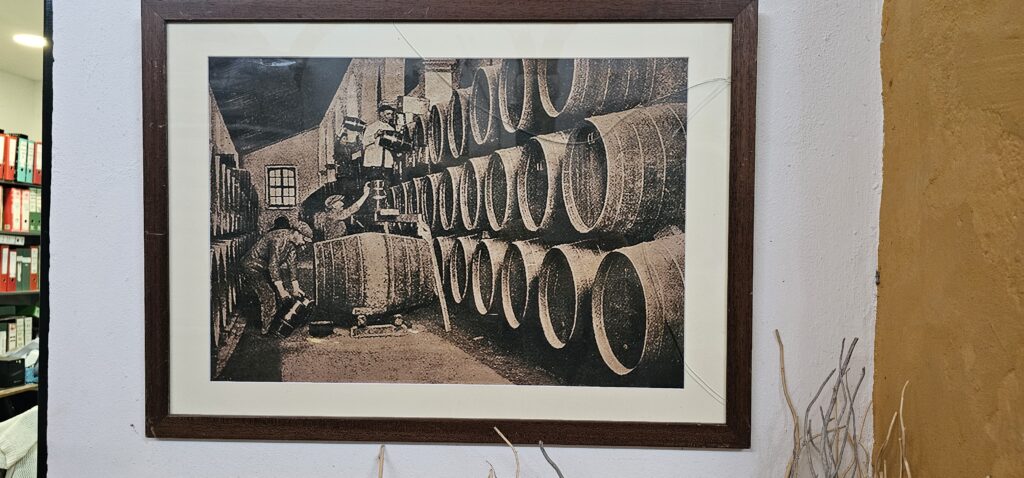
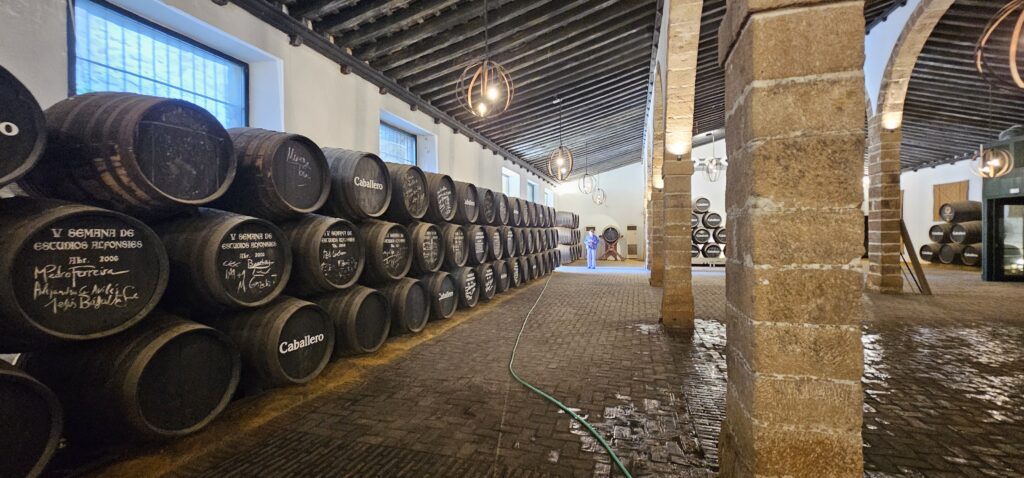
Being shown around the barrelsThe flora within a barrelBeing transferred to the bottling containersAn old photo.
We were told that this Bodega was started in 1838, assisted by wind and moisture in the area which created a perfect growing conditions for the Palamino, Moscatel and Pedro Ximinez grapes used in the wines. The proximity to the river ensures the perfect humidity to create a “flora” or natural yeast to ferment to wine further, Sherry is a fortified aged wine, aged using a Solera system. We learned about the old American oak barrels that are anything up to 60 years old and the solera system of mixing ensures a consistent level of quality and taste.
The Guiterrez family took over the Bodega at the beginning of the 20th Century so descendents of Jose Dosal Guiterrez, their great grandfather, still work in the business.
The solera system works by removing a quantity of wine for bottling from the bottom barrels, that quantity is replaced from barrels in the middle row, and the middle barrels are topped up by wines in the barrels on the top row. The top rows are the only ones filled up with new wine, so blending downwards can always produce a consistent product regardless of the uality of the latest years’ crop. However, the barrels are only ever emptied by a third, maximum, so some of the wine in the barrel could be up to 180 years old!!
In 1969 the family bought the Palace of the Count of Cumbrehermosa Cargedor de Indias and extended into the building and cellars, expanding the storage and bottling capacity and also creating a bar and restaurant that promotes and uses its wines within its recipes.
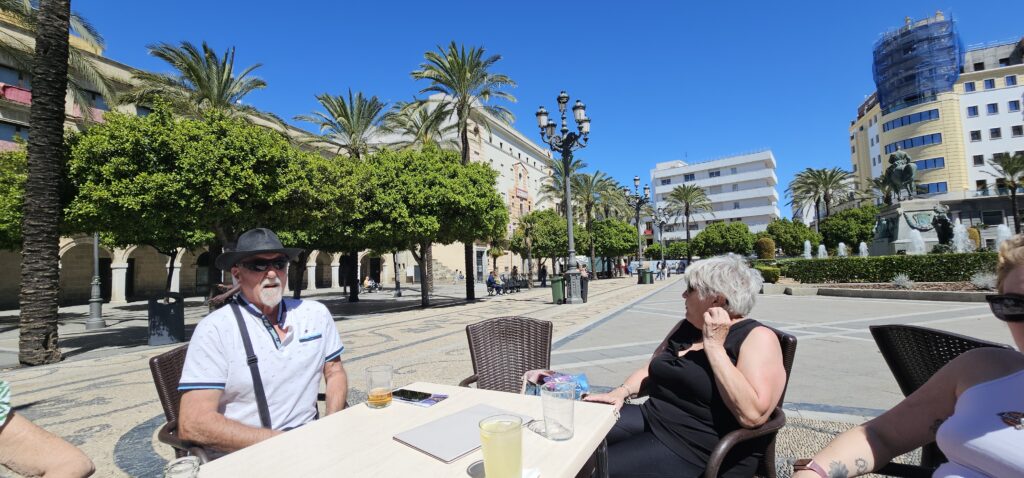
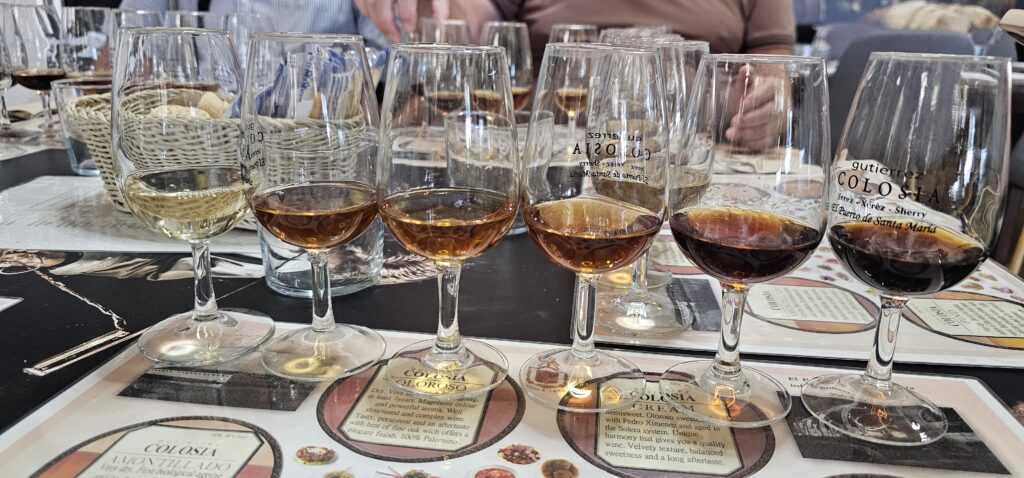
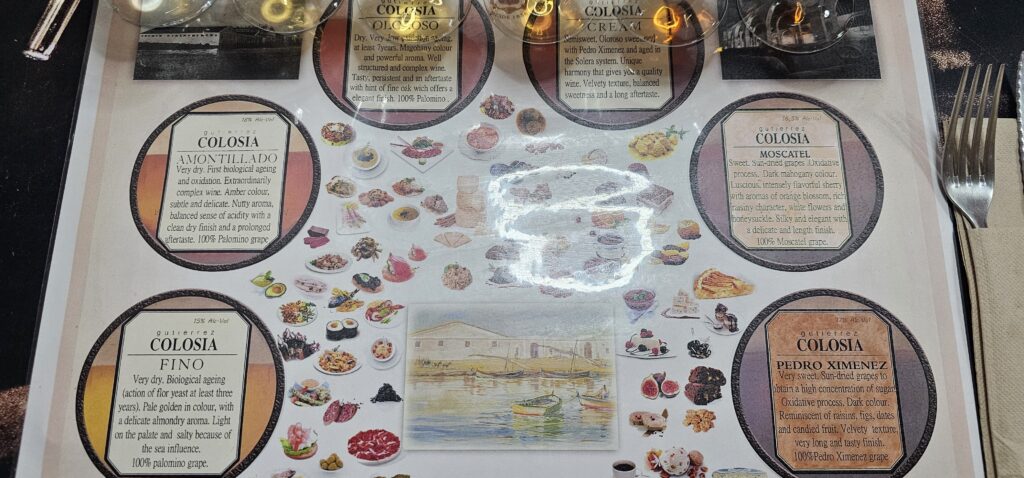
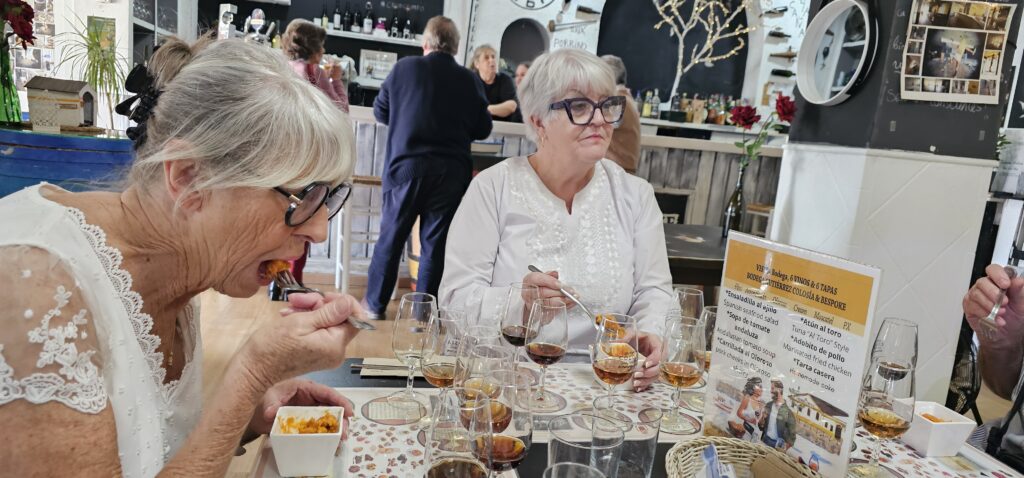
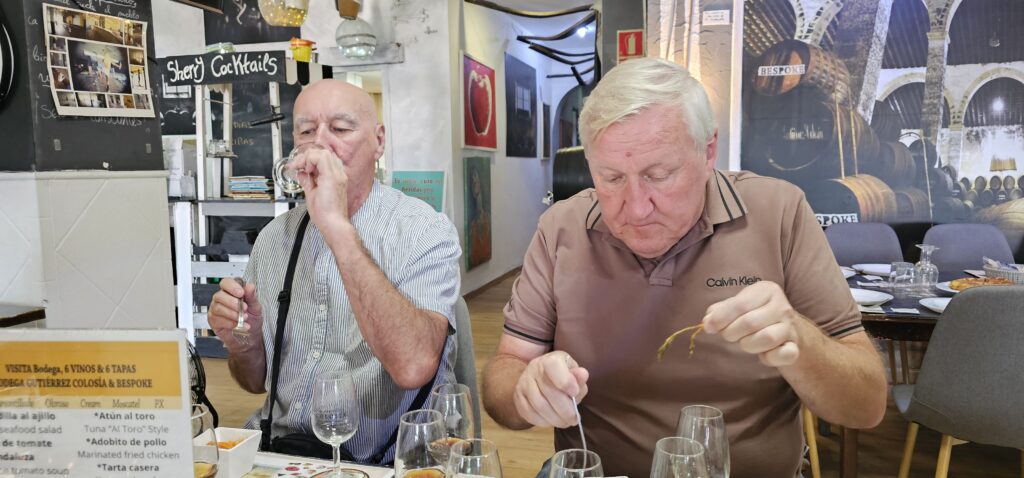
The lunch that followed was accompanied by 6 glasses of sherry, ranging from very dry to dry, sweeter then very sweet. Each course was to be eaten with a specific sherry. An interesting and tasty afternoon out!
Left to right, dry to sweetThe different sherries Scrummy lunch dishes
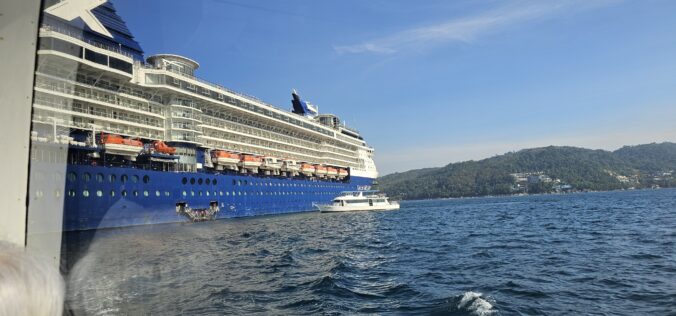
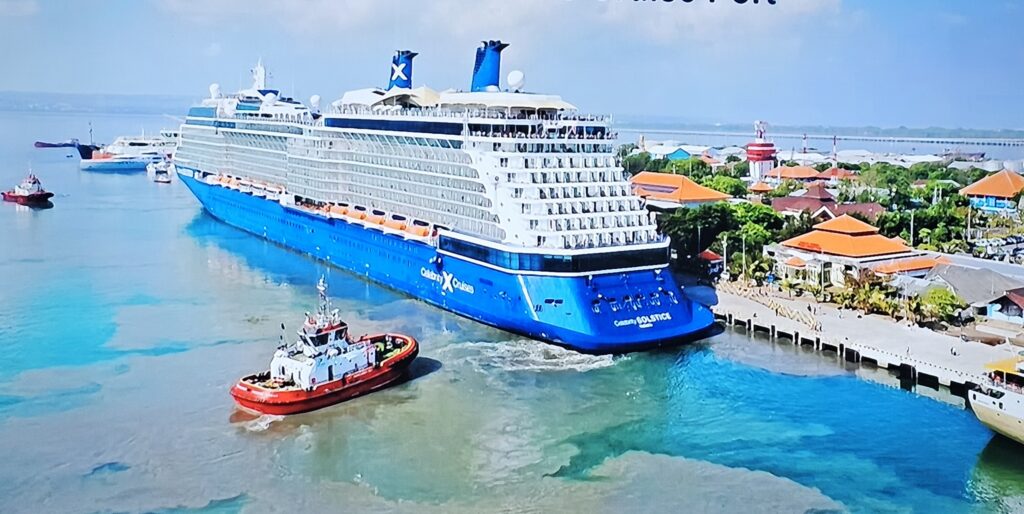
We’ve learned some interesting facts whilst living on board the Celebrity Millenium Cruise Ship mainly about the ship and its staff so we’d like to share this with you!
THE SHIP
Cruises are planned and routes booked at least 3 years in advance. Planning includes consideration of weather, currents, marine traffic and marine protected areas.
Just over 1000 staff, from numerous nationalities, are employed for 7 months on a contract, they have 2 months leave, then are allocated to the same or another ship for another 7 months. If a ship docks in their home town, they are given a few hours shore leave, shifts permitting.
The Captain and First Officers work 3 months on, 3 months off but during their 3 months leave, Captains still train by practising manoeuvres in simulators. Captains still use star locations to assist in determining the ship’s location, primarily using GPS and terrestrial navigation (landmarks on the coast) to ensure the ship location is correct to within 10cm! Hurricane and typhoon forecasts can be navigated around 5 days in advance.
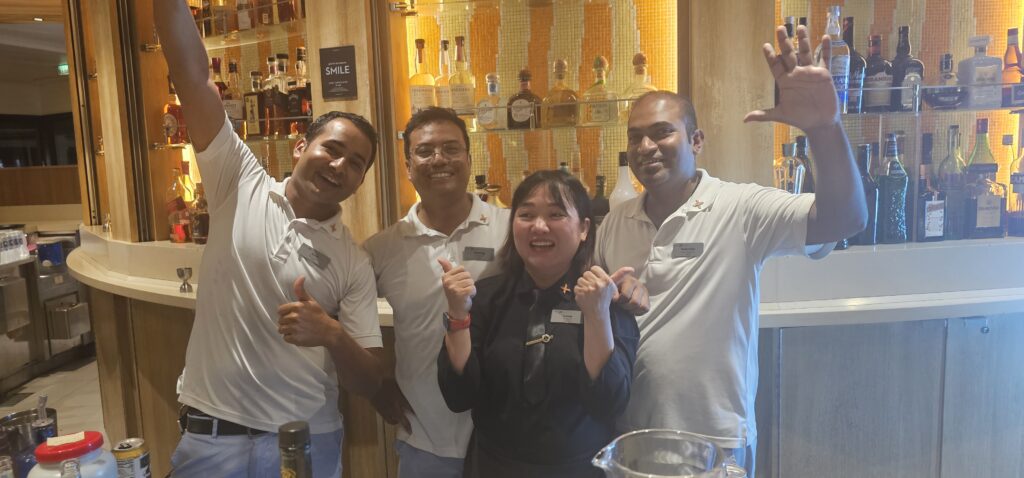
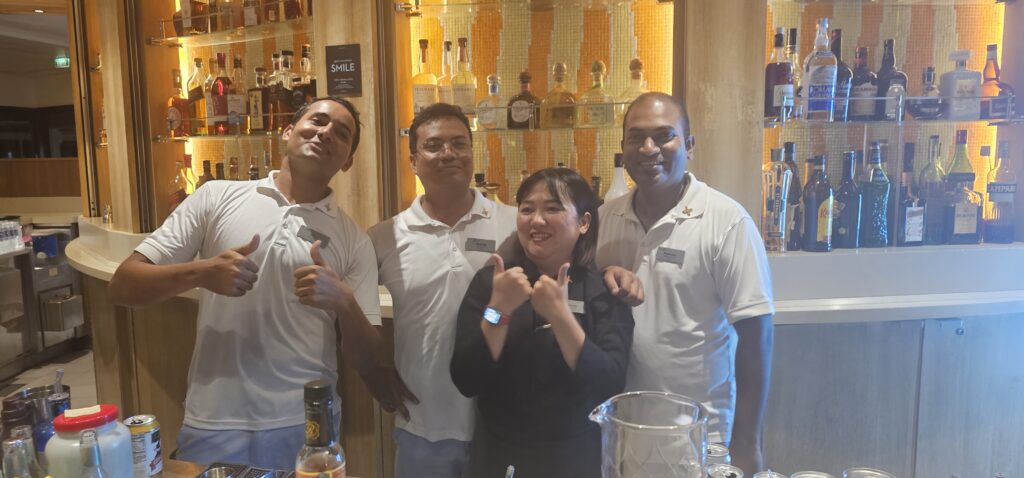
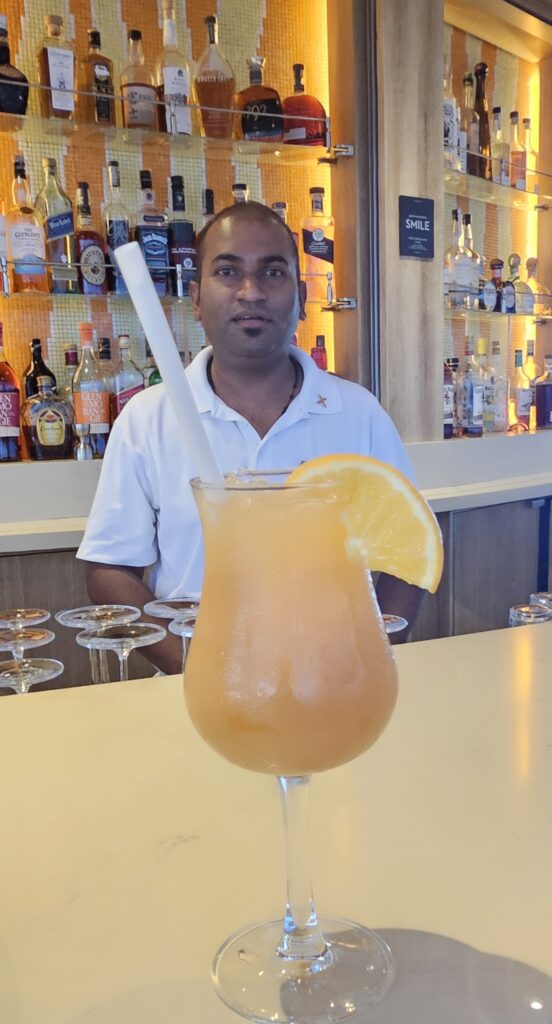
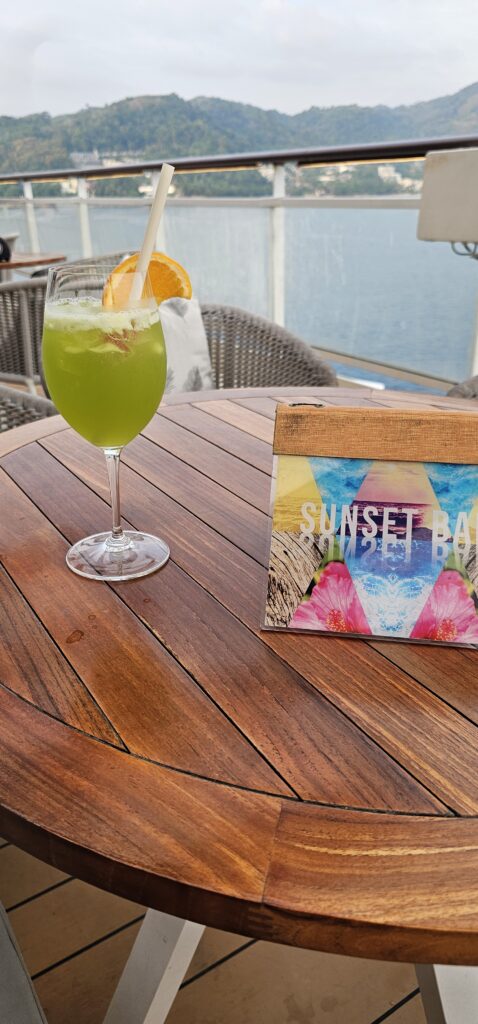
The Sunset Bar crew, Ram, Anorak, Luana, Robinson Top Cocktail maker Mr Robinson 👌
In their contract period, general staff (waiting staff, bar staff, cleaners, kitchen staff) have no days off unless the ship is empty of guests which happens occasionally as one cruise ends and another starts. Executive staff are allowed to disembark in ports if not on a working shift.
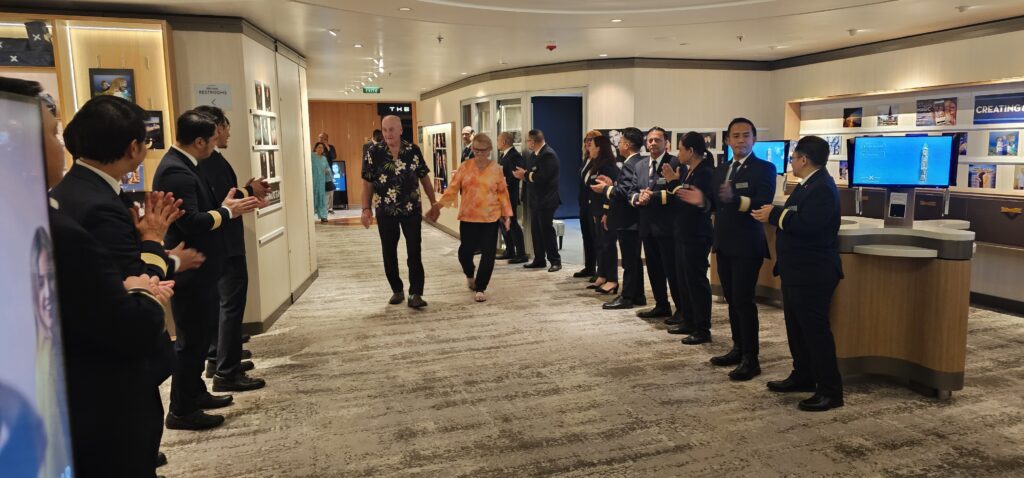
All staff are very smartly dressed, wear name badges and all seem to have perfect manners. Every one smiles at every opportunity, they ask how your day has been, can they get you anything, or wish you an enjoyable evening.
This particular ship carries 2600 people and travels back to back on this particular route around Indonesia, Malaysia and Thailand but will continue onto China and Japan next year, coming back to Indonesia towards the end of next year.
ENTERTAINMENT
Entertainment is provided from 7am to 1am most days, this takes the form of exercise classes (all charged at extra $$$s), quizzes, team games in the pools, evening shows twice a night in the theatre, art auctions, meet the crew sessions and several live music sessions at various bars. Some nights they hold mass karaoke sessions, “sing along to ABBA, Queen or Rock Music” and silent discos – these nights are very popular!!
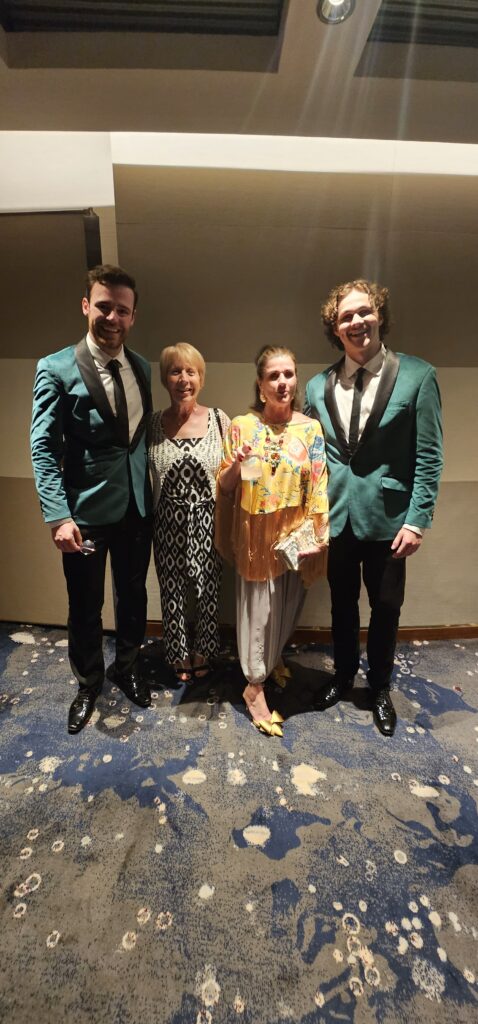
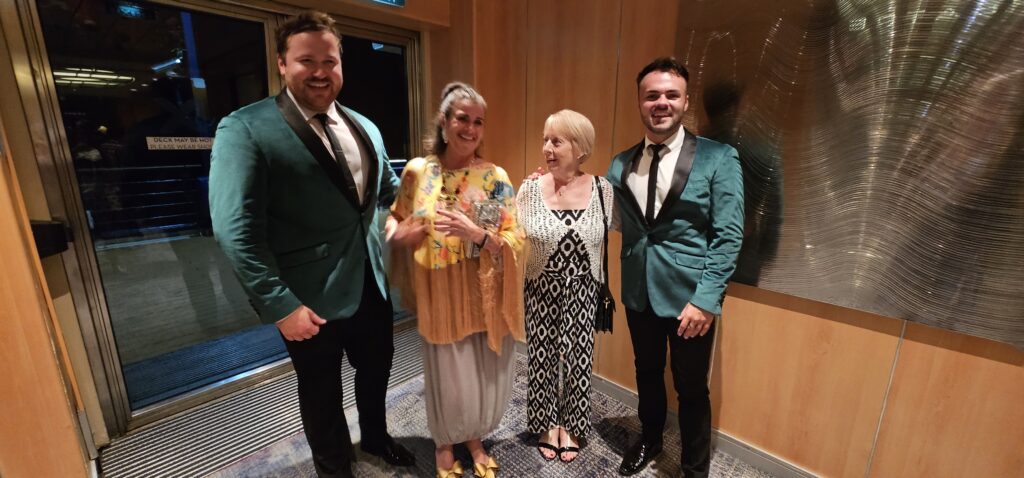
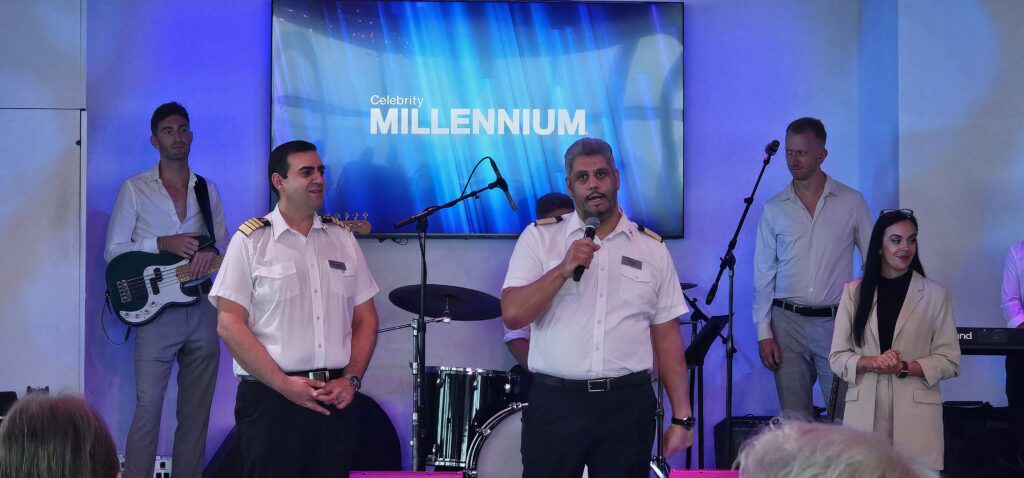
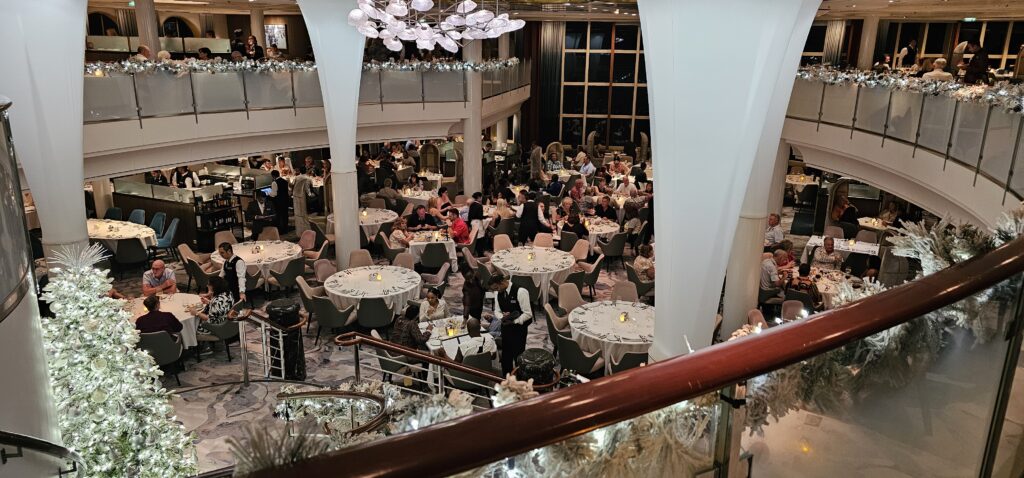
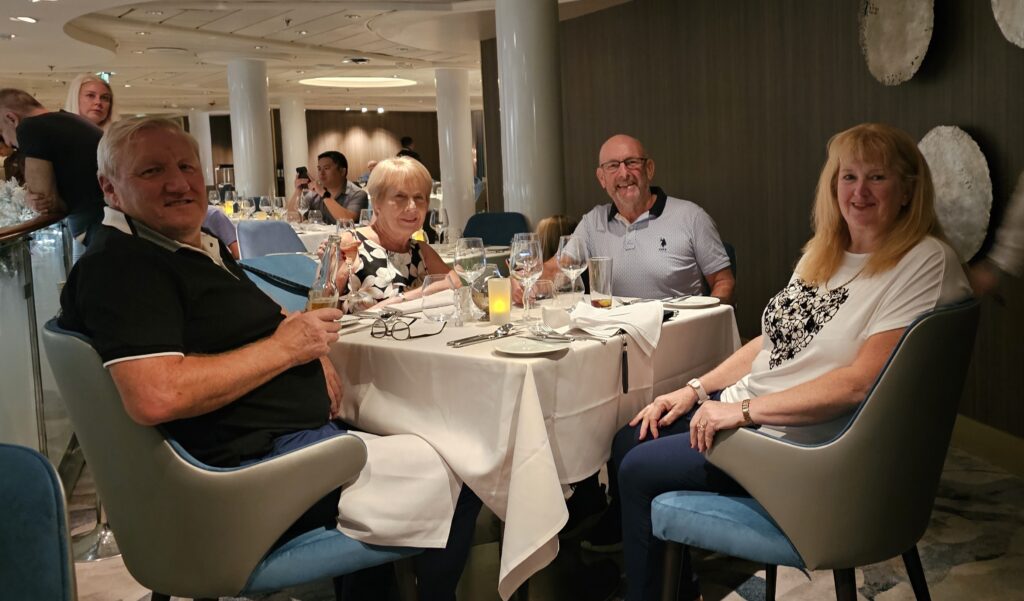
The Other Guys singing groupSome of the Captains teamThe main dining roomOur table every night
There are speciality bars, martini, vodka or cocktails, as well as the usual shops selling so called duty free items, spirits, cigarettes and clothing, jewellery or handbags, none of which is cheap to us, however it may be to the Americans or Chinese.
Despite being “all inclusive” there are many ways that the company help you to increase your spending, most exercise classes are chargeable; bingo is extra; Jack Daniels at the bar is an extra $5, or £3, (so I have Jim Beam instead, which is included); official photographs with the on board photographer; the spa is so stupidly expensive so we’ve steered clear of that!
COCKTAILS
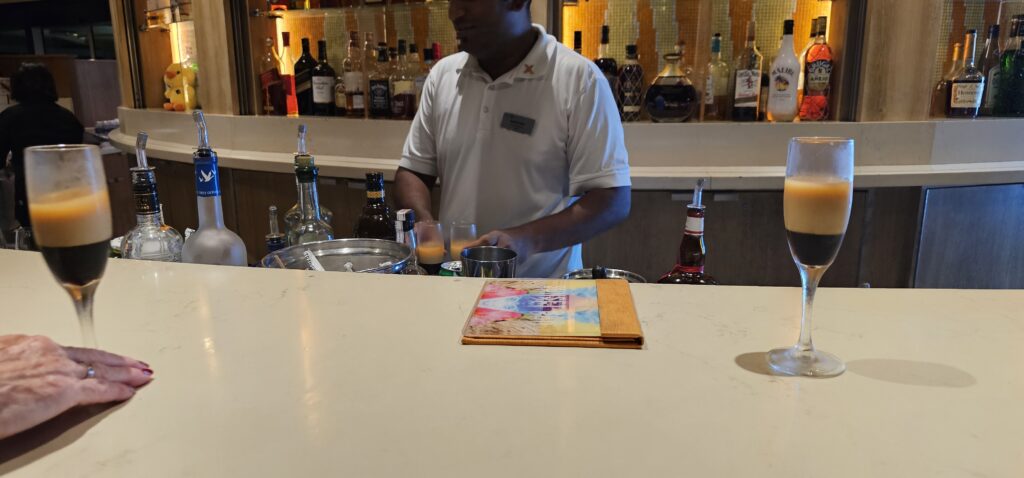
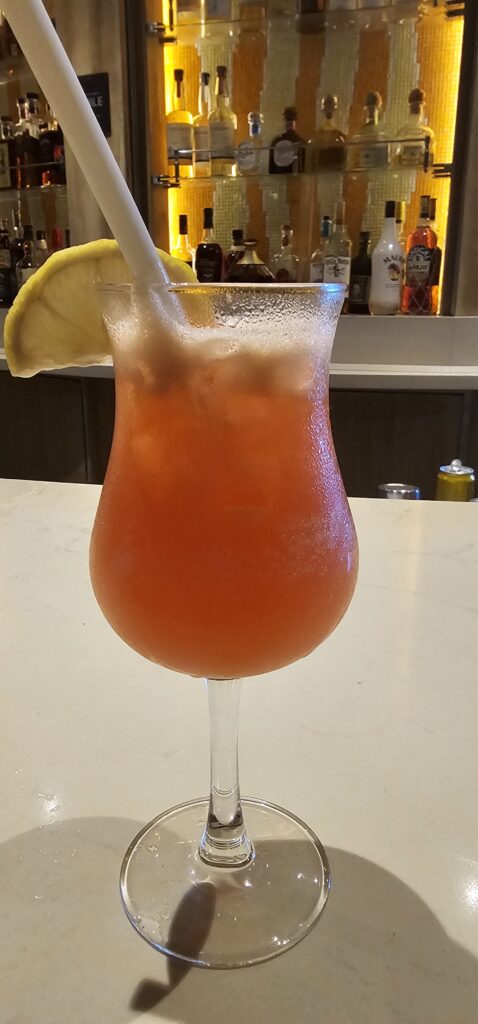
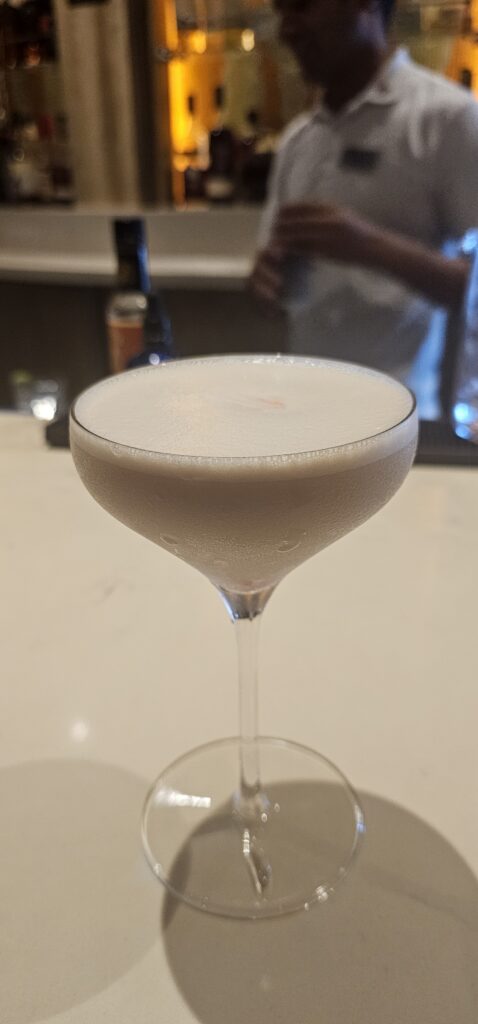
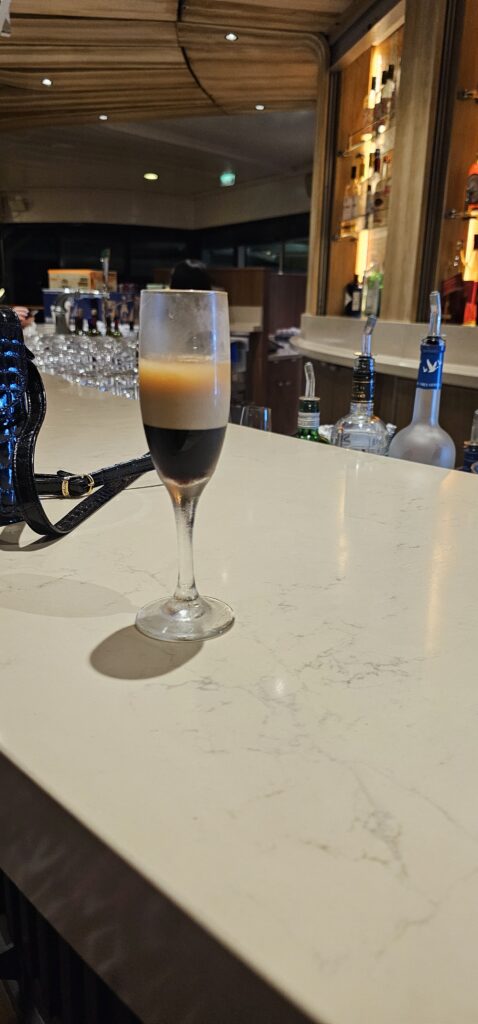
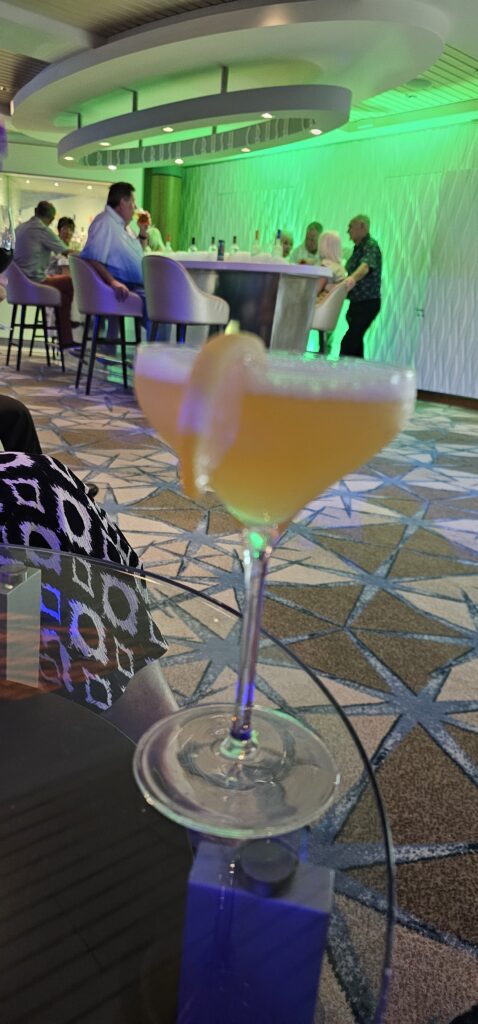
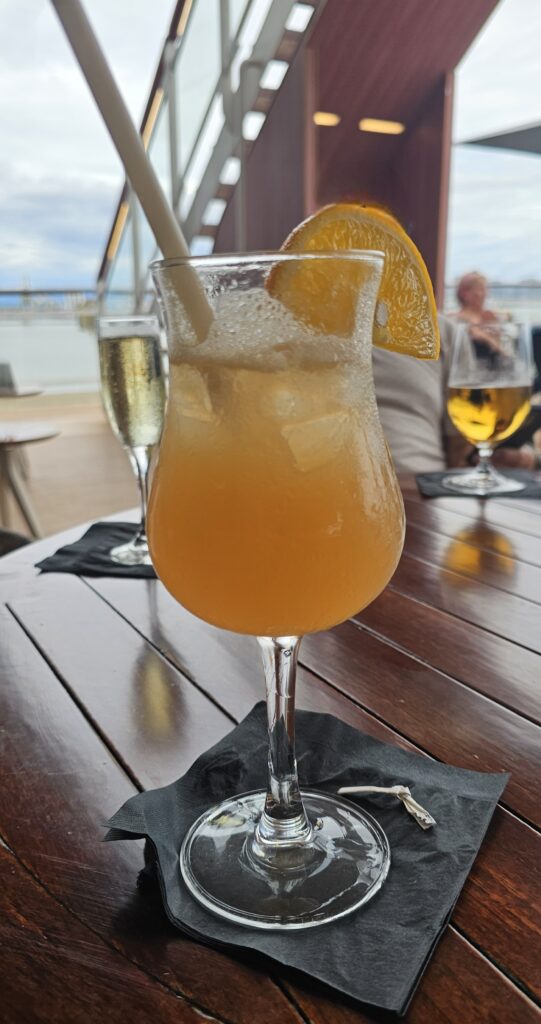
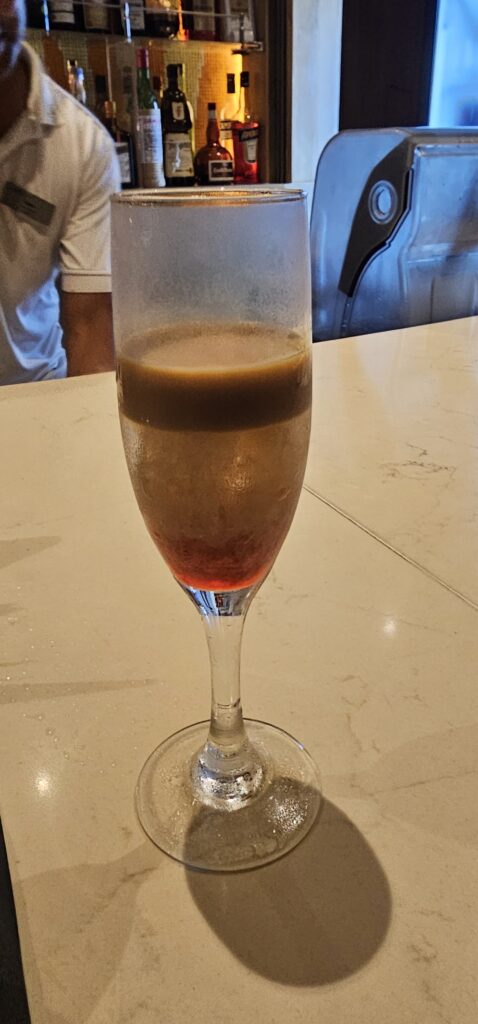
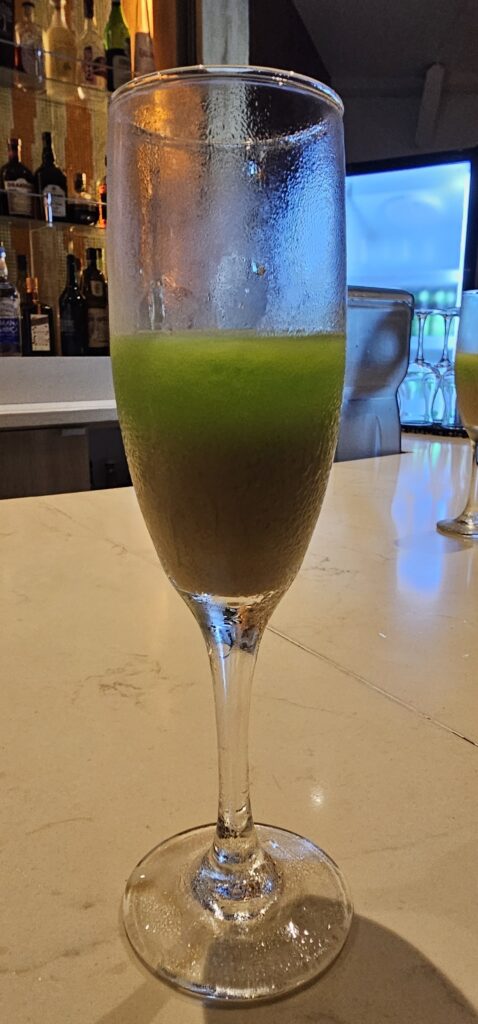
These featured highly in the evenings, well, certainly for the ladies! There’s a great selection. We’ve also tried several Baileys concoctions at the end of the nights and slept very well!
We’ve met a lovely young man called Joel during our stay here, Graham has adopted him as his Indian son (because of their facial similarities) and David is his dancing partner!
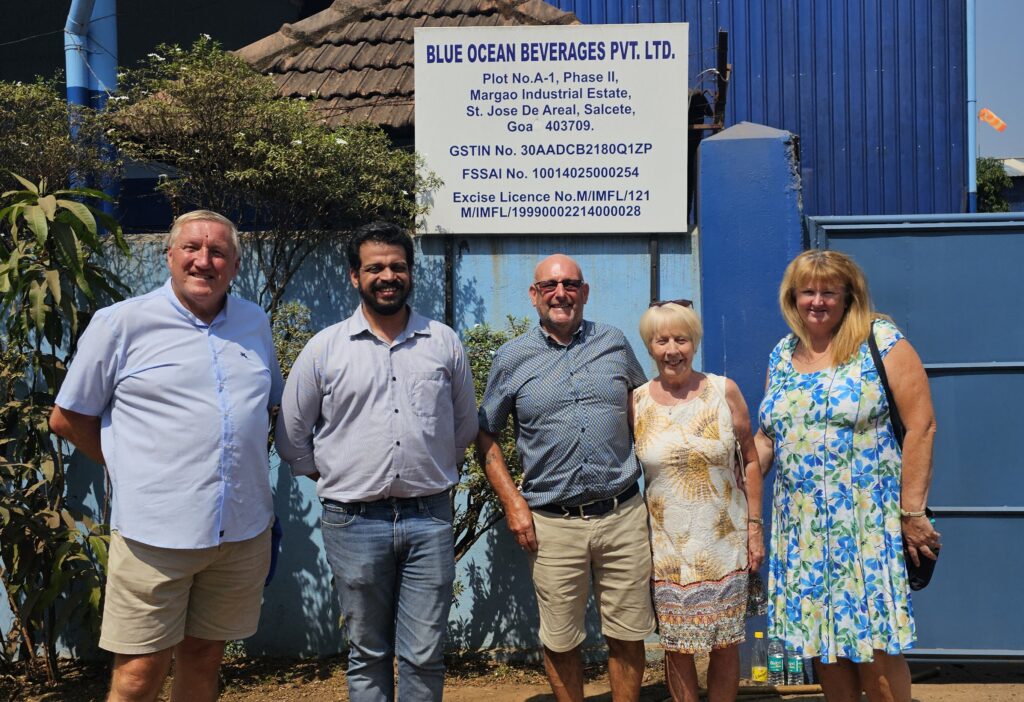
We’ve met an aunt and uncle, brother and other family members and whilst talking to Joel we enquired as to his job, he’s in construction. Joel mentioned his cousin is the Director/owner of a drinks bottling plant and asked if we would like to have a factory tour. Graham plus David plus Alcohol = Definite Yes!!!
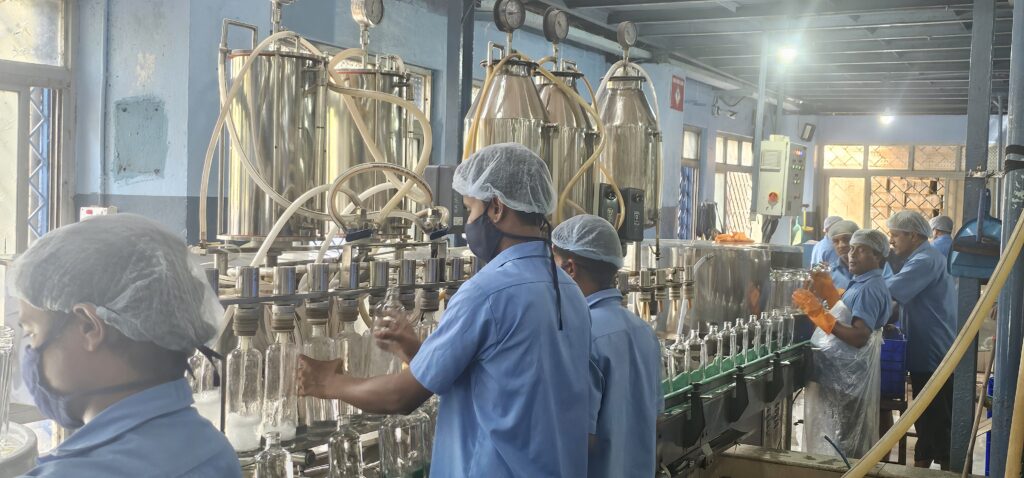
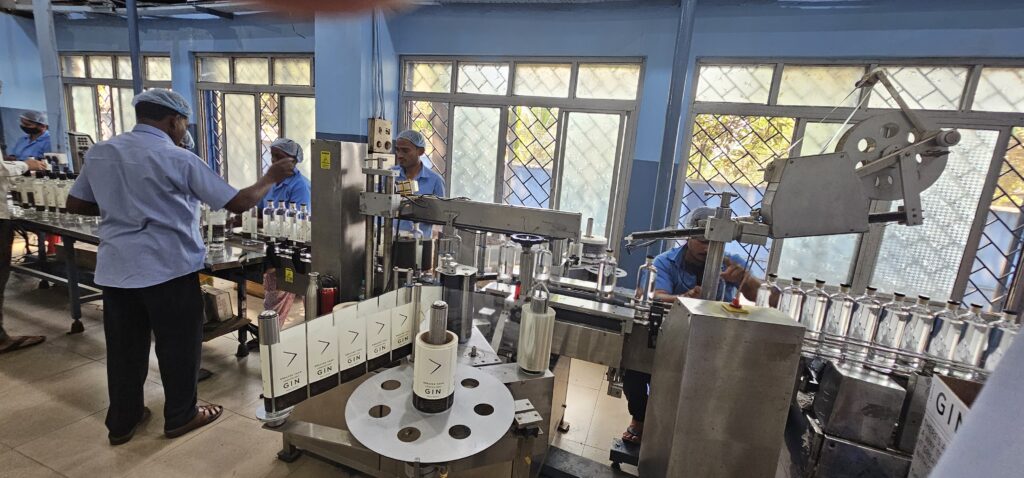
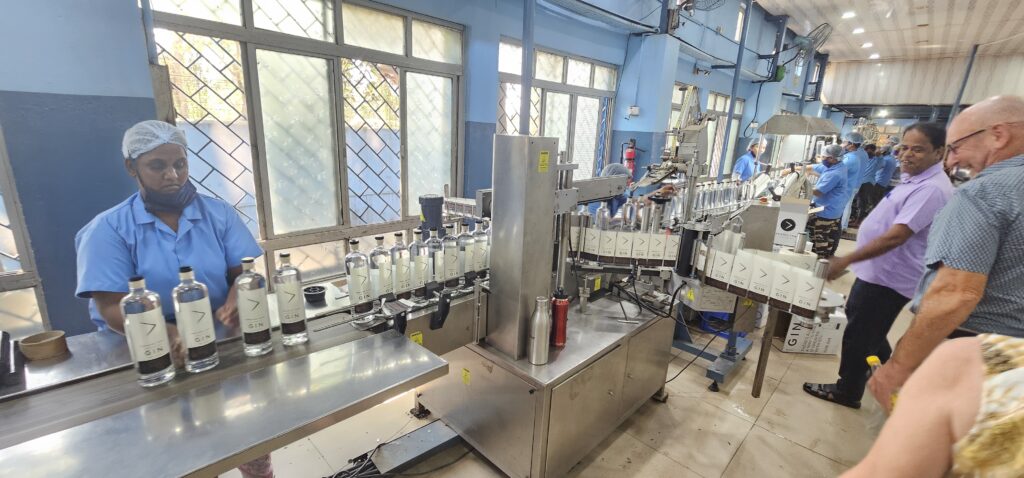
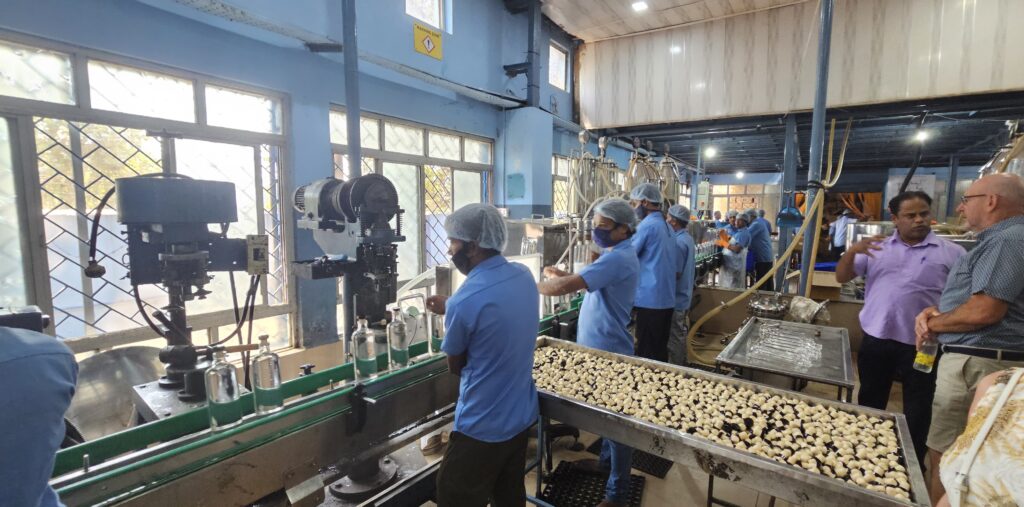
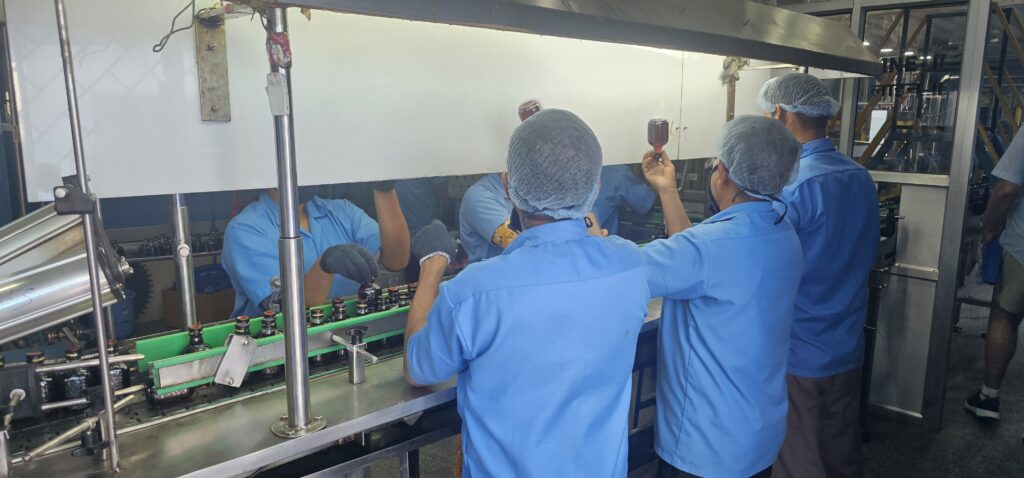
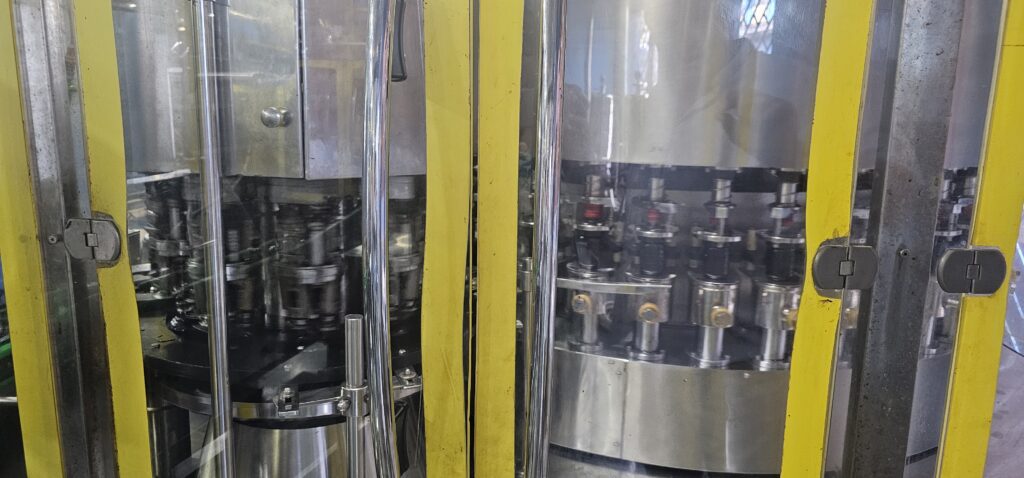
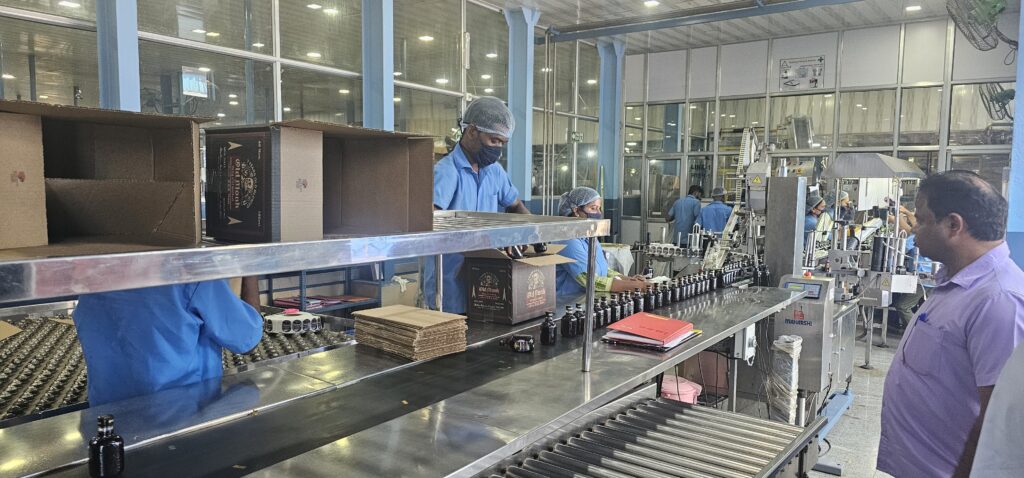
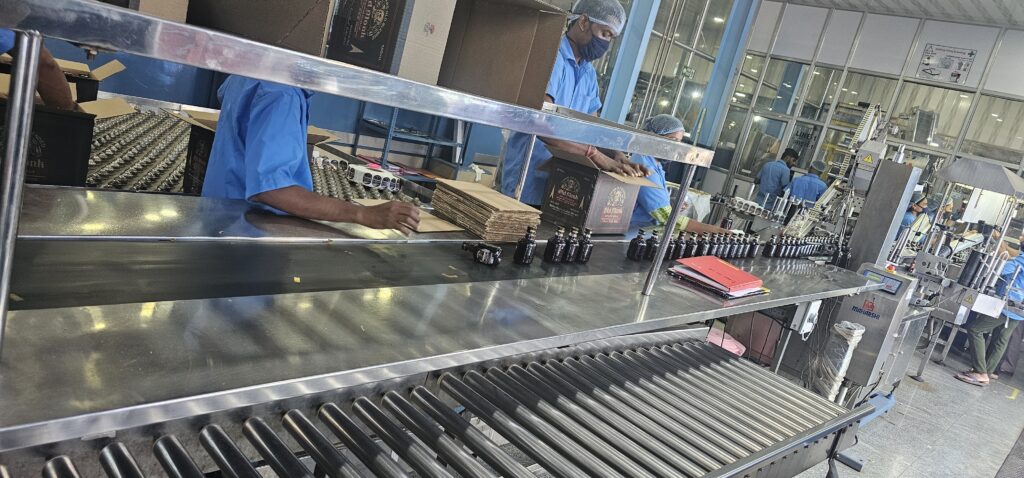
A few days later, we met Joel at midday and were introduced to Jay, a supervisor. Jay then took us to see the bottling, labelling and packing lines. Some 200 people were quietly working away (yes, it was surprisingly quiet) rhythmically checking each bottle after it has been filled, putting corks in and caps on, checking the label placement and finally being boxed up and packed ready for delivery.
Gin bottles being filledGin production on the left, rum on the rightLabelling machineQuality controlCorks inserted manually then pressure machines complete the job
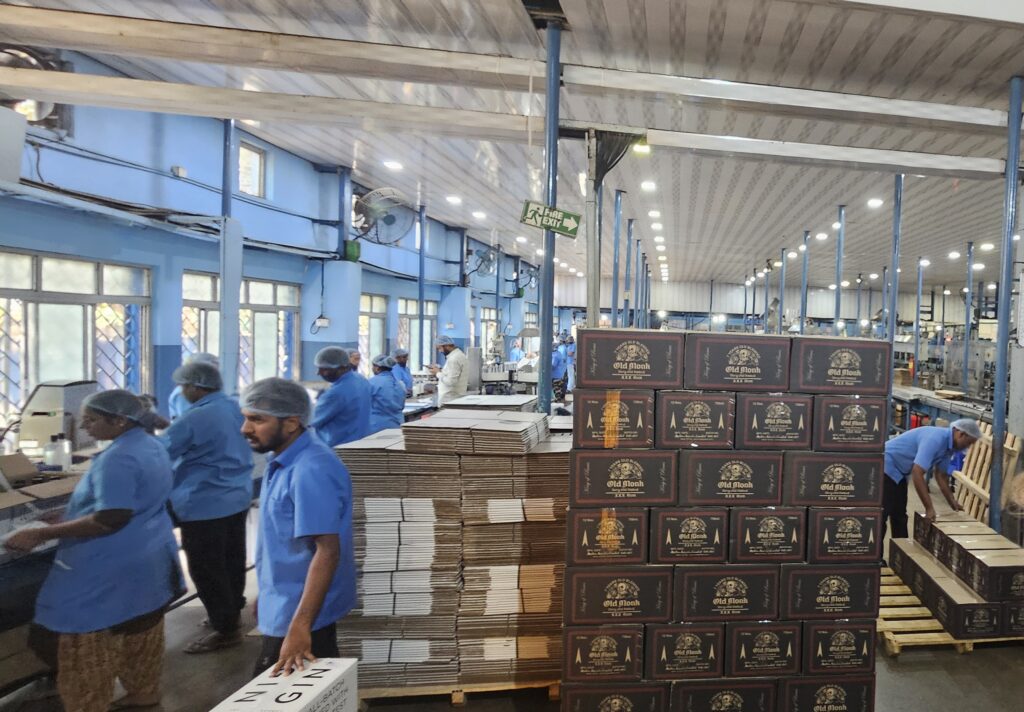
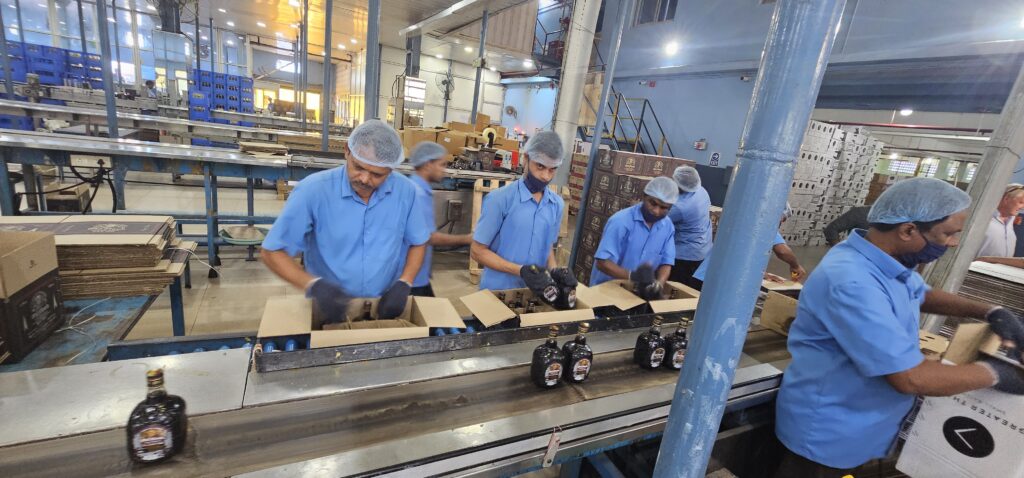
The production lines that day were filling flavoured Breezer type drinks, gin and fullsized and minature of rum. David is a fan of the Old Monk rum so was particularly interested to watch the bottles being filled, checked, sealed, labelled and packaged.
Quality control is by eyeRum packaging areaRum bottles being filled automatically Minature bottles of rum go through the exact same processBefore being packed into boxes
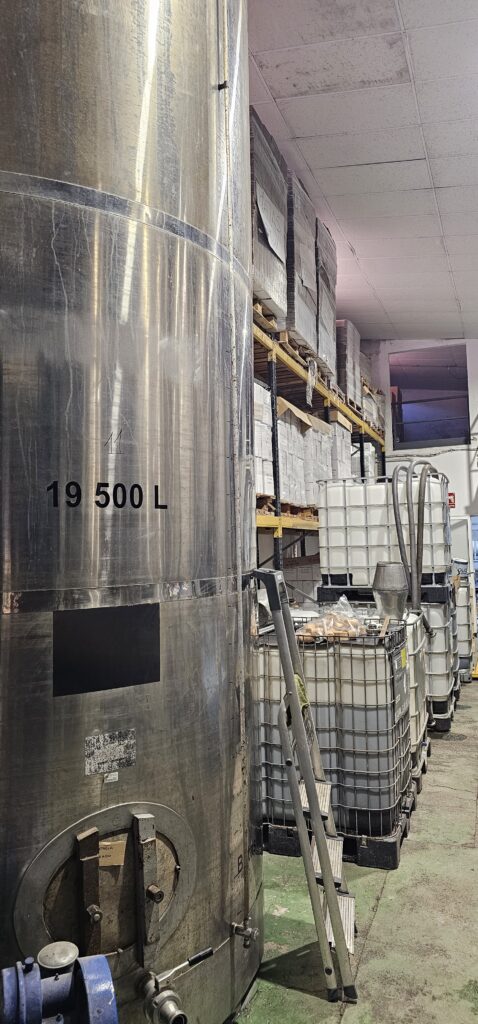
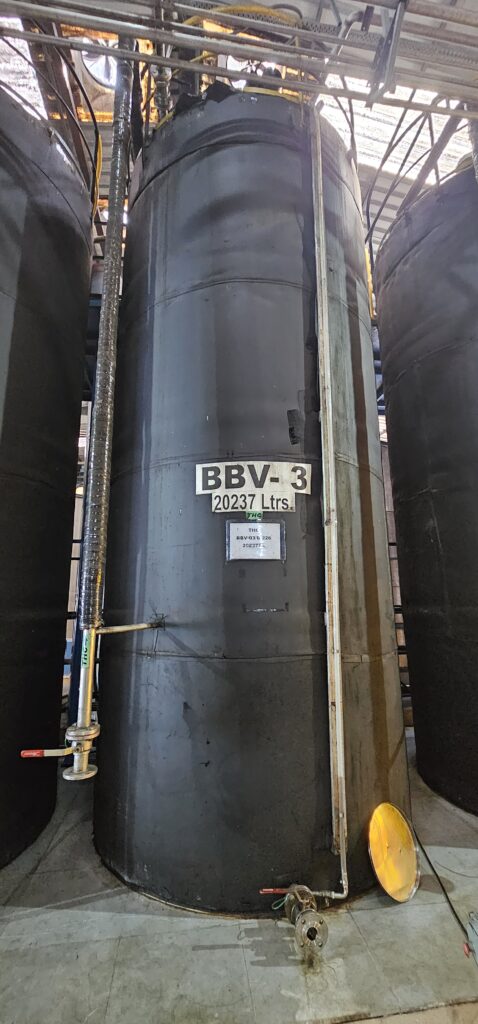
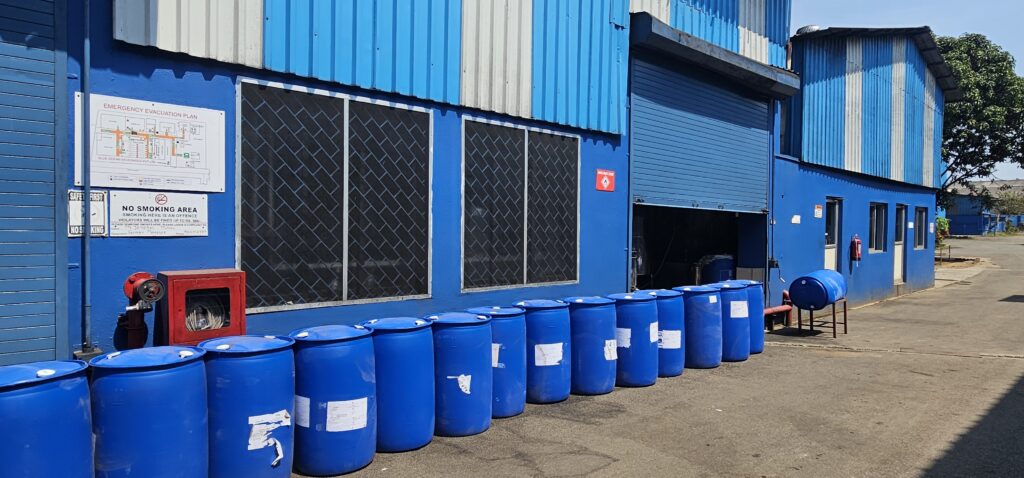
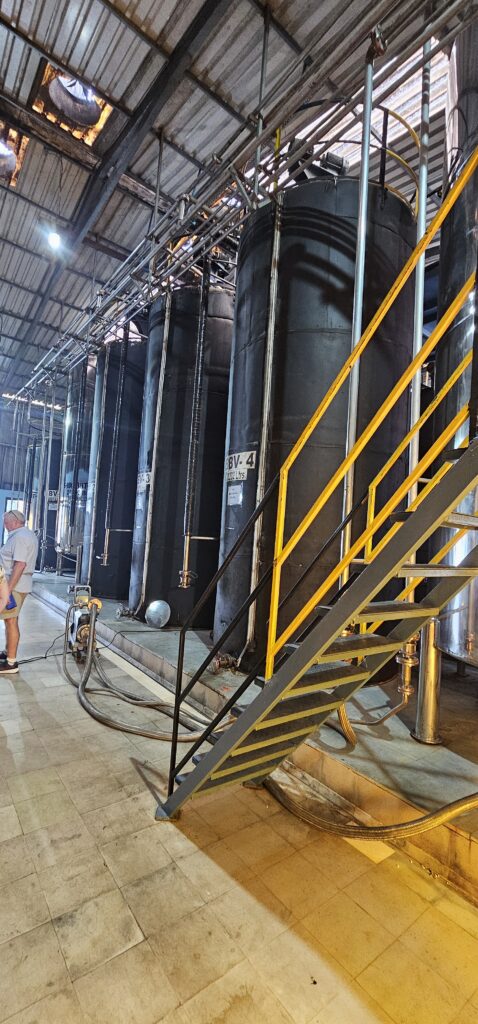
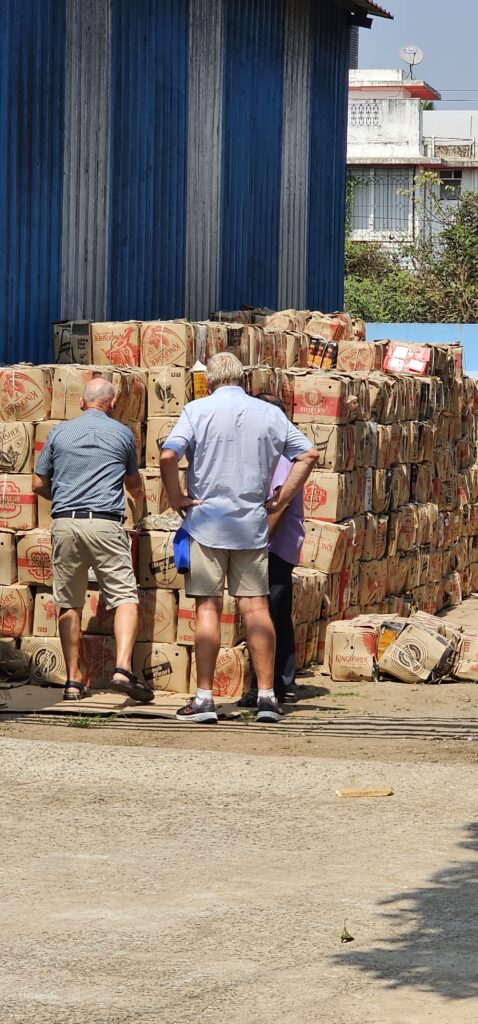
We went into the storage area where massive stainless steel containers hold the raw products before it is pumped across to the bottling area.
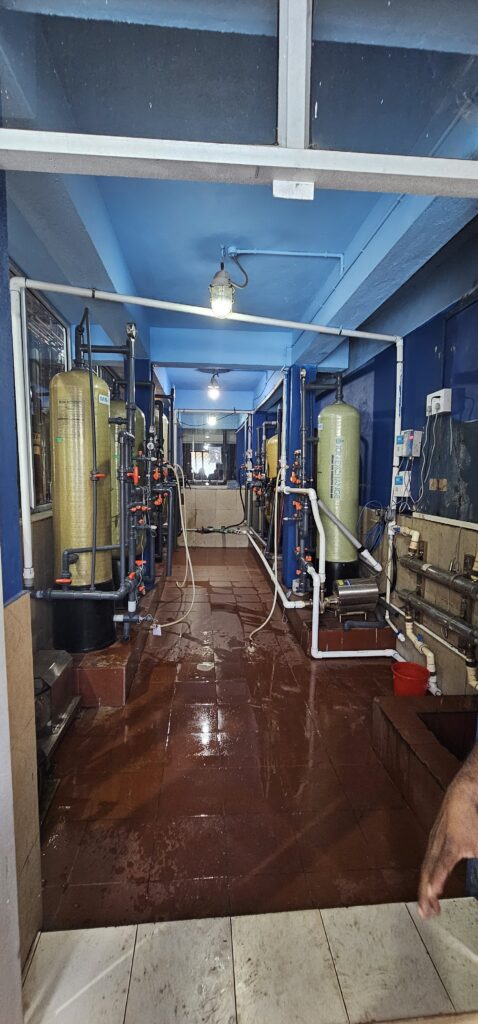
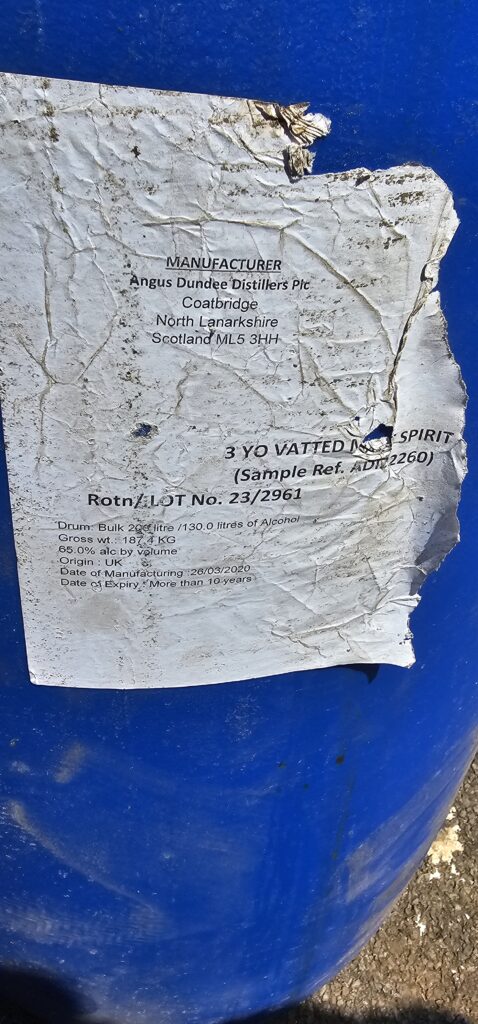
The demineralisation plantRaw whiskey from Scotland
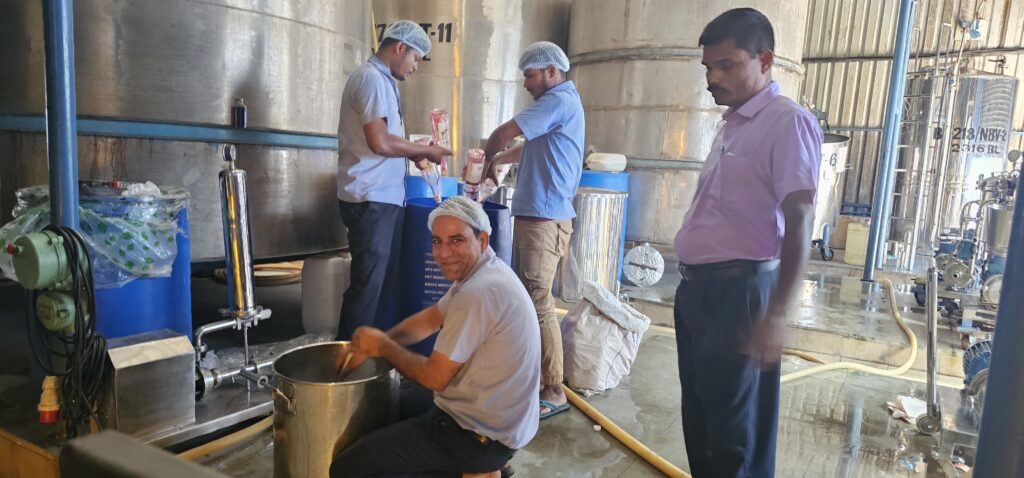
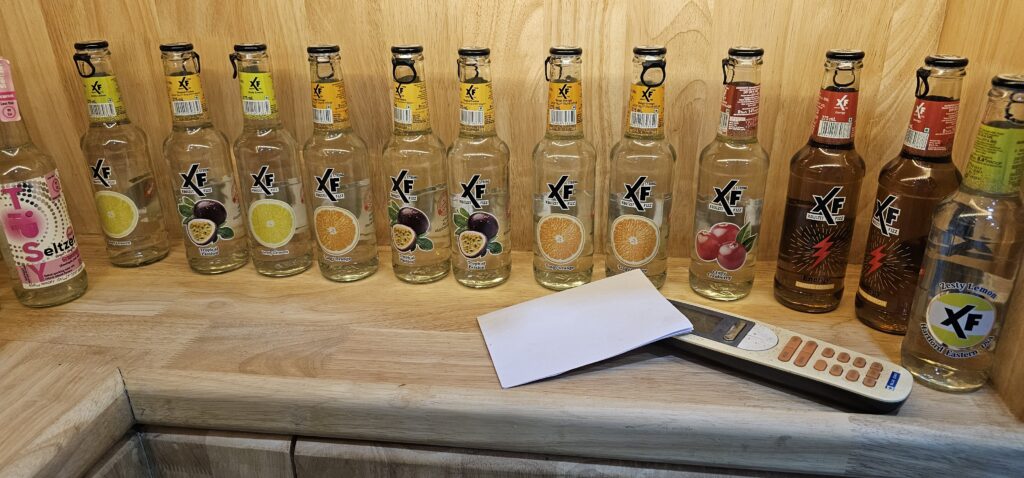
We saw barrels of imported scotch whiskey, waiting to be put into the bottling system. And we watched workers adding the alcopop syrup flavourings before being blended with the fizzy water which is made with demineralised water and gin to make Seltzer drinks.
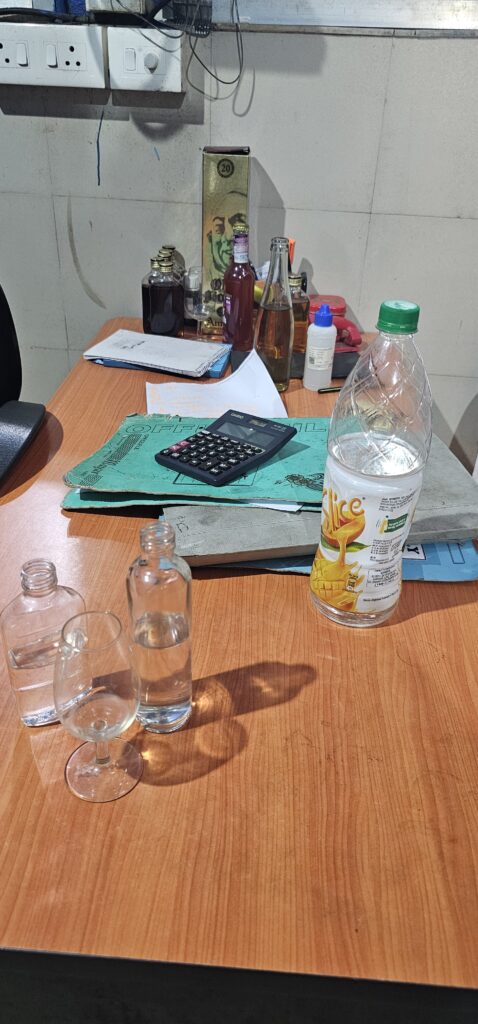
A happy man mixing the flavoured syrup for SeltzersLooks like the Manager’s testing station! Quarter glass bottles of Old Munk Rum are collected and recycled as its cheaper than buying new. David and Graham were being shown the bottles, worked out the cost at about 2 p per bottle, 5p to buy new.
Afterwards we went up to the Boardroom for coffee and met Mrinal, the current owner and Director. His father started the business some 20 years ago and has expanded into Bosnia and southern India in Bangalore. Dad’s now happily retired.
He confirmed that all staff lodge nearby, work 8 to 5 with regular breaks, work for 2 to 3 years without a holiday (their choice) then go home for a few months with their money, so staff turnover is very low.
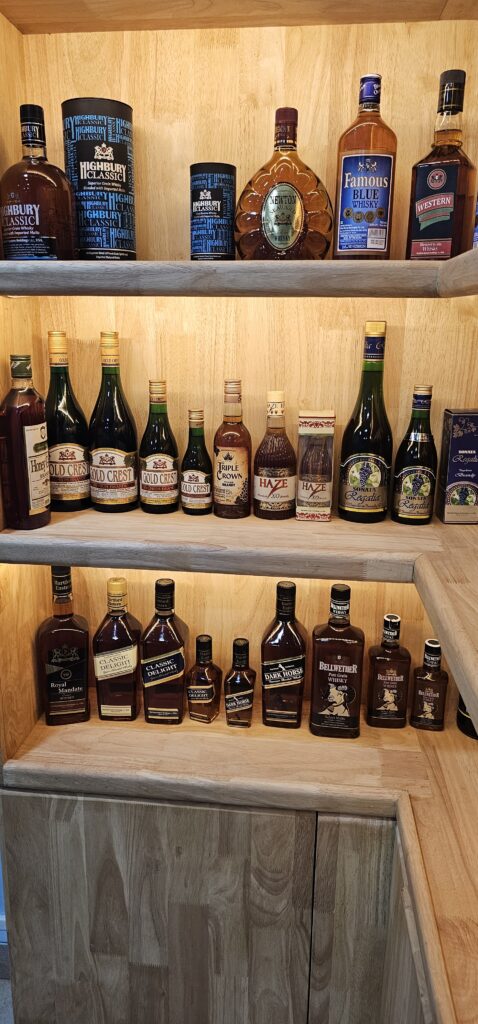
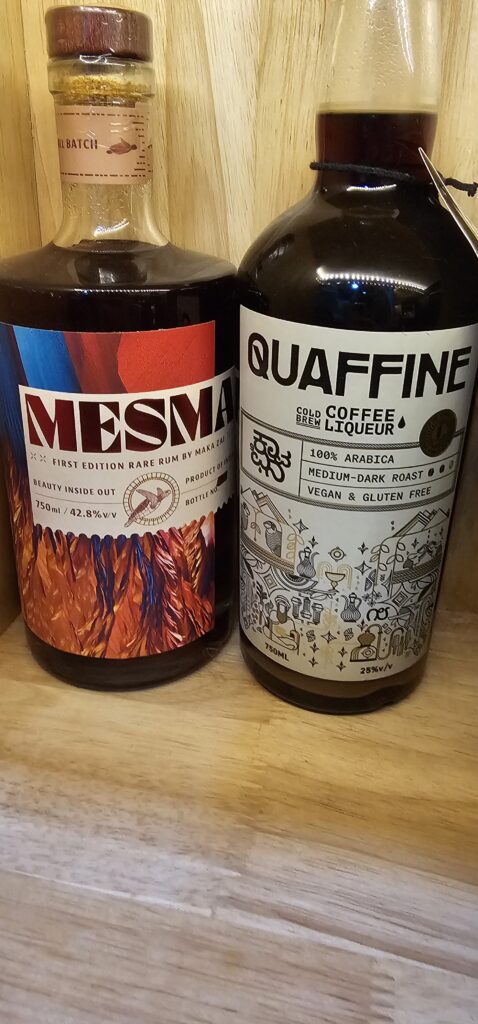
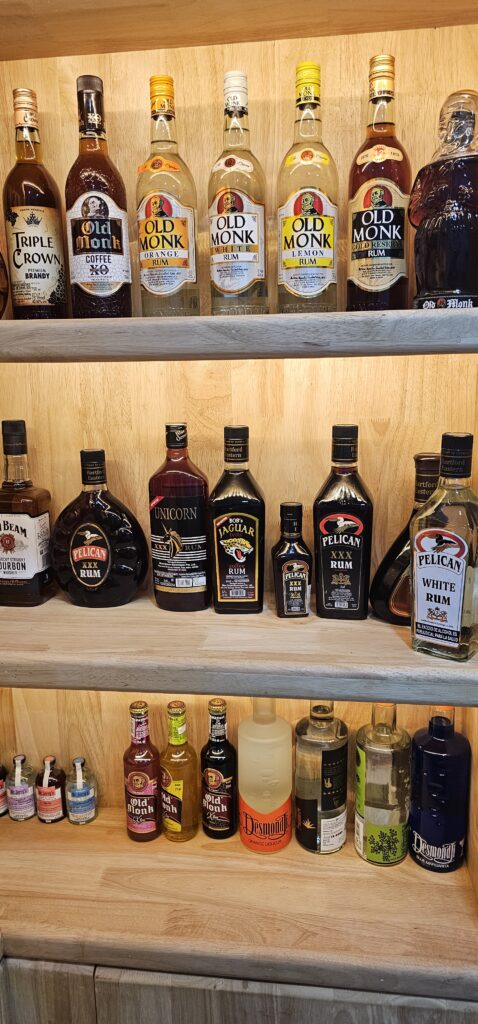
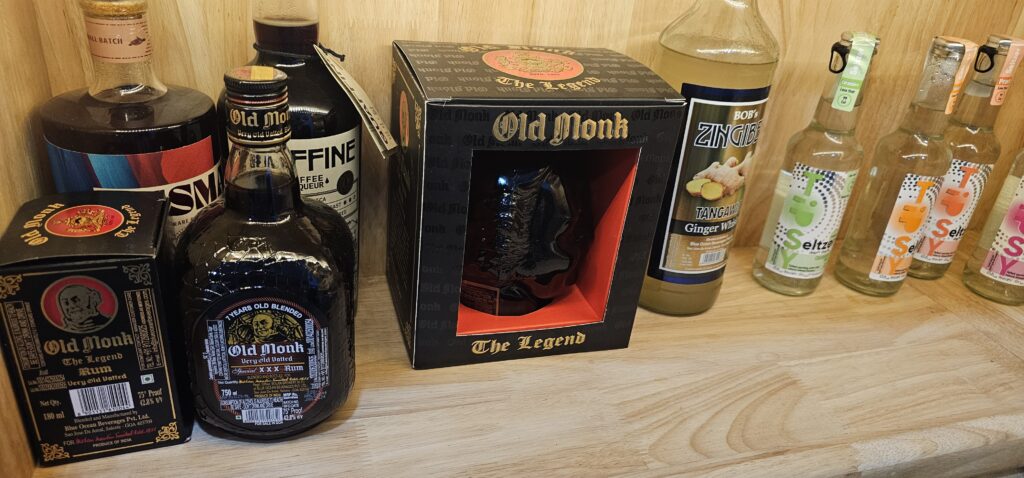
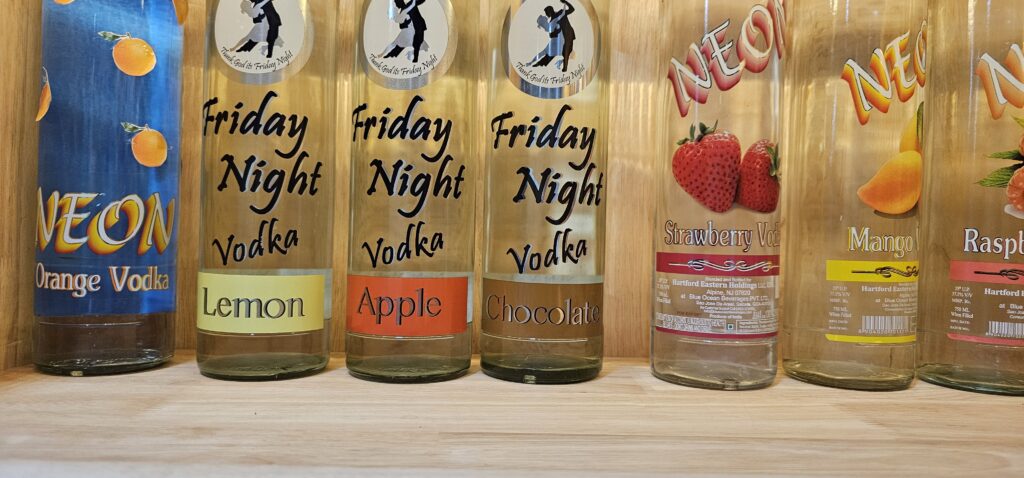
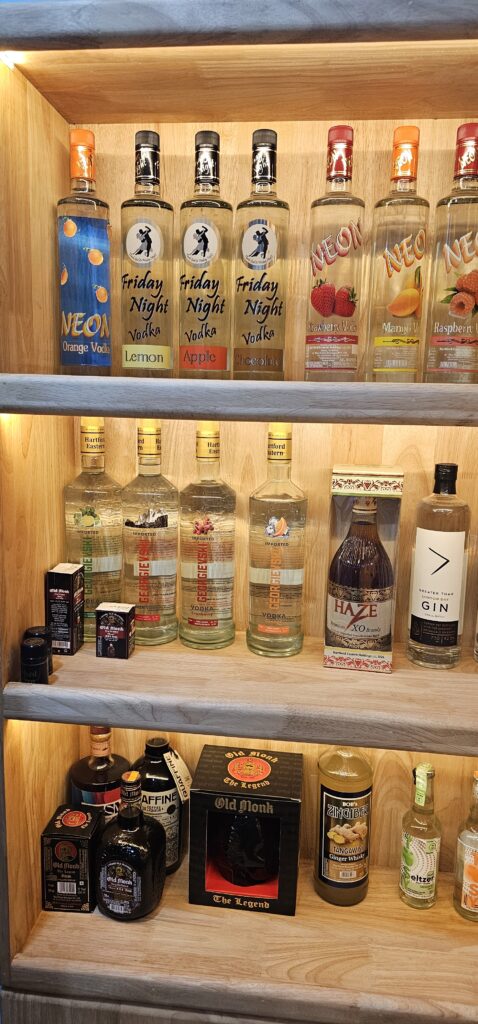
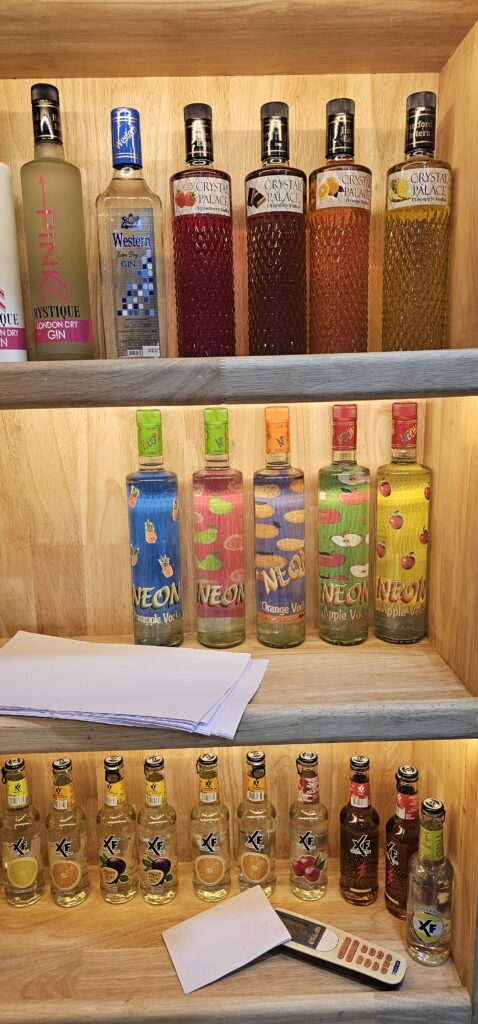
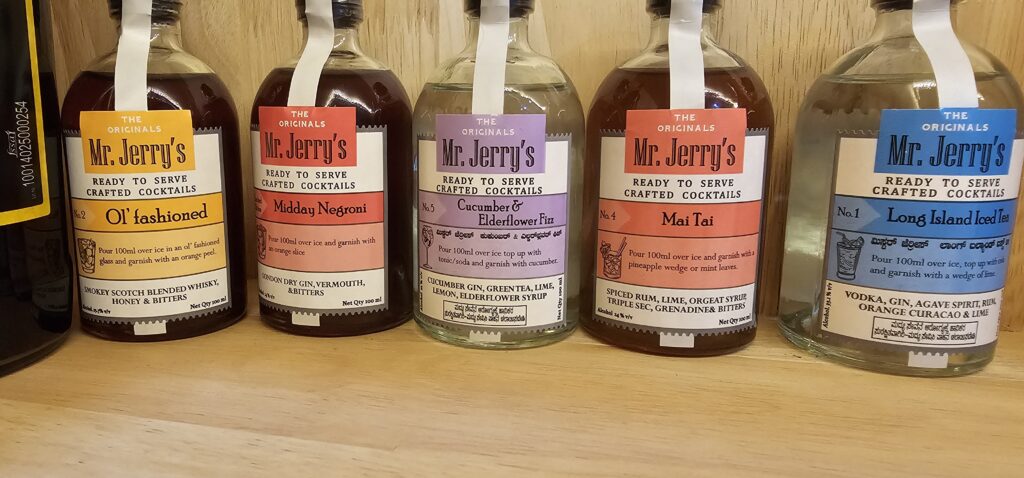
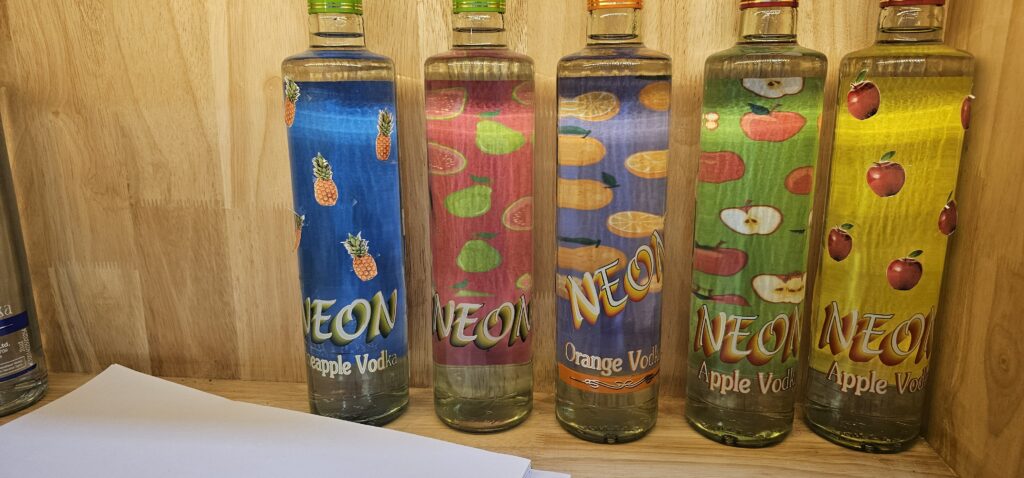
In the Boardroom, on display was an impressive selection of their products, lots of flavoured gins and vodkas, whiskies, brandies, port wines as well as rums, liqueurs and pre-mixed cocktails.
Such an interesting few hours, it was lovely to see happy workers, clean premises and the Awards that the company have won for their efforts. It almost felt like we were back at work but without the suits and ties, and the responsibility of course! Thank you to Joel and his cousin Mrinal.
Following a short travel hiatus, we are on the move again, just us two and Benny the car. Bessy will be enjoying a sunny holiday in storage in Torrevieja until the summer.
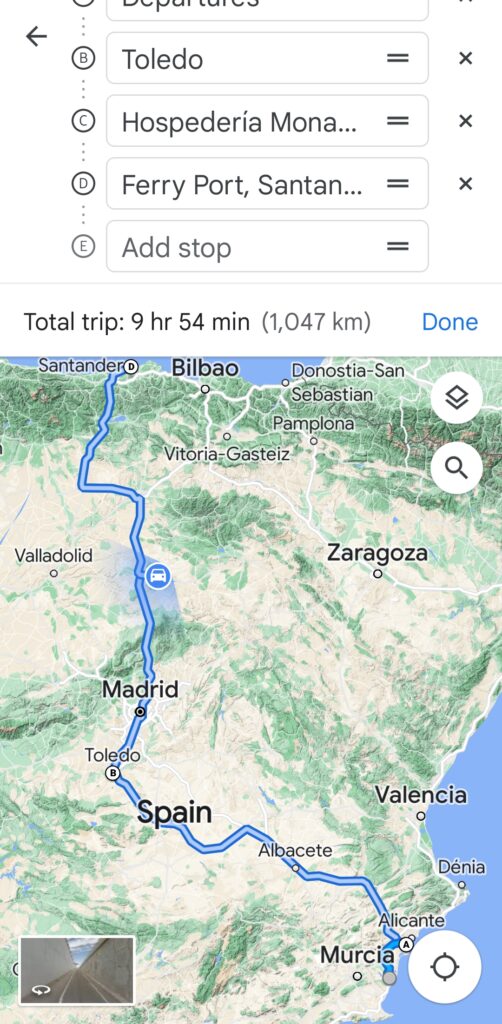
David and I have left Torrevieja for a few months to relight our travelling wanderlust, starting with a return to the UK for essential services, Doctor, MOT, dentist etc. Our route up to the ferry has taken us from the Alicante area, north through the La Mancha wine region to Toledo, north through Madrid to the Duero wine area then up to Santander. This post is a diary of our journey. Our next post should be from Dubai or Vietnam, fingers crossed 🤞.
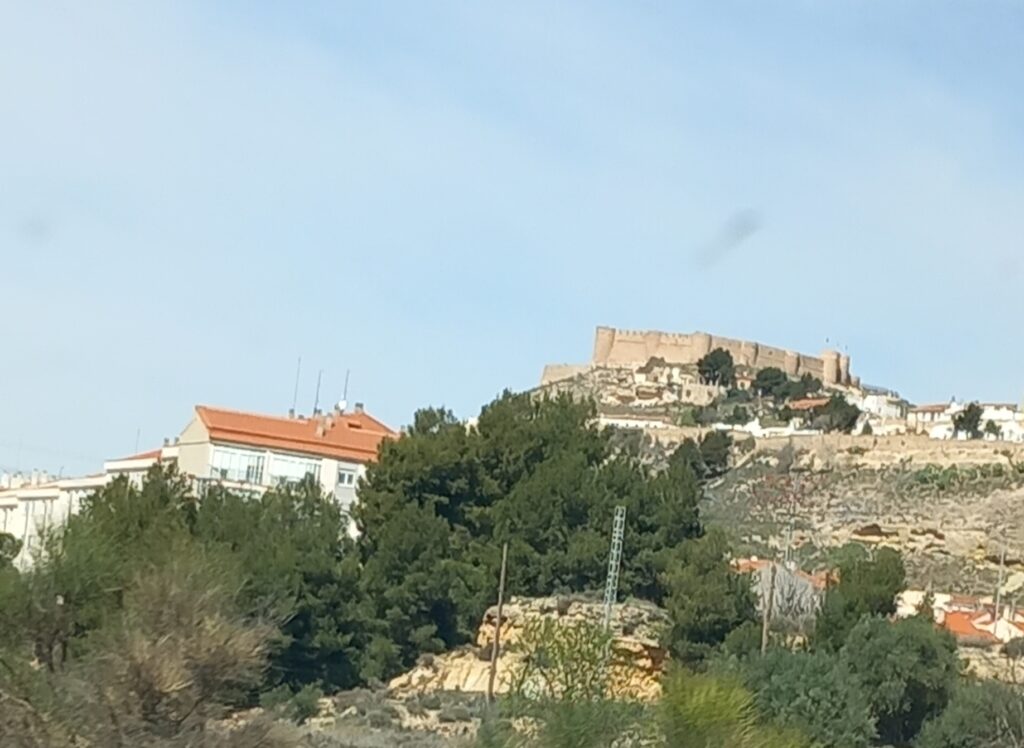
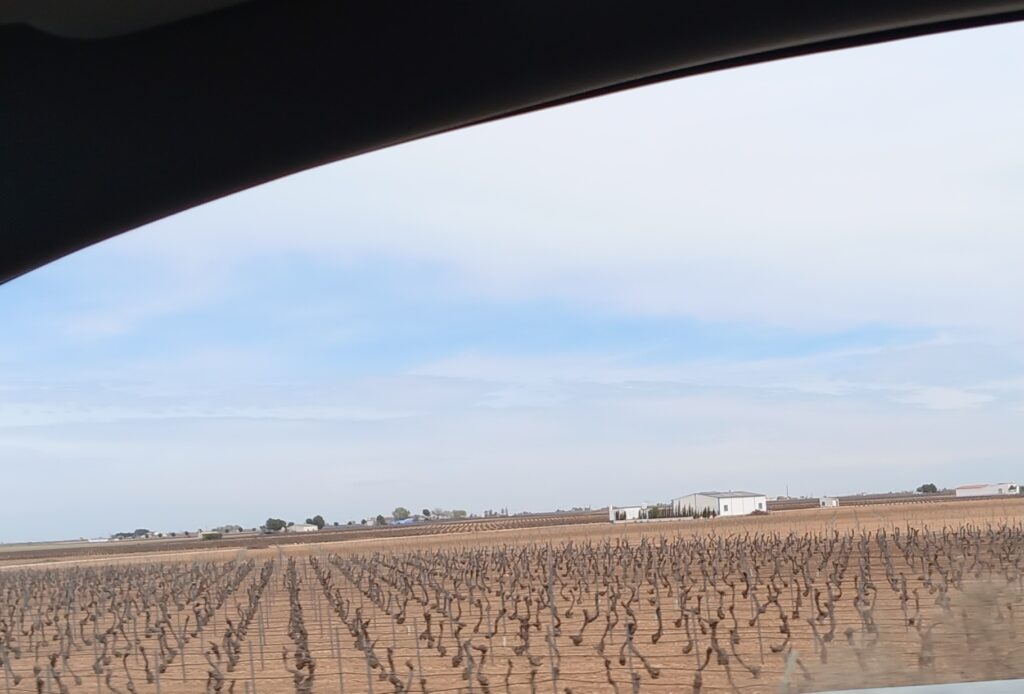
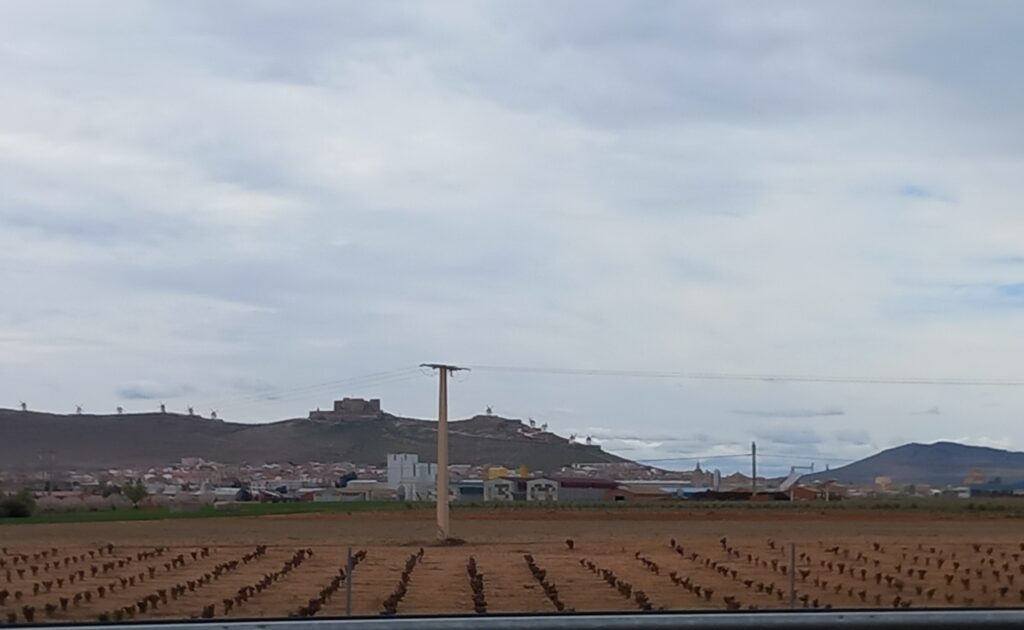
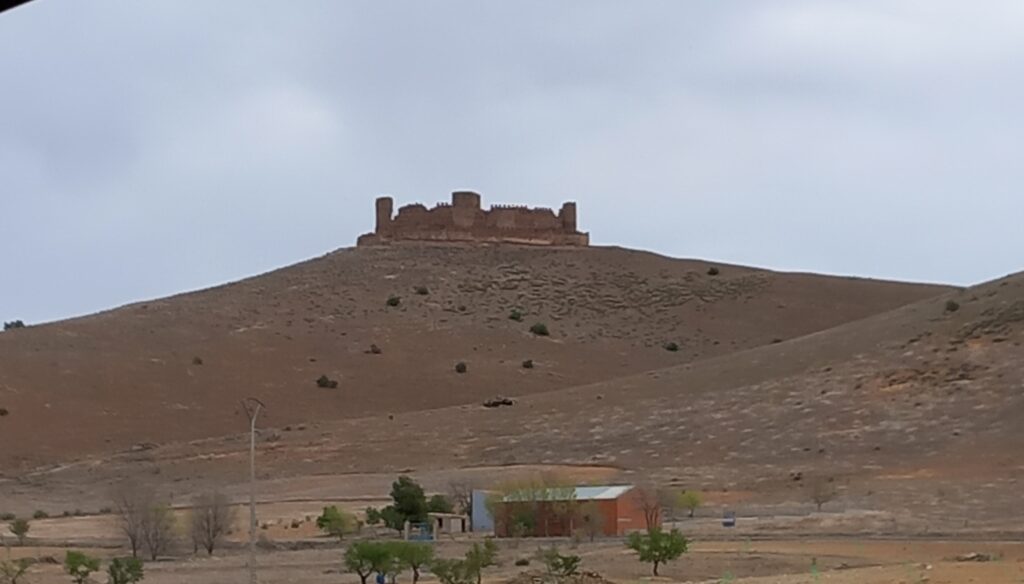
Driving up from Alicante towards Albacete, we were surprised by the number of roadside castles and forts, all stunningly perched on hilltops, surrounded by rows of heavily trimmed grape vines, pink blossoming almond trees and white blossom cherry trees. Some castles were surrounded by windmills perched on the crest of the hills.
Our route north
TOLEDO – World Heritage Site
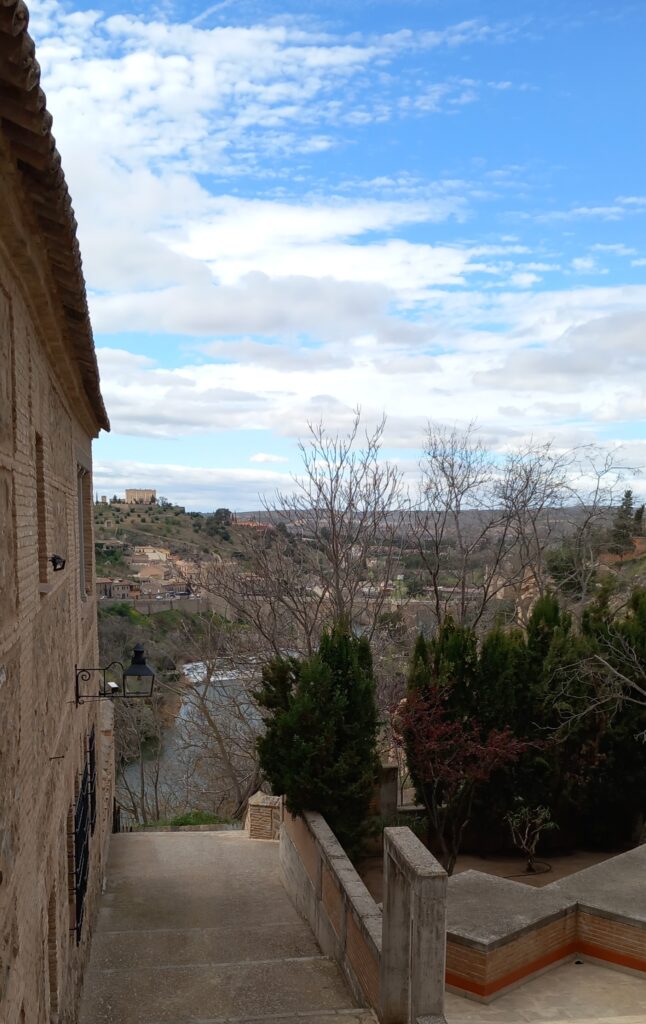
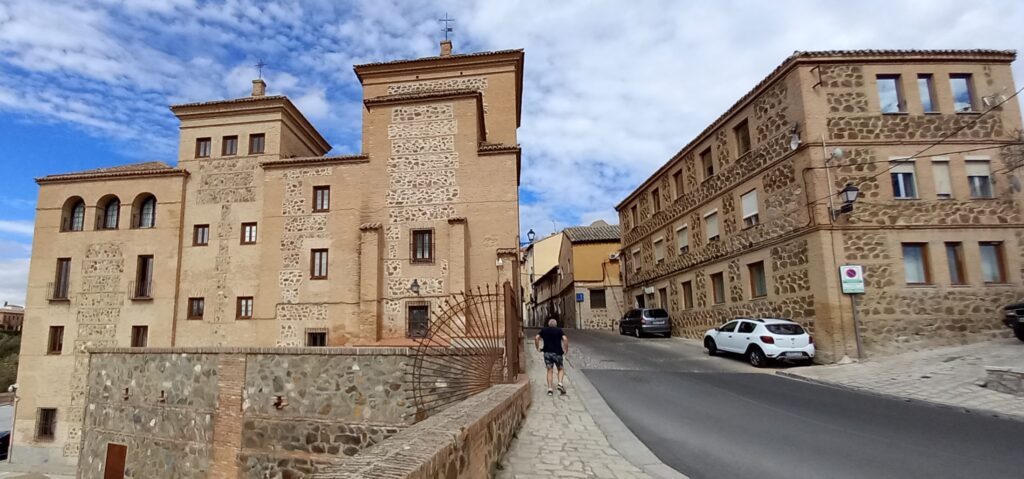
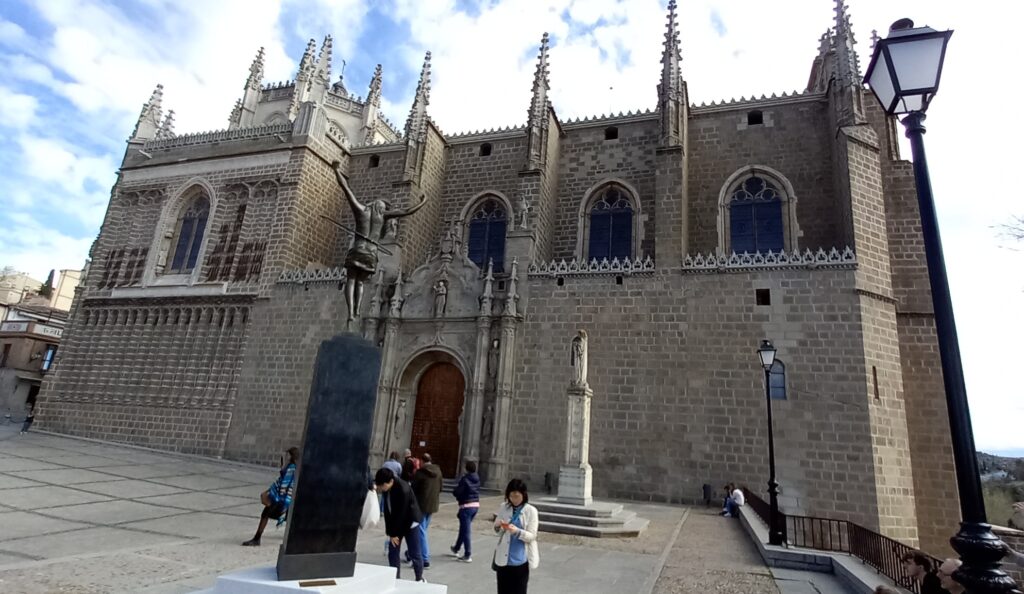
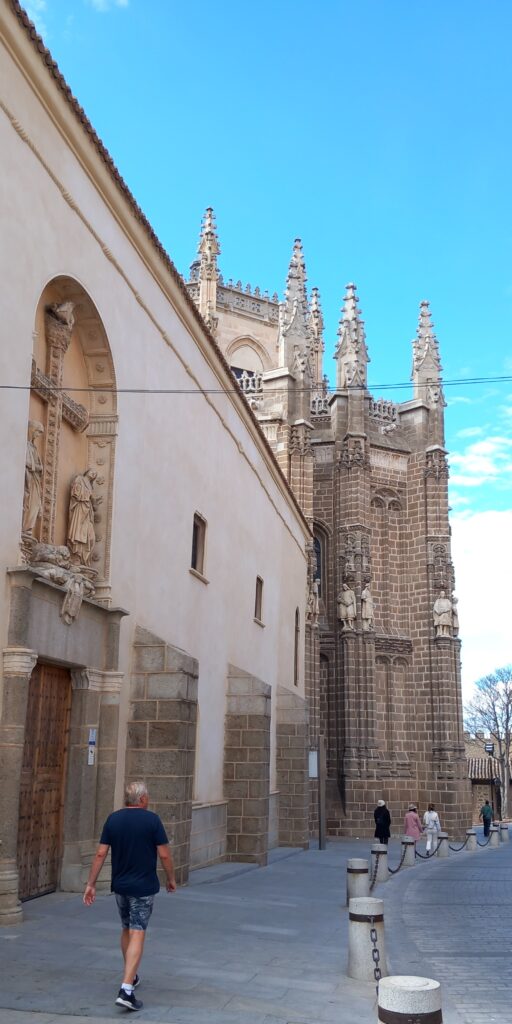
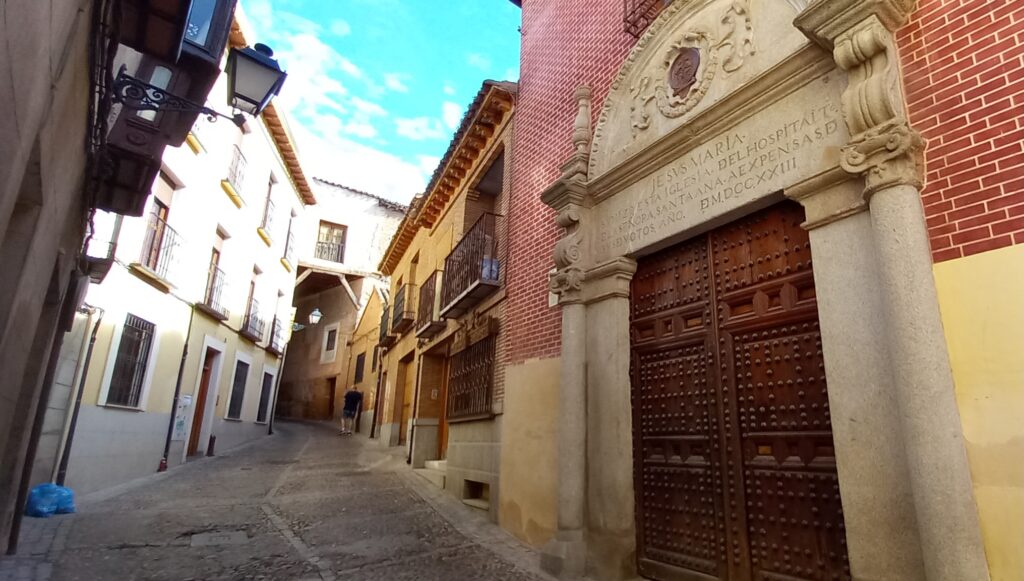
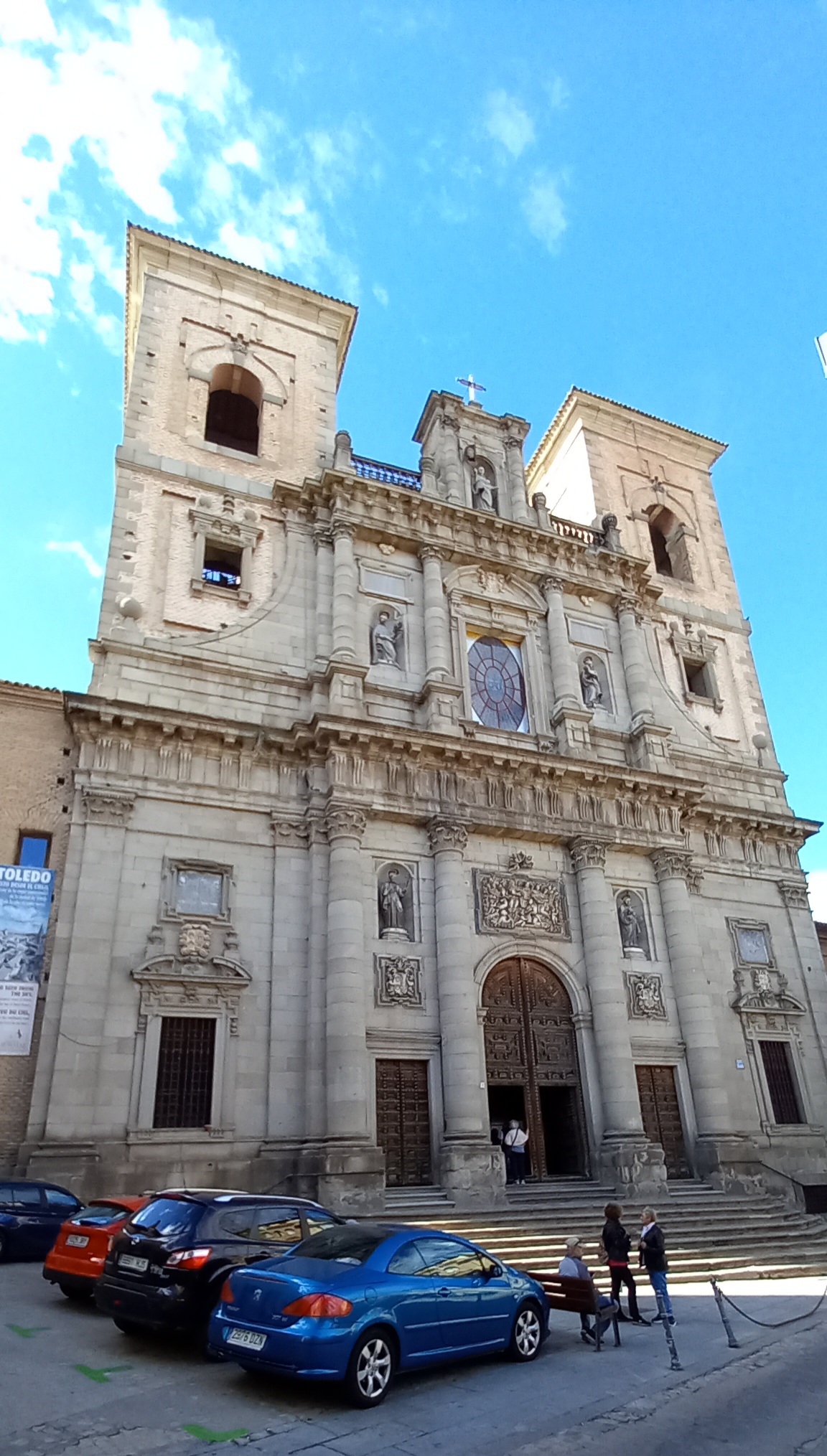
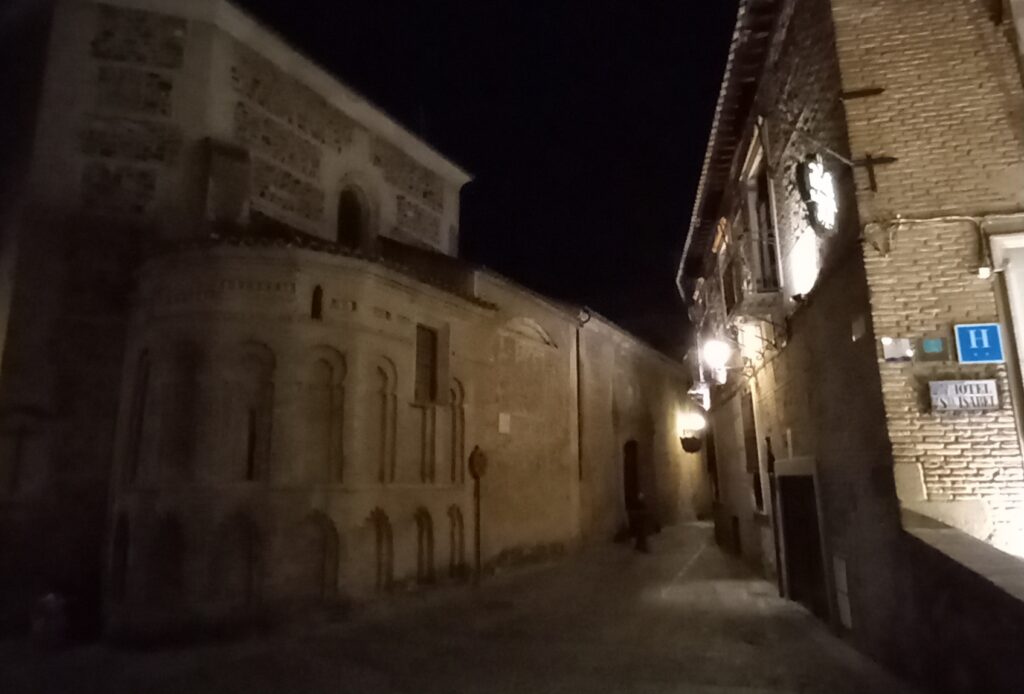
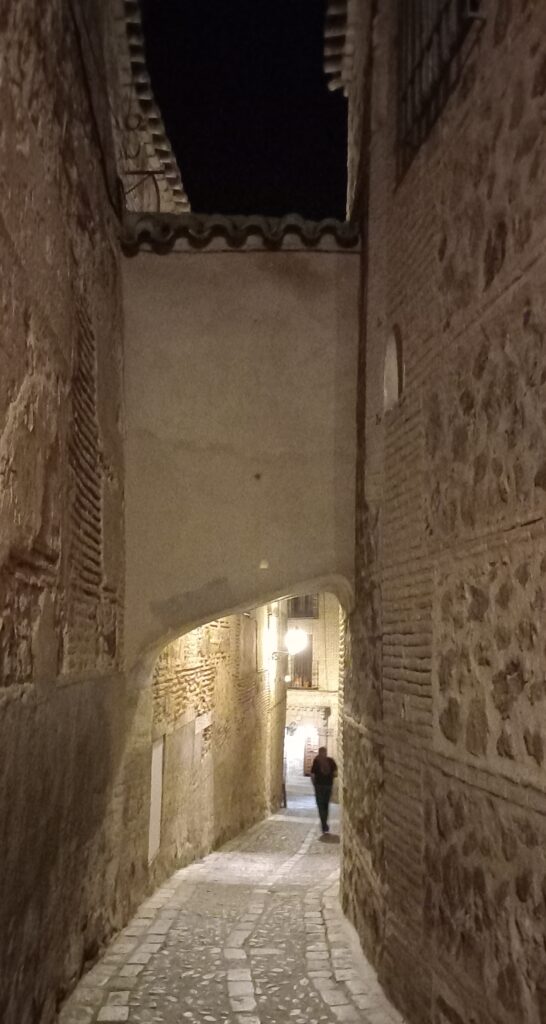
Fact: there are over 20 churches, chapels and synagogs, one Cathedral and one Mosque as well as several convents in Toledo, thanks to its Christian, Islamic and Judaism roots and more recently Catholic influence, that’s almost one on every street corner. This partly walled medieval city is heaving with tiny cobbled streets, steep hills and ancient buildings, dating back to Roman times (128BC) and the old areas still exist within this modern looking clean city. The Jewish Quarter is full of dusty workshops with monacled men in waistcoats tapping away at silver jewellery and tea sets, as well as the famous Toledo steel knives. Toledo is also famous for its silk and the hand made roof tiles found throughout the City, AND, its very narrow streets!
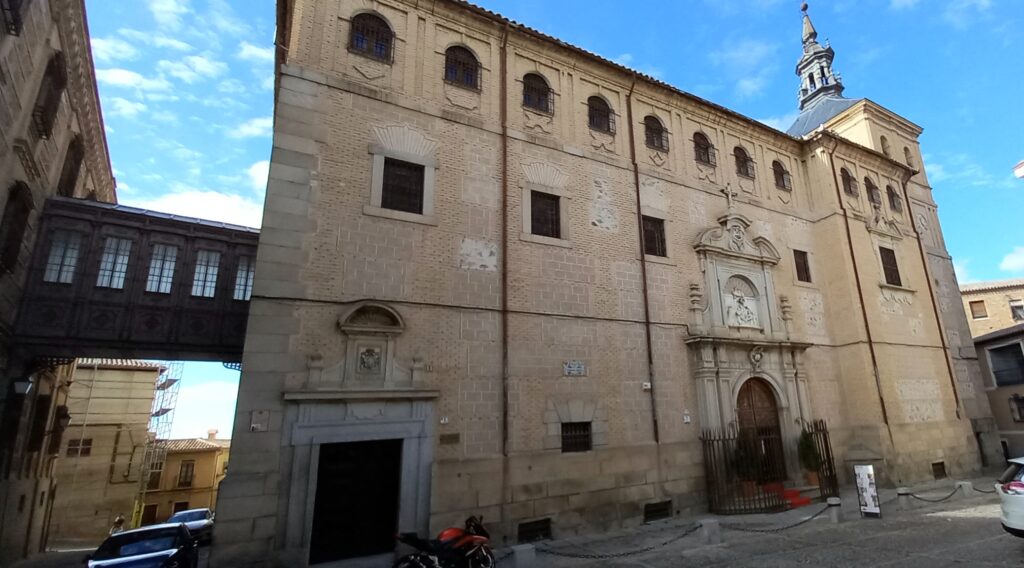
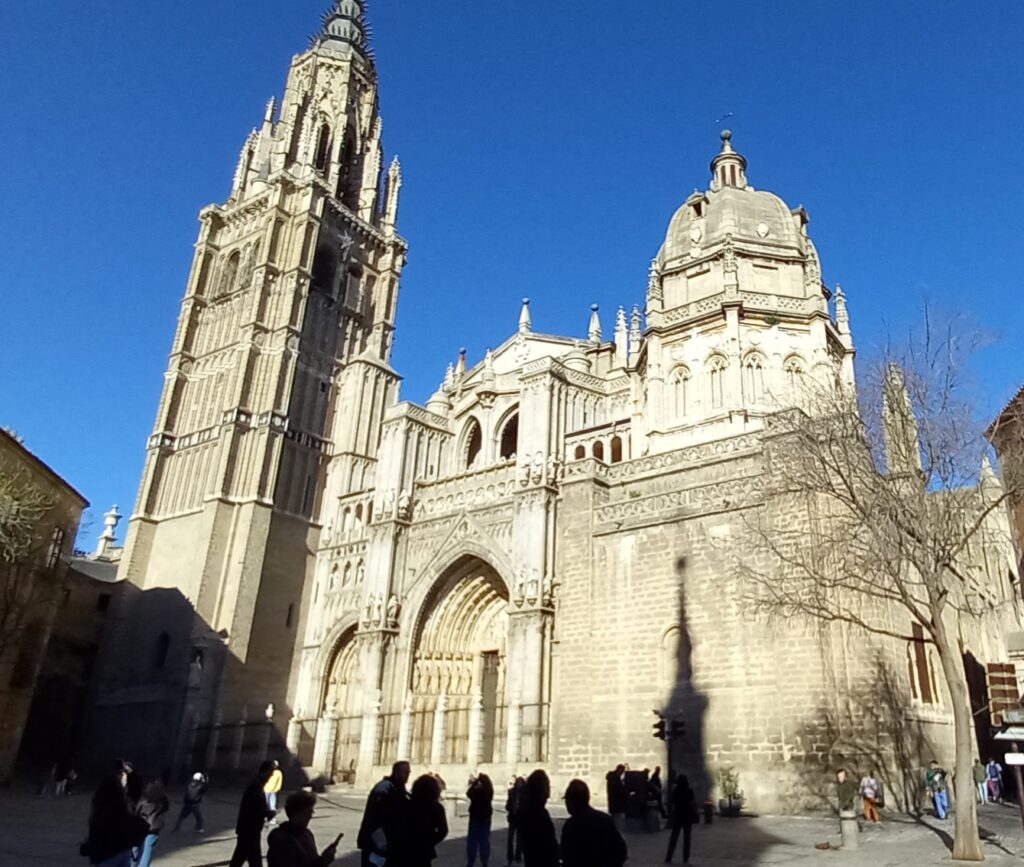
The centre is dominated by a huge Gothic cathedral, a large college and so many architecturally stunning buildings all accessed through streets so narrow that locals have permanent scrapes on the rear wheel arches of their cars. Taxis whizz around the streets, buzzing through strolling tourists without any problems, at night the traffic can only be described as manic until 9pm, when locals are jam packed in restaurants and the streets become the opposite – deadly quiet. The only constant noise is the rushing of the Tagus river.
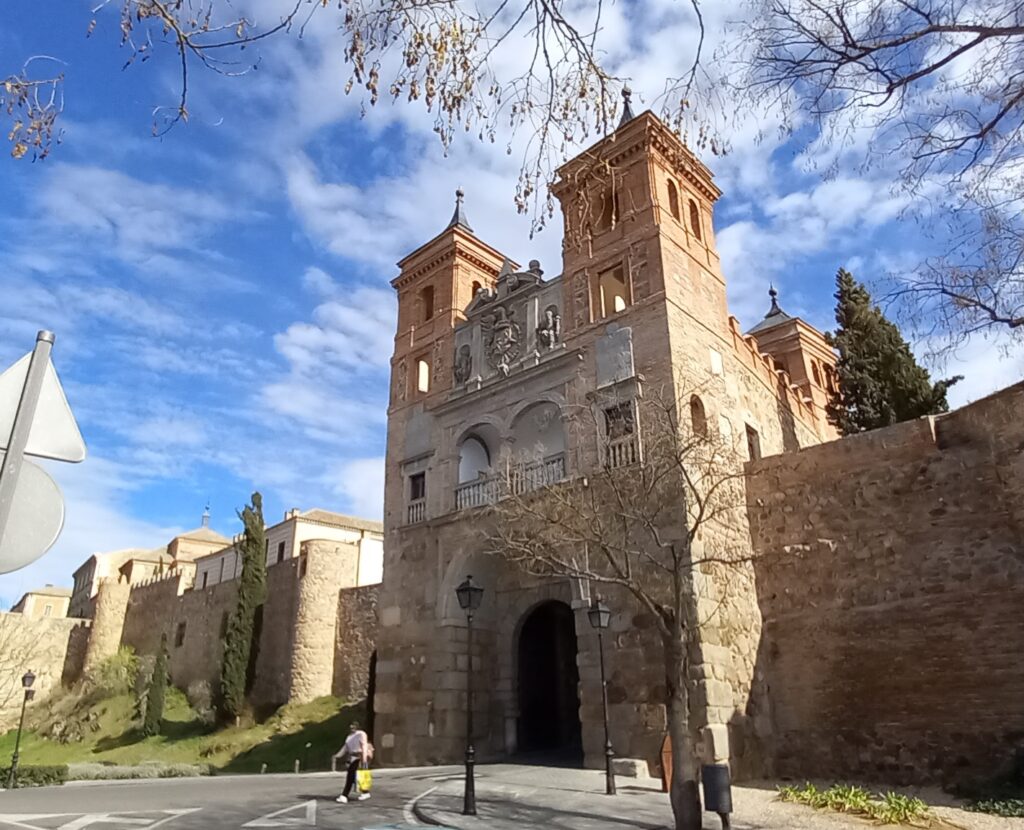
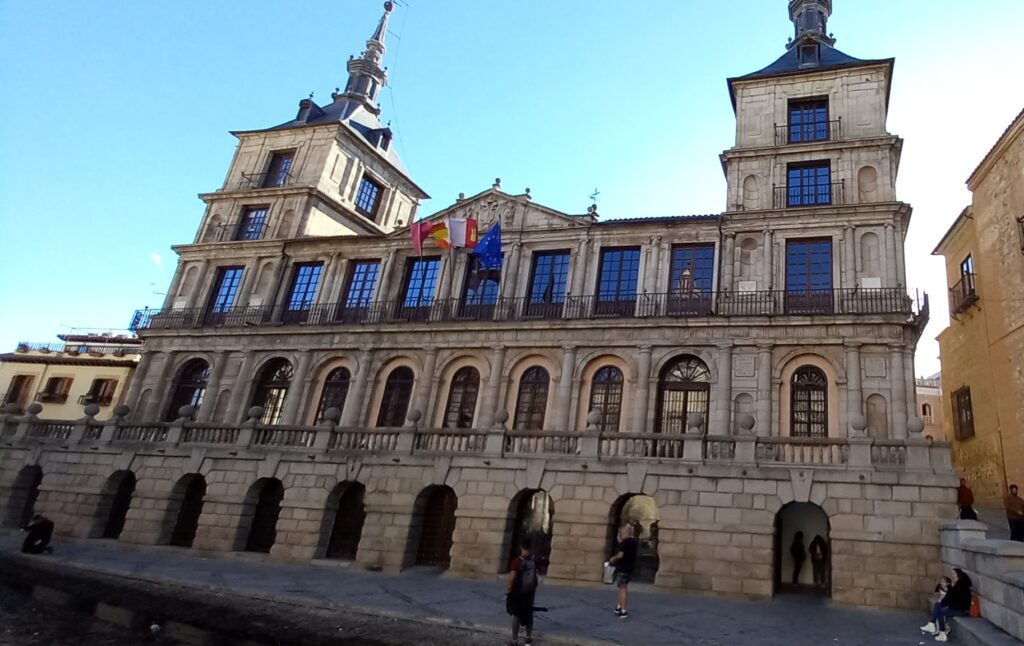
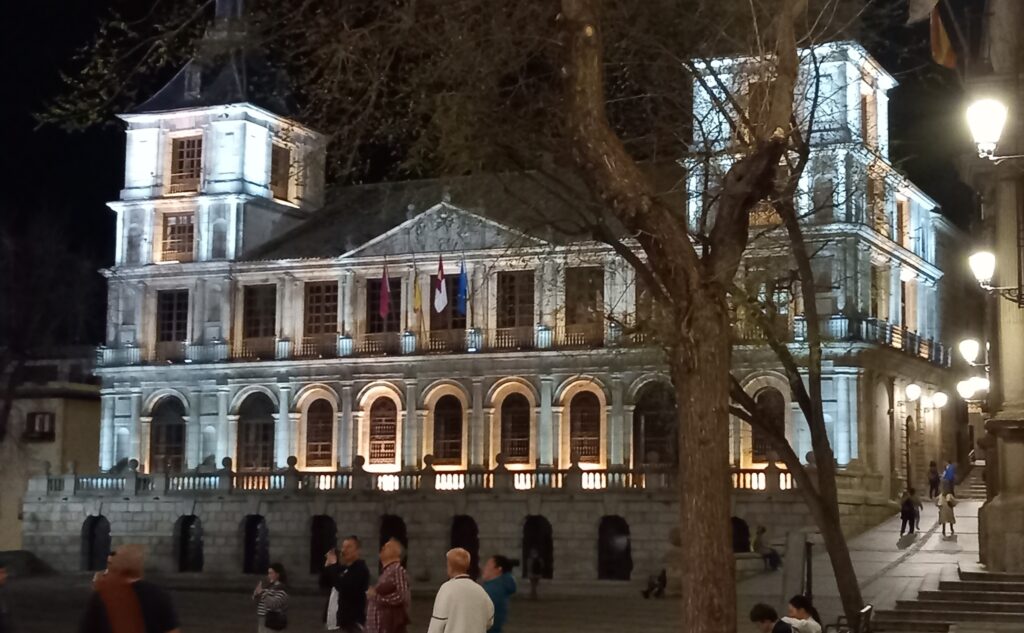
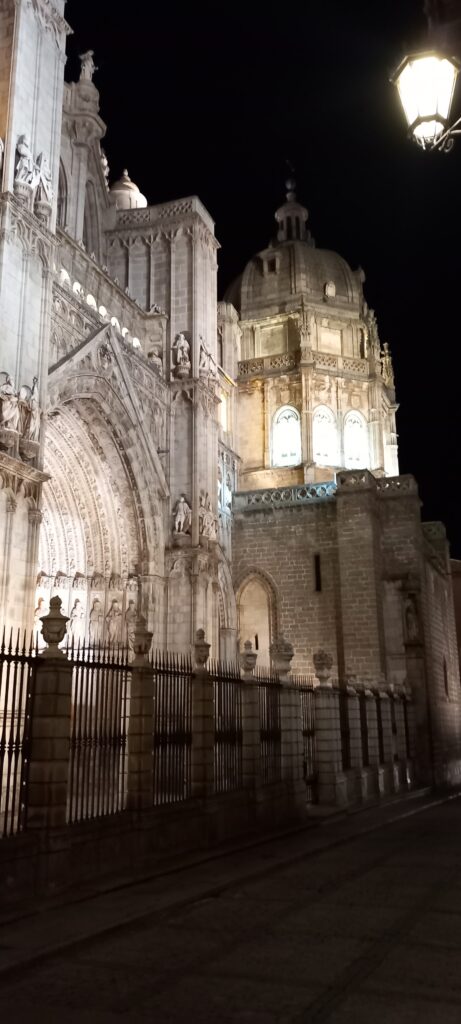
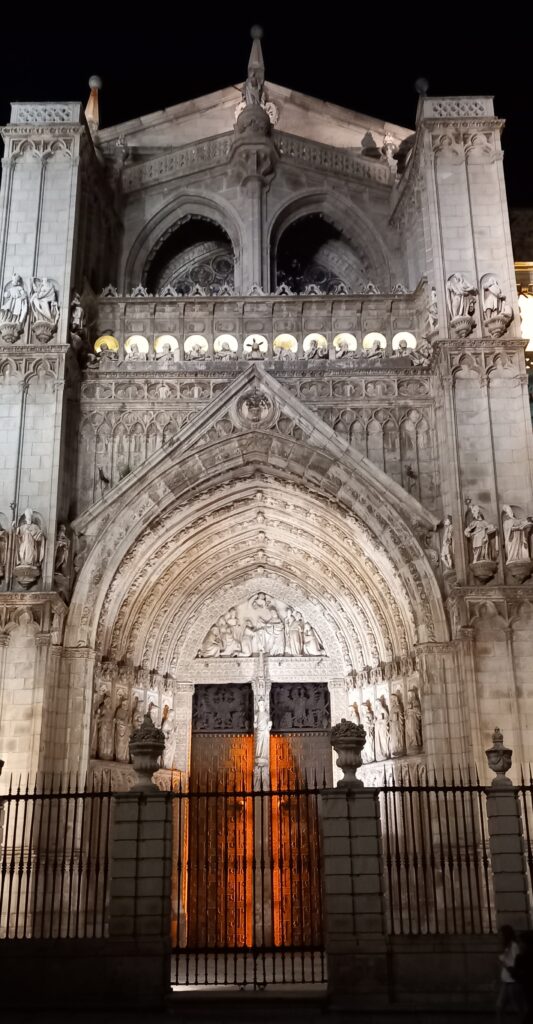
Entering the Jewish QuarterOne of the city wall’s GatesNaval college buildingThe town hallToledo Cathedral
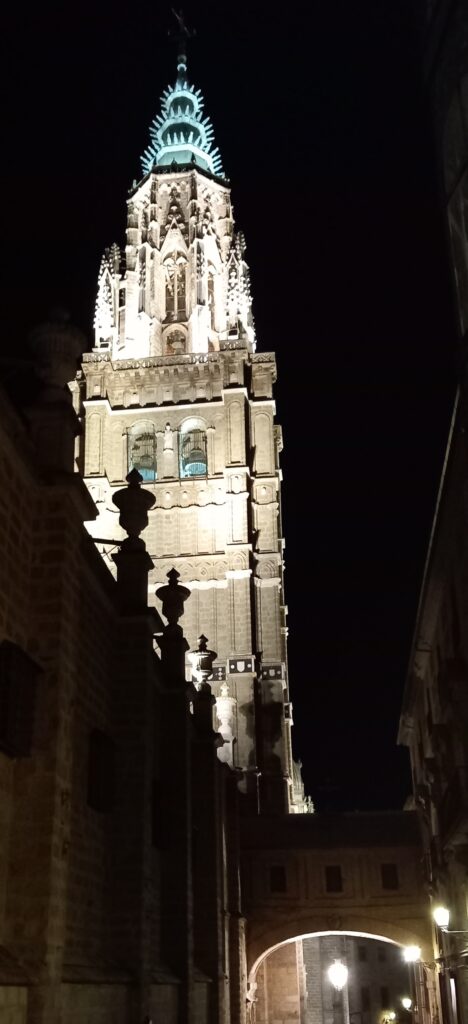
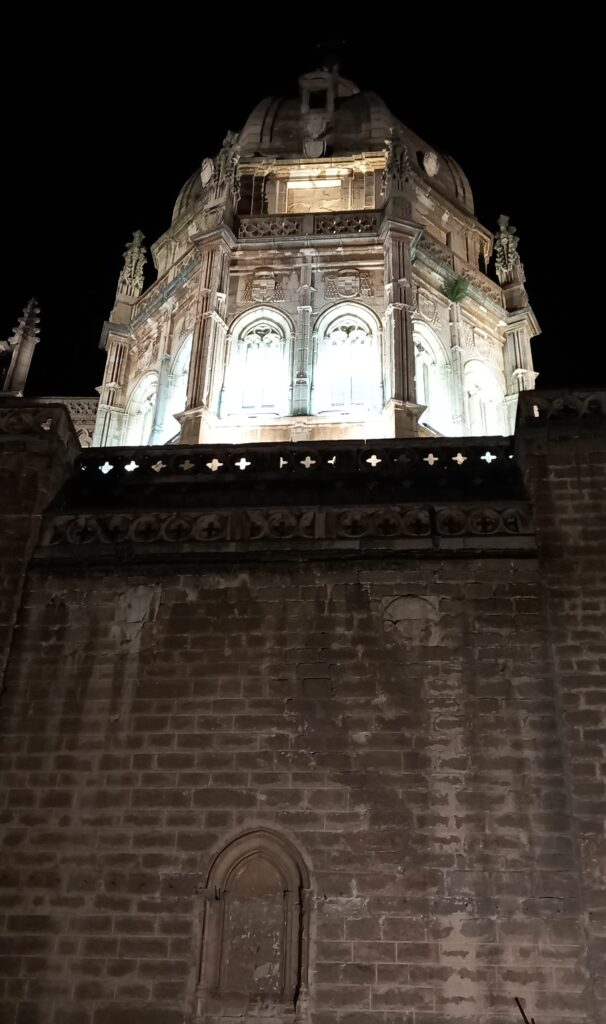
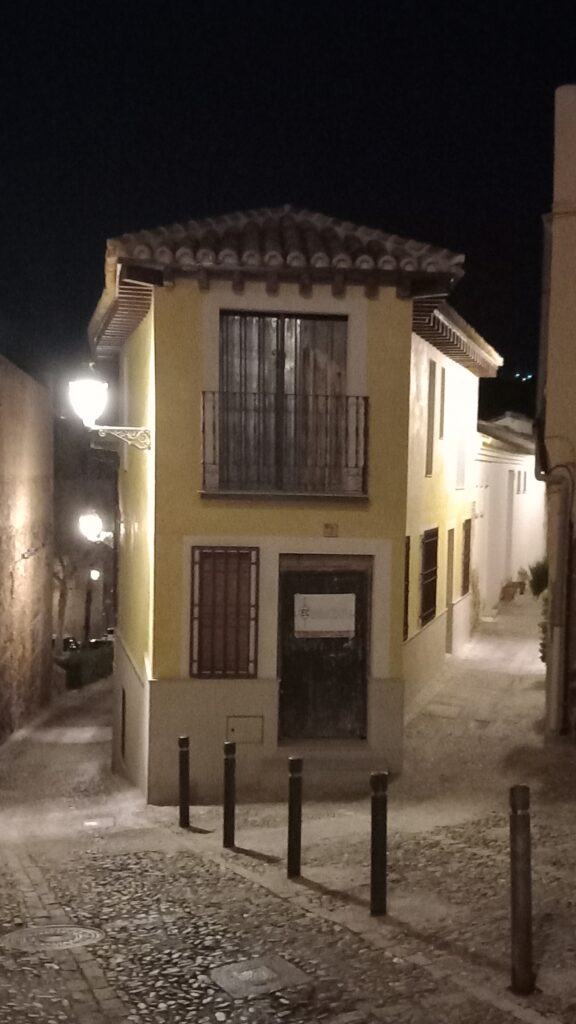
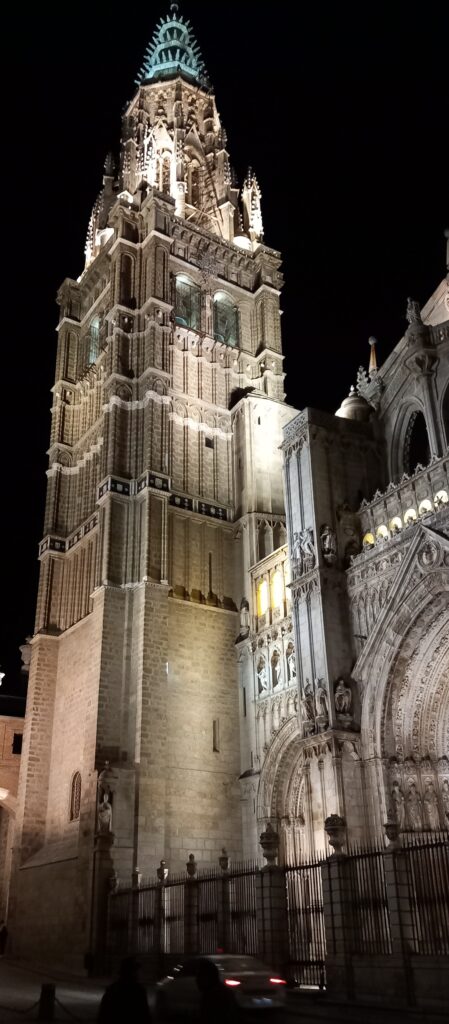
At night the buildings took on an ethereal look, cool and calming yet bright and invitingly stunning.
Cathedral Tower at night
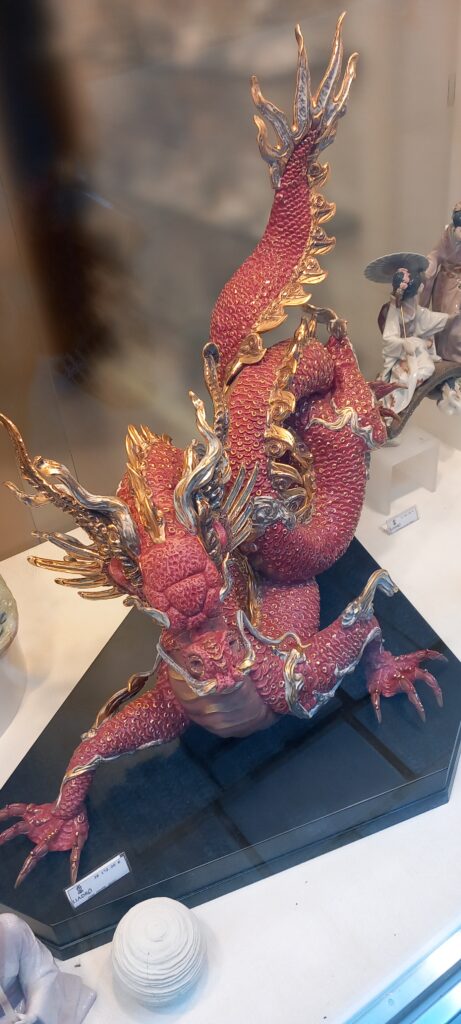
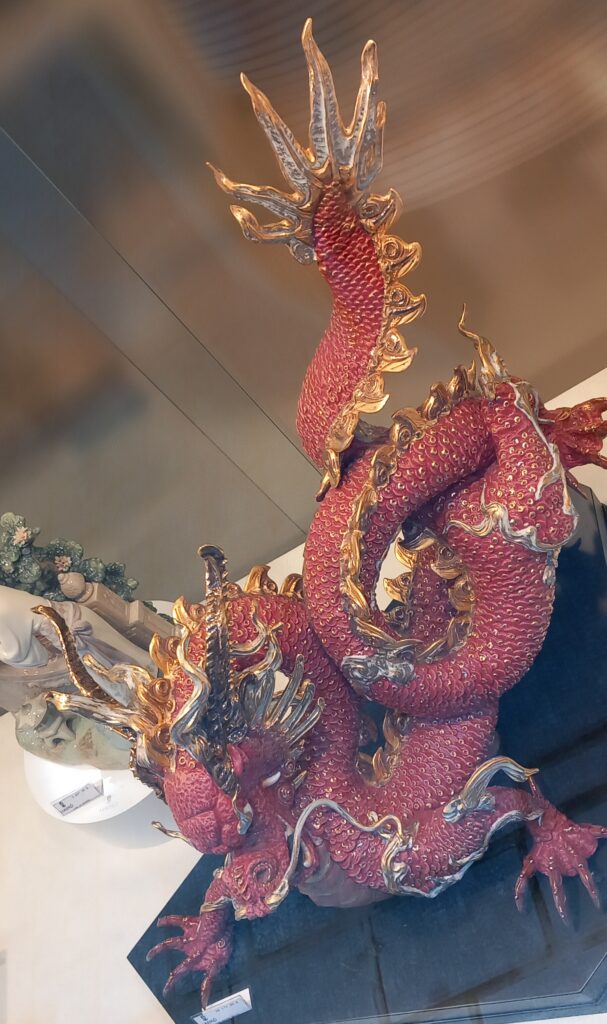
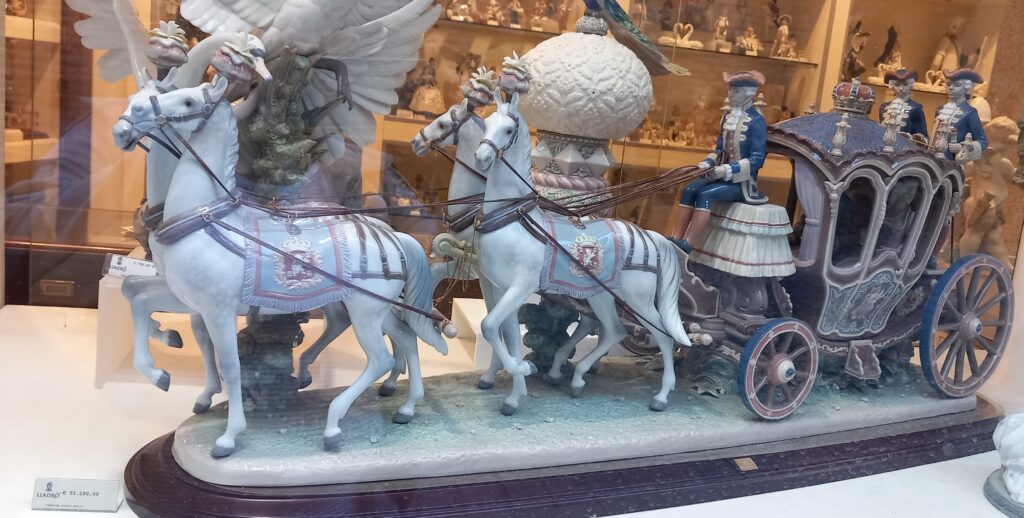
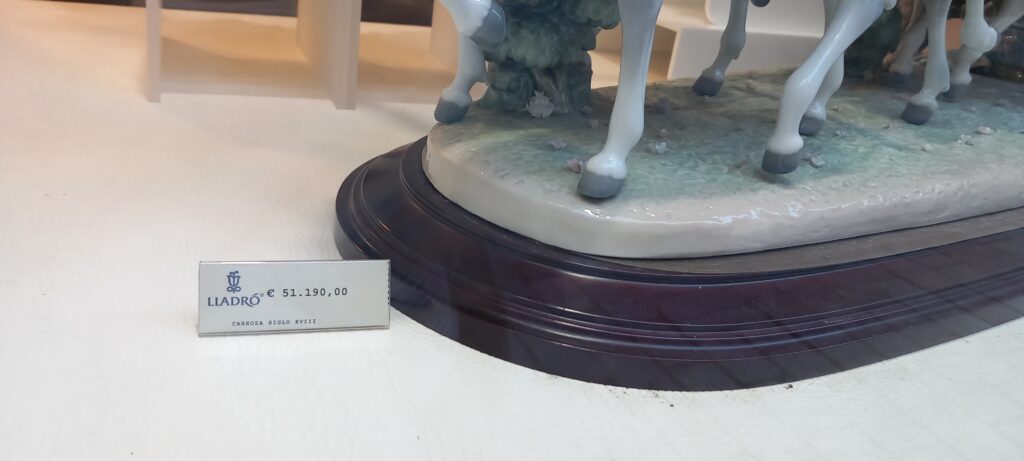
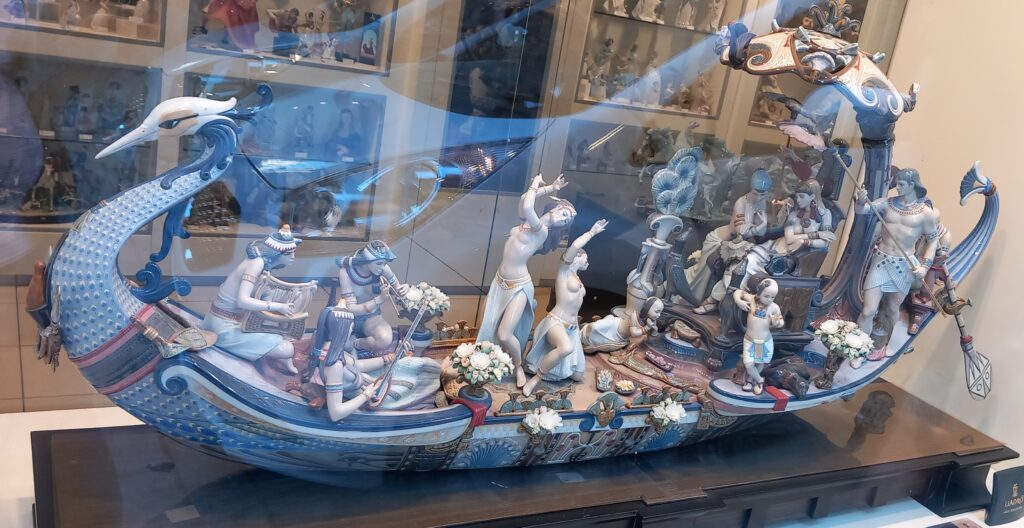
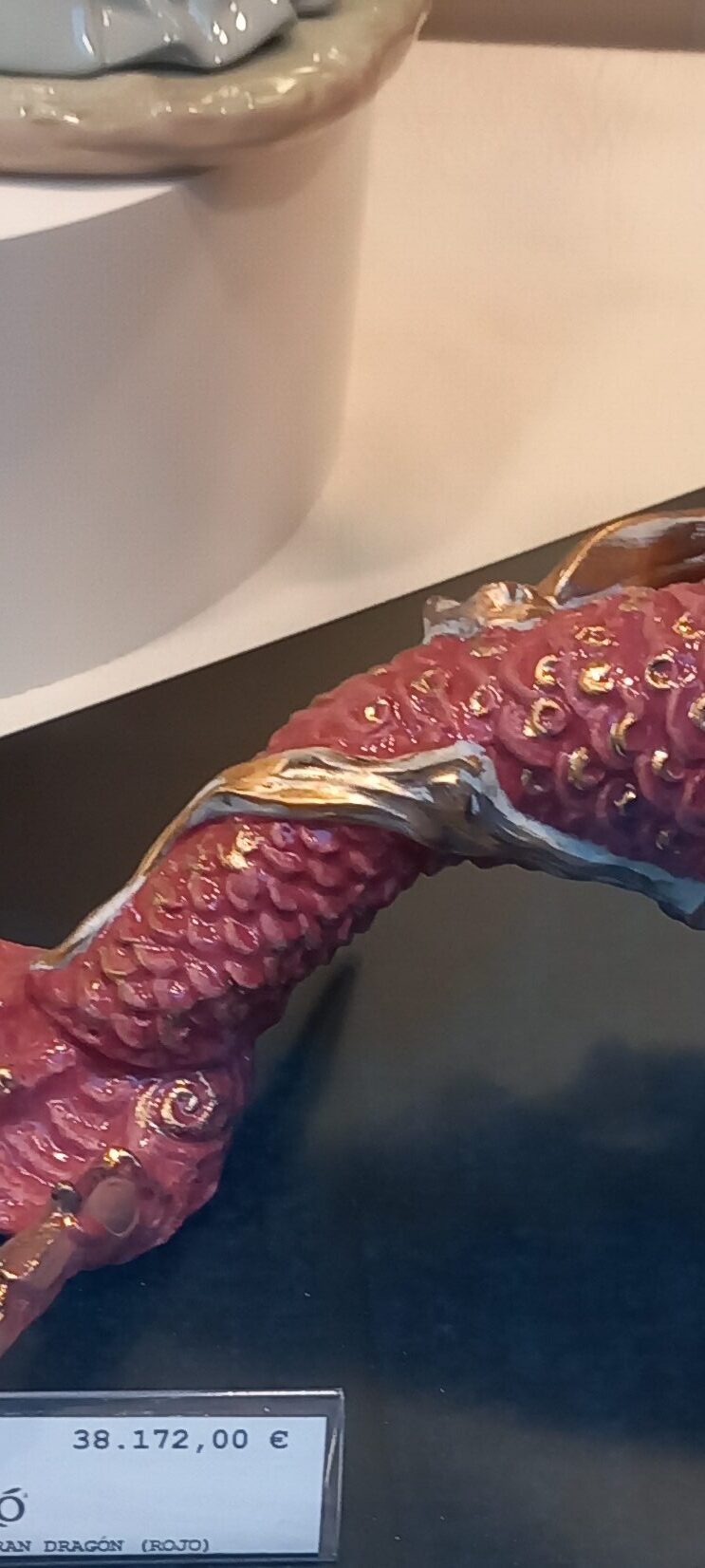
Here’s one for the ladies, a snapshot of several exquisite Llaudro ornaments!
Price tags, a tad over €25,000!!!
SANTA MARIA DE LA VID MONASTERY
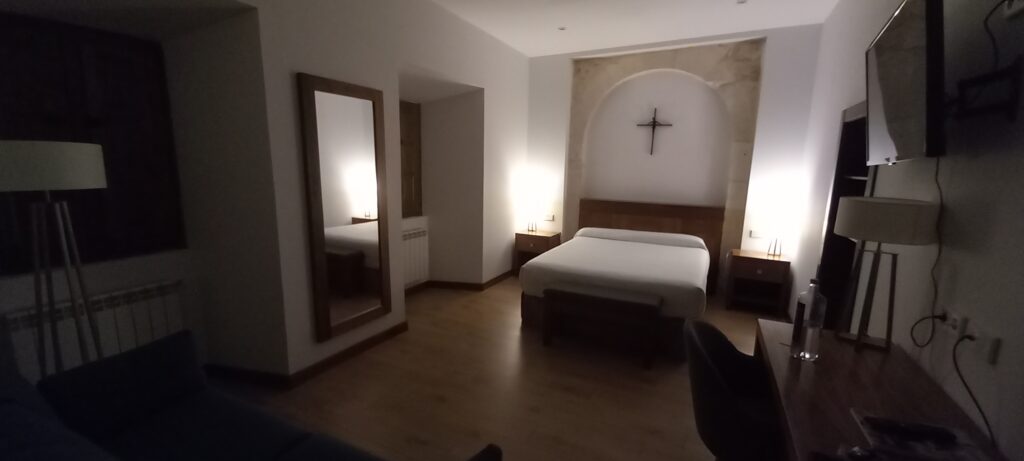
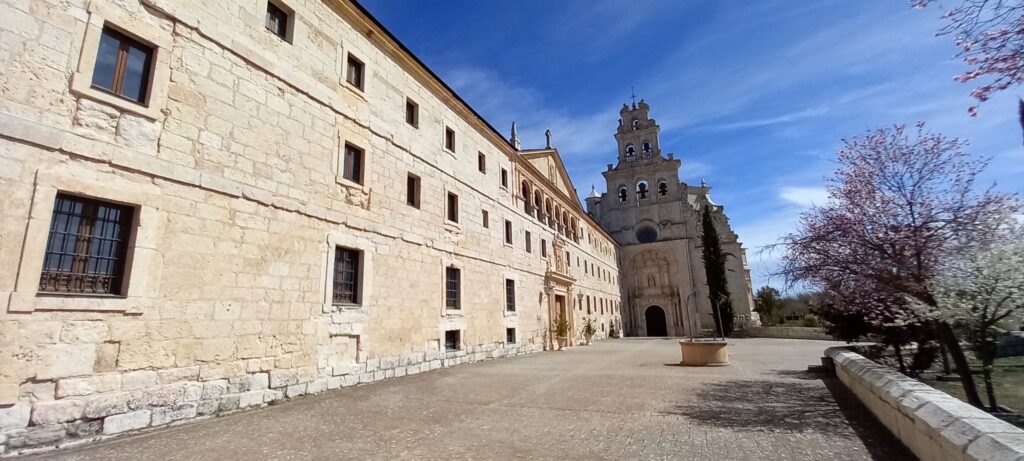
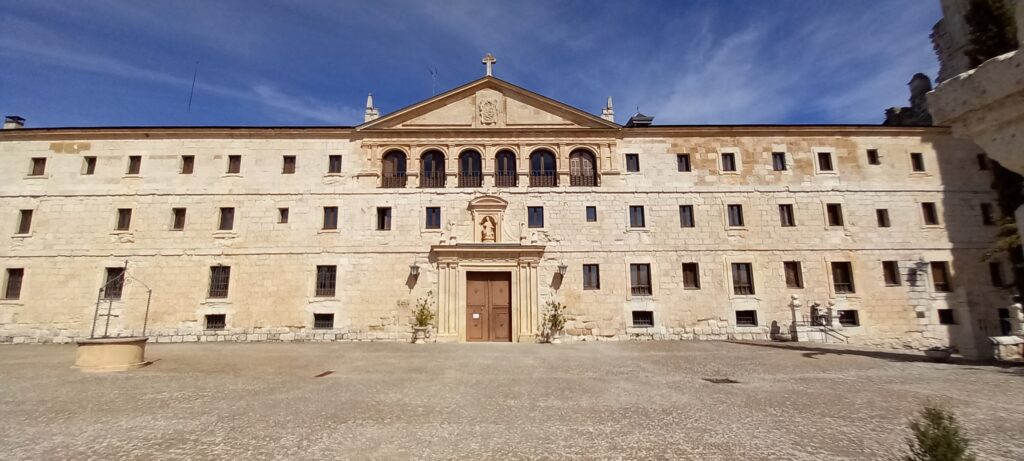
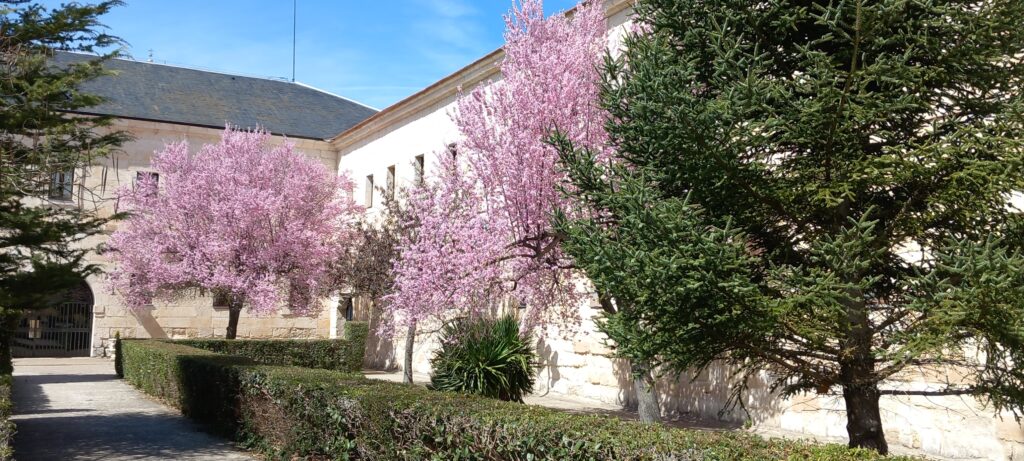
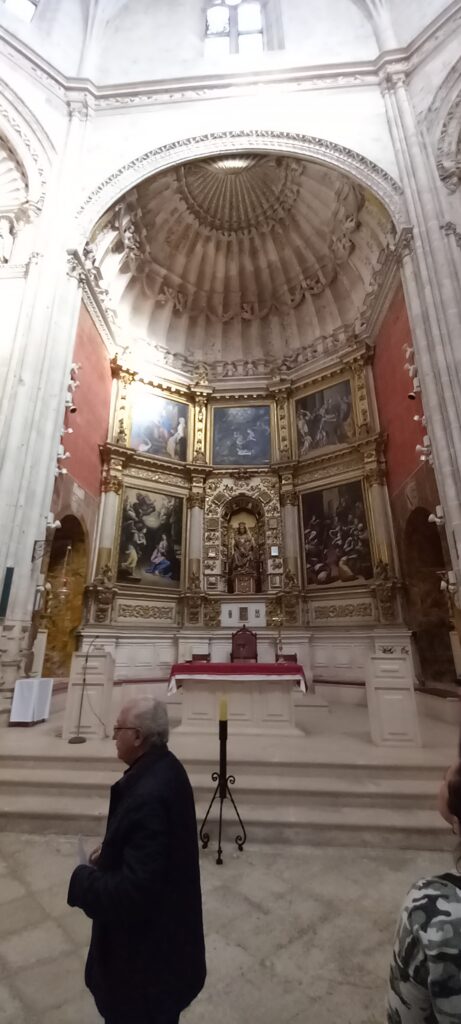
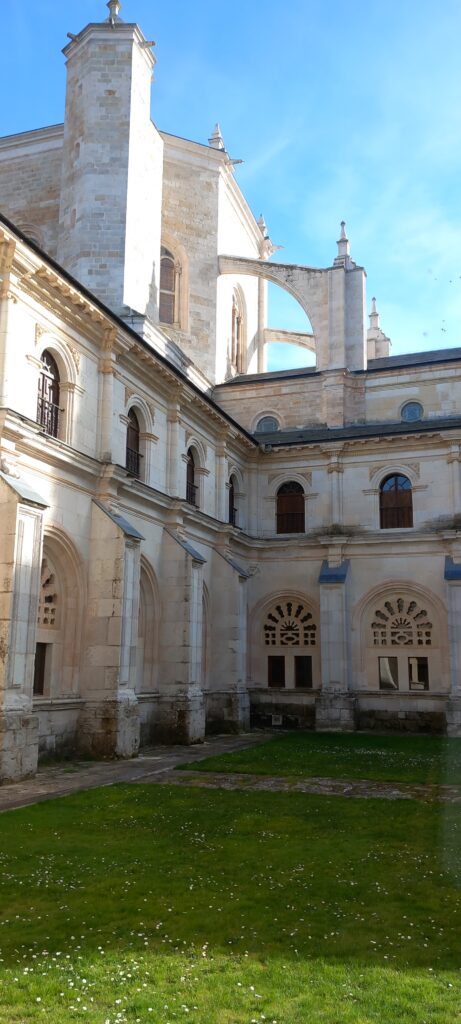
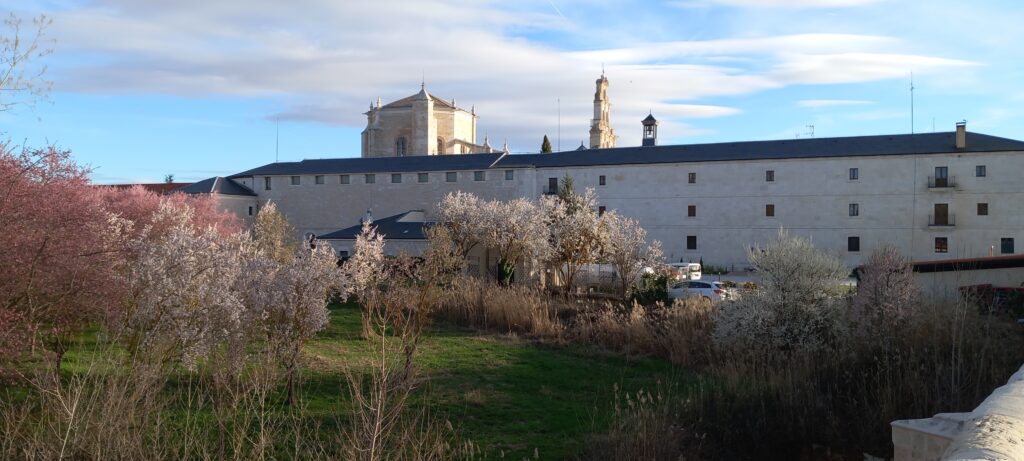
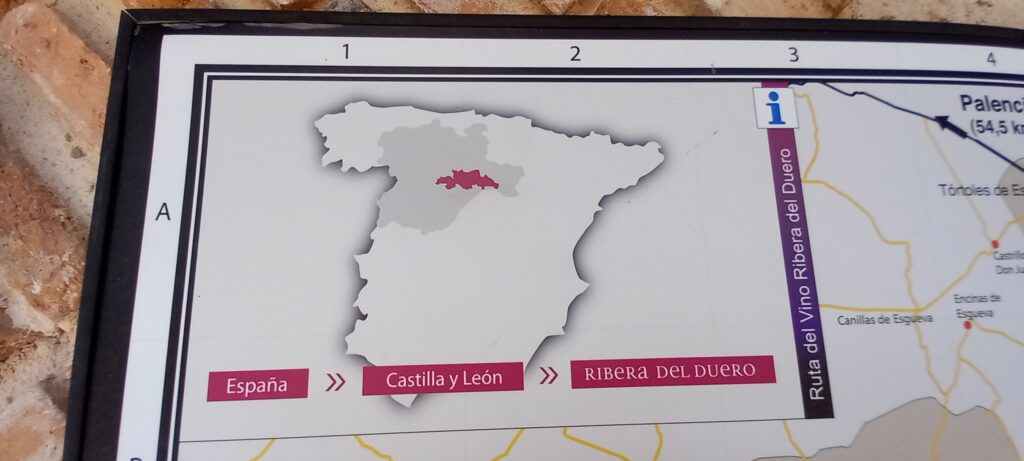
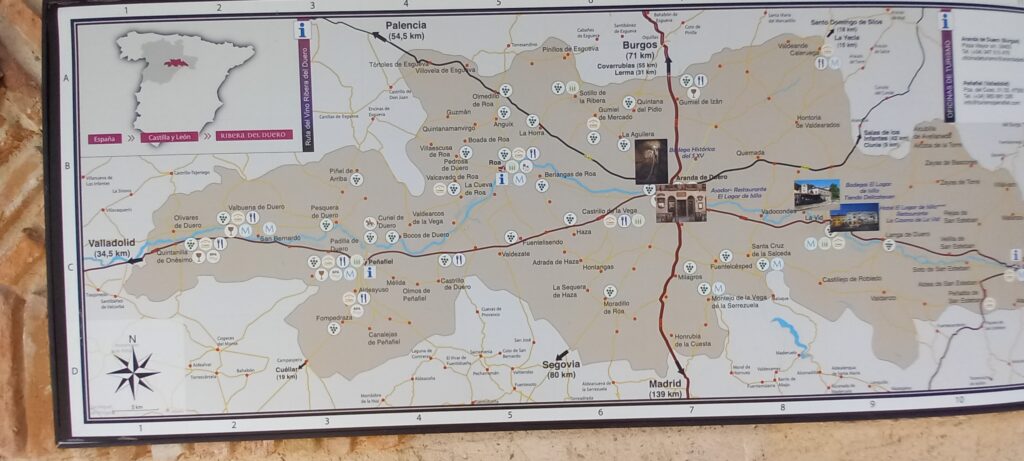
It was recommended to us that we stop halfway between Madrid and Burgos on our way to the Ferry Port, and what a lovely stop it was. After a long day walking the streets of Toledo, we experienced relaxation and quiet at this ex Monastery Hotel, in a little village way off the beaten track.
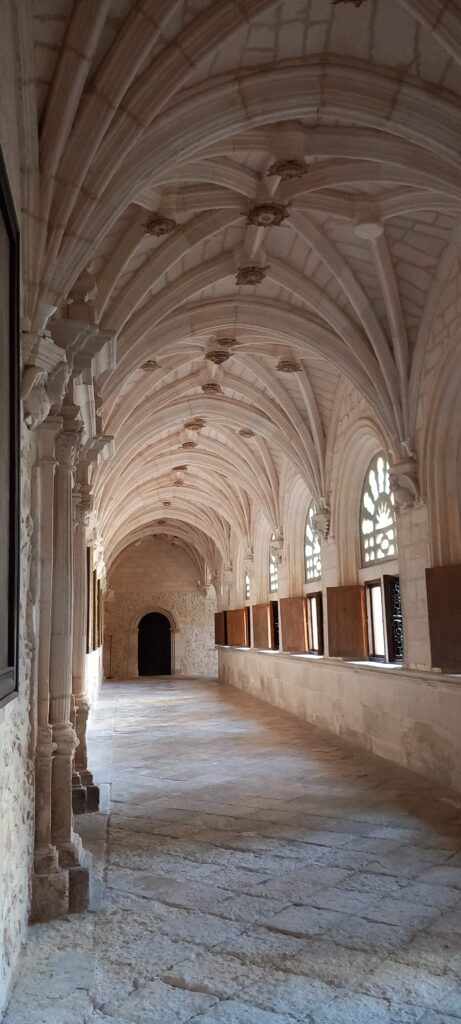
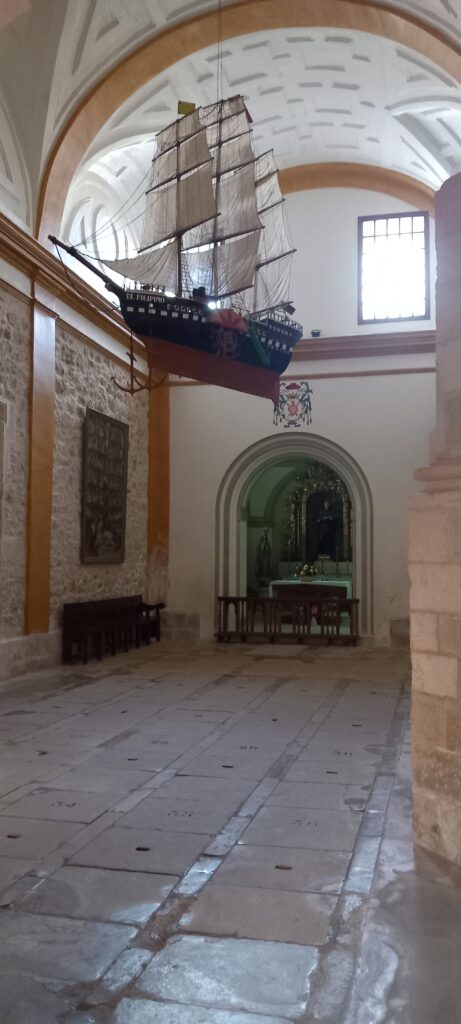
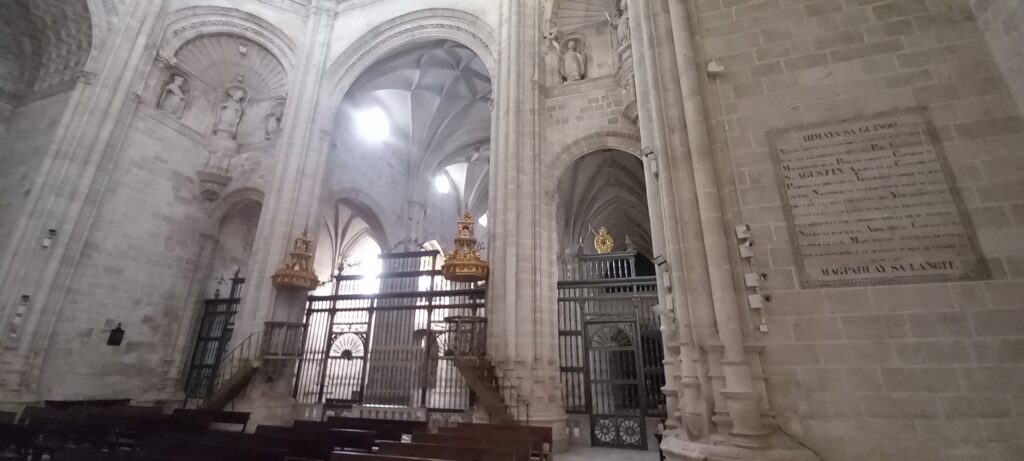
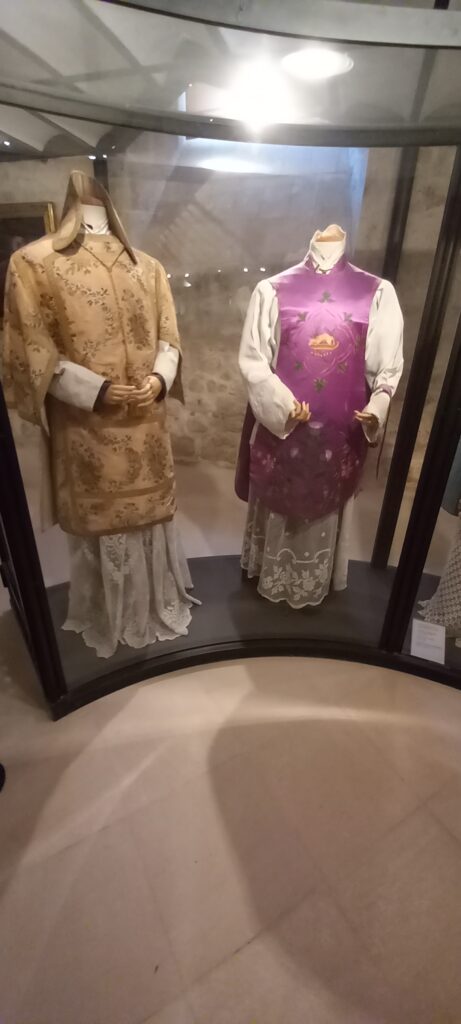
In the Duero valley, right on the Duero River, the monastery was originally founded in 1152 and was run by a Dominican Order until the mid 1800s when it closed for a few decades. Opening again by the Order of St Augustine it was run until 1991, closing with plans to change its use to a hostelry and conference centre, retaining the working church and various museums which are open to the public.
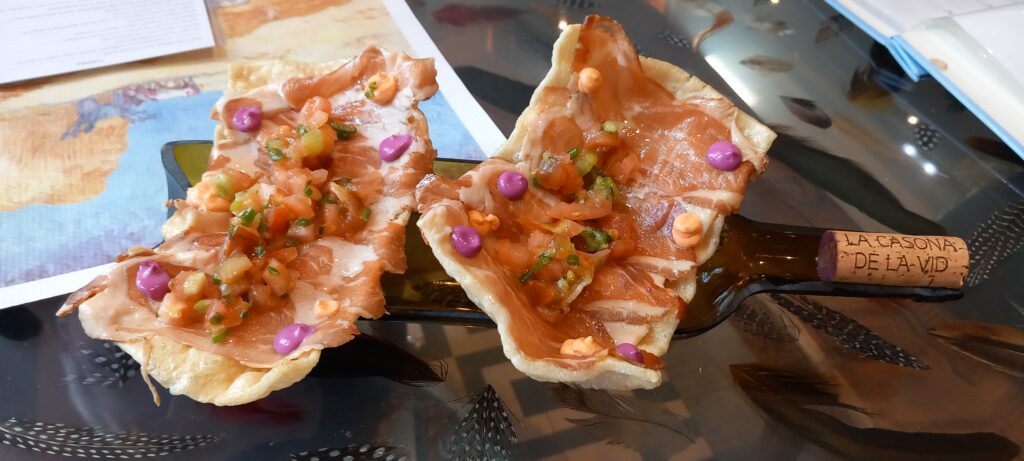
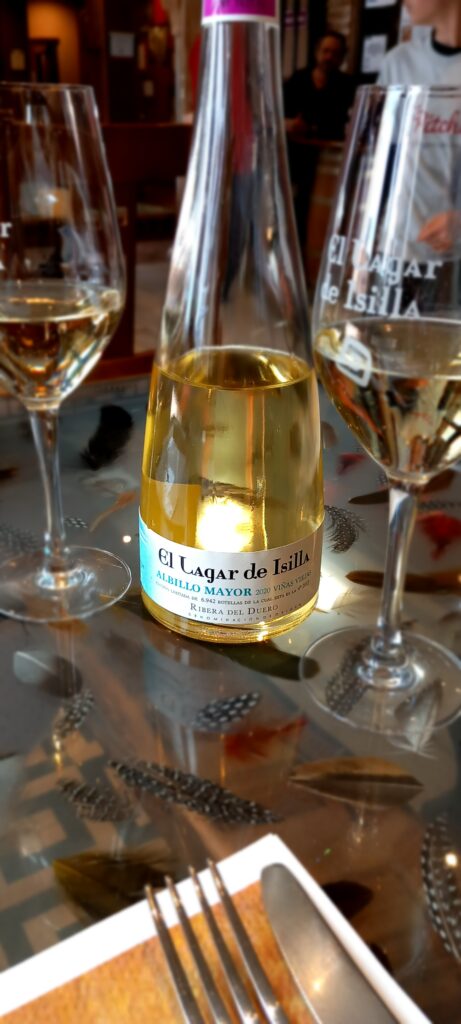
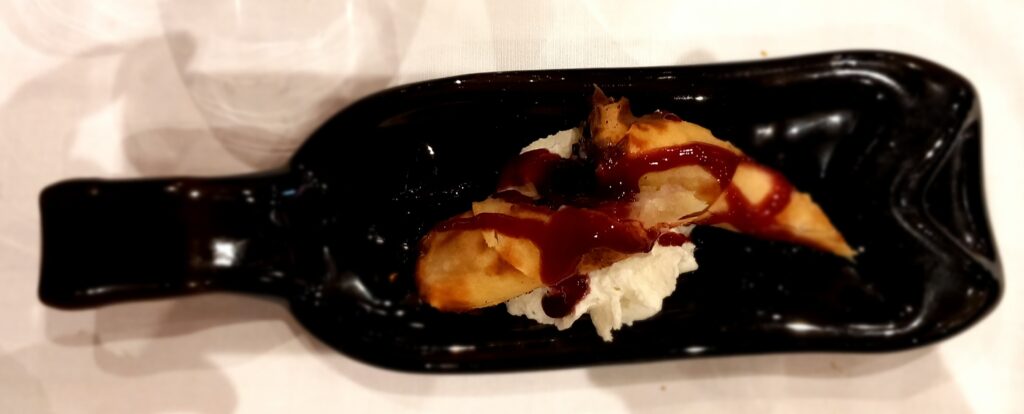
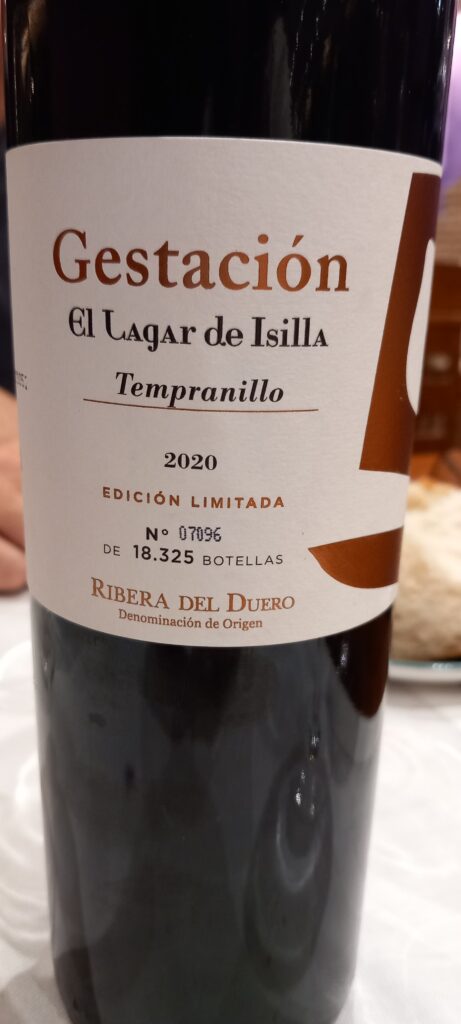
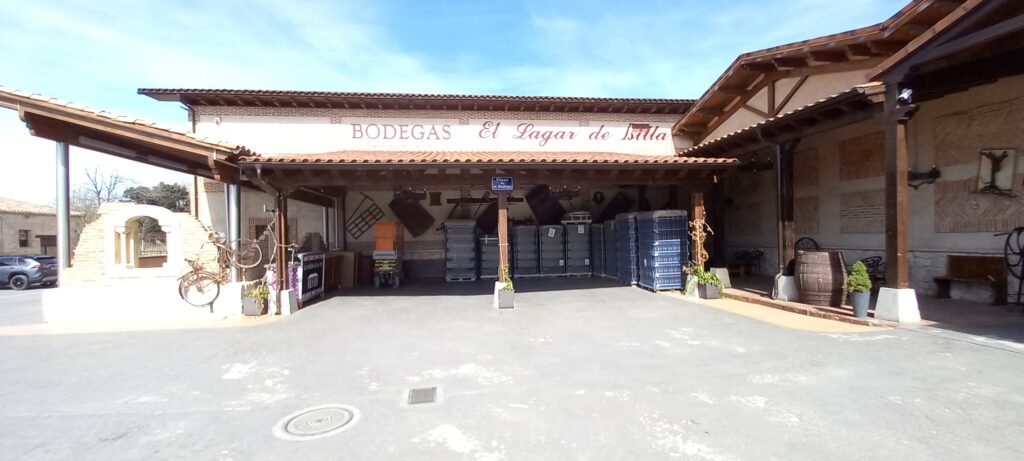
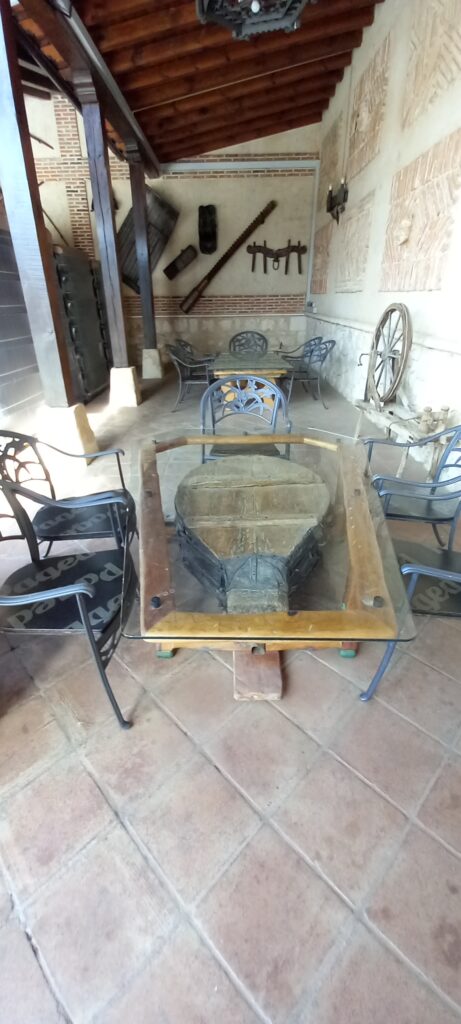
To top it off, next door was a Bodega and restaurant offering the most amazing wine and food! We stopped there during the area’s Tapas Route, this was their contribution, a crispbake with the lightest ever jamon topped with a fresh salsa and violet mayonnaise……simply heaven!
In the late afternoon, the Monastery was open for a tour, despite it being fully in Spanish, I thoroughly enjoyed the peace, tranquility and splendour of the building.
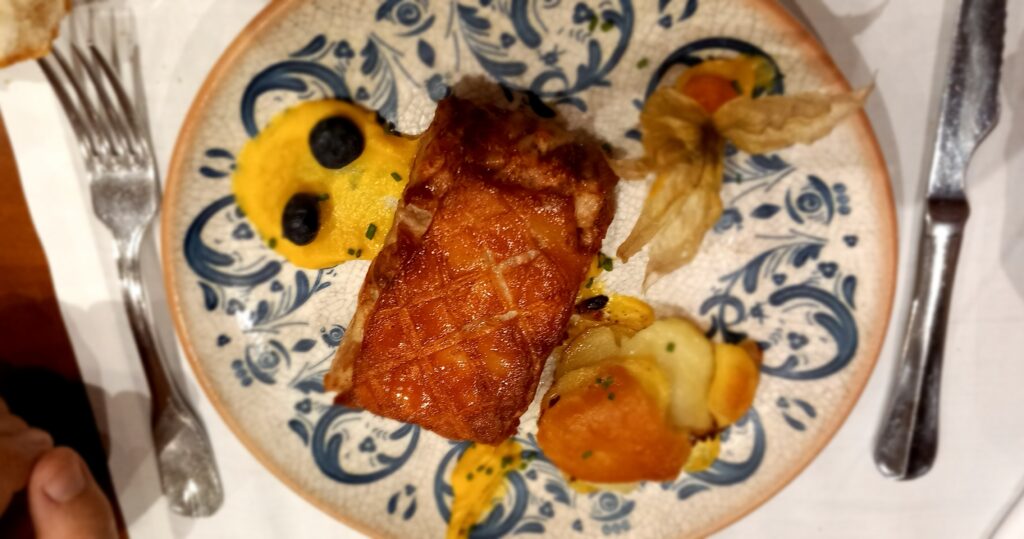
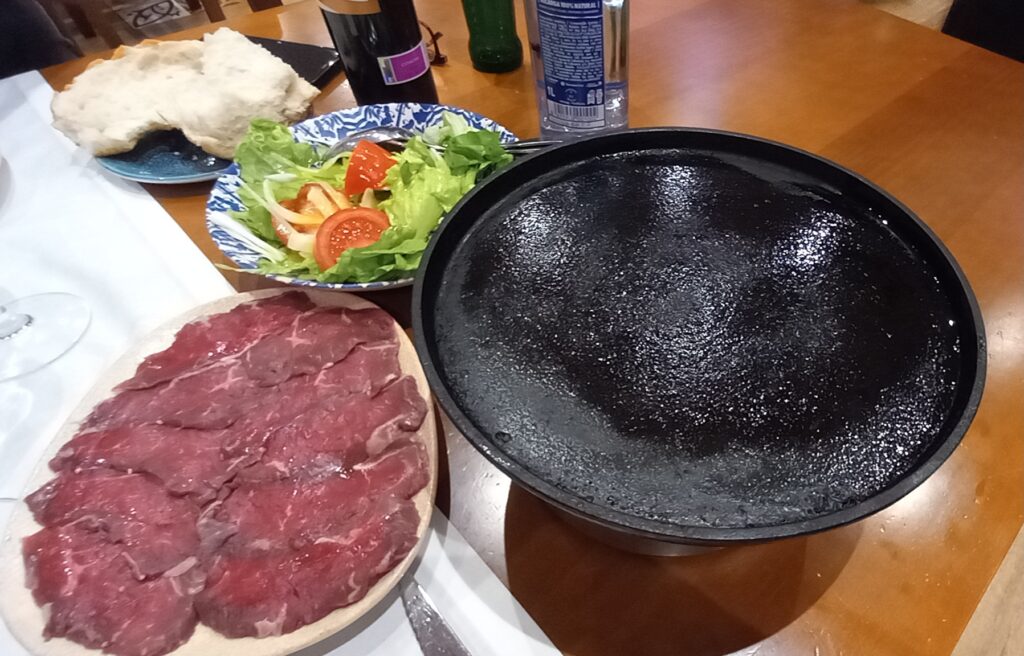
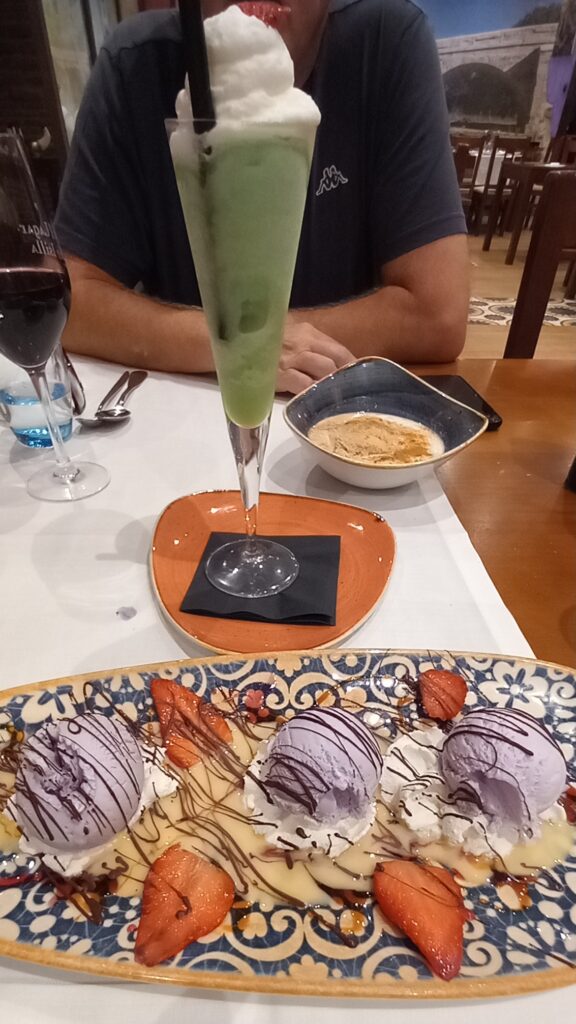
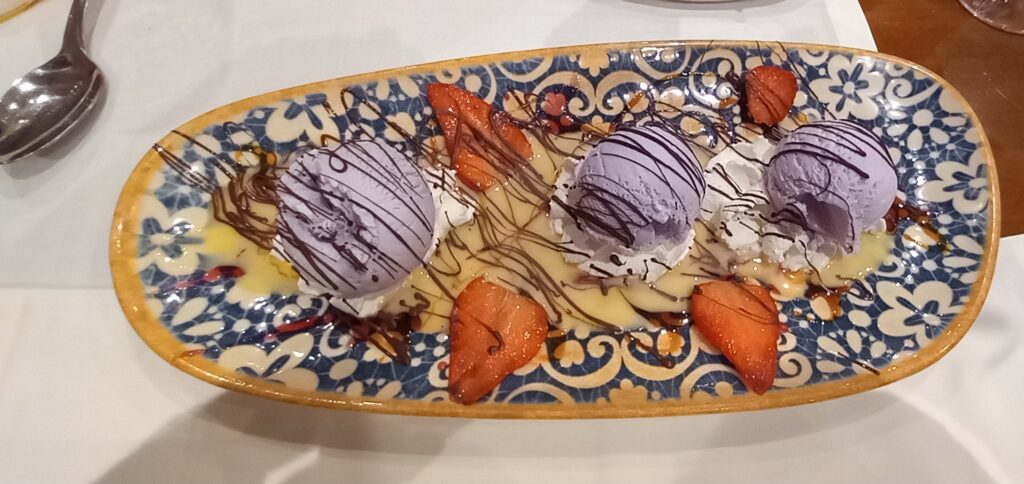
Dinner that night was outstanding, cheese pancake to start, cook your own steak…. but Dessert was the highlight. I couldn’t decide between Green Apple sorbet with a coconut foam or Violet ice cream so we ordered both!!












Recent Comments