Travel stories of a caravan duo, plus a 5th Wheel and Isuzu truck in Europe

Category: General (Page 11 of 37)

Liverpool Cathedral(s)

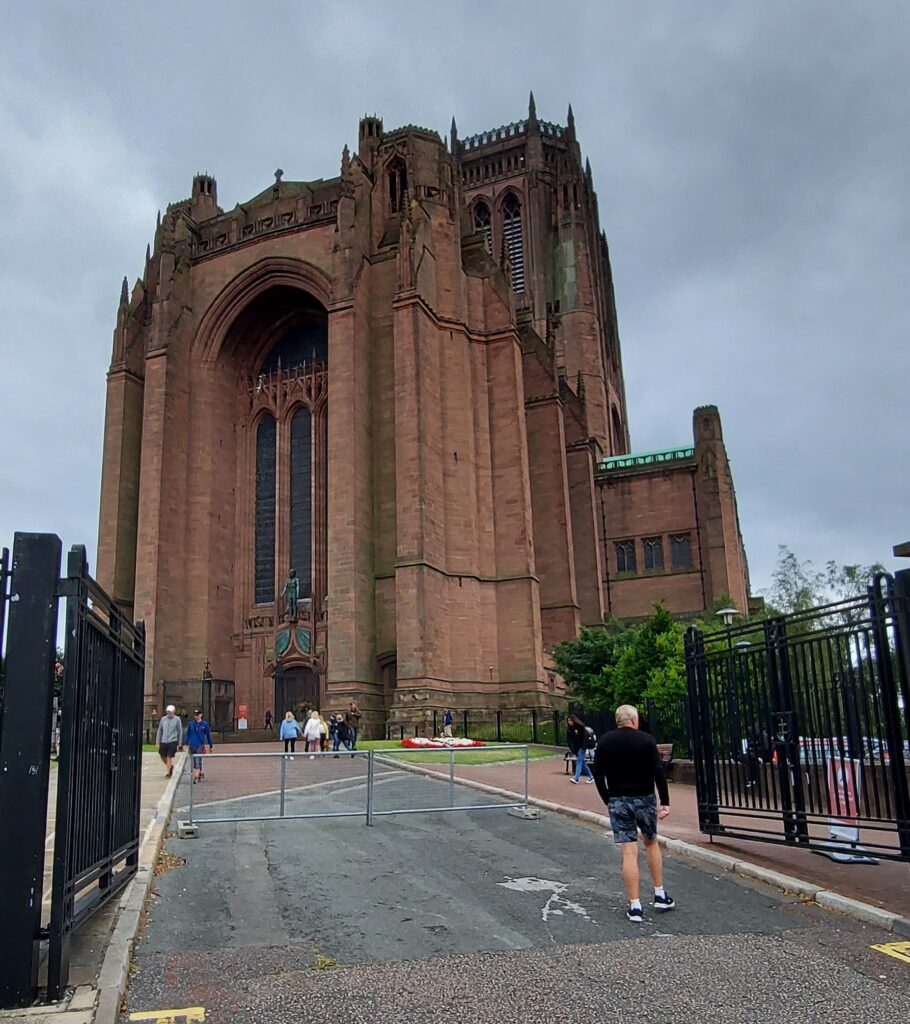
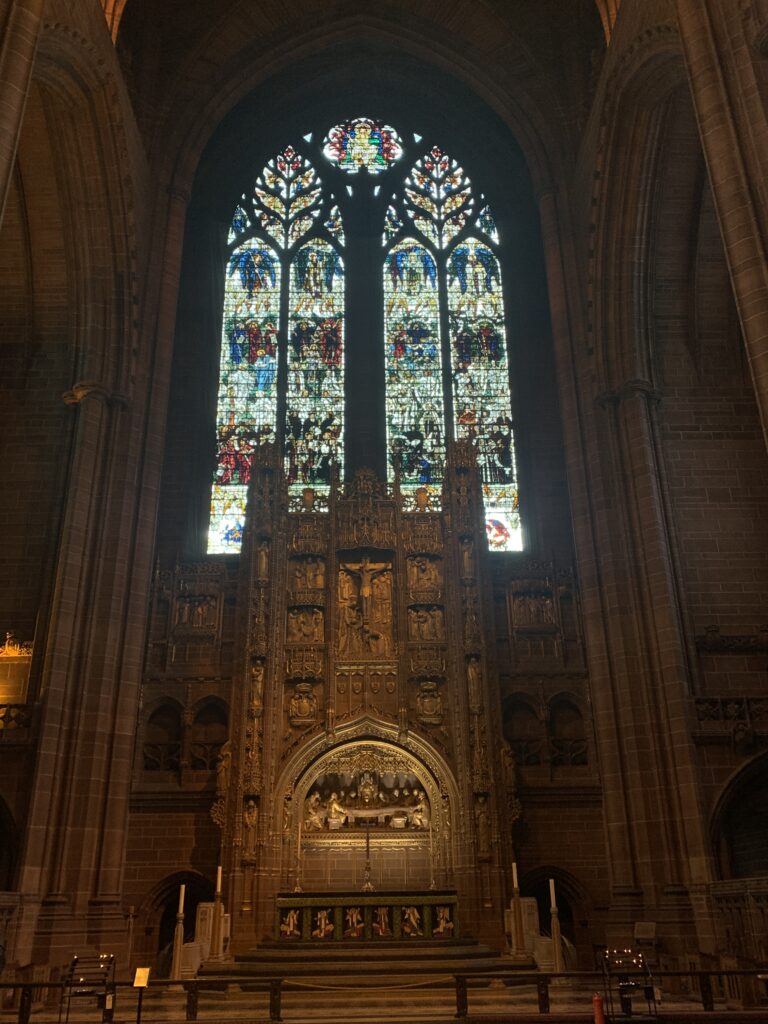
You probably know of our love of anything old and our desire to learn all about the history of a city or town, well, how could we stay in Liverpool (to help Caity set up home) and not visit the two cathedrals?? Impossible!

However, we were disappointed to find that both Cathedrals were modern!

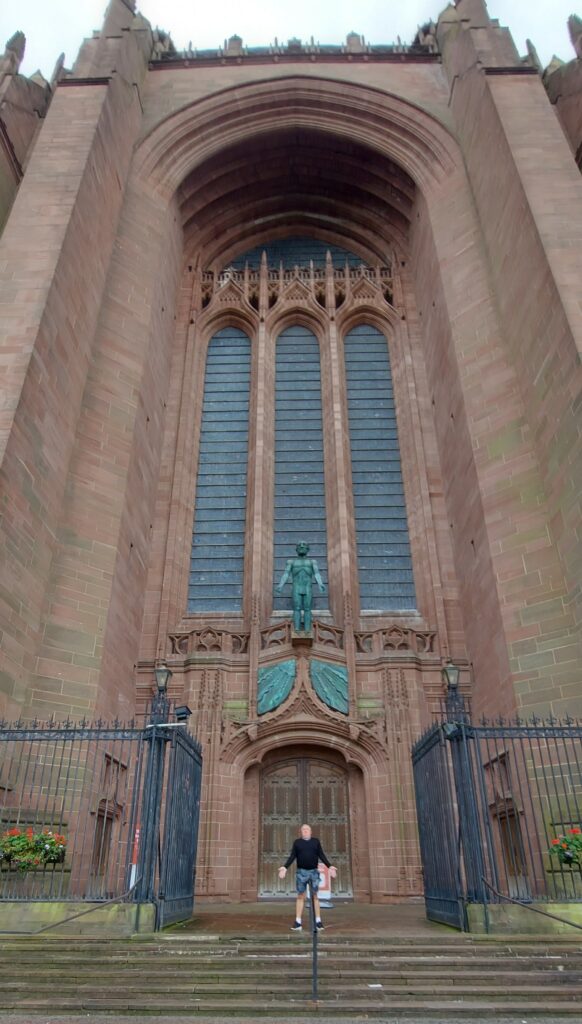
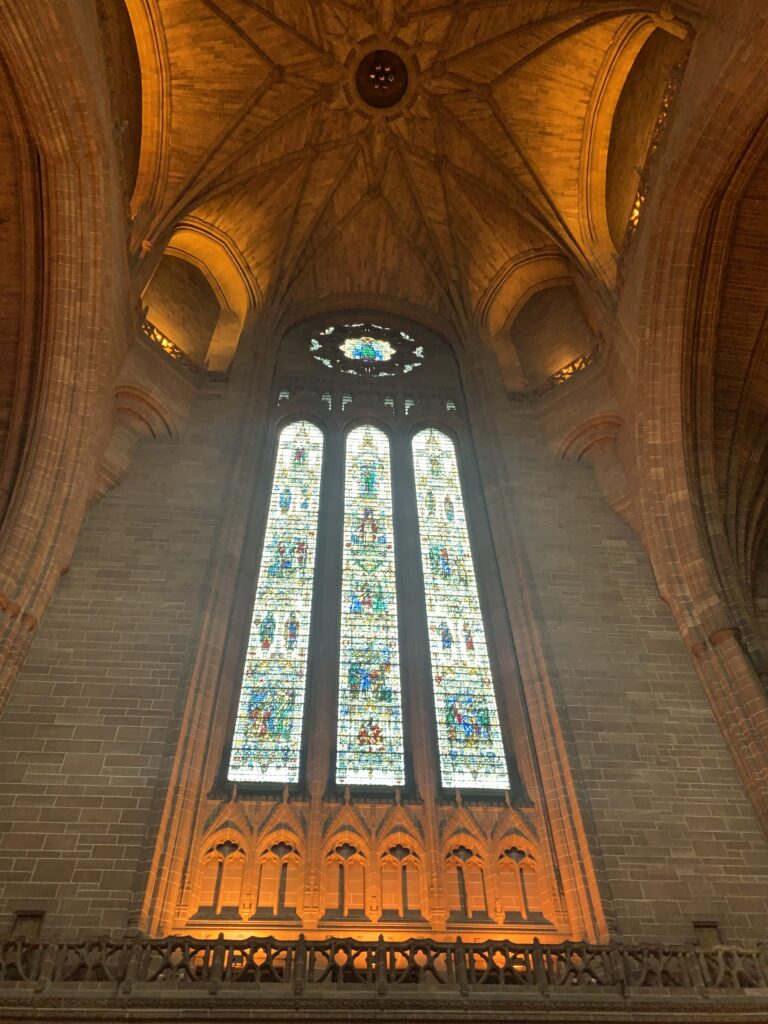
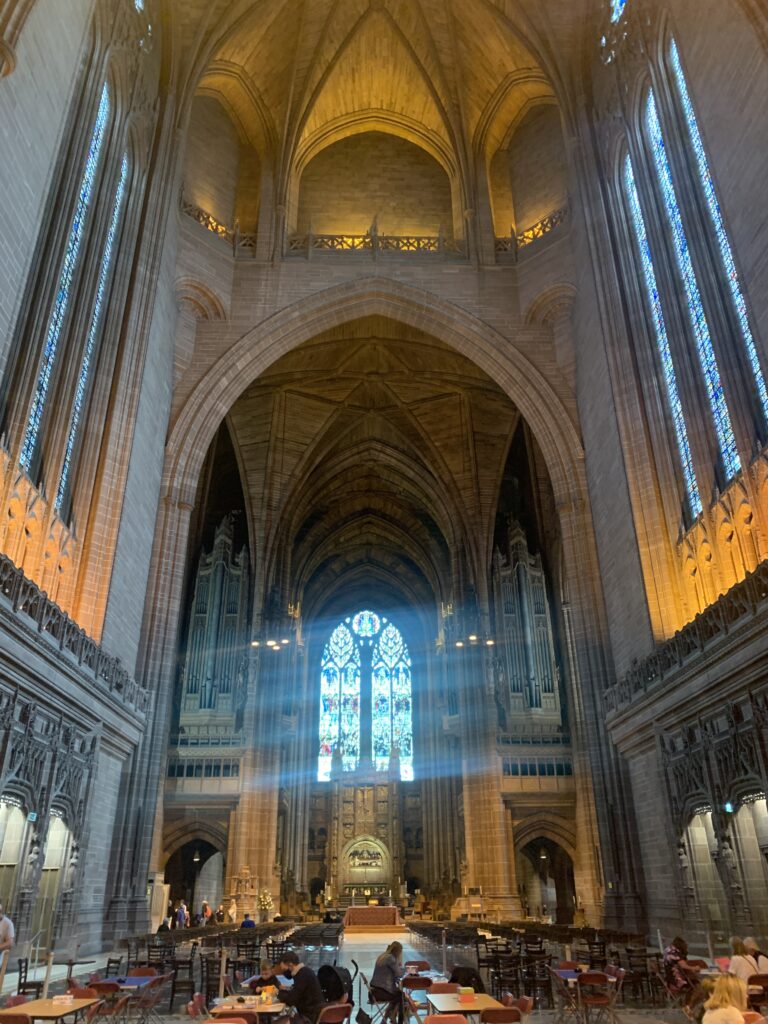
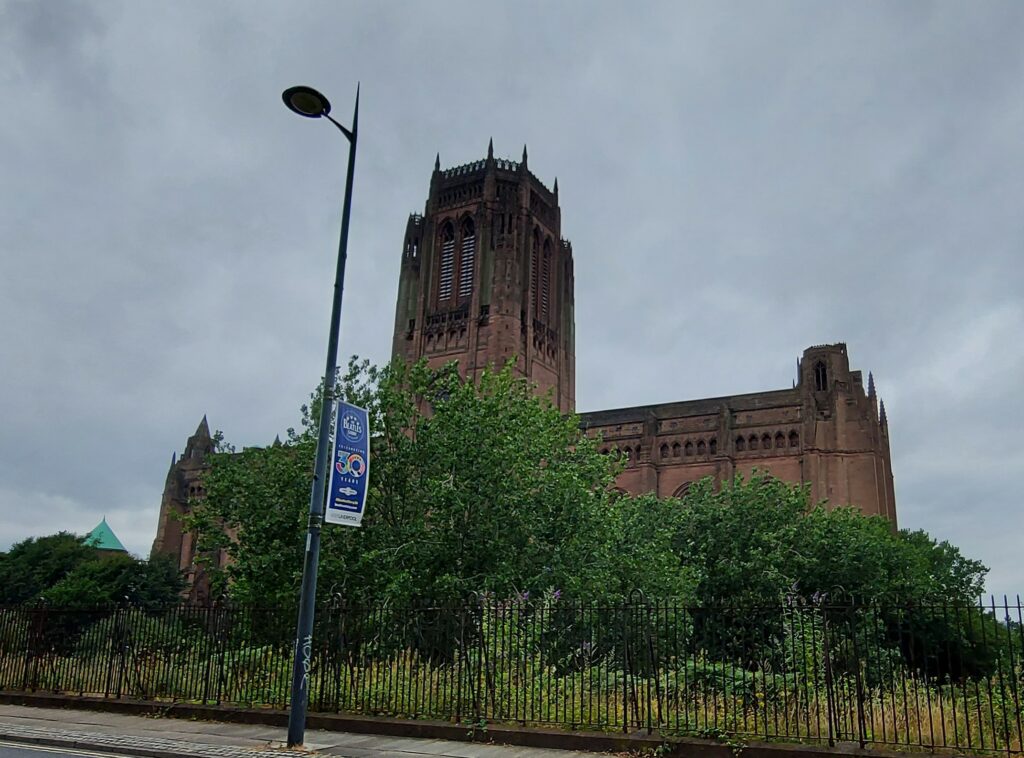
Our first visit to the Anglican Cathedral confirmed that it was primarily built between 1904 and 1924, delays caused mainly by the world War 1, but during bitterly cold weather on 20th February 1942, Sir Giles Scott (aged 22 in 1903 when his design was chosen) placed the final stone on the final ‘finial’ at the top of the tower, three hundred and thirty one feet one and half inches (101 metres) above the Cathedral floor. Some interesting facts:

  • Length: 188.7 m (619 ft)
  • Area: 9,687.4 sq. m (104,275 sq. ft)
  • Choir Vault: 35.3 m (116 ft)
  • Nave Vault: 36.5 m (120 ft)
  • Height of Tower: 100.8 m (331 ft)
  • Under Tower Vault: 53.3 m (175 ft)
  • Tower Arches: 32.6 m (107 ft)
  • Bells: (height above ground) 67.0 m (219 ft)
  • Bells: (weight) 31.5 tonnes (31 tons).

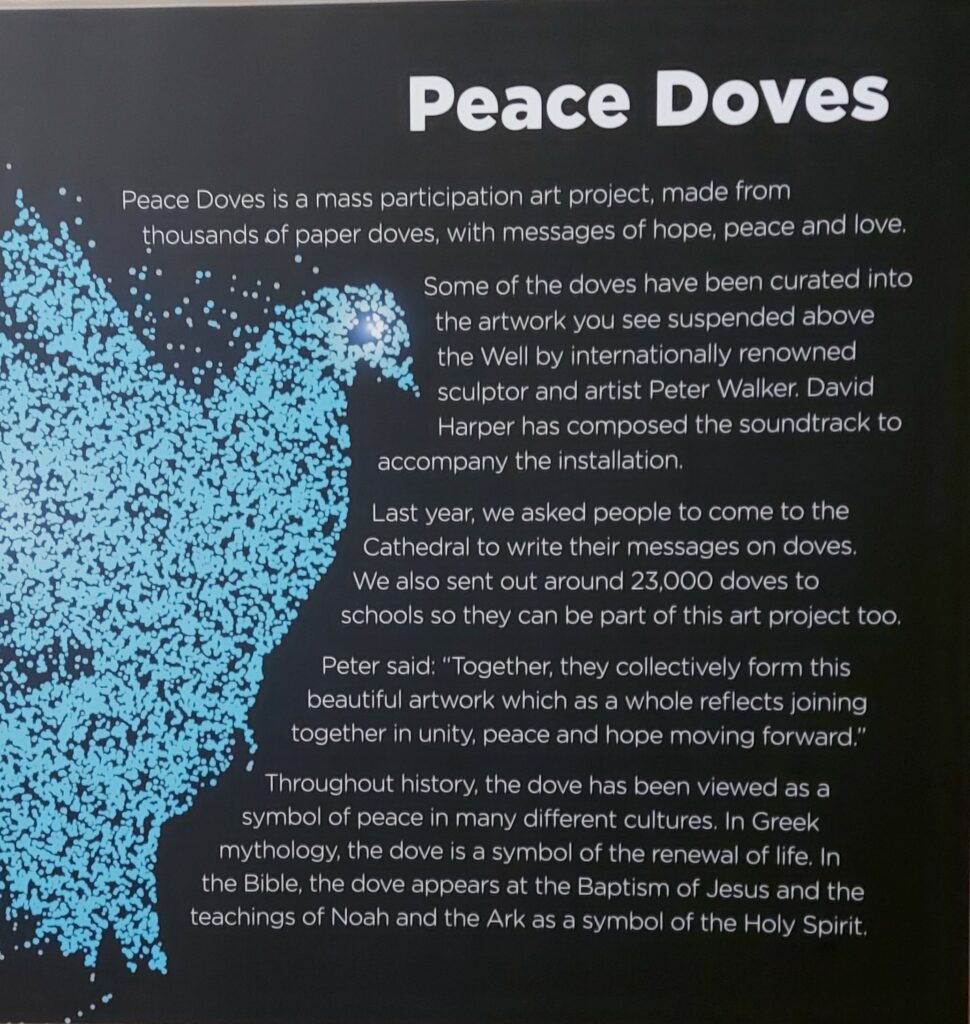
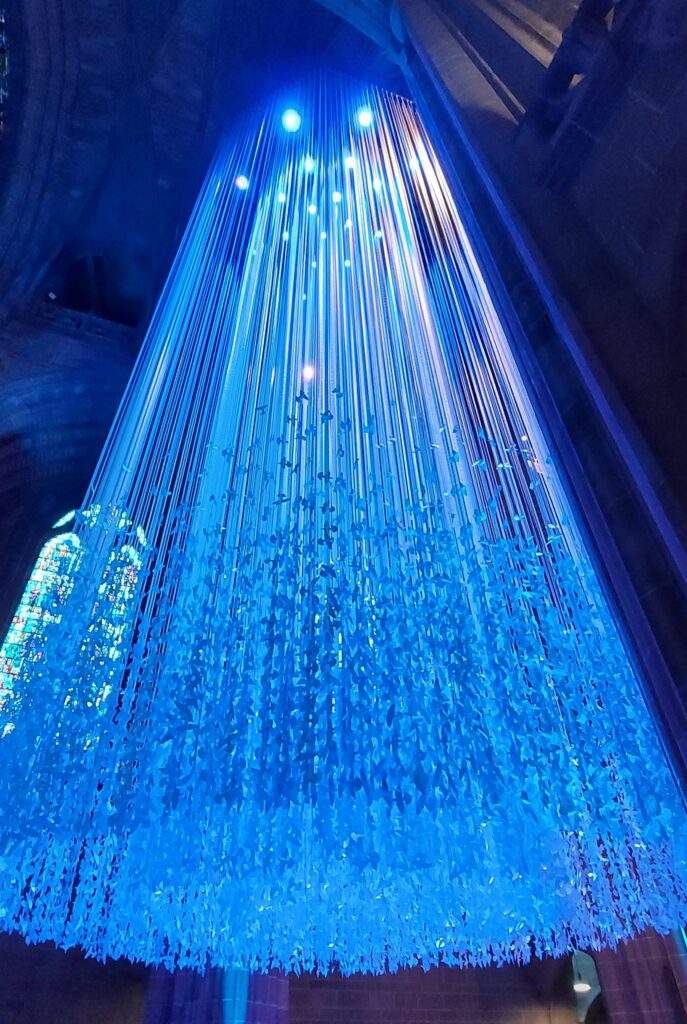
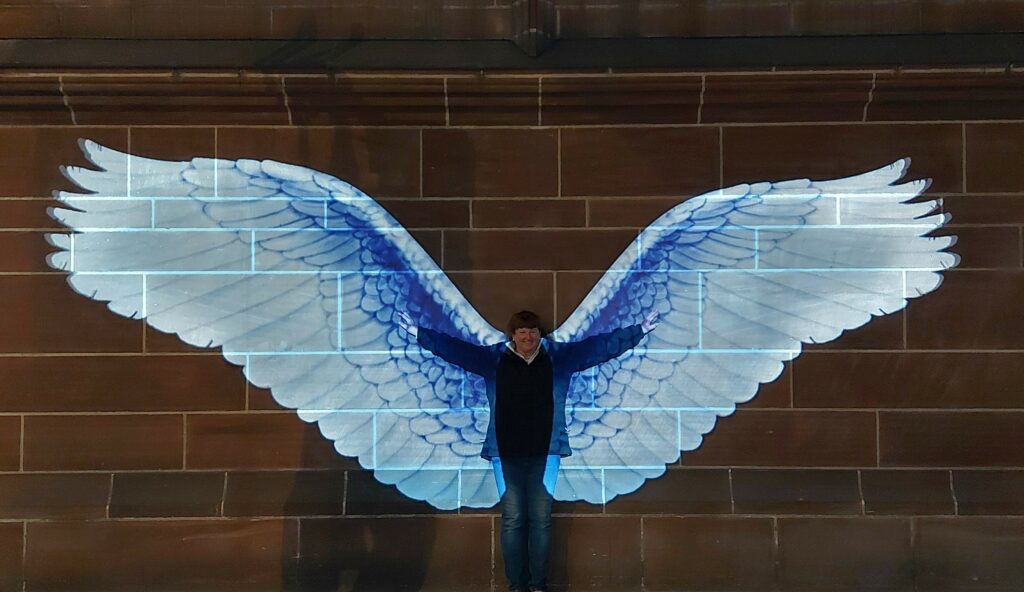
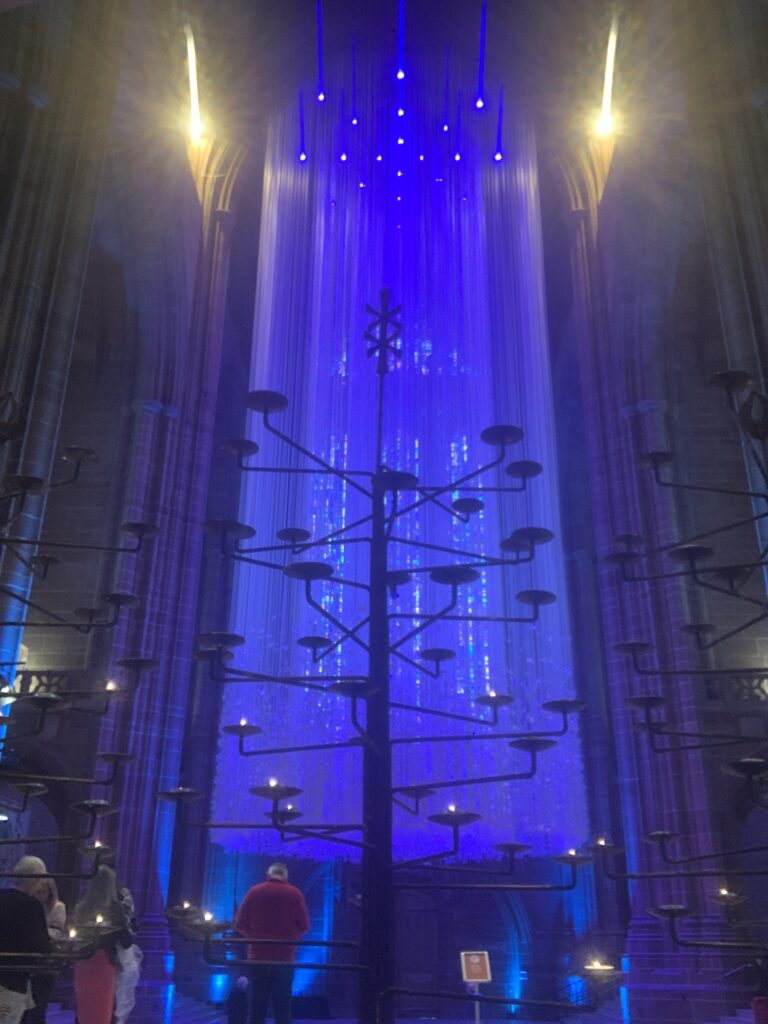
Inside the church are several modern art displays, currently the Doves of Peace.

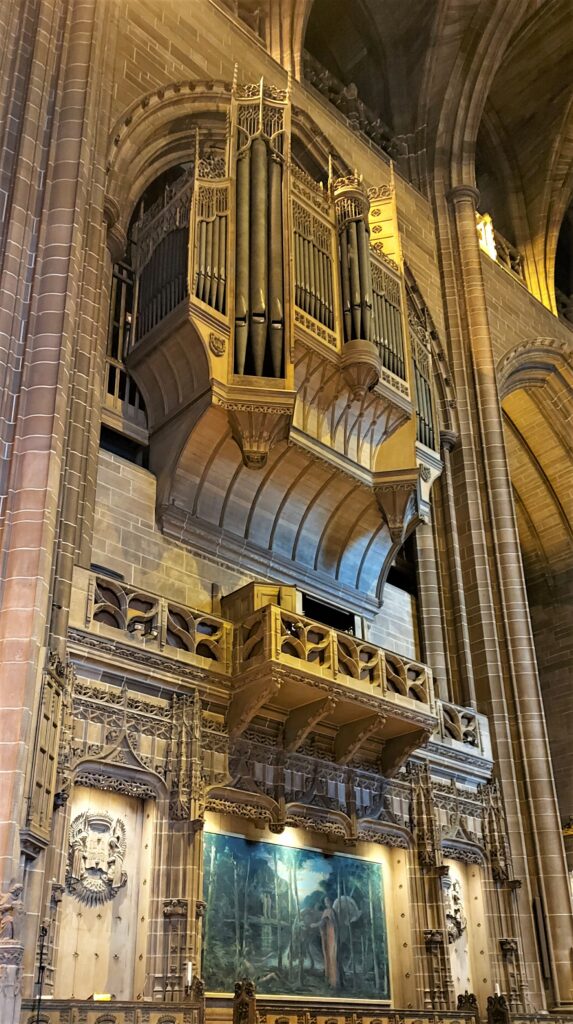
Installation of the organ began in 1923. When the organ was completed in 1926 it was the largest musical instrument ever conceived, and, since the installation of the additional Central division in 2007, it continues to be the largest pipe organ in the UK.

Tracey Emin, the artist writes: “The Church has always been a place, for me, for contemplation. I wanted to make something for Liverpool Cathedral about love and the sharing of love. Love is a feeling which we internalise; a feeling very hard to explain. I thought it would be nice for people to sit in the Cathedral and have a moment to contemplate the feelings of love, it’s something we just don’t have enough time to think about and I hope this work creates this space in time.” Liverpool Echo, September 2008

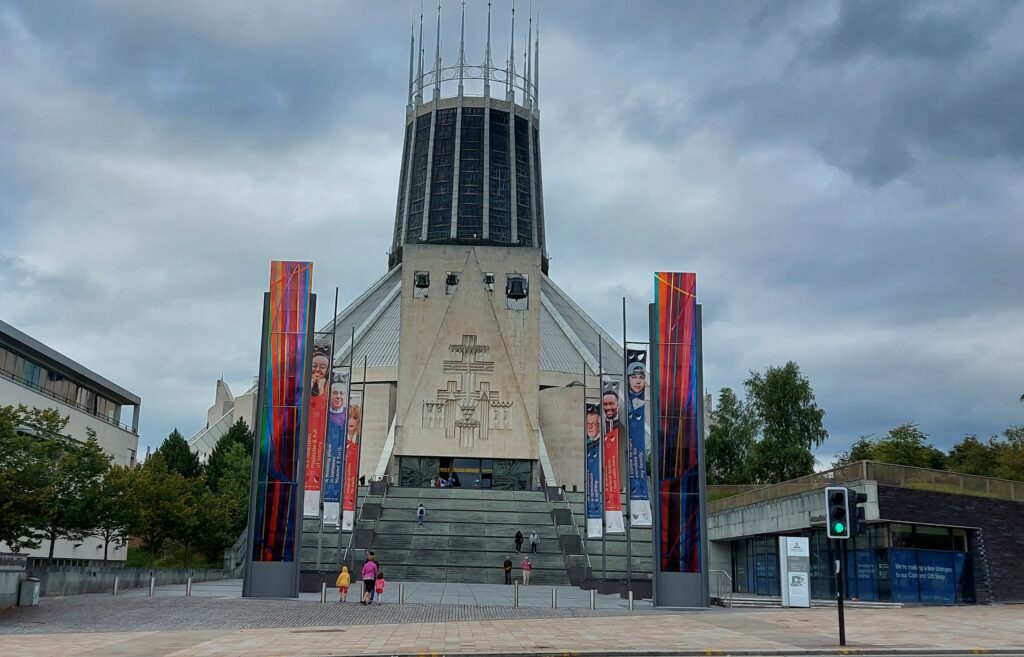
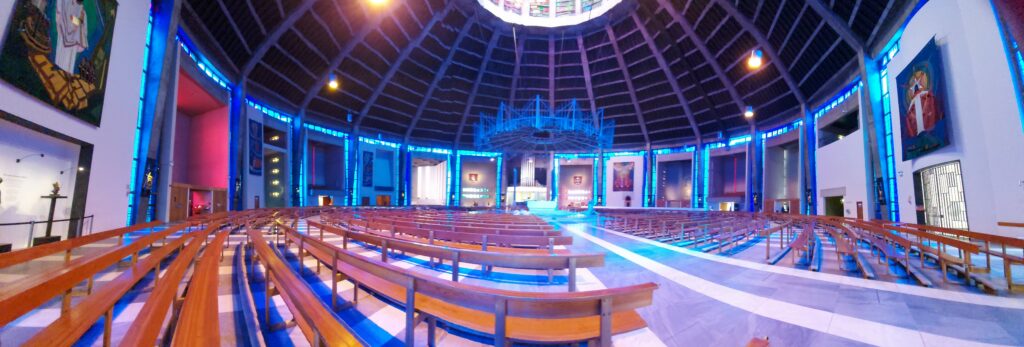
Then we took a ten minute walk to the other side of the hill, to the Catholic Church. Again, this is modern, work started on it in 1962 and it was completed 5 years later.

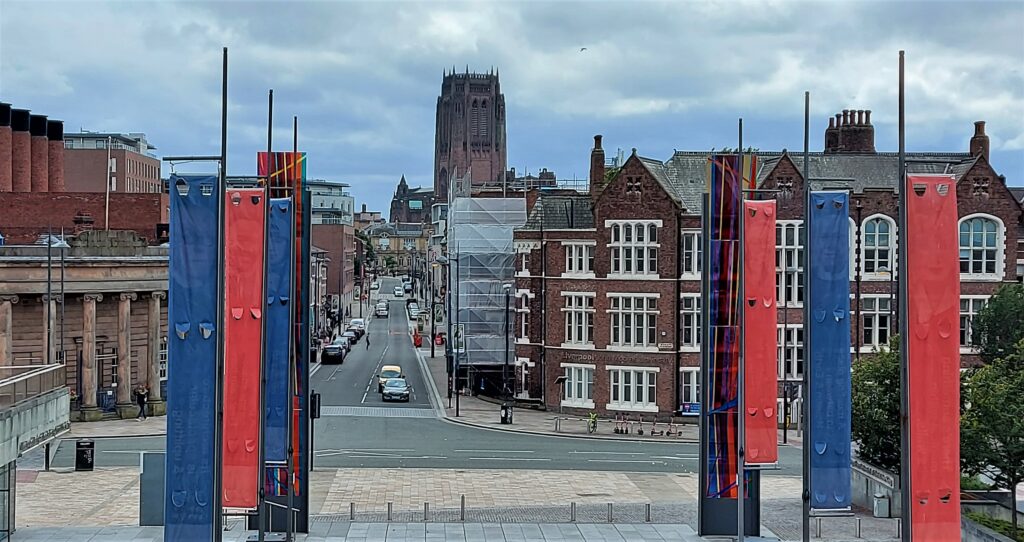
View of the Anglican church from the steps of the Catholic church!

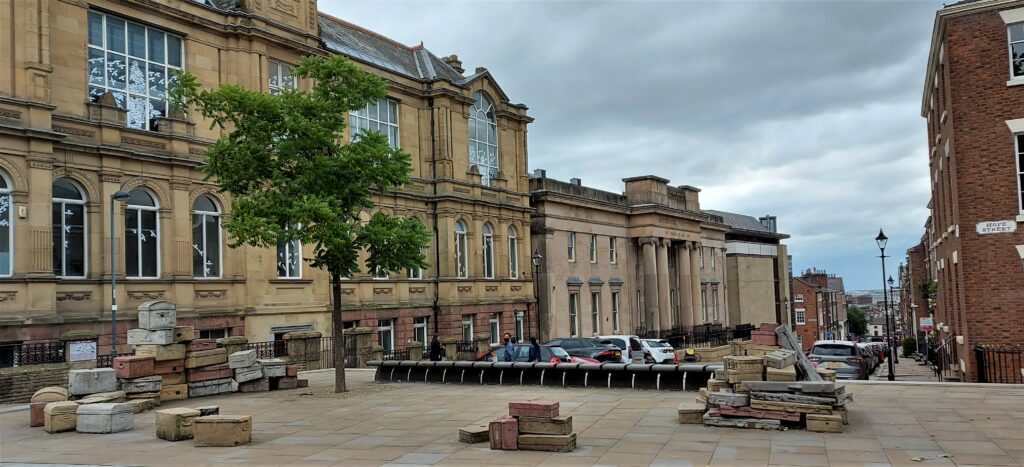
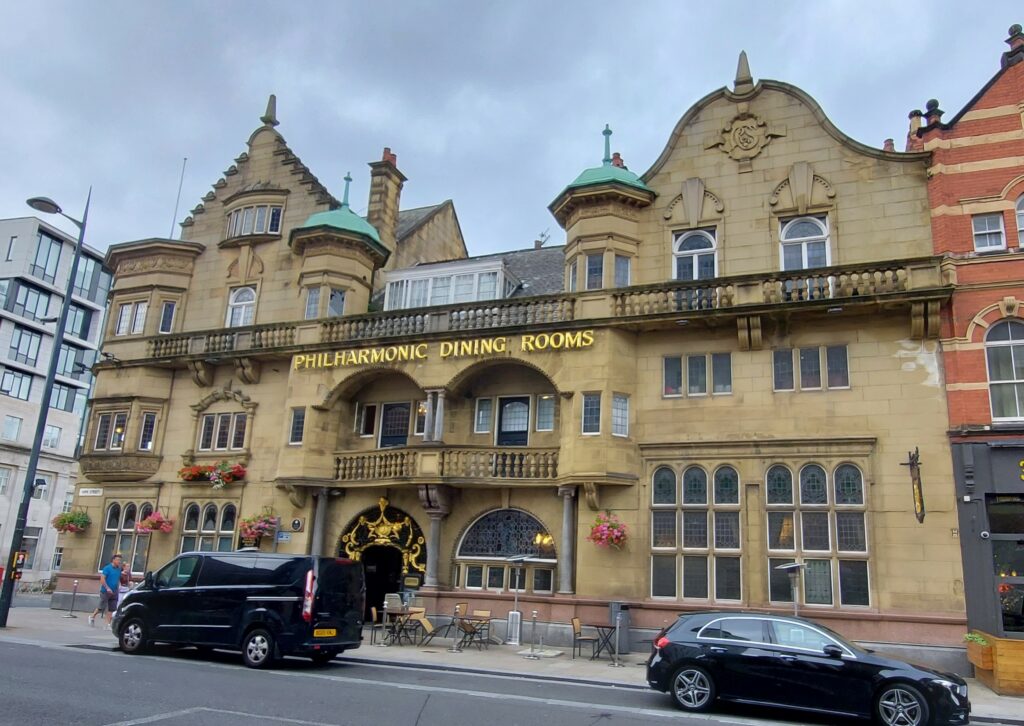
Hope Street connects the two churches, the street is named after William Hope, a merchant whose house stood on the site now occupied by the Philharmonic Hall, rounded building on the left.

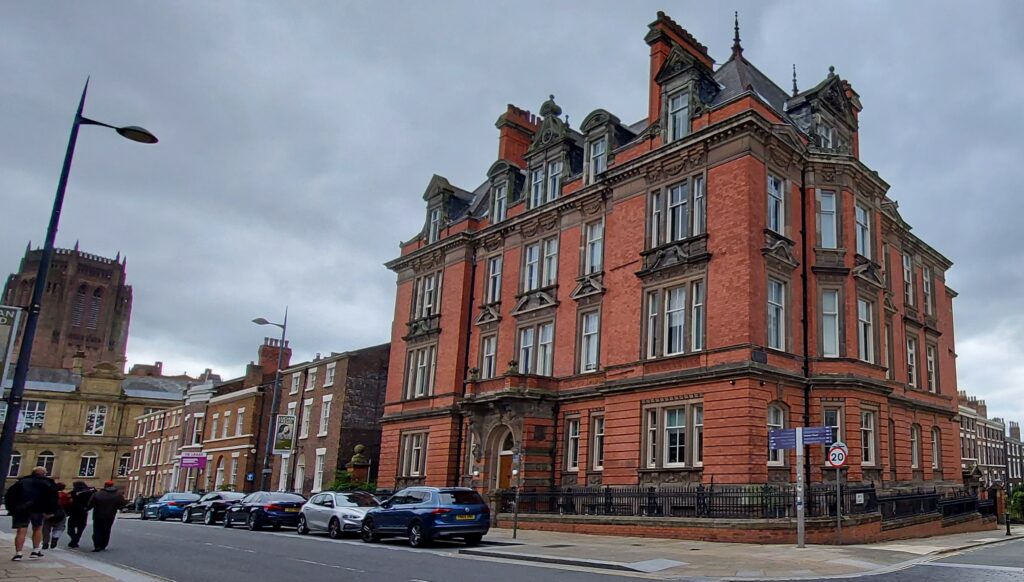
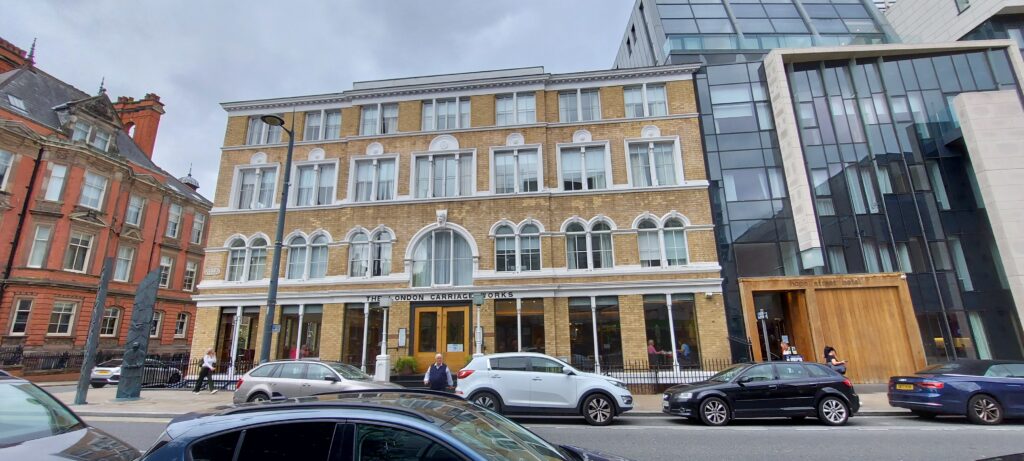
Some beautiful architecture around the local streets, include this street art called ‘A Case History‘ created by artist John King, is a collection of static suitcases which pay tribute to those who have both passed through the city and stayed to make it their home.”

Philharmonic Hall, Liverpool - Wikipedia

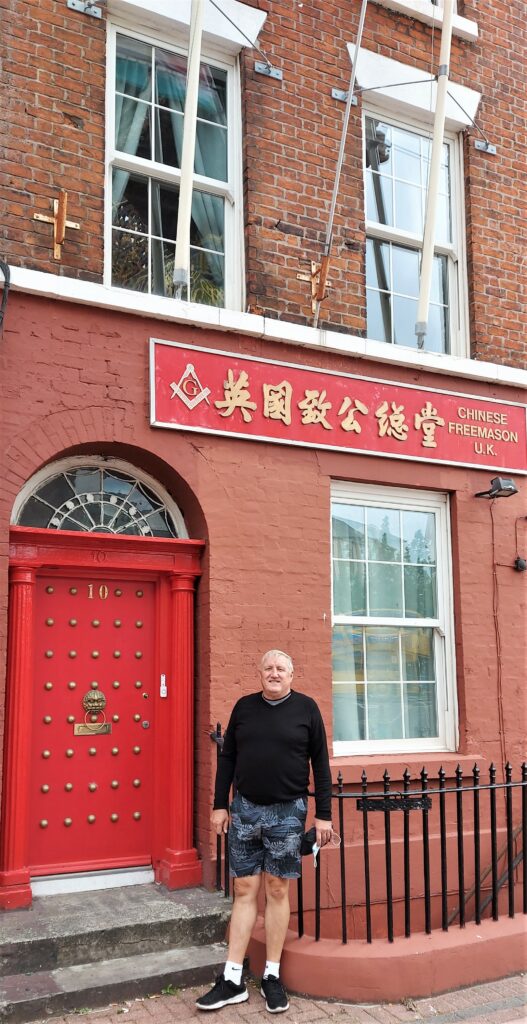
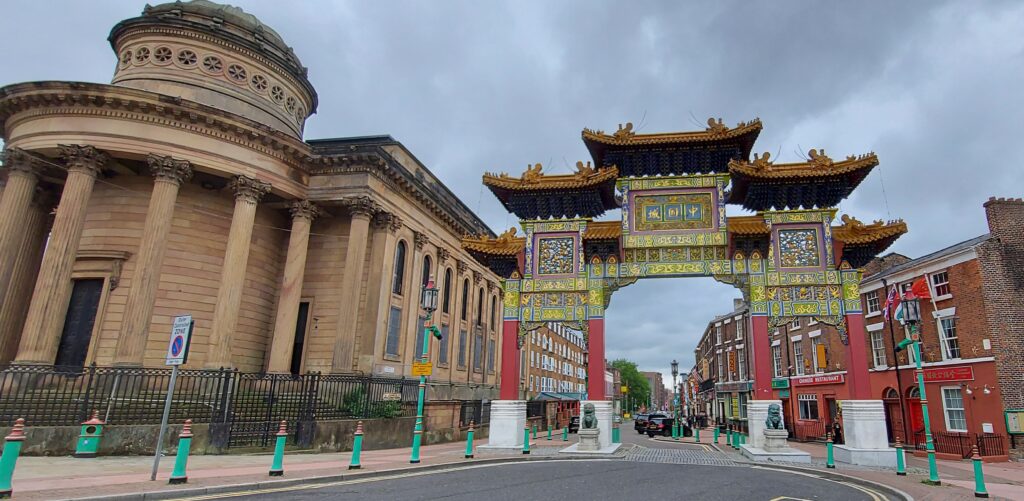
And finally, Chinatown! Compared to London’s Chinatown this was very disappointing, we were expecting bars, shops, restaurants, half a mile long, chatter, smells and noise. Nothing! A few closed restaurants, and a Freemason’s lodge, and that was it…..

Llandudno, Porthmadog and Portmeirion

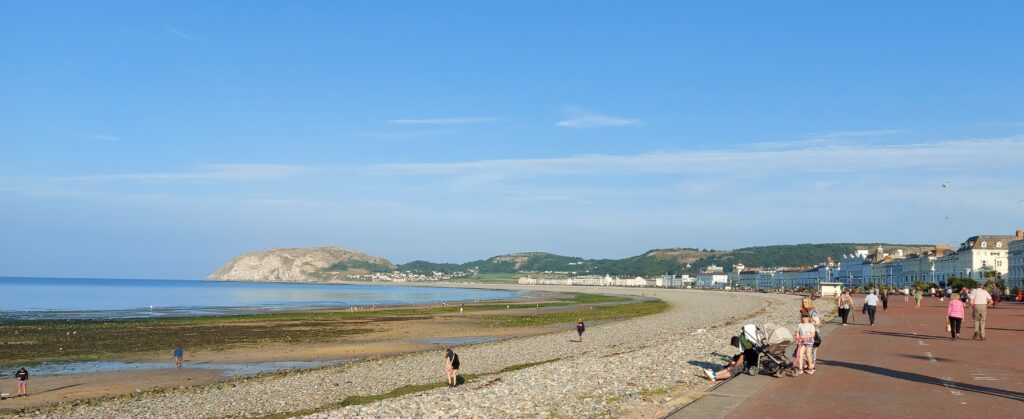
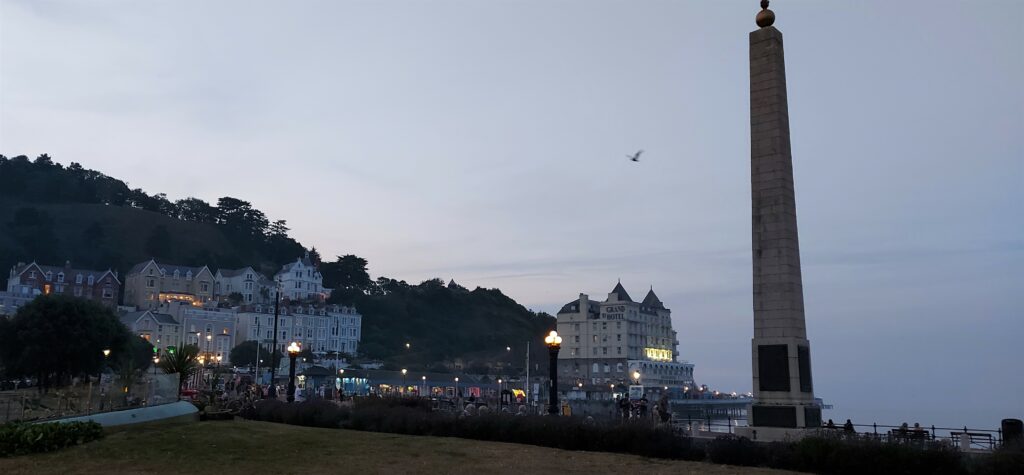
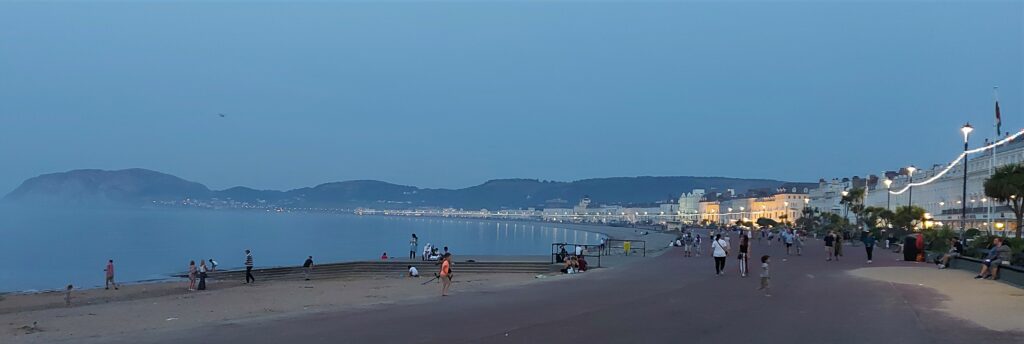
Llandudno was our nearest seaside resort to the camsite, we spent several days and evenings walking along its promenade during the summer heatwave!

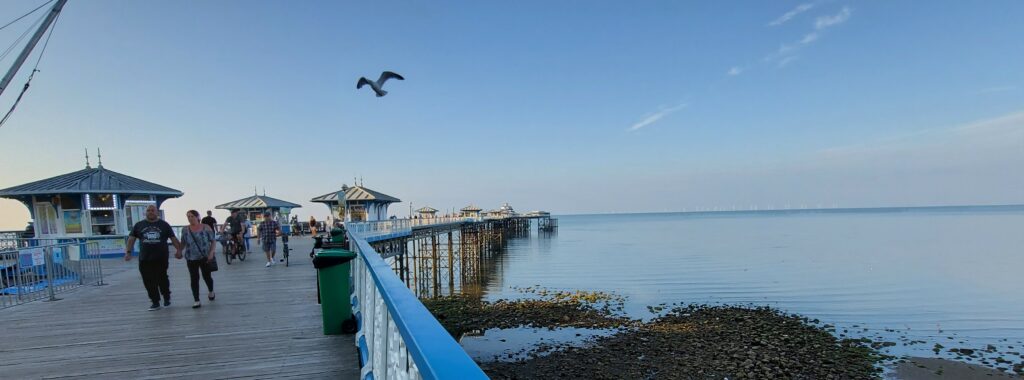
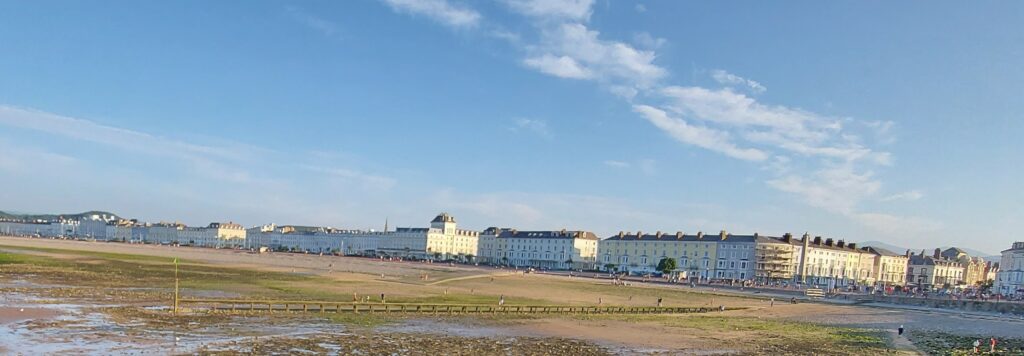
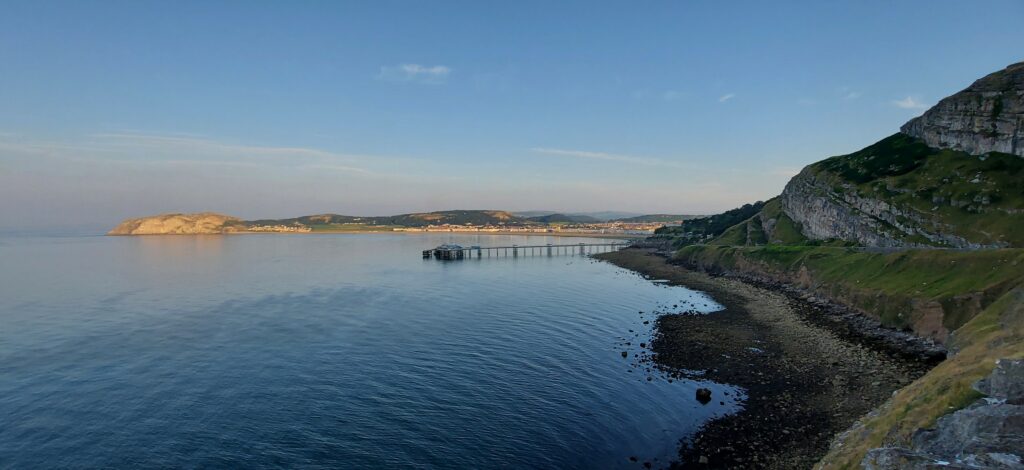
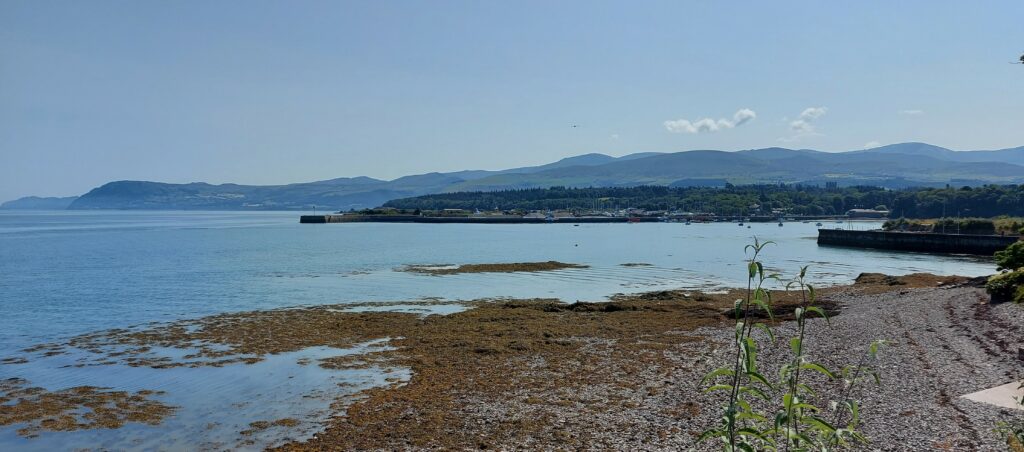
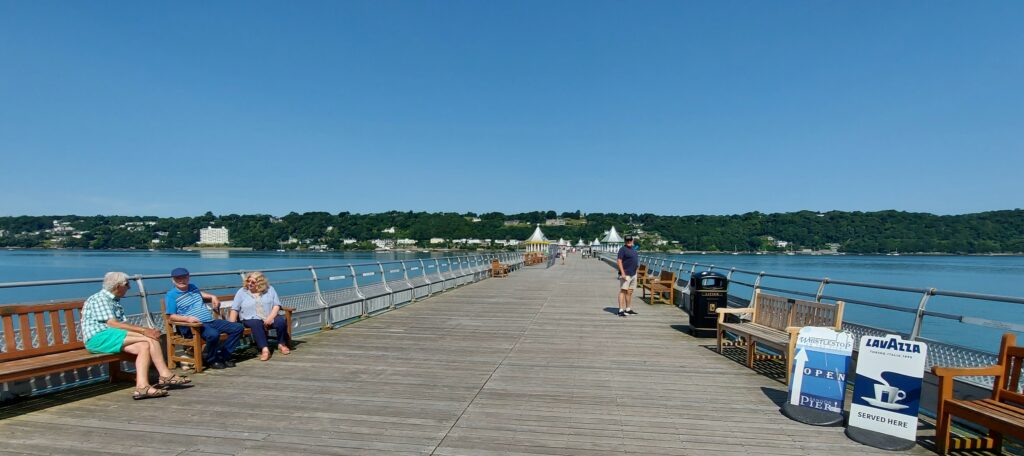
Llandudno is a really fascinating place, a huge sweeping bay, a ready made “resort” full of attractions for all the family, a huge paddling pool, a pier with amazing views and architecture.

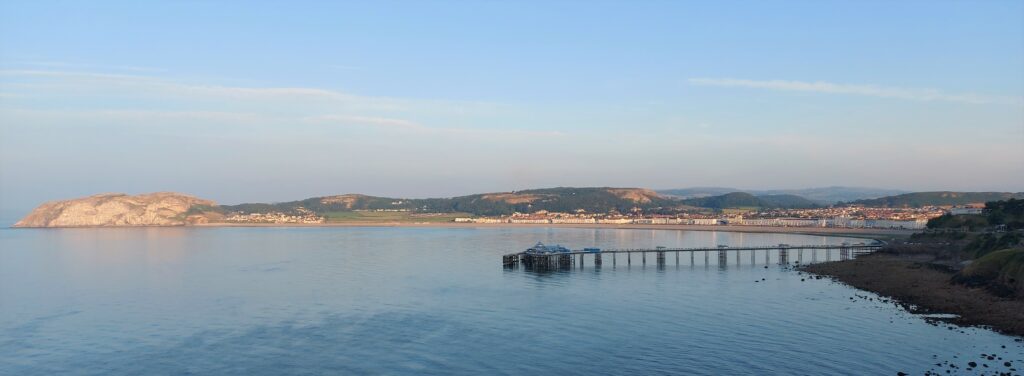
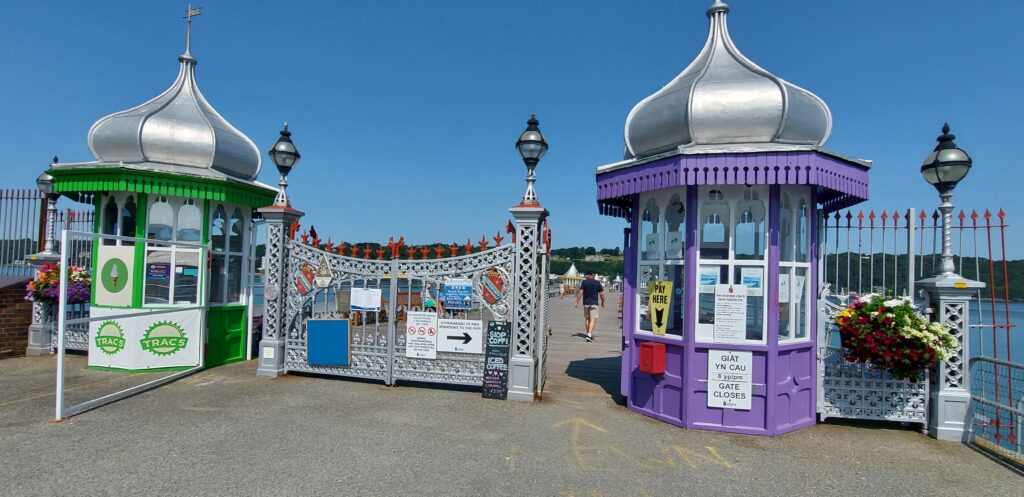
The Llandudno Pier pips the post as being the longest of its kind in Wales at 2,295 feet or 700 meters long. It was started in 1876 and was completed two years later and used to be home to the World’s oldest Punch and Judy show, not sure if it’s still there.

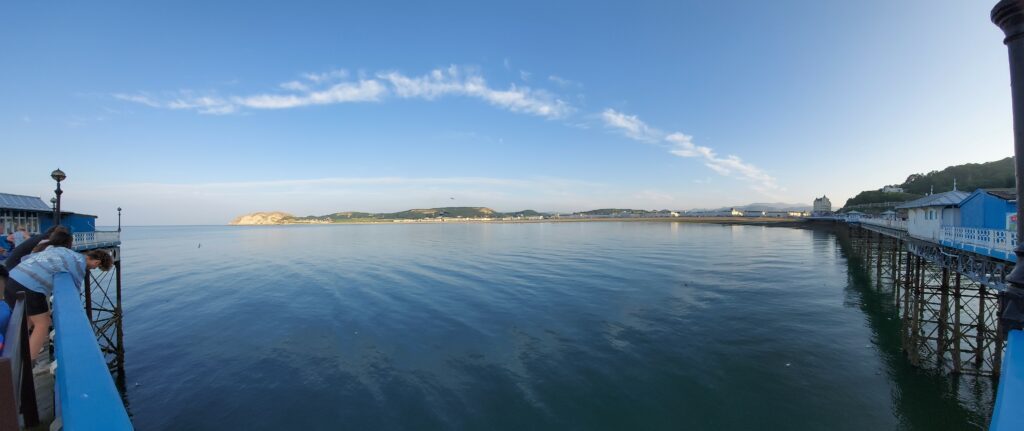
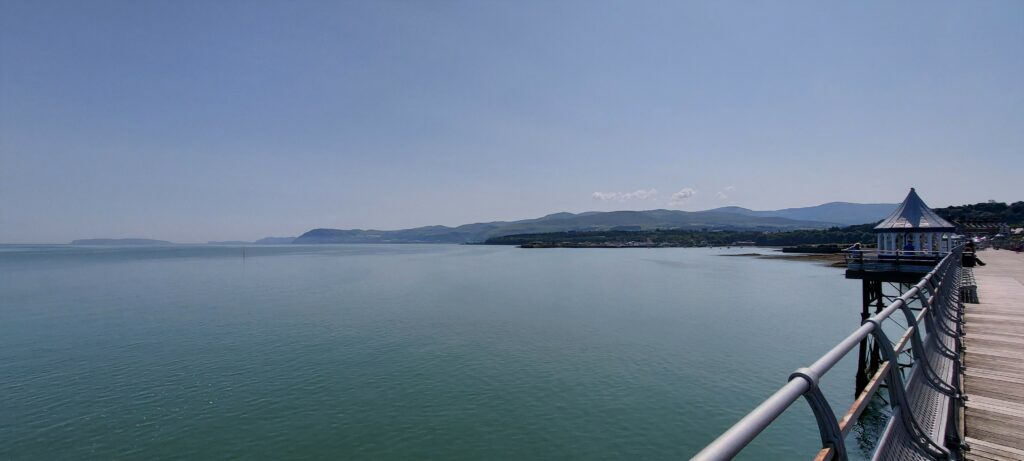
Views from the Pier

Great Orme

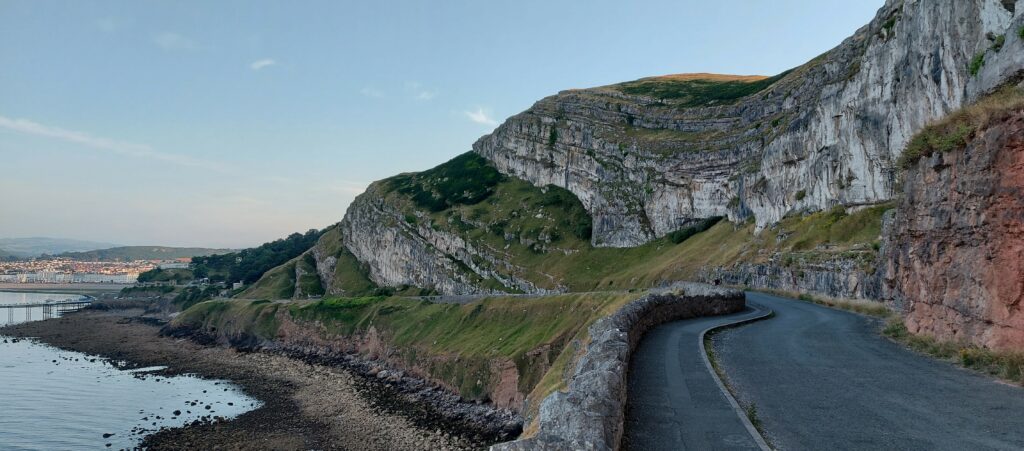
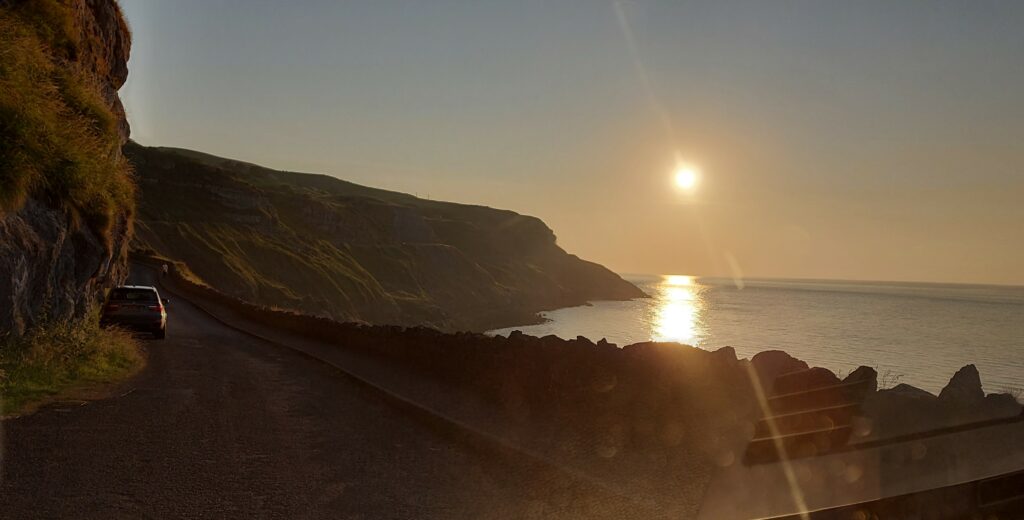
Behind the pier is a headland called Great Orme, which used to house a copper mine, now home to a tourist attraction and a cable car to the top of the headland. We took a night time drive around the coastal road. The mountain is also home to Kashmir goats, descended from goats originally given to Lord Mostyn (who owns the land) by Queen Victoria

Kashmir goats on the Great Orme, Wales

Llandudno Architecture

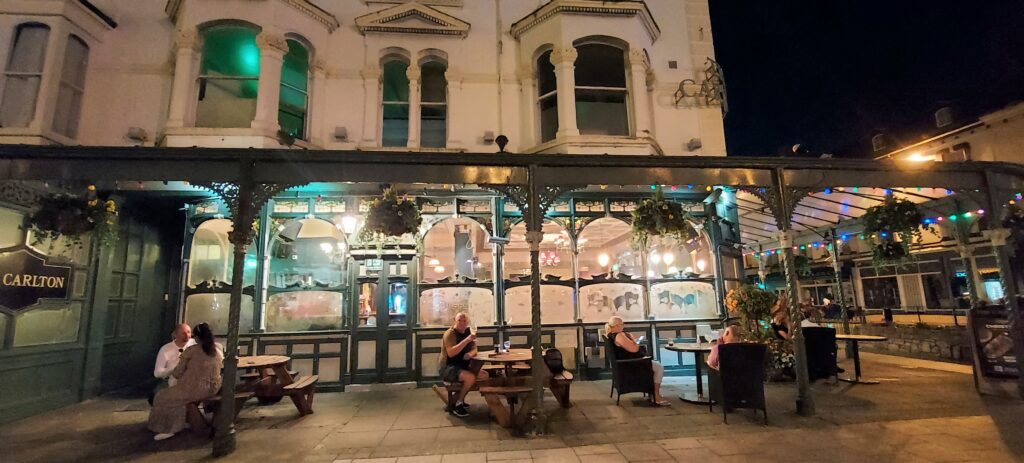
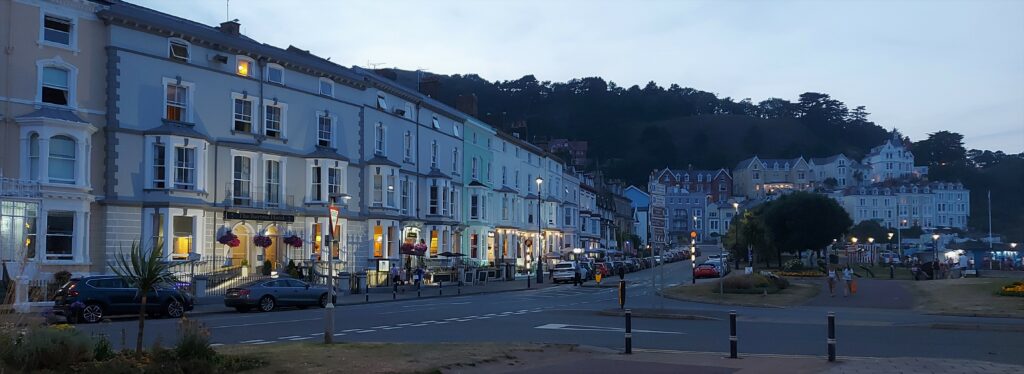
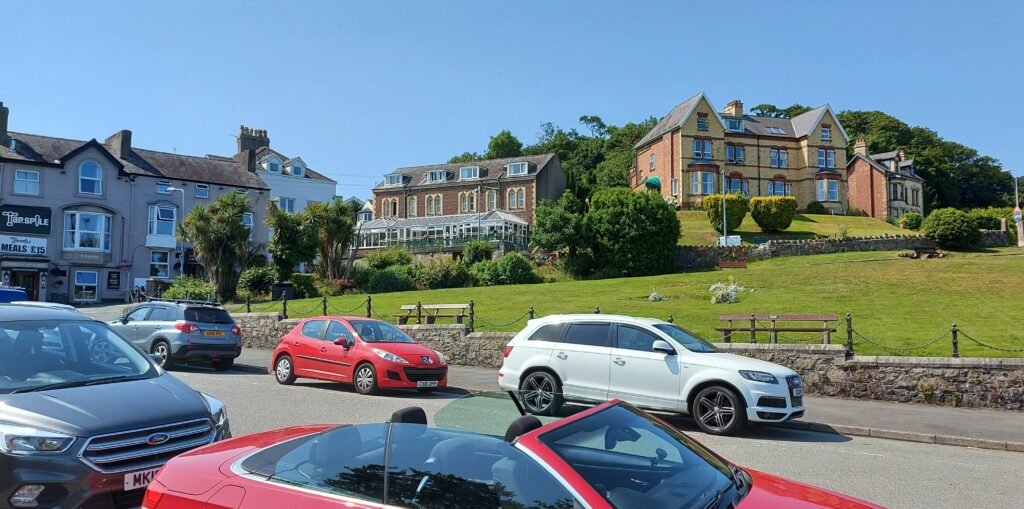
Llandudno is known as the largest seaside resort in Wales, local land owner Lord Mostyn set out to create a “holiday resort” between 1950 and 1912, building 3 or 4 storey terraces within a block design. The building heights are not allowed to exceed to street widths, creating wide tree lined avenues, bordered by Victorian style covered walkways. The retail side caters well for the numerous hotels, guest houses, apartments and B&Bs lined along the front.

Dylan's Llandudno

Post Lockdown Hugs at Porthmadog & Portmeirion

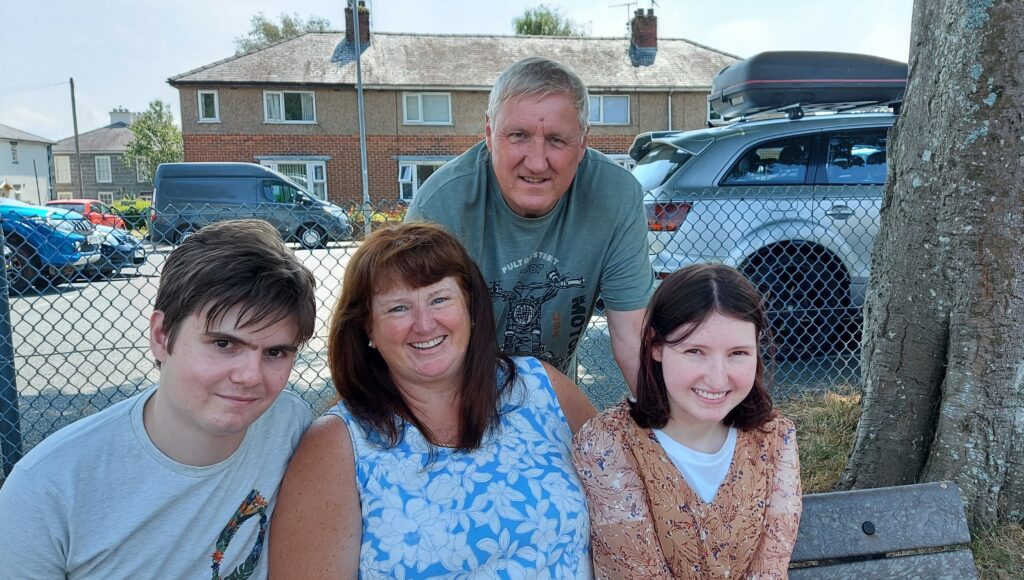
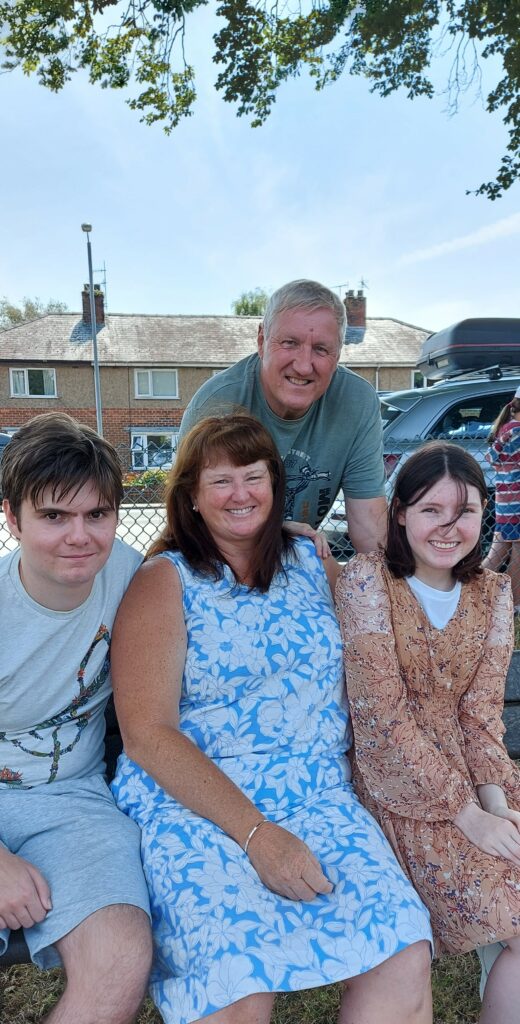
We had an hour’s drive out to surprise our niece’s children for a good hug post-lockdown and it was soooo lovely! Unbeknown to the children, we had pre-arranged to meet in a cafe on the High Street, the children didn’t know we were nearby or visiting so David went off to park the car and I hung around in the cafe. Our niece Carol and teenage daughter Libby arrived first, Libby was speechless and almost in tears, not sure if that was with pleasure or embarassment!

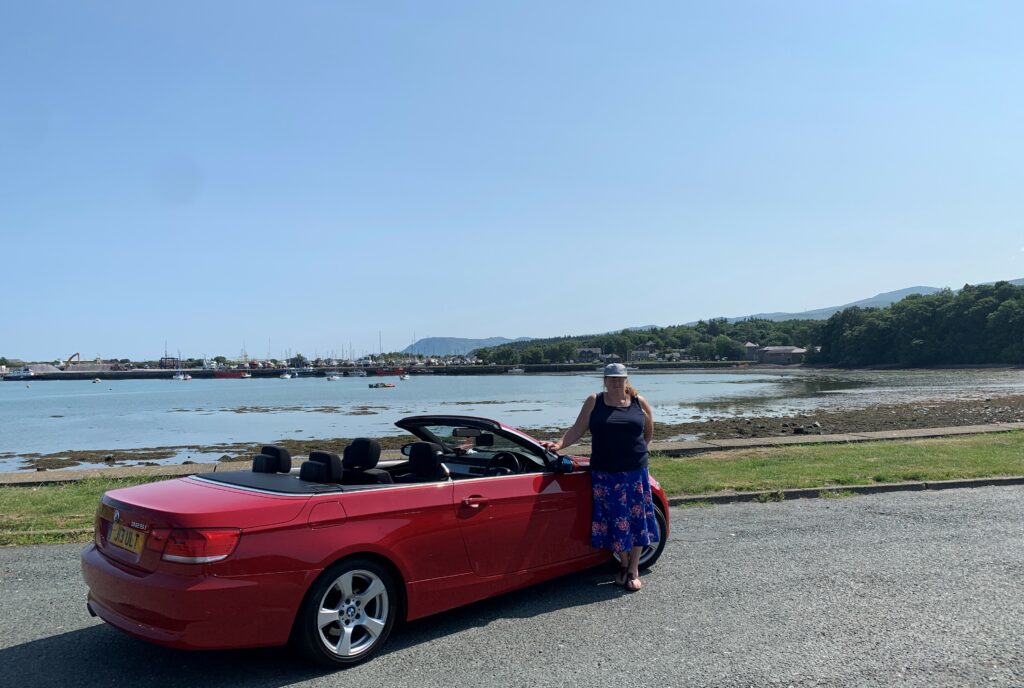
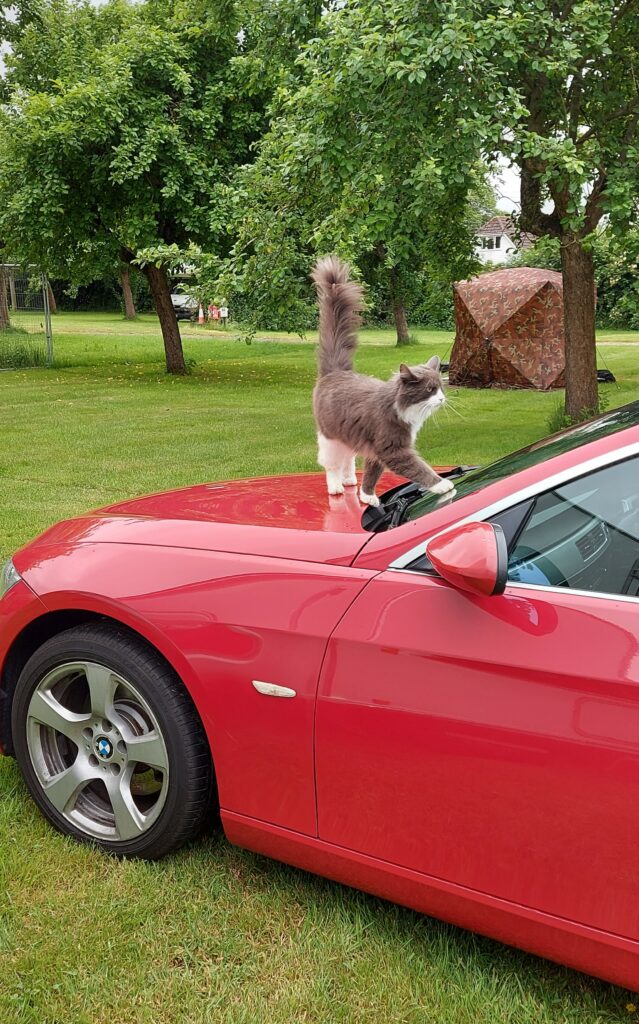
David had parked the car on the High Street, and dad Paul and son Jack walked right past Benny the BMW and didn’t notice David walking behind them!! Jack came into the cafe, and both him and I said at the same time “What are you doing here??” Lots of hugs and kisses later, we had a few hours with them all before they headed off south and we headed to Portmeirion for the afternoon, all loved up!

Portmeirion

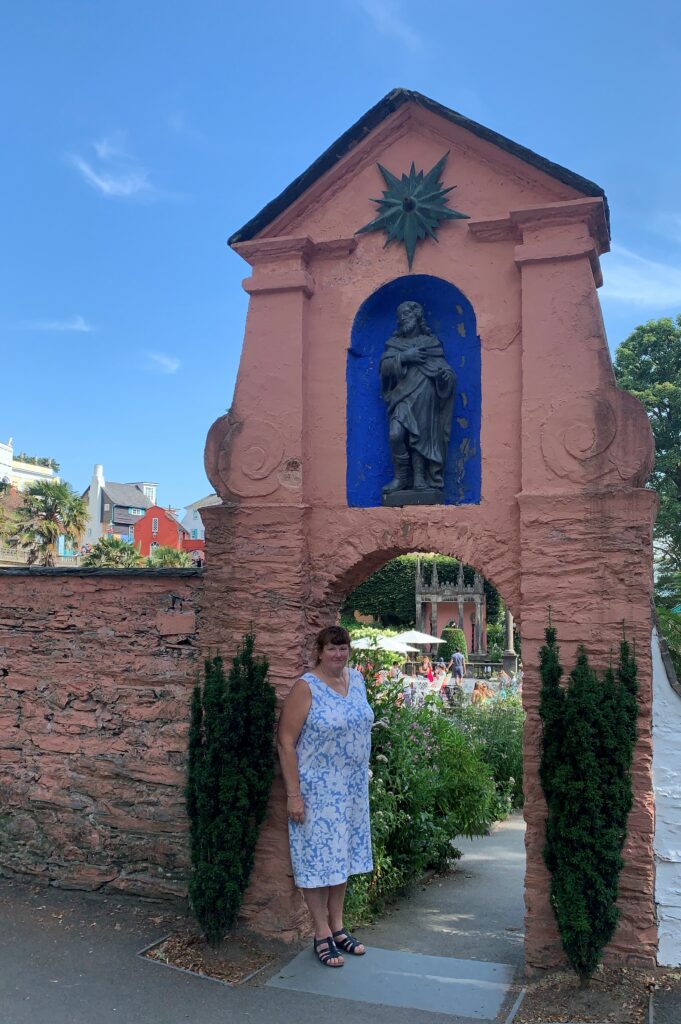
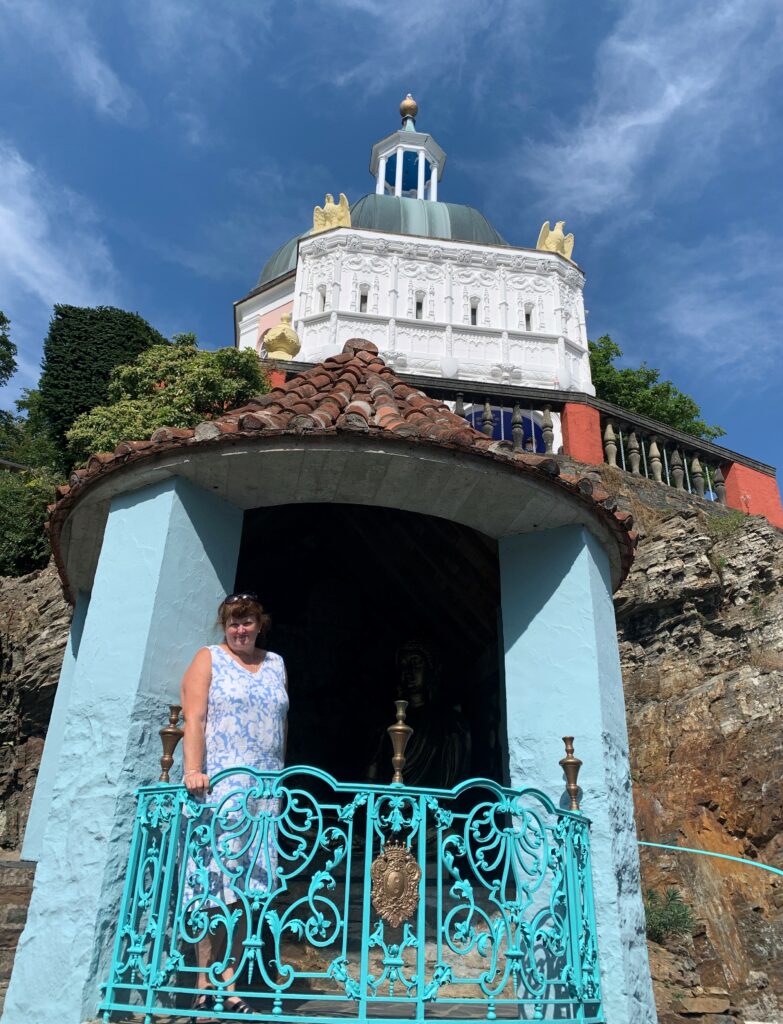
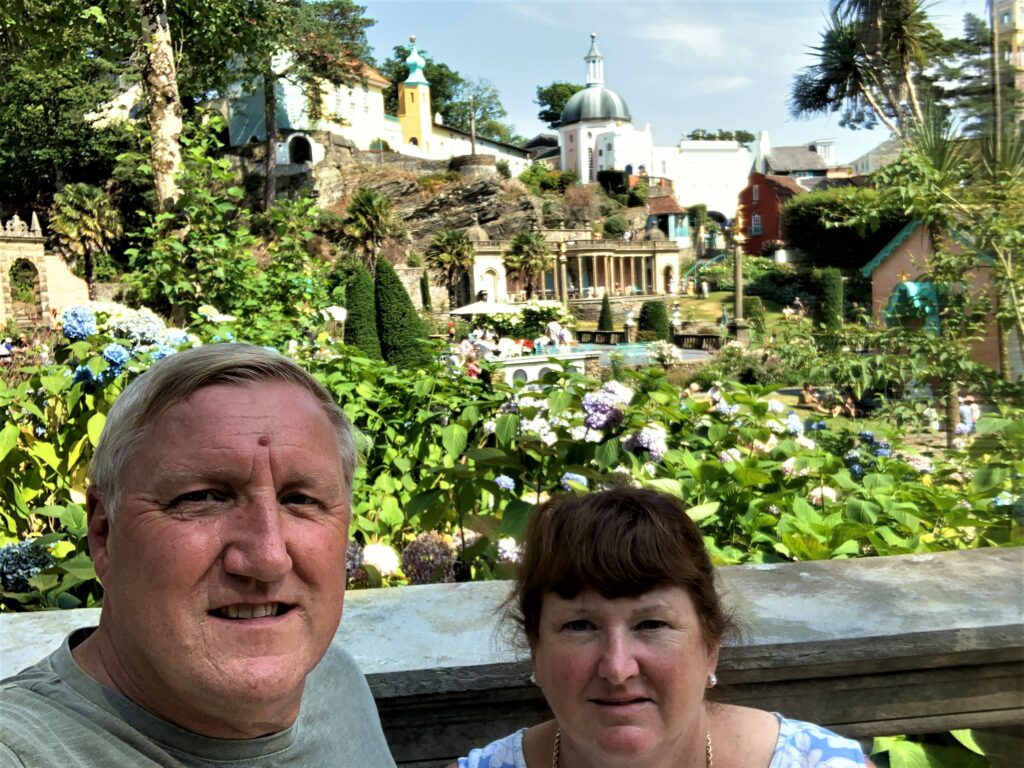
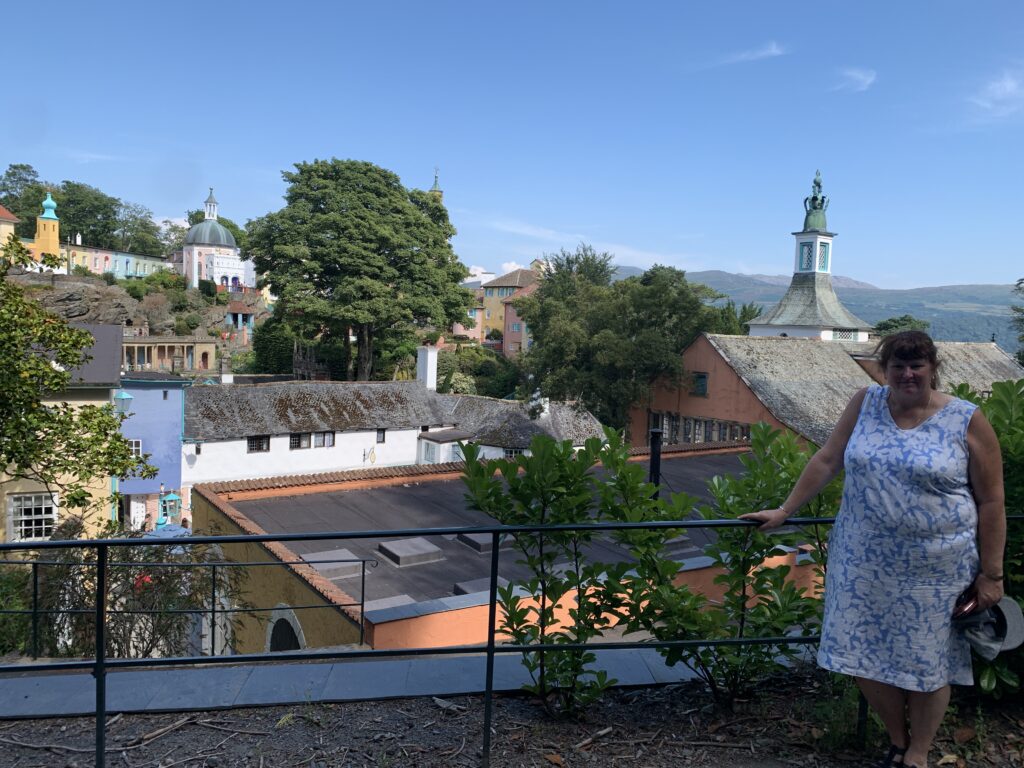
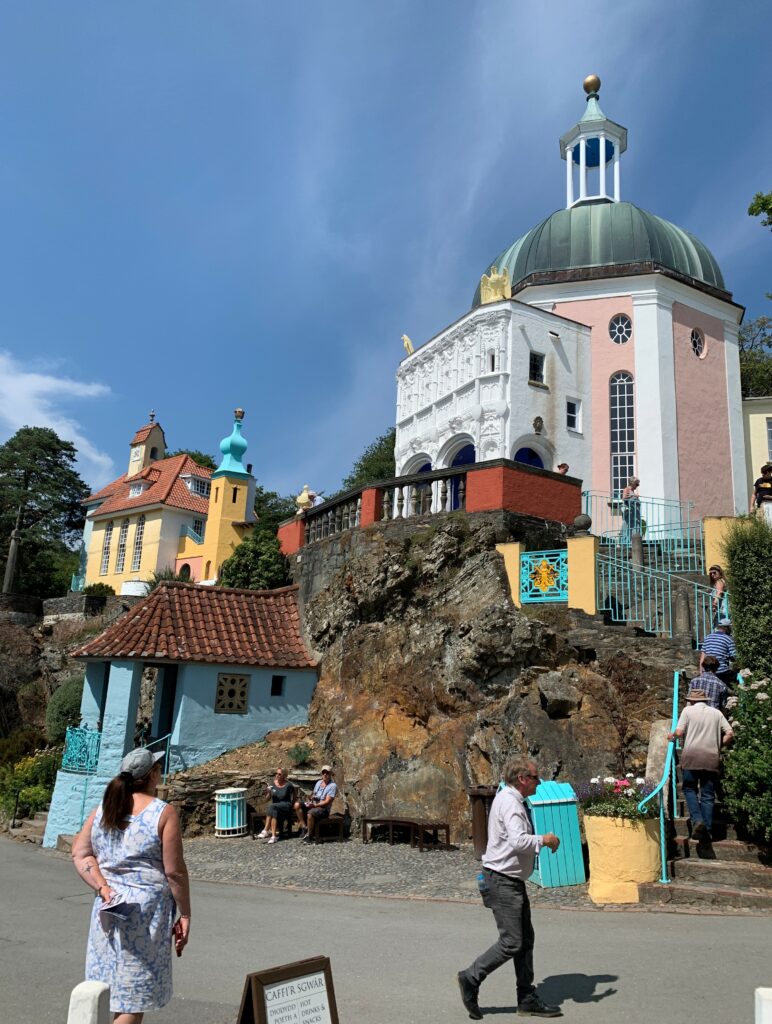
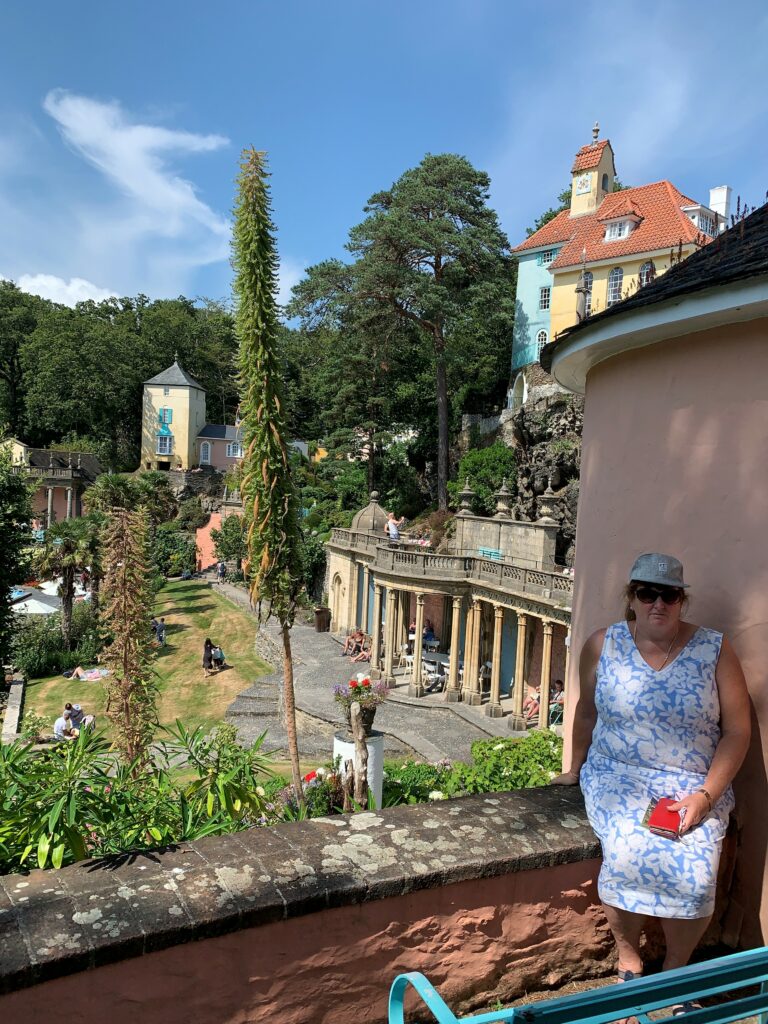
I recall taking my mother in law to this village years ago, just her, me and Caity aged about 6 or 7, so about 15 years ago!! I thought it was a quirky magical place then, we were there in October and walked around the grounds. It was the dream of one man who had an idea of how a village could be created for the past, current and future, taking advantage of the protected climate in a bay on the tidal Dwyryd estuary. It was designed and built by Sir Clough Williams-Ellis between 1925 and 1975 in the style of an Italian village.

And finally…… day turns to night

Benny says “Bora Da”

We decided to give Bessy and Benny some Welsh air and try to learn bit of Welsh language so we booked them into a campsite in Rhos on Sea, just outside Llandudno.

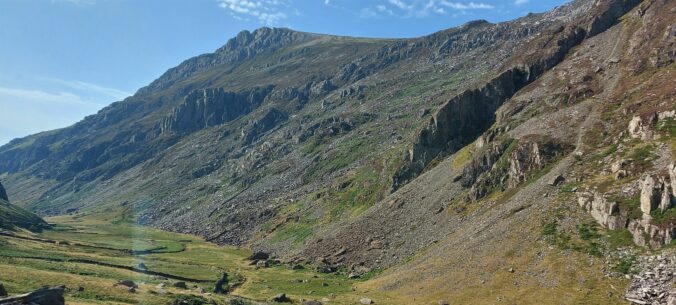
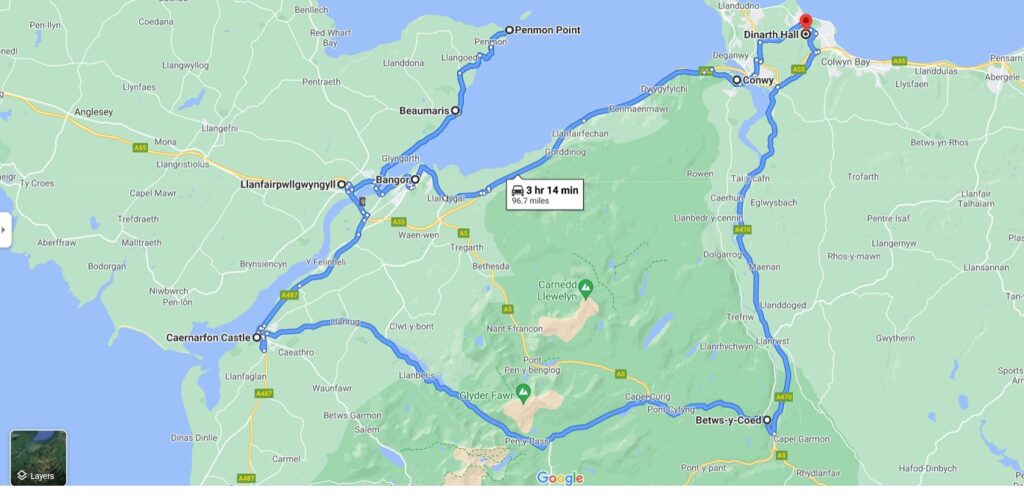
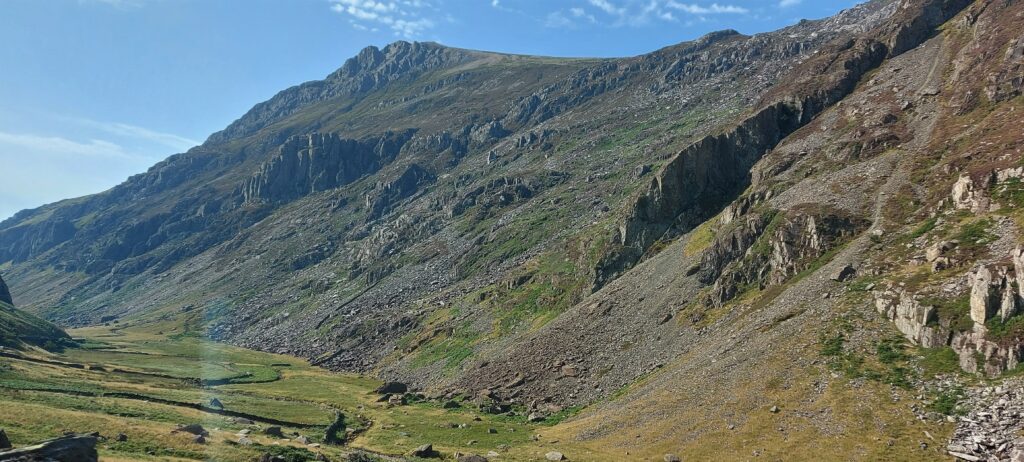
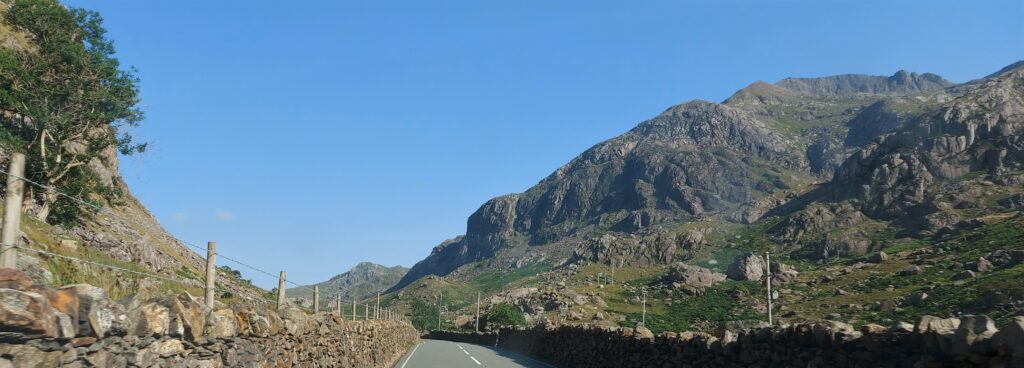
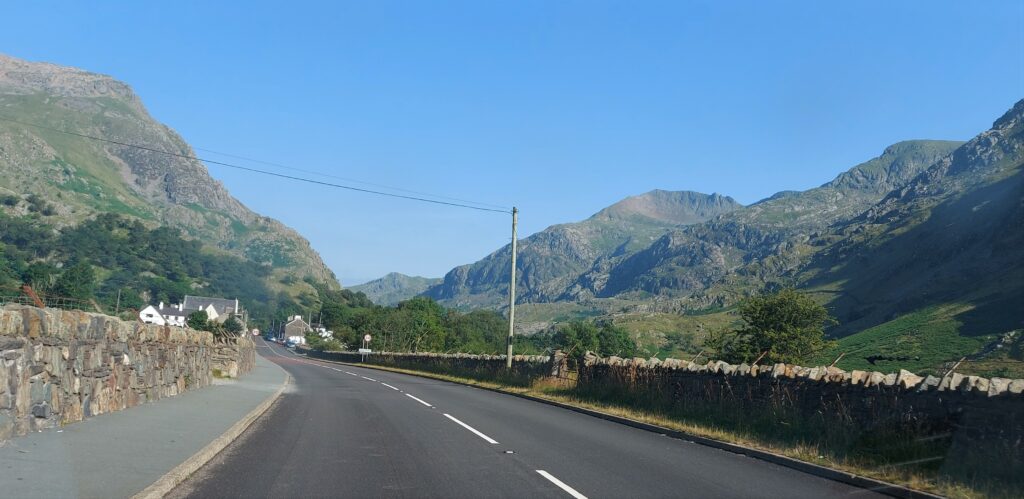
I say a campsite, but it was just a field on a working farm, but a great base to start touring. We had a day out with Benny and visited a few castles and Snowdonia National Park, 100 miles round trip with the top down was amazing on a lovely sunny day.

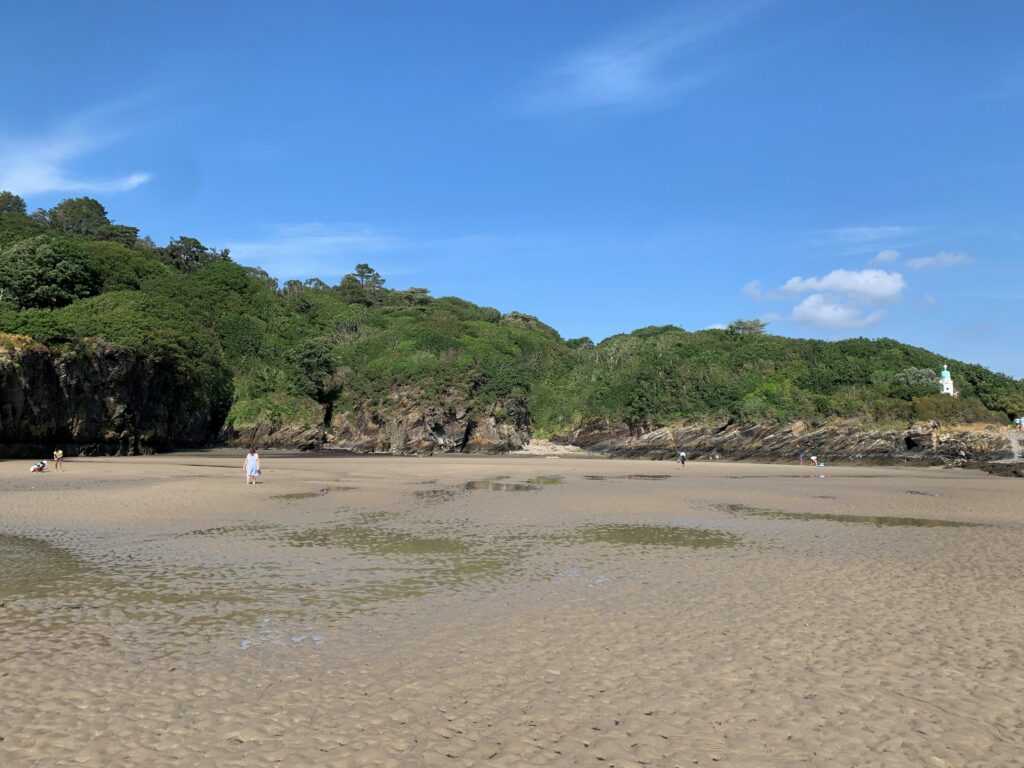
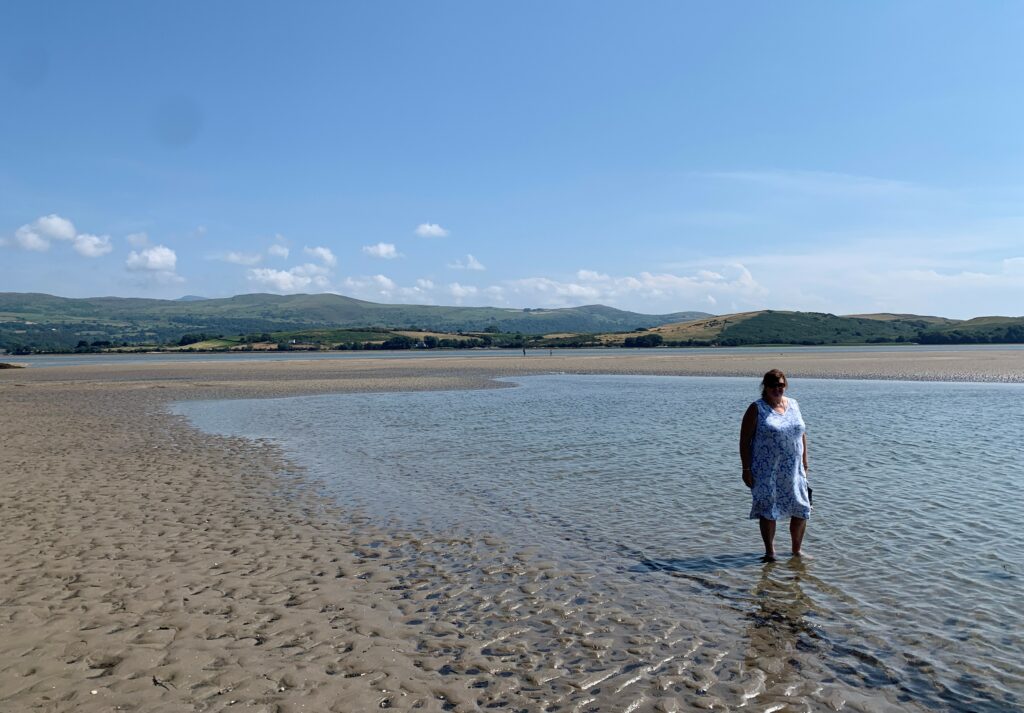
Another day out was a little further afield to Porthmadog for a surprise meeting with family and then to Portmeirion for an afternoon wandering the Italianate gardens, a paddle in the seawater pools then another beautiful drive back through the Welsh Mountains.

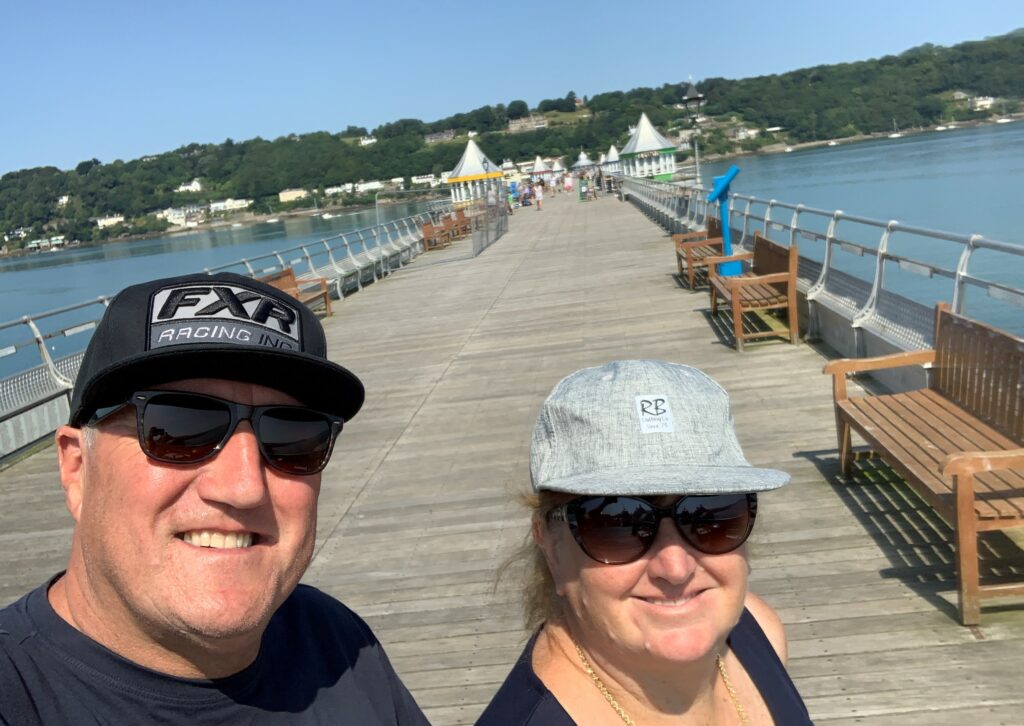
We’ve also spent some time in Llandudno itself, a pretty coastal resort with a long long pier!

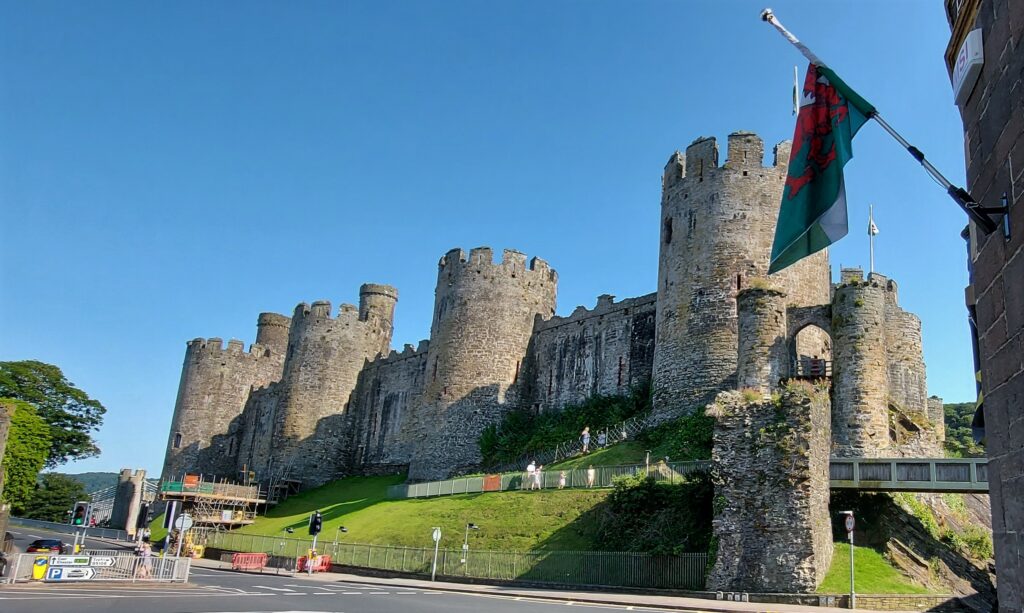
Our Castle Day – Conwy

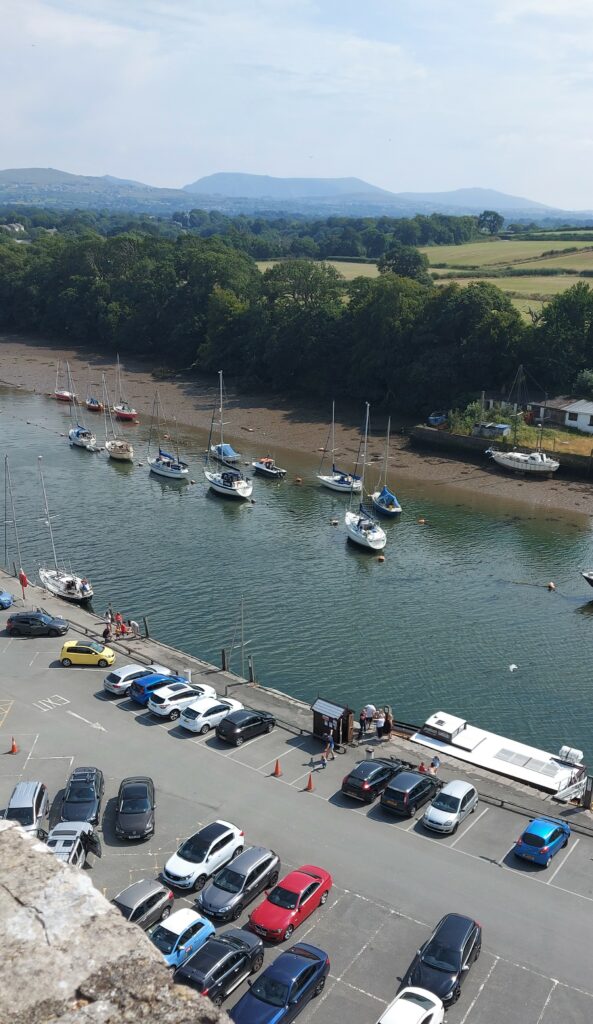
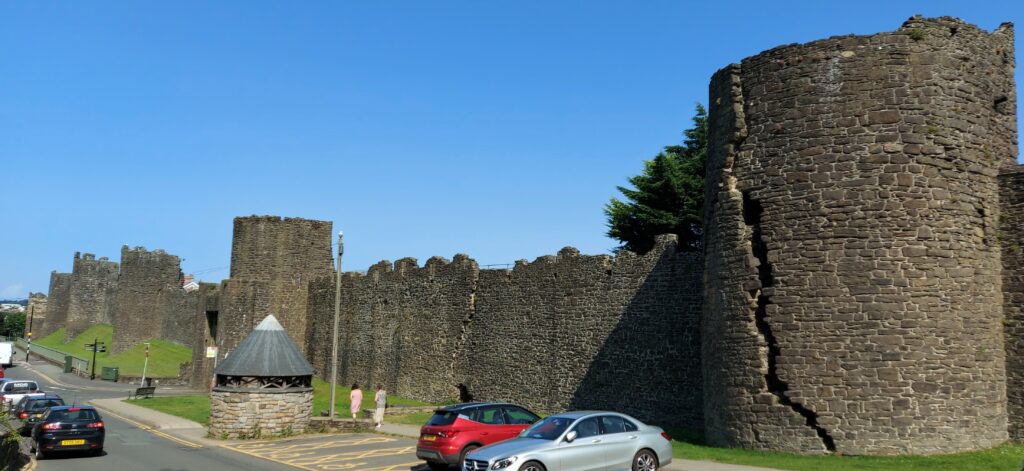
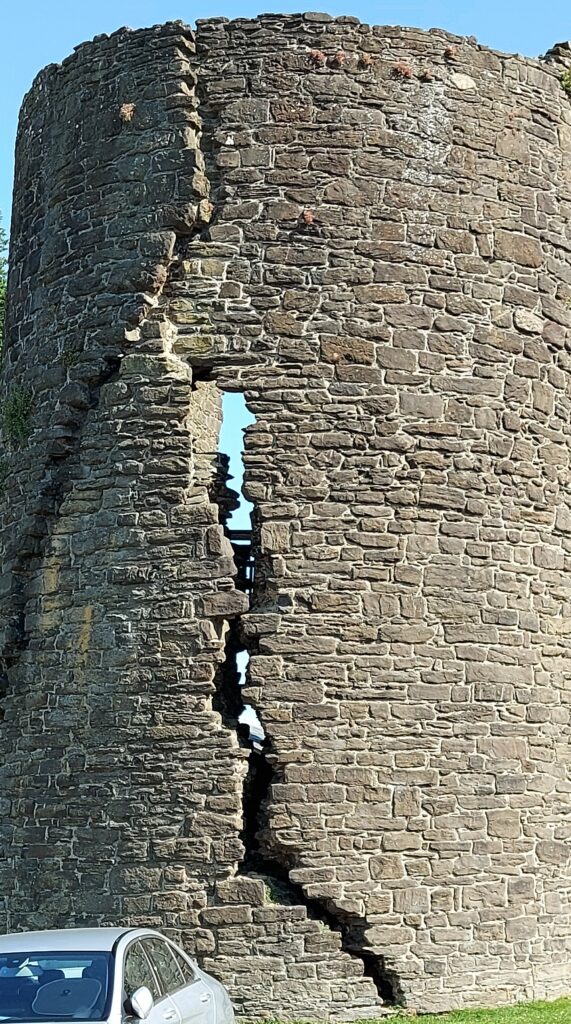
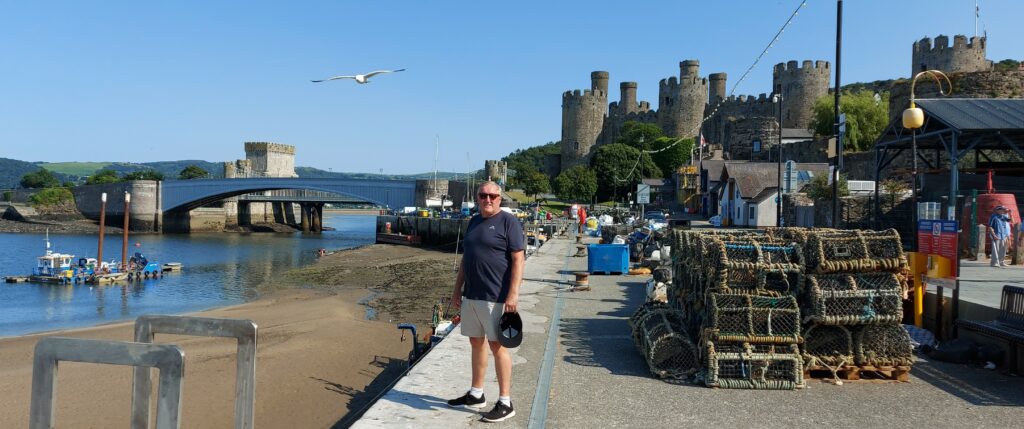
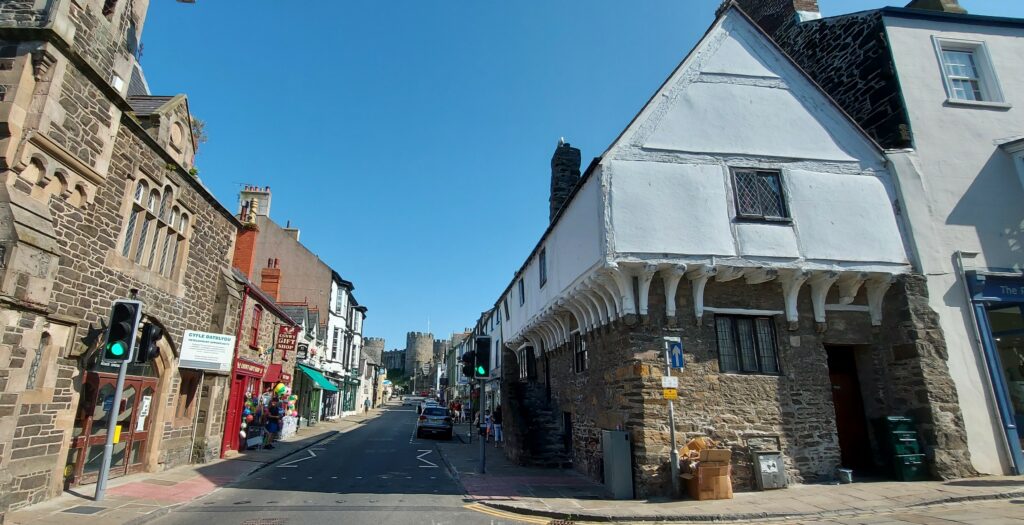
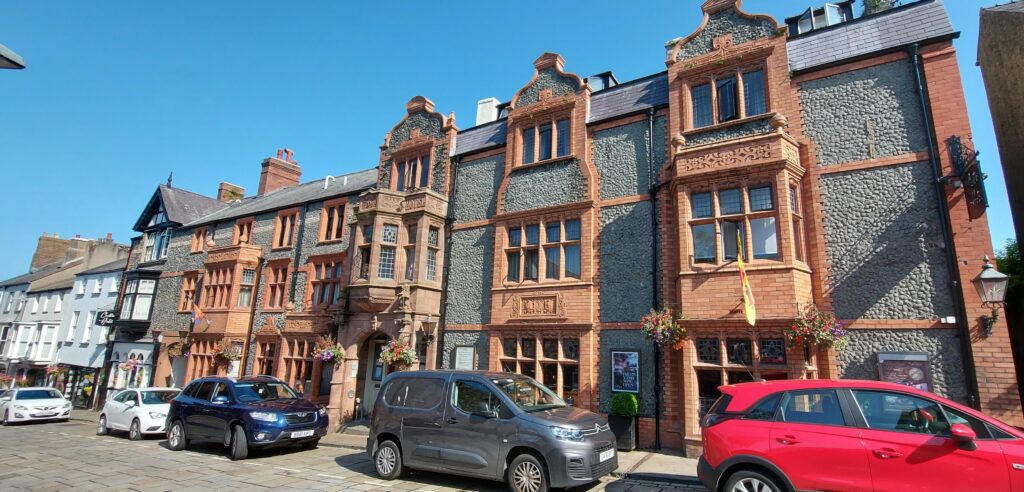
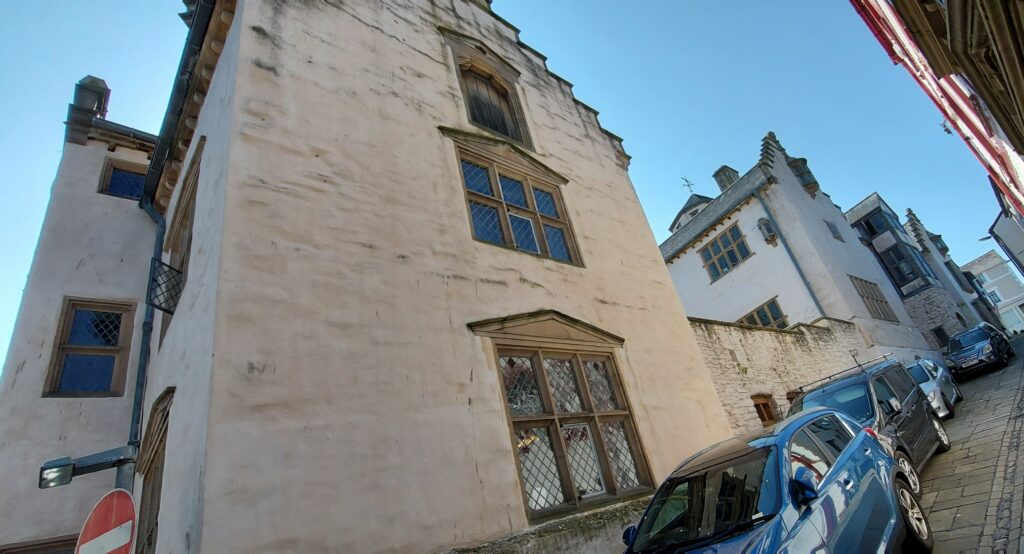
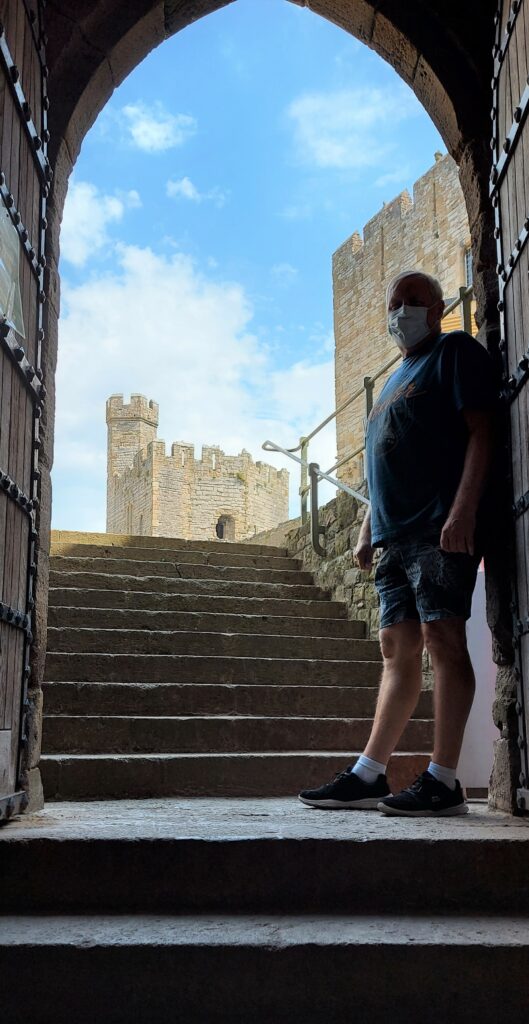
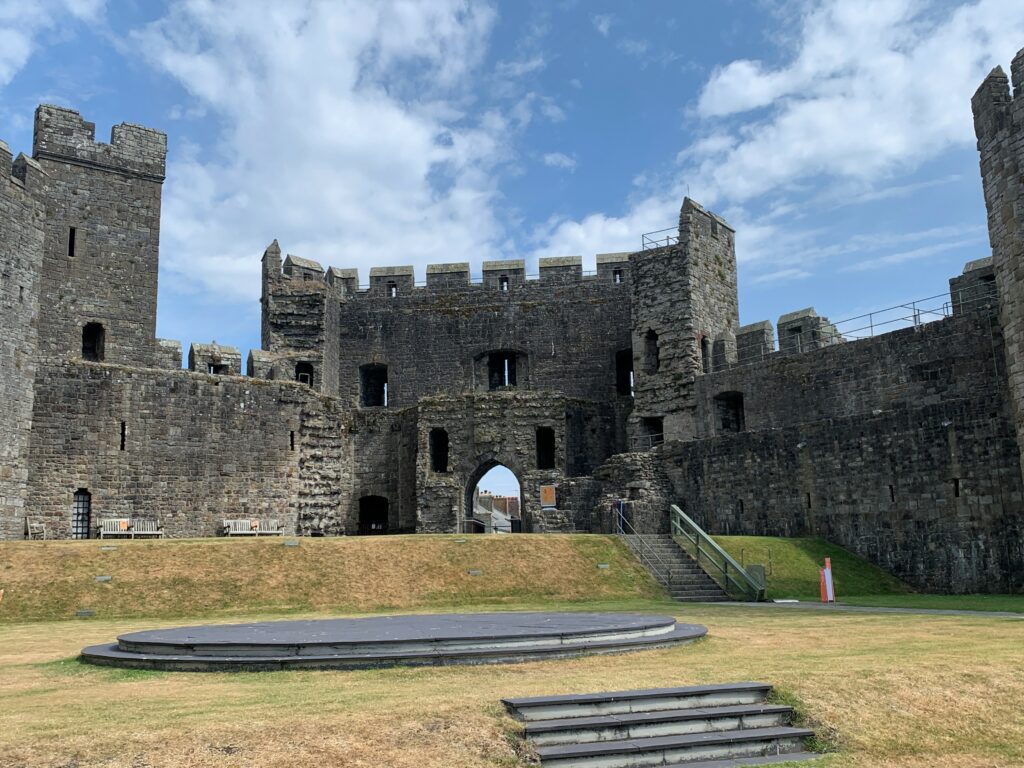
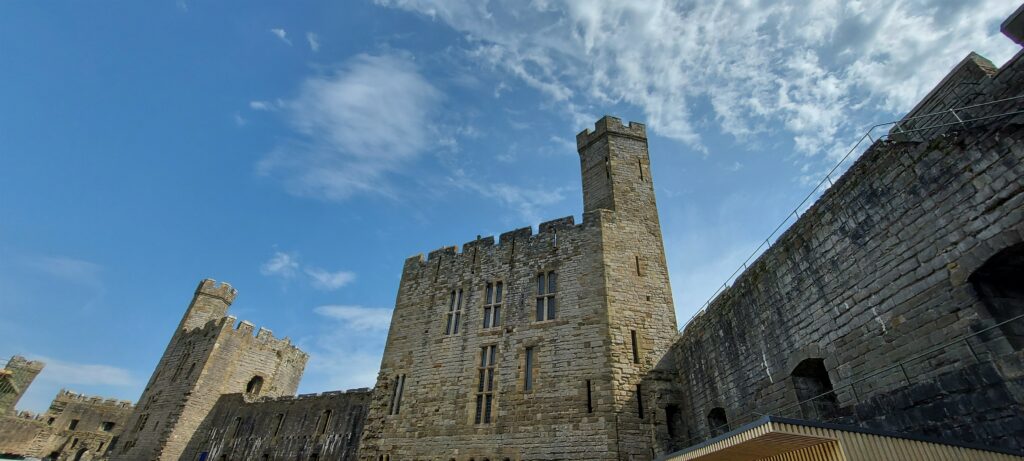
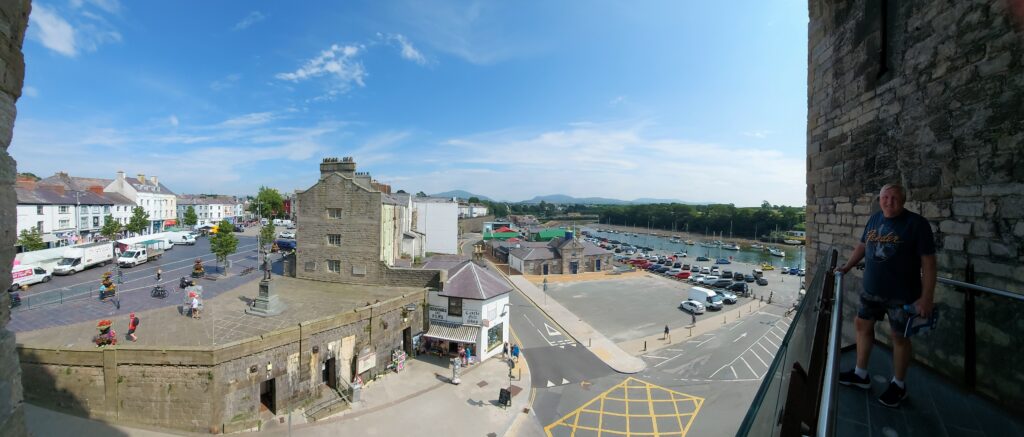
First stop was Conwy Castle, a complete walled city within the Castle walls. We walked around the inner streets, and had a quick look at the walls (which needed some attention in places!!) but it was far too hot to do the complete walk around the walls.

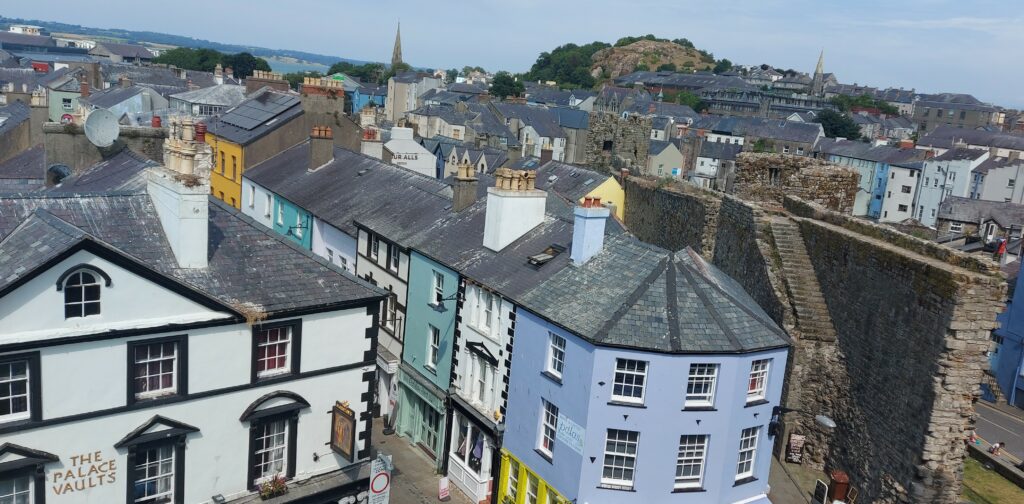
Its considered a fortress, built by King Edward I and his architect Master James of St George who built both castle and walls in a barely believable four years between 1283 and 1287. In the distance rise the craggy mountains of Snowdonia and spread out below are the small harbour and narrow streets of Conwy – still protected by an unbroken 1,400-yard (1.3km) ring of town walls. It has World Heritage status, along with 3 other castle in Wales.

Next Stop Bangor

This small cathedral city is known for so many things:

  1. being the oldest city in Wales
  2. it has the longest (retail) High Street in Wales at 1.265 km (0.79 mile)
  3. in 2021 has the world’s first non-binary (elected) Mayor – and at 23 years old, was the youngest Welsh Mayor ever elected.
  4. has the second longest pier in Wales, 460 metres.
  5. In 1967, the Beatles were in Bangor meeting the Maharishi Mahesh Yogi when they learned of the death of their manager Brian Epstein.
  6. Singer Duffy was born here in 1984.
  7. The town is mentioned in the Fiddler’s Dram 1979 hit single “Day Trip to Bangor”.

We headed down to the pier which looks across the Menai Strait towards Anglesey and admired the scenery. The pier was opened in 1893 and after several closures, mainly due to expensive repair costs, it was sold to the County Council in 1974, who gave it a Grade II Listed building status and secured its future. The British Listed Buildings inspector considered it to be “the best in Britain of the older type of pier without a large pavilion at the landward end”. Restoration work took place over several years, and the pier was re-opened to the public on 7 May 1988, however it’s now in need of more work……

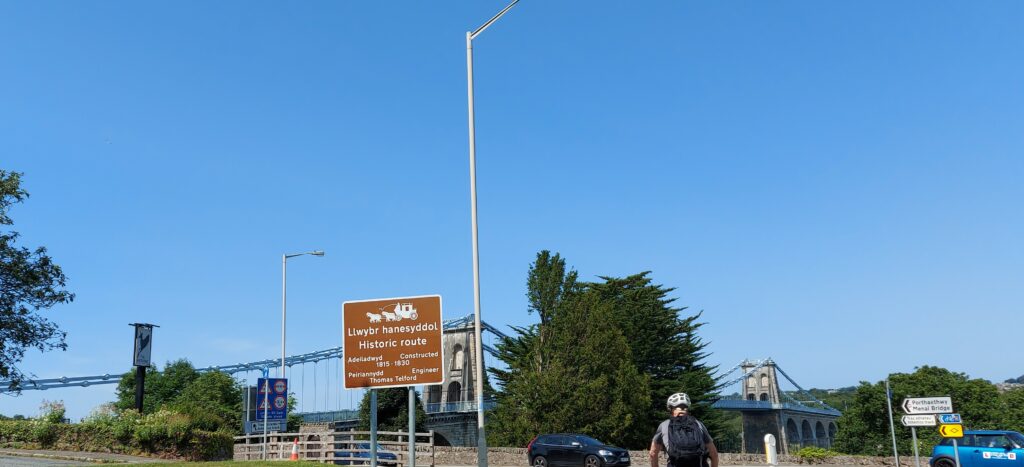
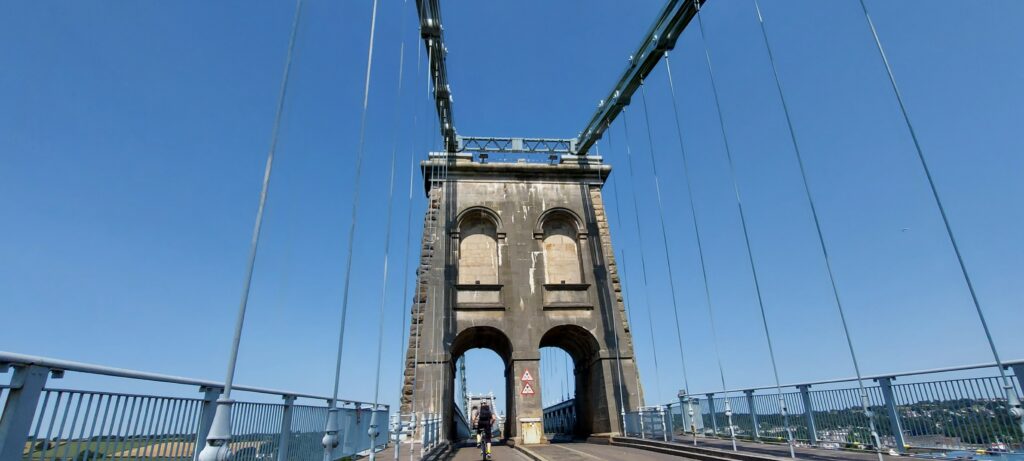
We crossed the Menai Bridge into Anglesey

Anglesey – Beaumaris and Penmon Point

We landed in Anglesey and turned right, towards the Eastern point of the Island.

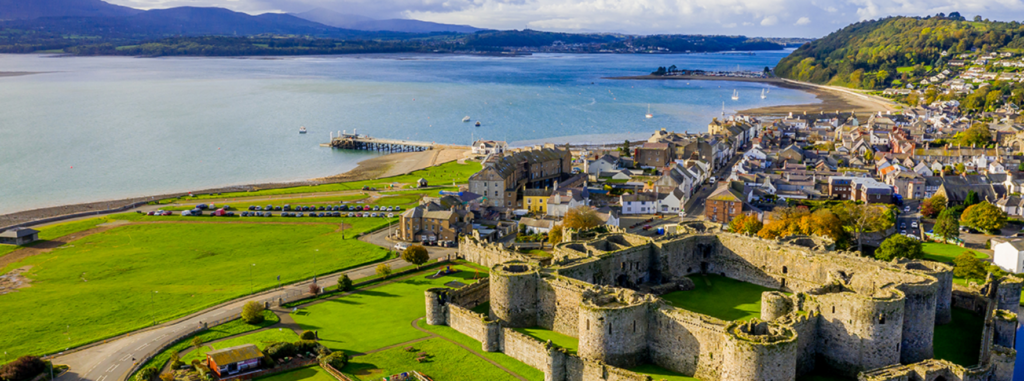
Beaumaris is a small seaside town full of cafes, restaurants and take aways, all catering for the visitors to the castle.

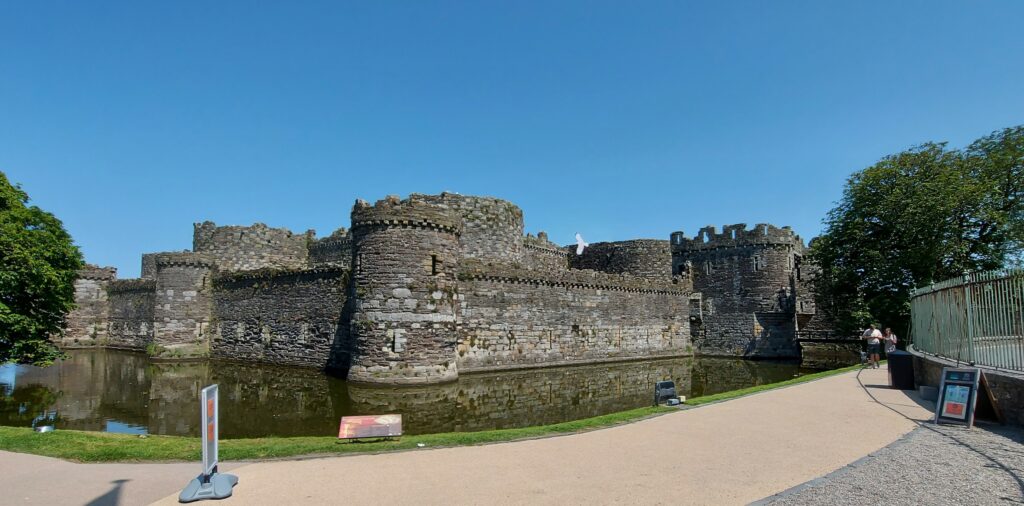
Beaumaris Castle is famous as the “greatest castle never built” . It was the last of the royal strongholds created by Edward I in Wales – and perhaps his masterpiece.

Here Edward and his architect James of St George took full advantage of a blank canvas: the ‘beau mareys’ or ‘beautiful marsh’ beside the Menai Strait. By now they’d already constructed the great castles of Conwy, Caernarfon and Harlech. This was to be their crowning glory, the castle to end all castles.

The result was a fortress of immense size and near-perfect symmetry. No fewer than four concentric rings of formidable defences included a water-filled moat with its very own dock. The outer walls alone bristled with 300 arrow loops.

But lack of money and trouble brewing in Scotland meant building work had petered out by the 1320s. The south gatehouse and the six great towers in the inner ward never reached their intended height. The Llanfaes gate was barely started before being abandoned.

So the distinctive squat shape of Beaumaris tells of a dream that never quite came true. Still it takes its rightful place on the global stage as part of the Castles and Town Walls of Edward I World Heritage Site.

Because this castle is special – both for the scale of its ambition and beauty of its proportions. Gloriously incomplete Beaumaris is perhaps the supreme achievement of the greatest military architect of the age.

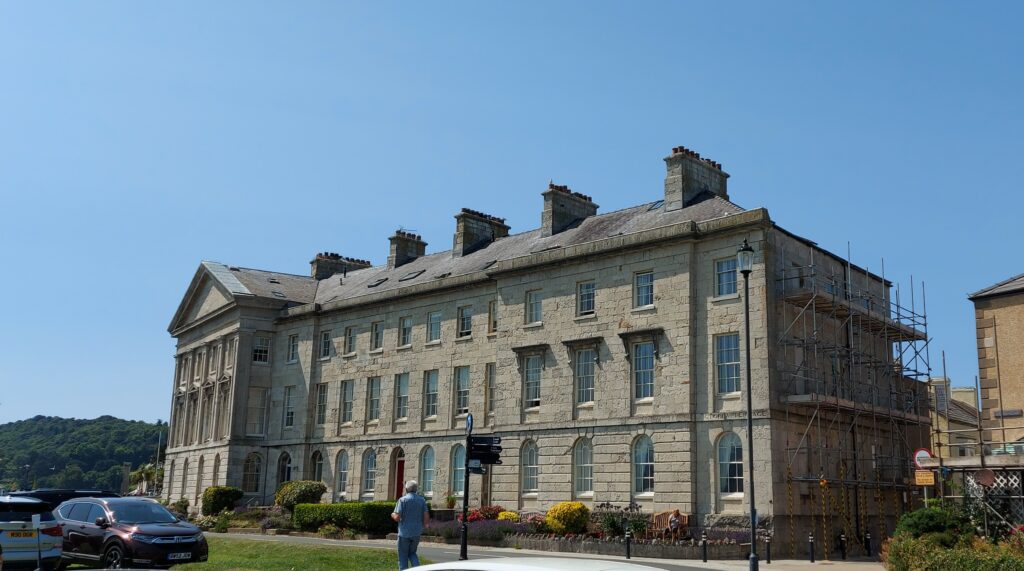
A huge imposing building, looking out onto the Estuary was built by Joseph Hansom and Edward Welch, architects of York, and completed in 1833, for the Corporation of Beaumaris. The terrace was the centrepiece of a plan to regenerate the declining port of Beaumaris by creating a fashionable resort. Now it is a Grade 1 Listed Georgian property with several large residential “town houses” and holiday accommodation.

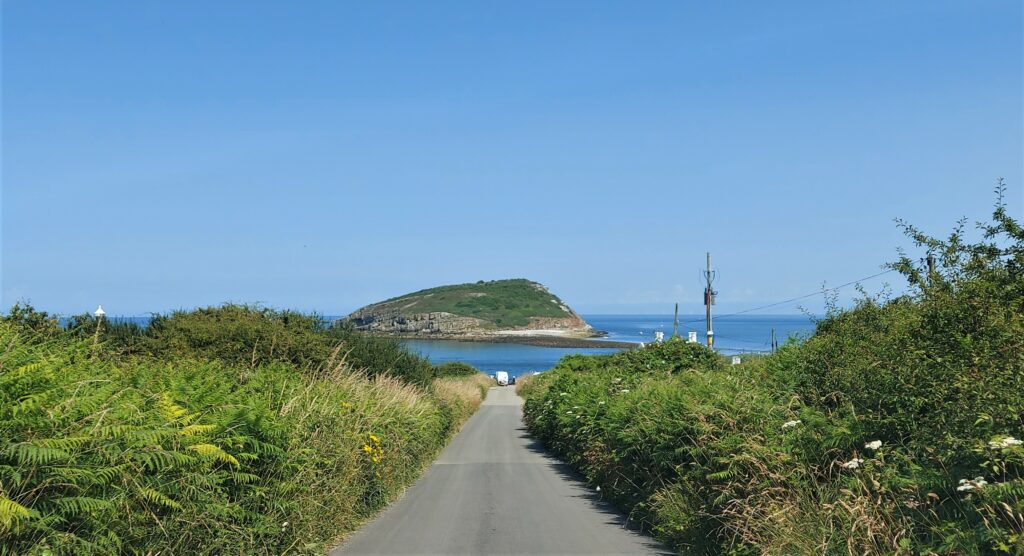
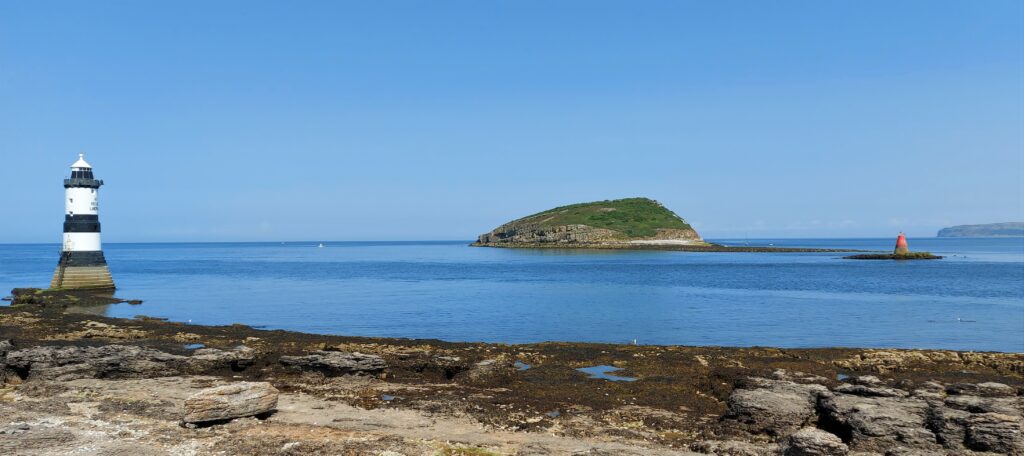
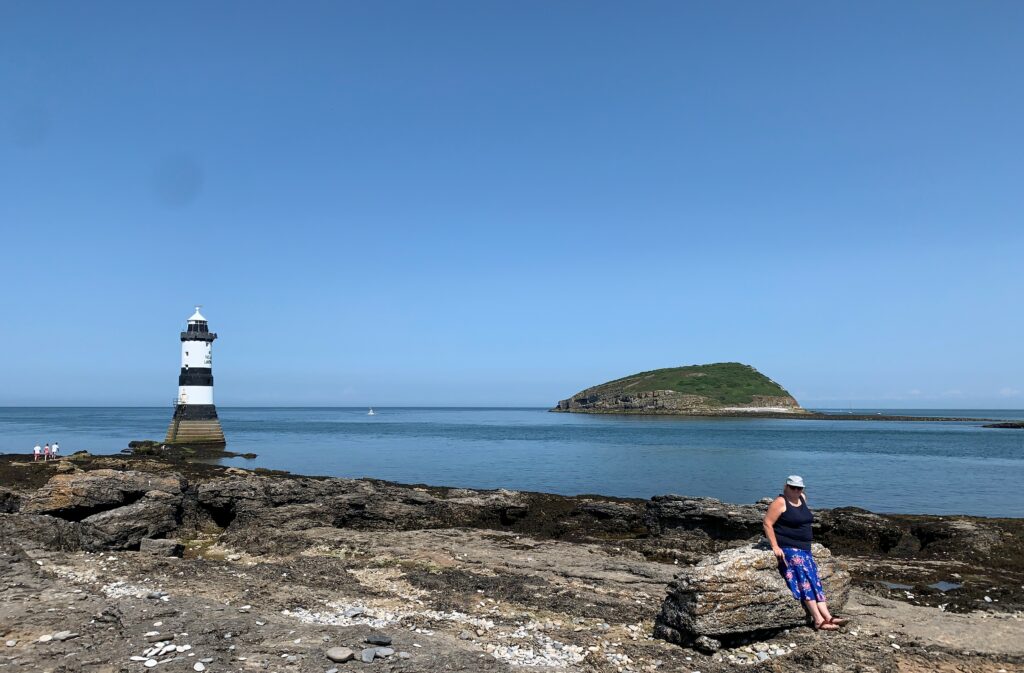
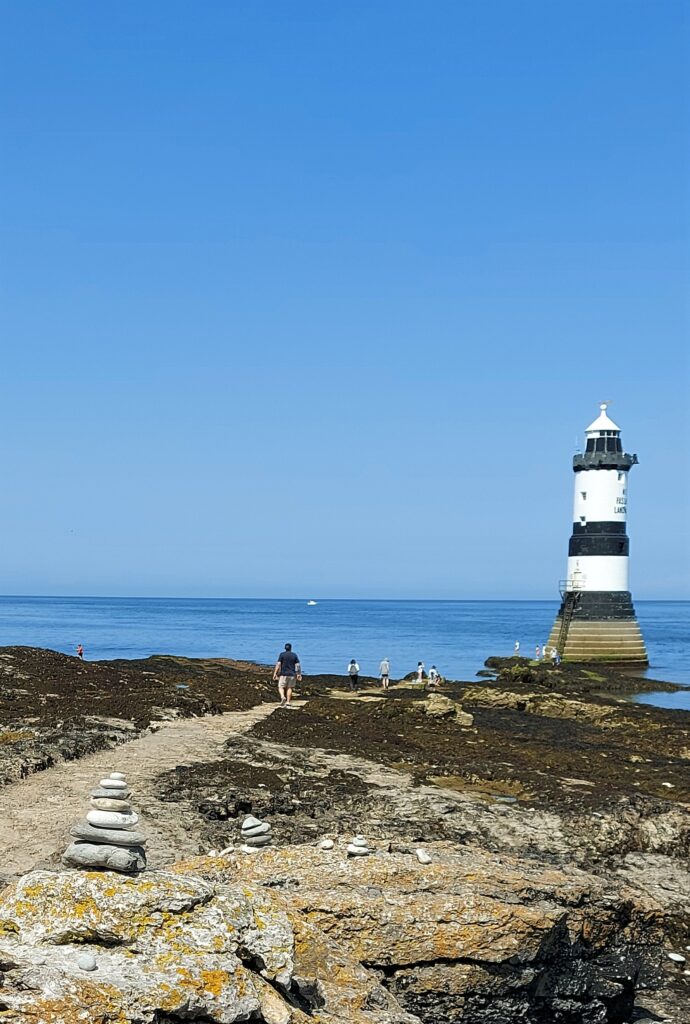
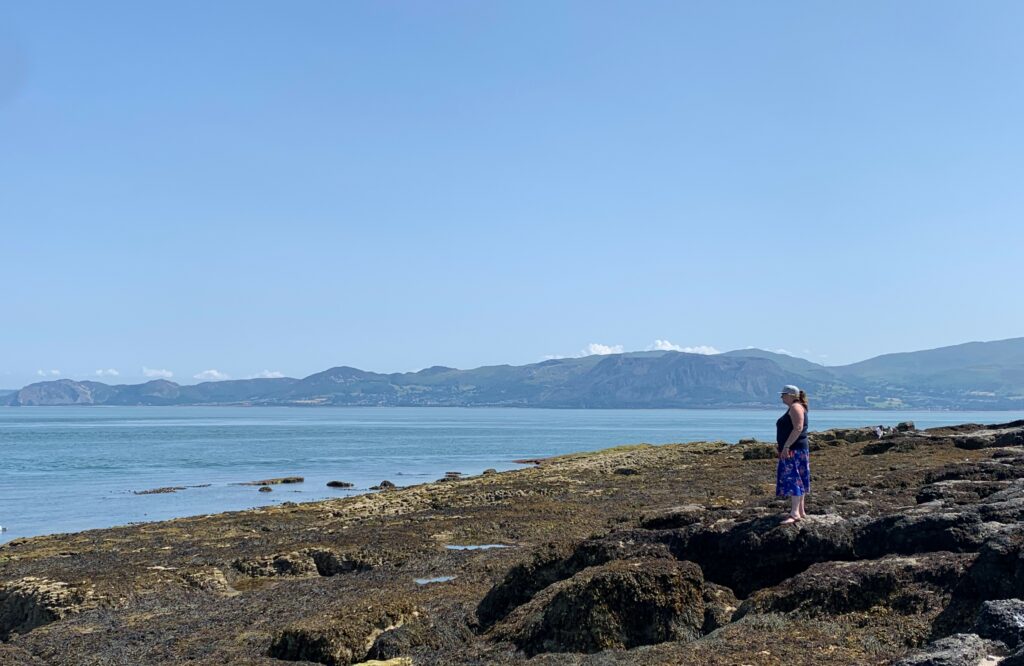
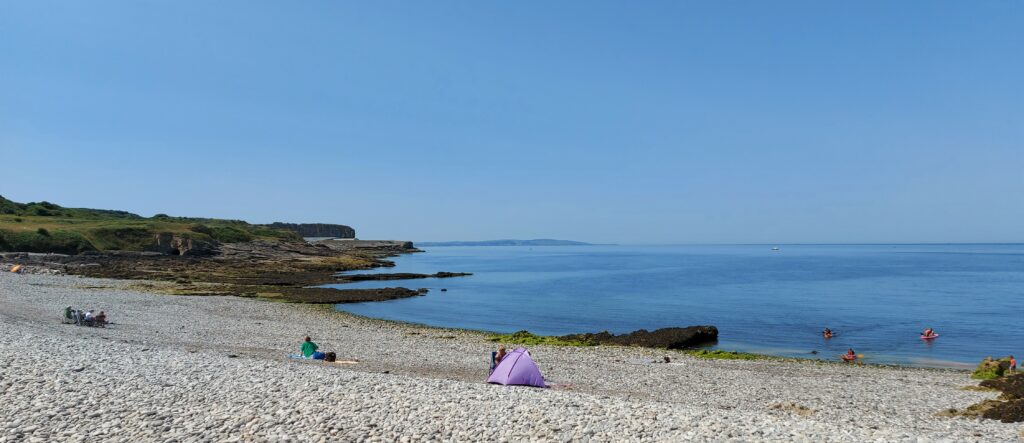
Traditional fish and chip lunch over, we headed out to Penmon Point, the most Easterly point of Anglesey. Locally known as Black Point, it is home to one of Anglesey’s 5 lighthouses and Puffin Island, in the 6th century the island was home to a monastery, now it is just a bird and animal sanctuary.

Llanfairpwll…….. OK I give up!

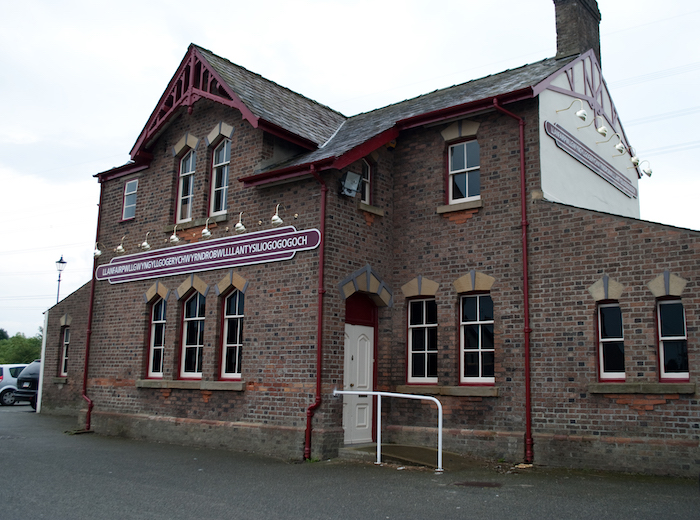
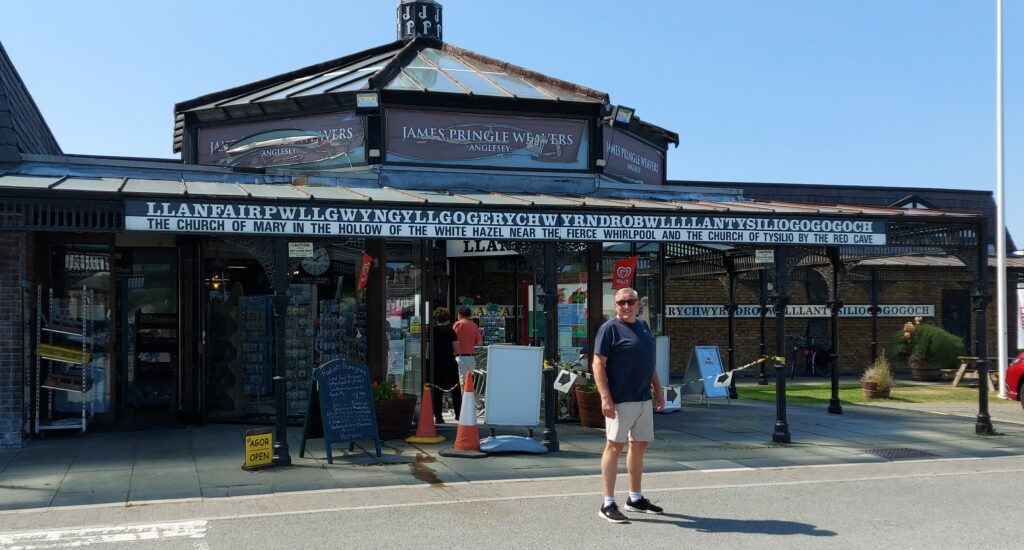
We doubled back through Beaumaris and went to the town with the longest name in the world – 58 charachters!!

The full name is Llanfairpwllgwyngyllgogerychwyrndrobwllllantysiliogogogoch, which was created so its railway station would have the longest sign in the country—in the mid 1800s. It means “St. Mary’s Church in the hollow of white hazel near a rapid whirlpool and the Church of St. Tysilio near the red cave.”

Been there!

Caernarfon Castle

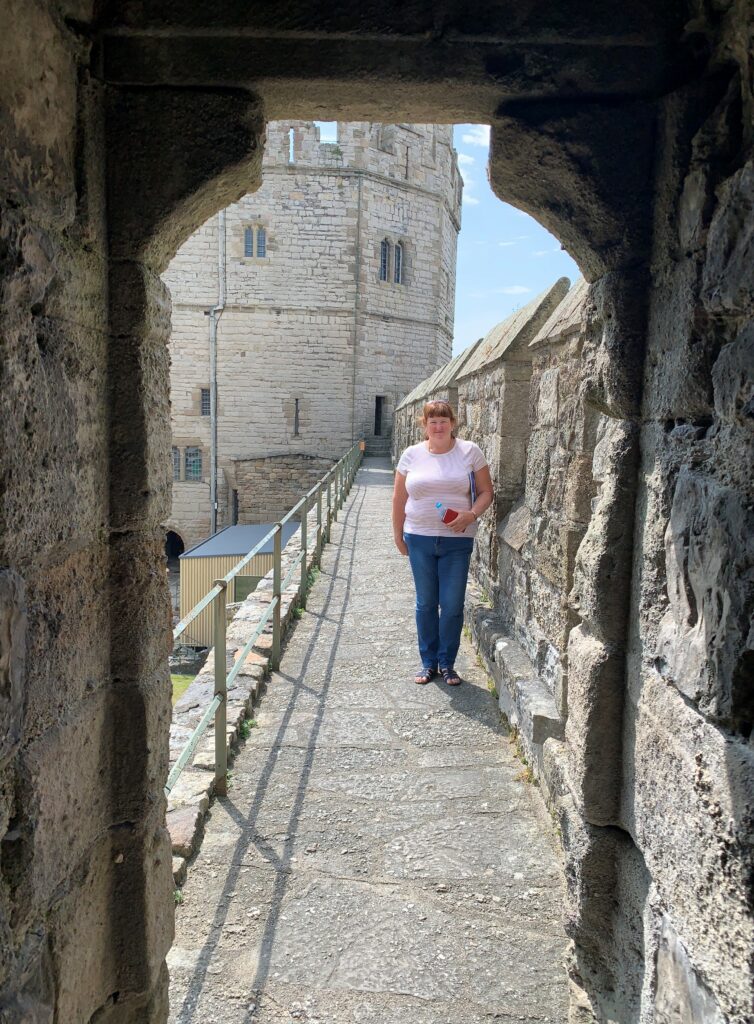
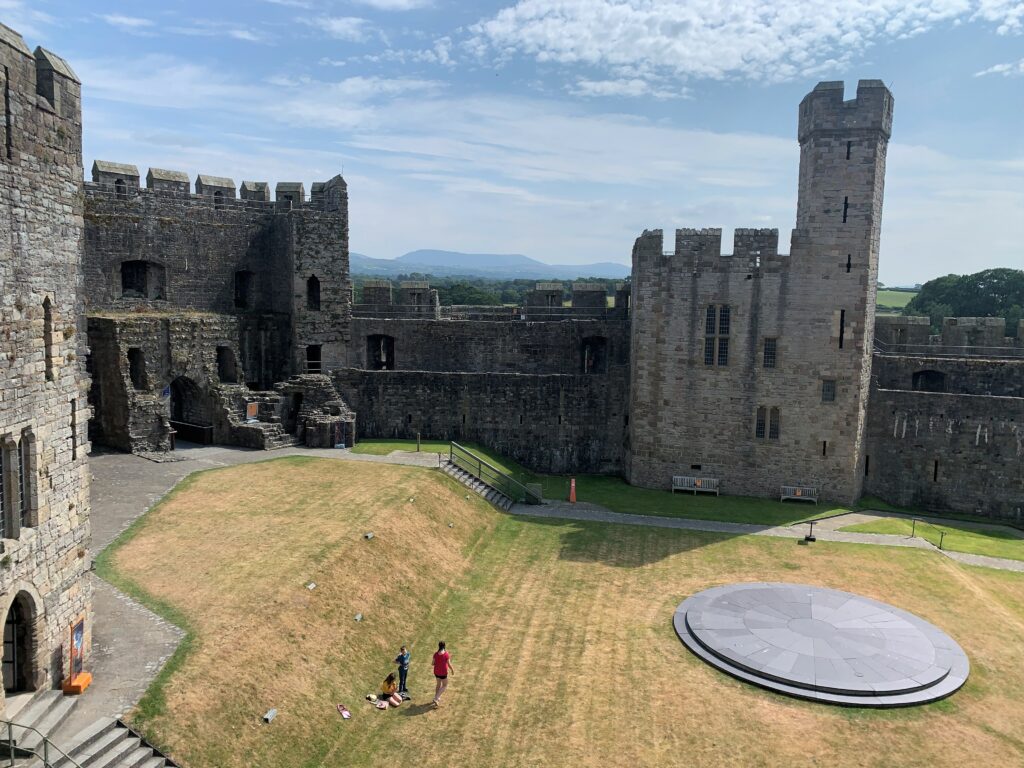
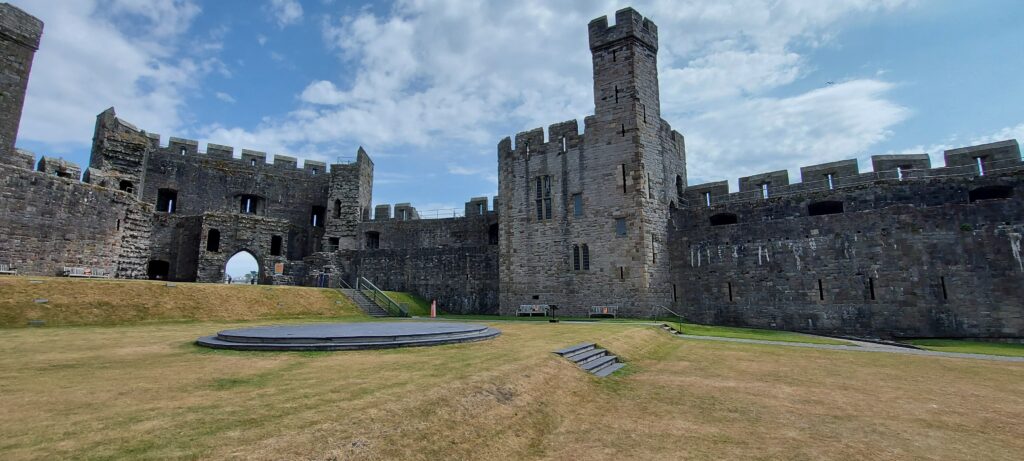
We returned to the mainland and turned right, heading to Caernarfon Castle. Being the place where Prince Charles was inaugurated in 1969, we thought we would book the tour of the castle, expecting it to be full of historic artifacts. We were disappointed, it’s an outline of the building, with only a museum for the Welsh Fusiliers.

The small market town was also disappointing, very run down with lots of charity shops. However, it’s one ticked off the list, Caernarvon Castle.

We then took a slow drive thrugh the Snowdonia National Park and realised why we loved living in Wales, it’s green, lush, sparkling, colourful, beautiful!

After a long day out, we returned back at Bessy tired but in awe of the Welsh beauty!

Bessy visits Devon and Somerset

After a few weeks of down sizing, from Samson to a 2 bedroomed flat and then to a caravan, we were ready to set off! Space is not something we can say Bessy has plenty of but we managed to pack away summer and winter clothes, an awning, laptop and some family tree paperwork (just in case I needes something to do!).

After negotiating A1M diversions and then the M25, we arrived mid afternoon in Abbey Wood, South London. Surprisingly, the warden asked if we had been before, he remembered me! I said “yes but in a 5th wheel!” Fame at last!!!

Stop 1 of our new travels was a short stay in Kent to meet up with friends, Angela and I had a good chat and David and Peter had a good drink!! Peter is a whisky man and David is a bourbon man so they used the evening to test a Welsh whisky that had been finished in bourbon barrels, given to David by his niece. This was compared to a Scottish whisky, and an American bourbon, so a good night followed a delicious BBQ.

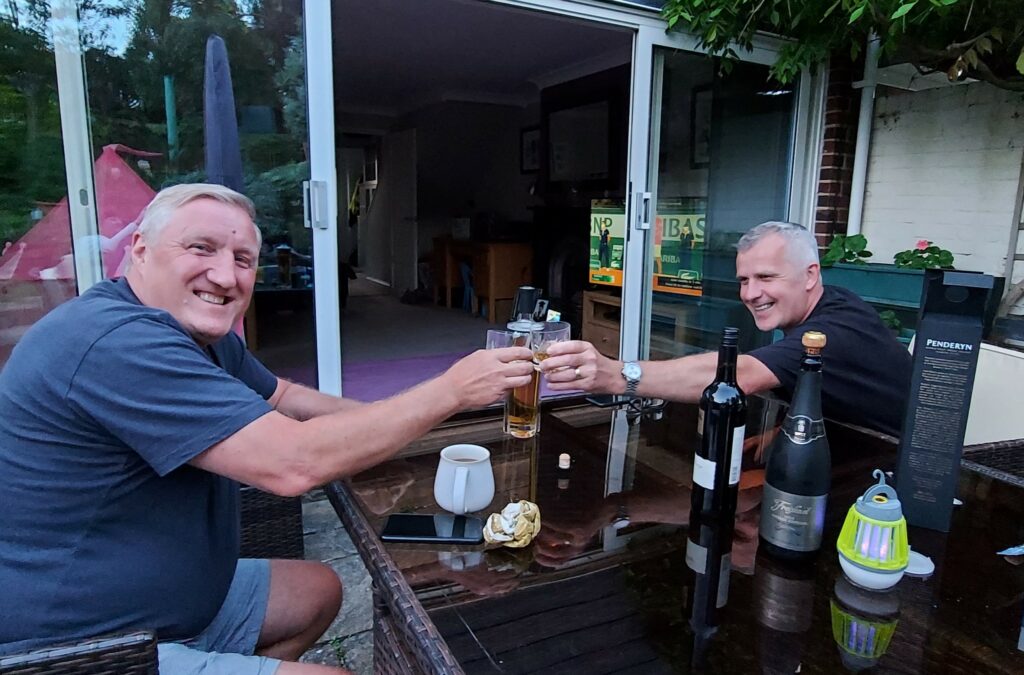
Cheers me dears!

Stop No 2 was at Chertsey right on the River Thames. On Saturday we visited a local riverside hostelry for a refreshing glass of something before returning to the campsite, which was full of weekend campers trying to offload kids, unpack and put up tents, feed kids, sleep then pack it all away the next day! Very stressful watching!

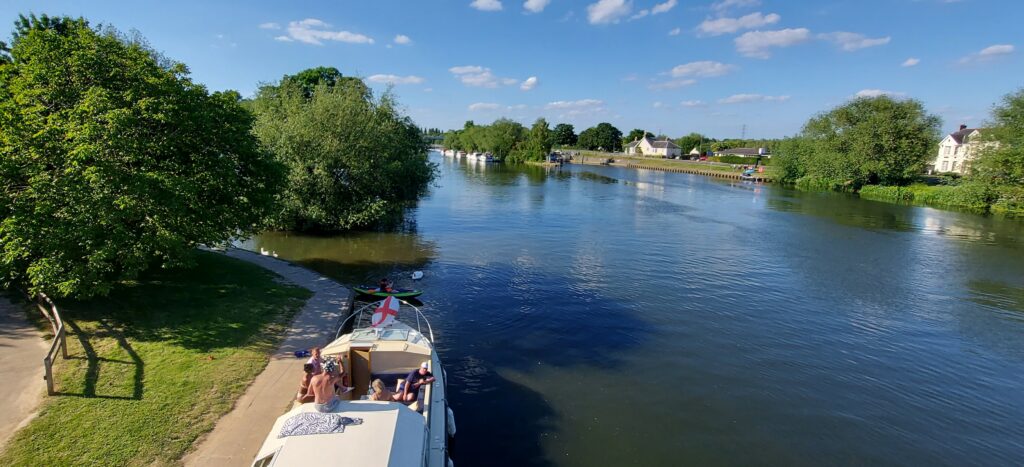
Our riverside views.

Sunday was a gloriously sunny day, we noted the skies above were devoid of airplanes from 11.00am onwards – realised that President Boden was due to visit Queenie in Windsor that afternoon, dropping in for afternoon tea, so they must have cleared the skies for his helicopter to land without any bother!

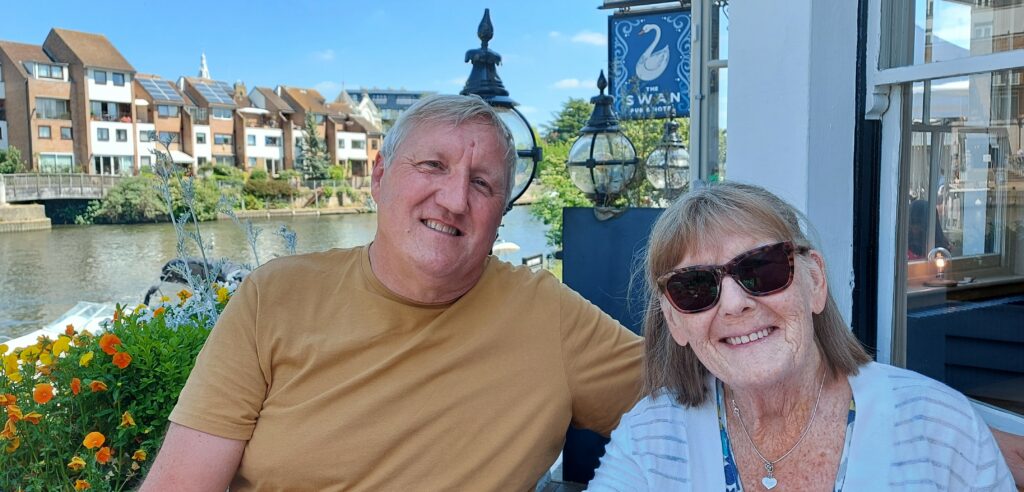
We had a lovely catch up and long lunch in a riverside pub in Staines before returning to our abode for the night.

Sandra & David
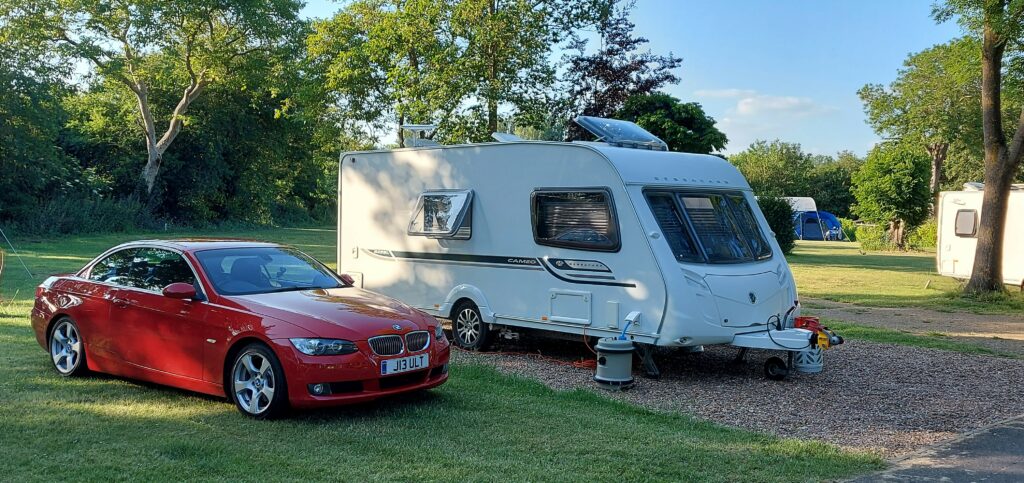
Benny & Bessy in Sunny Chertsey

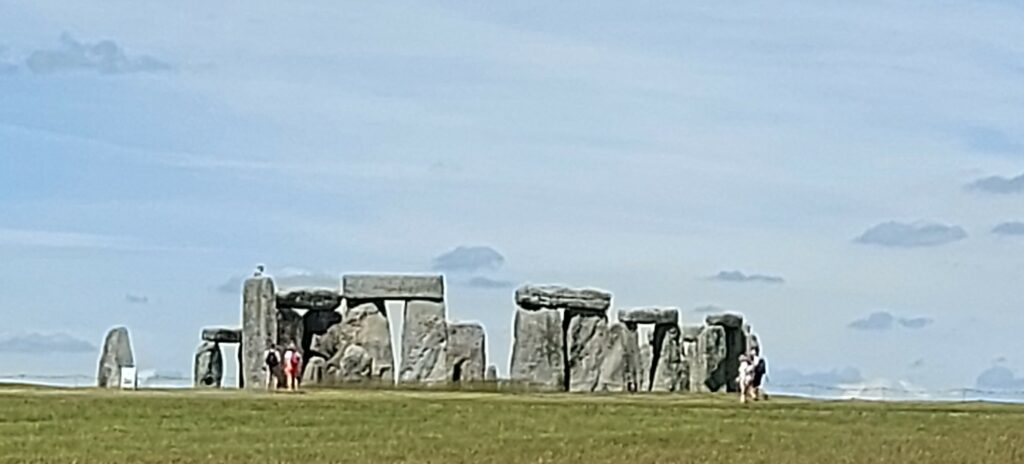
We hit the M3 on Monday morning, the sat nav telling us that the journey to Stop 3 was only 3 hours and 10 minutes, all was fine until we came off the M3 and hit the A303!!! Then our speed was an average 7 miles per hour! So slow we were able to take photos from inside the car of people wandering around Stonehenge….

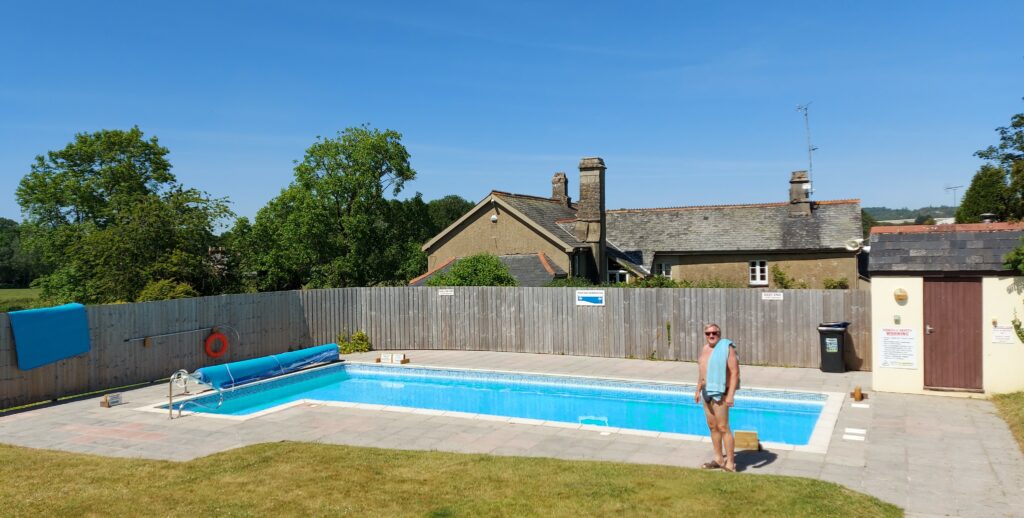
5 and a half hours later, our aching bums arrived at Twelve Oaks farm outside Newton Abbot, Devon! A privately run site, working farm with cows, sheep, chickens, and toilets and showers that have won awards for Superloos for several years in a row!

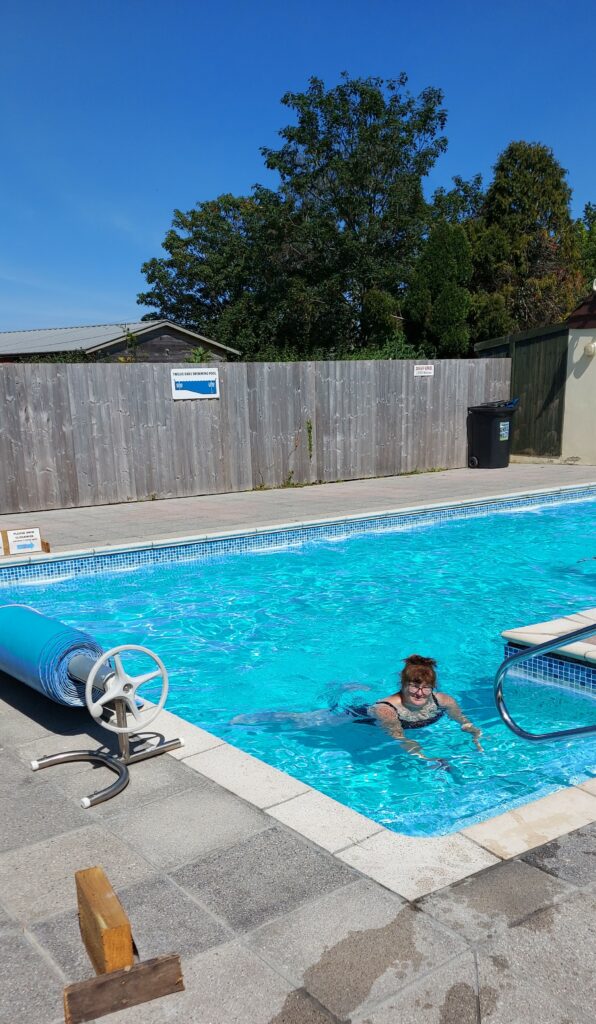
We managed to fit in a swim in their outside heated pool.

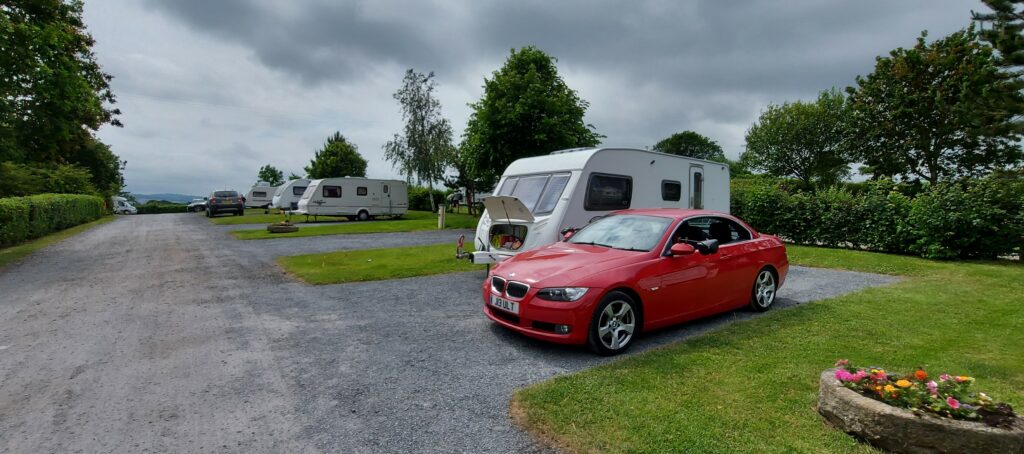
Our pitch at Twelve Oaks Farm

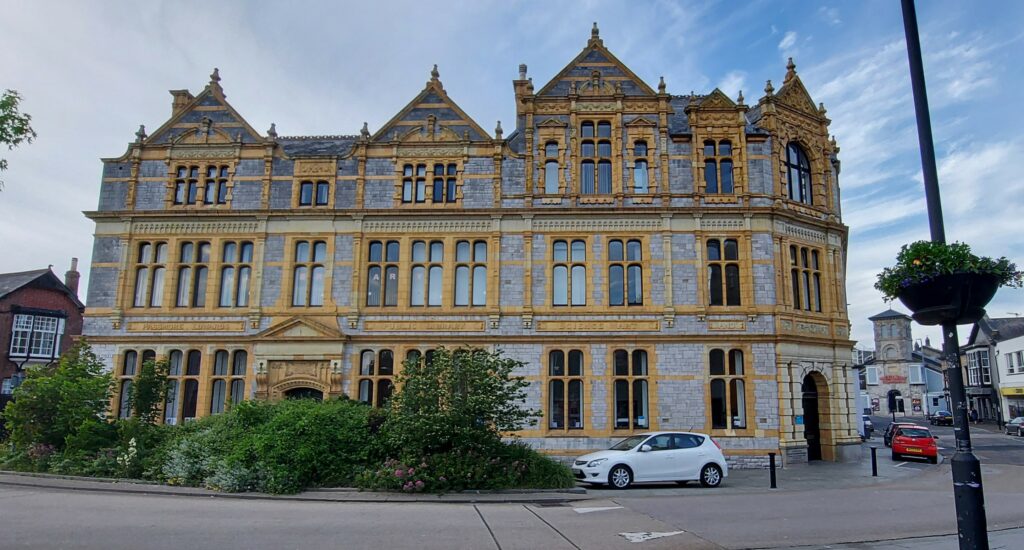
Newton Abbot was a strange town, the old animal market had been rebuilt into flats, the high street was boringly filled with charity and cheap shops and a large supermarket dominated this very boring town, made famous by its small horse racing course outside town. However, the odd building jumped out at me….

The old library building in Newton Abbot

Our stop in this area was to catch up with friends Carlos and Wendy, who took us out to more cultural places, thankfully!

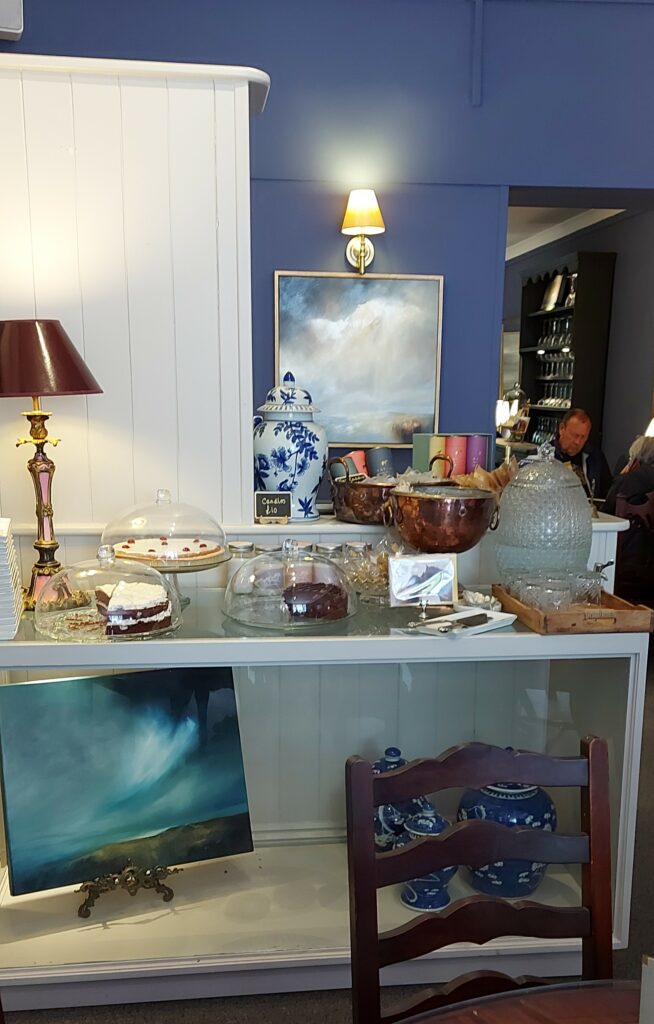
Coffee shop in Totnes, posing as an antiques and art gallery cum coffee and tea shoppe.
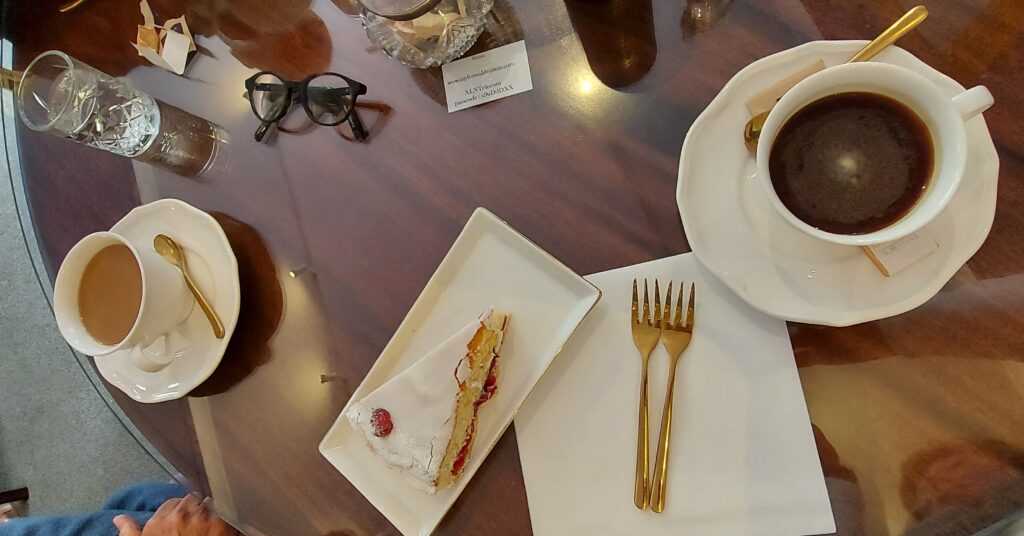
The coffee came with homemade Bakewell Tart……..ok I did order it! Check out the china and cutlery though!

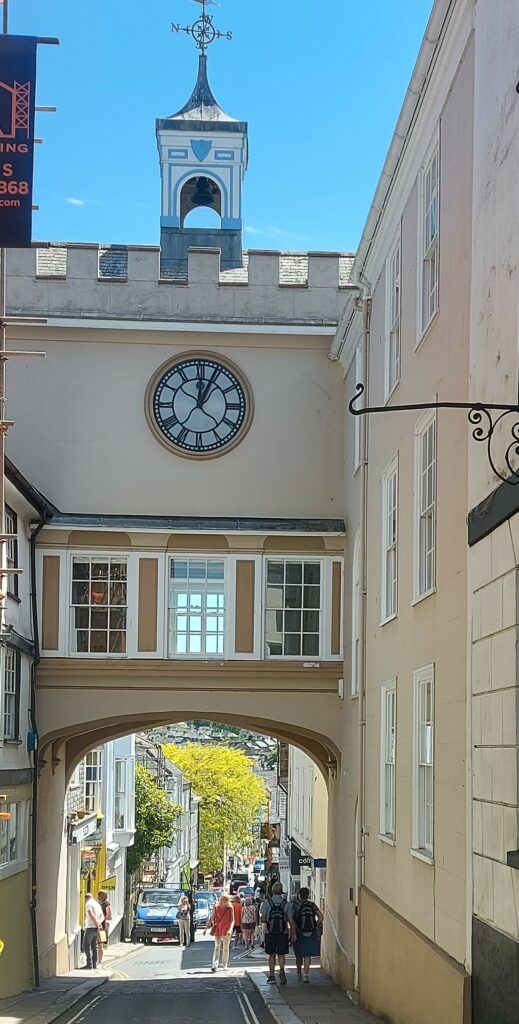
We explored the small boutique shops in uphill and downhill Totnes, our calves did not thank us the next day, not being used to steep hills!

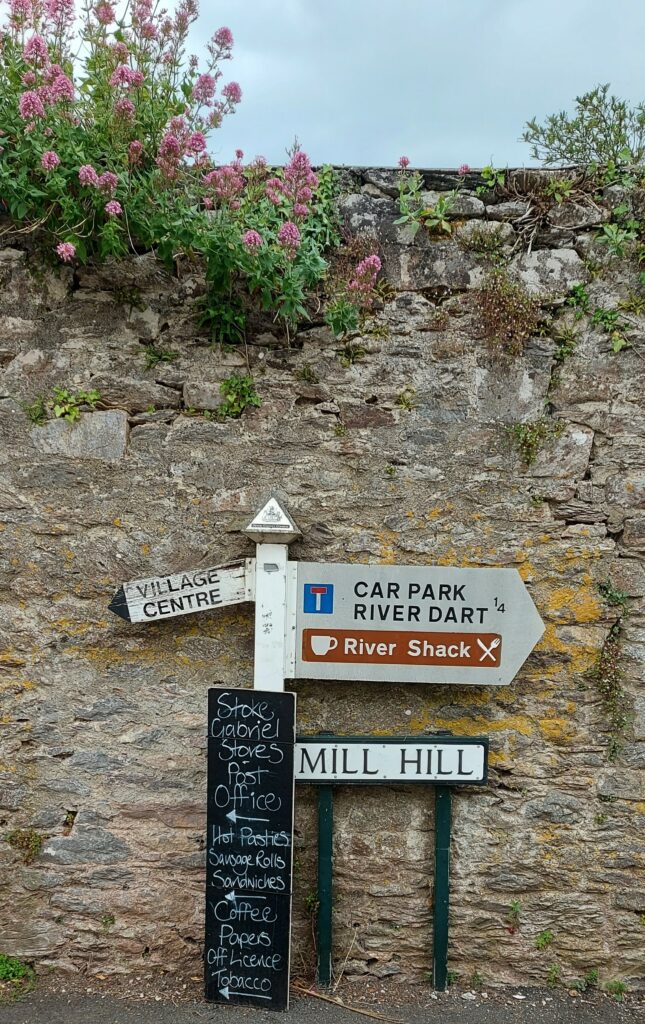
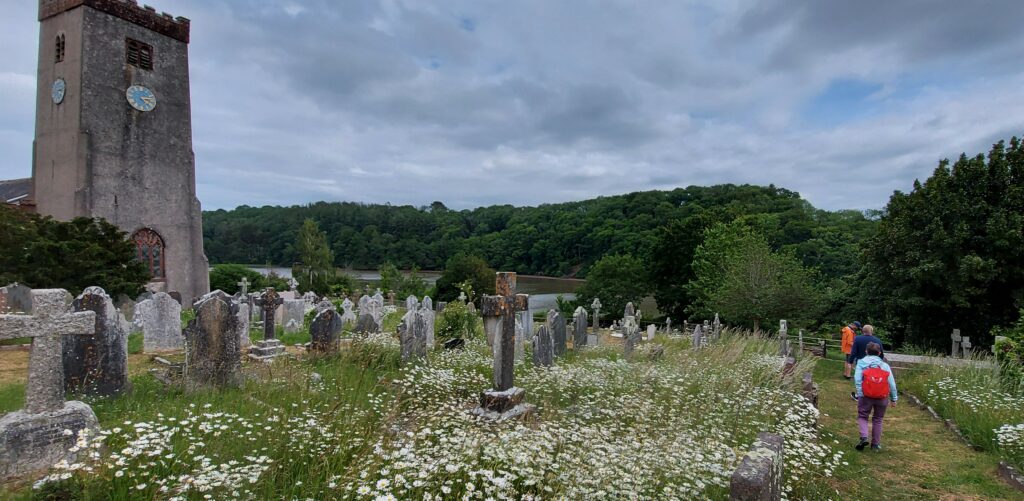
We had a day out to a small village called Stoke Gabriel, narrow winding lanes into the village and smaller narrow winding lanes out, but well worth it. Lunch was at a Dart Riverside “shack” with the most amazing food, which we then walked off around the local church yard and grounds. The local gardens were full of beautiful coloured flowers that were full of bees and butterflies.

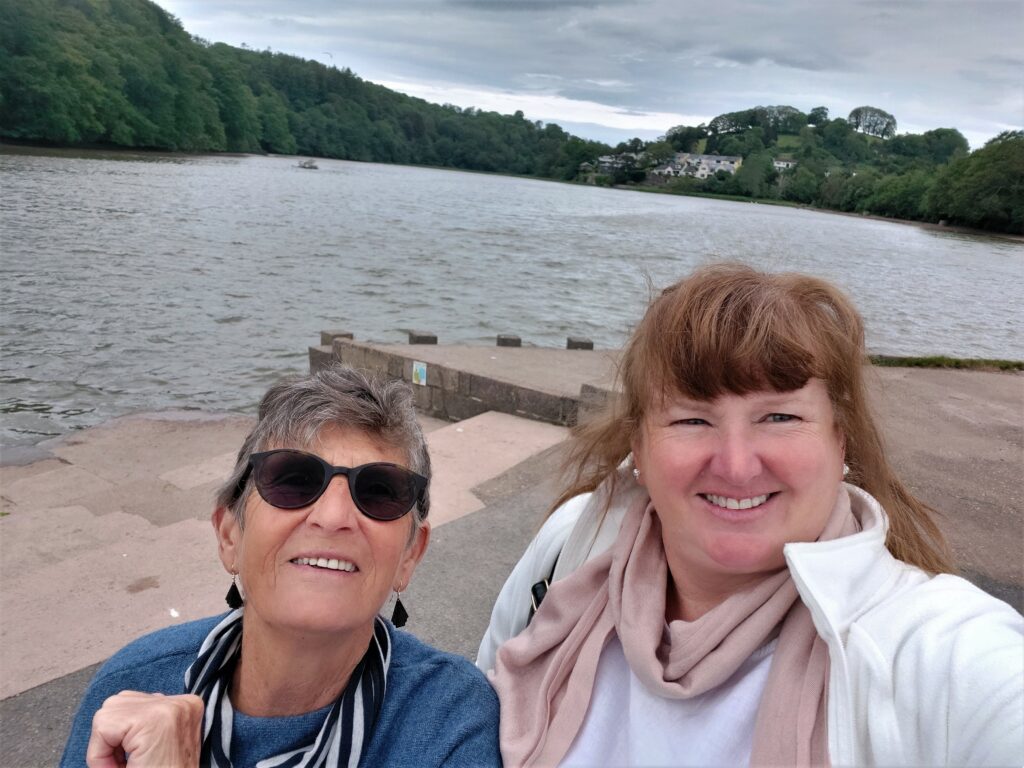
Wendy and me, stuffed to the hilt!
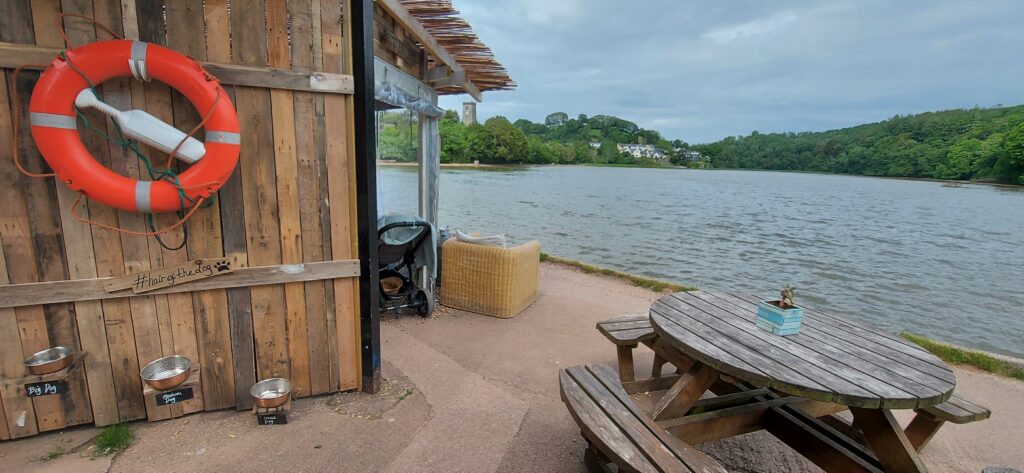
The River shack had its own animal watering holes 🙂
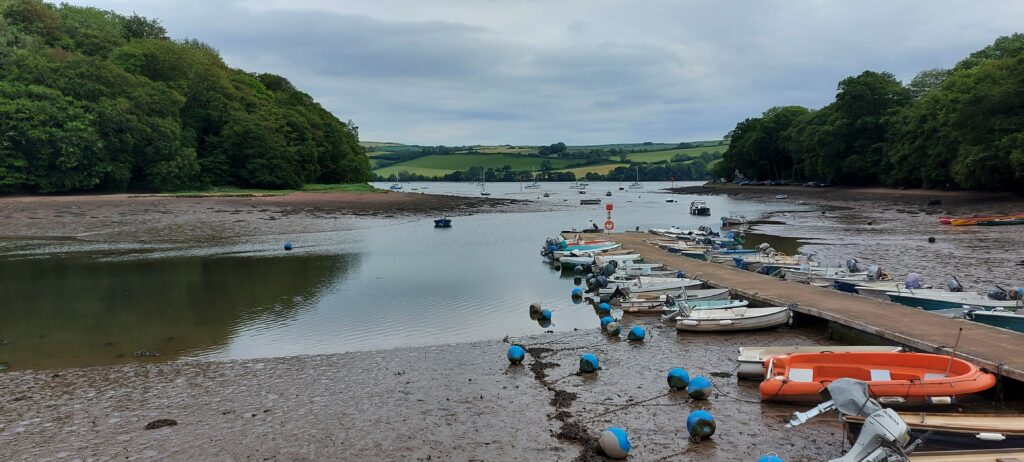
The River Dart at low tide.

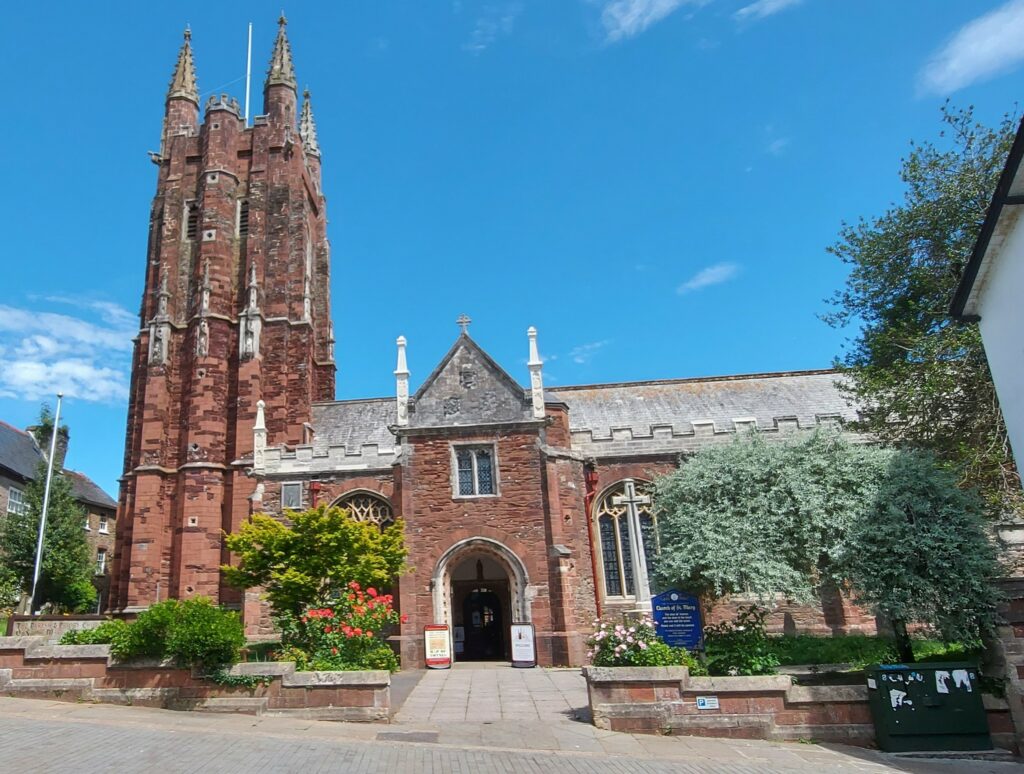
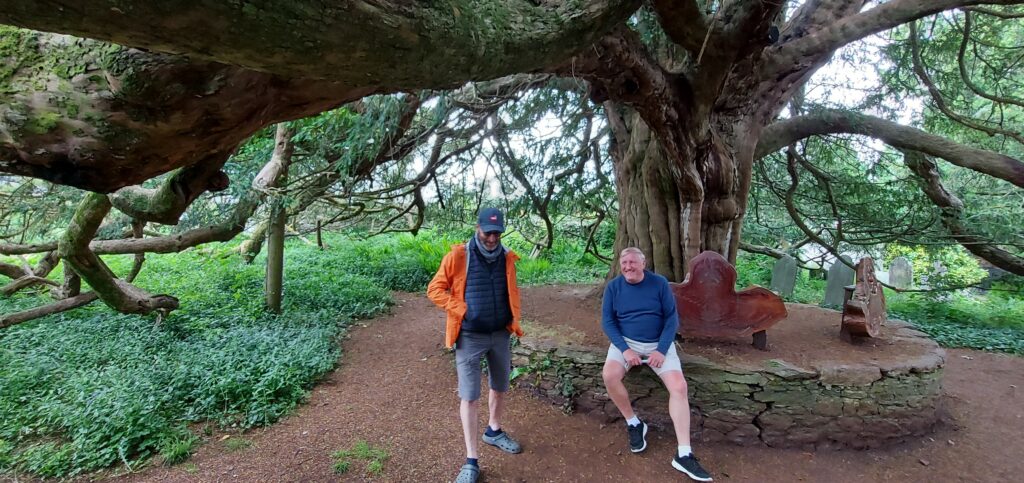
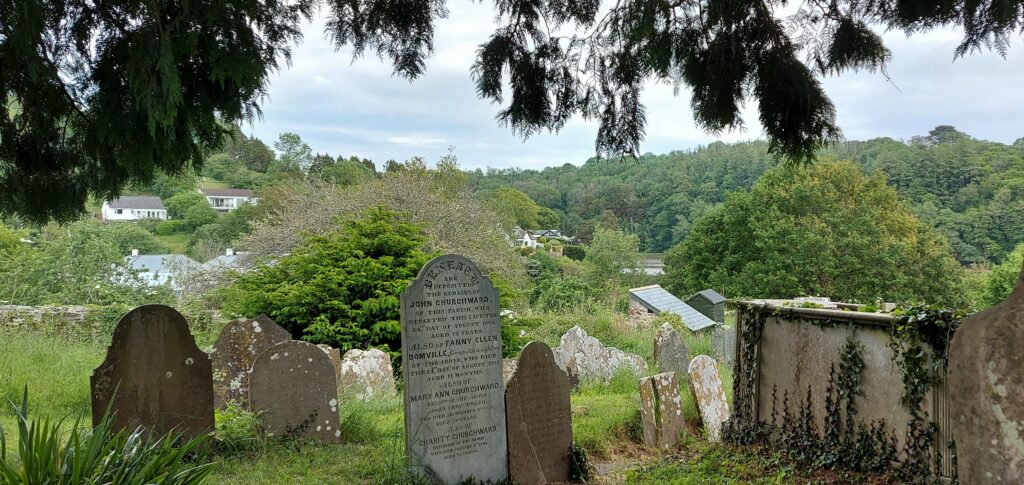
There has been a church on the hill overlooking Stoke Gabriel Creek for over one thousand years. A church was listed in the Domesday survey of 1086, and at that time there was a yew tree in the churchyard already thought to be several centuries old. Today that yew tree is between 1200 and 1400 years old, making it amongst the oldest trees in Britain, its boughs grew down and re-rooted itself forming a covered walkway around the trunk.

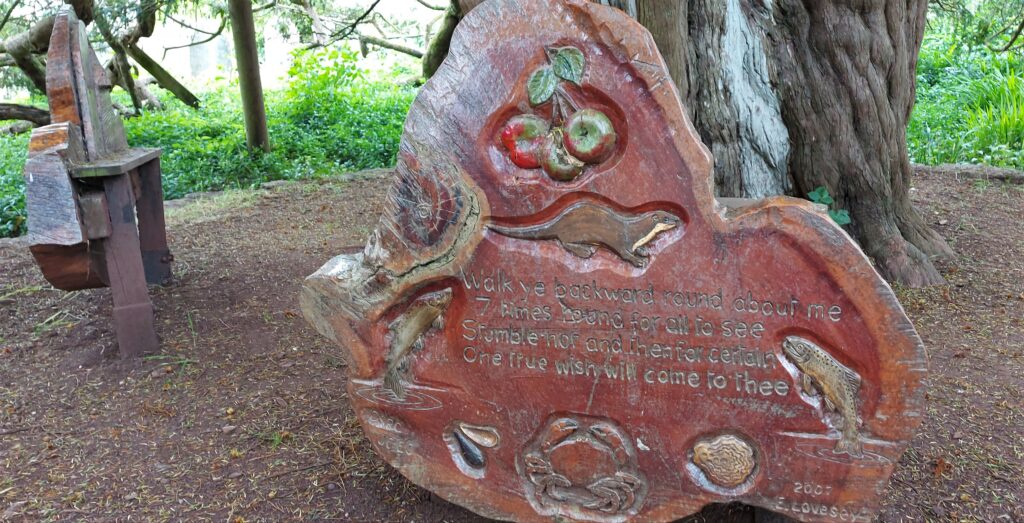
Legend says that if you can walk around the tree backwards seven times without stumbling you will have a wish granted. I tried; it’s harder than it sounds!

The legend is remembered in this verse:

Walk ye backward round about me
7 times round for all to see
Stumble not and then for certain
One true wish will come to thee

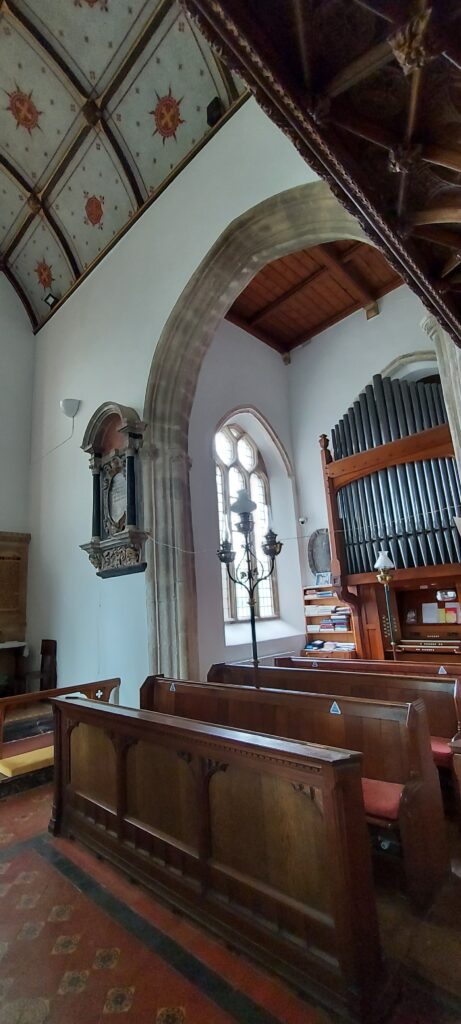
The refurbished 15th century interior has several pews that were specifically built for local families that donated large amount of money, several gravestones mention the family name of “Churchward”, one such family. The organ was first mentioned in history in 1880 when the building was extended to add a heating stove and an organ pipe to the current harmonium. It was refurbished in 1960 but replaced with a more modern organ in 2010.

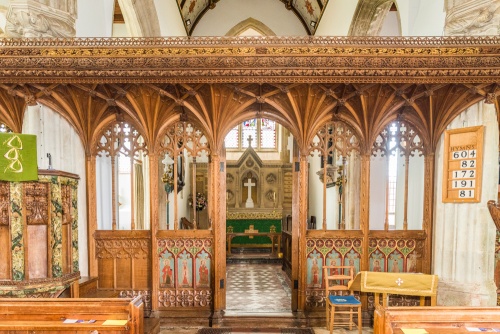
The 15th-century screen

The best part of Stoke Gabriel Church is the 15th-century oak screen separating the nave and the chancel, the screen is decorated with painted panels depicting Old Testament prophets and New Testament saints. It is pointed out that the prophets are shown wearing Tudor caps, assuming the artists were obviously portraying the figures from their knowledge of contemporary clothing.

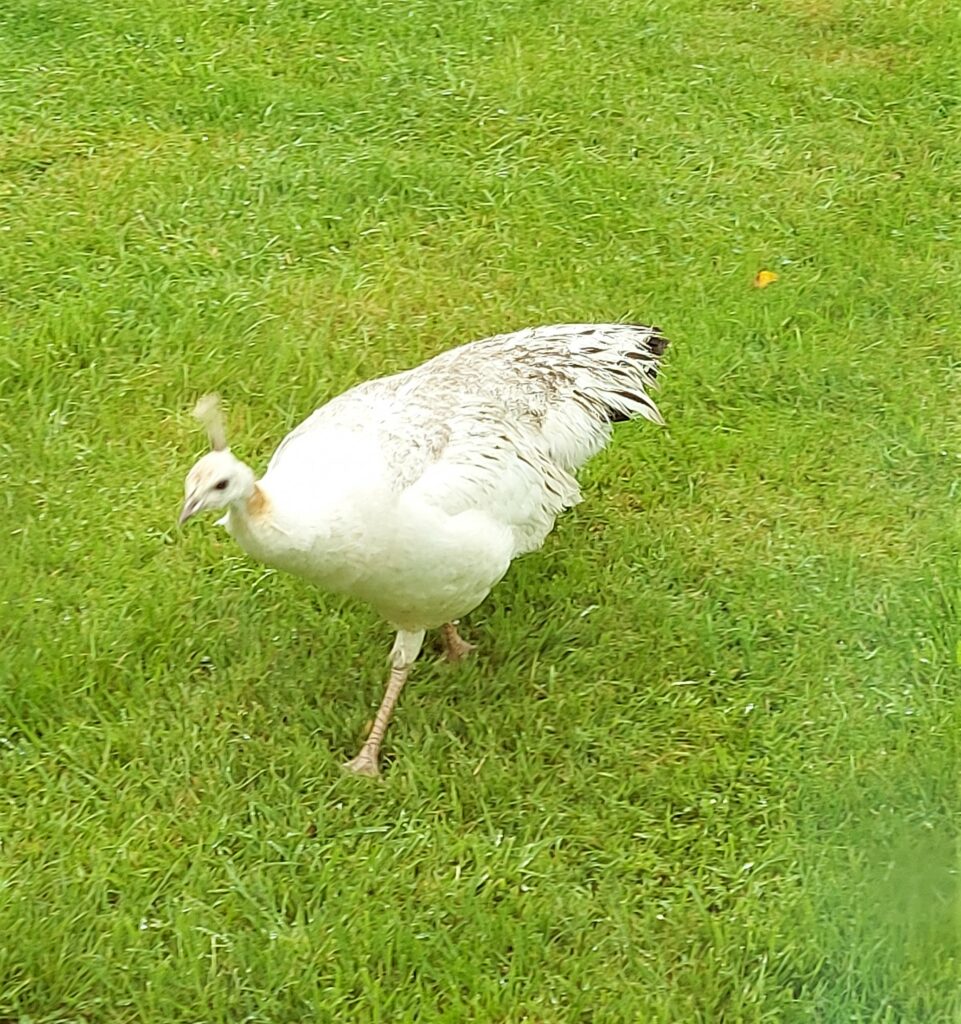
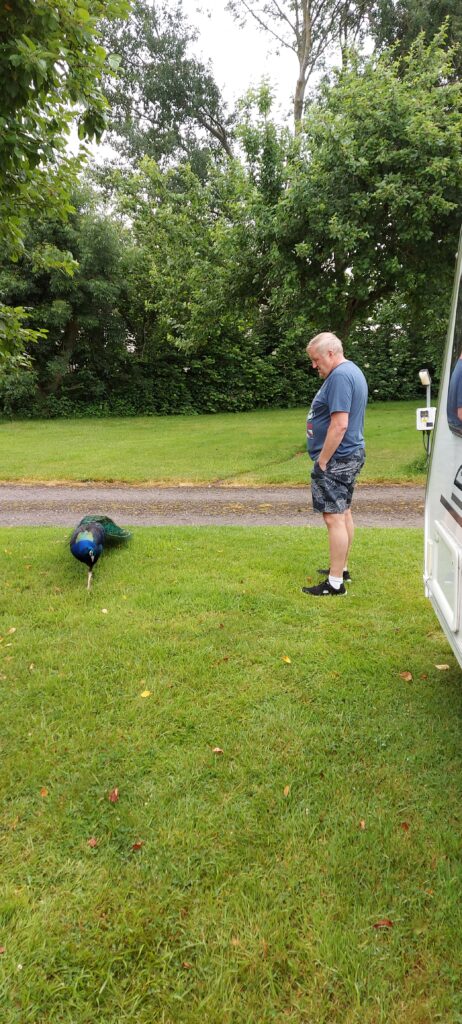
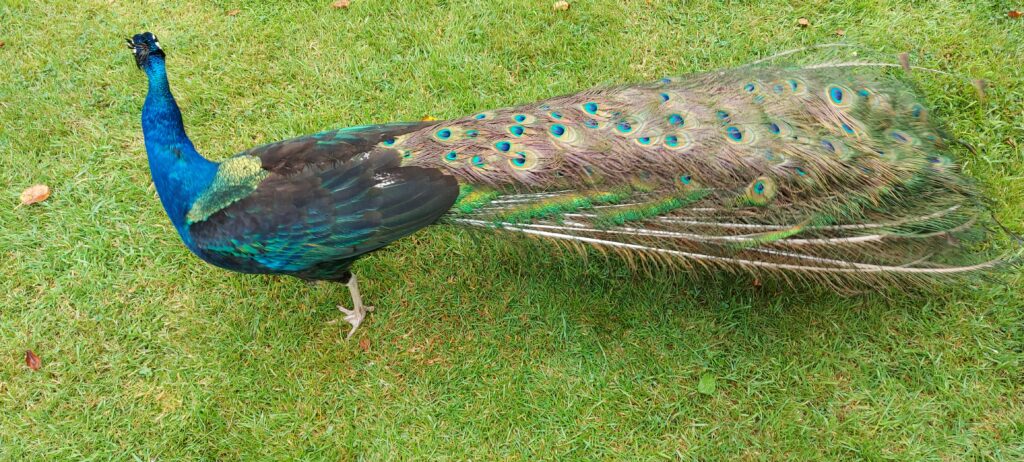
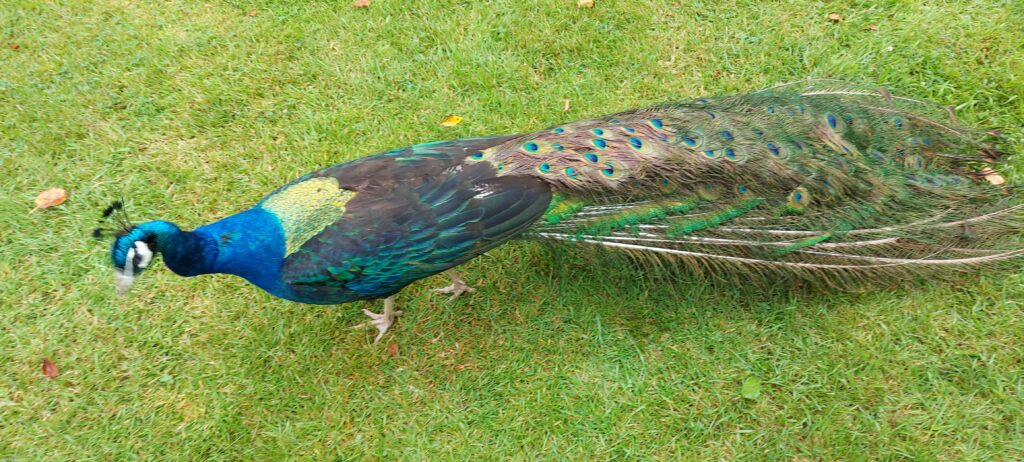
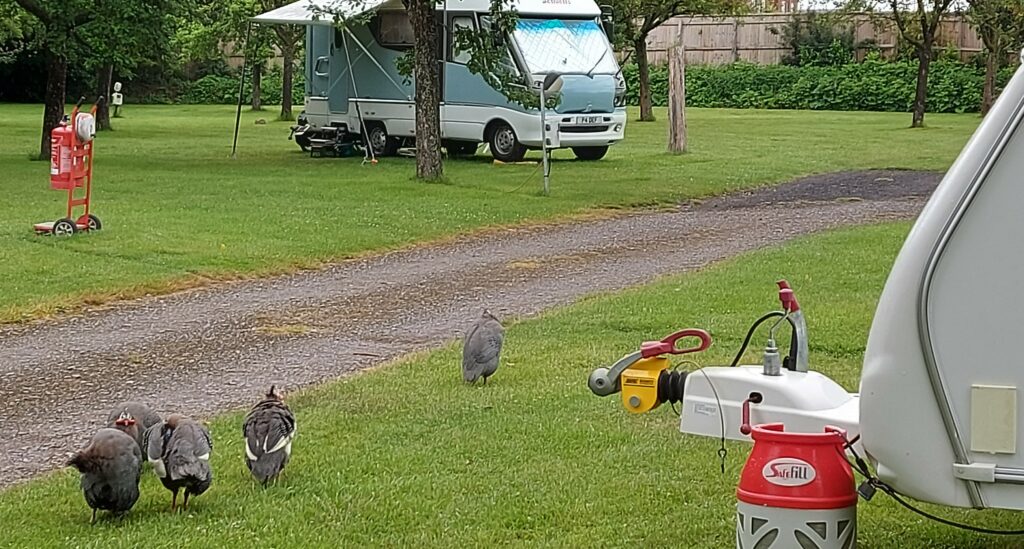
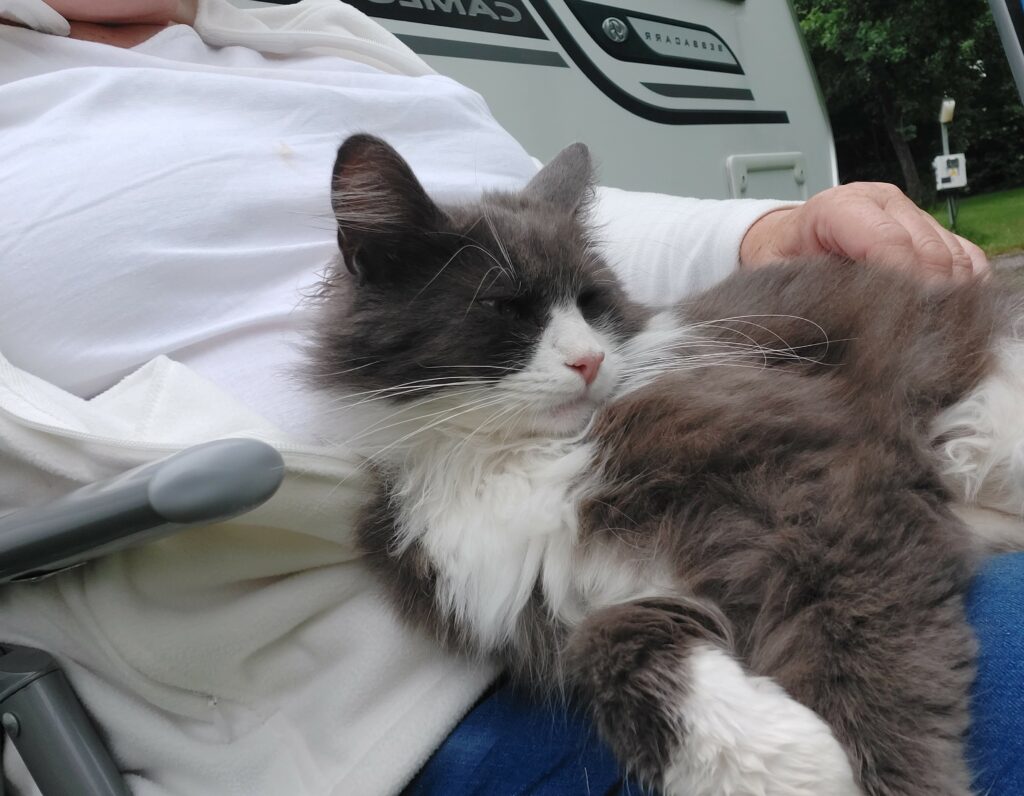
Next stop was to meet an old school friend in Taunton, Somerset, staying on a Cider farm. Don’t get excited, the weather was not great and the farm was quiet, the owners kept well away and we saw no activity except the growing apples in the Orchard. However, we had lots of visitors during our stay, very friendly colourful peacocks and white pea hens, guinea fowl, rabbits and a friendly loving cat, who found a hot spot on my lap for over an hour!

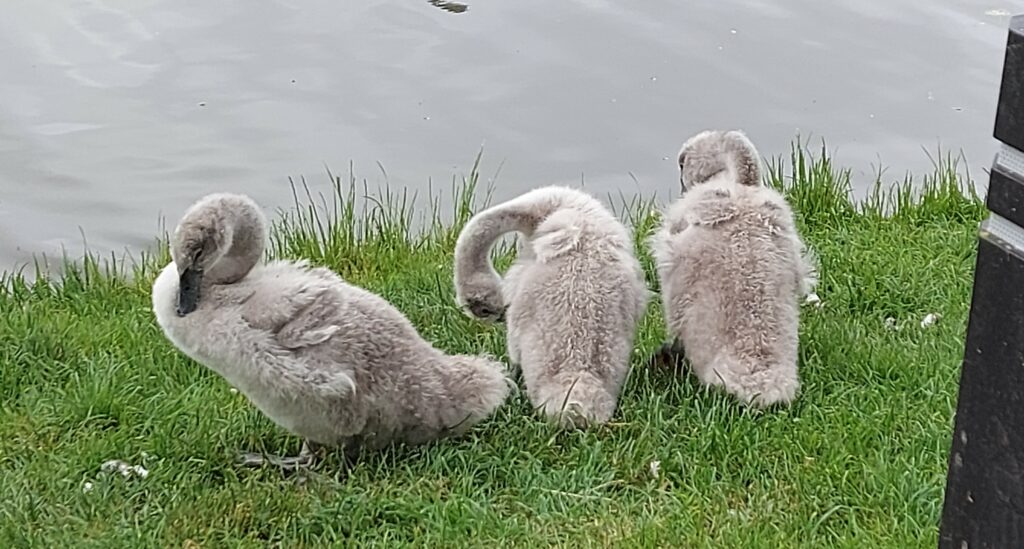
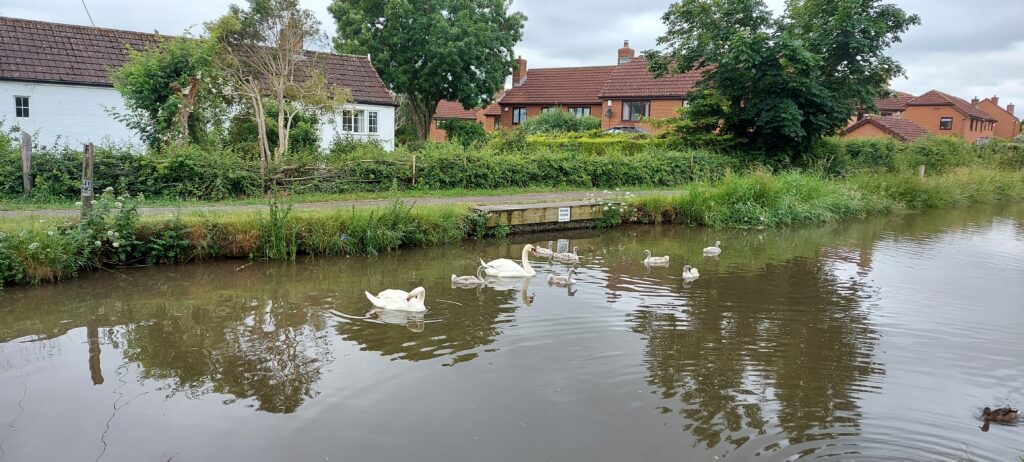
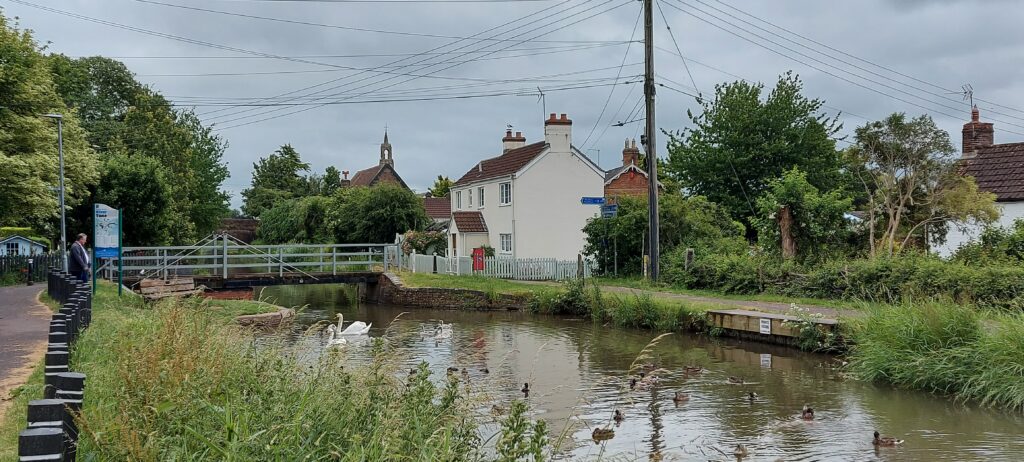
After a “stuffing” at the local pub on Sunday, we took a walk alongside the canal that runs through Taunton, and encountered more beautiful wildlife.

We left Taunton after one day, heading north for stop number 5 on the outskirts of Birmingham, the Clent Hills.

Paradise is Goa – to be continued…

We left the madness of Mumbai behind and headed to the beach resort of Goa, an hour’s flight away, for what was supposed to be a 3-4 week rest, to catch our breath, catch up on sleep, cook ourselves some plain food, and plot the rest of our trip south……. We landed in South Goa, booked into a flat for 3 nights, looked about and finally found an apartment where we could stay for a month, a comfortable bed, cool air conditioning, our own cooking facilities, a pool, bar and restaurant on site and a 10 minute walk to the beach. But we hadn’t taken into account the dreaded Corona Virus…..

Paradise:

We felt we had found Paradise, beautiful yellow sandy beaches, beach side restaurants, tasty fresh food, cheap food, colourful properties, and friendly people. So friendly, helpful, attentive and chatty. Food was amazing, the spices and herbs could be tasted at different levels, everything was “spicy or non-spicy” but both were more than manageable for my delicate stomach! Fresh meat, vegetables, fruit and salads at every corner, and side to side sun and blue skies, warm seas and clean sand.

Lockdown:

In India, each “region or county” has it’s own “panchayat” the equivalent to a local government, which can basically be run by one person who can do more or less what the Government dictates but with very flexible blurred lines. So the Goan Minister decided to hold a one day trial lockdown, on Sunday 22nd March 2020, from 8am to 8pm, with EVERYTHING to close, borders with other areas to be closed, all travel banned, all shops, vegetable and meat stores, shopping centres, pharmacies, tobacco stalls, restaurants and bars to shut……but at 6pm the Minister went on Indian TV and announced that the lockdown will be continued for 3 weeks!!! Even fishermen were stopped from going to sea and those already at sea were told to stay there!

There was uproar after 5 days!!! How could the Minister expect his loyal subjects to fight off this unseen virus without their daily food? He was told he was killing off his flock, as the majority of people shopped and cooked daily. Plus, no-one in India so far actually had the virus, so the majority of locals didn’t believe it existed, however, they are suspicious or supersticious, so they adhered to the rules.

Luckily the resort we had booked into had it’s own small shop stocking basic essentials, beer, vodka, ice cream, tourist trinkets etc. We also made friends with neighbours, who knew several friendly locals and were able to obtain vegetables so we shared them out, cooking larger meals and sharing the vegetable casseroles or curries. For almost a fortnight we had no chicken and almost a month with no beef, we were struggling……we are not vegetarians!

However, we found a restaurant that was allowed to remain open “to feed foreigners”. Lots of people go to Goa, book into accommodation that is room only and eat out every day, its so cheap. A 3 course meal for 2 is less than £10. So Domnick’s bar was allowed to serve food (and discreetly serve beer) to Brits, Germans, Russians and Dutch that were stranded in Goa, Domnick became our saviour!!! Twice a week we would venture down to his place for our dose of tandoori chicken, butter chicken or fresh grilled fish to break the monotony of chicken casserole. We became addicted to curry and it’s spices.

Supplies were limited for a long time so we had to be clever, chicken was cooked 12 different ways in the end, minced, sliced, boiled, fried, battered and breaded, the highlight being a home made BBQ, with chicken skewers, cooked on our balcony when it was still 30c at night! We only had 2 electric rings, no oven or grill so very limited.

Monsoon and Glowing Frogs:

We were able to swap a hired scooter for a hired car and we ventured out on several days, to explore some of this beautiful Portuguese colony. As days turned into weeks and then into months, the Monsoon hit, and what an experience. We have never seen so much rain, not even in Wales! It was torrential, but bizzarely, it was still 30c outside, so if you ventured out you came back wet, caused by either sweat or rain. Some days it was dry, sometimes it rained for 5 days solidly but we still went out. The surroundings changed. Roads became narrow as the shrubs and trees sprouted and took over the pathways. Beaches became dumping grounds for debris washed down from the streets and washed up by the rough tides. Potholes appeared in roads, the size of small ponds. Fields disappeared underwater and became huge lakes. Buffalo and cows were seen rolling about in huge puddles in fields, covering themselves in glorious mud. Different birds could be heard in the jungle behind our apartment and one day we were visited by a troup of monkeys. BUT the highlight was the frogs, at night there was a true chorus of frogs from dusk to midnight, and if you went to find them in the grass or fields, you could see them glowing, but get too near, and they all stopped! The glow was under their chin, caused when they sung, attracting their mates.

Repatriation:

After a few weeks, the Goan Minister sent some of his team to every Hotel, accommodation resort or guest house to count the foreigners that were in the country. Other countries were immediately talking to holiday makers stranded in Goa and arranging repatriation flights, free of charge, and suddenly the Dutch, French and Russians disappeared and only the Brits were left. The British Government said there were approximately 3500 people in North and South Goa, so they sent planes with seats costing £450 each for 900!!! First priority was given to those over 80 and with medical needs. Next batch of flights a fortnight later, priority was given to those over 70 and the rest (about 1000) were left to their own devices or told to wait until “flights open up again”. Some people paid silly money to get flights with other carriers, one neighbour flew with Lufthansa to Germany, then France, then UK, another person we knew took several flights over several days to return to Canada.

But, we figured that as the borders were still closed to surrounding areas, we were safe. No cases were found in Goa for a long time, the state was given a “Green” status until the end of July, when a dozen cases were identified from people coming up from the neighbouring state of Kerala as borders had re-opened. It was “normal” to put a face mask on as soon as you walked out the door, have your temperature taken as you went into a shop or restaurant and hand gel was given to you, queueing became a normal sight in the village and people spaced out, no pushing and shoving any more. Local police enforced the “distance” rules, shouting at locals who bunched together, stopping and fining people with more than 2 riders on a scooter or in a car. Hygiene improved as tables and chairs were disinfected regularly! It was well known that the virus cannot survive in sugh high temperatures, but wherever cases were found and increased, whole neighbourhoods were sealed off, people were locked into their accommodation, fed by safety protected volunteers, and attended to by doctors daily. We felt safe.

As time went on, we became bored with the rain and thunderstorms, missed the sun (Monsoon is a cloudy season), our clothes (which we supposed to last 3 months) were disintigrating after 8 months, we had outstayed our 180 days visa and needed, and wanted to get back to the UK. British Airways finally contacted us to say they were being allowed to oeprate a limited number of flights from New Delhi, so we checked in, and checked out! We arrived back in the UK at the end of August.
« Older posts Newer posts »