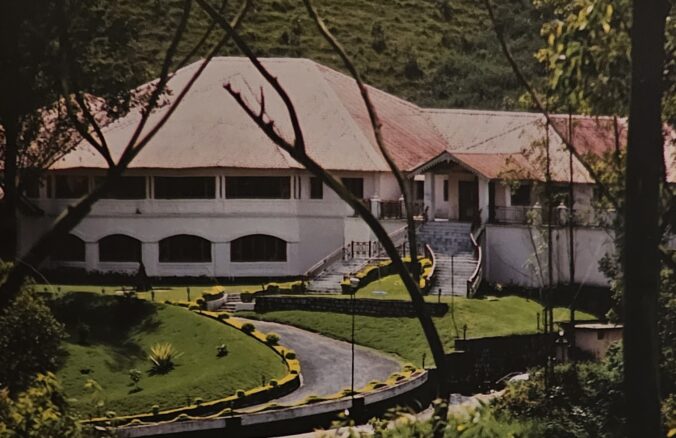
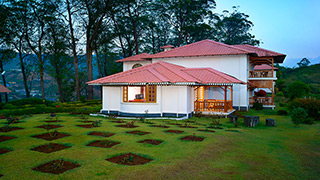
It was suggested to us that we visit a resort hotel called Tea County in Munnar, so we saved the best until last and had dinner there on our last night in this area.
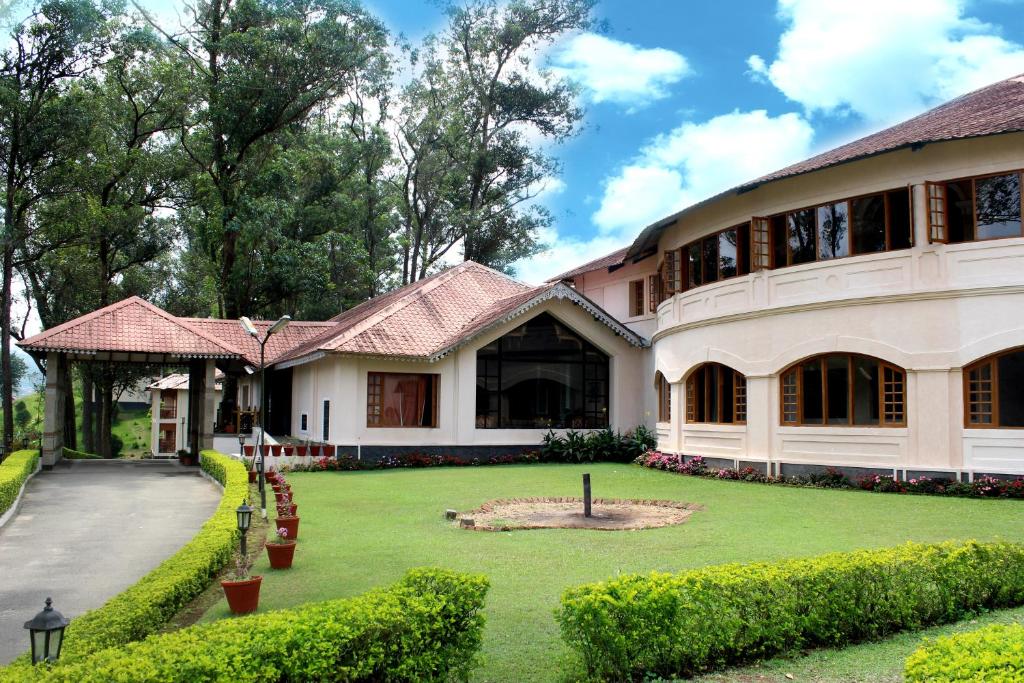
“Tea County is a Resort Hotel in Munnar, amongst enchanting mist clad hills, quaint cottages, fragrant tea gardens and mist-draped mornings that are hallmarks of Munnar. For years the cool and picturesque town of Munnar was the summer retreat of the British and it still retains the charm of a colonial past. The destination is also home to the only sandalwood forest in Kerala”. THIS IS THE HOTEL’S BLURB!
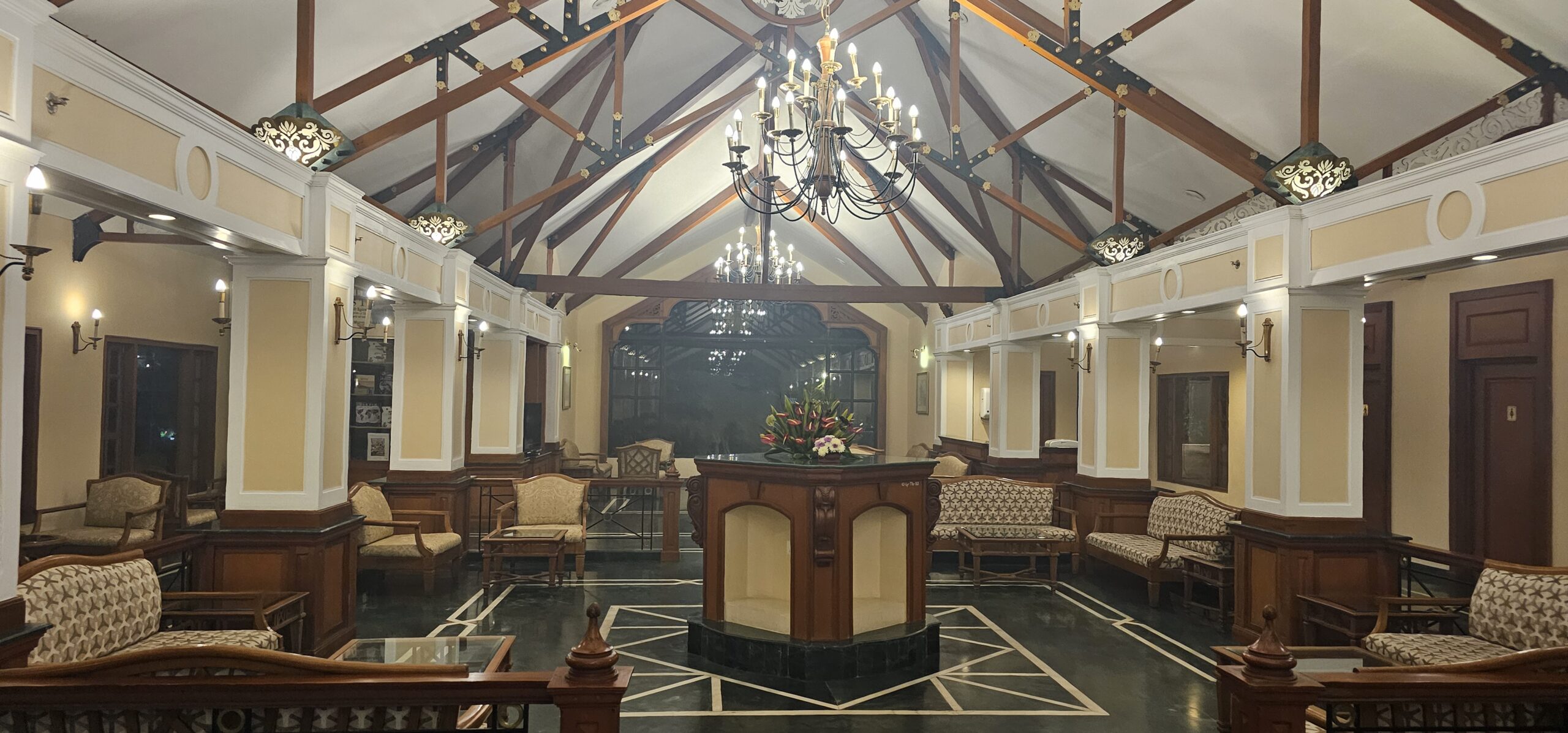
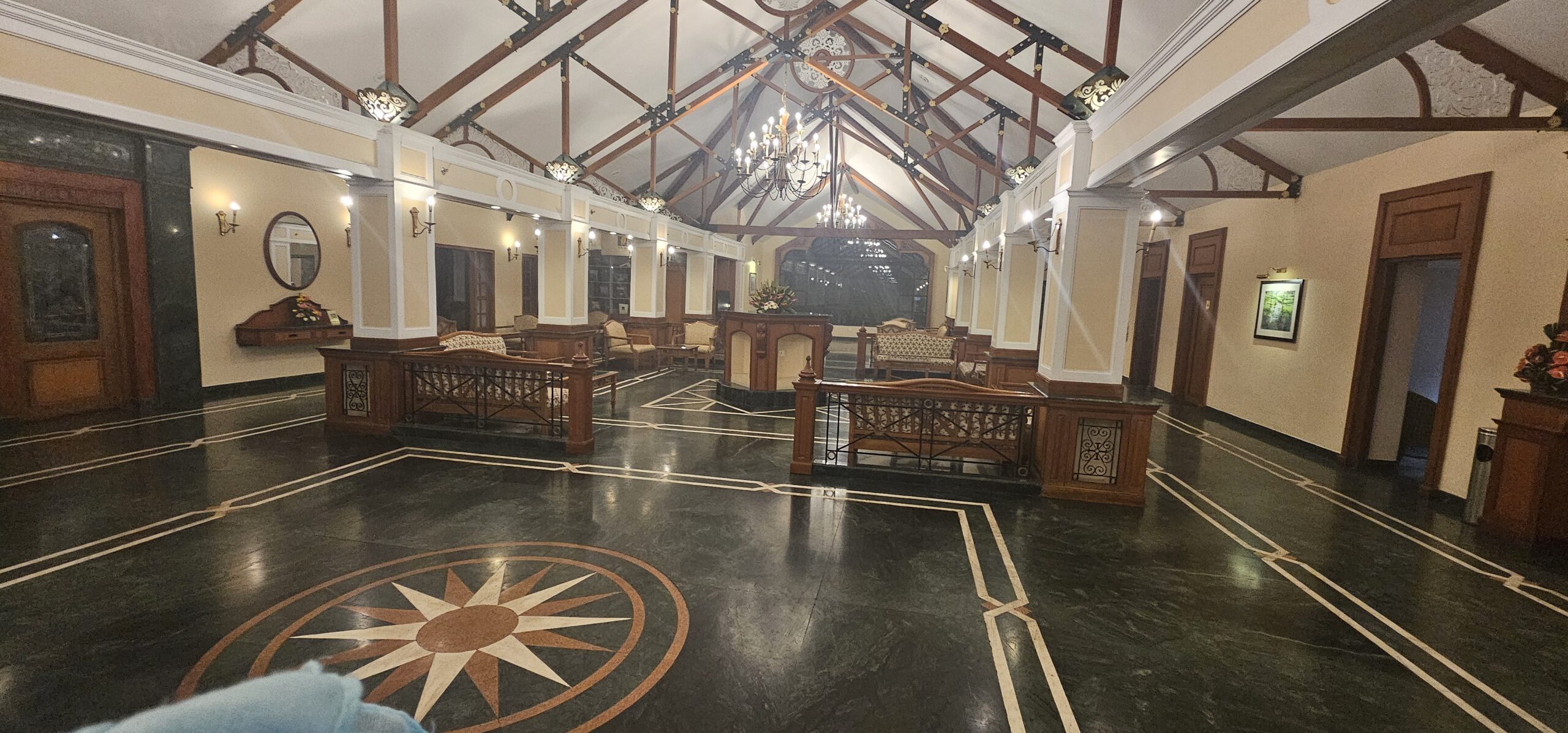
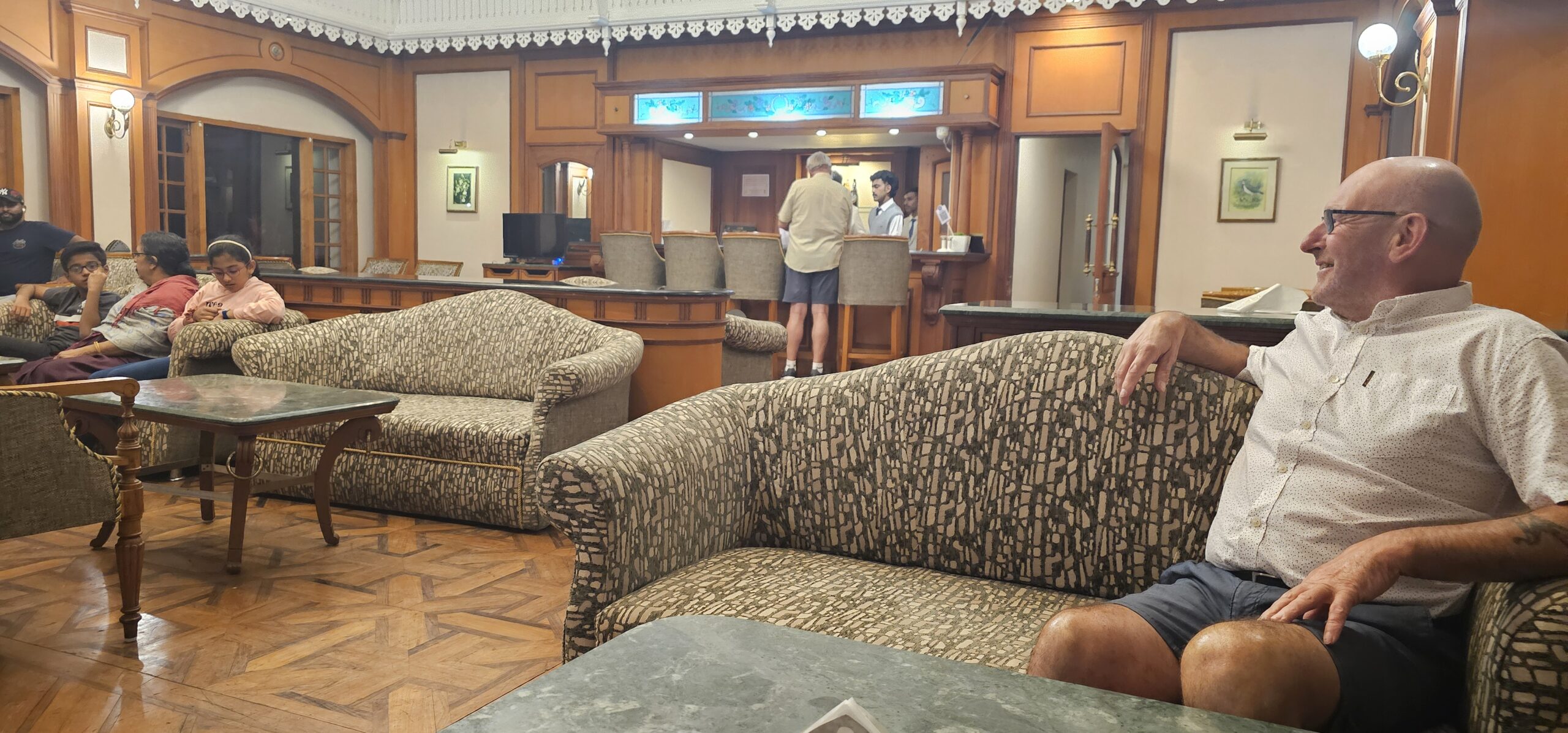
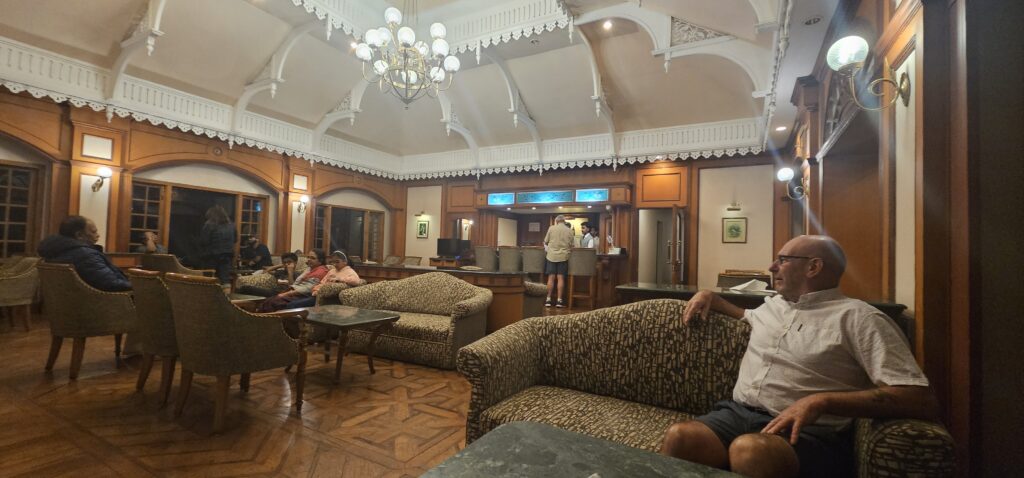
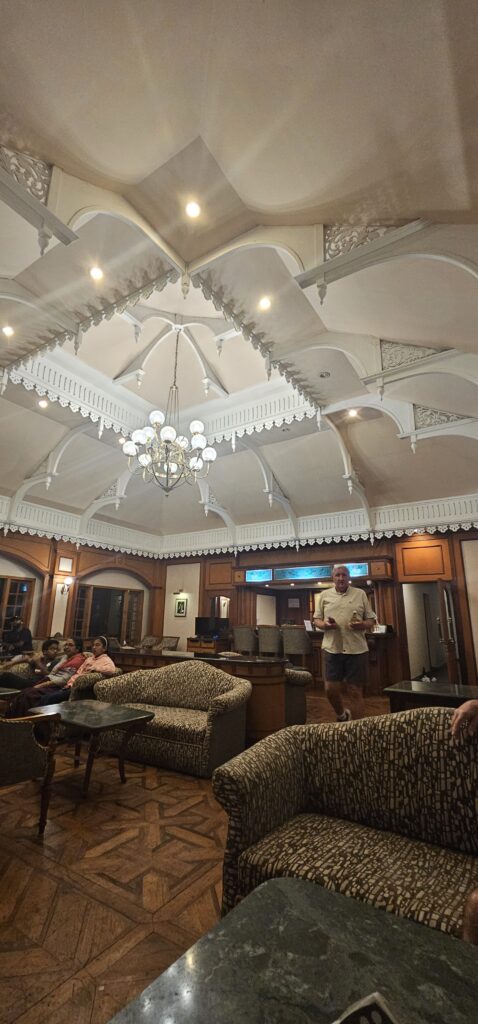
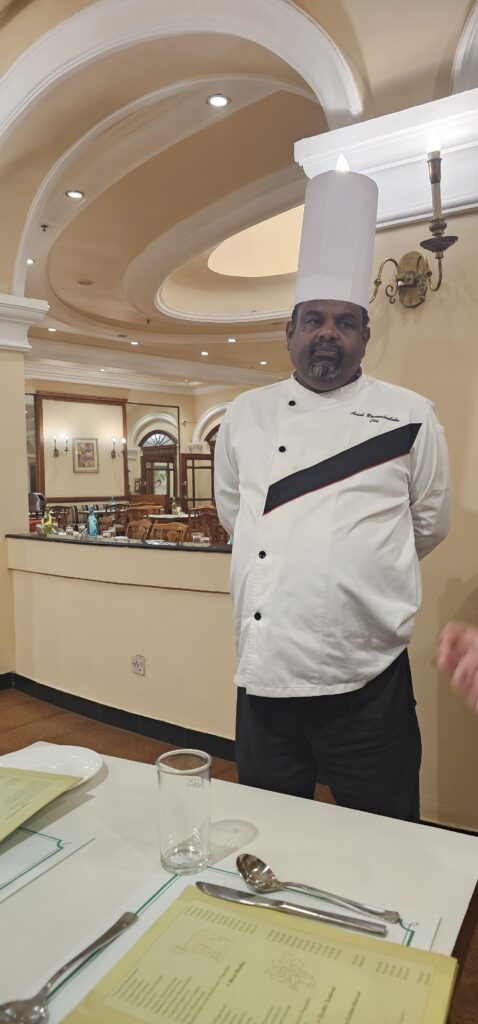
And rightly so!! We felt we were back in colonial Raj in the 1940s, splendour exuded every space, polished marble floors, sweeping staircases, sumptuous sofas, gardens full of rose bushes and the hugest dining room I’ve ever seen .. ..the Chef even came out to talk to us about our menu choices before they were cooked!
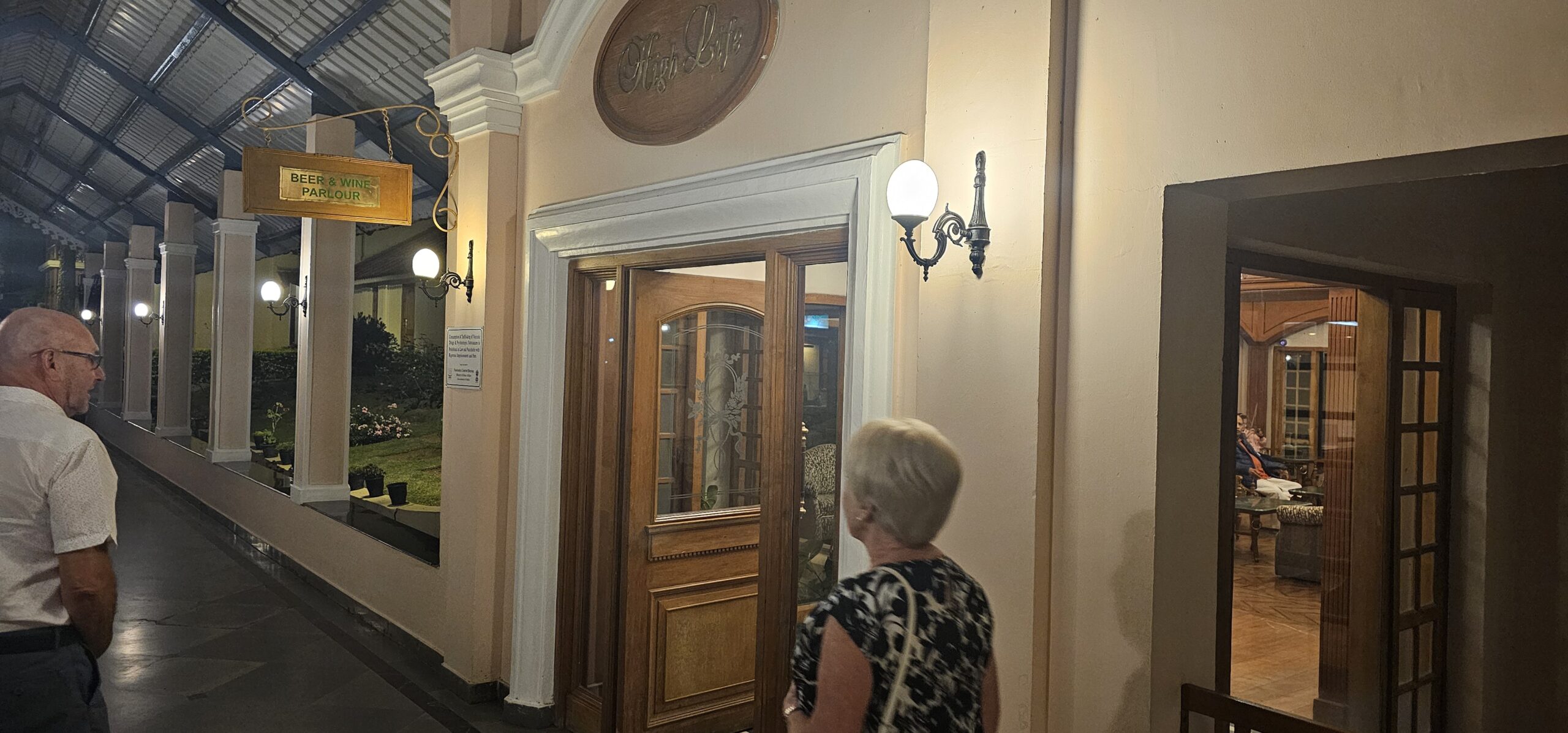
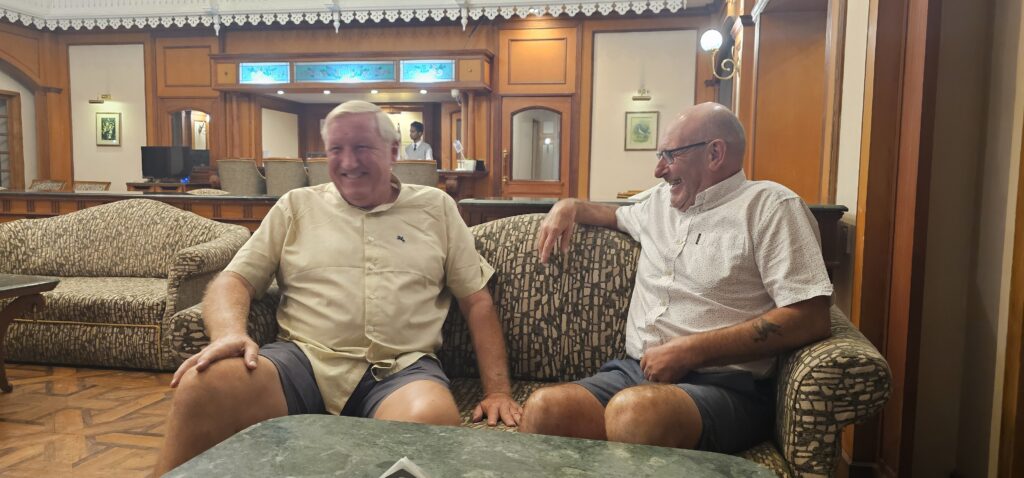
The entrance FoyerHeading to the Beer and Wine RoomWaiting for our drinksParquet floors and Plaster carved ceilings at its bestChef discussing our food order.
We had a great meal in spectacular surroundings. We felt like Very Important People!!!!
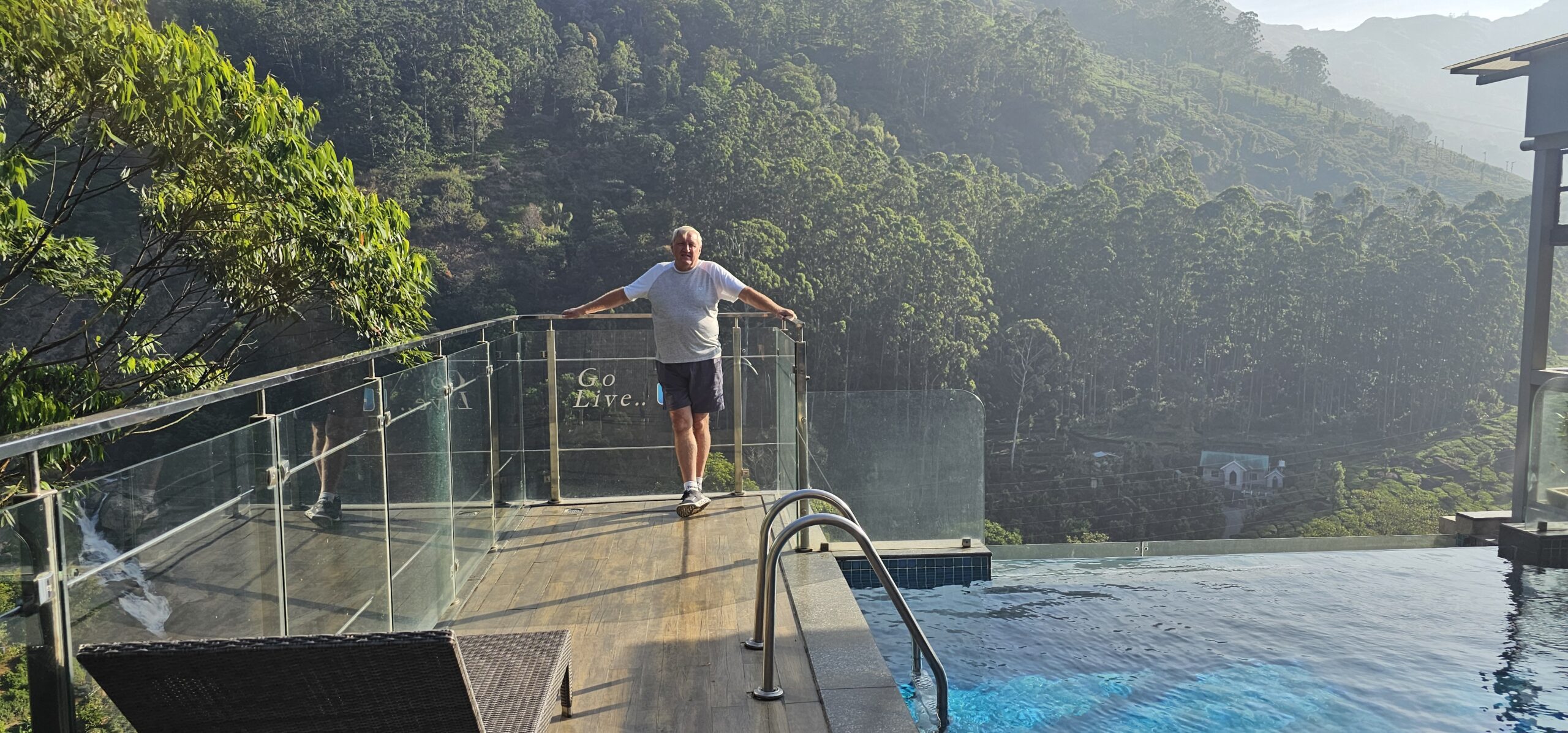
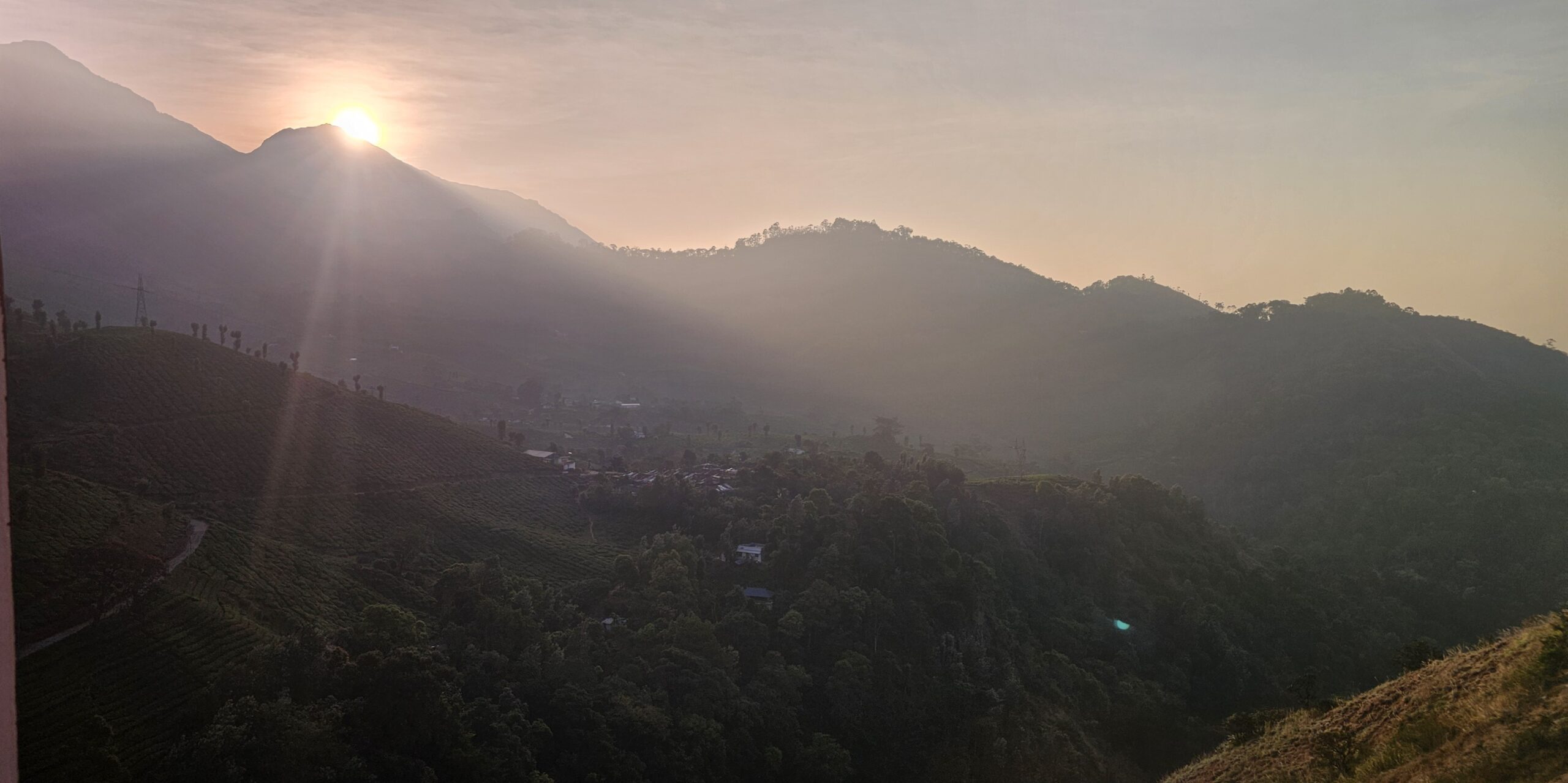
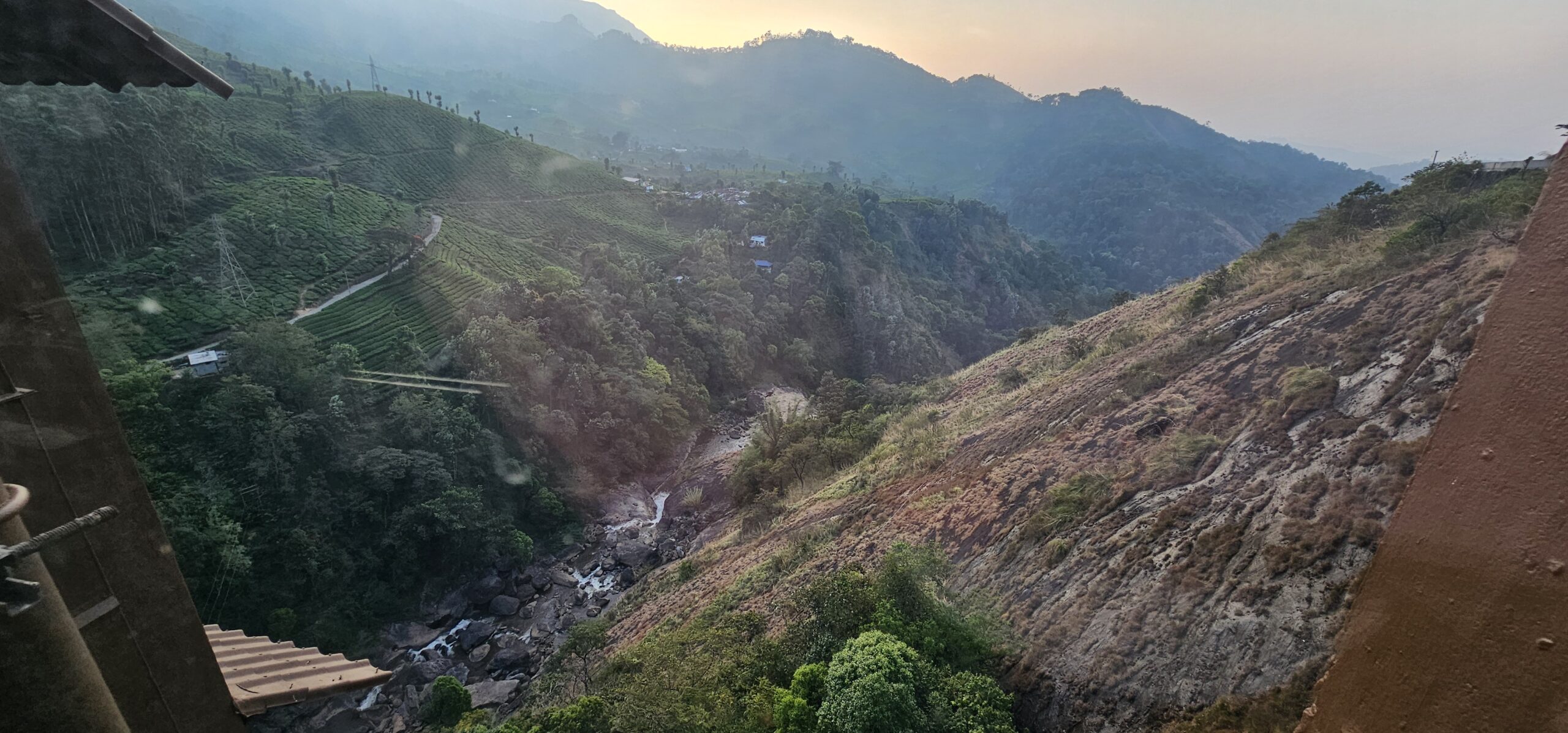
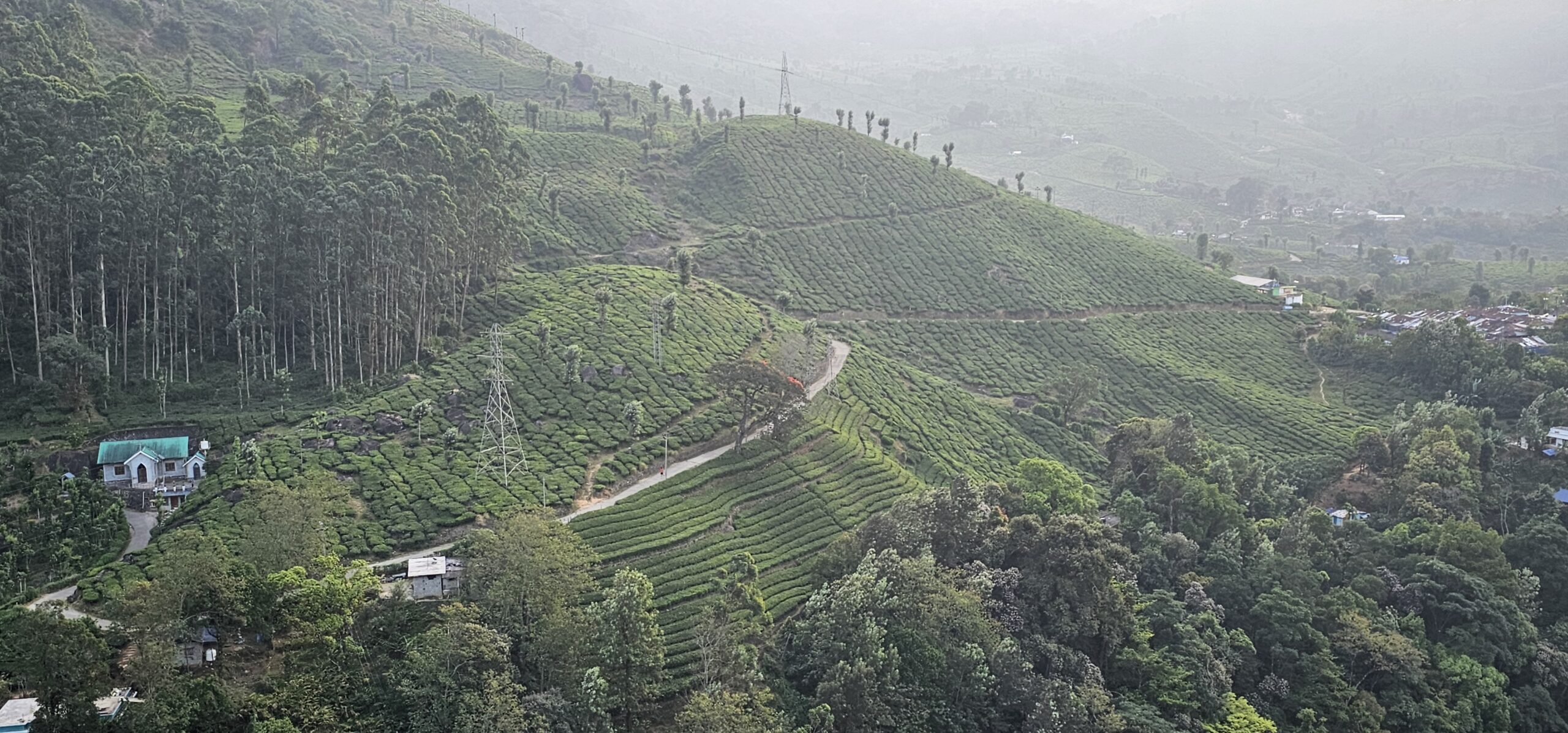
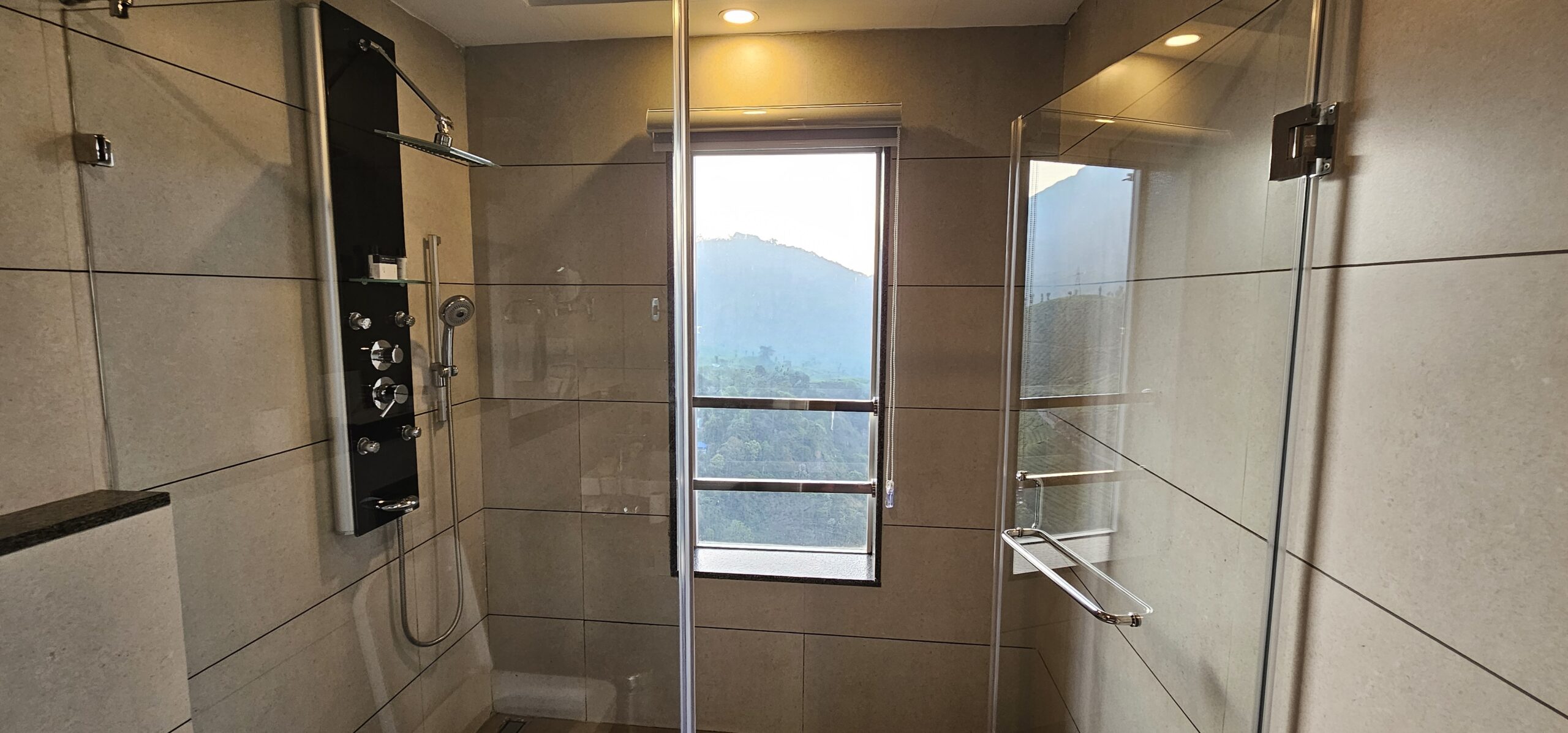
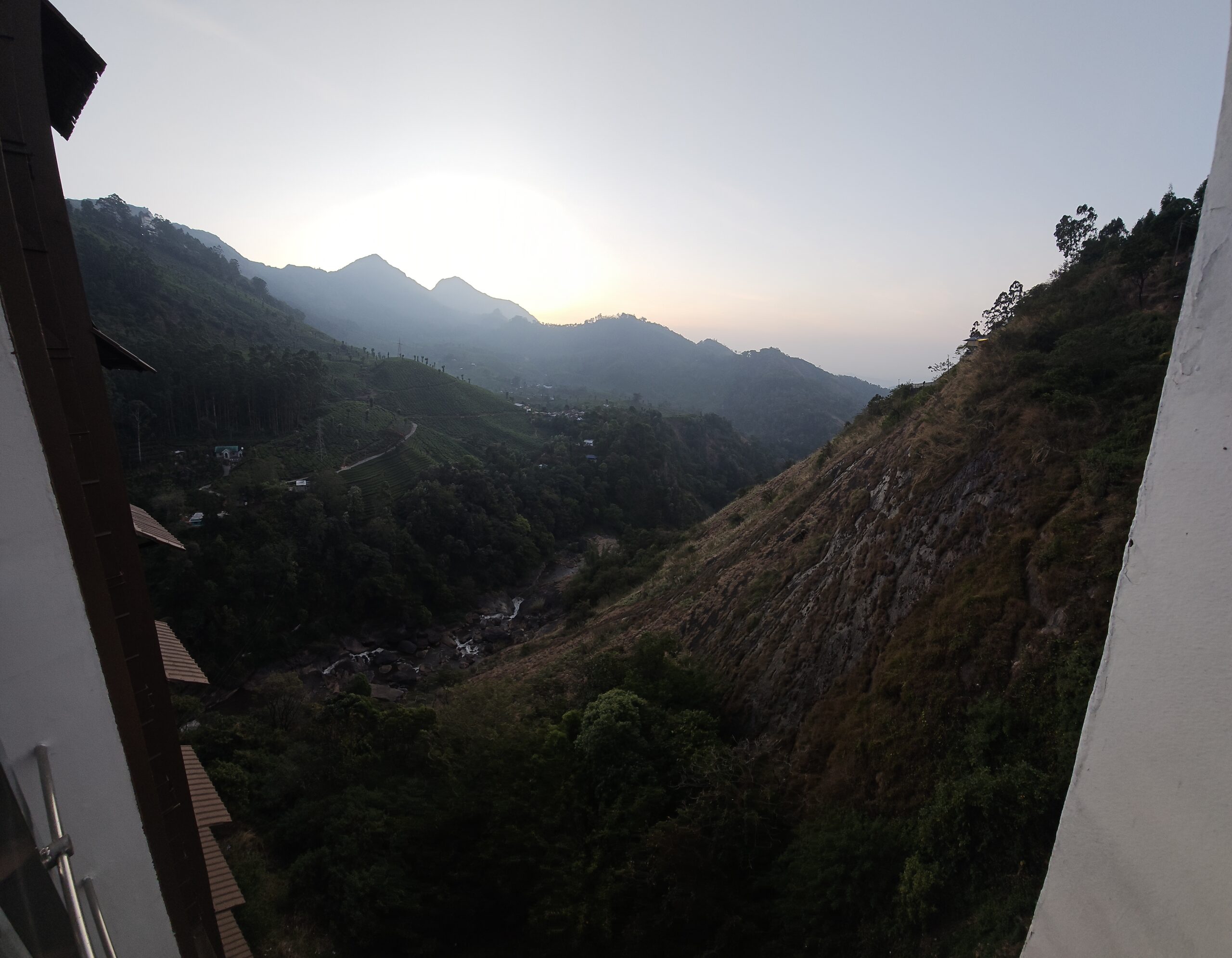
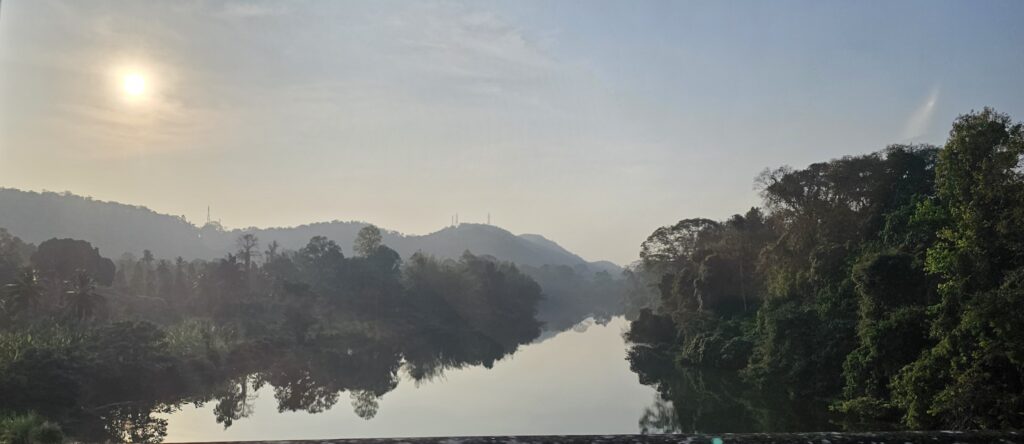
We woke in the morning to the most amazing view, our hotel was perched on the side of a hill, surrounded by tea bushes, waterfalls and a river below. The sun was coming up over the mountains in front of is, at about 6.30am, birds were swirling about and the morning mist was rising, it was simply stunning! Sadly we didn’t have time to indulge in the infinity pool or the spa, we had a busy day ahead!
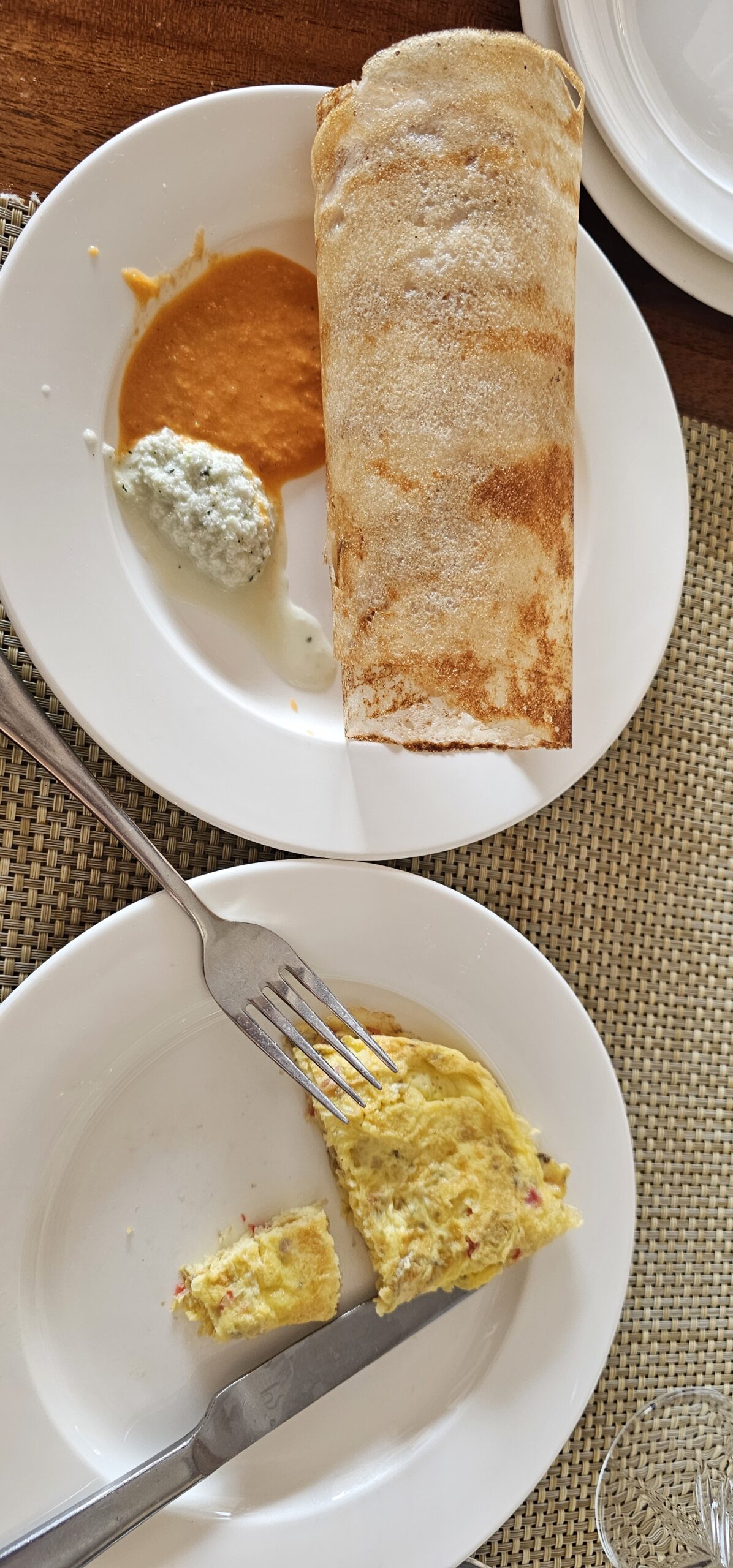
Morning sunrise over the Western GhatsOur bathroom windowAnd the view from the window!Breakfast was a traditional rice pancake, omelette and a small fresh coconut dip 😋
MUNNAR as we know it was established around 1880 by British John Daniel Munroe, who was sent there to settle border disputes but fell in love with the lush forests and gentle hardworking inhabitants.
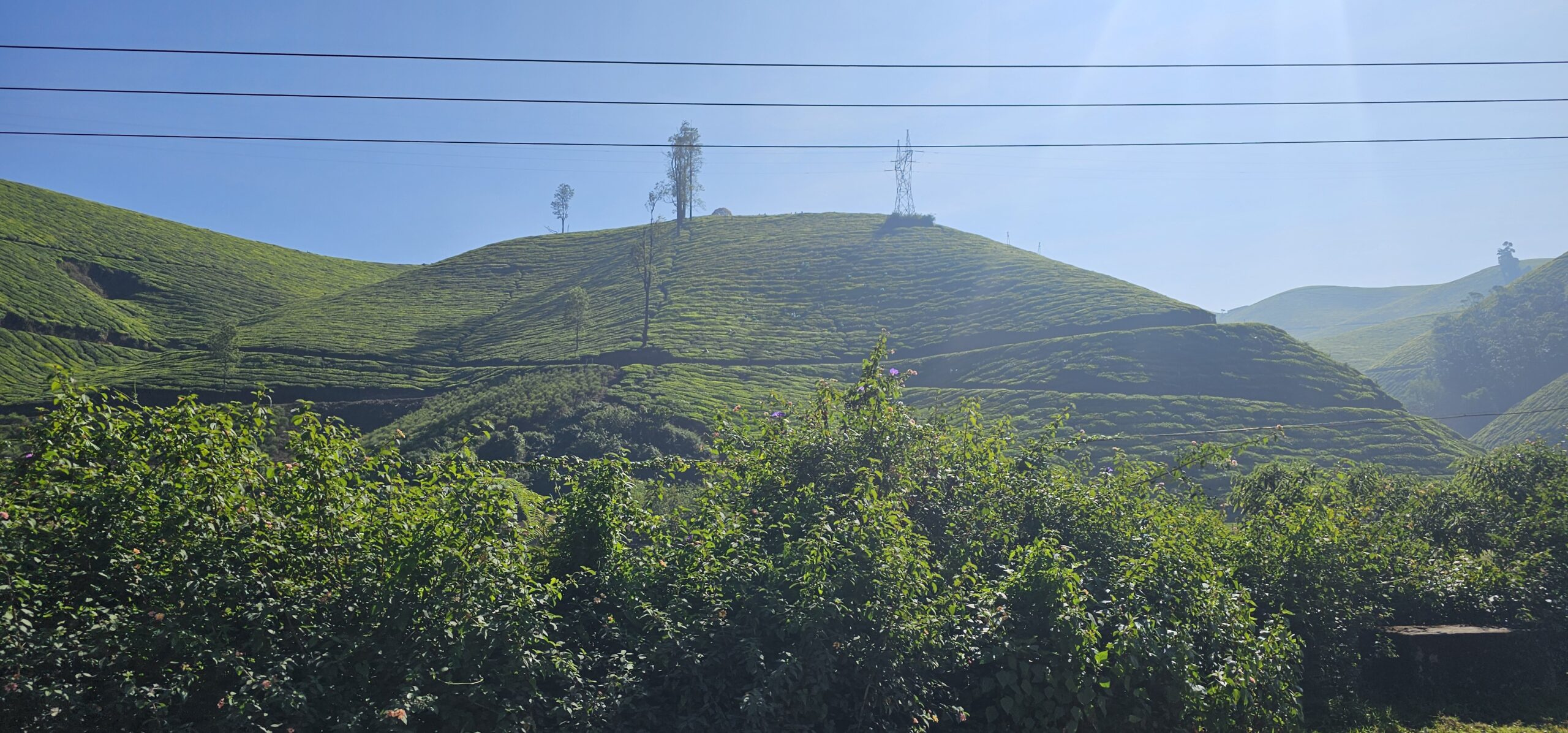
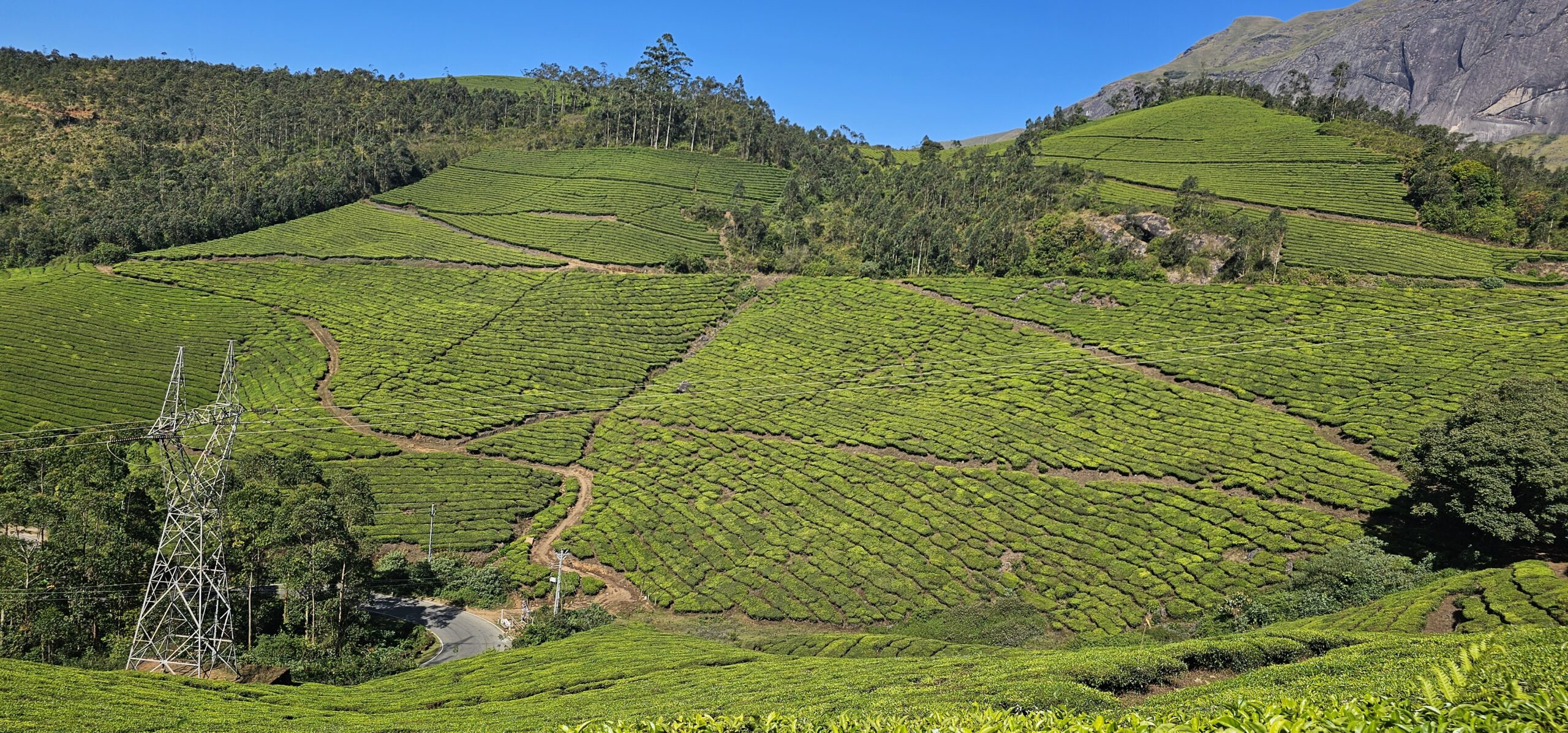
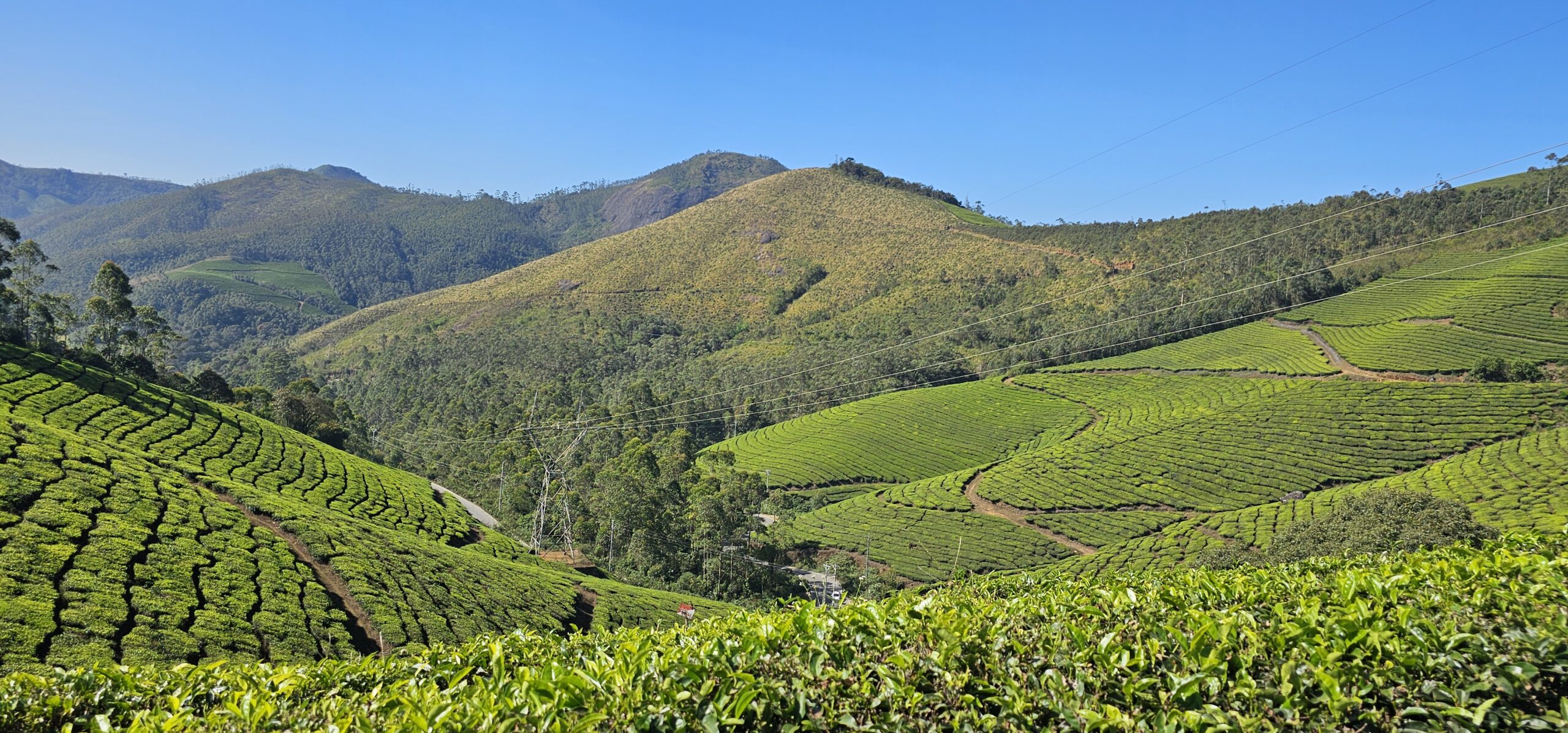
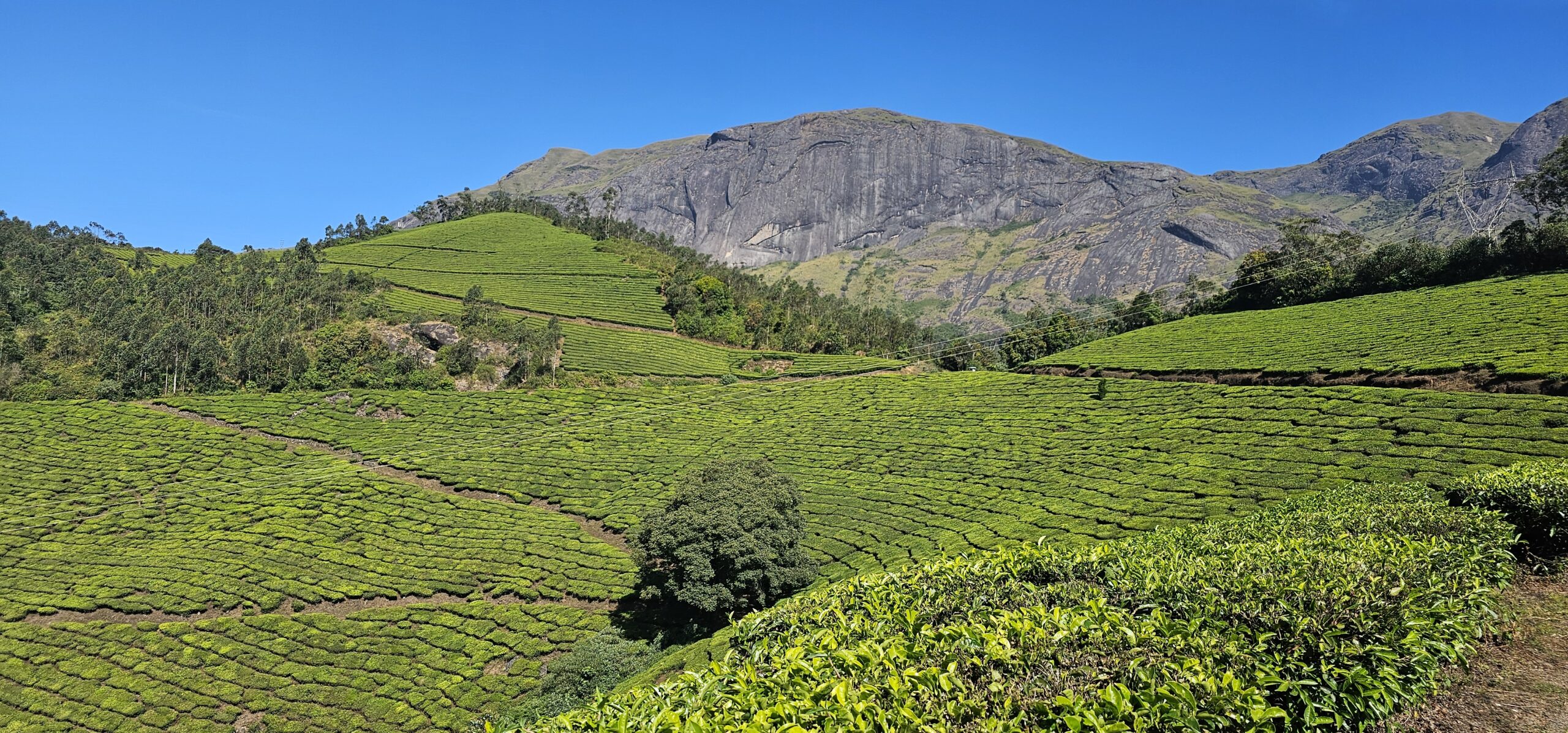
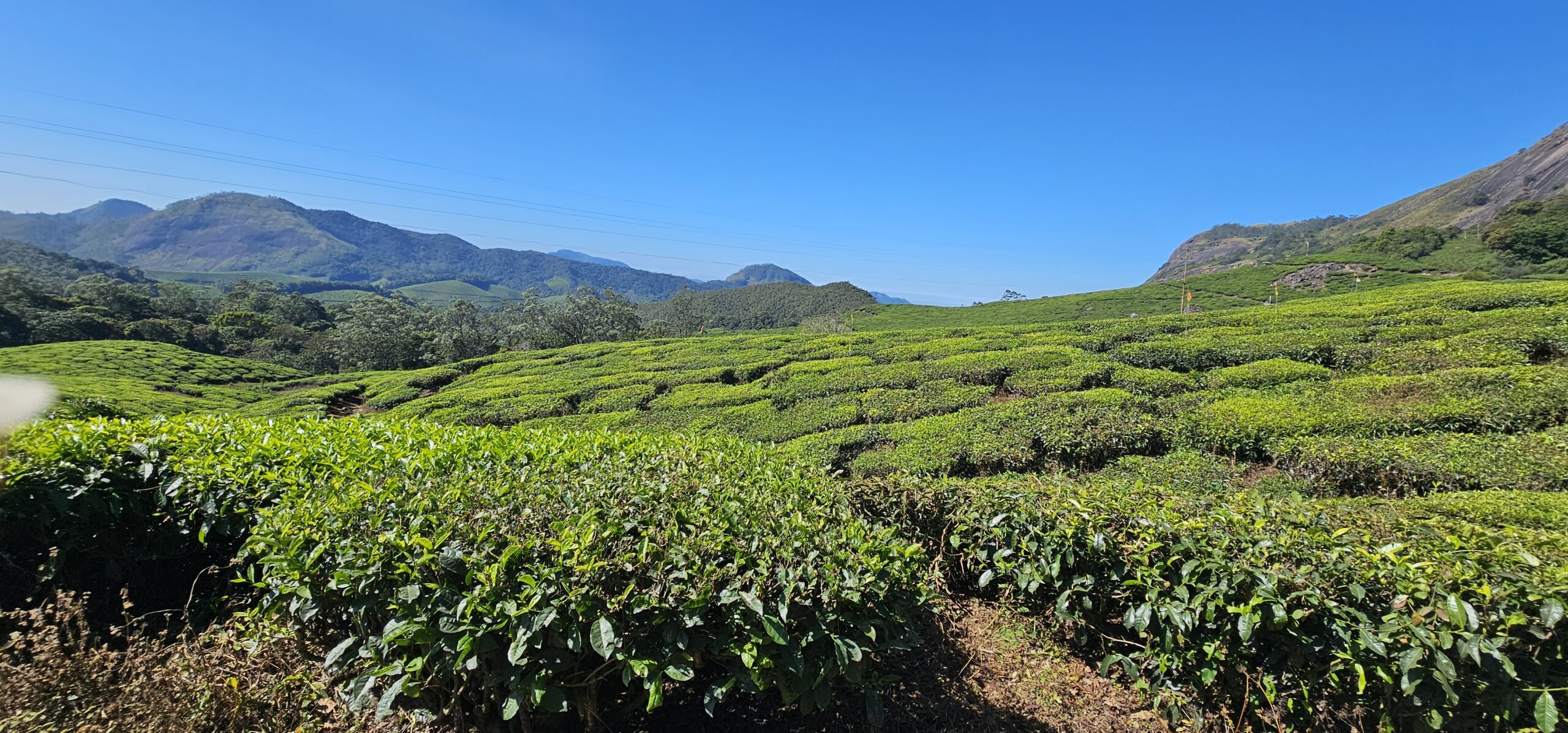
Munroe and two other Brits established the tea and coffee plantations, taking care to leave the land structure complete, working around the forests and its flora and fauna. Moonu’ means ‘three’ and ‘Aru’ means ‘river’ as the town was established where three rivers meet. The area is at a height of around 1,500 m to 2,695m above sea level and was once the summer capital of the British in South India. The soil is so rich and the weather so perfect that every scrap of land has tea bushes planted on it, along with eucalyptus trees, cardamom and lemon grass.
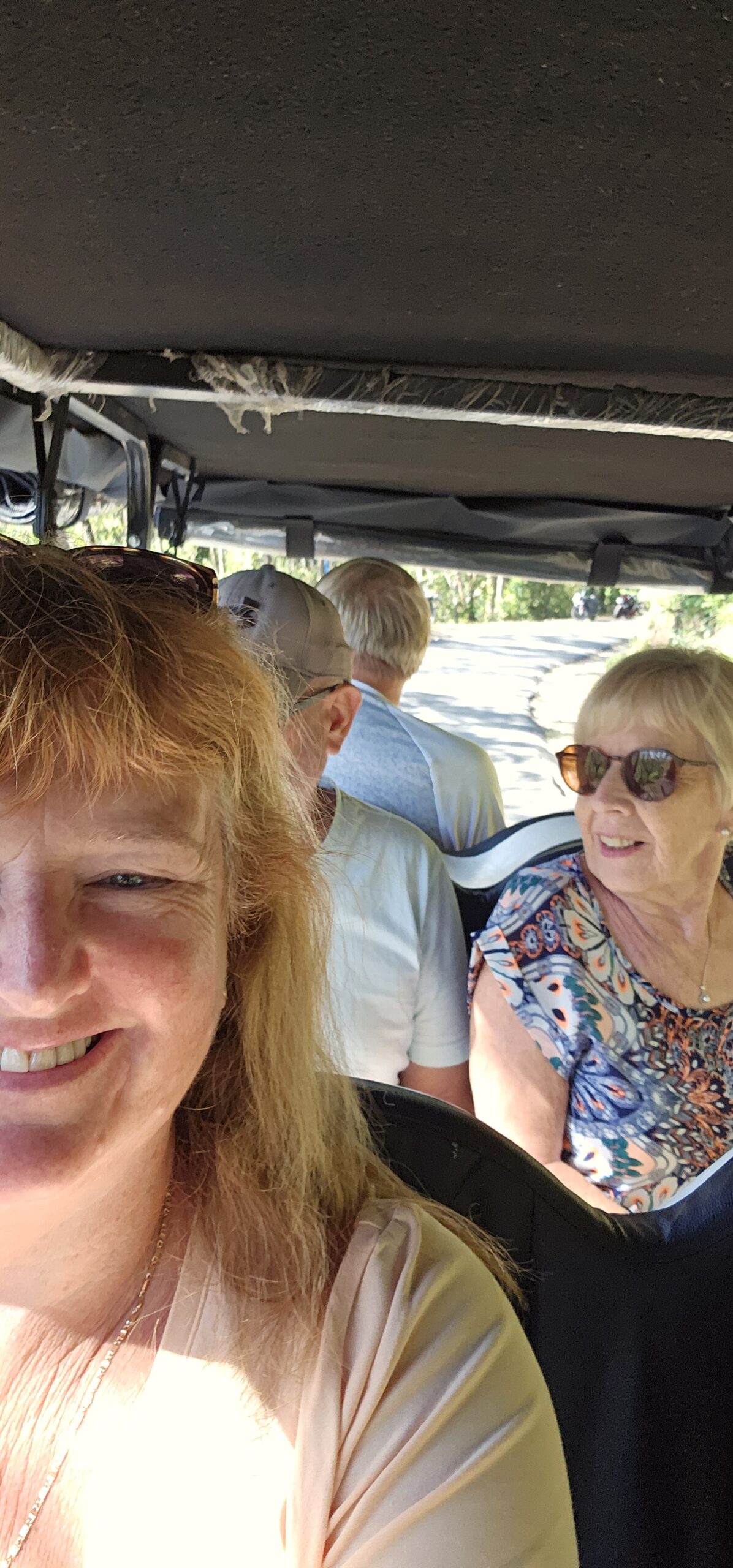
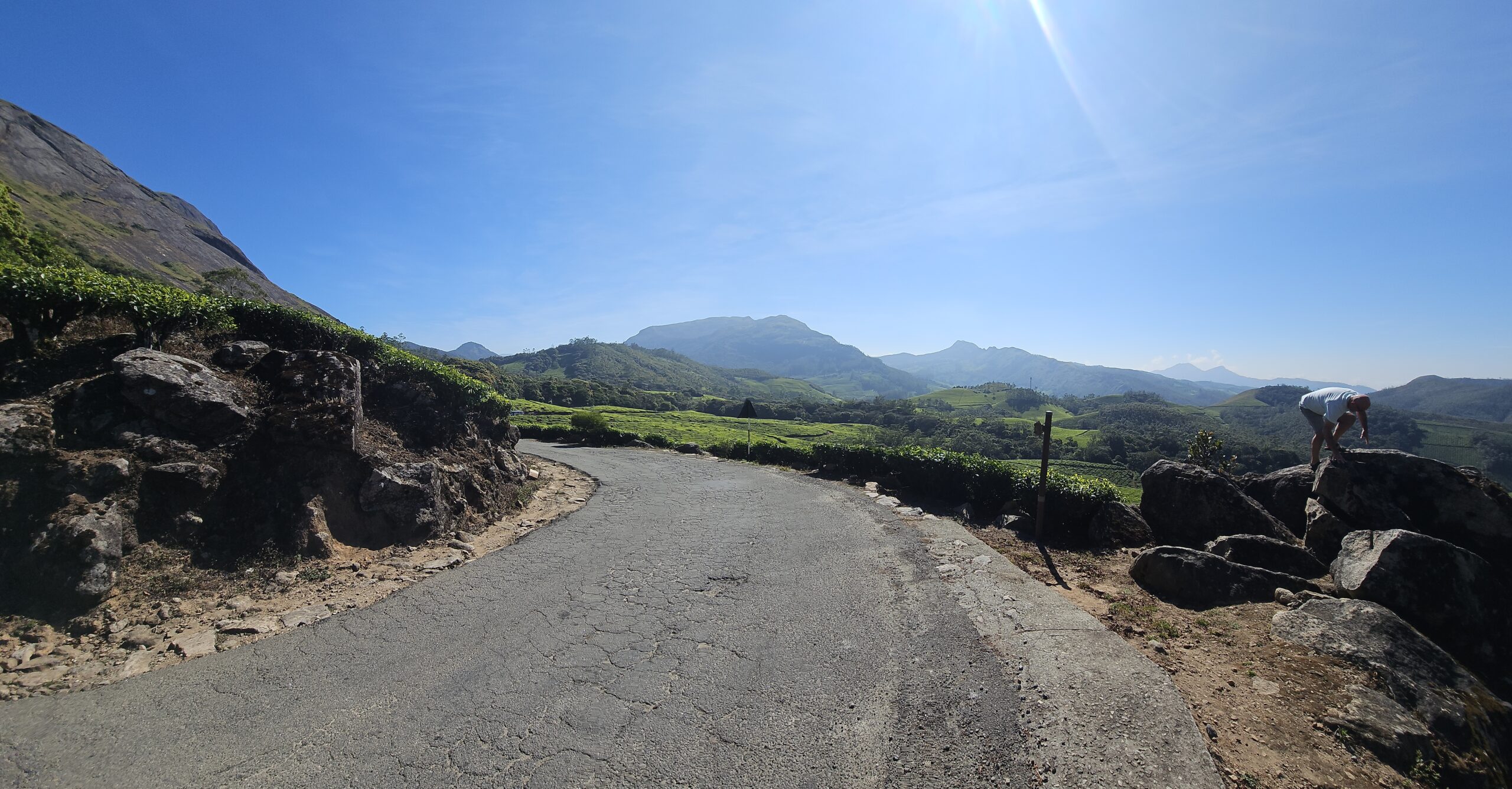
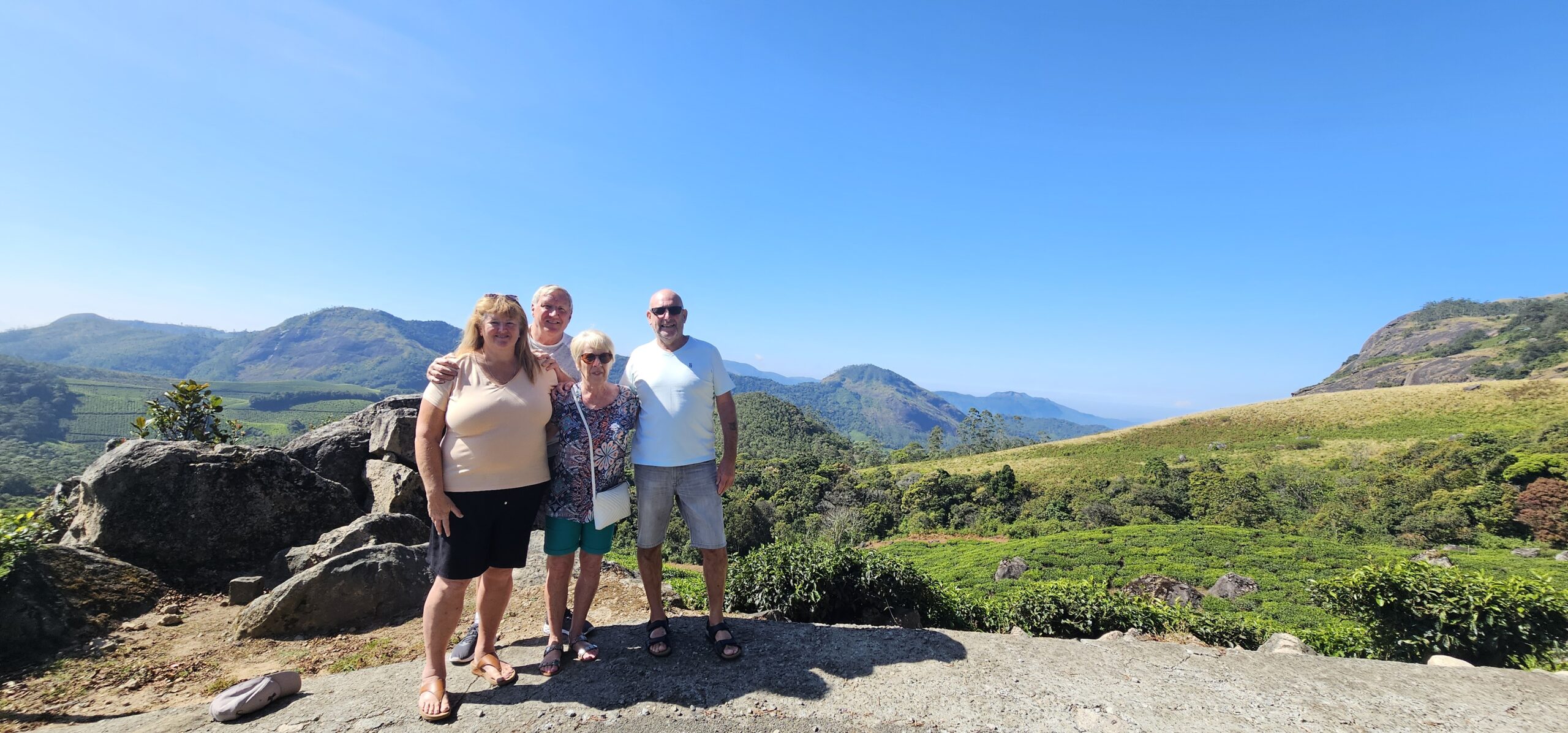
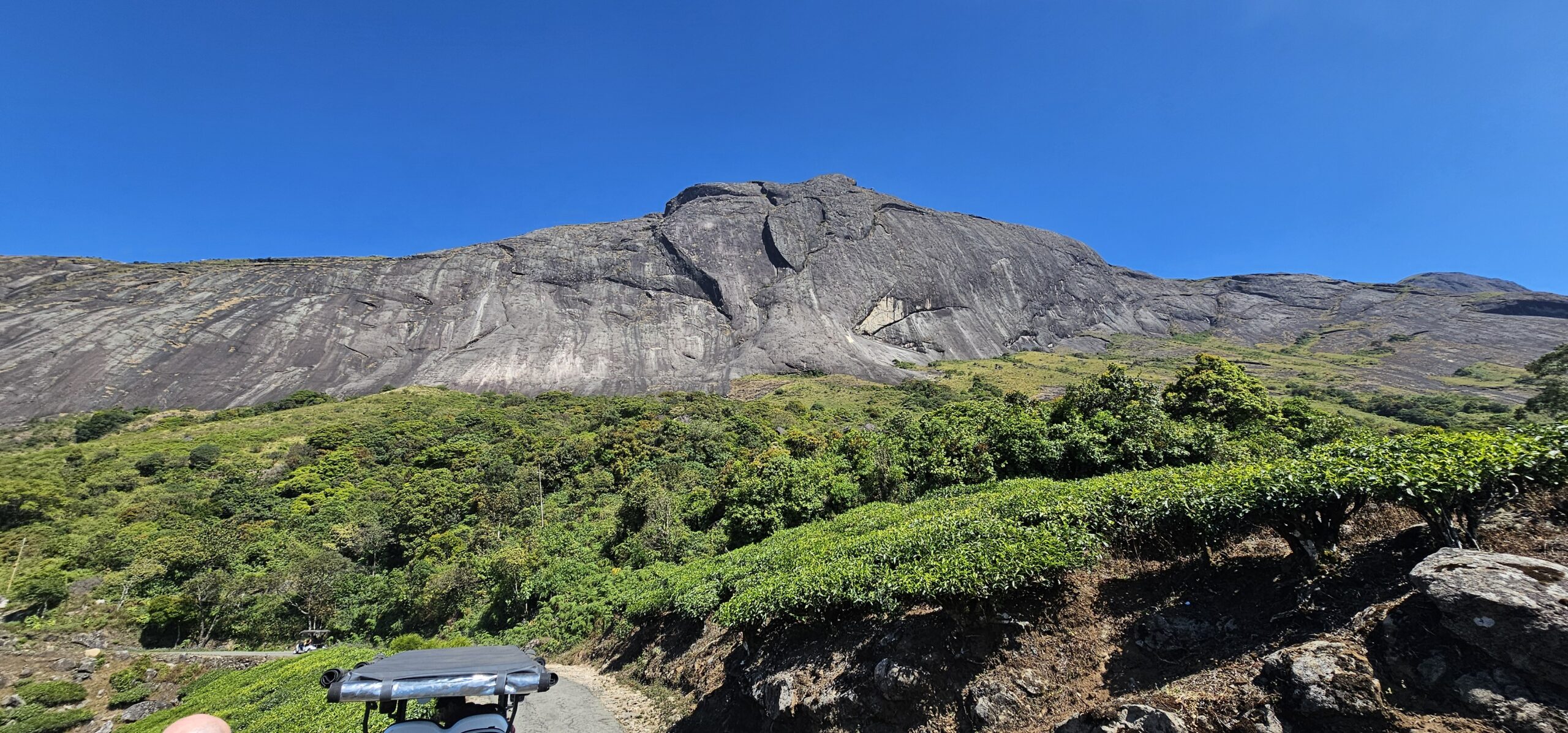
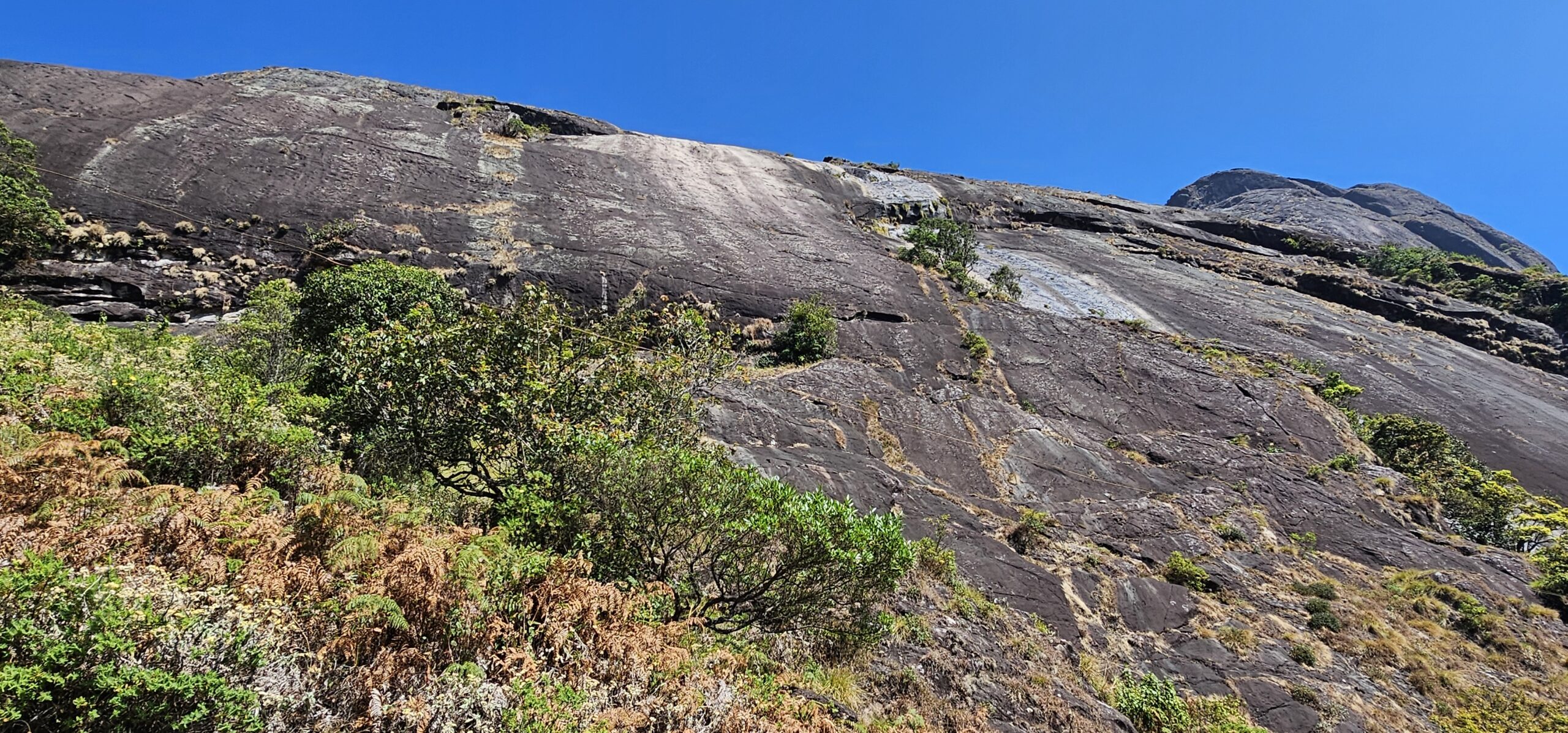
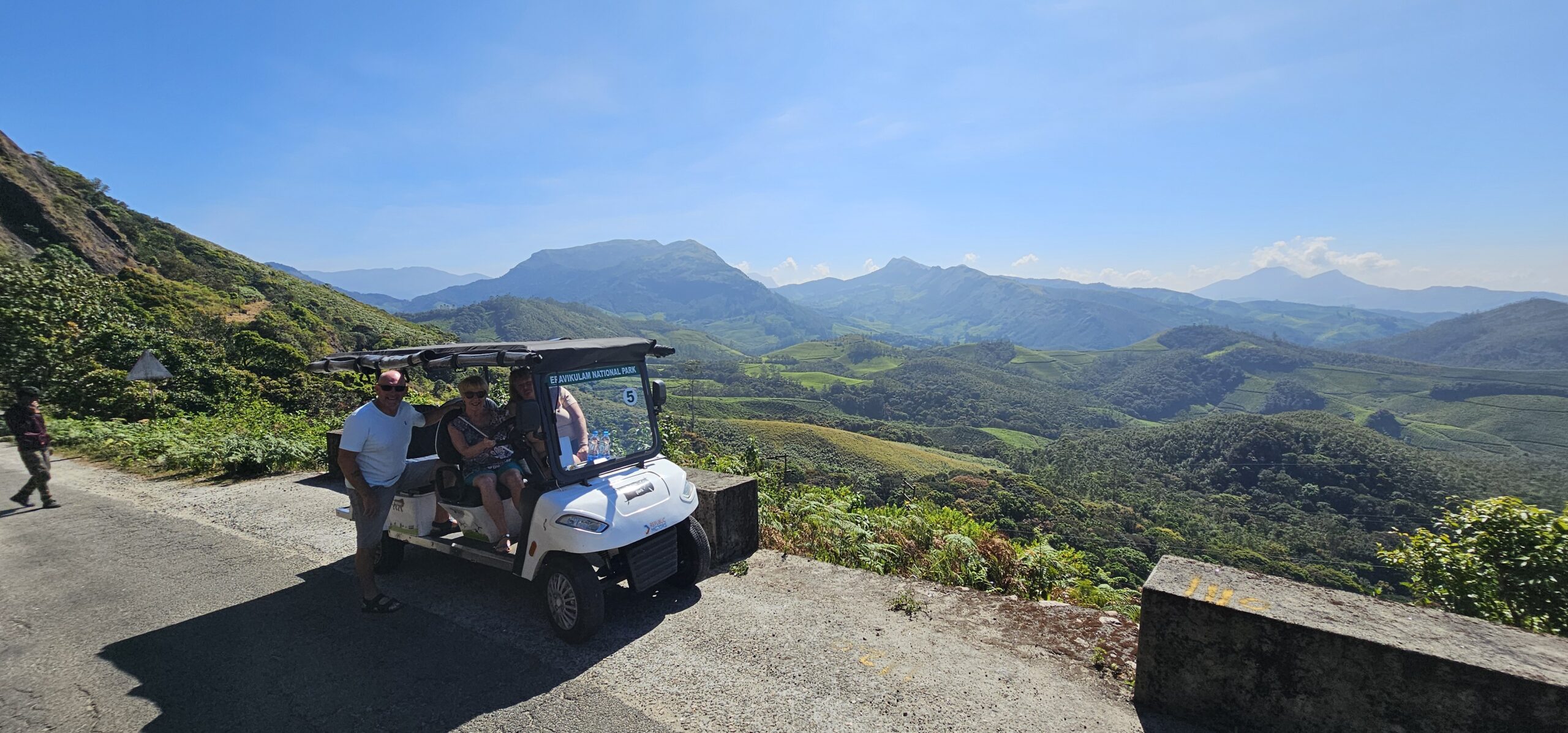
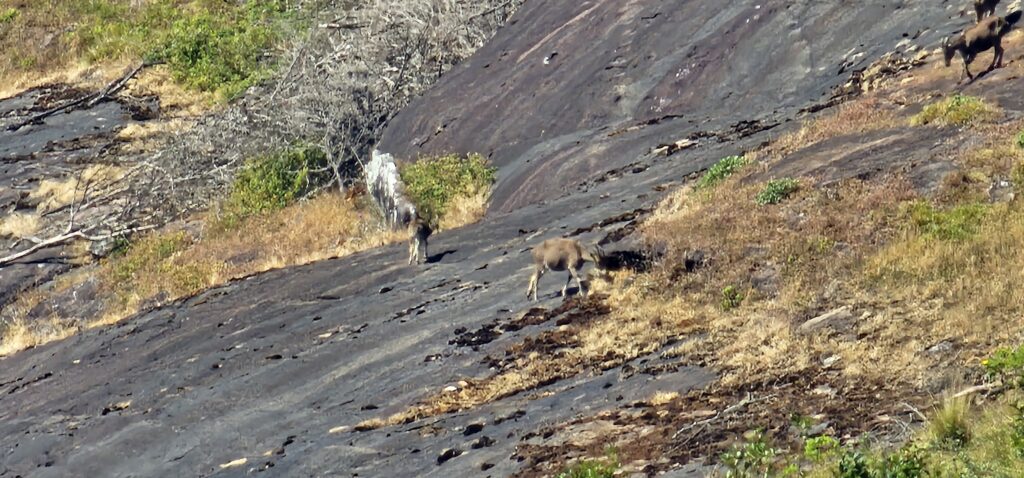
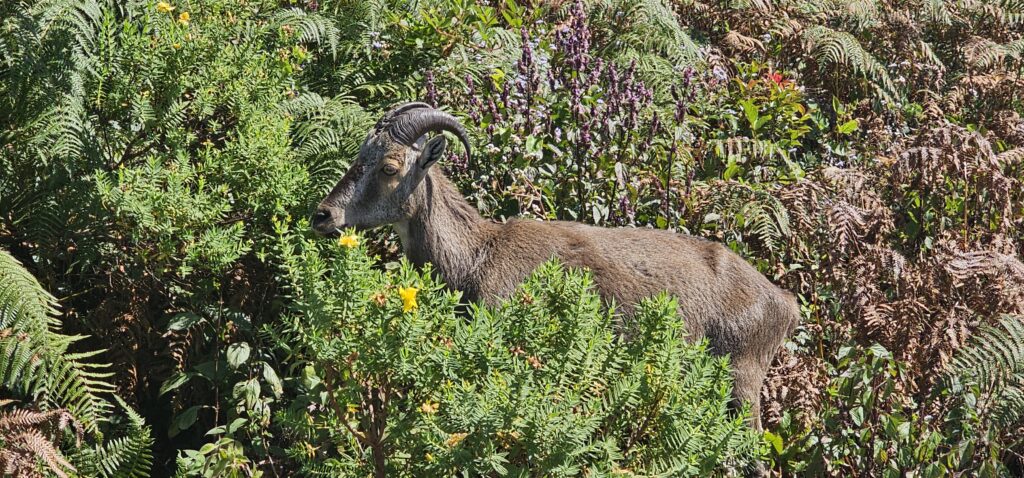
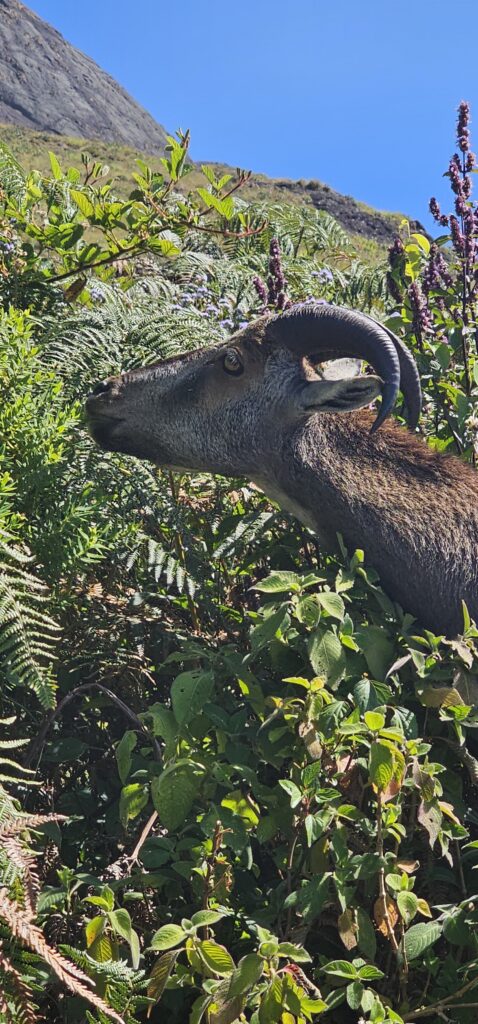
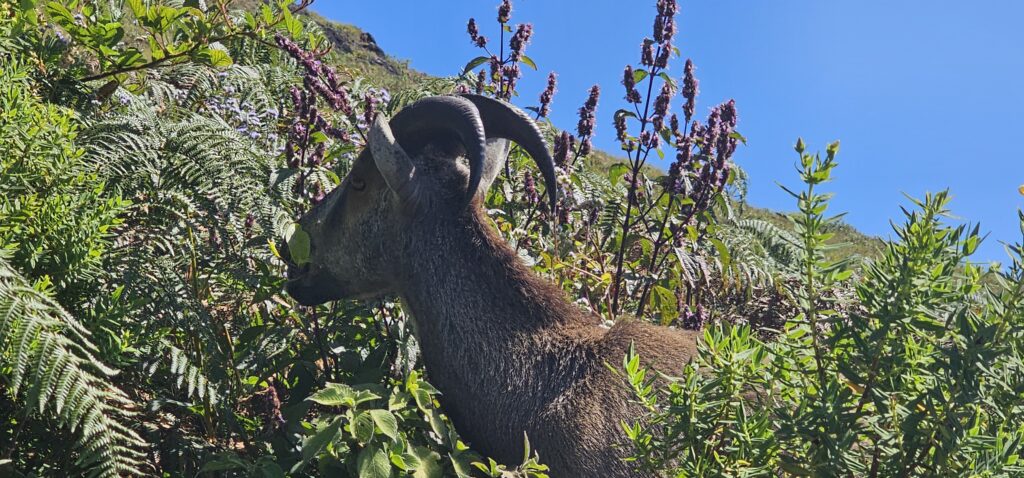
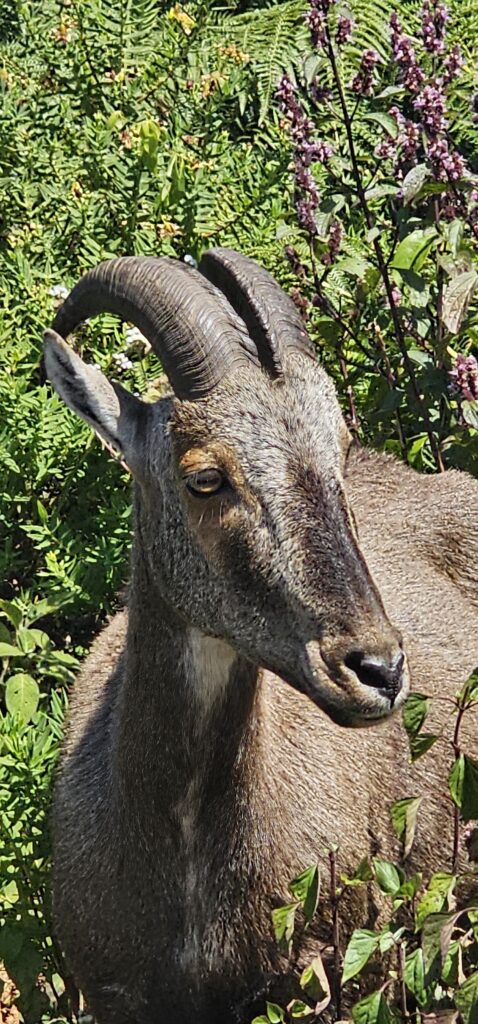
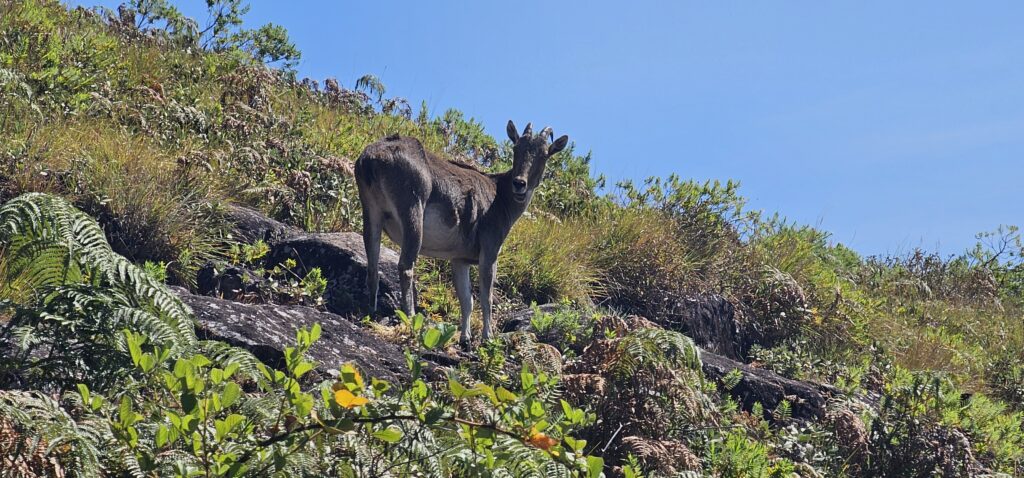
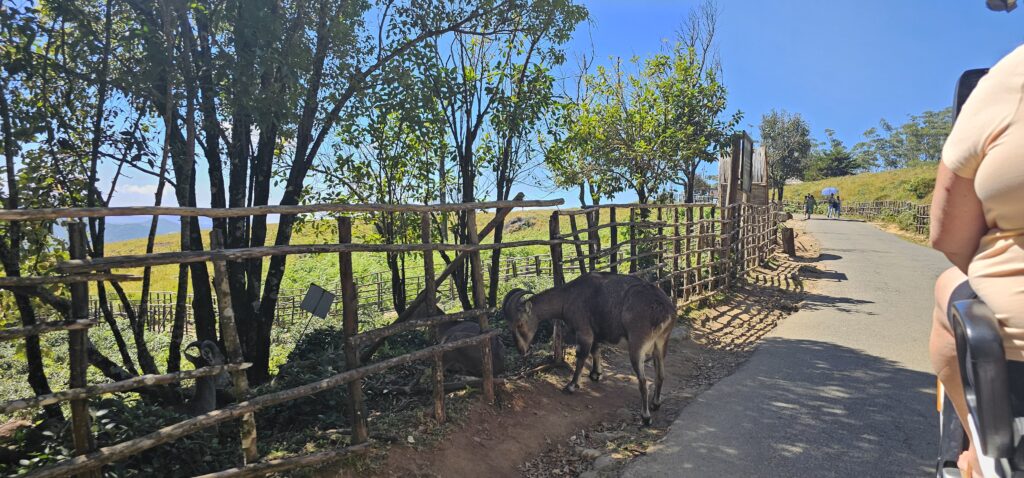
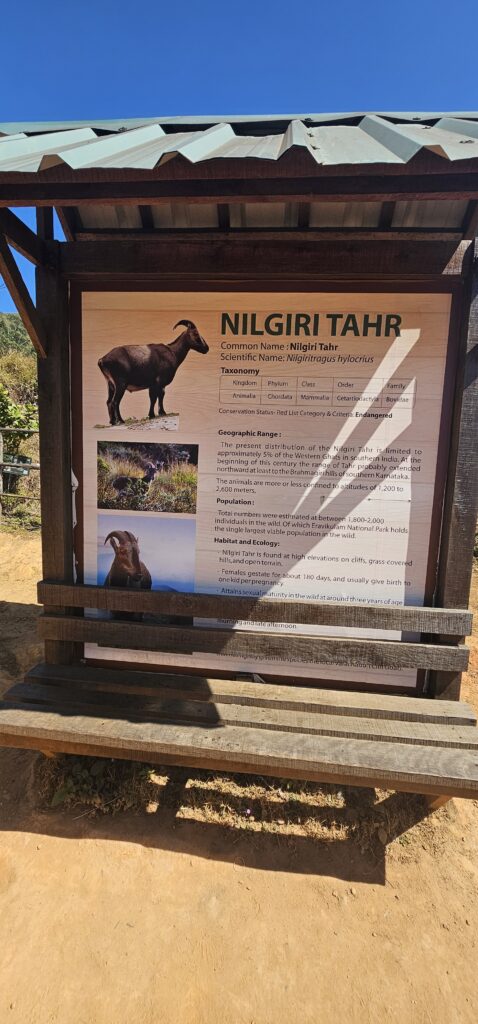
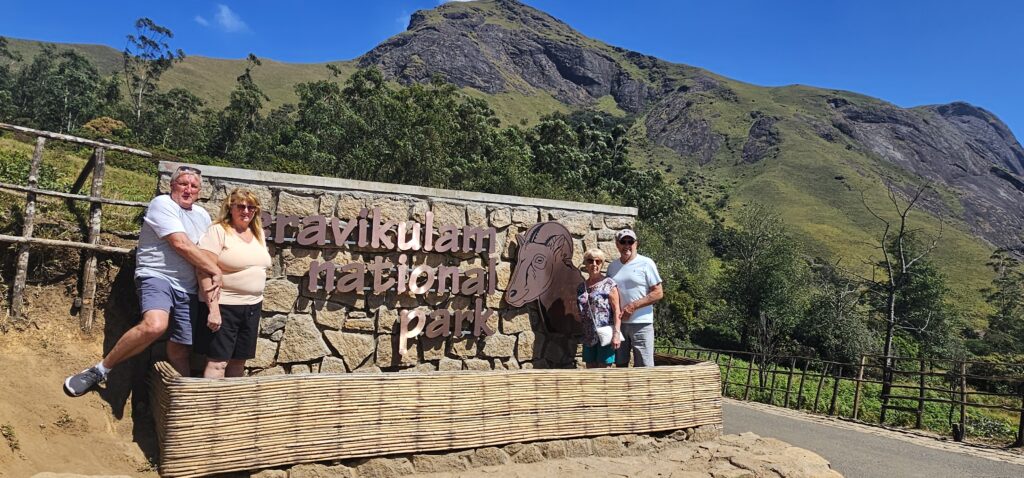
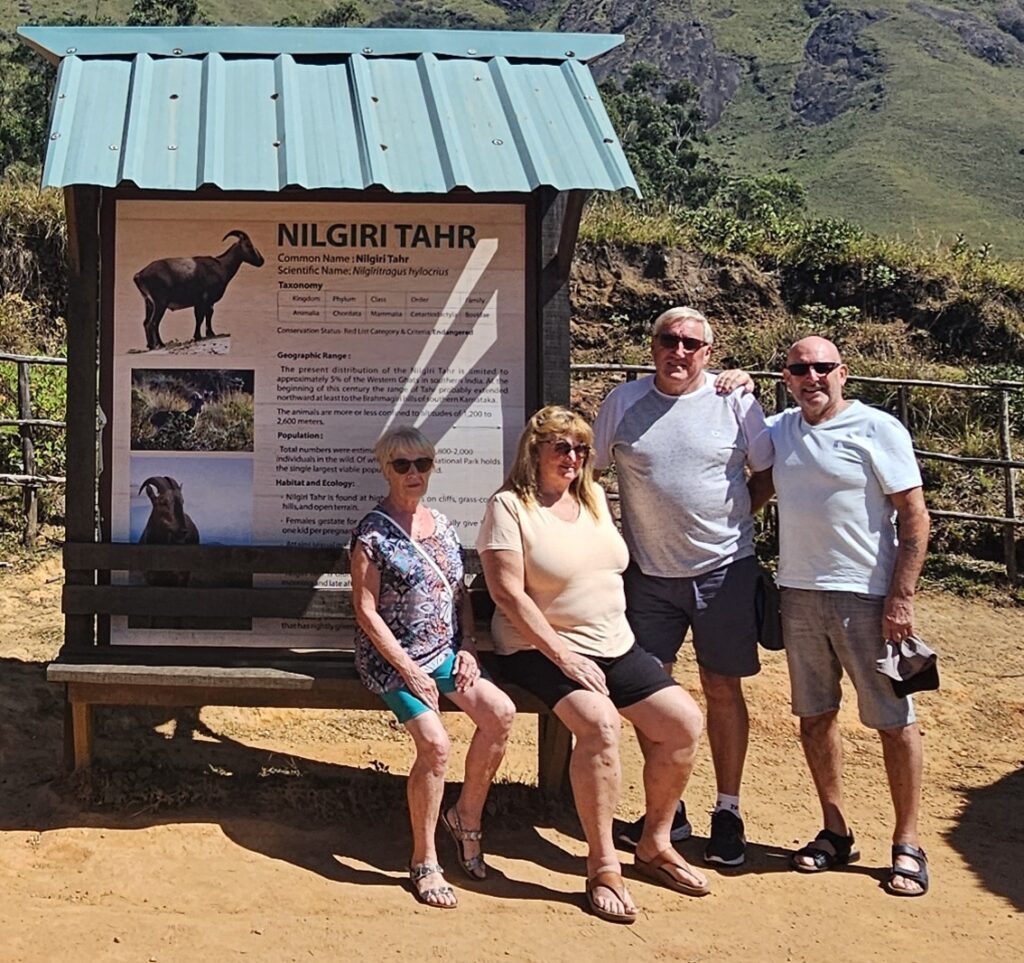
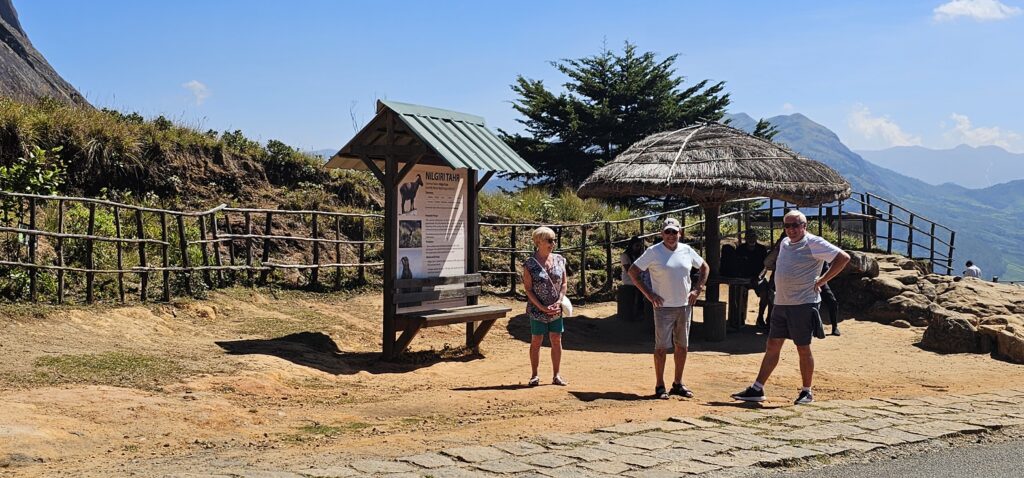
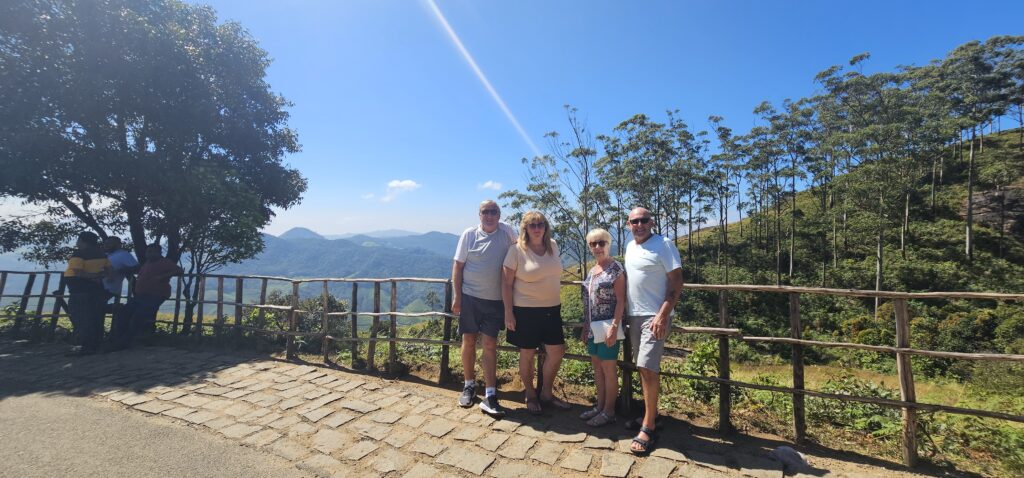
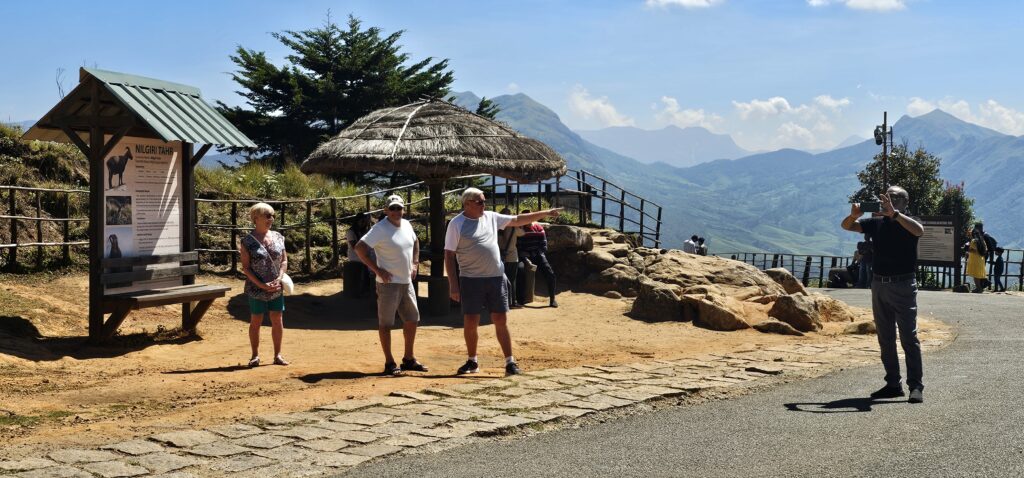
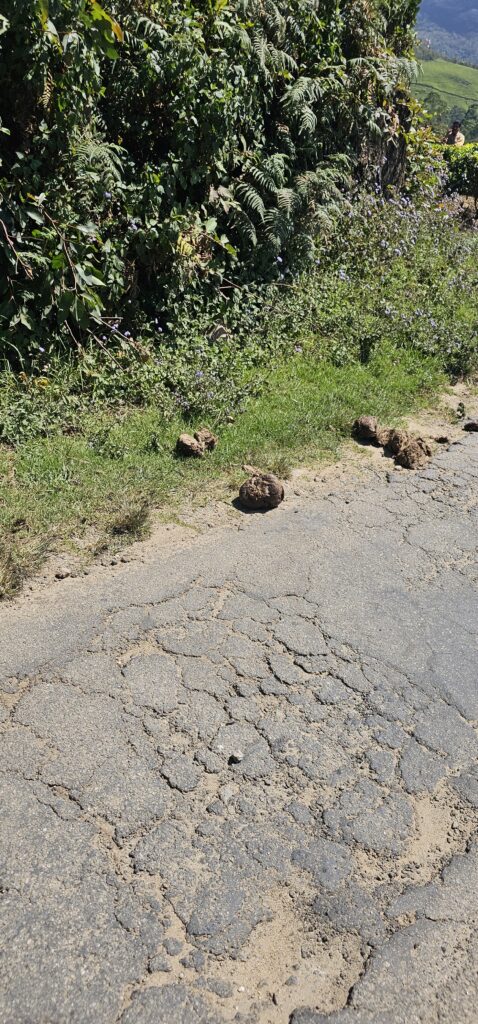
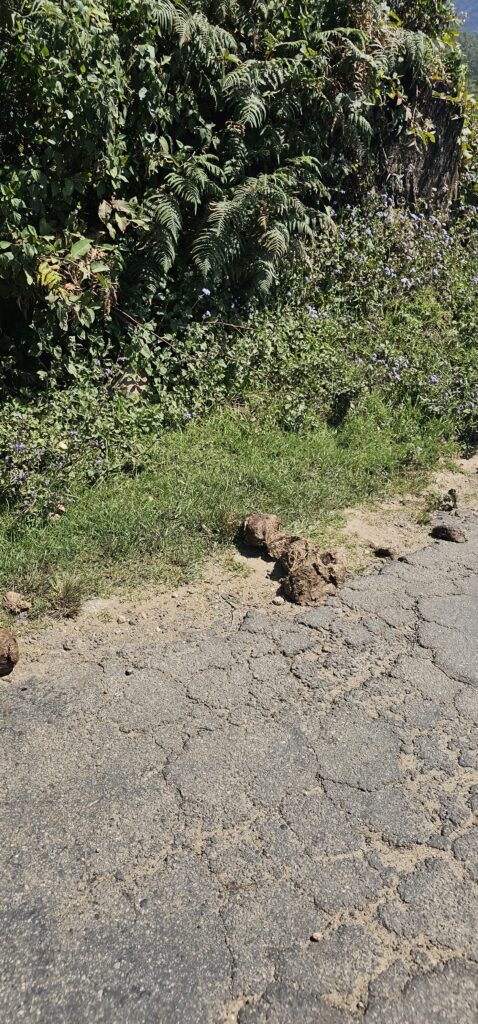
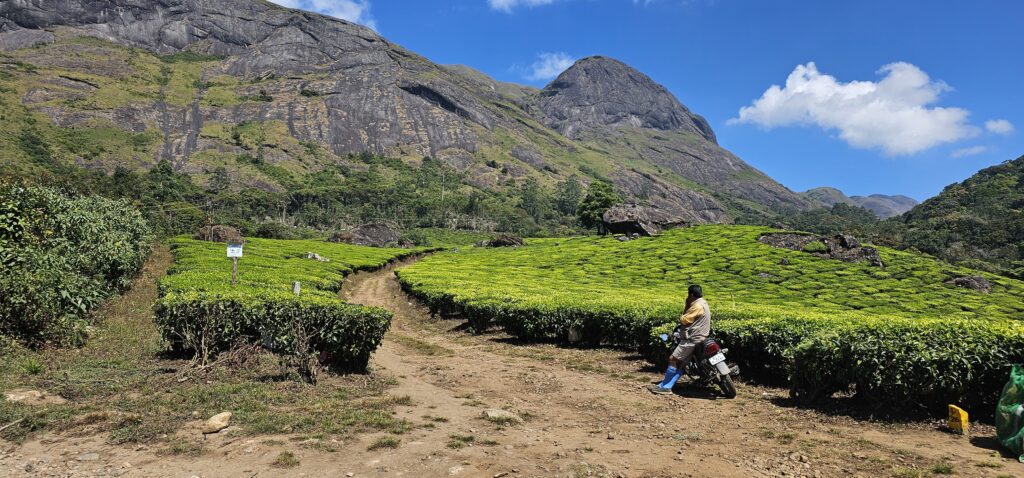
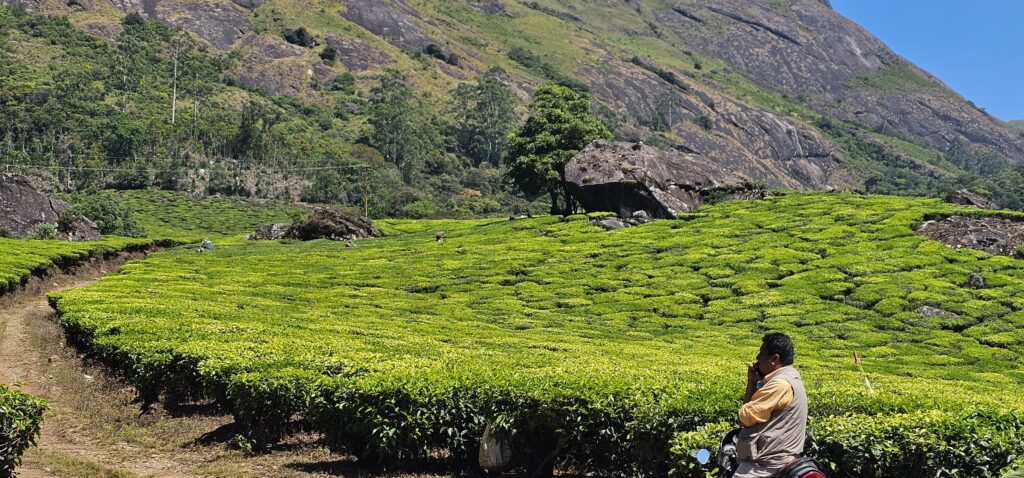
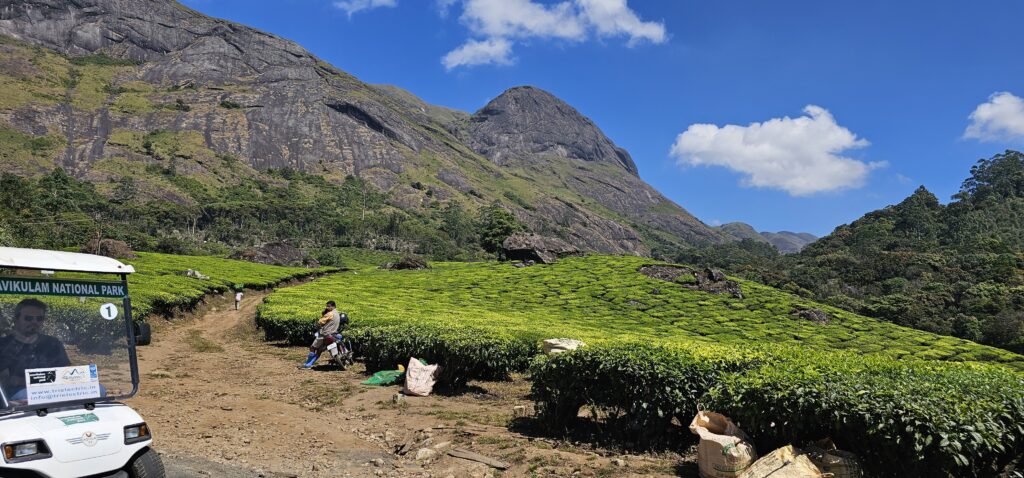
First stop, Eravikulam National Park inside a tea plantation with the most fabulous views. We took a golf cart (it was too hot to walk) up the 3kms to the top to see wild deer (too fast for pictures), Nigrili Tahr (endangered mountain Goats only found in this Park) and a plant that only flowers once every 12 years, the blue Neelakurinji flower. We also saw Fresh Elephant dung!!! Sadly no sight of the beasts themselves.
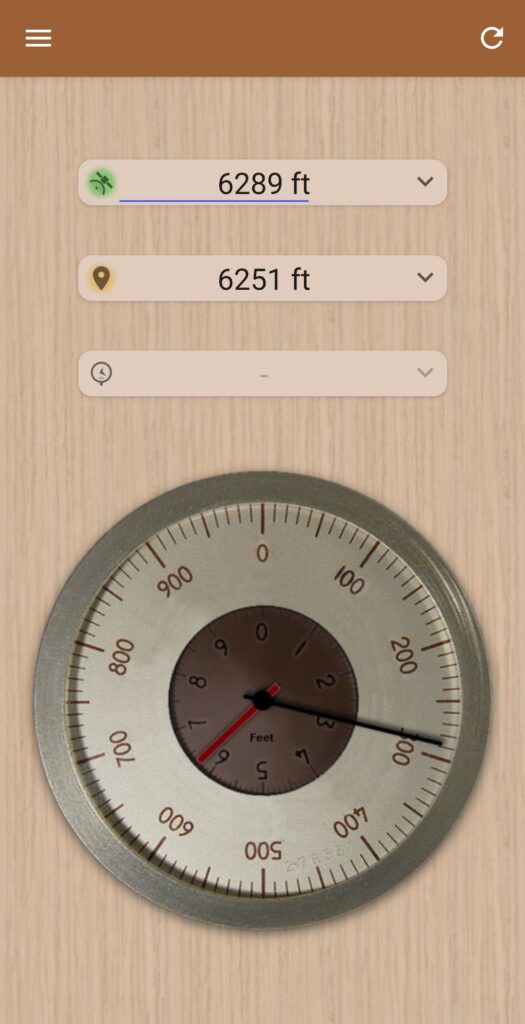
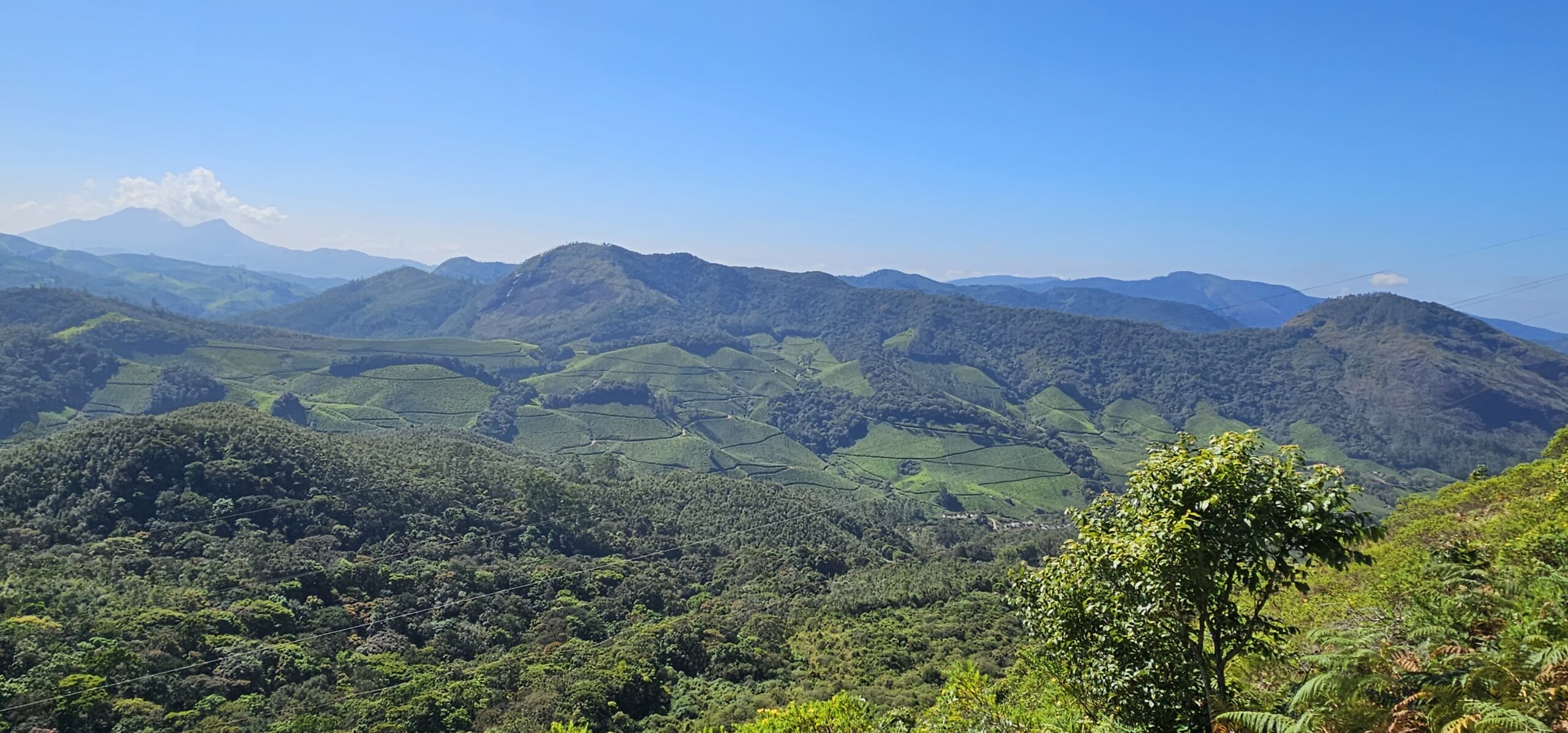
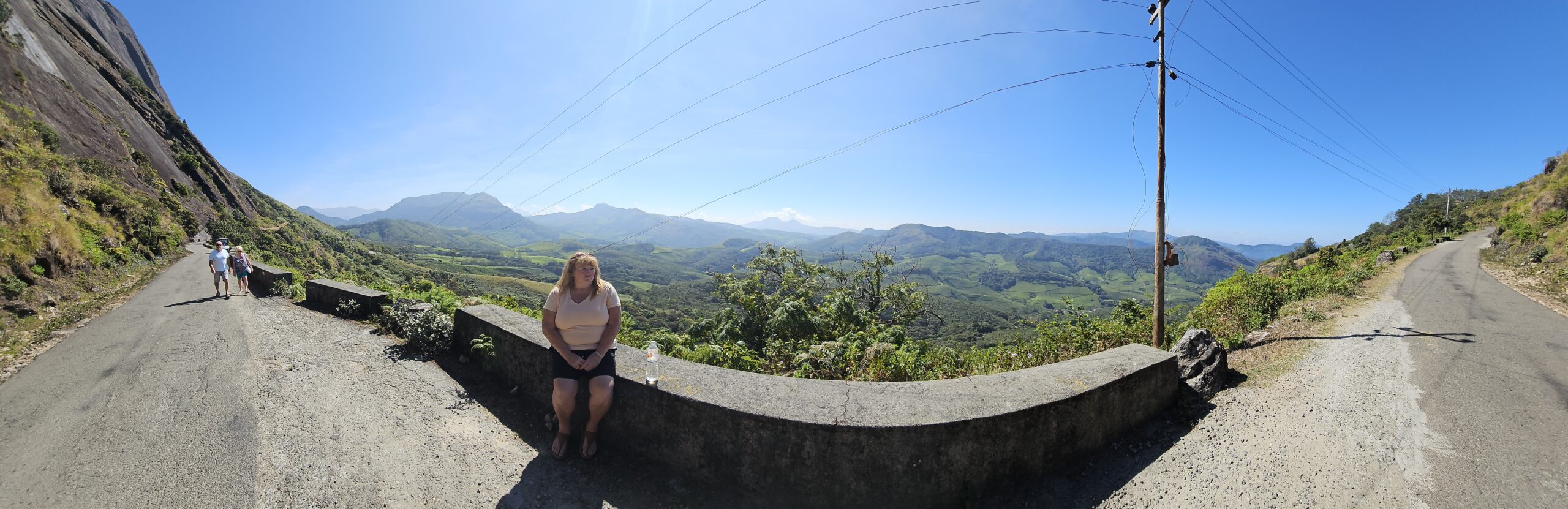
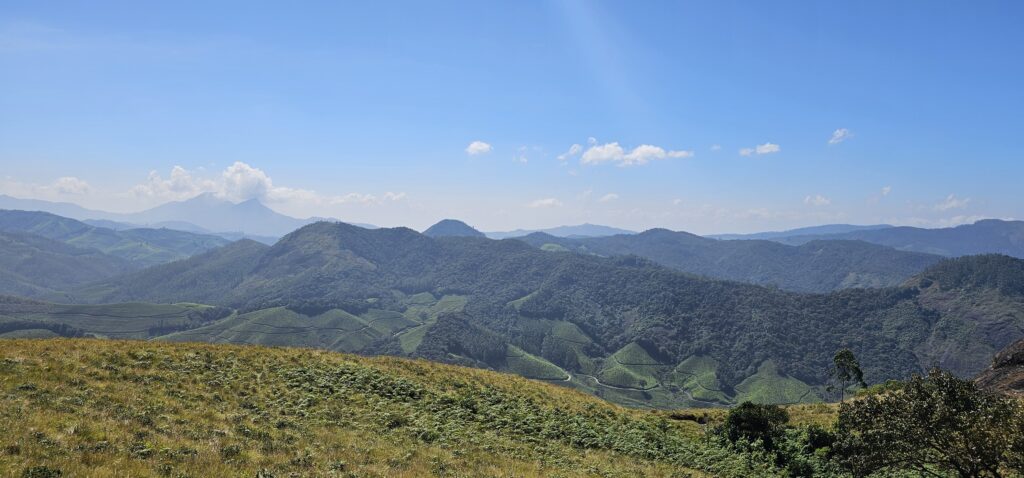
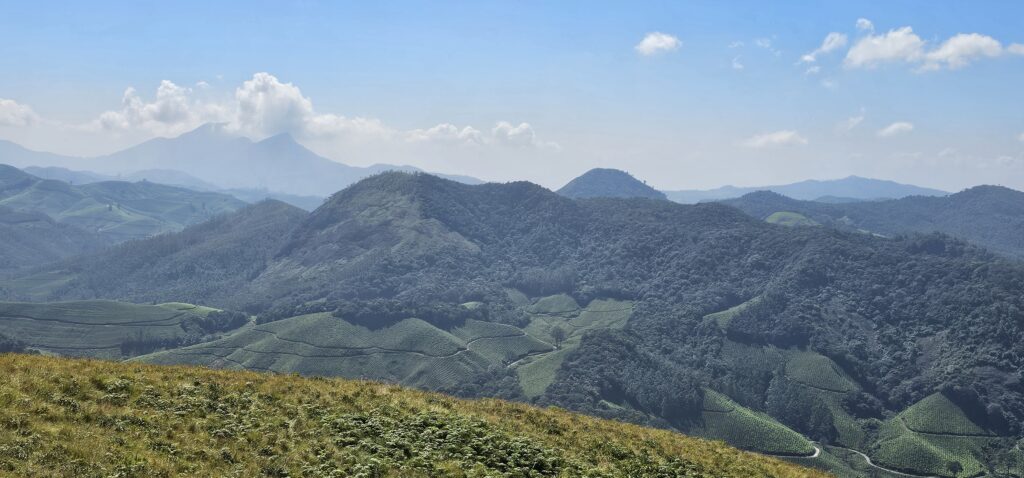
The views at the top, which was at over 6000 feet above sea level, were spectacular! It was calmly serene, beautiful and so colourful.
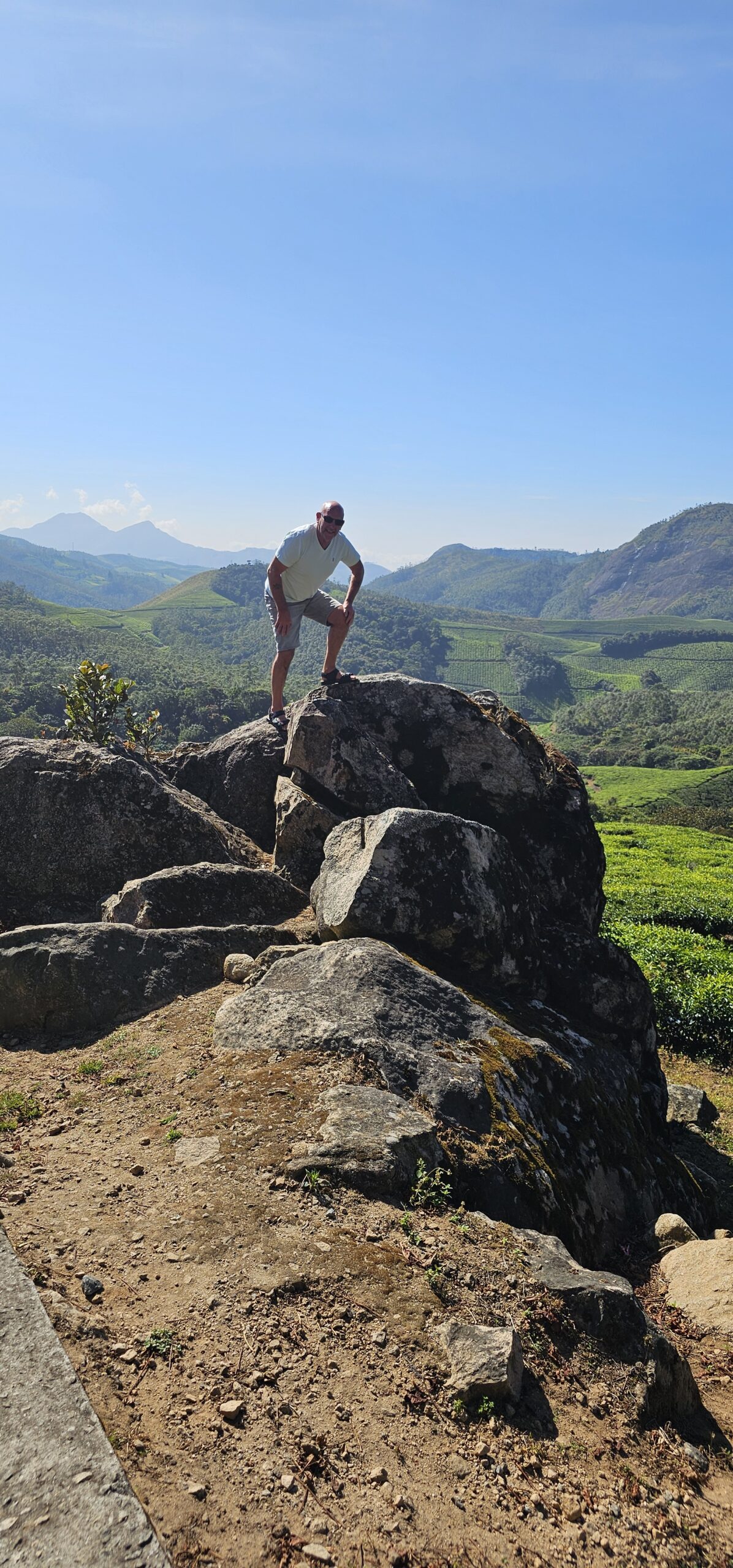
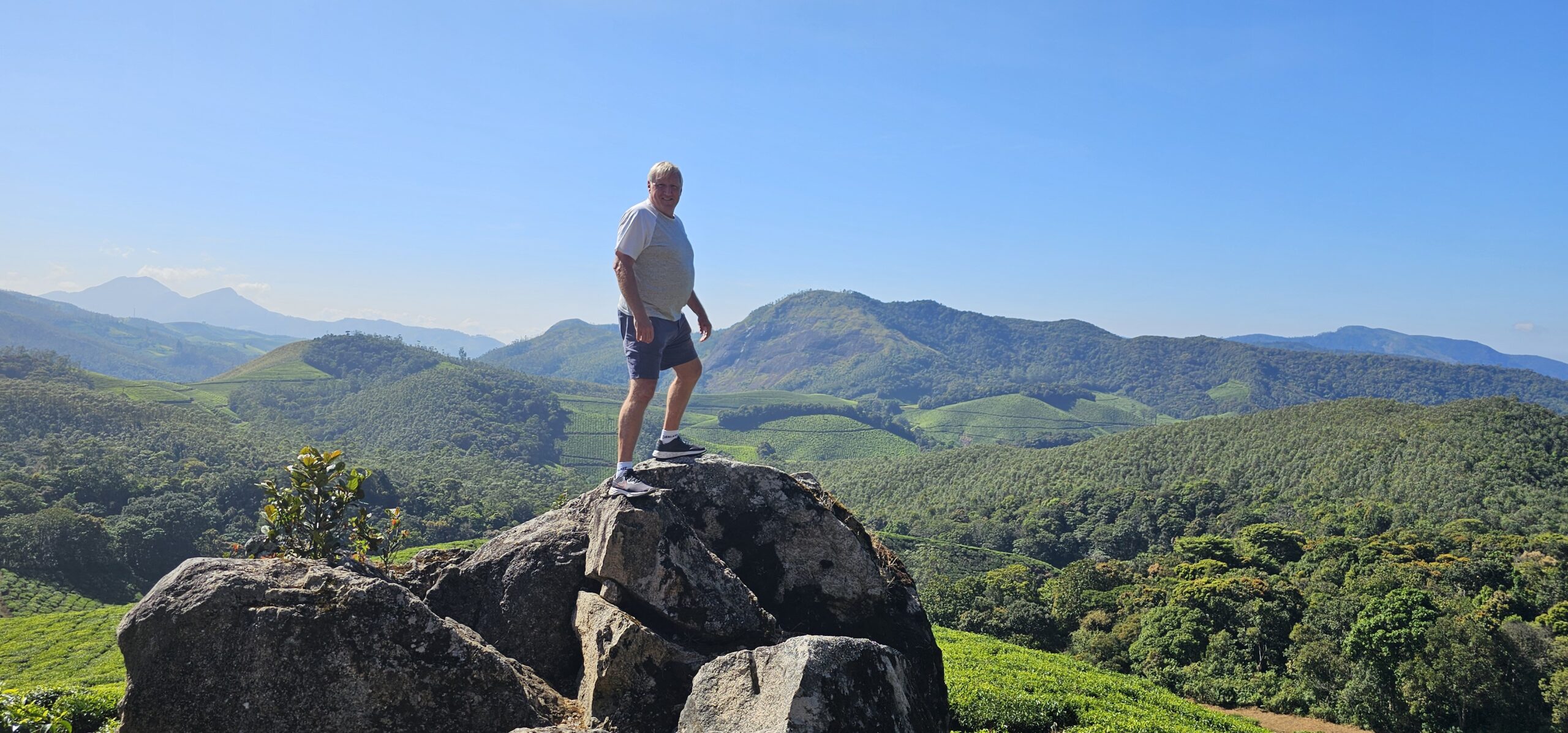
Fun in the golf cartGraham pretending to be a mountain goatDavid being a mountaineer!
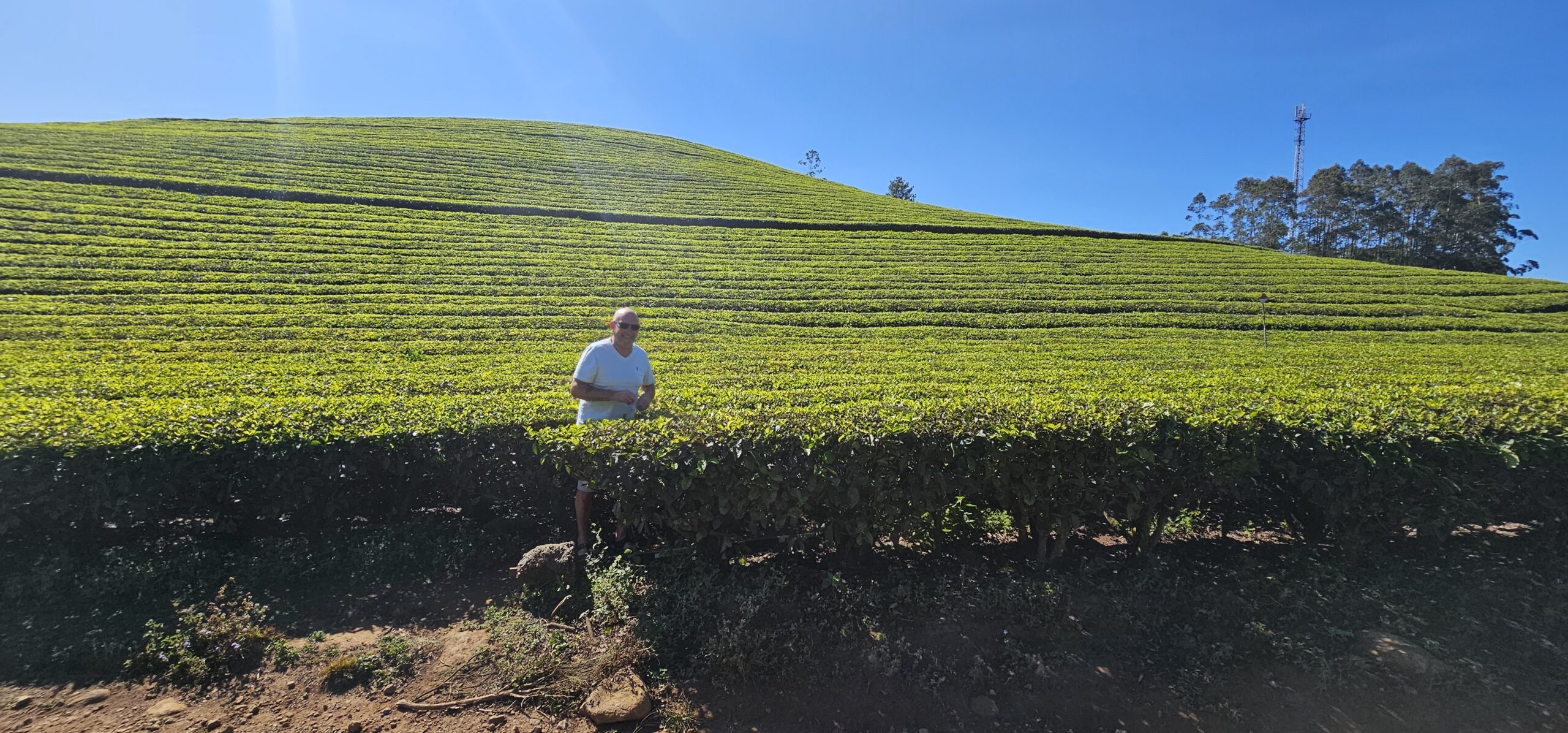
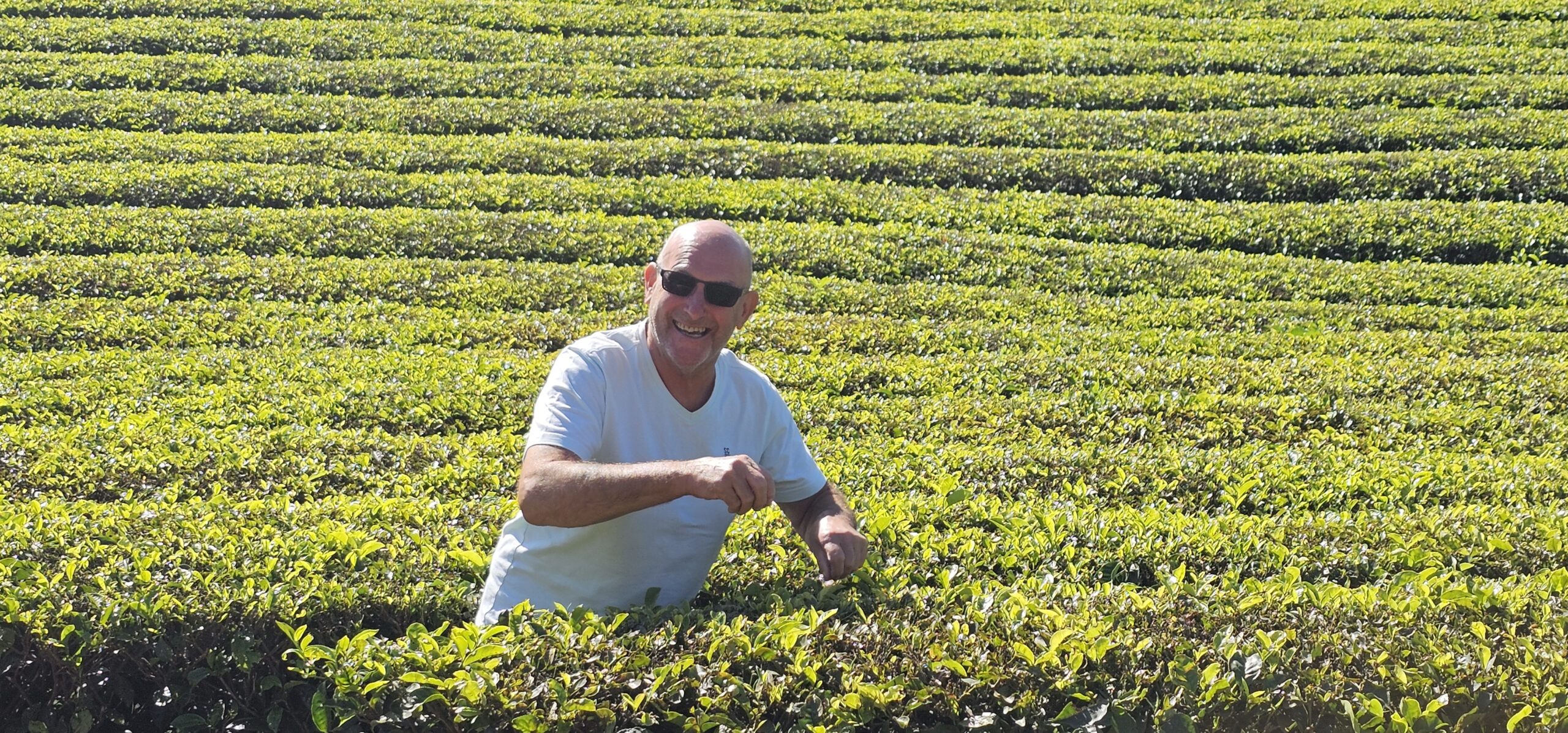
Graham trialled picking tea leaves – he was unsuccessful at being offered a fulltime job!
The views got greener and the atmosphere became quieter the further we went up.
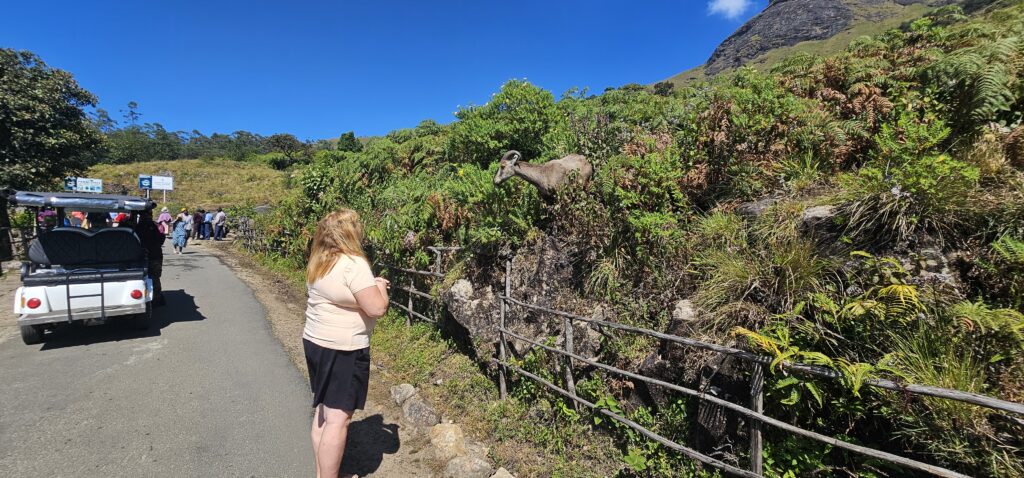
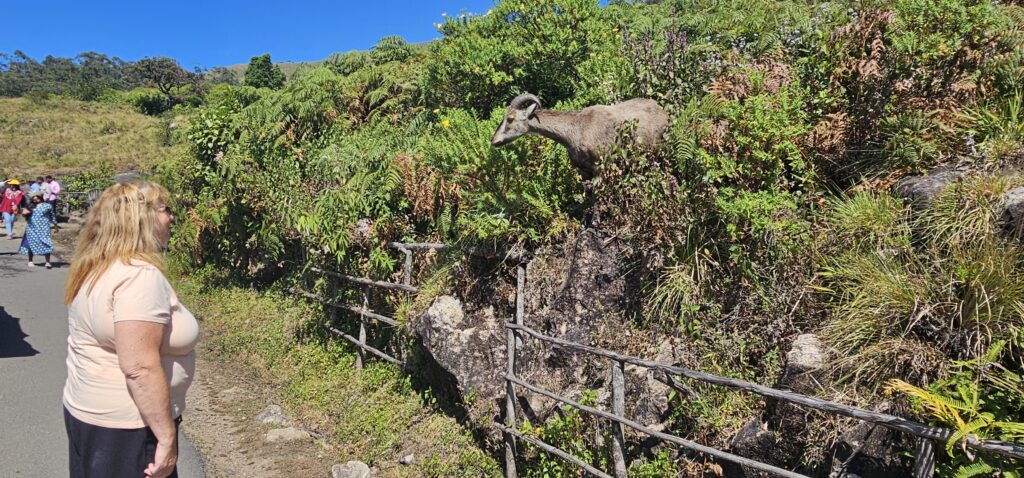
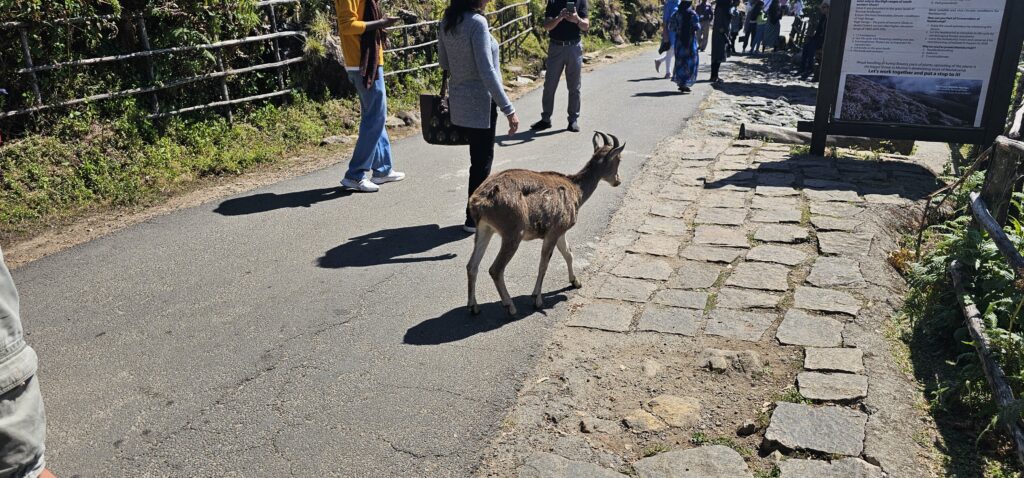
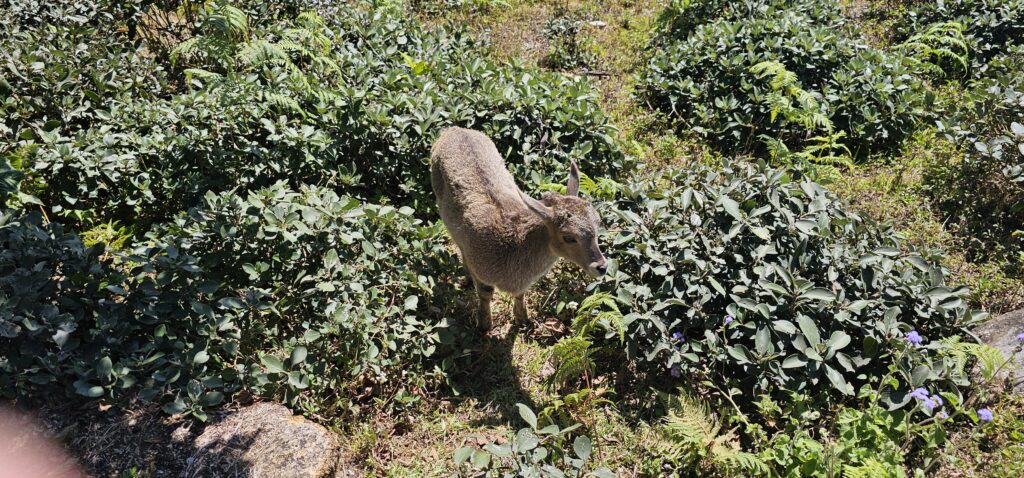
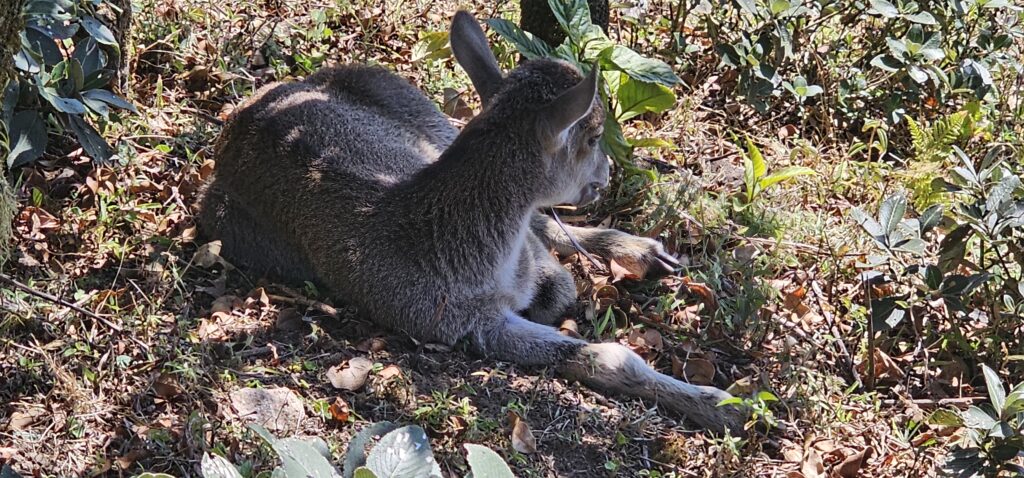
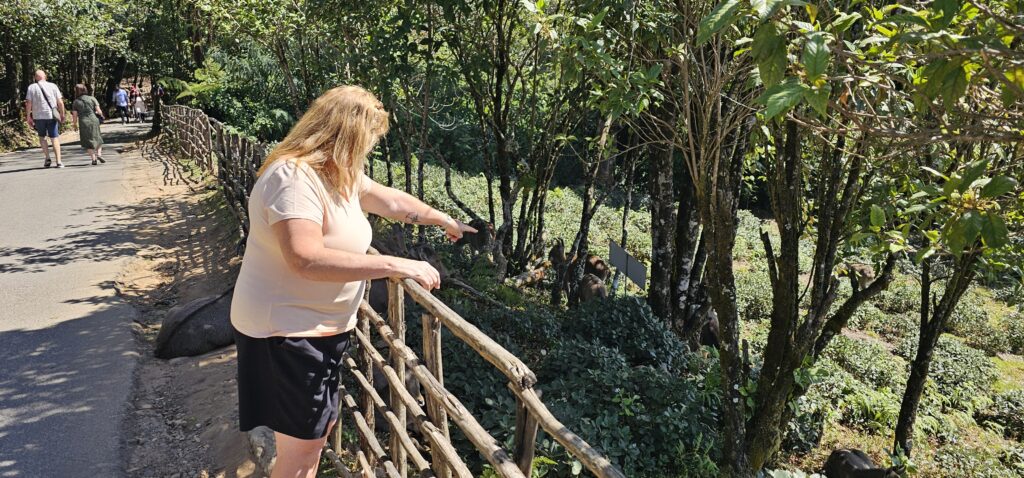
Finally we came across the endangered and rare Negrili Tahr Goats…..
First sightingThen they got closerAnd really closeThen the whole family wandered along….
Finally, a photo stop at the top of the tourist trail…..
On the way down, we got very excited when we saw some fresh elephant poo, sadly that’s as close as we got!
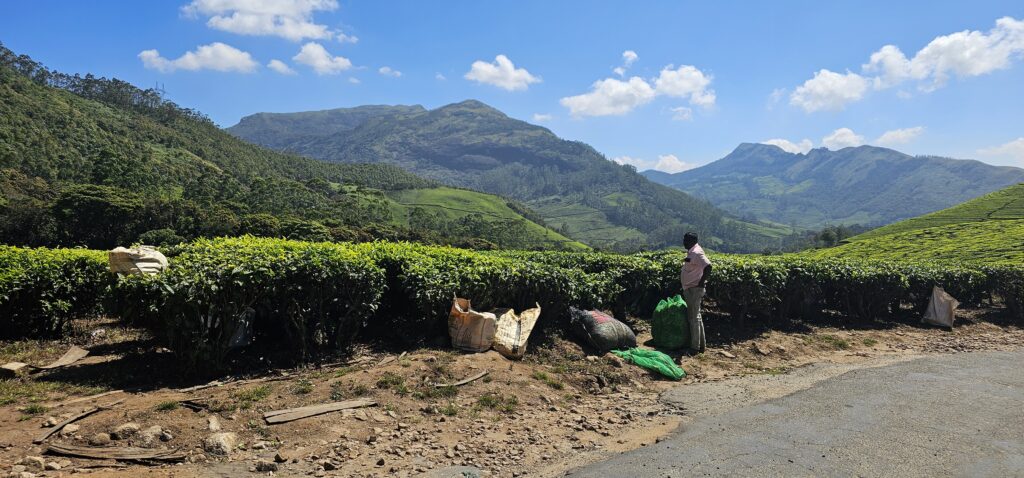
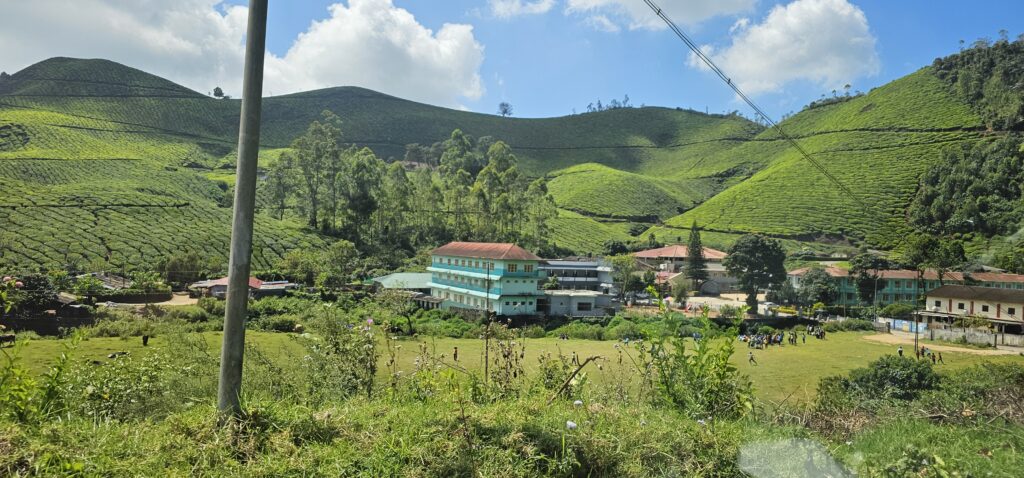
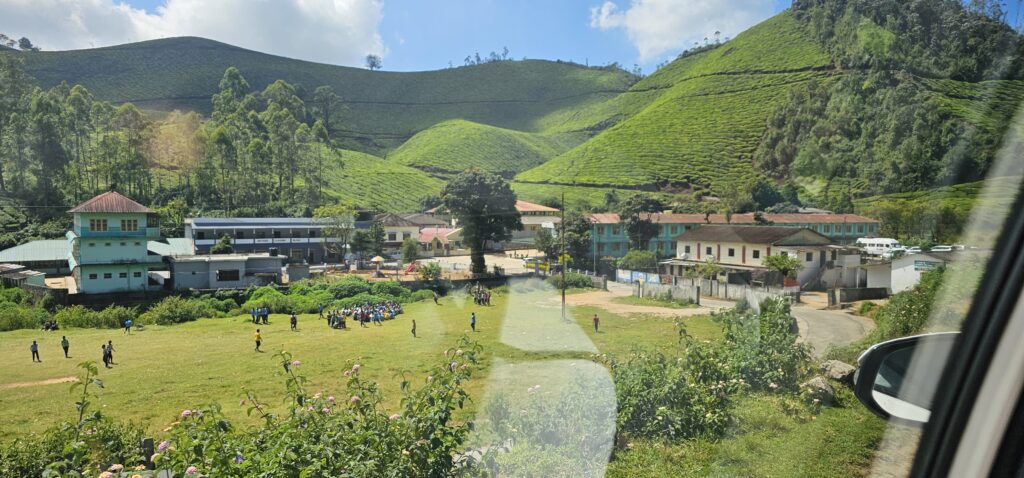
Real tea pickers! A plantation school
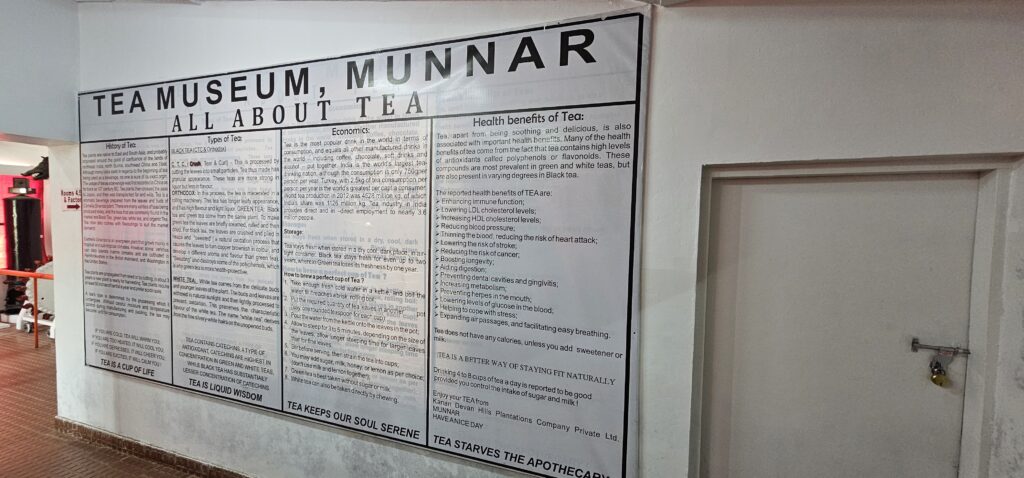
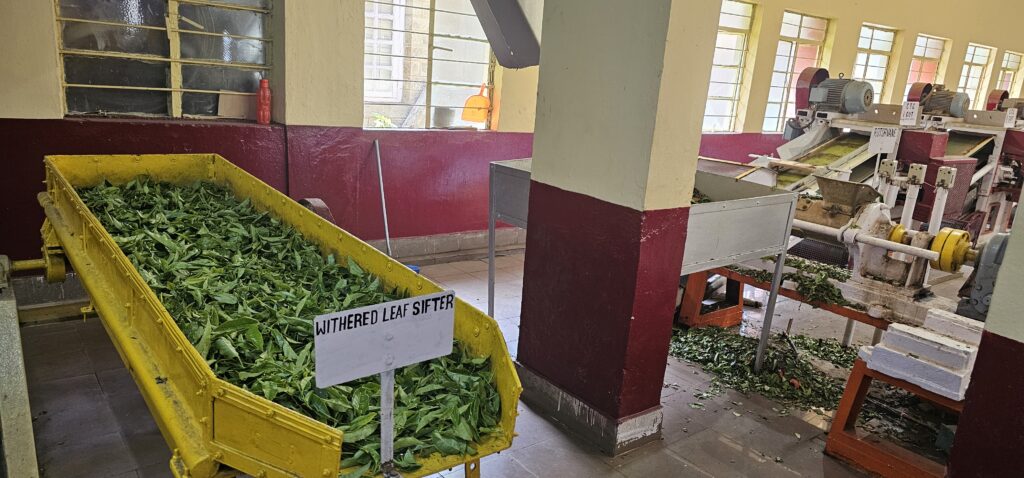
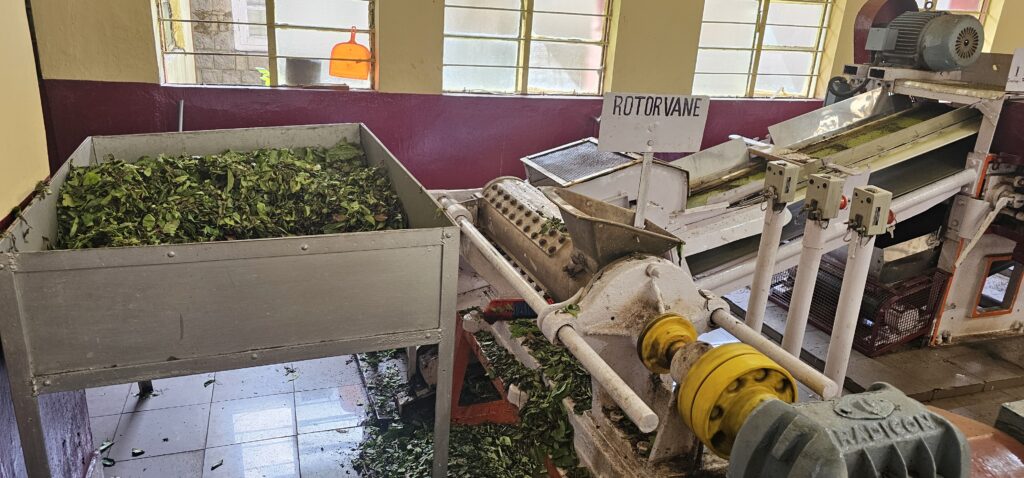
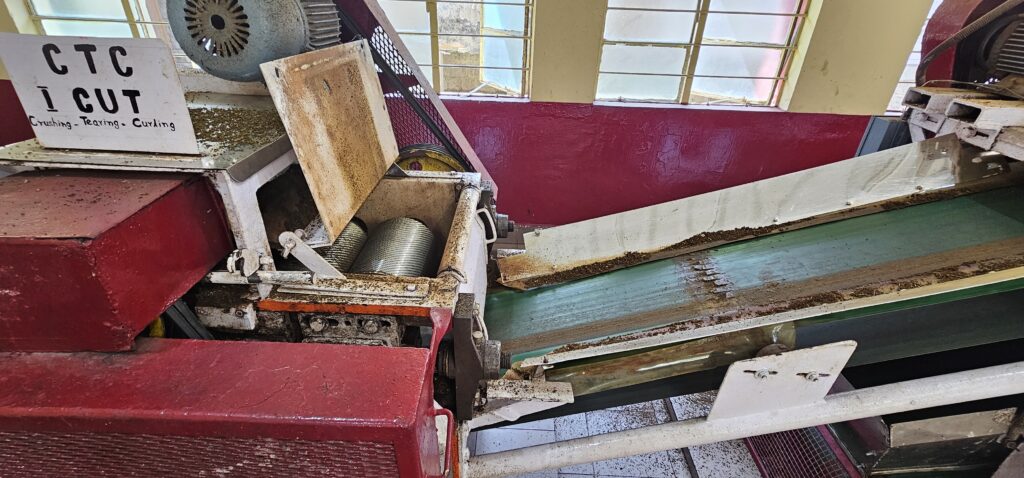
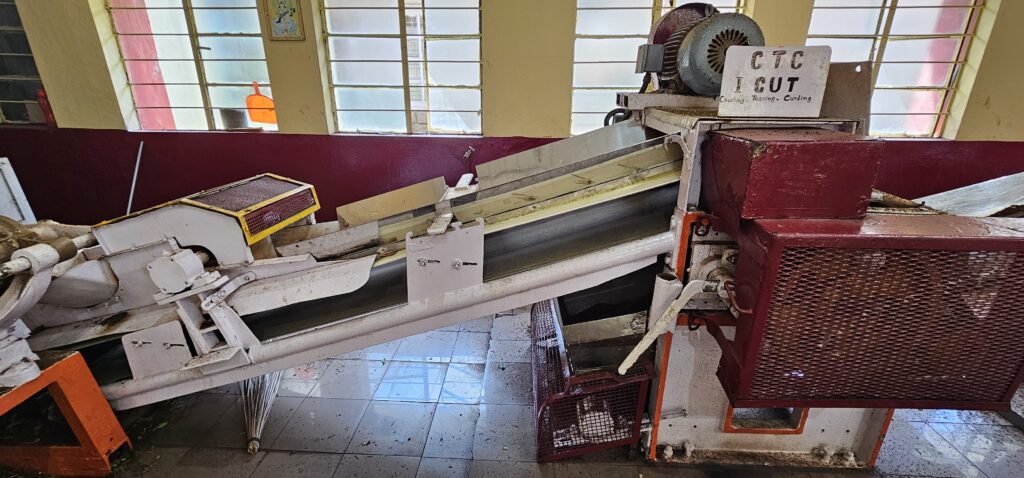
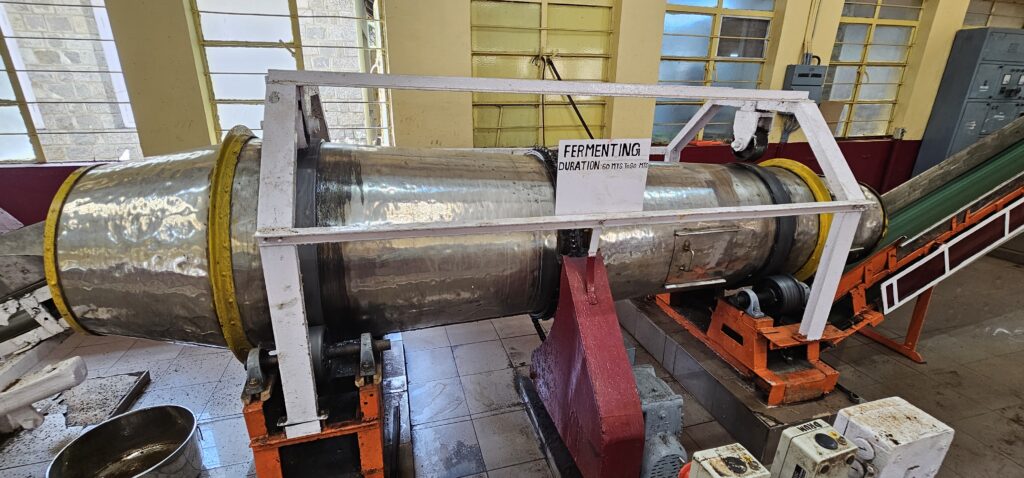
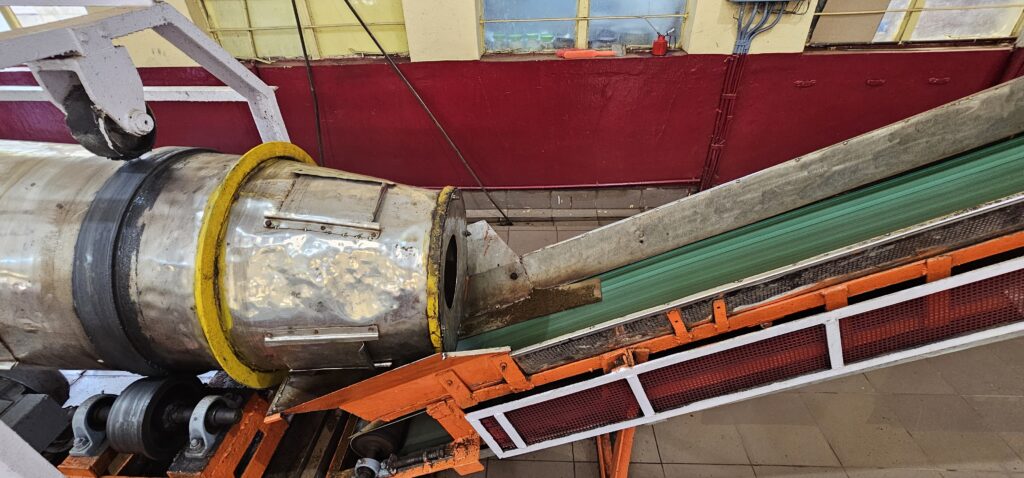
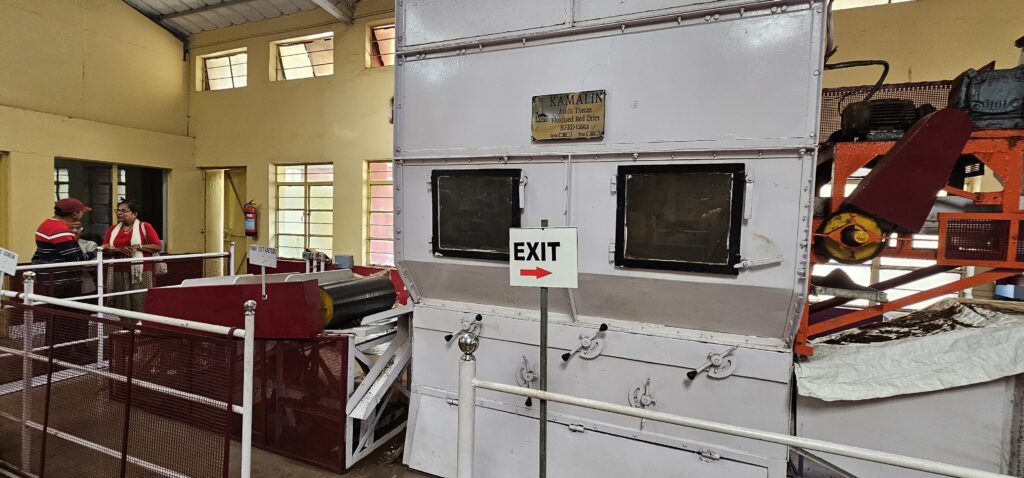
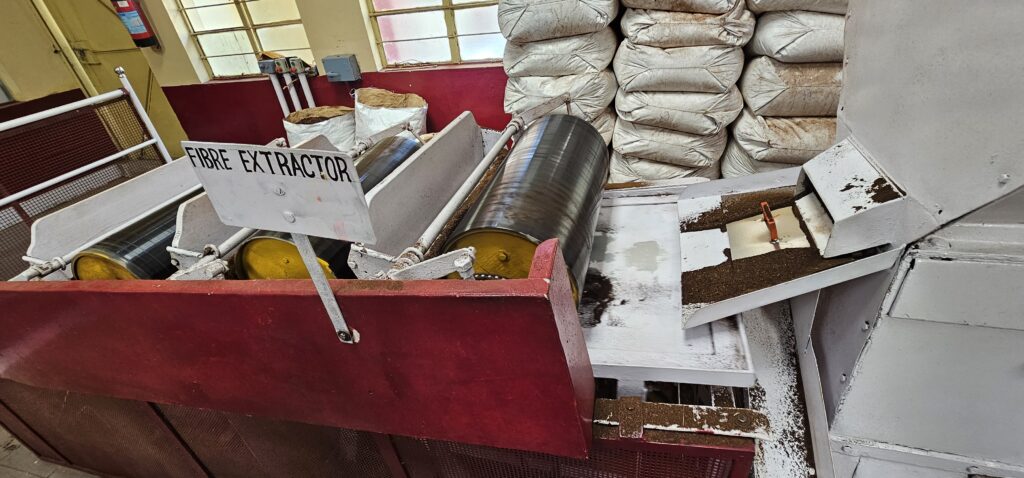
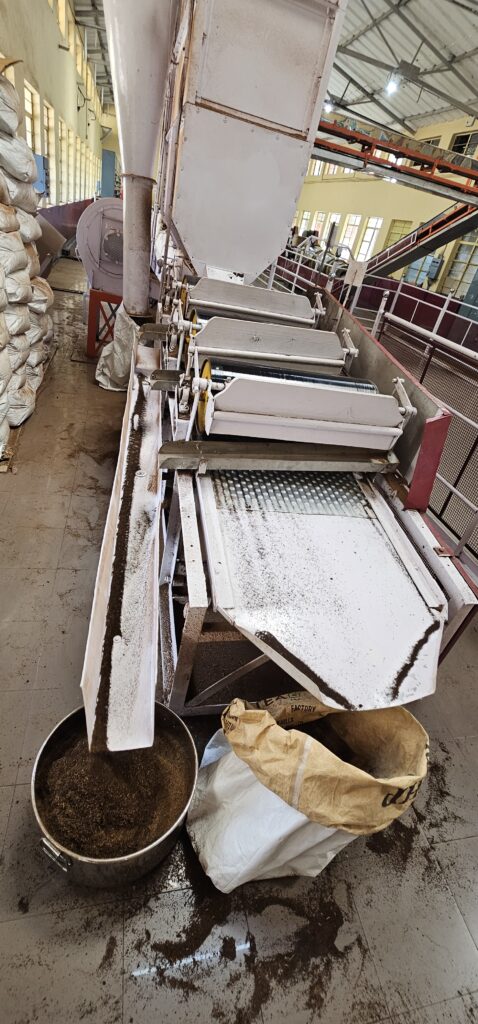
We then visited a Tea Museum, we saw how the picked leaves are crushed several times through spiked rollers, it’s at this point it smells like tea. The bushes and leaves have no smell at all. The crushed leaves are then dried and sifted before being mechanically sorted and packaged as leaf tea or tea dust.
Green freshly picked leavesGoing into the first crusher2nd crusher
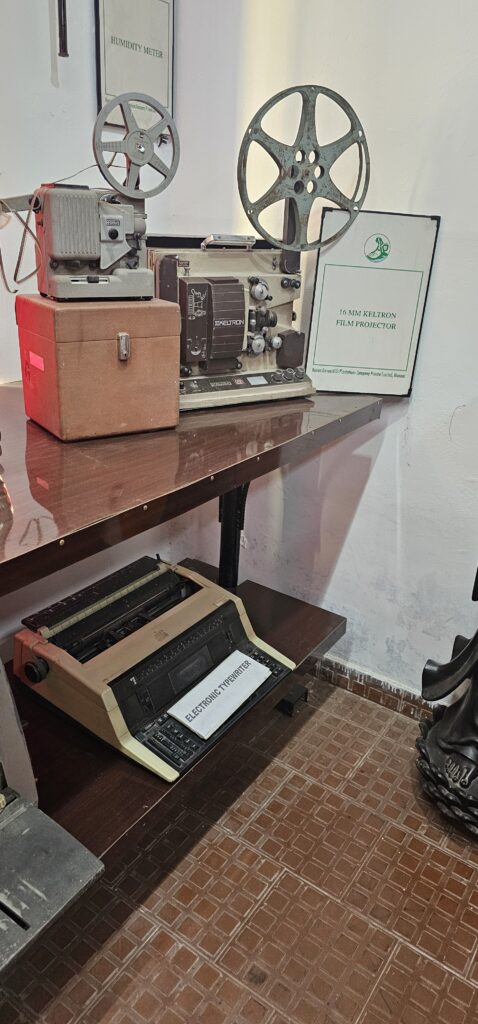
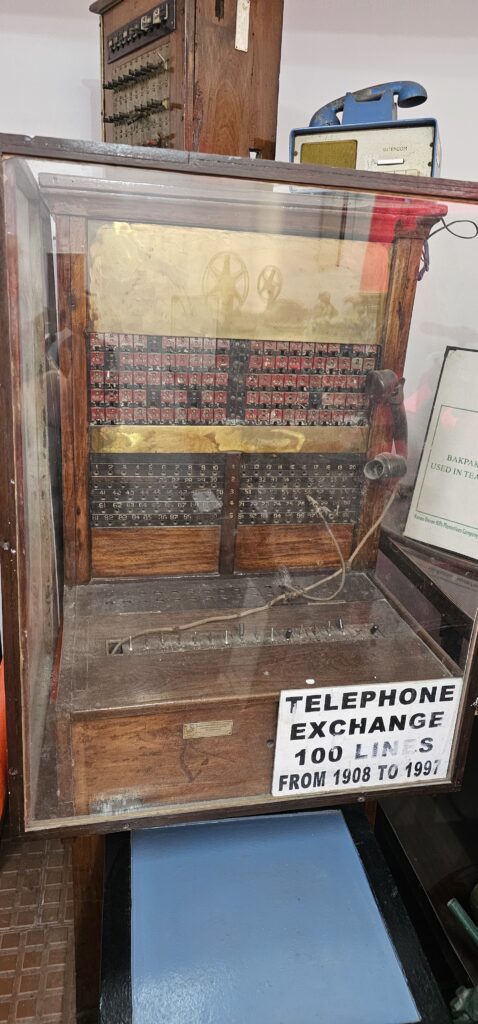
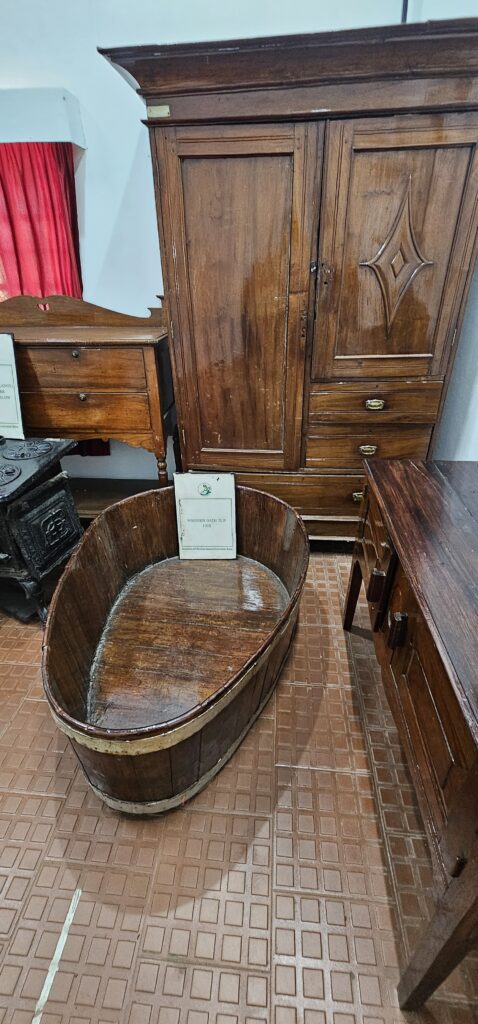
Old artefacts were on display and we watched a fascinating film on the history of the establishment of the farms.
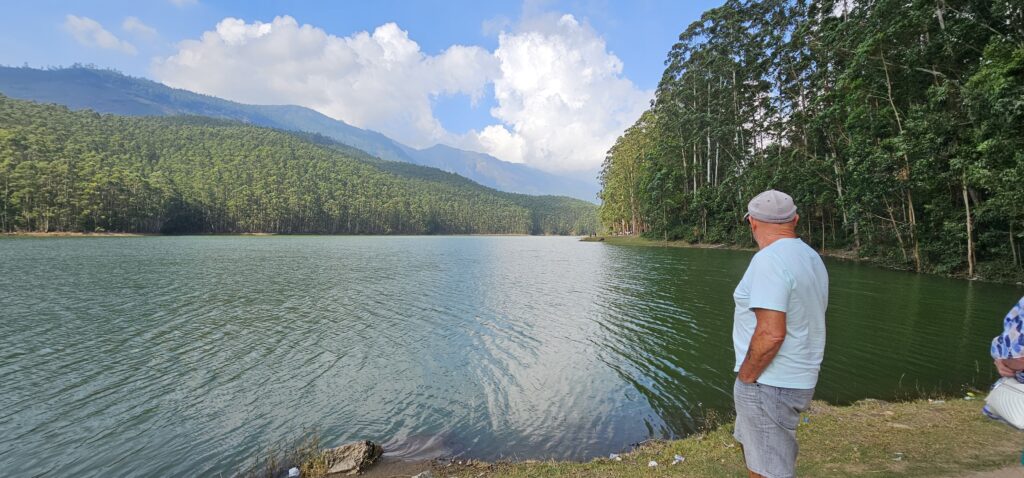
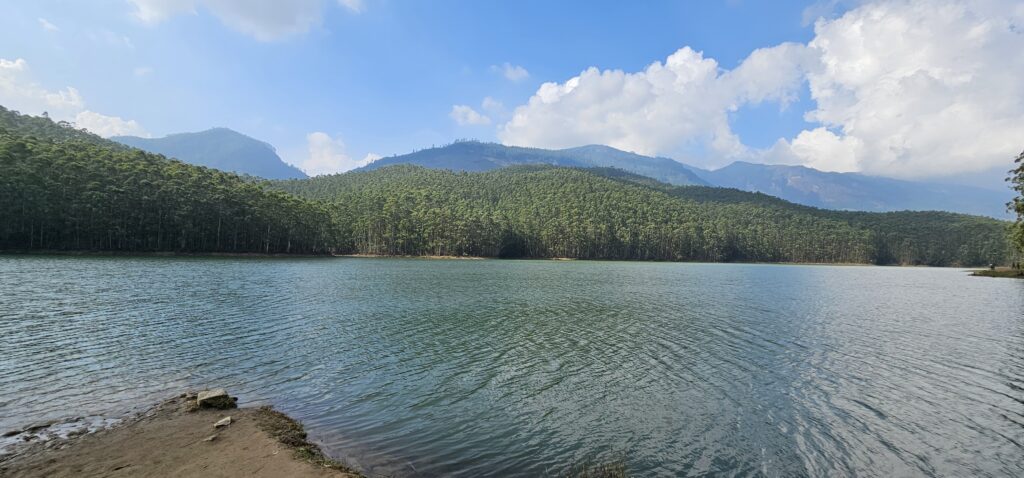
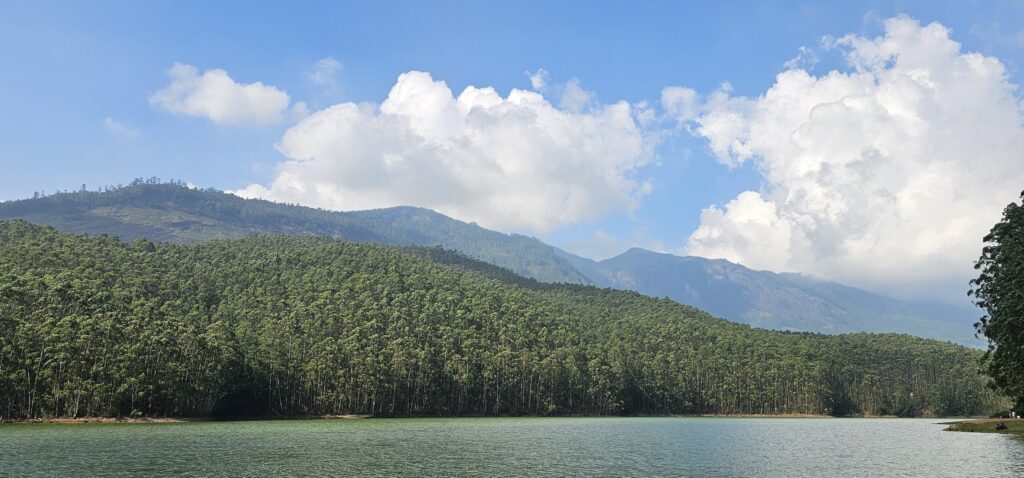
After lunch we took a drive out to a lake and stopped at Echo Point, Graham duly verified why it was called that! Sounds echoed around the mountains, which again were beautifully green.
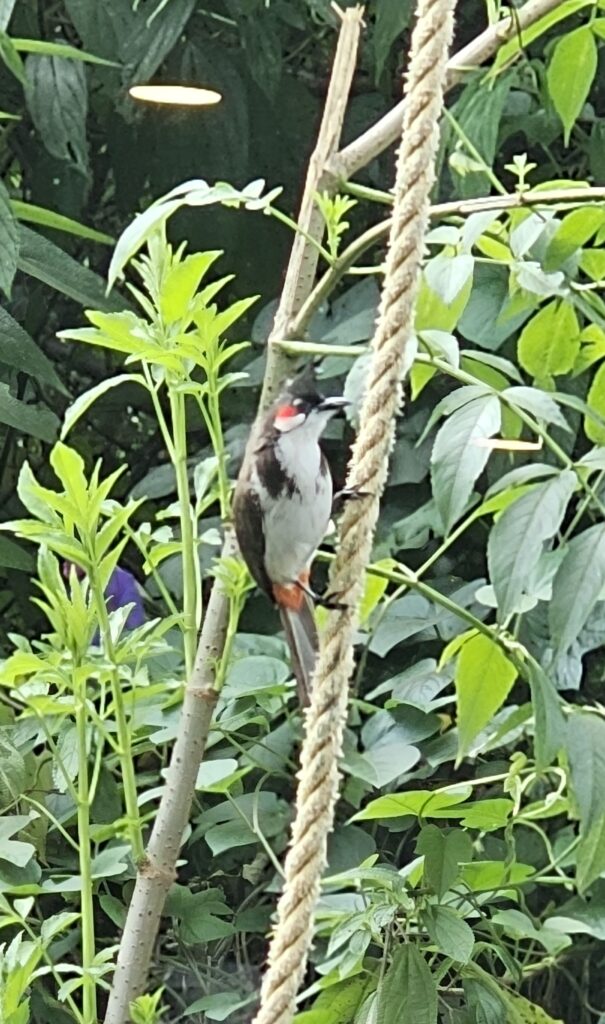
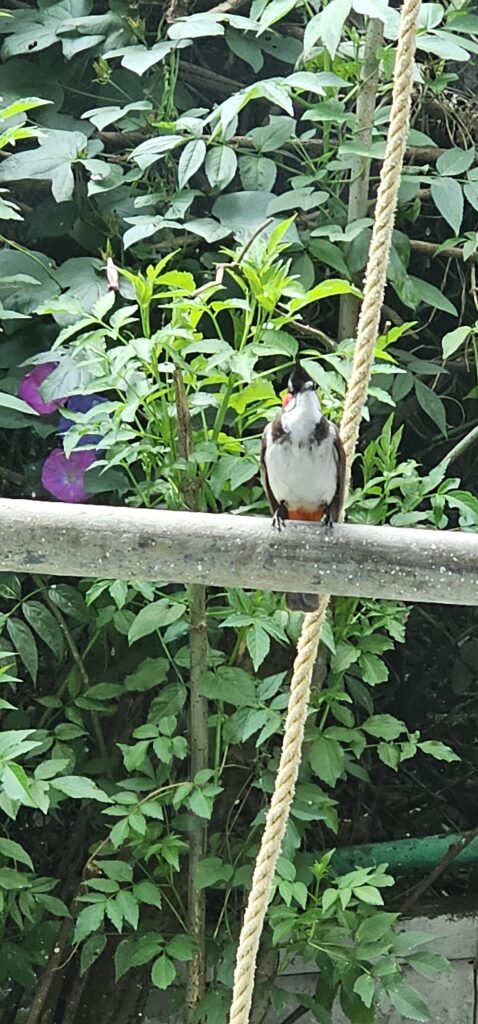
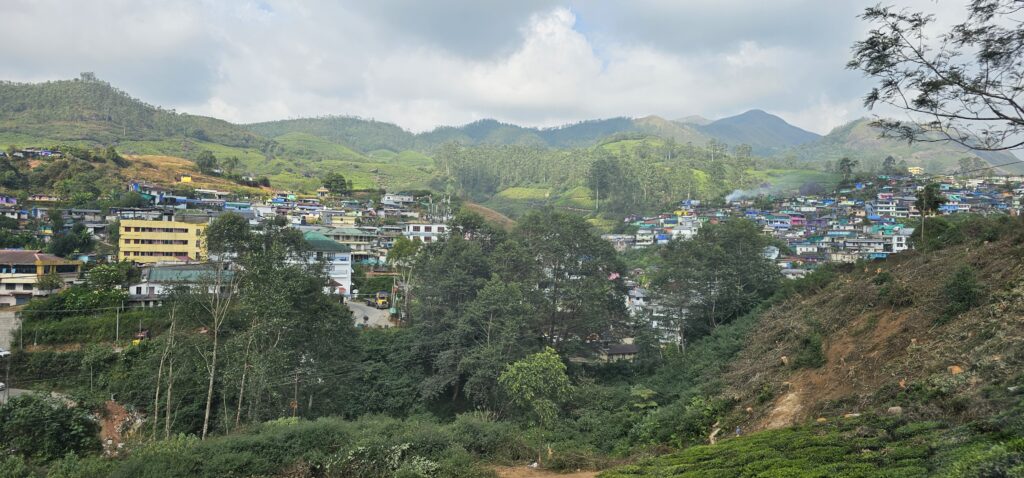
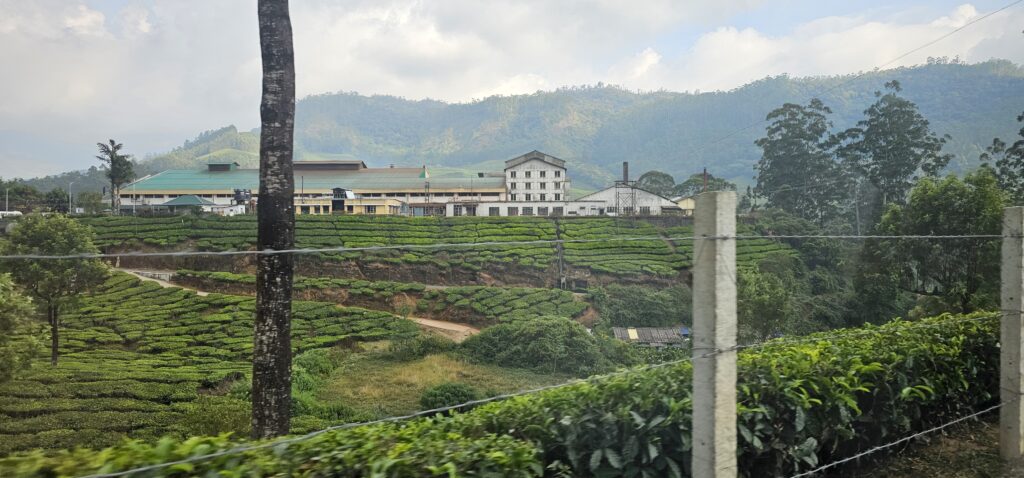
A red crested Bulbul birdA mountain side villageEcho PointAn operational tea processing plant
On a Monday evening we caught a short internal flight from Goa south to Cochin for a prebooked escorted trip around some of the sights in Kerala.
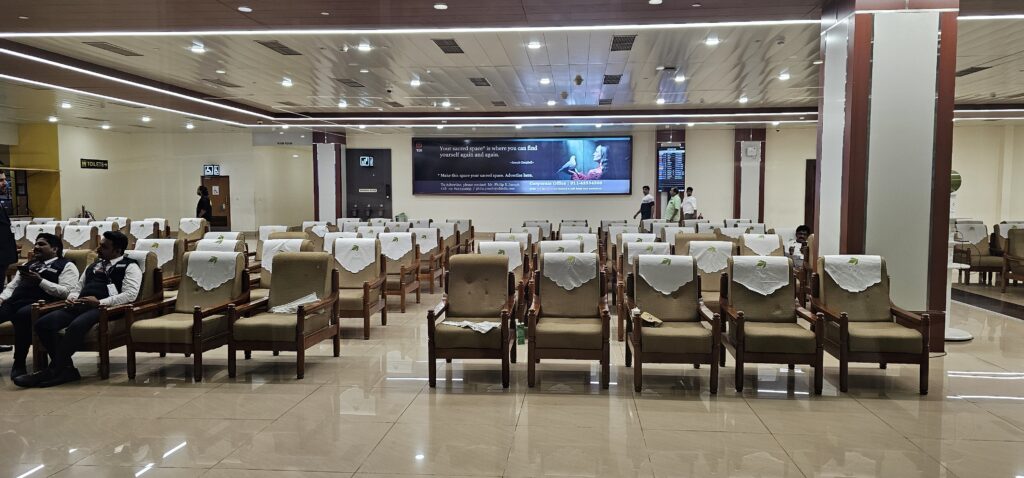
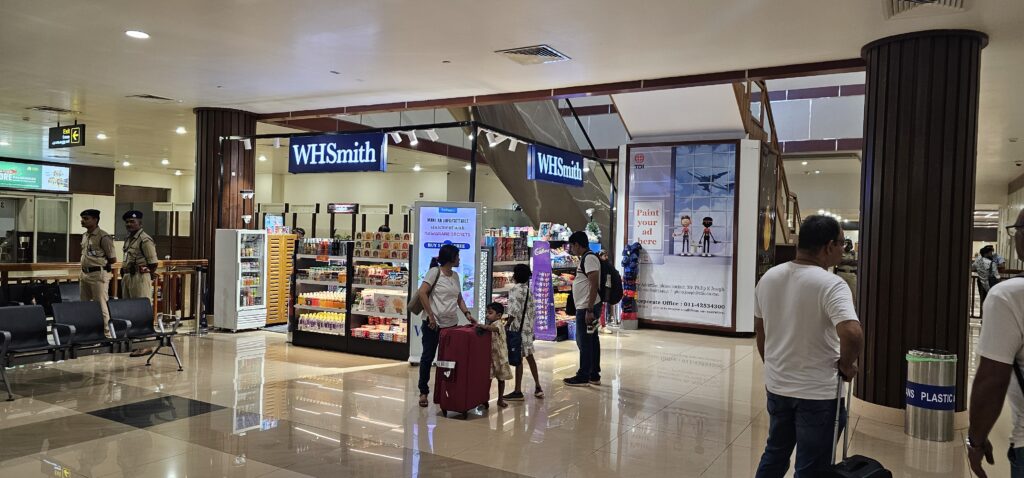
Airport loungeEven found a WH Smiths!
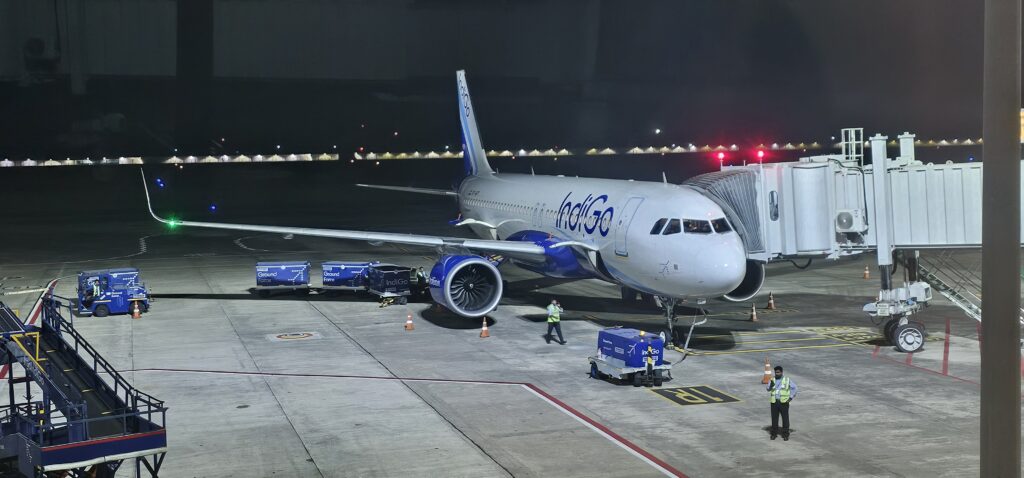
We were “upgraded” on the flight from row 32 at the back to the Emergency Row seats in row 12, with 6 seats between the 4 of us, nice and spacious!
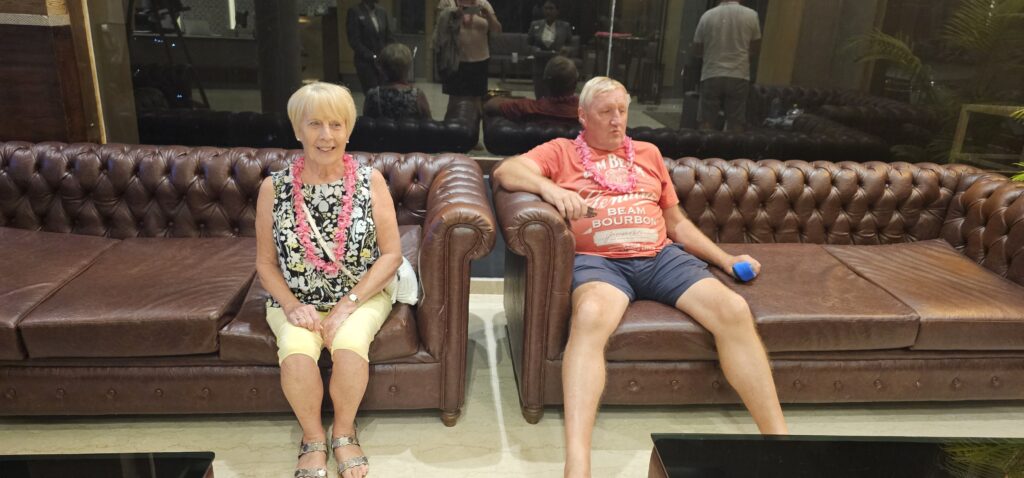
On arrival in Cochin, we were shocked and surprised at the comfortable lounge seating, clean polished marble floors, clean toilets and posh airport, totally unexpected! On exiting, we were met by a gentleman who directed us to a car and we were whisked off to the Airlink Hotel for the night.
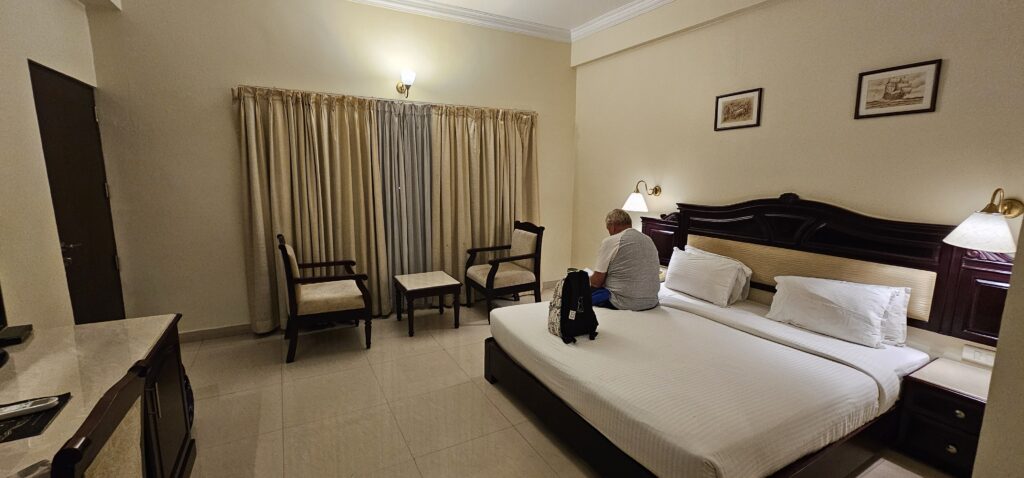
First impressions were: its much cleaner than Goa, much more greenery and less animals! The hotel was fine, although David was upset that the bar had closed at 10.30, we arrived at 10.45!! Hot and tired, we headed to bed, sleep evaded us because it was hot and we had noisy fans, the beeping traffic started about 4am and it got light at 6am! We were the first ones to arrive for breakfast at 7.30, a curry buffet or toast and jam 😀
Our bedrooms, lots of Indian wood furniture.
On Tuesday morning, a driver called Jo met us after breakfast and we headed out on the long drive to our first stop at Munnar, a hilltop station (a mountain top town). Jo was a local who spoke fairly good English. We told him we loved to get involved and explore local life so immediately he started mentioning his village and his family, and how we can stop off at his home town….so we agreed!
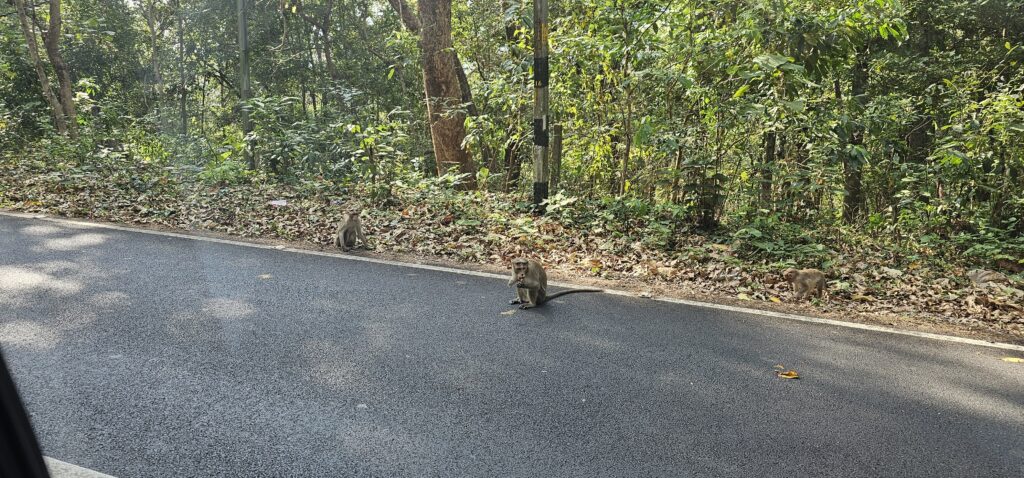
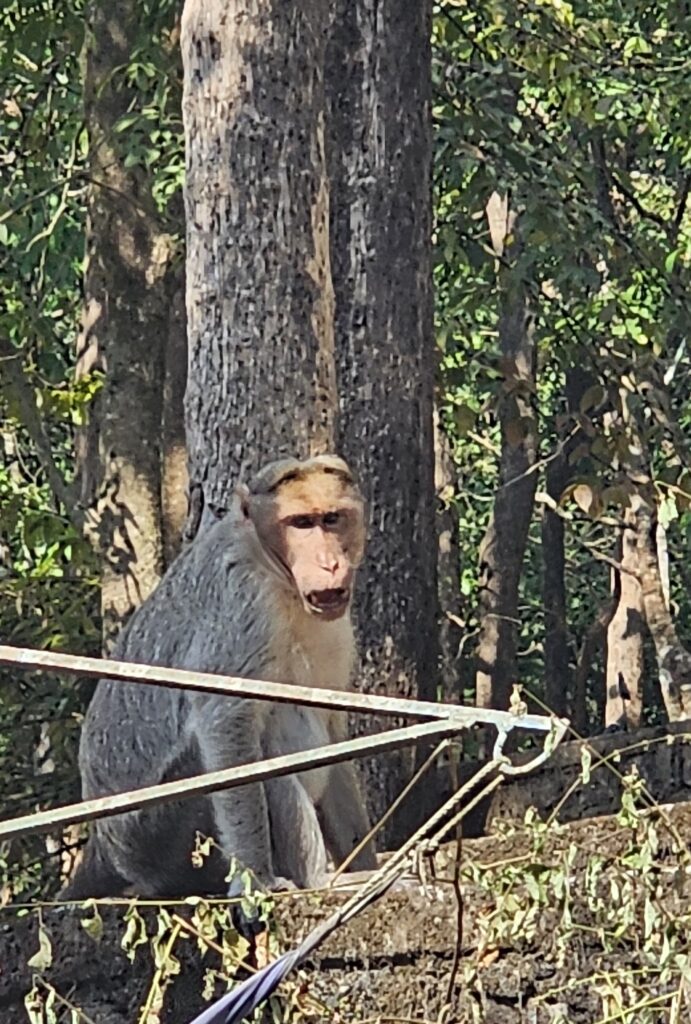
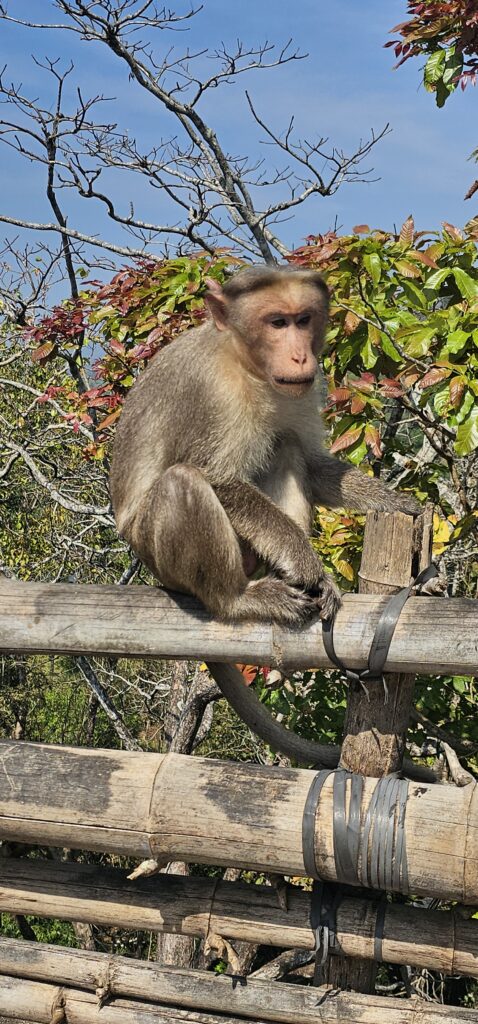
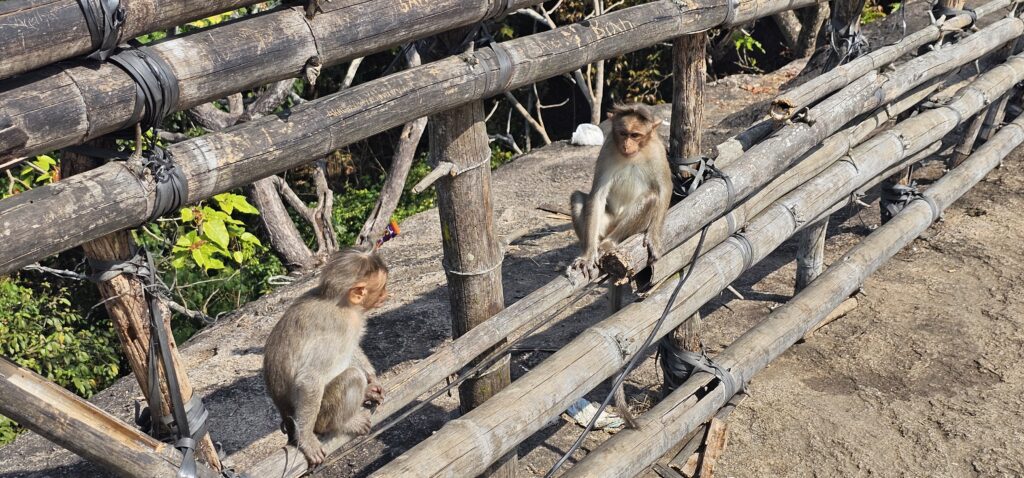
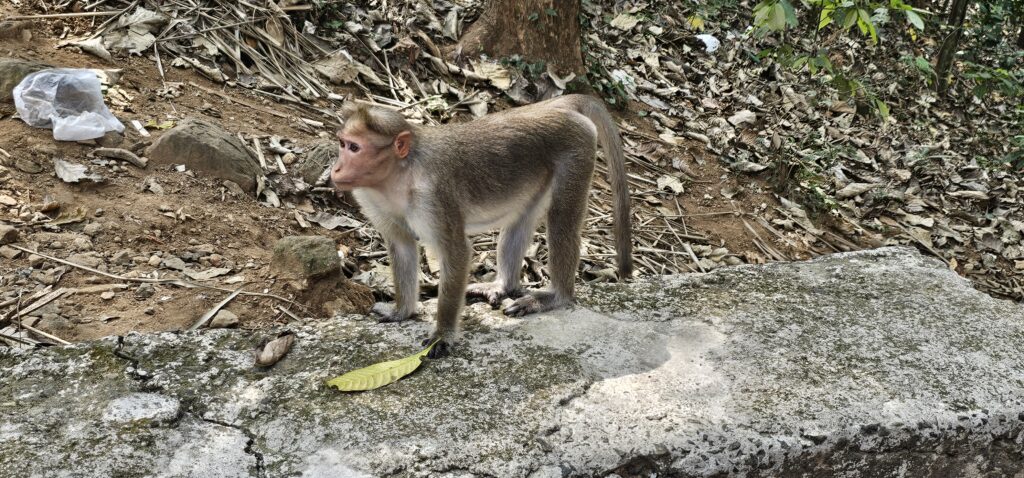
Our first encounter with monkeys was just outside Cochin city, a troupe of monkeys were playing on the roadside.
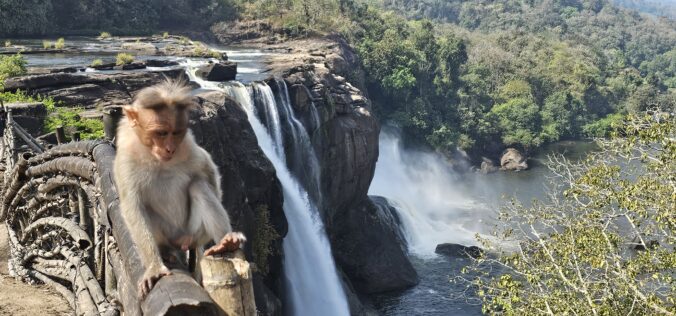
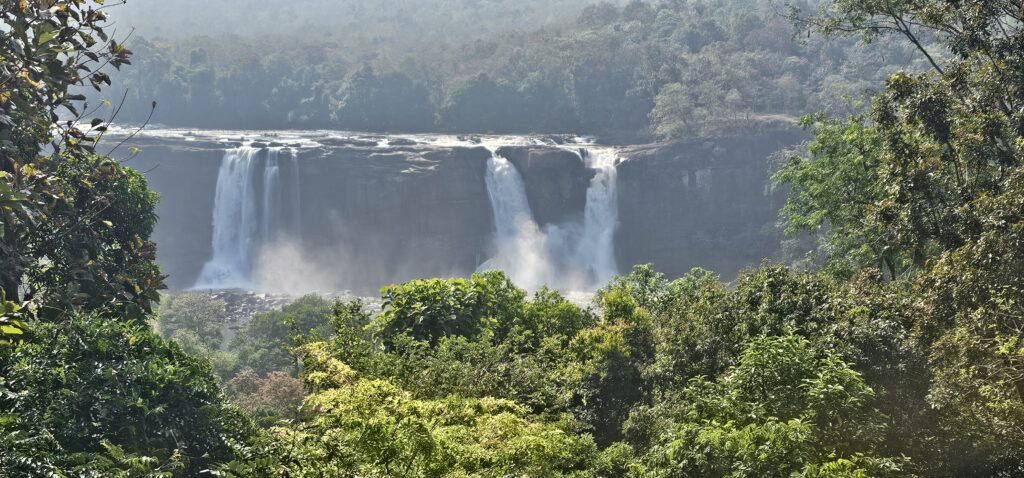
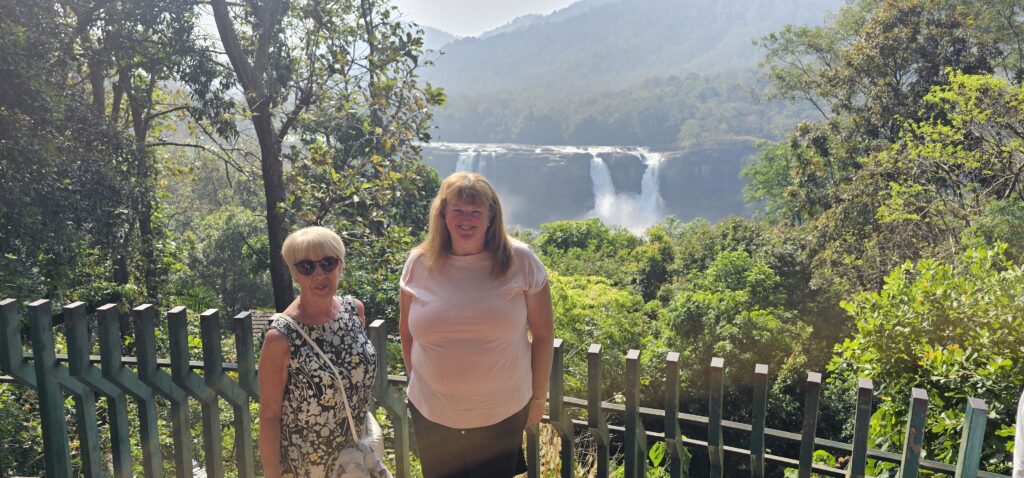
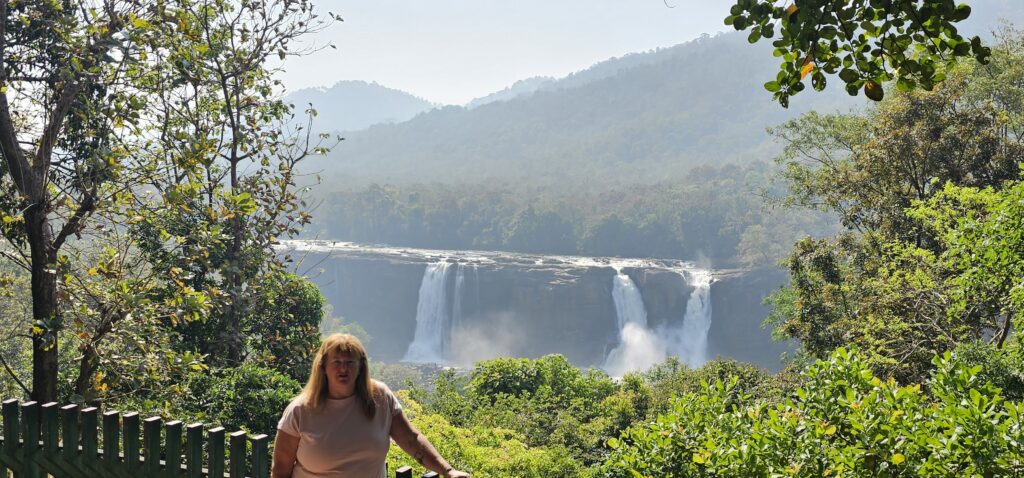
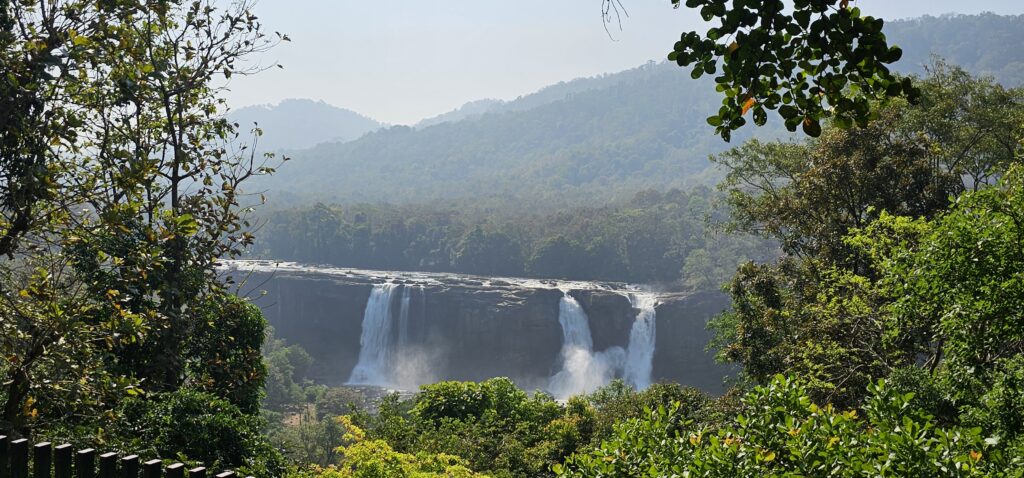
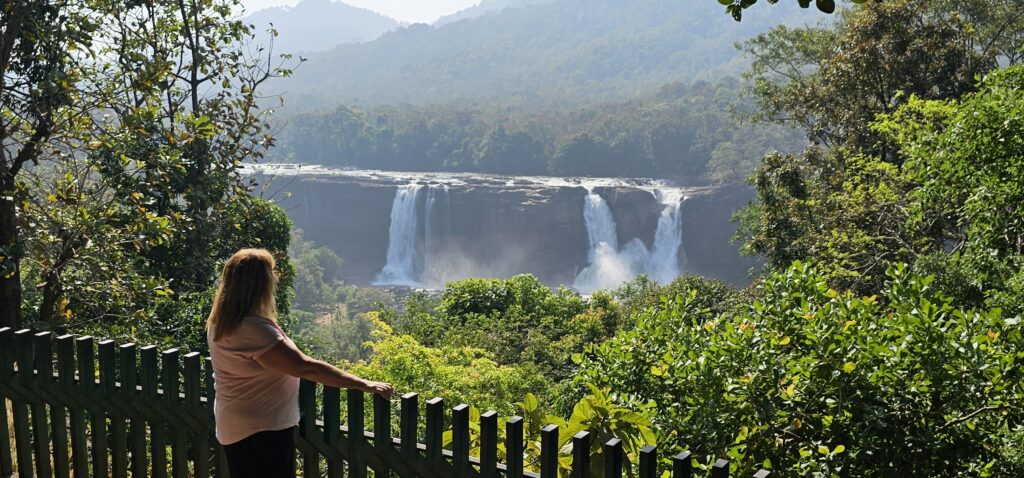
We headed into Athirappilli National Park and stopped to admire its waterfalls, which, after Monsoon season, are known as India’s Niagara Falls.
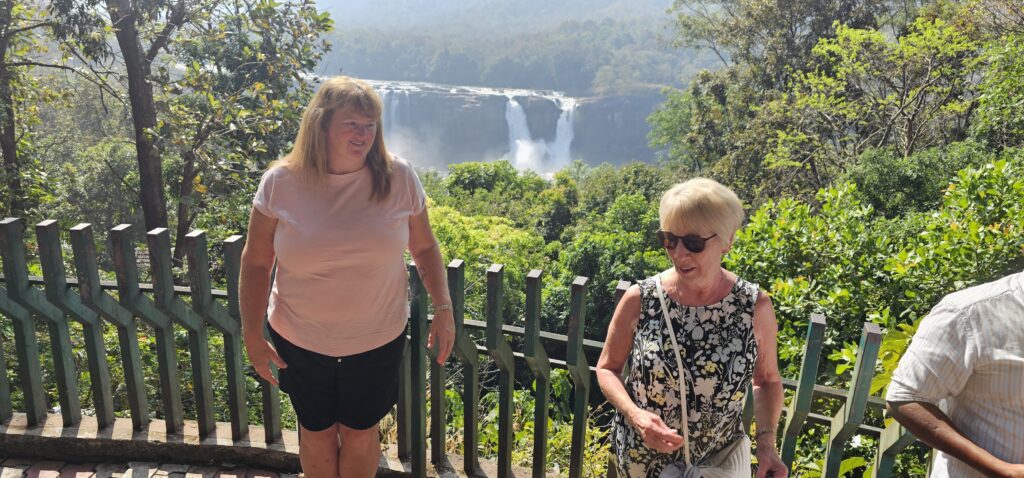
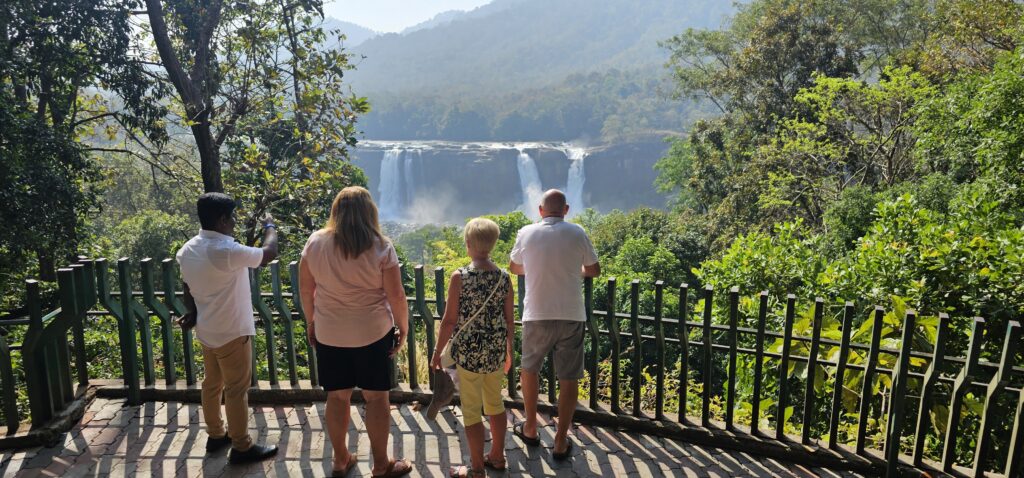
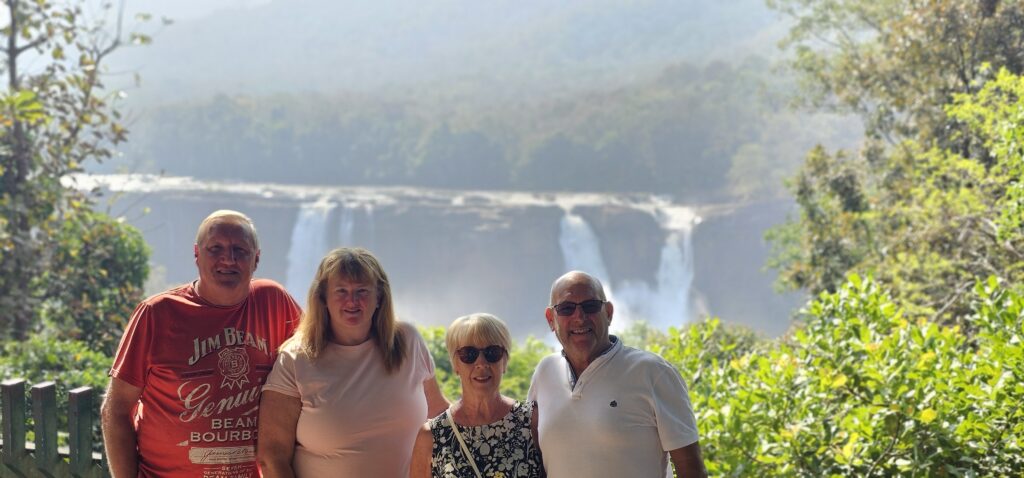
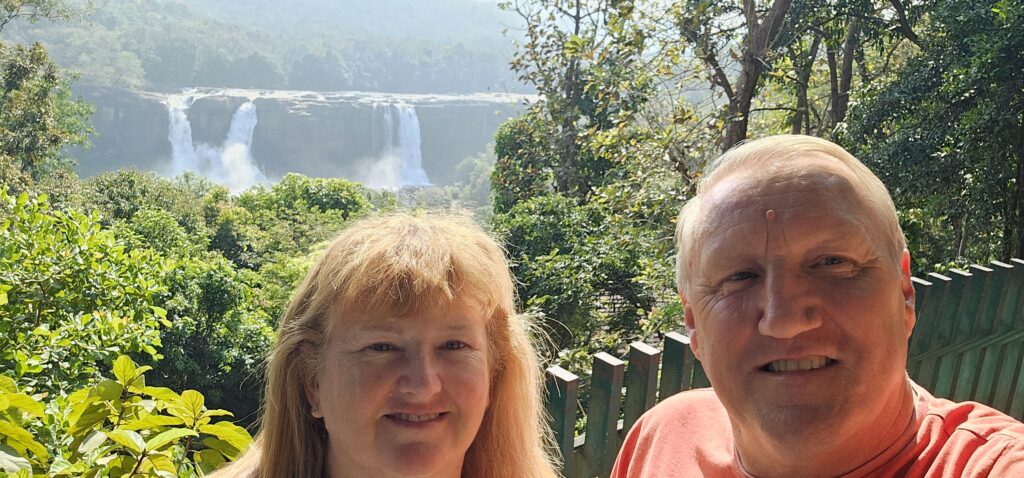
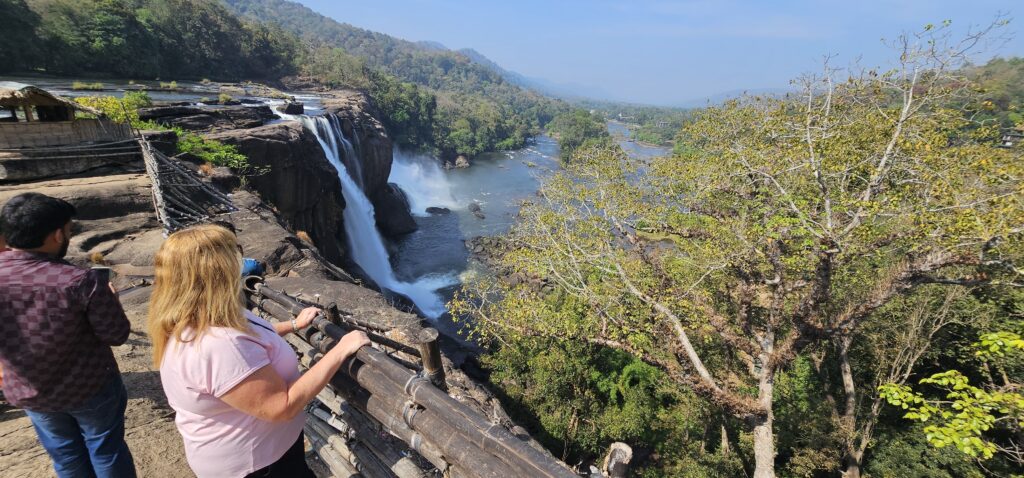
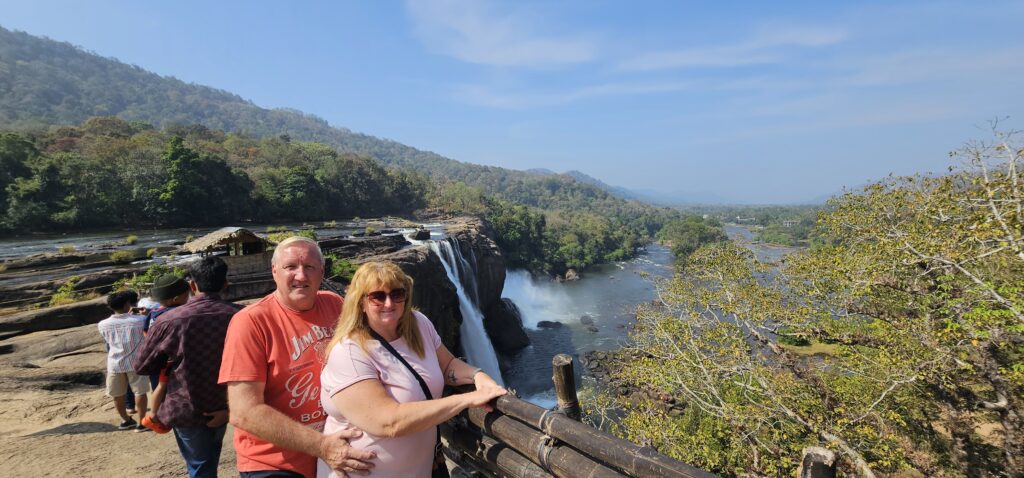
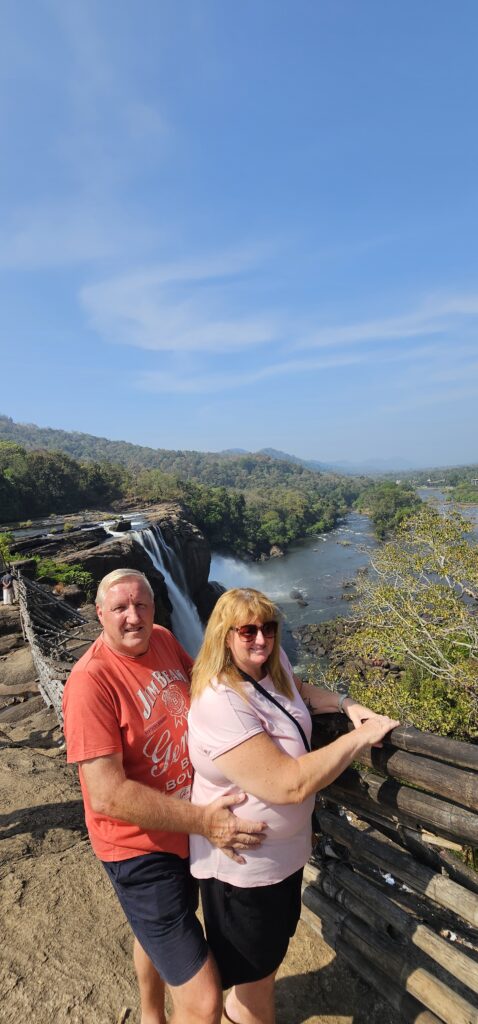
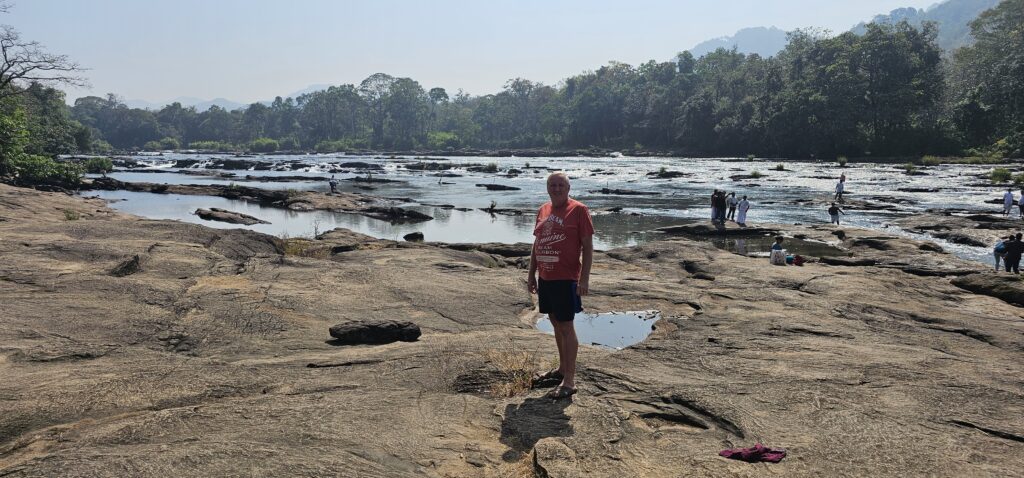
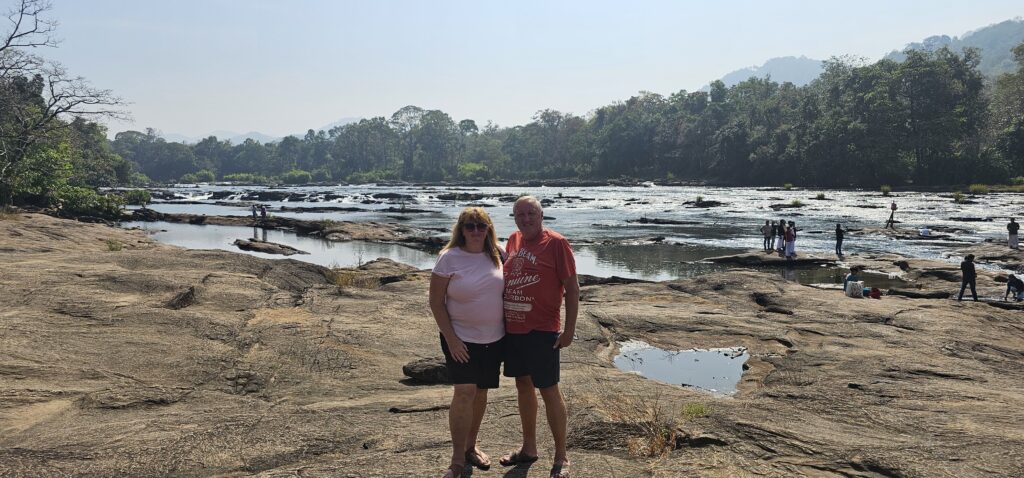
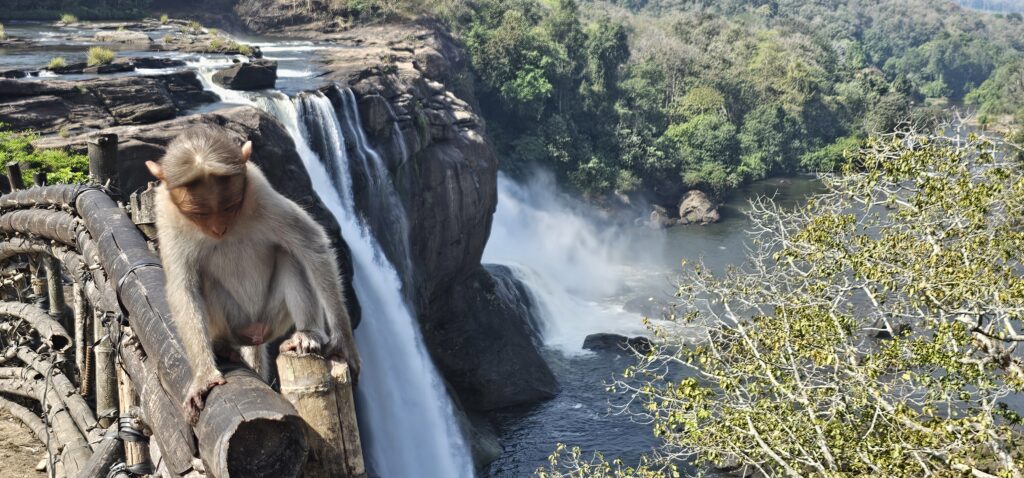
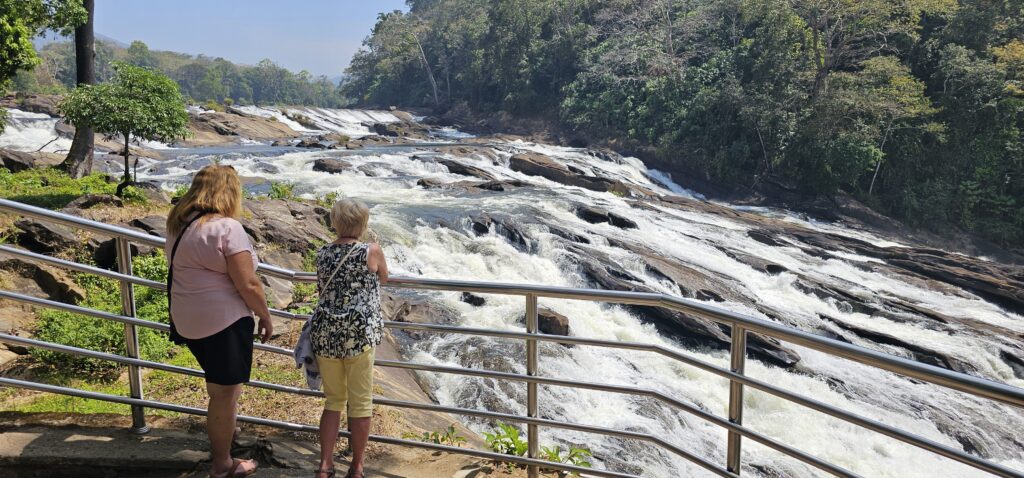
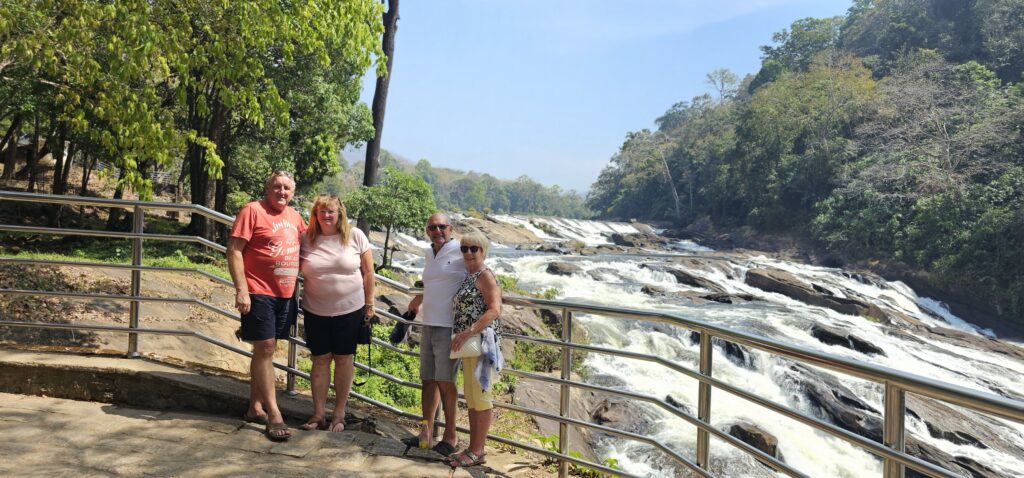
A short drive further upriver and another set of waterfalls on the same River, much more spectacular and a popular tourist attraction.
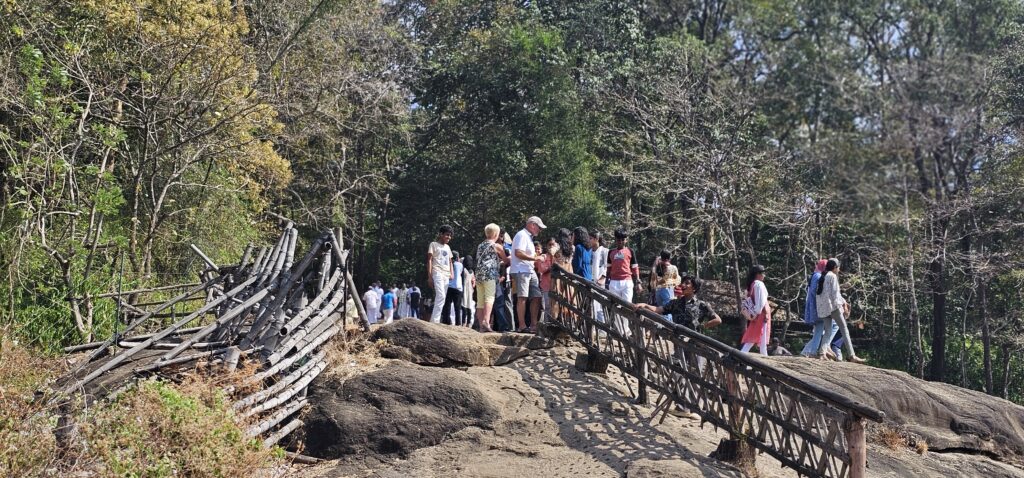
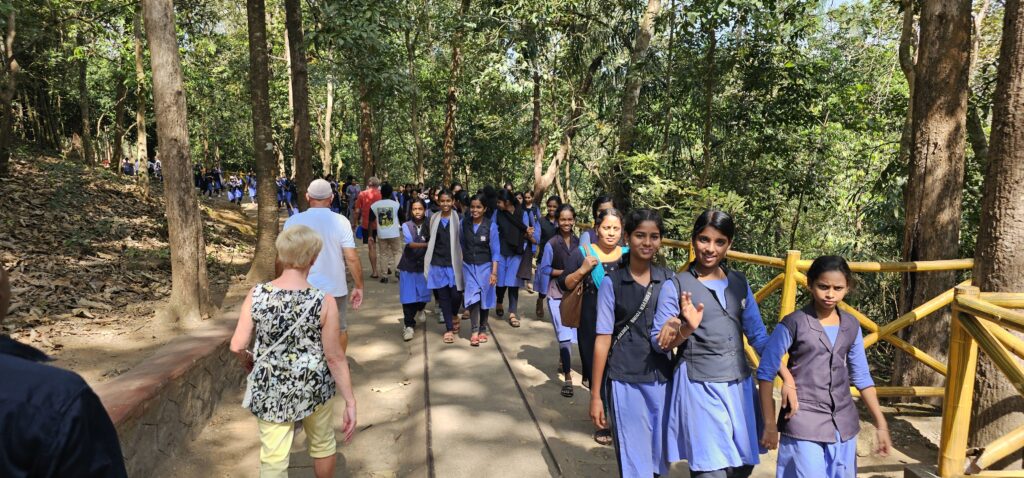
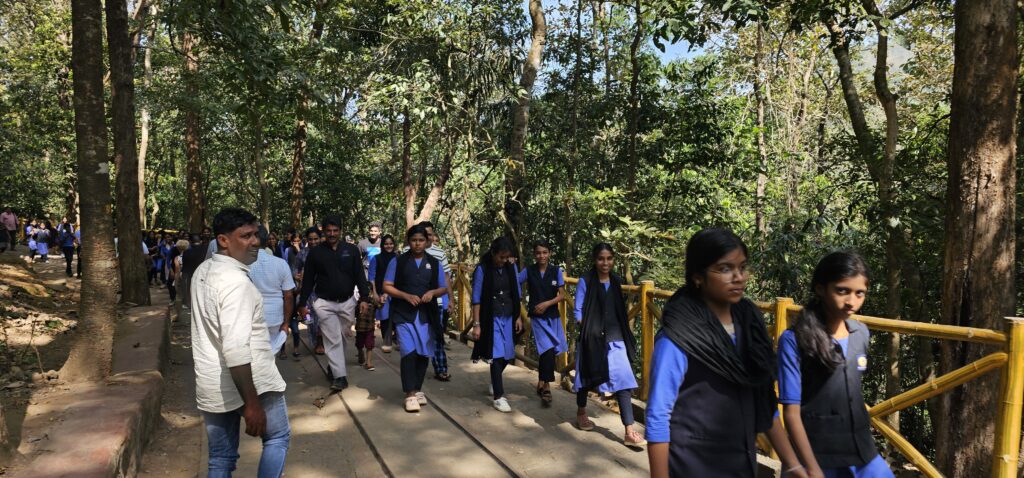
As we walked along a pathway to a fabulous viewing area, we were all mobbed by men, women and school children who asked for photos with us! We could get used to this celebrity status!!
The water was roaring despite the water levels being so low, I’d hate to imagine the noise when it was in full flow!
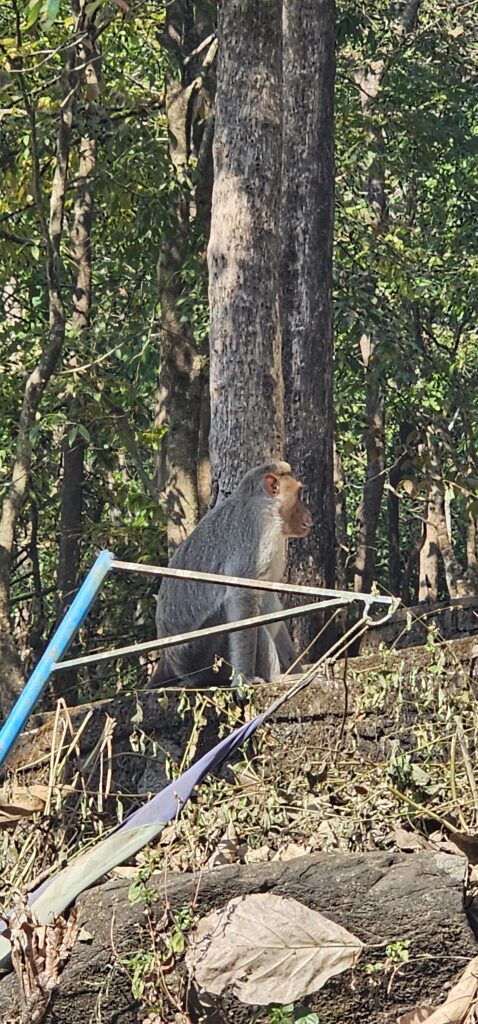
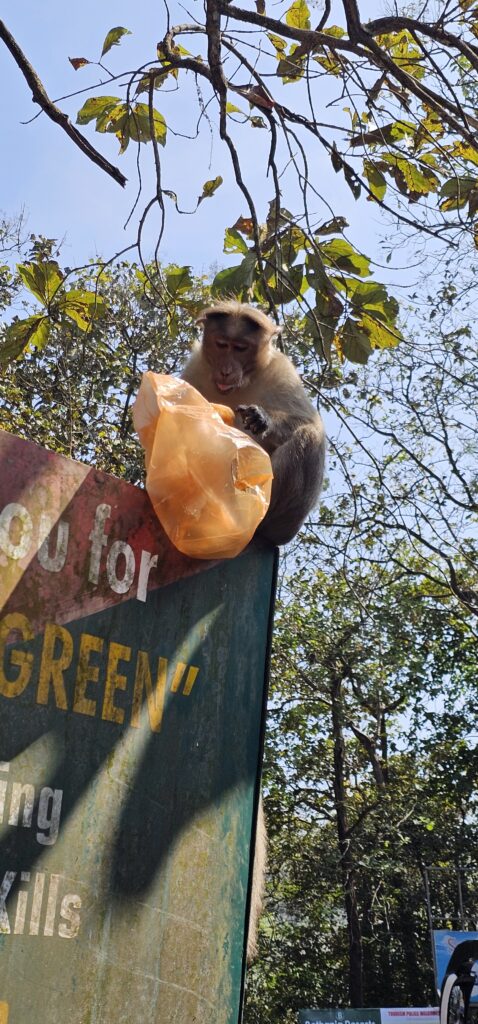
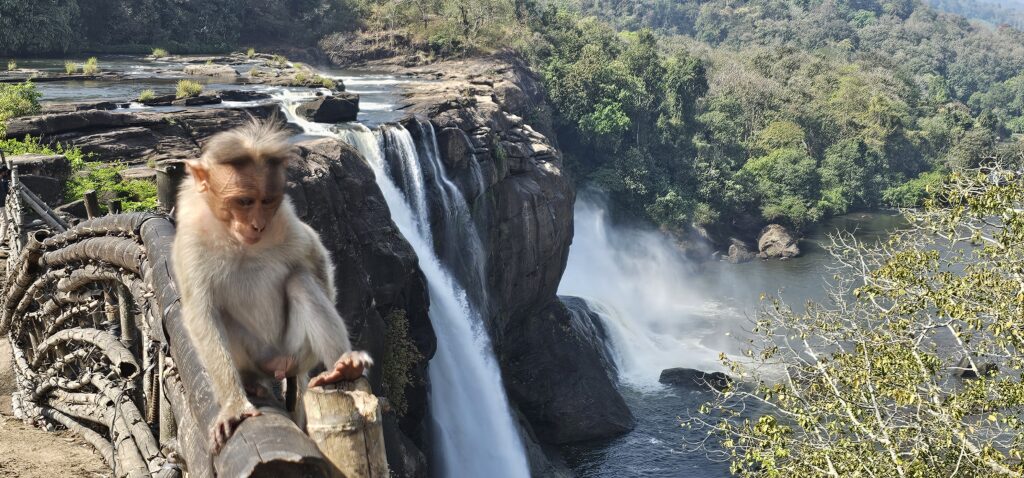
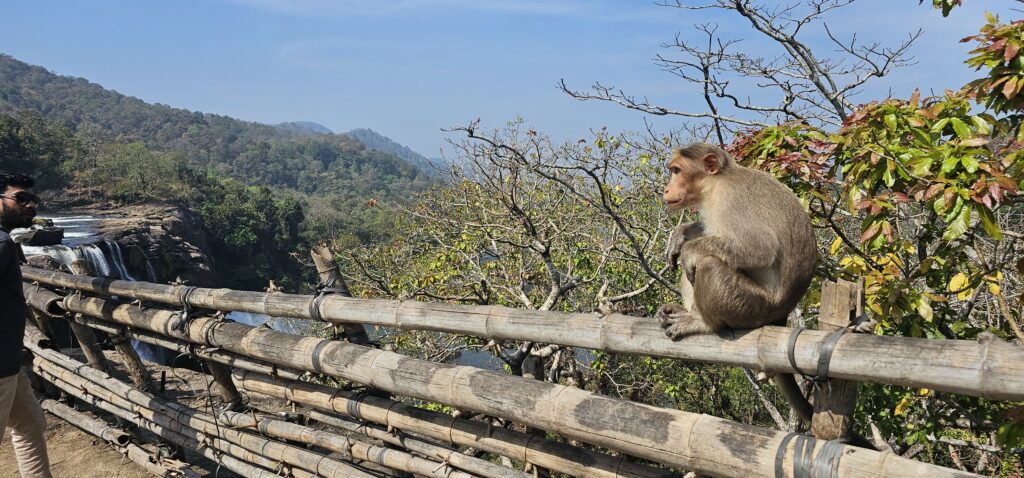
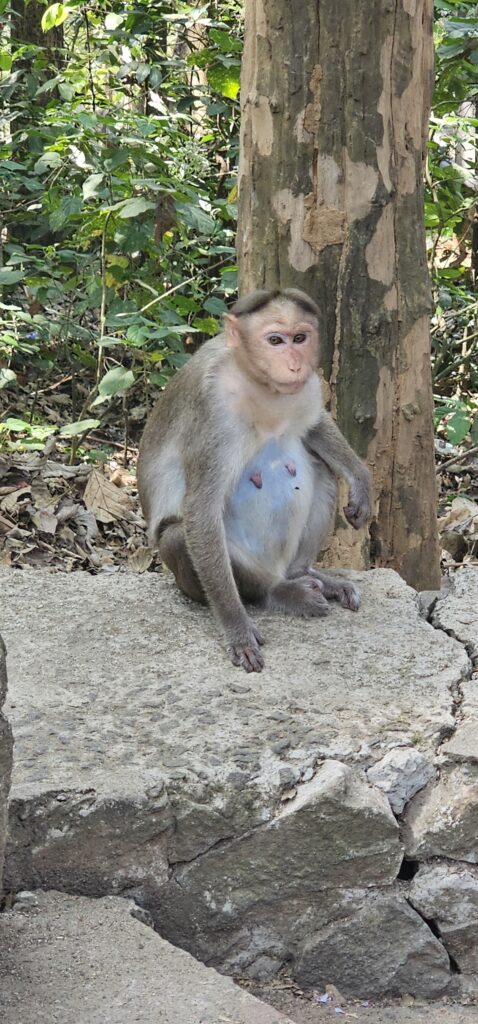
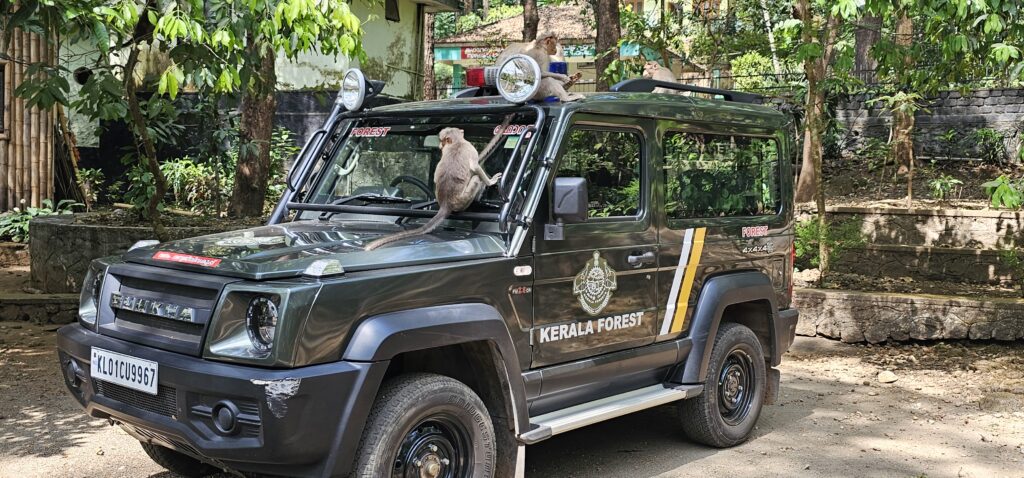
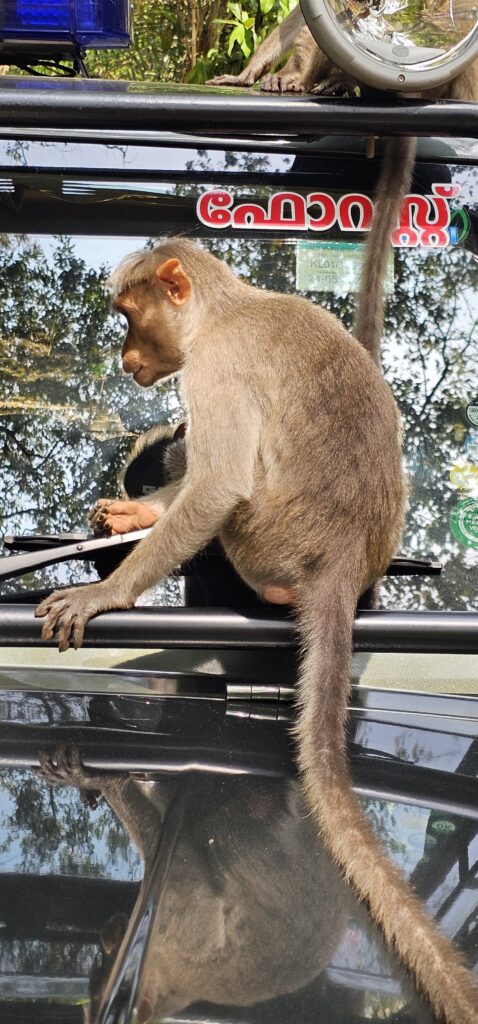
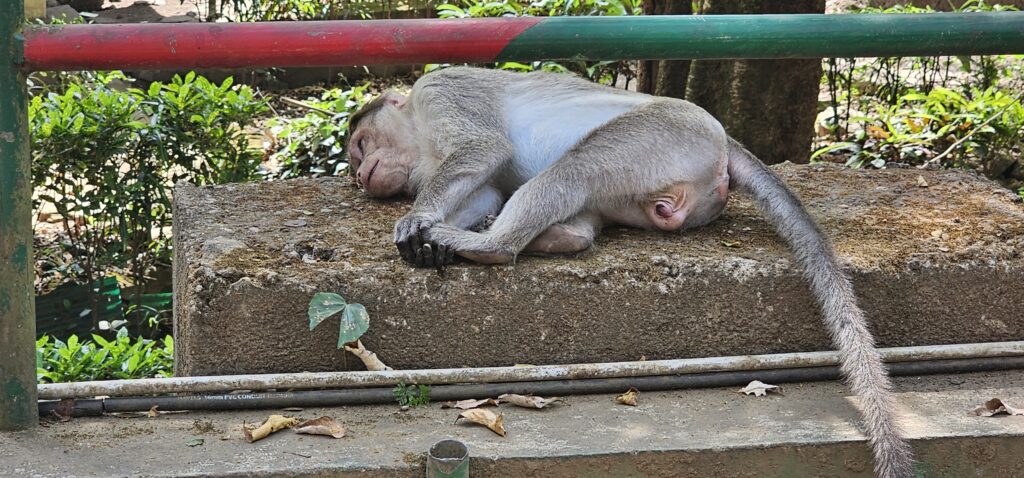
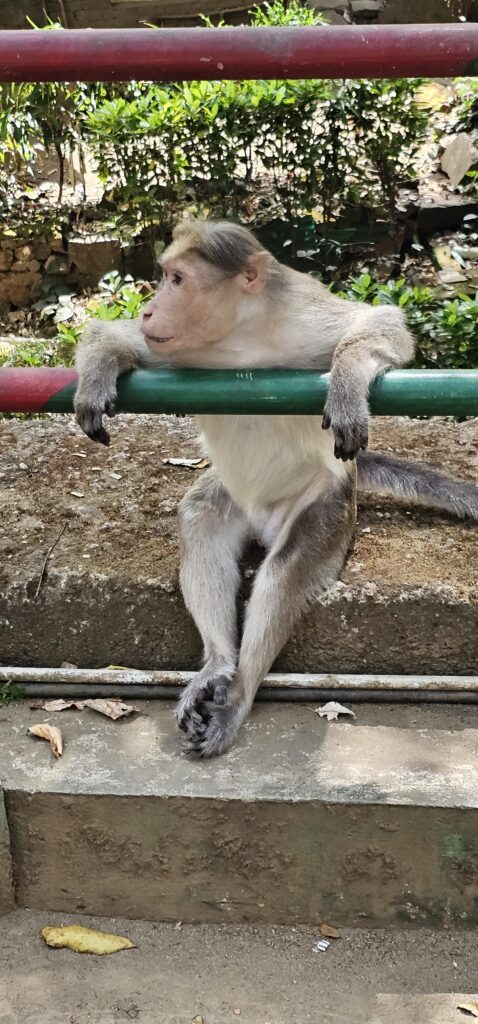
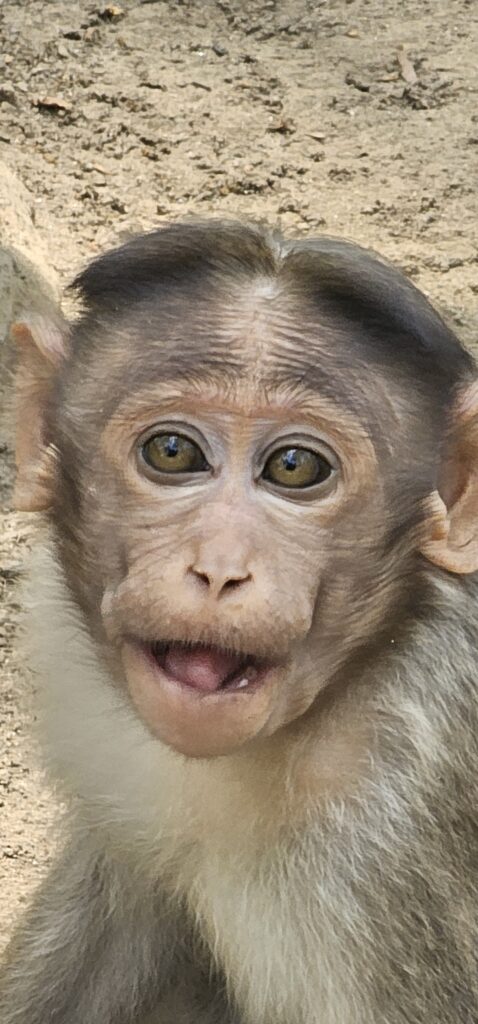
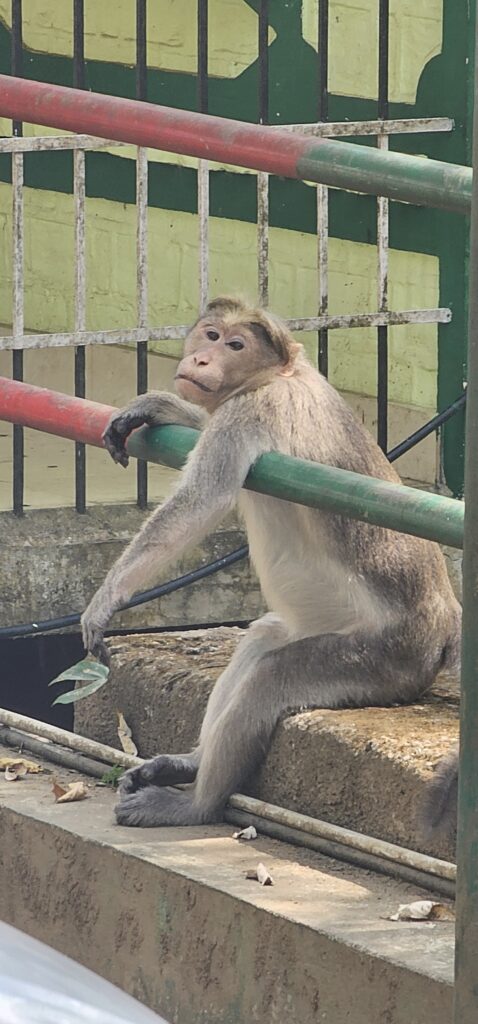
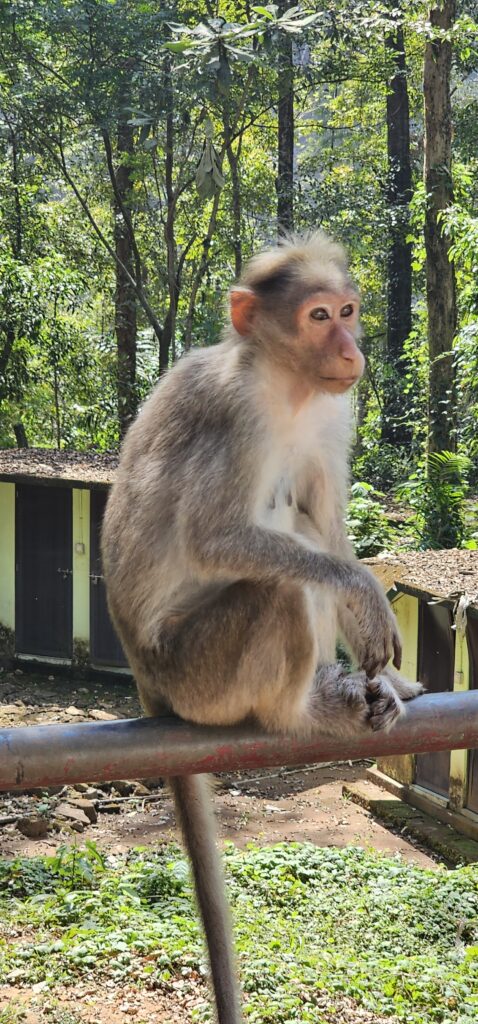
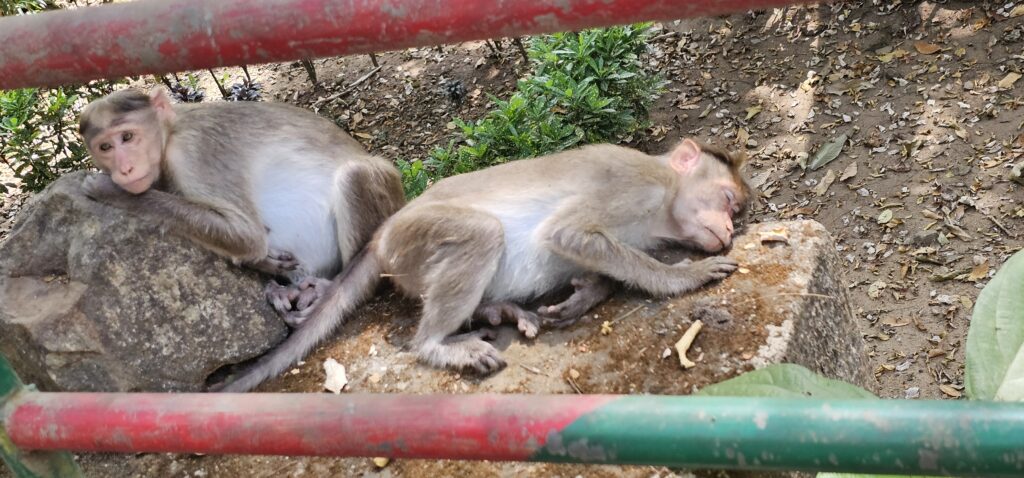
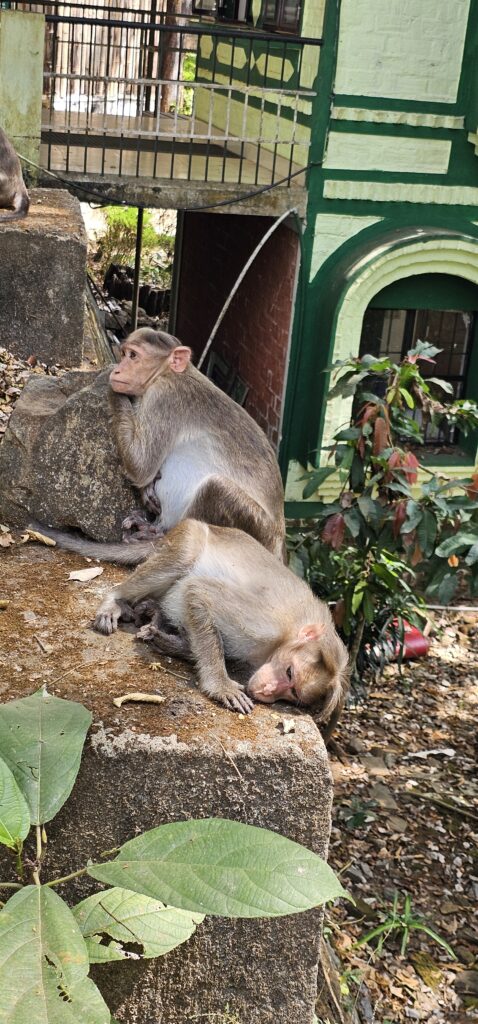
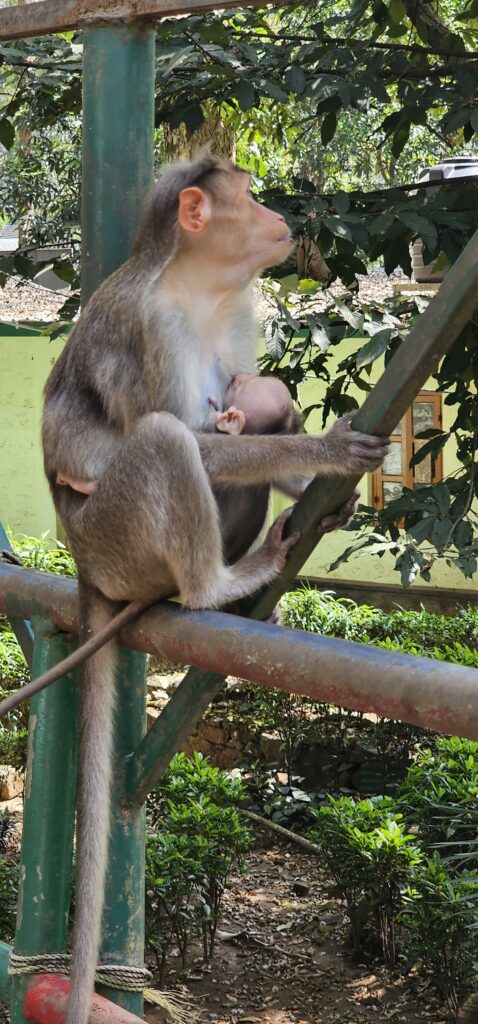
Monkeys were all around us again, some were pregnant, some new mothers and some youngsters, all inquisitive and yet natural and gentle and so funny.
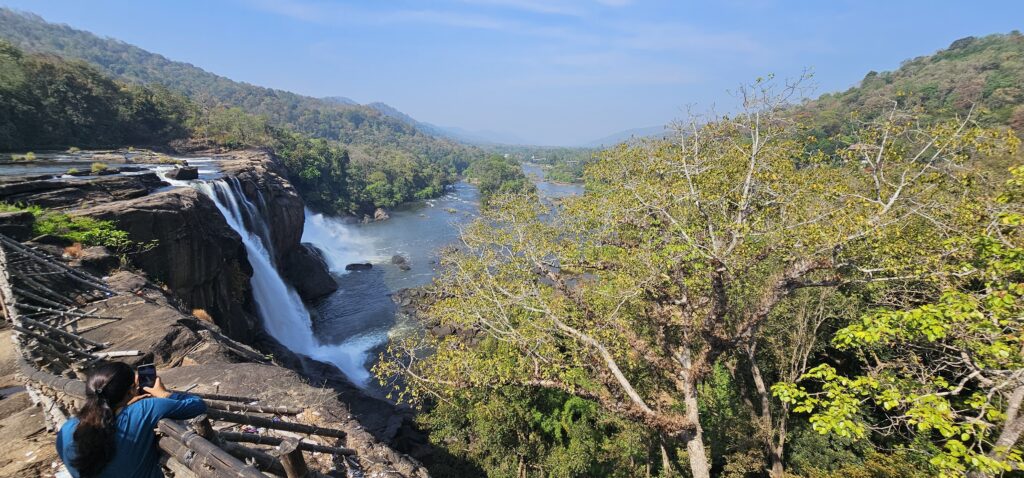
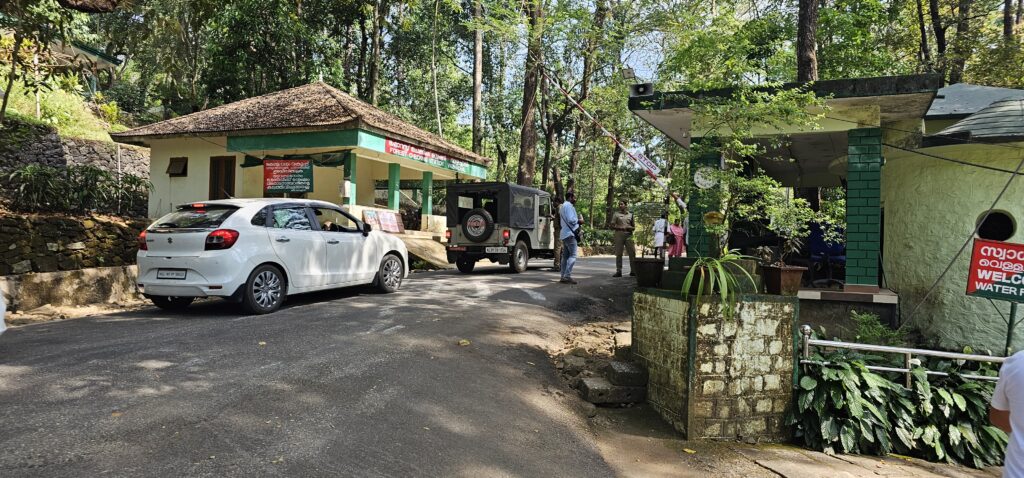
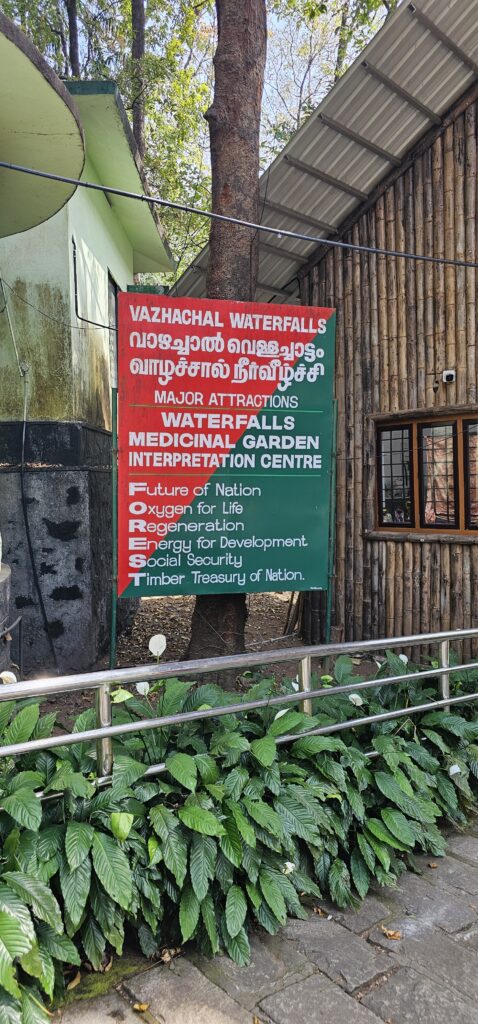
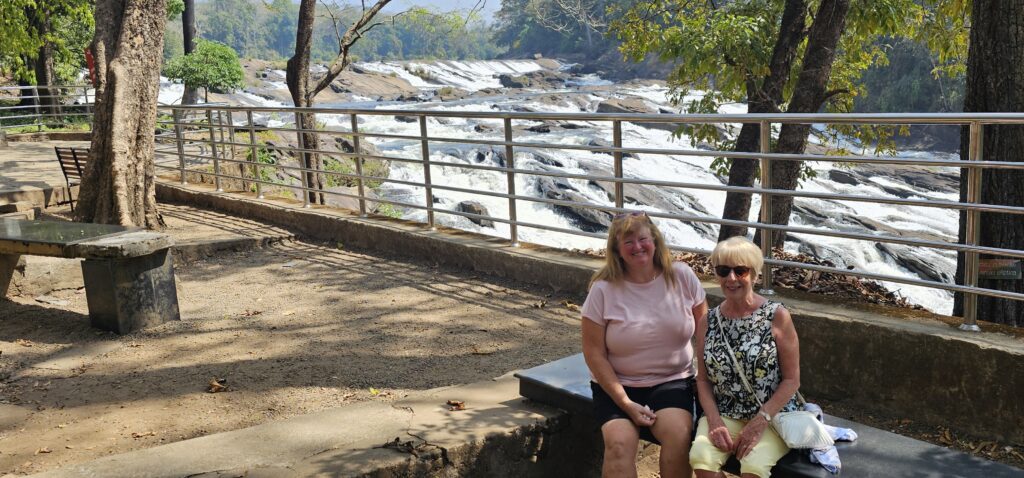
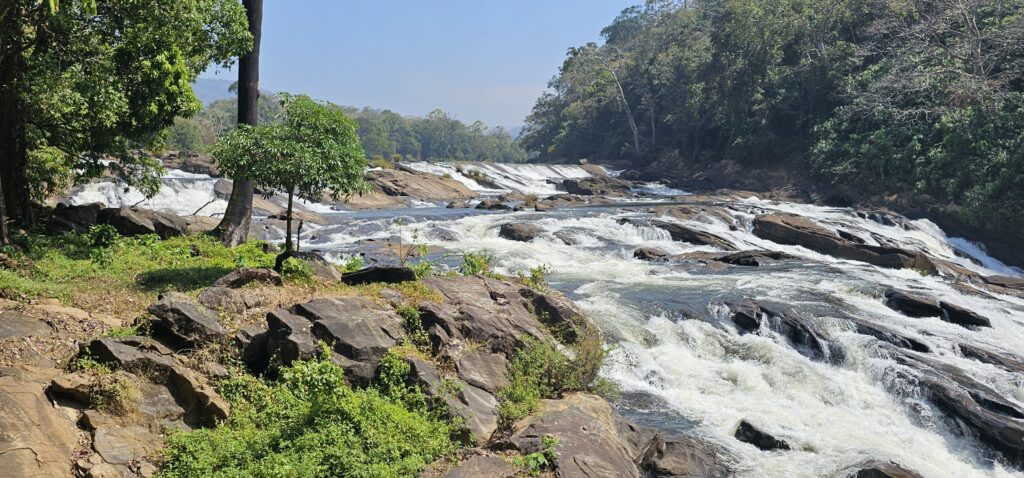
We drove further to Vazhachal Forest border point with Tamil Nadu and stopped again for a different view of the waterfalls.
Fierce, swirling and fast water created so much noise and yet it was also calming and beautiful. Here we found another troupe of monkeys all happy to be admired, filmed and photographed, they were interesting, funny, playful and real posers!!
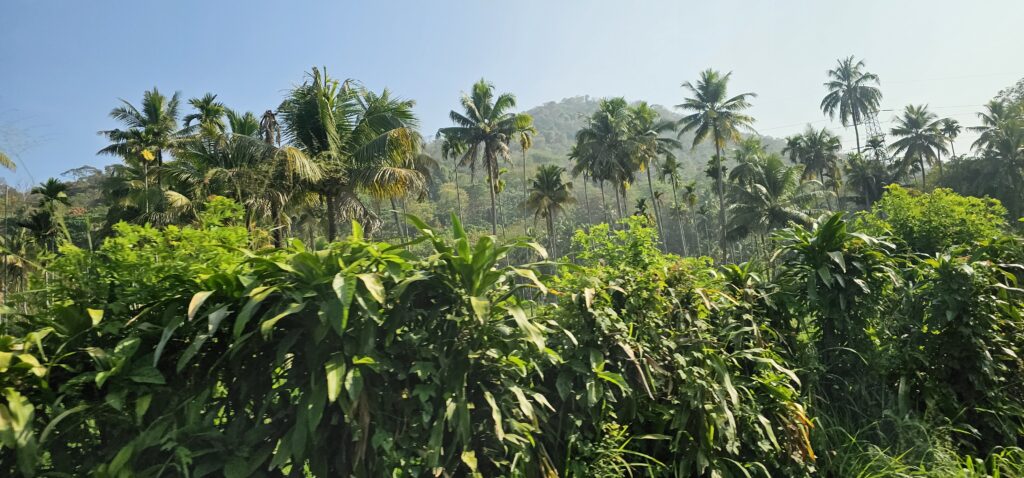
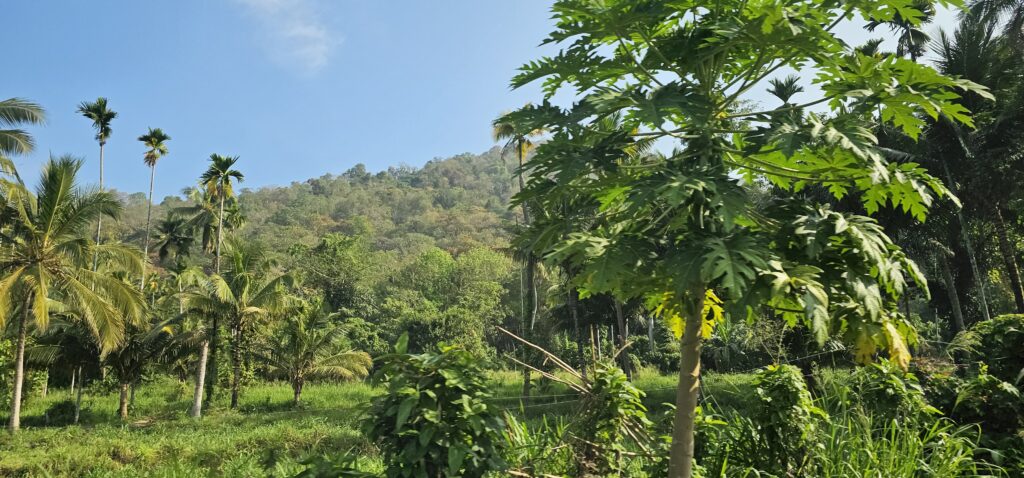
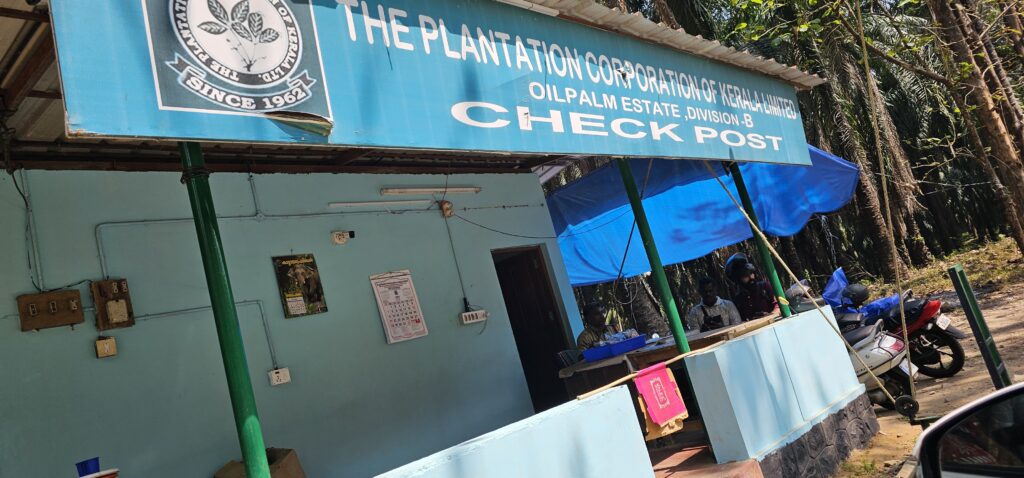
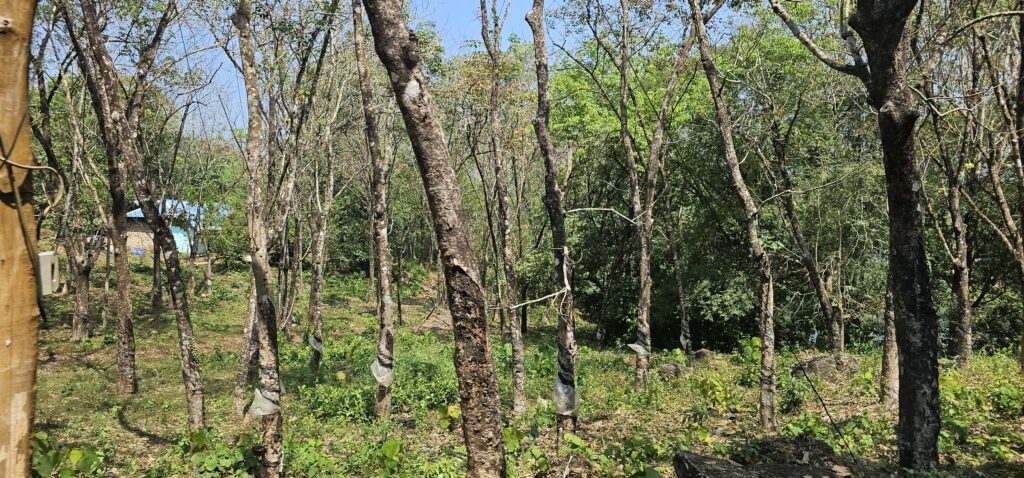
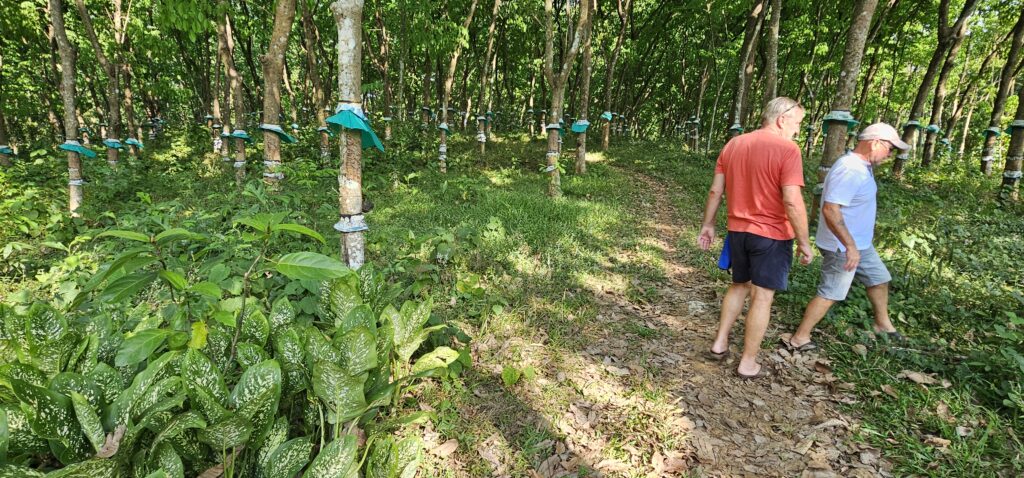
We headed into a palm oil plantation (plantations are usually thousands of acres in size) to cut across country to Jo’s village which was enroute to Munnar. He pointed out the rows and rows of palm trees and rubber trees, which were endless.
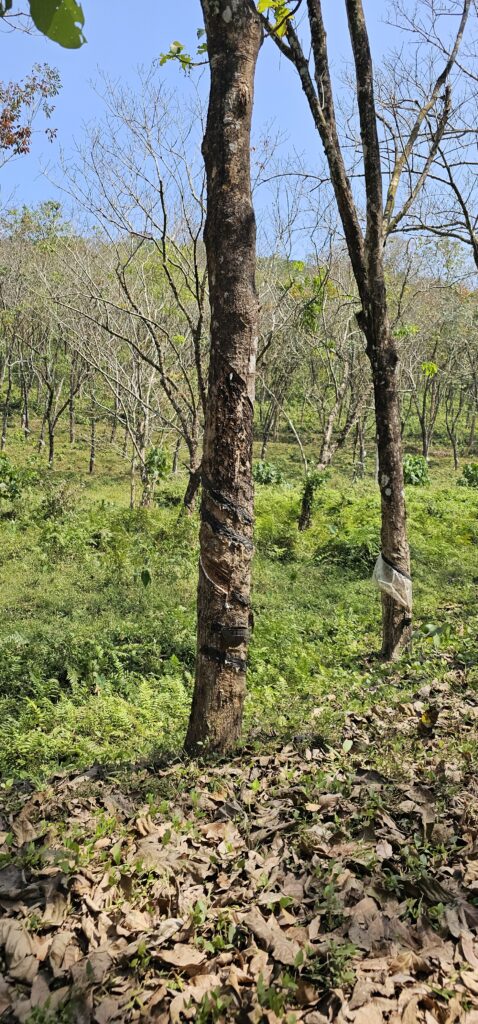
A rubber tree that has been cut to bleed rubber.
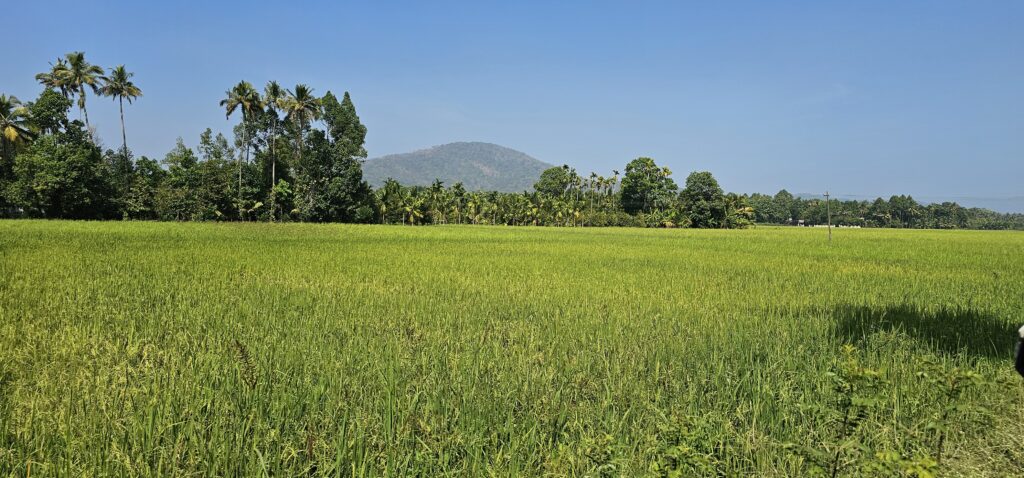
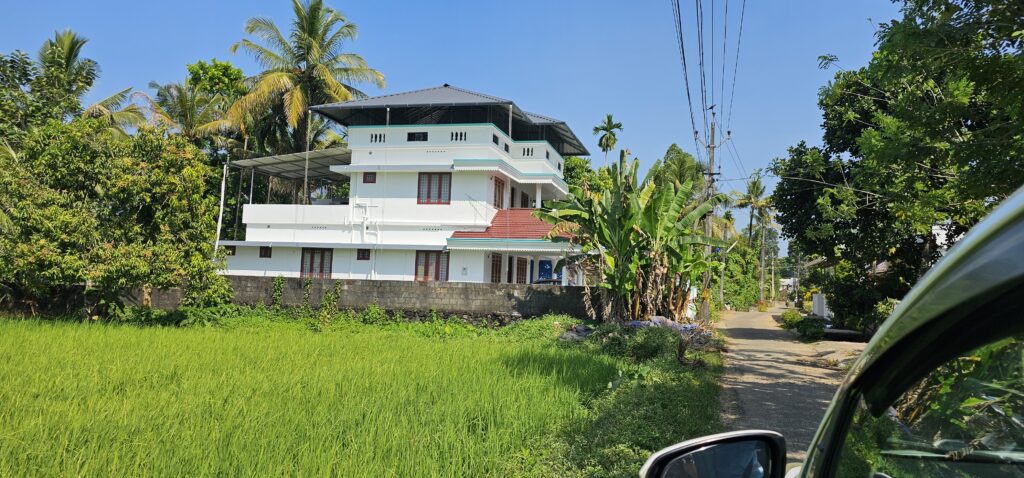
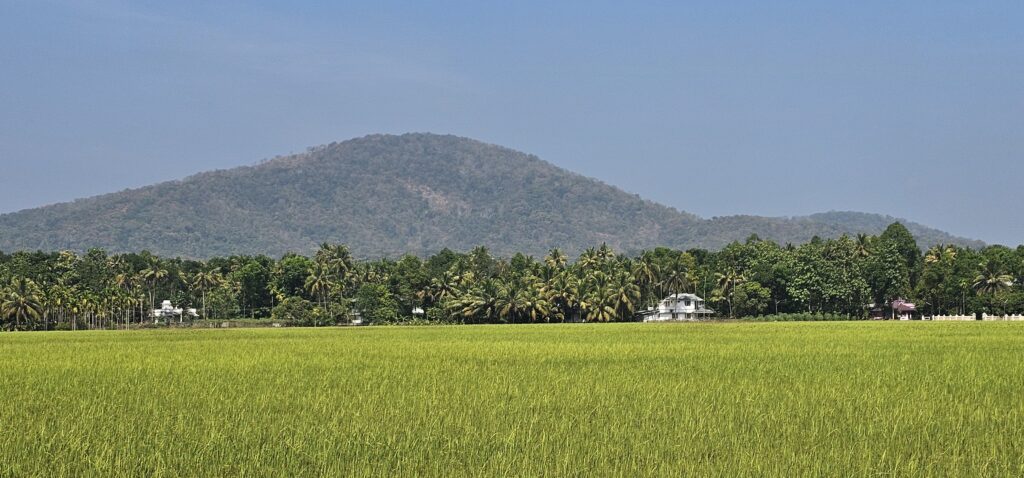
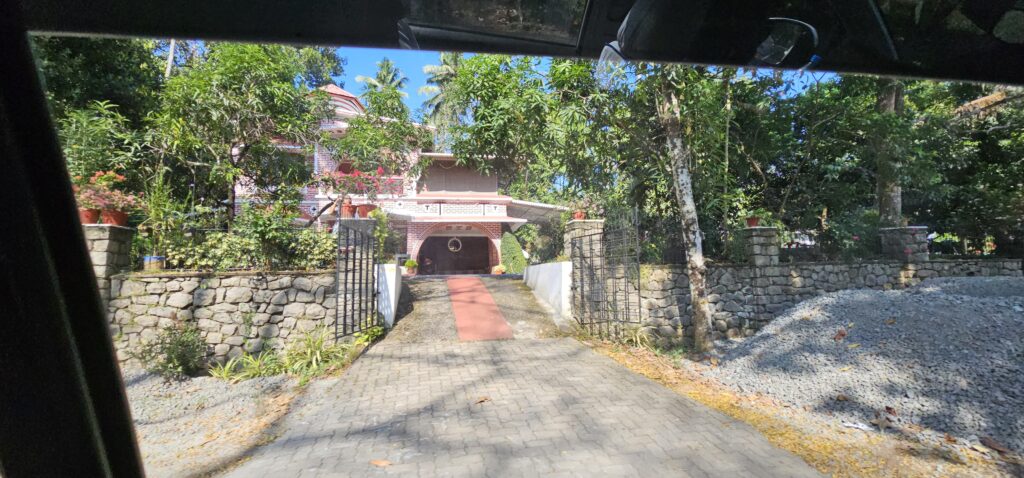
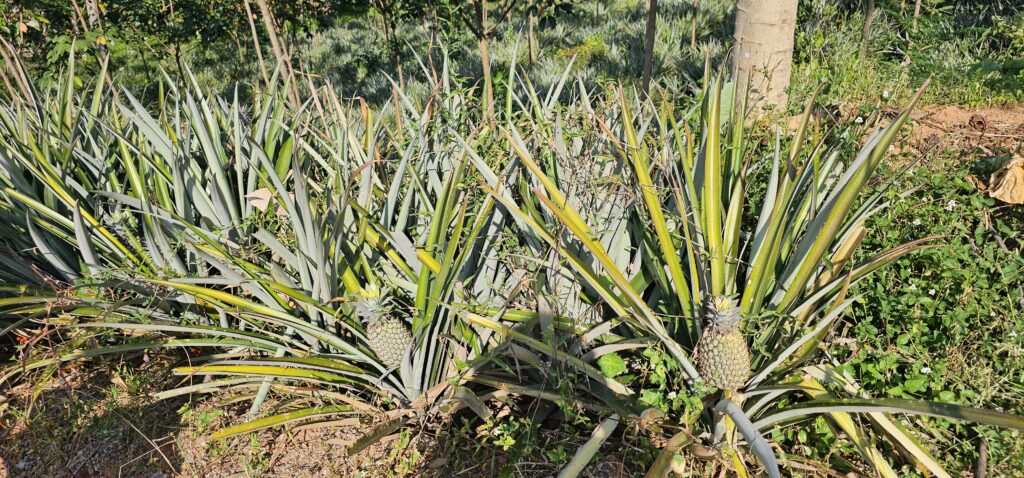
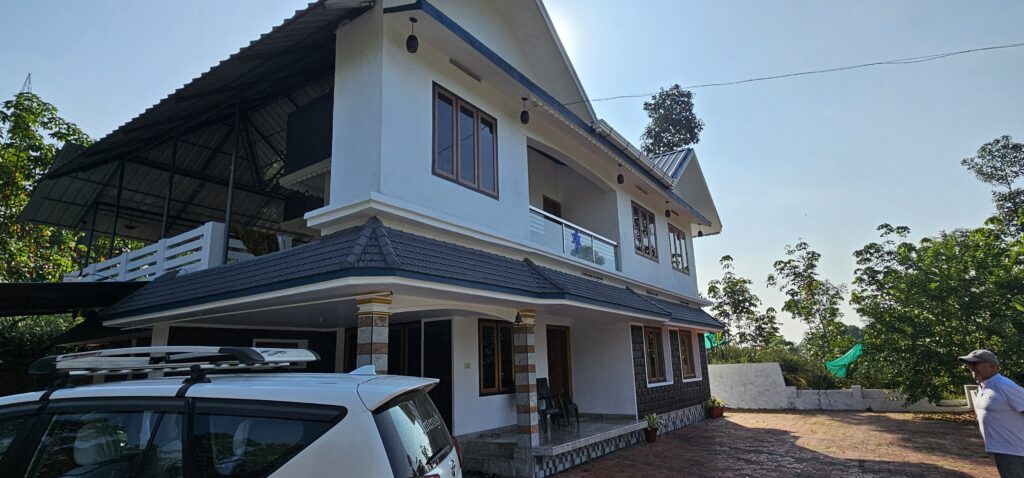
Arriving in Jo’s village we saw lush green paddy fields, beautiful houses and stunning scenery. We were quickly introduced to some of his family before arriving at a neighbour’s small pineapple farm, where he showed us 10 acres of pineapples, papaya and other fruits growing around a sprawling new house. We met the owner who showed us his honey bees, so tiny you could hardly spot them going in and out of the hives!
Paddy fieldsTraditional housePineapples growingBees nestsPineapple plantation owner’s house
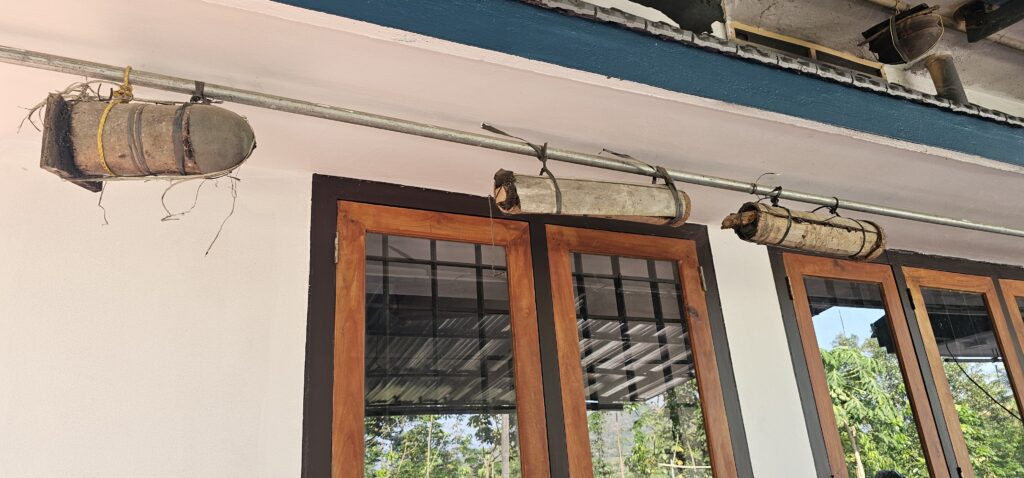
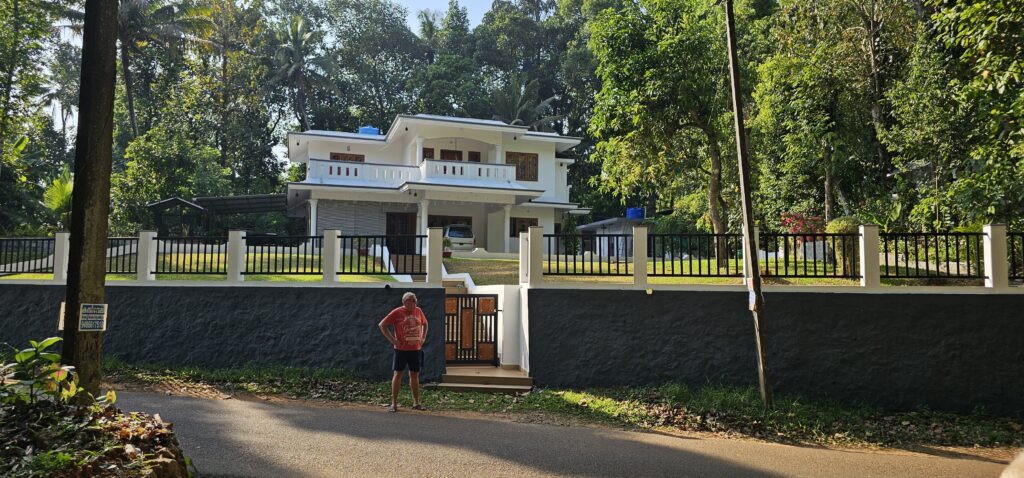
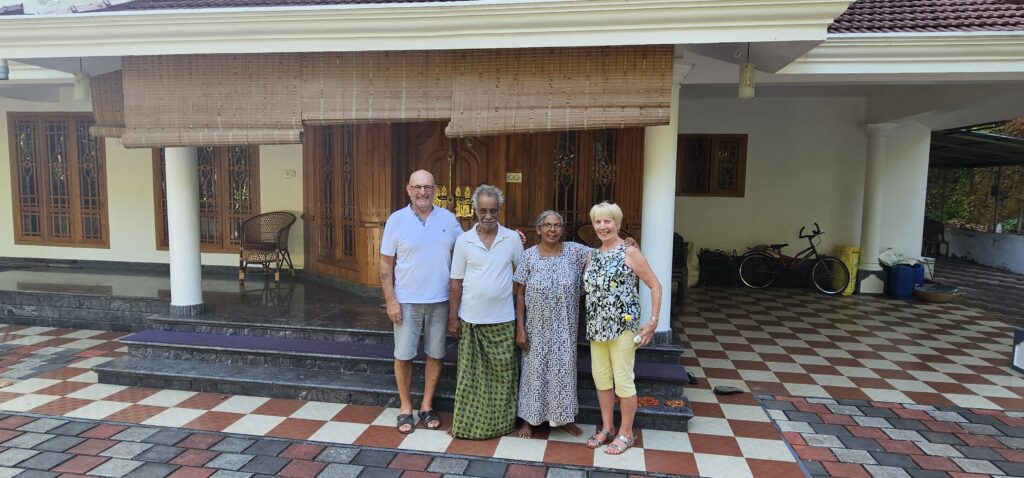
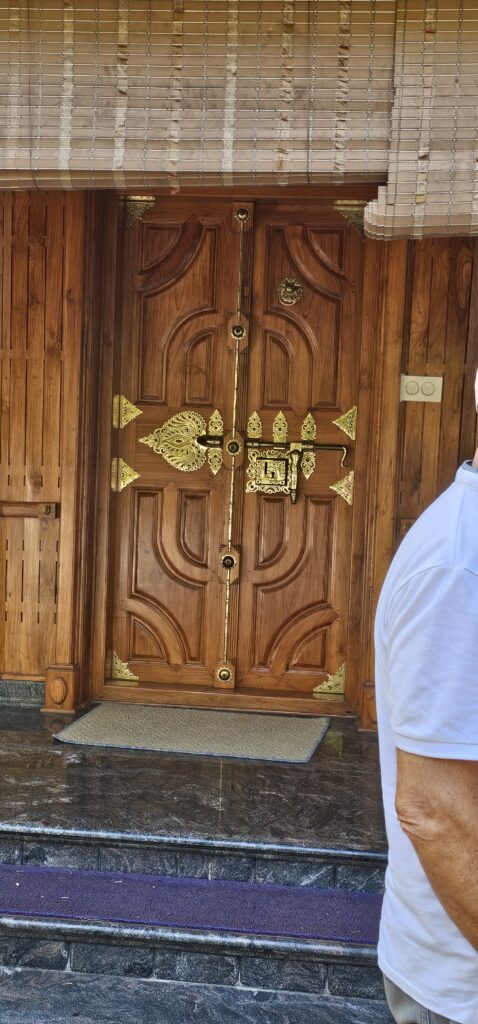
Next stop, another neighbour, who’s land had thousands of rubber trees on. Their small processing plant was still in their old house, a large new modern house had been built for them next door at a cost of 1.5 million rupees, about £140,000. Check out the beautiful wooden doors and windows, all teak wood from surrounding forests!
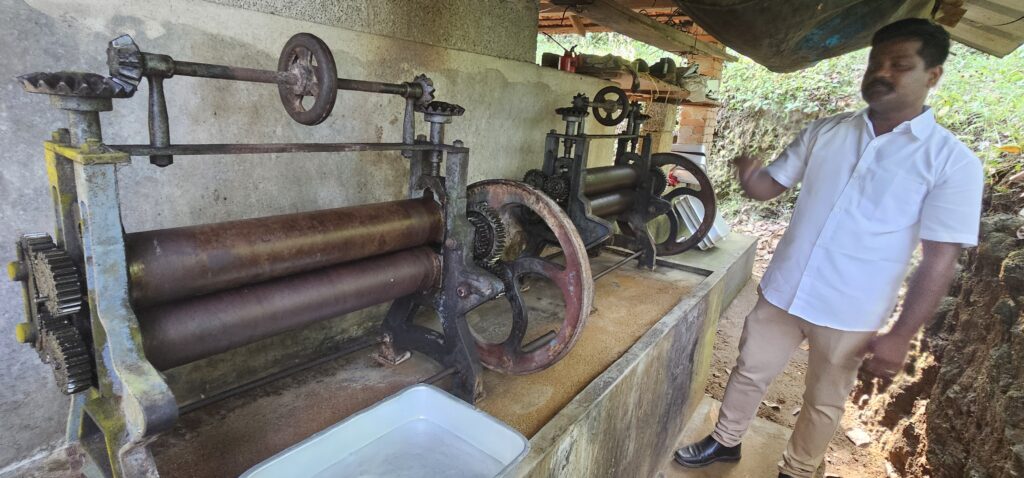
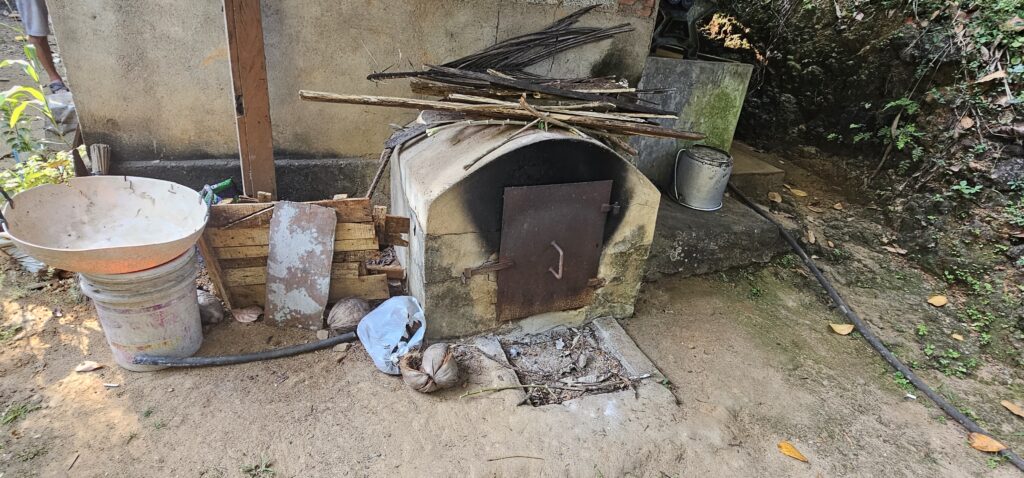
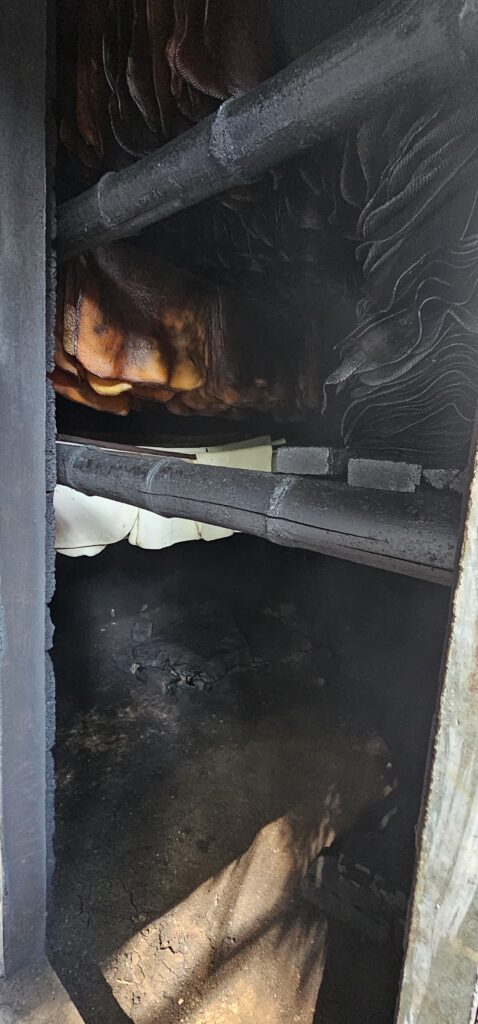
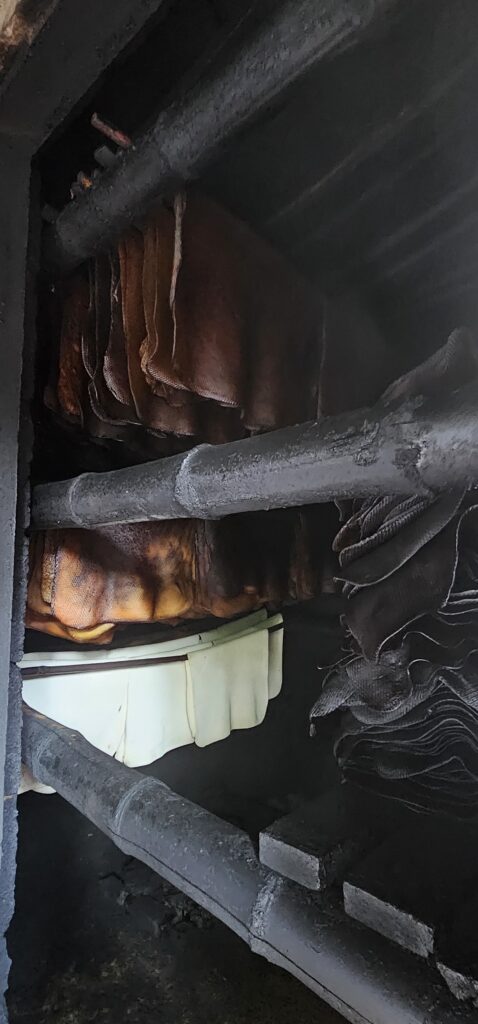
Jo showed us how the bark is removed so the trees “bleed” rubber, the liquid is caught in a cup tied to the tree, collected and put through two mangles to flatten it before it is dried in a wood fired oven for 3 days. The resulting black strips of rubber latex are sold to make vehicle tyres and other items. Around the area were much larger scale processing plants, it’s a real big business in this area!
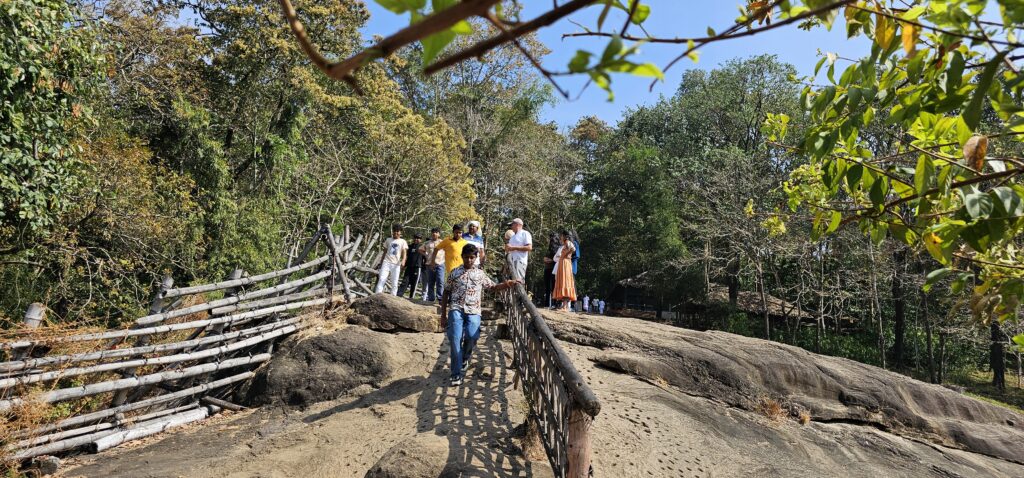
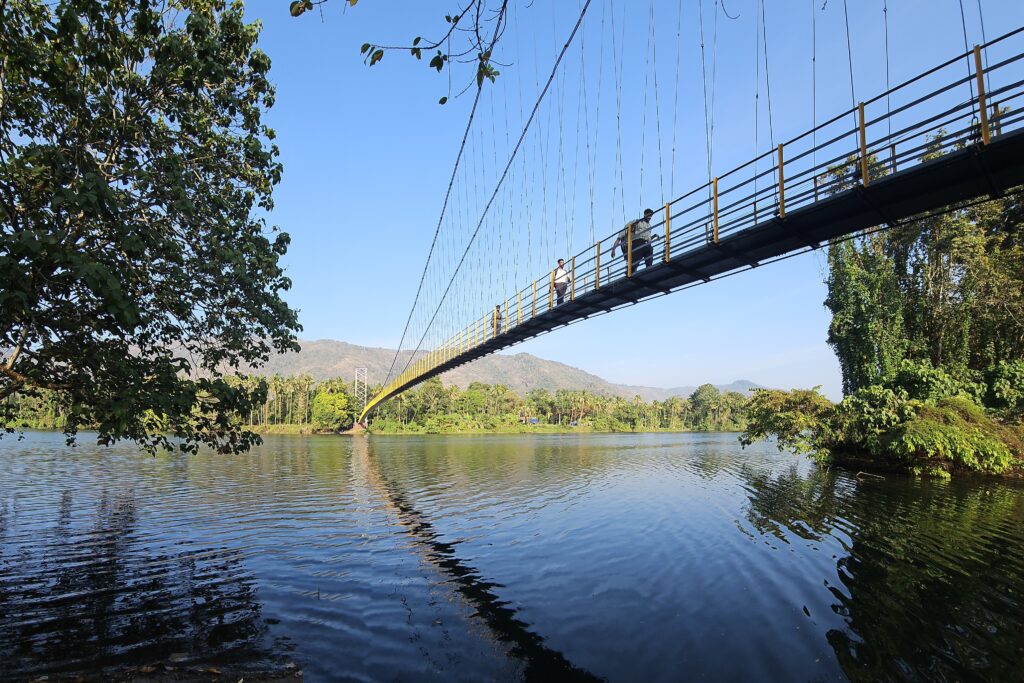
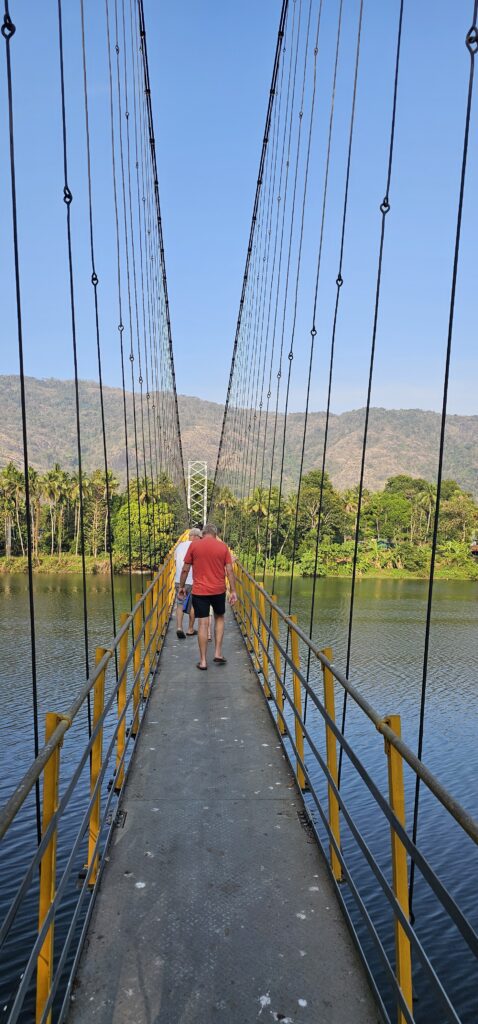
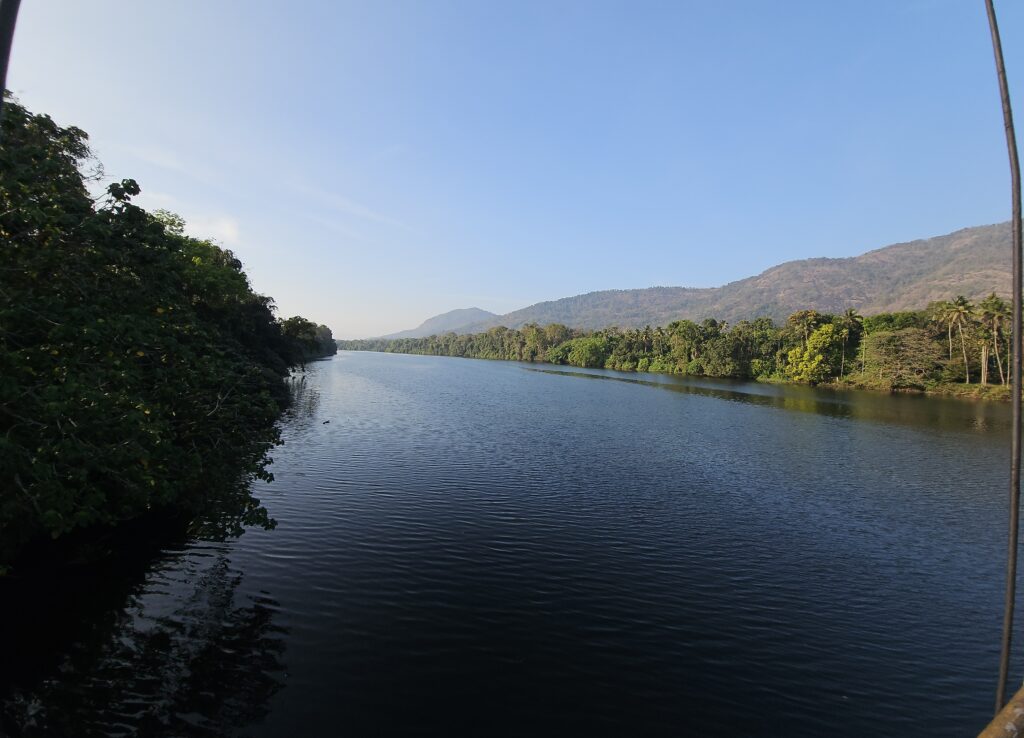
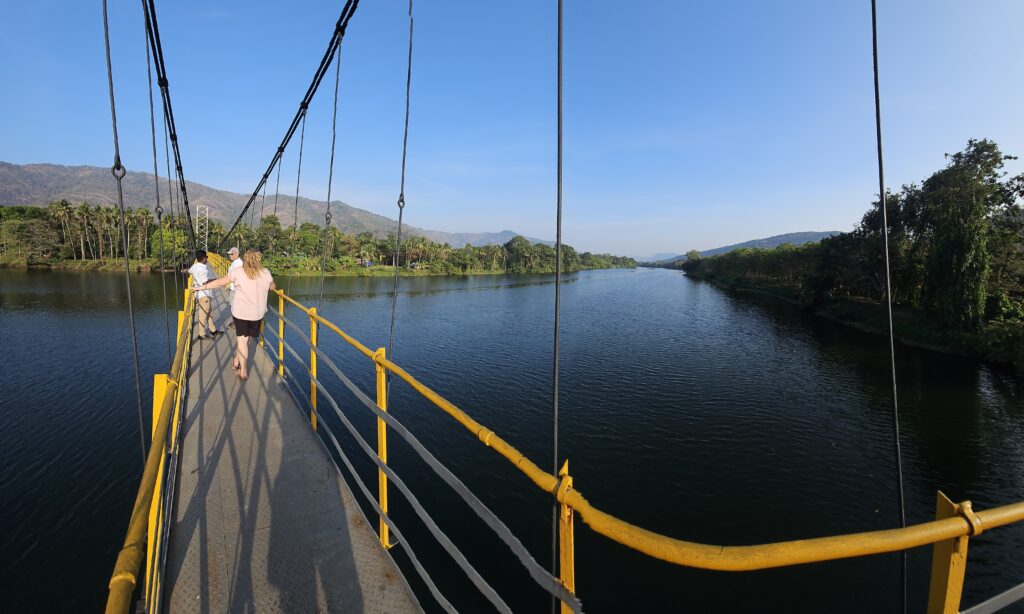
We took a walk to a dam, and strolled along a wobbling suspension bridge that connects people on one side of the river to the other, to drive around was a good 10 mile trip. It was a daunting but interesting walk but well worth it for the amazing scenery.
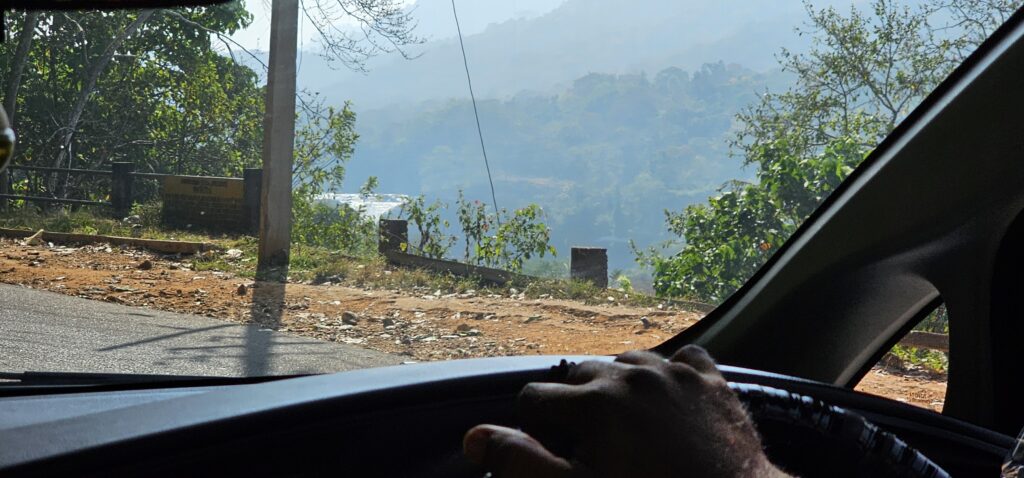
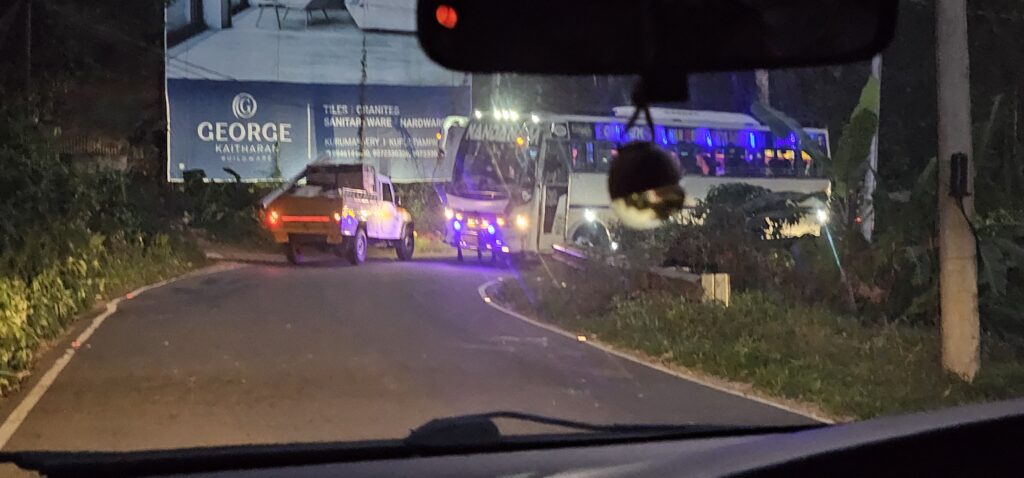
Another few hours later and we arrived at our hotel in the Western Ghats in Munnar, it was a twisty hairpin bend slow drive on a busy narrow road that is meant to be a Nstional Highway! Trucks overtaking busses, cars and motorbikes, scooters and tuktuks all fighting to get by each other, on tight bends made it a very long hard journey, but we finally arrived after 11 hours being on the road!
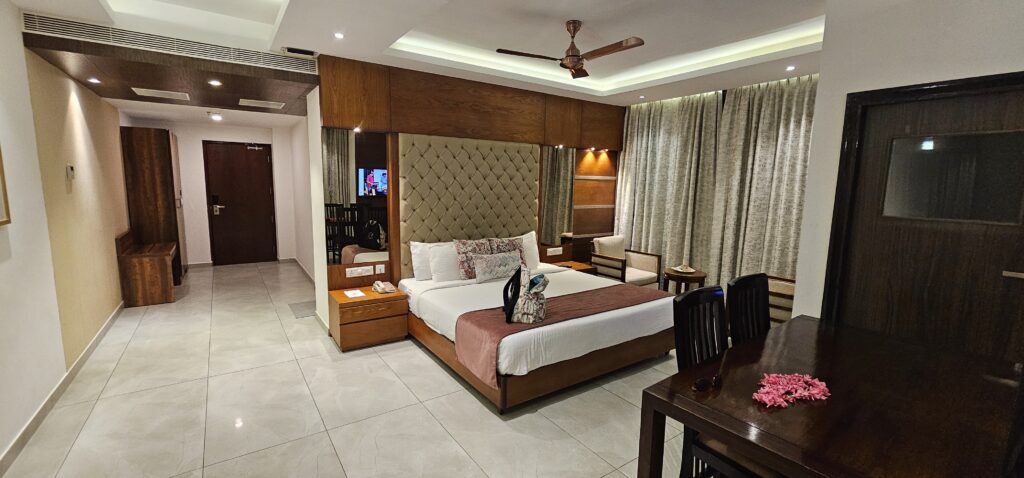
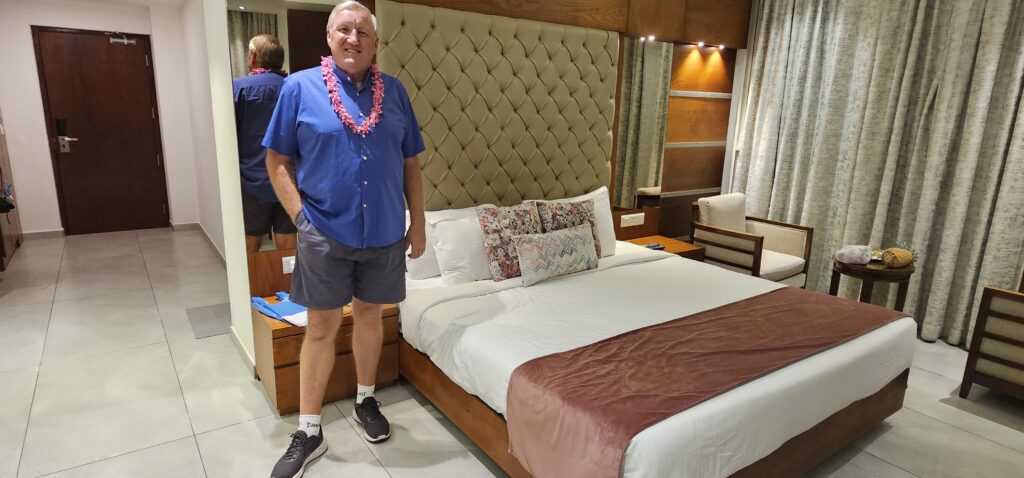
Road traffic on tight bendsKnackered!!!Our spacious rooms
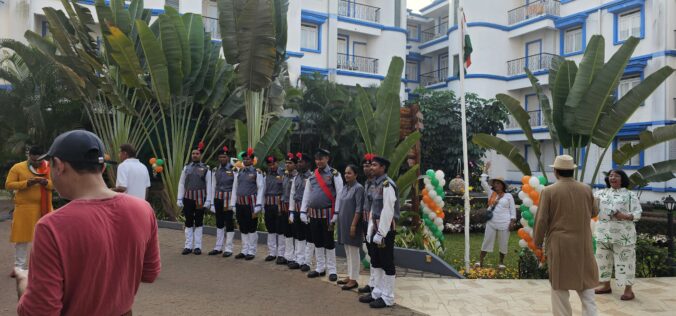
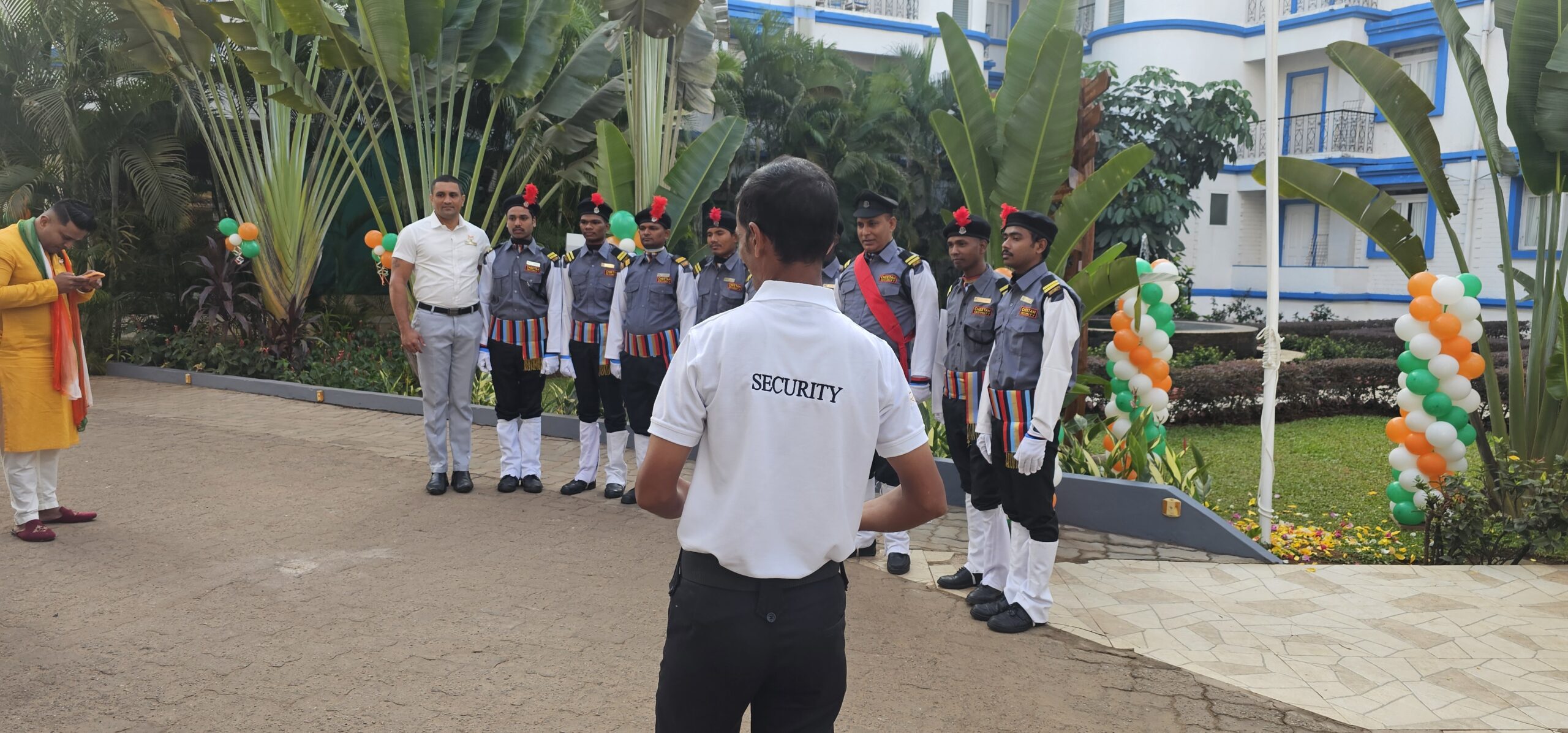
Yesterday, unbeknown to us, was India’s Republic Day, a celebration of the adoption of the Constitution of India, and the country’s transition to a republic which came into effect on 26 January 1950.
A neighbour invited me to come to our resort’s Reception and watch “a ceremony to raise the flag”, little did I realise that it was the start of a huge celebratory day in the whole country……well, it was 8am in the morning and pre-coffee!!
We had already decided to take a drive out to the North of the state, to look at the beaches and resorts, which we have found in the past, were known as the equivalent to Blackpool or Benidorm’s Strip. During our time here in lockdown, of course, that was very different, the resorts were totally empty and shut down so we wanted to see things in full swing again.
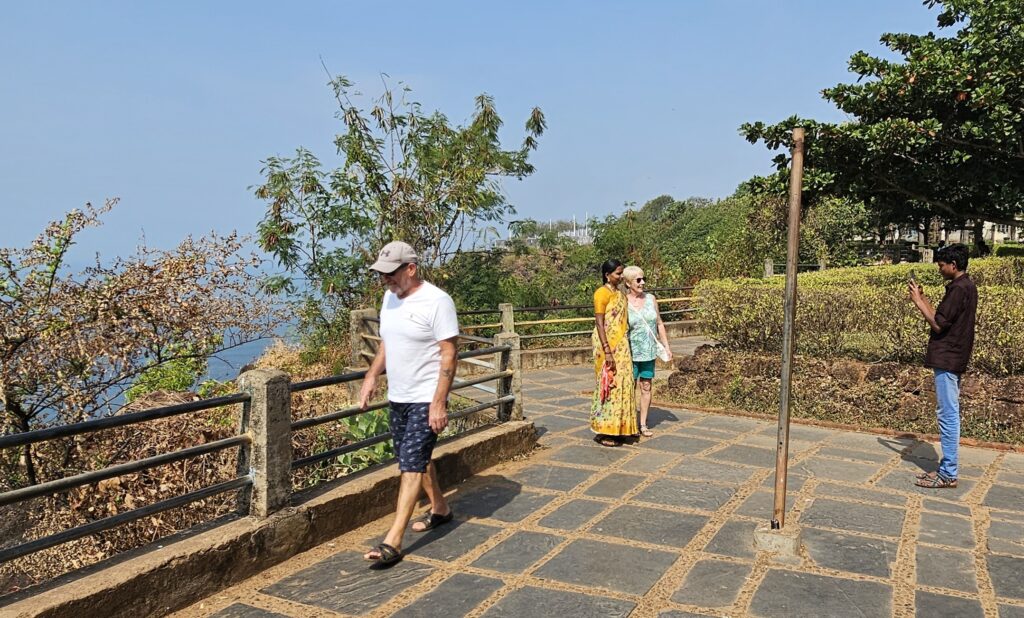
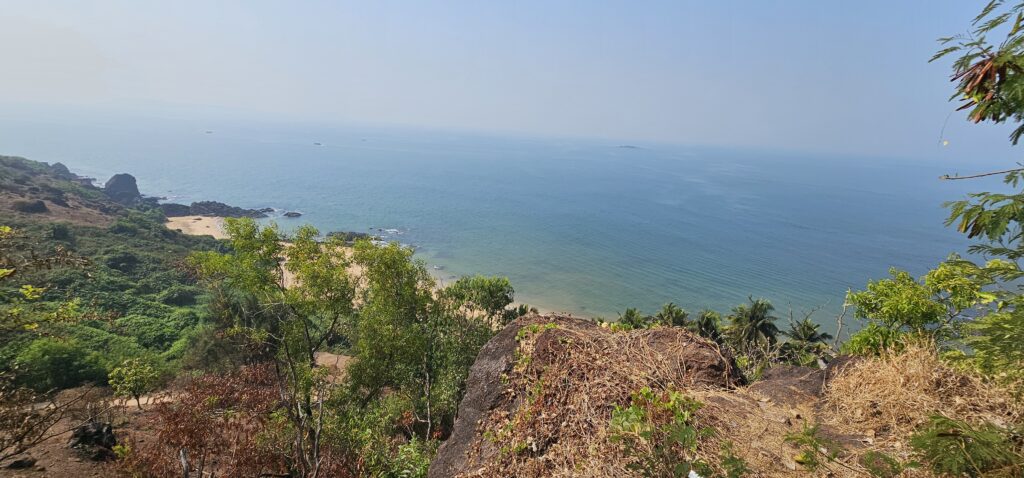
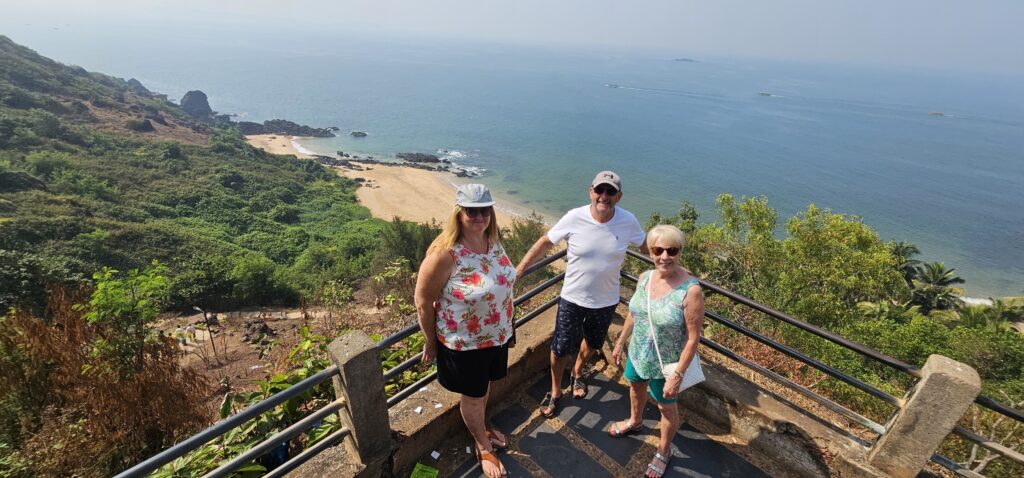
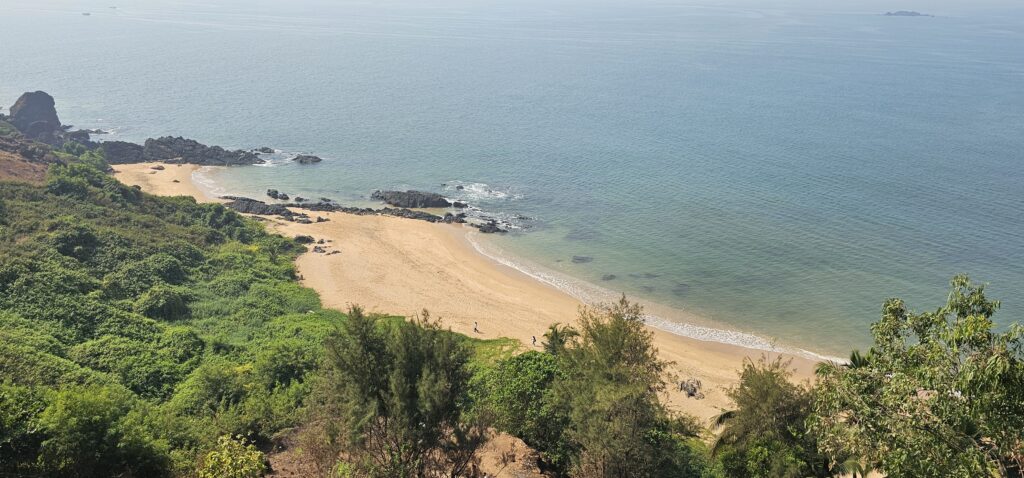
We stopped off at a viewpoint called Mormugao and looked down onto a beach called “Grandmother’s Hole”. The beautiful beach was a long way down from the car park and as it was another hot day, we headed back to the aircon in the car and headed up the coast again to Calangute and Candolim.
Once again, Di and myself were stopped and asked if people could take selfies with us, we could get used to this “celebrity status” ☺️
Lunch was a quick snack at a beachside cafe in Calengute, where we shared a table with two very interesting lads on holiday from Leeds!
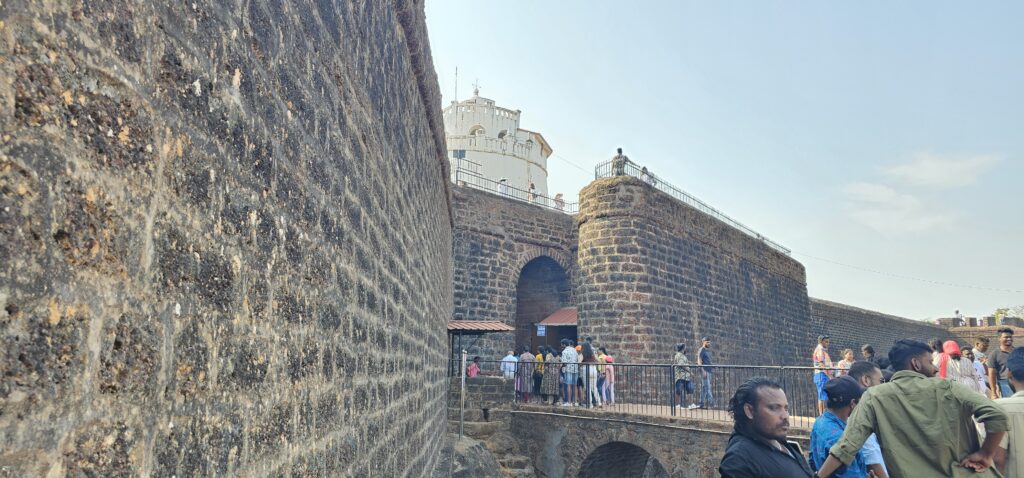
Traffic was diabolical so we headed to the areas main tourist attraction Aguada Fort, thinking that as its a holiday, people will either be with families at home or at the beach……but no! Half the population of Goa was at Aguada Fort!!!
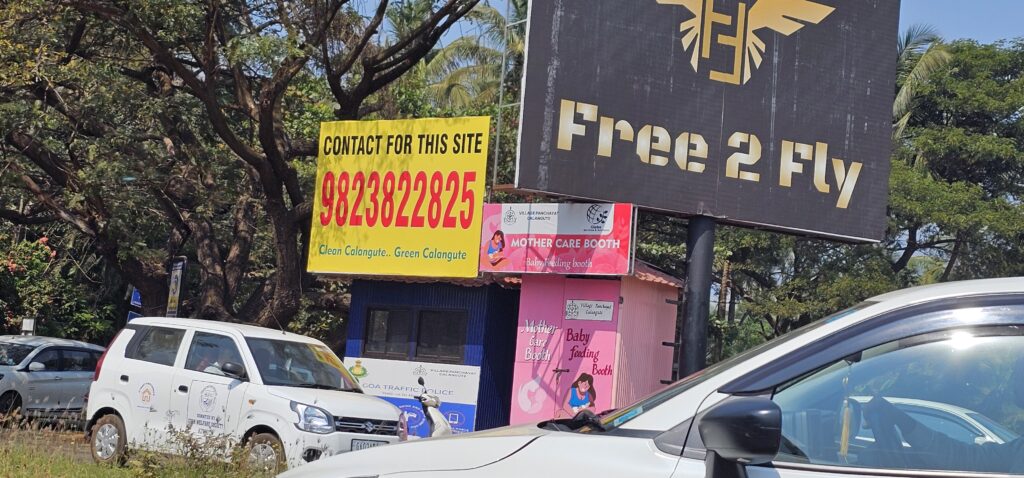
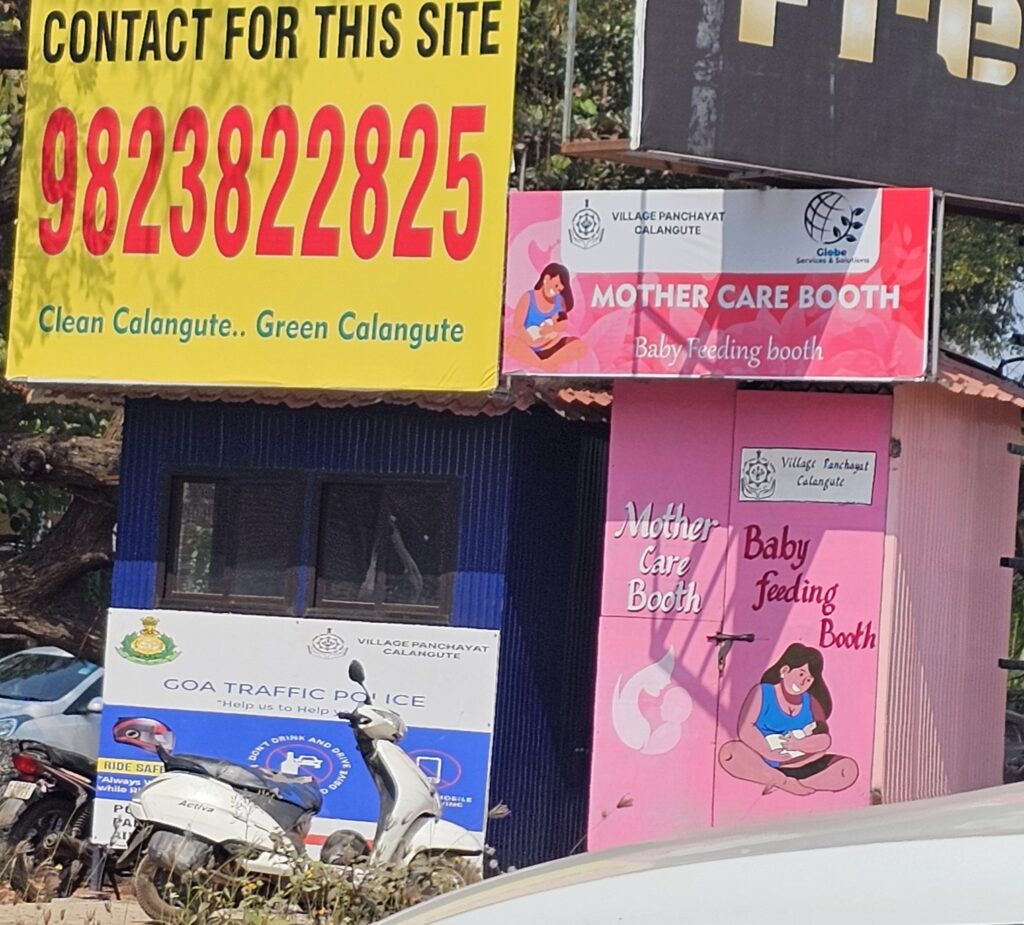
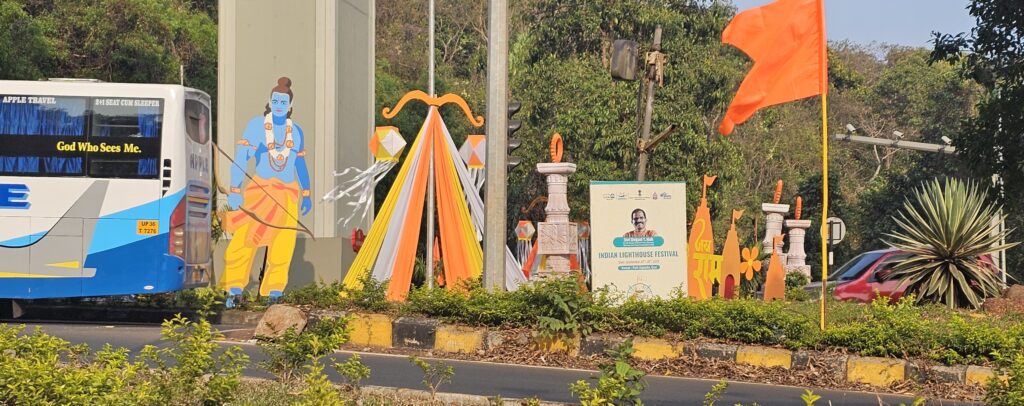
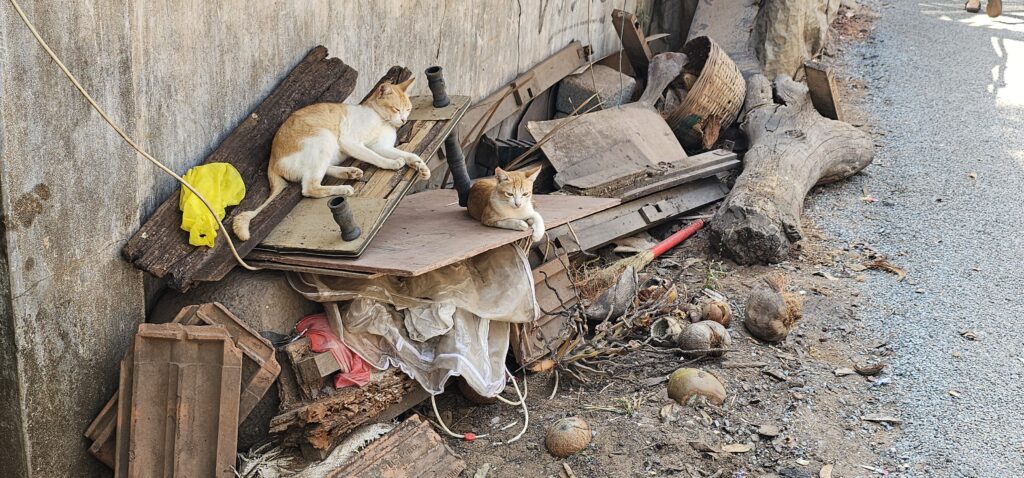
A few images from the back seat of the car whilst in traffic….
Next to a Police box, what else would you expect to find but a mother and baby feeding station, on the side of a very busy junction!
Unusual roundabout decorations and the Obligatory kitty picture 😁
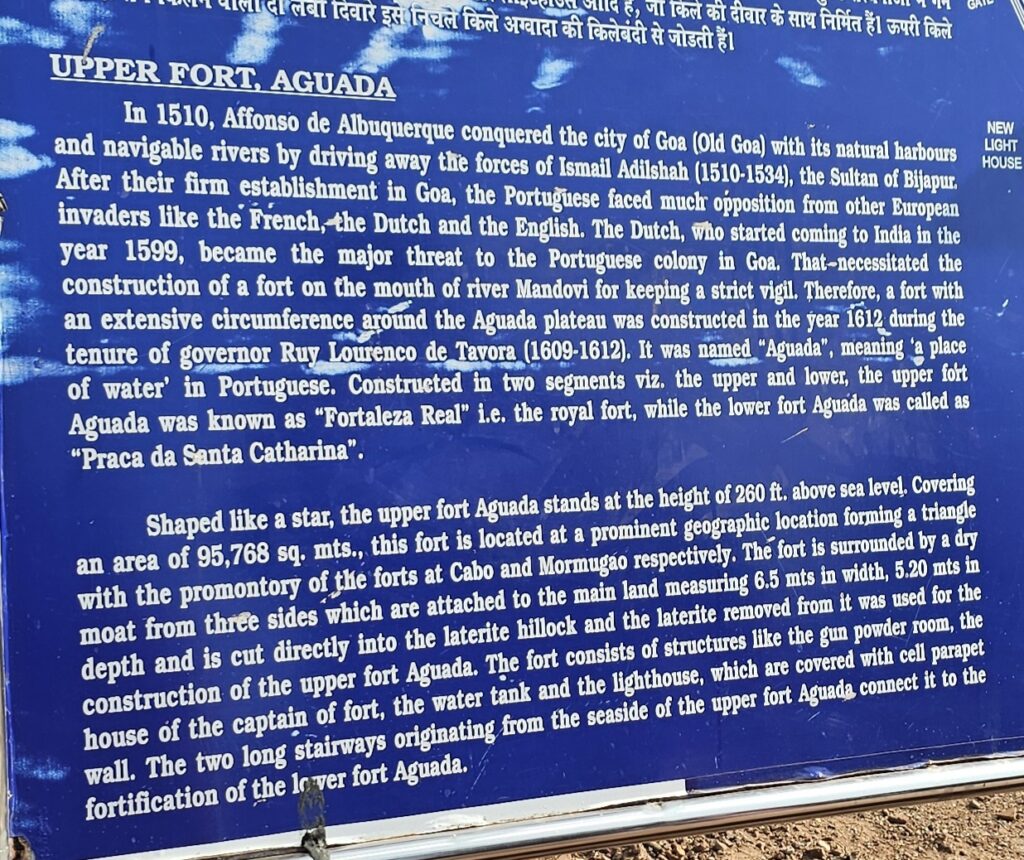
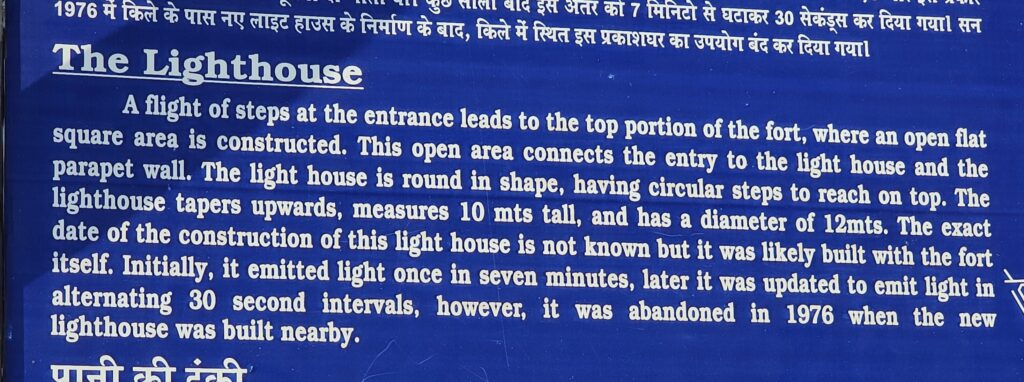
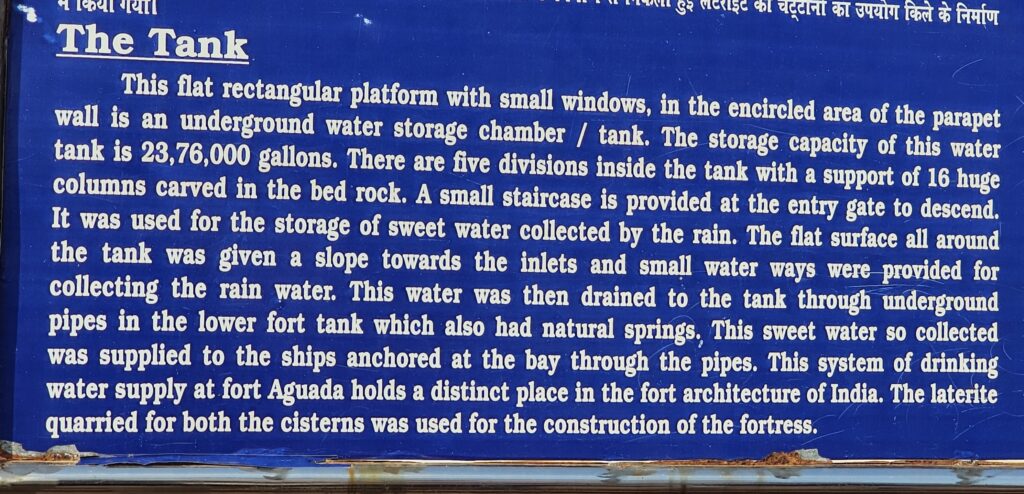
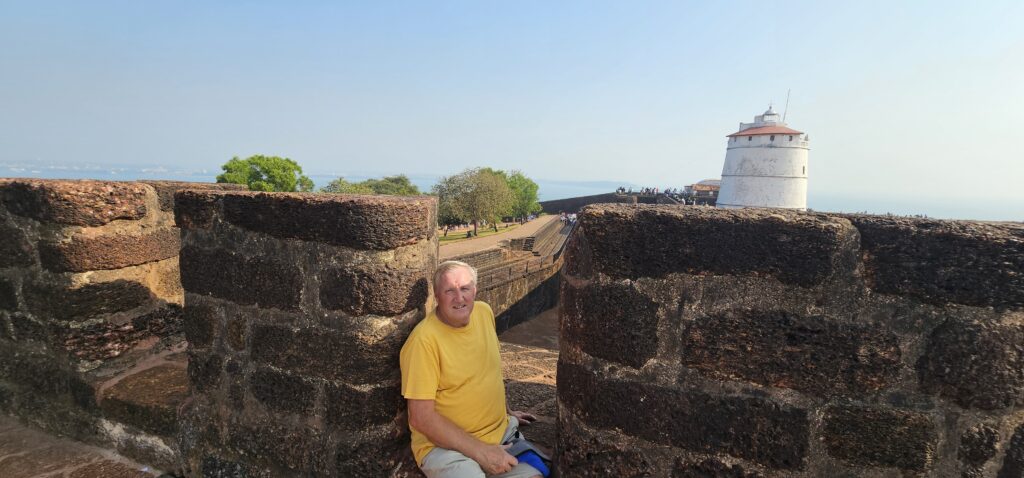
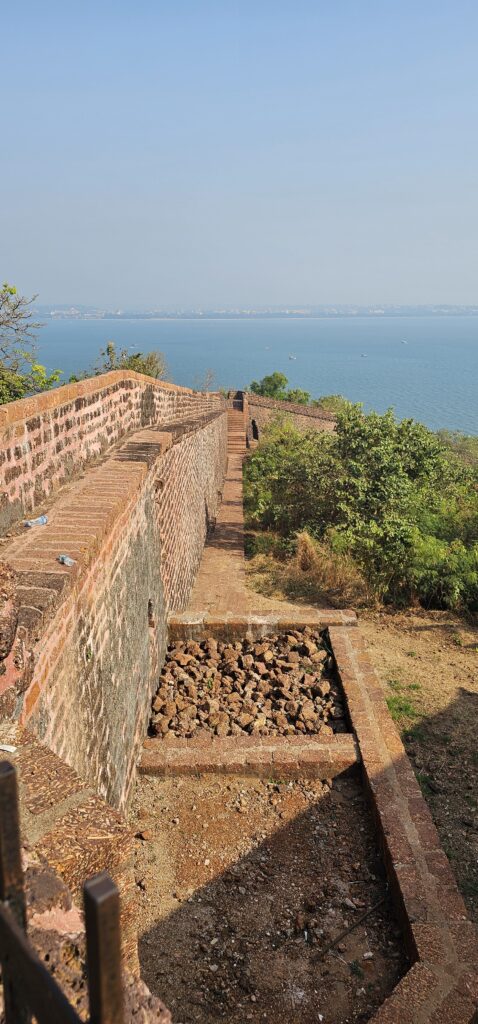
So we arrived at the Fort, the rare white man in a sea of coloured faces, dresses and shirts, only to find that the Fort is simply the walls, and a water tank and a few explanatory boards. For your info…
Yes, it was HOT there!!!
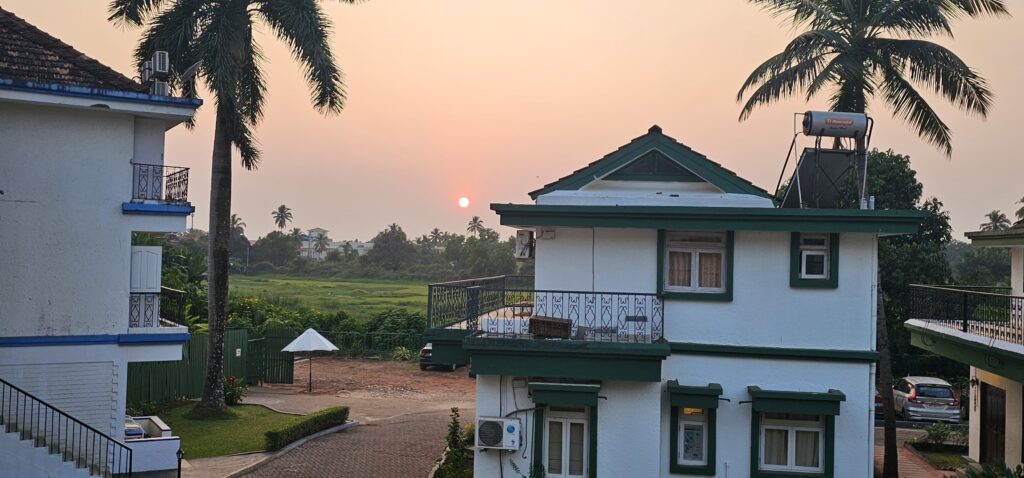
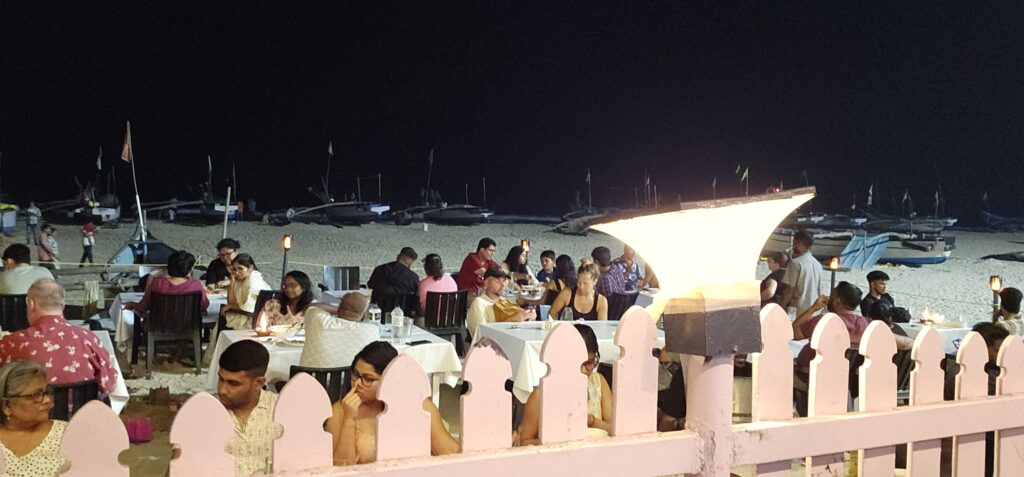
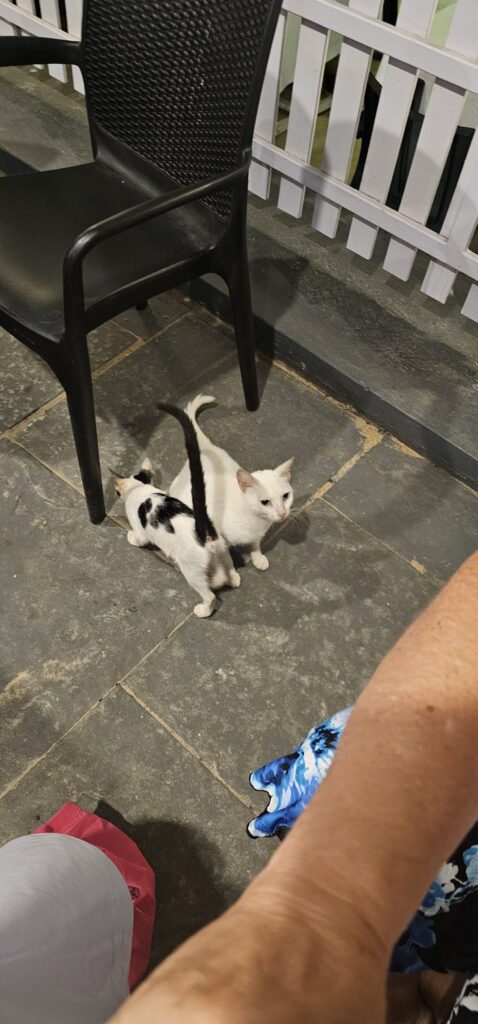
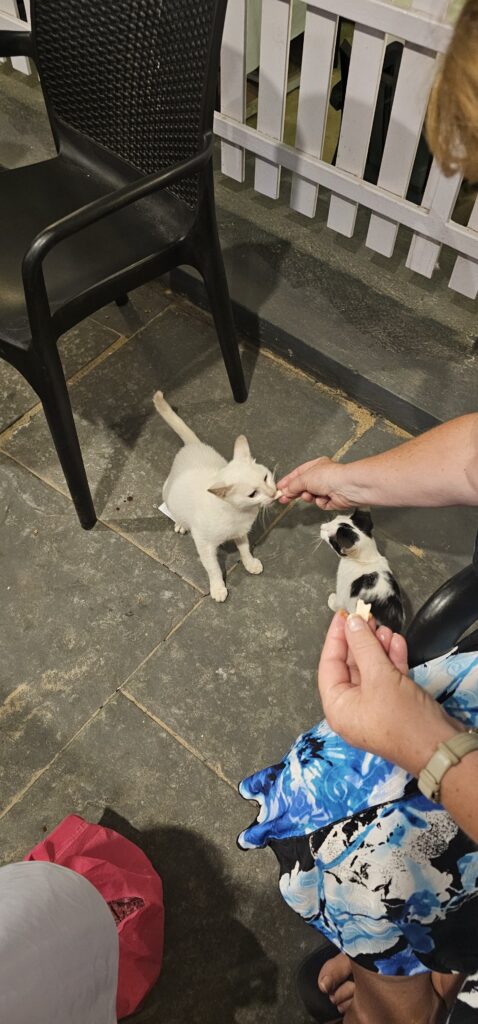
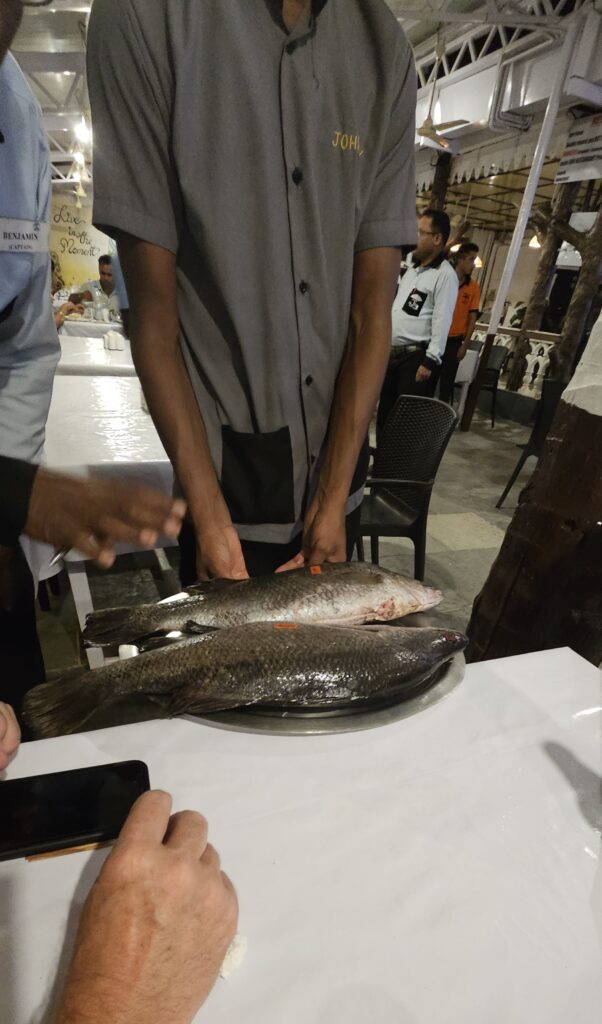
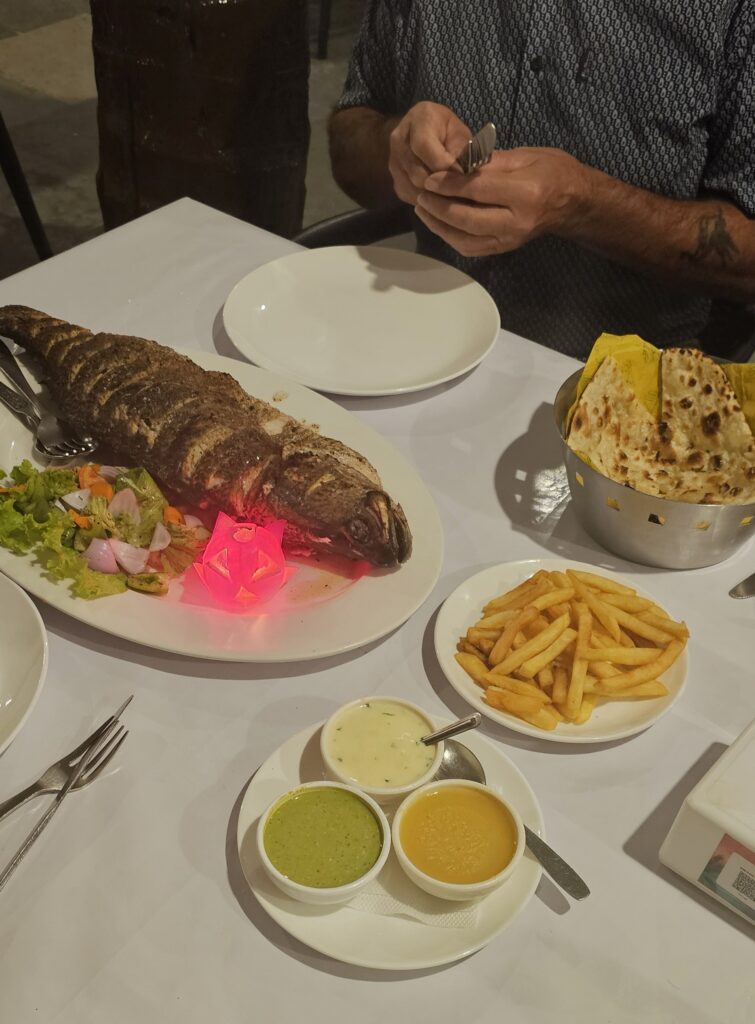
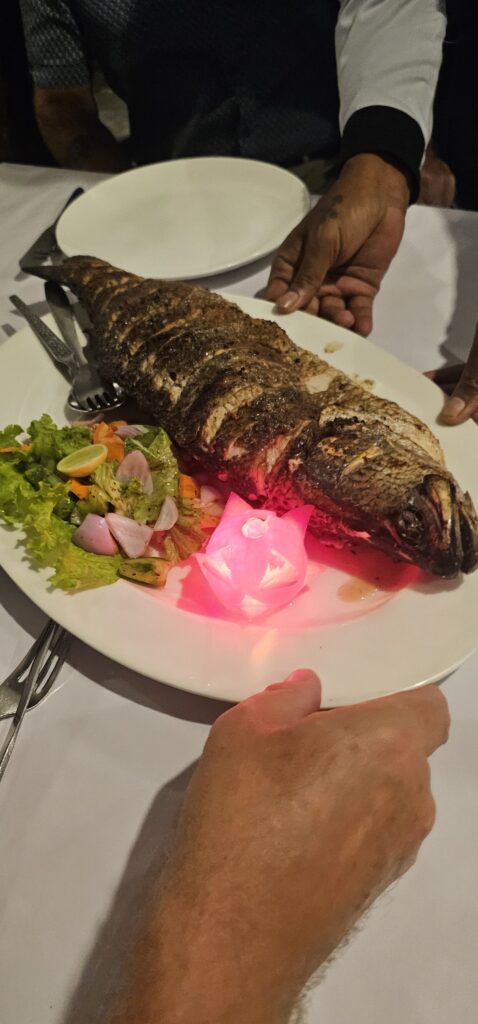
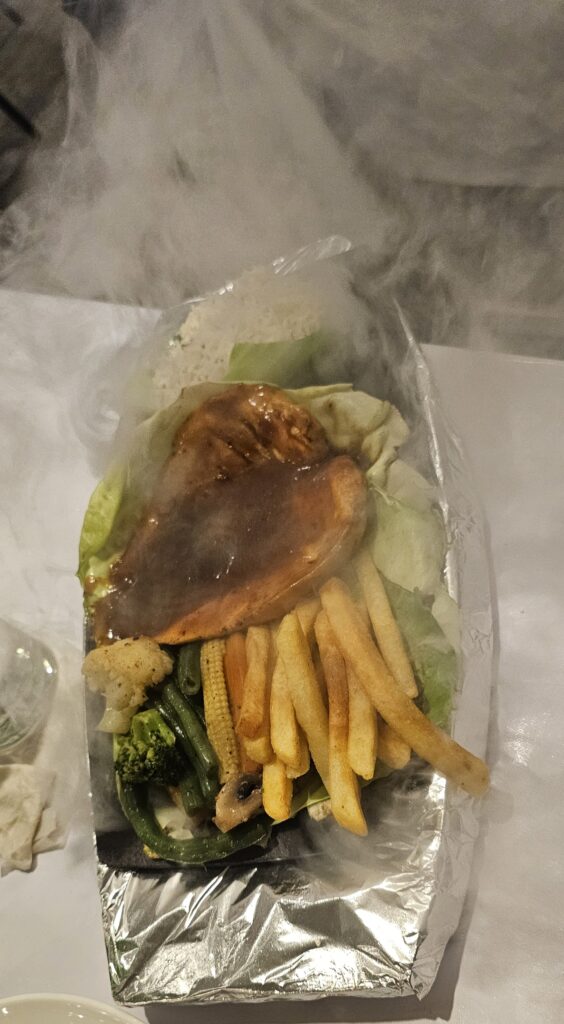
We arrived back at base sweaty and tired after what should have been a relatively easy trip but it turned into a chaotic nightmare, due to the traffic and chaos on the roads – simply manic!!! A quick shower and off to our reserved beach side table where yet another massive seabass was waiting, along with kitty and her baby who got fed the remains of my chicken dinner.
Sunset from our balconyBusy beach at nightBefore being cooked!
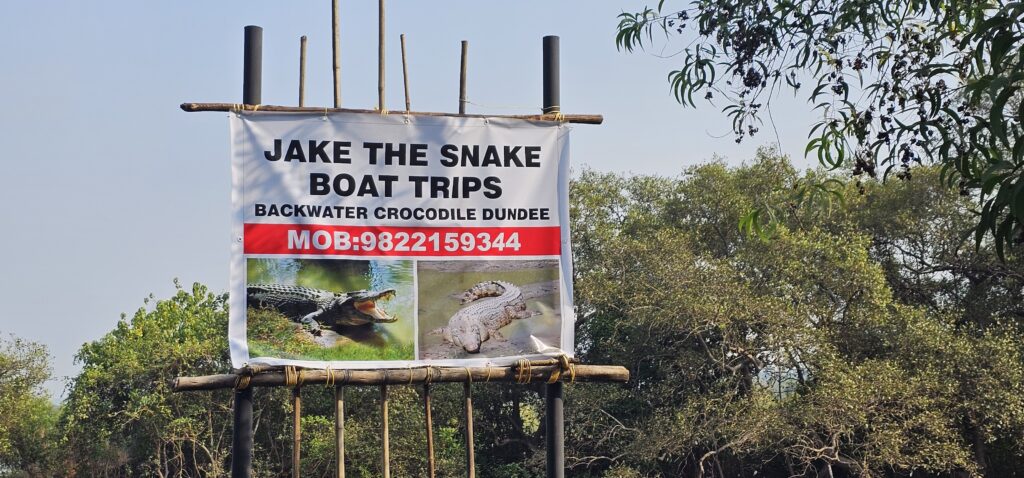
Mad dogs and Englishmen went out in the midday sun to look at two important churches in Old Goa (town) before heading to an island for a ride out with Jake the Snake to search for real life crocodiles.
It was a long busy day, not the sort we are used to where we have chores to do or shopping or maintenance but we packed in such a lot that it truly tired us out!!!
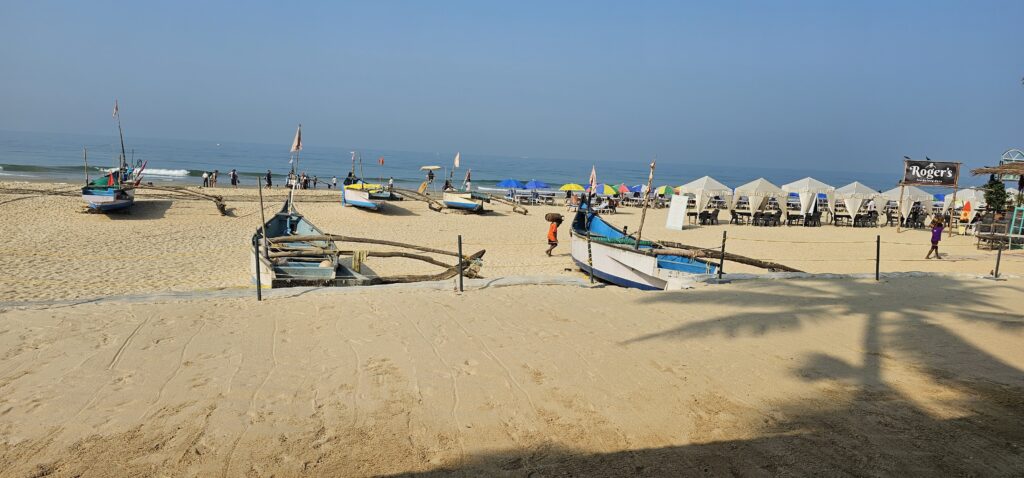
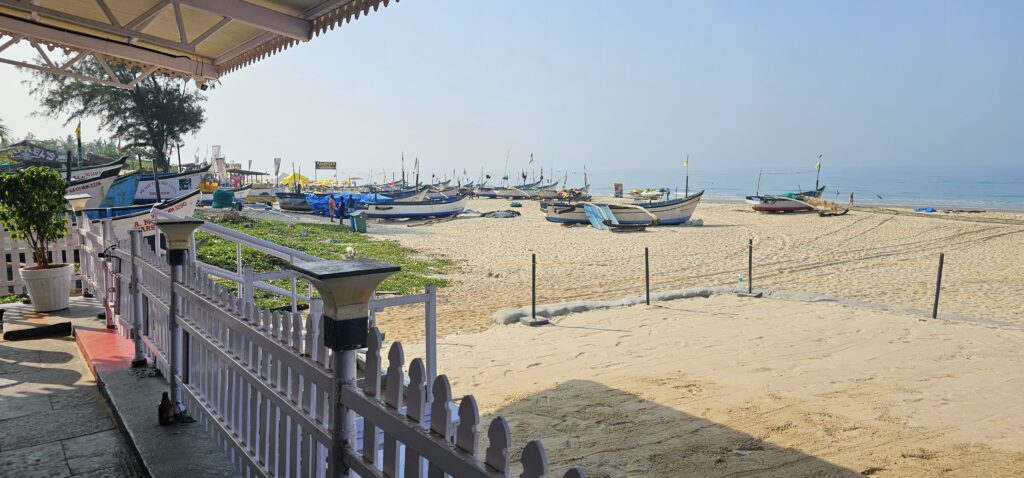
We started with breakfast on the beach, poached eggs, French toast, fresh fruit juice and a Full English for some (greedy Graham no less), washed down by fresh coffee and a dash of a dancing dolphin. The dolphin was considerately right in front of us so we didnt have to move too much from our table!
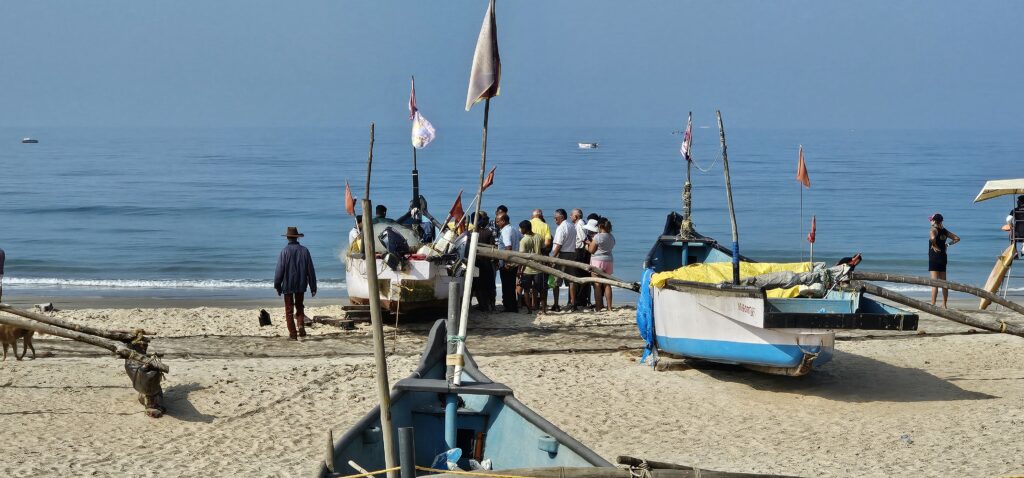
Our breakfast View.Fishermen heading in with their catch.
We then had a frantic drive around town negotiating the scooters, cars, busses and cows before heading inland, stopping occasionally to top up our religion intake, before making our way onto an island to meet up with Jake the Snake.
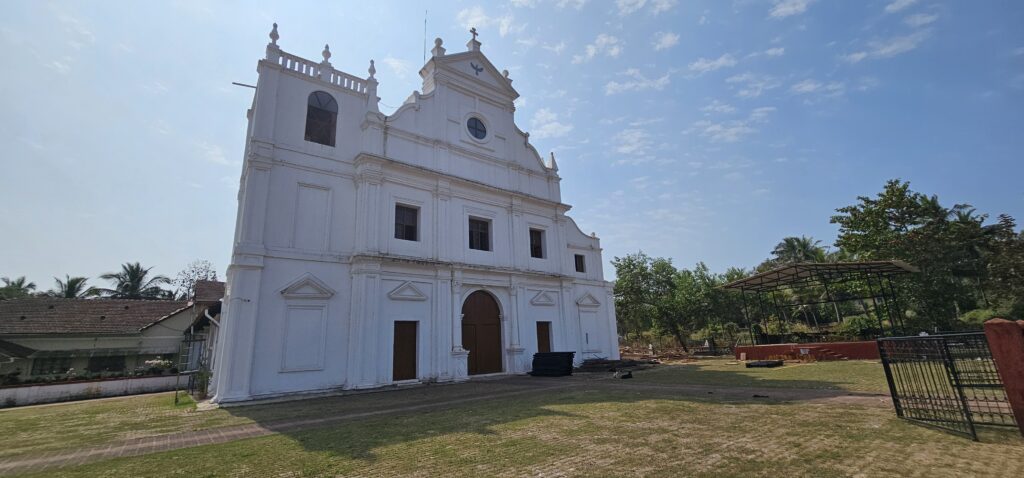
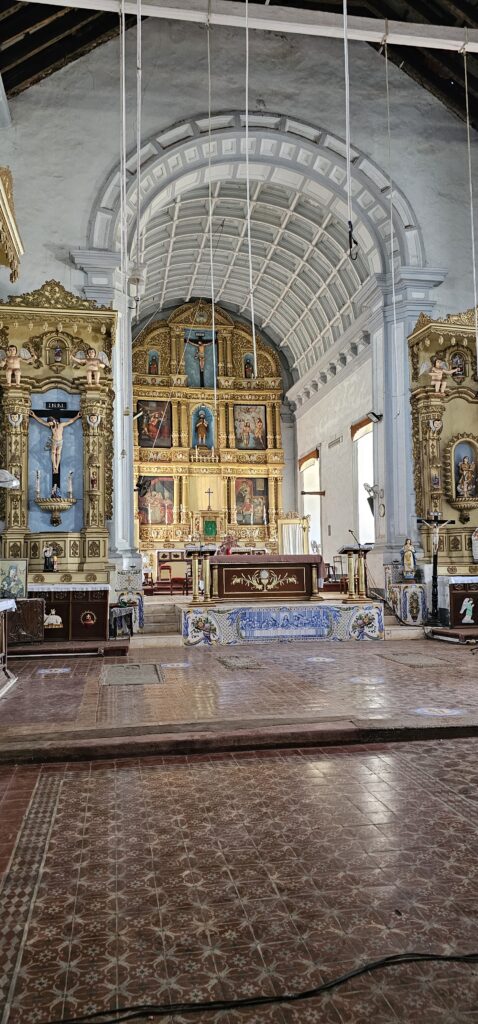
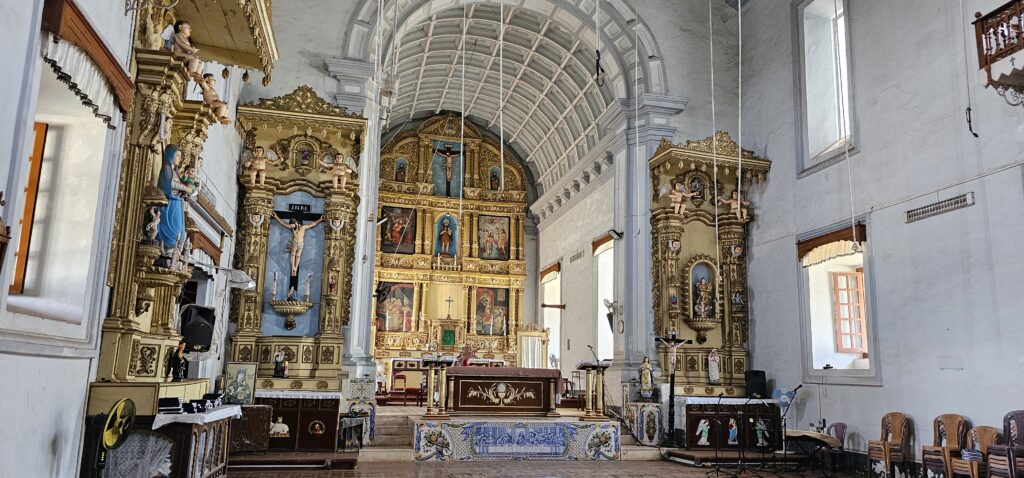
Our Lady of Pilar Church was being renovated when we visited….Still beautiful.
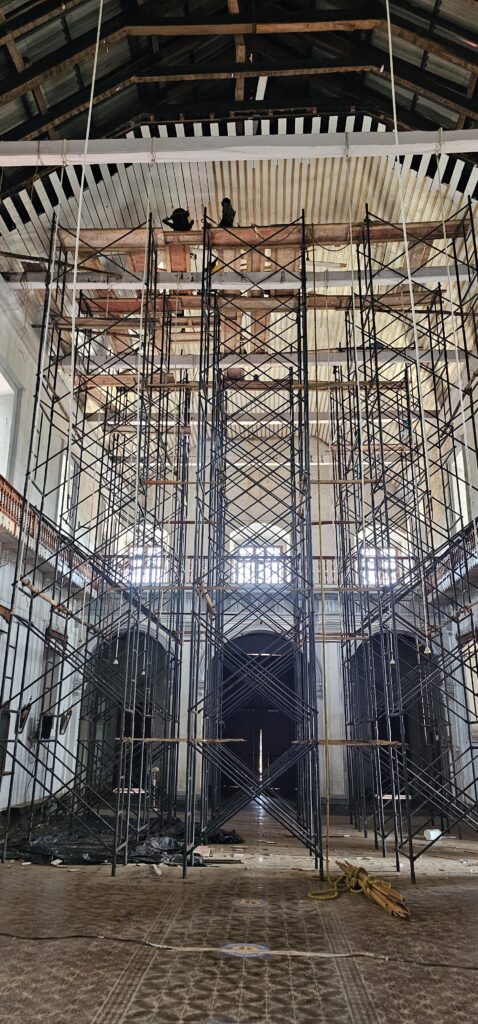
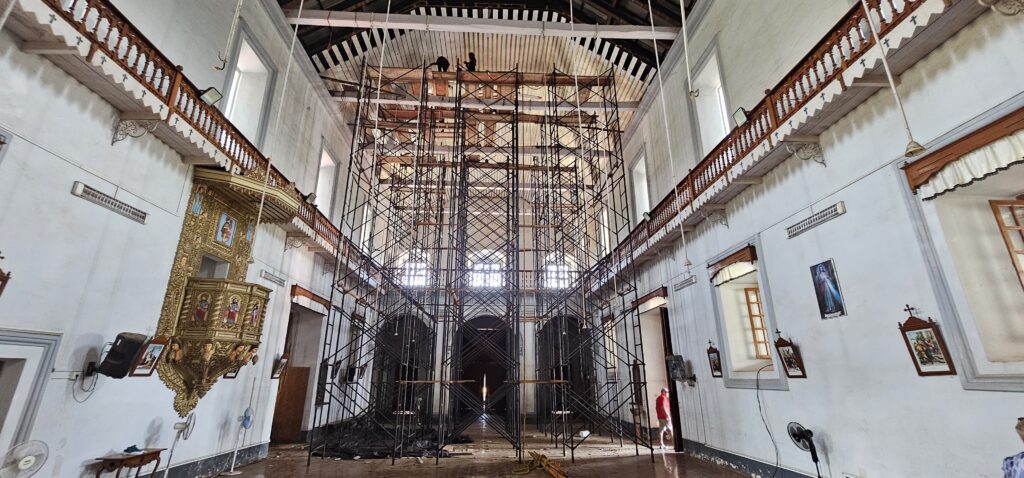
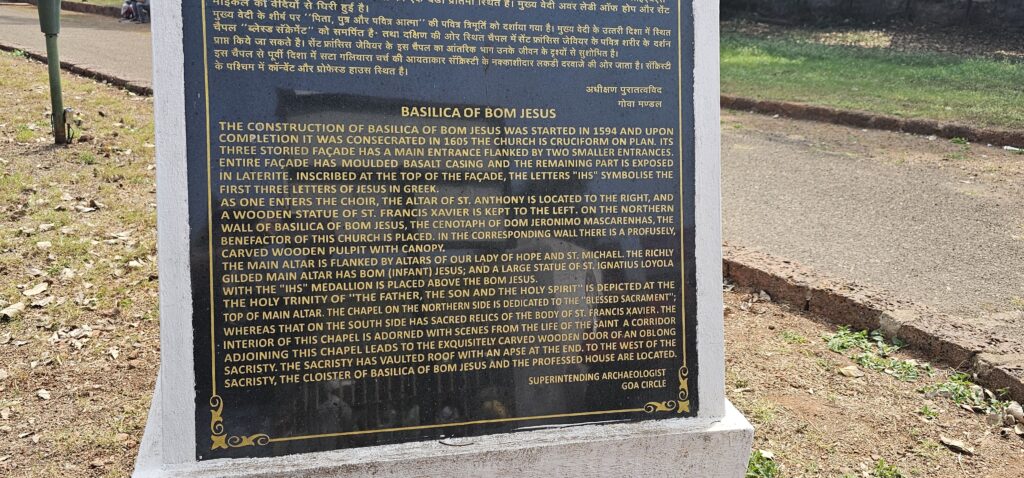
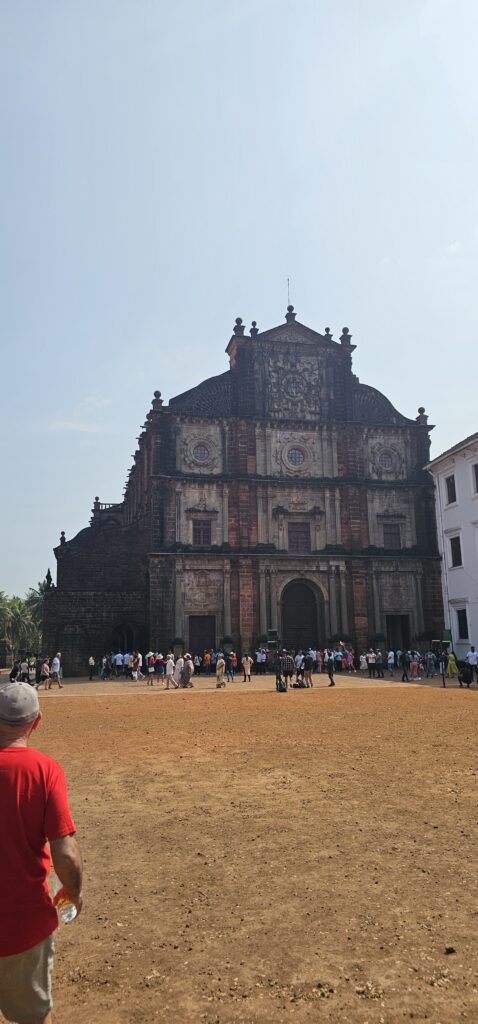
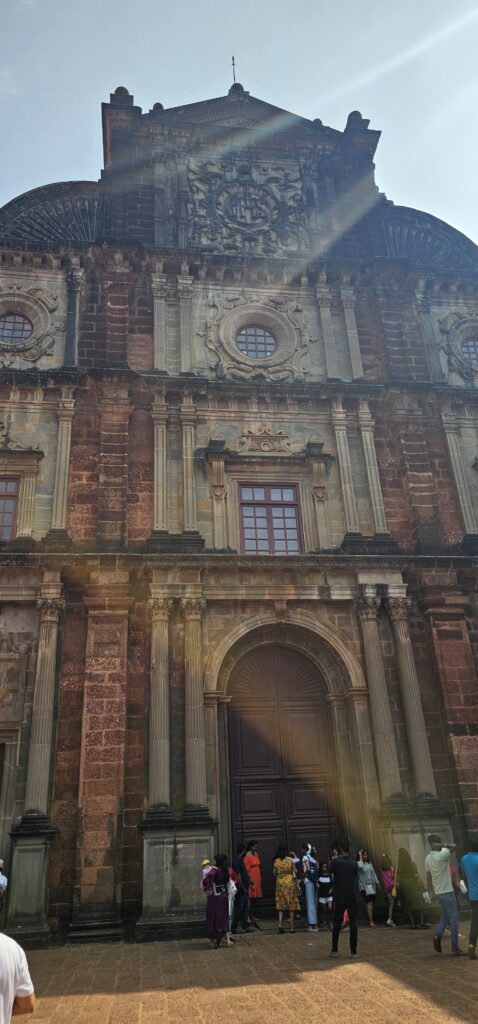
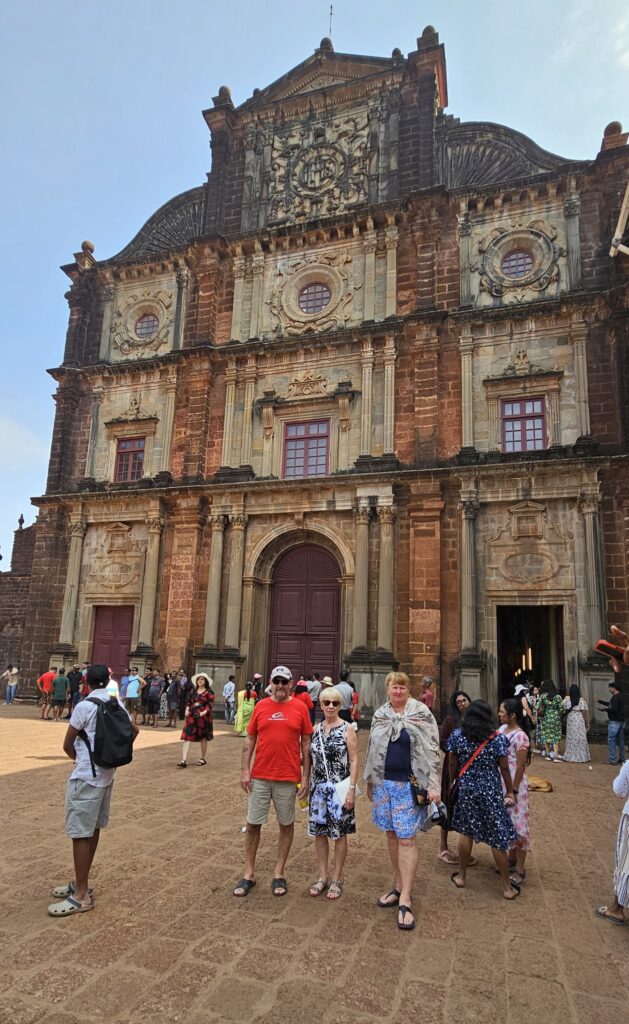
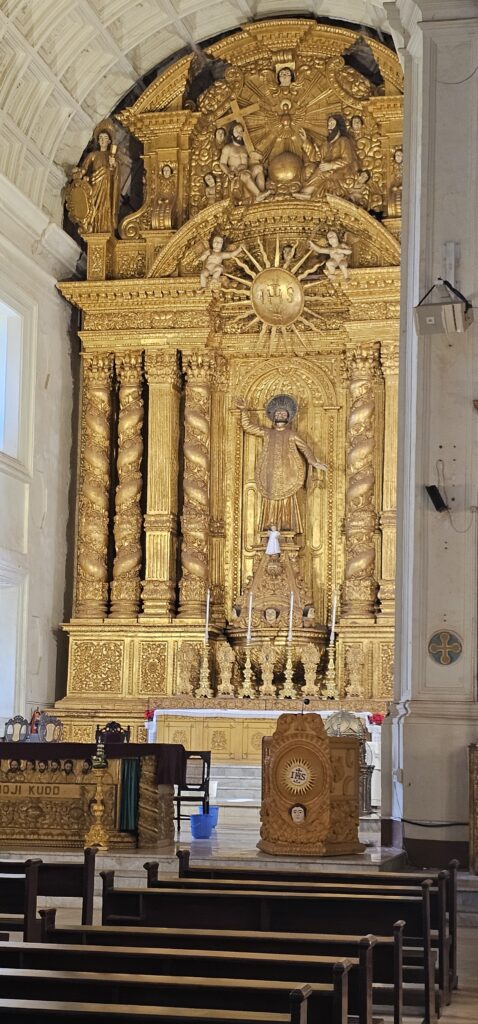
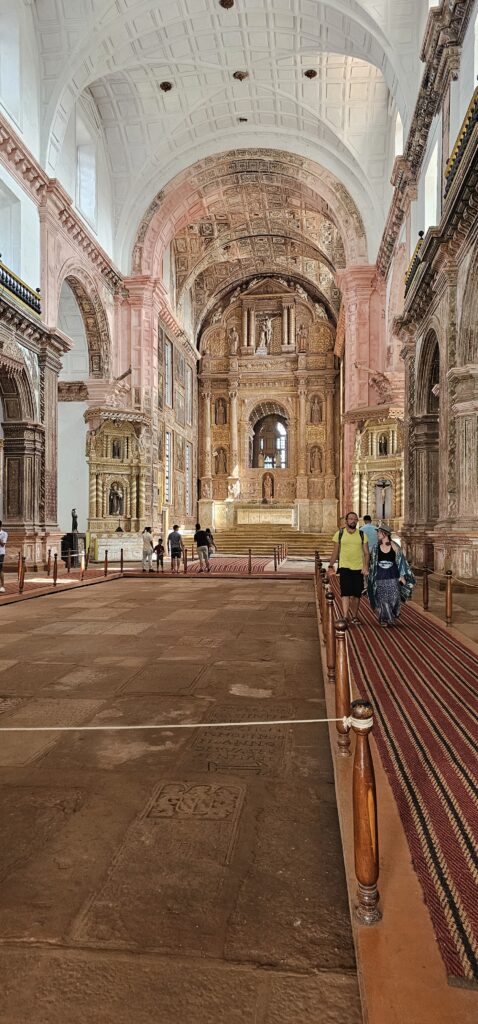
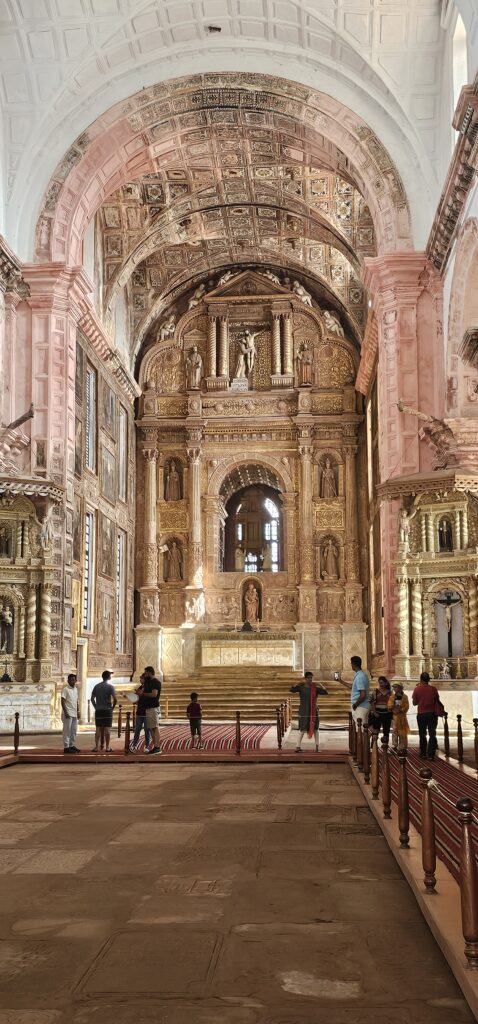
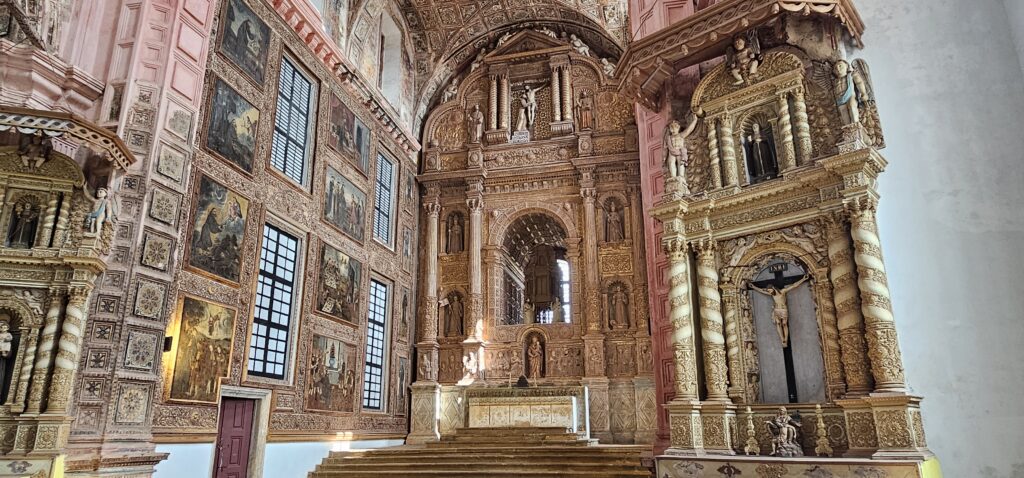
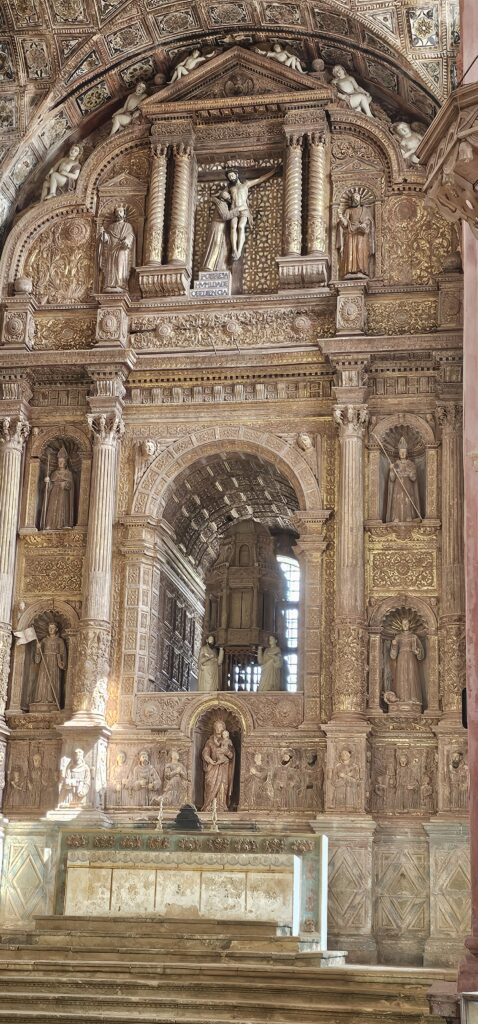
We then visited Old Goa, to stop at the Bom Jesus Basilica a Baroque Catholic church completed in 1605.
Across the road was a 17th century large Catholic cathedral built by Portuguese colonialists and still in use for worship today. It claims to be the largest Catholic church in Asia.
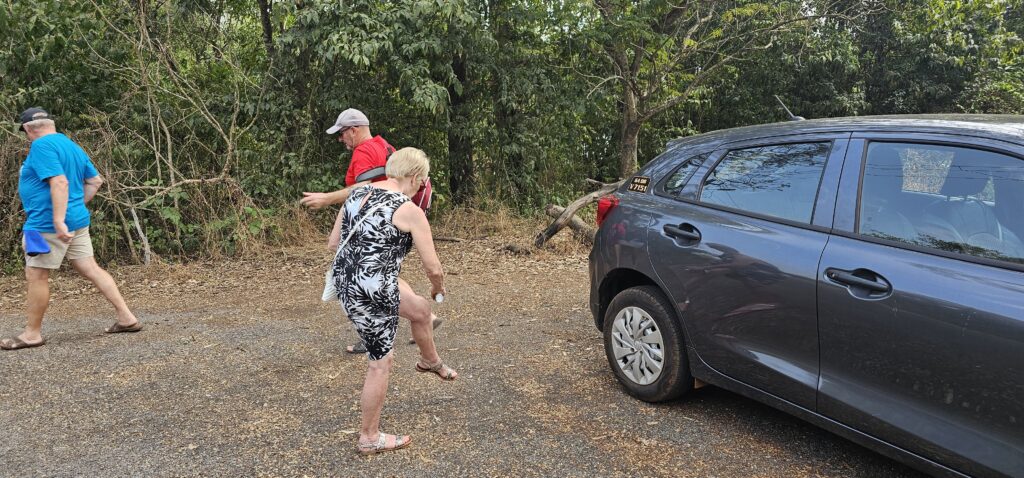
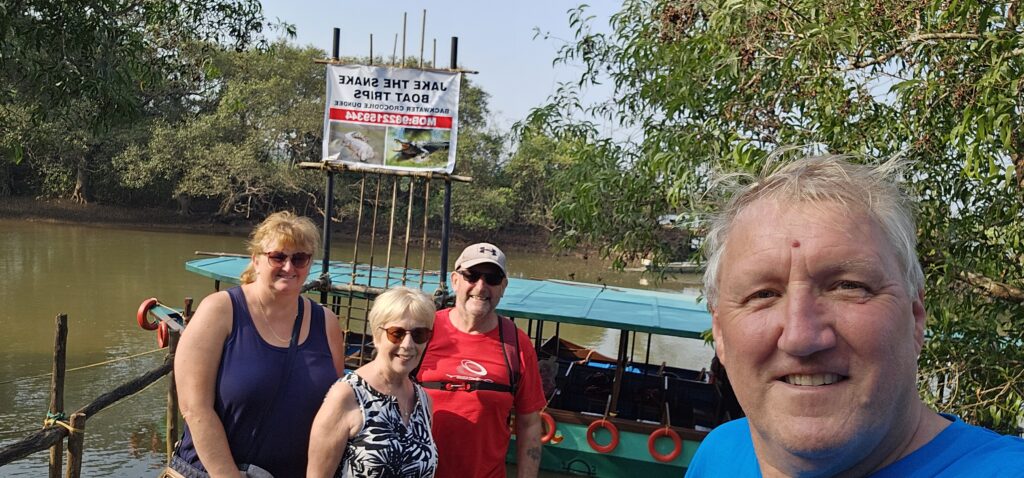
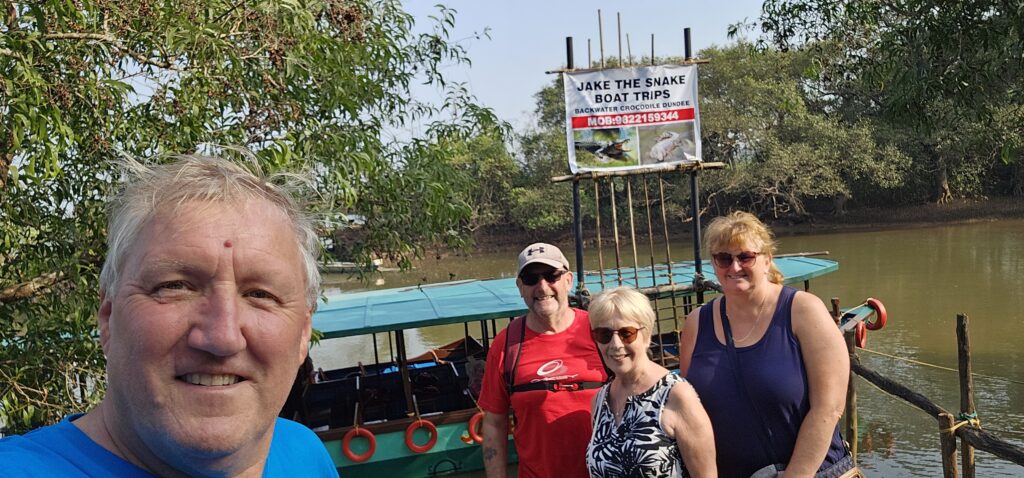
We then drove a little further onto St Estevan’s Isle to meet up with Jake! Slathered on mozzie spray before departing!!
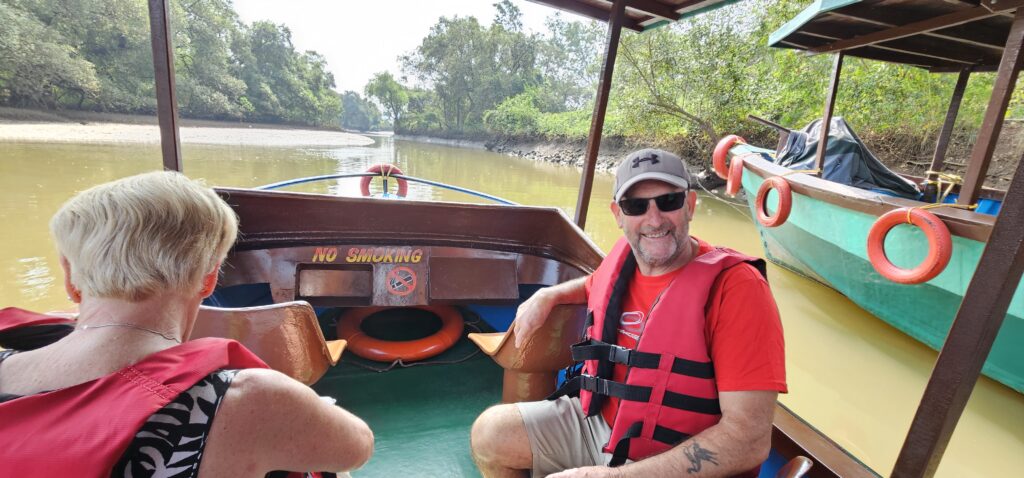
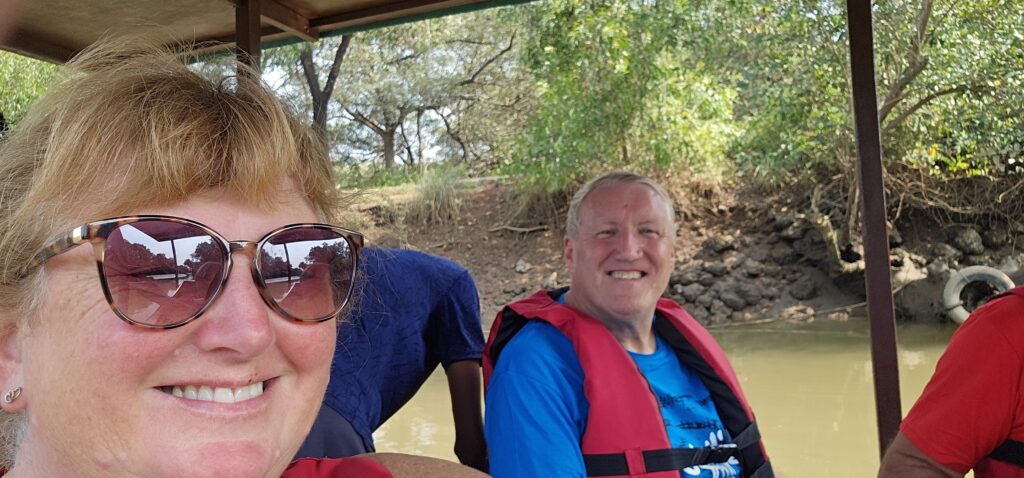
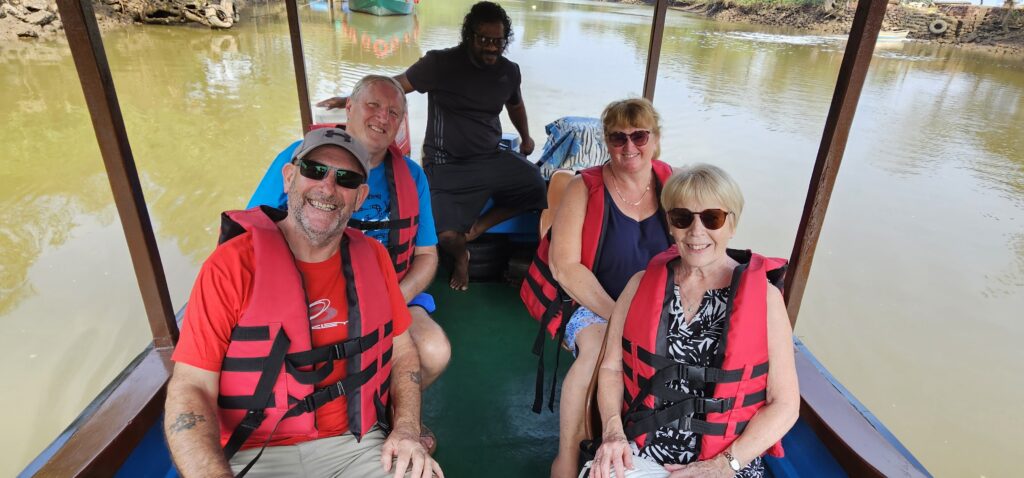
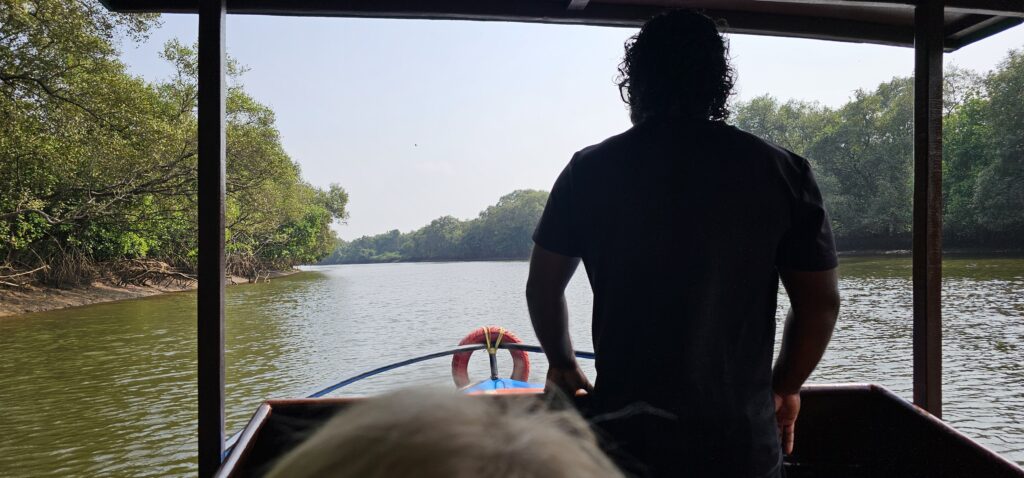
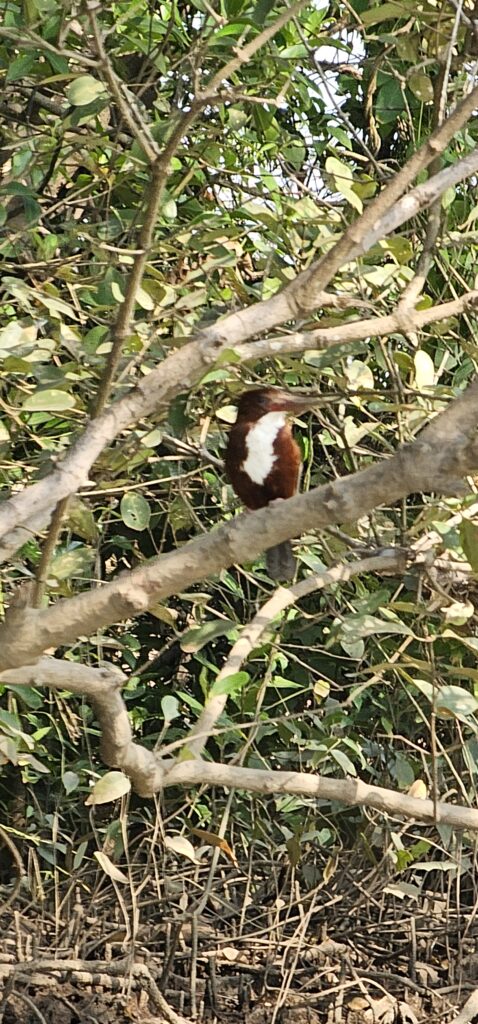
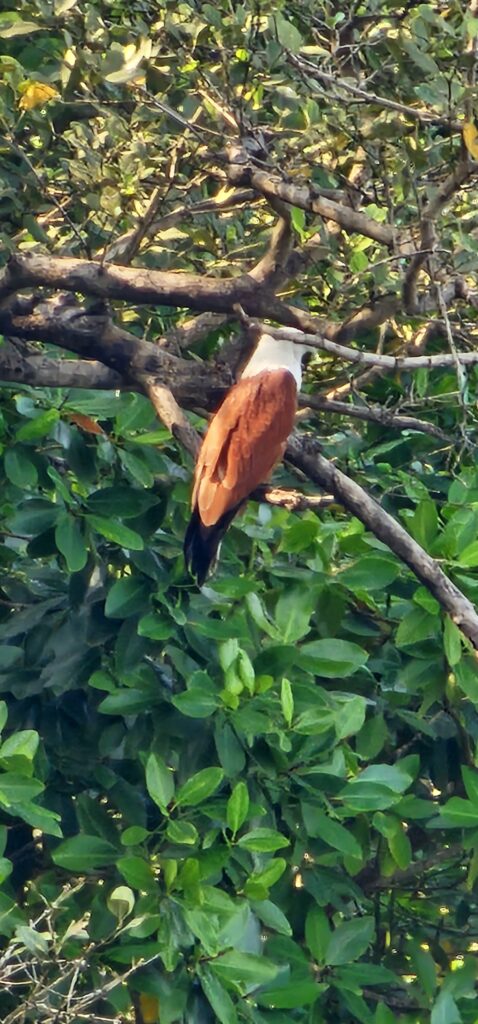
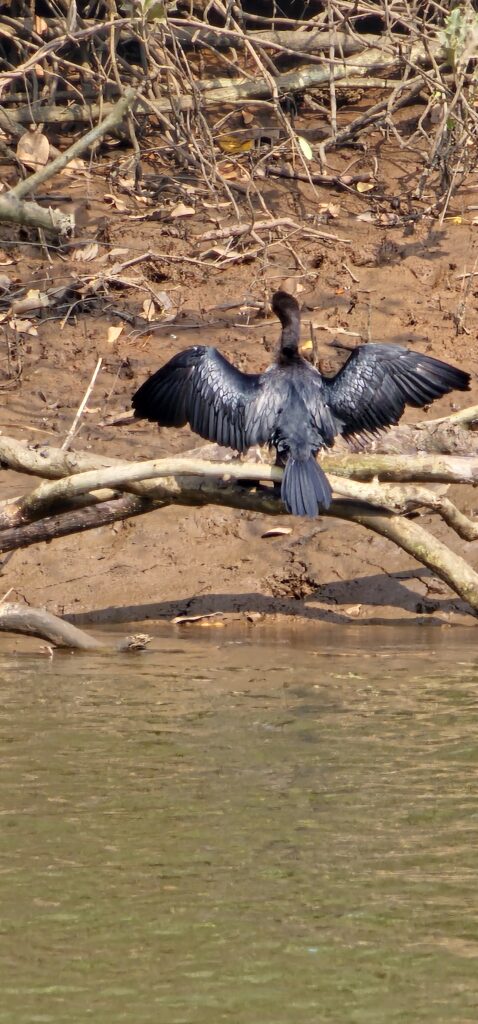
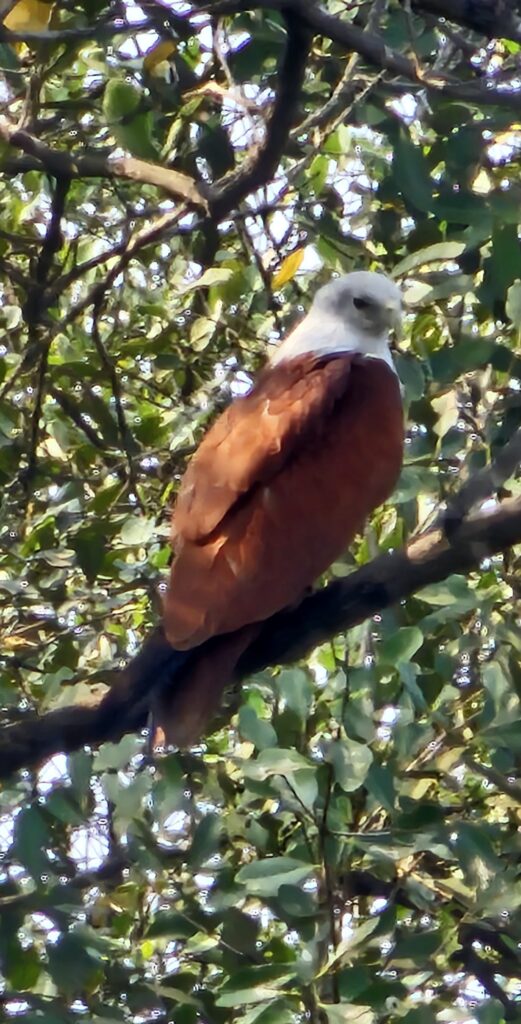
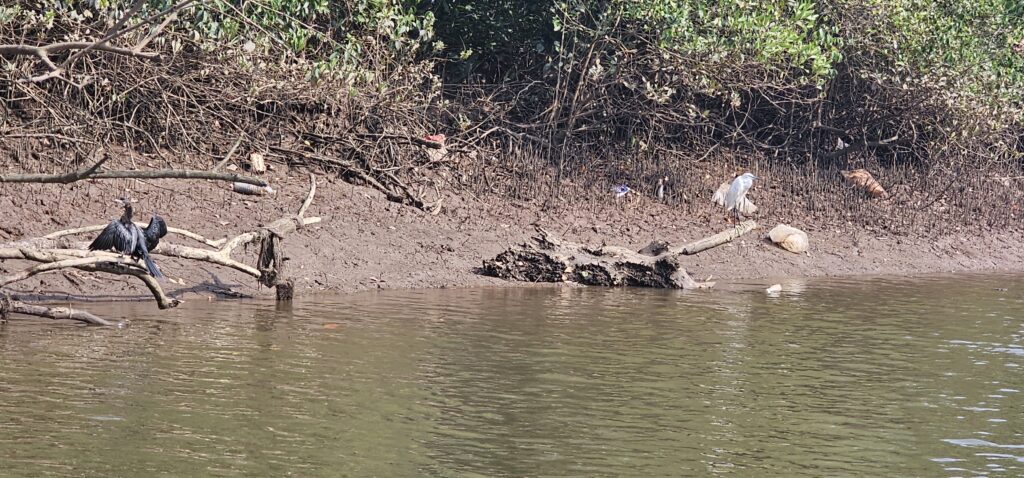
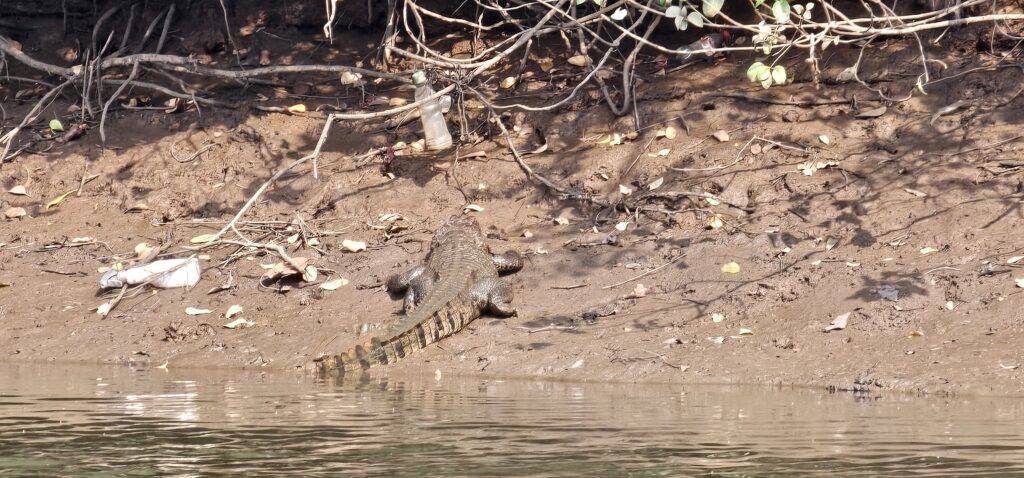
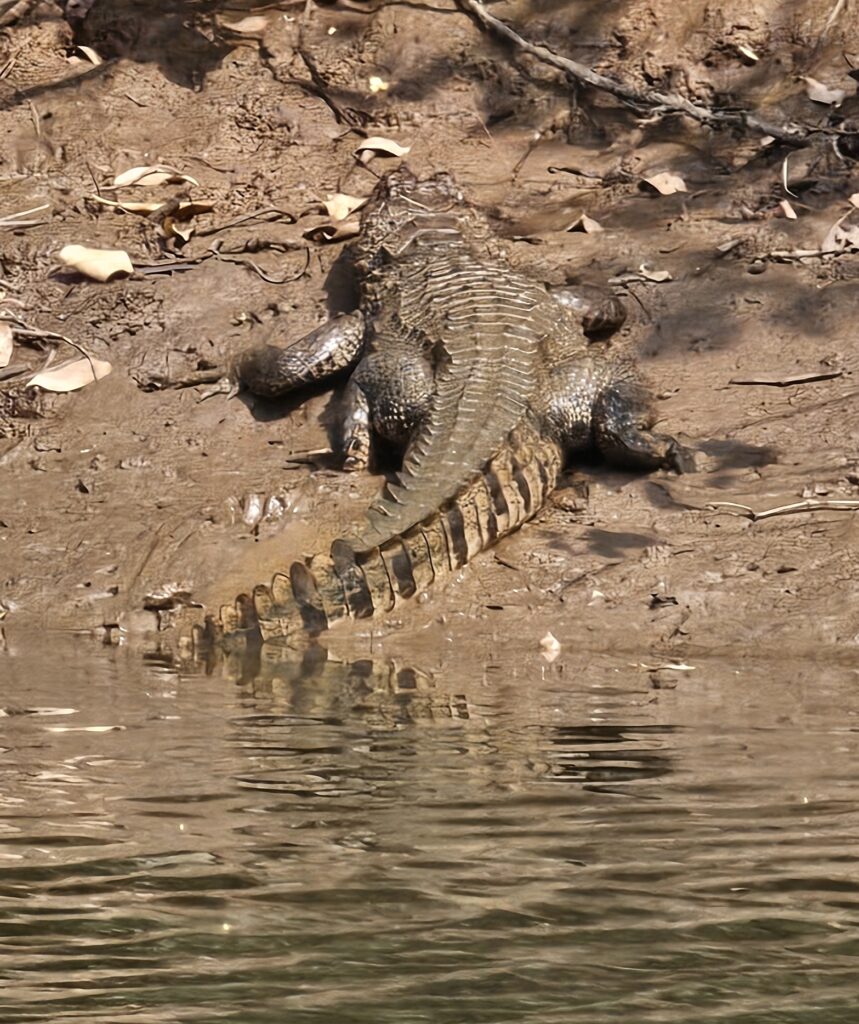
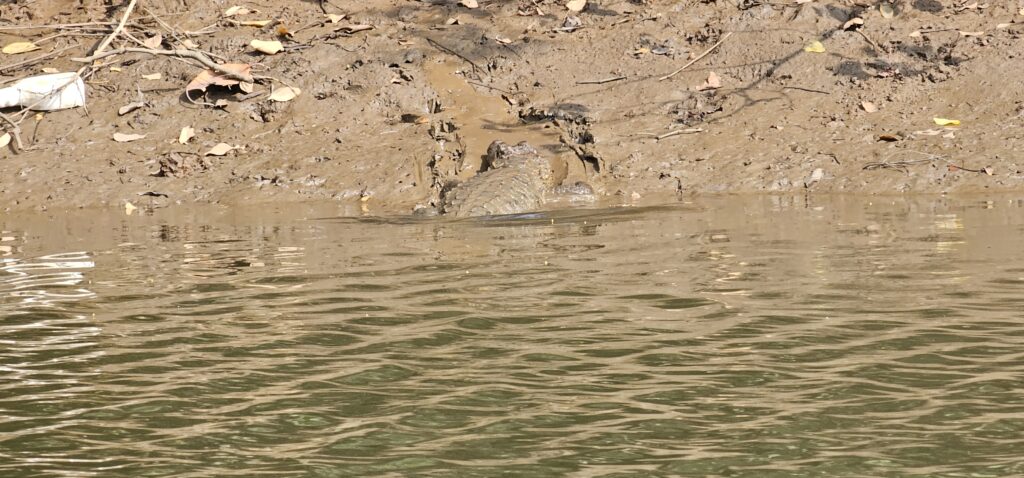
Jake was extremely knowledgeable and friendly and led us upriver for at least an hour, diesel engines puffing away, pointing out dangerous wildlife – by that I mean real wild crocodiles – and beautiful birds before leading us back downriver to the safety of the island and our car.
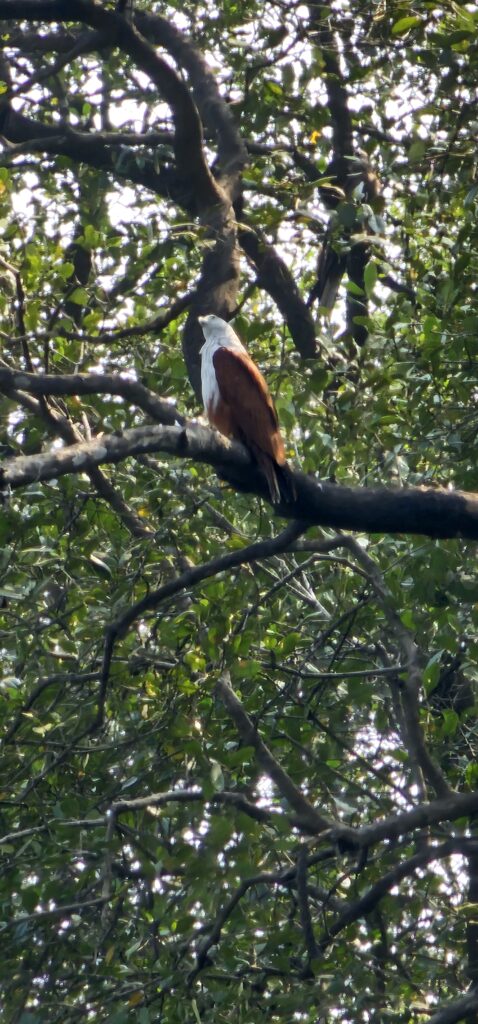
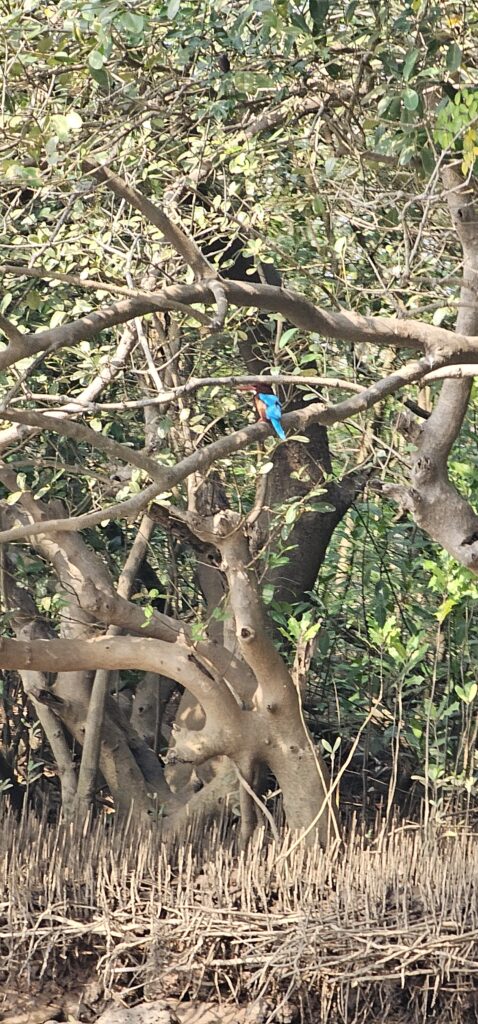
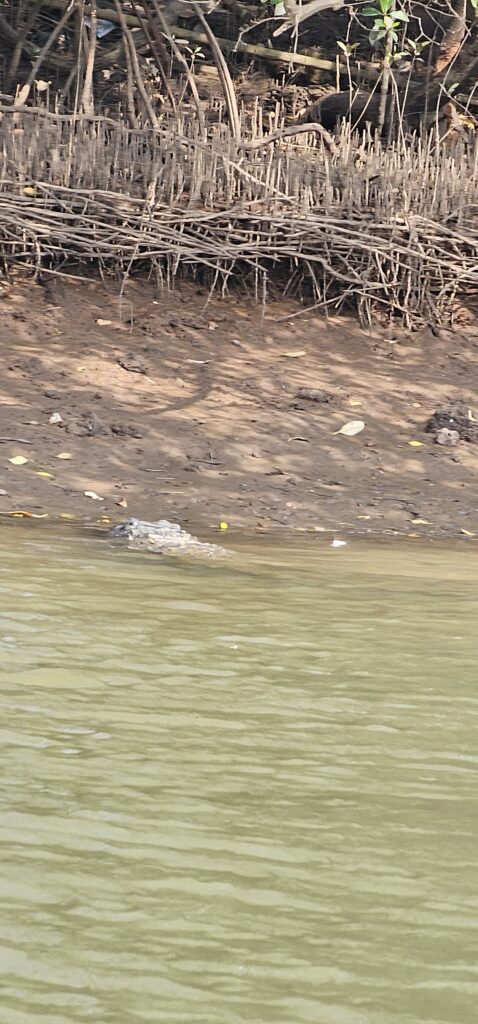
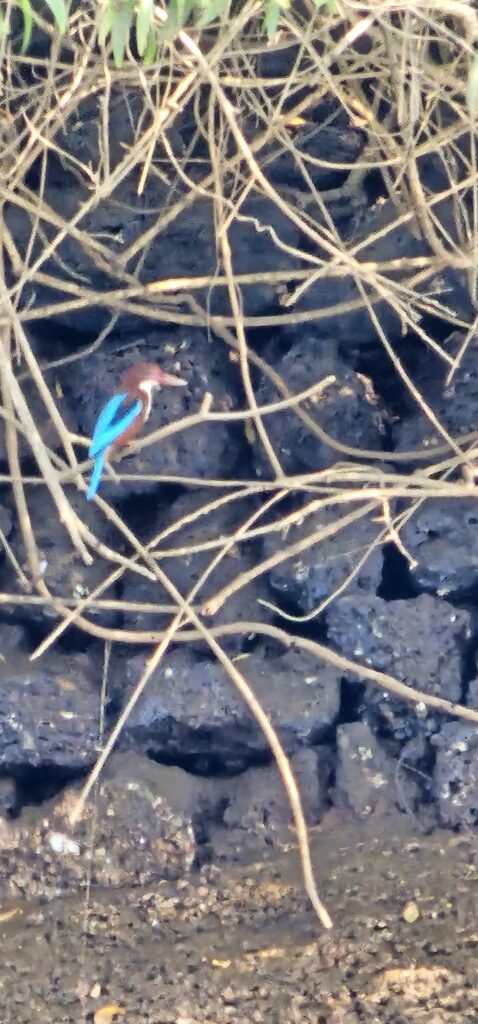
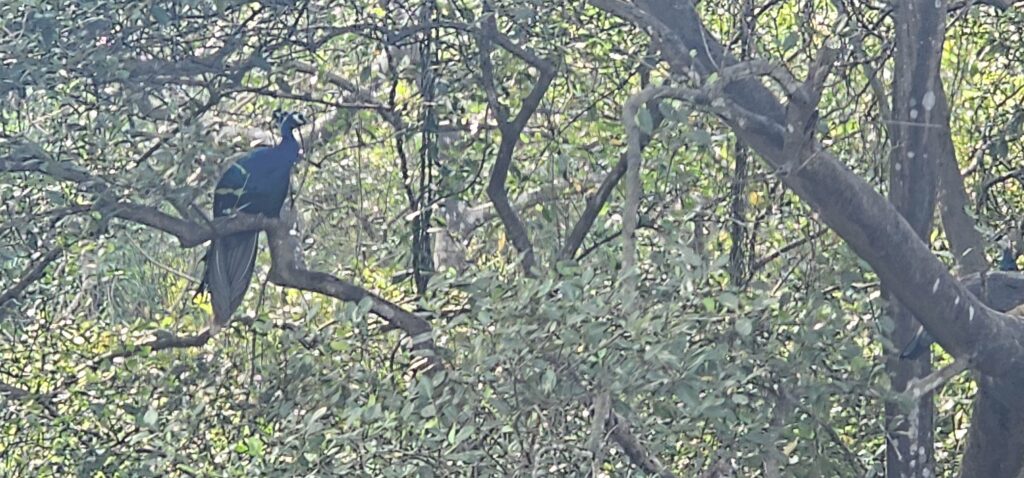
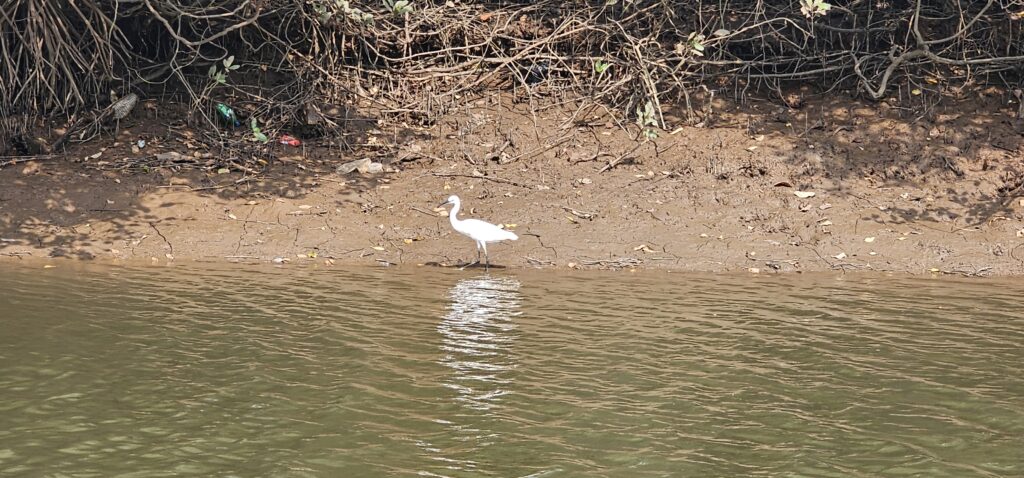
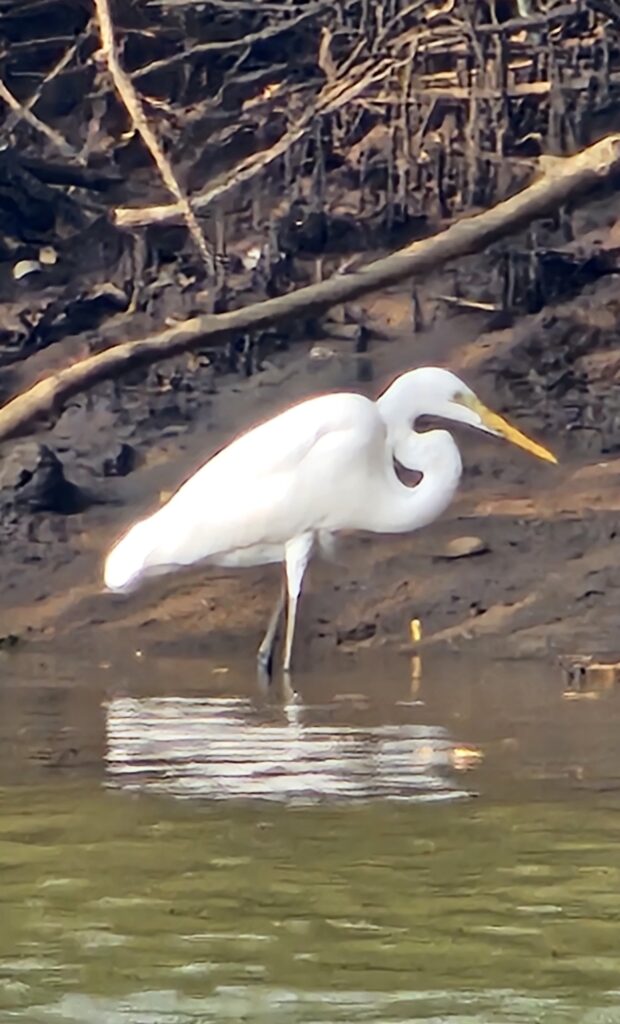
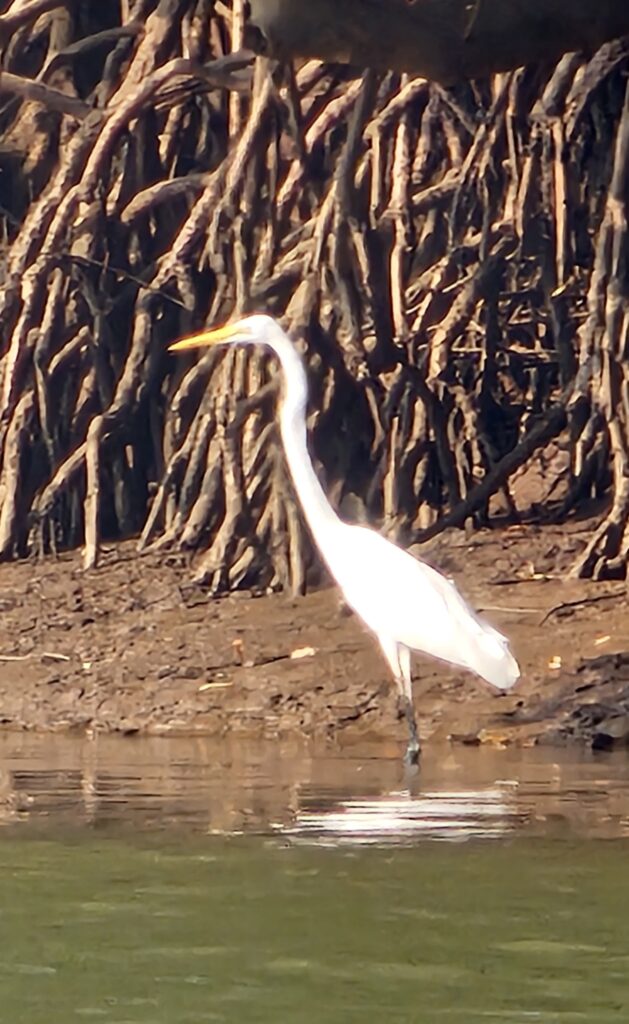
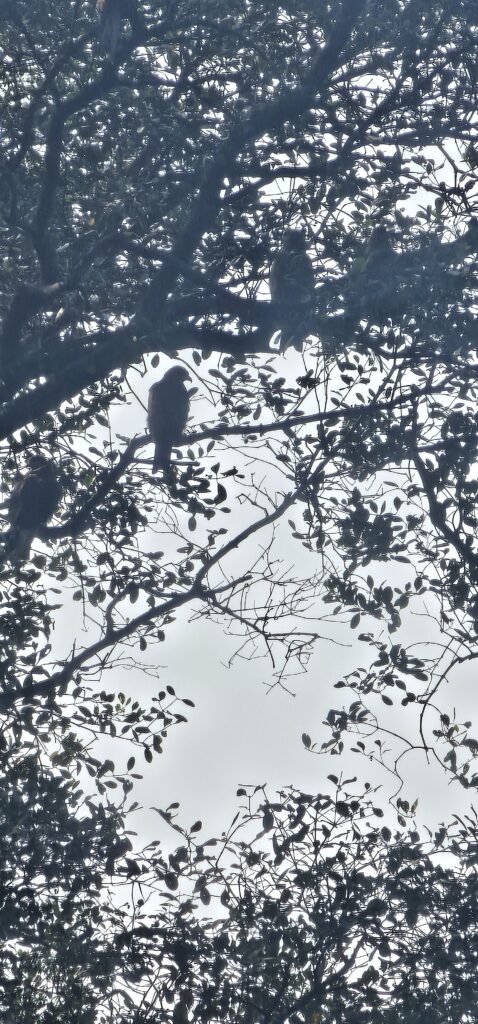
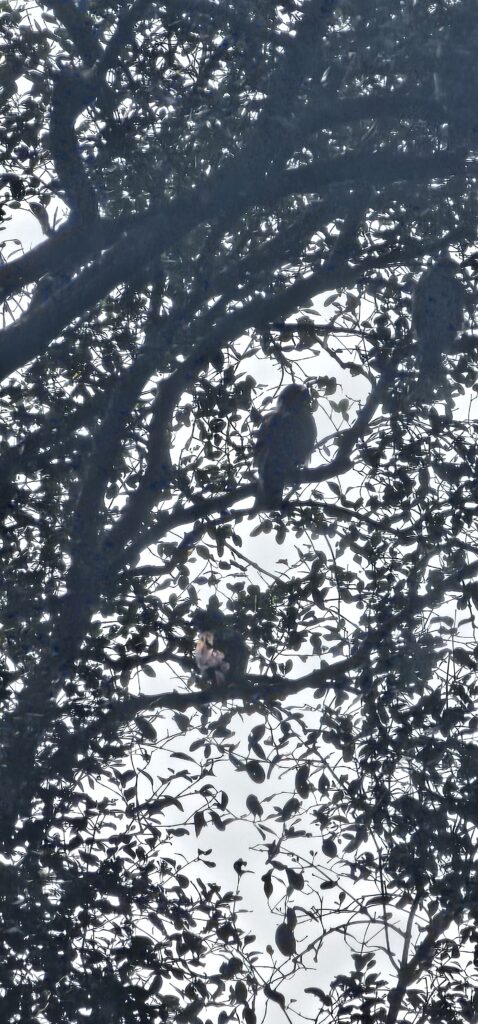
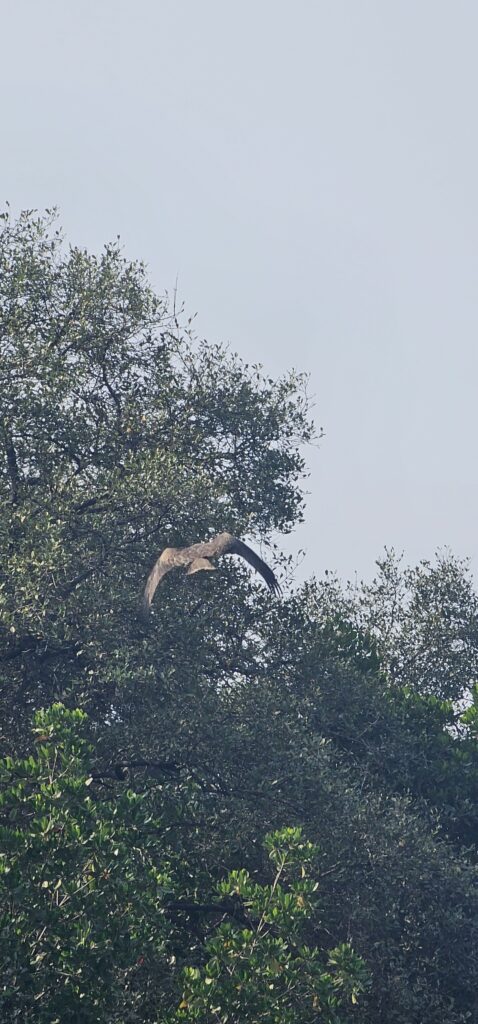
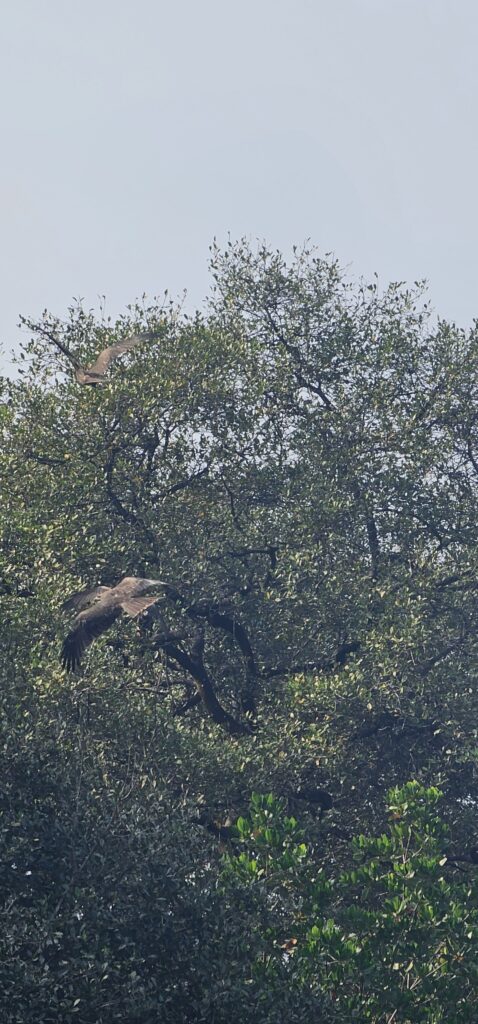
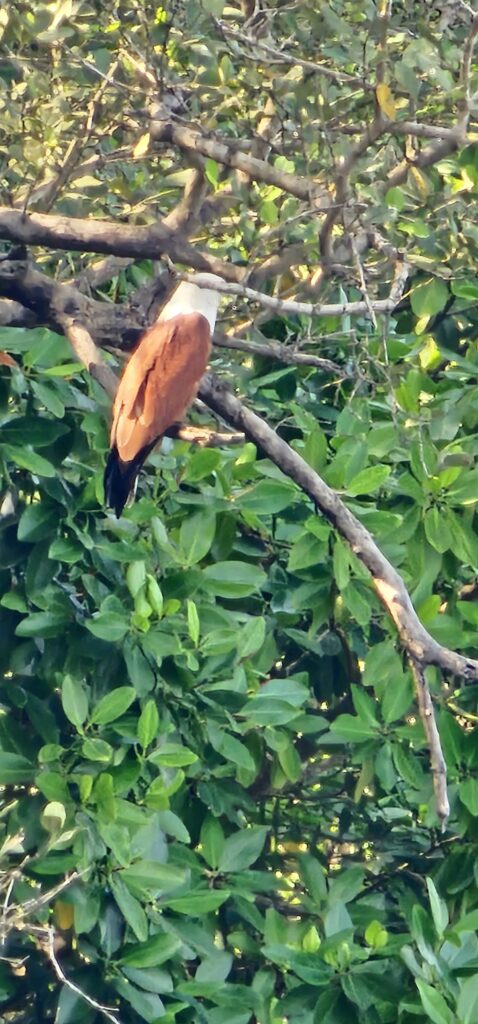
The following photos are just a selection of the 100s taken of Brahminy Kites (brown with white heads), brown kites, eagles, sleeping fruit bats, peacocks and peahens, egrets, sandpipers, cormonants, brown common kingfishers, tiny blue kingfishers, and the 6 or 7 crocodiles that we saw, they ranged from 3m to 7m in length, some resting on the bank, some in the water.
Our “stressful day with dangerous animals” meant we really needed a drink to calm our nerves, so to the beach we headed, for another fabulous sundowner, of course 😁
Recent Comments